




Abstract
The internationalisation of higher education (IHE) has become a central agenda of Ethiopia's higher education institutions (HEIs). However, there is a dearth of information on whether IHE is an intentional and integrated endeavour. A framework is developed to investigate how strategic the internationalisation process is in public universities in Ethiopia, focusing on intentionality and integration. Data were collected using a survey from eleven public universities, semi-structured interviews with twenty-one key informants, as well as document analysis. The findings reveal striking similarities across universities in how IHE has been undertaken. Though there are promising indicators that IHE is becoming an intentional process, little attention is given to integrating IHE into institutions’ purpose, functions, and delivery. To maximise the benefits of IHE, universities need to establish educational systems aligned with their designations (research, applied science, comprehensive, and science and technology), integrate IHE into these systems, and continuously manage it across all HEIs.
Introduction
Literature on IHE increasingly references the importance of having a strategic approach as a critical factor in the success of IHE (Hudzik, 2011; Knight, 1994; Marinoni & de Wit, 2019). A strategic approach to IHE can be described as creating an enabling environment, policy, strategy, structure, resources, and systems to make IHE a strategic process (Marinoni & de Wit, 2019). Having a strategic approach to IHE indicates that it is an ‘intentional’ process that is ‘integrated’ into an institution's purpose, functions, and delivery (Spencer-Oatey & Dauber, 2019). Marinoni and de Wit (2019, p.3) suggest that “the benefits of having a strategic approach and the reasons why it is a reality at some (but not all) higher education institutions is worth further thought and investigation.”
Background and Rationale
Ethiopia is the focus of this paper. The World Bank (2022) estimates that Ethiopia has nearly 120 million population. It is the second most populous nation in Africa and one of the poorest countries in the world. More than 55% of the population of Ethiopia is under the age of 25, with massive implications for higher education and life-long learning. While higher education in Ethiopia is a recent phenomenon– just seven decades old – it has been experiencing dynamic changes, especially in the last two decades. The main changes have been the expansion of higher education and the differentiation of universities.
The Ethiopian higher education system has been swamped with the challenges to increase access to and improve the quality of third level education. Though the issue of access to higher education is still a work in progress, the rapid expansion of public universities and the permission granted to the private sector to engage in higher education provision have significantly improved its reach. The number of public universities in Ethiopia has risen from eight in 2002 to forty-six in 2023. In a similar timeframe, the number of private HEIs has increased from zero to three hundred and fifty (Tamrat, 2022). In the past twenty-five years the number of students enrolled in higher education has more than trebled from 300,000 in 2008 to over one million in 2020 (MoSHE, 2020c). Currently, 89% are undergraduates, while master's and PhD students constitute just 10% and 0.5%, respectively. While Ethiopian public universities suffer from inadequate physical, human, and financial resources primarily due to massive expansion (van Deuren et al., 2016), they account for 87% of undergraduate and 94.4% of postgraduate enrolment in the Country (Boateng, 2020).
Until relatively recently, Ethiopian public universities had similar missions and portfolio. Consequently, there was considerable programme duplication, frequently contributing also to a decline in education quality (MoE, 2018). To address this problem, the Ministry of Science and Higher Education (MoSHE) establish a new classification of HEIs aligned with academic priorities. Now all public universities are designated in one of four categories: research (focus on graduate studies and basic research), applied science (focus on practice-oriented teaching at bachelor's and master's levels and conduct applied research), comprehensive (focus on teaching and research across levels in equal proportions), and science and technology (focus on teaching and research in science and engineering programmes). The principal rationale for differentiating public universities is to improve the quality, relevance, access, and equity of higher education for all citizens (MoSHE, 2020c).
It is envisaged that IHE could contribute significantly to the quality of education in Ethiopia's HEIs (MoE, 2018; MoSHE, 2020b). An internationalisation policy was published in June 2020 by the Ministry of Science and Higher Education (MoSHE, 2020b). It offers a broader framework for planning and implementing IHE initiatives in Ethiopia.
IHE has not served higher education in Ethiopia well. Scholars have argued that a lack of resources and autonomy, on the one hand, and asymmetries in partnerships, on the other, negatively impact the effectiveness of IHE in Ethiopia (Nega & Kassaye, 2018; Tamrat & Teferra, 2018). Similarly, Nega and Kassaye (2018) contest that inadequate human resource base, poor academic quality, and inadequate facilities and resources are the main challenges of Ethiopian public universities to capitalise on IHE initiatives. They further note that the failure of international partnerships to consider local contexts and the imbalance in decision-making power are significant factors negatively affecting the outcomes and sustainability of IHE in Ethiopia. While many contributing factors are suggested for the failure of IHE, there is no evidence of research conducted on the need for a strategic approach to enhance IHE in Ethiopia. A host of IHE experts contest that when IHE is not a strategic process – an intentional and integrated undertaking – it becomes fragmented and uncoordinated and limits its potential to contribute to education, research, and society (de Wit & Jones, 2022; Spencer-Oatey & Dauber, 2019; Teferra, 2019).
This paper hypothesises that the failure of IHE in Ethiopia is partly attributable to a dearth of intentionality in how IHE is being undertaken and a lack of integration of IHE into the purpose and delivery of the teaching, research, and community service functions. To interrogate this hypothesis, the central question of this paper is: How strategic is the process of internationalisation of higher education in Ethiopia's public universities? More specifically, it seeks to answer the following questions:
What are the critical factors and associated indicators for assessing the strategic process of IHE? To what extent IHE in Ethiopia's public universities is an intentional and integrated endeavour? What measures may contribute to harnessing the benefits of IHE in Ethiopia?
Understanding ‘Intentional’ and ‘Integration’ Aspects of Internationalisation
The internationalisation of higher education is gaining increasing attention in academic literature. Significantly less extant literature focuses on HEIs’ strategic process to internationalisation, particularly the intentional and integration attributes and their measurement. The search for existing relevant academic literature employed the Boolean search technique by applying the words ‘internationalisation’ and ‘higher’ and ‘education’ in a Scopus search engine. More than 4,100 sources were identified in the first instance. Further analysis of these sources was undertaken by applying the words’ intentional’ and ‘integration’ as inclusion criteria. Finally, the twenty-two most relevant sources were identified to develop a framework to assess how strategic the process of IHE is at an institutional level with a focus on intention and integration.
Gibbons and Otieku-Boadu (2021) posit that: Concept analysis combines elements of analytical and synthetic reasoning to give meaning to a concept within a discipline. This involves four interwoven phases: creating a knowledge foundation from gathering information from other disciplines in related concepts; external analysis – distinguishing the concept from superordinate concepts and related concepts within the discipline; internal analysis – analysis of different views of the concept within the discipline; and lastly, forming conclusions by providing solution alternatives, reasoning, and motivations for the new concept (Gibbons & Otieku-Boadu, 2021, p.3). the
This definition acknowledges that IHE should be an intentional undertaking, and the process should lead to the integration of international, intercultural, and global dimensions into the system of higher education to contribute to improving education, research, and society. According to Spencer-Oatey and Dauber (2019), making IHE an intentional and integrated endeavour help to broaden the benefits of IHE from a few elites to the whole community of higher education and the broader society. Similarly, de Wit and Jones (2022) argue that recognising IHE as a strategic process helps to moving from a static, ad hoc, and fragmented approach to a proactive process involving a wide range of internal and external stakeholders. The following two subsections describe what ‘intentional’ and ‘integration’ mean in the discourse of IHE. This is followed by a subsection that establishes a framework to assess these concepts at the institutional level in higher education.
Conceptualising the ‘Intentional’ Aspect of Internationalisation
Several authors have emphasised the importance of intention to the success of IHE (de Wit et al., 2015; de Wit & Jones, 2022; Hudzik, 2011; Knight, 1994, 2004, 2008; Marinoni & de Wit, 2019). Knight (2004) argues that recognising IHE in the mission statement is the first critical step to making IHE an intentional process. However, merely recognising IHE in the mission statement does not make IHE an intentional process. Rather, it needs to be translated into institutions’ policies and strategic plans (Marinoni & de Wit, 2019; Helms et al., 2015). If IHE is an intentional process, then it needs to be supported with clearly defined strategies, objectives, and action points. In addition, the allocation of the necessary human and financial resources to IHE is among the critical indicators of institutional commitment to make IHE an intentional process (Hudzik, 2011; Marinoni & de Wit, 2019; Thondhlana et al., 2021). According to Knight (1994) and Hudzik (2011), factors that indicate if IHE is an intentional process include having written policies and a strategic plan for IHE, availability of an international office with competent staff, recognition/ reward system to staff who engage in IHE initiatives, and investment in creating and maintaining international networking and linkage. As Clarke and Yang (2021) and Marinoni (2019) argue, recognising IHE in the human resource policy significantly influences the active engagement of staff in internationalisation initiatives.
Arguably, when IHE is an intentional process, it influences (and lays the foundation for) an institution's culture, ethos, and working system to nurture and support the integration of IHE into the HE system. Intentionality in IHE, therefore, can be defined as a commitment by the management and senior leaders to lay a foundation upon which integrating international, intercultural, and global dimensions into the purpose, functions, and delivery of HEIs becomes a reality. However, it should be noted that ‘ticking the boxes’ of intentionality does not necessarily lead to the integration of IHE into the HE system. As Thondhlana et al. (2021) argue, there are several cases where institutions feature internationalisation as one of their priorities in their mission statements but do not translate it into practice.
Conceptualising the ‘Integration’ Aspect of Internationalisation
Few researchers have addressed integration as a dimension of internationalisation, and there is little explicit discussion of how the concept is interpreted (Spencer-Oatey & Dauber, 2019). The commonly accepted definition of IHE states the need to integrate international, intercultural, and global dimensions into the teaching, research, and service functions of HEIs (de Wit et al., 2015; Knight, 2008). Thus, integration into the teaching function can mean the incorporation of the three dimensions (international, intercultural, and global) into “contents of the curriculum as well as the learning outcomes, assessment tasks, teaching methods and support services of a program of study” (Leask, 2015, p.9). Integration into research function can be described in terms of international research collaboration, undertaking research with international themes, outputs, and impact, and having national and institutional policies supporting its internationalisation (Woldegiyorgis et al., 2018). Recently more attention has been given to integrating IHE into the service function – referred to as the internationalisation of higher education for society (Jones et al., 2021). According to Brandenburg et al. (2020), HEIs, as part of their service function, can support capacity building, economic development, and technology transfer efforts of countries in the developing world, which eventually will contribute to the realisation of the UN sustainable development goals. Integrating international dimensions into the functions of HEIs is an ever-improving process that requires the incorporation of IHE into an institution's academic and non-academic services and monitoring and review processes.
Integration, therefore, is a process whereby IHE activities are undertaken in a way that combines international, intercultural, and global dimensions into:
the teaching function through internationalising contents of the curriculum, the teaching and learning process, and methods of assessment to improve the quality of education and prepare students for social and professional life in the globalised world (Leask, 2015). the research function through international collaborative research, joint publications, joint international conference, and undertaking research with international themes to improve the quality of research, broaden its impact and reach, and enhance the global ranking of an institution (Woldegiyorgis et al., 2018). the service/ outreach function that goes beyond local communities and national boundaries to contribute to cross-border issues including the realisation of the UN SDGs and Agenda 2063 of Africa (Brandenburg et al., 2020; Jones et al., 2021) the academic and non-academic services of an institution to augment the effectiveness of IHE functions (Leask, 2015; Leask et al., 2018). the monitoring and evaluation process of the institution to assess and improve the outputs, outcomes, and impacts of IHE (Garwe & Thondhlana, 2021; Thondhlana et al., 2021).
A Framework to Measure the Intentional and Integration Aspects of IHE
A framework with measurable indicators is developed to assess the extent to which an internationalisation undertaking in HEIs is an intentional and integrated endeavour. It is noted that IHE is understood both at the institutional level, where the real process of internationalisation takes place, and national level, where policy, funding, programmes, and regulatory frameworks that influence IHE are decided (Knight, 2004). However, IHE at the national level is beyond the scope of this paper. It should also be noted that intentionality and integration are not mutually exclusive concepts; instead, one reinforces the other to the extent that some indicators can equally be relevant for both attributes.
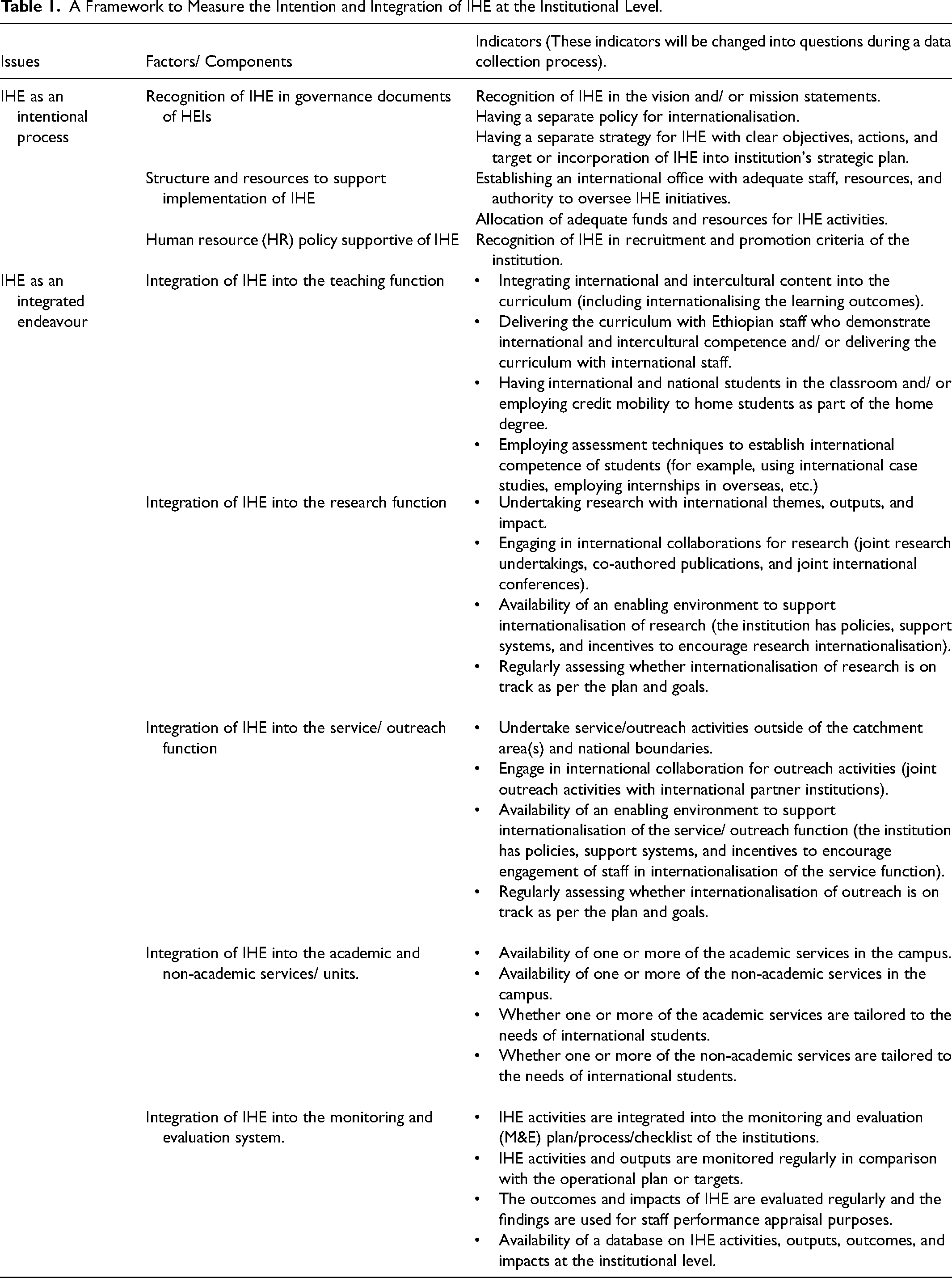
Indicators of the intentional aspect can be addressed with a ‘yes’ or ‘no’ answers, making the measurement and analysis straightforward. However, integration is not an easy concept as it is more of a process than a state or an event. It demands continuous improvement to optimally integrate it into a HEI's purpose, functions, and delivery. Due to the nature of integration, a Likert scale question is proposed to better capture the extent to which the process of internationalisation is integrated (NB: a particular factor/ component is said to be fully integrated when all four indicators are fulfilled; mostly integrated when three of the indicators are fulfilled; partially integrated when two of the indicators are fulfilled; barely integrated when one of the indicators is fulfilled; and is not integrated when none of the indicators is fulfilled). Table 1 provides a framework to measure intentional and integration aspects of internationalisation at the higher education institutions level.
A Framework to Measure the Intention and Integration of IHE at the Institutional Level.
Methods
A mixed-method sequential explanatory research design is used to address the study's empirical questions. This approach was deployed to synergise the strengths of both quantitative and qualitative approaches. As Othman et al. (2021) argue, sequential explanatory design is used for a broader and in-depth understanding of a phenomenon. Quantitative data was collected and analysed, followed by the collection and analysis of qualitative data. Both data sets are integrated during the interpretation phase. Table 2 below shows details of the sample universities included in the study and the number of interview participants in each university.
Sample Universities Included in the Study.
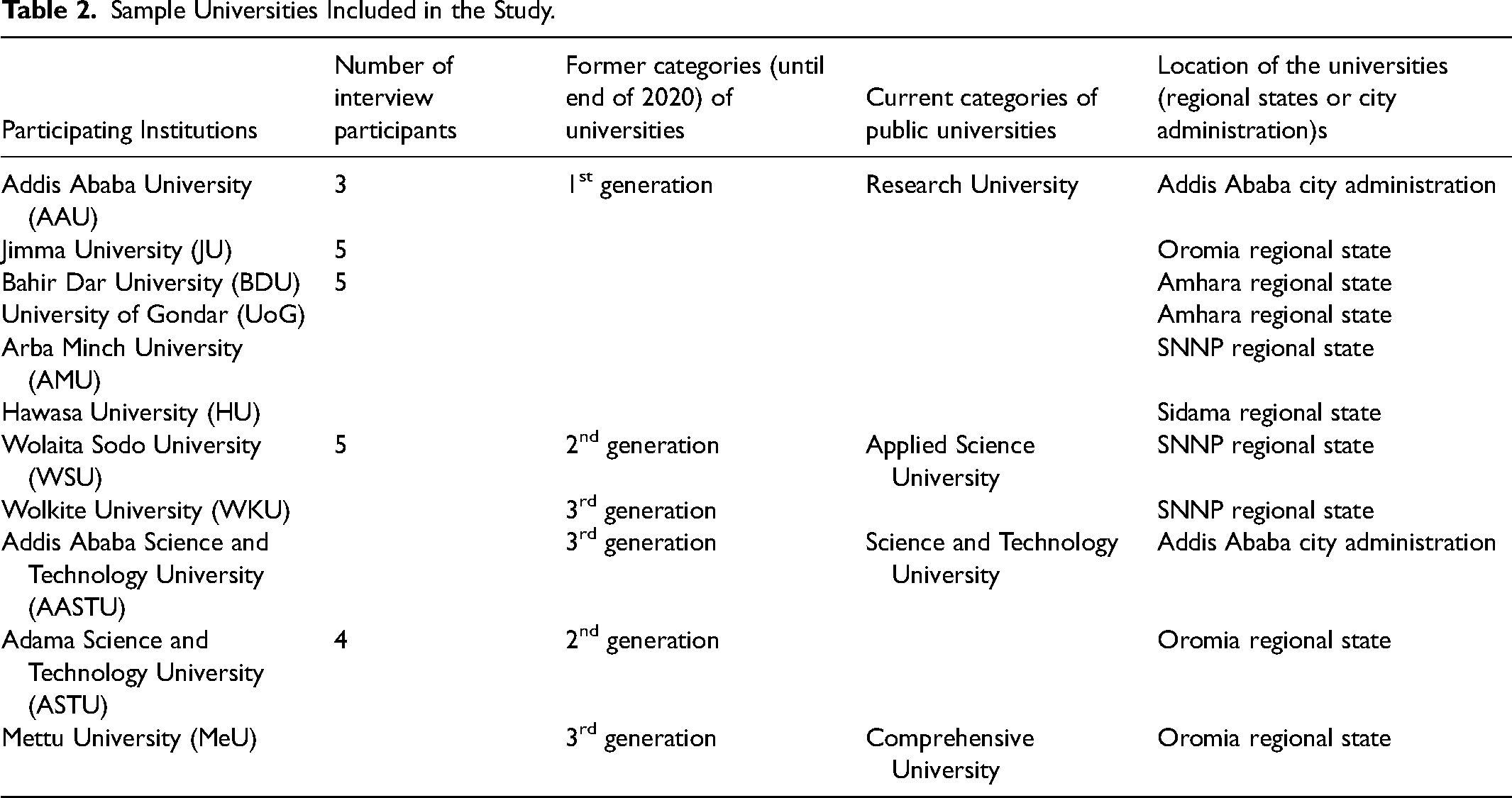
A stratified random sampling technique was used to select fourteen 1 public universities in Ethiopia. This enabled the researcher to ensure each category of a public university was represented in the sample (Othman et al., 2021; Sarantakos, 2005). While a proportional number of universities were randomly selected from each category, emphasis was also placed on broadly representing the different regional states and city administrations in which the universities are located. A survey was administered to eleven universities 2 to assess the degree to which IHE in Ethiopian public universities is an intentional and integrated endeavour. A questionnaire was developed based on the study's framework. Respondents were asked to identify if IHE in their respective universities is an intentional or integrated endeavour. For each of the indicator of integration, respondents were probed to identify its extent. Document review was also used as an element of data collection and analysis. Higher education proclamations 1152/2019, the national IHE policies of Ethiopia, the education development roadmap (2018–2030), current and previous strategic plans, and reports from the sampled universities were reviewed and triangulated with the data collected using a survey method. The survey data were collected between November 2020 and January 2021.
The Second Phase of data collection focused on the lived experience of senior staff members of Ethiopian public universities who had first-hand knowledge and understanding of IHE. Non-probability purposive sampling techniques were used to select five universities that Ethiopia's Ministry of Science and Higher Education (MoSHE, 2020a) 3 identified as having strong IHE partnerships. An interview schedule was devised, influenced significantly by the findings from Phase One. A total of 21 face-to-face in-depth interviews with key informants from the five universities (AAU, JU, BDU, ASTU, and WSU) were completed. Each interview lasted, on average, one hour and was recorded using an audio recorder. The interview participants were presidents, vice presidents, heads of international offices, and focal persons of international partnership projects. The qualitative data were collected between May and September 2022, and the coding was subsequently done using NVivo 12.
Findings and Discussion
This section presents and discusses the study's findings regarding the extent to which IHE in Ethiopia's public universities is a strategic process (an intentional and integrated endeavour) to identify measures that may contribute to harnessing the benefits of IHE in Ethiopia.
Is IHE an Intentional Undertaking in Ethiopia's Public Universities?
Table 3 below presents findings for each of the six indicators of intentionality in the IHE process of the sampled universities in Ethiopia. As indicated in the framework, indicators of intentionality can be assessed with ‘yes’ or ‘no’ answers. Accordingly, the light grey shades indicate ‘
Intentionality of Internationalisation in Ethiopia Public Universities.
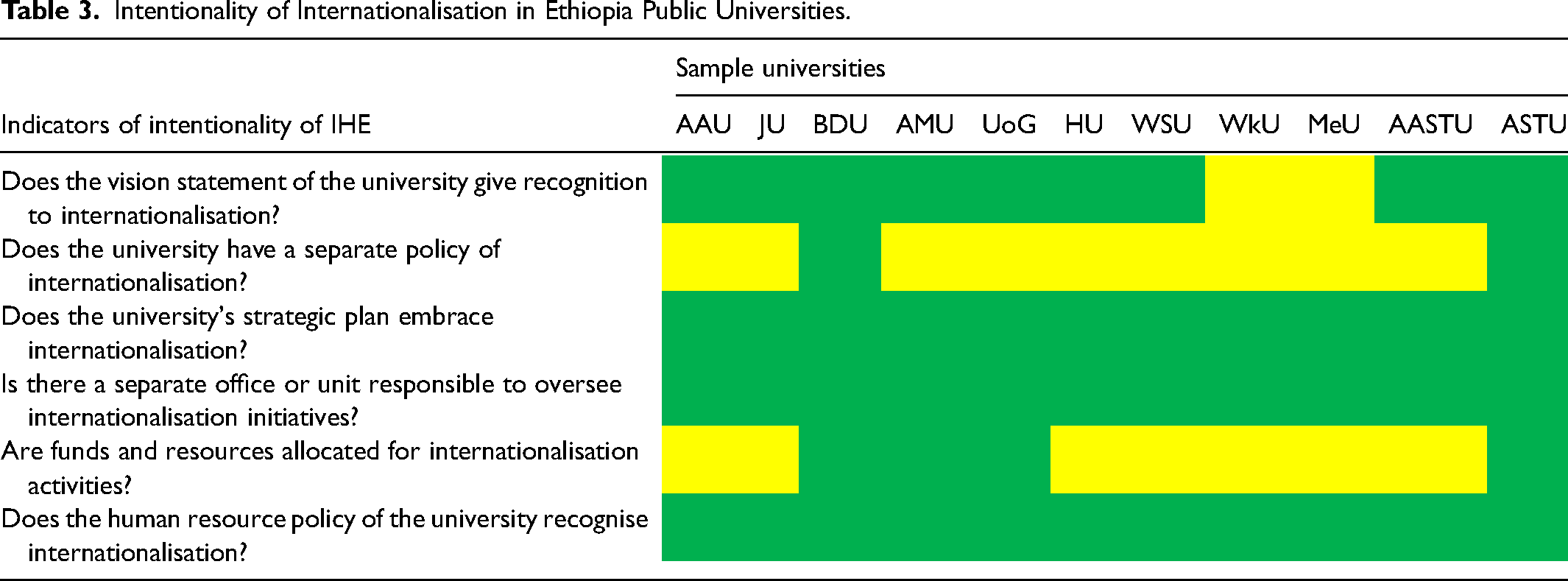
Table 3 shows that IHE in Ethiopia is becoming an intentional undertaking. Nine universities recognised internationalisation in their mission and vision statements. For instance, the mission statement of AAU is “… to contribute to national, continental, and global development” (AAU Strategic Plan 2020–2025, p.25). In contrast, the vision statement of WkU is “to be the top university among applied science universities of Ethiopia by 2030” (WkU strategic plan 2020–2025, p.13). The study's findings support the 5th IAU global survey evidence that more than 90% of 907 HEIs in 126 countries recognised IHE in their vision and mission statements (Marinoni, 2019). As Knight (2004) argues, recognising IHE in institutional mission statements indicates that IHE is on the right path of becoming an intentional process.
However, only two universities (BDU and ASTU) had specific policies on internationalisation. The focus and contents of these two universities’ policies were, by and large, similar to the national internationalisation policy of Ethiopia. While entities in national governments hold a central role in setting the policy framework of higher education institutions (Helms et al., 2015), it would be more supportive to harness the potential of IHE if institutions adapt it to their specific contexts. The lack of IHE policies in most universities supports the argument that merely recognising IHE in the mission statement does not make IHE an intentional process (Marinoni & de Wit, 2019; Helms et al., 2015).
The study's data show that all the sampled universities integrated internationalisation activities into their strategic plans, with slight differences in the depth and focus of internationalisation activities. Further analysis of the data shows that the strategic directions proposed by most universities focused on engaging in staff and student exchange, strengthening international partnerships, carrying out joint and collaborative research, attracting international students and staff, and internationalising academic programmes and curricula. While integrating IHE into their strategic plans is commendable, a failure to localise it to their contexts and academic priorities raises concerns about its utility. Three HEIs (AAU, JU, and BDU) have plans for transnational education activities, including opening a branch campus overseas, with associated economic rationales (including generating income from international students).
Similarly, all the sampled universities had international offices responsible for leading IHE initiatives. The finding is consistent with Marinoni (2019), who argues that almost all HEIs globally have international offices responsible for overseeing IHE. An analysis of the data shows a difference in how the international offices were structured, their core responsibilities, and whether there is a dedicated budget for their office. Only one HEI (ASTU) has top management leading the IHE agenda, three (JU, BDU, and WSU) are led by middle level management. BDU's vice president for strategic communication has brief on IHE. The remaining HEIs are answerable to middle level management. International offices that were led by senior management (directors or vice presidents) had more responsibilities, resources, and authority than the others.
All, except AASTU, indicated that the universities’ HR policies recognise international experience and engagement as desirable for recruiting and promoting staff. While three respondents from WSU, AAU, and JU questioned its application, the HR policies acknowledged a need to organise professional development programmes for faculty to build international competence. All respondents indicated that there is limited staff engagement in internationalisation activities due to a perception that such initiatives are the sole responsibilities of international offices. The HR policies of most HEIs do not value international experience as a fundamental requirement (Marinoni, 2019), which affects the staff's motivation to actively engage in IHE (Clarke & Yang, 2021).
Analysis of the findings shows that international offices that are led by senior staff members have positive implications on other indicators (interestingly ASTU and BDU have ticked all the boxes of intentionality). Despite differences in how international offices are organised, in all the sampled universities, internationalisation initiatives are the sole responsibility of international offices rather than an institutionalised endeavour where a critical mass of staff partakes in it. This signifies the importance of introducing incentive measures to motivate staff to engage in IHE initiatives. Analysis of the universities’ strategic plans revealed several commonalities in IHE activities across institutions, disregarding contextual, resource, and experience differences among them. It is not surprising to find out that the five universities (BDU, ASTU, JU, AAU, and WSU) that MoSHE identified as having relatively better IHE engagements have stood out in most indicators of intentionality.
Is IHE an Integrated Undertaking in Ethiopia's Public Universities?
This sub-section presents and discusses the extent to which IHE is an integrated endeavour in the sampled universities.
a) Integration of an International Dimension in the Teaching Function
Figure 1 presents the extent to which international dimension is integrated into the teaching function at the bachelor's, master's, and PhD levels in the universities.
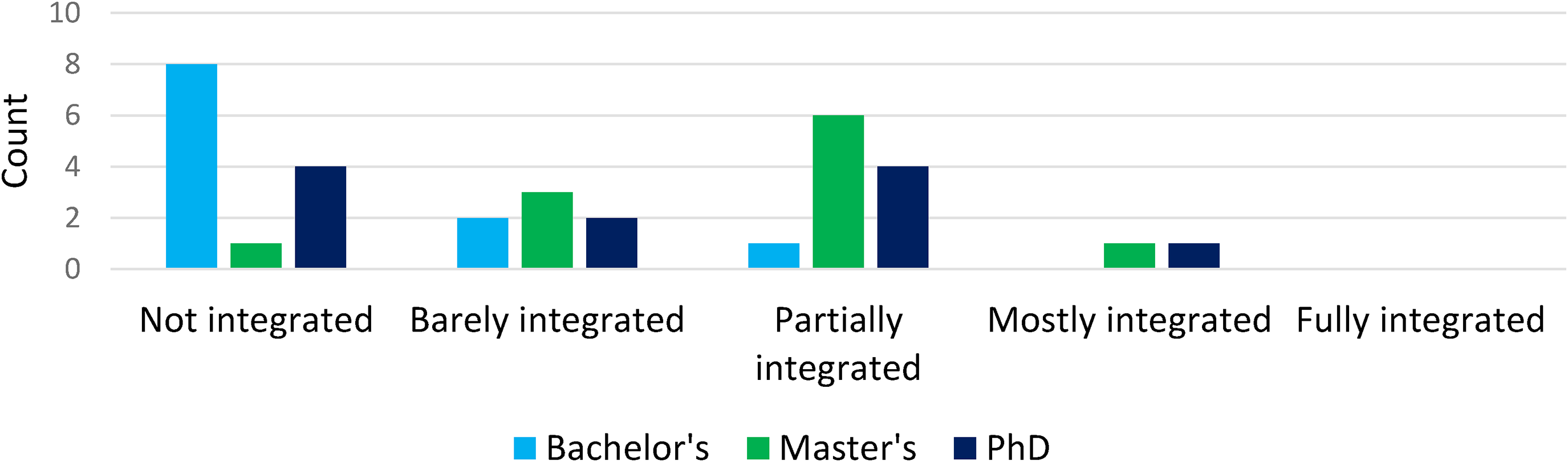
Integration of an international dimension into the teaching function.
While most universities indicated that they did not integrate an international dimension into their teaching function at the bachelor's level, they partially integrated it at the master's and PhD levels. Research universities (JU, AAU, BDU, HU, and UoG) and Adama S&T university at least partially integrated an international dimension into contents of their master's and PhD curriculum. Further analysis of the data shows that the factors that limited the internationalisation of the teaching function of the sampled universities were a shortage of international faculty in the campuses, a lack of Ethiopian staff with intercultural and international competences, and a small number of international students in a classroom that could support the teaching and learning methods. Surprisingly, there was limited reference made to curriculum content by the respondents. While internationalising the teaching function has not yet moved beyond isolated examples of good practice in many countries (Leask et al., 2018), preparing students with the knowledge, skills, and attitude relevant to living and working in a globalised world demands contents of the curriculum, teaching-learning methods, and assessment techniques to integrate international dimension.
b) Integration of an International Dimension into the Academic and non-Academic Services
Figure 2 presents the degree of integration of an international dimension in academic and non-academic services of the universities.
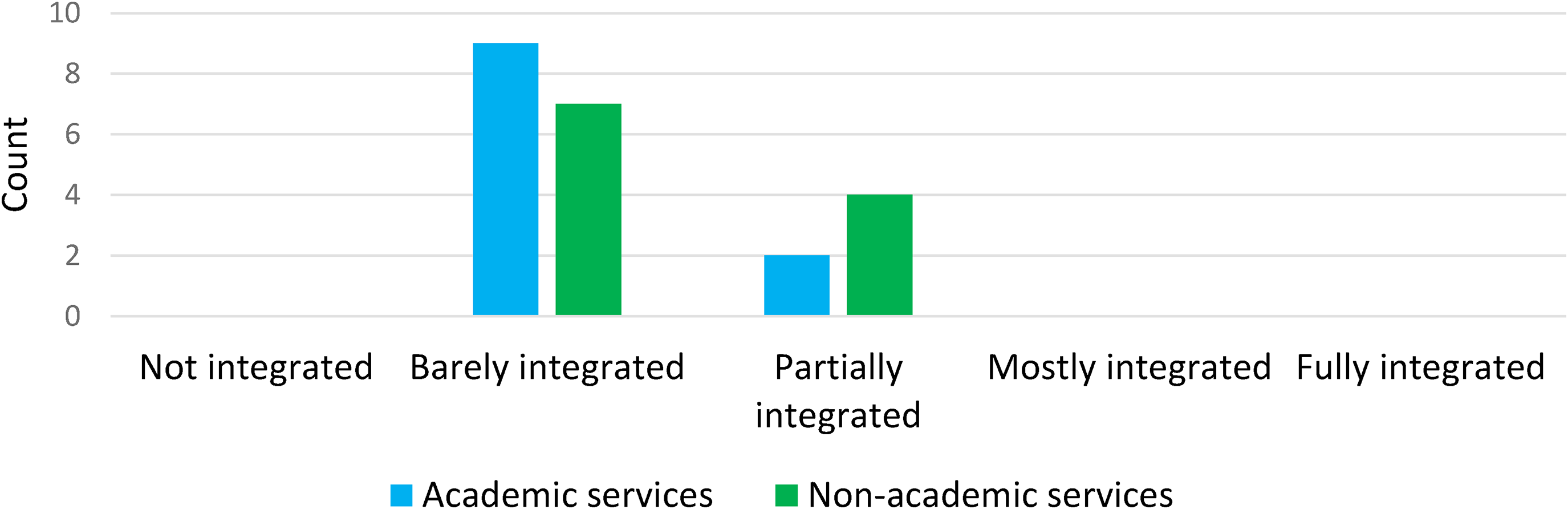
Integration of an international dimension in academic and non-academic services.
Most universities barely integrated an international dimension into their academic and non-academic services, whereas four HEIs (JU, ASTU, BDU, and UoG) partially integrated it. Analysis of the data shows that the academic services (such as language, math, IT, and research support services) and non-academic services (orientation, welcoming, information desk, counselling, student advisory, cross-cultural training, visa advice, etc.) in the sampled universities were either absent or tailored to the needs of Ethiopian students. In most universities, staff of international offices strived to provide support to international staff and students. However, respondents argued that it is neither adequate nor institutionalised. Despite the lack of services tailored to international students’ needs, only JU planned to internationalise the non-curricular activities as part of its current strategic plan. These findings are consistent with Helms et al. (2015) who argue that internationalisation at home, including internationalising academic and non-academic services, has yet to develop in many higher education contexts.
c) Integration of IHE into the Monitoring and Evaluation Process
Figure 3 shows the degree of integration of IHE into the universities’ monitoring and evaluation system and practices.
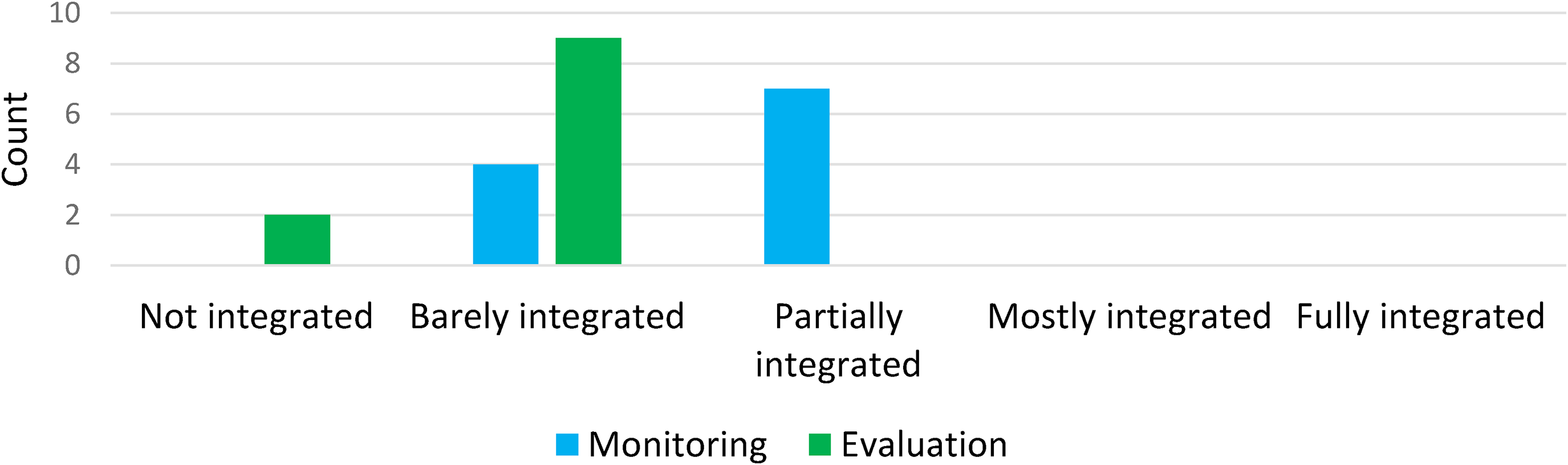
Integration of IHE into the monitoring and evaluation systems.
Most universities partially included IHE in their monitoring practices and barely integrated it into their evaluation systems. Although it is not a regular practice, three universities (BDU, JU, and ASTU) partially incorporated IHE targets when they evaluated the performance of their last strategic plans. This finding is consistent with Garwe and Thondhlana (2021), who argue that while institutions increasingly feature internationalisation in their strategic plans, they only sometimes translate it into practice. This is at odds with the literature on IHE, which suggests that monitoring and evaluating the contribution of IHE to education, research, and society, is essential to maximise its contribution to the strategic priorities of all HEIs.
Analysis of the interview data shows that IHE in most Ethiopian universities is predominantly perceived as a public relation exercise so as to sign as many memoranda of understanding (MoU) with international HEIs as possible and get money/ funding through international partnerships. Interestingly, recognising IHE in their mission statements, incorporating IHE into their strategic plans, and establishing international offices (i.e., ticking the boxes of intentionality) is arguably helpful in persuading international HEIs to forge partnerships with Ethiopian public universities. This perception (an overemphasis placed on signing MoU and the desire to use internationalisation as a means to get funding through partnerships) is the primary bottleneck to integrating an international dimension into the functions, purpose, and delivery of the universities. To address this challenge, the universities may need to give precedence to Ethiopia's aspiration (i.e., to improve the quality, access, relevance, and equity of higher education to all citizens) and underline the principal goals of IHE (i.e., to improve the quality of education and research and to make significant contributions to society).
Conclusion
The primary rationale for the changes happening around HEIs in Ethiopia is the aspiration to improve the higher education sector and enhance its support for the nation's socio-economic development. However, the approach applied by public universities in Ethiopia appeared to limit the benefits that could be harnessed from IHE.
The study's findings support the conclusion that most universities are on the right track to make IHE an intentional undertaking. However, developing a separate policy for internationalisation and allocating funds/ resources for IHE activities are the two indicators that most universities fail to fulfil. The IHE strategies of most Ethiopian public universities are similar. They fail to respect contextual differences, the identity of each HEIs, and the very rationale for HEIs designations. They need to establish educational systems aligned with their respective designation and integrate IHE into these systems to capitalise on their competitive advantages. While having an international office to oversee IHE initiatives is commendable, empowering it with proper authority, responsibility, and resource is paramount. Similarly, having an HR policy that recognises internationalisation is one thing, but engaging a critical mass of staff in IHE initiatives is another thing.
Interestingly, two universities (BDU and ASTU) stood out in all indicators of intentionality and integration. One common factor that these two universities share is the attention given to international offices. Both universities structured the offices at the senior management level, equipped them with adequate and competent staff, and empowered them with the necessary responsibility and authority. This begs the question of whether the nature of an international office is the most crucial indicator of the intentionality of IHE. Future studies may focus on the correlation between each indicator of intentionality to the strategic process of IHE.
The main lesson learnt from this study is the importance of giving more emphasis to the integration aspects of IHE. The primary purpose of the intentional indicators is to lay a foundation for a successful integration of IHE. However, proper integration leads to the ultimate goals of IHE – improving education, research, and society. Metaphorically speaking, intentionality is a road, integration is a vehicle, and instrumentality (which is beyond the scope of this paper) is a destination. Hence, HEIs’ management needs to move beyond a simple ticking of the intentional boxes to successfully integrate IHE into the purposes, services, and functions of their HEIs.
Integrating an international dimension into the teaching function demands a synergy between several initiatives. These include making the curriculum international, attracting international students, recruiting international staff, providing continuous professional development to local staff to enhance their international competencies, and creating international partnerships for internships and similar opportunities. Universities seem to have focused on the ‘low hanging fruits’ – internationalising curriculum contents. However, an isolated focus on a particular aspect makes the integration difficult, and its result will not support producing students with global competencies. Hence, HEIs need to address all the issues holistically. While the real development of strategic and comprehensive internationalisation takes many years of manageable steps, it demands identifying impediments and taking tangible action to address them. If HEIs in Ethiopia aspire to maximise the benefits of IHE, integrating it into the higher education system is vital. In addition, the measure of success in IHE should move beyond short-term gains (funding from IHE partnerships) to improve the quality of education and research and make a meaningful contribution to society.
The framework and associated indicators developed in this study for ‘measuring intentionality and integration’ were useful and ‘fit for purpose’. We recommend that these be included in institutional policies as useful ‘tools’ for integrating IHE into policies and practices at the institutional level. However, the authors would like to suggest where further research might go from this study. In this regard, adopting the measurement criteria to respective contexts is one. In this study, all indicators of intentionality and integration have been given equal weight. In fact, some institutions may see a rationale in giving more value to some indicators than others. Future studies may focus on identifying the values different institutions give to each indicator so as to refine and adapt the framework to diverse contexts.
Footnotes
Acknowledgements
This article is part of a PhD dissertation funded by the European Commission, Grant Agreement Number 778196. However, the contents of the study reflect only the authors’ views, and the agency is not responsible for any use that may be made of the information it contains.
Conflict of interests
All authors declare that they have no conflict of interest.
Funding
The authors received no financial support for the research, authorship, and/or publication of this article.
