



Abstract
International students in Australia risk financial insecurity and as a result, may make suboptimal health decisions. Limited research has explored the experiences of international students’ health-related financial decision making. In-depth interviews were conducted with 31 international students to explore how financial situation influences their decisions in Australia. Data were thematically analysed. Findings highlight that limited income can impact overall wellbeing and health-related decision making. When making financial health-related decisions, participants prioritised urgent health needs and education. Participants who perceived their financial situation limited were less willing to spend money on mental health services, social activities, and food. This study suggests that students may consider the long-term financial benefits of studying abroad when making decisions, but they do not consider the long-term health implications of stress and wellbeing. Enabling students to improve their financial situation and lower their expenses could enhance wellbeing and facilitate health-related decision making.
Introduction
International students are an important part of Australia. They make a large contribution to the Australian society and economy (Department of Education Skills and Employment, 2021), have a significant impact on university funding (Lacy et al., 2017), increase cultural diversity, and can improve cultural understanding and intercultural connections (Deloitte Access Economics, 2016). International education prepares both domestic and international students for a highly globalised and internationally connected modern job market (Department of Education Skills and Employment, 2021). However, international students may experience poor mental health (Forbes-Mewett, 2019), lower levels of social wellbeing (Arkoudis et al., 2019; Morris et al., 2020) and financial insecurity while in Australia (Arkoudis et al., 2018), all of which have been exacerbated by the COVID-19 pandemic (Morris et al., 2020). Poor mental health and social and financial wellbeing are often interconnected and can affect overall experience, wellbeing, and educational success of international students (Arkoudis et al., 2019; Forbes-Mewett, 2019). While poor mental health and financial insecurity are experienced by domestic students (Skromanis et al., 2018), cultural differences and difficulties related to settling into a new country may increase international students’ vulnerability to these issues (Forbes-Mewett & Sawyer, 2016). This research explores how the financial situation of international students influence their health-related decision making while living and studying in Australia.
Background
International students fund their studies and living expenses through a variety of means, with many drawing on savings, student loans, and by working the maximum allowable hours while studying (Arkoudis et al., 2018; Nguyen & Balakrishnan, 2020). The cost of living in Australia is one of the highest in the world, while the majority of international students in Australia come from countries with a significantly lower cost of living (World Population Review, 2022). This might explain why international students rate living costs in Australia as expensive (Department of Education Skills and Employment, 2015). Some students struggle to meet their basic living expenses such as food and other necessities (Arkoudis et al., 2019) and some consider discontinuing their studies due to financial difficulties (Arkoudis et al., 2018).
International students are known to experience financial insecurity because their expenses and debt often exceed their income while studying in Australia (Arkoudis et al., 2018). International students pay higher tuition fees than domestic students, have additional costs (for example, overseas student health insurance), and are not usually able to lower their living costs by living with their parents (Obeng-Odoom, 2012). Thus, international students e often rely on employment as their primary source of income, but also experience difficulties when finding secure employment (Ryan et al., 2016). This makes international students vulnerable to exploitation, or to inadvertently or out of necessity breaching their visa requirements (Arkoudis et al., 2019; Challice et al., 2021; Ryan et al., 2016). Limited opportunity to generate income together with higher expenses compared to domestic students might explain why international students are more likely than domestic students to receive financial support from their families (Arkoudis et al., 2018). While financial support from family is considered a sign of financial stress (Morris et al., 2020), it might also explain why international students do not appear to be more worried about their financial situation than domestic students (Arkoudis et al., 2018; Skromanis et al., 2018)
Conceptual Framework: Income as a Social Determinant of Health
This research is guided by the social determinants of health as a conceptual framework, particularly as income relates to health. Income insecurity can compromise the overall health and wellbeing of international students. Income inequality is a social determinant of health, and is associated with adverse health outcomes at the population level (Pickett & Wilkinson, 2015). Income is interconnected, interlinked, and influences other social determinant of health (Marmot, 2002; Ruckert et al., 2017). Marmot (2002) describes how material deprivation as well as a lack of social participation that can stem from low income can influence health. There is a significant body of literature that describe the link between health and income. For example, low income, socioeconomic status, and unemployment are linked to poor mental health in research both internationally (Kromydas et al., 2021; Tibber et al., 2022) and in Australia (Kendall et al., 2019). Australians on low incomes were more likely to struggle to maintain overall good health and wellbeing compared to those on relatively higher incomes during the COVID-19 pandemic (Saikia et al., 2021), but also before the pandemic (Kessels et al., 2020). Financial stress is associated with lower self-perceived health (Cloos et al., 2020) and mental health issues also among international students (Newton et al., 2021; Ryan et al., 2016).
While income as a determinant of health has been extensively studied, the causal relationship between income and health is complex. Shimonovich et al. (2022) note the many confounding factors, such as the political and economic environment, and the psychosocial factors that influence this relationship, while health is also known to influence income generation (Liu et al., 2019), highlighting the bidirectional relationship between income and health. Income can influence health through individual behaviours and other determinants of health. For example, cost of care can prevent individuals with low income from seeking help (Castro-Ramirez et al., 2021; Maheen et al., 2021). Low income is associated with higher rates of smoking, lower levels of physical activity (Aue et al., 2016; St-Pierre et al., 2019), and poor dietary habits (Thompson, 2021). Low income is linked to living in disadvantaged neighbourhoods (Browne-Yung et al., 2016) and limited transportation opportunities (Awaworyi Churchill & Smyth, 2019), which can both influence overall wellbeing and health behaviours.
Income can influence health-related decision making. Financial security can provide better access to essential goods and services, with people on higher incomes or with greater financial security having more options available and greater flexibility to make healthy decisions. Income can influence the overall decision-making process as well as decisions made (de Bruijn & Antonides, 2022). For example, people on low incomes are often forced to consider the economic consequences of their ‘everyday’ decisions like their food purchases, while people who are financially secure may not need to consider the economic aspects of these decisions at all (Shah et al., 2018). People on low incomes are more likely to evaluate a range of options leading them to make compromises between different decisions because their options are limited (Shah et al., 2018). Low income is associated with favouring decisions that have immediate rewards even when they might have negative long-term consequences, for example, fast food and weight gain (Sheehy-Skeffington & Rea, 2017), highlighting the decisions made because of low income that can have negative impacts on health in long term (Sheehy-Skeffington, 2020).
International Students and Financial Health-Related Decisions
Limited research has focused on international students’ health-related decision making and the impact of income on decisions made. There is some research, however, that provides insight on how financial pressure is linked to health-related decisions in the international student population in Australia. International students’ financial situation and needs can guide their decision to seek employment while studying in Australia (Ryan et al., 2016). However, employment can limit time available for other activities such as staying physically active and employing healthy eating habits (Pang et al., 2021). Work commitments might also leave less time for studying (Challice et al., 2021) and failing to fulfill study commitments can have negative impacts on mental health (Forbes-Mewett & Sawyer, 2016). Some students have been concerned that their financial situation might force them to discontinue their studies, something that was evident before and during the COVID-19 pandemic (Arkoudis et al., 2018; Morris et al., 2020), which can cause emotional distress (Forbes-Mewett & Sawyer, 2016). Students may also sacrifice health care for other costs. Research suggests that students are unable to purchase essential medicine or visit a doctor due to financial stress experienced during the COVID-19 pandemic (Berg & Farbenblum, 2020). Students rate Australian healthcare services expensive and consider this a key barrier to seek help for health issues that are not covered by Overseas Student Health Cover (Mundie et al., 2021; Pang et al., 2021). This indicates that the economic aspects might outweigh the perceived benefits of health-seeking and other health-related decisions. While there is clear evidence that some international students face financial stress and pressure, it is important to note that not all international students experience financial insecurity. The evidence suggests that students on low incomes are those most at risk of making suboptimal health-related decisions.
Financial insecurity, both income insecurity and limited financial resources, impact international students’ health and health-decision making. However, there is limited research that has explored the experiences of international students when making health-related financial decisions. The COVID-19 pandemic has increased the risk of financial insecurity among international students; as such, it is essential to explore the experiences of those who were living in Australia in this period (March 2020–December 2021). Gaining an understanding of international students’ experiences of making decisions during this time will allow for the creation of strategies to support their wellbeing in Australia. Ensuring that international students are supported could also help improve Australia's competitiveness in the international education market (Berg & Farbenblum, 2020).
Method
This qualitative study sought to explore how international students’ financial situation influences their health-related decision making while living and studying in Australia, with a specific focus on how decisions were made during the COVID-19 pandemic. It specifically sought to (i) explore the role of international students’ financial situation in decision making; and (ii) identify health-related decisions that are influenced by international students’ financial situation. Ethical approval to conduct the study was granted by the Deakin University Human Research Ethics Committee (2021-447).
Sample and Recruitment
Participants were recruited through international student organisations and groups and social media platforms, Facebook, Twitter, LinkedIn, between March and April 2022. Recruitment advertisement included a link and QR code to a short Qualtrics survey that included questions about participant's eligibility for the study, details about the study, Plain Language Statement, and consent form. Students who were interested in participating in the study could express their interest and give their consent by finishing the survey. Participant's consent was also confirmed in the beginning of the interviews.
Participants were recruited using purposive sampling methods. Only international university students who lived and studied in Australia in 2020 and/or 2021 were included in the study; those who studied online from their home countries and never lived in Australia during 2020–2021 were excluded. Those interested in participating were asked to complete an online survey to confirm their eligibility, eligibility and consent were also confirmed in the beginning of the interviews. International student organisations and groups who helped reach potential study participants were chosen purposively to include as many different sub-cohorts as possible (for example, international students in different states). Total of 18 organisations were contacted, of which eight assisted by sharing the recruitment advertisement: including four international student Facebook groups, two university student associations, one international education agency, and one international education association. Four of these organisations and groups worked with international students nationally, two in Victoria, and two in New South Wales.
Data Collection
Data were collected in March and April 2022 using in-depth, semi-structured interviews that were guided by an interview schedule. Topics covered were study and employment experiences, financial situation, experiences during the COVID-19 pandemic, and decision making with a focus on financial decisions. Prompts aimed to guide participants to think about both day-to-day decisions (for example, diet) and bigger decisions (for example, housing), with a focus on decisions that were health related. Eligible participants were interviewed once, with the interview duration ranging from 38 to 94 min (average 50, SD 11.4). Participants were given a $45 gift voucher as a recognition of their time. Interviews were conducted and recorded by using the online video platform Zoom. The recordings were automatically transcribed using Zoom and Welder; transcripts were checked by listening to the audio recordings. Participants were given the opportunity to view their interview transcripts and conduct voluntary member checking to validate and increase the reliability of the results (Birt et al., 2016). Just over half of the participants (n = 17, 55%) completed this, with three suggesting minor wording changes to their transcripts.
Data Analysis
Data were analysed using the five-step process of Reflexive Thematic Analysis (RTA) described by Braun and Clarke (2006, 2019). First, automatically created transcripts were checked against the interview recordings, the transcripts were read several times and initial thoughts and codes were documented in a reflective journal. Second, interesting features from the data were ‘coded’ by analysing each interview individually using QSR NVivo version 12(QSR International Pty Ltd., 2020). Interviews were initially coded inductively with the coding becoming more deductive as the process and increasing knowledge on the topic later influenced the coding. Initial codes represented both the researcher's observations (semantic) and interpretation of underlying meanings (latent) of the data to gain a comprehensive understanding of the topic. Third, initial codes were reviewed, grouped, and re-grouped multiple times to develop themes. Fourth, developed themes were refined and re-grouped again when necessary to support the data and findings, and a thematic map (Figure 1) was created to conceptualise the findings. Finally, drafts for each theme were written, named, and organised to support each other. Data are presented as verbatim quotes without attempts to change the grammar or words used by participants. Course level, and region are used to provide context to these quotes.
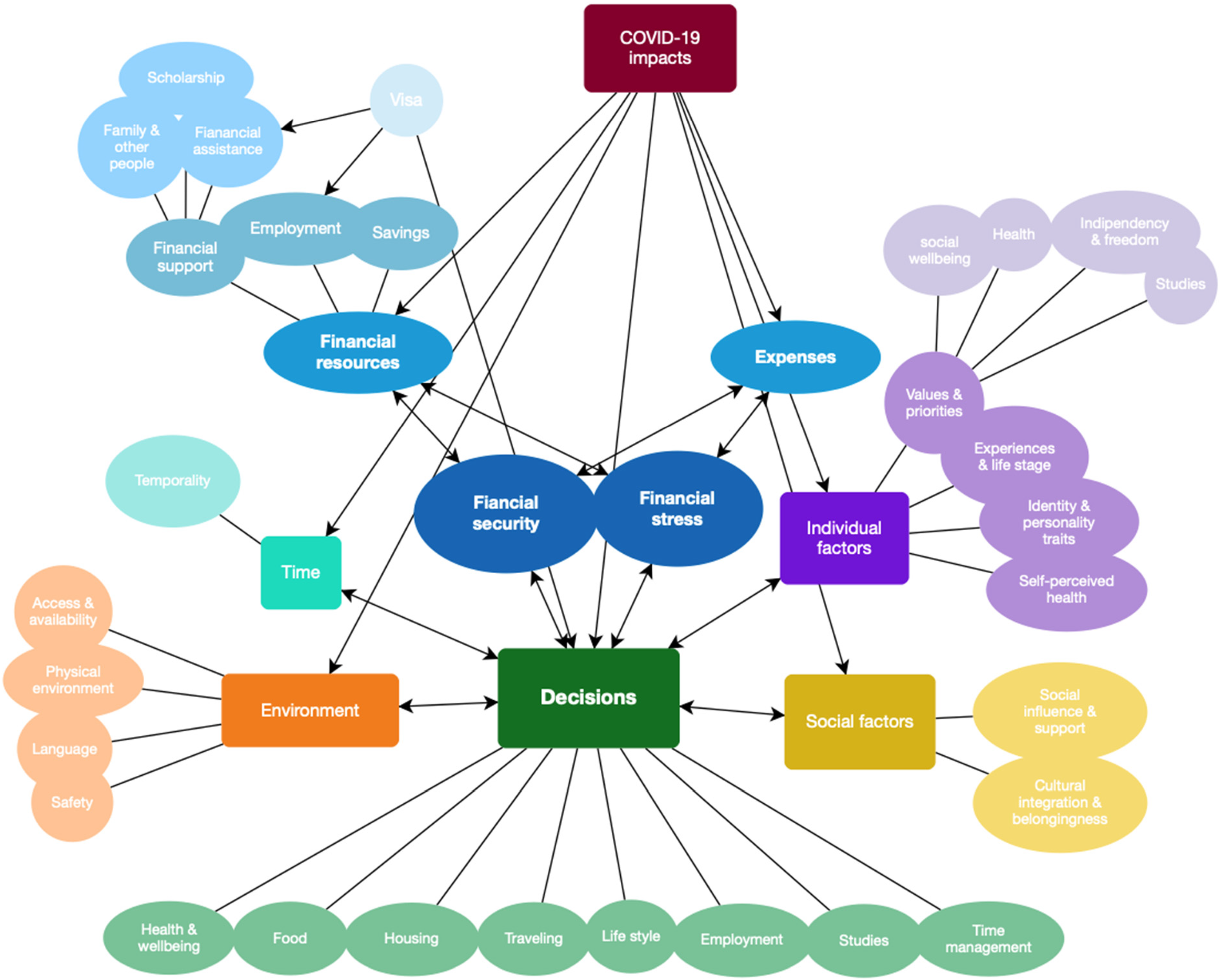
Factors influencing decision making among international students.
Results
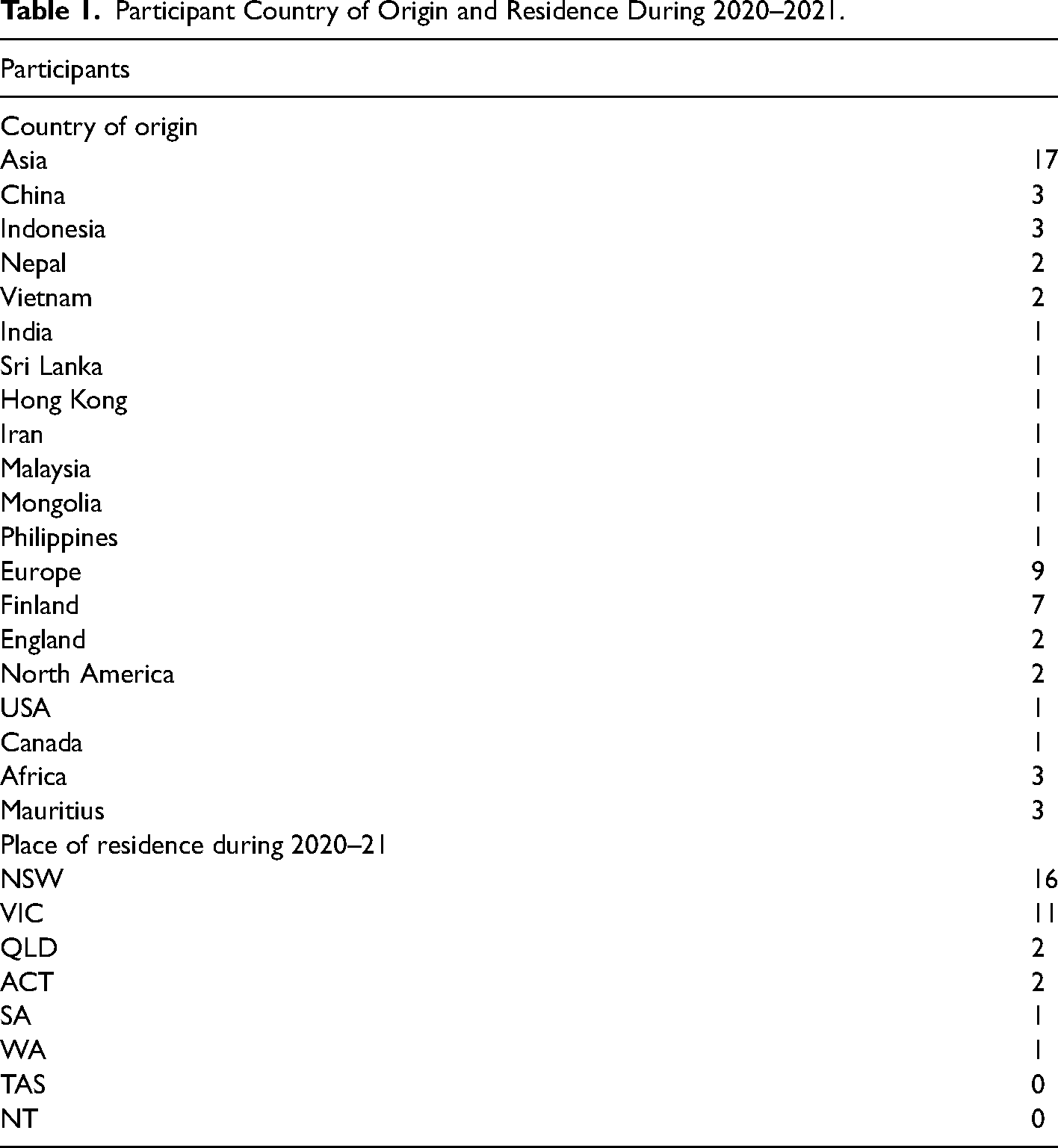
Interviews were conducted with 31 international students from 16 countries (Table 1), representing four continents: Asia (n = 17), Europe (n = 9), Africa (n = 3), and North America (n = 2). Most participants (n = 26, 84%) did not speak English as their first language, and the average and median age was 27 (range 19–42, SD 5.2). In 2020–2022, 42% (n = 13) of the participants were studying an undergraduate course, 39% (n = 12) Masters course, and 32% (n = 10) a doctoral degree. A small number of participants (n = 4, 13%) were studying another higher education degree during this time (for example, moving from Masters to PhD). Most participants lived in New South Wales and Victoria, with four participants living in more than one state or country during this time. Participants’ most common financial resources were employment (n = 29), money transfers from family (n = 20), and scholarships from university or home country (n = 13). All students considered employment as an opportunity to improve financial security, but many noted their visa conditions restricted their employment opportunities.
Participant Country of Origin and Residence During 2020–2021.
Participants reported a variety of factors that influence their decision making. While financial situation was important, decisions were also influenced by a combination of other financial, individual, social, environmental, and temporal factors; Figure 1 provides a simplified overview of these. Two main themes were constructed based on the data analysis: (1) financial priorities related to health and (2) financial situation limiting health-related decision making.
Financial Priorities Related to Health
Financial situation was an important factor influencing participants’ health-related decisions, with some decisions clearly prioritised over others. While most participants (n = 25; 81%) did not appear worried about their financial situation, 27 (87%) participants acknowledged their limited financial resources and described the careful financial decisions they made, with all noting that they must prioritise necessities such as paying rent and other bills over entertainment and comfortable lifestyle. Decisions related to balancing work and study were also important, with tuition fees being the most significant financial expense, but also a financial necessity that was seen as an investment for the future. Most participants (n = 24; 77%) indicated that they were focused on completing their studies, finding employment, and becoming financially more secure after graduation. Those who primarily self-funded their studies (n = 8) sought employment to pay for the tuition fees, but often struggled to maintain a work-study-life balance. However, failing in studies was considered a significant financial risk as students are required to re-select and pay again for failed subjects. This was a major factor participants considered when making employment related decisions. I kind of want to focus more on like academically first because [if] you're failing a course or something, that's much more than you can [earn], especially with international tuition fees. So yeah, I'm just like, oh, maybe I don't want it to impact my study too much. It's not worth it cost benefit wise. (Bachelor, Asia)
Spending money on healthcare was a financial priority for those who had experienced health issues that required medical attention (n = 8), but it was dependent on the perceived urgency of the health issue. Health issues that participants considered significant (for example, serious dental problems) were seen as a financial priority, meaning that these participants were willing to pay high out-of-pocket expenses related to healthcare services that were not covered by their overseas health insurance. However, participants often sought financial support from their parents when dealing with larger costs. I think my tooth was hurting too much so I had to get something done about it. It's not like I could have lived for much longer with that. So, there are some health decisions that have to be made and I think that's something I try to prioritize because I need to be healthy to do whatever I need to do here. Although healthcare is really costly here, it is a necessity… it [dental care] was like a very big sum of money. So, then I had to ask my parents for some help. (PhD, Africa)
Financial Situation Limiting Health-Related Decision Making
Participants’ limited financial resources influenced many health-related decisions. Participants who considered their financial resources scarce (n = 27) described making conscious decisions to limit their expenses, including spending on mental healthcare, social activities, and food. Many participants, because of their financial insecurity, made the decision to either ignore any mental health problems or find free solutions. One third of participants had sought help from mental health services, with most of these being free university counselling services. Some participants made the decision to only utilise such services because they were easy to access and available for free. I actually kind of felt like she was my only free counsellor. She was for my uni, so that was free. And I'm not sure, I probably would have to pay to go somewhere else, but I kind of thought like it wasn't that bad that I couldn't survive myself. (Bachelor, Europe)
In addition to mental wellbeing, participants made decisions about their social wellbeing based on their income. Participants valued social connections and social wellbeing; however, they were willing to sacrifice these for financial security or to forgo them because of financial insecurity. Those who were able to improve their financial situation by working (n = 29) noted that they often did not have enough time for socialising after work and study commitments, although some participants considered work environment beneficial for their social life. While one in four participants made the decision to travel to see family and other long-term social connections in their home countries, they were less willing to spend money on newer, possibly short-term, social connections in Australia. For example, participants made conscious decisions to spend less money on social activities, such as dining or going out with friends, when trying to lower their expenses. The impact of this is that participants might lose or miss out on creating new social connections by limiting these interactions while in Australia. But the problem is that when I hang out with friends, I always have to go to some expensive restaurant over here… it always in the end has something to do with money. (Bachelor, Asia)
Participants also described the way that they control their expenses when making food-related decisions. Most participants (n = 18; 58%) made the decision to purchase lower cost food items when grocery shopping. For some participants, this meant buying more vegetables and pulses, while for some the cheaper option was meat. These differences could be explained by individual and cultural differences. Cultural background together with environmental factors (for example, food price) and participants’ financial situation determined how much participants were willing to spend on foods. Things that we usually are used to eating are a bit on the expensive side, rather than things that come easily in Australia. Like you know if you have to buy a can of beans or, you know, basically food packages like pasta and everything, we can’t eat that every day. Maybe one day or two days, okay, but then rest five days you need Indian food. (Master, Asia)
Discussion
The aim of this study was to explore how international students’ financial situation influences their health-related decision making. Based on interviews with 31 international students from 16 countries, this study found that financial situation is only one of the multiple factors influencing health-related decisions. Participants prioritised their education over other expenses; managing the delicate balance between long-term costs involved with studying in Australia and forgoing luxuries, and oftentimes, essentials while studying. Often this included limiting or reducing spending on mental healthcare, food, and social activities.
While there are multiple influencing factors that go into decision making, two main findings can be drawn from the interviews. The first is that participants prioritised education over other expenses during their studies and were more likely to spend money on tuition and urgent health needs. The second is that participants were prepared to make short-term sacrifices, such as limiting spending on their mental health, food, and social activities while in Australia to either limit the financial burden on their family or on their own ability to generate an income, highlighting the tension between generating income and studying – the main reason they were in Australia.
Participants prioritised long-term benefits over immediate or short-term rewards when making financial health-related decisions. Education was considered a future investment with a long-term financial benefit, and as such most participants made decisions based on how much these decisions would impact their study progress and results. For example, employment and social activities were often considered detrimental as these would take time away from studying. This finding is interesting as it suggests that participants were driven by the perceived long-term benefits of their education. However, it contradicts the work of Sheehy-Skeffington and Rea (2017) who suggest that low income is related to decisions that benefit people in short-term. For example, this could be prioritising work over studies because that would improve student's financial situation during studies. On the other hand, people on low incomes could be less likely to invest in education for the same reason. Prioritising long-term financial benefits might be related to participants perceived financial situation and economic background; a few participants considered their financial situation good and those who considered their financial situation limited during their studies were determined to become financially secure in the long-term. Participants accepted the temporary nature of their current financial situation and were focused on ‘getting by’ until they graduated. This finding contrasts that of the work of Stevenson and Wolfers (2013), who suggest that having enough money to meet basic needs does not provide life satisfaction and is associated with lower levels of subjective wellbeing. Higher levels of life satisfaction and subjective wellbeing are associated with many health promoting behaviours that can have long-term benefits, such as healthy diet and exercise (Grant et al., 2009; Stenlund et al., 2022). Thus, this finding that participants were willing to accept higher levels of financial stress and lower levels of wellbeing during their studies is interesting and is worthy of further investigation.
Participants, including those with limited income, prioritised immediate physical health needs over seeking assistance for poor mental health. In general, the prioritisation of health need was dependent on participant's perception of the urgency of the needs; short-term health-benefits was the main driver of health-seeking decisions. For example, participants were willing to seek help for a toothache as the help was associated with immediate pain relief. Seeking help for mental health issues was a lower priority, especially among those who had limited financial resources. This is consistent with the existing literature that suggests that international students are less likely to seek help for mental health issues (Ryan et al., 2016; Skromanis et al., 2018). Participants were not willing to pay for mental health services because they did not consider their mental health issues urgent or serious, a finding that aligns with the existing literature (Forbes-Mewett & Sawyer, 2016; Newton et al., 2021). Forbes-Mewett and Sawyer (2016) suggest that international students are more willing to accept the need to pay to receive care for their physical health and are less willing to accept the same level of financial expenditure to assist their mental health. Considering the findings in relation to the ideas of Sheehy-Skeffington and Rea (2017), international students on low incomes may not associate mental health services with immediate benefits. The findings of the current study indicate that some students are still willing to use mental health services if they are free of charge; however, not all participants utilised these services despite experiencing mental health struggles. Thus, questions remain what are the other factors that determine whether international students utilise these services.
Participants made decisions about their social connection based on their financial situation. Long-term social connections, such as their family or friends at home, were prioritised over newer connections. For example, participants indicated that they were willing to spend money traveling home to see family, but less willing to spend money on social activities such as dining out with new friends or acquaintances in Australia. This may be because participants considered newer social connections temporary and less valuable in the long-term. However, it may be related to difficulties in establishing social connections in Australia which have been observed in previous studies focusing on international students in Australia (Arkoudis et al., 2019; Morris et al., 2020). Having limited social connections in Australia might have negative impacts on students’ social wellbeing and overall health (Umberson & Montez, 2010).
The findings of this study suggest that international students would benefit from a better financial situation while studying in Australia. Improved financial situation during studies could have both short-term (improved wellbeing during studies) and long-term benefits (health promoting behaviours) on students’ health. One way that the financial pressures on international students could be lifted is by changing work restrictions, and therefore allowing students to improve their financial situation independently. Flexibility in the work hours would allow students to take on more work when having a lower course load. While previous literature acknowledges that work can limit time available for studying (Morris et al., 2020), the findings of this study indicate that international students usually prioritise their studies over work. Unlimited work rights have been criticised for attracting migrants to apply for a low-cost student visa in order to work full-time in Australia (Hare, 2022) and creating a system that favours students from wealthier backgrounds and pushes others into low-paid labour and high-risk jobs (Prakaash, 2022). However, the findings of this study argue that the work hour limitations also favour students from wealthier backgrounds; better financial situation allows more flexibility in health-related decision making. Moreover, work hour limitations may urge students on lower incomes to seek ‘cash-in-hand’ employment or accept other unlawful work conditions such as working for less than minimum wage (Arkoudis et al., 2019; Ryan et al., 2016). Working for less than minimum wage might push students from less wealthy backgrounds to increase their work hours which can impact their studies (Arkoudis et al., 2019). Considering these issues related to employment, it is important for host institutions to help international students lower their expenses. Based on the findings of this study, international students would benefit from lower tuition fees, general living costs and costs related healthcare and social activities.
Limitations
While there are clear findings of this research, this study is not without its limitations. The qualitative nature of this study and purposive sampling means that there are likely to be experiences that are not broadly representative of international student population in Australia. While the international student organisations who helped with participant recruitment and social media platforms were selected purposefully, the participants themselves self-selected to be included in the study. For example, relatively large number of participants (n = 7) were from Finland; however, Finnish students are not largely representative of internationals students (Department of Education Skills and Employment, 2021). This might impact the results as Finnish students represent a high-income country with individualistic culture, while most international students in Australia are from low- and middle-income countries and more collectivistic cultures. Students from individualistic cultures might be more hesitant to rely on financial support from family (Lu et al., 2021), thus, they are more likely to rely on employment, personal savings, and bank loans to fund their life and studies in Australia. This study is also subject to social desirability bias, which means that participants might have been less willing to share experiences that they do not consider socially acceptable (Bergen & Labonté, 2019). For example, participants might have talked about their experiences in relation to what is acceptable in terms of student visa conditions (for example, having enough money to cover living costs in Australia). Moreover, financial difficulties are associated with shame (Gladstone et al., 2021), which can result in participants unwillingness to discuss financial hardship experiences.
Conclusions
This study found that financial situation is one of the multiple factors influencing health-related decisions among international students. This indicates that international students’ health-related decisions result from a complex decision-making process that is not solely driven by their financial situation. Students on lower incomes might be willing to accept their financially disadvantaged position during their studies in Australia; however, limited financial resources can still have significant impacts on their wellbeing. Better financial situation would allow students to enhance their wellbeing and facilitate making decisions that promote health, both in short and long term.
The diversity of international student populations means that there is abundant room for further research determining differences between sub-cohorts (for example, different nationalities, age groups, and family income) in this group. Based on the findings of this study, the future research could focus on determining the factors that can explain the observed differences in health-related decisions (for example, seeking help for mental health issues). The results of this study also show that more research is needed to understand the factors determining students’ willingness to build and maintain friendships in Australia.
Footnotes
Funding
The author(s) received no financial support for the research, authorship, and/or publication of this article.
