




Abstract
Increased levels of internationalization have led to individuals working in multicultural organizations, a trend that is likely to continue for the foreseeable future. To navigate these environments successfully, more emphasis is being placed on the importance of higher education in preparing and arming the future workforce with the international competencies required to be successful in contemporary organizations. The aim of this research is to shed much needed light on how the learning design of management courses influence how and with whom 263 students learn within two culturally diverse post-graduate management courses. We found that Course B (specific cross-cultural design) significantly and with large effect size increased intercultural interaction over time relative to Course A (generic learning design), whereby qualitative findings confirm substantial differences in lived experiences between the two courses. This highlights that educators need to carefully design intercultural interactions rather than hoping that these will develop naturally over time.
Keywords
Introduction
With increased levels of globalization, the importance of potential candidates’ international training and experience has become a focal point for global organizations and recruitment (Ng et al., 2018). Coupled with this, employers are increasingly seeking individuals that display an ability to work in diverse cultural settings (Heffernan et al., 2019). The importance being placed on such intercultural skills have resulted in the need for higher education institutions to nurture and educate graduates in an inclusive environment, equipping them with the diverse skill set needed to enter the global workforce. With the number of students deciding to educate themselves in international universities on the increase (Iskhakova, 2018), universities have to adopt an inclusive approach to education which ultimately enables students to build intercultural learning relationships (Quinton, 2020; Raja et al., 2021).
Substantial attention has been paid to analysing and understanding the cultural behaviors and perceptions of management students at a graduate level (e.g., Arbaugh, 2014; Héliot et al., 2020; Rienties et al., 2014). While research in this area is undoubtably important, a deeper understanding is needed surrounding graduates’ learning experiences in intercultural management programs (Héliot et al., 2020), and how teachers can effectively design an inclusive intercultural management program that encourages and stimulates intercultural student interaction and understanding (Bücker & Korzilius, 2015; Macfadyen et al., 2020; Quinton, 2020).
In order to address the above, our study analysed the learning relationships among intercultural postgraduate students in two distinctly designed courses using the social identity theory of Tajfel and Turner (1979). Using an established social network approach (Baldwin et al., 1997) and building on research previously published in this journal (e.g., Gümüş et al., 2020; Montgomery & McDowell, 2009; Rienties et al., 2014) we investigated the impact of two distinct learning designs (Course A: domain specific course, and Course B: cultural specific course with a learning design focus on cultural integration) on social network formations of 263 postgraduate students. Follow-up semi-structured interviews were conducted with a total of 22 students across both courses. The findings from our study illustrate how students’ lived experiences with the learning design influenced learning relationships. This was particularly evident within the Course B where the subject content was designed to specifically enhance students’ cultural interaction and awareness.
Creating Inclusive Learning Designs That Build Student Learning Relationships
In order to create an effective intercultural learning environment, it is important to design an effective and inclusive learning experience for both host-national and international students (Bücker & Korzilius, 2015; Iskhakova, 2018). In order to increase student engagement in class and to reflect the global working environment, it is becoming increasingly important to incorporate international curriculum design for students within higher education. Such curriculum internationalization (Leask, 2009; Leask & de Gayardon, 2021; Wu et al., 2020) offers students a more engaging educational experience while providing them with a realistic overview of the global working environment they will be entering. In particular, the inclusion of international themes and perspectives, referred to as internationalized academic content and materials (Bodycott et al., 2014; Leask, 2013), have been linked to increased student engagement and participation (de Haan & Sherry, 2012; Mittelmeier et al., 2018). In this article we use learning design as an umbrella term for how teachers aim to design effective and inclusive courses (Lockyer et al., 2013; Macfadyen et al., 2020). While there are various definitions of learning design, we adopt the approach by Lockyer et al. (2013, p. 1439) who define learning design as “the documented design and sequencing of teaching practice, and how together these may serve to improve understanding and evaluation of teaching intent and learner activity”.
In a range of big data studies (Kizilcec et al., 2017; Macfadyen et al., 2020; Nguyen et al., 2017) as well as in more fine-grained studies (Cho et al., 2021; Héliot et al., 2020; Mittelmeier et al., 2018) substantial empirical evidence has shown that the way teachers design their teaching practice has a direct impact on how students engage and learn. For example, in a study of 38 courses Nguyen et al. (2017) found that 69% of engagement by students on a week by week basis was primarily predicted by how teachers designed their respective courses. Furthermore, Kizilcec et al. (2017) showed that by subtle learning design interventions (i.e., reducing the social identity threat) for international learners from particular cultural regions helped to increase their retention in massive online open courses.
In more fine-grained studies, for example Cho et al. (2021) showed in a US context amongst 321 international Asian undergraduate students that their self-determined motivation in respective courses led to changed adaptive beliefs about classroom assessments, which promoted a variety of self-regulatory learning strategies, including shallow and metacognitive strategies. In a quasi-experimental study amongst 377 post-graduate students using Social Network Analysis (SNA) Rienties and Héliot (2018) found that learning ties after eleven weeks were significantly predicted by learning ties established at the beginning of the course, as well as (same) discipline and group allocation by the teacher. The way teachers allocated learners in groups had a small but significant impact on these relations (Rienties & Héliot, 2018).
Despite the advantages of social and learning relationships it is noted that these relationships do need to be fostered as they may not occur organically (Hendrickson et al., 2011; Jetten et al., 2015), especially in an intercultural setting (Heffernan et al., 2019) where some students perceive intercultural working and learning as difficult (Héliot et al., 2020; Rienties & Héliot, 2018; Taha & Cox, 2016). For example, Taha and Cox (2016) showed that 68 international students at University of Sheffield developed four distinct types of network rather than a single cohesive network, whereby several students also changed cluster membership over time.
Indeed, past research notes that host-national students report anxiety when working as part of a multicultural team (Harrison & Peacock, 2010). Coupled with this, perceptions of discrimination among peers can also impact the degree of willingness and comfort in forming intercultural learning relationships with peers (Harrison & Peacock, 2010; Héliot et al., 2020), leading to self-segregation within the setting based on cultural identity (Raja et al., 2021; Singaram et al., 2011). For example, research using social identity theory combining SNA analysis of 113 postgraduate management students in one UK business school with follow-up focus group interviews of 16 students showed that nearly all international students “shared experiences of perceived discrimination when interacting with out-group members”(Rienties & Héliot, 2018). The triangulation of data showed that the type and ways in which discrimination was experienced differed substantially depending on the relative social network position an international student held, and the type of relations that they formed (Héliot et al., 2020).
In order to encourage intercultural interactions within an educational setting, it is important that more focus is placed on the similarities among peers rather than the differences. A reduction of uncertainties through means of focusing on commonalities is likely to ease student's anxiety, reduce their perceived biases (conscious and unconscious), thus allowing them to overcome to some degree the boundaries that separate them. It has long been recognized that when in culturally diverse settings, people seek others that they perceive as culturally similar, perhaps as a form of security of the known. This is no different within a classroom setting where we see many students from similar cultural backgrounds cluster together (Singaram et al., 2011; Taha & Cox, 2016).
As noted previously, through the decades higher education, especially at a post graduate level, has become a multicultural setting where students from around the world come together to be educated. As organizations seek employees who are culturally aware and have the ability to interact with people from diverse cultures, we as educators need to delve deeper into how we can effectively encourage and foster such intercultural interactions and learning relationships within the classroom (Nolan et al., 2022). In this study, we concentrate on the intercultural learning relationships among postgraduate students and the effectiveness of a culturally specific learning design that is intended to break down cultural barriers within the classroom to allow for cross-cultural relationship building and learning. We use social identity theory (Tajfel & Turner, 1979) as our theoretical underpinning within the study, where the assumption is that individuals build social identities and have a psychological need to satisfy this identity as part of group membership. Past research highlights the explanatory power of social identity theory in learning and knowledge sharing relationships (e.g., Gao & Riley, 2010; Héliot et al., 2020; Ng et al., 2018).
Research Questions
Past research has explored how cross-cultural relations among international students develop organically over time (e.g., Hendrickson et al., 2011; Rienties et al., 2014; Schartner, 2015). However, we focus our attention on how effective planned teacher interventions within the classroom setting (such as ice-breakers and class team work), and a specific learning design around student integration (Leask, 2013; Mittelmeier et al., 2018; Wu et al., 2020) may aid students’ cross-cultural relations and learning while taking the module. We compare two postgraduate business management courses containing high levels of international students. Course A is a management course that has a generic management focus, while Course B is a management course that is particularly focused on enhancing students’ cultural awareness and understanding.
To what extent does the way teachers design their course (generic vs. cultural awareness and understanding) influence how students develop cross-cultural relations over time. To what extent are there similar engagement patterns (or not) between students in these two designs?
To the best of our knowledge, we are the first to explicitly compare two distinct learning designs (generic vs. cultural awareness and understanding) in how management students in diverse classrooms develop and maintain (cross-)cultural relations over time. This research therefore will explore directly whether and how teachers can influence these cross-cultural relations by specific learning design interventions.
Methodology
Setting and Participants
Course A was an Organisational Behaviour module taught in the United Kingdom, a one-year full time Master Programme including three cross disciplinary programs. 169 students were enrolled (145 international and 18 from the UK) in the period October 2019 – February 2020. The purpose of the module was to enable students to apply organizational and psychological theories in organizations. The learning design was designed to encourage teamwork and student interaction. Main activities were the use of case studies, informal group work, and in-class discussions including online voting. The module had 169 students enrolled. For a detailed description of the design philosophy of this module, we refer to Rienties & Héliot (2018). Previous research in this context (Rienties & Héliot, 2018) has shown that the design of this interdisciplinary module was effective in generating opportunities for cross-cultural and interdisciplinary learning.
Course B was a Cross-Cultural Management module delivered through a one-year full time Master Programme in Ireland. Course B had 94 students enrolled in October 2019 – December 2020, of which 80 were international and 9 were Irish. In contrast to the discipline-focussed Course A, the learning design of Course B focussed on student learning and cultural integration within and outside of the classroom through the use of curriculum internationalization and academic internationalized content (Leask, 2013; Wu et al., 2020). The focus of this class was to equip students with the knowledge and skills relating to cultural appropriate behaviors, allowing them to reduce uncertainties and misunderstandings between and within culturally diverse settings. The learning design consisted of information giving and experiential learning activities that used a combination of cognitive, behavioral and motivational techniques (Bücker & Korzilius, 2015), delivered using role plays, situation, partial or total immersion, and international community investigation (Grove & Torbiörn, 1985; Leask, 2013).
As such, the learning design and use of academic internationalized content in course B had a clear and focused aim to enhance student interactions within the classroom compared to that of Course A. For example, during the first-class students were randomly split into culturally diverse groups and worked together on a pre-determined timed challenge. This “forced” them to break down barriers and work together under time pressure towards a common goal. This task sets the scene for the rest of the module, whereby each class they attended addressed the theory around cultural integration, cultural intelligence, and adaptation through the use of challenges, role plays, case studies and cultural investigations.
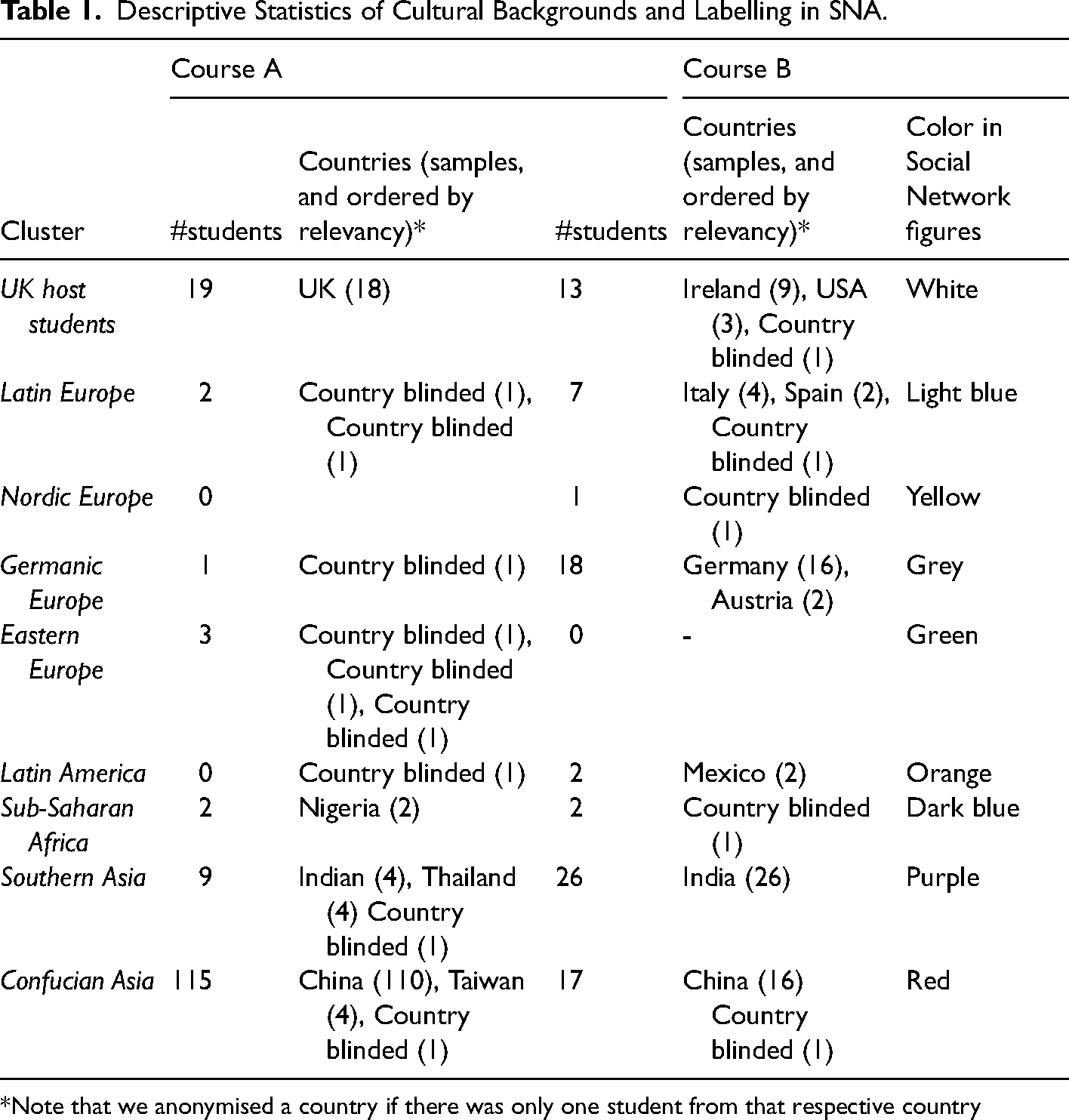
As highlighted in Table 1, in both courses students were from diverse geo-cultural backgrounds, whereby for Course A the majority group was from Confucian Asia (76%), primarily from China, while for Course B the largest group was from Southern Asia (28%), followed by Germanic Europe (19%). In line with Rienties et al. (2014) students’ cultural backgrounds were aggregated using the GLOBE geo-cultural classification of House et al. (2004) to ensure confidentiality of participants coming from a ‘unique’ country.
Descriptive Statistics of Cultural Backgrounds and Labelling in SNA.
*Note that we anonymised a country if there was only one student from that respective country
Procedure
Social Network Analysis Survey
In line with Froehlich et al. (2020) we used a robust pre-post design of social network developments using SNA, whereby we analysed how learning relations developed over time within and between local as well as international students. We triangulated these quantitative SNA findings with follow-up semi-structured interviews (see next section). SNA is an established tool used to identify connections and map relationships among individuals (Froehlich et al., 2020; Jetten et al., 2015; Wassermann & Faust, 1994).
Within this research we used a ‘closed’ network approach, individuals were asked to mark the students that they had developed a learning relationship (i.e., “I learn a lot from…”) with from a list of their peers in the class (Rienties & Héliot, 2018; Wassermann & Faust, 1994). This instrument had previously been tested and validated in Course A during previous implementations of this module (Rienties & Héliot, 2018). In Course A, this survey was distributed to all students in this module during their regular lecture after one month in the module and repeated after 12 weeks, while in Course B the survey was distributed in the first class and repeated again in the final class after 6 sessions spanning over an 8-week period, each session lasting three hours. The time span between first and final distribution was established to allow students time to develop learning relationships within the class. In both courses the surveys were voluntary in nature which was communicated to students in the participant consent form at the start of each distribution.
In total, 257 surveys were collected from students, which is a response rate of 72%% and 93% for Course A, and 82% and 87% for Course B. The reason why the response rates for Course A for the pre-tests were lower than the post-test was that participants were allowed to switch courses in the first two weeks. Using the software Netdraw, the data were graphically visualized where participants were represented as ‘Nodes’ (identifiable as shapes), and the stated learning relationships were represented as ‘ties’ (identifiable as arrows) (Wassermann & Faust, 1994). Such visualizations, of the learning networks developed over time offers insights into the module's community structures and patterns of learning relationships.
In order to determine whether learners mostly learned with learners from their own cultural background or not, we used the External – Internal (E-I) index developed by Krackhardt and Stern (1988). The E-I index takes the number of ties to members of a different geo-culture, subtracts the number of ties to members with the same geo-culture, and divided by the total number of ties. The resulting index ranges from −1 (all ties are only with same geo-culture members) to + 1 (all ties are to students from a different geo-culture).
Semi-Structured Interviews
The use of semi-structured interviews allows for some degree of reciprocity between the researcher and participant (Galletta, 2013), such that the interviewer is able to ask further probing questions where follow-up or clarification is felt to be necessary (Rubin & Rubin, 2011). Using the E-I index data we purposefully selected a sampling of three distinct groups of mostly inward (i.e., mostly communicating with peers from the same cultural background), neutral, and outward looking students (i.e., mostly communicating with peers from a different cultural background). By specifically selecting these three groups we aimed to explore and contrast why some students mainly remained learning with their co-nationals, while others actively sought learning relations with other students. These interviews were designed to unfold how and why students learned from each other.
In total, 26 students were invited for an interview and 22 participated, which was a response rate of 84%. The interviews were semi-structured and conducted via video conferencing (due to COVID-19) with a total sample of 22 master students (UK (N = 8), Ireland (N = 14)). The interviews, on average 40 min in length, followed a semi-structured interview schedule, focussing on a) their experience of studying in intercultural environment b) their reasons for willing (able) or reluctant (unable) to work with their peers in intercultural environment c) their view on how a) and b) impacted on their learning in intercultural environment. We followed steps of thematic analysis (Braun & Clarke, 2006) in our analysis to capture the patterns. These patterns constituted themes (and constituent subthemes) that encapsulated key elements of the data set that specifically related back to, and collectively addressed, the research questions. All the interviews conducted were recorded with participant consent and ethical approval was sought and granted by both Universities.
Results
Social Network Analysis Results
Social network analysis survey data were used to visualize students overarching learning relationship ties (RQ 1) as seen in Figures 1 and 2, and highlighted any potential differences as the result of the two different learning designs. When looking at social network graphs it is important to remember that each ‘node’ (visualized by a shape) represents one student and each line indicates the stated learning relationship between two students, whereby the shape color provides information about students’ geo-cultural location of origin. In terms of Course A (Figure 1), the majority of Confucian Asian students (red) were positioned throughout the network of Figure 1, while other, non-Confucian Asian students were mainly positioned on the bottom left of Figure 1. This finding has been previously found in similar implementations of this module (Rienties & Héliot, 2018). In contrast, in Figure 2 for Course B we mainly found that learners were connected with a lot of learners, seemly irrespective of their cultural background.
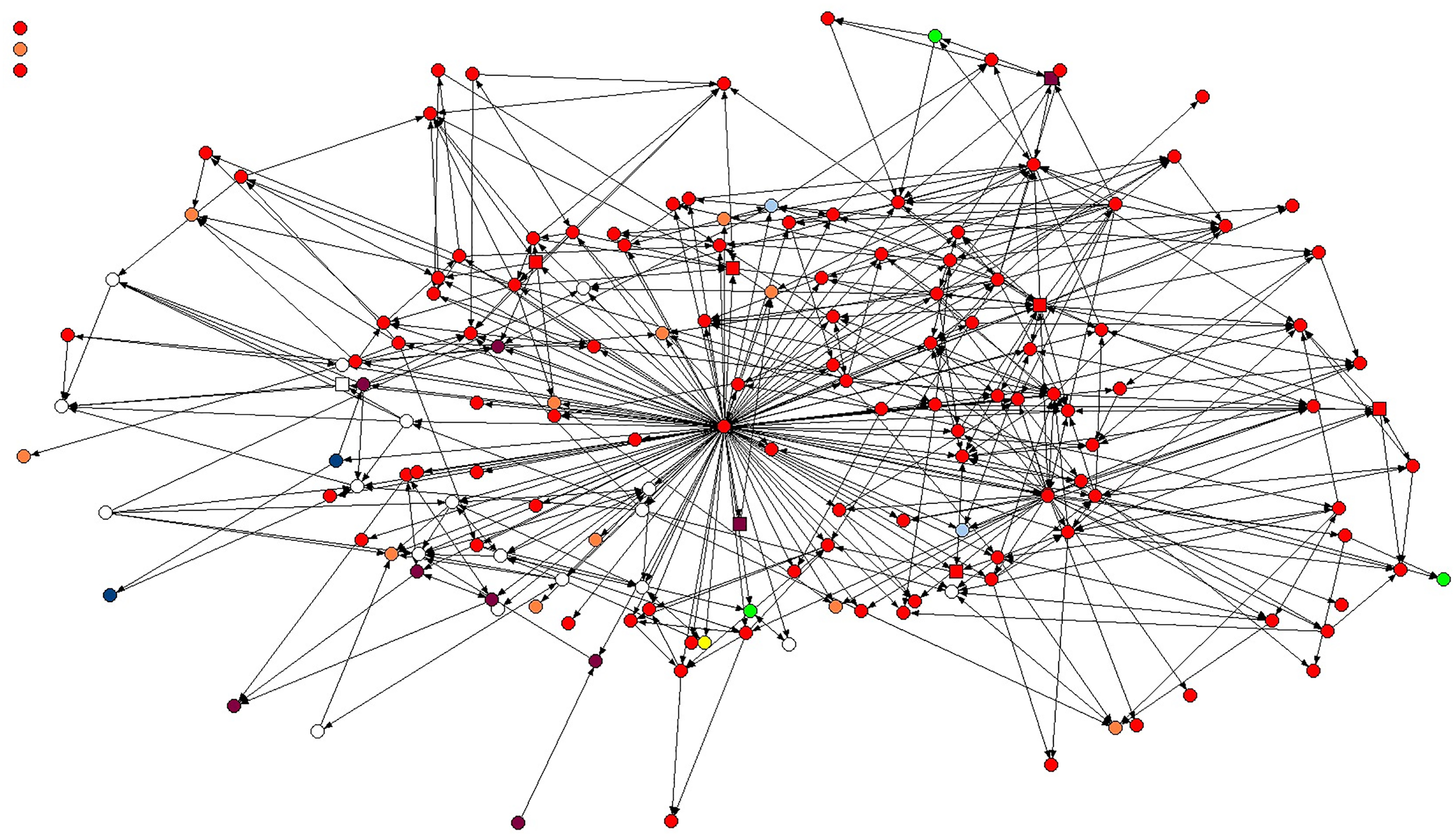
Social Network of learning relations at the end of Course A.
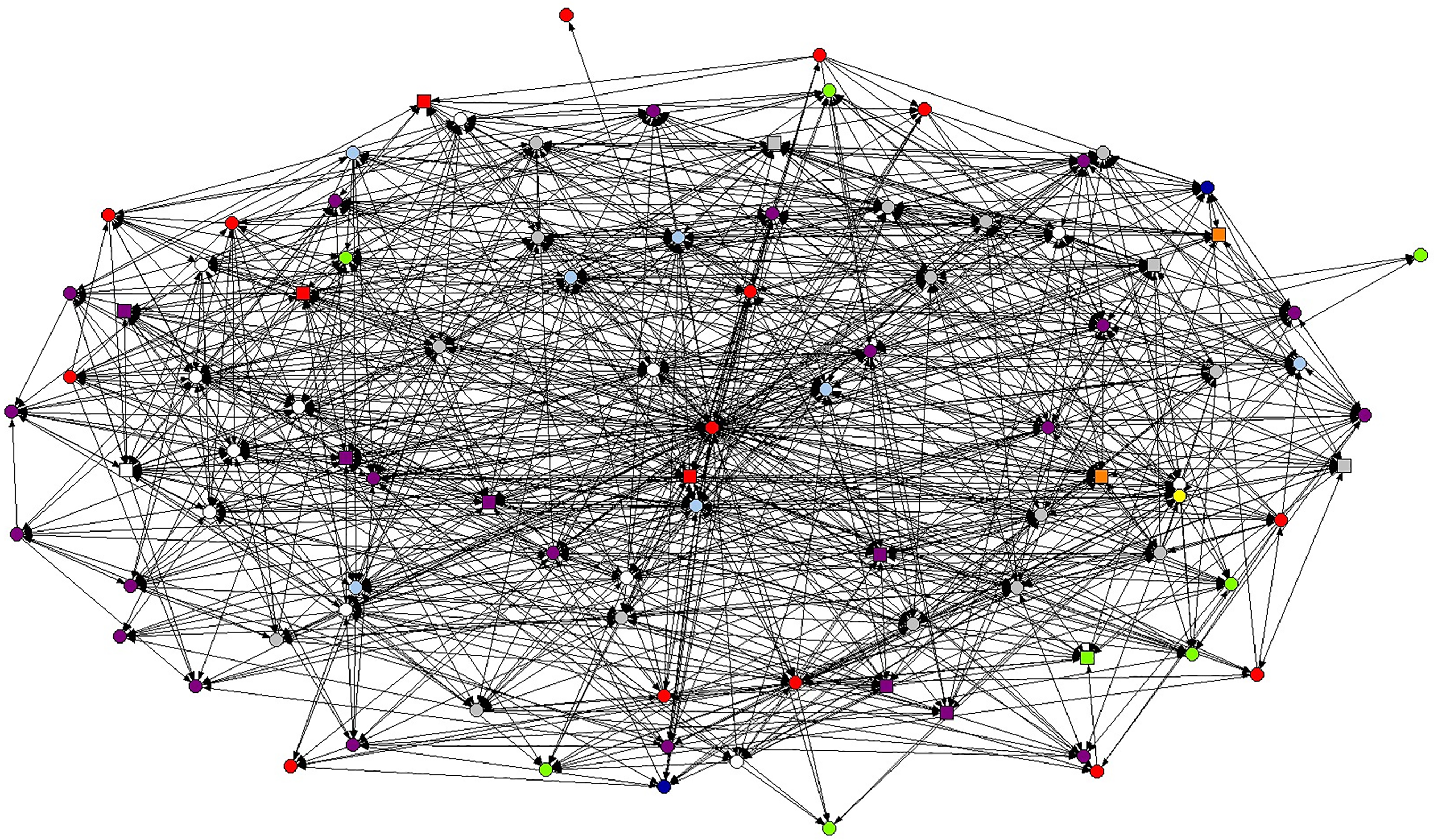
Social Network of learning relations at the end of Course B.
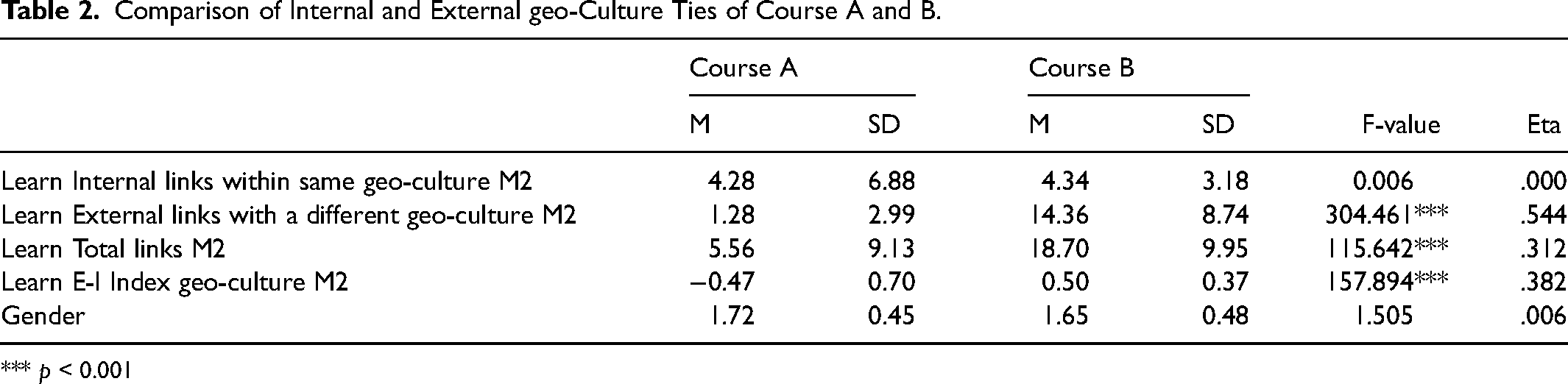
As is indicated in Table 2, in both courses learners maintained around 4 learning links with learners from the same geo-cultural background on average at the end of their course. While in Course A learners maintained 1.28 learning links with learners from a different geo- culture, in Course B on average 14.36 learning links with learners from a different geo-culture were maintained, which was significantly different and with a large effect size. Furthermore, while the E-I index for Course A was negative (−0.47), indicating that learners tended to mainly maintain links with other learners from the same geo-cultural background, the E-I index for Course B was positive (0.50), indicating that learners mostly learned with learners from a different geo-cultural background. Again, this difference was significant with a large effect size. Follow-up analysis indicated that the density of the learning network of Course A was 2%, while the density for Course B was 14%, indicating that substantially more cohesive networks were developed and maintained in Course B. This is in sharp contrast to most previously reported research (Hendrickson et al., 2011; Rienties & Héliot, 2018; Taha & Cox, 2016), whereby mostly students tend to cluster based upon their cultural backgrounds. These findings provide initial quantitative support for the notion that teachers can have a substantial impact on student interactions by the way they design specific cross-cultural learning activities.
Comparison of Internal and External geo-Culture Ties of Course A and B.
*** p < 0.001
Qualitative Results
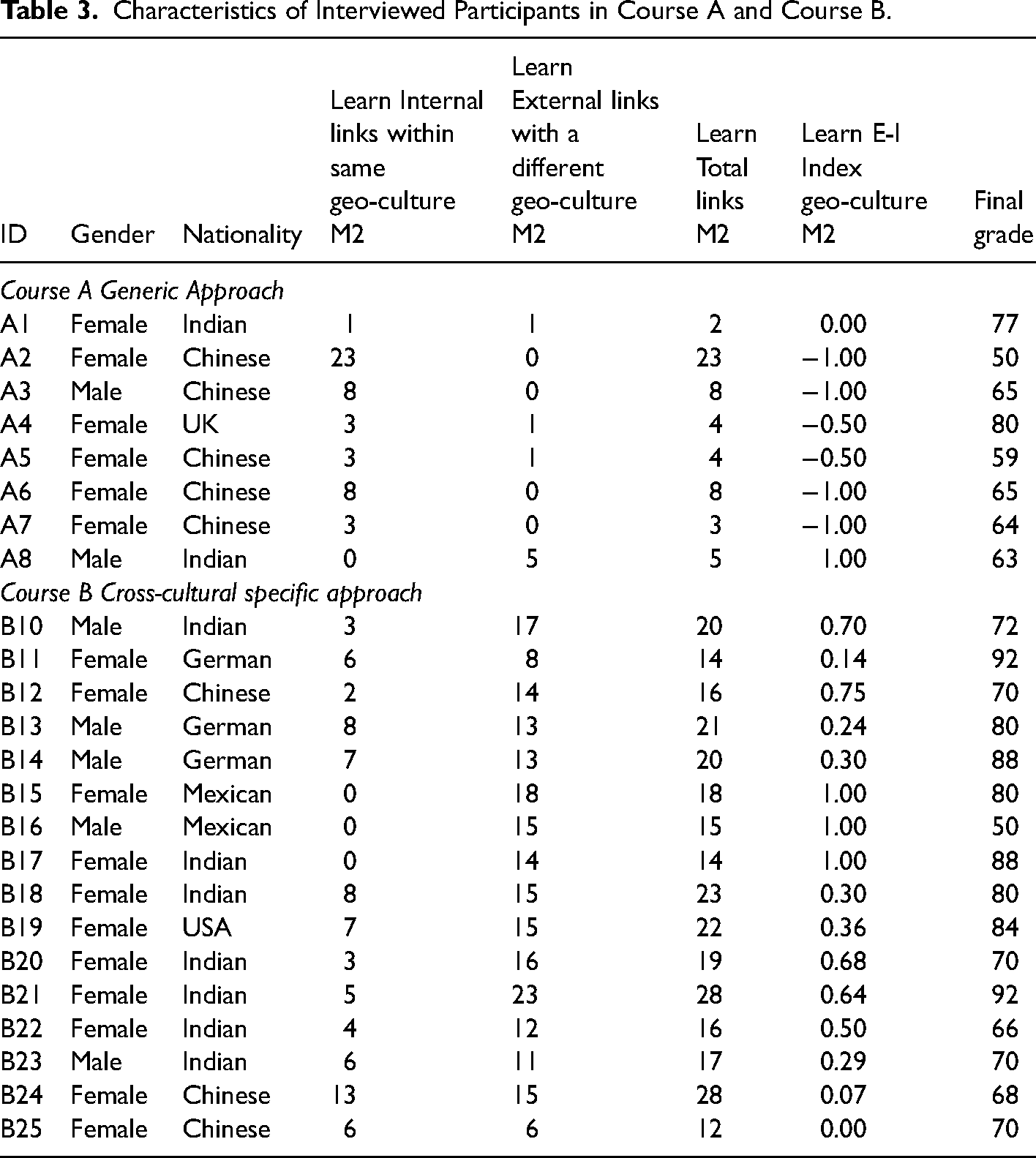
We present our findings from our triangulated qualitative study to further unpack their behavioral patterns as demonstrated in our SNA results. We found that the respective learning design approaches had an important role in how students developed their confidence in social interaction, and potentially developed learning relations. Both courses had an emphasis on interaction to break down cross-cultural barriers, however, their specific learning design approach differed substantially in how they aimed to achieve this (Table 3).
Characteristics of Interviewed Participants in Course A and Course B.
Generic Approach
Cross-Cultural Specific Course Approach
Almost all participants in Course B (cross-cultural learning design) highlighted that the purposefully designed cross-cultural class activities helped them to be at ease to learn from other (international) students. For example, Participant B15 who had 18 learning relations with students from different geo-cultures in Course B indicated: ‘I just like learning about other cultures. So this was like a great chance for me to get to know other people and like experience that indirection. Like sometimes working with them might be difficult because of communication issues, but in general terms like the interaction was good (B15, Southern Asian)
Participants in Course B also benefited from culturally focused two-way communications. Students were actively encouraged and given opportunities to interact in class. For example, Participant B10 who had 17 learning links with a different geo-culture and three with Southern Asian students indicated: ‘it was largely because the way [the teacher] conducted the class, it was very engaging. And I mean, it wasn’t just a one-way communication where you understood teaching theory. So I think that really had been you were kind of eliciting responses from the students. I think that kind of encouraged us to speak up --- especially those activities that you work on up until the module (B10, Southern Asian)
When asked the reasons for learners in Course B to connect the way they did, several participants reflected positively on specific cross-cultural learning design tasks, such as icebreakers. ‘I think actually it was really good, especially when in the first class you did the whole ice breaking thing with the group that we had, which was already very diverse, which you had allotted. I think deliberately like that for all of us to kind of mix with other cultures. So I think that was the best part because I don’t think any other module did that. So I think that really helped. I think with understanding of each other, because we were working on something which was not academic but kind of helped us to talk to each other more than anything else so that there's an ease of conversation for the classes ahead. (B21, Southern Asian)
One notable impact of such approach was that students felt more culturally integrated and allowed them to develop as a person during the course. ‘I think I actually do feel very well culturally integrated. I do notice a change in myself’ (B18, Confucian Asian)
‘It was all very different experience for me because I had never interacted with people who were not of my culture. So when the class started, I was kind of weird about everything, but the class itself kind of pushed me to do. I do understand them better in a lot of ways’ (B20)
‘So if I’ll be honest, in the initial few classes I wasn’t really ready to come up to front of the class and, you know, address everyone. I did not feel confident enough, but as we went forward with it I kind of realized that this is a safe space. Everyone are having the same kind of thoughts in their mind. So it's okay if I, you know, start talking’ (B17, Southern Asian)
In contrast, while most participants in Course A welcomed the generic learning environment that encouraged social interaction both in class and outside class, it was clear that their cross-cultural learning links were not as pronounced as in Course B. This is likely due to the nature of the course and therefore the learning design of the course (a non-culturally specific learning design). Interestingly, students did highlight the benefits of interacting in a cross-cultural setting. ‘because I had quite a long time study abroad. And so I'm not very like domestic Chinese cases to say. But when I interact with other I'm very outgoing Chinese who are also very likely to participate in the class. I feel very comfortable to discuss with that, say friends who only study in China before they might be more conservative and not very comfortable talking English in class. And I will not’. (A2, Confucian Asian)
Other student echoed the appreciation to interact with others in class: ‘when you give an opportunity to talk to each other and interact, it was really nice to speak to others’ (A4, Anglo-Saxon)
While the interviews indicated a positive reaction towards cross-cultural interaction, the social networks indicated that A2 did not develop any cross-cultural learning links during Course A, while A4 developed three co-national learning links with fellow-UK students and one cross-cultural link. Indeed, there were some challenging moments when interacting with other international students: ‘I think one day we have a discussion, and this is all that was a first time when we discussed together. It's a two of them make me a British and the three of us are Chinese. So when we talk, just like Chinese, people want to talk themselves. And like the other two people talk about itself. We tried to talk with them, but I'm not sure. Maybe they don't want to talk with us all. I have no idea. I think they don't want to talk. We saw so much. (A5, Confucian Asian)
Most participants in Course A outlined the usefulness of online voting in class. This was perceived to be useful in simulating interactions and discussions. Moreover, the participants highlighted the usefulness of this approach to overcome culture differences. They perceived this as a way of indirectly discussing with students from other cultures, as illustrated in a representative excerpt below: ‘So I think it is better if we can make it so you can form a group that there must be people from different countries or different cultures, they sitting together. And I think they look at the diversity is important. But, you know, the Chinese will always want to be together. They want to stick together and yeah, during the nature. But I think there is one thing that's really interesting. So when we discuss if there is a crisis, we need to discuss, we can post our opinions on the screen by texting through our phone, OK? Yeah, that was really you like. That's the part I like. So people got different ideas and there's sometimes the sense of humour that there is so many interesting things that people perceive as some of them is very academic. Oh, we can learn from each other. That was a really good part of it.’ (A3, Confucian Asian)
Nonetheless, while A3 developed eight learning relations all his relations were with Confucian Asian learners. This reflected the collective culture which was highlighted in the above excerpt. That is, a collective culture typically chooses their own culture albeit they wished interactions and discussions with other culture groups.
Notably, some students found it challenging to engage their learning through such design. ‘To be honest, I am not a person who will participate in those kind of things [e-voting].
In general, I would like to speak. But when others type something funny…that makes me feel better. I feel like I feel challenged to participate in that as well.’ (A2)
Discussion
Using social identity theory, in this study we explored how the respective learning designs of two management courses influenced the level to which students learning relations within a culturally diverse classroom. Course A was a course in Organisational Behaviour, making the course more generalized, while the focus of Course B was to enhance students’ cultural interaction and awareness. As such, Course A learning design focused was on increasing students’ knowledge and understanding in the subject area of organizational behavior, while Course B learning design focused on increasing students cross-cultural understanding and knowledge, with a clear focus on cultural interactions within and outside the classroom with internationalized content (Leask, 2009, 2013; Nolan et al., 2022) to deliver the aim and objective of the course. Comparing the SNA of these two distinct learning designs is one unique contribution of this study. In order to achieve this, we used a robust mixed-method approach of a longitudinal (pre and post) design of SNA of students in both courses across two top ranked business schools in Europe, and follow up interviews with students based upon their respective network position.
In terms of RQ 1, our study provides both quantitative and qualitative evidence that how teachers design their courses and the subject area of the courses, where one has the focus of cross-cultural enhancement, has a substantial and significant impact on how local and international students develop cross-cultural links over time. While in both the generic Course A and cross-cultural specific Course B students were able to develop cross-cultural links, as indicated by both the social network visualizations and the E-I index, students in Course B established substantially more interlinked cross-cultural network relations over time. Particularly striking is the average amount of learning links with learners from a different Globe culture in Course B, which was 13 more learners per learner than Course A.
As evidenced by the triangulated data from the 22 interviews, while learners in Course A appreciated the opportunities to engage with other learners using case-studies, discussions outside class, and the opportunities to use online voting, this did not necessarily lead to substantial cross-national learning relations. An interesting discovery is the linking to the participants’ comfort zone in culture. This is supported by Allport's contact hypothesis (1954) which states that social contact between social groups is sufficient to reduce intergroup prejudice. As illustrated in Course A, students’ comfort zone in culture has played a role in how they communicate and respond to learning designs (e.g., collective culture finds comfort in the use of e-voting). The findings of the interviews did indicate that the learning design decisions in Course A helped learners to start to interact with other learners, however, relatively few learners were able to build cross-cultural learning links. This indicates a need for teacher's intervention to consider learning relationships in intercultural and multi-disciplinary environments e.g., allocate students from different cultural backgrounds and create opportunities for cross cultural interactions (Héliot et al., 2020; Leask, 2009), and reduce intergroup prejudice (Allport, 1954), hence increasing students’ comfort zone in culture and social interactions.
This need to reconsider the learning design was also illustrated by the negative E-I index, whereby more relations were maintained with learners with the same GLOBE background. This seems in sharp contrast to Course B, where for all 16 interviewed students the specific cultural learning design activities including internationalized content and interactions helped to create a safe space to work together. Creating a safe space for an international cohort of students provides them with the confidence and opportunity to form relations and social ties to one another in the class. Past research on social identity theory notes that students who obtained more group and personal attachment within a class are better at managing risk (Jetten et al., 2015), and have a feeling of being part of a group, which can ultimately reduce uncertainties and stress for international students when adjusting to a new culture (Héliot et al., 2020; Raja et al., 2021). As indicated both by the number of external links to learners with a different geo-culture as well as the positive E-I index, all interviewed students irrespective of their cultural background developed strong cross-cultural links. In other words, in terms of RQ2 substantial different engagement patterns were found both in the social networks as well as the lived experiences in the two designs.
The findings above are related to the inclusive learning design of Course B, as past research highlights that teaching design directly impacts students learning and engagement in a course (Cho et al., 2021; de Haan & Sherry, 2012; Héliot et al., 2020; Kizilcec et al., 2017; Leask, 2013; Macfadyen et al., 2020; Nguyen et al., 2017). The learning design of Course B aimed to enhance students’ cultural understanding and awareness, while enhancing their overall cultural intelligence. Therefore, the focus of Course B was to encourage students to acquire cultural competences that allowed them to navigate culturally diverse situations and encounters within the course. Students covered two broad areas in Course B, the first being information dissemination relating to cultural differences such as language, behaviors, food, general living etc, delivered in a similar learning style to the content of Course A. The second element of Course B (not found is Course A) focused on combining cognitive (ability to understand cultural concepts), behavioral (ability to put these concepts into practice), and motivational (desire of student to adapt to cultural situations) techniques under the umbrella concept of experiential learning activities.
Past research indicates that the use of such experiential learning in cultural training courses is highly effective (Bücker & Korzilius, 2015). However, we believe we are the first to empirically illustrate the impact of such learning design decisions (e.g., icebreakers, role plays, situational exercises, and diverse country investigations) over time. In other words, our study highlights the important role that learning design has in encouraging cross-cultural learning relations.
Limitations and Conclusion
This study is not without limitations. First, our study compared two distinctly designed courses in their authentic context in two business schools. Obviously, this was not an experimental study where we were able to control all factors except the different learning design decisions. Nonetheless, given the same pre-post SNA measurements and follow-up interviews we do believe that the reported findings are in part a result of the two different learning designs. Second, we used self-reported data of students’ experience and relationships within a particular setting, for this reason we note that the results cannot be generalized, but they do offer considerable insight that can be built upon in future studies. Third, we recognize that additional factors outside the scope of this study have the potential to influence learning creation, such as ethnicity and gender. It would be interesting to assess such factors and their influence on social learning and friendship creation in future research. Finally, due to the dynamic nature of learning relations we acknowledge that the relationships found may change over time.
It would be interesting to develop a longitudinal study where students are followed over a longer time period (e.g., a year) to capture their long-term cross-cultural relations. This might help to evidence the impact of such learning design approach beyond a single course. As many institutions grapple with how to encourage and maintain an inclusive environment that allows its graduates with abilities to effectively work in diverse cultural and global settings, our study offers unique insight for both educators and employers alike into how learning design influences the social learning and relationship patterns of intercultural students.
Footnotes
Funding
The author(s) received no financial support for the research, authorship, and/or publication of this article
