




Abstract
The incorporation of digital learning and teaching tools has been recognized as presenting an opportunity to maximize access, quality, and inclusion, especially when it comes to international education. Unanticipated events, such as the COVID 19 pandemic, can result in profound disruptions to teaching and learning, and the use of these tools can provide mitigation to these disruptions. This paper reports on the design and study of an InVEST global virtual team (GVT) program that incorporates global competency training modules (GCMs) and leverages digitization to engage engineering students across multiple locations deeply in global collaborative work — a skillset that is critical for 21st-century engineers. Study results showed the GCMs were effective in helping students develop the global competencies necessary for international virtual collaboration. We also highlight challenges and provide recommendations for practice.
Keywords
Introduction
Global competencies and career readiness skills have become important assets for engineering students who are expected to function in an increasingly technologically integrated global marketplace (Warnick, 2011). Global competence can be seen as the ability to apply knowledge, skills, attitudes, and values to work together with others to solve global problems and improve the collective well-being of society (OECD, 2016). Engineering institutions have thus recognized the significance of internationalizing their programs to produce more globally competitive graduates, who can collaborate with international peers to tackle society's wicked problems (Strenger et al., 2017). Conventional models emphasizing international student mobility, interaction, and collaboration are useful tools for building multicultural awareness and understanding of different socio-cultural environments, economic and political contexts, all of which can enhance the educational experience and create students with a “global mindset.” Recent use of digital and online technologies has complemented these conventional approaches and increased the accessibility, and inclusiveness of international experiences. Disruptions such as the COVID 19 pandemic, which effectively shut down travel and in-person teaching and learning globally, pose serious challenges to accessing and benefiting from conventional international experiences. However, these challenges present opportunities to reimagine teaching and learning by harnessing the potential of digital technologies and international online collaboration (IOC) to enhance students’ intercultural competence (Kolm et. al., 2021), a global competence construct that involves the ability to engage in effective interaction and behaviors in intercultural situations (Deardorff, 2011).
This paper explores a global engineering program that embraces digitization and technology to promote international research collaboration among geographically dispersed engineering students as a means of bridging opportunity gaps (financial, work, or family constraints) and other logistics challenges (time, distance). Using global virtual teams (GVTs), defined as geographically distributed individuals working together with the support of technology, the program fostered students’ intercultural communication and their development of global competencies in a virtual project setting. We begin by examining recent disruptions in international education, their impact on higher education institutions (HEIs), and the opportunities presented by forced migration to online teaching and learning. We then introduce the InVEST GVT program and its rationale. This is followed by a description of the design of the program, including the global competency modules (GCMs), and the research study used to evaluate the program. We then discuss the findings from this study and conclude with a discussion of future research considerations, as well as broader implications for teaching and learning in higher education.
Global Education: Disruptions and Digitization
The recent COVID-19 pandemic significantly disrupted many HEIs’ academic programs, forcing a shift from traditional face-to-face classroom teaching to ‘distance teaching’ for two-thirds of HEIs globally, according to an International Association of Universities (IAU) Report (Marinoni et al., 2020, p. 11). Subsequently, many international education programs (IEP) reliant on student mobility, such as international enrollments, study abroad programs, and international placements, were adversely impacted, leading educators to seek alternative digital solutions. Common barriers to the conventional IEP strategies employed by HEIs are scalability constraints, limitations due to academic planning calendars, work-life balance constraints (Ndubuisi et al., 2020), political instability of host countries, students’ financial constraints, and safety concerns (Institute of International Education, 2019). Other barriers include potential delay in academic graduation, difficulties with the transferability of international credits, limited access for underrepresented social groups or countries, and fear of negative stereotyping (Soria & Troisi, 2014). Thus, while the sudden mass migration to virtual teaching and learning in response to COVID-19 disruptions has presented some challenges for educators (e.g., access to technological infrastructure, harmonization of semesters and academic calendars, and the need to develop new competencies and pedagogies for distance learning (United Nations, 2020)), this new ecology of work has also presented opportunities for increased global learning and inclusive international experiences for engineering students.
Engineering institutions’ internationalization efforts can benefit from these innovative teaching and learning approaches, which have enabled educators to connect students from different cultures around the world while helping them to gain international exposure, interact with culturally and ethnically diverse peers, and develop skills for collaborating in an intercultural and international context. For instance, Wang et al. (2017) reported on a joint international collaborative course between Germany and China to support engineering students’ intralogistics education (i.e., internal production, material distribution) using GVT projects. The study found that students gained knowledge and experience through working with peers from diverse cultures; however, they also experienced some teamwork challenges due to cultural differences and limited language skills. Situating diverse students in boundary-crossing situations such as global virtual teams may not result in collaboration or learning, as boundaries can become an impediment to intercultural understanding or a basis for conflict when they remain implicit (e.g., Akkerman, 2011; Guile, 2011). Additionally, working within GVTs may not lead to increased team performance (Rhee et al., 2013) if trust, communication, and commitment are not built within the team. Thus, educators need to teach students to develop intercultural communication skills that can support them to explicitly identify intercultural boundaries in virtual team settings to help them understand how to collaborate effectively with international peers. While there are many existing studies on the use of digitization to foster international education in engineering, few studies have focused on international students’ online experiences within a virtual team setting on multiple multi-institutional virtual exchanges, or on the impact of digital technologies on international education in the Global South in particular. The program and research study we present in this paper address some of these gaps.
InVEST: An International Virtual Collaboration Program
In 2019 pre-pandemic, the International Virtual Engineering Student Teams (InVEST) project established an international virtual team collaboration initiative at a large university in Canada, where geographically distributed engineering students from various universities worked collaboratively in GVT projects. The culturally diverse students were enrolled in similar courses and programs and tackled real-world challenges through technical research projects proposed by either their university faculty members or industry partners. This model provided an avenue for students to learn through authentic experiences and potentially transfer their learning experiences to the workplace and beyond. A key objective was to provide international learning opportunities and experiences to students who would otherwise be unable to benefit from such opportunities due to family, financial, work, or other constraints. This objective became even more significant in 2020 when the COVID-19 pandemic forced HEIs to migrate teaching and learning to online platforms. The initial priority of our GVT program was to establish institutional partnerships that promoted students’ global learning experiences, and the development of transformational teaching and learning practices (Ndubuisi et al., 2021). The initial model involved developing and growing global classrooms (encapsulating entire courses at partnering institutions) with the intention of supporting international knowledge exchange through co-taught and co-created curriculum, where students and faculty would benefit from the shared global learning experience. The model was then adapted to focus on capstone projects within engineering courses to allow for flexibility in academic programming between partnering institutions. In our current model, participating students are usually enrolled in academic credit-based courses at their respective universities or in professional internship programs at firms. A key component of the GVT program is the global competency modules (GCMs) that support students’ global learning and virtual team collaboration activities including communication, intercultural competence, leadership, decision making, and relationship building.
Theoretical Perspectives
The design of the GCMs was driven by four theoretical perspectives. Social constructivism (Koohang et al., 2009) was utilized to create collaborative student-centered learning where students’ understanding of culture and context within their virtual team setting helped shape their knowledge construction. The Community of Inquiry (COI) framework (Cleveland-Innes et al., 2018) was employed to achieve effective educational learning outcomes and experiences in an online environment through the integration of cognitive, teaching, and social presences. In addition, the Knowledge Community and Inquiry (KCI) instructional model (Slotta et al., 2018) was applied to advance the students’ collective knowledge and appreciation of the learning related to the GCM curriculum goals. Finally, Kolb’s (1984) experiential learning model guided the students’ application of their newly constructed intercultural perspectives and knowledge within their GVT projects.
Methodology
This study employed a design-based research (DBR) methodology that supported the iterative refinement and continuous improvement of the GVT program (Collins et al., 2004). This approach allowed for a collaborative partnership between the [name withheld] team and researchers over two iterations of project development and execution and allowed for adjusting the GCMs between iterations. The study aimed to examine the efficacy of the program with respect to student global competency development, to identify structures and best practices that supported program success, and to identify challenges and improvement areas in the program. Each iteration of the GVT was studied, and the results of the first iteration have previously been reported in a book chapter (Ndubuisi et al., 2021). This paper will report on findings from the second iteration.
Program Design
The [name withheld] GVT program focused on international research project collaborations and employed a three-stage approach to developing and executing these projects as shown in Figure 1: (1) project acquisition; (2) project team formation; and (3) project execution with project team support and completion. Because of the focus on virtual collaboration, we leveraged information communication and technology (ICT) solutions across the project development and execution stages.
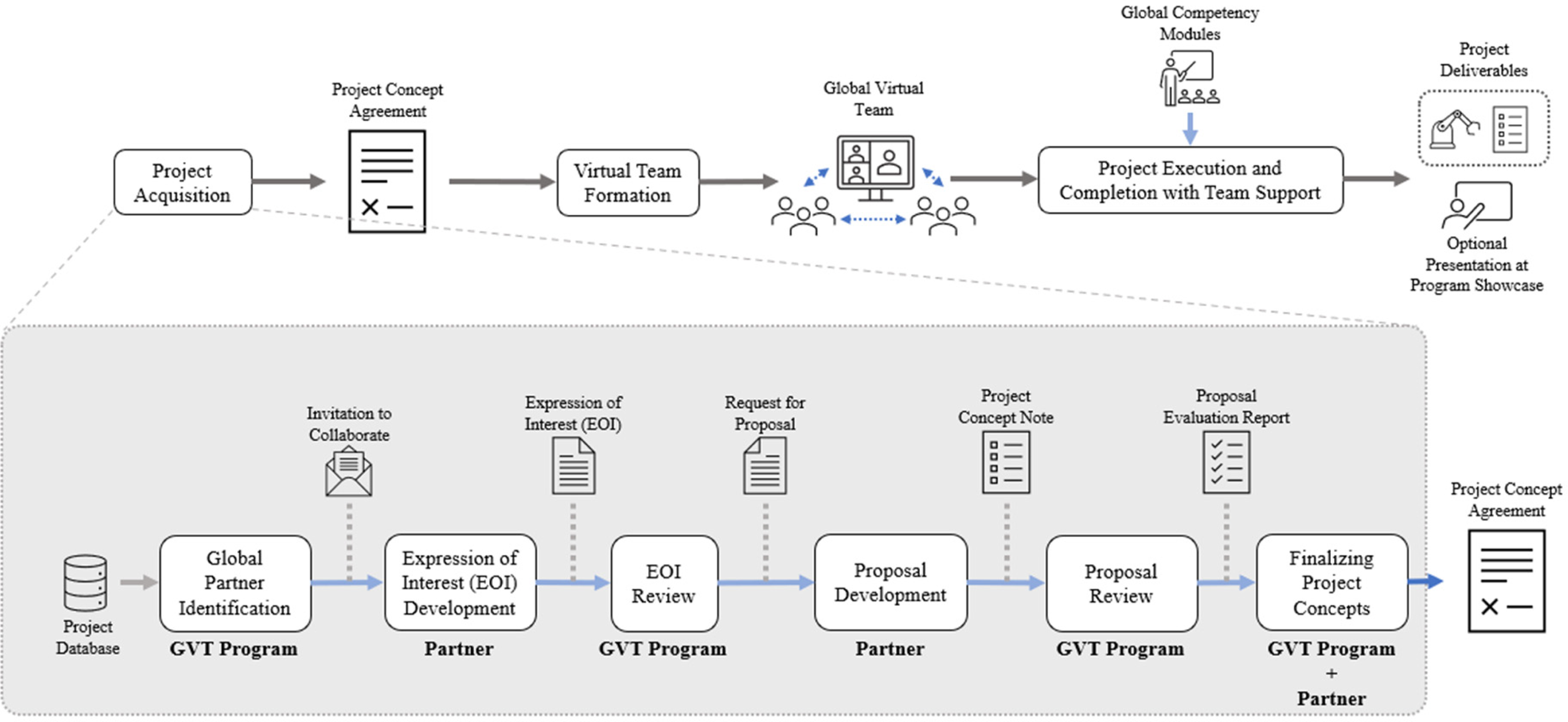
Project development and execution stages.
Project Acquisition
The project acquisition phase began with the identification of global partners and projects. Each GVT project was set up as a collaboration between students and faculty at the Canadian institution where the [name withheld] initiative was established (anchor institution) and one or more external partners. Projects were expected to align with six broad research focus areas of the anchor institution, namely advanced manufacturing, data analytics and artificial intelligence, water, robotics, sustainability, and human health. Potential partner universities were identified using a database internally developed by the anchor institution's engineering faculty and international academic networks. Identified candidates were issued invitations outlining the program objectives, our research collaboration model, expected research focus areas, and the process for submitting an expression of interest (EOI) for the research collaboration opportunity. Partners with suitable EOIs were invited to develop them into proposals for further evaluation. The evaluation process, which aimed to curate a diversity of projects, considered (1) the partners’ academic publications, conferences, and industry collaborations (if an academic institution); (2) alignment with industry or development priorities; (3) duration of collaboration (expectation of at least four to eight months), (4) proposed students’ degree types; and (5) scalability. Successful applicants were notified of their project approval. The duration of the project acquisition stage from the first contact with a potential partner to the formation of the virtual teams was an average of 3 to 6 months.
Project Team Formation
As potential partners and projects were identified, faculty at the anchor institution were then approached to establish collaborations around the proposed projects. Once anchor institution collaborators were identified, an introductory video meeting was held between the anchor institution faculty and external partner project leads (faculty at an academic institution and/or industry representative). The GVT program team facilitated refinements of project details such as schedule alignment, course credits, expertise, and disciplinary approach. Students were then recruited through each institutions’ project lead(s)’ department administration office and the [name withheld] program website. A meeting was held between faculty and successful student applicants to align program expectations. Project students enrolled in ‘credit-based’ undergraduate capstone or graduate research project courses were matched to their respective faculty supervisors. The timing of the project team formation was such that project duration overlapped with the academic calendar of participating universities.
Project Execution and Team Support
Each team was set up such that there was at least one supervisor from each partner institution. Project teams held regular meetings to monitor progress, provide feedback, and resolve issues. In terms of supports, each virtual team had access to relevant engineering tools, ICT in the form of collaboration platforms, and training to support collaboration. MS Teams, One Drive applications, Padlet, and Zoom conferencing platforms were chosen, as they offered open access to participants and allowed for synchronous and asynchronous learning. Private channels were created within MS Teams for each team and its supervisors to support collaboration activities including file sharing, instant chat messaging, audio/video communications, task planning, and meeting scheduling. In addition to the MS Teams channels provided by the InVEST GVT program, students also tried out other tools that were accessible in their home countries, in alignment with their cultural and local preferences (e.g., WhatsApp). The InVEST project coordinator held intermittent review meetings with the virtual project teams and with the supervisors to share best practices, obtain feedback for program improvements, and gain insights into challenges and team dynamics. At the end of each project, students’ contributions, including project deliverables and collaborative project reports, were evaluated by their respective institutions. Student teams could also elect to present their project findings at an annual project showcase to current and potential industry partners, university faculty, and a broader community of engineering professionals worldwide for greater visibility and future partnership opportunities.
Global Competence Modules (GCMs)
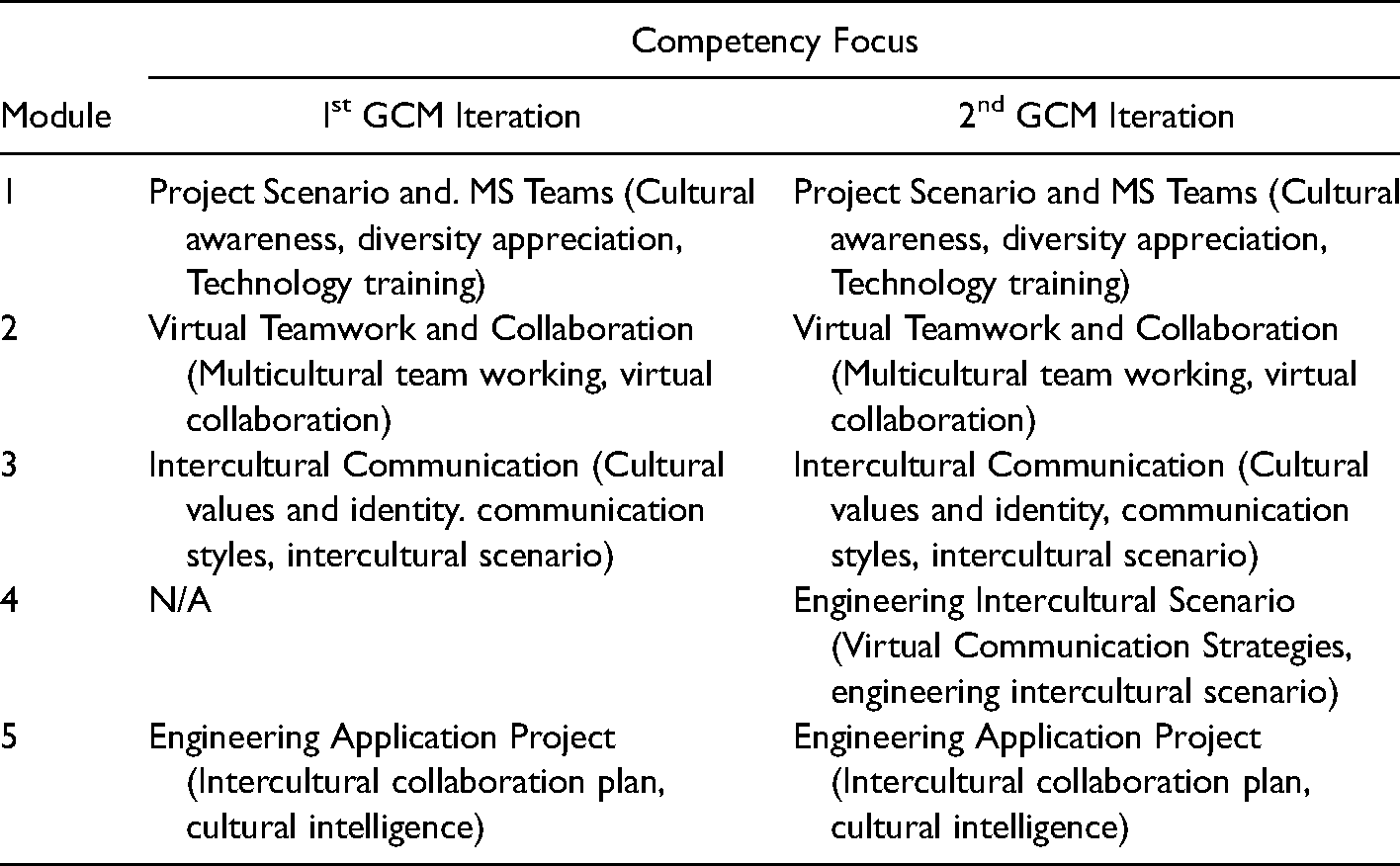
A key part of team support was the GCM training. The first GCM iteration comprised a 4-week curriculum delivered through four weekly 60-min modules that engaged students in instruction around intercultural communication and sensitivities, cultural identity, and GVT concepts. Intercultural sensitivity can be defined as the ability to understand, appreciate, and accept cultural differences, and to demonstrate positive behaviors in intercultural communication (Chen & Starosta, 1997). This iteration supported students in developing global competencies and produced a set of recommendations for improving future iterations. The second iteration was a 9-week curriculum, comprising five bimonthly 90-min hybrid online modules, which incorporated the following recommendations from the first iteration: (1) the addition of a second “intercultural scenario” to enhance student's intercultural communication sensitivities; (2) the inclusion of more opportunities for intercultural experiences; (3) the integration of more active learning techniques to increase students’ engagement in the hybrid online learning environment; (4) an increased module duration to accommodate students’ learning needs; and (5) an increased interval between modules to provide more opportunities for students to employ the learning concepts during virtual team activities. Table 1 summarizes the competency foci of the various modules in both GCM iterations.
Competency foci for GCM modules.
The GCM employed cycles of asynchronous pre- and post-class learning with synchronous live class sessions. Each module started with a community-building exercise, which provided a basis for stimulating interactivity, supporting students’ cultural self-awareness and intercultural understanding of their peers, and promoting group cohesion. For instance, students shared aspects of their cultural background, economic systems, and social experiences in a Padlet activity, reflected on their peers’ posts, and articulated their observations in a synchronous class discourse. These social presence activities (Cleveland-Innes et al., 2018) were designed around cultural identity and values, teamwork, and intercultural communication concepts. Students’ participation in the social interaction activities also provided opportunities for socio-cognitive learning, by observing and imitating their peers’ behaviors (De Jaegher et al., 2010). Thereafter, interactive lectures created opportunities for students to actively participate in the learning process, since visual cues, facial expressions, and body language might be limited. For instance, short quizzes (using Mentimeter), screen annotations, and the whiteboard features of Zoom were utilized to encourage students’ interactions with the learning content and the instructor while Zoom polls were used to conduct in-process evaluations of students’ learning and highlight knowledge gaps that were addressed by the instructor. We found it helpful to commence with simple activities where the diverse students were not required to speak immediately to get them relaxed before introducing more vocal interactions.
We often collated and integrated pre-class survey responses into knowledge construction activities where students worked together to brainstorm more ideas and articulated their experiences. In such discourse, students shared their worldviews, reflected on the perspectives of their peers, and co-created shared meanings and new intercultural understandings, which helped to establish a sense of value to the group. Additionally, students worked on short scenario-based learning exercises that simulated engineering technical coordination in a real-world context such as Jesiek and Woo’s (2018) Global Engineering Competence (GEC) scenarios for managing cultural differences in the workplace. They analyzed the underlying considerations for the workplace communication scenarios from different cultural viewpoints and engaged in perspective-taking to articulate their responses to the discussion prompts. These scenario-based activities also enabled the diverse students to enhance their interpersonal empathy capabilities (defined as the ability to feel and understand the emotions of other individuals; Segal, 2011). As students worked on their technical research projects in between each module, they were able to reflect on their virtual team experiences during the synchronous classes and apply their renewed intercultural knowledge and understanding to their virtual team projects.
Participants
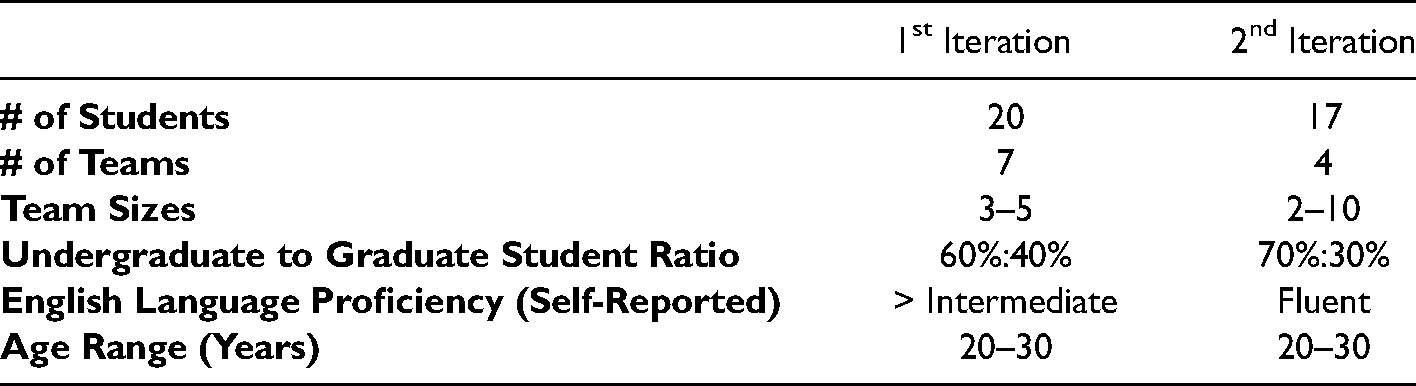
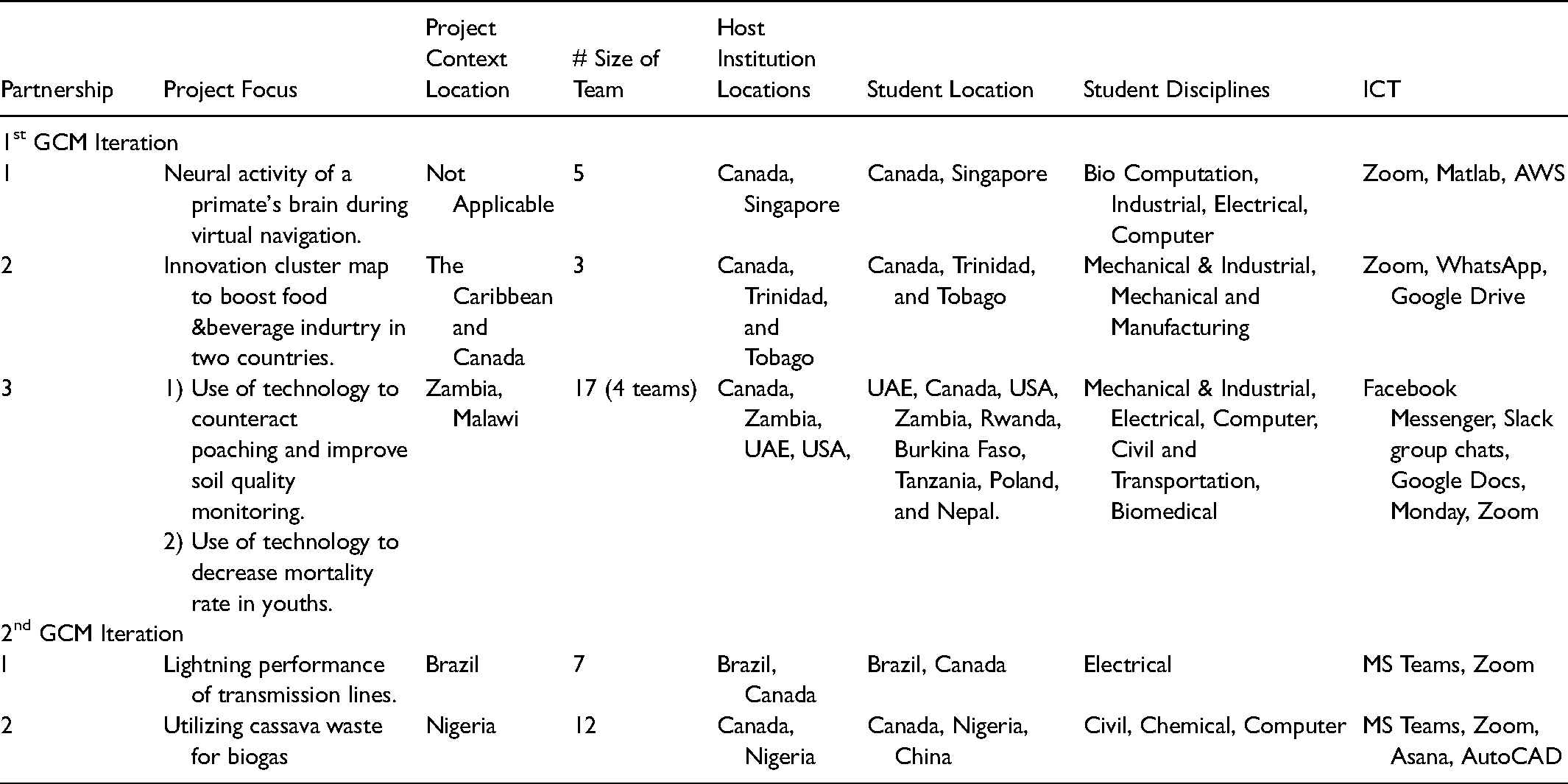
The primary participants in the two study iterations were engineering students on project teams, and other participants included their supervisors and the GVT program team. Graduate students in the study were enrolled in master's programs. There were no further inclusion or exclusion criteria for student participants beyond their selection to participate in the GVT project. Tables 2 and 3 summarize the characteristics of the student participants and project partnerships respectively across the two GVT iterations including students’ age, countries, universities, disciplines, projects, and academic background. We note that the program was effective in creating a variety of multi-institutional partnerships (including one university-industry partnership), and in supporting significant participation of institutions and students located in the Global South.
Student participant characteristics.
Characteristics of the partnerships and projects. Due to COVID-19 student locations could differ from host institution locations.
Data Collection and Analysis
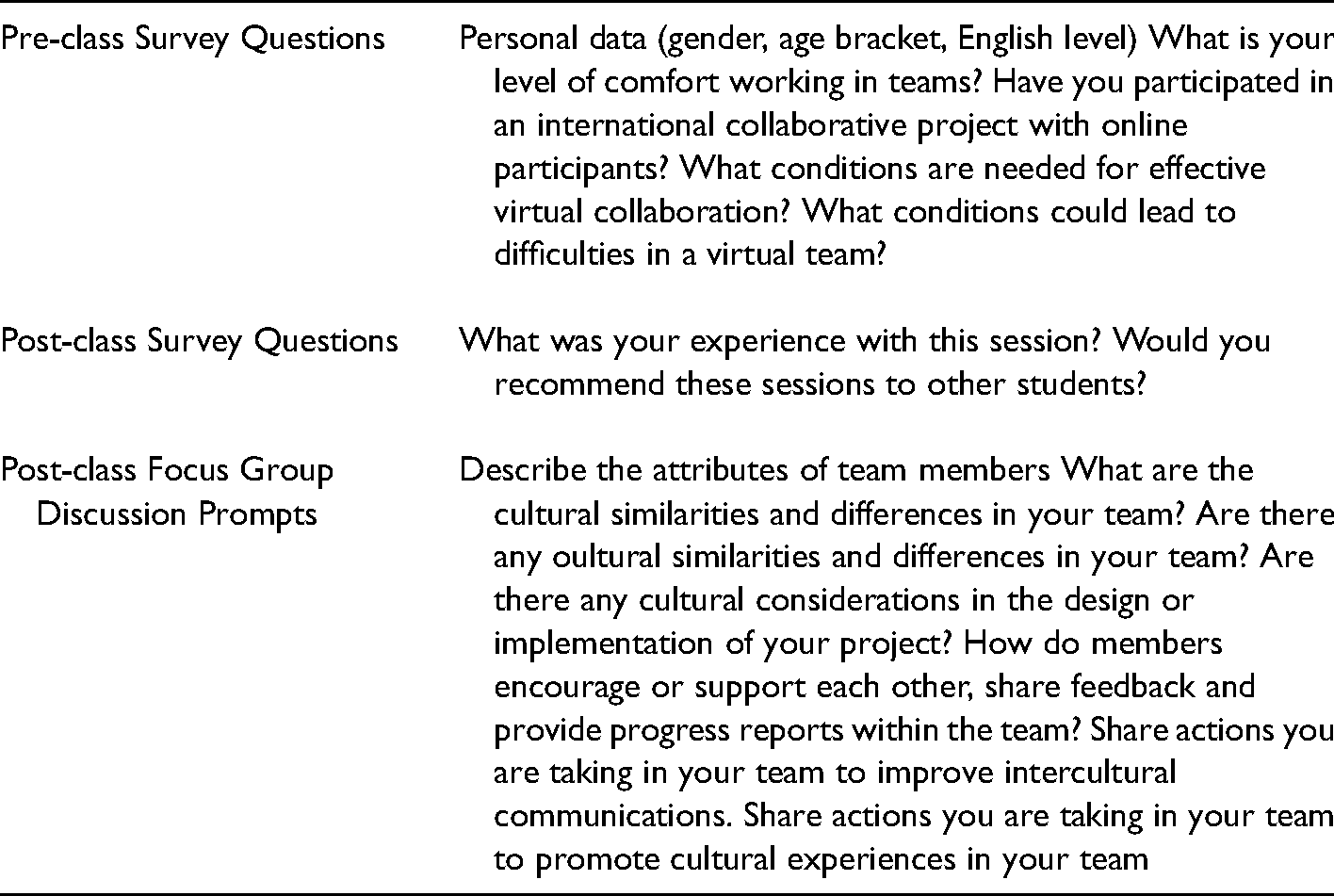
This study primarily employed a qualitative exploration (Sandelowski & Barroso, 2003) using data collected from multiple sources including pre- and post-GCM surveys of students, discussion notes from individual interviews and/or focus groups with students and supervisors (separately), and research team observation notes. Research instruments such as specific questions on surveys, inquiry activities, and focus groups were similar between the two GCM iterations (see Table 4). The collated data were coded inductively to capture key meanings and context, categorized into potential ideas, and systematically examined for emerging themes and patterns about the students’ learning experiences and perceptions of the program. Using thematic analysis and descriptive percentages enabled the examination of the diverse student participants’ perspectives, the determination of their cultural similarities and differences, and the generation of insights on their global team project experiences (Braun & Clarke, 2006).
Overview of research instruments, adapted from Ndubuisi et al. (2021).
Findings and Discussion
The findings reported below focus primarily on the second GVT iteration with brief comparisons to the first iteration (since this instance was discussed elsewhere). In cases where challenges are highlighted, the student teams worked together with each other, their supervisors, and the program coordinator to address these issues.
Pre-Survey of Students’ Prior Knowledge and Orientation
Student participants (n = 14) responded to a quantitative pre-GCM survey to provide insights on their background, prior knowledge, and cultural orientation. Students’ responses showed that, while 60% had travelled outside their home country at least once, an indication of some international exposure, only one person had participated in an online multicultural team with international members before enrolling in our GVT program. Though 80% indicated that they were comfortable working in teams with a rating of either “comfortable” or “very comfortable,” only 36% had prior experience working with multicultural team members from different countries. In addition, while 60% of the students had rated their English language proficiency as “fluent,” a few had a rating of “basic” and expressed some concerns about their ability to communicate with team members. Furthermore, while students considered planning (35%), interpersonal skills (22%), technology (13%), communication (13%) and social interaction (9%) to be key conditions for effective virtual collaboration, no student recognized the value of intercultural communication. Hence, prior to the program, most of the engineering students did not appreciate the significance of intercultural competence in a global virtual team environment. These findings were like those in the first iteration.
Post-Survey of and Focus Group on Students’ Learning and Experiences
Students participated in an exit survey on their learning experiences. Their responses showed that they were quite pleased with the GCMs, with 97% indicating that they were either “satisfied” or “very satisfied” with their learning experiences and 100% saying they would recommend the sessions to others. One Brazilian student expressed an increase in their comfort level communicating in team meetings, observing that “to communicate well is to be understood and not always [to] speak correctly.” Similar levels of satisfaction were observed in the first iteration, though some improvements were suggested as highlighted in the section on the GCM Design. The students also participated in focus group discussions at the end of the GCM curriculum to provide feedback on their intercultural collaborations and global virtual team learning experiences. Five distinct themes emerged from our coding of focus group notes related to these items: (a) intercultural awareness and understanding; (b) diversity appreciation; (c) project planning and coordination; (d) intercultural communication; and (e) social cohesion, trust, and commitment. We elaborate on these themes below.
Intercultural Awareness and Understanding
Students’ responses indicated that they recognized similarities in their cultures and cultural values. Example responses included “we are all engineers in training,” “we are all altruistic,” and “members of my team are somewhat reserved just like myself.” The participants understood the impact of culture on their worldview as observed by one Canadian: “we all have different ideals and values that is shaped by our culture (the way we greet one another, the way we dress, etc.).” The students were considerate of each other by being “open in communication,” “friendly and tolerant,” and “helpful, kind and assertive,” as well as being “open to share ideas.” This attitude helped them to accommodate and appreciate the contributions of their peers as highlighted by a Nigerian student: “team members are very patient with me, quick in thinking outside the box and respect my own contributions at all times.” Similar levels of awareness and understanding were observed in the first iteration. Across both iterations, some teams initially struggled with cultural elements of their projects’ target countries.
Diversity Appreciation
The students recognized and appreciated the cultural differences of team members such as “language barriers,” residing in a “different time zone,” understanding “how money works in their different countries,” possessing different organizational cultures (e.g., “our relationship with our supervisors is different”) and having different ways of life as highlighted by a Canadian student: “differences between rural Nigerian populations vs what 1st worlders think they should live.” They also appreciated the diversity of the project team as highlighted by one Nigerian student: “we have a good cultural representation … we respond to solving problem differently. I never thought I’ll ever interact with any one from Jordan.” In addition, the Nigerian students observed some differences in communication styles from their Canadian peers (e.g., “[X] is more forthright relating with our supervisors and myself”), while they were “careful in how they communicate so as not to come off as disrespectful.” The virtual teams strived to “embrace diversity” by “leveraging each other's strengths” and “respecting everyone's world view” as they worked on their engineering projects. One student highlighted the team's intent “to be respectful of cultural heritage regarding palm processing” in their project, while a Chinese student stated that “the design for the project should consider the Nigeria community.” Some students highlighted a lack of knowledge of specific engineering disciplines in the team as a challenge to overcome. Student's recognition of the distributed intelligence (Edwards, 2005) across their team positioned them to elicit and negotiate their resources to jointly achieve the team's goals (Edwards, 2011). Similar findings were observed in the first iteration.
Project Planning and Coordination
The students held “weekly meetings” and generally remained in contact with their teammates. Teams used ICT tools to “share ideas and research findings” and to “support each other by answering questions, providing feedback for improvement, and attending internal meetings for project discussions” as clarified by a Chinese student. In addition, some teams held separate meetings consisting of the “full team with profs for review” to “ask for their input,” “report of work allocated to them,” and to escalate any issues “if it cannot be resolved, to experienced individuals – Prof [X].” These project coordination practices underscored the significance of relational agency, which involves the ability to offer and ask for support from other members, in virtual teams (Edwards, 2005). Relational agency can allow individuals to acknowledge shared backgrounds, identify the viewpoints of others, build common knowledge, and mediate collaboration (Pauleen & Yoong, 2001). Similar findings were observed in the first iteration. Some students observed that “managing a large team” of about 10 students in a virtual setting could be daunting: “large group size makes it difficult to track progress & have efficient meetings.” Similarly, a Chinese student observed that getting “consensus knowledge about the project since everyone may have worked on some different parts of the project” was challenging. These difficulties were tackled by splitting work activities into “smaller groups / sub-teams” and by encouraging regular communication. This challenge of managing one large team was unique to the second iteration due to its larger team size, however, it aligned with earlier studies highlighting organizational and collaborative competencies as valuable skills for virtual environments (Kolm et. al., 2021; Vinagre, 2017).
Intercultural Communication and Sensitivities
The students seemed to appreciate the role of digitization in enhancing effective communication across cultures as explained by some Nigerian students: “recently I and my colleague connected on the WhatsApp platform as this will enable us communicate more easily” and “we also have a share google drive file where we upload relevant files to our work.” They also engaged in social communications to “discuss on issues outside our project. We talk and show areas of our environment to team members to enhance our intercultural experience.” A Canadian student highlighted that “[Y] set-up a fun team game that featured questions from all of our countries.” This cultural tolerance enabled the students to display a high degree of communicative openness, which suggests the fostering of strong interpersonal empathy (Boutellier et al., 1998). This empathy was demonstrated as students sought to minimize misunderstandings by “recognizing differences & asking for clarification” and by striving to “communicate clearly.” The students also made efforts to make culturally sensitive and responsible decisions by “working closely with the target community to effectively address their needs” and by adjusting their work based on community input: “we first wanted to make electricity but due to the community needs we decided to make gas for cooking.” Thus, by understanding information and experiences through the worldview of their peers, the students were able to consider different perspectives in their actions, leading to higher cultural sensitivity. This aligned with Decety and Cowell’s (2015) notion that empathy is influenced by people's social context. Similar findings were observed in the first study.
Social Cohesion, Trust, and Commitment
The students made efforts to build a sense of belonging in the team by learning more about each other (e.g., “I was able to learn as much as I possibly can from all teammate in order to know how I can effectively impact our experiences”) and engaging in social interactions as highlighted by a Chinese student (e.g., “participate in the game that the team held during our internal meetings”). These social interactions were key elements for building relationships amongst virtual team members and were necessary for developing appropriate harmony and team cohesion to enhance team performance (Pauleen & Yoong, 2001). Thus, students were able to develop social cohesion and create a psychologically safe environment where “members are free to contact one another at any time necessary,” were “open to asking questions,” did “not shy away from conversations,” and “people [could] express to themselves as much as they want.” These efforts enabled the students to remain committed to the project goals as they tackled project challenges: “team members are very proactive, efficient in whatever tasks they are assigned; they are also very keen on solving problems.”
The team connections were achieved despite the scheduling challenges described by one of the students: “It's difficult to have an informal meeting or chat since some team members may be busy when others are free.” The interactions also helped students to earn swiftly trust in the team as depicted by a Canadian student: “we all view each other as trustworthy.” This aligns with Nonaka’s (1994) view that the sharing of tacit knowledge, including feelings, emotions, and mental models, can help diverse groups to build mutual trust and potentially reduce the adverse effects of conflict (Lukić & Vračar, 2018). For instance, a Chinese student observed that “the team collaborates to solve conflict.” Students also strived to promote equity and inclusivity in their teams by sharing knowledge and resources with peers. For instance, combining academic journals and computing software from both the South African and Canadian students enabled a team to complete its simulations within the allocated project timeframe. Similar findings were observed in the first iteration.
Challenges Encountered
Academic Administration Alignment
As many higher education institutions have different course credits or course structures for delivering design or research projects, aligning on equivalent course credits has sometimes been complicated, resulting, in some instances, in delays in setting up either the partnership or the student project teams. We suggest that educators incorporate these timelines into their academic plans.
Differences in Academic Schedule and Time Zone
A major consideration during the project acquisition and formation stages was the alignment of the academic schedules and time zones of all participating institutions to provide a reasonable window of flexibility for students to engage with peers from partner institutions on project work and training sessions. We encountered potential partnerships with little overlap in students’ academic semesters or time zones for project work and synchronous meetings, which resulted in those partnerships not moving forward. However, due to the COVID-19 pandemic, many students participated in the program from their country of residence rather than their university location, resulting in unplanned large time zone differences in some of the teams.
Students’ Perception of Virtual International Projects
Some of the students had shared that they were initially skeptical about participating in a virtual international project; they questioned the feasibility of achieving the project goals in a virtual setting. However, they were pleasantly surprised and impressed with the project quality and performance at the end of the program. It is not clear if this skepticism limited the initial pool of student applicants. Sharing success stories more broadly during recruitment can help address skepticism and fear of the unknown.
Access to Technology
Access to regular internet connectivity as well as certain software was an important factor in determining external university partners. Many universities in the Global South, though keen on partnering, lacked consistent internet connectivity and the relevant software to support fully virtual collaborative projects. For some universities, their students relied on the campus internet to participate in the GCMs and work on their virtual research projects. This presented additional logistics and cost implications for the global partners. Some students also highlighted a lack of familiarity with software as a challenge to overcome. Educators need to be aware of these contingencies when planning for international collaborations.
Recommendations for Practice and Further Research
We elaborate below on some recommendations for future practice and research based on our program design and findings from the research study.
Geographic Spread
The program aimed to connect the anchor institution's engineering students with international counterparts, including those from underrepresented regions in conventional overseas study opportunities. This wider geographic reach has two potential benefits. Firstly, it offers the students a deeper international experience, including cultural awareness of diverse countries and cultures, which can enhance their marketability in a globally connected work environment. Secondly, it provides engineering students from the Global South (e.g., Brazil, Zambia, Trinidad and Tobago, Nigeria) and other regions with an opportunity to collaborate with counterparts from the Global North while enhancing their global perspectives, virtual teamwork capabilities, and technical engineering knowledge. Thus, future research can explore how GVT opportunities can be made more inclusive and accessible to a broader diversity and larger population of engineering students. Further work can also study the varying levels of resources and access in some of the underrepresented regions.
Student Recruitment
During the project formation phase, the recruitment of students in graduate programs for GVT projects was sometimes challenging, as the student population was small. This was compounded by the competition for students’ digital attention in a global pandemic. To address this, the program utilized multiple formal and informal distribution and advertising channels to reach students. Educators could also consider recruiting students through social media and engineering student organizations. Further research can examine students’ motivation to engage in such GVT project opportunities.
Dual Faculty Supervision
As different institutions had varying course structures and programs, collaborating partners required faculty commitments to deliver a research project that was complemented by virtual and intercultural learning. Balancing faculty members’ high academic workload with student supervision requirements was essential to the success of the program. The co-supervision of student teams by faculty members from both participating institutions helped to balance the supervisory workload. In very limited situations, we observed some faculty members encountering periods of high workload that arguably impacted their level of supervision. Here, the co-supervision approach helped reduce these intermittent lull periods and ensured that students felt supported in the technical development of their project. There is a gap in research on faculty commitment and motivation towards supporting such projects and programs. Future work can explore resources, demands, and motivation of faculty to engage in IOC and research initiatives.
Technical Support for Students
Some students experienced difficulties setting up their engineering software and troubleshooting technical issues on their computers at home and were relieved to receive technical support from the university. They observed that researching online or reaching out to their peers for assistance did not always resolve the issues due to differences in students’ knowledge and experience as well as hardware and software configurations. They recommended the provision of technical personnel to support participating students in the different locations with technical issues as part of the program. Future studies can investigate key competencies required for effective engineering GVT projects.
Limitations
We acknowledge some limitations of our study. As all study participants voluntarily participated in this study, we recognize that the data may reflect some self-selection bias. While this approach can allow for more diligent and reliable participants, it can also impact the breadth of experiences and perspectives reported. In addition, the small participant pool was not a representative sample of engineering students; hence this prevents the generalizability of the study results. However, this kind of qualitative exploration offers useful insights into engineering students’ digital learning experiences and provides evidence to support further development of the [name withheld] program. Future studies will include more diverse participants and virtual teams from a broader range of countries in the Global South to understand global learning from the perspectives of more cultures.
Conclusion
The InVEST GVT program was designed to replicate a realistic work environment where students could participate in concrete engineering experiences within their virtual global team projects and actively experiment with their GCM learning concepts while critically reflecting on and learning from these new experiences. Our study showed that teaching intercultural communication and global perspectives in a virtual team project setting can provide students with a unique lens for applying intercultural sensitivities to international project teams and can help them better facilitate virtual collaboration with peers from various institutions. Educators can utilize this virtual experiential learning approach to enhance students’ engineering discipline-specific skills, develop their interpersonal empathy capabilities, build their global perspectives, and help them gain valuable professional experience to prepare them for their future roles as 21st century engineers. The [name withheld] project included significant participation from institutions and students from the Global South. Our project acquisition approach, where potential partners proposed the projects, ensured that these participants played a major role in driving projects and that projects were often relevant to their local contexts. In addition, many of the observations highlighted above from the focus groups show that the students felt included as equal partners who could contribute to the success of the overall project as opposed to following the lead of the students at the anchor institution in Canada. This study contributes to the literature on instructional approaches and competencies that can support global engineering education and the broader field of IOC. In the future, more studies can be conducted to understand ways to improve the scalability of GVT programs to enhance global competence, collaborative competence and digital learning skills for more multicultural learners worldwide including non-engineering disciplines.
Footnotes
Acknowledgements
This research was supported by the University of Toronto's Faculty of Applied Science and Engineering's Deans Strategic Fund, the 2020 Engineering Education Teaching Fellowship Program, and the Ontario Institute for Studies in Education (OISE) Fellowship. This paper and the research behind it were possible due to the exceptional support of the International Virtual Engineering Student Teams (InVEST) initiative and the Encore Lab team.
Declaration of Conflicting Interests
The author(s) declared no potential conflicts of interest with respect to the research, authorship, and/or publication of this article.
Funding
The author(s) disclosed receipt of the following financial support for the research, authorship, and/or publication of this article: This work was supported by the University of Toronto’s Faculty of Applied Science and Engineering’s Deans Strategic Fund and the 2020 Engineering Education Teaching Fellowship Program.

Supplemental material
Supplemental material for this article is available online.