




Abstract
A 52-year-old man presented to the emergency department due to progressive periumbilical pain for 3 days. Point-of-care ultrasound was performed by using high-frequency linear-array transducer. Point-of-care ultrasound is a useful and non-invasive tool that can be used to evaluate the characteristics of superficial abdominal mass whether it is a hernia, tumor mass, hematoma, abscess, or vascular lesion.
Case history
A 52-year-old man presented to the emergency department due to progressive periumbilical pain for three days. No associated nausea, vomiting, or diarrhea was noted. Physical examination revealed a 2.5 × 2.5-cm nonpulsatile tender bulging mass in the navel area with reddish-brown skin discoloration (Figure 1). Point-of-care ultrasound was performed by using high-frequency linear-array transducer (Figures 2 and 3).
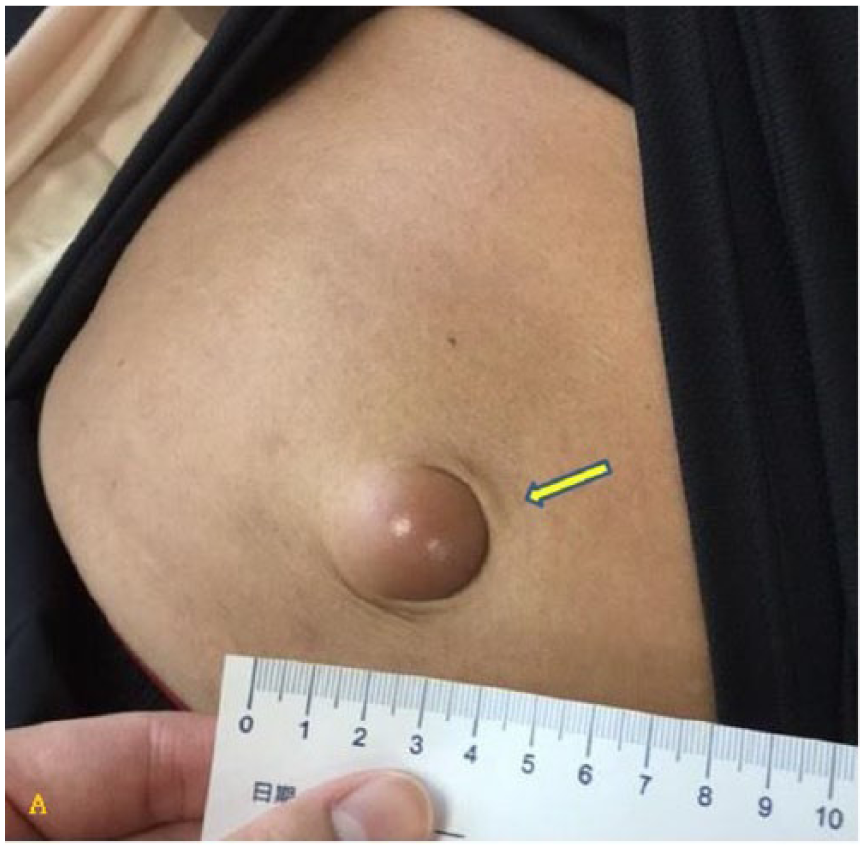
A 2.5 × 2.5-cm nonpulsatile tender bulging mass in the navel area with reddish-brown skin discoloration (arrow).
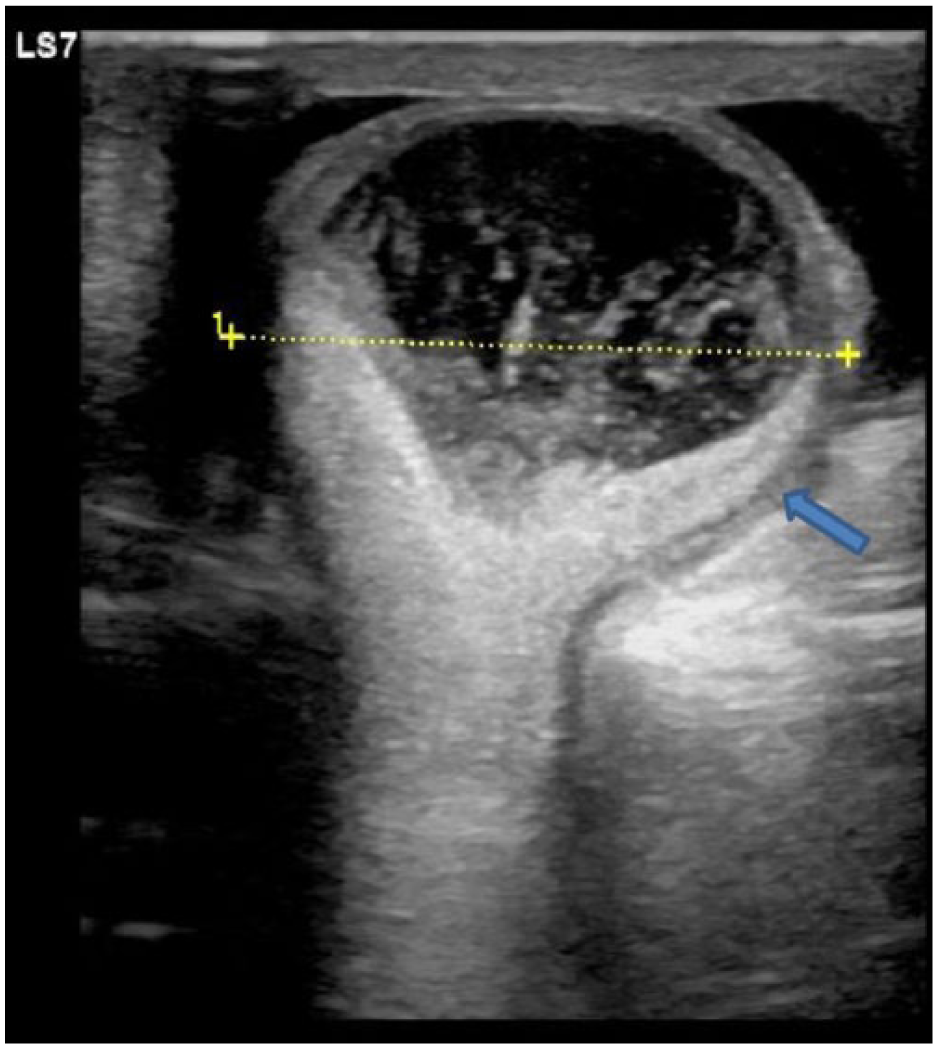
Ultrasound of the abdominal wall mass.
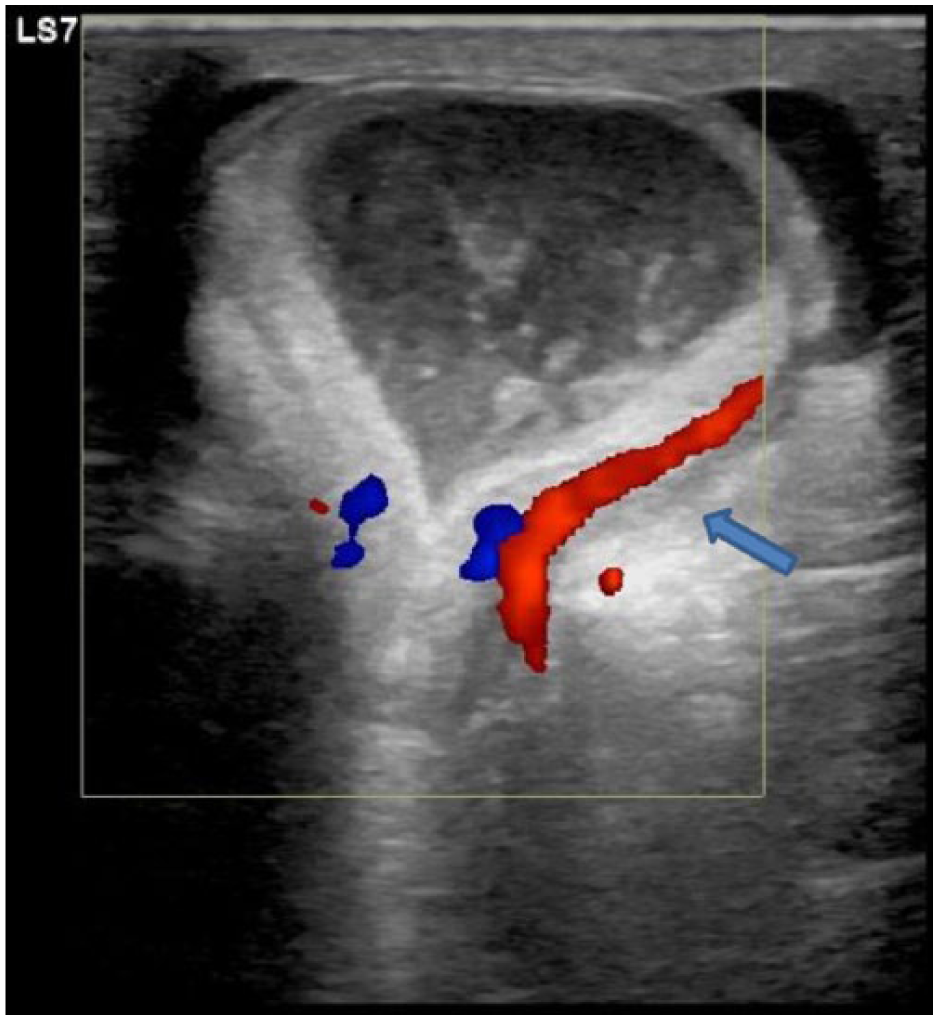
Ultrasound of the abdominal wall mass with color Doppler.
Question
Answers
Ultrasound of the abdomen revealed a round and sac-like structure measured 2.8 cm containing echogenic materials and fluid without blood flow (Figures 2 and 3). Deep to the sac-like structure, there is a 1.5 cm defect of the abdominal wall muscle.
The diagnosis was incarcerated umbilical hernia. Manual reduction was attempted but failed. Emergent operation was arranged.
Point-of-care ultrasound can be used to evaluate the characteristics of superficial abdominal mass whether it is a hernia, tumor mass, hematoma, abscess, or vascular lesion.
Discussion
Umbilical hernia occurs more common in females and represent around 5% of all abdominal hernias. 1 Umbilical hernias may be congenital due to physiological herniation through the umbilicus during the 10th week with incomplete closure of the anterior abdominal wall after the gut returns to the abdominal cavity. Risk factors of acquired umbilical hernia are obesity, multiparity, ascites, and previous abdominal surgery. 2
Point-of-care ultrasound is an accurate, non-invasive, inexpensive, and readily available tool to evaluate the characteristics of superficial abdominal mass whether it is a hernia, tumor mass, hematoma, abscess, or vascular lesion. It can also be used to assist real-time manual reduction of hernias. 3
Footnotes
Acknowledgements
All authors provide equal contribution to this article.
Declaration of conflicting interests
The author(s) declared no potential conflicts of interest with respect to the research, authorship, and/or publication of this article.
Ethical adherence
The study procedures were in accordance with ethical standards.
Funding
The author(s) received no financial support for the research, authorship, and/or publication of this article.