




Abstract
The optical limiting properties of a series of free base porphyrin dyes and their Sn(IV) complexes were analyzed on the nanosecond timescale in the visible region at 532 nm with the second harmonic of an Nd:YAG laser by the open-aperture Z-scan technique. The effect of introducing different meso-aryl groups was investigated with 2-bromophenyl (
Introduction
Over the last few decades, a growing issue has been faced in the field of aviation safety due to irresponsible laser pointer use when aircraft are approaching runways. The use of lasers in a military context has also grown considerably. This has led to considerable research interest in developing optical limiting (OL) materials so sensitive optics and the human eye can be protected from intense incident laser pulses across the visible region and neighboring regions of the UV and NIR. 1 The goal is to identify materials that are largely transparent under ambient light conditions but attenuate the transmission of intense laser pulses. Molecular dyes, such as phthalocyanines and porphyrins, have been particularly significant in this context. The second harmonic of an Nd:YAG laser at 532 nm provides a way to test the OL properties of the molecular dye in the region where the human eye is most sensitive. 1 Several different mechanisms, such as nonlinear refraction (NLR), scattering (NLS) and absorption (NLA), can attenuate the transmission of light through OL materials.
The focus in this study is on the use of Z-scan measurements2–4 to analyze the NLA properties of a series of porphyrin dyes. At higher incident light intensities, a reverse saturable absorption (RSA) response is observed. 1 In the context of molecular dyes, this can be caused by two-photon absorption (TPA) and excited state absorption (ESA), and its magnitude can be used to quantify the effective nonlinear absorption coefficient (βeff), the imaginary component of the third-order susceptibility (Im[χ(3)]), and second-order hyperpolarizability (γ) values of the OL materials so that key trends in the structure-property relationships can be identified. The use of a nanosecond pulsed laser with a pulse width of 7 ns for the Z-scan analyses means that only an effective nonlinear absorption coefficient (βeff) can be measured, since, unlike on the femtosecond timescale, multiphoton absorption processes other than simultaneous two-photon absorption can contribute to the observed RSA response.5,6 ESA from either the S1 or T1 state are expected to be the dominant factor on the nanosecond timescale.
Porphyrins are potentially suitable for use as optical limiters due to their extended π-conjugation systems, resulting in a large number of ππ* excited states in both the singlet and triplet manifolds, which can facilitate both TPA and ESA in a manner that generates large RSA responses.7,8 The optical spectroscopy of porphyrin ligands can be understood on the basis of molecular orbitals (MOs) in an ML = 0, ±1, ±2, ±3, ±4, ±5, ±6, ±7, 8 sequence associated in a 16-atom 18 π-electron system corresponding to the inner ligand perimeter.9,10 This results in a HOMO and LUMO with ML = ±4 and ±5 angular nodal properties, and allowed and forbidden ΔML = ±1 and ±9 transitions, which give rise to an intense B (or Soret) band at ca. 420 nm and weaker Q bands in the 500−700 nm region. This results in minimal absorbance across most of the visible region under ambient light, consistent with the requirements for an optical-limiting material. The effect of introducing different meso-aryl groups was investigated with 2-bromophenyl (
Experimental section
Materials
Spectroscopic grade dichloromethane and dimethylsulfoxide (DMSO) were obtained from Merck.
Synthesis
Porphyrin dyes
Instrumentation
The 1H NMR spectra of
All Z-scan measurements were performed with a 15 cm focal length lens at 532 nm with a frequency-doubled Quanta-Ray Nd:YAG laser (1.5 J / 7 ns pulse length at FWHM) in near-Gaussian transverse mode at a fixed incident laser pulse energy of 35 µJ in a manner described previously. 21 A repetition rate of 10 Hz was used to avoid cumulative thermal non-linearity effects. The circular beam was spatially filtered to eliminate higher-order modes. A 2 mm quartz cuvette was used to move the sample on a translation table through the lens focal point.
Results and discussion
Synthesis
Porphyrins
Photophysicochemical properties
Porphyrins are potentially suitable for use as optical limiters, since they absorb weakly across most of the visible region (Figure 2). Free base tetraarylporphyrins are typically only weakly fluorescent and have moderately high singlet oxygen quantum yields.
22
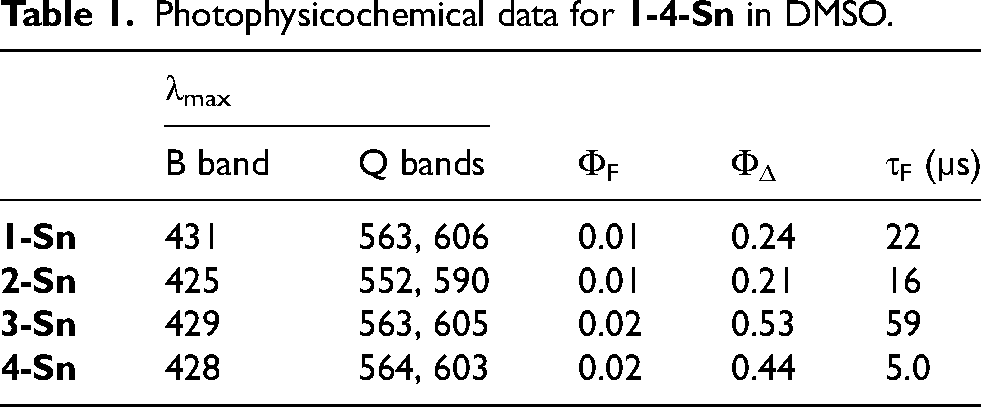
The Sn(IV) complexes that were prepared are only weakly fluorescent due to the presence of the heavy central Sn(IV) ion and enhanced intersystem crossing rates with ΦF values in the 0.01−0.02 range in DMSO (Table 1).
Photophysicochemical data for
Optical limiting properties
Porphyrin dyes and their Sn(IV) complexes are potentially suitable for use as optical limiters since they absorb relatively weakly across most of the visible region, including at 532 nm, the second harmonic of Nd:YAG lasers (Figures 1 and 2). Herein, we employ the Z-scan technique to investigate the NLA properties of 

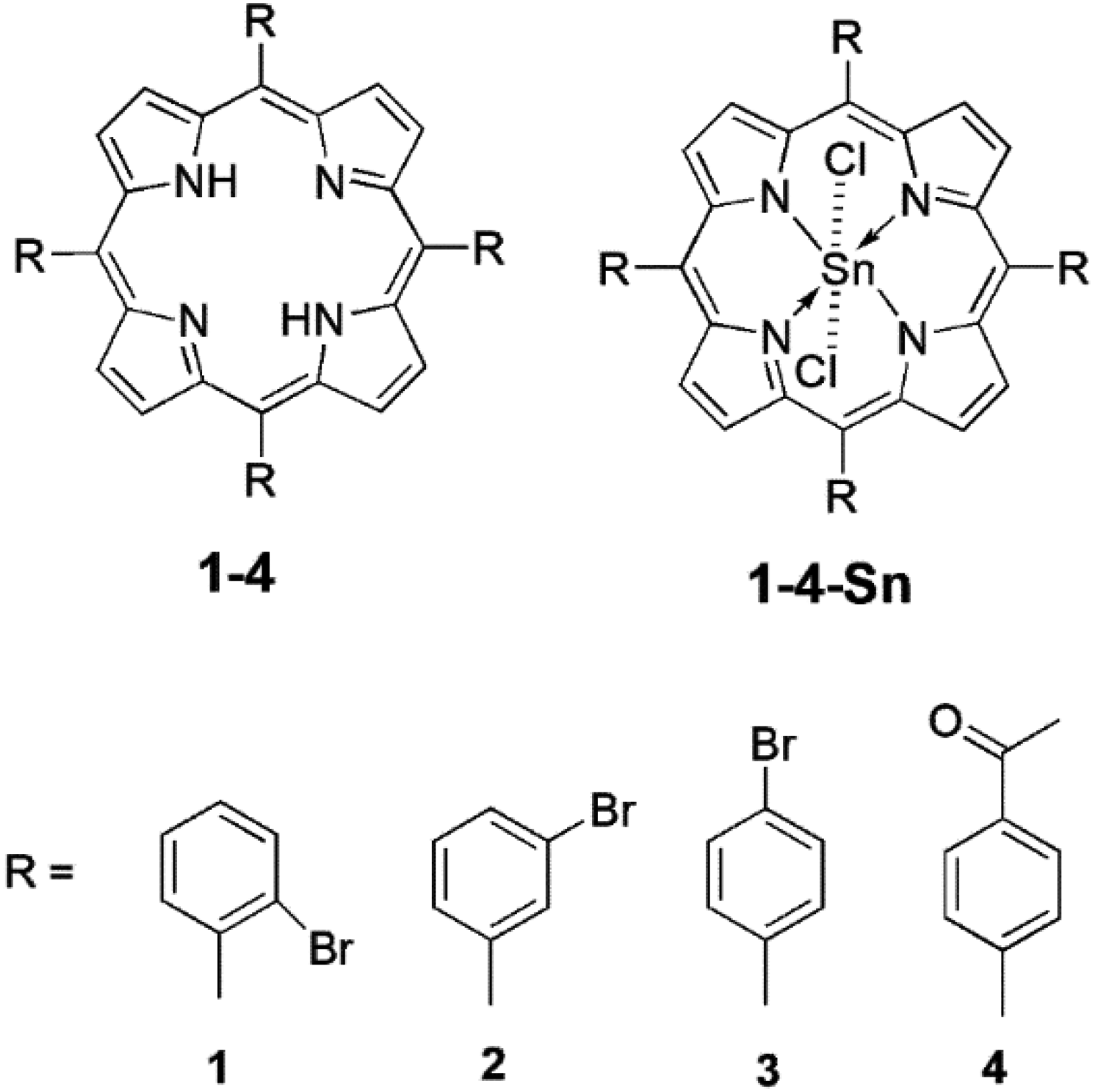
Structures of free base porphyrins
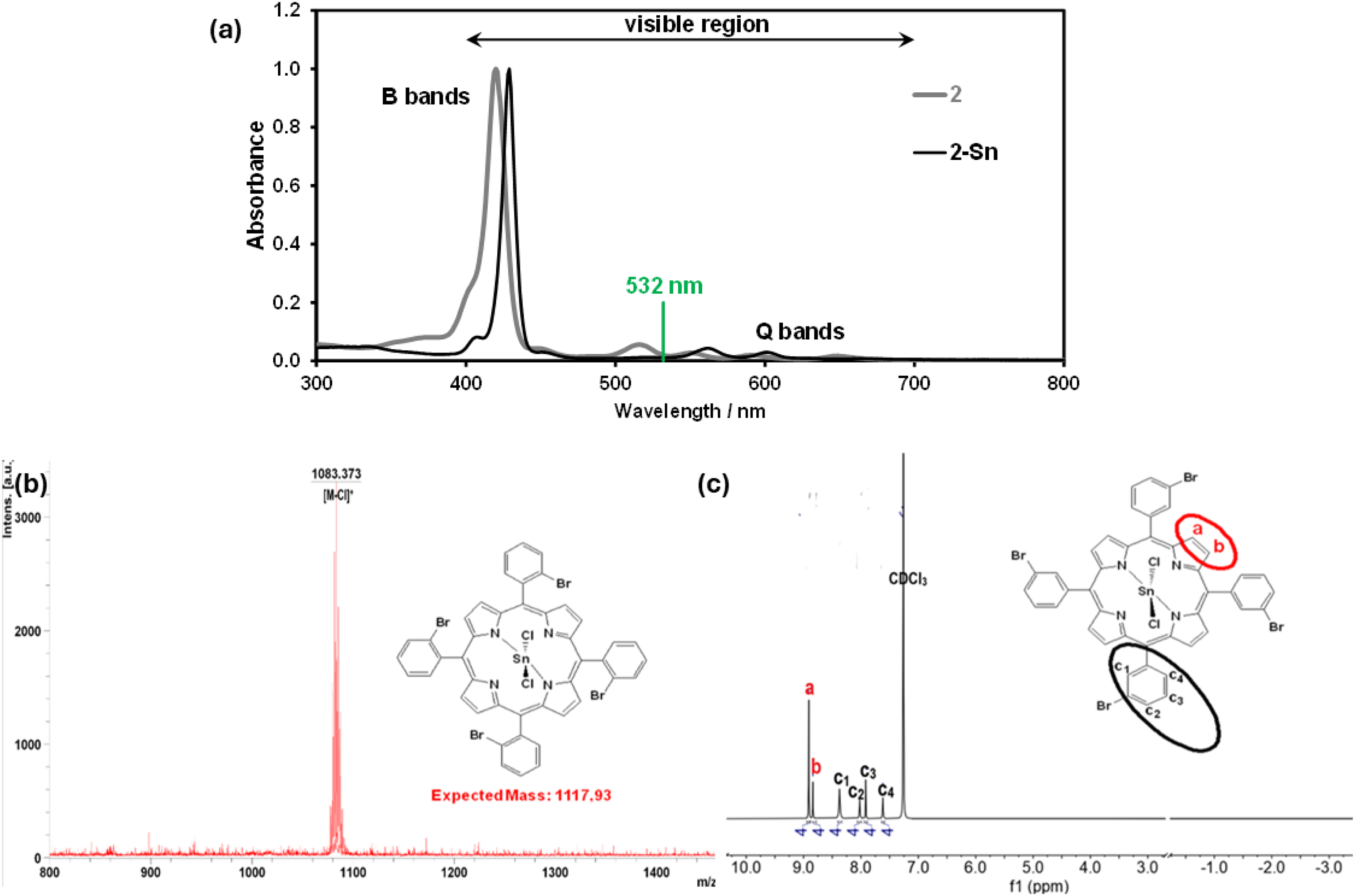
(a) UV-visible absorption spectra of
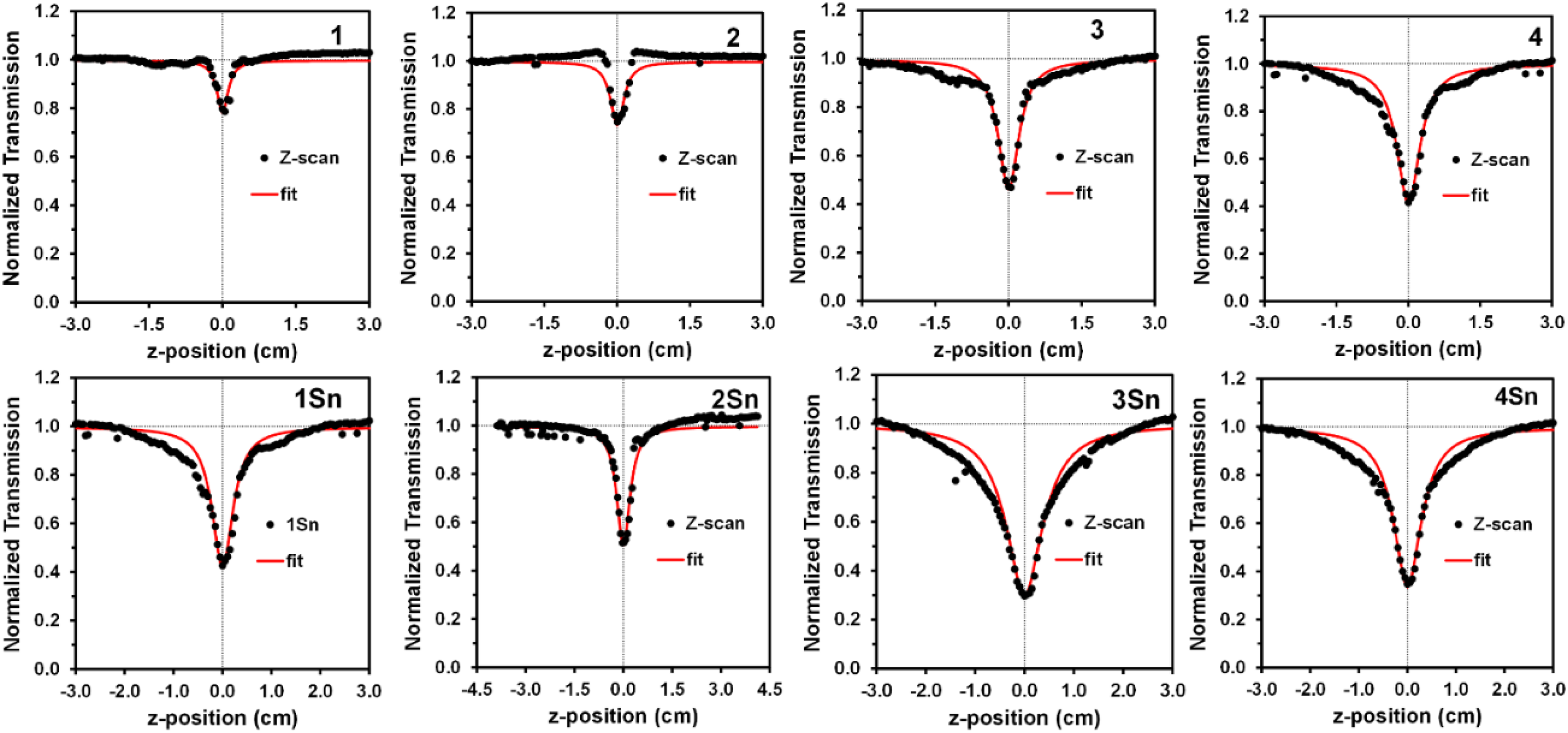
Open aperture Z-scans for
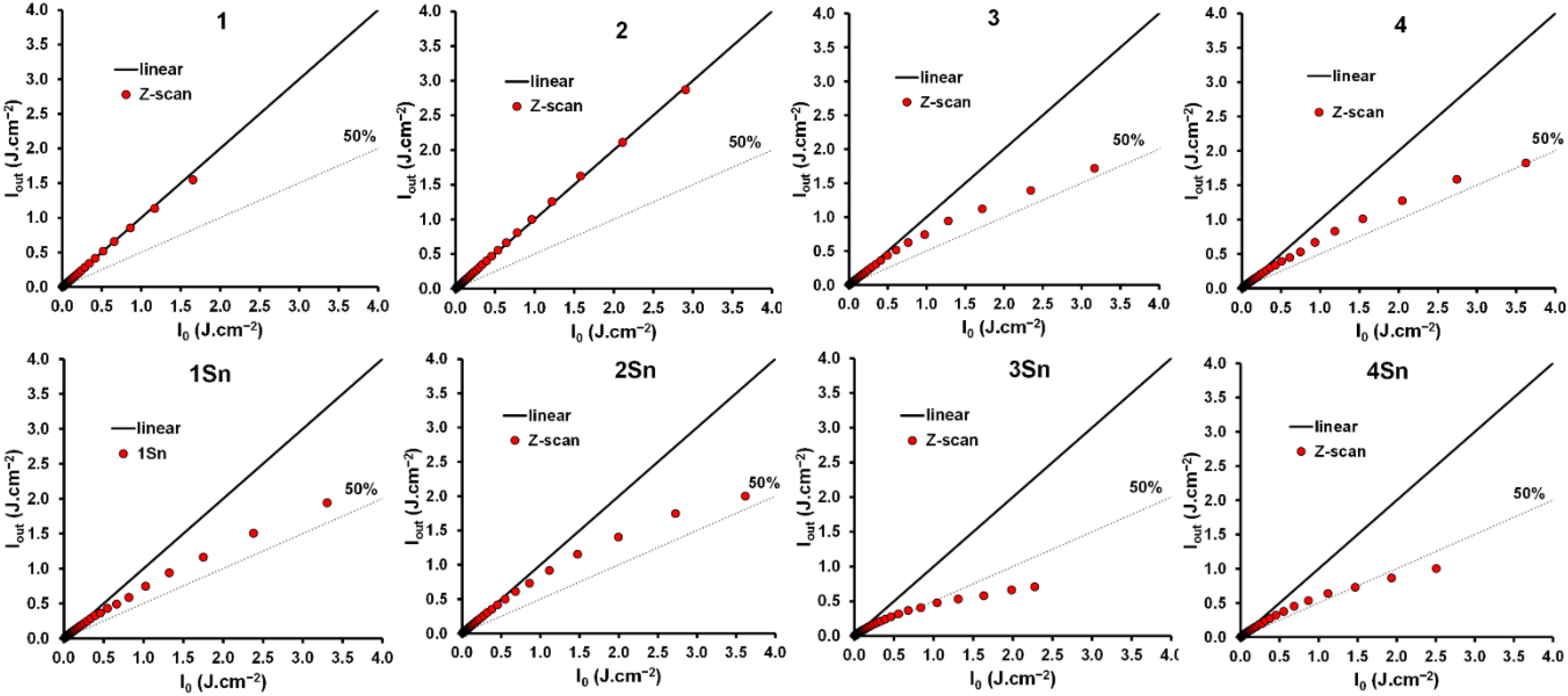
The input fluence plotted against the output fluence for
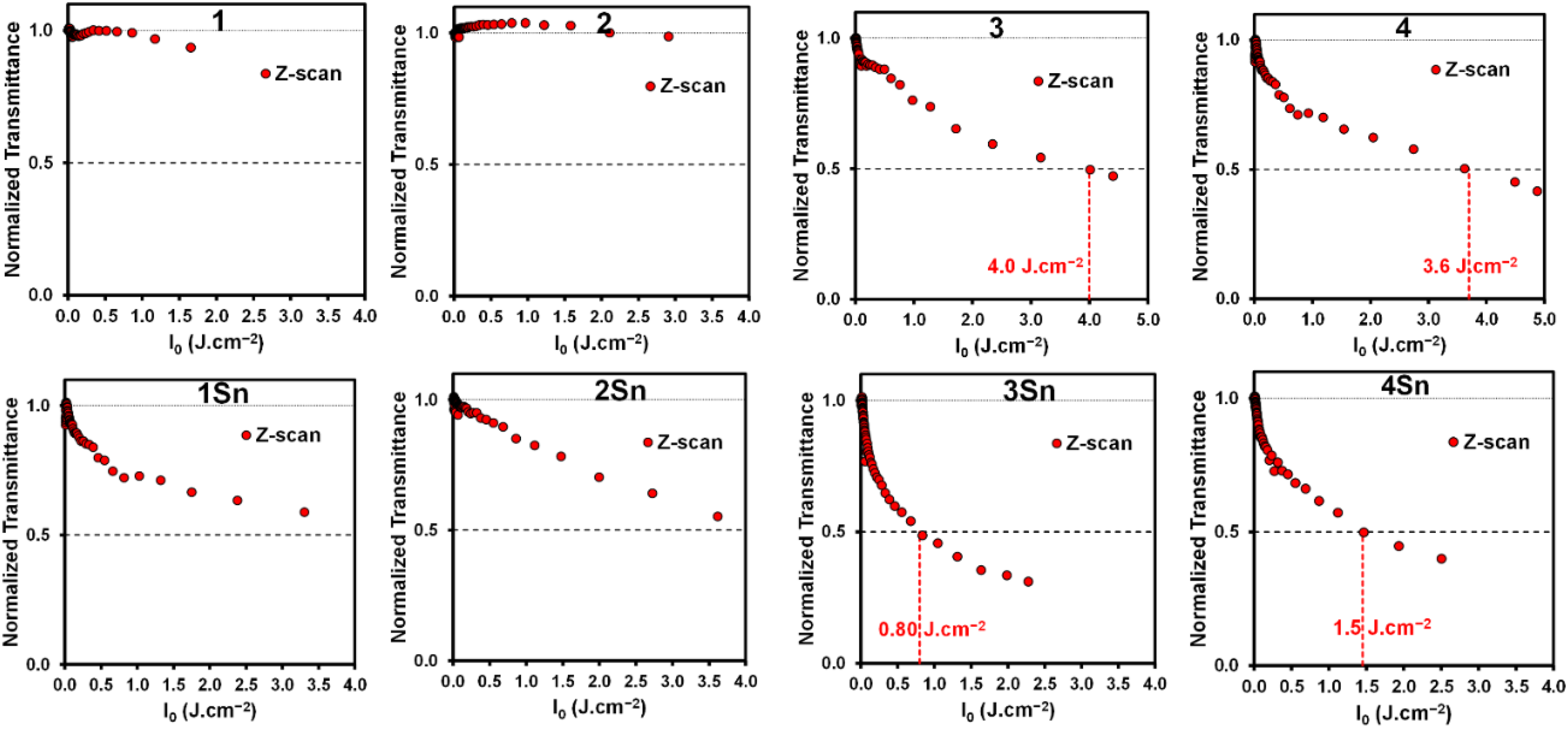
Calculation of the Ilim values for
Optical limiting data for
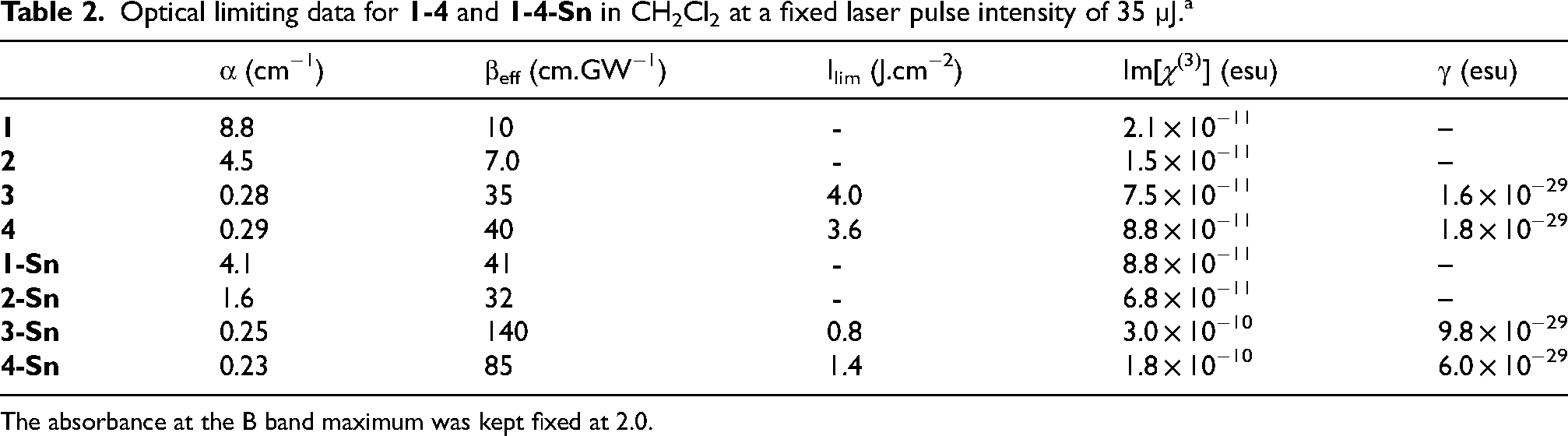
The absorbance at the B band maximum was kept fixed at 2.0.
where P0 provides the peak power, and Leff is the effective pathlength derived from the 2 mm cuvette pathlength L and the α value of the solution at 532 nm:
The beam width in Equation 2 is calculated with Equation 4 from the sample position (ω(z)):
An analytical version of Equation 1 was used to calculate q0(z) directly from the experimental T(z) data
21
:
When Equation 4 is substituted into Equation 2, q0(z) is defined as: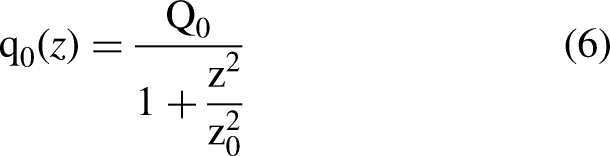
The maximum value of the fitted Gaussian-shaped curve, Q0, is provided as:
When the experimental RSA response is fitted with Equation 5, the FWHM and peak maxima values correspond to z0 and Q0, respectively. Equation 8 can then be used to derive the βeff value:
The imaginary component of third-order nonlinear susceptibility (Im[χ(3)]) can be derived directly from the βeff value. This parameter quantifies how rapidly an optical limiter attenuates the incident laser beam. It can be determined using Equation 9
23
:
In which η is the linear refractive index of the solvent, and ɛ0 and c are the permittivity of free space and speed of light.
During the interaction between the molecular OL dyes and the incident photons, a second-order hyperpolarizability (γ) is induced, since a bias is generated in the average orientation of their permanent dipole moments. The magnitude of the hyperpolarizability can be determined with Equation 10:
In which NA and Cmol are Avogadro's constant and the molar concentration of the dye, and f is a Lorentz local field factor derived from Equation 11:
Since the γ value is dependent on dye concentration, it provides the most suitable OL parameter for comparing data sets reported in the literature.
It has been reported previously that OL dyes with favorable properties should have Im[χ(3)] and γ values that lie between 10−12-10−10 and 10−34-10−29 esu,5,23,24 respectively. The values for
The limiting threshold intensity (Ilim) provides the fluence value at the point within the RSA response where transmission decreases to 50% of a linear response (Figure 5). The International Commission on Non-Ionizing Radiation Protection provided guidelines for acceptable exposure to incident laser light.
25
It has been calculated previously, by taking into account that the average human blink reflex is 250 ms,
6
that 0.95 J.cm−2 is the recommended exposure limit for nanosecond pulsed lasers at 532 nm. The Ilim values for
Conclusion
A series of Z-scan measurements was made for
Footnotes
Acknowledgements
Laser-related equipment and maintenance were provided by the Laser Rental Pool Programme of the Council for Scientific and Industrial Research (CSIR) of South Africa.

Funding
This work was supported by the South African National Research Foundation (NRF), with grants to TN (uid: 62620) and JM (uid: 119259), and by a grant from the African Laser Centre.
Declaration of conflicting interests
The authors declared no potential conflicts of interest with respect to the research, authorship, and/or publication of this article.
Data availability
Data sets are available on request.