




Abstract
Background and objective
As the amount of knowledge in literature continues to increase. Seeing research as a whole and determining its development and direction has become increasingly difficult. To overcome this challenge, new methods are needed. Among the methods developed, bibliometric methods that allow for evaluating research models from different perspectives and identifying collaborations stand out. This article it is aimed to identify the main research themes and trends, highlight the gaps in the literature, and explore the potential for research in this field.
Methods
Bibliometric analyses are conducted in databases that contain high-quality data. In this regard, the Web of Science Core Collection (WoS) was chosen in our study. The search was covered the years between 1982–2022. A total of 2556 articles. In our research, articles were examined in two sections. The first section provides an overview of articles on the intramedullary nailing. In the second stage, content analyses were conducted.
Results
A total of 2556 articles were published in 352 journals. The total number of authors is 8992, and the average citation per article is 18.87. The United States, China, and England are the top three countries. Based on the H-index most influential authors are Schemitsch EH and Bhandari M. The Injury-International Journal of the Care of the Injured journal has published 10.44% of all articles.
Conclusion
Our study sheds light on the 40-year development dynamics of intramedullary nailing.
Keywords
Introduction
An intramedullary nail (IN) is a metal rod that provides secure support for a broken bone. The insertion of an IN into the medullary cavity and along the fracture is called intramedullary nailing (IN). This procedure is one of the most commonly used treatments for fractures and is considered the “gold standard” for some fractures. 1 It has advantages such as reducing hospital stays and promoting rapid healing. 2
As the amount of knowledge in literature continues to increase, so do the relationships between different disciplines. Seeing research as a whole and determining its development and direction has become increasingly difficult. To overcome this challenge, new methods are needed. Among the methods developed, bibliometric methods that allow for evaluating research models from different perspectives and identifying collaborations stand out.3,4 The importance of correctly analyzing the extensive literature has also increased. This area also uses bibliometric methods, allowing for qualitative data analysis. Different areas can be analyzed using these methods, some of which include academic institutions, authors, books, and journals.5–7 Currently, the most commonly used field for bibliometrics is the quantitative analysis of data obtained from scientific articles using mathematical and statistical tools. 7
One of the most critical applications of bibliometric analysis is scientific mapping. Scientific mapping is based on visualizing the relationships between the elements that form the basis of scientific disciplines such as universities, academic journals, and researchers. Scientific mapping is an increasingly popular and widely used method in recent times. It provides significant benefits in reviewing literature by describing the characteristics of current research from many perspectives. 8 Cytoscape, CiteSpace II, and VOSviewer are some of this field’s most commonly used software.
This article, which utilizes the science mapping method, aims to provide a comprehensive overview of the current state of research on intramedullary nailing. Specifically, this article aims to identify key research themes and trends, highlight gaps in the existing literature, and explore the potential for future research in this area. By mapping the research landscape of intramedullary nailing, this article aims to provide a valuable resource for researchers, clinicians, and other stakeholders seeking to deepen their understanding of this critical area of orthopedic surgery.
Material and methods
Research framework
The research flow diagram for IN research is shown in Figure 1. Bibliometric analyses are conducted in databases that contain high-quality data. In this regard, the Web of Science Core Collection (WoS) was chosen in our study, which is widely accepted worldwide and contains high-quality and effective scientific articles.
9
Workflow of science mapping.
The search was conducted in the WoS database on 30 December 2022, and covered the years between 1982–2022. There were 3276 articles in the WoS database on the IN. When “Articles” were selected, there were 2774 articles; when the language was selected as “English,” there were 2565 articles. Following the selection of the database, the data was then filtered. When the scope of the WOS was set to “SCI_EXPANDED,” “SSCI,” and “E-SCI,” 2556 articles were reached. The analysis was continued with 2556 articles.
Bibliometric analysis
The Bibliometrics program was used for bibliometric analysis. Bibliometrics is open-source software written in R. 5
In our research, articles were examined in two sections. The first section provides an overview of articles on the IN. This section examined the articles from the perspective of researchers, journals, institutions, and countries. In the second stage, content analyses were conducted using word and citation analyses. These analyses were used to examine the intellectual structure of the IN subject and identify the thematic development and research focus.
General analysis of the articles
Both H and G indices and keywords have been used.
Jorge Hirsch introduced the H-index in literature. Suppose an author has X publications and is cited at least X times. The author’s h-index is X. According to this definition; an influential scientist should have a series of articles with a high citation level. 10
Leo Egghe defined the G-index in 2006. It is used to evaluate the global citation performance of publications. The calculation of the G-index is based on the distribution of citations to the researcher’s publications. 11 Unlike the H-index, the average citation numbers are considered in the G-index. According to Egghe, not considering the citation scores of the most valuable articles is a disadvantage. Therefore, the G-index is an alternative to the H-index.
Keywords are the words that best express the article. According to this basic approach, keyword analysis can be used to determine the subjects and themes of a study. 12 n order to examine the study topics of the IN more accurately, the early period when a limited number of articles were published was excluded and examined between 1991–2022. The 32 years are divided into eight equal periods of 4 years.
Content analysis of the articles
Thematic mapping
Thematic mapping is a method of displaying data in different ways. In bibliometric analysis, thematic mapping is used. Research themes in thematic mapping are created based on the co-occurrence of keywords given to articles. Author keywords represent the content of the articles and are used for thematic matching. 13
Bibliometrics groups the most repeated keywords as theme clusters. The most emphasized themes are identified using keywords that the author used at least five times. The first 250 keywords are included in the analysis. The words in the theme clusters are the keywords with the highest frequency in the cluster. The size of the circles is proportional to the keyword frequency. A word cloud is created using keywords by Bibliometrics. The word cloud is a graphical representation of the newest concepts in IN. 14
Analyzes temporal dynamics or inter-network interactions within the same time frame. A strategic diagram reflects the interaction of factors that affect a research area. The strategic diagram is analyzed in four quarters. 15 Callon explains the importance of the four quarters. The X-axis represents centrality, while the Y-axis represents density. The importance of the theme is analyzed with centrality and development with density. 16
“Motor Themes” is the first quarter theme. It is located in the upper right. It expresses high density and centrality. Keywords with strong internal links are included in this theme. 17
“Niche Themes” is the second quarter theme. It is located in the upper left. It expresses high density and low centrality. 17
“Emerging or Declining Themes” is the third quarter theme. It is located in the lower left. It is an emerging or declining theme with low centrality and density values. 17
“Basic and Transversal Themes” is the theme for the fourth quarter. It is located in the lower right corner. The density is low, and the centrality is high. 17
Thematic evolution maps
In bibliometric analysis, thematic evolution mapping is carried out. This map is created according to the Sankey diagram. There are connection points in thematic evolution mapping. These points indicate the highest repetition number and a theme set labeled with the keyword. The size of the points is proportional to the number of keywords. 18
Citation analyses
The dynamics of the development of research topics can be examined with citation analyses. In our study, citations were used to analyze articles on IN and their relationships. Local Citations are the number of quotes from an article in the used dataset. Global Citation shows the number of citations made to the article from the WoS core database. It is necessary to eliminate the effect of time in citation analyses. Because newly published articles need more time to receive citations. The parameters of Annual Local Citations (LC/YYP) and Annual Global Citations (GC/YYP) are used to eliminate this effect. 19
Results
Overview
A total of 2556 articles on IN were published in 352 journals between 1982 and 2022. The total number of authors is 8992, and the average citation per article is 18.87. Other statistical information is presented in Figure 2. Main information.
Annual scientific production and annual average citations
The annual number of scientific articles and the average number of citations are presented in Figure 3 on our research topic. The number of articles remained limited until 2007 and rapidly increased from 2008. The most articles were produced in 2022, with a total of 190. The highest annual average number of citations was reached in 1984, with a value of 2.9. However, the annual averages are around 1.5. The articles published in recent years need more time for citation. Therefore, the newly published articles have a temporal disadvantage. In our research, the R2-reliability coefficient, trend line, and equation of the graph of the annual number of scientific articles produced were added. The reliability coefficient is close to an integer with a value of 0.9535. This shows that the trend line represents the data very well. The equation representing the trend line is also on the graph. Annual scientific production and average citation per year.
Authors analysis
*Corresponding author’s Country
The countries of the authors of the articles have been examined. The top 20 countries are shown in Figure 4. The United States, China, and England are the top three countries. The United States is ahead of other countries when both single and multiple countries are considered. The country with the highest MCP Ratio is Switzerland, with 0.463. The top 20 countries.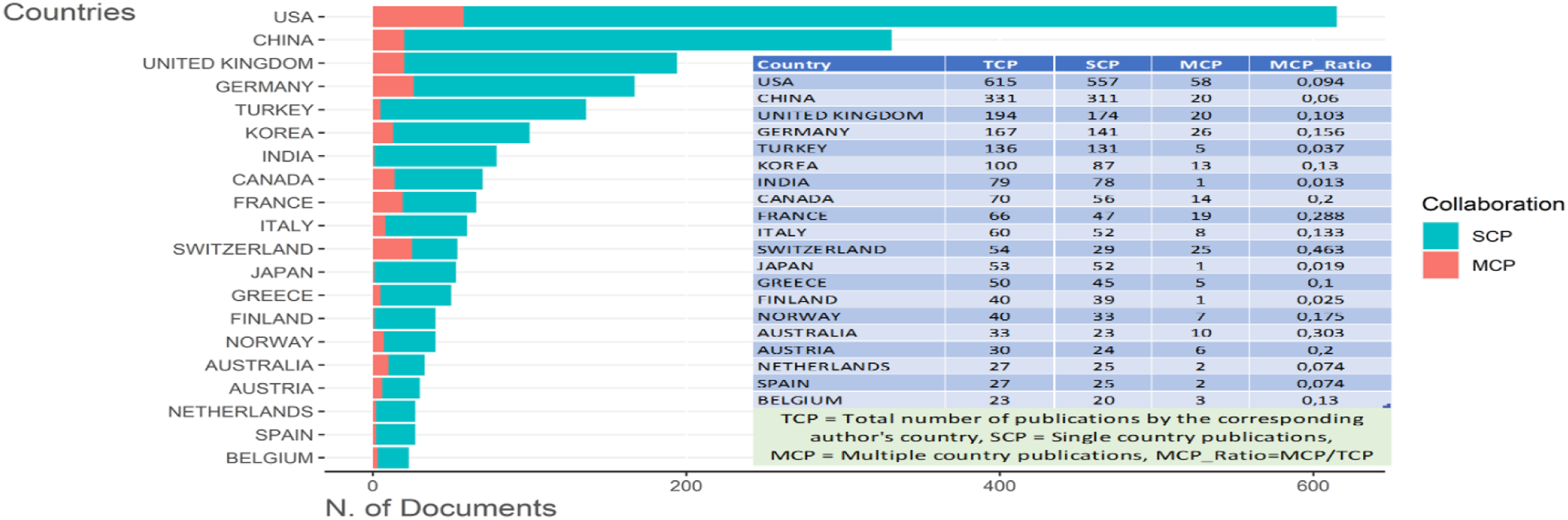
Author impact
Author impact.


Top-authors’ production over the time.
Schemitsch EH, Bhandari M, and 2008 the year when 17.75 references were made, the author has been the most cited in a year. The size of the circles in Figure 5 represents the number of articles produced that year. The darkness of the color of the circles is proportional to the annual citation amount. Bhandari M, Canevese F, Zhang YZ, and Li J are the authors who produced the most articles in 1 year, with four articles each.
Authors co-citation network
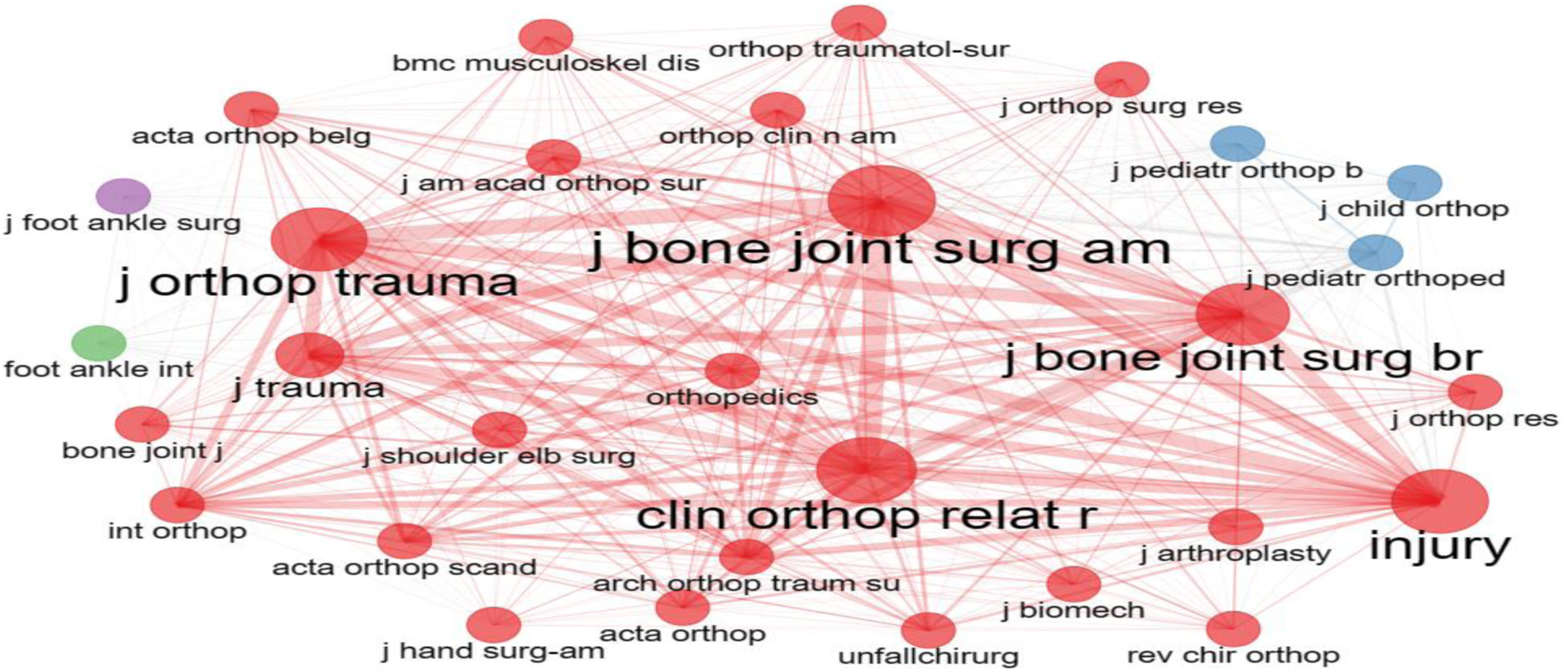
The Author’s Co-citation Network has been analyzed (Figure 6). Circles represent the co-citation network of the top 30 authors. Each circle represents an author. The citation network has five clusters of nodes in different colors. The largest cluster is the green cluster, which consists of 15 authors. In this cluster, Courtbrown CM is the author with the most articles receiving common citations. Similarly, Tornetta P, Bhandari M, and Gustilo RB, from the blue cluster, are authors with many articles receiving common citations. (Figure 7) Authors Co-citation network. Sources Co-citation network.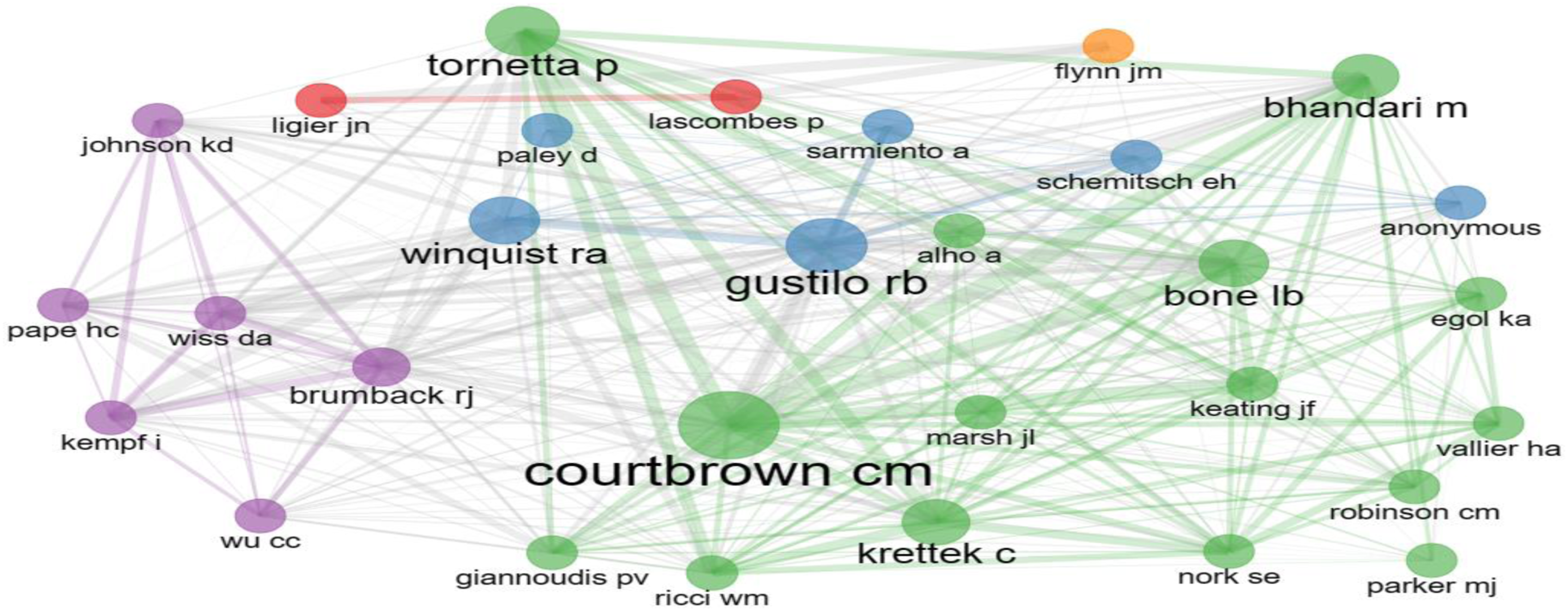
Source analysis
Source local impact
Source local impact.

NP: Number of publications; TC: Total citations; TC/NP: Citations per paper; PY_start: Publication year starting.
Document analysis
Most local cited document
Most local cited document.

YP: Year of Publication; YYP: Year 2023-Year of Publication; GC: Global Citations; LC: Local Citations.
Papers co-citation network
The articles were analyzed by examining common citations, resulting in a Document Co-citation Network (Paper Co-citation Network). As shown in Figure 8, the co-citation network of the first 30 articles is divided into 9 clusters of nodes, represented by circles. In the citation network, the article with the most citations in the co-formation network is Gustilo RB 1976, in the red cluster. Papers Co-citation network.
Authors keyword analysis
Word cloud
The keyword size in the word cloud represents the frequency of use in the dataset. The top 20 keywords frequently appearing in the articles analyzed are shown in the table, and the top 50 are in the word cloud (Figure 9). In addition to our main keywords, IN, keywords such as Fracture, Tibia, Femur, Fracture Fixation, Nonunion, Intramedullary, and Children have emerged as prominent. Word cloud.
Trend topics
Keywords used more frequently in specific years are shown in Figure 10. The keywords Fat Embolism, Mechanical Testing, Torsion, Reamed, Animal Model, and Open Fractures Unreamed were frequently used between 1997–2007. The keywords Trochanteric Fracture, Case Report, Atypical Femoral Fracture, Femoral Neck Fracture, Periprosthetic Fracture, Humeral Shaft Fracture, and Trauma have become trends. The keywords Femur Fracture, 2019; Nonunion 2015; Fracture Fixation, and Biomechanics 2013 have become trending topics. Trend topics.
Word dynamics
The change in keywords over time is shown in Figure 11. In our study, a 32-year period from 1991 to 2022 was divided into eight equal 4-year intervals. The first 10 keywords used by authors were analyzed. Word dynamics.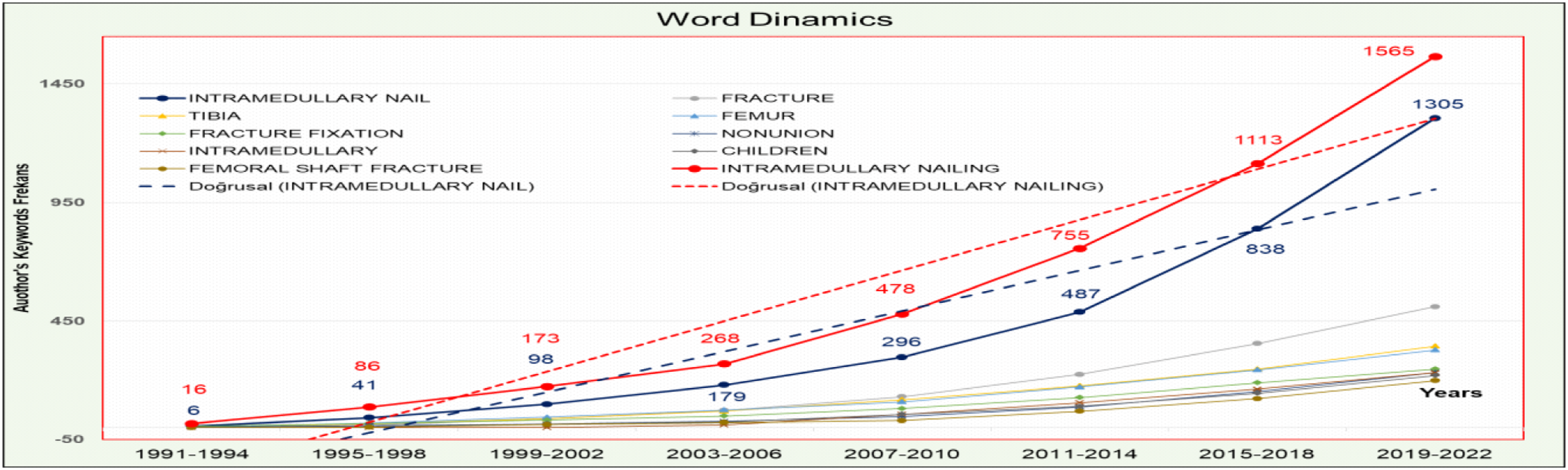
Co-occurrence network
In Figure 12, a co-occurrence network of the top 30 keywords is presented. The keywords were clustered into nine clusters. Co-occurrence network.
Conceptual structure analysis
Thematic map
A Thematic Map, created using keywords repeated at least four times by the first 250 authors, is presented in Figure 13. The most frequently repeated keywords were grouped into theme clusters. Each cluster is represented by the first three most frequently repeated keywords. The size of the circles is proportional to the frequency of use of the keyword representing the circle. The keywords Intertrochanteric Fracture, Hip Fracture, and Atypical Femoral Fracture are centrally and densely located on the schematic diagram. Although all four themes show characteristics, they can be considered the main themes for our study area. Thematic map.
Thematic evolution
A Thematic Evolution Map was created in four periods to study the change and development of the themes of IN over time. In the first period, there are 11 themes. In the second period, 18; in the third period, 22; in the fourth period, 24. IN, one of the subjects of our study, was present in the first, second, and third periods, and the theme of IN was present in the third and fourth periods. From 2015 to 2019, the theme of IN was fed by sub-themes of IN, Distal Locking, Infection, Surgery, and Dynamization, while the theme of IN was fed by sub-themes of IN, Hip Fracture, Suprapattellar, Infection, and Dynamization. (Figure 14) Thematic evolution (1988–2022).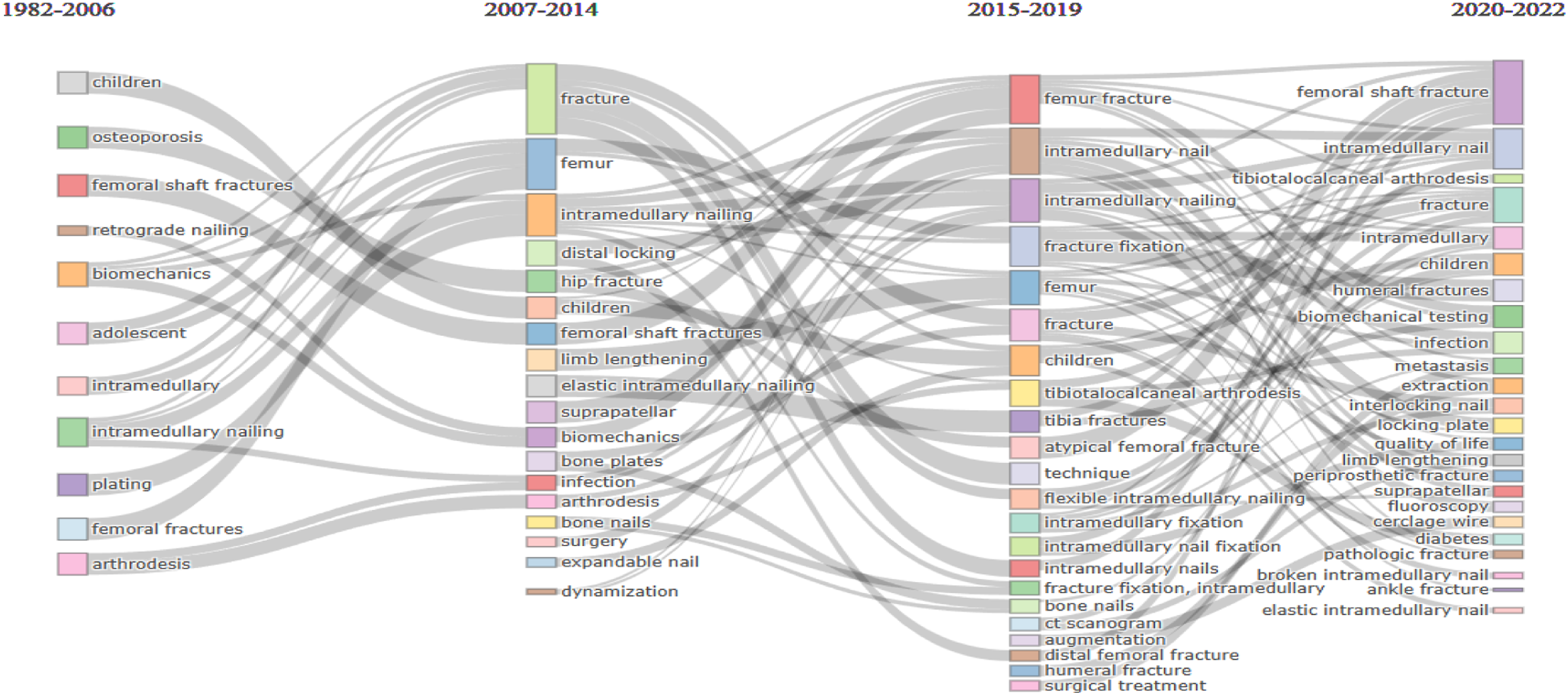
Discussion
Publications on IN in scientific journals began to be published in the early 1980s. As expected, the number of published articles has increased over the years. However, the average annual citation count has stayed the same proportionally with the number of articles. The highest citation count was in 1984. Similar values were reached in the early 2000s, but the average citation counts have been low recently.
The period between 1975 and 1985 includes studies on developing new applications of IN. One of the developments was the placement of larger-diameter nails. However, the developed applications also brought various complications. 20 The results obtained from the studies in this period, significant articles related to developing complications, may explain the citation peak in 1984. The need for more time to receive citations explains the low citation intensity in recent articles.
It has been determined that the United States has published more articles on IN than other countries. The number of articles is about twice as much as the closest country. Turkey is in fifth place in the ranking. Turkey is ahead of many countries known as “developed countries” in the academic field. Turkey has strong potential in the medical tourism industry. It is one of the countries that is rapidly growing in this field. 21 Orthopedic surgeries are expensive in developed countries. These surgeries can be done cheaper in countries like Turkey. This may have affected the number of articles published on IN.
The author who has made the most contributions to the topic of IN is Professor Emil H Schemitsch. Professor Schemitsch has previously served as the President of the Canadian Orthopedic Association and is currently the President of the Canadian Arthroplasty Association. His area of expertise is musculoskeletal injuries and arthritis. He is more successful regarding the H-index and number of citations than other authors. Additionally, he is one of the authors who has published articles for the most extended period, which is noteworthy. Professor Mohit Bhandari follows Professor Schemitsch. Professor Bhandari is employed at Canada’s McMaster University and is a recipient of numerous scientific awards. He is considered to be the most successful researcher in the field of evidence-based orthopedic surgery. One of Professor Mohit Bhandari’s notable characteristics is that he is one of the authors with the most co-citations, highlighting his collective work effectiveness. Jun Li, employed at the Department of Orthopaedic Surgery at the University of Pennsylvania, is one of the most productive authors. This scientist has been publishing articles since 2016, and his success in a short period is significant among scientists who have been publishing articles on the subject for a long time.
The journal with the highest number of articles published in IN is Injury-International Journal of the Care of the Injured (Injury). This is followed by the Journal of Orthopaedic Trauma (J Orthop Trauma) and Journal of Bone and Joint Surgery-American Volume [JBJS (Am)]. According to the number of citations, the Journal of Orthopaedic Trauma is more successful. By the number of citations per publication, the Journal of Bone and Joint Surgery-American Volume is more successful. This is reflected in their H-index value as well. Injury is the official publication of the British Trauma Society and is supported by organizations such as the Australasian Trauma Society and the Saudi Orthopaedic Association in Trauma. J Orthop Trauma is the official publication of important organizations such as the Orthopaedic Trauma Association and AO Trauma North America. The Journal of Bone and Joint Surgery, Inc publishes JBJS (Am). The success of these journals may be because essential organizations in orthopedics publish them.
According to LC values, it is observed that articles that are in the upper ranks were generally published at the beginning of the 1980s. Therefore, to carry out more reliable analyses, examining the number of citations of the articles after removing the effect of time is essential. When the effect of time is removed, the articles by Winquist RA 1984, Vallier HA 2011, and Bhandari M 2008 stand out. The 1984 article by Winquist RA examines IN applied to 520 femoral fractures. 2 Despite being published a long time ago, it has received many citations. The 2011 article by Vallier HA compares plate and screw stabilization in terms of cost-effectiveness for distal tibia shaft fractures by examining complications and other data. The aim is to contribute to the decision-making process in treatment. 22 Bhandari M’s 2008 article compares reamed and unreamed IN in tibia shaft fractures. 23 It is an important study on this topic. A common feature of all three studies is their well-planned, scientifically pioneering studies. The presence of 520 participants in the Winquist article and 1000 participants in the Bhandari article shows the reliability of the results of the articles.
The commonly used keywords “reamed” and “unreamed open fractures” stood out from 1997 to 2007. The prominence of reamed or unreamed IN in the discussions of the period explains this. One of the most cited studies also examined this topic. 23 This period is also a time when animal studies in the field of orthopedics have increased. 24 Therefore, “Animals Model” is also a frequently used keyword in the process.
Currently, “Periprosthetic Fracture” stands out among the commonly used keywords. Periprosthetic fractures are fractures associated with an orthopedic implant. Their incidence is increasing due to the increase in orthopedic implant-related procedures and the increased activity of the elderly population. 25 The increased incidence is why “Periprosthetic Fracture” is a frequently used keyword. Bisphosphonates are used in the treatment of osteoporosis. The increasing incidence of osteoporosis has led to the increased use of bisphosphonates. In recent years, it has been identified that atypical femoral fractures are a potential complication of bisphosphonate treatment. 26 This has focused research on atypical femoral fractures, reflected in the keyword “Atypical Femoral Fracture.” The same situation applies to the keyword “Trochanteric Fracture.” The aging of the population and the increasing incidence of osteoporosis has increased the incidence of intertrochanteric fractures, a type of fracture commonly seen in the elderly population. 27 This has also been reflected in the keyword analysis.
In our research, a thematic map was created using keywords. It was determined that three keywords were located at the very center of the schematic diagram, divided into centrality and density. These are Intertrochanteric Fracture, Hip Fracture, and Atypical Femoral Fracture keywords. These can be considered the main themes of our analysis of IN.
Thematic map’s “Basic and Transversal Themes” part includes well-developed keywords with many external links and research. 17 Keywords that appear in many articles are primarily found in this theme. 17 Accordingly, in our study, keywords such as “Intramedullary Nailing,” “Intramedullary Nail,” “Tibia,” “Femur,” and “Fracture” also appear in this theme.
In the motor themes section of the thematic map, the themes “Children,” “Elastic stable intramedullary nailing,” and “Pediatric” are included. Motor themes express high density and centrality. These keywords in this theme have strong internal links and represent the focal point of the research area. This theme includes keywords that have been discussed for a long time. 17 A particular emphasis on orthopedic treatment in pediatric fractures has been adopted. In children, while the bone’s remodeling capacity corrects deformations, traditional osteosynthesis methods can cause complications. Techniques used for the treatment of adults are not suitable for children. Using these techniques in children also causes endosteal circulation disorders and growth problems due to growth stimulation. To eliminate these problems, the technique of elastic IN has been developed. 28 Elastic IN is a minimally invasive technique that provides elastic and stable osteosynthesis. The risk of bacterial contamination is minimal. 29 Consolidation is stimulated in the fracture site, resulting in a shorter hospital stay and faster recovery. Treatment costs are significantly lower. 30 Due to these features, elastic stable IN has become the subject of many studies. It also appears as a motor theme because of this.
In the “Emerging or Declining Themes” section of the thematic map, the keywords “Ankle” and “Arthrodesis” are included. These themes are emerging or declining themes. Their centrality and density values are low. 17 Ankle arthrodesis and arthroplasty are the most common surgical treatment methods for advanced ankle arthritis. Clinical data has shown that postoperative complications are more frequently seen in ankle arthroplasty, requiring more revision surgeries. Ankle arthrodesis is still the most widely used surgical treatment for advanced arthritis. Both internal and external fixation can be used in ankle arthrodesis. For this purpose, methods such as IN, screws, and plates are used. Arthrodesis with IN gives satisfactory results. The low complication rate also contributes to their preference.31,32
In the “Niche Themes” section of the thematic map, the keywords “Anterior knee pain” and “Suprapatellar approach” are included. Niche themes express high density and low centrality. 17 Tibial shaft fractures are frequently treated with IN, and the infrapatellar approach is the most commonly used method. However, this procedure is associated with the risk of deformity. To solve this problem, the suprapatellar approach has been developed. The suprapatellar approach provides better post-op pain and range of motion results than the infrapatellar approach. 33
In conclusion, the evolution of IN, including shape, materials used, cross-section, and reaming techniques, occurred in the mid-1900s. Although IN decreased in the 1960s with plate and screw osteosynthesis development, innovations such as flexible reaming and titanium nails have reversed this trend. 34 Today, IN is the standard treatment for long bone fractures due to its low infection rate and minor scarring.
Footnotes
Declaration of conflicting interests
The author(s) declared no potential conflicts of interest with respect to the research, authorship, and/or publication of this article.
Funding
The author(s) received no financial support for the research, authorship, and/or publication of this article.
Ethical approval
The article was conducted entirely on the internet and from open sources. Ethical approval is not required.
Contributorship
The contributions of the authors to the article are equal.
