




Abstract
Malaysia’s tourism industry has incorporated digital technology to attract, inform and serve travellers, but its adoption is limited among community-based tourism (CBT) providers. Because of its importance in the tourism industry, exploring the factors that trigger or hinder the adoption of digital technology among CBT operators is essential. A qualitative approach was utilised, and semi-structured interviews were conducted with 35 CBT homestay operators selected through purposive sampling. The study found differences in the perception and usage behaviour of tourism-related technology among homestay operators. They find digital technology has improved their business operation efficiency and revenue performance. By improving internet connectivity and access to digital resources, homestay operators will be better positioned to utilise digital technology effectively, facilitating improved communication and marketing strategies. Besides, implementing targeted training programmes to enhance homestay operators’ digital literacy is crucial. The study also identified specific challenges that hindered homestay operators’ use of digital technology. Study implications and limitations are also discussed.
Introduction
Digital technology is crucial in transforming the global tourism industry, creating new opportunities and expectations for operators and travellers. It reshapes industry structures, enabling travellers to quickly identify, customise and purchase tourism products. This digital shift strengthens the industry’s globalisation by providing universal tools for developing, managing and distributing offerings. For tourism businesses, it opens new avenues to engage customers, streamline operations and deliver personalised, enhanced experiences (Buhalis & Law, 2008; Gössling, 2020; Kourtit et al., 2011; Muhammedrisaevna et al., 2020).
The increasing applications of digital technology in the tourism industry, without a doubt, improve the competitiveness among tourism organisations and destinations. Digital technology provides a powerful tool that enlightens benefits in promoting and strengthening the tourism industry’s strategy and operations (Gan et al., 2018). Perhaps it has become one of the key success determinants among the tourism businesses in the 21st century. The developments in digital technology abilities, paired with the improvisation of the size of the equipment and costs, evidently improved the reliability, compatibility and interconnectivity of numerous tourism terminals and applications (Janjua et al., 2021). For example, in several tourism sectors ranging from e-airlines, e-hospitality, e-tour operators and e-travel agencies to e-destinations, the advancement, integration and usage of digital technology among travellers have benefited significantly in obtaining information, making reservations and sharing experiences (Bethapudi, 2013; Gössling, 2020; Muhammedrisaevna et al., 2020).
Since tourism is primarily visual, digital technology is also used to commercialise urban and rural tourism destinations by conveying vacation spot images to tourists (Choi et al., 2007; Greaves & Skinner, 2010). Regarding rural tourism, various governments of the world, either developed or developing countries, are continuously taking heed in diversifying the tourism industry, as well as playing active roles in managing economic activities to increase the local communities’ incomes (Chin et al., 2014; Nooripoor et al., 2021). Spenceley and Meyer (2012) highlight that digital technology can cultivate micro-enterprise tourism within rural destinations, which complements and promotes local-level businesses as community-based tourism (CBT) products to reduce poverty and help conserve rural cultural and natural resources. Besides, the digital technology introduction expands their opportunities and uplifts performance (Murniati et al., 2023; Priatmoko & David, 2021; Promburom, 2024; Van Tran et al., 2023). It enhances the attractiveness of rural tourism in terms of promoting tourism resources, establishing independent businesses, developing new products, increasing tourists and foreign income, and ultimately contributing to economic development (Cheuk et al., 2017; Choi & Turk, 2011; Kourtit et al., 2011; Marschall, 2015).
Digital technology is deemed advantageous in more ways than one since its adoption has already proven to benefit other types of niche tourism sectors (Bethapudi, 2013; Buhalis & Law, 2008; Choi & Turk, 2011; Gössling, 2020; Kourtit et al., 2011; Marschall, 2015; Muhammedrisaevna et al., 2020). However, Malaysian CBT providers rely heavily on conventional word-of-mouth (WOM) or direct contact (through phone calls or emails) for bookings or related information-related activities. Within the theoretical understanding, Janjua et al. (2021) did a systematic literature review of past studies on homestay sustainability. Past studies have looked at ecological and cultural aspects of the visitor experience (Bhuiyan et al., 2012; Dey et al., 2020; Tiberghien et al., 2018), the local community in the management of homestays (Bhalla et al., 2016; Reimer & Walter, 2013; Towner, 2016), creative tourism in CBT (Blapp & Mitas, 2017), community-based agritourism (Addinsalla et al., 2016; Agyeiwaah, 2020; Bhatta & Ohe, 2019), responsible rural tourism (Nair & Hussain, 2013; Ponnan, 2013; Tay et al., 2016), and tourist’s satisfaction and perceived value in community-based homestays (Jamal et al., 2011; Rasoolimanesh et al., 2016; Zhao et al., 2022). Although digital technology plays a significant role in the operations of tourism operators, no studies are focusing on CBT homestay operator perception and usage of digital technology, particularly in the Asia Pacific region (Asyraff et al., 2024; Janjua et al., 2023).
Understanding the triggering factors and perceived challenges can help CBT homestay operator identify the gaps in the adoption process and provide insights to improve their competitiveness. Besides, by exploring the triggering factors and perceived challenges of digital technology adoption, policymakers and industry practitioners can identify areas where technology can be leveraged to achieve sustainability goals. In addition, exploring the triggering factors and perceived challenges of digital technology adoption among CBT homestay operators can help identify the challenges rural areas face in adopting digital technology. This information can be used to develop policies and strategies to address the digital divide issues. In summary, exploring the triggering factors and perceived challenges of digital technology adoption among Malaysian CBT homestay operators is vital to enhancing their competitiveness, increasing CBT’s sustainability, supporting tourism industry growth and addressing digital divide issues. These arguments warrant further investigation, especially on the triggering factors and perceived challenges of digital technology adoption among Malaysian CBT homestay operators.
Literature Review
Community-Based Tourism
Considered one of the popular CBT products, the homestay programmes offer sustainable economic systems since they encourage the rural community to get involved in the tourism industry to stimulate economic activities that provide continuous revenues to the local communities (Acharya & Halpenny, 2013; Samsudin & Maliki, 2015; Walter et al., 2018). This niche CBT homestay sector involves high interactivity of contacts between the visitors and hosts (Reimer & Walter, 2013; Walter et al., 2018), where the two-way information communication happens to start from the hosts reaching their prospective visitors through promotions of the homestay’s, inquiries from the potential visitors, booking and reservations until the visitors come physically to the place or even getting feedbacks from them after they return to their place.
Acharya and Halpenny (2013) investigate women-managed homestays in Nepal as alternative tourism products that promote community well-being, empowering women and fostering local economic growth. Samsudin and Maliki (2015) critically review how cultural landscapes are preserved through homestay programmes in Malaysia, contributing to sustainable tourism. Meanwhile, Walter et al. (2018) examine host learning in community-based ecotourism in Nepal, highlighting the educational and social benefits for hosts in Sirubari and Ghalegaun homestays. Together, these studies underscore the importance of homestay programmes for sustainable community-based tourism and cultural preservation.
Scholars also collectively agreed that the fundamental nature of the CBT involves the local community in certain tourism development (Bhuiyan et al., 2013; Halstead, 2003; Harris, 2009; Jamaludin et al., 2012; Kayat, 2014; Mohamad & Nasir, 2019; Mohd Rafee et al., 2012; Pakshir & Nair, 2011; Peaty, 2009). It is a tourism project coordinated by the locals. It allows them to work with respective parties, visitors and hosts (Asker et al., 2010). It brings people through some communal obligations and the ability of representative bodies to make collective decisions (Jamaludin et al., 2012). The fundamental characteristics include local ownership of development efforts, active engagement at all project progress levels and a genuine host-guest connection. Economic and social benefits include rural development and poverty eradication (Goh, 2015; Müller et al., 2020;; Salazar, 2012), enforced indigenous cultural traditions (Kayat, 2011; Lenao, 2015), empowered rural communities (Salazar, 2012), cross-cultural communication (Kayat, 2014) and improved the household income (Lenao, 2015).
CBT programmes play a significant role in promoting sustainable development, particularly in areas abundant with natural resources. These programmes are designed to leverage the unique attributes of local environments while fostering community engagement and economic empowerment. Research indicates that CBT initiatives are primarily implemented in regions rich in natural resources, providing a foundation for diverse tourism products. These offerings include homestay services, local cuisines, beverages and various indoor and outdoor activities (Benur & Bramwell, 2015; Hussin & Kunjuraman, 2014). Outdoor activities such as trekking, camping and strolls are prevalent among tourists, as they allow visitors to immerse themselves in the natural beauty of these regions. In contrast, indoor activities often feature traditional practices such as cooking and weaving, which offer a glimpse into the local community’s cultural heritage (Jugmohan et al., 2016).
The success of CBT programmes is further influenced by the active participation of local communities in tourism development. Goodwin (2005) posits that enhancing the status of rural areas is most effective when local community engagement is maximised. This engagement is essential for ensuring fairness in the distribution of resources and opportunities, ultimately leading to a more holistic community transformation. However, several critical factors must be considered to ensure the efficacy of CBT initiatives. Ashley et al. (2001) identify key elements that affect the success of CBT, including market access, commercial viability, policy framework and implementation challenges. First, access to markets is often hindered by geographical limitations, economic hierarchies and social constraints that affect the ability of marginalised groups to participate in tourism (Ashley et al., 2001). Second, commercial viability depends on factors such as product quality, pricing, branding and the overall strength of the destination, alongside available financial resources. Furthermore, a supportive policy framework encompassing land tenure, regulatory environments and government attitudes is vital for fostering a conducive atmosphere for CBT. Lastly, the challenges of implementation cannot be overlooked. Addressing skill gaps, managing costs and expectations and optimising stakeholder participation is critical for the success of CBT initiatives. CBT can contribute to sustainable economic development by focusing on these elements while preserving rural areas’ cultural and environmental integrity.
The Malaysian Homestay Experience Programme (MHEP)
As part of the CBT concept and since 1995, the MHEP under the Ministry of Tourism, Arts, and Culture (MOTAC) is executed, which aims to increase the participation of the rural community in tourism, boost the incomes and a way to reduce the rural–urban migration (Chin et al., 2014; MOTAC, 2010; Nooripoor et al., 2021). MHEP is designed for domestic and international tourists, encouraging them to embrace and experience the diversity of Malaysian sociocultural, artistic and culinary norms and discover a more straightforward way of life in the countryside (Pusiran & Xiao, 2013). The MHEP is unique since it exposes tourists to the daily routines of a local family and Malaysian culture (Jamal et al., 2011). The MHEP is also a promotional tool for Malaysia’s unique culture and heritage (Balasingam & Bojei, 2019; Ibrahim & Razzaq, 2010; Kayat, 2014; Kumar et al., 2012). In addition, the MHEP enables employment opportunities for the communities involved (Leh & Hamzah, 2012), benefits the residents in terms of foreign language skills (Ahmad et al., 2013) and public facilities and infrastructures (Ibrahim & Ahmad, 2009; Ibrahim & Razzaq, 2010; Leh & Hamzah, 2012).
As of June 2020, there were about 4,289 homestay operators with 222 clusters and 6,088 rooms, and the increment, however, was slightly slow in 2021 due to the pandemic COVID-19 (Mohamad & Nasir, 2019). Integrating digital technologies into CBT homestays in Malaysia presents a transformative opportunity for local operators yet unveils significant challenges. Studies show that while digital literacy is crucial for enhancing marketing strategies and operational efficiency (Janjua et al., 2023; Murniati et al., 2023), many rural homestay operators still lack essential skills in digital platforms. This gap limits their potential to reach broader markets and engage effectively with tourists. Additionally, the reliance on social media for promotion raises concerns about market saturation and the ability of smaller operators to compete with more prominent players (Hussin & Buchmann, 2019). Despite these challenges, the effective use of digital tools can significantly enrich the tourist experience, facilitating more significant cultural exchanges and local economic benefits (Anuar & Qian, 2024). Thus, while digital technologies hold promises for the CBT sector, a concerted effort is necessary to equip local operators with the skills and resources needed to thrive in an increasingly digital landscape.
Methodology and Data
A qualitative approach through the interview is applied for information gathering. The subject and unit of analysis were among the CBT homestay operators registered with the MOTAC under the MHEP. A purposive sampling strategy was used during the interview. A sample of 35 homestay operators, which included award-winning and non–award-winning, was predetermined and subsequently contacted via telephone, obtaining permission to be interviewed. The interview dates and times were then arranged based on their convenience and wishes, which required unlimited flexibility on the researcher’s part.
Open-ended semi-structured interview questions were designed to obtain in-depth information. Questions were employed to discover rather than prescribe to prevent any biased responses. The subject guide was constructed based on the study’s goal and the relevant literature search. A list of the primary questions derived from the subject guide is shown in Table 1. The interview questions range from the demographic profile, perception of digital technology, the importance of digital technology adoption and the extent of digital technology adoption among Malaysian CBT homestay operators. The semi-structured questions were administered in Malaysia and then translated into English by language experts.
Interview Questions.
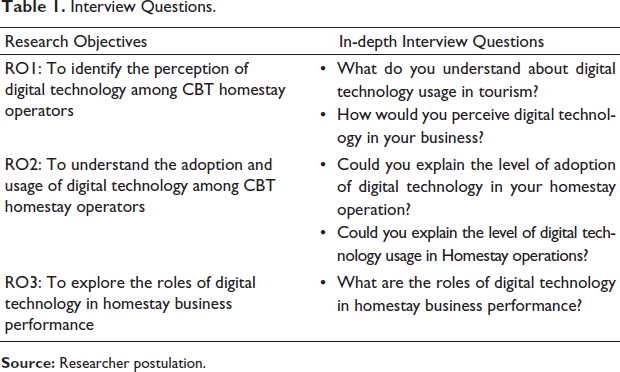
Before the interviews, each homestay operator was informed that their participation was voluntary, all information provided would remain strictly confidential and their identities would not be disclosed. Face-to-face interviews were conducted in compliance with the written consent of 35 homestay operators. These face-to-face interviews, which lasted one and one-and-a-half hours, were conducted at locations convenient to the operators, ensuring flexibility in scheduling. The interviewees’ ages ranged from 35 to 56 years old, most of whom were homestay owners. They have had more than seven years of experience in the homestay business.
Each interview was recorded with prior written consent and transcribed immediately after completion to capture details such as hesitance, background noise and language nuances, reducing biases as per Bryman’s (2016) recommendation. The interview guide, comprising open-ended questions, was designed to elicit the operators’ perceptions of digital technology, its importance and the extent of its adoption. The coding was performed manually, and qualitative data analysis was conducted using ATLAS.ti version 8 ensued. The research themes and subthemes were revealed using inductive and deductive approaches. The codes were categorised, and the primary domains were discovered. To ensure content validity, the verification of homestay operators and the related processes involved were well-documented. The inter-rater reliability tests were shown to be acceptable.
Results and Discussion
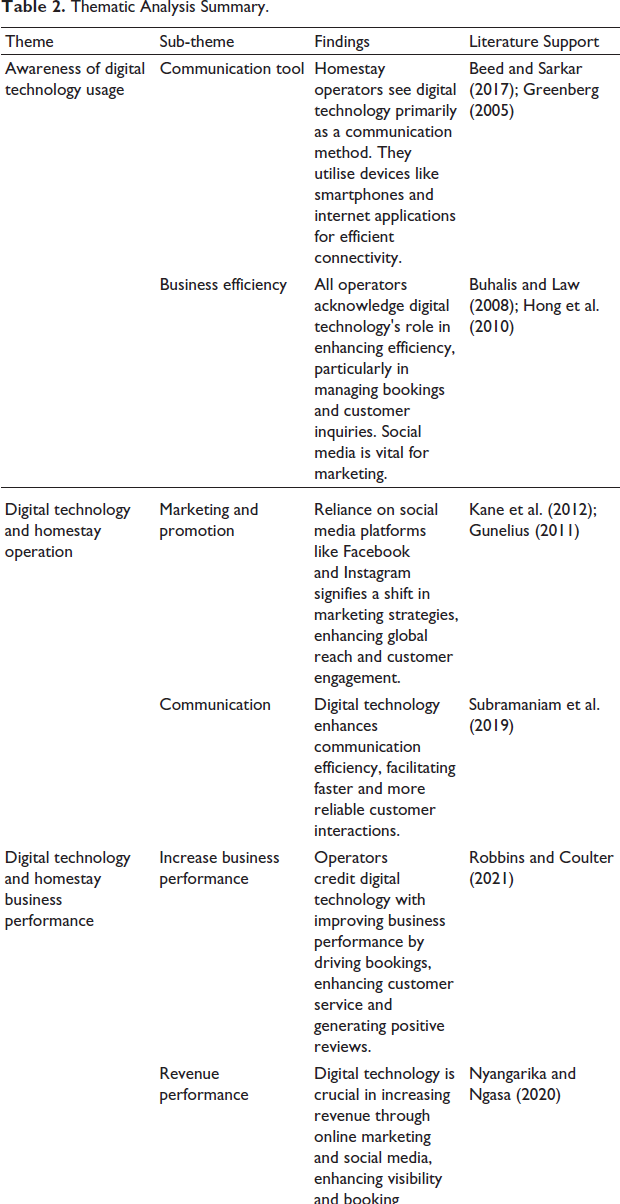
Table 2 summarises the thematic qualitative analysis findings on the perception, adoption and role of digital technology among CBT homestay operators.
Thematic Analysis Summary.
Awareness of Digital Technology Usage in Tourism
Most homestay operators perceive digital technology primarily as a communication method involving technological devices such as computers, smartphones and internet-based applications. They recognise the internet as essential for improving communication efficiency and connectivity, aligning with the ‘world without borders’ concept. The operators emphasised how digital technology facilitates swift, global communication, benefiting their homestay businesses.
Communication Tool
Understanding digital technology as a primary communication tool among homestay operators highlights technology’s limited but practical adoption in daily operations. Most operators perceive digital technology as essential for maintaining connectivity, mainly through internet services and communication applications like WhatsApp. Their reliance on basic communication platforms such as WhatsApp reflects a functional, yet minimal, engagement with the broader capabilities of digital technology. While some operators acknowledge the benefits of social media for business promotion, their understanding and utilisation of digital technology remain somewhat constrained by factors such as age and technological literacy. For instance, Homestay Operator 5’s comment, ‘Always heard about digital technology, but at my age, I am left behind. Mostly, I use it for communication, like WhatsApp with tourists’, suggests that generational barriers may limit the adoption of more advanced digital tools. Similarly, Homestay Operator 10 recognises the value of the internet but primarily associates it with social media for promotional purposes.
I’ve always heard about digital technology, but at my age, maybe I am quite left behind. Mostly, it is for communication, the internet, WhatsApp with the tourists…. (HO5) I understand its concept. The current trend is using the Internet. This is a value-added feature for my business. I use social media for my homestay business…. (HO10)
These perspectives align with existing literature, which defines digital technology as encompassing a range of communication devices and systems, from the internet to telecommunications (Beed & Sarkar, 2017; Greenberg, 2005). However, the operators’ limited use of digital technology, focusing predominantly on communication, suggests that while they recognise its value, there may be missed opportunities for leveraging digital technology to enhance operational efficiency and customer engagement more comprehensively. This underscores the need for targeted training and support to broaden digital technology adoption beyond communication, allowing homestay operators to harness its potential for full business growth (Gan et al., 2018; Pratt, 2019).
Business Efficiency
All operators acknowledged digital technology’s vital role in enhancing business efficiency, particularly in managing bookings and customer inquiries. Digital technology helps streamline operations, making booking, promotion and customer communication more efficient. Many operators noted the significance of social media for marketing, with some hiring staff specifically to manage digital tools. For example, Homestay Operator 12 reported, ‘Digital technology benefits my business. I use Facebook and Instagram for promotion’. Similarly, Homestay Operator 7 emphasised, ‘Digital technology reaches beyond word-of-mouth marketing, helping me reach global clients’.
In any business, digital technology is beneficial. Now, anyone can learn about my business. I use the Internet, Facebook, and Instagram to promote my business and activities…. (HO12) Yes, digital technology is crucial in this digital era. I am actively using them. Business is in good shape with digital technology. I am not the one who manages it, but my daughter…. (HO11) …digital technology aids homestay business. WOM would only reach limited clients, while digital technology has no limitations. I can reach all my potential clients easily…. (HO7)
This is consistent with findings that digital technology enables businesses to improve operational efficiency, especially in tourism, where innovations like online booking and virtual communication enhance service delivery (Buhalis & Law, 2008; Murniati et al., 2023; Priatmoko & David, 2021; Van Tran et al., 2023).
Digital Technology and Homestay Operation
Acknowledging digital technology’s vital role in enhancing business efficiency by all operators underscores its transformative impact on the homestay sector. Digital technology has streamlined critical processes, including managing bookings, promoting services and communicating with customers. By simplifying these functions, digital technology enhances operational efficiency and expands market reach, a key factor for homestay businesses.
As Homestay Operator 12 pointed out, social media platforms like Facebook and Instagram have become indispensable for marketing, allowing operators to connect with global clients. This shift from traditional WOM marketing to digital platforms signifies a paradigm shift in how small-scale businesses promote their services, as highlighted by Homestay Operator 7. Furthermore, operators without technical expertise often delegate digital technology management to younger family members, as seen in Homestay Operator 11’s case. This highlights a generational divide in technological adoption and points to the importance of having a tech-savvy individual in the business. Such delegation enables operators to maintain a competitive edge in the digital age.
Yes, I use only the basic devices. Computer, internet, and mobile phones, the latest is a booking platform specialized in homestays named jomehomestay. my. This online platform receives and manages bookings, a payment gateway, promotion, and activities arrangement…. (HO3) I am using my handphone to manage my homestay business, especially on the bookings. Since I am illiterate due to age factors, family members and the young ones aid in gradually updating the information on my Facebook page…. (HO15) I could only use the basic ones due to poor connection. …. otherwise, few advanced features could be adopted…. (HO10)
This aligns with the literature on digital technology’s role in tourism, where it is recognised as a critical enabler for improving efficiency and service delivery (Buhalis & Law, 2008; Murniati et al., 2023; Van Tran et al., 2023). Digital technology’s ability to transcend geographical boundaries through online booking and communication tools is particularly beneficial in the homestay industry, allowing businesses to reach a broader international audience (Hong et al., 2010). Consequently, integrating digital technology has enhanced operational efficiency and allowed homestay operators to scale their businesses beyond traditional limitations, providing them with a significant competitive advantage.
Marketing and Promotion
Operators’ reliance on social media platforms such as Facebook and Instagram to promote homestays highlights a significant shift in CBT’s marketing strategies. These platforms offer unparalleled advantages, allowing operators to reach a global audience quickly, far surpassing the limitations of traditional marketing methods like pamphlets, which are often geographically restricted and slow to distribute. Social media lets homestay operators upload images, videos and client reviews, fostering real-time interaction with potential customers. The interactive nature of social media also facilitates direct communication, enabling homestay operators to engage with inquiries and bookings instantly, contributing to an efficient customer journey.
Homestay operators have diversified their marketing channels by incorporating online booking platforms such as Booking.com and Agoda.com, catering to a broader, international customer base. By leveraging these platforms, operators can ensure their offerings are visible to global travellers, which is essential for small-scale tourism businesses in rural areas with limited marketing budgets. As Homestay Operator 9 expressed, online booking platforms streamline the reservation process and enhance customer trust and convenience, leading to increased bookings.
…I use basic digital technology, namely social media and mobile phones, in promoting my homestay and our natural activities. Most of the customers used these platforms in booking my homestay…. (HO15) …For now, Facebook, where I uploaded videos, pictures, and client reviews as my marketing strategy. Booking.com and Agoda.com are the latest marketing and bookings platform. (HO9) …We use social media for our village to promote our homestay business and outdoor activities like cooking, jungle tracking, caving, and fishing by creating the FB page. Those well-versed in digital technology are given tasks to update and maintain it. We could not survive without these marketing tools… Digital technology is a blessing for us…. (HO14)
Adopting digital technology, particularly social media and online booking systems, has allowed operators to market their natural and cultural activities more effectively, thereby driving business sustainability. This shift underscores the transformative role of digital technology in enabling small-scale tourism operators to compete in the global marketplace, making it a critical tool for the growth and survival of homestays (Priatmoko & David, 2021; Promburom, 2024). Consequently, these findings align with Kane et al. (2012) and Gunelius’s (2011) findings, emphasising how digital platforms revolutionise customer engagement and marketing.
Communication
Integrating digital technology in homestay operations significantly enhances communication between operators and clients, making interactions faster, more efficient and more reliable. Platforms such as WhatsApp allow operators to quickly confirm bookings, manage cancellations and respond to customer inquiries, streamlining the process and improving overall service quality. This convenience is critical in the tourism industry, where prompt communication can be a key differentiator in customer satisfaction and loyalty.
The transition from traditional communication methods, such as face-to-face interactions and phone calls, to digital platforms has revolutionised how homestays operate. As highlighted by Homestay Operator 4, ‘Digital technology makes communication easier. Most matters are settled quickly’, emphasising the immediacy and convenience digital technology brings to operational efficiency. Similarly, Homestay Operator 1 remarked on the transformation digital technology has facilitated, noting, ‘Digital technology’s role in communication has changed from face-to-face interactions to more digital forms, making operations more efficient’. These statements underscore digital technology’s practical benefits, particularly for older operators who have witnessed this technological evolution.
Digital technology is meant for communication. Connection with customers is much easier and more effective. Most importantly, matters are settled within a short period. Honestly, I am grateful for technology, which makes life easier.… (HO4) …Besides marketing, digital technology is an effective communication tool through many social media platforms. As a senior citizen, I can see the difference between our younger days and now.… (HO1)
These insights are consistent with research showing how digital technology facilitates business-to-business and social communication, transforming how businesses interact with customers. The adoption of digital technology not only improves communication but also strengthens customer relationships. Digital technology allows homestay operators to provide timely responses, manage expectations and foster professionalism, enhancing customer satisfaction. As noted in previous studies, digital technology’s role in business-to-business and social communication is well-documented, showing its capacity to transform interactions (Subramaniam et al., 2019). This integration of digital tools is crucial for homestay operators to stay competitive, especially in an increasingly digital and globalised marketplace (Murniati et al., 2023; Van Tran et al., 2023).
Digital Technology and Homestay Business Performance
Increase Business Performance
Operators credited digital technology with significantly enhancing their business performance by driving increased bookings, improving customer service, generating positive reviews and attracting new clients. Homestay operators acknowledged that digital technology, particularly social media platforms like Facebook and Instagram, played a pivotal role in helping their businesses reach a wider audience, especially after the challenges posed by the COVID-19 pandemic. These platforms enabled operators to maintain relevance and visibility despite having limited resources.
For example, Homestay Operator 9 shared how digital technology boosted business growth, stating, ‘Digital technology helps businesses move forward. Social media platforms significantly improved my business performance’. This highlights the role of digital marketing tools in creating opportunities for homestay operators to tap into new customer segments while maintaining relationships with existing clients through consistent online engagement. Moreover, positive online reviews contributed to the homestay’s reputation, helping to attract potential customers.
Homestay Operator 13 emphasised digital technology’s role in post-pandemic business recovery, noting, ‘Digital technology helped my business bounce back after the pandemic’. This reinforces how essential digital technology has become in navigating business disruptions and adapting to changing market conditions. The ability to quickly resume operations, promote their services and communicate effectively with customers was largely facilitated by digital technology, as illustrated by the operator’s remark: ‘Honestly, the appearance of the internet, WhatsApp, Facebook, Instagram, and a few others soared my homestay business’.
I cannot deny that digital technology helps businesses move forward. Honestly, the appearance of the internet, WhatsApp, Facebook, Instagram, and others soared my homestay business. I consistently received existing and new clients.… (HO9) Honestly…. with the digital technology, my homestay business was doing good. I could easily get customers, and our business performance was promising. However, business was prolonged during the period of the COVID-19 pandemic. Yes, now the business has bounced back. Digital technology makes it happen. (HO13)
This critical analysis aligns with the broader literature that recognises digital technology’s transformative potential in enhancing business performance through innovation, customer-focused strategies and resilience in the face of market challenges (Murniati et al., 2023; Promburom, 2024; Robbins & Coulter, 2021).
Revenue Performance
The role of digital technology in increasing revenue among homestay operators was highlighted through the significant impact of online platforms and social media marketing. Homestay operators recognised that digital technology was a powerful tool for reaching a broader audience, enhancing market visibility and ultimately driving higher booking demand. This is evident in Homestay Operator 1’s remark about how platforms like WhatsApp, Facebook and Instagram improved their revenue performance, particularly during the post-pandemic endemic period. Similarly, Homestay Operator 3 emphasised the importance of targeted marketing, noting how focusing on specific demographics like lower and middle-income families resulted in positive revenue outcomes.
… Digital technology is mainly used in many homestay operations for communication and marketing. Internet, WhatsApp, Facebook, and Instagram really heightened our revenue performance as many customers stayed and took activities at our homestay during the endemic…. (HO1) …knowing your target market is very crucial. I normally target families from lower and middle-income groups. My social media marketing focused on these groups. It works, as my revenue performance shows a positive indicator. (HO3)
These insights are consistent with broader research that supports the idea that digital technology is instrumental in helping small businesses increase their market reach and productivity (Nyangarika & Ngasa, 2020). By leveraging digital tools, homestay operators can promote their services more effectively and at a lower cost than traditional marketing methods. This creates a competitive advantage, allowing them to attract and retain more customers while keeping operational costs down. Additionally, digital technology facilitates better customer communication, improving the overall customer experience, which drives repeat bookings and positive WOM marketing (Promburom, 2024; Van Tran et al., 2023).
Policy Implications
This study undoubtedly provides an understanding of the perception, adoption and usage of digital technology among CBT homestay operators. In other words, it is revealed whether the Malaysian CBT homestay operators are to be left behind in digital technology applications or keep abreast with the technological advancement aligned with waves of modernisation. Thus, the findings significantly contribute to both academic and practical implications. From the lens of academics, many researchers have widely highlighted digital technology related to education, hospitality and tourism, maintenance management, business operations and rural development. However, the literature on digital technology adoption, mainly dealing with SMEs and CBT homestays, has not been holistically extended. Therefore, the findings of this study extend the body of knowledge and offer an opportunity for other researchers to explore the issue in a different study setting.
On practical implication, one thing that has always fascinated entrepreneurs or business owners, regardless of size, is getting benefits and profits through various business improvement strategies. Despite running a small business, the CBT homestay operators perceived digital technology as crucially important and, thus, adopted and used some of the basic ones in their business. Those basic digital technology gadgets are used for promotional or marketing and communication tools, which leads to their business operation efficiency. This is considered a good move made by all CBT homestay operators, regardless of location, as they are not left behind but embrace the technological application together. Despite this, the homestay operators should not become complacent with the basic application, knowledge and what they have. Operators in all areas, rural in particular, should continuously upgrade their technical expertise and gain an in-depth understanding of the benefits of technology adoption in their business. Owners should at least understand and be able to apply digital technology rather than depend on others to manage it.
Another essential matter obtained and the remarkable finding is that various promotional tools and communication using different digital technology platforms have increased business and revenue performance. This finding supports the previous literature that every accommodation operation, regardless of location, is set up to win guests to stay and gain profit. The guest’s stay is obtained through promotion and providing overall good services. Other determinants like comfortability, conducive environment and activities are also affected by guest inclinations. Thus, it is apparent that the level of business operation depends on the operators’ ability to improve or maintain their marketing strategies. On the part of operations and management, the CBT homestay operators should seriously be looking at how to improve or maintain the digital technology mechanism in promoting their homestay. At the same time, they should reevaluate the service elements and other components in their operations to satisfy the customers and sustain their business over a long period. This is based on the notion that technology and services like micro-organisms are subjected to alteration or change, and the changes are always swift.
A broader implication drawn from this study is related to the government authorities. In this context, the proactive action undertaken by some government agencies in developing, upgrading and maintaining the infrastructures of urban and rural tourism, including the homestay programme, is a valuable and worthwhile initiative along with and without question that the homestay in the present day explicitly contributes to a good market. Thus, besides individuals and the community, the success and survival of the homestay business depend not only on the services but also on the application of digital technology to support the services and business operations. In addition to their efforts, the responsible authorities should continuously educate the homestay operators in technological marketing, accounting and operation. In other words, the authorities must always be active and forceful in organising frequent training, seminars and talks about digital technology closely related to the homestay business operation. Finally, it would be a significant loss and detrimental to the homestay operators and the responsible government agencies if there were no reciprocal relationship between all parties, as direct involvement of both parties is fundamental in creating harmonious business and prosperous future tourism development.
Conclusion
This study provides valuable insights into the critical role of digital technology in enhancing operational efficiency and improving revenue performance. Despite a limited adoption of advanced digital tools, all operators recognise digital technology as vital to their business operations. They primarily employ basic digital resources for promotional and marketing activities, indicating a growing awareness of the potential benefits of digital technology within this sector. For CBT providers, embracing modern digital solutions can significantly improve their ability to connect with potential guests and manage day-to-day operations.
Notably, enhancing the digital technology infrastructure in rural tourism areas is essential. By improving internet connectivity and access to digital resources, homestay operators will be better positioned to utilise digital technology effectively, facilitating improved communication and marketing strategies. Besides, implementing targeted training programmes to enhance homestay operators’ digital literacy is crucial. These training initiatives should focus on effectively using digital marketing and operational management tools, empowering operators to fully harness digital technology’s benefits. Policymakers should encourage collaboration between local governments, educational institutions and industry stakeholders to promote innovation in digital technology applications within the tourism sector. Providing grants or incentives for adopting advanced digital solutions can further facilitate the transition towards a more digitally oriented business model.
Overall, this study has contributed to the literature on digital technology adoption among CBT providers. It is hoped that the findings of this study will inform future research, policymaking and practice in CBT and digital technology adoption. Nonetheless, this study also has several limitations. The study’s limitations include the small sample size, which limits the generalisability of the findings to a broader population of CBT operators. Additionally, the study may be subject to response bias, where participants may have provided socially desirable responses or may have been reluctant to disclose certain information. Future studies could consider using a larger sample size and a quantitative approach to complement the qualitative data obtained in this study. The study could also explore the perspectives of other stakeholders in the CBT industry, such as tourists and government agencies, to gain a more comprehensive understanding of the challenges and opportunities of digital technology adoption in CBT. Additionally, examining the impact of particular digital technology tools can enhance our understanding of their effectiveness. A focused study on how different tools—such as online booking platforms, social media and customer relationship management software—contribute to operational efficiency and customer engagement can yield actionable insights for homestay operators. By quantifying the effects of these tools on measurable performance indicators, such as booking rates and customer reviews, researchers can identify best practices for digital technology utilisation.
Footnotes
Declaration of Conflicting of Interests
The authors declared no potential conflicts of interest with respect to the research, authorship and/or publication of this article.
Funding
The author(s) disclosed receipt of the following financial support for the research, authorship, and/or publication of this article: This study is supported by Universiti Teknologi MARA Malaysia (600-RMC/FRGS 5/3(017/2024)).