



Abstract
This study argues that the athletic success of Iranian wrestlers is fused with success in social performances. Using Alexander's cultural sociology, we propose that individuals’ behavioral, emotional, and mental dispositions toward sports are shaped by tacit and invisible social forces encompassing them at a given time and place. Furthermore, we make use of Alexander's notion that the power of culture is manifested when it is actively enacted. To ground our theoretical frameworks with empirical evidence, we conducted a case study of successful Iranian male wrestlers. The study reveals that the success of Iranian wrestling is constructed upon cultural foundations, social organizations, cooperative networks, and a set of social relations that performatively contribute to producing world-class wrestlers. It is within a given social, cultural, and organizational context that culture is performed through a series of collective actions and agencies. Such successful cultural performances reinforce the meaning of certain practices by connecting the past to the present and ensuring their continuity, thereby establishing a strong tradition of collective sporting achievements.
Keywords
Introduction
Sports serve as iconic representations of cultural diversity and social dynamism. The meaning of sports, the value placed on sports, the drama sports generate, the interest and participation sports attract, and the expertise sports cultivate are all part of the larger sociocultural construction of sports at a given time and place. The sociocultural foundations of sports play a crucial role in determining their potential to thrive, both in terms of participation and success (Halldorsson, 2017), imbuing certain sports in certain places with a richer system of collective representations, further enhancing their legitimacy and performativity to evoke strong emotional energy and dramatic effects. Essentially, when the cultural scripts and sacred ideals of the sporting sphere intersect with other social spheres, sports project profound moral and cultural meanings, motivating deep engagement within civil society (Broch, 2020; Jijon, 2017). Within this dynamic, participants perform dramatized roles beyond personal objectives, embodying characters and narratives deeply embedded in cultural codes and symbols, thereby projecting meaning to sports and engaging fans on an emotional level (Hartmann et al., 2022; Ji, 2022). Such performative feelings for certain sports not only attract large groups and their collective attention toward given sports but also enable them to expand their motivation and skills, surpassing expected levels of achievement.
By the same token, understanding why certain sports resonate and succeed in specific places—and not in others—requires a sociological analysis of the underlying cultural foundations and sporting traditions of those places, as well as the disentanglement of the meaningful social forces that comprise a successful sports culture, shaping the presentation and reception of the sport. To that end, this paper contributes to the growing literature that views collective sports success as culturally contingent upon successful social performances (Broch, 2020; Corte, 2022; Halldorsson, 2017). More precisely, it analyzes the consistent international success of Iranian elite wrestlers from a cultural sociological perspective.
Iran, a Shia-majority Muslim country in the Middle East, is renowned for its ancient history, oil and carpet exports, political tensions with the United States, and its sui generis wrestling culture. The nation's modern wrestling history, spanning over seven decades, showcases a series of successful sporting performances at international competitions. This is evidenced by the UWW's classification of Iran as the best-performing nation at the 2022 World Wrestling Championship, underscoring their strength and supporting our statement. Such sustained success has cultivated a strong local tradition of nurturing world-class wrestlers, which is the focus of this study. Put differently, we foreground the often taken-for-granted role of cultural structures in sporting achievements, using the case of wrestling in Iran.
Cultural sociology: meaning, culture structure, performance, and icon
To interpret how wrestlers’ athletic success is fused with success in social performances, we adopted the approach known as the strong program in cultural sociology, as identified by Alexander and Smith (2003). This framework emphasizes the centrality of meaning in shaping human behavior across various social dimensions, including art (Eyerman and McCormick, 2015), politics (Alexander, 2011), and sports (Broch, 2020). Rooted in Durkheim's study of religions ([1915] 1965), the strong program views cultural meanings as deep and relatively independent of power and social structures, existing in “autonomous and patterned ways as culture structures that circulate through social life: they are codes, narratives, myths, icons, or other non-material collective representations” (Alexander and Smith, 2019: 13, emphasis added). As “social facts” (Durkheim, [1901] 2014), these cultural structures act as invisible collective forces that exist beneath individual awareness and “summon” them to come into being with subtle coercion (Tavory, 2016). These social forces not only exert external coercive power over individuals and groups but are also internal to them. They become, in this sense, meaningful to individual actors who tacitly and unconsciously interpret meaning from their wider social, structural, and historical context (Alexander and Smith, 2003; Collins, 2010; Polanyi, 2015).
Cultural structures are integral to the meaning-making process mainly through shaping the binary cultural codes and contested narratives in the “civil sphere,” a solidaristic sphere where the collective conscience of society takes a tangible form (Alexander and Smith, 2019). Cultural sociology makes those forces visible by shifting a focus from social structures per se, to culturally structured and subjective interpretations of social structures, given that “socially constructed subjectivity forms the will of collectivities” (Alexander and Smith, 2003: 5). Zerubavel (1999), in this fashion, argues that individuals, as social beings, learn to interpret and attend to their social, intersubjective world from a particular “social mindscape.” Cultural structure, thus, not only frames what people should think about but also how they should think about it. This leads to a collective emphasis on what is primed as meaningful in a culture (and what is not) and, in turn, collective action on the primed activity, which is “collaboratively created rather than individually generated” (Brekhus, 2015: 57).
Further, culture is not only a cognitive state but is continually produced and reproduced through individual and collective action (Fine and Hallett, 2022). With a pragmatic emphasis, culture must be performed (Alexander, 2011). That is, while the culture sets the stage, the actors, as creative consumers of culture, still must play the scene according to the actual and symbolic meaning associated with the culture, regardless of their personal beliefs. “A performance is an agentic meaning projection that brings codes, narratives, and myth to action” (Broch, 2020: 14). Successful performance, according to Alexander (2011), depends on the ability to re-fuse all the elements of performance—systems of collective representations, actors and audiences, means of symbolic production, social power, and mise-en-scene—in today's segmented modern collectivity, where the culture is fragmented and meaning is defused. Notwithstanding, the less complex and differentiated the culture and social structure, the more elements of social performance contributed to a re-fusion attempt. When various components fuse with one another, the performance creates ritual-like effects, allowing for the powerful conveying of meaning and emotion within society (Alexander, 2011; Eyerman and McCormick, 2015).
Alexander et al., further claim that meaningful material objects have performative power (2012), as they shape everyday social life through a dynamic combination of material and symbolic forces. Given their iconic consciousness, actors, and audiences aesthetically experience the invisible discursive depth of culture structure via the sensuous surface of icons (Alexander et al., 2012; Broch, 2023b). For the same reason, cultural meanings also permeate social life through the performativity of icons.
Collective sports success through effective social performance
Alexander's theory of social performance (2011) offers a nuanced view of sports, seeing them not merely as physical contests but as meaningful cultural phenomena where broad societal narratives, myths, and values are enacted at the sports theater (Broch, 2020). While the academic understanding of sporting success is often dominated by the nature-and-nurture debate, cultural sports sociologists highlight the role of culture in shaping athletic achievements. Thorlindsson and Halldorsson (2019: 239) maintain that a sociological study of sports achievement should … not be confined to the study of individual characteristics. One world-class Brazilian football player or one Kenyan runner may raise interesting questions about the role of socialization and the social environment in the production of a top world-class athlete, but it does not make for an interesting social phenomenon or a central sociological topic. The emergence of a large group of world-class athletes, coaches, and strong national teams that continue to come from a confined geographical area constitutes a social tradition, which is the topic of a sociological inquiry. It highlights the collective aspects of sport and the importance of culture and social organization.
Put differently, this literature highlights how social forces derived from cultural structures steer large groups of people toward certain meaningful sporting activities and further provide them within a given sport with opportunities, expertise, motivation, belief, and support to excel. Broch (2020) and Halldorsson (2023), for instance, claim that Nordic societies’ broad democratic codes and narratives shape female athletes’ social perceptions and practices, affecting socialization and skill development in sports. These sports further reshape traditional gender stereotypes, demonstrate the success of gender equality initiatives, and reinforce democratic ideals.
Broch (2020: 15) argues that “Sports join knowledge about the game and about society. It is an institutionalized play-act and a social performance.” Athletes, coaches, and teams navigate the balance between following the formal rules of the sport and engaging in performances that, while shaped by cultural structure, do not strictly align with those rules (Ji, 2022). Through dramaturgic display, they engage in the performative act of fusing broad cultural scripts with their athletic performances, riding on waves of edgework (Corte, 2022), gliding between rationality and artistry (Ji, 2022), smiling (Broch, 2020), dancing (Kerr, 2013), showing good character (Halldorsson, 2017), and taking a knee (Hartmann et al., 2022) to capture medals, fan hearts, and market gazes. According to Halldorsson (2017: 65), The most obvious way to explain the sporting success of nations is to look at how they play. The style of play is representative of the collective action and the culture that formed the teams in the first place, stamping them with a specific identity and characteristic.
Thus, achievement and success should not merely be credited to personal characteristics from genetics and basic socialization, as is customary in the general discourse, but more importantly, at the macro-societal level. The emerging literature on collective success and achievement moves the analysis from the micro (nature) and meso (nurture) levels to the macro level (culture) (see Halldorsson and Thorlindsson, 2020). What is more, within the macro ground and using Alexander's cultural sociology, we have shifted our understanding of sporting success from a universal view that attributes success as a mere product of state support, economic forces, sponsorship, and available resources to a more cultural one that gives weight to the symbolic power that actors exercise on social structures and in shaping social life. While social structures might indeed facilitate the applicability of resources and support, it is ultimately the culture that shapes the effectiveness of these factors in practice (Alexander and Smith, 2003). It is within this framework that the sporting success of countries with seemingly less complex social structures becomes meaningful.
Methodological note
This study examines whether athletic achievement is culturally contingent on successful social performance. Using Iranian wrestling as a case study (Creswell and Poth, 2018), the research investigates the role of social norms, values, symbols, meanings, classification schemas, beliefs, expectations, organizations, and networks in micro-social interaction and practices leading to excellence and expertise. In so doing, the first author conducted extensive fieldwork in the Iranian wrestling world and observed the day-to-day practices and performances of a successful community through multi-sited ethnographical work from 2019 to 2022, aiming to recognize the cultural nuances of wrestling as well as to gain an atmospheric perception since, like any other social world, the wrestling world consists of “curious situations that lose meaning when one tries to describe them: one has to be in them to understand them” (Galati, 2002, as cited in Griffero, 2016: 3). Oftentimes, the author engaged in small talk with coaches, wrestlers, parents, and various wrestling casts of characters in and out of wrestling space to verstehen the societal and cultural forces underpinning conventional practice, behaviors, and thoughts of members. Pseudonyms replace the actual names of participants to ensure their identities remain confidential. The first author further photographed his real-world experiences to examine how the gestures, visuals, and objects of the wrestling world project symbolic meanings compared to the narratives, actions, and behaviors.
As a former wrestler, the first author drew on his recollections and insights from participation in the sport from the mid-2000s to the late-2010s. For years, he was fully involved in wrestling, interacting with hundreds of wrestlers and coaches as a fan and friend, not as a researcher. Being an insider (Merton, 1972) with a similar social mindscape to the wrestling community, the first author held on to an intrinsic awareness of the wrestling culture structure that enabled him to deliver nuanced interpretations of behaviors. His cauliflower ear, an iconic representation of wrestling, facilitated psychological identification and fusion with community members, fostering deeper trust and encouraging open exchanges of ideas. His attachment to wrestling further brought emotional depth to the analytical work, which is also the basis of cultural sociology analysis (Alexander and Smith, 2003). As an outsider with theoretical expertise, the second author served as a critical companion, strengthening the research design by lessening the potential sources of bias, presenting alternative interpretations of data, and marking the patterns that were taken for granted by the insider (Merton, 1972).
Data gathering and analysis were spiral and often done together (Creswell and Poth, 2018). For nearly three years, we read literature, ventured into the field, collected data, analyzed it, read more, returned to the field, collected more, discussed together, and so on. Therefore, we employed an abductive analysis, which draws from “induction (where we generalize from empirical repetition) or [and] deduction (where we come already armed with a theory that we then test against the empirical)” (Tavory, 2016: 162). The themes we developed are a combination of expected themes (based on literature, the first author's personal experience, and the second author's theoretical knowledge), unexpected themes that appeared during data collection through field interaction, and late-notice themes identified during data analysis (Becker, 2008). But before we begin wrestling with the themes, let us give a brief introduction to wrestling and its world in Iran.
Setting the scene: wrestling and its meaning in Iran
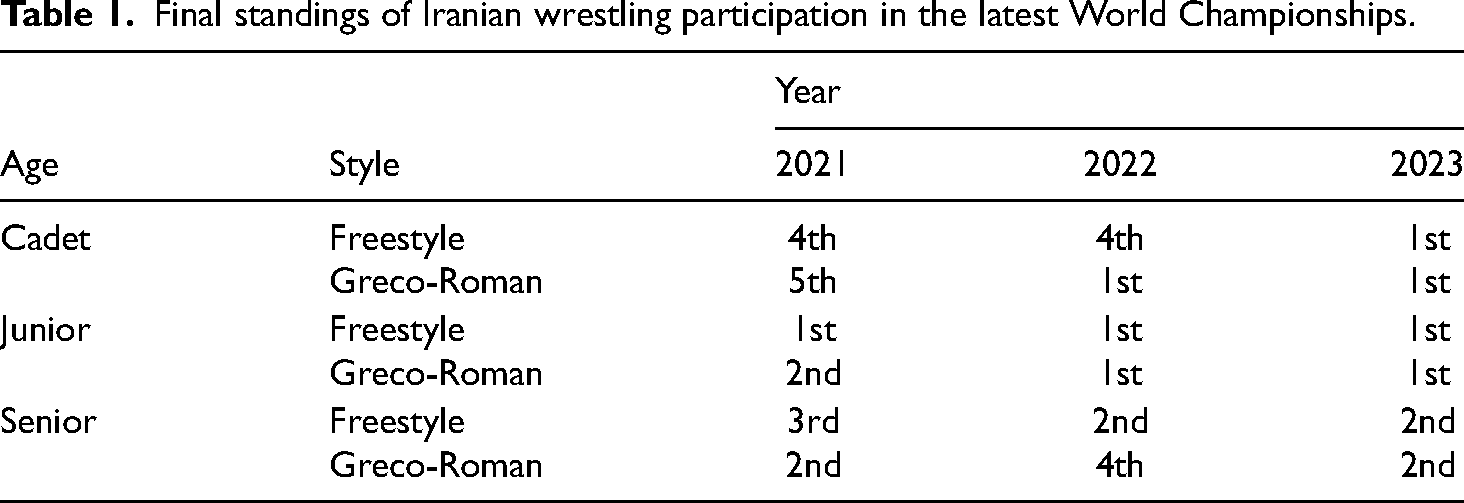
Wrestling is one of the oldest physical activities, with regional variations ranging from pahlavāni in Iran to glíma in Iceland. However, adopting Guttman's (2004) idea of modern sports, wrestling is best represented by Freestyle and Greco-Roman, the two well-established international styles governed by UWW. Wrestling matches are divided into two 3-minute rounds, with a 30-second break in between. Accordingly, the sport features fast-paced action and a variety of physical maneuvers, captivating fans with its immediate drama and intense emotions that unfold with each action in each passing second. The Summer Olympics and World Championships are the most recognizable wrestling tournaments. Wrestling has been included in the Olympics since 1896, and 61 countries competed in the 2020 Tokyo Olympics. Held annually, the wrestling world championship sees dominant performances by Russia, the United States, and Iran. Iranian wrestlers have a notable Olympic record, securing 47 of Iran's 76 medals, serving as “the mundane material things that allow symbolic projections to be made” (Alexander, 2004: 532). The freestyle wrestling team has consistently qualified for the medal rounds in the World Championships since 1951, except in 1982, and dominated the World Cup consecutively from 2012 to 2017. Iranian wrestling is also diverse and comprehensive, as evidenced by the successes of wrestlers in various categories in the last three World Championships (see Table 1).
Final standings of Iranian wrestling participation in the latest World Championships.
The iconicity of wrestling in Iran, however, does not stem solely from its sporting nature. Wrestling is deeply intertwined with the very notion of Iranian identity, mainly shaped by modernity, religion, and nationalism. Recognized in the civil sphere with less contention compared to other sports, wrestling holds the title of Iran's “aval” (first) and “melli-mazhabi” (religious-national) sport. In this way, national history has endowed the sport with profound sociomoral meaning, serving as a symbolic reference that generates drama in times of victory and trauma in times of defeat. In Persian literature, folklore, mythology, and Islamic narratives, for instance, wrestling symbolizes strength, bravery, and honor; it is a heroic act of Persian legends and sacred Islamic figures known as pahlavān (Chehabi, 1995). For this reason, contemporary wrestlers are socially perceived as the living embodiments of these legendary figures, representing moral perfection, national identity, and the ideal masculinity known as pahlavāni culture. In its most general conceptualization, pahlavāni encompasses strength, nationalism, heroism, modesty, generosity, charity, chivalry, and mentorship, discourses that center the wrestling world and background the performative acts of community members (Chehabi, 1995). This grants wrestlers social power to influence people beyond their domain of expertise. As a way of doing gender, moreover, pahlavāni culture “provides stories, stereotypes, and myths that are flexibly used to maneuver and guide actions” (Broch, 2020: 134). Through this moral code, for instance, wrestling is classified as an ideal sport for building a culturally appropriate character, exemplifying what Coakley (2015: 403) calls the great sports myth: the “pervasive and nearly unshakable belief in the inherent purity and goodness of sport.” The influence of pahlavāni discourse extends to the wrestling culture of regional countries, from the Balkans through Türkiye to India (Alter, 1992).
Golamreza Takhti (1930–68), an Olympian better known as “jahān pahlavān” (pahlavān of the world), is the most fitting embodiment of this mystical culture (Figure 1). By the same token, he has become the most admired athletic figure and the yardstick by which wrestlers and other Iranian athletes are measured. The sports community constantly narrates his pahlavāni character to construct a culturally contingent moral code that distinguishes good athletes from bad ones. His name has been given to football stadiums and streets, and his statue and photos are commonly displayed in gyms and shops. Alexander et al. (2012: 1) believe that “objects become icons when they have not only material force but also symbolic power.” Wrestlers have an iconic consciousness; their mental structures are formed, filtered, and reformed through their interaction with these icons. As cultural representations, such symbols remind wrestlers of their membership in a thriving community and its unstated rules, further sustaining the tradition by bringing the past into the present.
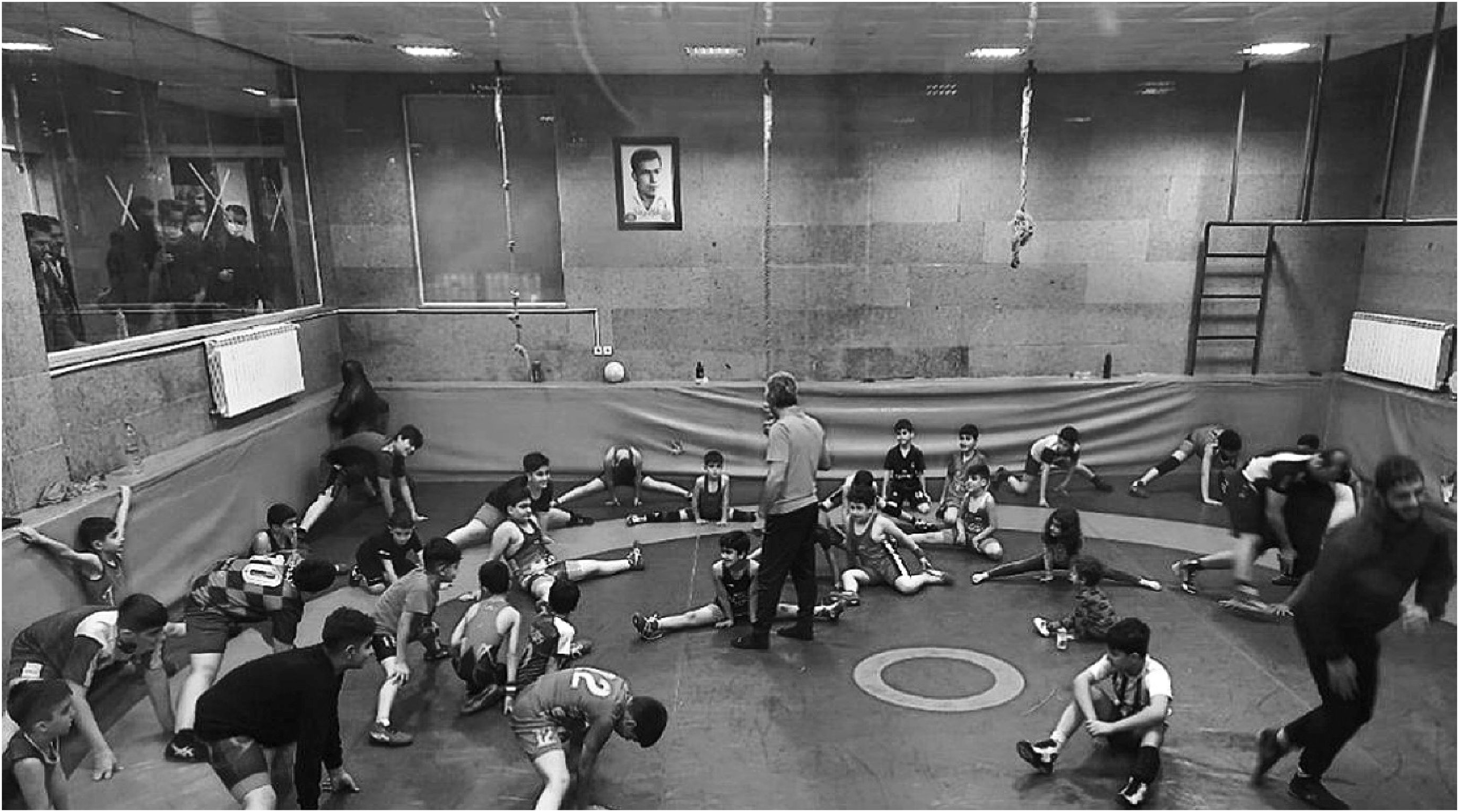
Photo of Gholamreza Takhti adorns the gym wall (Mazandaran, December 2021).
Besides pahlavani wrestling, various folk wrestling styles were practiced by different ethnic groups in premodern Iran, each drawing inspiration from their customs, rituals, and physical culture. Folk wrestling was also a social activity during fertility festivals, performed alongside folk dances and songs, creating powerful iconic experiences by transforming ordinary activities into emotionally charged performances. These local wrestling traditions laid the groundwork for the collective recognition of modern wrestling with the invasion of various modern sports in the early twentieth century, fostering the “moral glocalization” (Jijon, 2017) of modern wrestling.
The consistent sporting successes of wrestling for decades have further reconstructed the meaning of symbolic action, transforming the sport into an icon of national pride and solidarity; a medium for reaffirming national identity; a mobilizer of sports in society; a generator of collective happiness; a diplomatic tool for cultural exchange; and a showcase of national achievements that often has contributed to civil repair in times of economic, social, and political crises. All of this has granted wrestling a distinct cultural structure within the Iranian sporting sphere, as stated by Alireza Dabir, the head of the Wrestling Federation: When we talk about wrestling, we do not mean the wrestling federation that is a subsidiary of the Ministry of Sports and Youth. Rather, we are referring to wrestling as a national, traditional, religious, and historical sport of our Iranians, which, due to its history, honors, and status among the people, transcends the confines of the Ministry of Sports and Youth.
1
Findings
Come into being a wrestler
Marked as “knowledgeable wrestling fans” by members of the international wrestling community, it would not be idealistic to claim that Iranians have been able to develop a strong wrestling imagination. This social talent, however, is not gifted but gained mainly through wrestling's roots in national history, its sociocultural integration, and its massive international achievements, upon which the sport's text permeates various social spheres, including the media, politics, gender, literature, art, religious, and civil spheres, raising the presence of the sport in habitual social situations and everyday social life experiences. Few countries possibly share a cultural bond with wrestling as intimately as Iran does; it is a country where wrestling is narrated as a heroic endeavor of legendary figures in national epics; where carvings of wrestling adorn ancient pottery remnants; where a wrestling match is celebrated as the most memorable sporting moment of the century; where a wrestling-themed drama becomes the year's most popular series; where a wrestling statue stands in the main square of a city; where wrestling is the most-watched sport at the Olympic Games; where wrestling matches serve as ritual entertainment at weddings; and where lovers use the style of wrestling as a metaphor to describe their beloved's authenticity, writing them on city walls. By walking on various boundaries of the social sphere (Alexander, 2011), the scope of social power in wrestling expands, making a wide range of symbolic productions accessible and rendering the sport more noticeable than others, even those with larger fan bases and means yet no meanings. As a result, upon closer examination, it is revealed that a relatively considerable number of wrestlers informally learn the basic concepts of wrestling in mundane ways long before enrolling in wrestling gyms. Unaware of their socially constructed receptive powers, this becomes evident during initial sessions when coaches need to spend little time and energy on rudimentary wrestling instruction for young rookies.
One of the interviewees, Ebrahim, confirming his basic knowledge of wrestling before starting in a club-organized way, said: “It was our folk sport; in villages, in cities, at [social] gatherings and ceremonies, conventionally we would wrestle… In some ways, it was in our blood, particularly this sport.” Highlighting the performative power of “this sport” by revealing his iconic consciousness, Ebrahim notes that collective cultural competency has developed in an environment where wrestling was widely prevalent and socially circulated mainly by means of play (folk wrestling) and community events. The narratives of many Iranian wrestlers are similar to Ebrahim's, indicating that, much like Brazilian football players who have developed on the streets of favelas (Ankersen, 2012), they are not the fruits of organized talent development, as is customary among larger nations (Baker et al., 2017). Following Ebrahim, Coach Amir said geography plays a determinant role in how sports thrive in different regions of the world, and “even within our Iran, geography makes a difference.” He attributes his knowledge of wrestling to his upbringing in Mazandaran, a province in the north of Iran where wrestling is exposed to the highest dynamic density, and the symbolic productions available to wrestlers vary in quantity and quality. Many wrestlers have told us that even the second- or third-place wrestlers in Mazandaran are top-notch in Iran and the world. While Coach Amir believes different sports have been practiced along with wrestling all over the country, But since I was a kid from Mazandaran, I thought more about wrestling. Around me, if there was talk, it was about wrestling; if there was a competition, it mostly involved wrestling; at weddings, if there was a celebration, it mostly featured wrestling; when sitting in a taxi, if there was a conversation about sports, it was about wrestling. Just as all of this could have been about football in Khuzestan province or boxing in Gilan province… Therefore, few sports had the status and image of wrestling.
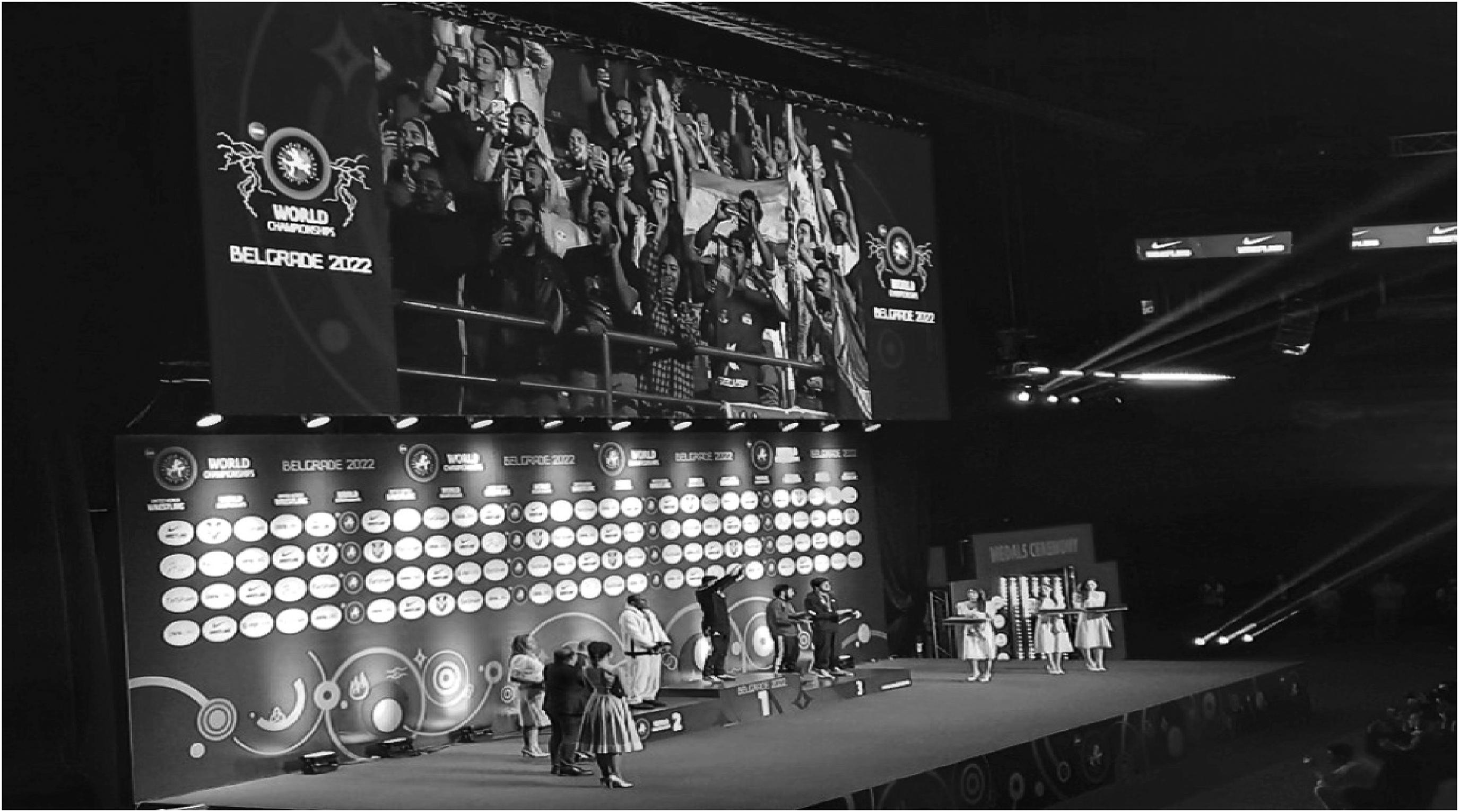
Worship of the sacred (World Wrestling Championship, Serbia, September 2022).
One interviewee, Mahmood, who resides with his family in a tiny coastal town, recognizes the collective admiration for wrestling within his local community as a source of encouragement (Jijon, 2017), making a deep impression on him to participate in the sport. He further notes that the international success of wrestling acts as a meaningful rationalizing factor, making its givenness even more performative: “[My friend] went to Poland and secured second place in the competitions. His return was met with a dazzling welcome. That was the moment I became interested in wrestling.” In other words, the fans (audience) and the sport (icon) become performers in the fusion process of wrestlers (actors) and wrestling (performance). Another wrestler, Behnam, initially becomes a wrestler to fulfill his father's expectations. As he grows, however, more powerful social forces shape his beliefs, reaffirming the normativeness of wrestling in his hometown as a rite of passage. He stated, “Most of my [his] cousins and friends have had wrestling experience for at least one or two months.” The initial encouragement for Iranian wrestlers, as for South Korean golfers (Shin and Nam, 2004), often originates from their families, who are willing to sacrifice everything, including their own well-being. The hierarchical codes and patriarchal discourses prevalent in Iranian society often legitimize the older generations’ authority over the younger, especially outside urban settings where people are more tradition-directed. A strong sense of family values and community cohesion might persuade individuals of the authenticity of one another's intentions within “three degrees of separation” in social networks (Christakis and Fowler, 2007: 370). Nonetheless, such collective support can sometimes be destructive rather than constructive. They are “gifts,” in Marcel Mauss's notion ([1925] 2011), carrying strong social forces and moral obligations imposed on wrestlers to reciprocate through their success. Yet they also have a double-edged aspect, occasionally burdening wrestlers with the responsibility of meeting unrealistically high standards and expectations.
Wrestling for all culture
Wrestling gyms are community-based organizations within the governmental or private sectors. They are important symbolic arenas that promote communal participation, control youthful energy, and guard the social order. Since the state primarily funds sports, the organizational culture of gyms is partly affected by macro-state policy emphasizing both elite sports development and mass participation. However, unlike the Nordic countries (Giulianotti et al., 2020), Iran lacks a unified national sports development plan, which makes it hard for social observers to track the patterns of wrestling participation. There are signs of play and practice, diversification and specialization, and moral and competition-fostering atmospheres, varying from one club to another. In fact, Iran's sport for all plan is constrained by a lack of sports facilities, expert coaching, economic limits, and management inefficiencies, with only around 20% of the population engaging in regular physical and recreational activities, highlighting the performative failure of state policy (Ranjbar, 2023). What makes the idea of wrestling for all culturally pragmatic, on the other hand, is mainly the initiatives of benefactors, communities, and municipalities that provide wrestling with unequal benefits, often purified under the sacred code of being the national sport, thereby keeping its participation costs lower than other sports. Coach Ali informed us that his gym, a social stage facilitating the transmission of performances, was donated by “the good pahlavān of my [his] town,” a wrestling-interested benefactor who persuaded him to teach wrestling to the town's kids, despite his own lack of desire: “Although I was not initially interested in coaching, his encouragement and my fondness for him eventually led me to enter this profession.” Coach Ali further attributed the success of wrestling in the town to the “dedication of certain officials who would spend on the clubs, the interest of the community, and the strong support from esteemed families.”
In essence, the pattern of social organization within the wrestling community, often marked by altruism, voluntary contractual relations, comradeship, and symbolic commitment, has been constructed in the spirit of pahlavāni culture. This evaluative symbolic-cum-moral code gives wrestling its cultural structure. More precisely, there is a relatively lesser degree of civil inattention and indifference due to the weak “expressive individualism” culture prevalent within the community (Bellah et al., 2007; Brekhus, 2015), countering civil avoidance strategies derived from anomic individualization that often undermines shared values, communal bonding, and civic engagement. Coach Amir, while explaining that private coaching is a profane act that is neither the norm nor morally accepted, shared with us that the community norms and the socio-economic realities of wrestlers make him tactfully blind to delays in gym fees and gloss over the importance of nutrition in his talks with wrestlers to avoid discouraging them. “They take my words into consideration and would tie their performance to the elements they cannot afford,” he said. During our observation, we noticed that the wrestling community, similar to the community of Norwich County in the United States (Crouse, 2018), occasionally shows “performative feelings for others” (Broch, 2023a) to make do with availabilities. Parents, for instance, acted like school bus drivers, giving rides to their kids and others; buying bottles of water for the group during training; and often covering fees for needy wrestlers. By activating the broader narratives of pahlavāni culture, local actors paved the way for others to have equal access to affordable yet minimally equipped, year-round faceless wrestling gyms, regardless of socioeconomic status, a talent-filter system, or physical dexterity. Such civic actions go a long way toward civil repairs by fostering social inclusion and mitigating cultural deprivation in a country where about one-third of the population lives in poverty. By performing little things together (Becker, 2008), the caring community transforms excellence into a mundane collective social performance (Chambliss, 1989); as Corte notes (2022: 244), “while efforts are singular, the outcome is collective.”
A magic garden
Each wrestling gym has its own “idioculture” (Fine and Hallett, 2022), yet shares comparable organizational structures. Local coaches often supervise gyms autocratically, leaving little room for wrestlers to control their training sessions (Figure 3). This contrasts with coaching cultures in other nations, such as Iceland, where athletes often take an active role in setting training plans (Halldorsson, 2017). The leadership style in wrestling resonates with the background culture, where obedience, symbolizing discipline and respect, carries the social ethics that foster collective solidarity and shared identity. However, this leadership style sometimes results in negative coaching behaviors, such as verbal and physical abuse, leading to a loss of motivation among wrestlers and their parents, prompting some to change clubs or drop out.
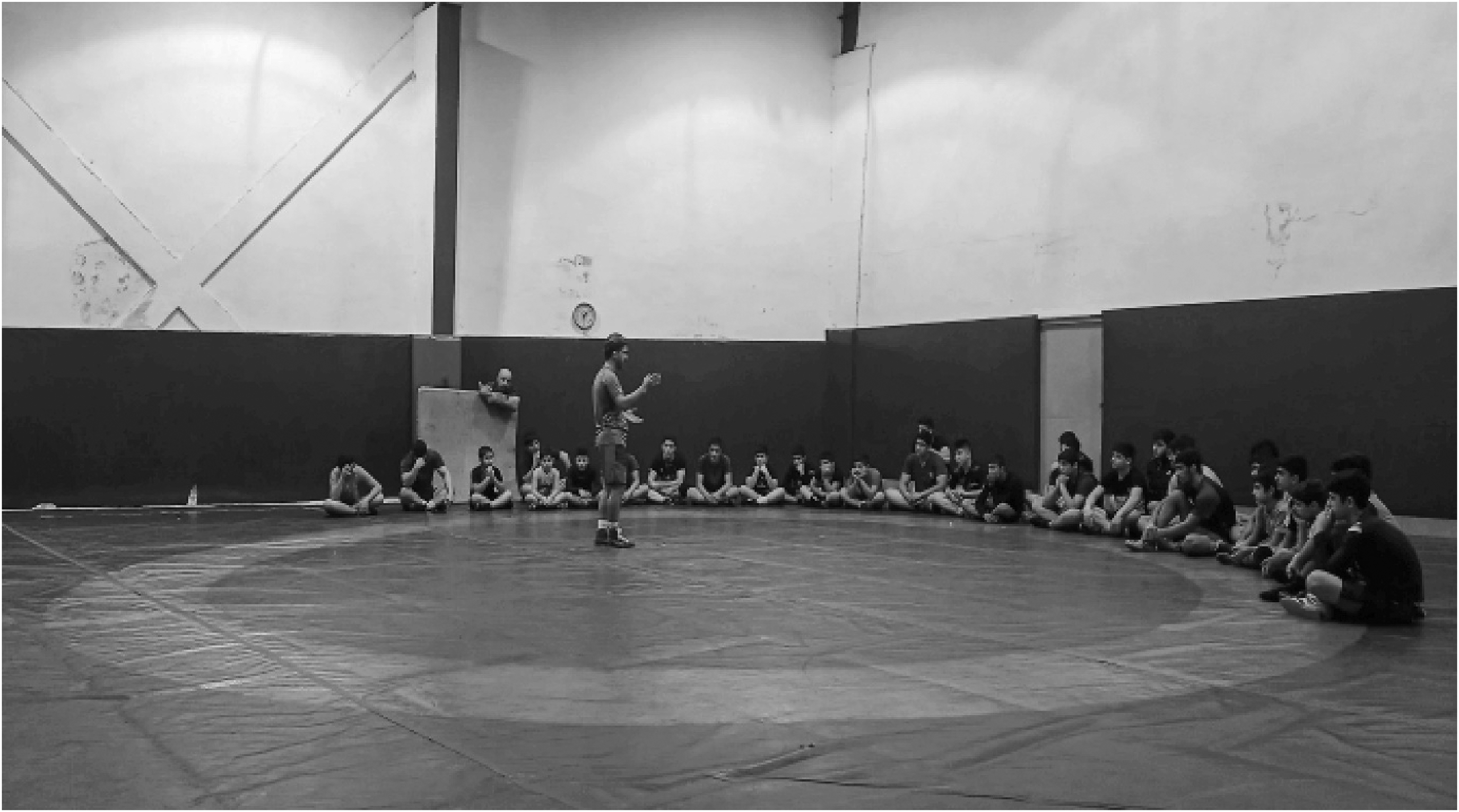
Through their structural positions, coaches are the primary cultural custodians regulating practices (Mazandaran, January 2022).
Coaches are often former champions with more practical intelligence than sports science expertise, affecting their coaching culture and the way they assess wrestlers’ abilities (Lund and Söderström, 2017). Most honed their skills through trial and error, later supplemented by attending formal classes. As a result, practices are often heuristic and performance-focused rather than scientifically calculated, leading to criticism for being outdated. Recognizing the importance of coach proficiency, the Iranian Wrestling Federation has implemented workshops to improve coaching skills and culturally standardize teaching wrestling techniques nationwide. Over the last decade, the federation has taken several steps toward professionalizing the sport, including providing insurance for coaches and wrestlers, upgrading facilities, implementing more structured training programs, and initiating organizational-level changes, similar to the development of sport in some Nordic nations in the 1980s and 1990s (Anderson and Ronglan, 2012). Despite these advancements, some critics question the effectiveness of these efforts, arguing that the changes have not resulted in any significant improvements in performance outcomes.
One such critic is Coach Ali, who honed his coaching skills through interactions and collaborations with various coaches during his sporting career. He is recognized as a reliable cadet-level coach, known for his mastery in elaborating wrestling techniques in detail for children. While he expresses frustration over the bureaucratic certification requirements that forced him to attend classes, he believes that a coach's craft must be judged by the number of wrestlers they nurture, not scientific knowledge. He attributes the recent decline in wrestling in his city to the lack of practical experience among younger coaches. Coach Ali stated: Older coaches were doing better, but things have changed. Now, they ask you to come somewhere and take your documents to make something for you. It was not like this in the past… The younger coaches lack real mat experience; they do not even know how to perform a basic technique.
Beyond the physical domain, coaches also provide spiritual and moral support, being accountable for the emotional and mental states of their wrestlers. They wield social power to influence wrestlers’ decisions, even outside the sporting sphere. Parents, lamenting that their sons do not heed their advice on studying school lessons, instead ask coaches to intervene. The expected roles of coaches guided by cultural structure make such requests meaningful. Often, reassuring statements from coaches, parents, and peers, as well as fervent belief in God and religious forces, compensate for the lack of sports psychologists and serve as coping mechanisms for wrestlers. Indeed, the Iranian wrestling world can still be considered a “magic garden” (Weber, 1964: 200), not completely “enframed” (Heidegger, 1977) and disenchanted by techno-scientific rationality. Like Ethiopian runners, wrestlers “believe that mysterious incalculable forces have a huge part to play in their success” (Crawley, 2021, emphasis added). In their magical thought, efficiency, mastery, and success stem from relentless hard work, traditional and ritual-like behavior patterns and practices, craftsmanship, parents’ prayers, and the will of a transcendent God. Names of Islamic religious figures on their wrestling singlets and chanting these names as sporting mantras during practices, alongside the ritualized act of kissing the mat before and after each session, are codes and symbols that effectively weave local meanings, values, and beliefs into the global structure of wrestling. The presence of magic was even evident in our small talks, as we wished them luck in their sporting careers and heard in response, “Inshallah” (if God wills).
Wrestling community members are not alienated from one another, although we were told that intergroup relationships often involve conflict rather than cooperation, particularly at the administrative level or among coaches who sometimes fight over wrestlers by claiming ownership over their success. Much like the Orthodox residents of the Beverly-La Brea neighborhood (Tavory, 2016), they collectively engage in social and sporting performances to put culture into action. Depending on the gym's organizational culture, some gyms have assistant coaches who often volunteer to support the head coach. Even former wrestlers, visiting for leisure, sometimes step into coaching roles or pair up with young wrestlers, especially when training partners are scarce. Seniors also assist kids in honing skills and “hand down [skills] like clothes in a large family” (Plummer, 1989: 67). They “encourage kids to share openly their technical, mental, spiritual, and other problems,” said Mohammad. Even peers have competitive cooperation, correcting each other's mistakes while imitating each other's successes. Discussing the relationship between two competitors in the same weight category, Mehran explained, “We are ‘rafiq’ (friends) and try to help each other improve, but when the time comes, we become ‘raqib’ (rivals).” A prime example of this civic relationship unfolds a month before provincial or national competitions when a wrestler qualifies and an old rival who had lost to him during club selections joins the qualified wrestler for intense pre-competition training. Motivated by “maram va marefat” (camaraderie), the prevalent discourse of pahlavāni culture, he subjects his unprepared body to extreme pressure, raising his heart rate close to two hundred beats per minute at 8 in the morning to prepare his friend for peak performance!
Standing on the shoulders of giants
Beyond direct knowledge transfer, wrestlers also hone their skills socially from role models through vicarious experiences. Unlike their international competitors, who might travel abroad to train with world-class wrestlers, they move between local gyms, having the opportunity to access a wide network of elite experts. Moreover, the intense symbolic order of Iranian wrestling tightly binds the social lives of wrestlers to the sport. Despite their wrestling accomplishments, many wrestlers have limited education and social skills. The lack of broader opportunities often prevents retired wrestlers from facing the paradox of choice, thereby effectively keeping them involved in the wrestling world. As they remain active, they become icons of achievements for future generations. This dynamic creates a dense information-sharing network, facilitating knowledge diffusion in and transmission between generations (McLean, 2017), thereby fostering wrestlers’ qualitative transformation, essential for achieving excellence (Chambliss, 1989). Mehran supports our arguments in these words: We do not just see world champions on television; we observe them and their training routines up close, right beside us on the mat. Watching a clubmate ascend to become a world champion also motivates us to reach the heights they have achieved. This proximity inspires us to work harder, and naturally, we can seek their guidance directly along the way. Above all, the most valuable asset they provide is the wealth of experience they leave behind for us.
Right from the beginning, the belief was instilled in me that if I entered this sport and did not win an Olympic medal, it meant I had not truly achieved anything. When I was younger, I would fail miserably in my town; I would not even be selected for the club, but my aspirations were on a global scale. In my mind, I could see myself standing on the Olympic podium. Often, when I was at home, I would sit on the couch and tell my mother, ‘This right here is the world podium, and I am in first place.’
The style
As the national sport, the iconic force of wrestling compels wrestlers to aspire beyond merely championship status to embody national values, aiming to “bring happiness to the heart of the nation.” In this endeavor, they re-fuse their style with the essence of pahlavāni—an ideal of bodily related masculinity (Chehabi, 1995)—to render effective performances that resonate deeply with the background script. Broch (2020: 120) argues that “sports are institutional performances in which dramaturgy are somaticized.” One of the vital substances of Iranian wrestlers’ sacred bodies is strength, which is more than a purely physical phenomenon. As Alter (1992: 79) observed in Indian wrestlers, “physical strength is but one manifestation of a larger disciplinary matrix which entails moral, spiritual, social, and physical regimentation.” Therefore, wrestlers balance reaching a certain level of technical and physical strength necessary for the meaningful corporeal acts of Iranian wrestling style: heavy underhooks, forward pressure, and, most importantly, high-pace leg attacks.
Despite mastering various techniques, the collective goal remains to perfect those aligning with a culturally recognized style. It is the collective attentional traditions of the wrestling community that establish focusing norms (Lund and Söderström, 2017), resulting in the social markedness of a certain style and the collective denial of the unmarked (Brekhus, 2015; Zerubavel, 1999). The marked wrestling style, coded as “koshti-ye asil-e Irani” (authentic Iranian wrestling style), is perceived as local, effective, and relevant, leading to success. It is an “iconic performance [that] links a broad narrative to the situated action” (Broch, 2020: 134). Wrestlers who perform it, by the same token, are classified as authentic Iranian wrestlers, while those who deviate are often labeled as fake performers, with their techniques deemed irrelevant, redundant, and out-of-place. Such deep incorporation of meaning into a style navigates and empowers athletic performances (Broch, 2020; Halldorsson, 2017), generating a ritual-like experience where athletes and fans become emotionally involved in the sport.
In pursuit of technical proficiency, there is a collective emphasis on enhancing wrestlers’ tacit knowledge through a holistic and somatic understanding of techniques, aligning with Dewey's concept of “learning by doing” (1938). Understanding the skill and habituation of bodily expertise, on the other hand, requires embodied cognition determined by wrestlers’ lived experiences within the physical culture and social context. In such a preset social setting, unexpected moments emerge, inspired by wrestlers’ abilities and improvisational prowess in certain skills. Most of these novel attributes, however, are hybrid innovations developed from widely shared, situated wrestling practices and often overlap with earlier features, forming advantageous variations of local style. This reinforces the idea that wrestling mastery extends beyond mastering a set of physical maneuvers; it entails engaging in a cultural performance scripted socially rather than individually or universally.
Closing remarks
This study attributes the success of Iranian wrestling to collective social performances. Put differently, we foreground the taken-for-granted performativity of cultural structures on sporting achievements, exemplified through the case of wrestling in Iran. We argued that social forces and broad cultural meanings shape community members’ personas, emotional energy, competitiveness, generic knowledge, and mastery (Broch, 2020; Corte, 2022). In this environment, socialization into an occupation is governed by cultural scripts and social regularities, formulating a specific idioculture with a collective identity fostered through social interactions and network connections (Fine and Hallett, 2022; Halldorsson, 2017).
However, many cultural elements observed in the case of Iranian wrestlers also can be found elsewhere. For instance, Brazilian football players also base their football hegemony on their past successes (Bellos, 2014); the All Blacks rugby team in New Zealand anchors its core values in ancient and traditional local culture (Kerr, 2013); Ethiopian long-distance runners perceive their sport as a collective social activity (Crawley, 2021); and Icelanders develop their sports culture on a sport-for-all system that emphasizes competition and play (Halldorsson, 2017). While each of those successful sports cultures shares similar elements, it is how those elements come together and are further enhanced by more specific elements that distinguish all sports cultures from one another (Thorlindsson and Halldorsson, 2019). Thus, while the culture of Iranian wrestling shares similarities with other successful sporting cultures, it remains sui generis in its unique fusion of cultural influences.
Put differently, the secret of Iranian wrestling rests in the dynamics of Iranian society and the everyday rhythm of interaction, fostering a culture where members collectively nurture and share wrestling cultural texts. This collective consciousness (Durkheim, [1915] 1965) emerges from a cultural structure that binds the community, transforming shared sports experiences into meaningful action. This cultural meaning is performatively symbolized, for instance, when a committed wrestler works hard, sustains a strict diet, and commits his life to wrestling. When a family makes selfless sacrifices, works extra shifts, and reuses old clothes so they can afford to buy their son the same expensive wrestling singlet worn by the Olympian Yazdani in the Olympic Games. When a dedicated coach overlooks the trainees’ gym membership and keeps the gym door open for an extra hour, ensuring that wrestlers can train uninterrupted. When a self-denying training partner lends his shoes to a gym mate and even trains with him on weekends so that he does not fall behind in an upcoming competition. When an altruistic Olympic champion brings a souvenir gift for his cadet gym mates from the international tournaments to inspire the next generation. When supportive fans line up in airports and the main squares of towns to celebrate their world champions by carrying them on their shoulders. However, to make such interactions performative, a mutual understanding, mediated by culture, is essential to rationalize the meaning of these performances as morally acceptable for the community (Alexander, 2011). These small wins, taken collectively within the social context—the challenging social conditions in contemporary Iran, where people rely on little things and each other to overcome barriers—take on meaningful significance. It is out of this fusion of mundane collective social performances in social life that cultural extension becomes pragmatic, ultimately leading to a strong, sustainable sporting tradition.
Footnotes
Acknowledgments
We would like to express their gratitude to the Iranian wrestling community for allowing us to enter their world, thereby providing us with invaluable insights that have enriched our study. We wish to offer their sincere thanks to Dr Houchang Chehabi (University of Boston), and Dr Thorolfur Thorlindsson (University of Iceland), as well as the two reviewers and their “academic generosity” in providing us with constructive feedback on earlier drafts of this study.
Declaration of Conflicting Interests
The authors declared no potential conflicts of interest with respect to the research, authorship, and/or publication of this article.
Funding
The authors disclosed receipt of the following financial support for the research, authorship, and/or publication of this article: This study was generously supported by the Doctoral Grants of the University of Iceland Research Fund.
