




Abstract
Does faster-than-expected climate change represent a feasible challenge or an irresolvable dilemma for the sports industry? This paper acknowledges the sports sector's environmental impact. It aims to challenge the prevailing belief in constant economic growth by proposing integrating Degrowth principles into sports to support the shift towards sustainable practices. The study presents an innovative participatory mixed-method technique that entailed backcasting and a Delphi survey involving 21 sports experts worldwide in a meaningful discussion about the strategic awareness of climate change. The discoveries emphasise the importance of (i) sharing resources and inclusive access (ii) adopting a community-centric and low-impact practices approach, in addressing climate change. The findings focus on the pressing requirement for the sports sector to take a proactive stance and could have a considerable impact on the ongoing debate about the need for a systemic overhaul of sports that draws upon the principles of ecological economics and Degrowth.
Introduction
At a time defined by environmental and social issues, the sports industry has become an unexpectedly significant yet active front in the fight against climate change. This study acknowledges the historical neglect of nature in sports and its promotion of over-consumptive behaviour and emphasises the need for the sports industry to reduce its environmental impact. Therefore, this paper tries to challenge the idea that a sporting event's financial worth should supersede its effects on the community and environment. It proposes a leading role for sport in mobilising climate action and tackling climate-related concerns, especially if sustainability can be placed at the forefront of future mega-sport events. This study specifically aims to make three conceptual advances regarding sports and sustainability practice and research: (1) It addresses climate-related issues and looks at how the sports sector may help mobilise climate action. (2) It assists with putting the strong sustainability paradigm in sports into practice and identifying elements that might be used as steps in the Degrowth transition. (3) It uses backcasting and the Delphi framework to define the sustainability components that may be considered when a group of stakeholders (in this case, athletes, federation members, and sports academics), discuss the future of sports.
Literature review
Reevaluating growth paradigms: towards strong sustainability and the Degrowth movement
In 1798, Malthus (1986) contended that there was a chance that the human population would surpass its carrying capacity. Later, Jevons recognized that contrary to popular belief, technical advancement could not be relied on to lower consumption. Concern over limits was raised again in a different form in the 1970s in the Club of Rome's Limits to Growth report: this predicted problems with the overexploitation of natural resources leading to social inequalities and conflict. Since then, growth-driven economies have not used resources responsibly and have exceeded planetary boundaries. It is now commonly acknowledged that the global economy is reaching its limits in terms of the planet's carrying capacity and elevating social justice to the forefront. Given that greenhouse gas emissions have increased due to the growing human population and human activity, and excessive technological exploitation has led to the overuse of non-renewable resources (Khan et al., 2021), climate change has become one of the most urgent global issues of the 21st century (Dingle et al., 2023). Our surrounding environment is changing dramatically and quickly, with changes in temperature, precipitation, and weather patterns, among other things (IPCC, 2022; Stott et al., 2016). Addressing the global difficulties we confront, including those linked to poverty, hunger, climate change, environmental degradation, ecosystems, peace, and justice related to minimising inequality between states, boosting innovation, and battling climate change, the UN (2022) has defined 17 Sustainable Development Goals, with 169 accompanying targets. The World Commission on Environment and Development defined sustainable development as ‘development that satisfies the needs of the present generation without compromising the chance for future generations to satisfy theirs’ (WCED, 1987). The concept of sustainability encompasses not only the protection of the environment and natural resources but also the economic and social well-being of present and future generations in equal measure. These form the three pillars of weak sustainability, where environmental, economic, and human resources can allegedly be combined and substituted. However, the broader concept of ‘pillar’ itself is often ambiguous, as the pillars are not universal (Purvis et al., 2019). Environmental, economic, and social dimensions can interact positively and negatively (Hansmann et al., 2012). The concept is that sustainable economic and sociocultural norms should be upheld to support future generations (Szathmári, 2017). Neoclassical economists believe that achieving sustainable development is possible by maintaining the centrality of economic growth (the so-called triple-bottom-line approach), and it is a widespread belief that growth will never end. The grounds for this collective blindness to planetary boundaries include the modern economy's reliance on economic growth for stability. When growth slows, a recessionary spiral threatens (Jackson, 2009), while all sections of society are being tested and pressured by environmental challenges, including climate change. It was later recognised that it is not enough to specify the three pillars; it is also beneficial to outline their interrelationships (see Figure 1), as elements of economic, social, and environmental capital have evolved over different periods.
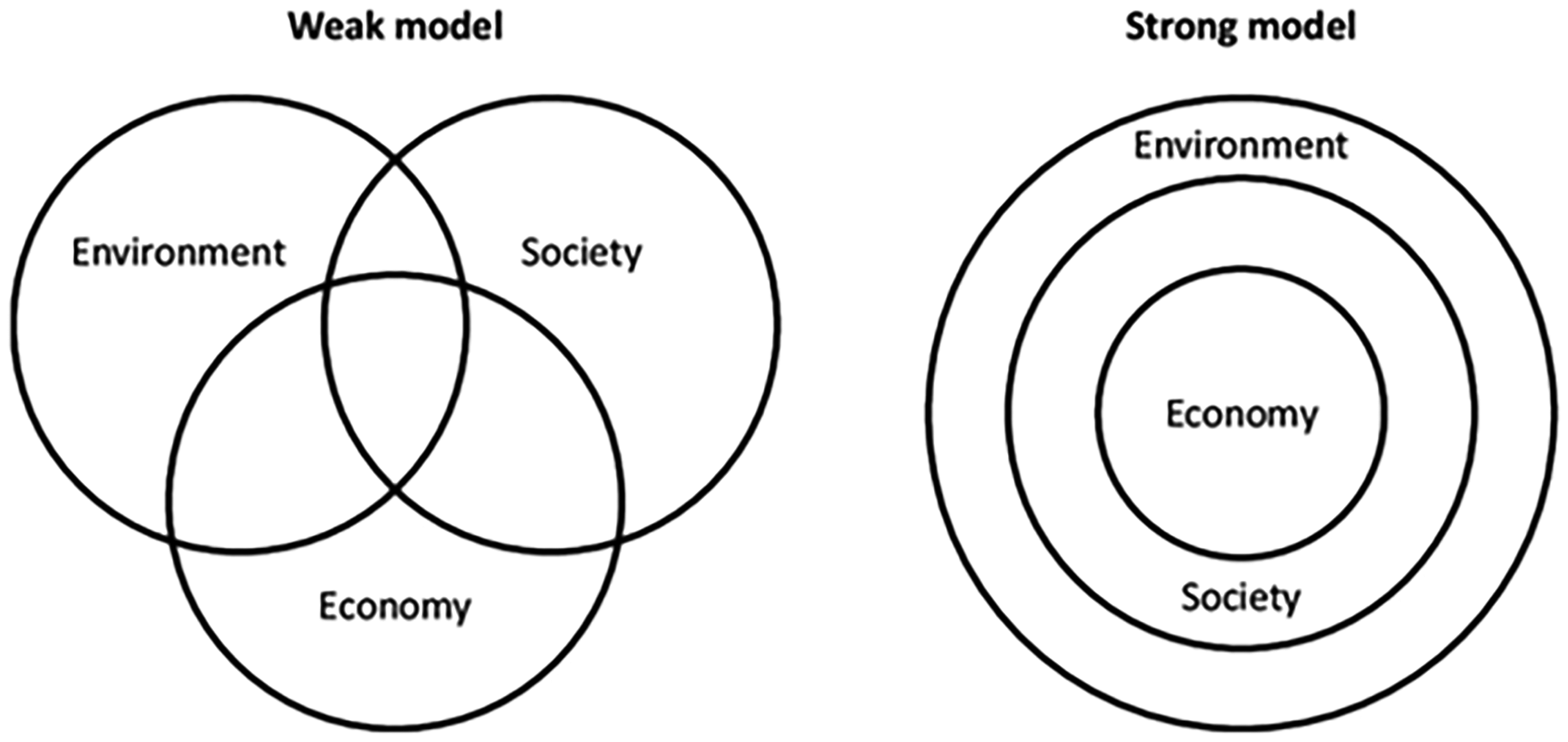
Weak and strong models of sustainability (Neumayer, 2003).
Within the dominant, slower-changing system lie the subsystems capable of rapid change. The representation of this interconnectedness defines Herman Daly's (2014) strong sustainability criterion. According to this criterion, humans will only be able to respect environmental constraints by acting on the subsystems of the environment. This allows us to directly impact social or economic processes (Fleischer, 2014). Many economists today feel that the only way to ensure a sustainable future is for our economies to prioritise human and environmental well-being over economic growth.
To achieve this, various research fields have suggested new approaches to social and economic institutions, where the logic of growth is questioned in favour of establishing an economy that is more just in terms of the environment and society (Kallis et al., 2012; Kocsis, 2018; Latouche, 2009). The concept called Degrowth involves ‘a planned reduction of energy and resource use designed to bring the economy back into balance with the living world in a way that reduces inequality and improves human well-being’ (Hickel, 2021: 1106).
The fundamental idea of placing the natural environment and human well-being ahead of economic growth emphasises the need for a shift to more equitable, localised, and sustainable lifestyles, providing an alternative path towards sustainability (Latouche, 2009), where communities can improve the human experience, build resilience, and lessen environmental damage by reducing production and consumption (Kiss et al., 2021; Martínez-Alier et al., 2010). From an ecological economics perspective, Degrowth means a fair and socially sustainable decrease in society's throughput (Videira et al., 2014). Degrowth provides a useful framework for rethinking how we relate to the environment, production, and consumption and provokes debate about alternatives (Parker et al., 2021). It is also vital to challenge the prevailing economic paradigm and ascertain the necessity of alternative economic systems predicated on a logic of non-growth to uncover the conditions for a non-growth-oriented existence (Szathmári and Kocsis, 2022). Hence, Degrowth is about leaving behind the current paradigms underlying economic thinking, and sustainability is defined in the stricter sense of the word to delineate a world where strong sustainability is the norm. Promoters of such a strong sustainability approach believe that acceptable transitional paths involve consuming less and reassessing our approaches to doing business as well as organising our economic and social lives (Kallis et al., 2012). Climate change and biodiversity loss should both be addressed through Degrowth programs. Policies that support such an approach include the following:
Reducing unnecessary production, Improving public services, Introducing a green employment guarantee, Reducing working hours, and Enabling sustainable development (Hickel et al., 2022).
Rethinking the game: Sustainability challenges and opportunities in the sports industry
For a very long time, people have praised sport for its ability to unite people, break down barriers between cultures, and inspire generations (Vail, 2007). It represents a space where groups of people can come together to enjoy the thrill of competition, split the rewards of success, and share the sorrows of loss (Coakley, 2015). Beyond its economic impact, the popularity of this subsystem of activity impacts our daily lives and habits through its undeniable attraction as one of the most global forms of popular culture, with billions of people participating and watching worldwide (Miller et al., 2003).
Even though the sports sector has acknowledged its contribution to environmental issues (McCullough et al., 2020), similarly to other subsystems, sports have historically taken nature for granted (Thibault, 2009). Hence there are enormous challenges and criticism about the historical neglect of environmental impact by the sports industry, particularly about over-consumption (Gammelsæter and Loland, 2023) driven by the expansion of international sports (McCullough et al., 2020), sports tourism, elite sports’ commercial connections (Fourie and Santana-Gallego, 2011), and the significant contribution of ‘mega-sports’ events to greenhouse gas emissions (Mallen et al., 2010), resource consumption, and environmental degradation. Further critique involves the industry's inadequate response to improving its environmental performance (Orr and Inoue, 2019), insufficient measures taken by stakeholders to tackle unsustainable practices (Gammelsæter and Loland, 2023), increasing revenues as the main driver of sports organizations decision-making processes (McCullough, 2023), and concerns about adverse effects on players’ health and safety, along with their commodification (IPCC, 2022; Szathmári and Kocsis, 2022). The latter, in the context of athletes in the sports sector, refers to the process or act of diminishing or stripping away the human qualities, dignity, or individuality of athletes. This can manifest in various ways, including treating athletes as mere commodities or objects for entertainment, disregarding their physical and mental well-being, or reducing them to their performance statistics. This highlights the importance of recognising and respecting the holistic nature of athletes, acknowledging their humanity beyond their roles as competitors (Herr and Köves, 2024; Szathmári and Kocsis, 2022).
The Olympic Games provides a fine illustration of the contentious interplay between sports, weak sustainability, and profit-seeking. Decision-makers involved in mega-sport events, such as Olympic Organizing Committees, must confront questions about the event's future. There are concerns about how far present sports trends can be developed to be more sustainable and how far negative externalities can be moderated by strategy modification.) The Olympic Games (OG) have grown significantly in size, content, and complexity over the last few decades. The high level of attention creates a situation where consumption, travel, and the movement of commodities are concentrated in a small location for a short period. This represents a trade-off dilemma with substantial environmental impact.
Consequently, like other industrial sectors, the sports industry has continuously evolved over the past 50 years in response to growing worries about the state of the environment, including how it may affect human activity (Dingle and Mallen, 2020; Ross and Orr, 2022). The United Nations (UN) claims that a wide range of connected activities, from building sports facilities to individual sports routines, impact how sport affects the environment (UN, 2022). As it is one of the most competitive and rapid subsystems of human activity associated with the economic system (Köves et al., 2021) and is expanding globally, much like our economic system (Thibault, 2009), with socioeconomic and global effects, in addition to local ones (Lawson, 2005), research on the relationship between the sustainability of sports and a growth-oriented economic approach – which emphasises efficiency, competitiveness, and quantitative measurement – is of broader scope and has more significant implications than those limited to sports-related events. Due to the exhilaration associated with sporting accomplishments, sports can be used to catalyse social and ecological change (Casper et al., 2012).
Managing sustainability in sports: Pathways towards a transition to Degrowth
The sports industry has a particularly interesting role in the transition because it combines the civil and state sectors and has relatively clear social goals in the form of community building, social identity building, and health promotion (Waardenburg, 2016), but is intertwined with a primarily profit-seeking business sector with clear monetary aims (Westerbeek, 2010). Hall (2012) suggests three logics and sustainability paradigms that may help address the challenges of elite sports organisations in terms of environmental sustainability. These three are steady-state- or Degrowth (derived from ecological economics), balanced- (related to the triple-bottom-line), and economic- (derived from neoclassical economics) sustainability. Degrowth is rarely attempted (and is opposed to traditional sustainability concepts, which promote sufficiency over efficiency to reduce consumption through market and regulatory mechanisms when possible). In contrast, economic and balanced sustainability approaches have not been successful. However, what remains unclear for the sports sector is how sufficiency should be understood and will play a role in the future.
Thus, considering sports as a global and influential aspect of popular culture with socioeconomic and global implications, this article seeks to clarify how sports can serve as a forum for addressing climate change and urgent environmental issues. It also addresses the role of the sports industry in combating the latter, all within the framework of Degrowth theory. The research is motivated by recognising the sports sector's contribution to environmental problems and its potential to foster innovative solutions, particularly regarding mega-sport events where sustainability is crucial.
The structure of this paper is as follows. First, we present the mixed qualitative methods, their applicability and importance, and the backcasting steps and Delphi techniques. Second, to make the findings of such a complicated qualitative inquiry briefer, we highlight the key messages that emerged during the 3-day workshop and Delphi rounds. Third, we present discussion points by analysing the outcomes alongside our knowledge of Degrowth transition pathways.
Methodology
Research context
Our social institutions’ moral, intellectual, and scientific underpinnings – including rule and norm systems – impact how structures are formed and our expectations about how they will function. These foundations can become so ingrained over time that we stop questioning their validity. Because of this, our willingness to (not) act in the present is greatly influenced by what we believe to be desirable, attainable, and possible in the future. Problems with deciding on sustainability cover difficulties in aligning pluralism in values (let alone interests), engaging citizens well enough to avoid the free-rider problem, shaking off the individualistic approaches that had penetrated our social lives for so long, and providing a space where responsibilities that come with sustainability are shared fairly among people (Velasquez et al., 1992). As aiming for sustainability requires unconventional future-oriented thinking, innovative methods must guide research methodology. In this article, we propose that there are two main means that support us well in addressing these problems: deliberations through participation which is a liberated and rational agreement among equals in which participants seek to reach a consensus free from the influence of authority and are allowed to voice their opinions without fear of consequences (Blacksher et al., 2012; Cohen, 2005; Habermas, 1984), and envisioning processes that manage to move beyond the here and now and free themselves of the lock-in effects and path dependencies of the present merely based on value-choices of what ‘should be’ rather than pragmatic approaches of what ‘can be’ (Buehring and Bishop, 2020; Robinson, 2003; Wright, 2012). An appropriate approach in this regard is the so-called mixed method, involving a methodological combination of deliberation and participation and two foresight techniques: backcasting (Robinson, 2003) and Delphi (Nowack et al., 2011; Sumsion, 1998). Those who support the value of discussion and participation contend that the addition of expert opinion improves decision-making (McCubbins and Rodriguez, 2006); thus we decided to include expert opinions through a Delphi study. This also served the purpose of reaching out to stakeholders participating as experts to assist them in learning in-depth about the lay group's values and visions, enabling them to form their own opinions on the matter. Thus, a methodology that works well for creating long-term public policies was created.
Backcasting, a normative scenario technique for examining desirable futures, serves as the foundation for the empirical portion of the research (Dreborg, 1996). Backcasting is the process of projecting a desired future ahead of time and figuring out how to get there or prevent an undesirable future (Quist et al., 2011). Backcasting began in the energy industry; however, since the 1990s, applications have expanded to include broader sustainability and participation studies (Quist and Vergragt, 2006). The Delphi technique aims to gather expert knowledge anonymously through multiple rounds of surveys. Participants recognized experts in their fields, contributed viewpoints and arguments iteratively. The process typically involves a minimum of two rounds, with feedback provided between rounds for refinement (Linstone and Turoff, 1975; van de Linde and van der Duin, 2011).
Combining the Delphi method with scenario-based backcasting can aid in sustainability efforts by facilitating creative solutions and strategic planning. The Delphi method, known for its iterative nature, allows for regular feedback and flexibility, involving experts and stakeholders in informed decision-making. Backcasting complements this by providing a visionary framework for goal setting, enabling communities, organizations, and legislators to navigate towards more environmentally friendly practices (Szathmári et al., 2024; Wright et al., 2013). Delphi and backcasting are highly complementary, and there are many other innovative uses for backcasting, from econometrics (Robèrt, 2005) to Monte Carlo simulation (Mattila and Antikainen, 2011), transport telematics (Höjer, 1998), transport climate policy (Tuominen et al., 2014), and green building (Hurmekoski et al., 2015). While the consensus-based approach helps investigate likely futures with comparatively little uncertainty (Tuominen et al., 2014), highlighting the complexities and uncertainties associated with alternative futures can be achieved by looking for differing opinions and emphasis among experts and stakeholders. High levels of agreement might be interpreted as indicating plausible or realistic futures, whereas a dissensus orientation allows for the exploration of even more radical and dispersed solutions (Hurmekoski et al., 2015).
Participants and methods
We selected a group of 15 economics master's degree candidates interested in sports management for a 3-day workshop using internal backcasting methodologies. This ensured that comprehensive data was gathered to determine critical metrics for evaluating a sustainable vision of elite sport. Since the Delphi sample needs to incorporate top experts (see Figure 2) in the field with as complementary backgrounds as possible, the survey utilised convenience sampling, a type of nonprobability sampling that is appropriate for use with this method (Thompson, 2013).
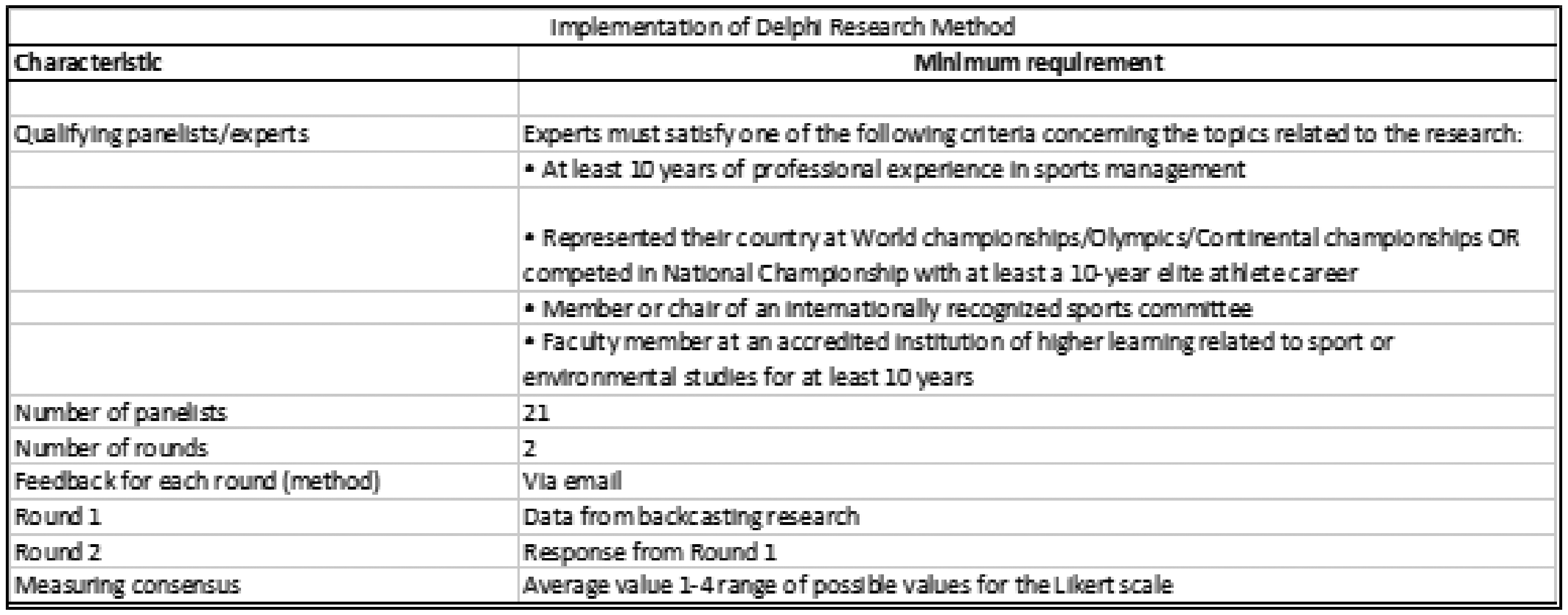
Implementation of the Delphi research method.
We obtained consent from 21 experts; the majority of the sample members were well-known and respected industry experts with extensive professional networks. Three expert groups were considered representing Estonia, Hungary, India, Italy, Norway, Spain, and the UK: sports federation members (eight) who usually organise international sporting events; sports media representatives (eight); and academic scholars (five) who frequently study issues related to the sports sector (see Figure 2) guaranteeing to meet the criteria defined by Keeney et al. (2011).
Three interconnected phases made up the futuring research (see Figure 3). Backcasting with economics students was used as the foundation for the Delphi expert panel to create a vision, normative scenarios, and steps for action for future sustainable sports (Köves et al., 2021). Quist et al. (2011) delineate five primary stages in an interactive backcasting endeavour: (1) Orienting the strategic challenge; (2) Developing the future vision; (3) Backcasting analysis; (4) Elaborating the future alternative and follow-up agenda; (5) Following up. As an exploratory study, this backcasting with sustainable sport only covered the first three stages. The scenarios were intended to describe challenges and explain how the sports sector could address climate change and sustainably conduct business.
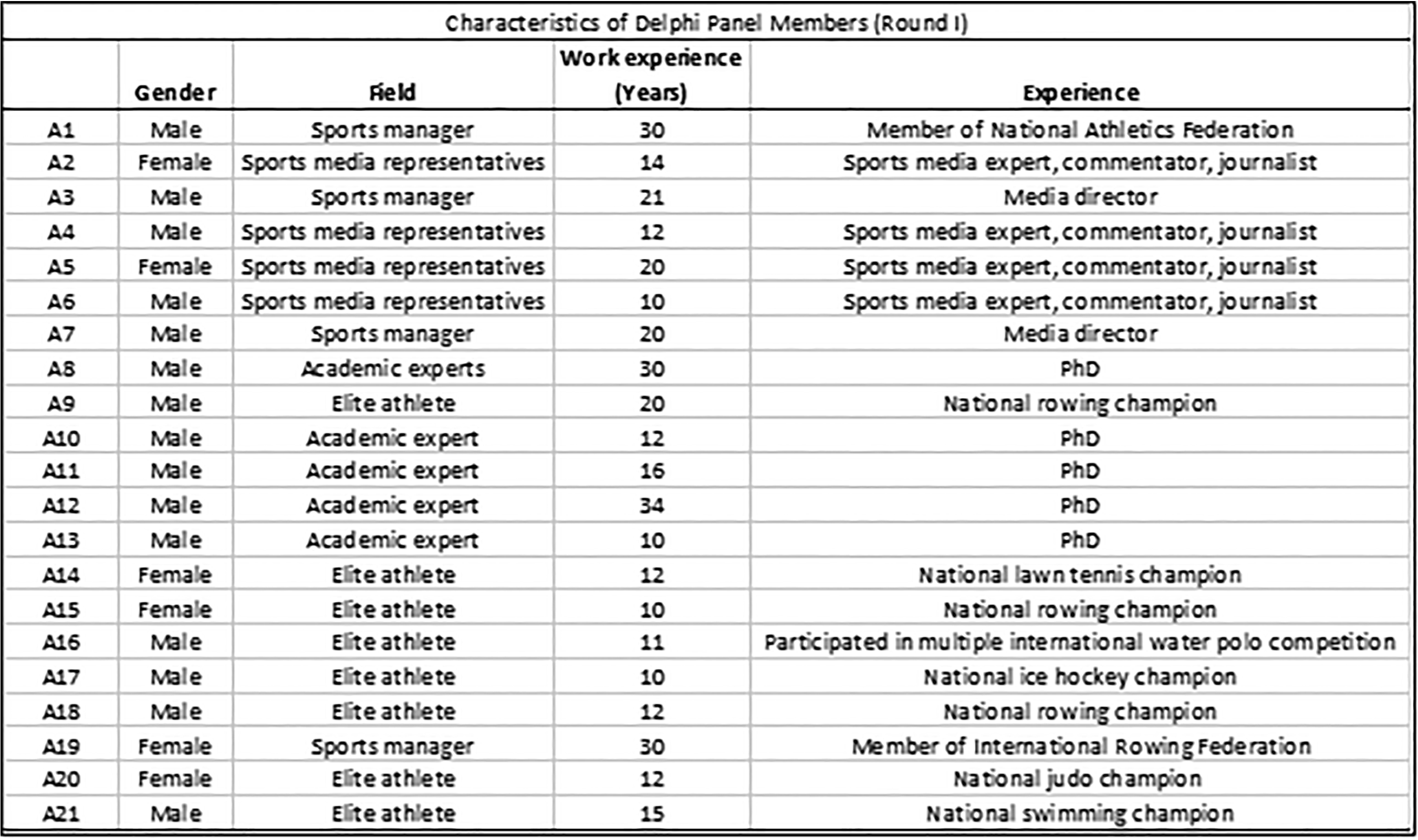
Characteristics of Delphi panel participants (round 1).
Using a variety of participatory techniques, including story cubes, imagination games, world cafés, modified futures wheels (Brown, 2010; Glenn, 2009) and participatory systems mapping (Király et al., 2016), students created a system map with 53 variables with six main topics (see Figure 4), charts detailing the backcasting steps, and a two-page vision of sustainable elite sport. The process of creating the system map exposes the topic's structure, and the evident and obscure relationships among the variables, components or factors of a challenging problem to be made to determine what part of intervention can most effectively impact other parameters. The study was developed in response to the first round of system mapping and backcasting results to permit validation through the inclusion of the international sample and industry experts’ participation. These served as the foundation for the Delphi expert research (Köves et al., 2021). Anonymity was maintained using electronic communication between researchers and participants. The second and third phases involved requesting expert input on the scenarios (such as their viability and alignment with a vision of sustainability). The repeated rounds allowed experts to revise the scenario descriptions with new insights, responses, and critiques. In contrast to a conventional Delphi study, this approach permitted the descriptions to be modified between rounds.
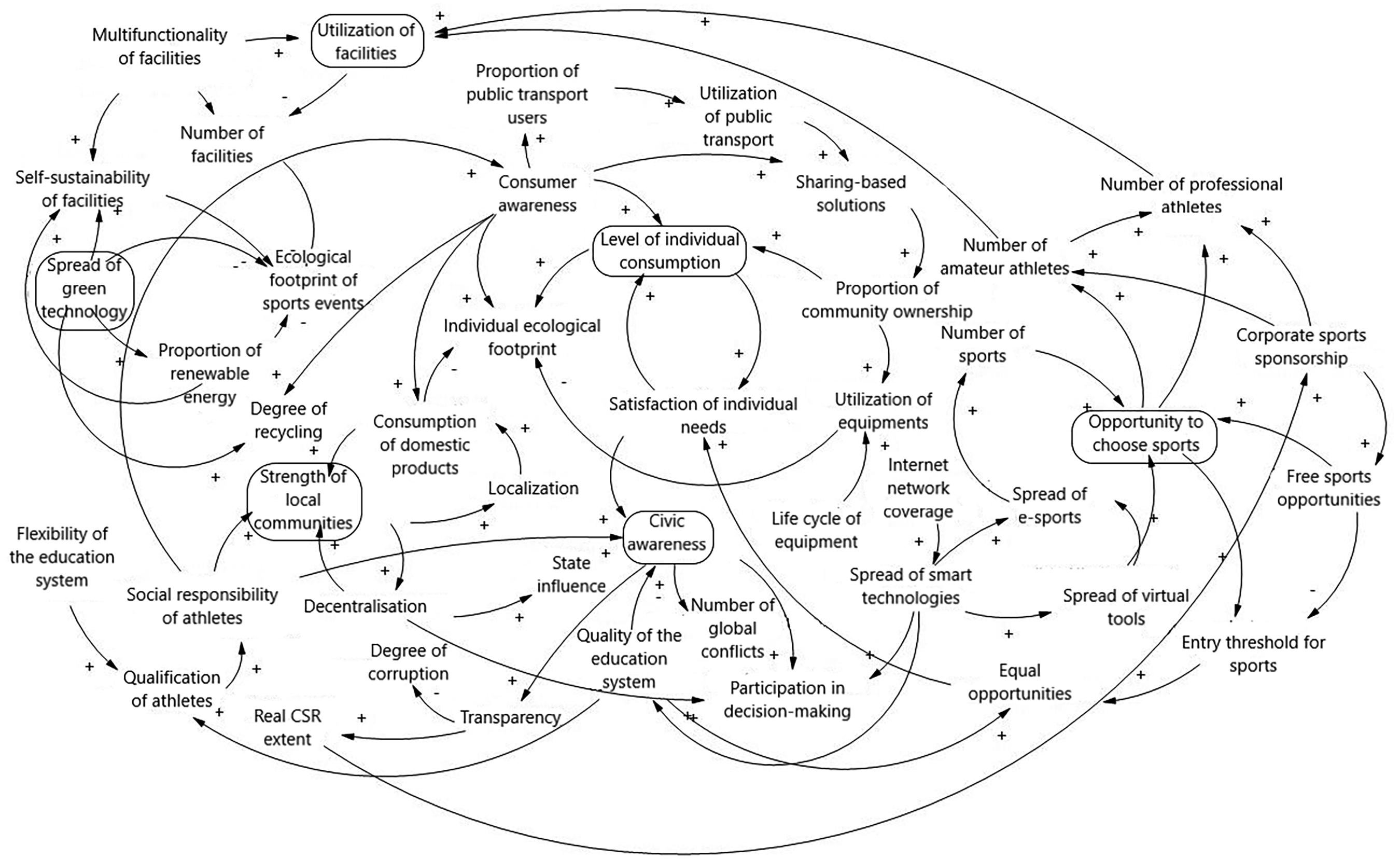
The system map (complex causal diagram) of sustainable sports vision created by master's students.
The second round was executed in the spring of 2023. During data collection, an overview of the main conclusions of the backcasting research was presented to the panel of experts. Furthermore, an open-ended survey was implemented. The panel was asked to address questions and statements about a sustainable vision of elite sport that could help combat climate change to deepen, validate, and expand the identified challenges. After the initial round of responses was combined and reviewed, a second survey with updated descriptions of the dilemmas was disseminated in the summer of 2023 to give the Delphi panel a comprehensive perspective. The panellists were instructed to respond appropriately to each question, and there was ample opportunity for open-ended comments (Sumsion, 1998).
Data analysis
A unique identification number (A1–A21) was assigned to each respondent so that the statements could be traced back to the source. Thematic content analysis was employed to evaluate the responses. Babbie (2020) defined content analysis as a type of descriptive research in which the investigator looks at a particular class of social artefacts, usually consisting of written documents. Content analysis aims to define or summarise content to identify key elements or highlight recurring themes (Figure 5). It is a qualitative, evaluative research method that enables the investigator to carry out research and acquire data in an inconspicuous way (Middelkoop, 2001). The first step was to become familiar with the outcome of the 3-day backcasting workshop outcome and the vision (see Figures 6 and 7).
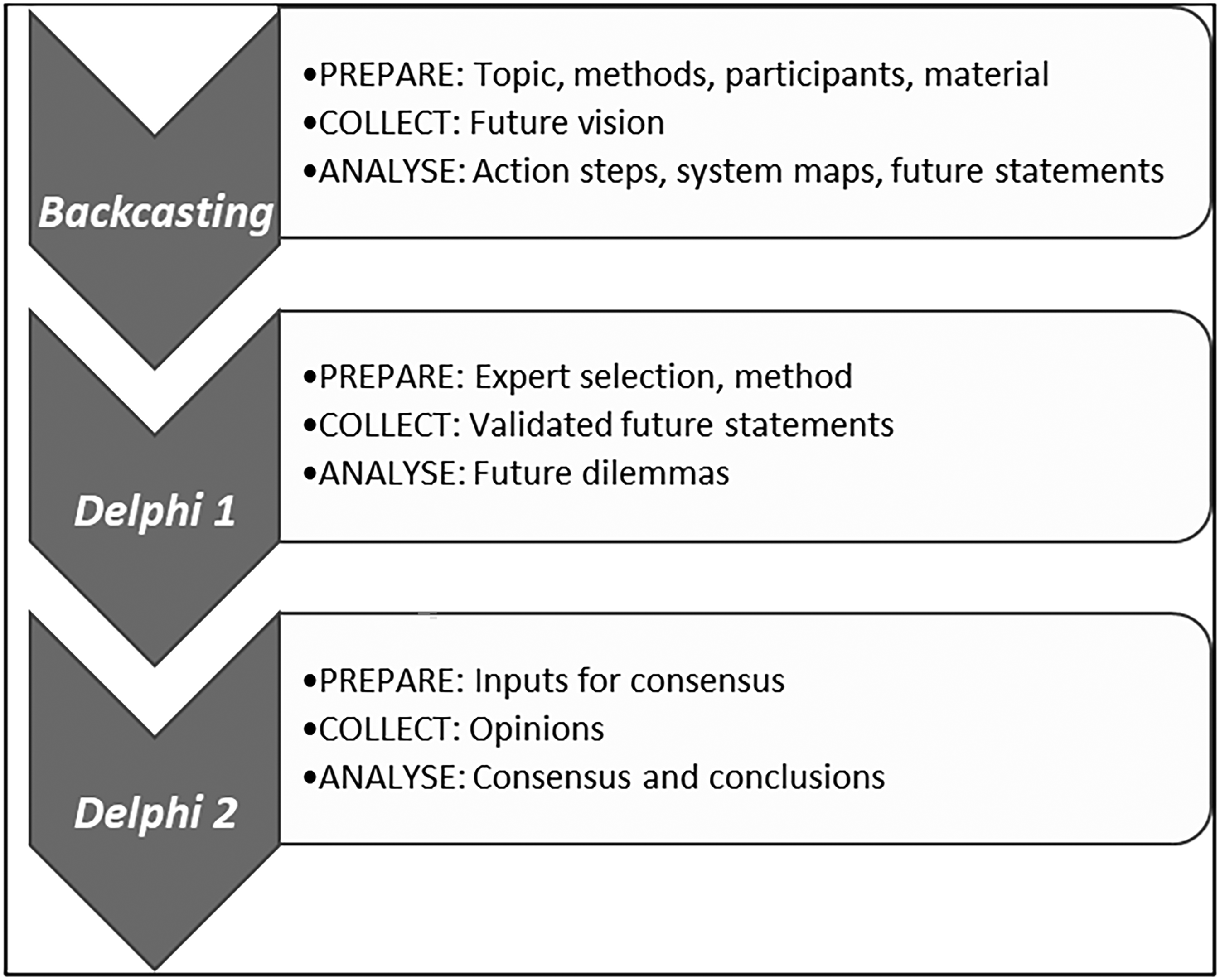
Flowchart of the three-round backcasting process and Delphi survey.

Overview of the steps, methodology, and outputs.
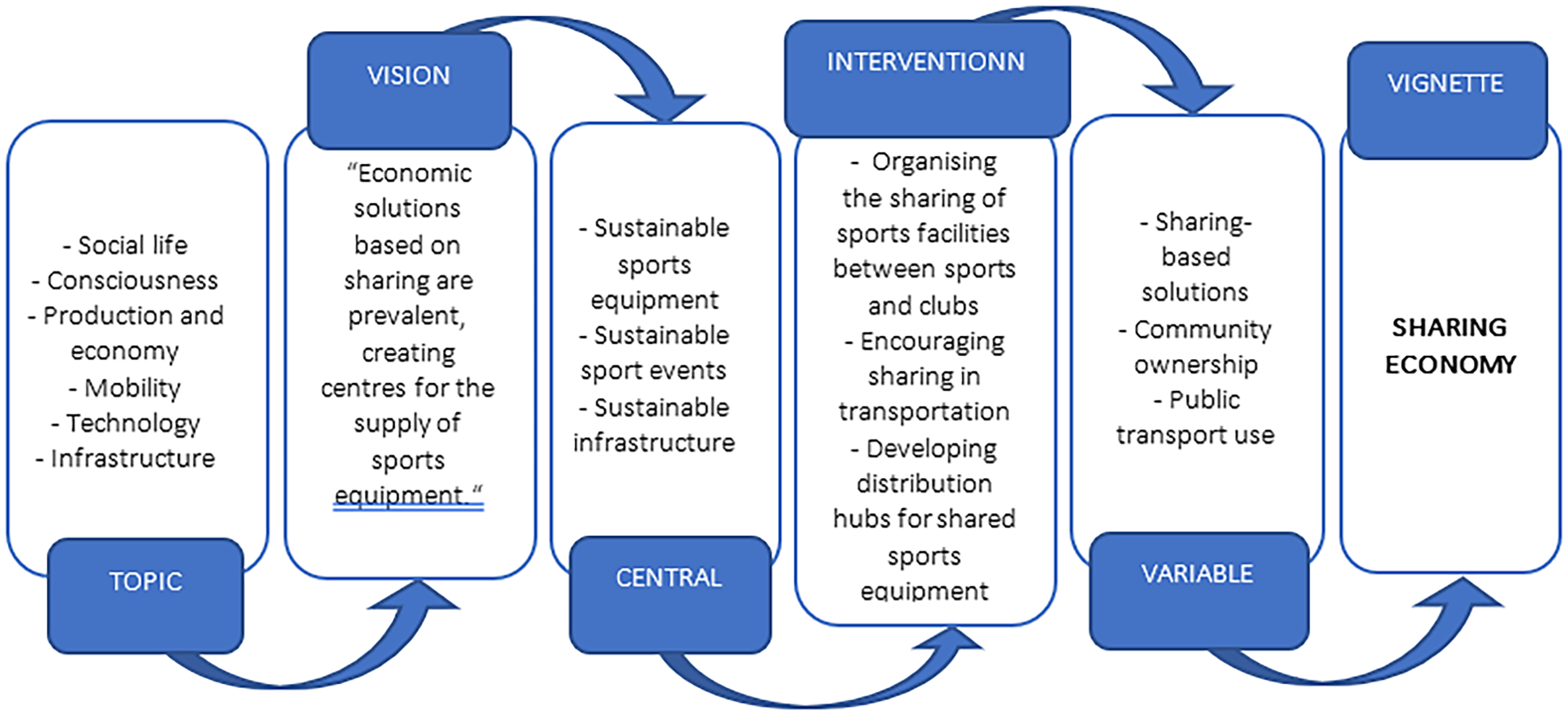
An example stream for the evaluation of themes based on the outputs.
The researchers examined the resulting text several times and noted preliminary ideas for themes. The main themes for sports-related climate change dilemmas were finally extracted and presented to the experts in Delphi rounds.
Results and discussion
Before delving into the specifics of the findings, it is important to acknowledge that the sports literature almost universally distinguishes between leisure and elite sports. We purposely did not structure the research to establish these distinctions since sports are interconnected, always in interaction with one another, and they all need to become more sustainable, requiring active deliberation and discussion on the sustainable future of sports. In retrospect, the former proved to be an effective method because many of the discussions focussed on the intersection of these many viewpoints, and the solutions proposed by participants frequently included all these perspectives.
The core idea of Degrowth is the realignment of economic and social activity, with economic growth no longer playing an important role (Kallis et al., 2012). Economic activity must take into account the ecological and social limits to growth. During the backcasting exercise, the student participants never questioned the prevailing logic of neoclassical economics, which emphasises growth. (This outcome could have been influenced by the fact that they were economics students.) However, they began to consider the ecological boundaries. For instance, they have always understood that some trade-offs based on social discussion must apply to sports. (For further details of their vision, see Supplemental material). One of our main aims was to assist in putting into practice the strong sustainability paradigm in sports and identifying elements that might be used as Degrowth transition steps (see Figure 8).
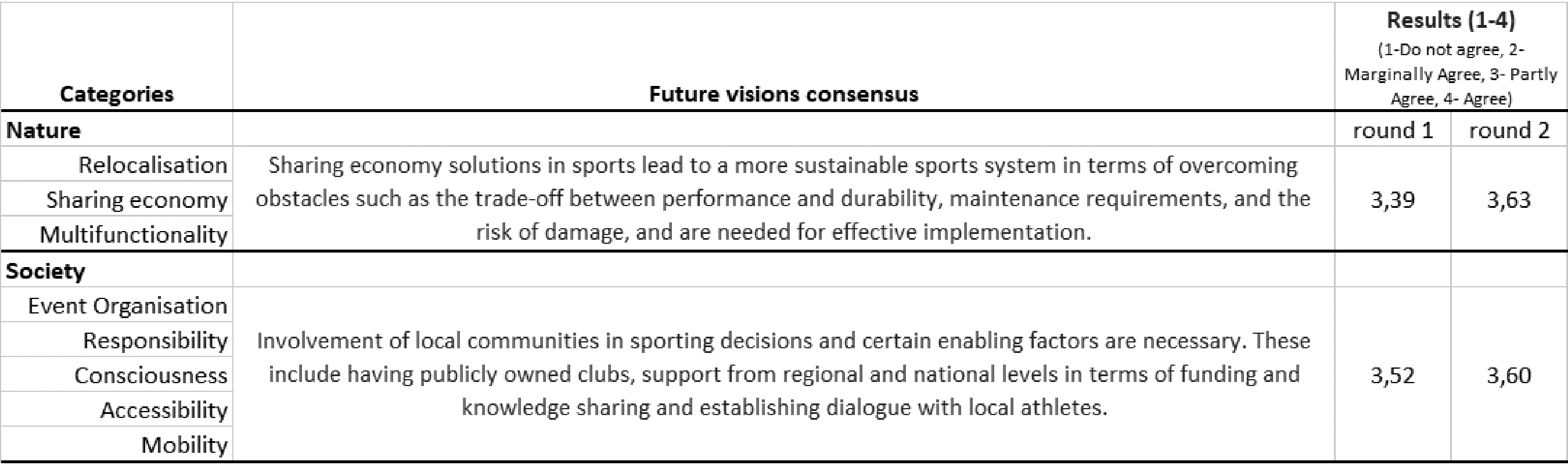
Sustainable vision, main and sub-categories associated with consensus.
Resource sharing and inclusive access
A key theme echoed by all panel participants was the need to ‘share or exchange resources’, particularly involving the link between more efficient resource use, reducing waste, and addressing environmental concerns to enhance sustainability within the sports system. This also became the concept most accepted and best rooted in the backcasting vision. Sharing economies may be spread through the creation of sports equipment distribution centres. The equipment used by professionals may be exploited at other levels; loan facilities may be made more widespread. Further investigation of experts’ opinions highlights that the concept of ‘access over ownership’ is central to the sharing economy discourse (Frenken and Schor, 2017), which position aligns with sustainable sports practices that involve promoting access to sports equipment and facilities. For many experts, this means a shift in perspective: I think that sharing economy solutions can work in the world of sport, partly because they have worked in the past – before [the era of] disposable, lower quality mass-produced goods, there was much less waste, and the issue of sports equipment, for example, was solved for generations. But instead of retro nostalgia, it is possible to move forward if we just change our mindset. (A2, media)
Humans have always shared. Sharing perpetuates social relationships and reinforces cultural norms (Belk, 2010). Discourse about the sharing economy highlights the social significance of skillful cooperation and conviviality in groups and associations (Jarvis, 2019). The sharing economy seeks to maximise the usefulness of pre-existing goods by redistributing them throughout the population (Howard, 2015). This is also known as collaborative consumption (Hamari et al., 2015) or the collaborative economy (Owyang and Samuel, 2015). Among several others, Frenken and Schor (2017) have defined it as consumers granting each other temporary access to under-utilized physical assets (‘idle capacity’), possibly for money. This approach has positive implications for climate change mitigation. One expert provides a good summary of the general trends identified in the panel's perspective: In my opinion, the sharing economy can play a significant role in promoting sustainability in sports by leading to the more efficient use of resources and reducing waste. Sharing-based sports models could allow for the more efficient use of sports facilities and equipment, reducing waste and resource consumption. Rental facilities can provide more affordable access to sports equipment for those who may not be able to afford to buy their own. (A14, federation)
This involves identifying more equitable and environmentally friendly ways for people to use digital platforms to consume goods and services (Hamari et al., 2015). While Botsman and Rogers (2010) argue that the sharing economy will upend the unjustifiable over-consumption habits that underpin capitalist economies, Heinrichs (2013) has hailed the sharing economy as a potential modern route to sustainability. Sports researchers conclude that the primary cause of this dilemma is the economic function's supremacy over environmental concerns, which is brought about by business pressure and appears to be the primary motivator behind decision-making processes within sports organisations (Gammelsæter and Loland, 2023; McCullough, 2023; Szathmári, 2021). Organisations can help their customers manage the lifecycle of their sports equipment, encouraging product recycling and reducing environmental impact. This sharing model minimises resource consumption and reduces the environmental footprint associated with sports. Transportation sharing reduces the carbon footprint of fans attending events, eases traffic congestion, and promotes a more sustainable approach to sports event mobility. The majority of the panel believes there will be a change from resource consumption to what Schor and Fitzmaurice (2015) define as ‘sharing initiatives’, including peer-to-peer housing and transport services, time banks, product exchanges, and other types of cooperation. This can lead to a significant increase in participation in sports. At the same time, it is important to ensure that the sharing economy solutions are implemented in a way that is fair and equitable for all the stakeholders involved – professional athletes, amateur athletes, sports organisations, federations, etc. (A14, federation)
Others argue that a change in approach is necessary, with one expert pointing out that addressing non-local travel and transport-related carbon emissions is crucial: I think with less and less snow in traditional European winter sports venues, more and more venues will host coed races, and maybe more and more sports will compete at one venue (ski touring, Nordic combined, cross-country skiing, for example) and [participants will] travel together to the next venue. (A1, federation)
While experts suggest the positive impact that sharing may have, the economic, social, and environmental effects of sharing economy platforms are largely unknown; the environmental and social effects of the sharing economy will depend, most importantly, on institutional changes that are still to come (Frenken, 2017). The experts highlighted a few obstacles that should be eliminated to promote the sharing economy and specified limitations and conditions for its effectiveness. These include the ‘trade-off between performance and durability’ (A1, manager) maintenance requirements, the risk of damage, and the ‘exacerbation of current societal problems’ (A10, academic) if such systems are implemented without systemic change: ‘I believe that this requires organised systems and support rather than the traditional bottom-up, ad hoc solutions’. (A2, media)
Some concerns arose regarding the ‘usefulness of professional equipment’ (A4, media) at the amateur level, the elite athlete's ‘attachment and emotional bond’ (A18, federation) and the ‘worry that shared tools may not be well-maintained by users’ (A16, federation) in relation to the social culture of sharing which implies respectful use and avoiding the ‘monopolisation’ of shared objects. A change in consumer behaviour is specified as an important criterion of success: a process of this type can generate positive change only if it leads to a change in athletes’ habits. Another success criterion is transforming the sharing economy in sports into a ‘vector of emancipation’ (A10, academic). Instead of the competitive logic becoming more entrenched, structural adjustments must be made. Ultimately, an essential challenge will be that, There is less profit for traditional commercial forces in sports, such as equipment and clothing producers: change will stimulate market creativity, and I feel confident that new business models will emerge. (A12, academic)
Community-centric and low-impact practices
The backcasting vision is: ‘To improve the involvement of local communities in sporting decisions, certain enabling factors are necessary. These include having publicly owned clubs, support from the regional and national levels in terms of funding, knowledge sharing and establishing a dialogue with local athletes’. This vision was supported by the experts who highlighted four trends: (1) the significance of localised sports activities, (2) their role in reducing environmental impact, (3) fostering community engagement, and (4) encouraging grassroots participation. It also hints at the potential benefits of social sustainability. Experts agreed on the importance of local community, with one saying, ‘Sport cannot function without community’ (A5, media). Locals have a ‘clearer idea than anyone else of what community needs are’ (A4, media). Their involvement ‘would make sports financing far more successful and is essential for reinforcing a vision and direction’ (A12, academic). They play a particularly important role in making the sport more well-known and sustainable. One expert articulated this well: The closer the three actors (supporters, consumers, and participants) are, the more the system lasts over time; therefore, the more localised and identified with the consumption of sport, the more it becomes [part of] community tradition and culture, self-sustaining economically and in terms of the number of actors. (A18, federation)
According to participants, one of the fundamental success criteria is ‘linking sport and education’ (A14, federation) locally, promoting sustainable behaviour, and raising awareness about environmental issues. The majority of panellists agree that by ‘involving local communities in decision-making’ (A14, federation), not only will the latter develop an undying interest in common goals but will also make much better decisions regarding the sustainability of society and nature when managing clubs. Moreover, one expert emphasised that the ideal sports organisation is: ‘democratic and transparent and part of civic society’ (A12, academic). This approach has positive implications for climate change mitigation, although some experts expressed concern regarding the exact role of local communities in funding decisions. People who do not play sports at a high level should not be included in funding decisions, and the involvement of locals is a risk as they may lack the expected awareness of this type of role or its overall impact and outcome. (A19, manager)
Also, this process should not be imposed from above on local communities, but all the conditions must be created for it to develop organically. Participants sought ways to reduce the ecological impact of sports, and in relation to this effort, ‘relocalisation’ (Ajulo et al., 2020) takes centre stage. The expert panel consensus through the Delphi process emphasised the importance of localised sports activities that ‘reduce the need for extensive travel, infrastructure, and resource-intensive mega-events’. It is particularly important as studies have demonstrated how sport-consumers and athletes behave differently from regular people in terms of their economic activities (McCullough et al., 2020), with active involvement or attendance at sports events associated with noticeably higher environmental emissions (Wicker, 2019). The need for relocalisation, i.e., developing a robust network of local communities, often arose in dialogue, giving rise to optimism that if organisations have stronger local ties and municipalities have stronger authority, a sustainability transition in sports can take place. This supports the claims of Edwards (2015), who claimed that community capacity may be seen as a key means of fostering social-level health and that, through the model of sport, it may be an important component of community development. Also, with regard to increasing the usefulness of sport in supporting community health development, policy objectives can only be met if channelled through partnerships with government, educational, health, and social service organisations (Hayhurst and Frisby, 2010). Local communities may play a critical role in promoting sustainable sports and addressing climate change. They can discuss how event organisers and communities can collaborate to reduce the environmental footprint of local sports competitions. This is consistent with the idea that individuals who feel more a part of their community tend to act in more environmentally conscious ways (Van Vugt, 2002). Studies have shown that, compared to other areas of their lives, sports fans may be more sensitive to environmental messages when they are related to their sport. Thus, pro-environmental behaviours may be promoted at sporting events and everyday life (Casper et al., 2020). Also, sports participants who engage in physical activity in the natural environment are more likely to preserve the natural environment (Cunningham et al., 2020). This aligns with Ott's (2012) assertion that communal living, sharing, and individual participation can unquestionably lead to positive changes in citizens’ lives. Moreover, Howe (2019) highlights that sports participants frequently use nature to engage with and enjoy sports rather than seeing it as an end in and of itself, complementary to their participation and engagement in sports. Local communities can actively participate in eco-friendly events, support green infrastructure projects, and advocate sustainable practices. The involvement of residents can lead to the adoption of environmentally responsible measures at local sports facilities and in event planning. This supports Latouche's (2009) view that the local level should be preferred, whenever possible, to create benefits for society. According to the panel experts, successful events and the atmosphere of large-scale community sporting events may encourage local communities to make the right decisions about sports. Although global efforts are essential, the impact of change often begins at the grassroots level. This is important because it implies that a shift towards smaller, slower, and more localised systems would not be a form of regression but rather a means of reversing the challenges brought about by climate change (Garcia, 2012). This means of creating what Aoyama (2009) calls ‘the future of sport’ can be promoted by building strong communities through strengthening identity, leading by example, increasing local consumption, and linking sport and education. A localised economy may tackle resource problems better by reducing the distance between production and consumption (Dobson, 2007).
We recognise that Mocca (2020) considers that fundamental efforts towards achieving a fully democratic, socially equitable, and environmentally sustainable society should be made at the local level. Having democratic organisations was a key topic regarding empowering local sporting communities and a precondition of a sustainable mass sports movement. Some enabling factors are necessary to improve local communities’ involvement in sporting decisions. These include having publicly owned clubs, support from regional and national levels in terms of funding and knowledge sharing and establishing dialogue with local athletes. Sports organisations will face challenges in maintaining access to sporting facilities due to rising participation rates due to climate adaptation; governance must help protect and preserve sports from climate change and consider how sport adapts to their stakeholders (Kellison et al., 2023; McCullough, 2023). According to Kallis et al. (2012), climate change cannot be addressed simply by ‘adding up’ the impact of local low-carbon initiatives without international agreements.
Conclusion, limitations of the analysis and further research
Combating climate change proactively is essential if we intend to maintain human civilisation for an extended time. The sports sector will also have to adapt to new environmental standards and circumstances. This study aims to help understand what a specific group of experts and students active in the sports sector views as a desirable and practical normative situation. It also helps develop the theoretical foundation for understanding how sports can contribute to a sustainable future climate through the principles of sharing, localisation, and focusing on community and inclusive access. It draws from key concepts within the Degrowth and sports studies literature, underpinning the transformative potential of sports in the quest for sustainability. The novel aim of this paper was to challenge the idea that a sporting event's financial worth should supersede its effects on the community and environment. Two main pathways to this target have been identified using the Delphi consensus element.
The first pathway based on the expert consensus highlights (i) the gradual integration of the elements of the sharing economy (linked to the theory of Degrowth) into the world of sport in terms of sports infrastructure, equipment, competition planning, transport, and logistics. The sharing economy applied to sports requires a mindset change that supports collaborative consumption, promoting sustainability through the efficient use of resources and affordable access to sports equipment and sports services. It will foster an increase in sports participation by leveraging competition-related arrangements within an organised system, leading to structural changes and new business models that prioritise cooperation over traditional competitive logic. Participants agreed that sustainable sports require a high level of consciousness and social responsibility among all stakeholders. As with economic regulation and incentives, personal communication and awareness-raising can help achieve this. This embodies a bottom-up approach that emphasises systemic transformation towards a more inclusive and sustainable economic paradigm, highlighting the responsibility of individuals and sports governing bodies.
The second consensus pathway refers to (ii) the use of community-centric and low-impact sports practices that increase local communities’ involvement and decision-making power, fostering a clearer idea of the interconnectedness between supporters, consumers, and participants. By linking sports with education, these practices may promote relocalisation strategies, reduce reliance on mega-events, and prioritise the engagement of locals in decision-making processes, ultimately creating a more sustainable and community-oriented approach to sports.
Although experts from all over the world were invited to contribute, we did not obtain responses from all countries, potentially limiting the research's global applicability. Another restriction concerns the panellists who were selected to participate in the study. Their perspectives may differ from those who declined to participate in subsequent phases. Thus, the results may not fully represent the specialists active in academic, sports media, and sports federation disciplines. To mitigate this constraint, one final email was sent to the initial list of experts, requesting feedback on the final list of items. Only two emails were returned: one from an Indian academic expert and one from an Italian academic. Our mixed-method approach is associated with several limits in addition to its great benefits. The diverse range of perspectives expressed by many participants in the Delphi survey and backcasting did not allow for consensus in all circumstances, such as when defining the vision or expanding on the pathways that must be taken to achieve the desired goal. Future research efforts could include many simultaneous Delphi surveys in which different stakeholder groups evaluate similar future scenarios independently. Finally, using qualitative research methods necessitates a subjective categorisation process based on the researcher's knowledge and experience; hence, it is not value-free. Many Degrowth ideas are associated with a broad scope and the potential to produce various results, making the process more challenging. To be as comprehensive as possible, these more abstract suggestions were nevertheless incorporated into our research; however, the ambiguity they create is a limitation.
Since there is presently a dispute on how much sports should alter to make a significant contribution to sustainability in general (e.g., Gammelsæter and Loland, 2023; McCullough, 2023) and to the prevention of climate change, further study should examine the sports sector's effect on climate change. A discussion of how sports and its industry will go in the future about its overall strategy combining proactive or reactive approaches to climate change also arises. Understanding stakeholder views in the community and sports sectors on different pathways to Degrowth should be one of the aims, with particular emphasis on investigating the consequences of technological innovation and its influence on the fundamental values associated with sport.
Supplemental Material
sj-docx-1-irs-10.1177_10126902241268256 - Supplemental material for Navigating the playing field: Reimagining the sports industry in the face of accelerated climate change
Supplemental material, sj-docx-1-irs-10.1177_10126902241268256 for Navigating the playing field: Reimagining the sports industry in the face of accelerated climate change by Attila Szathmári in International Review for the Sociology of Sport
Footnotes
Acknowledgements
The author wishes to thank the students and experts who participated in the participatory research process and shared their knowledge and insights with them. He would also like to thank Alexandra Köves, Orsolya Herr, and Saurabh Sukhadeo Ghule for their involvement in the backcasting and Delphi phases. The author thanks Simon Milton for English-language proofreading and Péter Szathmári for the figures’ design. The research project was implemented with support provided by the Corvinus University of Budapest.
Declaration of conflicting interests
The author declared no potential conflicts of interest with respect to the research, authorship, and/or publication of this article.
Funding
The author disclosed receipt of the following financial support for the research, authorship, and/or publication of this article: This work was supported by the Corvinus University of Budapest.

Supplemental material
Supplemental material for this article is available online.
References
Supplementary Material
Please find the following supplemental material available below.
For Open Access articles published under a Creative Commons License, all supplemental material carries the same license as the article it is associated with.
For non-Open Access articles published, all supplemental material carries a non-exclusive license, and permission requests for re-use of supplemental material or any part of supplemental material shall be sent directly to the copyright owner as specified in the copyright notice associated with the article.
