




Abstract
The purpose of this study is to analyze the influence of socio-structural determinants of physical activity (PA) behavior in children and adolescents. We expected that socioeconomic status, social support, and physical environment influence PA directly while socioeconomic status also has an indirect influence via social support and physical environment. Cross-sectional data from the German Motorik-Modul study (MoMo) were used (Wave 2, 2014–2017). The sample consisted of N = 2134 children and adolescents aged 6–17 years. Socioeconomic status, social support, and physical environment were measured by questionnaires. To measure PA, children and adolescents were instructed to wear accelerometers for seven consecutive days. Moderate-to-vigorous activity periods were considered. Path analyses were used to analyze the direct and indirect effects. We calculated two models, one for children (6–10 years) and one for adolescents (11–17 years). Among children (model 1), only social support had a direct effect on PA behavior. In addition, social support influenced the perceived physical environment. Socioeconomic status had an indirect effect on PA via social support. For adolescents (model 2), all assumed relations were significant and in line with the directions expected. Social support had the strongest direct influence on PA behavior. Socioeconomic status had a direct and indirect effect on PA via the physical environment and social support. The study results emphasize the relevance of close, social networks of families and friends as well as social capital, as a source of social support, for PA levels among young age groups.
Keywords
Introduction
Sport and physical activity (PA) are essential for children and adolescents to grow up healthy (Janssen and Leblanc, 2010). Being active, including all PA behaviors such as sport, play, activities of daily living, and active transport, can serve as a preventive factor to chronic illnesses like diabetes mellitus and cardiovascular disease (Archer, 2014; Twisk et al., 2002) but also mental health disorders (Archer, 2014). Apart from health aspects, exercise is beneficial for the motor, cognitive, social, and emotional development of children and adolescents (Bidzan-Bluma and Lipowska, 2018; Burdette and Whitaker, 2005; Li and Shao, 2022). In Germany, however, only about 19% of girls and boys achieve the PA guidelines of 60 minutes of moderate-to-vigorous physical activity (MVPA) everyday day recommended by the World Health Organization (Schmidt et al., 2020; World Health Organization, 2020).
To develop effective interventions to promote PA, it is important to investigate which factors influence the PA behavior of children and adolescents (Sallis et al., 2000; Schmidt et al., 2019). Social ecological models (Kok et al., 2008; Sallis et al., 2000) consider individual behavior as a product of multiple interacting factors and thereby account for the complexity and interdependence of these influences. Accordingly, various factors at the intrapersonal, interpersonal, organizational, community, and policy levels influence whether and how physically active a person is. Previous research on the determinants of health behaviors like PA has shown that apart from individual aspects, structural factors, such as social and environmental conditions, in particular, can explain inequalities in PA behavior among children and adolescents (Sallis et al., 2000; Schmidt et al., 2019). Focusing on structural factors, various dimensions of societal structures (Esser, 1999), representing opportunities and restrictions for individuals, have to be considered. Three of them are especially relevant in the context of sport and PA promotion (Wäsche, 2022): the institutional structure, the social structure, and the infrastructure. The basic assumption here is that individuals act within and form these structures but are also significantly influenced by them (Esser, 1999). The institutional structure contains the sum of social norms and values. The social structure comprises the structures of social inequality, which can be seen as an indicator for the distribution of social resources, and the relationship structure, as the sum of permanently established relationships between the actors of society, also often referred to as social networks and social capital. Social capital, in particular, indicates social relations characterized by mutual support and acknowledgment (Putnam, 2001; Wäsche et al., 2017). The infrastructure represents the material basis of a society such as roads, railways, cities, energy networks, or facilities for production, education, sport, and leisure.
Regarding these structural dimensions, three determinants are frequently studied regarding the PA behavior of children and adolescents: The socioeconomic status (SES) (as related to the structures of social inequality) (Biddle et al., 2011), social support from family and friends (as related to the relationship structure) (Mendonça et al., 2014; Prochnow et al., 2023), and the physical environment in which children and adolescents live, play, and learn (as related to the infrastructure) (Sterdt et al., 2014). Vertical (e.g. income, occupational status, and education) as well as horizontal (e.g. sex and age) factors of social inequality play an important role when it comes to PA participation (Nobis and El-Kayed, 2019). Previous research has shown that children and adolescents whose parents have a high SES are more physically active than children and adolescents from families with a low SES (Andersen and Bakken, 2019; Rittsteiger et al., 2021; Tandon et al., 2021). Apart from horizontal and vertical factors of social inequality, the family situation and the living environment are considered influential factors regarding PA (Lamprecht and Nagel, 2022). Children and adolescents who are supported by their parents and peers in their PA behavior do more sport than children and adolescents who receive little support in this regard (Beets et al., 2010; Camargo et al., 2023; Fitzgerald et al., 2012; Reimers et al., 2019). In addition, a residential environment in which sufficient opportunities for PA are available can have a positive influence on the PA behavior of children and adolescents (Ding et al., 2011; Pate et al., 2019; Young et al., 2014).
Referring back to the social ecological model, it is important not to look at the individual determinants separately but to consider their interactions since some relationships only become visible through the interplay of various factors (Biddle et al., 2011). The assumed relations of this study are displayed in Figure 1. Apart from a direct influence of SES, social support, and physical environment on the PA behavior of children and adolescents, we expect some indirect influences, occurring when the influence of one determinant on PA behavior is mediated by another determinant: First, children and adolescents whose parents have a high SES may live in environments that have more sports facilities and higher safety standards (Bolte et al., 2010; Molina-García et al., 2017). Second, in families with high SES, there may be more awareness of the benefits of PA as well as financial resources available for children and adolescents to be supported in their PA, resulting in higher activity levels (Eime et al., 2013; George et al., 2019; van Leeuwen et al., 2022). Third, children and adolescents who are supported by their family and peers to be physically active may be more aware of sports opportunities in their surroundings which in turn enhances their PA participation (Colabianchi et al., 2019; Loh et al., 2019). Since PA significantly differs by age and sex (Sterdt et al., 2014), they are added as control variables while at the same time representing horizontal factors of social inequality.
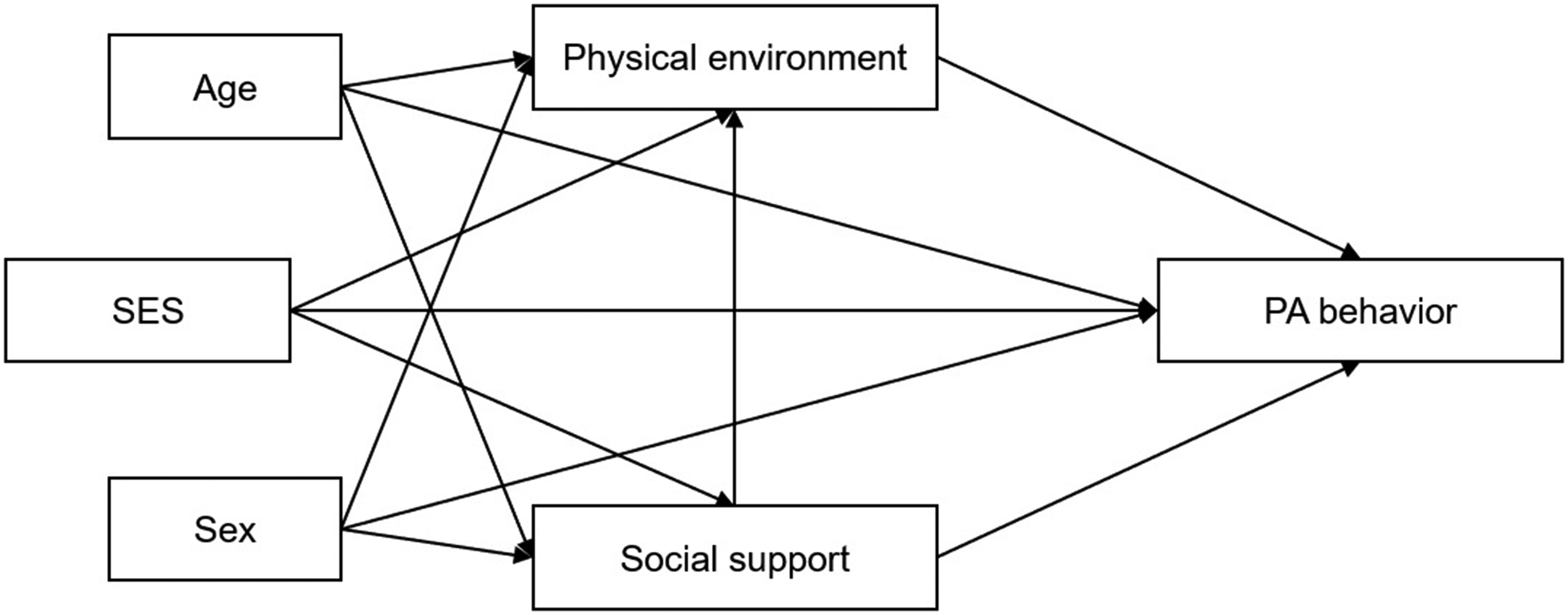
Assumed relations of the socio-structural determinants of physical activity behavior. SES = socioeconomic status; PA = physical activity.
The contribution of this study to current research is threefold: First, we looked in more detail at the direct and indirect influences of socio-structural factors on the PA behavior of children and adolescents. Second, and in contrast to previous research which has frequently relied on self-reported measures of PA (Nigg et al., 2020), we used device-based measurement methods as they can more reliably depict actual PA (Burchartz et al., 2020a; Slootmaker et al., 2009). Third, since age may play a role in the extent to which SES, social support, and physical environment influence PA behavior (Biddle et al., 2011; Ding et al., 2011; Lau et al., 2016), we considered the socio-structural influences separately for children and adolescents. The results help to gain reliable information on how to develop effective measures and interventions to enhance PA in young age groups by taking socio-structural determinants into account.
Methods
Sampling and procedure
Data from the Motorik-Modul study (MoMo) were used which is a subsample of the German Health Interview and Examination Survey for Children and Adolescents (KiGGS). MoMo examines the associations between physical fitness, health, and PA levels in a representative sample of children and adolescents living in Germany by combining a cohort design with a longitudinal design (Woll et al., 2017). Until now, four waves of data collection have been conducted: baseline (2003–2005), wave 1 (2009–2012), wave 2 (2014–2017), and wave 3 (2018–2022). In each wave, panelists participated repeatedly and new cohorts of children and adolescents aged from 4 to 17 years were added. During each wave, a nationwide, stratified, multi-stage sample was drawn in three stages. First, 167 sample points, stratified according to their level of urbanization and geographic distribution (BIK classification system), were selected from an inventory of German communities. Second, an age-stratified sample of randomly selected children and adolescents was drawn from the official directories of local residents forming the KiGGS study sample (Kurth et al., 2008). Third, children and adolescents aged 4–17 years from the KiGGs study sample were randomly selected to form the MoMo subsample for each wave. The study was approved by the Charité Universitätsmedizin Berlin ethics committee and the Federal Office for the Protection of Data and was conducted in accordance with the Declaration of Helsinki.
For this study, we used cross-sectional data from MoMo wave 2 (total n = 3708). We could not include data from the baseline and wave 1 because PA behavior was measured only by self-report data. All participants of MoMo wave 2 were asked whether they would also like to take part in the accelerometer measurement on a voluntary basis. Due to dropout for non-agreement and technical reasons (detailed information can be found in Burchartz, Manz et al., 2020b), device-based measured PA data was available for 2328 subjects.
Measures
Socio-structural determinants
The three socio-structural determinants SES, social support, and physical environment were measured by self-report questionnaires. Children up to the age of 10 completed the questionnaire together with their parents. Up to the age of 15, the parents were present during the survey and were available to answer any questions. From the age of 16, the participants completed the questionnaire on their own. The individual constructs are described below.
We refer to Lampert et al. (2014) in defining the SES score as a composite of parental education, occupational status, and net income of the household. It is based on the social class index developed by Winkler and Stolzenberg (1999). Each dimension can be assigned 1–7 points so that the total score ranges between 3 and 21. To calculate the SES score, the respective highest values of the educational and occupational status of either the mother or the father and the score for the net income of the household are summed up (Lampert et al., 2014). For the analysis, we divided the metric SES score into five quintiles.
Social support regarding PA was measured by a scale consisting of eight items covering parental support (PAS) (five items) and peer support (PES) (three items). The items were answered on a four-point rating scale. We built a social support index from the individual items by summing up the responses and dividing them by eight (number of items). The higher the index, the higher the participant's perception of parental and peer support. The items and rating scales are displayed in Table 1.
Items of social support and physical environment scales.
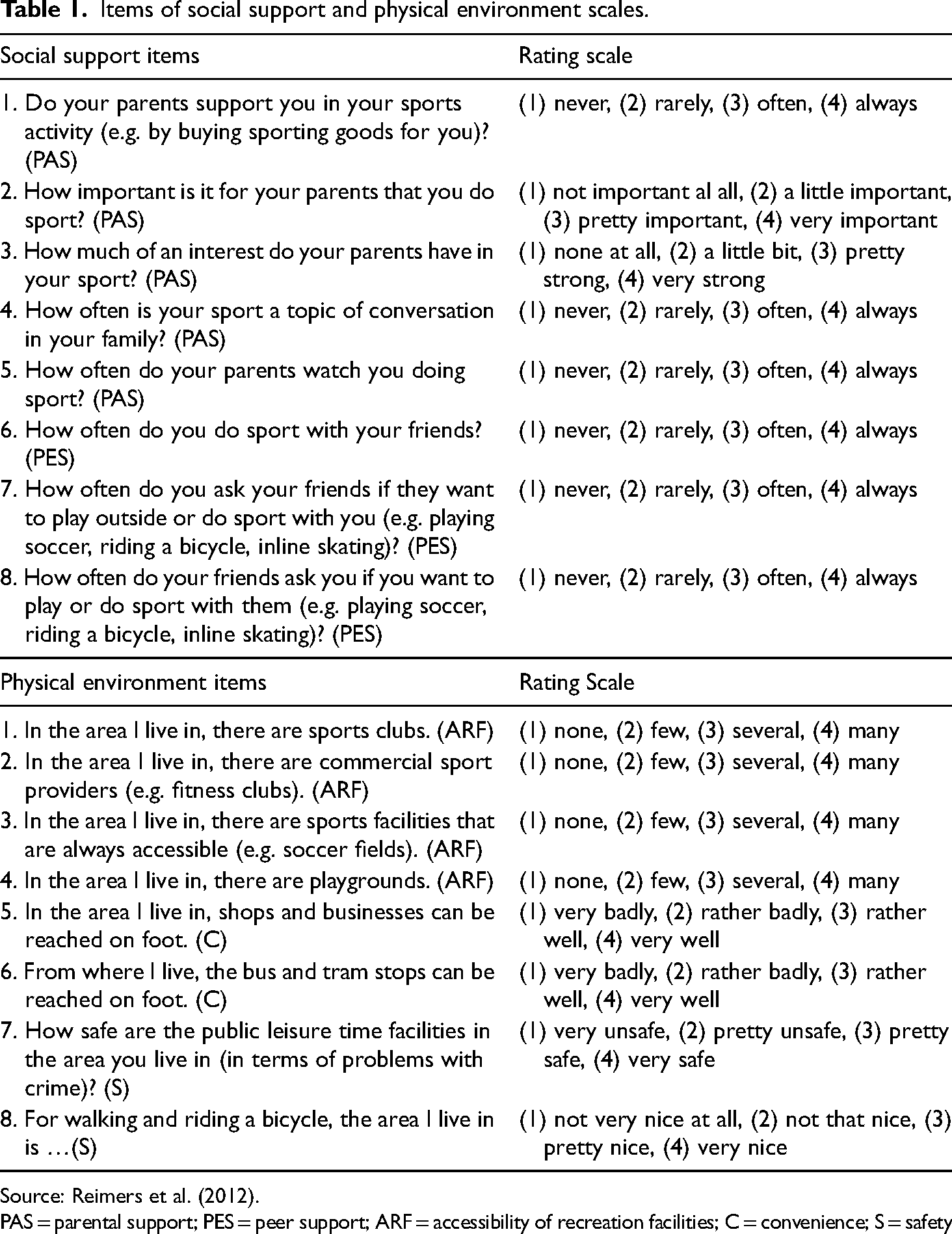
Source: Reimers et al. (2012).
PAS = parental support; PES = peer support; ARF = accessibility of recreation facilities; C = convenience; S = safety
Physical environment was measured on a scale consisting of eight items that covered the accessibility of recreation facilities (ARF) (four items), convenience (C) (two items), and safety (S) (two items) of the residential environment. The items were answered on a four-point rating scale. We built a physical environment index by summing up the answers to the individual items and dividing them by eight (number of items). The higher the index, the higher the perception of a PA-friendly environment. The items and rating scales are also displayed in Table 1.
A study testing the social support and physical environment scale found satisfying results for the construct validity and reliability of the two scales (Reimers et al., 2012).
Individual attributes measured were age and sex, with girls coded 0 and boys coded 1. As motor tests are also carried out as part of MoMo, the biological sex is asked for in this study, which is relevant for the respective analyses.
Physical activity behavior
PA behavior was measured device-based. For this, ActiGraphGT3X+/wGT3X-BT accelerometers (Actigraph, LLC, Pensacola, FL, USA) were used. Participants from the age of 6 to 17 years were instructed to attach the accelerometer to their right hip and wear it continuously for seven consecutive days during waking hours, excluding times during water activities or sleep. Data were sampled at a rate of 30 Hz, retrieved as ActiLife GT3X raw device files, and stored for analysis offline. These GT3X files were subsequently aggregated into ActiGraph count-based AGD files with a 1-s epoch length, and then converted into a format compatible with Matlab for further processing. Data were considered valid if the device was worn for at least eight hours on four weekdays and one weekend day. For the analysis, we included the daily MVPA minutes. In accordance with Ainsworth et al. (1993), MVPA comprises metabolic equivalent of task values of 3.0 or higher. MVPA minutes were calculated using the age appropriate Cut-Point algorithms by Evenson and Romanzini (Evenson et al., 2008; Romanzini et al., 2014). Further technical and methodological details of the assessment are described elsewhere (Burchartz et al., 2020b, 2021).
Data analysis
Data were analyzed using IBM SPSS version 28.0 (IBM Corp., 2021) and AMOS version 28.0 (Amos Development Corp., 2021).
We used descriptive statistics to analyze all variables and confirmed correlations between the variables using Pearson’s correlation coefficient.
We utilized path analysis, a specific type of structural equation modeling, to test the theoretically built model and calculate the path coefficients. This analysis is a powerful method to simultaneously consider the direct and indirect influences of various factors, consistent with the idea of social ecological models (Kline, 2016; Santiago-Torres et al., 2016).
We analyzed the direct influence of physical environment (as an indicator of the infrastructure), social support (as an indicator of the relationship structure), and SES (as an indicator of the structures of social inequality), representing the socio-structural factors of interest, on PA behavior. Furthermore, we analyzed the indirect influence of SES on PA behavior via physical environment and social support. Age and sex were added as control variables. Therefore, SES, age, and sex serve as exogenous variables while physical environment, social support, and PA behavior were endogenous variables. Normality assessment of all variables revealed no significant deviations from the multivariate normal distribution. We analyzed two models by using the full-maximum likelihood estimation, one for children (6–10 years) and one for adolescents (11–17 years). Chi-square test, root mean square error of approximation (RMSEA), and comparative fit index (CFI) were used to examine how well the data fit the models. An insignificant p-value for the Chi-squared statistic, a RMSEA of ≤0.06, and a CFI of ≥0.95 are considered to indicate a good fit of the hypothesized model to the observed data (Barrett, 2007; Hooper et al., 2008; Hu and Bentler, 1999). In all analyses performed, p values < 0.05 were considered statistically significant.
Due to model non-convergence, we analyzed patterns of missing data. Cases with missing data for the variables social support and SES were deleted listwise due to unit nonresponse, resulting in 2157 cases. The analysis of missing data for the physical environment variable did not reveal a consistent pattern (individual item nonresponse). Therefore, missing values for this variable were estimated using the expectation–maximization algorithm. There were no significant discrepancies between the estimated means and the means of all values. After restricting the sample to children and adolescents aged 6–17 years, the final sample consisted of N = 2134 participants, of whom N = 676 were children aged 6–10 years and N = 1458 were adolescents aged 11–17 years. All of the participants completed the questionnaire and took part in the accelerometer measurement.
Results
Descriptives
Of the children aged 6–10, 49.7% were girls and 50.3% were boys, respectively. The sample of adolescents aged 11–17 years consisted of 54.4% girls and correspondingly 45.6% boys. The means, standard deviations, and confidence intervals for the means of the remaining variables for the two age groups are displayed in Table 2. The daily MVPA minutes by age and sex are displayed in Figure 2.
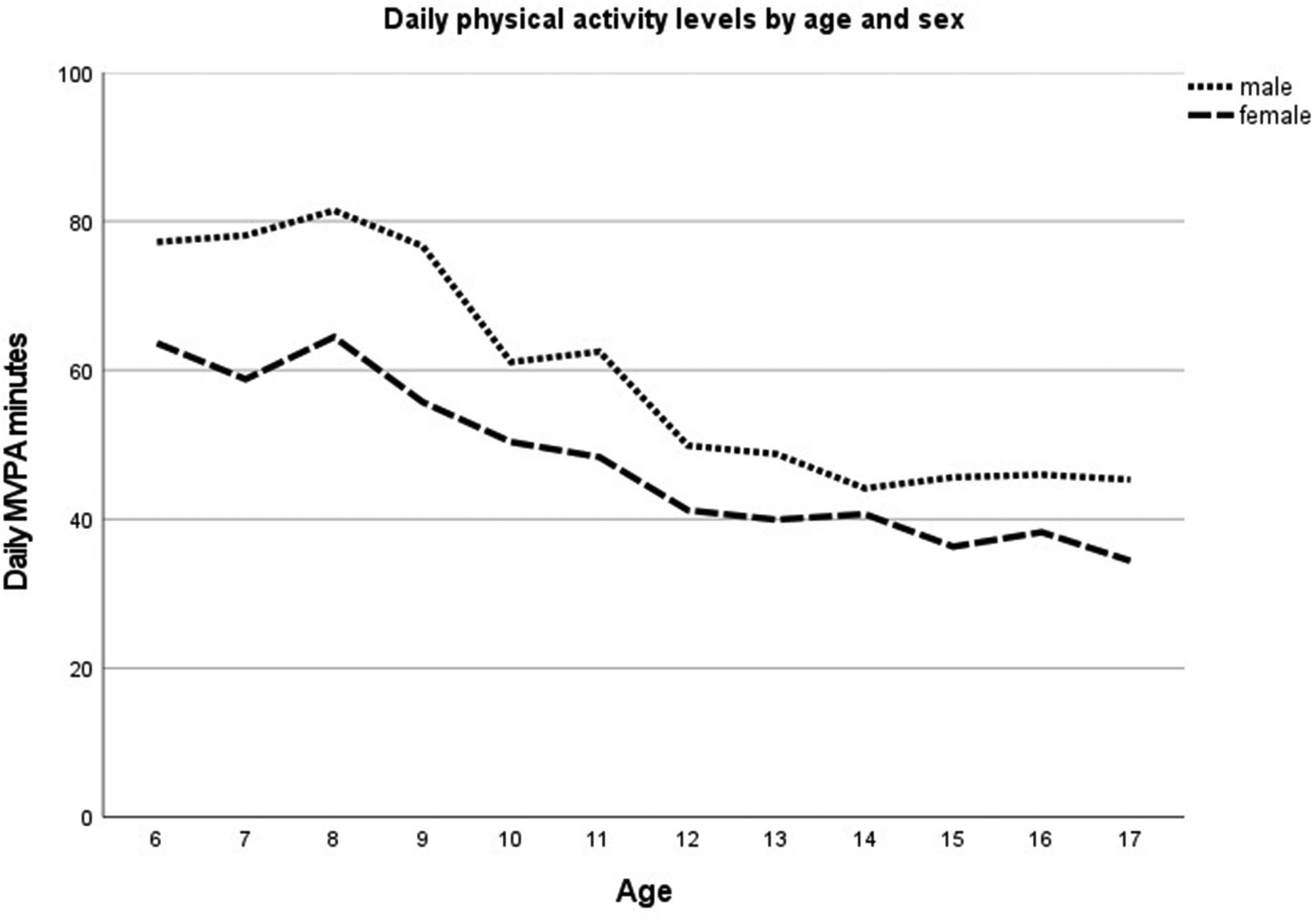
Daily physical activity levels by age and sex. MVPA = moderate-to-vigorous physical activity.
Means, standard deviations, and 95% confidence intervals of study variables.
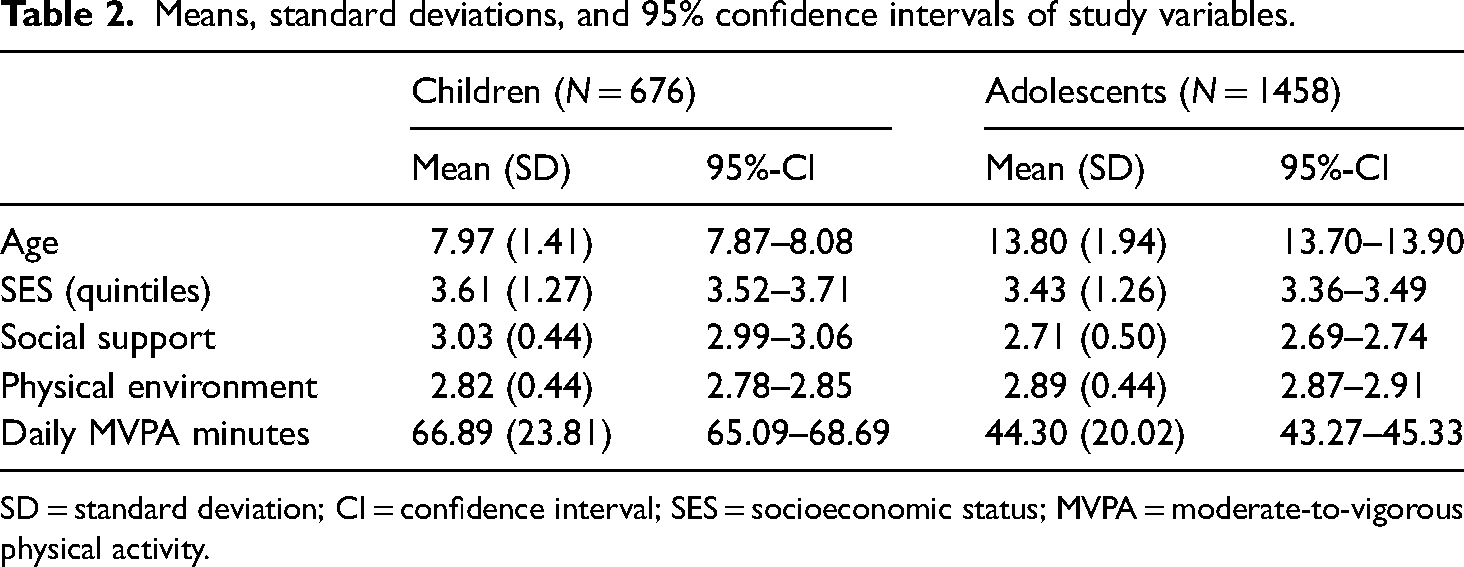
SD = standard deviation; CI = confidence interval; SES = socioeconomic status; MVPA = moderate-to-vigorous physical activity.
The correlations between the variables of interest are presented in Table 3 for children and adolescents, respectively.
Correlation matrix of study variables for children (6–10 years) and adolescents (11–17 years).
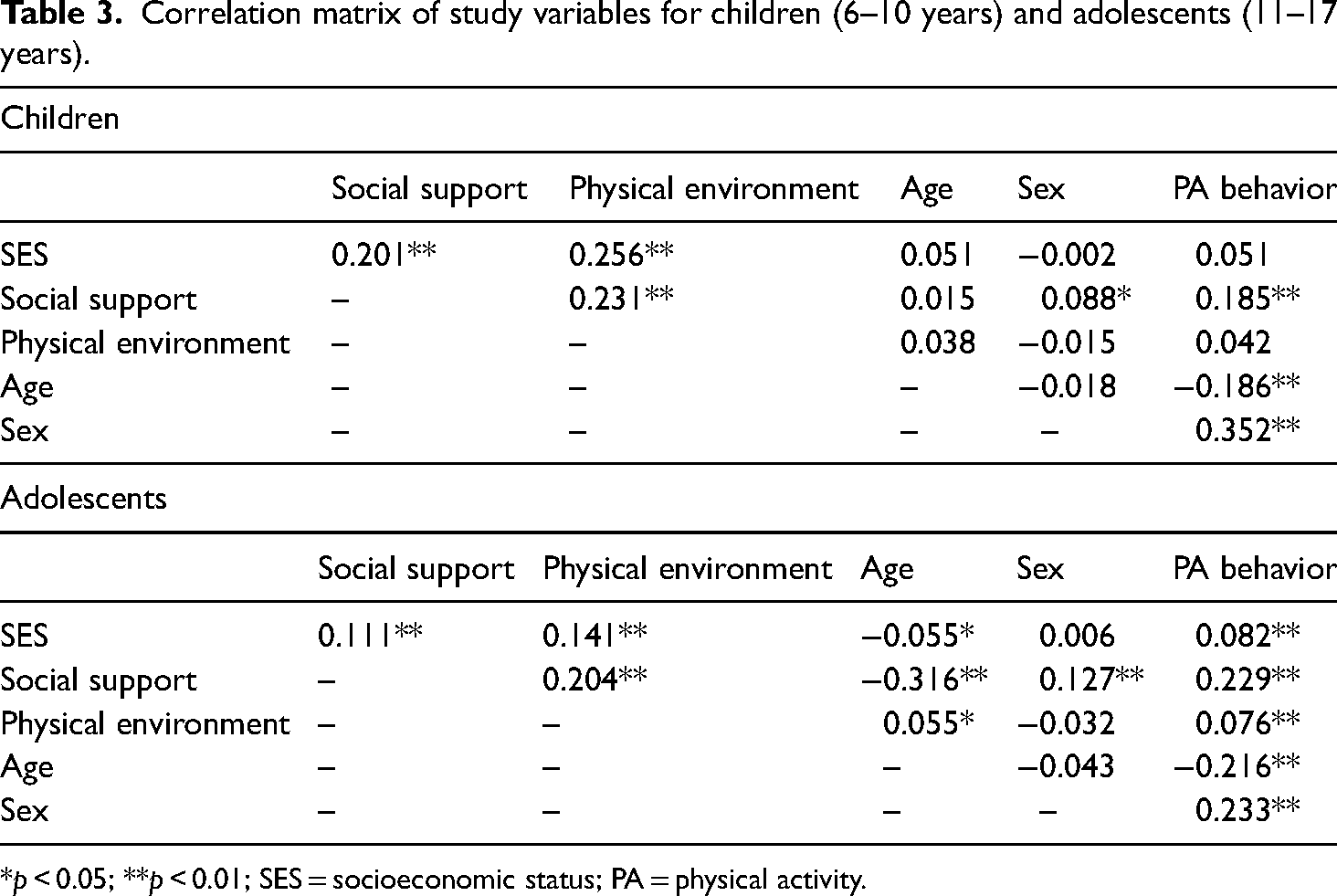
*p < 0.05; **p < 0.01; SES = socioeconomic status; PA = physical activity.
In both age groups, the correlations show similar patterns that are mostly consistent regarding the hypothesized model. However, as opposed to adolescents, children's PA behavior was not significantly correlated to SES and physical environment. The correlations range from small to moderate.
Path analysis
Children
The results of the path analysis for children aged 6–10 years are presented in Figure 3. Of the socio-structural determinants examined, only social support had a significant direct effect on PA behavior (β = 0.15, p < 0.001). In addition, social support significantly influenced the perceived physical environment (β = 0.19, p < 0.001). SES had an indirect effect on PA behavior via social support (β = 0.20, p < 0.001) but only a small and non-significant direct effect. Furthermore, SES had a significant effect on physical environment (β = 0.22, p <0.001), which in turn had no significant effect on PA behavior. The largest effect in the entire model was for the influence of sex on PA behavior (β = 0.34, p < 0.001), indicating that boys engaged in nearly 16 minutes more MVPA per day than girls. Sex also significantly influenced social support (β = 0.09, p < 0.05) with boys perceiving more social support for sport and PA from family and friends than girls.
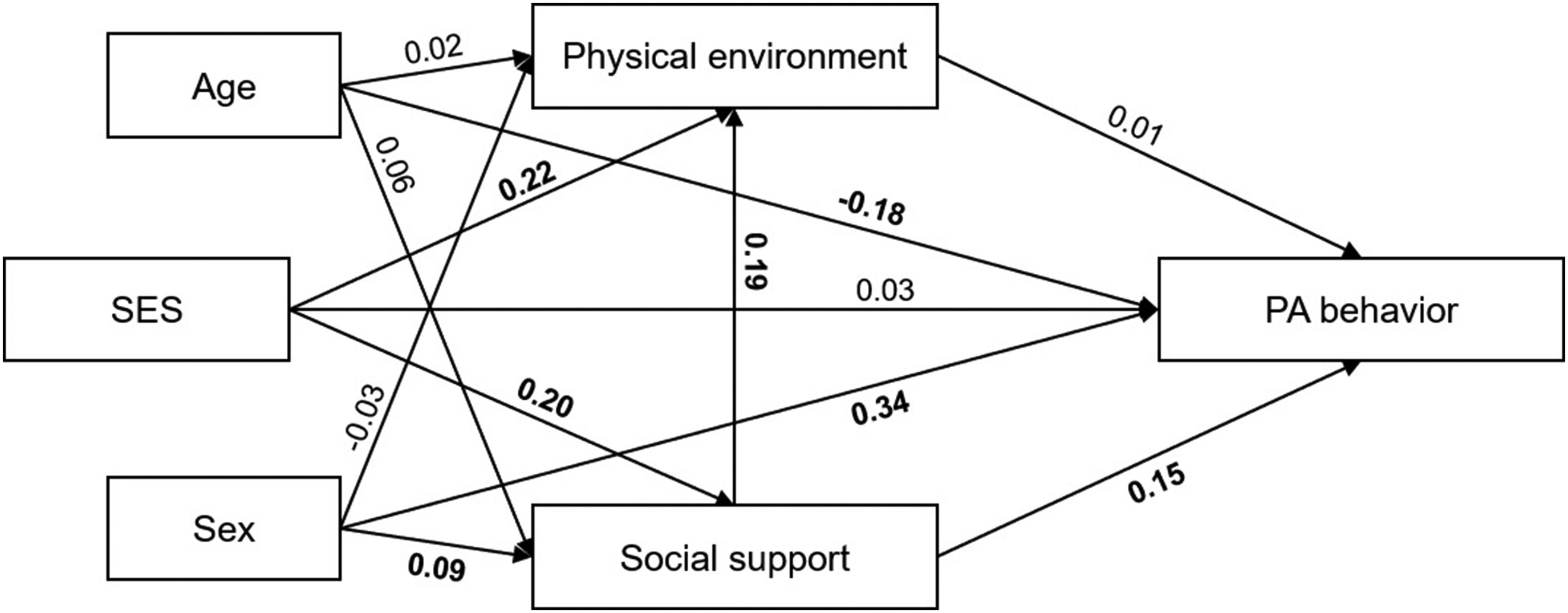
Results for socio-structural determinants of physical activity in children (6–10 years). Standardized regression weights are presented next to the arrows. Significant values with p < 0.05 are marked in bold. SES = socioeconomic status; PA = physical activity.
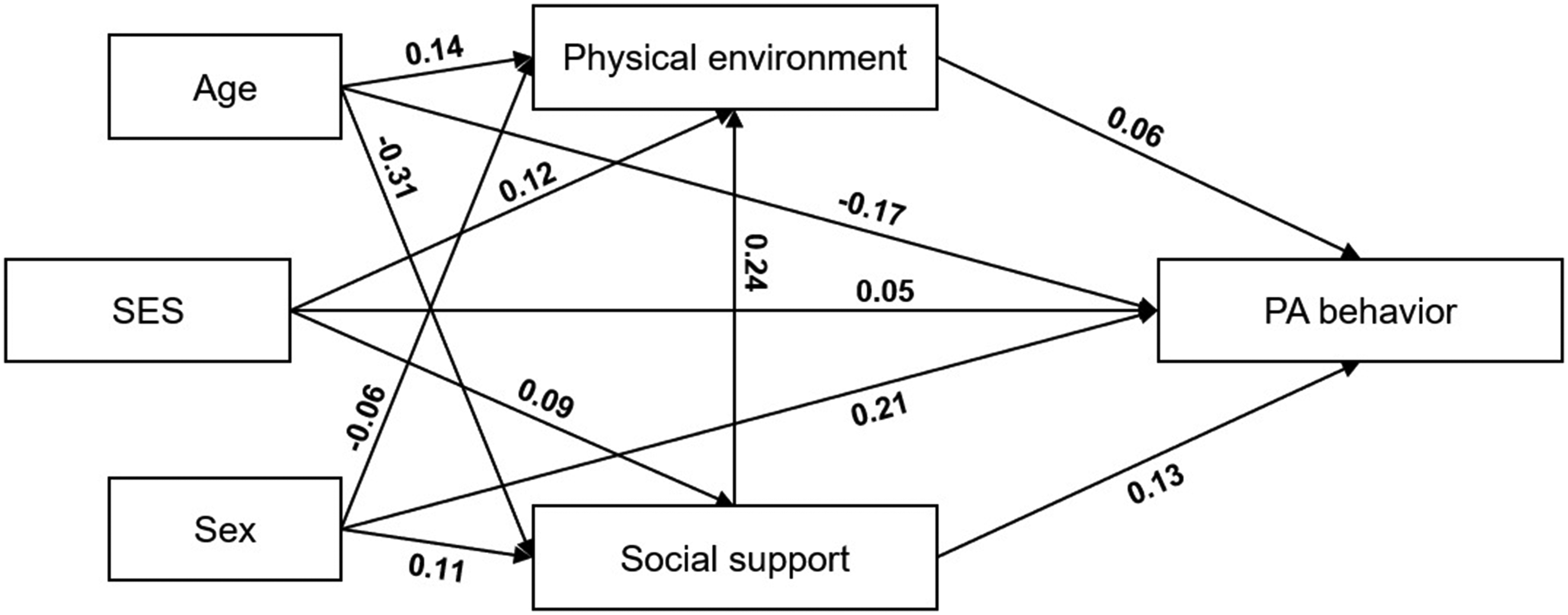
Results for socio-structural determinants of physical activity in adolescents (11–17 years). Standardized regression weights are presented next to the arrows. Significant values with p < 0.05 are marked in bold. SES = socioeconomic status; PA = physical activity.
When examining the goodness-of-fit indices, the Chi-squared statistic did not deviate from zero (χ2 = 1.98; df = 3; p ≥ 0.05) and CFI (1.00) and RMSEA (0.00) indicated an almost perfect model fit.
Adolescents
For adolescents, all hypothesized relationships were significant. The results are presented in Figure 4. Among the socio-structural determinants, social support had the strongest direct effect on PA behavior (β = 0.13, p < 0.001) and also influenced PA behavior indirectly via the physical environment (β = 0.24, p < 0.001). SES had a direct effect (β = 0.05, p < 0.05) and an indirect effect on PA behavior via the physical environment (β = 0.13, p < 0.001) and social support (β = 0.09, p < 0.001). Among adolescents, boys perceived more social support for sport and PA than girls (β = 0.11, p < 0.001). In contrast, they perceived their environment as less PA friendly than girls (β = –0.06, p < 0.05). Similar to children, adolescent boys engaged in approximately 8.5 min more MVPA per day than adolescent girls. With increasing age, adolescents perceived their environment as more PA friendly (β = 0.14, p < 0.001). However, perceived social support for PA and sport from friends and family decreased with age (β = –0.31, p < 0.001).
When examining the goodness-of-fit indices, the Chi-squared statistic did not deviate from zero (χ2 = 7.18; df = 3; p ≥ 0.05) and CFI (0.99) and RMSEA (0.03) indicated a good model fit.
Discussion
The purpose of this study was to analyze the direct and indirect influences of the socio-structural determinants SES, social support, and physical environment (survey data) on the PA behavior (device-based data) of children and adolescents. They represent various dimensions of societal structures (Esser, 1999) that are reflected in the social ecological model (Kok et al., 2008; Sallis et al., 2000). We assumed that, apart from vertical and horizontal factors of social inequality, the family situation and the living environment play an important role, when it comes to PA participation (Lamprecht and Nagel, 2022).
The findings of this study indicate that the influence of SES on PA behavior varies across different age groups. Among children, there appears to be no direct impact of SES on PA behavior. For adolescents, the direct effect of SES on PA behavior is relatively small. In contrast to previous studies that found significant differences in SES-related disparities between organized and unorganized sport and PA (Andersen and Bakken, 2019; Rittsteiger et al., 2021), our study found that children aged 6–10 years had similar activity levels using device-based measures of PA across settings, regardless of their parents’ SES. This suggests that high parental SES does not necessarily lead to higher PA levels in this age group. Nevertheless, as hypothesized, SES indirectly influenced PA behavior through social support for both children and adolescents. Our results indicate that children and adolescents from families with higher parental SES receive more support from their family and peers, which positively impacts their PA behavior and leads to increased activity levels. This indirect influence was more pronounced among children compared to adolescents, highlighting the crucial role of social inequalities and parental influence on PA behavior, especially in younger age groups (Drenowatz et al., 2010; Rhodes et al., 2020).
In addition to social support, SES also influenced children's and adolescents’ perceptions of their physical environment. This is consistent with our assumption that individuals whose parents have a higher SES tend to reside in environments with more sports facilities and higher safety standards (Bolte et al., 2010; Molina-García et al., 2017). These environmental factors were found to be more influential regarding PA behavior among adolescents compared to children. Adolescents, being more independent and having a larger mobility radius, may have a better awareness of the PA-friendliness of their physical surroundings, which influences their PA levels. They can take advantage of PA opportunities in their neighborhoods, such as commuting to school, visiting friends, or engaging in leisure activities independently (Schoeppe et al., 2013; Shaw et al., 2015).
In sum, SES may only have a small direct effect but shows a double indirect effect via social support and physical environment on the PA behavior of adolescents. The indirect effect via social support is also evident in children. This is in line with the social ecological model (Kok et al., 2008; Sallis et al., 2000) which views individual behavior as a result of various factors spanning intrapersonal, interpersonal, organizational, community, and policy domains. The results demonstrate the complex interplay of individual, social, and environmental conditions regarding the PA behavior of children and adolescents. To promote PA among socially disadvantaged groups, specific low-threshold offers are needed at the community level that are inviting and accessible, especially for this target group (Tandon et al., 2021). Community cooperation networks of local sports, youth, health, and social organizations, representing the different levels of the social ecological model, can be a good starting point for tackling structures of social inequality (Dobbels et al., 2018; Wäsche et al., 2021; Wolbring et al., 2022). They are aware of the needs of the relevant population groups and can jointly develop suitable offers.
Based on our results, social support was the only socio-structural determinant that had a direct effect on PA behavior in both age groups (Jekauc et al., 2019). The importance of social support compared to other determinants of children's and adolescents’ built and social environment was also found in previous studies (Fritsch et al., 2023; Prochnow et al., 2023). Especially when considering device-based measures of PA, social support was the most consistent determinant of PA behavior (Sallis et al., 2002).
Referring back to the dimensions of structural factors influencing individuals and their behavior (Esser, 1999), interventions to enhance PA levels in young age groups should address the social structure and, in particular, the relationship structure in which children and adolescents are embedded. Social support evolves from networks of social relations characterized by mutual support and acknowledgment, also referred to as social capital (Coleman, 2000; Ryan et al., 2008). In addition to social support, other forms of social capital include access to relevant information and economic resources (Schulz et al., 2017). Previous research has shown that high levels of social capital can even compensate for socioeconomic disadvantage (Coleman, 2000; Putnam, 2001) and physical environmental factors (Alfonzo, 2005) in the context of health and PA which is in line with our study results. While social and emotional support from close relationships with family and friends is defined as “bonding” social capital, formal relationships with other social groups to attain information are defined as “bridging” social capital (Putnam, 2001). If children and adolescents are embedded in social networks with high levels of PA among network members, they are also more active themselves (de la Haye et al., 2011; Prochnow et al., 2020). Thus, network-based approaches to further investigate “bonding” social capital as a determinant of PA could be helpful to further understand the underlying mechanisms. Our results show that boys perceive more social support than girls. This is in line with previous research (Reimers et al., 2019) and may be due to gender stereotypes and social norms. For example, boys might receive greater encouragement from significant role models to participate in sport and PA, as these pursuits are typically associated with masculine behavior, whereas such encouragement may be less prevalent among girls (Dixon et al., 2008; Hardin and Greer, 2009). To achieve gender equality, it would be particularly important to identify how girls can benefit from the advantages of social capital as a source of social support in terms of their PA behavior.
Social support from family and peers also influenced both children's and adolescents’ perceptions of the physical environment. Thus, if children and adolescents receive support regarding their PA behavior, they also have a better perception of the PA friendliness of their environments. There is some evidence regarding the interaction between social and built environments when it comes to PA behavior (Colabianchi et al., 2019; Loh et al., 2019). However, a recent review also found inconsistent associations between these two determinants (Prochnow et al., 2023). The results of our study provide further evidence that the perceptions of the residential environment are socially determined. This is in line with the approach of Lefebvre (1991) and Löw (2016) who do not see the infrastructure of a society as objectively given but as socially constructed. Accordingly, spaces do not exist independently of the members of a society, but are the product of their actions and relationships with each other.
Our main focus was to investigate the direct and indirect influences of socio-structural factors on the PA behavior of children and adolescents. However, among all variables, age and sex had the largest effect on PA behavior for both age groups. The importance of these two variables with regard to PA levels of children and adolescents has also been shown in previous studies (Sterdt et al., 2014). Our results indicate that there is a strong need to develop measures aimed at PA promotion especially for girls to address the gender bias in the practice of PA. As PA levels decrease with age and in line with previous studies (Reimers et al., 2019), there should be a focus on interventions designed especially for adolescent girls.
One of the major strengths of our study is the large sample size of a nationally representative cohort, which allowed us to analyze the interplay of individual socio-structural determinants in relation to the PA behavior in children and adolescents. Furthermore, in contrast to many other studies, we did not measure PA levels through self-report survey methods, but through objective device-based measurement methods. The accelerometers were worn during the entire waking hours. Due to the objective measurement, there are no memory gaps as with self-report measures, which is particularly important regarding young age groups. In children, the often irregular and unstructured activities in everyday life are very difficult to recall from memory or to assess by parents (Müller et al., 2011). The device-based measurement allowed us to more reliably reflect the actual PA behavior of children and adolescents across settings (Burchartz et al., 2021; Slootmaker et al., 2009). However, some limitations should be mentioned. While PA behavior was measured device-based, the rest of the data collected is self-reported, which may inherently be subject to some degree of recall bias. In particular, the physical environment could be assessed objectively. However, subjectively collected data, as in our study, provide a more comprehensive picture of how the environment is perceived and experienced (Bittencourt et al., 2015; Lin and Moudon, 2010). Another limitation is that we are dealing with cross-sectional data collected at a single survey time point, so no causal conclusions can be drawn from on the results. Furthermore, as the data come from a longitudinal study starting in 2003, only binary data on sex were collected at the time of the survey. Non-binary gender has only been collected since 2018.
Conclusions
This study contributes to current research by providing more insights into the direct and indirect effects of socio-structural determinants on the PA behavior in children and adolescents. Based on the social ecological model and the dimensions of societal structures, we were able to show that vertical and horizontal factors of social inequality play an important role in the PA behavior of children and adolescents but that social and environmental conditions should also be taken into account. The analysis can help to gain reliable information on how to develop effective measures and interventions to enhance PA by taking these influential factors into account. In particular, our results emphasize the importance of social support evolving from close family and friendship networks, also referred to as bonding social capital, for PA levels among young age groups. Interventions aimed at increasing PA levels in children and adolescents should therefore focus on components of social support from family and peers. Structures of social inequality played an indirect role regarding the PA behavior in both age groups. To create equal health opportunities, appropriate policies and services at the level of the physical environment and social integration are needed to enable socially disadvantaged children and adolescents to participate in sport and PA.
Footnotes
Declaration of conflicting interests
The authors declared no potential conflicts of interest with respect to the research, authorship, and/or publication of this article.
Funding
The authors disclosed receipt of the following financial support for the research, authorship, and/or publication of this article: This work has been developed within the “Motorik-Modul Study (MoMo)” (2009–2022): Physical fitness and PA as determinants of health development in children and adolescents. MoMo is funded by the Federal Ministry of Education and Research (funding reference number: 01ER1503) within the research program “long-term studies” in public health research.
