




Abstract
Using data from an online survey of 211 heterosexual and 148 sexual and gender minority-identifying cyclists, this article examines the attitudes of both sexual and gender majorities towards sexual and gender minorities as well as the experiences of sexual and gender minorities in relation to each other, within the sport of cycling. The results show a culture of acceptance for LGB athletes with heightened antipathy towards transgender cyclists. However, this variance is not as large as might be expected given the media attention on transgender athletes in cycling, and sport more broadly. It therefore appears that the transgender social movement is drafting closely behind LGB inclusion within this sport.
Over the past three decades, there has been a rapid increase in support towards sexual minorities in Anglo-American cultures (Pew, 2020). This is a shift that has been affected by both cohort replacement and attitudinal change within cohorts, trends that continue into the current epoch (Kranjac and Wagmiller, 2022). The causality of these shifting attitudes is multifactorial (McCormack and Anderson, 2014), and evidence suggests that the shift is progressive, but not uniform across the demographics of gender, class, age, race or educational obtainment (Adriaenssens et al., 2021; Southall et al., 2011). Important to this analysis, another hypothesised dampening variable is fraternisation with conservative, masculine institutions, such as sport.
Examining the relationship between homophobia and institutionalised, competitive team-sport is not easy. This is because homophobia decreases unevenly, and because, early into a social movement, a framework of modern prejudice (Bonilla-Silva, 2003) suggests that there may be a lag between overt attitudes of majorities and improved experiences of minorities. Applying research to the institute of sport is further complicated by the scarcity of lesbian, gay, bisexual and transgender (LGBT, hereafter) athletes to study, as well as the geographical, international variance that emerges from research on them.
Another problem with research on LGBT athletes is that their relative scarcity often leads researchers to lump lesbian/gay women, gay males, bisexual males, bisexual females, transgender males and transgender females into one category – LGBT – as if there were no differences in antipathy or experience of outcome for them (e.g. Worthen, 2013). LGBT is an imprecise fit of disparate minority groups that vary across gender and sexuality issues.
Transgender issues are fundamentally issues of gender, and not sexuality; though this relationship is not mutually exclusive. For example, studies of male minority sexualities will vary from female minority sexualities because of the normative expectations of gender (Anderson et al., 2016). The growing social friction over the inclusion of trans women athletes in women's sport (Scovel et al., 2022) makes this gender-variance salient.
These variances make a deft reading of literature related to LGBT athletes (in and out of the closet) complicated. Thus, we first highlight that there are very few formal studies of the relationship between bisexual people and sport (see House et al., 2022). Next, we note that studies of transgender people in sport were not conducted prior to the 21st century. Accordingly, we first present data related to the experiences of gay and lesbian athletes.
Since the turn of the 21st century, there has been a significant expansion in the area of research related to both sexual and, increasingly, gender minorities in sport. Much of this contemporary research has been conducted in popular team-based sports, such as football (e.g. Cashmore and Cleland, 2012) and rugby (e.g. Muir et al., 2021), with perhaps less investigation into more individual sports (c.f. Dashper, 2012; Letts, 2021).
In the contemporary social zeitgeist, research suggests that sport and physical activity settings have seen a decline in homophobia and biphobia (e.g. Anderson et al., 2016; Magrath et al., 2017; House et al., 2022), with sexual minority athletes reporting far more positive experiences of coming out than seen in the late 20th century (Gaston and Dixon, 2020; White et al., 2021). Furthermore, whilst attitudes towards trans people in sport are less positive than they are in comparison with LGB people (Cunningham and Pickett, 2018), research has reported that trans (female-to-male) experiences in sport are also starting to be more positive (Ogilvie, 2017), despite the persistence of various barriers to participation (Buzuvis, 2012; Travers, 2017, 2018).
Most recently, we draw attention to yet to be academically published findings in North America that examined the experiences of those who have played out of the closet on their high school and/or university team settings. From a sample of 820 LGBT+ student-athletes, all of whom have come out to at least one teammate whilst on the team, 95% of the athletes surveyed reported their teammates’ responses to them coming out were overall ‘neutral’ to ‘perfect’ (Zeigler and Buzinski, 2021). With regard to gender minorities, unpublished statistics from this research show that transgender athletes lagged a few percentage points behind on various measures with regard to positive experiences.
Related to this, Knoester et al. (2023) recently reported on findings from the US National Sports and Society Survey, where they examined public opinions about transgender athletes’ rights, rights for athletes with varied sex characteristics, sex testing and gender segregation in sports. From a sample of 3993 US adults, findings showed that 56% of the respondents somewhat or strongly agreed with transgender athletes’ right to choose which gender they compete with. It was also reported that 20% somewhat or strongly agreed that athletes with varied sex characteristics should not be allowed to compete with females, and 54% somewhat or strongly agreed that gender segregation in youth sports is problematic. These findings suggest that the well-documented increase of acceptance and inclusion of LGB communities into sport and society perhaps is starting to spread to the trans communities too. Yet, we acknowledge this is complex, and issues remain that cannot be brushed over.
Cycling and LGBT athletes
Despite rising global engagement in cycling as sport (Rooney et al., 2020), academic attention around sexuality and gender issues has not reached cycle sports. Important here is that whilst cycling is not often understood as a sport in which principles of orthodox masculinity are valued and practiced, research has suggested this is the case. Mackintosh and Norcliffe (2007: 161) discuss early male cycling pursuits in the 19th century whereby riders took ‘substantial risks to demonstrate their prowess’, and it is suggested that these behaviours were perhaps the orchestrators of the ‘badass’ masculinity seen in sport – particularly in cycling. Hardwicke (2023) discusses how early cycling practices were shaped by the socio-cultural forces and gender relations in the 19th century leading to competitive road cycling being developed as a sport steeped in notions of orthodox masculinity. This research suggests cycling developed in a culture similar to other popular Western sports, in which a strict archetype of masculinity was esteemed, with notions of femininity being eschewed, leading to others (women and homosexuals) being marginalised.
However, contemporary socio-cultural research on cycling as serious leisure and/or as sport is limited (Falcous, 2017). Although some research has focused on gender in cycling practices in competitive and leisure settings (Barrie et al., 2019; Dellanebbia, 2020; Ayala et al., 2021), no prior research has focused on attitudes of sexual and gender majorities towards sexual and gender minorities, or the experiences of sexual and gender minorities in relation to each other, within the sport of cycling.
This research is important, as competitive cycling has limited visible engagement with positive LGBTQ+ discourses, and anecdotal reports of homophobia are common in the sport (The British Continental, 2021a, 2021b; Outsports, 2021a, 2021b). Whilst there remain, at the time of writing, no ‘out’ gay male professional cyclists at the very top level of the sport, Justin Laevens came out as the world's first out gay male professional cyclist in early January 2021 (Cycling News, 2021). All previous gay male professional cyclists have come out after retirement from the sport. On coming out, Laevens commented ‘I didn’t find it difficult to express myself, but I did in sport, because I don’t know any (cyclist) who is gay’ (Outsports, 2021a, 2021b). Later in 2021, Clay Davies publicly came out making him the first elite male competitive road cyclist to do so in the UK, and he was vocal in media interviews around the lack of support from governing bodies for LGBTQ+ issues (Outsports, 2021a, 2021b). Furthermore, very little media commentary, and no academic research, exists on the experiences of lesbian and bisexual cyclists but, within recreational and leisure settings, concerns have been raised by advocacy groups over diversity and inclusion in cycling, particularly pertaining to sexual minorities (Pride Out, 2021).
If we consider the situation for trans athletes in cycling, a similar story is present amongst anecdotal reports and media reporting. The Union Cycliste Internationale (UCI), cycling's world governing body, policy currently allows for transgender women to participate in female events if eligible according to the criteria outlined in the UCI policy (UCI, 2022). This differs from other international governing bodies, such as the World Athletics and World Aquatics, which have banned trans women competing in female events. However, British Cycling, the national governing body for Great Britain, has recently been under public scrutiny for the retraction of their transgender and non-binary policy, which prevented transgender women from competing in female events (Becket, 2022).
As debates around policy continue across sport, trans issues in sport are increasingly reported in popular media (Cashmore et al., 2019; Thorpe et al., 2023), and cycling has also been prominent in this context. This is especially so with Austin Killip recently becoming the first transgender athlete to win a UCI women's stage race at the Tour of the Gila in New Mexico (BBC Sport, 2023a, 2023b), which has triggered the UCI to ‘re-open consultation’ on its transgender policy (BBC Sport, 2023a, 2023b). Much media attention has also focused on Emily Bridges, a trans woman cyclist that was withheld from participating in the women's British National Omnium Championship in 2022, after the UCI ruled she was ineligible (Ingle, 2022). American cyclist, Rachel McKinnon, a transgender woman who won gold at the 2018 UCI World Masters’ Track Cycling Championships also received much media attention. Her success at the top level of the sport has caused much social friction, with McKinnon being on the receiving end of negative media press, hateful social media messages, and even death threats (Webb, 2019).
The discourse around this is centred on ideas of ‘inclusion versus fairness’, particularly with respect to trans women and perceptions of biological advantage. Whilst it is not in the scope of this article to explore this in detail, it is important to highlight that the perceived advantage held by trans women is complex and remains subject to debate within the scientific community and cannot be viewed common-sensually as a ‘clear cut’ issue (Harper et al., 2021). Regardless of the ongoing debates around biological advantage, the backlash has been widespread demonization and often insensitive media reporting around trans women competing in cycling. Furthermore, the issue within sport has acted as a pedestal for cultural, and importantly political, discussions around gender writ large, and has attracted journalists, politicians, policy makers, athletes, scientists and the public to voice their opinions on the subject (Thorpe et al., 2023).
Taken together, these cultural events point towards the need to better understand sexual and gender minority experiences within the sport, and recreational pursuit, if we wish to work towards greater inclusion for all within cycling. Furthermore, with the ongoing debates and media coverage around trans participation in the sport, we must question whether there is more antipathy towards T (transgender) than LGB in cycling. Yet, despite these institutional and policy events, limited academic research has been conducted on sexual or gender minority participants in cycling. We therefore address this gap in knowledge by investigating sexual and gender minorities participation in cycling through two research questions:
What are the self-reported attitudes of sexual and gender majorities towards sexual and gender minorities? What are the self-reported experiences of sexual and gender minority cyclists?
Theorizing changing antipathy towards sexual and gender minorities
Sociological research on sexual minorities requires a different theoretical tool than examining antipathy towards race, class, or many other variables of social stratification. The reason for this concerns the fact that, ostensibly, anyone can be a sexual minority and that they can conceal that status. Having sex with and dating one of the opposite sex does not automatically confer heterosexual status; the closet exists. It is the possibility of disguising same-sex desires, alongside varying levels of social awareness and social attitudes towards sexual minorities that makes sexuality a complicated social variable to study.
Anderson (2009) developed the concept and stage-model of homohysteria to explain the power dynamics of changing homophobia on the masculinities of heterosexual men in a culture that grew aware of the existence of gay men within it. Anderson (2009) argues that contemporary taxonomies of sexual identity are the result of specific historical, social and intellectual circumstances and that the modern understanding of gay identity is pivotal to the emergence of homohysteric cultures. There is only evidence supporting homohysteria in modern cultures, and homohysteria does not apply to cultures that have no understanding of sexual identities, such as pre-modern Western civilizations (Spencer, 1995). The argument here is that homosexuality is understood as a social identity that emerged in the last decades of the 19th century and increasingly grew to be socially understood in the following decades of the 20th century as a result of urbanization and technology.
Whilst sub-cultures organised around same-sex desires existed in the early 20th century, threat of social and legal censure kept these cultures mostly underground, and the general population was thus largely unaware that such cultures existed. Where there was knowledge of same-sex desire, it was greatly stigmatised, and the general population rejected the notion that same-sex sexual identities were legitimate (Johnson, 2003). These were thus cultures of erasure (Stage 1), where homophobia was so extreme that social and legal persecution forced sexual minorities to conceal their sexual desires and identities, preventing identity politics from occurring. In this stage, gendered behaviours are not regulated by homophobia, and men did not find their behaviours policed in the way we often think of today. Evidencing this claim, in the latter decades of the 19th century and early part of the 20th, men exhibited a great deal of physical intimacy, posed for photos whilst sat on each other's laps gently hugging, and expressed themselves emotionally in letters (Ibson, 2002). These cultures were homophobic, but not homohysteric.
Anderson (2009), and later Anderson and McCormack (2018), concept of homohysteria was thus developed to explain the power dynamics of changing homophobia on the masculinities of heterosexual men in a culture that grew increasingly aware of the existence of gay men within it throughout the 20th century. The impact of HIV/AIDS in the 1980s is identified as being the social variable that made Western cultures accept that gay men could exist within their own community, church, sport, work or familial setting.
It was in this epoch that awareness of homosexuality as a static identity in Anglo-American cultures was near-total, and attitudinal homophobia reached its apex. Evidencing this, data from the 1987 General Social Survey (GSS) documented 77% of Americans stating that homosexual sex was always wrong, a rise from the previous decade (NORC, 2016), whilst in the UK this figure was 75% (Clements and Field, 2014). Following from the emergence of modern sexual identities and the conflation of gender and sexuality, these conditions proved to be a perfect storm for homohysteria (Stage 2). In this homohysteric culture, where male femininity was conflated with homosexuality and masculine expressions amongst women conflated with lesbianism, people distanced themselves socially and attitudinally from homosexuality (Floyd, 2000). They therefore aligned their gendered behaviours with idealised and narrowing definitions of ‘acceptable’ gender. Men used culturally endorsed sports to consolidate their masculine standing, whilst women avoided many sports to confer their femininity (Burton Nelson, 1994).
However, the hysteria of the 1980s also served as a catalyst for identity politics and more inclusive attitudes. Given the power of social contact in improving social attitudes (Smith et al., 2009), the increased numbers of openly gay and bisexual males that resulted from the visibility of HIV/AIDS began to improve cultural attitudes amongst heterosexual communities in the early 1990s. This is a trend that continues today (Anderson, 2014). As homophobia decreased, so did the hysteria and homophobia gradually became less effective in policing gendered behaviours – something McCormack (2012: 63) describes as a ‘virtuous circle of decreasing homophobia.’
The decrease of homophobia in Anglo-American cultures accelerated in the 21st century (Pew, 2020). Today, we live in a culture where people with positive attitudes towards homosexuality are in the majority, and where there is a widespread recognition of homosexuality as a sexual identity. This is a culture of inclusivity (Stage 3). This does not mean that these cultures are inclusive in general, as there may well be issues related to class, ethnicity and disability amongst other forms of discrimination. Nor does this mean that all individuals look favourably upon sexual minorities. Inclusivity refers to the socially, publicly acceptable disposition of looking towards sexual minorities with sympathy, support or inclusion, even if public heteronormativity persists or homophobia occurs in sub-cultures. During this zeitgeist, there has been an evidenced decline of cultural antipathy towards homosexuality in Western Europe and North America (Clements and Field, 2014; Kranjac and Wagmiller, 2022; Pew Research Center, 2020). It is within this cultural stage of both the awareness and acceptance of sexual minorities that heterosexuals no longer need to adopt the disposition of homophobia in order to dispel homosexual suspicion. Here, homophobic discourse and harassment declines.
The question of gender minorities, however, has not yet been theoretically integrated under this concept. Nor do we attempt to do so with this article. What is of theoretical interest, however, is that it appears that following the rapid decrease in antipathy towards sexual minorities, there is a burgeoning of more complicated, varied and transgendered expressions of gender (Thorne et al., 2019). Whilst it is unlikely that the mechanism of operation here is the same as with homohysteria, in that individuals will feel that they can express transgender sympathy without fear of being thought transgender, it seems likely that the latent pairing of T with the LGB social movement has permitted social attitudes towards LGBT to somewhat influence social attitudes towards T. Hence, T appears to be drafting off LGB progress. Admittedly, we do not yet have a sophisticated theoretical model to explain just how and why. We thus use the stage-model concept of homohysteria as a heurism alone in this paper.
Methods
Participants and procedures
A total of 359 cyclists completed an anonymous self-reported online survey. The survey was hosted on Microsoft Forms (2022) and a pilot study was run on 10 competitive cyclists to gather feedback before the final version was agreed by the research team. The survey was then advertised via social media (Twitter, Facebook and Instagram) between August and October 2022. The inclusion criteria for participation were a self-identified involvement in cycling, with no specific demographics or cycling discipline being required. The categorisation for the participants’ engagement with cycling was based on typologies outlined by Grous (2011). These were the following: 1. Recreational User: cycles for enjoyment, sightseeing and light exercise; 2. Commuter: utilises cycling as a principal or additional mode of transport for work; 3. Enthusiast: cycling is a sport or a passion; 4. Other.
Table 1 displays the demographic details of the participants. Briefly, most of the participants were aged between 25 and 34 years (26.7%), male (65.7%) and identified as an ‘Enthusiast’ cyclist (52.6%). A total of 211 (58.7%) participants were identified as heterosexual and 148 (41.2%) as sexual and/or gender minorities. Of the 148 sexual and/or gender minority cyclists, most were gay men (41.2%), followed by bisexual women (34.5%) and lesbian women (19.6%). The majority of the participants were from Europe (84.8%) and the USA (North and South) (9.8%).
Demographic information of survey respondents (N = 359).
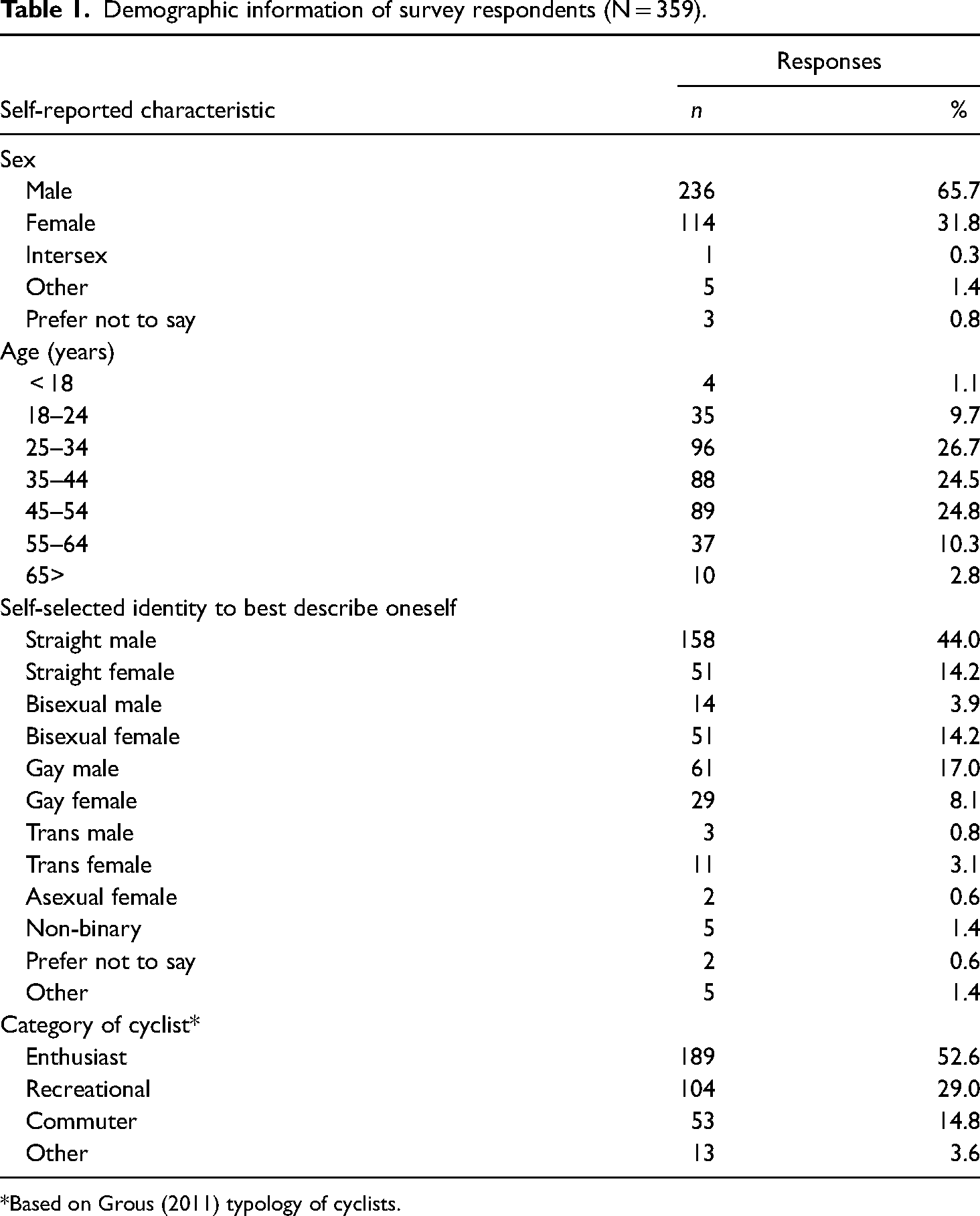
*Based on Grous (2011) typology of cyclists.
Measures
A 37-item survey was created with question branching that assessed either experiences of sexual and/or gender minority cyclists or attitudes held by sexual and gender majority participants. All the participants completed the first demographic section of the survey, which collected data on age, sex, sexual orientation, country of residence and category of cyclist. Following this, question branching was then applied with the participants proceeding to one of the following two sections depending on their responses to the question on sexual orientation and gendered identity. The participants that had responded ‘Non-binary,’ ‘Other’ or ‘Prefer not to say’ were asked if they would like to answer questions on experiences as an LGBTQ+-identifying person in cycling, or questions on attitudes towards LGBTQ+ as a straight-identifying person.
Attitudes towards sexual and gender minorities
A combination of questions were created to assess attitudes towards sexual and gender minorities in cycling. The questions were informed by previously validated scales as well previous research in a similar area (MacDonald, 2018). Firstly, cycling specific questions were created by the research team. For example, ‘Knowing that a teammate/cycling friend was LGB would negatively change my opinion on them.’ Responses were measured by levels of agreement on a 5-point Likert Scale. The participants were also asked if they had witnessed, or used, anti-LGBTQ+ language.
The Attitudes Towards Lesbians and Gay Men Scale – Short form (ATLG-S) was used to measure attitudes towards lesbians and gay men. Developed by Herek (1984, 1988), the ATLG is a 10-item measure of sexual prejudice. The scale was equally split between attitudes towards gay men (ATG subscale) and lesbians (ATL subscale). As reported in previous research (Rooper and Halloran, 2007), a 5-point Likert scale was used to score each item (strongly disagree, disagree, neutral, agree, strongly agree). The most favourable response was scored 1, and least scored 5. The possible scores for each subscale were 5–25, with the full ATLG scale score range being 10–50, with a higher score indicating greater homonegativism. The choice of this scale concerns its wide use in the literature and demonstrated internal consistency and test-retest reliability (Herek, 1998). Furthermore, the short form version (ATLG-S) has been found to correlate highly with the full scale (ATLG) (ATLG-S with ATLG, r = .97; Herek, 1994). The ATLG-S was thus chosen to reduce time burden on the participants and increase likelihood of full completion.
The Attitudes Towards Transgender Men and Women (ATTMW) scale (Billard, 2018) was slightly adapted and used to measure attitudes towards transgender men and women. The full ATTMW consists of 24-items that contain two 12-item subscales measuring attitudes towards transgender males (ATTM subscale) and transgender females (ATTW subscale). For this study, only five items were used from each subscale. These were pragmatically selected based on items used in other existing transgender attitude scales (TS; Nagoshi et al., 2008; TABS; Kanamori et al., 2017). Therefore, the full ATTMW was 10 items, made up of two 5-item subscales (ATTM and ATTW) allowing for comparison with the ATLG-S scale discussed above. The scoring was the same as the ATLG-S, with possible scores ranging from 5 to 25 for each subscale and 10 to 50 for the full scale. A higher score indicated a more negative attitude.
Experiences of sexual and gender minorities cyclists
Questions for sexual and gender minorities cyclists covered areas such as experiences within cycling, experiences of anti-LGBTQ+ discourse in the form of verbal harassment and physical hostility (directly and indirectly experienced), views on governing bodies inclusion policies and any perceived barriers for sexual and gender minorities in cycling. Questions were created through consultation with experts in the area of sexuality in sport, sexual and gender minority cyclists and informed by previous research (Letts, 2021; Zeigler and Buzinski, 2021). When asking about experiences, questions specified a time frame of the last 5 years due to the focus of wanting to understand the contemporary environment of cycling; for example, ‘In the last 5 years, have you experienced direct verbal harassment as a result of being known, or suspected, as LGBTQ+?’ Furthermore, for the participants that reported experiencing verbal harassment directly or without intent to harm personally, they were asked to report the perceived intention with options of ‘As direct abuse,’ ‘As humour/banter’ and ‘Intent of language use was unclear.’ This is in acknowledgement of the importance of intent, context and effect of homosexually themed language (McCormack, 2011).
Data analysis
Descriptive statistics are presented as mean ± standard deviation for scores on ATG (5–25), ATL (5–25), ATLG (10–50), ATTM (5–25), ATTW (5–25) and ATTMW (10–50), with responses to specific questions presented as % of responses. The preceding scale scores outline the dependent variables for this study, whilst the independent variables were sex, age and cyclist type. Data were analysed using SPSS IBM Corp (2022) Armonk, NY, USA). Data were deemed to be non-normally distributed via Kolmogorov–Smirnov tests, and thus, non-parametric tests were conducted to assess for differences in responses. The Mann–Whitney U test was used to analyse differences in responses between sex. The Kruskal–Wallis tests were applied to compare differences amongst age groups and cycling type. Under 18 and over 65 age groups were removed from the heterosexual age group analysis to ensure consistency with the assumptions of the Kruskal–Wallis test, as each group had less than five participants. The Mann–Whitney U tests were also conducted within scales (ATG vs ATL and ATTM vs ATTW) and between overall scale scores (ATLG vs ATTMW) to assess for differences in attitudes. In the event of a significant difference in variables with multiple groups, follow-up post-hoc analyses with Bonferroni corrections were performed. Statistical significance for all tests was accepted at p < 0.05. The experiences of sexual minorities data are presented through frequency and percentage of responses to the Likert scale questions in table format.
Ethics
An ethical approval was obtained at the university faculty level prior to the study commencing, and all ethical guidelines of the British Sociological Association (BSA) were followed. A participant information sheet was provided as a preamble to the survey and formed the first page of the survey. An informed consent was implied if the participant continued with the survey, and they were informed that withdrawal was possible at any time during the survey by simply closing their web browser, and their data would not be saved. Additionally, confidentiality and anonymity were assured throughout the research process, and no identifiable information was required for the participants to complete the survey as well as no personal data being stored.
Results
Sexual and gender majority attitudes towards LGB
Of the sexual and gender majority participants (n = 211), responses to ‘Knowing that a teammate/cycling friend was LGB would negatively change my opinion of them’ were Strongly Agree (0.5%), Agree (2.4%), Neutral (0.9%), Disagree (9.0%) and Strongly Disagree (89.1%). The responses to ‘I would be comfortable if one of my teammates/cycling friends comes out as LGB’ were Strongly Agree (78.2%), Agree (10.9%), Neutral (2.4%), Disagree (0.5%) and Strongly Disagree (8.1%).
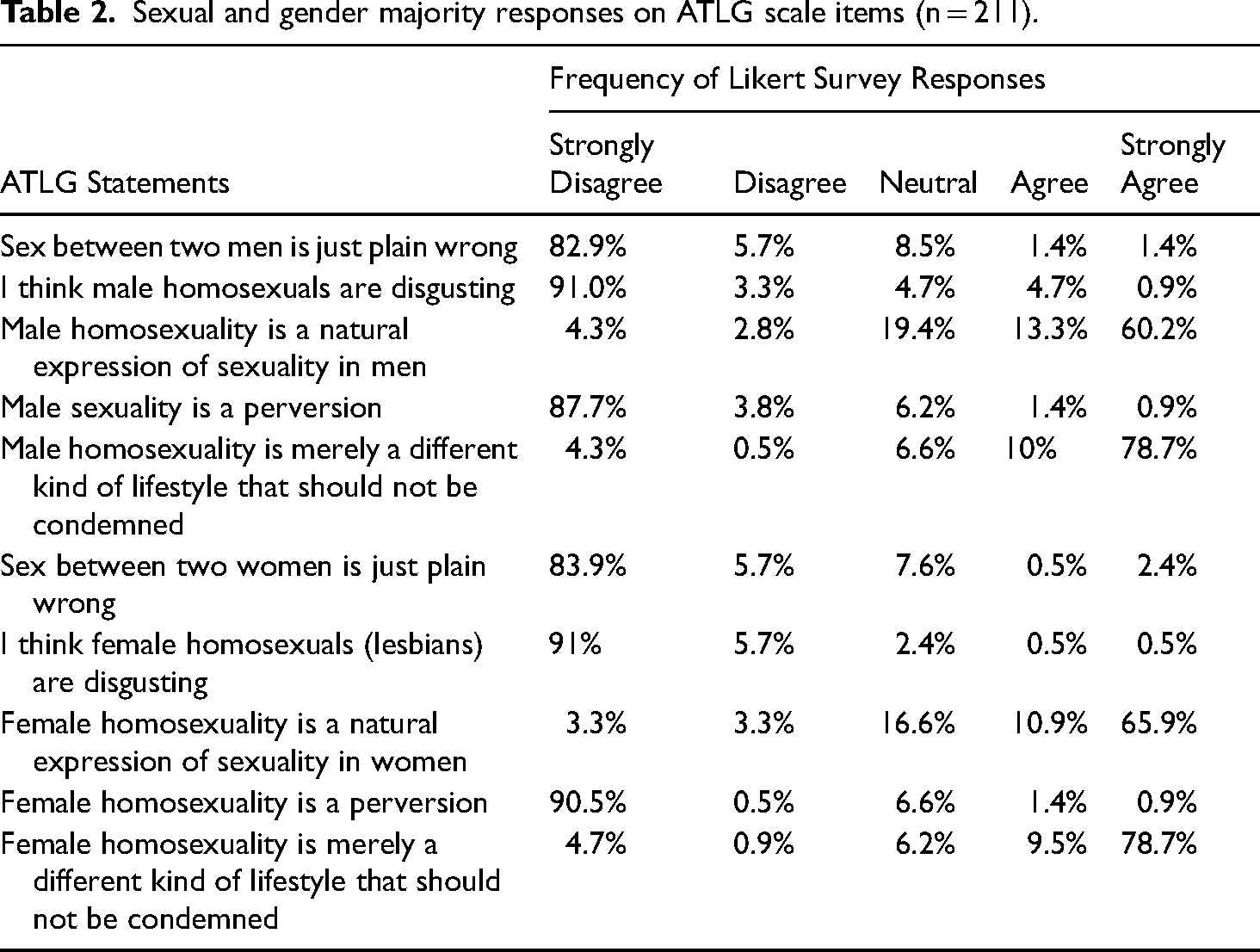
The mean scores in the sample for the ATLG scale was 13.7 ± 5.8. The scores for each subscale were ATG (6.9 ± 3.0) and ATL (6.8 ± 3.0). There were no statistical differences found for effect of sex or cyclist type on ATLG (including both subscales). Significant differences between age groups were found for ATLG scores (p = 0.04); however, post-hoc analysis found no significant differences between age groups for either scale (p ≥ 0.05). Table 2 displays raw responses to each item on the ATLG scale.
Sexual and gender majority responses on ATLG scale items (n = 211).
Sexual and gender majority attitudes towards trans
Of the sexual and gender majority participants (n = 211), responses to ‘Knowing that a teammate/cycling friend was transgender would negatively change my opinion of them’ were Strongly Agree (0.5%), Agree (2.4%), Neutral (5.2%), Disagree (13.3%) and Strongly Disagree (78.7%).
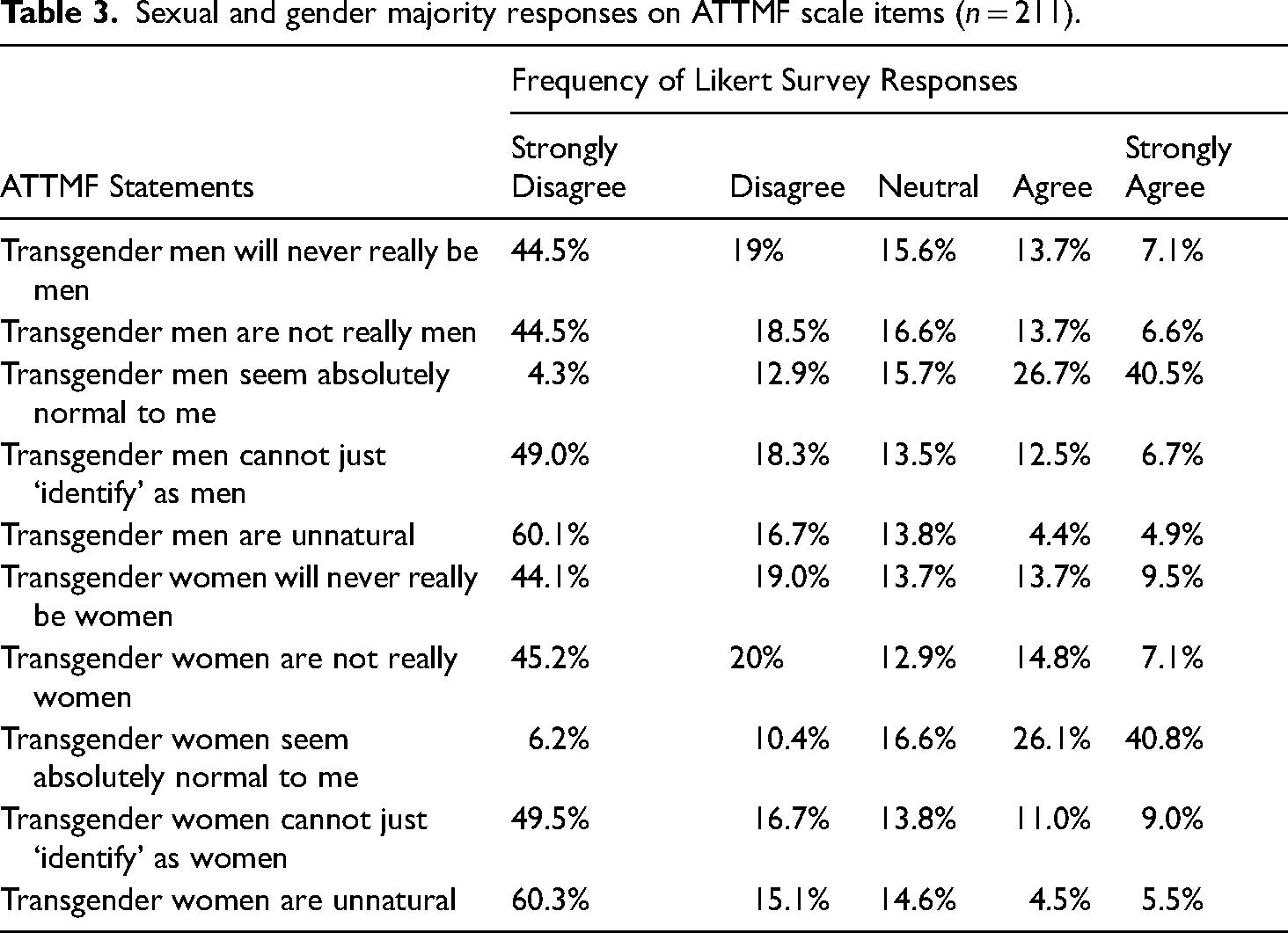
The mean scores in the sample for ATTMF scale was 21.1 ± 10.7. The mean scores for each subscale were ATTM (10.5 ± 5.3) and ATTW (10.6 ± 5.5). There were no statistical differences found for effect of sex or cyclist type on ATTMF (including both subscales) scores. Significant differences between age groups were found for ATTMW scores (p = 0.02); however, post-hoc analysis found no significant differences between age groups for either scale (p ≥ 0.05). Table 3 displays raw responses to each item on the ATTMF scale.
Sexual and gender majority responses on ATTMF scale items (n = 211).
Differences in sexual and gender majority attitudes towards LGB and trans
A significant difference was observed between ATLG (13.7 ± 5.8) and ATTMF (21.1 ± 10.7) scales (p = 0.001) (Figure 1). No significant difference was observed between ATG (6.9 ± 3.0) and ATL (6.8 ± 3.0) scores (p = 0.45) or ATTM (10.5 ± 5.3) and ATTW (10.6 ± 5.5) scores (p = 0.96).
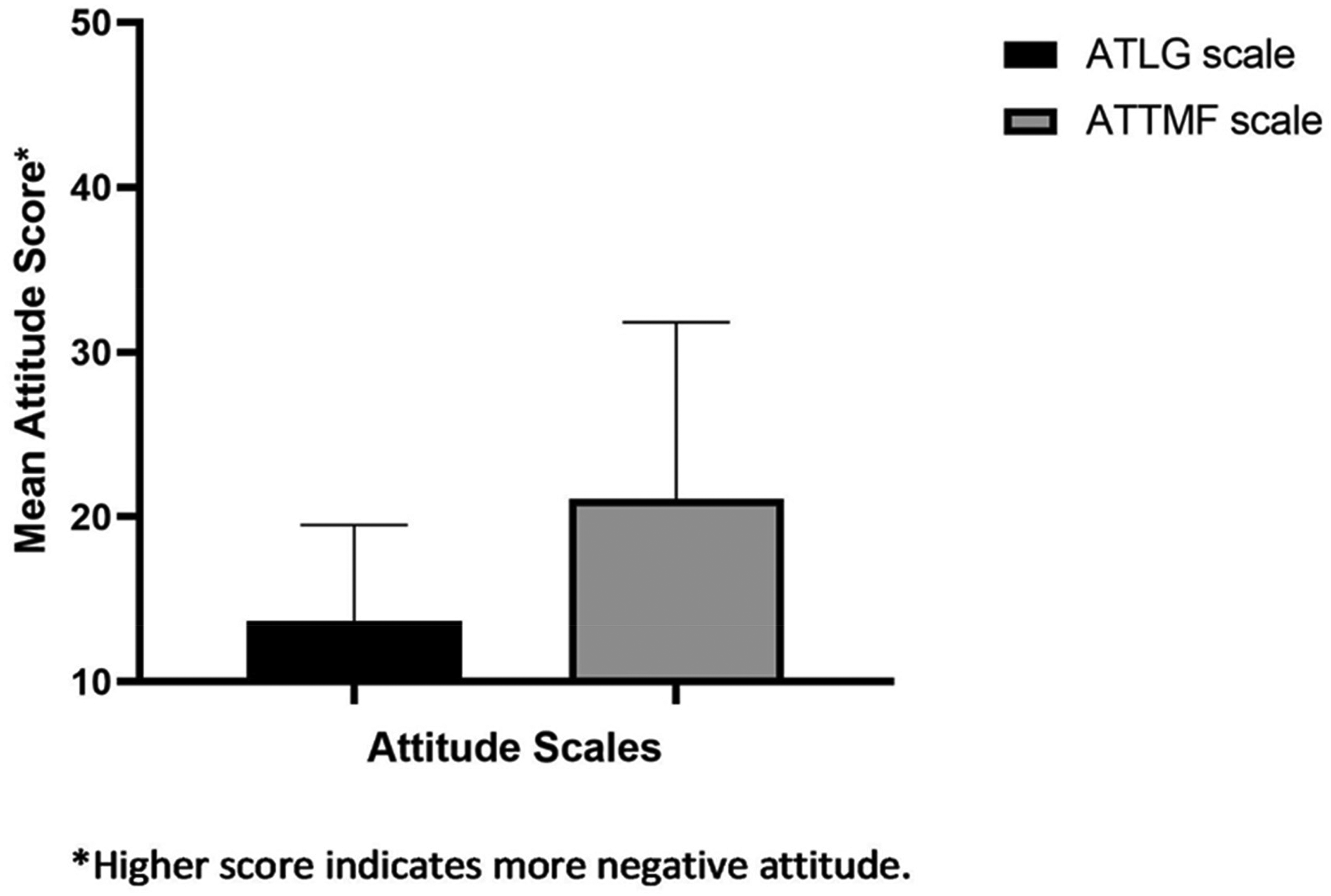
Straight-identifying cyclists ATLG and ATTMW scores (n = 211).
Experiences of LGB cyclists
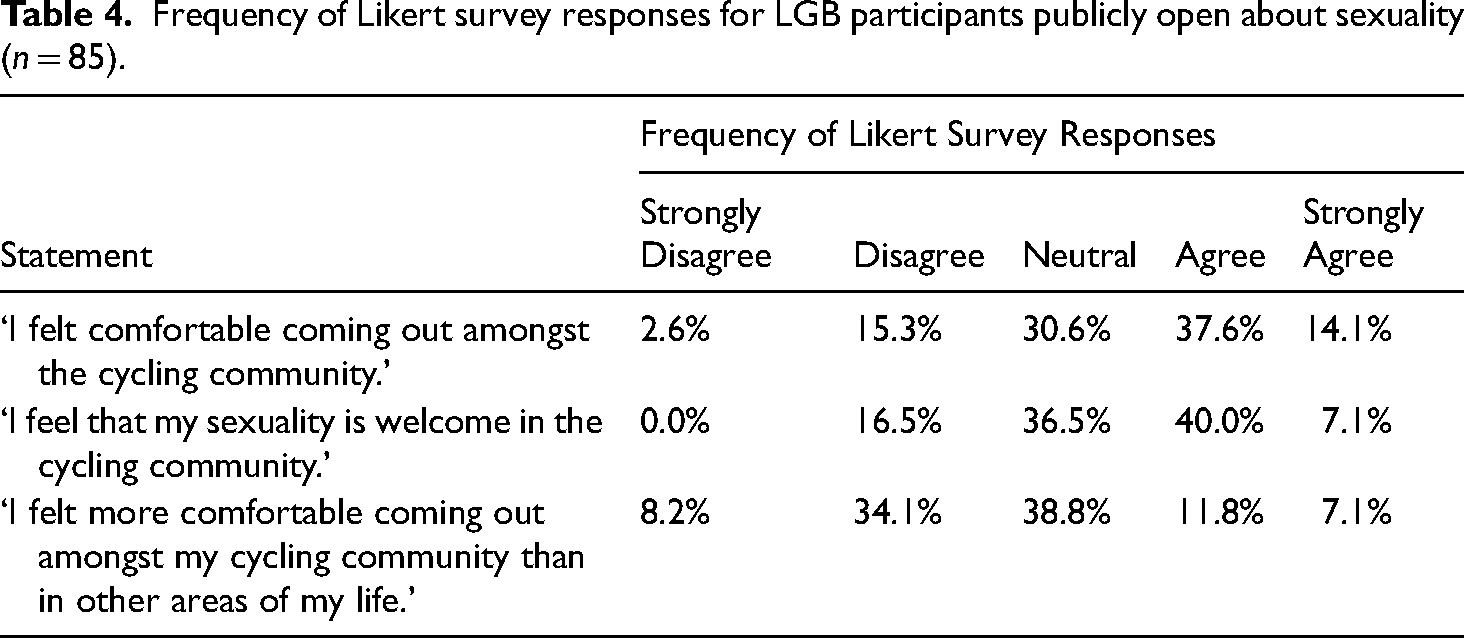
Amongst LGB-identifying cyclists, most reported being open about their sexuality within their immediate cycling group or community. The results were as follows: Out to all (32.8%), Out to some (20.5%), Out to most (14.0%), Out to none (5.7%) and Out to one (2.5%) (n = 122). Thirty of the participants (24.6%) responded ‘N/A’ to this due to not being in a cycling group or community. The participants that reported being publicly open about their sexuality to cycling peers (n = 85) were asked to respond on a Likert scale to a number of statements about their experiences and feelings towards coming out. The results of these are displayed in Table 4.
Frequency of Likert survey responses for LGB participants publicly open about sexuality (n = 85).
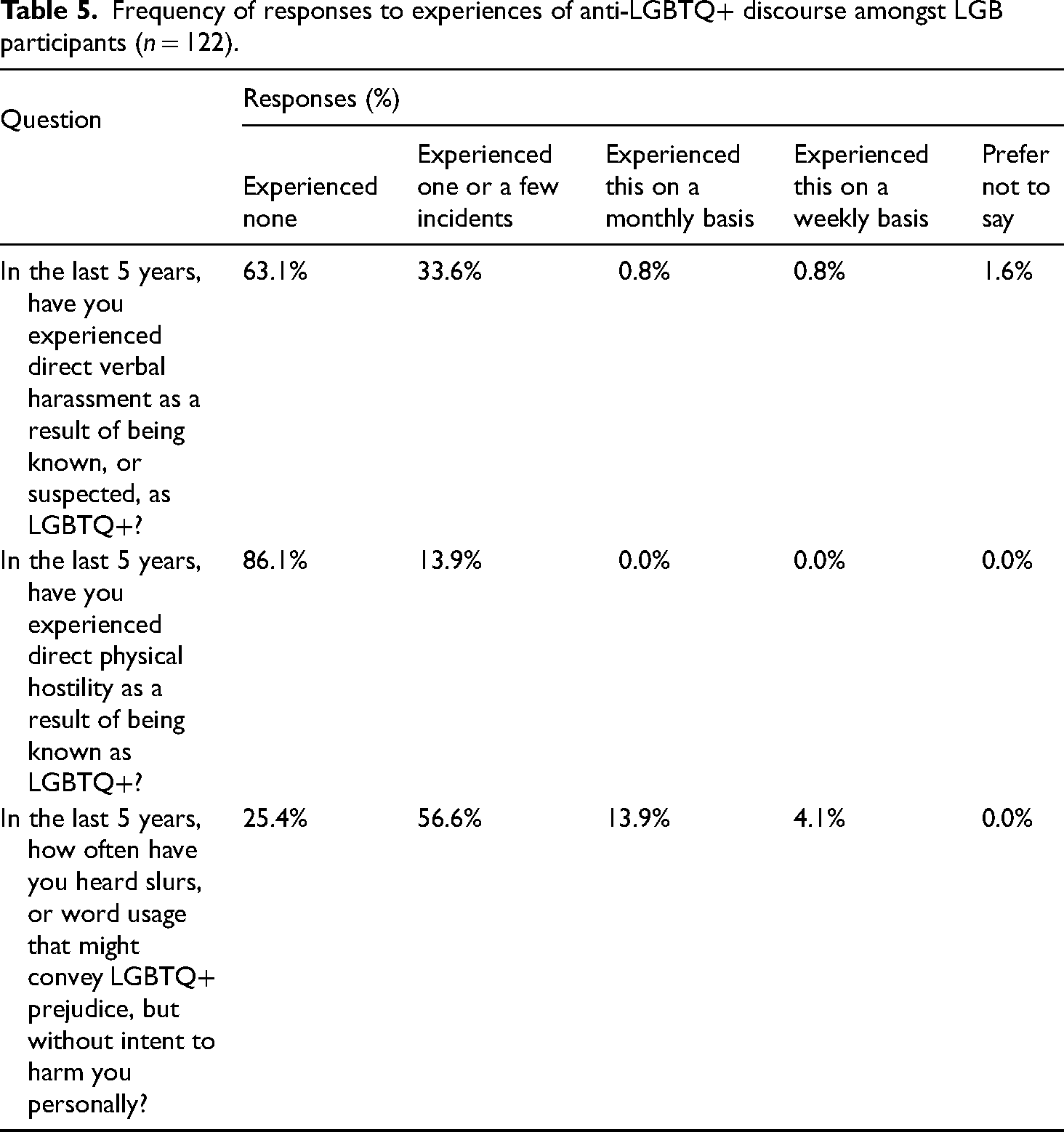
Responses concerning experiences of anti-LGBTQ+ discourse in the form of verbal harassment and physical hostility are displayed in Table 5. Briefly, 63.1% reported having never experienced direct verbal harassment due to their sexual identity. The participants that reported experiencing direct verbal harassment on a weekly (n = 1) basis reported the intent as ‘Direct abuse,’ and on a monthly (n = 1) basis reported the intent as ‘Humour/banter.’ The participants that reported hearing slurs, or word usage that might convey LGBTQ+ prejudice, but without intent to harm personally, on a weekly (n = 5) or monthly (n = 17) basis reported the intent as ‘Humour/banter’ (n = 11), ‘Intent was unclear’ (n = 7) and ‘As direct abuse to others’ (n = 4). A total of 105 participants (86.1%) reported never experiencing direct physical hostility as a result of being known, or suspected, as LGBTQ+.
Frequency of responses to experiences of anti-LGBTQ+ discourse amongst LGB participants (n = 122).
Experiences of transgender cyclists
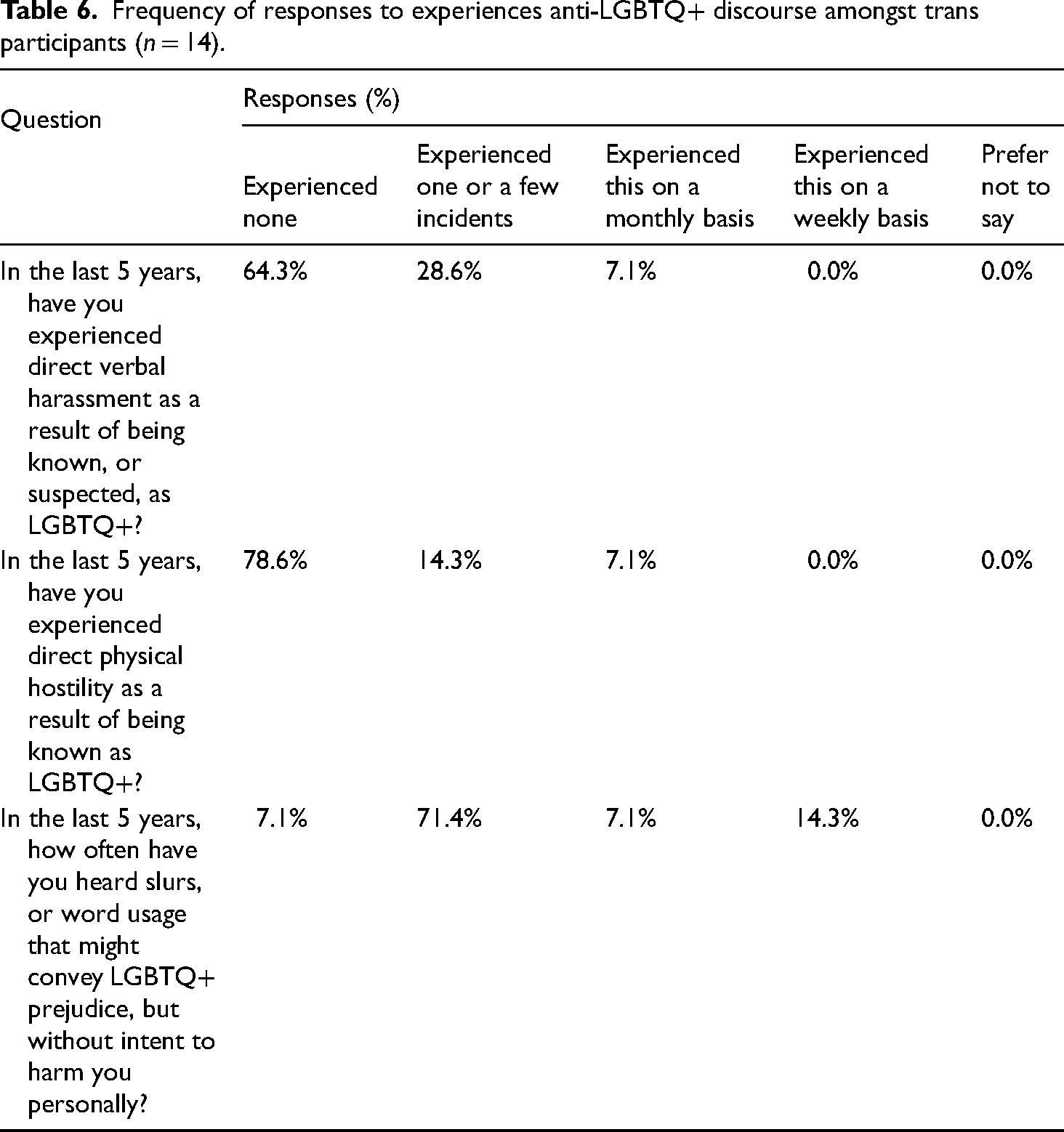
Of the trans participants (n = 14), responses to ‘I feel that my gender identity is welcome in the cycling community’ were Strongly Agree (n = 2), Agree (n = 4), Neutral (n = 3), Disagree (n = 4) and Strongly Disagree (n = 1). The responses concerning experiences of anti-LGBTQ+ discourse in the form of verbal harassment and physical hostility are displayed in Table 6. Briefly, 64.3% reported having never experienced direct verbal harassment due to being known, or suspected, as LGBTQ+. The participants that reported experiencing direct verbal harassment on a monthly (n = 1) basis reported the intent as ‘Humour/banter.’ The participants that reported experiencing verbal harassment without intent to harm them personally on a weekly (n = 2) or monthly (n = 1) basis reported the intent as ‘Humour/banter’ (n = 1), ‘Intent was unclear’ (n = 1) and ‘As direct abuse to others’ (n = 1). Eleven participants (78.6%) reported never experiencing direct physical hostility as a result of being known, or suspected, as LGBTQ+.
Frequency of responses to experiences anti-LGBTQ+ discourse amongst trans participants (n = 14).
LGBTQ+ attitudes towards governing bodies’ actions
Sexual and/or gender minority participants (n = 148) were asked if they felt cycling governing bodies and organisations were doing enough to accommodate LGBTQ+ cyclists. The responses were as follows: No (64.9%), Not Sure (29.1%) and Yes (6.1%). Most either agreed or strongly agreed that there were barriers for the inclusion of LGB (60.1%) and trans (81.1%) participants in cycling. Lack of representation (54.1%), homophobic environment (32.4%) and lack of LGB-specific cycling organisations (27.7%) were the main barriers to inclusion for LGB people in cycling reported by the participants. Discriminatory policies (66.9%), lack of representation (59.5%) and lack of knowledge of what is available for the trans participants (51.4%) were the main barriers to inclusion for trans people in cycling reported by the participants. The participants were asked how they thought cycling compared with other sports efforts to encourage LGBTQ+ inclusion, with responses as follows: Behind on other sports (39.9%), Not sure (31.1%), Equal to other sports (20.9%) and Better than other sports (8.1%). When asked to rate overall experiences within cycling compared with other sports or organised exercise, responses were as follows: Experiences have been equal across sports (37.8%), Best in cycling (9.5%), Better in other sports (9.5%) and Not sure (9.5%). Fifty of the participants (33.8%) responded ‘N/A’ to this due to only having experiences within cycling.
Discussion
Although there is a long history of homophobia within Western cultures, the 21st century has brought significant social upgrading for sexual minorities. This has even been found to be the case in the socially conservative institution of sport (e.g. Bush et al., 2012; Magrath et al., 2017; Gaston and Dixon, 2020). This research adds to this growing body of knowledge, by first examining sexual majority attitudes towards sexual minorities within the sport of cycling. Here, we found that the participants reported mostly positive attitudes towards sexual minorities with no differences found in attitudes towards lesbian women or gay men, and no differences in attitudes found across participant demographics.
The reported attitudes of the sexual majorities analysed within this research can be conferred with the mostly positive experiences reported for sexual minorities in cycling. There were limited reports of experiencing verbal hostility with intent to harm due to being known, or suspected, as LGB. Thus, the reported findings of LGB people relating their experiences of the sport of cycling affirms the findings of sexual majorities, somewhat minimising the possibility or degree of social desirability bias amongst sexual majority participants. This finding is also consistent with a growing body of work reporting on the positive experiences and social acceptance of sexual minorities across a range of sporting settings (e.g. Adams, 2011; Channon and Matthews, 2015; White et al., 2021).
This finding would suggest that when it concerns LGB athletes, cycling does not exist within Stage 2 of the model of homohysteria, but instead the reported social acceptance places the sport within Stage 3 and the context of inclusivity, alongside more researched sports such as rugby (Muir et al., 2021) and football (Cashmore and Cleland, 2012). The result of this is that the model would suggest that athletes within the sport should not have to act in gender-extreme ways in order to avoid the social spectre of being thought gay and they do not need to express antipathy towards gay people to be thought straight.
Alongside the decade-long increase of acceptance towards sexual minorities, there has, particularly within the last decade, been rapidly growing social awareness of the existence of transgender people, from which sport is not exempt. Significantly, however, the social discussion and media attention around this issue are not as inclusive as it is for LGB people. There is a considerable amount of old and new media coverage over the idea of transgender women existing within female spaces, with sport being the epicentre of this. The discussions in sport reflect wider cultural responses to gender, whereby trans women in sport are highly politicised and applied to a broader ‘culture war’ around competing gender ideologies, which cut across the political spectrum. This makes discussions of trans inclusion distinct to that of sexuality, and previous research has highlighted this discrepancy in attitudes, with social attitudes towards LGB being more progressive than attitudes towards T (Norton and Herek, 2013; Hargie et al., 2017; Cunningham and Pickett, 2018).
However, this research somewhat contrasts with previous studies. The results of this research showed that whilst sexual minorities were held in higher regard than gender minorities within the sport of cycling, the variance was not as significant as we might expect given the media reporting of trans athletes in recent years (Thorpe et al., 2023). It appears that social attitudes towards transgender cyclists may be drafting off the positive attitudes towards gay and lesbian cyclists.
The reported attitudes of cisgender respondents towards transgender athletes within this research is also somewhat affirmed by the mostly positive experiences reported for gender minorities in cycling, as well as supporting recent findings in the USA regarding positive public attitudes towards trans athletes (Knoester et al., 2023). There were also limited reports of experiencing physical and/or verbal hostility with intent to harm due to being transgender. Again, this affirms the stated attitudes of cisgender respondents, limiting social desirability in the responses.
Of course, there is still social progress yet to occur before we can argue that LGB or LGBT people are fully socially accepted within cycling, and we certainly should not lose focus on issues related to trans inclusion in sport and society more broadly. Some of the work to be done is, as attributed by the respondents, within the domain of the governing bodies. Here, both sexual and gender minorities reported that cycling governing bodies’ attempts at LGBTQ+ inclusion were lacking and behind on perceived efforts being made in other sports (Letts, 2021). If these findings are accepted, it becomes germane for official bodies in cycling to become more proactive and visible in their efforts around the inclusivity of LGBTQ+ participants in cycling, across the recreational to competitive spectrum.
With regard to gender minorities, specifically, we acknowledge that research in sport contexts is still developing with mixed findings presented. Research has reported that female-to-male transgender experiences in sport are becoming more positive (Ogilvie, 2017). However, various barriers to participation persist (Buzuvis, 2012; Travers, 2017, 2018), and ideas of ‘fairness,’ particularly with respect to trans women and perceptions of biological advantage, may be supporting the existence of negative attitudes towards trans (particularly female-to-male) inclusion in sport (Cleland et al., 2022).
It is perhaps a sign that regardless of how trans-friendly the media is or not, regardless of social media hostilities or not and regardless of trans-friendly cycling policies or not, transgender athletes themselves are making progress for social inclusion in sport, as evidenced by the majority of cisgender athletes’ attitudes reported here. This is particularly surprising given that media debates have centred on trans women athletes, yet we found no differences in attitudes towards trans women compared with trans men within the data.
Alongside recent data from the USA (Knoester et al., 2023), these findings suggest that the ‘culture war’ around trans inclusion in sport whereby much cultural hysteria around trans women is purported in the media may not be reflective of people's attitudes and opinions on the topic, which seem to be more aligned to those expected within a culture of inclusion. Whilst further research with a larger representation of trans cyclists is required for a more comprehensive understanding of this area in cycling, particularly in light of the current prominence of cultural awareness and discussions of trans participation in sport, this data stands out as noteworthy.
Although this research is a valuable addition to existing work on sport, gender and sexuality, there are limitations to the work that we acknowledge. Firstly, a tension exists between the measurement of social attitudes and social desirability in the current study. The data presented from the sexual and gender majority participants highlight that reported attitudes mostly align with what would be deemed socially desirable within a culture of inclusivity. To be clear, this study measured what the participants reported about the areas of interest, what we call public attitudes, and our data cannot speak to how these attitudes match up to cycling participants' attitudes and values in their everyday social behaviours in private settings. This is a limitation of quantitative data in and of itself. Therefore, this study has identified a direction for future research whereby qualitative, particularly ethnographic inspired, methodologies could be used to investigate cyclists’ private attitudes towards sexual and gender minorities.
However, we also highlight further points on why the limitation of social desirability bias is minimised in the data. Sexual and gender minorities were intentionally surveyed about their experiences in cycling. If the majorities indicated positive attitudes towards minorities, but the minorities reported widespread intolerance, evidence of social desirability bias would be at play, but the data did not suggest this.
We also suggest that sexual and gender minorities would be less influenced by social desirability when reporting on their experiences. Furthermore, the data was anonymous, and there is no method of identifying individual responses. Therefore, there is no individual or group to impress with a socially desirable answer apart from themselves. Whilst we acknowledge validation of self by selecting the socially desirable response may still exist, this is a limitation to all survey-based research that cannot be controlled. It can, however, be triangulated with alternative methodologies that examine private social attitudes and behaviours, which we have identified as an avenue for future research.
The quantitative nature of our data also means that we have a cursory, but not a rich set of data, regarding the lived experiences of sexual and gender minority cyclists. Anderson (2005) has found that when athletes expect intolerance, they can engage in a form of reverse relative deprivation, rating their experiences as more inclusive than they actually are. The lived experiences of such participants in sporting settings are complex, nuanced and cannot be comprehensively understood through quantitative approaches alone. As such, our data do not fully speak to the lived experiences of sexual and minority participants in cycling.
There are also limitations of our data based on the sample size. We had fewer trans participants than LGB, which limits the scope of comparatives made between experiences of these minority groups. However, given trans athletes are few and far between, we suggest that this is a sufficient sample to study for one given sport. This is also the first study, to our knowledge, dedicated to the study of either LGB or T athletes in the sport of cycling and thus serves as a starting point for future work.
In summary, this paper reports on what we understand to be the first empirical investigation of sexual and gender minorities in cycling. Our research suggests that both sexual and gender majorities view both LGB and T athletes through an inclusive framework, and LGB and T athletes affirm this position through reports of their experiences. The stage-model concept of homohysteria shows validity for explicating the positive shift in public attitudes towards LGB cyclists. It lacks, however, direct application towards understanding the reported attitudes towards transgender athletes. Still the findings lead us to indicate that there exists some relationship to them. We cannot thus recommend homohysteria as a direct theoretical tool for making sense of the data, suggesting more sophisticated experimental research will be required to help explain the relationship between these two minority groups. For now, we simply suggest that finding that social attitudes towards gender minorities lies within close proximity to sexual minorities suggests to us that transgender athletes have benefited from the social movement of sexual minorities of the last many decades, with further progress to be made. There is still much to explore in this area, with this study being one small piece of the complex puzzle of sexual and gender minority experiences in cycling.
Footnotes
Declaration of Conflicting Interests
The author(s) declared no potential conflicts of interest with respect to the research, authorship and/or publication of this article.
Funding
The author(s) received no financial support for the research, authorship and/or publication of this article.
