



Abstract
This article aims to explore the digital consumption of the Paralympic Games on the video-sharing platform YouTube to understand how the International Paralympic Committee (IPC) engages consumers in a digital setting, enabling an ‘alternative’ consumption of the event. Using YouTube Data Tools, we have automatically scraped data from 17,701 YouTube videos from Paralympic Games’ channel. After data manipulation and consolidation, statistical analyses were performed in order to understand how the IPC has adapted to the algorithm logic of platforms. Our findings demonstrate that YouTube should be comprehended as complementing and substituting television as the traditional medium of sport consumption. Thus, the digitalisation of the sport industry adapts and continues, rather than revolutionises, the symbiotic sport/media relationship. Whilst digital revolution allows the IPC to reach wider audiences by bypassing a traditional media editorial logic, it does so within the algorithmic logic of platforms resulting from the unpaid digital labour of users.
Introduction
The new types of digital media have transformed consumer engagement and cultural consumption practices of sport and those enacted during sport mega-events from branding, sponsorship and activation practices (Choi, 2008; Santomier, 2008), to following national governing bodies on social media platforms (Li et al., 2018), consumption of sponsored products and services (Hazari, 2018), and to novel forms of ambush marketing (Chavanat and Desbordes, 2014). In this context, this article examines the increasingly digital consumption of one of the world's sport mega-events, namely the Paralympic Games. Over the past decades, sport mega-events such as the Olympic and Paralympic Games and the FIFA World Cup have grown significantly in size and scale. However, in the present day, events such as the Olympics are not only among the largest sporting events, but they also represent quintessential global media events, having undergone dramatic digital expansions throughout the 2010s (Tang and Cooper, 2013: 851) and early 2020s. Both ‘offline’ and ‘online’, the Olympic and Paralympic Games draw in enormous numbers of sports fans and consumers from diverse backgrounds, who consume and experience these major events in a myriad of ways (Tang and Cooper, 2018; Petersen-Wagner and Lee Ludvigsen, 2022a). Ultimately, the diversification and digital adaptation of how the Paralympic Games are consumed lie at the core of this paper, which aims to capture and examine the changing digital consumption of the Paralympic Games on YouTube. YouTube per se must be considered a platform of great sociological importance given its position as a (global) form of participatory culture and co-creation in the social media universe. This, again, allows for it to be understood as a community rather than merely a social network (see Burgess and Green, 2018) and a potential alternative to television in the world of sport (Lee Ludvigsen and Petersen-Wagner, 2022a, 2022b; Petersen-Wagner and Lee Ludvigsen, 2022b). Thus, given the platform's broader significance as an accelerator and reflector of digital trends, it is imperative to critically understand this platform's inroads in the realm of sport. Hence, drawing from an analysis of 17,701 videos on the Paralympic Games’ YouTube channel (see YouTube, 2022a), this article argues that YouTube, as a platform, should be comprehended as both complementing and substituting the favourite (and traditional) medium of TV in terms of consumption of sport. Furthermore, we concurrently contend that the digitalisation of the sports industry should be understood in terms of adaptation and continuation – rather than as revolutionary – with regards to the symbiotic relationship between media and sport.
Fundamentally, sport as a whole, including sports teams, athletes, its events and governing bodies have not been unaffected by the wider digital revolution and its emerging communication technologies and social media platforms (Lawrence and Crawford, 2022; Tang and Cooper, 2011, 2013; Hutchins and Mikosza, 2010). Situated within these transformations, the Paralympic Games have now “transitioned into a commercially successful global sporting mega-event with extensive broadcast coverage” (Pullen et al., 2022: 368). Simultaneously, this has increased the corporate support and commercial value of the Paralympics in recent years (Burton et al., 2021). As governed by the International Paralympic Committee (IPC), an organisation advocating inclusion and diversity across sport (IPC, 2019a) (established in 1989), the Paralympics – hosted for the first time in 1960 (see Ozturk and Kocak, 2004) – is an international multi-sport event for athletes with physical disabilities. There are both Winter and Summer editions of the Paralympics, and these are usually hosted every four years, shortly after the Olympic Games in the same city or host country (Purdue and Howe, 2012). Although the Paralympics’ media coverage and spectatorship have expanded (Cottingham and Petersen-Wagner, 2018), with its 2016 edition reaching a global audience of 4.1 billion and broadcasting over 500 h across mainstream media platforms, it was recently argued that, as ‘compared to the Olympics, the Paralympics has received relatively limited scholarly attention as a media spectacle’ (Pullen et al., 2022: 370). Essentially, little is known overall about how the Paralympics are consumed on a platform such as YouTube, its content creation, and then, how exactly YouTube is a constituent of the Paralympic media spectacle. By aiming to address and subsequently fill this research gap, this article focuses on one specific facet of the inter-relationship between the Paralympics and (new) media; that is, IPC's consumer engagement, content creation, and the related cultural practices of the Paralympics on YouTube. With its data, findings and discussion, this study extends the academic body of work focused on the Paralympic Games both as a sporting and media event (Goggin and Hutchins, 2017; Pullen et al., 2022; Cottingham and Petersen-Wagner, 2018), and more specifically, it adds to our broader understanding of digital sport cultures by demonstrating empirically how developments within the Paralympic Movement are inter-connected with digital technologies and changes that cut right across modern societies. Taken together, our findings and contributions scratch the surface of broader trends vis-a-vis the digital consumption and cultures that encapsulate most sport mega-events in the twenty-first century (Lee Ludvigsen and Petersen-Wagner, 2022a).
Literature review: the digital consumption of sport mega-events
It remains clear, as Tang and Cooper (2018: 309) write, that ‘[s]ocial media has substantially changed how individuals consume media content, particularly during sport mega-events’. In order to contextualise these transformations, we now review the academic literature exploring the symbiotic relationship between media and sport, before we pay specific attention to the new or emerging spaces or platforms that have emerged in line with the ‘digital revolution’. In a globalised and technologically advanced world, both sport and the media work, and attempt to reach as many spectators, fans, consumers, and advertising markets as possible. Hence, any comprehension of the present-day sport/media landscape must be viewed in context of local and global ‘regulatory, industrial and economic shifts’ (Rowe and Gilmour, 2009: 9) within the relevant media industries, such as the television industry.
Broadly, with the reduced media production costs and the increased importance of advertising spaces, the mass media has initiated the production of content that can capture the potential audiences and untapped markets (Rowe, 2013; Petersen-Wagner, 2022). And so, professional sport has emerged as one central pillar for both the media and its advertisers and partners (Bellamy, 2013). Whilst live linear television, radio and print media are oft-considered the traditional forms of sport mediation and broadcasting, these traditional formats and delivery technologies have been challenged or disrupted by the ‘Web 2.0 era’ (Miah and Jones, 2012) which has been characterised by the emergence of new digital media (Petersen-Wagner, 2022; McQuail and Deuze, 2020) and the ‘convergence of broadcast media and innovative internet technologies’ (Miah and Jones, 2012: 274). However, the arrival of new digital media has profoundly impacted on the content that sports fans and consumers can access, engage with, generate or even ‘prosume’ (Bond et al., 2021; Ritzer, 2015).
As hinted, co-existing and powerful processes related to the convergence and digitalisation of media have resulted in novel audio-visual consumption patterns (González-Neira et al., 2022) and emerging digital spaces. Importantly, sport events, teams, organisations and governing bodies – such as the International Olympics Committee (IOC) and IPC – have not remained unaffected by this ‘digital transformation’ (see Burton et al., 2021). Whilst major sports events and their administrators and federations still broadcast their content via the ‘traditional’ and ‘linear’ means such as radio and television, ‘new media’ spaces provide sporting organisations with an array of new opportunities to connect with diverse audiences, in a non-linear manner, in order to enhance their consumer connections and overall, global reach. In parallel with these developments, consumers of the Olympics and other sport mega-events are also increasingly active on and using social media platforms for sport-related and event-specific content (see Tang and Cooper, 2018; Karg and Lock, 2014). Thus, as this article will capture, the current epoch of sport mega-events is much characterised by their digital footprints.
In recent years, the mediation of synchronous and asynchronous sporting actions, highlights, interviews, press conferences, reactions and other content has reached a myriad of live streaming, online video sharing and social media platforms. This includes, inter alia, Snapchat (Billings et al., 2017), Tumblr (Kunert, 2021) Amazon Prime (Hutchins et al., 2019), TikTok (UEFA, 2021), Instagram (Toffoletti and Thorpe, 2018), Facebook (Petersen-Wagner, 2017a; 2017b; 2018), Twitter (Petersen-Wagner, 2022; Lee Ludvigsen and Petersen-Wagner, 2022b) and, finally, the platform which this article primarily focuses on: YouTube (Rivers and Ross, 2021). It has, therefore, been suggested that ‘[s]ocial media has emerged as one of the most important advancements in the sport industry’ (Burton et al., 2021: 4). The increased presence, and prominence of sport mega-events on social media platforms, was perhaps best illustrated by the 2016 Rio Olympics, which was described as the ‘most social Olympics’ and generated 75 billion social media impressions, 187 million tweets, and the consumption of 1 billion minutes of Olympic YouTube videos (Tang and Cooper, 2018: 309).
Indeed, by drawing from a web survey, Tang and Cooper (2018) examine how audiences consumed media content during the 2016 Olympics in Rio de Janeiro, and they conclude that audiences have increasingly embraced social media in their Olympic consumption. Yet, this engagement with Facebook and YouTube is not restricted to merely following or watching the events, but commenting and hence engaging with its actions. Importantly, this supports Tang and Cooper's (2013: 862) earlier findings from their examination of the 2012 Olympics in London, where they noted, based on a survey with US university students, that ‘[s]ignificant positive relationships existed between and among Olympics viewing on television, on the web, and via mobile portals’. Tang and Cooper's (2013, 2018) findings thus suggest that multi-platform media use composes one key element of contemporary Olympic consumption, despite the persistent dominance of television as the main medium of following the Olympics. Television's dominance means, by following Hutchins and Sanderson (2017), that one may understand social network platforms as extending ‘televisual logics’ over the course of a mega-event.
More recently, short-form video site TikTok was an official sponsor of the 2020 UEFA European Championships in men's football (soccer), providing a space for fans (and TikTok users) to follow and share tournament-related content (UEFA, 2021). Whilst it remains established that new media platforms increasingly provide spaces to engage consumers and sport fans, the perpetual development of new technologies and digital spaces simultaneously means that event owners, organisers and partners face challenges (Karg and Lock, 2014) in their employment of new media technologies concerning consumer engagement and attraction. Recent examples of sporting and media organisations’ turn to YouTube include Fédération Internationale de Football Association (FIFA) (Petersen-Wagner, 2022), the IOC (Lee Ludvigsen and Petersen-Wagner, 2022a), the big five football leagues in Europe (Petersen-Wagner and Lee Ludvigsen, 2022a), and different official UEFA Euros 2020 TV broadcasters (Lee Ludvigsen and Petersen-Wagner, 2022b). With regards to the IOC, it has since 2006, operated its official YouTube channel. Whilst allowing for constant content creation, with production peaks that coincide with editions of the Summer Olympic Games and to a lesser extent the Winter Olympic Games. What this suggests, is that YouTube – as a platform – assist the IOC's generation of followers during and in-between each Olympic edition (Lee Ludvigsen and Petersen-Wagner, 2022a). In terms of another global sport governing body – FIFA – Petersen-Wagner (2022) finds that YouTube provides primary space for remediating TV content in a short bite-size format, and that whilst Women's World Cup playlists have a considerably smaller number of videos in them, they do have better engagement metrics in relative terms when compared to Men's World Cup playlists. Therefore, YouTube becomes an alternative space for the consumption of FIFA related content, and especially provides a platform where specific content pertaining to women's football can be reached. When looking at the big five football leagues in Europe, Petersen-Wagner and Lee Ludvigsen (2022b) find that whilst their remediation practices on YouTube varies, their approach in terms of monetising the content is comparable as none of the leagues utilise the full platform affordances such as super stickers, super chats, channel membership or sale of merchandise. As such, it was argued that the symbiotic relationship between football leagues and YouTube rests on the flow of engagement data in the second most accessed webpage in the world. In terms of official Euro 2020 TV broadcasters on YouTube, Lee Ludvigsen and Petersen-Wagner (2022b) found that whilst YouTube becomes a space for mostly repurposing both TV and radio pre-recorded content, some broadcasters also utilised other technological affordances such as live streaming and chat rooms to create pre-game talk shows where audiences could engage live with presenters.
Taken together, these techno-social changes have implications for mega-event-oriented research. Ultimately, the migration towards new social media platforms means that scholars face an important task in ‘keeping up’ with the diversified and constantly changing nature of the symbiotic media/sport relationship. Ultimately, global audiences have now ‘embraced’ and ‘integrated’ social media platforms into their cultural sport mega-event consumption practices, by closely following the content available on spaces such as Facebook and YouTube (Tang and Cooper, 2013). Consequently, as suggested by Tang and Cooper (2013: 855), ‘it is important for future research to examine audiences’ Olympics experience with more diverse sources (e.g., social media, YouTube, and other websites and mobile apps)’. Such argument may be echoed in the case of the Paralympics, which traditionally have received less media attention than the Olympics (Golden, 2003). Furthermore, Burton et al. (2021) argue that, whilst social media platforms have enabled a new era of Olympic-related marketing and sponsorship, there is still scope for exploring how they have unfolded in the Paralympic context.
Reflecting these calls for further research, this article sets out to examine the links between YouTube and the Paralympics. Founded in 2005, YouTube provides its users with a digital space for sharing videos and social interaction (Burgess and Green, 2018). Whereas some researchers have touched upon, or examined, audience consumption of the Olympics on YouTube (Tang and Cooper, 2018), far less is known about the inter-relationships between the Paralympics, YouTube and the media (Pullen et al., 2022). Concerning the mediation of the Paralympics, scholars have, to date, examined its history (Goggin and Hutchins, 2017), media representations of disability (Pullen et al., 2020a), nationalism (Bruce, 2014) and gender (Brooke, 2019). Meanwhile, less scholarly attention has been directed towards the changing nature of Paralympic media content as contextualised within the digitally transformed media/sport relationship, although the IPC's (2019b) ‘Strategic Plan: 2019 to 2022’ emphasised the intention and priority of securing ‘Increased worldwide audiences and media engagement’ (p. 20) and maximise the opportunities provided by the ‘digital revolution’ (p. 5). This is much in line with other aforementioned sport governing bodies that, unlike the IPC, have been granted some academic attention (Petersen-Wagner, 2022; Lee Ludvigsen and Petersen-Wagner, 2022a, 2020b; Petersen-Wagner and Lee Ludvigsen, 2022a). Whilst the cumulative television audience of the Rio 2016 Paralympics – 4.1 billion people in over 150 countries – accurately illustrates the enormous global significance and reach of the Paralympics (IPC, 2017), we seek, throughout this article, to examine one of the emerging alternatives to ‘traditional’ and linear TV broadcast. Therefore, returning once again to the evolving and symbiotic sport/media nexus in which this article is anchored, an analysis of the Paralympic YouTube Channel's content may not only facilitate an understanding of what types of content the IPC's channel provides for its subscribers and consumers; it also yields a new insight into the socio-cultural processes related to the consumption of a true sport mega-event; the Paralympic Games.
Methods
The technological changes we discussed above do not solely and directly influence the available repertoire of (digital) social research methodologies (Cleland et al., 2019). Ultimately, they have also transformed the practices of doing research and, indeed, these transformations led to the rise of a digital sociological tradition (Lupton, 2014). In this article, we subscribe to the overarching digital sociological perspective that, broadly, suggest that digital places such as social media platforms must be seriously engaged with as data sources that can help us understand broader cultural and social processes (Petersen-Wagner, 2017b). This is also the case in the world of sport, where digital places have been utilised by scholars exploring diverse media-related, socio-cultural and political processes emerging in or embedded throughout sport (Millward, 2008; Cleland et al., 2019; David and Millward, 2012). Nevertheless, the embrace of digital places as data sources come with associated challenges to empirical social scientists because the plethora of data – or big data (see Mamo et al., 2022) – can lead to a point where granularity is potentially lost when we only consider the wider picture (Burrows and Savage, 2014). As we remain mostly focused on the alternative broadcasting of the Paralympics in this study, we have selected one social media platform that is commonly associated with the web 2.0 version of linear TV (Burgess and Green, 2018) – namely YouTube – to automatically collect data. Social media platforms, through their Application Programming Interface (API), allow for other parties to connect and extract/input data (see van Dijck et al., 2018), and thus we connected to YouTube API v3 (YouTube, 2022c) through web-modules available on YouTube Data Tools (Rieder, 2015).
In the beginning of February 2022, we ran the video list module for the entire Paralympic Games channel (YouTube, 2022a), automatically collecting data fields such as date of post, title, channel ID, video duration in ISO8061 format (eg PT1H34M11S), video category, tags, views, comments, and likes for all the 17,701 posted videos to that date. Before running the statistical analyses on SPSS 27, we had treated the data in Excel to calculate duration in seconds, age of video based on date of collection, and other secondary metrics like active/passive (number of active engagements such as comment and likes divided by passive engagement such as views) (see Petersen-Wagner, 2022).
Results
The Paralympic Games’ YouTube channel was created in 2008 and has over 800,000 subscribers and a total of over 377 million views of its 17,701 uploaded videos (YouTube, 2022a). To put this initial information into perspective, FIFATV on YouTube has over 9.5 million subscribers, with 8631 uploaded videos and over 3 billion views (Petersen-Wagner, 2022). The IPC has uploaded videos on its YouTube channel under six different categories (Comedy, Entertainment, Non-Profits & Activism, People & Blogs, Science & Technology, Sport), but concentrates its content creation on the latter category (91.6% – 16,213 videos), followed by Entertainment (8.3% – 1477 videos), People & Blogs (0.03% – 7 videos), Non-Profits & Activism (0.01%−2 videos), Science & Technology (0.005%−1 video) and Comedy (0.005% – 1 video). As seen in Table 1, the IPC shares both short videos of 1 s long and live stream or post entire events up to 42,902s (short of 12 h), thus seeking to engage with a variety of audiences who consume different types of content.
Descriptive analyses.
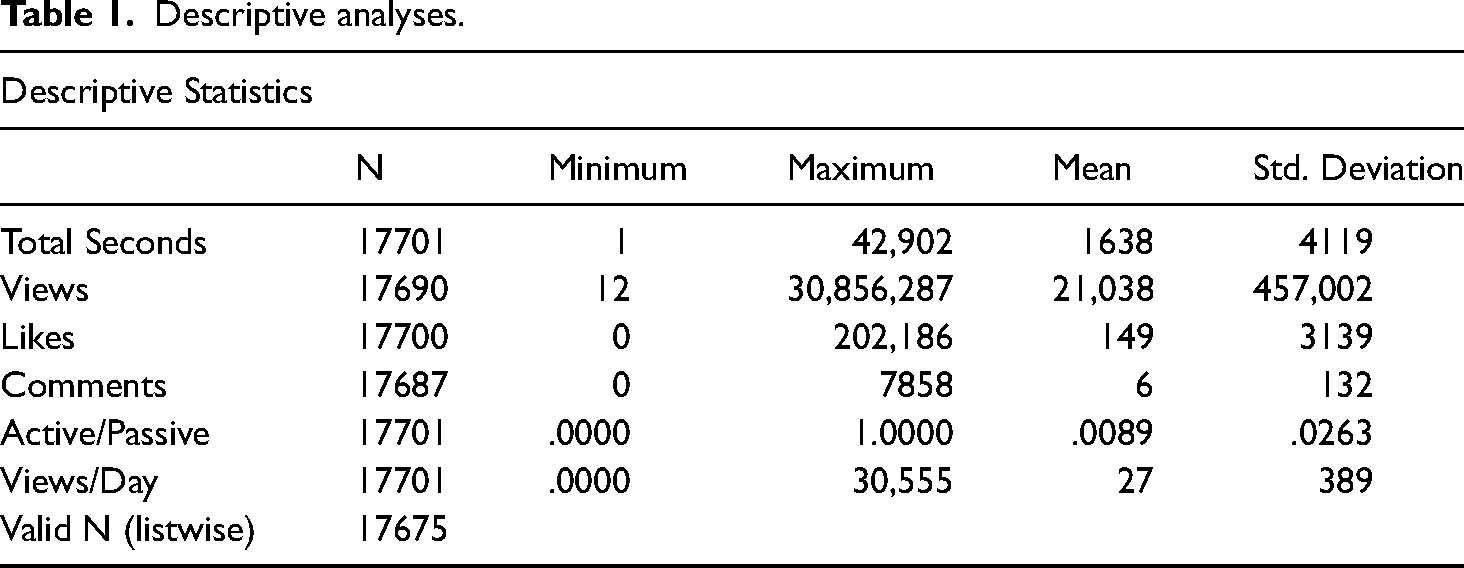
Initially, it is possible to assume that the IPC is using YouTube's digital affordances to provide multiple types of content that, on the one hand, focus on Gen-Z and Millennials’ preferences for shorter video formats (Statista, 2020; 2021a), but on the other, focus on bypassing the control of traditional media outlets – and particularly TV – when their content creation is aimed at longer video formats. For instance, the use of streaming and the availability of entire events on YouTube can be read in conjunction with the IPC's initiative during the Tokyo 2020 Paralympic Games to broadcast for free to sub-Saharan countries in efforts to reduce stigma and promote human rights (IPC, 2021; see also Pullen et al., 2019 for a discussion relating to broadcasting and attitude changes towards disability). Despite having both approaches to content creation, what the correlations (see Table 2) show is that longer video formats have better metrics in terms of both active (liking and commenting) and passive (watching) consumer practices. Although this might be the case, it is important to point out (see Figure 1) that there are outliers to this correlation where shorter video formats have a substantial number of views and more active/passive consumption, potentially indicating that those shorter videos became spreadable content (Jenkins et al., 2013). This apparently contradictory finding shows how this new convergent media environment (see Jenkins, 2006) is constituted by the ‘messier’ circulation of content where arguably some of the attributes in the videos we have analysed (being shorter) contribute towards spreadability and engagement potentials (Jenkins et al., 2013). Nevertheless, it is important to highlight that this remains a more theoretical – rather than empirical – point as YouTube API v3 does not provide number of shares as data point.
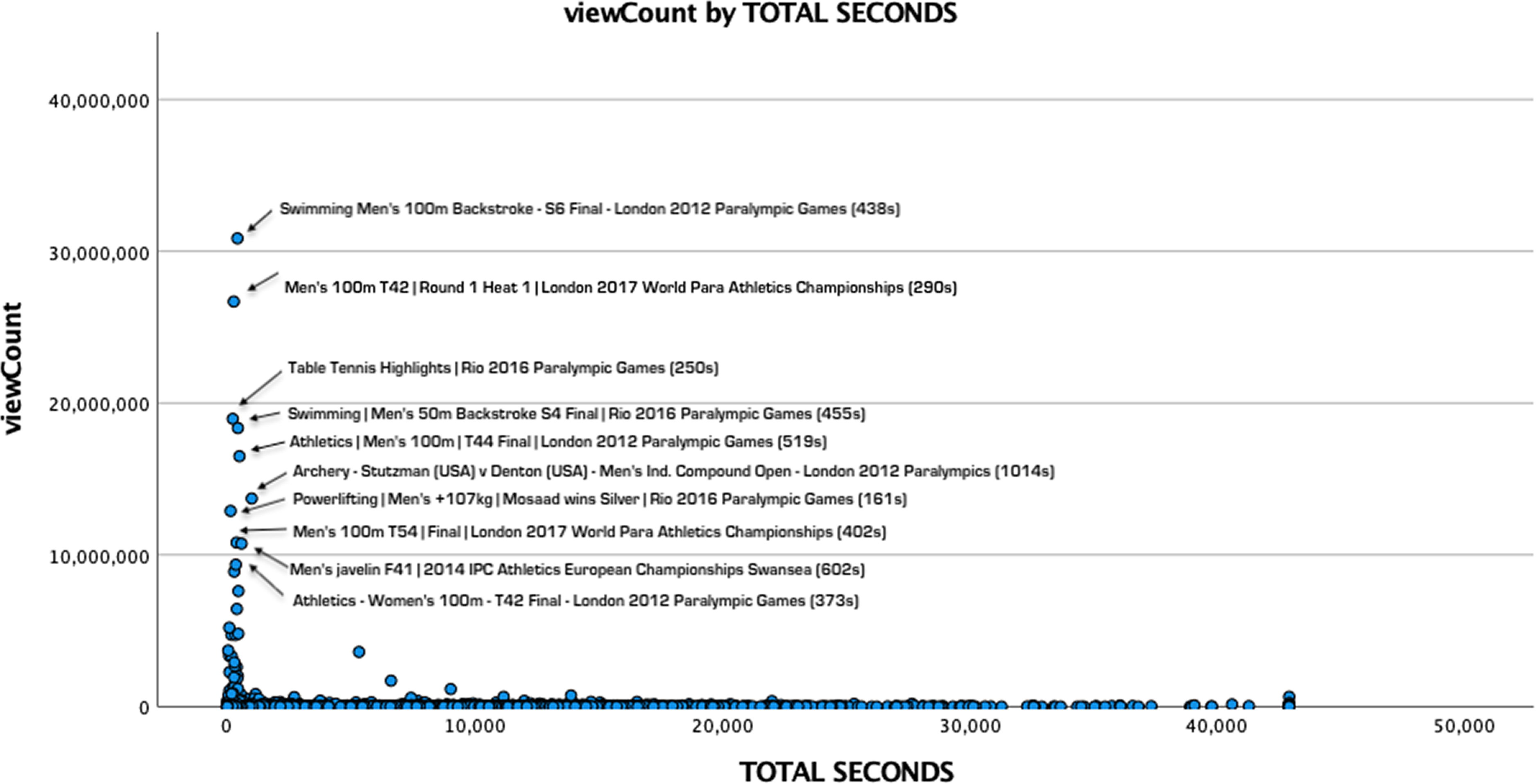
View count per length of video in seconds.
Correlation matrix.
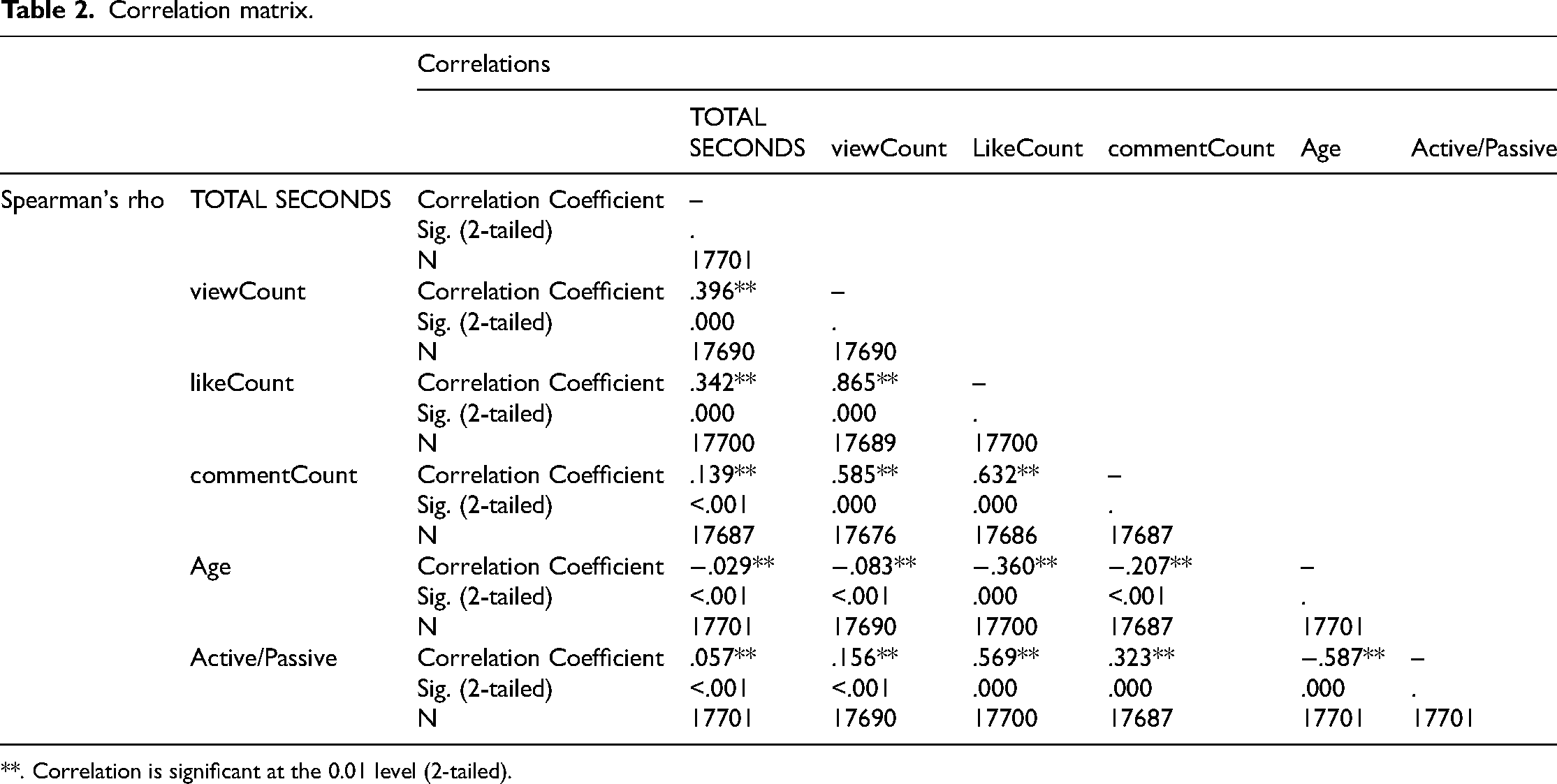
**. Correlation is significant at the 0.01 level (2-tailed).
Another important finding from the above correlation analysis is that newer videos have better engagement metrics. On the one hand, this can be explained by the platform scalability whereby the number of users has almost doubled in the last five years (Statista, 2021b), and thus newer videos potentially have more viewers. Yet, on the other hand, it is important to stress that users are not joining the platform and then consuming older content. This is further evidence of the nature of YouTube as a ‘content agnostic’ platform (see Burgess and Green, 2018) that enforces a constant adaptation on all its users (see Nieborg and Poell, 2018) and commands a constant act of new content creation under new platform guidelines. This enforcement is better encapsulated by new platform affordances such as the ability to stream and share longer video formats – in 2010, for example, YouTube allowed all users to post videos of up to 15 min (YouTube, 2010), whereas in 2022 all verified users can post videos of up to 12 h (YouTube, 2022b). This change can be evidenced in Figure 2 below, where we perceive the ‘fit line’ to be slightly inclined, meaning that the IPC has been increasing the length of its content during the past few years.
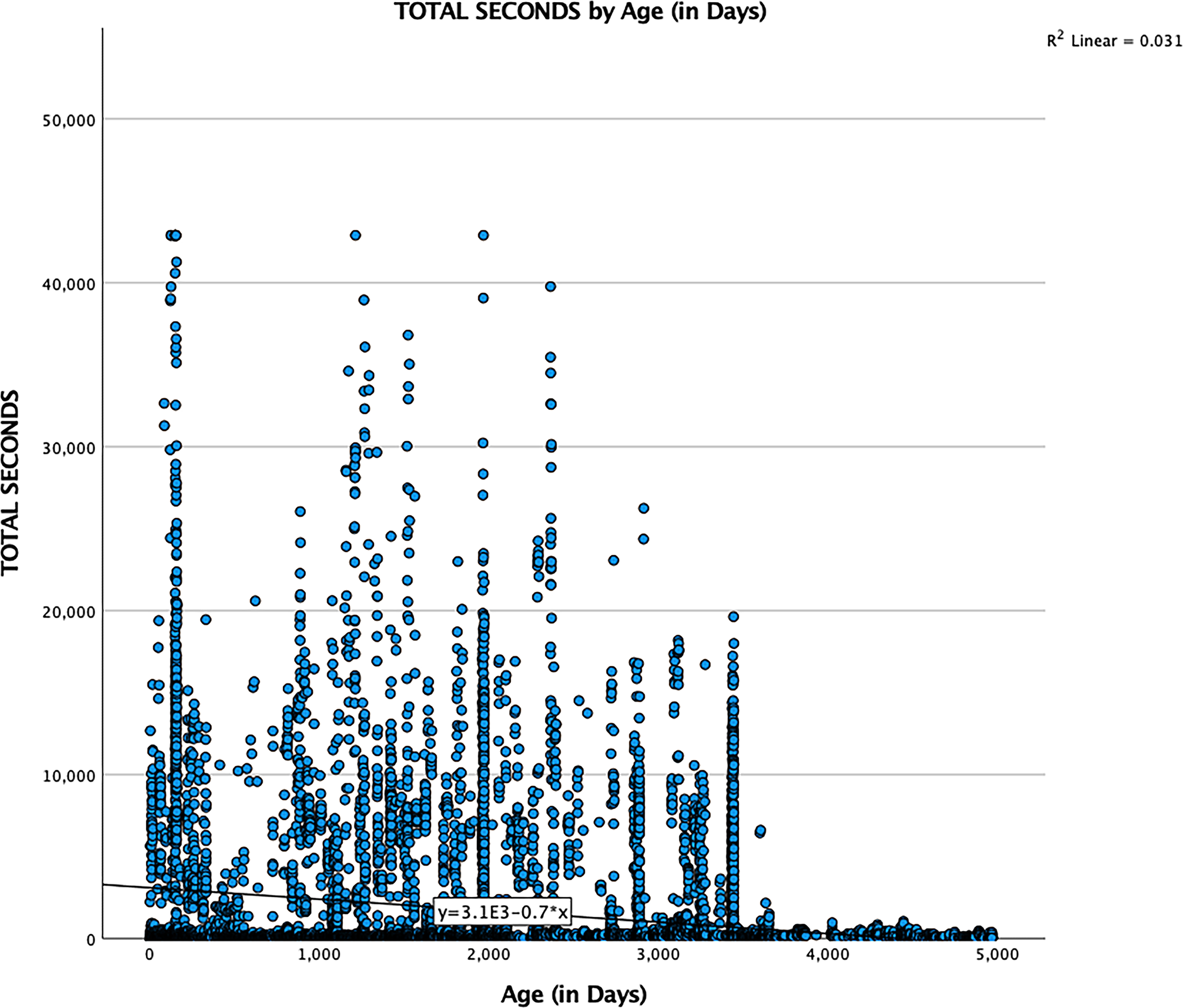
Length of videos in seconds per age in days.
Whilst newness correlates with higher engagement metrics as seen in Table 2, this is not without further complications as is demonstrated by the findings from the length of the previously discussed videos. By plotting views in relation to age (see Figure 3), it is possible to recognise clusters of videos that become outliers in this correlation. Unsurprisingly, those clusters refer to videos of some of the mega-events organised by the IPC since the creation of its YouTube channel, namely the Paralympic Games of Tokyo 2020, Rio 2016, London 2012 and Beijing 2008, and also European and World Athletics and Swimming events. Whilst the IPC constantly creates and shares videos on YouTube with an average of 3.46 videos per day, the ones receiving more attention based on the engagement metrics happen only at every edition of the Paralympic Games (1460 days).
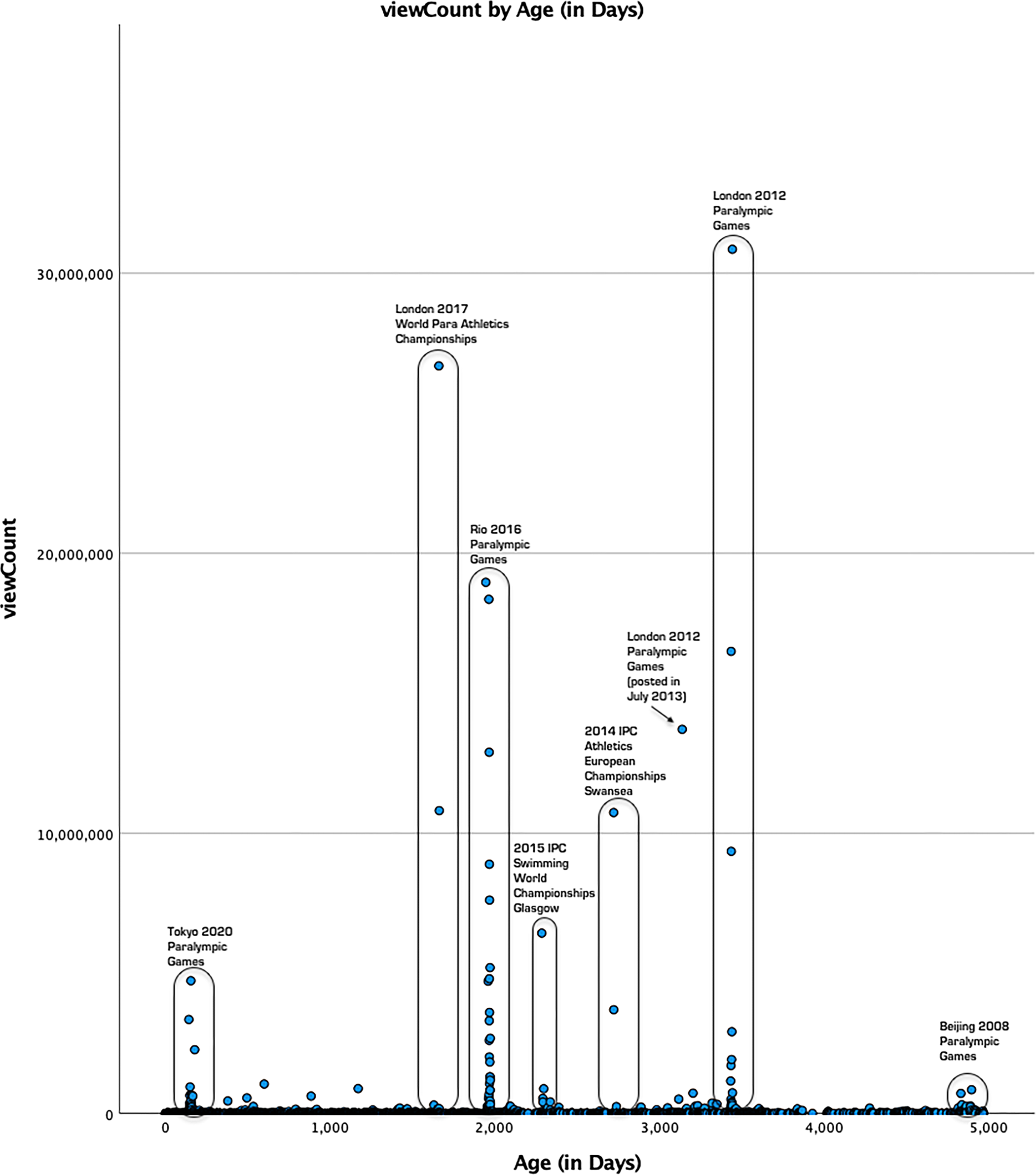
Views per age in days.
Nevertheless, whilst the IPC has utilised YouTube's platform affordances by streaming and posting entire events or posting shorter video content, the same cannot be said about users. As was found by Petersen-Wagner (2022) in terms of FIFATV, there is still a tendency for passive consumption in comparison to other active engagement metrics such as likes and comments (see Table 1 ). In terms of the Paralympic Games YouTube channel, the average active/passive ratio of 0.0089 means that only around every hundred views would the videos get an active engagement, and moreover this tends to be a like rather than a comment. It appears that users may be approaching YouTube as an alternative to TV by mimicking the same cultural practices of passively consuming its content. Finally, despite the predominance of passive consumption over active participatory action, there are some indications, based on the correlations and the line of fit (see Table 2 above and Figure 4 below respectively), that cultural practices are possibly changing and that users now are engaging more actively with the content.
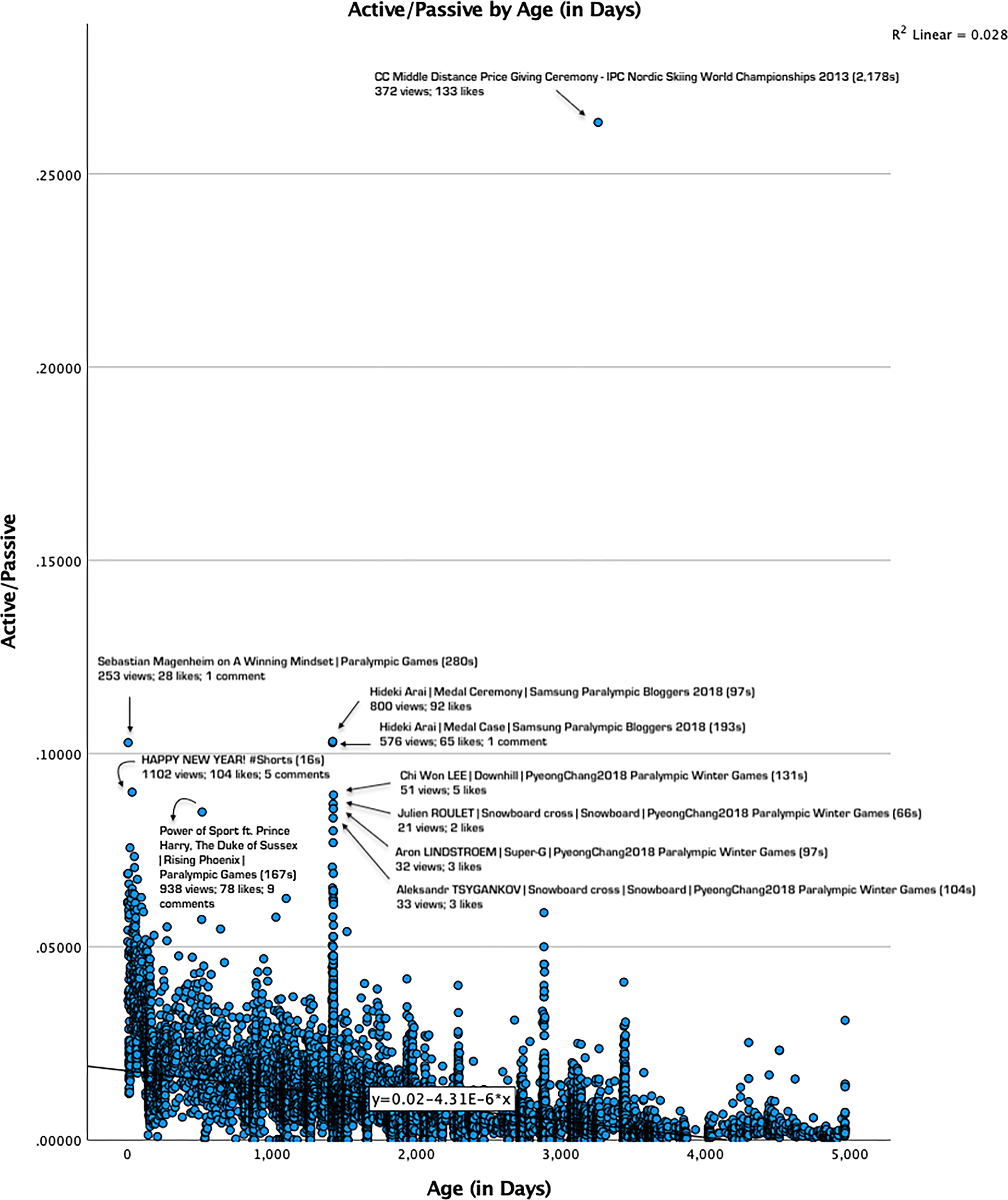
Active/passive per age.
To summarise, the above analysis demonstrates that the digital transformations seen through this platform are not uniform towards one sole direction, but are uncertain and variable. Uncertain because one particular content attribute (duration) produces more than one outcome, and variable because the rules of the game – such as new platform affordances (ability to livestream and posting over 15 min long videos) and types of content (Shorts) – are dictated and changed according to the platform's wishes.
Discussion
At a basic level, this study's data demonstrate that YouTube, as a platform, is now firmly embedded in the Paralympics’ and the IPC's consumer engagement and its digital consumption, thus representing another constituent of the Paralympic ‘media spectacle’ (cf. Pullen et al., 2022). However, when attempting to make further ‘sense’ of the above results, there are three other points that are worth discussing, which reflect wider changes speaking directly to cultural consumption practices and content creation.
At the media or platform level, insofar as YouTube can be recognised as an alternative medium for the IPC to gain awareness and publicity, and ultimately connect directly to consumers by bypassing traditional media such as TV, this remains a trend that has further complications. Within a digital revolution utopian paradigm (see Negroponte, 1995), the proliferation of media channels, and particularly of digital media, was conceived as empowering and democratising the creation and access to diverse content (McQuail and Deuze, 2020). This is better explained by the ability to bypass the editorial logic present on traditional media (Nieborg and Poell, 2018) in which disability sport in general and the Paralympic Games specifically have received meagre space (Hardin, 2006; Solves et al., 2019). Despite that, when utilising platforms such as YouTube for achieving its goal of promoting inclusivity and diversity, the IPC enters a new business logic that is now governed by Alphabet Inc's secretive algorithm. Instead of being under the directions of editors and traditional media commercial interests, the IPC, by acting as a platform complementor since 2008, enters into a new asymmetric relationship (Delfanti and Arvidsson, 2019) that is dictated by Alphabet Inc's Google services business objectives that are anchored in the scalability of its multi-sided user base and advertising revenue (Alphabet, 2022).
Thus, if this new algorithm logic that the IPC enters by curating its content through YouTube is governed by scalability and advertising revenue – which has seen an increase of around 45% to almost US$29 billion during the last fiscal year (Alphabet, 2022) – then at the content level the IPC must transform its practices to conform to what is designed by YouTube as platform affordance. Whilst on the editorial logic, the IPC relied on traditional media channels to broadcast its value, it did only manage to get through editorial gatekeepers during the period of hosting the Paralympic Games (Pullen et al., 2020a, 2020b, 2022). In this new algorithm logic that commands constant content creation, the IPC has a degree of empowerment in terms of shaping the visibility of all athletes and sports irrespective of nationality or disability. Inasmuch as this is the case at face value, as the content available on the channel comprises different events, sports, classifications and nationalities of athletes, just a few of those videos receive a reasonable amount of attention. Consequently, it is possible to speak of algorithm gatekeepers that shape both production and consumption of content in this platform.
Differing from the editorial logic where gatekeepers are comprised by experts working within media organisations, in the algorithm logic the gatekeepers are both the designers of the platform affordances and algorithm – namely the engineers at Alphabet Inc – and end users who feed the algorithm. For the former, it is only possible to reverse engineer and have an educated guess on how it works (van Dijck et al., 2018). Meanwhile, for the latter, there is more material to put the pieces together. On YouTube's content creator page (YouTube, 2022d), there are two indications that the algorithm is more concerned with how people consume the content, rather than what the content is. This ultimately suggests that algorithm gatekeeping does have an important input from users. For instance, this is evident in YouTube's (2022d: 1) statement holding that: ‘our algorithm doesn't pay attention to videos, it pays attention to viewers […] we track what viewers watch, how long they watch, what they skip over, and more’.
Whilst some of this information is available only to YouTube and content creators (e.g., the IPC), other types of data – as underpinned by our analysis – provides indications of what generates more engagement and attention by users and thus become recommended by the algorithm. Hence, it may ultimately be sold to advertisers. As such, at the user level, it is possible to suggest that, because of the unpaid digital labour (see Fuchs, 2013) from those users being key to determining what is recommended (or not) to others, then the culturally-rooted consumption practices associated with TV (e.g., passive consumption and a focus on big events) that is mimicked on YouTube are possibly hindering the development of the sport which the users are so passionate about. In a way, by not using all the platform affordances, the IPC's audiences on YouTube are possibly creating algorithm barriers – such as the one described above – for other potential users.
As IPC (n.d.) describes its own YouTube channel, the platform is seeking to ‘[stream] sports like you have never seen it before’ and, accordingly, whilst YouTube becomes an alternative medium for the IPC to promote its overall value proposition by showcasing athletes, sports, and the events it organises, it does so within a novel business logic that is anchored in Alphabet Inc's secretive algorithm. The IPC is allowed out of the editorial logic that kept it mostly hidden from mass audiences, but enters a new iron cage (see Weber, 1995) constituted by the specific platform algorithm logic. Therefore, it is more appropriate to understand this novel digital sport/media nexus as being the outcome of transformations rather than revolutions by the fact that similar power asymmetries continue to operate. Concurrently, the IPC is under the power of traditional linear media editorial logic and of digital media platforms algorithm logic, demonstrating how this new media ecosystem is manifested by coexistence.
Conclusions, limitations and future research
The purpose of this article was to examine the IPC's YouTube Channel (YouTube, 2022a) to understand the broader question of how the Paralympic Games engages consumers in a digital setting and enables ‘alternative’ consumption of the event. Whilst social media platforms have transformed the ways in which individuals consume media content during sport mega-events, minimal research has, to date, examined the Paralympics as a (social) ‘media spectacle’ (Pullen et al., 2022) and this event's official YouTube channel. This article aimed to fill this gap in the academic literature by exploring the nature and content of IPC's YouTube channel and the content it curates and produces as a tool to facilitate a worldwide media engagement which the organisation outlines as a specific strategic objective, along with other objectives speaking to, inter alia, maximising the experience of the Paralympic Games, enhancing its general global reach and communicating the values of the Paralympic brand (cf. IPC, 2019b). To do this, we adopted a digital methodological approach and, more specifically, we employed YouTube Data Tools (Rieder, 2015) to scrape data from 17,701 YouTube videos from the Paralympic channel. Drawing from this database, the article advances two central, inter-connected arguments. First, our analysis argues that YouTube should appropriately be understood as complementing and substituting those media that are oft-considered more traditional in the consumption of sport mega-events (e.g., television, radio, print). Second, in the context of the symbiotic relationship between media and sport, we contend that the digitalisation of the sport industry, which we have captured here, has an adaptive and continuing, rather than revolutionary, effect on the complex sport/media couplet. Moreover, this adaptive nature we are alluding to occurs within the context of specific platform economics (see Nieborg and Poell, 2018; van Dijck et al., 2018); the IPC can bypass traditional media economics that are governed by an editorial logic that privileges certain sports and genders, but enters into a new algorithmic logic that changes in accordance with the interests of infrastructure core platforms such as Alphabet Inc.
Whilst now representing a digital media event, the Paralympics has also maintained a role to help advance a more inclusive and equitable society (Pullen et al., 2020b). As such, this study has extended the inter-disciplinary body of literature on the Paralympic Games as both a global sports and media event (see Goggin and Hutchins, 2017; Pullen et al., 2022; Burton et al., 2021). Furthermore, this study has connected with sport studies scholarship on the digital consumption of sport and its associated cultural practices (e.g., Lawrence and Crawford, 2022; Tang and Cooper, 2013), and it provides a reflection of how wider social, technological and media-related changes impact sport industries and its events. However, there are still some limitations to this study because we have focused on one event (the Paralympics) and one platform (YouTube). Meanwhile, YouTube's API does not provide other important data such as share numbers – which are highly relevant to sport-related content because of the communal nature of consuming sport – time spent watching, or what sections are seen or skipped over. Further, due to space constraints, this article does not delve deeper into a qualitative analysis of which content was favoured by the algorithm gatekeepers, such as the videos attracting the most attention and engagement. Indeed, this remains another limitation but one that future research can seek to investigate. In that sense, we make no generalizable claims vis-a-vis the holistic digital content of the Paralympics. Instead, we firmly acknowledge that, to fully understand the alternative consumption of the Paralympics, it is important that other platforms, such as Instagram, Twitter, TikTok, and others that are widely used in non-Western locations are considered by researchers. Future research could, therefore, seek to build on this study, but concurrently position itself in the context of other social media platforms. Then, scholars possessing a pronounced interest in YouTube (and its associated socio-cultural and circulation practices) could seek to explore other sport mega-events’ YouTube content (e.g., the Olympics, Commonwealth Games, or the European Championship in football (soccer)) (see e.g., Petersen-Wagner, 2022; Lee Ludvigsen and Petersen-Wagner, 2022a; 2022b). Whilst we acknowledge the limitations of this study, our central arguments still remain important. Ultimately, upon consuming sport events, ‘[t]oday's media users are no longer simply choosing “either/or,” but also – at times – use “both and” or “all possible”’ (Tang and Cooper, 2013: 866). As demonstrated here, YouTube remains one of those platforms that makes it possible to transcend the ‘either/or’ binary through its complementary and substitutionary nature regarding other and more ‘traditional’ media.
Footnotes
Declaration of conflicting interests
The author(s) declared no potential conflicts of interest with respect to the research, authorship and/or publication of this article.
Funding
The author(s) received no financial support for the research, authorship and/or publication of this article.

Note
1. To provide further contextualisation to our analyses we have added the top 10 most viewed videos' details in figures 1, 3 and 4