




Abstract
The present study aims to identify the societal implications of the first-ever Iranian female medalist in the Olympics to date. We explored the meanings given to Kimia Alizadeh's success within Iranian society. We collected data through an examination of online news agencies and social networking sites using Leximancer software, a computer-assisted program for qualitative content analysis. This analysis uncovered four main themes: ‘women's sports and the dynamics of local-global policy’, ‘hope and determination’, ‘pride in light of hijab’, and ‘meaningful and historic medal’. It was concluded that the societal implications of this medal-winning are more important than the quality of the medal itself within Iranian society. We also suggest assessing Iranian sportswomen within their own socio-cultural context.
Introduction
Relatively little is known about the actual societal outcomes of elite sports successes. De Rycke and De Bosscher (2019) have argued that elite sports do not deliver the same impact for every nation in the same situation (ibid.), and therefore should be contextualized by taking into account differences in population, economic, political, and sociological conditions (De Bosscher et al., 2008b). This will then result in an idea of what is defined by De Bosscher et al. (2008a) as ‘relative success’ meaning that the quality of medals should not be viewed as the only benchmark for success in sports competitions for every society. For instance, a bronze medal may convey the effectiveness of sports policy in one country but may be seen as a symbol of failure in another one (De Bosscher et al., 2008b).
Conceptual framework: female muslims and sports
Female athletes have been facing challenges worldwide such as combining motherhood with elite sports, inequality in holding managerial positions in sports, and less access than men to sports equipment (Bowes et al., 2020; Burton, 2015; Martínez-Pascual et al., 2017). Besides such general challenges, it is stated that female elite athletes in Islamic countries encounter broader limitations in professional sports than their counterparts in non-Islamic countries. These limitations consist of, for example, cultural attitudes of the general population towards female sports participation (Sadeghi et al., 2018; Pfister, 2010), ‘fear of de-feminization’ as a result of sports practice (Sofian et al., 2010), perceived lack of awareness on religious matters, legal prohibitions, social stigmas related to women's sports participation (Qureshi and Ghouri, 2011), poor facilities, and scarce funds for women's sports (Kadi, 2016). Hargreaves (2007) attributes most of the restrictions for practicing sports amongst Muslim women to the patriarchal relations of power and the control of those Islamic governors who have generalised particular interpretations of Islam around Muslim women's participation in (professional) sports.
Sports activities are indeed encouraged in Islam if they contribute to meeting the standard level of a healthy lifestyle. Sfeir (1985) in her study on the perceived conflict between Islamic cultural traditions and modernisation argued that ‘Islamic religion not only does not try to depreciate or deny sports participation for women but also attributes great significance to physical strength and sports activities’ (p. 300). Similarly, female scholars who study sports within the Islamic framework discuss that developing equal opportunities for women in sports is compatible with Islamic values despite that women are expected to adhere to ‘modest dress’ and their cultural norms (Benn et al., 2010).
It is suggested to develop sports participation amongst Muslim women by adjusting sports environments to characteristics of their Islamic societies/communities. Alamri (2013), for instance, in the Australian context, argued that the hijab, the Islamic dress code, needs to be considered when developing sports participation programmes for Muslim women. She suggests decision-makers provide Muslim females with sports places that square with their cultural norms and Islamic dress code to encourage their participation in sports activities (ibid.). Walseth (2006) studied the involvement of young Muslim women in sports activities in Norway and compared the contribution of ethnic identity and Islamic identity to the participation of Muslim women in sports. She concluded that, on the one hand, Muslim women's identification with a religious identity encourages them to participate in sports due to the supportive ideas of Islam to keep up with a healthy lifestyle. On the other hand, women who deal with constraints in sports participation were described as those who identify themselves with their ethnic identity (ibid.).
The situation at the elite level, though, has been relatively different. Since modern sports were initially based on the characteristics of Western societies, the religious leaders consider, for example, the general sports clothing as immodest for Muslim women and as reflective of corrupt values of the West They, therefore, underscore the necessity of adhering to the hijab (Hargreaves, 2007). Thus, due to its spread as a new cultural phenomenon in Islamic societies, compliance with the requirements of Islamic culture (e.g. dress code, behaviour) to take part and promote at the professional level has been somewhat challenging. The specific regulations of some sports associations on Muslim women athletes’ dress worldwide have restrained their participation and representation in elite sports, to a certain extent (see, e.g. Ali, 2020).
With that said, Ahmad (2011) examined the experience of British Muslim women and concluded that despite dealing with challenges such as discrimination, racism, Islamophobia, and traditional gender roles (e.g. becoming mothers, doing housework), Muslim female footballers in Britain have managed to find a balance between their identity as a footballer and their position within their cultural and religious context. The necessity of adhering to the Islamic hijab in playing football was mentioned by the female footballers as a symbol of their identification (ibid.). A similar point was made by Lysa (2020) who scrutinised the situation of female footballers in Saudi Arabia. She argued that although women in Saudi Arabia see the existence of conservative elements as an obstacle against the development of women's sports, they are trying to redefine the cultural codes and regulations within and by the support of the system to facilitate their participation and progress in football.
By referring to the aforementioned hurdles, Pfister (2010) argued that Muslim women's failures in sports events should not be attributed to less talent, determination, or commitment, but should instead be understood within the context of the limitations they experience to practice modern sports. She also pointed to the desires of Muslim women to represent their national and religious identity in mainstream sports events (ibid.).
Female Muslim athletes (veiled or unveiled) have become role models for the new generation of Muslim girls and women who prefer to follow their desires in sports. For example, Tunisian fencer Ines Boubakri dedicated her medal in the 2016 Olympics to all Arab women, wishing her victory to be a message that ‘women exist and they have their place in society’ (Firstpost, 2016). Consistent with this, the fencer Ibtihaj Muhammad, who became the first American Muslim female medalist ever in the Olympics, said that ‘what I love about my experience as a minority member of Team USA is that I’m able to encourage other youth to pursue their dreams and to not let other people dictate their journey for them’ (Fundación de Cultura Islámica, 2016). Likewise, Muslim women athletes who participated in the 2008 Olympic Games (six Egyptian athletes, three Iranians, an Afghan, and a Yemeni) expressed that they want to inspire other women within their countries to dispose of Muslim-related stereotypes in pursuing sporting careers (Bremer, 2008). In so doing, they also show how religious values such as wearing a hijab in elite athletic events should not necessarily be seen as a deterrent factor but also as a source of inspiration and symbol of success for the rest of the Muslim female athletes (Amara, 2012; Bremer, 2008).
To sum up, Toffoletti and Palmer (2017) argued that it is important to understand, for example, sports participation amongst Muslim women within their specific cultural context. This means, amongst other things, that attention needs to be paid to how sports participation differs between Western and Muslim women, without returning to some common stereotypes from a Western perspective or Western media which frame Muslim women as oppressed, silenced, and marginalised (ibid.).
Women's sport in Iran
In the 1930s, a law on compulsory sport in schools was passed by Iran's parliament that also included Iranian girls. In the early 1940s, Iranian women started taking part in international sports events which resulted in a few important achievements (e.g. bronze medal in volleyball in the 1966 Asian Games). Traditional and religious attitudes discouraged women's engagement in sports activities, and women's sports policies did not necessarily include the lower socioeconomic strata of pre-revolutionary Iran (Chehabi, 2002; Hoseini Khah, 2017). In the first decade of the Islamic revolution (the 1980s), sports activities stagnated due to the devastating Iran-Iraq War (1980–1988), the subsequent budget shortcomings, and lack of enthusiasm for these activities. The early 1990s was, however, an era in which relevant officials started providing Iranian women with a supportive sports participation policy compared to the early 1980s (ibid.).
Iranian sports scholars have referred to Islam as mainly encouraging (instead of limiting) women to participate in sports activities and maintain healthy lifestyles (Mirsafian et al., 2014). The positive societal impacts of their accomplishments in international sports competitions (e.g. boosting a sense of pride amongst women, women's confidence in society, (trans)national bonding, and perceptions of hijab as not being a restrictive factor for females in sports) have been emphasised to facilitate Muslim women's promotion in elite sports (Farzadfar et al., 2019).
As a result of such negotiations, Iranian women could re-start participating in international sports competitions. For example, in the 1990 Asian Games, Iranian women shooters became the first female athletes to represent post-revolutionary Iran in international sports competitions (SmallMedia, 2013). Since then Iranian female athletes from various sports disciplines have managed to achieve medals in different international competitions. The national shooting team earned the first medal for women's sports in the 2002 Asian Games (Dana, 2017). Soheila, Elaheh, and Shahrbanou Mansourian earned a total of 30 Asian and world medals in Wushu (Ifpnews, 2017). The karate athlete, Hamideh Abbasali also achieved several medals in the World and Asian karate championships for the country (Salari, 2017). The national women's futsal team, champion of two Asian Women's Futsal Championship (Albawaba, 2018) as well as the national Kabaddi team that won the title in the 2018 Asian Games for the first time (rferl, 2018) are all typical examples of successful Iranian female athletes in international tournaments.
Figure 1 provides an overview of the proportions of total medals achieved by Iranian female athletes for different sports disciplines in international sports tournaments since 2002 (Asian Games/Cups, World Cups, Olympic Games).
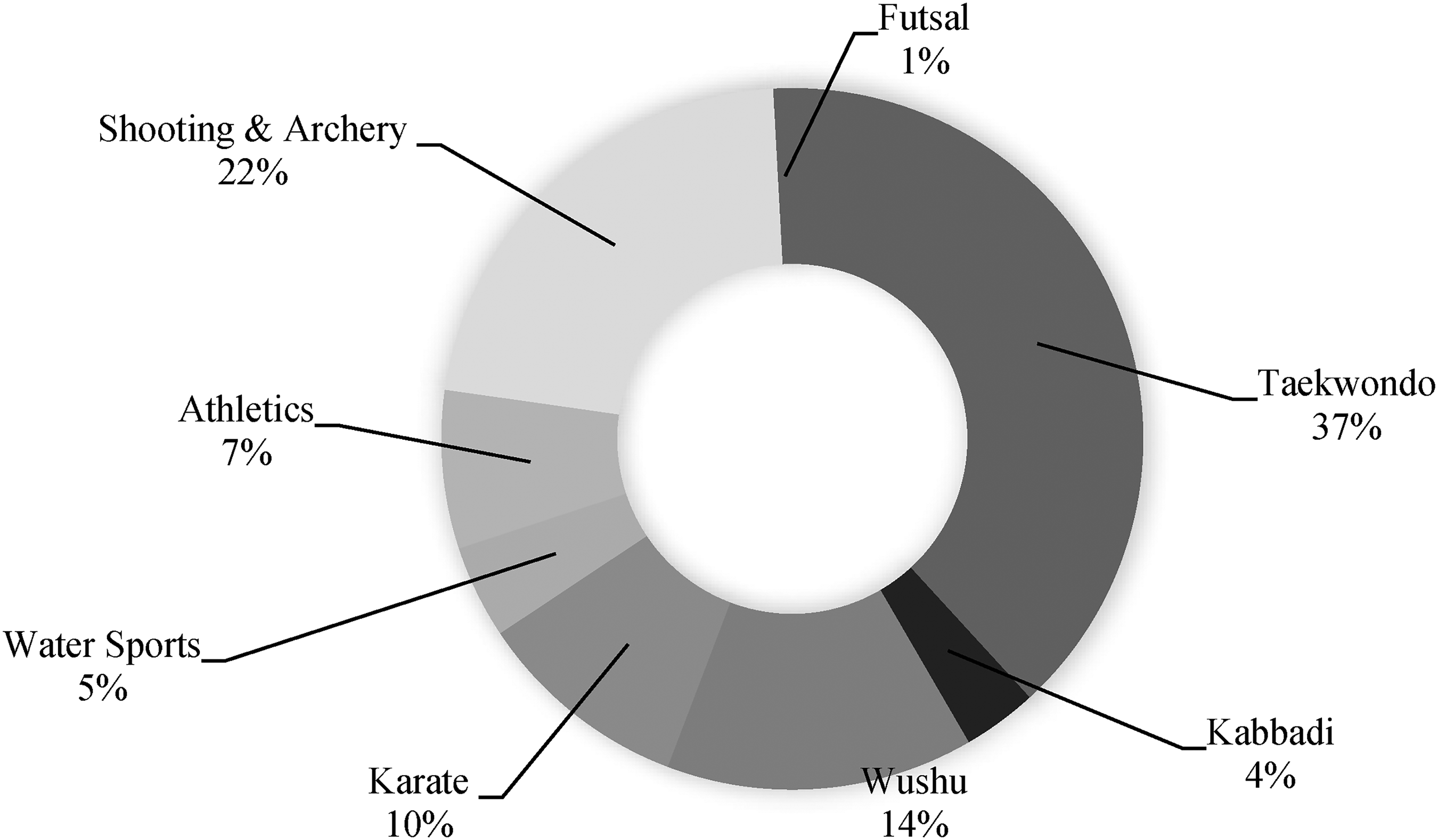
The proportion of medal achievements by Iranian sportswomen in different sports disciplines. Source: Iran’s Sports Federations.
Figure 2 demonstrates the trend of medal achievements separately in single sports games (Asian/World Cups) and multi-sports games (Asian/Olympic Games).
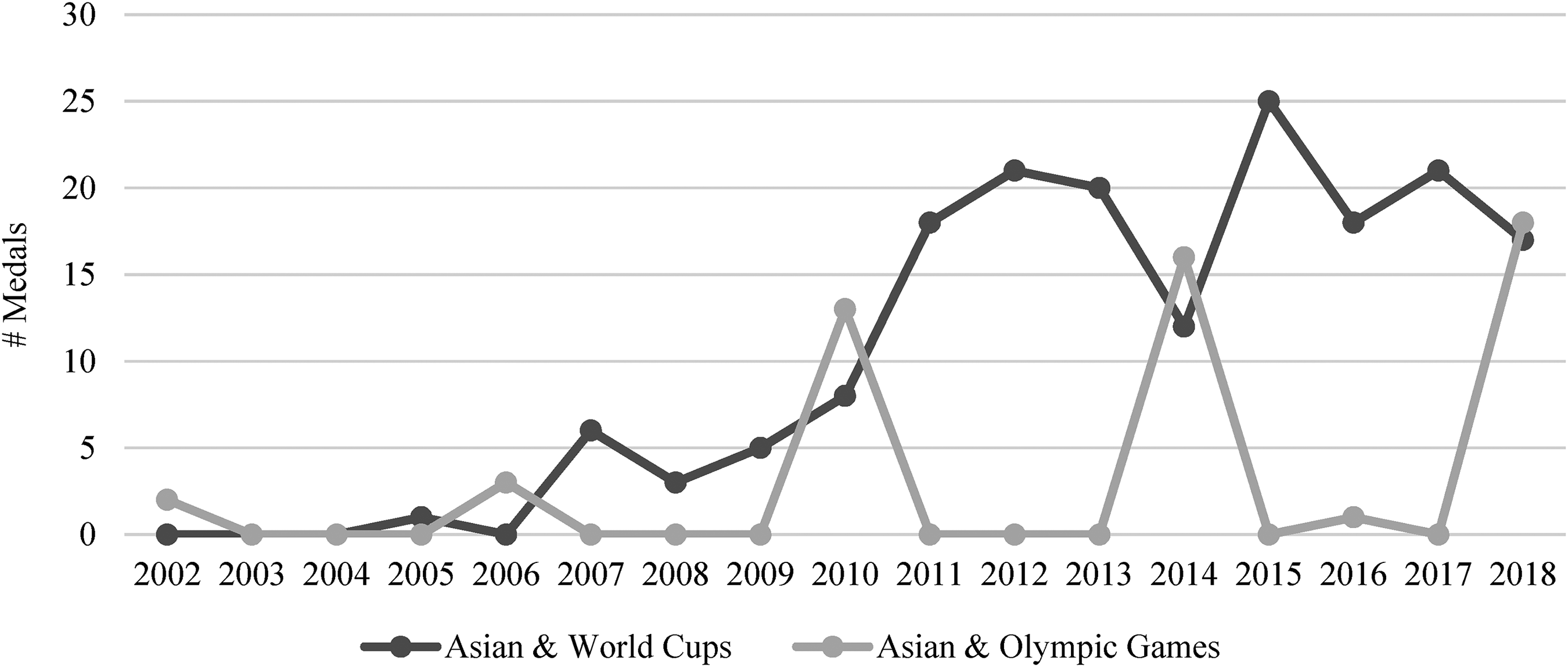
Trends of medal achievements by Iranian sportswomen in international competitions. Source: Iran’s Sports Federations.
The increasing number of medals over time is probably the result of the growing number of Iranian female athletes who practice sports at the grassroots level. This number has increased from 51,772 in 1978 to 895,855 in 2012 (Alivand et al., 2017). And although the Iranian state played an important role in limiting women's engagement in sports in the early 1980s, it seems currently more supportive of women's sports participation (Shahrokni, 2013).
However, it would be misleading to disregard existing limitations to participate in professional sports for Iranian women. First and foremost, the interaction between globalization and localisation forces seems to negatively influence the resource allocations to women's sports in Iran. This relates, for instance, to the increased secularisation of western societies in the past decades that have generally turned religious practice into a private and psychological affair (Benn and Dagkas, 2013).
While the Iranian sporting governors have tried to connect modern sports with domestic laws of the Iranian state, they also had to deal with challenges both at a national and international level. Internationally, for example, Iranian women footballers were banned from competing in sports events over the past years as a result of the perception of the hijab as a religious symbol that is incompatible with sports participation, amongst other things (Ayub, 2011). On the national level, some religious leaders have indicated how sharia (Islamic religious law) and participation in international sports competitions are incompatible with each other (Hartmann-Tews and Pfister, 2003). They, for instance, criticised the televised screening of the Iranian women's national karate team in the 2014 Asian Games, calling women's participation in such sports events, ‘contrary to women's virtue’ (Guardian, 2015) and a ‘fight against (Islamic) values’ (BBC, 2016).
Regardless, by and large, Iranian women have succeeded in participating in elite sports over the past years (see, e.g. Brown and Connolly, 2010; Hoseini Khah, 2017; Steel and Richter-Devroe, 2003). This has led to better results in major tournaments.
The achievements of Iranian women in the Asian and the World Cups aside, it was in particular taekwondo Olympian, Kimia Alizadeh whose success received considerable attention in Iranian media and foreign-based Persian-language media as she became the first Iranian female medalist in the 2016 Olympic Games. Further, it has been emphasised that detailed and in-depth analysis of an individual unit (e.g. person, society) can, to a large extent, contribute to the cumulative development of knowledge (Flyvbjerg, 2011).
These are important reasons why we have examined the implications of Alizadeh's achievement in the 2016 Olympics for Iranian society.
The following section provides a brief review of the background of Kimia Alizadeh.
Kimia Alizadeh, The first Iranian female medalist in The olympics
Kimia Alizadeh was an 18 -year-old elite Iranian female taekwondo athlete when she won the first-ever Olympic medal for Iran in women's sports in the Rio 2016 Olympics. She had already earned gold, silver, and bronze medals in the 2014, 2015, and 2017 World Taekwondo Championships, a gold medal in the 2015 Grand Prix competitions, a gold medal in the 2014 Youth Olympics, and lastly a bronze medal in the 2018 Asian Championship (Islamic Republic of Iran Taekwondo Federation, 2020). Because of her achievement in the 2016 Olympics, the BBC selected Alizadeh as one of the 100 most inspiring women from around the world in 2019 (BBC, 2019).
To date, little attention has been devoted to exploring the implications of female elite athletes’ successes in Islamic countries. Female sports participation and success on the international stage are far from self-evident in the Iranian context. The case of Kimia Alizadeh provides a relevant case to examine, in this regard. In this paper, we aim to investigate the societal impacts of the achievement of Kimia Alizadeh in the 2016 Olympics for Iranian society by focusing on how her success has been represented and discussed amongst Iranian media, and the foreign-based Persian language digital media. In the next section, we will provide more information on the methods that we used for this investigation.
Method
We have explored how Iranian online media, foreign-based Persian language news agencies, and audiences gave meaning to Alizadeh's success in the 2016 Olympics in the years following her medal win. It was presumed that doing interviews with the Iranian public, roughly three years after Alizadeh's achievement would probably not provide reliable findings around how that achievement was perceived. Moreover, Alizadeh departed from the country in January 2020 (which was in the middle of conducting this research). We, accordingly, deemed an examination of (online) media coverage and social media audience perceptions most suitable for exploring the meanings given to Alizadeh's success. We took the period between Alizadeh's win in 2016 until she was selected as one of the most inspiring women in 2019 as the time frame in which we analysed the receptions of her achievement. This way, we were able to gain insights into how Alizadeh's achievement was perceived in the Iranian context in the years following her medal win. Data were collected in two cycles:
Online news agencies
First, we explored web sources using the following search terms on Google (Table 1).
The key search words.
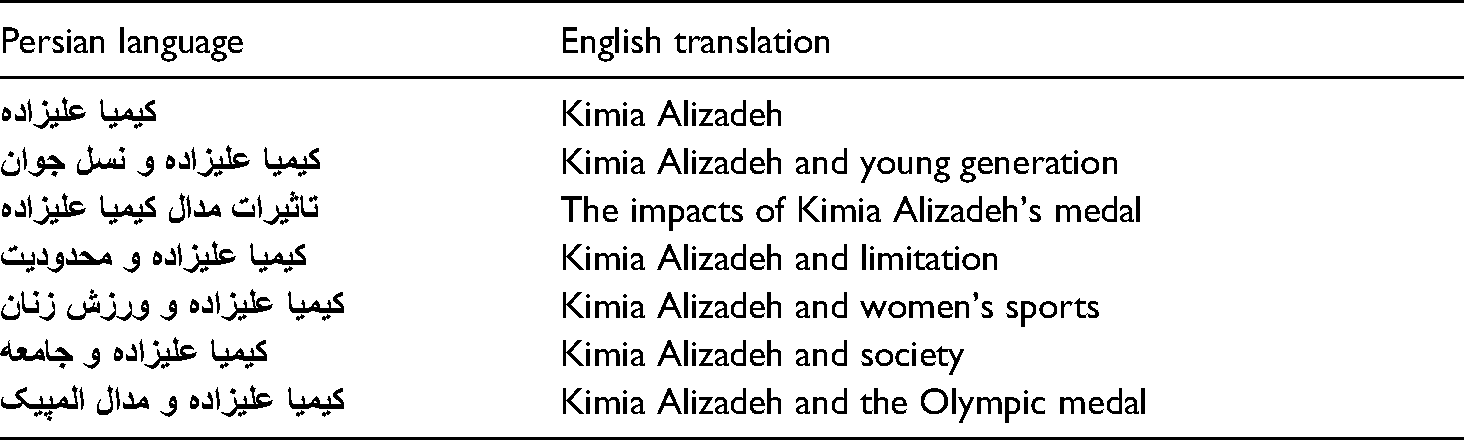
Using this search method, we collected primary data from the online (public and sports) news agencies. The main author reviewed the content of 51 websites and online news agencies between 17 August 2016 (the date of the medal achievement) and 24 October 2019 (one week after the date of Alizadeh's selection by the BBC as one of the inspiring women in the world). Some news agencies included useful information, and some virtually nothing. Even though the majority of data were collected in the early months after Alizadeh's success in the Olympics, we extended our search period to explore possible further social implications of her achievement in the years after her win.
We did not take into consideration duplicated news items of any news about Alizadeh's performances in other sports events than the 2016 Olympics.
Social networking sites (SNSs)
In addition to online media, we also explored audience receptions on social networking sites. The online statistics service Statista reported that approximately one-third of the population of Iran are active users on Instagram (Financialtribune, 2018). Due to Instagram's popularity compared to other social networking sites (SNSs), we have explored the narratives and descriptions related to Alizadeh's success by Iranian active Instagram users to capture receptions of her achievement. We have also looked at data from Twitter and Facebook, but this only resulted in a very small percentage of data on Twitter.
Vale and Fernandes (2018) have argued how the interactive nature of social networking sites can be considered an important force for driving sports fans towards such platforms. Therefore, Alizadeh's posts on Instagram as well as user-generated comments on those posts were the main sources in this cycle of data collection. The data consisted of three posts by the athlete and a total of 30,593 comments by readers: one post on August 19th, 2016 (N = 26,130 comments) and two on August 23rd, 2016 (N = 1923 & N = 2540). To guarantee the anonymity of the users’ page and avoid any violation of privacy, we paraphrased the user-generated comments when we referred to them in our results.
The data from both cycles of data collection have been imported into a spreadsheet file for additional analysis. It is important here to note that not all our data were relevant to include in the analysis as some comments/statements gave no information on meanings given to Alizadeh's achievement. Examples of comments that we considered irrelevant in light of our research aim included commercial comments and short-handed comments (e.g. great, good luck, thank God, congrats, thanks, emoji). Yet, we used short comments such as ‘we love you, wish you the best of luck and success’, or ‘May God help you’, in our analysis when they were mentioned along with insightful statements (e.g. ‘your bronze medal is worth more than a gold one. Thank God for having such talented girls!’). The comments posted by fake accounts (accounts with no clear username, no personal photo, and no/few posts) were also not taken into consideration.
We moved back and forth over the collected data in an iterative process to make sure that our analysis was based on a comprehensive understanding of the texts. By so doing, we ensured the validity of the concepts, generated from the data. The translation validity was also checked in a back-and-forth interplay with the data when the Persian texts were translated into English. The first author speaks both languages, this was key for the reliability of the data analysis.
Leximancer semantic analysis
After extracting the relevant data from the aforementioned sources and importing them into spreadsheets, they were then uploaded into Leximancer (version 5.0) for further analysis. Leximancer is a computer-assisted qualitative data analysis (CAQDA) software that analyzes textual documents (e.g. reviews, interview transcripts) by combining quantitative and qualitative methods (Sotiriadou et al., 2014). It is an ideal tool to use for analysing large datasets of social media and website content, commonly used within the sports communication literature (Allison et al., 2019; Billings et al., 2015; Chiu and Leng, 2019; Taecharungroj, 2019; Yu et al., 2020). In contrast to similar software programs such as Nvivo and ATLAS.ti, Leximancer can algorithmically determine themes and their relevant concepts in an exploratory manner (Angus et al., 2013). By extracting a semantic pattern from existing texts, it provides visual output to show a thematic pattern. This pattern is also known as the concept map in which the identified concepts (cluster of words) are grouped into themes (cluster of concepts) (ibid.).
Leximancer uses its patented algorithm to rank the concepts by connectedness (e.g. co-occurrence with all other concepts) (Leximancer, 2020). The algorithm then creates themes based on clusters of concepts that are closely connected. The thematic summary, produced by the program, includes a connectivity score to indicate the relative importance of the themes (the most important is the top theme at 100%). This score is calculated using the connectedness of concepts to that theme, thereby enabling us to measure the importance of a theme within the dataset. For instance, very important themes are closely connected to many of the concepts, found in the text (ibid.).
The analytical procedure of Leximancer is also illustrated as follows (Allison et al., 2019; Angus et al., 2013; Chiu and Leng, 2019; Crofts and Bisman, 2010; Frederick et al., 2016; Hyndman et al., 2020; Palmer et al., 2014; Thomas, 2014) (Figure 3):
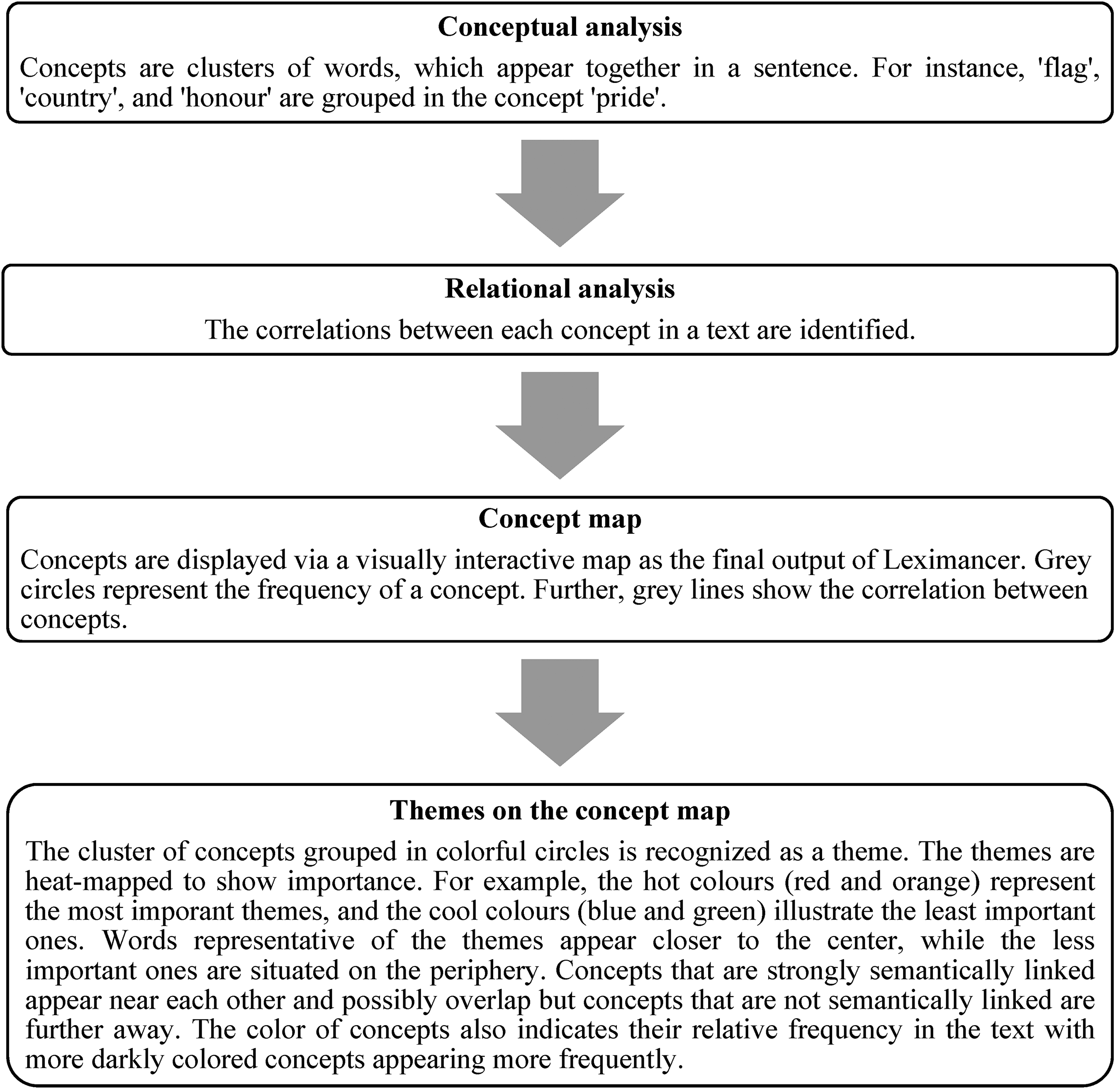
The process of leximancer analysis.
It should be noted that we intervened in the automated data analysis when necessary. As an illustration, we merged several of the Leximancer-generated concepts into one since we identified them as having similar meanings or as being used interchangeably (e.g. ‘medal’, ‘medal-winning’, ‘medalist’). We also removed misleading or insignificant words from our analysis (e.g. ‘clear’, ‘decide’, ‘day’, ‘head’, ‘name’, ‘person’).
Lastly, we reviewed the data and emerging themes in detail to check the theme and the text that belonged to a theme and renamed a theme if necessary so that it would accurately reflect its nuance and the actual meaning. A similar re-naming process was applied to the concepts. For example, in the present study, we renamed the concept ‘belief’ into ‘confidence’ as we found that the latter reflected better the actual meaning of the text, related to this concept.
Results
The dominant themes with their relevant concepts are presented in Figure 4. This concept map contains 4 themes and 12 concepts. The themes are the colored circles surrounded by clusters of concepts. The concepts appearing together frequently in the text are close together on the map as well. In other words, the relative distance of the circles and dots from each other signifies the strength of the semantic and relational connections between concepts within the text (Chiu and Leng, 2019). For instance, the concept ‘hope’ is closer to the concepts ‘determination’, ‘confidence’, and ‘role model’ than to other concepts (Figure 4).
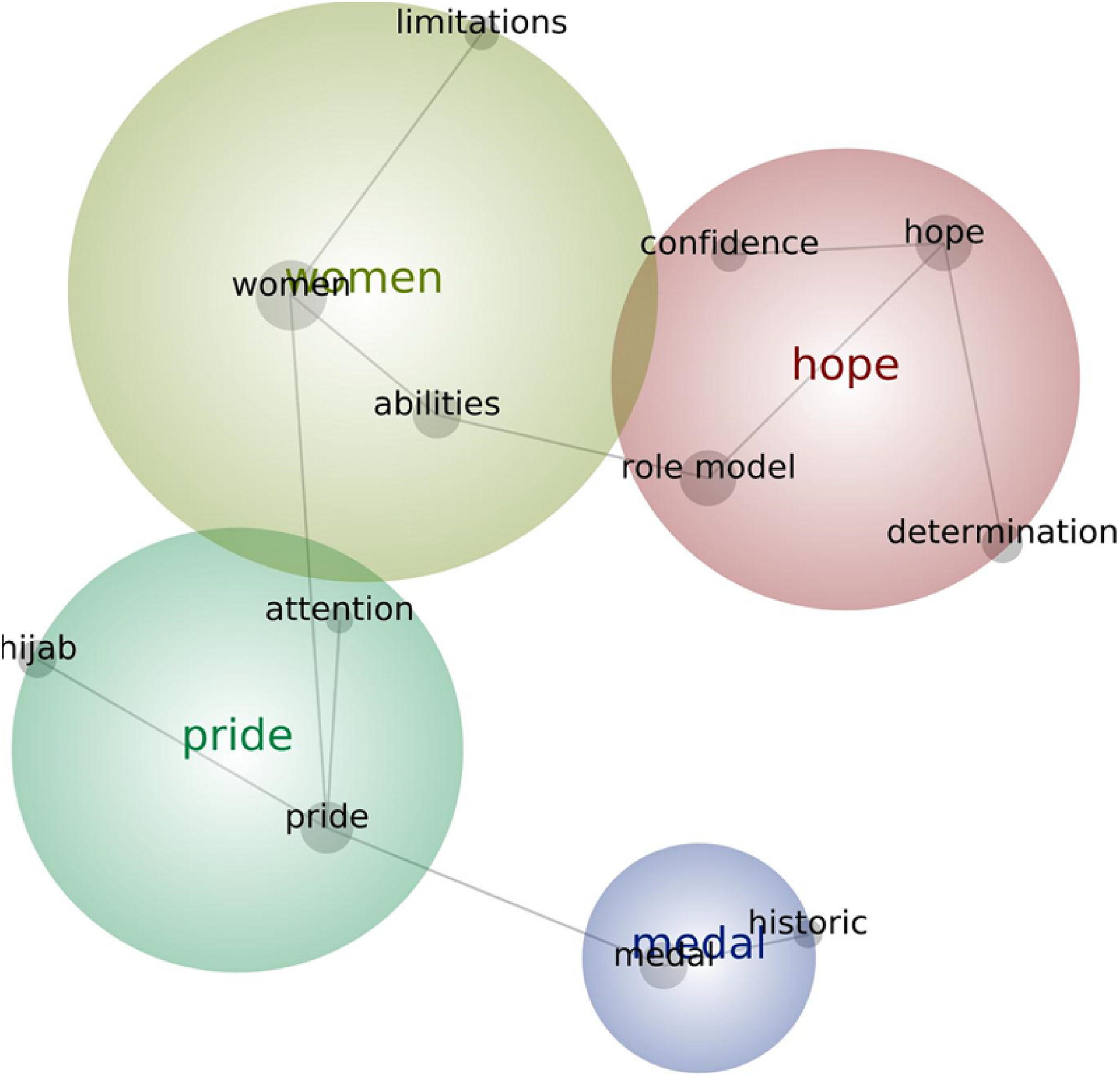
The concept map derived from leximancer analysis.
In the remainder of this results section, we will describe how the achievement of the first Iranian female medalist in the Olympics was interpreted by the social media users (mainly Instagram), and online news agencies in the Iranian context. We elaborated the titles of themes, generated by Leximancer to provide a better reflection of the actual meaning of the statements/comments that were analysed. In the text itself, we will refer to the short-handed theme title.
Theme 1: women (women's sports and the dynamics of local-global policy)
The concepts ‘limitations’ and ‘abilities’ appeared as the most connected (closest) concepts within the theme, which chiefly refer to the narratives around restrictions of Iranian women in professional sports.
The online news agencies and users on Instagram called Iranian women capable enough to obtain remarkable achievements in elite sports: ‘the best way of justifying women's rights in society is successes like this. Iranian women have to prove their capabilities in various areas to obtain the rights they deserve within the framework of (domestic) law’ (Khabaronline, 2016, August 19). The Instagram users similarly argued that repetition of such victories in upcoming sports events requires sufficient support from sports governing bodies in Iran: ‘you represented many Iranian women who can shine if the (relevant) officials invest in them and set the ground for their progress’. Alizadeh's achievement in the Olympics was also defined as driving Iranian females to fulfill their sporting desires: ‘this was a sign on behalf of Kimia Alizadeh to all Iranian women that they exist and also we will hear of their achievements in different areas for Iran more than before if they can play a part’ (Etemadnewspaper, 2016).
Besides, some Instagram users (both males and females) placed Alizadeh's success in the context of male success. For example, they compared her achievement with that of male athletes in the Olympics: ‘Alizadeh proved that Iranian women can perform as well as men, and even better than them’. Someone ironically mentioned the complementary role of Iranian women in the further development of Iranian society: ‘you reminded us that men and women, only together, can contribute to great accomplishments for Iran’. Some also compared men and women in terms of distribution of sports facilities: ‘May God help you! you nailed it despite having lesser facilities compared to males’ sports’. As said before in our theoretical section, a portion of the religious leaders within the Iranian context challenged women's participation in professional sports. This was captured in the reactions of Instagram users: ‘do not take the casual saying of some conservative clerics seriously, such sayings are not prevalent nor certain, we advocate you, and this is more important than everything’.
Some Instagram users also referred to the capability of Alizadeh in winning the Olympic medal using religious language and saying that God and prayers of Iranians will always be supportive of Iranian athletes in mega sports events. An Instagram user stated, for example: ‘Kimia, I prayed a lot for you to win and represent the capabilities and competence of the Iranian young generation!’.
Theme 2: hope (hope and determination)
The second theme in the social media messages and online media agencies’ coverage, was ‘hope’, which was mostly connected to concepts such as ‘confidence’, ‘role model’, and ‘determination’.
Online news media stressed the importance of Alizadeh's achievement for the self-image of Iranian girls and women. For instance, the news agency Khabaronline (2016, August 22) wrote that ‘you revived self-confidence and a sense of achieving unattainable desires in the hearts of many Iranian girls. They’ll be more motivated than ever before to follow up with their sporting goals’. Admiring the way that she brought a sense of self-confidence amongst Iranian women, it was indicated that ‘as of now, it becomes clear what you did for your peers. You gave them confidence and made them realize that such a stage belongs to them, too’ (Tavana, 2016).
Alizadeh's achievement was also respected, in part, due to its contribution to the empowerment and elevation of ambitions of the next Iranian female generation. For example, it was tweeted that ‘the future will tell what you have achieved for your generation. You have bolstered their faith and showed them that (sports) belong to them as well’. In this regard, the news agency Zananenaft (2016) documented: ‘she opened a door to success for Iranian girls’. Khabaronline (2016, August 22), in a similar fashion, assessed the value of Alizadeh's achievement for the new generation of Iranian girls and wrote that ‘from now on, we can witness the flourishing of Iranian women in the world, and Alizadeh took the first step’. Notably, some Instagram users described the willingness and motivation of Alizadeh as a more important criterion than quality sporting equipment in gaining her remarkable achievements. They, accordingly, tried to encourage Iranian women to be more assertive and ambitious with their goals in life.
As an example of how Alizadeh has influenced the sporting desires of the next generation of Iranian girls, one of the Instagram users commented that ‘as a professional athlete, after your success, I am motivated to earn achievements like this in the future’. Likewise, Radiofarda (2016), another news agency, explained Kimia Alizadeh as a typical example of the talented Iranian women: ‘you are an example for many Iranian women who have raised from the water like an icy peak reflexive of freedom and promotion of the character of an Iranian woman’. The portrayal of Alizadeh's achievement was also more generally emphasised by the news agency IRNA (2016): ‘by participating in this Olympics, Kimia Alizadeh once again showed the determination of Iranian women which can be evident in different fields (e.g. science, culture, and sports)’.
Theme 3: pride (pride in light of hijab)
‘Pride’ was identified as the third theme describing the impact of Alizadeh's achievement within Iran. This theme comprised concepts such as ‘attention’ and ‘hijab’.
Social media commentators implied that, as a result of Alizadeh's achievement, the relevant Iranian officials and sports governing bodies may provide more opportunities for female athletes which result, in turn, in more pride that Iranian sportswomen can create for Iran.
News agencies and Iranian fans especially admired Alizadeh's achievement in light of the perceived challenges and hindrances that she had to transcend. For example, an online news agency wrote that ‘Kimia Alizadeh did not only fight against her opponents but also additional challenges’ (Etemadnewspaper, 2016). Similarly, social media users overtly referred to an injury experienced by Alizadeh during the games and to the general limitations for female elite athletes in Iran: ‘in the Olympics, nothing was more pleasant than your achievement. Doing heavy exercises as a woman, having poor facilities, hijab, and other challenges that your opponents did not have, but you had, made it a unique achievement’. In a similar vein, an Instagram user argued: ‘you wore the hijab, you were injured, you were adolescent, and you won the Olympics medal. We are proud of you’. Some Instagram users also criticised the international regulations on Muslim women's participation in some sports disciplines. For instance, one person quoted: ‘my sister was a great swimmer but she was disallowed to participate on the World stage due to limitations on the Islamic dress code (in swimming). But I am very happy now to see an Iranian girl proving that we can perform so well in the Olympics even adhering to hijab’. Some other users were proud of Kimia Alizadeh as she represented the competencies of Iranian veiled women in sports worldwide. For instance, it was pointed out that ‘we are proud of you because you have shown the three-color flag and the hijab of a Muslim and Iranian woman together to the world’.
By the same token, the news agency Mizanonline (2016) indicated that ‘it would be conceivable to stand even on the platform of the world's highest sports competitions despite wearing the Islamic hijab’. Dana (2016), another online media agency, described Alizadeh's achievement as an example of overcoming the attitudes that consider hijab as a restricting factor in sports practices: ‘Kimia Alizadeh showed the world that Islamic values are not an obstacle to making a progress’.
Theme 4: medal (historic and meaningful medal)
The last theme that we identified in the data was ‘medal’, which is linked to the term ‘historic’ as the closest concept, and ‘pride’ as the closest theme.
Khabaronline (2016, August 22) hinted at the historic character and uniqueness of Alizadeh's achievement: ‘the first woman and the youngest Olympic medalist in the history of Iran's sports’. The importance of Alizadeh's achievement for females in Iran was confirmed: ‘you showed that your medal is not just a bronze, but a diamond’ (Radiofarda, 2016). The news agency Farsnews (2016) marked that ‘Kimia Alizadeh has divided Iranian women's sports into two parts: The period before and after her brilliant medal in the Olympics’. In the same way, Khabaronline (2016, August 22) wrote that ‘this is not just a medal, but the beginning of history and a promotion of the social life of Iranian girls and women’. One of the Instagram commentators described the value of the medal for developing Iranian women's sports and women's social life more generally: ‘Later, you will realize the value of your medal and its contribution to Iranian girls and women's medal achievements in sporting competitions and their social life’.
Discussion
De Bosscher et al. (2008a, 2008b) argue that the meaning of the number of medals in major sporting events is contextual and varies from one country/situation to another country/situation. Kimia Alizadeh, the first and only Iranian female athlete who won a medal in the 2016 Olympics was selected by the BBC as one of 100 inspiring women in 2019 who was able to contribute to creating a better future for Iranian women. To capture the implications of Alizadeh's achievement for Iranian society, we carried out the present study. In its focus on online news agencies and comments on social media platforms (Instagram particularly), within the under-researched context of Iran, the article adds novel and important insights to the existing body of literature on women's sports achievements and their impact on wider society.
Our results show the dominant meanings that online news agencies and social media users gave to Alizadeh's achievement in the Iranian context. In this section, we will take a more holistic approach in interpreting our results to better contextualize the situation of Iranian sportswomen.
In her research work titled ‘State and the paradox of gender segregation in Iran’, Shahrokni (2013) argued that most recent studies on Iran have overstated or focused on the state's negative power. She discusses how the Iranian state has shifted from being a prohibitive power to a more productive one over the past years providing opportunities for women's sports participation as in line with various elements of Islamic culture (ibid.). In a similar fashion, Steel and Richter-Devroe (2003) concluded that contrary to the common ideas about the situation of (professional) women's sports in post-revolutionary Iran, it is currently, after a period of stagnation, re-emerging with an Iranian and a wider Islamic identity (ibid.). This identification with Islamic culture also means that Iranian women have found opportunities to participate in and promote sports. Such wider identification beyond the nation-state has been described by Grainger (2006), though in a different context where he describes how the players of Samoan descent in the New Zealand men's national rugby team transcended their national borders and placed themselves in the cultural context of the Black Pacific when they were excluded from the mainstream narratives of New Zealand (ibid.). Though these are different contexts, the similarity is that athletes have tried to get included or represented in elite sports by identifying with a new cultural code; one group by identifying with Islamic rather than Western cultural elements, promoted in pre-revolutionary Iran, and the other one with the Black Pacific instead of New Zealand culture.
Yet, despite more openness towards female sports participation in Iran, the development of women's sports has not gone without challenges at both micro and macro levels. To better capture the situation of women's sport, it is worthwhile to describe the situation of Iranian women's sports in the context of a localisation versus globalization dichotomy. Globalization as a social, political, economic, and cultural force has been somewhat antagonistic to localisation as a force of adhering to indigenous structures of society (Mahdi, 2003). As mentioned earlier, some religious leaders in Iran expressed their concerns over women's engagement in professional sports and found it inconsistent with Islamic laws and values, with a reference to ‘women's virtue in Islam’ or by using phrases such as ‘fight against (Islamic) values’. Referring to Qur’an, they explained that there is no (fundamental) difference between human beings but the characteristics of men and women are different by nature: a woman should become a mother, and a mother needs to have affection to foster her child and promote a society in this manner while a man cannot raise a compassionate child (Asriran, 2014). It was specified that this does not imply in itself that women are banned from pursuing sporting careers in Islam, but instead that it does indicate that women are recommended to choose to become a mother over becoming a professional athlete (Porseman, 2014).
The religious leaders seemed to be concerned with a ‘fear of de-feminization’, women's health status, and a disturbance of gender roles in Islam which would result from becoming a professional athlete. Such concerns are not necessarily just unique to the Iranian context and can also be traced in some non-Islamic countries, to a certain degree at least Australian sports governors, for instance, initially disallowed women's participation in combat sports (e.g. boxing, kickboxing), relatively recently, referring to protecting femininity (Brown and Connolly 2010). It was articulated, amongst other things that women run more health risks compared to men by taking part in such fighting sports. This gendered perspective on sports usually plays a more prominent role in most Islamic societies (including Iran) where heavy competitive sports are, in general, assumed to lead to de-feminization and disturbing gender roles in Islam. Aside from the religious perspective about women's engagement with heavy sports (e.g. martial arts), Seddighi and Zokaei (2015), for example, concluded that Iranian women can take control not only over their body shape while playing such sports but also gain self-confidence and satisfaction with their performance (ibid.). Overall, as a consequence of negotiations with religious leaders, the regulations of national sports federations in Iran have increasingly become aligned with the desires and capacities of Iranian women to take part in professional sports. We are, accordingly, led to the conclusion of Brown and Connolly (2010) who argued that Iranian women have managed to find a way to participate in and promote elite sports. This happens within a gendered context in which women's participation in national and international sports competitions seems conditional and only allowed when in line with Islamic and cultural norms.
The success of Alizadeh in the 2016 Olympics to some degree softened the arguments of religious leaders around women and professional sports, in the sense that they congratulated her achievement and addressed her adherence to hijab and Islamic values in achieving such remarkable success at the highest sports level. Iranian sporting governors admired Alizadeh's success mainly within the context of Alizadeh wearing the hijab. In a way, they interpreted Alizadeh's win and success of women's athletes generally as justifiable as long as the athletes contributed to the development of existing religious values (of which hijab is an important element). Alizadeh's success partly reassured the religious leaders that sports performance amongst women at the highest levels does not need to be inconsistent with wearing an Islamic hijab and with upholding religious values which square with traditional gender roles (in which women are, in general, primarily seen as mothers instead of professional athletes). Likewise, it was a reminder for those international sports federations that deem the hijab a sign of followers of Islam or as not meeting the safety characteristic of specific sports, that no contradictions need to exist between wearing Islamic hijab and playing sports at the elite level.
Our data also illustrated how Alizadeh's performance has resulted in more self-confidence amongst the new generation of women, families’ encouragement towards their daughters to believe in their abilities and pursue their sporting desires, and more arguments requiring officials to trust in females’ capacities in different professional areas including sports disciplines. In line with this, Iranian female parliamentarians indicated that women's engagement in elite sports and their successes in various international competitions can indeed stimulate change within the existing (restricting) attitudes towards women's sports in Iran, spread happiness throughout society, boost social hope within the female population, and encourage women to play their part in societal development (Taghavi Rad, 2018). In the same way, Farzadfar et al. (2019) concluded that it is necessary to highlight the achievements of Iranian female athletes in major international events to spread a sense of confidence and hope amongst Iranian sportswomen. Besides, Alizadeh's achievement challenged some of the common globalized stereotypes which merely associate Muslim women with marginalisation and the Iranian context with prohibition and dominance of traditional gender roles in which women do not practice professional sports. At the same time, it also reminded limitations and shortcomings of elite female athletes in Iran which may play a part in disappointment amongst and discouragement for the rest of Iranian female athletes. For example, she departed from the country and moved to Europe in January 2020.
Compliance with cultural and Islamic norms seems important for the development of women's sports at the elite level in Iran. The combination of participation in professional sports and compliance with cultural and religious norms is also mentioned by Lysa (2020), within another national context, when she argues that Saudi female footballers attempt to participate in football by seeking their rights within the system, and using rulers’ language, referred to by Lysa as ‘rightful resistance’. Bayat (2007) further refers to the power of presence in which more visibility of women in sports can stimulate more women to practice sports and create social change rather than explicit anti-establishment actions such as collective protests.
To develop women's sports, Cahn (2015) also points to the importance of officials’ approval of and attention for female athletes’ capabilities. This applies to the Iranian context as well. Sadeghi et al. (2018), for example, encourage sporting governors to provide Iranian female athletes with adequate support and facilities after their achievements in various international competitions. Iranian online media and social media users expressed a feeling of pride after Alizadeh won the Olympic medal. Previous studies have shown how sporting success can impact pride at the national level. (Elling et al., 2014; Meier and Mutz, 2018; Sorek and White, 2016). In the Iranian context, in particular, Farzadfar et al. (2019) referred to the contribution of women's athletic achievements for boosting a sense of national pride and social trust amongst the Iranian population. In their study, they utilise Islamic language to convince the religious leaders to engage more with women's sports at the elite level (ibid.).
Perhaps more importantly, our results indicate that Iranian fans, in addition to expressing their patriotic feelings, are proud of Alizadeh's determination in breaking obstacles and showing the capabilities of Iranian Muslim women at the most prestigious sporting event. Ahmad (2011) similarly concluded that participation of British Muslim women in the 2005 Women's Islamic Games contributed to overcoming inequality in British sports, both ‘within’ and ‘outside’ of the Muslim group (e.g. in challenging dominant society's Islamophobia as well as traditional gender roles held within the own (Muslim) social group).
The medal, achieved by Alizadeh was discussed as even more valued than an Olympic gold medal since she not only was the first-ever female athlete, but also the youngest medalist in Iranian sports history who won a medal in the Olympics. The Instagram users indicated that this success could, in part, encourage a new generation of Iranian female athletes to achieve more medals for Iran in future sporting competitions.
The number of prizes for winning a medal in major sporting events is determined based on the quality of the medal, relatively in each national sports system (see, e.g. Choudhury, 2021). Thanks to this achievement for Iranians and representing Iranian veiled women, Alizadeh was granted the highest award for winning a bronze medal in the Olympics by Iran's sports Ministry, equivalent to the prize of the gold medal winners alongside other monetary and non-monetary incentives. It seems that Alizadeh's success in the Games brought about a sense of pride for Iranians, although her failure would not also result in shame in front of them because of, for example, not meeting the public expectations. Probyn (2000) under the title of ‘to lose is to shame nation’ describes the experience of Chinese athletes being obsessively treated given the quality of their medals (e.g. gold medal winners get better food, get better seats in the plane). She continues that the expectations from these athletes may lead to violation of ethics to avoid skewing towards shame in the shame-pride dichotomy (ibid.).
In the course of post-departure, Iran's Alizadeh referred to the concept of the political use of her achievement and of being ‘oppressed’ in her country though; claiming that the Iranian officials tried to promote the (Islamic) hijab in Iranian society by exemplifying this success. The experience of Alizadeh could be attributed to a variety of causes. Perhaps more importantly, her achievement was overemphasised by, for instance, some Iranian media outlets in the context of adhering to hijab causing her to depart from Iran.
We cannot generalise Alizadeh's statement to the population of female athletes in Iran because, on the one side, the enthusiasm to participate in and promote professional sports remained high amongst Iranian female athletes for the next international sporting competitions. For example, Alizadeh's achievement seemingly resulted, at least in part, in an increased number of Iranian female participants in the Tokyo 2020 -compared to the previous Olympics- who had a willingness to perform well instead of just participating in the Games. On the other side, the political use of elite sports achievements is elucidated within the framework of sports policy. For example, ‘public acceptance’ of elite sports achievements is a contributor to the promotion of elite sports policy in each state (Funahashi et al., 2015) or is a justification of sport-policy makers’ investments in elite sports (Grix and Carmichael, 2012). Thus, the promotion of Islamic principles (e.g. wearing hijab for women) has seemed to be an example of this justification in Iran's sports system.
To conclude this paper, medal-winning per se was probably not the most important implication of Alizadeh's performance. This is also evident in the reactions we have explored amongst online news agencies and Instagram users in the Iranian context. As discussed, some other themes than performance were more prominent such as attention for women's sports, hope, and pride. It is reflective of the term ‘relative success’, quoted by De Bosscher et al. (2008a, 2008b) when they referred to the assessment of the quality of a medal within its specific socio-cultural context. In this regard, we agree with Toffoletti and Palmer (2017) who argue that, in a globalized world, Muslim women's issues in sports should be addressed from within the socio-cultural context of their respective societies. We have, accordingly, tried to show a perspective on Muslim female sporting successes and, in particular, the achievement of the first Iranian female Olympian that differs from hegemonic (western) perspectives often taken to interpret Muslim females as outsiders in sports.
Lastly, it is worth noting that Islam does encourage a healthy lifestyle for women, and participation in sports as a way to meet this goal, but taking sport as a ‘profession’ is not seemingly ‘promoted’ in the arguments of some religious leaders due in large part to the contribution of professional sports to the disturbance of gender roles in Islamic societies and their perceived negative impacts on the overall health of women. Still, Iranian female athletes have been able to make remarkable advancements in elite sports -in comparison with the past two decades- through complying with normative cultural and Islamic requirements for professional sports in Iran. Our study shows that they can contribute to developing women's elite sports by, for instance, being visible and active in sporting fields. We should, however, note that varying discourses related to sports and gender, drawing on globalized as well as localised contexts, compete with each other in the Iranian context, to some extent. Alizadeh's recent departure from her country can be seen as a result of that tussle in the realm of sports.
Footnotes
Declaration of Conflicting Interests
The author(s) declared no potential conflicts of interest with respect to the research, authorship, and/or publication of this article.
Funding
The author(s) received no financial support for the research, authorship, and/or publication of this article.
