




Abstract
This article utilises the theories of Inclusive Masculinity and Organisational Cultural Lag to provide the first comprehensive exploration of sexual minority inclusion in the British horseracing industry. The study employs a quantitative approach, involving a survey distributed to two mixed-gender populations within the sport: jockeys (n = 149) and non-athlete stakeholders (n = 308). Results indicate that approximately one fifth of jockeys selected a response other than ‘straight’, while less than 4% of the population of jockeys and stakeholders would view a sexual minority colleague ‘very negatively’. However, despite the relatively high proportion of sexual minority individuals working within the industry, and the positive attitudinal responses towards having a sexual minority colleague, only one of the 149 jockeys surveyed identified as a sexual minority and were publicly ‘out’.
Horseracing is now positioned as a globally connected industry with linked employment in many sectors, including agriculture, gambling and hospitality (Albrecht et al., 2012); however, this was not always the case. The sport has a long and complex history, with the first recorded race meetings in Britain dating from the 16th century (Huggins, 2014), finally becoming a professional endeavour in the early 1700s. In Britain, it has developed into two separate codes, Flat racing and National Hunt (jump) racing, with cultural differences existing between the two, although many people working within the sport engage with both disciplines. Horseracing’s earlier years demonstrated considerable male influence; the initial governance body, The Jockey Club, established in 1750, consisted of an entirely male membership resulting in a sport run by men, with only male jockeys and male owners permitted (Ropa and Shmakova, 2018). The first race for female riders was not until 1972, and the first mixed-gender race was in 1974 (Riley, 2017); this considerable period of male domination could explain men’s continued prevalence in the weighing room 1 (Brown and Yang, 2015).
Horseracing industries in other jurisdictions have been examined in respect of gender and sexualities, exploring the myriad cultural contexts in which equestrian activities contribute to the formation of femininities and masculinities (Adelman and Knijnik, 2013). These studies have ranged from barriers faced by female jockeys, to fashion and culture (Adelman and Moraes, 2008; Butler and Charles, 2012; Goodrum, 2015). However, an exploration of sexuality among the sport’s participants, and specifically licensed jockeys, has not previously been undertaken. Given that horseracing is currently situated as the second most attended spectator sport in Britain, with annual attendances typically standing at around six million (Baxter, 2019), improved comprehension of this field can benefit not only the sport, but also wider society due to its far-reaching spectator base.
This article therefore aims to investigate the previously uncharted territory of sexual minority representation within British horseracing through the following objectives:
to document the prevalence of sexual minorities within the British horseracing industry;
to understand the dynamics of sexuality within the British horseracing industry.
Drawing on survey data, the investigation utilises the theoretical lenses of Inclusive Masculinity and Organisational Cultural Lag to address the broad themes of diversity and inclusion, in order to better understand this under-researched area. The article documents the presence of sexual minority individuals within both sample populations, alongside largely positive reported attitudes regarding sexual minorities and their acceptance within the sport. These inclusive perspectives lend support to Inclusive Masculinity theory which, in line with developments in wider Western society, has demonstrated improving attitudes towards sexual minorities in other sporting environments (e.g. Anderson et al., 2016).
Horseracing, gender and sexuality
Equestrian sports – those involving human and equine interaction – are highly unusual within competitive sport, as they are one of the few in Britain where men and women compete against each other on equal terms. However, gender equality in regulations does not mean that opportunity is equally distributed, or that gender is irrelevant. Women dominate in most areas of equestrianism at the amateur level, whilst men outnumber women at the professional level of these sports (Birke and Brandt, 2009). Physical strength, body shape and tradition have been identified as reasons for female jockeys not receiving more riding opportunities (Roberts and MacLean, 2012), research that has been supported by Butler and Charles (2012), who evaluated arguments posed by racing professionals that women are ‘not strong enough’, their bodies are the ‘wrong’ shape, or they are not ‘man’ enough.
Other academic work has contested these assumptions of male superiority by highlighting physical advantages possessed by both genders; the flexibility essential for riding posture favours women (Pfau et al., 2009), while the quick reaction times required to navigate in-race decisions favour men (Lipps et al., 2011). Indeed, if provided with equal opportunities, research has demonstrated that female jockeys are as likely to win as male jockeys (Cashmore, 2018). However, women face discrimination in the sport, with a hiring bias towards male jockeys: Cashmore found that during the 14-year period examined, 11.3% of professional jockeys were women, yet they accounted for just 5.2% of total rides (6.5% on the Flat, 2.9% over jumps). These findings suggest underlying prejudice, rooted in tradition – rather than ability – to be a primary driver in the lack of female progression within the sport. Importantly, Williams and Hall (2018) noted that neither gender in the industry felt able, or willing, to challenge the existing barriers and cultural norms.
Even so, there is evidence of commitment to diversity in the horseracing industry; a recent study, commissioned by Women in Racing, 2 resulted in the creation of the sport’s Diversity in Racing Steering Group 3 (Clayton-Hathway and Manfredi, 2017). The report cited the intimidating nature of the weighing room as a potential barrier for female jockeys, and this could prove important in understanding the barriers existing for sexual minorities; research has demonstrated that many challenges can be attributed to both categories given their divergence from the traditional masculine paradigm (Roberts and MacLean, 2012).
Connecting analysis of gender with attitudes towards sexuality, Dashper (2012) showed that the mixed-gender setting of Olympic equestrian disciplines, particularly dressage, could help diffuse the hypermasculinity previously witnessed in some male-only sports. She found that gay men felt comfortable openly discussing their relationships and holding hands in public spaces within the sport, whilst men of all ages indicated tolerant attitudes towards openly gay men. Dashper relates her findings to gender integration, with several participants outlining the importance of the mixed-gender environment to the openness regarding sexual orientation that existed.
The overt acceptance of homosexuality witnessed in this field of equestrianism is less evident in horseracing, which could be associated with differences in gender ratios between the two sports. Female riders outnumber male riders eight to one across all equestrian disciplines (Women’s Sport and Fitness Foundation, 2011), whilst in British horseracing the reverse ratios are seen, with male jockeys accounting for around 86% of those licensed (BHA licensed jockey figures, email to D Letts, 15 August 2018). Horseracing is also unusual in that it is essentially an individual sport for the athletes participating, yet similarities to team sports exist with jockeys sharing the weighing room environment intimately with each other. This unique cross-over provides a novel setting for exploration of the intersection between masculinity and sexuality.
British horseracing has had only one active, ‘out’ jockey throughout the sport’s extensive history; Jack Duern ‘came out’ in an interview with the Racing Post 4 in 2013. At the time, he was 19 years old and had ridden 31 winners across his four-year career as an apprentice. Thus, while known within the industry, he was not a household name and the response to his ‘coming out’ was muted, with neither pro- nor anti- sentiments publicly demonstrated to any great degree (Andrews, 2015; Ogilvie and McCormack, 2019). However, Duern later explained in an interview: ‘I lost so many rides off the older trainers who stopped using me as soon as they read about my sexuality’ (Buzinski, 2019). This overt discrimination has been reiterated more recently by gay racehorse trainer Mick Appleby, who stated in an interview with the Racing Post: ‘It probably has stopped people sending horses to us, but that's up to them. . . I did have one owner who was homophobic and didn't like Jonny [his partner] at all. He moved five horses [out of the yard]’ (Mottershead, 2019).
The generational differences referred to by Duern are not the only potential causes of conflict; the horseracing industry in Britain has considerable influence from prominent owners in the Gulf states, where Islam remains the dominant religion and homosexuality is not accepted (Dialmy, 2010). Indeed, the dominance of Arab owners within the sport is demonstrated by the fact that, at the time of writing, they accounted for three of the top four positions in British racing’s owners’ championship (BHA, 2019). This top-tier involvement, especially within Flat racing, of owners from countries where homosexuality is illegal could prove influential in jockeys’ and trainers’ decisions regarding disclosing their sexuality given the very real possibility of losing employment opportunities as a result.
Interestingly, in relation to jockeys, the sport’s Diversity and Inclusion Action Plan (Diversity in Racing Steering Group, 2018) relates only to balancing gender representation and the importance of further developing work in this area, with no specific mention of sexuality. It is therefore essential that the sport has an awareness of the broader diversity amongst its participants, including sexual minority groups, in order to better position itself to provide an inclusive environment. The sport’s Diversity in Racing Steering Group’s Action Plan clarifies the importance of inclusion, stating: Inclusion is involvement and empowerment, where the inherent worth and dignity of all people are recognised. An inclusive sport promotes and sustains a sense of belonging; it values and practices respect for the talents, beliefs, backgrounds, and ways of living of its participants and fans. (Diversity in Racing Steering Group, 2018)
The above explanation will guide the interpretation of inclusivity in this domain, particularly through the stated aspects of belonging and respect. If an individual can be authentic about all aspects of their identity their sense of belonging is likely to be heightened, whilst attitudes towards sexual minorities and associated language use will guide the assessment of respect. As such, this research is merited in order to understand the current landscape for sexual minority inclusion within the British horseracing industry and to identify areas of focus for future academic and industry work.
Theoretical framework
One of the prominent early theories to consider the importance of masculinity was proposed by Connell (1987), coined Hegemonic Masculinity. The theory argued that a dominant form of masculinity was responsible for subordinating women, as well as alternative masculinities. This was fundamental to earlier exploration of sexual orientation exclusion in the gender studies literature; however, with a more socially liberal population (McCormack, 2012), it has been suggested that the theory holds less relevance to understanding men in contemporary society (Anderson and McCormack, 2018). Anderson’s pioneering work on the attitudes towards gay athletes in male collegial sport contradicted Connell’s standpoint and resulted in the formation of Inclusive Masculinity (Anderson, 2009) – a new theoretical understanding of masculinity that acknowledged changing societal attitudes. He found that Hegemonic Masculinity could no longer explain the social dynamics of groups of men where the construction and regulation of masculinities were not predicated on homophobia, stoicism or the rejection of femininity.
Inclusive Masculinity accounts for fluctuating levels of cultural homophobia and suggests that in an environment of reduced homophobia, as demonstrated to be the case in Britain today, gender norms are more diverse. The theory describes how multiple masculinities can mutually co-exist; this allows for a wider variety of ‘acceptable’ gender behaviours and opens the discourse for the inclusion of sexual minorities within sport (Anderson, 2009). An underpinning requirement of the theory is the presence of declining homophobia, and advancements in the acceptance of sexual minorities are well-recorded in the Western world (Clements and Field, 2014; Twenge et al., 2016); however, it is recognised that decreasing homophobia does not equate to the removal of heteronormativity (McCormack, 2012). The theory has been examined extensively within various sporting settings (e.g. Anderson et al., 2016; Dashper, 2012) and updated accordingly (Anderson and McCormack, 2018), yet application in the domain of horseracing is lacking.
The utilisation of Inclusive Masculinity is considered appropriate in this research as it offers a conceptual understanding of how men’s behaviours change in the context of decreasing homophobia, and how this connects with the experiences of sexual minority athletes. Particularly so, given how the theory has charted similar change in other sports that had previously been considered bastions of masculinity. In addition, application in another field of equestrianism has documented the inclusive position of gay men in a mixed-gender sporting environment (Dashper, 2012). Furthermore, Butler (2013) reported that female stable staff felt compelled to be ‘one of the lads’ and as such adopt more masculine traits in order to fit in; this could suggest that masculinity in this environment is not gender-specific and opens the application beyond the single-sex environs examined in the theory’s embryonic work.
This theoretical approach is supplemented by engaging with the concept of Organisational Cultural Lag to consider how the institutional context of horseracing may lag behind the perspectives of its participants. It draws on Ogburn’s (1957) concept of cultural lag, which showed that different segments of culture adapt to social change at differing rates, and Ahmed’s (2006) theorising of the performative nature of institutions that pronounce support for diversity while not providing financial, policy or organisational support to achieve progressive change. Regarding Organisational Cultural Lag in sport, organisations appear to reflect the sentiment of equality once a threshold has been passed within wider society but fail to apply these espoused beliefs to their own institutional practices (Parry et al., forthcoming). As such, Organisational Cultural Lag provides a relevant perspective to examine the ways in which espoused views and underlying behaviour can diverge. Given the theory’s initial application evaluating same-sex marriage support in sport organisations, it complements Inclusive Masculinity and provides insight into the uneven rate of change witnessed between attitudes and behaviour relating to sexual minority acceptance.
This form of cultural lag connects with how language related to sexuality changes at a slower rate than attitudes (McCormack, 2011); recent research within sporting fandom has indicated positive attitudes towards homosexuality, whilst the presence of homophobic language is in clear contradiction (Cleland et al., 2018; Magrath, 2018). This demonstrates a lag between the widely held personal and societal attitudes – which are largely progressive – and the displayed language use: two aspects that participants do not consider to be incongruous in nature because their understanding of the language differs from its prior homophobic meaning (Lalor and Rendle-Short, 2007; McCormack et al., 2016).
McCormack’s (2011) framework highlights three key factors to assess the meaning of what he calls homosexually themed language: intent, context and effect. Cultural context is presented as a central function, which is complemented with clarification of intent and effect, to categorise the language into one of four types: pro-gay language, gay discourse, fag discourse and homophobic language. In contexts of decreased homophobia, both straight people and sexual minorities use language once considered to be homophobic in ways that differ from its original purpose (McCormack et al., 2016). In addition, gay participants demonstrated an understanding that language use is nuanced and cannot simply be interpreted as offensive by its mere presence, rather that the circumstances in which it is used provide valuable information for its interpretation.
It has also been demonstrated that athletes will show a tendency to follow the behaviour of those in positions of ‘power’ – even if this contradicts their own viewpoint – in order to feel included (Poteat et al., 2015). In research into team sports by Burn (2000), approximately half of those who engaged in homophobic behaviour were not strongly homophobic; the behaviour was used to win approval from their social group, not necessarily needing to be congruent with their own views (Magrath, 2017).
As demonstrated, considerable academic work has examined the intersections between masculinity and sexuality in sport, increasingly so through the lens of Inclusive Masculinity, highlighting progressive and accepting attitudes. However, the evidenced opportunity for discrepancy between espoused attitudes and behaviour – particularly language use – provides an intriguing aspect of this relationship where, alongside existing language frameworks, Organisational Cultural Lag can complement theoretical understanding.
Methods
Procedures
The study utilised a quantitative approach to data collection through online surveys distributed to two populations in the sport: jockeys and other racing employees.
A draft survey was circulated in a pilot study amongst colleagues. Once concluded, the final surveys were distributed, clearly outlining the subject matter relating to sexual orientation demographics and attitudes. The Professional Jockeys’ Association (PJA) included an article in their monthly newsletter, distributed to their entire membership database of 374 licensed jockeys. In addition, after the surveys had been live for approximately three weeks, a direct email was sent to the PJA’s database as a follow-up. The survey to racing employees was distributed to databases held by the National Association of Racing Staff and The Racing Centre, Newmarket. The Racing Centre database consisted of 430 individuals, whilst the survey was shared on both organisations’ social media; participation included racing yards, administration, media and various other roles. In addition to these direct distribution methods, industry publications European Bloodstock News and the Racing Post ran articles on the study. Social media also allowed the survey links to be shared.
The author of this paper was employed in the British horseracing industry during data collection with 10 years’ experience working in various roles throughout the sport. His position as an ‘insider’ assisted in gaining engagement from racing’s stakeholders and participants.
Participants
The population of licensed jockeys in Great Britain at the time of data collection, in 2018, stood at 376 (325 males and 51 females; 216 Flat and 160 National Hunt). The total number of respondents for each survey was 149 jockeys (108 males and 41 females) and 309 for racing (125 males and 184 females); of these, 111 of the jockeys’ (83 males and 28 females) and 277 (106 males and 171 females) of the racing surveys were fully completed. However, the partially completed surveys provided demographic information that was of value in understanding the population make-up; these findings represent a response rate of approximately 40% amongst the jockey population, which is slightly higher than the response rate to the PJA’s biennial survey, standing at around 25–30%. A cross-section of demographic characteristics was present, in terms of age, gender and sexuality. Amongst jockeys, licence types were almost evenly represented and, amongst the wider racing population, the majority of respondents identified as either stable staff or administrative staff.
Analysis
The descriptive statistics are presented through frequency tables, cross-tabulation and bar charts, which allow for the identification of key statistical data and trends existing within and between the datasets. As the first study in this area, the frequency data provided the key findings for discussion; given the research questions at hand relating to prevalence and attitudes, these areas were permitted to guide the analysis.
Findings are interpreted through the application of two theories: Inclusive Masculinity and Organisational Cultural Lag. It is through these theoretical approaches that the frequency data is examined in relation to other sports and the wider population more generally, in order to establish racing’s current position regarding sexual minorities.
Ethics
Ethical approval was granted prior to data collection, and all ethical guidelines of the British Sociological Association (BSA) were followed. Informed consent was attained, while the use of an online surveying tool ensured that information was anonymised.
Results
Demographics
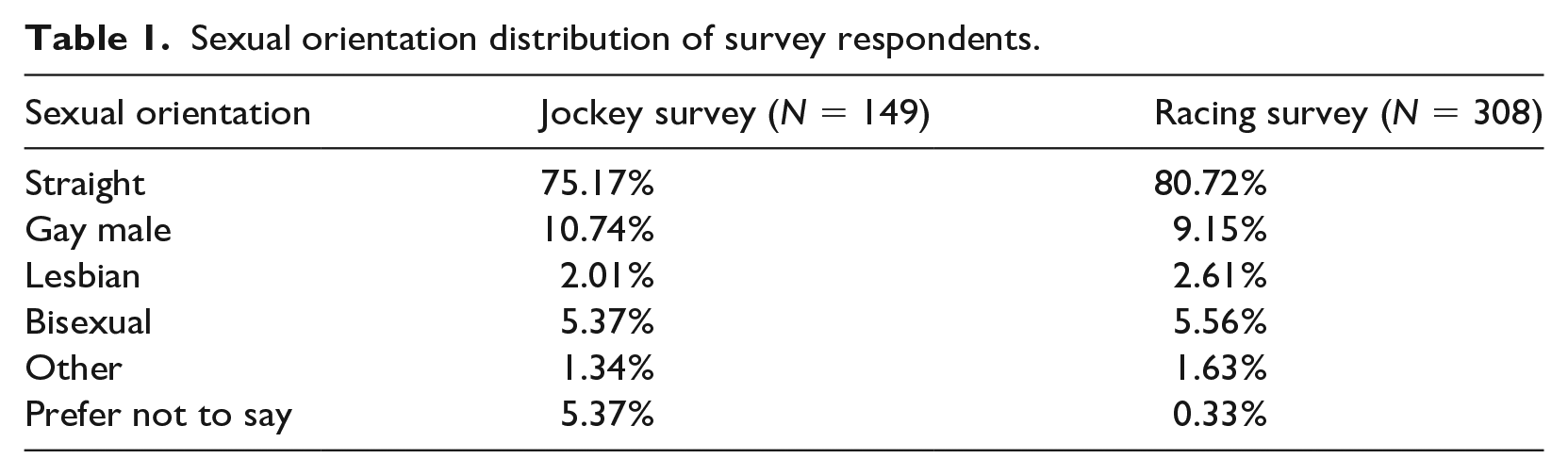
The results demonstrate a considerable population of non-heterosexual participants (Table 1), higher than general population estimates for sexual minorities (Office for National Statistics, 2019); 19.46% of jockeys and 18.95% of the wider racing survey indicated they identified as a sexual orientation other than straight. The difference between sample groups in relation to their response rate of ‘prefer not to say’ should be noted as an early indicator concerning openness around the topic across the two populations.
Sexual orientation distribution of survey respondents.
Participants who provided a response other than ‘straight’ were asked who, if anyone, they had disclosed their sexual orientation to; Figure 1 illustrates that the only response jockeys recorded more frequently was being out to ‘no one’ (38.89%) – over double the percentage recorded by racing survey respondents (17.78%). The results also demonstrate that jockey respondents were less than half as likely to be open about their sexuality with colleagues, with 16.67% indicating they were, whilst this figure amongst racing respondents rose to 35.56%. For jockeys identifying as a sexual minority, male participants were more likely than their female counterparts to respond as being out to no one.
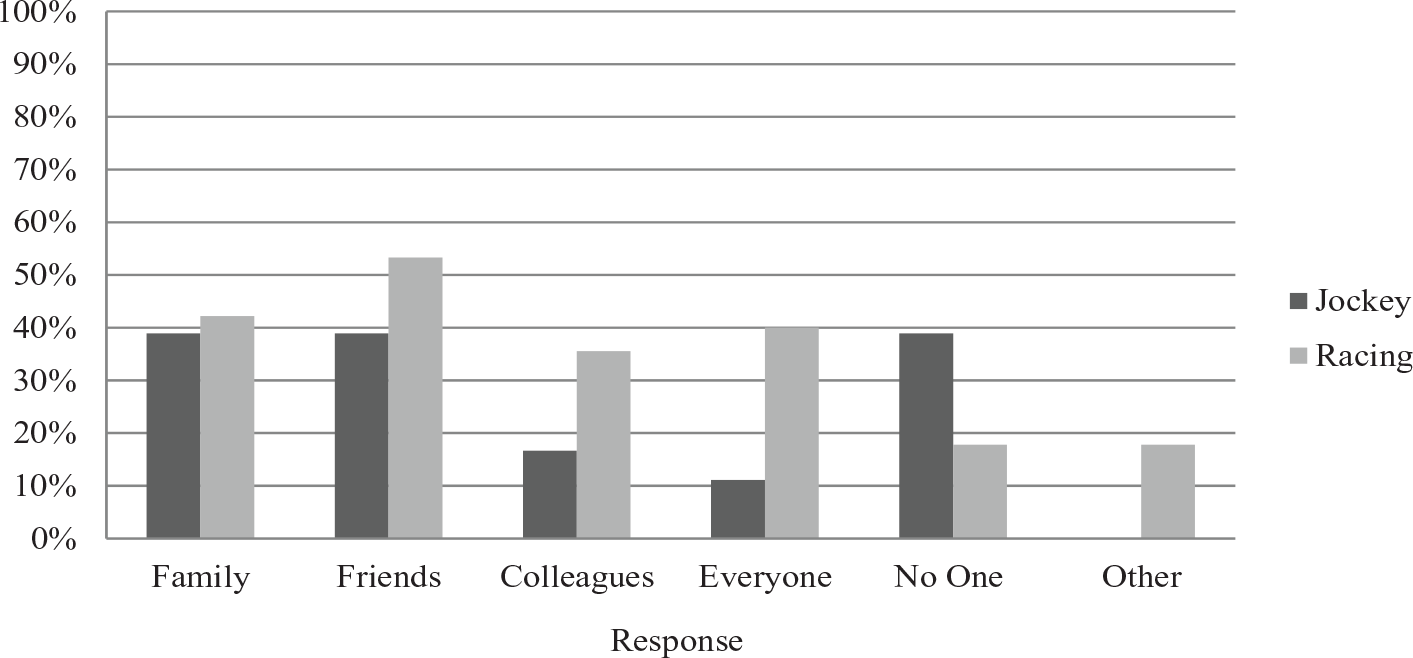
Openness regarding sexual orientation.
In addition, the fact that no jockey respondents identifying as a sexuality other than ‘straight’ left contact details regarding a follow-up interview – of which the confidential nature was stressed – further lends backing to a lack of openness regarding sexual orientation within this population. This population-specific reluctance is corroborated by the willingness of sexual minority racing survey respondents to disclose contact information for follow-up interviews at a much higher rate, with the same assurances provided.
This is further supported when jockeys’ responses are examined regarding potential barriers to being open about one’s sexuality within the sport; ‘colleagues’ response’ and ‘impact on riding opportunities’ were the joint-highest reported barriers at 55.56% each. Compared to a figure of 25% amongst the racing survey respondents, ‘colleagues’ response’ obviously presents a more significant barrier in the weighing room. This, combined with the low percentage of jockeys out to colleagues (16.67%), indicates that the workplace environment could prove key to understanding the causal factors behind this trend.
As noted, ‘impact on riding opportunities’ was equally reported as a barrier to coming out for jockeys (55.56%); this sentiment was echoed by the sport’s only openly gay jockey, who stated that he had lost rides as a direct result of disclosing his sexual orientation (Buzinski, 2019). In comparison, only 16% of racing survey respondents indicated ‘impact on career opportunities’ as a barrier. A possible explanation lies in the nature of employment; whilst most working in the industry will be contracted and have some level of legal protection against discriminatory behaviour, jockeys are commonly self-employed and selected for rides at the discretion of an owner or trainer, with no justification required for these decisions.
Attitudes
Cross-tabulation was used to investigate the impact of specific demographic characteristics on two questions relating to attitudes regarding sexuality, both recorded on a Likert scale of 0–5 with the polar options stated. The decision was made not to include a specific ‘neutral’ response at 2.5 so that participants were required to fall on one side in their response. The specific questions are outlined below:
If you knew a colleague was gay/lesbian/bisexual, how would your opinion be impacted?
0 – Very Negatively/5 – Very Positively
If a colleague 'came out' as gay/lesbian/bisexual, how comfortable would you feel?
0 – Very Uncomfortable/5 – Very Comfortable
The full survey responses are outlined initially; on how one’s opinion may alter if aware a colleague was gay, lesbian or bisexual, Figure 2 highlights the heavy concentration at point ‘3’, demonstrating the modal response: 70% of racing and 60% of jockey respondents, whilst 88% of racing respondents and 77% of jockey respondents reported on the positive side of neutral.
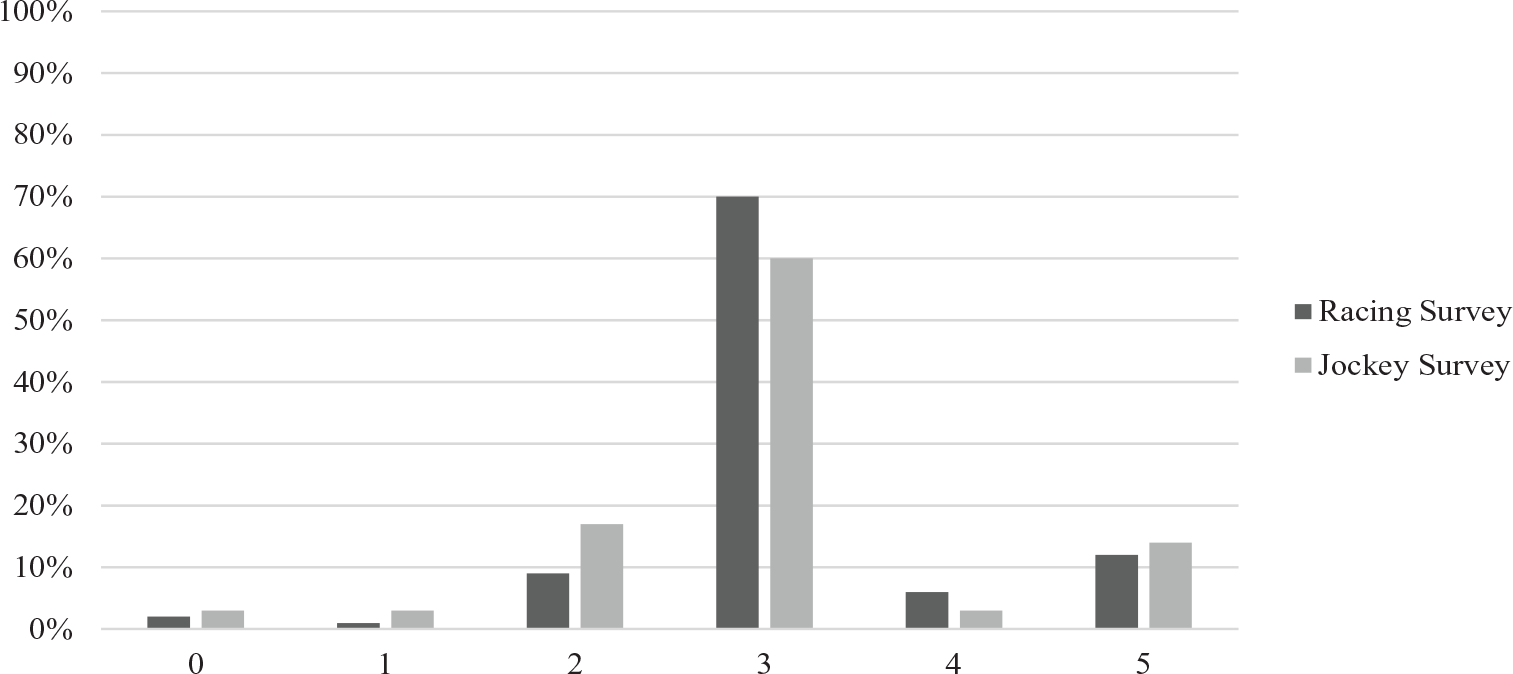
Opinion impact response by survey population.
Figure 3, relating to one’s comfort level, indicates a higher response level at the positive end of the Likert scale, with the mode in both populations being the most positive option available, ‘very comfortable’. Responses received on the positive side of neutral accounted for 92% of the racing survey and 78% of the jockey survey.
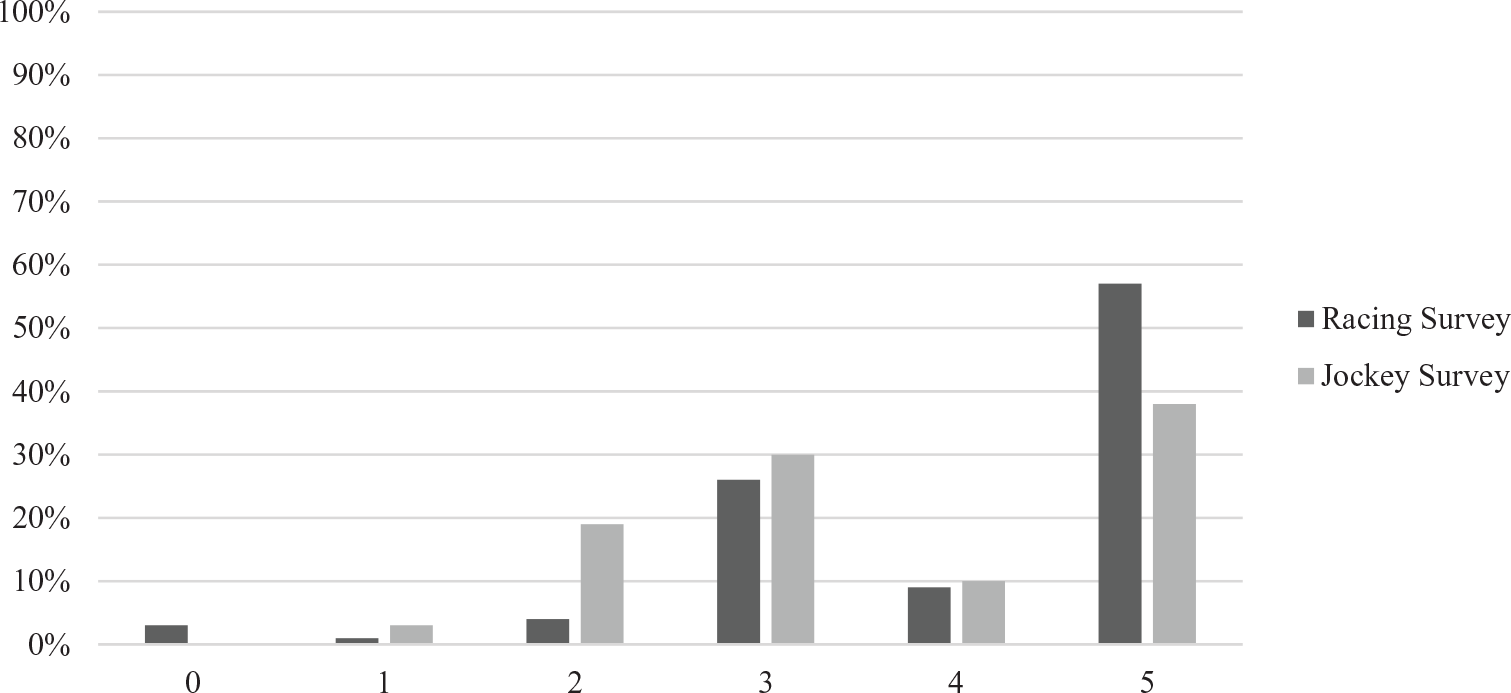
Comfort response by survey population.
Figures 2 and 3 both highlight increased responses on the negative side of neutral amongst the jockey population sampled, suggesting that attitudes towards sexual minority colleagues in this sector are less inclusive than those found in the wider racing sample; possible explanations for this trend are explored in the Discussion. However, the high proportion of positive responses overall demonstrates increased acceptance of deviation from a dominant masculine paradigm (Anderson, 2009); this is supported by the single openly gay jockey explaining that his colleagues had given him no issues about his sexuality since coming out (Buzinski, 2019).
Cross-tabulation was undertaken to examine potential trends using age and licence type (Flat/National Hunt), although these showed little reportable differences; the cross-tabulation for gender, however, is worth examining in more detail.
Figure 4 shows that, although both genders responded most often as option ‘3’, this was more prevalent amongst female respondents. While it is noted that males tended to be more likely than females to select the most positive option available, they were also more likely to select a negative response, suggesting more divided opinions.
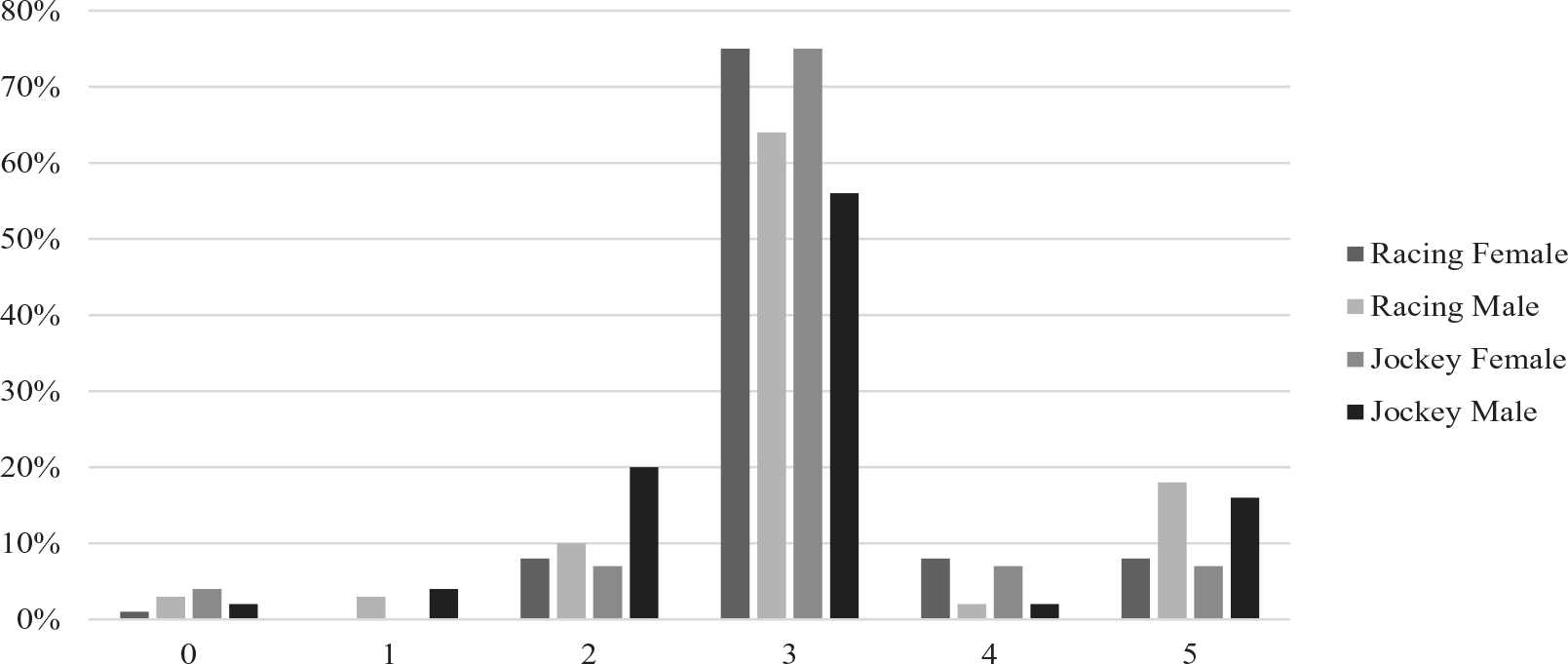
Opinion impact by survey population and gender.
Similarly, in Figure 5, relating to how comfortable one would feel if a colleague ‘came out’, it can be seen that males have a higher response rate than their female counterparts in the more negative options provided (0–2 on the Likert scale).
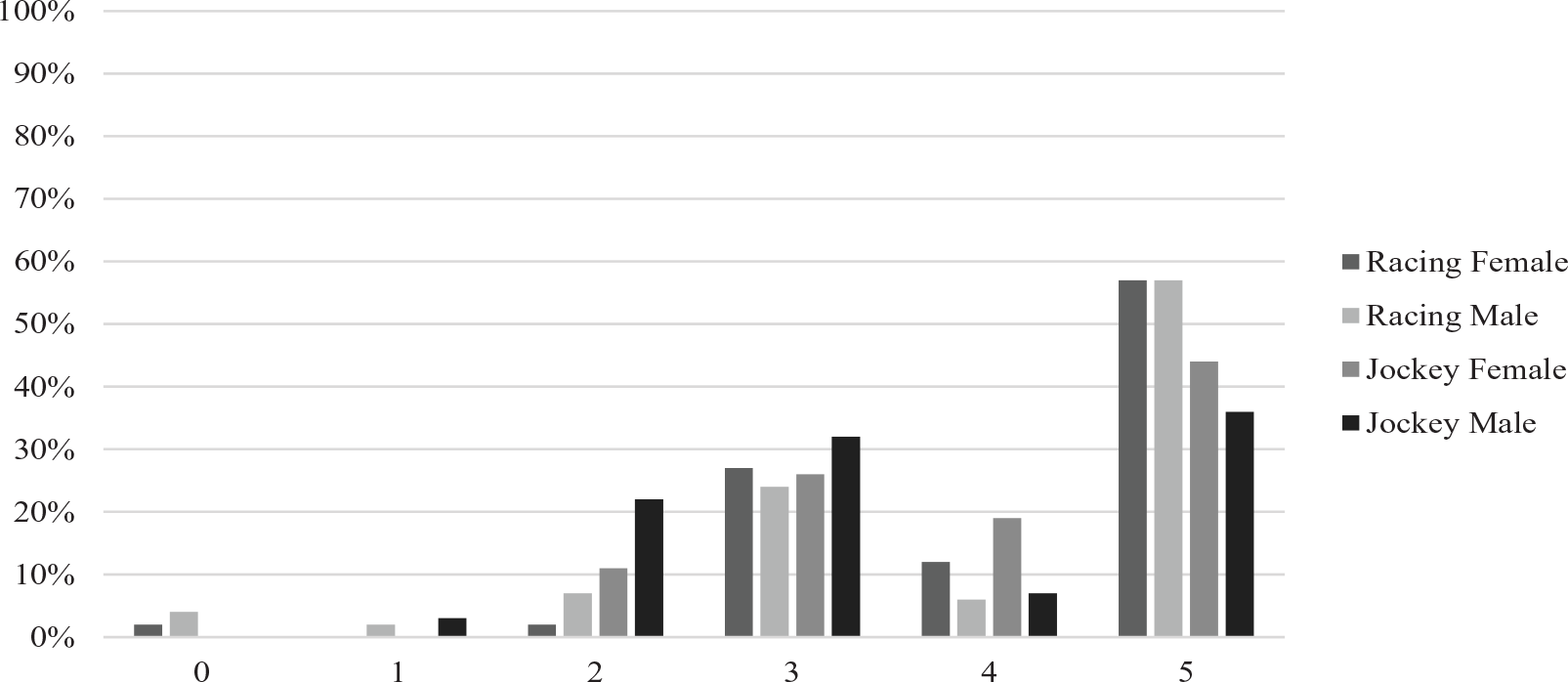
Comfort level by survey population and gender.
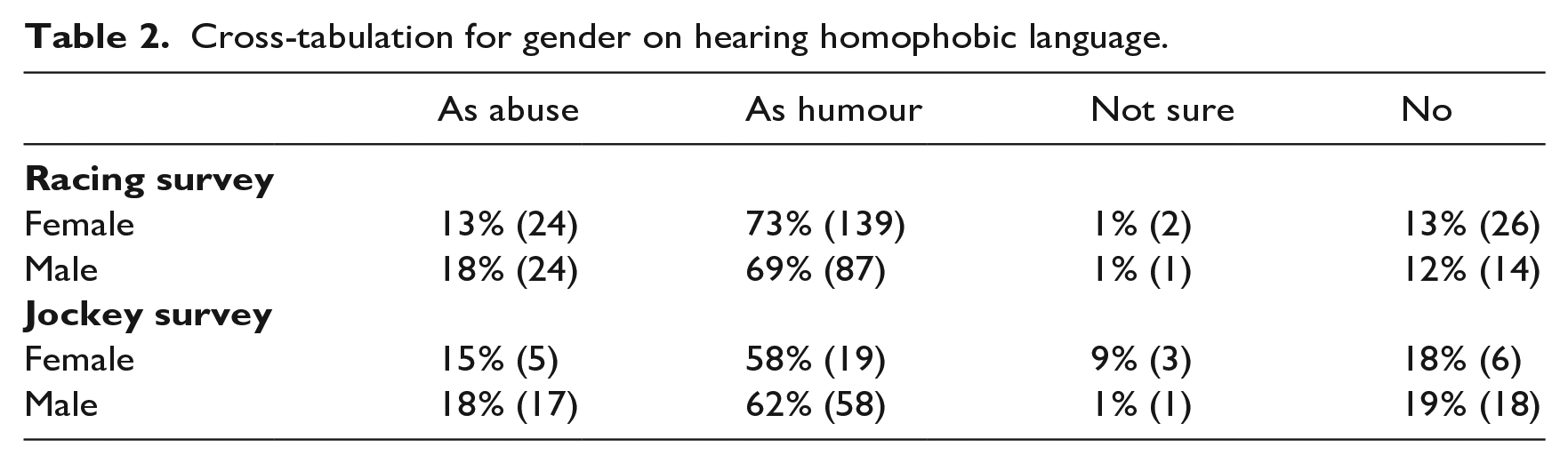
Furthermore, homophobic language was examined in relation to hearing it and using it; Tables 2 and 3 highlight these findings respectively. A considerable percentage across the sample populations acknowledge homophobic language heard as both abuse and humour, with a slightly higher incidence amongst male respondents.
Cross-tabulation for gender on hearing homophobic language.
Cross-tabulation for gender on using homophobic language.
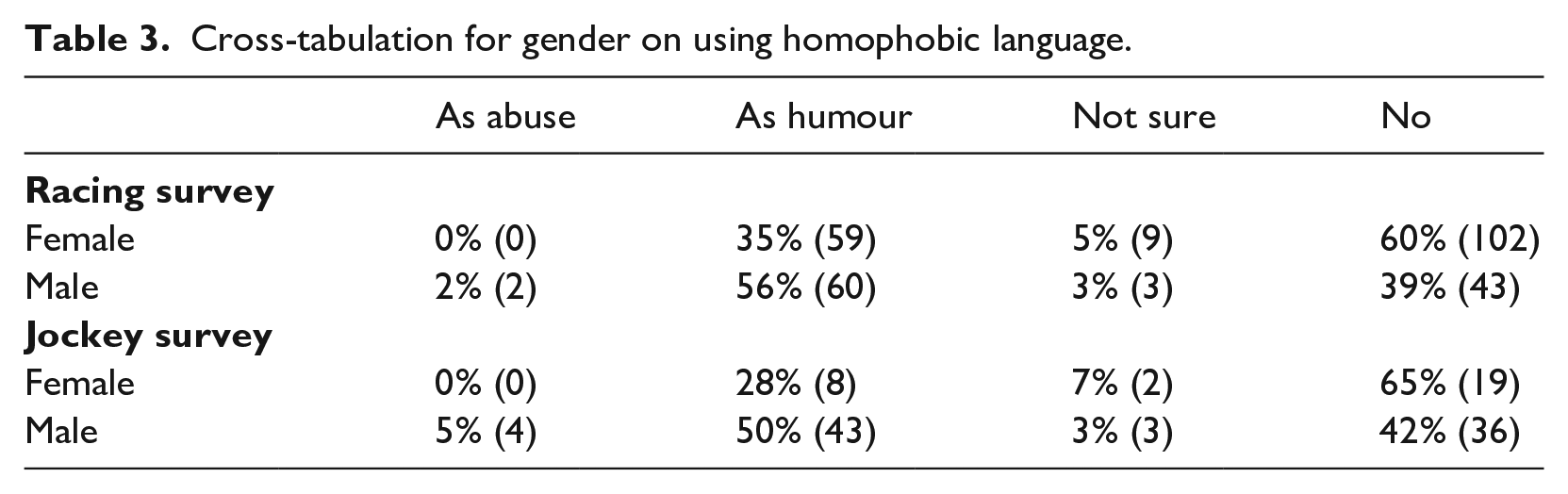
There is, however, a clear distinction between males and females across both surveys when analysing the use of homophobic language (Table 3), with males more likely to use it as both abuse and humour than their female counterparts. This gender distinction is particularly apparent within the jockey responses; 5% of males and 0% of females reporting using the language as abuse, whilst 50% of males and 28% of females report its use as humour.
Discussion
Previous research has shown various sporting environments to be increasingly accepting of sexual minorities (Anderson et al., 2016), especially in the progressive societal climate of the Western world (Twenge et al., 2016). By surveying two populations within the British horseracing industry, the current research highlights sexual orientation prevalence and associated attitudes, with particular consideration given to the sport’s cultural positioning and the use of what McCormack (2011) describes as homosexually themed language.
Results from this study found that almost one in five of the jockeys participating identified as a sexual orientation other than heterosexual; no other research has previously shown the percentage of athletes who identify as a sexual minority within any given national professional sporting population (Zipp, 2011). Statistics relating to sexual minority representation within the wider population have commonly been suggested to underestimate the figure (Anderson and McCormack, 2016), one reason being the problematic nature of categorising individuals due to differences between self-identification and behaviour relating to sexual orientation (Mosher et al., 2005). In addition, disclosing this personal information can be uncomfortable, particularly where stigma still exists and there is a desirability to conform to expected social norms (Coffman et al., 2017). Conversely, it is recognised in this research that those identifying as a sexual minority may have been more likely to participate due to a vested interest in the subject matter, that is, furthering awareness within the sport. Even if this were the case and every non-responder within the jockey population were heterosexual, this would leave a figure of 7.98% for jockeys who do not identify as heterosexual, which can be taken as the minimum prevalence within the entire national population of licensed jockeys in Britain.
In line with other studies utilising Inclusive Masculinity theory, the findings indicate largely progressive attitudes towards sexual minorities; this work supports positive sentiments reported when football participants were posed similar hypothetical questions relating to having a gay teammate (Magrath et al., 2015). However, research has demonstrated the complexities of exploring attitudes towards sexual orientation, with respondents inclined to report socially acceptable answers, creating an unavoidable bias (Coffman et al., 2017); this was reduced by guaranteeing anonymity for all respondents.
Gender integration may have a positive influence on attitudes towards homosexuality; this is supported by other qualitative research using Inclusive Masculinity in gender-integrated sporting environments that have been found to promote the acceptance of male homosexuality (Anderson, 2008; Dashper, 2012) and, more widely, gender narratives (Priyadharshini and Pressland, 2016). The application of Inclusive Masculinity theory here supports other research which has demonstrated that many sports are now exhibiting considerably more inclusive environments towards sexual minorities, particularly the inclusion of gay male peers (Adams and Anderson, 2012; McCormack and Anderson, 2014).
Despite these findings, male jockeys were more likely to remain ‘closeted’ about their sexual orientation than the wider racing sample. Racehorse trainer, Mick Appleby, explained in a recent interview: ‘I do know a few gay jockeys. . . some people are just ashamed to “come out”. I think that’s the case with some jockeys’ (Mottershead, 2019). Previous research has demonstrated that sexual minority individuals in sporting contexts tend to hide their sexuality through fear of discrimination if they ‘come out’ (Krane and Symons, 2014) and has also indicated that this could be more likely amongst gay males than lesbians (Anderson and Bullingham, 2013). The research here supports this assertion regarding athletes, with male jockeys more likely to report being out to no one than their female counterparts. Fundamentally, openly gay athletes challenge the traditional heteronormative discourse of sport (Eng, 2008) and, as a result, it has been suggested that those who remain often repress their sexuality to fit in and increase their standing (Messner, 2002). The witnessed differences between the two sample populations could be explained by the intimacy of the weighing room environment (including nudity, etc.) compared with office or yard work, and also the employment status and subsequent lack of legal protections against discrimination for jockeys. In support, previous research has outlined a positive relationship between organisations that take robust action against heterosexism and the levels of ‘outness’ amongst sexual minority employees (Brenner et al., 2010).
Another factor that may play a contributary role is the presence of homophobic language, which can cause issues for closeted individuals when assessing the acceptance of a given environment (Magrath, 2020) and may encourage them to remain closeted about their sexuality (Anderson, 2011). In relation to language use in this research, some reported its use as abuse, but primarily as humour – which McCormack (2011) calls ‘gay language’ – while others reported never using such language. However, the increased incidence of hearing this language, with the interpreted intent reported as less favourable than the espoused intent, makes the categorisation of the language more complex. As such, the context does not fit solely into any one of McCormack’s (2011) four language realms; instead, similarities are evident with ‘gay language’ and ‘fag discourse’. Therefore, the language use in this environment appears to be similar to the more positive use documented by Anderson (2011) and McCormack (2011), yet the mixed interpretation could lead to negative social effects, including the regulation and restriction of acceptable masculine behaviours, because the intent of the language is not always clear (McCormack, 2011). Magrath (2020) highlighted a similar situation when examining the field of sports media, finding that heterosexual male journalists commonly engaged in heterosexist language use, but did not espouse negative attitudes towards homosexuality. If awareness could be improved regarding the impact of language choice, individuals may be less likely to engage in such behaviour as it would contest their own beliefs regarding homosexuality (Magrath, 2017), which are largely progressive. However, it is argued that this is a result of generational change and language evolution (Lalor and Rendle-Short, 2007), so challenging structures of heteronormativity may be more effective in addressing it than policing language (McCormack et al., 2016).
Previous work has highlighted the mostly positive experiences when individuals do ‘come out’ about their sexual orientation (Anderson, 2011; Magrath, 2020); an incongruous relationship therefore appears to exist between an internal fear and the largely positive attitudes demonstrated. The findings here suggest that the majority of respondents do not hold inherently homophobic attitudes, although the sport’s culture appears to inadvertently encourage an atmosphere of heteronormativity, which could present a barrier to disclosing one’s sexual orientation. Other research shows that individuals identifying as a sexual minority – particularly those who are closeted – are more likely to experience mental health issues, as well as increased rates of suicide; however, this is less prevalent in accepting environments (Alessi, 2014; Meyer and Frost, 2013). When considered alongside other well-recorded pressures on jockeys, including weight, travel and financial concerns (Caulfield and Karageorghis, 2008; Landolt et al., 2017; Losty et al., 2019), the findings highlight an additional aspect of their working environment that could be eliciting further strain.
This research supports Inclusive Masculinity theory, suggesting that under the prevailing societal attitudes towards homosexuality, the domain of sport reflects an increasingly positive view towards sexual minority participants (Anderson et al., 2016). This study extends the application of Inclusive Masculinity to a novel environment, which can contribute to a broader understanding of the theory; Anderson (2009) encouraged diversified application in order to establish the framework’s relevance in alternative contexts. Some negative attitudinal responses were encountered, and this highlights that reducing homophobia is an uneven social process; however, Inclusive Masculinity theory allows for this diversification in the interpretation of masculinity and accepts that some negative attitudes will remain. Importantly, Anderson (2009) also recognised that, although the softening of masculinities is likely to benefit women to some degree, decreasing homophobia will not automatically lead to decreasing sexism; this is supported by Dashper’s (2012) work, which showed that both gay and straight men constructed their masculinities in opposition to a diminished femininity. This phenomenon could explain the continued marginalisation of female jockeys within horseracing (Butler and Charles, 2012), even in light of the progressive attitudes elicited regarding sexual minority acceptance.
This research presents results demonstrating British horseracing’s current atmosphere regarding sexual orientation, without attempting to translate findings from other cultural settings. It cannot, though, answer why, despite low antipathy towards sexual minorities, only one jockey has ‘come out’ publicly, whilst riding, in the sport’s extensive history. Given the influence of owners and trainers within the sport – specifically concerning jockeys’ employment – further research examining attitudes from these sub-groups would be of value in assessing the specific concerns regarding the loss of riding opportunities based on sexual orientation. Consideration must also be given to cultural lag, particularly in relation to language use, whereby the embedded culture and subsequent presentation take some time to adapt to changing societal attitudes. The concept of Performative Progressiveness, which has examined individual attitudes and actions towards homosexuality – particularly the co-occurrence of progressive attitudes alongside homonegative actions – could account for the incongruency witnessed on an individual level in this work (Brodyn and Ghaziani, 2018), whilst on a larger scale, Organisational Cultural Lag has highlighted clear differences between public demonstrations of support and meaningful action in sporting organisations (Magrath and Stott, 2019; Parry et al., forthcoming). In line with this, the horseracing industry may bask in reflected inclusivity but fail to transfer these ideals into action; at the time of this research, the industry had made no visible efforts to demonstrate inclusion of sexual minorities, however, as a result they have engaged with several gestures of support. It remains to be seen if these surface-level actions will evolve into more long-term, meaningful change – future academic work to expand on this initial research would be of considerable value in assessing potential lag.
The industry’s more visible focus on diversity and inclusion will take some time to disseminate fully, and some sectors will adapt more readily than others in line with the sport’s historical and cultural associations. In fact, the British horseracing industry would also do well to consider their stance in relation to aspects of diversity beyond the sexual minority population explored here; race and class are pertinent examples of areas requiring further examination in British racing. The requirement for this expansion is mirrored in academic work; exploring the intersectionality of masculinities with race and class can further refine the theory.
Conclusion
This study is the first exploration of the British horseracing industry in relation to sexual minority inclusion, highlighting the prevalence of sexual minorities within the sport and associated attitudes. Given racing’s position as Britain’s second-largest spectator sport, it provides an important platform for furthering inclusivity; heightened visible acceptance and inclusion here could have positive consequences for sexual minorities in other sporting and social spheres. Despite previous work relating to gender representation and equality, issues of sexuality have been marginalised. Yet, the present study has found that professionals within horseracing are ready to embrace sexual minorities within the sport. Attitudes are largely positive, there is minimal homophobic language with the intent of being abusive, and there is work being undertaken to engage with this field. The research demonstrates a willingness to be inclusive of sexual minorities, and it is incumbent on horseracing as an industry to proactively work to include sexual minorities in the sport and further their efforts around inclusivity more generally.
Footnotes
Declaration of Conflicting Interests
The author(s) declared no potential conflicts of interest with respect to the research, authorship, and/or publication of this article.
Funding
The author(s) received no financial support for the research, authorship and/or publication of this article.

Data availability statement
The data that support the findings of this study are available on request from the author; they are not publicly available at this time as the data also forms part of an ongoing study.