




Abstract
Unisex sport – where males and females compete directly against each other with no form of differentiation – offers a radical challenge to the norms of sex segregation that contribute to ongoing gender inequality in sport. This article presents findings from an ethnographic study of horseracing events in rural Mexico as an example of the unisex model operating within a wider sociocultural context still characterised by machismo and traditional gender relations. Findings indicate that although horseracing remains a male-dominated sporting space, the presence of women as jockeys, spectators and veterinary professionals is beginning to challenge this. Women's acceptance is contingent on male support and authorisation, and women are often marginalised symbolically and physically, yet their presence illustrates that the unisex model may be an important way of beginning to challenge the masculinisation of horseracing. The study highlights the importance of considering how the wider sociocultural context influences acceptance and experience of the unisex model and steps towards greater gender equality in horseracing and other unisex sports.
Introduction
Sex segregation is an integral aspect of most organised sports, at most levels of competition, from leisure participation to elite professional sports. Based on wider socio-cultural gender norms that position male and female, masculine and feminine, as complementary and opposite yet inherently unequal (Schippers, 2007), sex segregation contributes to ongoing gender inequality through positioning female sports and athletes as weaker, less able and in need of protection from male sports and athletes (McDonagh and Pappano, 2008). Sex segregation occurs along binary lines, positing the existence of only two discrete and distinguishable sex categories: male and female. For the best part of 100 years sports organisations, notably the International Olympic Committee (IOC) and World Athletics (formerly the International Association of Athletics Federations, IAAF), have tried to implement methods of testing the sex of (female) athletes in order to uphold binary sex segregation (see Adlwarth, 2021). All attempted measures – from visual examination, to chromosomal and DNA testing, to the current focus on hormone (particularly testosterone) levels – have failed, revealing sex to be a continuum rather than a binary and exposing sex-segregated sport as ‘a socially created fallacy’ (Pieper, 2016: 1151). However, despite the impossibility of determining sex along binary lines, sex segregation remains a core principle of sport.
There have been many attempts to dispute and sometimes dismantle binary sex segregation in a range of sporting practices. Sports in which there is some degree of sex integration in training and/or competition have demonstrated that this can lead to reworking gender relations to become less hierarchical and adversarial. In martial arts, volleyball and basketball, mixed-sex training can help expose male and female bodies and performances as a continuum, beginning to break down gendered opposition between male and female athletes (Channon, 2013; Fink et al., 2016; Ogilvie and McCormack, 2021). Enabling men and women to compete together in mixed teams in sports including tennis and cheerleading has also been shown to challenge men's ideas about women's athletic capabilities (Anderson, 2008; Lake, 2016). These and other examples illustrate that it is sometimes possible to avoid blanket sex segregation in sports, with positive consequences for social attitudes and gender relations. Such examples can be classed as ‘mixed sex’, following Martínková's (2020) classification, as they allow for some degree of sex integration yet still retain distinctions between male and female, for example in relation to the relative positions of male and female athletes on a team or the required number of male and female athletes in a given competition.
A more radical alternative to mixed-sex sports is what Martínková (2020) calls unisex sports – ‘sports that are inclusive for athletes of all sexes without discrimination’ (p. 251). One such example is equestrian sport, one of the few global sports that does not distinguish between male and female competitors. Equestrian sports are the only sports on the Olympic programme not incorporating any element of binary sex segregation or classification, with women competing against men on equal terms and with no differentiation since 1952 in dressage, 1956 in show jumping and 1964 in eventing (Bryant, 2008). This has been found to lead to a deprioritising of gender in athletes’ identities, with being seen as ‘horsey’ or, for example, a dressage rider, becoming more important to elite athletes than gender (de Haan et al., 2016). However, the unisex model of sex integration as practised within equestrian sports is not a panacea to issues of gender inequality in sports. Equestrian sport illustrates that removing any form of binary sex segregation can work in some contexts, with participants being selected for teams and competition places based on merit, rather than sex (Martínková, 2020). Participants who identify as women and those who identify as men perform successfully in equestrian sports at all levels, indicating that the unisex model will not always lead to women being pushed out of elite sports. However, men do still perform disproportionately well in elite equestrian sports, due to complex social, cultural and economic factors that are not addressed by the unisex model (Dashper, 2012, 2013). Even within equestrian sport, rejection of binary sex segregation does not remove all aspects of gender inequality, but it does illustrate that there may be other ways to organise sports that are not based upon and thus do not perpetuate gendered hierarchies and exclusions (Dashper, 2012).
This paper focuses on racing, another equestrian sport that does not incorporate segregation along binary sex lines within its rules and regulations. Horseracing is a global sport and a multi-million-dollar industry, developing initially from British racing traditions (McManus et al., 2012). Women were not allowed to race under Jockey Club rules until 1972, and it was another 2 years until the unisex model was adopted and women competed as jockeys directly against men (Dickinson, 2021). Although women remain underrepresented as jockeys and trainers in contemporary racing, there are no formal rules prohibiting or regulating their inclusion.
This paper focuses on horseracing in rural Mexico. We have illustrated previously that this is a strongly masculine sporting world, characterised by male homosociality, wherein men perform masculine identities predominantly for and in relation to other men, and women play only marginal roles (see Monterrubio et al., 2022). However, despite this, there is no formal segregation between males and females as jockeys and no restrictions on the participation of males or females as riders. It thus provides an excellent example for exploring the implications of sex integration as a tool to begin to dismantle gendered hierarchies and exclusions, and rework gender norms, in a wider sociocultural context that is, in several parts of the country, still characterised by traditional gender relations based around machismo and male dominance (Mensa and Grow, 2019). Gender norms differ not only by sport, or even equestrian discipline, but also in relation to the socio-cultural context in which those sports take place. In this study, we consider an as-yet unexplored equestrian sport and sociocultural context in order to consider the radical potential of unisex sport in a strongly patriarchal society.
The paper begins with a discussion of challenges to binary sex segregation in sport generally and an overview of some of the relevant literature on horseracing, which we position as a homosocial sporting subworld in which men dominate and interact largely with other men. However, women are not formally excluded from this homosocial environment, and our ethnographic study examined the contradictory gender relations of this unisex sport in Mexico and its radical potential to challenge and rework traditional gender norms.
Challenging binary sex segregation in sport
The decision to segregate sport by sex, rather than another category such as weight, height, or testosterone, for example, is an ideological one that cannot be justified by recourse to arguments about fair play as many other biological, physiological and socioeconomic factors have at least as much influence on sporting performance as does sex (Henne, 2014). Abolishing sex segregation as a core organising principle of modern sport is one possible response to this and an attempt to dismantle the harmful and false binarism of sex categories that exclude and marginalise many groups and individuals. However, sex integration is not a straightforward solution to gender inequality, as sport is so deeply entrenched in masculine norms and dominance that to remove all forms of differentiation would likely lead to many women missing out on sporting opportunities and feeling excluded, especially in the more male-dominated and masculine-identified sporting fields (Behrensen, 2013). These difficulties, however, do not mean that sex integration, in some form, is not a workable possibility in many sporting domains as a step towards dismantling gendered hierarchies and working towards greater gender equality.
In many sports, moving away from binary sex segregation would require some other form of classification in order to try and give space for everyone to enjoy and have an opportunity to excel at sport. As many sports are organised around the extremes of men's bodies – speed, strength and explosive power, for example – women (and some men) are often at a disadvantage and so simply removing sex segregation without wider wholescale sporting reforms would likely disadvantage females (Behrensen, 2013). Kerr and Obel (2018) suggest the use of a functional classification system, similar to that currently used in Paralympic sports, as one possible solution. This would move away from the current ‘one size fits all’ system of binary sex segregation, and instead, recognise that a different system is needed for each sport. Functional ability in a contact sport like rugby, for example, rests on very different physiological capabilities than in a sport that emphasises balance and flexibility, like gymnastics. Martínková (2020) also proposes sport-by-sport classification, based on what attributes are favourable for a given sport, possibly also including some changes to sport formats in order to ensure more parity for participants. In this ‘unisex sport’ model, the sex of participants would be irrelevant, removing the need for sex testing, making space for intersex, non-binary and trans athletes, and starting to dismantle the gendered hierarchies that position male sports, participants and athletic performances as superior to female sports, participants and athletic performances. Both Kerr and Obel's (2018) and Martínková's (2020) proposals offer radical challenges to the institution of sport and involve a wholesale re-evaluation of how sport is organised and what fair play really means in different contexts. Equestrian sport already follows the unisex model advocated by Martínková (2020) and so provides a useful starting point for beginning to explore different forms of sex integration. ‘Equestrian sport’ covers a wide range of different competitive practices and equestrian traditions, including racing, the focus of the current study.
Horseracing and the unisex model of sex integration
Horseracing is a global sport which takes a variety of forms, such as flat racing and steeplechasing that use mainly Thoroughbred horses, harness racing that uses different breeds (such as Standardbreds and trotters), and quarter horse racing. Horseracing does not impose sex segregation for jockeys, although male jockeys far outnumber female jockeys due to complex historical, social and cultural factors related to the sport (see Butler, 2017). The one form of classification that does take place in most racing contexts is based on weight. In codified forms of flat and steeplechase racing, for example, jockeys have to ‘weigh out’ to ensure that the horse they are riding carries the weight it has been allocated (based on form etc.). This means that many jockeys resort to dangerous practices to keep their weight low for race days, including the use of saunas to sweat out excess water and limiting food intake (Ryan and Brodine, 2021). Some of these extreme measures lead to physical and psychological damage for jockeys (McGuane et al., 2019). While the need for low body weights would seem to favour female jockeys, as on average women have lower body weights than men, men still dominate all forms of racing which have historically been a very male-dominated domain. Women are increasingly visible within the racing field, as stable ‘lads’ and, more rarely, trainers and jockeys. This has not completely transformed horseracing, as women are still positioned as relatively weak and not suited to horseracing, which is characterised as patriarchal and masculine (Butler, 2013; Butler and Charles, 2012). It does, however, begin to disrupt traditional gender identities and relations, challenging masculine domination and beginning to rework gender norms within this sporting domain.
Racing thus offers an interesting example for exploring the unisex model where binary sex segregation is not a feature of the rules and organisation of the sport. The limited body of research that has explored gender within horseracing has focused predominantly on the UK and other contexts in the Global North (e.g. Bossak-Herbst and Głowacka-Grajper, 2022; Butler and Charles, 2012; Hedenborg, 2007; Velija and Hughes, 2019; Williams and Hall, 2020). This research illustrates the continued dominance of men and masculinities within racing. Although women are not formally excluded, they are marginalised and receive far fewer opportunities to ride, especially as jockeys in races (Butler, 2013). Women's bodies are positioned as weaker, less capable and in need of protection in racing, reducing the opportunities available to them (Butler and Charles, 2012; Velija and Hughes, 2019). Thus, as Williams and Hall (2020) argue in relation to racing in Britain, despite appearing relatively progressive in terms of the adoption of a unisex model of gender integration, racing remains a strongly sexist and patriarchal sport in which women face multiple barriers.
Gender norms and relations are historically, socially and culturally specific. Therefore, although horseracing is a global sport, and is thus likely to display some similar characteristics in different contexts, the influence of the wider socio-cultural environment is also important to how the unisex model is practised and experienced. The dominance of Global North perspectives (particularly British) on horseracing and gender thus only gives a partial insight. A notable exception is the work of Adelman and Moraes (2008) who investigated the experiences of female jockeys in Brazil. They suggest that the racetrack is a site of homosociality in which women's presence represents ‘incursions into a masculine world and environment’ (Adelman and Moraes, 2008: 114). Some women (usually those with family ties to racing, through male relatives) are tolerated in these spaces, but experience discrimination and sexual harassment. The homosocial environment of racing in its many forms, both as a competitive sport and a community tradition, creates a masculine space in which women are outsiders. As we have argued elsewhere (Monterrubio et al., 2022), homosociality contributes to ongoing male hegemony in racing. Homosocial sports and leisure environments promote gender segregation and reinforce distinctions between men and women (Arxer, 2011). Women are marginalised in these spaces, often relegated to supporting roles that reinforce traditional gender relations. Therefore, we recognise horseracing as a homosocial space in which men and hegemonic norms of masculinity dominate. However, social practices, including gender relations, are open to change and transformation. The unisex model of sex integration in horseracing events provides an opportunity to disrupt the homosocial, masculine pattern of social relations and begin to challenge gender inequality. Indeed, as we illustrate below, women are increasingly starting to play more active roles in racing, as jockeys and trainers as well as spectators and veterinary care staff.
However, as women who enter other male-dominated fields within and beyond sports have long experienced, permission to participate does not remove gender inequality. In such contexts, women often continue to experience bias and harassment (Dresden et al., 2018), as well as covert and overt barriers to inclusion (Martin and Barnard, 2013), placing additional burdens on women to fit in and show their competence (Smith, 2013). We draw on these insights in this study to examine the unisex model of horseracing in rural Mexico. We consider the extent to which this form of sex integration begins to break down gender inequalities and open up space for women's active participation, challenging traditional gender ideologies, even in a strongly homosocial sporting environment and wider socio-cultural context in which men and masculinities continue to dominate.
Research context and methods
Context
In Mexico, traditional gender roles and stereotypes still persist. While men continue to be associated with strength, dominance, drinking alcohol, rudeness, violence, aggressiveness, competition, power and expertise, women continue to be linked to submission, domestic work, raising children and caring for others and the husband (Mensa and Grow, 2019; Montes de Oca et al., 2013). Some female gender roles in Mexico, and Latin America in general, are defined by marianismo, which depicts Latina women as nurturing, self-sacrificing, virginal, subordinate, silencing, spiritual and emotional (Da Silva et al., 2021). Machismo, understood ‘as an ideology that defends and justifies the superiority and dominance of men over women’ (Moral & Ramos, 2016: 39), has traditionally been part of Mexican culture; therefore, men represent authority and women subordination, accentuating a negative attitude towards women. Traditional relationships and gender stereotypes in the country continue to disadvantage and affect women; according to Inmujeres (2022), two out of three women 15 years of age or older (66%) have been subjected to some type of violence (physical, emotional, sexual, economic or patrimonial) in Mexico.
Gender inequality in Mexico is still present in various spheres of life. In 2021, the economic participation rate in the country was still very unequal, with a 32.5-point difference between women and men (Inmujeres, 2022). In the educational field, it is recognised that education plays a preponderant role in challenging social prejudices and, with this, the reestablishment of gender relations in Mexico (Lechuga Montenegro et al., 2018). Although the gender gap in the educational field has decreased in the country, it is important to note that the reduction of such a gap varies according to the educational level, limiting opportunities for the professionalisation of women. According to Lechuga Montenegro et al. (2018), while there is near equality between males and females in terms of access to basic and secondary education in the country, access to higher education continues to be unequal between men (52%) and women (48%). In the country, there are around 2.7 million women who cannot read or write (Inmujeres, 2022). Thus, ‘even when the programmes, legislation and public policies implemented work favourably to reduce the gender inequality gap [in education], it is clear that this type of discrimination continues to have a strong presence in Mexican society’ (Lechuga Montenegro et al., 2018: 136).
Both traditional gender roles and conditions of socioeconomic inequality in urban and rural areas of the country hinder efforts to reduce the gender gap. According to Inmujeres (2022), domestic and care work is one of the main obstacles to women's economic autonomy, and these roles are present in different ways depending on the urban or rural space in the country. The large cities of Mexico are related to indicators of urbanisation – access to goods and services (education and health). The lack of these translates into disadvantages that make it more difficult to achieve equality between women and men, which affects a large proportion of women, including indigenous people, who live in rural areas (Inmujeres, 2022).
Although gender differentiation between men and women has maintained segregation in different spheres of life in Mexico (de Oliveira and Castillo, 2000), in some Mexican subcultures women have managed to perform economic roles that were traditionally considered exclusively masculine (Perea and Flores, 2016). The participation of women in different spheres of social life in Mexico has been increasing. In recent years, especially in urban areas, the country has seen a significant increase in the presence, participation and leadership of women in the educational, labour, professional, business and political spheres, thus challenging the traditional social, economic and political status in which women have been positioned (Zabludovsky, 2007). In rural Mexico, through their own mechanisms, women have also achieved significant participation in social life. According to Durán-Díaz et al. (2020), ‘the emerging participation of women in economic activities, rural production, and land management generates transformational relational processes in the form of female collectives or groups of individuals’ (p. 15).
Sport is gendered in Mexico. Women have had less active sports participation compared to men in the country (Dosal et al., 2017). According to Flores Fernández (2020), the participation of Mexican women in the Olympic Games has been significantly lower compared to men, representing, from 1932 to 2016, only 19.4% of competitors, concentrated in disciplines stereotyped as female such as swimming, diving, synchronised swimming and gymnastics. Although women are becoming more accepted in sports, they continue to experience imposed gender roles and stereotypes (e.g. motherhood, alleged limited physical capabilities and women's own perceptions as athletes) that constrain their participation in sports or allow them to participate only in disciplines traditionally considered feminine (Inmujeres and Conade, 2005). In addition, public policies on sports in Mexico have been ineffective in reducing the inequality gaps between men and women (Flores Fernández, 2020). In the case of equestrian sports, although women have competed at the Olympic level, they have represented only around 20% of the total number of competitors (Inmujeres and Conade, 2005).
Horseracing is a popular equestrian practice and cultural tradition in Mexico. The ‘parejeras’ horse races, an informal equestrian sport in central Mexico, were selected as the context for this study. These races consist of the competition of two or more binomials (i.e. rider-horse team), normally with quarter horses, on a straight, flat and sometimes improvised track (‘carriles’). These races are intimately linked to rural life in Mexico and are strongly associated with betting (Deraga, 2007). In addition, they are characterised by informality in their organisation, regulation, operation, advertising and betting mechanisms.
While at a professional level, some equestrian sports such as show jumping are associated with middle-upper class groups, more popular equestrian sports, including charrería – the national sport strongly associated with Mexican cultural identity – are considered non-elitist as they are performed and attended by different social classes in rural areas (Sánchez Medel, 2016). The races in this study are also considered non-elitist and attended mainly by working-class people. Furthermore, many of the riders who participate do not necessarily have professional training. Some riders do not even recognise themselves as jockeys but simply as riders, distinguishing between them from other professional riders who do not tend to ride in parejeras.
According to Deraga (2007), these races are part of Mexican culture and tradition in rural life. They take place in many states of the Mexican Republic. Due to the informal and minimally regulated features of the races, there are no official figures regarding the number of races and places where they occur. However, in some Carriles (e.g. Carril Otumba, located in central Mexico) approximately at least five races once a week (every Monday) take place (see ‘Carril de caballos “Otumba” Oficial’ Facebook page). This type of race also tends to be part of the programme of traditional cultural and leisure festivities in different rural towns of the country. One of the most conspicuous characteristics of these local and regional sporting events is, as described below, male domination, which is largely accompanied by drinking, gambling and homosociality (see Monterrubio et al., 2022).
Although men predominate in these events, there is no explicit exclusion of women. In small numbers, and marginally, women also have a presence as jockeys and spectators in these equestrian sports competitions. Although relatively rarely, these races are spaces where women come to compete against men. Considering that mixed-sex and unisex sports are almost non-existent in Mexico (Dosal et al., 2017), informal horse racing is therefore one of the few social scenarios that allows the integration of women into sport directly alongside men and, with it, an opportunity to explore the unisex model as an alternative way to organise sport and to rework gender relations in traditionally patriarchal societies.
Methods
Qualitative methods are useful to uncover, and therefore to understand and challenge, the structural, interpersonal, family and intrapersonal factors that constrain women's participation in sports (Lavoi, 2009). Bearing this in mind, this study adopted an ethnographic method. Specifically, observation and interviewing were adopted as research techniques. As qualitative techniques, these methods embrace the complexity of human interactions in sports and the multiple meanings that individuals attach to their subjective sport experiences in order to interpret the social structures, spaces and processes that shape these meanings (Smith and Caddick, 2012).
The observation stage was carried out over four and a half years in different carriles (tracks) in central Mexico. The first author attended an average of one race per month in 2018–2022 (excluding the period when events were cancelled due to COVID-19), and the second author attended two of these events. The role adopted was that of participants as observers, mainly as spectators; that is, both participated in the activities of the social group at the time of conducting observations (Smith and Caddick, 2012). Observations focused on the interactions between jockeys, coaches and spectators, primarily, as well as the activities they engage in. In particular, attention was paid to the presence and participation of women, both spectators and (the very few) jocketas (female jockeys), and how they interacted with men and horses. The social interactions of the horseraces studied are quite dynamic. Taking full field notes on a continuous basis could have been very intrusive and conspicuous for social actors; as a result, both mental and jotted notes, as described by Bryman (2012), were used to record data during the observations. Additionally, multiple photographs were taken to be used later as a permanent ethnographic source of information. Ethnographic methods are increasingly used in events research as a way to try and understand more about the routine practices of sporting events (Helgadottir and Dashper, 2016; Jaimangal-Jones, 2014). The events we attended were public and free to attend and our position was that of both researchers and event attendees. We told all participants we spoke to about our role as researchers and the focus of our study. We gained verbal consent from as many people as possible, and only took pictures of public acts of sporting competitions or people who had consented to our actions. According to Spradley (1980), no matter how unobtrusive, participant observation will always pry into participants’ lives. We, therefore, tried to protect the privacy of participants as much as possible by keeping them anonymous throughout the research process. This included not using participants’ names, providing minimal identifying details and, as seen below, blurring faces in the photos used.
Additionally, 11 in-depth interviews were conducted with eight men and three women in 2022. Participants included riders, trainers, horse owners, spectators, a veterinary practitioner and a vendor assistant. Their ages ranged between 16 and 77 years old. The main or secondary occupation of half the participants was directly associated with training or riding horses; other occupations included secretary, student, cattle rancher, construction worker, gym assistant and farrier. Theoretical saturation was adopted as a criterion to decide on the number of interviews; the authors moved backwards and forwards between the sample and theoretical reflection until we felt we had achieved saturation of the categories (Bryman, 2012). The interview guide incorporated, among other things, questions about the role in which participants attend the races, reasons for attending or participating, the relevance of horseracing and betting and, very importantly, perceptions about and support for the participation of women in these events. Interviewees were offered a stipend in Mexican currency (15 USD) for their participation in the study, to compensate for their time and efforts. The interviews were conducted in Spanish at their workplaces (including ranches) and at home, audio-recorded and later transcribed verbatim and translated into English for analysis. Informed consent was given by participants and they were given the right to refuse to answer any question or to withdraw from the interview. In order to protect participants, their identities are treated as confidential.
Data were analysed thematically by both researchers to identify patterns of meaning across both the observation field notes and photos, and the interview transcripts (Braun et al., 2016). Data were scrutinised, organised and interpreted based on categories such as sex segregation/integration, ‘unisex’ competition, homosociality, gender relationships and representations, among others, in the equestrian sports context studied. Each record and transcript were processed individually in order to identify, classify and illustrate relevant themes. The themes guided the identification and analysis of cases of repetition, participants’ representations, transitions between observation records and transcripts, and similarities and differences across the dataset, as suggested by Bryman (2012).
Findings
Our focus in this article is on exploring the potential of the unisex model of sex integration in competition to challenge the wider masculine dominance of horseracing in Mexico. To do this, we begin by identifying the ways in which this sporting world can be understood as a hypermasculine context, before going on to consider how the increasing presence of women in this formerly homosocial environment may begin to rework and challenge traditional gender relations. The findings presented in the following sections are based on ethnographic immersion in this sporting world, as represented through the horseracing events, and interviews with regular participants.
A hypermasculine sporting world
As we have argued previously (Monterrubio et al., 2022), parejeras races are masculinised sports and leisure spaces. They are not exclusively male spaces, but they are highly male dominated (see Figure 1). The hyper-masculinisation of this sporting world provides the context in which the unisex model operates on the racetrack. Although we have explored this hyper-masculinisation in more detail previously (Monterrubio et al., 2022), it is important here to illustrate some of the ways in which male hegemony is manifest in this sporting world – such as through male-male socialisation, drinking alcohol, gambling and physical violence – prior to considering if and how the adoption of the unisex model of sex integration on the racetrack may begin to challenge and rework these traditional gender relations.
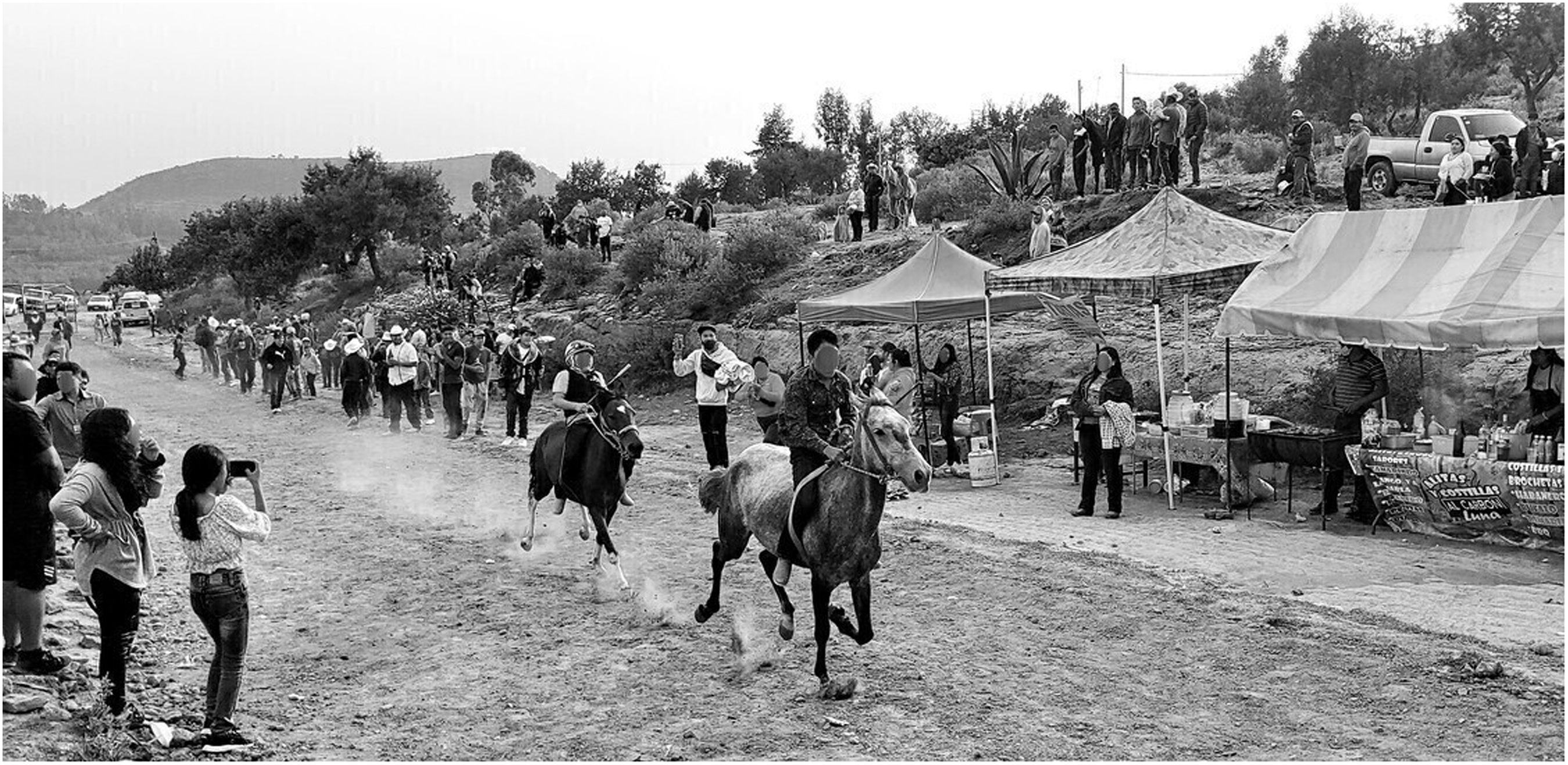
Horseracing is a hypermasculine sporting world (August 2022, picture by first author).
The tracks vary in their social dynamics, including the number of people who attend and participate. For this reason, it is difficult, if not impossible, to determine the number of women and men who attend these events. However, in some cases, it can be estimated that one in 10 attendees is a woman. The vast majority of the organisers, riders, trainers, owners and spectators are men who are usually socialised into the world of racing from a young age by other male members of the family, reinforcing homosocial bonds through which men connect and interact with other men; Participant [P] 5, a 43-year-old man who affirms that his passion for horse racing is generational, recounted: I was eight years old…it was my uncles who took me to see some races for the first time, they gave me 20 pesos [approximately one USD] to bet; I bet against them and I beat them.
Informal horse races are an important opportunity for men to socialise and chat, mostly with other men, relatives or friends, drink alcohol and rest from the working week: in addition to watching the horses I train compete, I go for fun, to de-stress from the whole work week, to have one or two beers with friends, to forget about the problems of daily life (P9, male trainer, 28 years old).
Drinking is a social act and is related to public reinforcement of a particular hegemonic masculinity in Mexico (Ibarraran-Bigalondo, 2020). We regularly observed groups of men at the parejeras drinking beer as they stood around chatting and watching the horses prepare for and compete in the races. Drinking was thus an integral part of the culture of the races, but was a practice performed mainly by men, with other men.
Betting is another integral part of racing, once again associated with hegemonic norms of masculinity. In Mexico, and in many other cultural contexts around the world, betting is seen as ‘men's business’, embedded in male social relationships and linked to masculine identity construction (Cassidy, 2014; Lamont and Hing, 2019; Monterrubio et al., 2022; Wilson et al., 2021). As with most other aspects of the races in our study, betting is largely informal and takes place between men. Pre-arranged bets are made between the owners of the horses and bets are also placed between the spectators already on site. The amounts vary considerably. According to participants, the amount wagered is not necessarily the most important aspect of betting; the adrenaline rush experienced by the mere act of winning or losing is reason enough to bet. The bets, and in the case of the riders, the fact of competing, are also closely associated with matters of pride, honour and sporting prestige: It is a matter of pride, it is like saying: ‘my horse competed against another very good horse and I won’ … and ‘because I am a good rider, they hire me to ride better horses’’ (P4, male trainer and rider, 30 years old).
Gambling is seen as a means to exercise masculinity, male competitiveness, and create and strengthen male-to-male homosocial bonds (Waitt et al., 2022). In such ways, pride and honour are symbolic capital that define the desirable ways of being a man; in patriarchal societies, men are expected to have ethical virility, and honour then produces honourable men (Núñez-González and Núñez Noriega, 2019).
The men interviewed said that men should know how to win, but also how to lose. However, as we observed on many occasions, when bets are combined with alcohol and a macho culture, disagreements, conflicts and even fights occur between bettors, sometimes even with the firing of weapons. Alcohol, gambling and violence combine to produce an atmosphere of conflict underpinned by masculine norms that tie notions of ‘honour’ to these masculine practices.
Not all men are comfortable with the underlying tension and frequent violence of the races and may decide not to attend with their family, reinforcing masculine dominance of these spaces and the homosocial environment in which women and children are positioned as outsiders: it's not that I don't want to take my family … sometimes things get out of hand [in the races] and that's a risk for my family, that's why I always go only with other men (P6, male rider and spectator, 28 years old).
Jönsson (2012) argues that equestrian sports should not only involves inequalities between men and women, but also power relations between humans and horses. Our observations revealed that the desire to compete and win a race requires driving the competing horses to maximum arousal, with the horses becoming more volatile and potentially difficult and dangerous to handle. In response, some men use force to subdue and control the horse – usually through violence – during competition. Controlling a volatile horse becomes another way to display physical strength, courage, toughness and aggressiveness, with the horses becoming a tool through which some men perform their masculinities for other men (Jönsson, 2012). We also observed instances of more sympathetic horse handling, and indeed the symbolic (and economic) value of horses as means through which men display their honour and masculinity may, in fact, drive efforts for higher welfare standards that may, in turn, improve racing performance. However, whether through drinking, gambling, fighting, dominating horses or just socialising with other men, the races are largely homosocial spaces in which men perform masculinities with and for other men (see also Monterrubio et al., 2022).
A unisex sport – beginning to challenge male dominance of horseracing
Women are not actively excluded from this masculine world of horseracing. However, their roles are largely marginal and conditioned by the masculinisation of this sporting environment (Monterrubio et al., 2022). The majority of women who participate in these events do so as spectators. Their role as spectators is largely defined by the masculinisation of the sports space in which they are positioned as outsiders. Women who attend the races rarely go alone, and are almost always accompanied by men, namely husbands, boyfriends, brothers or friends. According to the testimonies of the participants, the races are a man's world where attending alone means being exposed to violence and male harassment. P1, a mother who attends as a spectator and helps her male friend in the sale of beer, commented: I almost don't see women who attend races alone … the environment is very heavy for a woman to go alone, besides, the races I go to are held in very remote and lonely places, and it is risky for me as a woman go alone [or with her two young children] … I always go with male friends … when men are already drunk sometimes they want to go too far with me, but my [male] friends take care of me.
In ways similar to those described by Adelman and Moraes (2008) in Brazil 15 years before, women's presence at the parejeras is that of outsiders in this masculine environment and women often feel isolated, vulnerable and uncomfortable there.
However, although they are still rare, some women do take part as jockeys (jocketas) in competition, enabled by the unisex model of the sport which places no restrictions on women competing directly against men. According to participants, the participation of female riders was something that in previous times was an impossibility. However, gradually the integration of female jockeys has become more visible and accompanied by increasing levels of acceptance, both by other women and by men. P7, a male jockey, commented: There are already women in this environment, it's nice to see that they ride, more barriers are placed for them because they are women … it is very good that they are already part of this sport … once I competed against a woman, it was a very pleasant experience … people are happy to see a woman compete with a man.
A 21-year-old woman interviewed (P2) who always attends races with her boyfriend added: In all my life I have seen only two women compete, it has been very exciting for me … it is very cool that a woman competes against a man, because on horseback men and women have the same capabilities and opportunities to win.
The active participation of women as riders provides visible role models for other women and young girls and begins to challenge norms that position women as weaker and less capable than men. It is thus ‘exciting’ for other women to see female jockeys racing directly against men, something that is only possible because of the unisex model of sex integration. Women's visible presence as jockeys thus begins to challenge the homosocial space of the parejeras.
The only female rider interviewed stated that although the physical strength of a male rider is usually more than that of a female rider, women can still compete successfully. She explained how her participation has been encouraging for some girls: Some time ago I went to compete and won, and people wanted to take pictures with me because I had won and some girls came up saying that they also want to ride and compete and asking me for advice (P3, female rider, mother, 24 years old).
The integration of female riders was seen by all the participants as something positive, as something that shows that women can have as much sporting capability as men (see Figure 2). Although they are sometimes questioned for their relatively limited physical strength, and in recognition that it is not just about the ability of men and/or women but also the performance and temperament of fellow equine athletes, women who compete are perceived as brave and competent; a 77-year-old male farrier who was a rider when he was young (P10), acknowledges: to tell the truth, female riders are very brave, they can do it, too, I admire them … sometimes they have more capability than a man, although it also depends on the horse.
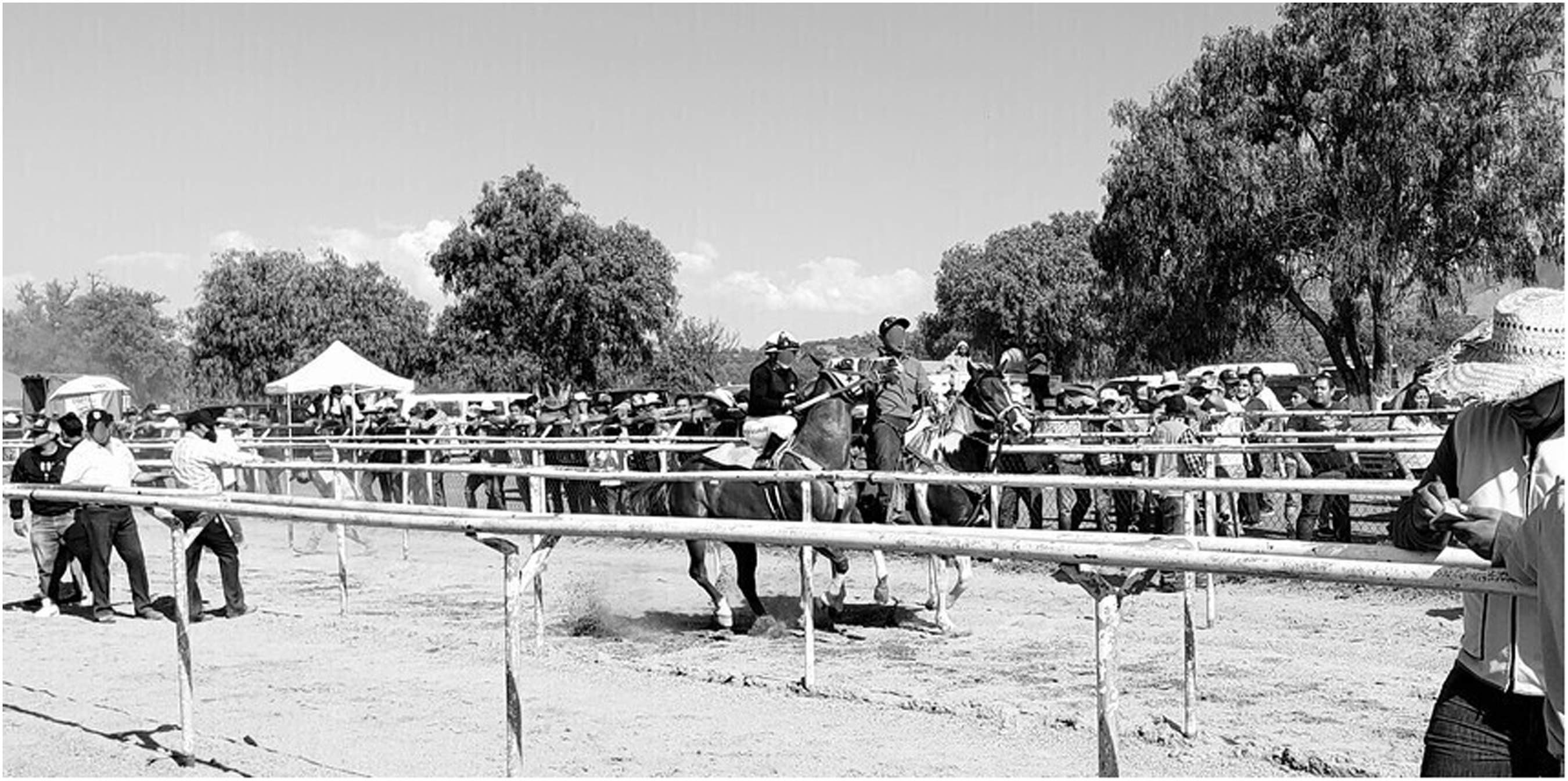
Sex integration in horseracing makes women's sporting capabilities visible (February 2022, picture by first author).
The status of women as jockeys is complicated, as there remains a belief that women's bodies make them weaker and in need of protection in comparison to men (Velija and Hughes, 2019). However, at the same time, they are recognised as brave. A horse owner (P5) said: there are very brave women … sometimes it can be difficult for them … but women are fragile and delicate and can get hurt … if the horse is calm, women can make a good team … if I had a rider daughter, I would look only for calm horses to take care of her and that she does not have difficulties.
As in other racing contexts, such as in the UK, women at the parejeras are positioned as physically weak and their bodies as potentially problematic (Williams and Hall, 2020). There was a paternalistic element to the comments of many of the men we spoke to, who recognise women's abilities as riders but also believe they need protecting from strong and physically forceful horses. In contrast, men's bodies are not questioned in this way and we did not speak to anyone who suggested that male jockeys need to be protected and partnered with suitable horses. This illustrates the paradoxical position of women in horseracing, where they are seen as brave and capable while at the same time in need of protection against being hurt due to their inherent weakness. This deep-rooted belief in the relative weaknesses of women's bodies, and thus their unsuitability to the challenges and physical requirements of sports like racing, is a key contributor to ongoing gender inequality and the marginalisation of women as active participants, even in contexts which adopt the unisex model and do not explicitly exclude women from competition.
The unisex model of sex integration provides an opportunities for women to compete directly against men, providing visible evidence that women are athletically competent. This does not break down all gendered expectations about the supposed differences between men and women, but does begin to challenge normative views of women who can be recognised as brave and capable by both other women, who may be inspired to race themselves, and by men, even in this strongly masculinised sporting world.
The multispecies nature of racing opens up opportunities for other forms of participation by women in the equestrian sport world, further challenging the homosocial environment. One example was the case of a female assistant to a male veterinarian who, although she acknowledges that as an equestrian professional, she has experienced sexist comments and certain types of discrimination, recognises that racing is an opportunity for her inclusion and professional performance as a veterinary assistant. In this vein, the world of equestrian sport offers women many opportunities to challenge norms and roles and rework what a woman can be in equestrian sport (Dashper, 2016), either as riders or professionals of equine medicine.
The unisex model of sex integration enables these challenges to masculine dominance of horseracing in Mexico. However, the model does not remove gender inequality and the participation of women is subject to the presence, support and recognition of men. The wider masculinised sporting environment in which homosocial male relations dominate continues to marginalise women, even when they are not formally excluded by the rules of sport participation. Not only are women usually accompanied by men when they attend the parejeras as spectators and workers, but, in the case of jockeys, they are instructed by male coaches. The sports team that accompany the jocketas are made up solely of men, who are in charge of the ‘heavy’ work, such as loading or unloading the horses from the trailer or putting the horses into the stalls and setting them ready for the competition. Because it is men who own horses and decide on betting, women's competitive participation depends on the decision to be hired by men to ride their horses (see Figure 3). This finding strongly confirms that, as Hedenborg (2007) found, support by men is important in helping women move into male-dominated horseracing in masculine cultures. As a unisex sport, horseracing is a tool to promote gender inclusivity and begin to break down some gender hierarchies that are perpetuated through binary sex segregation. However, the radical potential of this unisex model is limited as the presence and active participation of women largely depends on the support and authorisation of men, and the ongoing masculine dominance of the wider racing social world.
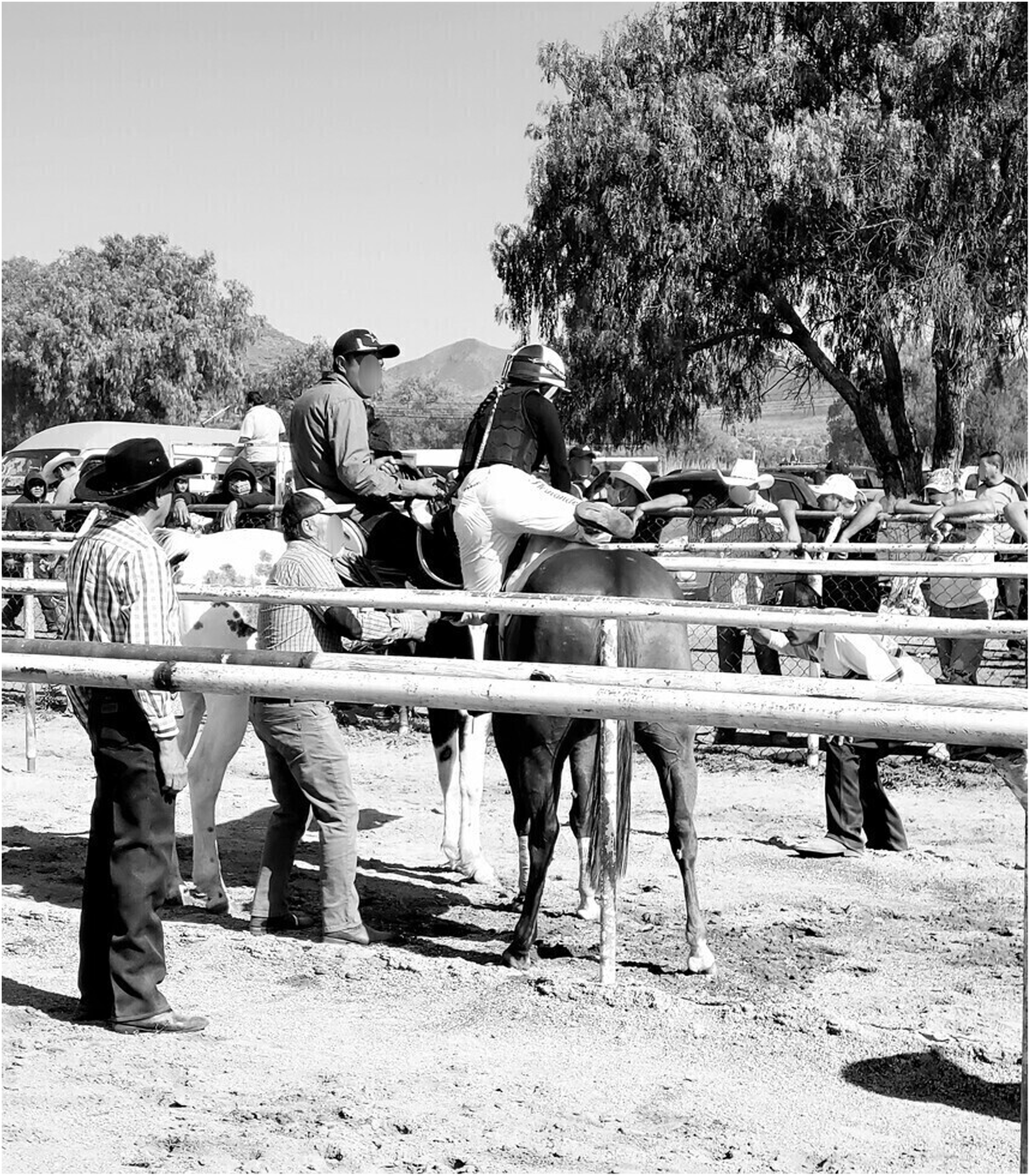
Women's participation in horseracing is subject to male support and recognition (February 2022, picture by first author).
Finally, through their different roles, the presence of women in horse racing has implications for a culture of male domination. While it is true that most of the women who attend do so in the role of spectators, their presence is notable in a hypermasculine and homosocial world. Some women tend to gather with other women, but others interact with men, especially if the latter are family members or friends. Other women drink and toast with women and men. In the competitions, the presence of women, although very few, is also important. Both participant observation and interviews confirmed that the few women jockeys and their capability to ride and compete are recognised and accepted by many men; the presence and leadership of women are made visible and recognised in a highly masculinised world. Thus, although in less conspicuous and protagonist ways, women have presence, visibility and interaction with others, thus beginning to challenge the culture of homosociality and the masculine domination of these spaces.
Conclusions
This article has focused on horse racing, a sporting culture that is highly masculinised, particularly in Mexican rural communities. Our study revealed how the sport is an important and significant means, both physical and symbolic, for homosociality and the performance of masculine identities. Gambling, pride, honour, alcohol consumption and violence are central elements of hypermasculinity in this equestrian sport. Horseracing in Mexico continues to be a sport closely linked to the wider national culture and traditional notions of manliness (Monterrubio et al., 2022). However, within a culture in which machismo still persists, the inclusion of women – not only as riders but also as spectators and equine veterinary professionals – has begun to challenge traditional gender norms in Mexican equestrian sport. Our research revealed that there is an increased visibility and acceptance of women in different roles in a sport that has historically been an exclusively male practice. Women actively participating in horseracing are regarded as capable, brave and competitive; this is placing some women at a distance from the traditional ideals of marianismo, which has largely preserved traditional femininity in Latin America (Da Silva et al., 2021). Although the participation of women as jockeys in races is still limited, their presence acts as a visual and symbolic image that women can succeed and inspire youth generations of female athletes in what have long been considered masculine domains.
However, women remain outsiders within this masculine social world, and often feel uncomfortable and vulnerable when faced with male homosocial practices of drinking, gambling and violence. In these contexts, women feel safer when accompanied by men, reinforcing traditional gender roles and perceptions that racing is really a man's world. The visibility of women as jockeys is slowly beginning to challenge this, although change is incomplete. Therefore, although women are not formally excluded from horseracing as jockeys, due to the adoption of the unisex model, this does not mean they are fully included. Formal, rule-based barriers may have been removed, but informal barriers remain. Women are accepted as competent riders and worthy competitors, but only in certain contexts and with ‘safe’ horses, as women are still seen as weak and in need of protection that men do not require. Women are increasingly accepted on the racetrack, but men continue to dominate the social world of these races, meaning that as a social/leisure practice, this form of horseracing remains exclusionary to many women who may feel othered, uncomfortable and even unsafe at times. This study thus illustrates West and Zimmerman's (2009) argument that gender norms and relations are deeply entrenched and challenges to the gender order are likely to be incremental, rather than revolutionary. The inclusion of women as jockeys does not transform this masculine sporting world, but it does begin to rework traditional gender norms and show that women can be active and successful in sports when competing directly against men. This in itself is a powerful message.
This paper thus makes an important contribution to discussions of sex integration and gender inequality in sports. Through examining a sport which already adopts the unisex model, but is historically and contemporarily still highly masculinised, we illustrate the paradox of sex integration. The unisex model challenges gender inequality in sporting practice, by showing that women can compete successfully against men, but fails to transform the wider social environment which remains male-dominated and exclusionary to women. This illustrates that sex integration – whether that be through the unisex model adopted in racing and other equestrian sports, or more of a tailored classification system as advocated by Kerr and Obel (2018) – will only have limited impacts on improving gender inequality and dismantling hierarchies between males and females in sport. Sex integration provides powerful visual evidence that the differences between men and women may not be as extreme as sometimes believed, and that women can be as athletically capable as men, which are very important messages to convey. However, sex integration alone does not challenge the wider social world of sport, and different sporting subworlds, which remain strongly male dominated and masculinised. Inclusion is more than just permission to participate, and also requires a re-evaluation of gender norms that function to exclude women from sporting spaces. In common with women entering other male-dominated domains like IT and construction (Smith, 2013), women in unisex sports still suffer many barriers to inclusion and have to ‘prove’ their worth in ways that men do not. Therefore, sex integration must be a part of wider efforts to transform sport into a more inclusive and gender-equal space. For horseracing, that means challenging the homosocial leisure environment of drinking, gambling and violence, and creating space for women to feel safe, comfortable and accepted, whether as spectators, workers, equine professionals or jockeys.
Finally, it is important to keep researching the ways in which sex integration may or may not occur in different sociocultural contexts, particularly in the Global South. Equestrian sports – in multiple contexts and formats – provide a challenge to the dominant gender binarism of sport and show that not all sport needs to be organised around binary sex segregation, which is so damaging to those who do not ‘fit’ and reinforces gender hierarchies and inequalities. The ways in which the unisex model of sex integration operates are both sport and socio-culturally specific, and it is important to consider not only sporting norms and physical requirements, but also the ways in which wider sociocultural gender norms affect the practices of sex integration in different cultural contexts. This study reveals that sports can (sometimes) be organised in different ways which are more inclusive and begin to rework wider gender relations, even in societies like rural Mexico which are still dominated by traditional and often restrictive patriarchal gender norms.
Footnotes
Acknowledgements
We thank Rafael Hernández-Espinosa who was involved in the earlier stages of this project.
Declaration of conflicting interests
The author(s) declared no potential conflicts of interest with respect to the research, authorship, and/or publication of this article.
Funding
The author(s) disclosed receipt of the following financial support for the research, authorship, and/or publication of this article: This work was supported by the Universidad Autónoma del Estado de México (grant no. 6493/2022CIB).
