



Abstract
Little is known about vaping and its associated factors among Asian adolescents worldwide. We did a scoping review of the international literature on vaping among Asian adolescents. The prevalence of Asian adolescent vaping varied by the country’s e-cigarette policies: the highest prevalence in Indonesia 32.2% (ever vapers) and 11.8% (current vapers) in 2019 and the lowest in Japan with 2.1% to 3.5% (ever vapers) and 0.7% to 1.0% (current vapers) in 2017. In New Zealand, a Western country with strong tobacco control but liberal policies on vaping, the prevalence of ever vaping was 20.4%, regular vaping 4.2%, and weekly vaping 2.8% in 2019. The most common reasons for vaping in both contexts were curiosity and peer influence. The internet as a popular source of information on vaping was identified mostly in Asian studies. In Asian contexts, the most common reasons for more frequent vaping were the desire to quit smoking and the ability to vape indoors, whereas in Western countries, the top three reasons were nicotine concentration, nicotine dependence, and more daily vaping sessions. Regular monitoring and more targeted research to understand adolescents’ vaping behaviors will need to be undertaken on this heterogeneous population to inform appropriate policies and regulations.
What We Already Know
The prevalence of vaping among the adolescent population in many countries has recently increased.
There have been some studies that have investigated vaping among non-Asian adolescent populations.
Limited research has been conducted on vaping for the Asian adolescent population to understand their vaping behaviors.
What This Article Adds
The prevalence of vaping among Asian adolescent population from both Asian and Western contexts varied by the country’s e-cigarette policies with the highest prevalence seen in Indonesia and the lowest prevalence seen in Japan.
Similarity and differences in vaping among different jurisdictions and associated factors exisit among this heterogeneous Asian population age group.
The most common reasons for adolescent vaping in both contexts were curiosity and peer influence.
In Asian contexts, the most common reasons for more frequent vaping were the desire to quit smoking and the abilty to vape indoors whereas in Western countries, the top three reasons were nicotine concentration, nicotine dependence and more daily vaping sessions.
Introduction
Electronic cigarettes (e-cigarettes) are devices used to store, heat, vaporize, and inhale an aerosol containing propylene glycol or vegetable glycerine, flavors, and in most cases, nicotine, with or without other chemicals. 1 They are used by many people who smoke tobacco as an alternative to smoking and are widely regarded as having some, but fewer, health risks than combustible tobacco smoking.2,3 Thus, using e-cigarettes (hereafter “vaping”) is not recommended for those who have never smoked, particularly younger people.
Recent international media reports have highlighted increased vaping among adolescents worldwide, including Asian countries and Western countries, such as New Zealand, 4 a nation with the majority of the population being European descendants 70% followed by Māori 16%, Asian 15%, Pacific Islands peoples 8%, and other ethnic groups 1.5% of the population in 2018. 5 Media attention on vaping among adolescents has focused on concerns about nicotine dependence, smoking-like behaviors, and as a potential gateway to tobacco use.2,4,6 However, verifying such reports with reliable data has been challenging. For example, in New Zealand, two surveys—the Youth 2000 Survey Series 7 and the New Zealand Health Survey (NZHS) 8 —could not provide reliable estimates about adolescent vaping because of study sampling limitations. Nevertheless, two biennial Youth Insights Surveys 9 and the annual ASH Year 10 Snapshot Surveys 10 showed a steep increasing trend in vaping prevalence from 2016 to 2018/2019 (but a stable or slightly decreasing trend in smoking prevalence). 2 Similar trends have been noted in other western countries, for example, the United States. 11
Although there have been some studies that investigated vaping among non-Asian populations, little has been studied on Asian adolescent population. There are likely to be differences in the lived experience of Asian adolescents in Western and Asian countries, such as culture, values, religious faith, attitudes toward vaping with marginalization and racism, and in the policy and legal context around vaping that might affect their risk-taking propensity. 5 Lessons learned from exploring such differences may be useful in developing context-appropriate preventive and treatment interventions. Thus, this study aims to conduct a comprehensive review from all the available literature from both Asian and Western countries to understand more about Asian adolescent vaping.
Methods
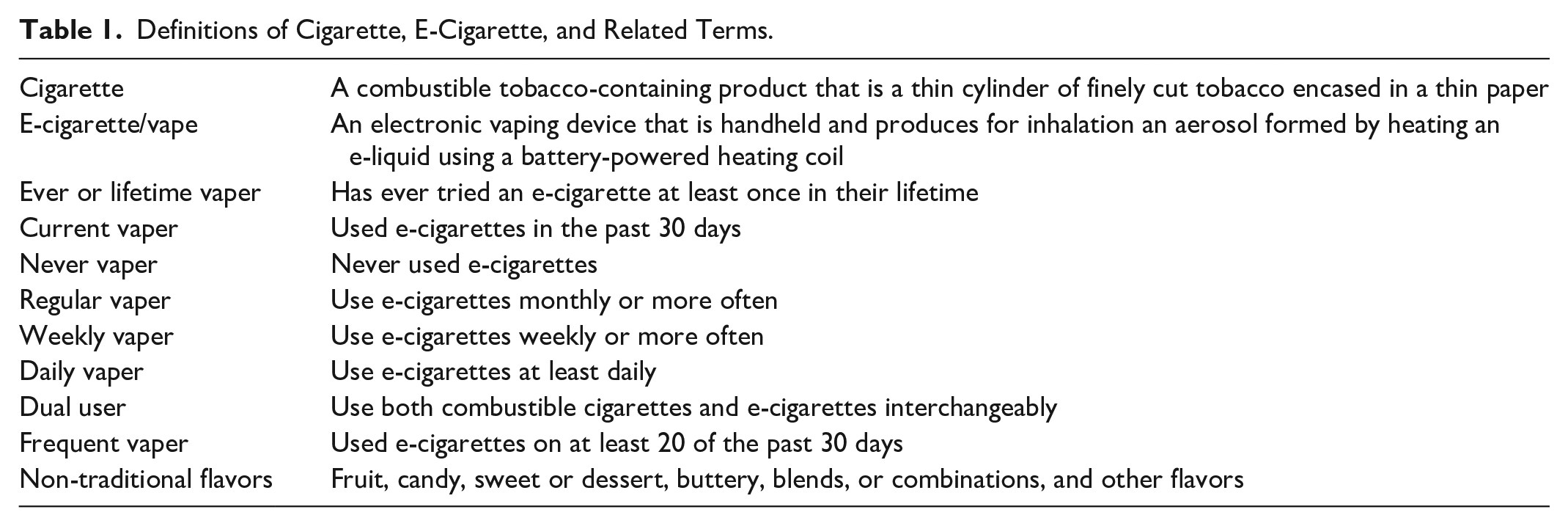
Using the Preferred Reporting Items for Systematic Reviews and Meta-Analyses Extension for Scoping Reviews (PRISMA-ScR) Checklist as a guide, 12 we did a scoping review by searching three electronic databases, PubMed, Scopus, and the Cochrane Library, supplemented by searching article reference lists to find studies missed by our search, and searched Google Scholar to find gray literature. One author and two supervisors independently screened all articles generated using pre-defined search terms, inclusion and exclusion criteria. An agreement was made through online meetings and discussions until the final consensus was reached. Studies were included if published between 2010 and 2022 (because the first scientific article on e-cigarettes was published in 2010) 13 in the English language, the full text was available, all study designs of analytical or descriptive origins, participants were aged between 10 and 19 years and the setting was an Asian or Western country. Studies were ineligible if they were intervention studies, or had inconclusive results, the focus was on diseases, combustible cigarettes, other substance use, or smokeless tobacco. Age group definitions followed those described by Sawyer et al, 14 with adolescents aged between 10 and 19 years. “Asian” is a category that lumps together many diverse populations but is widely used in the health sector. 15 Table 1 shows definitions of cigarette, e-cigarette, and their use patterns, encountered in our search.
Definitions of Cigarette, E-Cigarette, and Related Terms.
Results
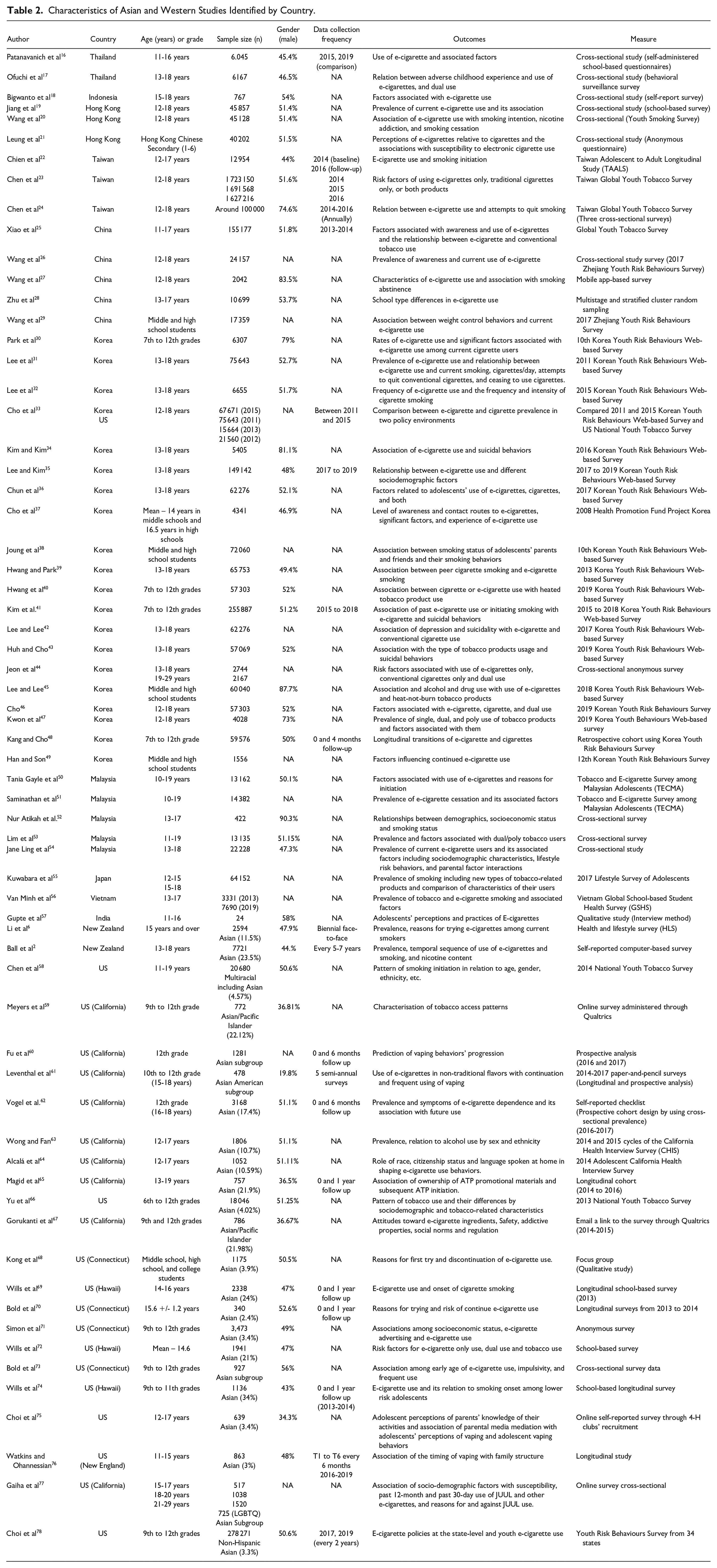
The search generated 407 potential articles. After removing duplicate, and irrelevant studies, as well as screening the titles and abstracts, only 65 studies were included for final review (Figure 1). Detailed characteristics of included studies are reported in Table 2.
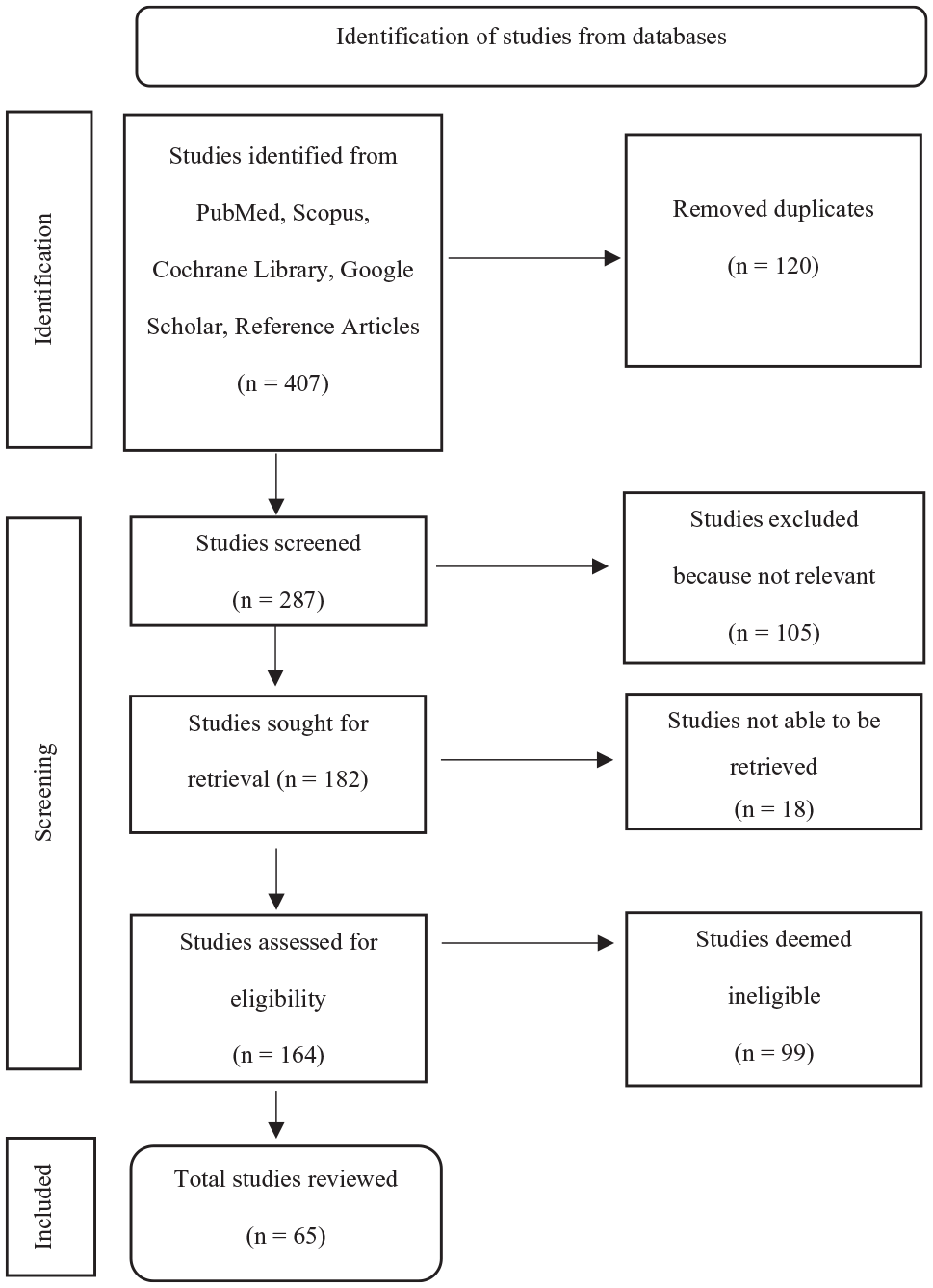
Flow chart of the study identification.
Characteristics of Asian and Western Studies Identified by Country.
Prevalence of Adolescent Vaping in Asian Countries
In South Korea, the prevalence of ever vapers (current vapers) was 9.4% (4.7%) in 2011, 10.1% (3.9%) in 2015, and dual users 13.2% in 2011 and 8.5% in 2015.31 -33 In Malaysia, the prevalence of ever vapers, current vapers, and dual users were 20%, 9%, and 6.5%, respectively, in 2016.50,51,53 In China, the prevalence of ever vapers was estimated to be over 25% in 2015 27 and current vapers 1.2% in 2013-2014 and 2.15% in 2017.25,26,29 In Taiwan, in 2016, the prevalence of ever vapers was 7.7%, current vapers, and dual users 2.1% and 1.9%, respectively. 23 Among Taiwanese cigarette smokers, current vaping increased from 9.82% in 2014 to 27.46% in 2016, whereas smoking quit attempts decreased only slightly. 24 In Hong Kong, the prevalence of current vapers was 1.1% in 2012-2013 and ever vaper 8.9% in 2014-2015.19,21 In Thailand, the prevalence of current vapers was 3.3% in 2015. 16 By 2019, the prevalence of ever vapers, current vapers, and dual users was 7.2%, 3.7%, and 9.5%, respectively.16,17 In Indonesia, the prevalence of ever vapers (current vapers) was 32.2% (11.8%) in 2019. 18 In Japan, the prevalence of ever vapers in 2017 was from 2.1% to 3.5% and the prevalence of current vapers was from 0.7% to 1.0%. 55 In Vietnam, the prevalence of current vapers was 2.6% in 2019. 56 In India, the prevalence of ever vapers was 2.8% in 2019. 57
Associated Factors
Vaping (Current Vaping and/or Ever Vaping Including Frequent Vaping)
Vaping was positively associated with the following health risk behaviors: intention to smoke in both never and ever smokers, 20 previous experimentation with cigarette smoking, 25 suicidal ideation, plans and attempts, 34 sexual activity, 56 higher drinking frequency, drinking quantity, alcohol intoxication, and drug use, especially when combined with using heated tobacco products. 45 The association of suicidal attempts with vaping was higher in current vapers and those who initially vaped. 34 Current vaping was positively associated with current smoking, 54 alcohol use, including risky drinking,19,36,47,54,56 drug and other tobacco product usage, 19 unhealthy weight control behaviors, 29 lifetime drug use, and sexual intercourse. 30 Ever vaping was found to have an association with intention to smoke but not with current smoking. 20
Significant demographic factors for adolescents to be vapers were male gender,16,19,30,37,50 older age (16-19 years),50,53,54 having enough money, 18 higher weekly or monthly allowance,23,30,49 living in the urban area,30,54 living with relatives35,38 and in protective facilities such as orphanages, social welfare facilities, 35 living in higher socioeconomic conditions, and parental birthplace (parents born abroad). 35 Schooling in urban area, 54 older age, and parent marital status (living together but not married parents) 54 were associated with current vaping, whereas poor life assets, especially power of wisdom 16 and students in vocational study 28 were associated with ever vaping.
Regarding social factors, vaping was positively associated with parental acceptance, 18 capacity for indoor use, 32 having noticed tobacco advertising in the past 30 days, 25 having close friends who are smokers, 44 having contact routes of information such as the internet, friends, television, book, and others 37 and popularity. 50 Only teachers’ use of e-cigarettes was found to be negatively associated. 18 Parental vaping,16,54 any family member smoking, 38 peer vaping and approval,16,39 and having more friends who are smokers 38 were more associated with current vaping.
Concerning personal factors, knowledge, 19 academic performance, 16 truancy, 52 a perception that e-cigarettes do not cause cancer and are less harmful compared with conventional cigarettes,18,21,53 curiosity, 32 perception of peer influence, 37 loneliness, 56 satisfaction in school life, 37 taste and smell, 47 positive perceptions on e-cigarettes with social situations, 25 and perceptions of being popular 50 and attractive21,25 by using them were positively associated with vaping. Among these factors, favorable perceptions such as being less likely to cause accidents and less harmful to users 21 were associated with ever vaping, whereas poor knowledge and awareness of e-cigarette risks and harms 19 were associated with current vaping. With academic performance, higher grades 30 were associated with both ever and current vaping but poor academic performance 16 was associated only with ever vaping.
For smoking-related factors, current cigarette smoking,18,38,54 a higher number of cigarettes smoked, 47 previous smoking experience 37 and experimentation,25,30 quit attempts, 30 and desire to quit smoking 32 were positively associated with vaping. Frequent and intensive cigarette smoking was highly associated with becoming frequent vapers. 32 Although attempts to quit smoking were highly associated with becoming vapers, it was rare for those who attempted to quit to no longer use cigarettes. 31 For ever vapers, 36.02% used e-cigarettes to quit smoking but only half of them were found to be successful in quitting smoking. 27 Current cigarette smoking and second-hand exposure might also contribute to becoming current vapers.26,36,38
Regarding policy environments, restrictive policies in Korea such as prohibiting indoor use of e-cigarettes, limiting e-cigarette advertising, and excising e-cigarette taxes were associated with limiting the growth of adolescent vaping, especially for current vapers. The policies were also found to have an association with reducing dual use. 33
Dual Use of Smoking and Vaping
Use of other tobacco products, 23 heated tobacco products (HTP), 40 depression and suicidality, 42 suicidal behaviors, 43 substance use, 46 risky alcohol drinking, and sexual experience 47 were significant health risk behaviors for dual use. Demographic factors such as male, older age (16-19 years), high monthly allowance, 23 university students, 44 and living in metropolitan areas 47 were risk factors for dual users. In one study from Korea, a young age of less than or equal to 15 years 46 was also found to be a risk factor for dual use. Smoking parents, 23 siblings, friends, and teachers 44 were strong social factors to become dual users. 23
Positive perceptions of e-cigarettes and a lower perception of the harms of tobacco smoking were strong personal factors to become dual users. 53 A history of more than four 4 adverse childhood experiences were also a personal risk factor for dual users. 17 Limited smoking cessation attempts, cigarette initiation before 13 years, heavy smoking, 46 and the number of cigarettes smoked 47 were also highly associated with becoming dual users. While second-hand exposure at school 46 and home 53 was positively associated with becoming dual users, second-hand exposure in public 46 was negatively associated. Although access to free cigarettes 23 was positively associated with dual users, ease of purchases 46 decreased the chance of becoming dual users.
Smoking
Among current smokers, heavier smoking, morning smoking urge, and frequent smokers were significant factors associated with vaping. Nicotine addiction was non-significantly associated with vaping. Quit intentions and attempts were found to have no association with vaping. 20 Among never smokers, vaping was highly associated with more intending to use tobacco products in the next 12 months and peer cigarette smoking. 25
Prevalence of Asian Adolescent Vaping in Western Countries
In New Zealand, the overall prevalence of vaping for those aged 15 years and above in 2014 was 13.8% (ever vapers) and 0.8% (current vapers) while that of the Asian subgroup was 3.8% (ever vapers) and 0.7% (current vapers). With age-specific findings, the prevalence of vaping for those aged between 15 and 17 years was 20.7% (ever vapers) and 0% (current vapers) whereas for those aged between 18 and 24 years was 25.8% (ever vapers) and 0.2% (current vapers). 6 In 2019, the overall prevalence of vaping for those aged 13 to 18 years was 38% (ever vapers), 10% (regular vapers), and 6% (weekly vapers) while that of the Asian subgroup was 20.4% (ever vapers), 4.2% (regular vapers), and 2.8% (weekly vapers). 2 In the United States, the overall prevalence was reported to be only 5.24% (ever vapers) and 2.77% (current vapers) in 2013. 66 But the prevalence tripled in 2014, with 18.74% (ever vapers) and 8.86% (current vapers). At that time, the prevalence of the Asian subgroup was 10.62% (ever vapers) and 5.31% (current vapers). 58
Associated Factors
Vaping by Asian Adolescents (Current Vaping and/or Ever Vaping Including Frequent Vaping)
Positive associations of Asian adolescents in Western countries who vaped were health risk behaviors such as increased risk factors (e.g., peer use), decreased protective factors (e.g., parental support), 72 smoking, 74 and alcohol drinking. 63 For demographic factors, older age, 64 higher median household income 77 or higher socioeconomic status, 71 citizenship status (e.g., US citizen), language (speak English only), and individuals above 200% of the US Federal poverty level 64 were positively associated with vaping. Citizenship status and language spoken were also associated with ever vaping. 64 Higher socioeconomic status was also associated with more frequent vaping due to more exposure to recent advertising. 71 Being younger was associated with both continued and frequent vaping. 70
Low parental education and support were associated with vaping, especially among those who had never used tobacco. 69 Adolescents with divorced parents were more likely to vape earlier. 76 Friends were the main social sources for adolescents to obtain e-cigarettes, whereas they obtained tobacco from tobacco shops. 59 Parental knowledge and parental media mediation contributed to adolescents’ perceived harm and prevalence of vaping, making adolescents less likely to vape. 75 A higher level of parental support was both a risk 74 and protective factor 69 to start smoking for adolescent vapers. Peer influence 68 and ownership of promotional materials for alternative tobacco products such as posters, pamphlets for heated and oral tobacco, 65 were associated with vaping while low costs and the ability to use vapes anywhere 70 were factors that led experimenters to continue vaping.
For personal factors, more favorable attitudes toward vaping, 67 perception of e-cigarettes as healthier options, higher rebelliousness, 69 and impulsivity 73 were associated with vaping. Impulsivity was associated with early-age vaping and more frequent vaping. 73 Curiosity was associated with e-cigarette experimentation.6,68 Three factors associated with discontinuation of vaping were losing interest, feeling uncool, and being concerned about health and over usage. 68 Those who were reported to be younger than their classmates and who reported being Asian and/or experiencing discrimination more often were found to become frequent vapers. 60
For smoking-related factors, being a current smoker, 6 having the desire to quit smoking,6,68,70 and appealing flavors60,68,77 were associated with vaping. Vaping with non-traditional flavors was positively associated with continued vaping and taking more puffs per vaping occasion 6 months later, but not with frequent vaping. 61
Regarding policy environments, e-cigarette-inclusive smoke-free (ESF) policies and raising the tobacco legal purchasing age to 21 years (T21) were associated with reducing or limiting the growth of ever, current, and frequent vaping, and imposing e-cigarette taxes was not associated with vaping prevalence. 78
Dual Use of Smoking and Vaping by Asian Adolescents
Only one study examined risk status, which was highest in dual users followed by cigarette-only users and e-cigarette-only users. The perception of e-cigarettes as healthier than smoking was also associated with a high prevalence of dual users and e-cigarette-only users. 72
Smoking
Among current smokers, curiosity and the desire to quit smoking were two significant factors associated with e-cigarette experimentation. Tobacco smoking status predicted e-cigarette use. Current smoking status was also associated with continued and frequent vaping. 6 Among never smokers, vaping was associated with smoking after one year later. 69
Discussion
Summary of Key Findings
In general, where policies restrict vaping, prevalence was lower, and vice versa (see Supplemental Appendix Table A1). The prevalence of Asian adolescent vaping was high in Indonesia, China, and Malaysia. A single study from Indonesia was conducted only in urban areas so it was not representative of the population. 18 China had no e-cigarette regulations, 19 but the prevalence of current vaping was low. However, the low response rate at the school level (19%) suggests this might be an underestimate. 26 Nevertheless, Chinese adolescents had a very high awareness of e-cigarettes: nearly 90% in 2015 in one study showed awareness as early as 2015. 27 Malaysia, which has the largest e-cigarette market in Asia, had only government recommendations not to start using e-cigarettes and for current vapers to stop using them, announced in 2015 and regulation of nicotine as a class C poison and medicinal products. 50 However, e-cigarettes without nicotine were not considered to be tobacco products and can be legally sold without any restriction. 50
In Hong Kong, where e-cigarettes with nicotine are recognized as medicinal products that must be registered before sale and prohibited in statutory smoke-free venues, 19 the prevalence of current vapers in 2012-2013 and ever vapers in 2014-2015 was very low. In Taiwan, current vaping among smokers increased threefold from 2014 to 2016, so in 2017, Taiwan passed regulations that classify e-cigarette liquids with nicotine as an illegal product and prohibit the advertisement of e-cigarettes without nicotine as smoking cessation devices. 22 Japan had the lowest prevalence among all Asian countries in 2017. Beginning in 2010, the sale of nicotine-containing e-cigarettes in Japan has been prohibited. Japan has a unique nicotine and tobacco market that includes the legal sale of heated tobacco, an alternative product to e-cigarettes. 55 India, which banned e-cigarettes in 2019, had a low prevalence of ever vapers in the same year but the sample size in the study was small and was not nationally representative. 57 Vietnam, which banned the importation of e-cigarettes in 2019, had a low prevalence of current vapers. 56 In Thailand (2015-2019) and Korea (2011-2015), the prevalence of both ever and current vapers had not changed much due to their strict regulations of e-cigarettes. In Thailand, there is a ban on importation and sale starting from 2015, 16 and in Korea, there is the prohibition of tobacco use in all indoor places, prohibition of sales and advertisements, and taxation of e-cigarettes. 33 In addition, there are health warnings, regulation of e-cigarette components, and text health warnings on nicotine cartridges starting from 2008, 2011, and 2015, respectively. 33
In comparison, the United States had limited e-cigarette regulation during 2013-2014, and over this time, the overall prevalence including the Asian subpopulation of both ever and current vapers increased by threefold. However, starting in 2016, a growing number of states in the United States passed e-cigarette regulations, especially ESF policies and T21 policies, leading to either a decrease or a slower increase in the prevalence of vaping among the states with these policies enacted during the 2017-2019 period. 78
In New Zealand, e-cigarettes have only been regulated since 2018, and both overall prevalence and the prevalence of the Asian population aged 15 years and above for both ever and current vapers in 2014 were lower than those of the United States in the same year. When compared with Asian countries, the prevalence was also low and comparable to that in Japan. However, the prevalence of ever vaping by Asian adolescents aged 15 to 17 years in 2014 and Asian adolescents aged 13-18 years in 2019 was quite high and comparable to that in Malaysia. Continuous monitoring and assessment of vaping prevalence in the years following the introduction of vaping regulation in New Zealand could shed light on the relationship between vaping control policies and vaping prevalence among the Asian adolescent population.
We found similarities and differences in the factors associated with vaping between Asian and Western countries. Common reasons identified for vaping were curiosity and peer influences.3,32,63 Flavored vaping and current smoking status were associated with continued vaping in adolescents. Differences between the two contexts were also noted. Although male gender16,19,30,37,50,54 is generally found to be associated with vaping, one study from California found the highest prevalence of vaping in Asian girls 63 where vaping was related to alcohol drinking in adolescent girls who showed higher rates of alcohol consumption than boys. These differences in drinking behaviors between boys and girls were further explained by the differences in disinhibition, depressed mood, and the importance of family and peer relationships. 63 In addition, the difference in cultural contexts especially parental attitudes which have an influence more on Asian contexts is also an important determinant of vaping. For example, a systematic review of socio-ecological factors influencing vaping in adolescents found three studies that addressed the influence of parents, and in households where parents were tolerant of vaping, adolescents were more likely to vape. 79
Moreover, the single most common source of information on vaping identified in the Asian studies was the internet. 37 It might be because e-commerce from China has been growing significantly, and transnational investments in e-cigarette markets, in different forms of online marketing, have targeted young people from Asian countries with weak e-cigarette regulations, such as Indonesia and Malaysia. 80
While the desire to quit smoking and the capacity for indoor use are the most common reasons for frequent vaping in Asian countries, nicotine concentration, nicotine dependence, and more daily vaping sessions are the top three reasons for frequent vaping in Western countries.32,60 Differences in reasons for vaping between Asian and Western contexts could provide useful information for developing more context-appropriate vaping prevention policies, regulations, and controls for policymakers.
We identified a subgroup that is remarkably under-researched: adolescents who identify as lesbian, gay, bisexual, transgender and queer (LGBTQ). Few studies from either context have investigated vaping behaviors among LGBTQ adolescents. This population is likely to be not only more susceptible to different types of e-cigarettes but also require tailored messaging of prevention and cessation of e-cigarette use. 77 A systematic review found mixed evidence being part of a sexual and/or gender minority was either a risk or protective factor for vaping. 79 Thus, this could serve as an area of future research to explore more about their vaping behaviors so as to develop more inclusive vaping policies and regulations.
Limitations and Strengths
There are a number of limitations in this scoping review. First, it is possible our search strategy missed some papers. However, reference checks of the identified papers for other articles found no more papers. Second, there was heterogeneity in several study characteristics that made comparisons difficult: for example, studies were conducted at different points in time, with different adolescent age groups, no consistent standard measurement of e-cigarette categories, and a very low percentage of Asian subpopulations in Western studies. Additionally, between-group differences (e.g., different definitions of the Asian ethnic group between Western countries) and within-group differences due to cultural and ethnic factors (e.g., women of Japanese descent had the highest vaping prevalence rates than other subgroups while men of Korean descent had higher rates of smoking than their Chinese, Japanese, and South Asian peers) could mask comparisons. 81
The review also has a limitation as it only captured a window in time from 2010 to 2022 but vaping policies in some countries (e.g., New Zealand, Australia, and Malaysia) have since changed to respond to the rise in adolescent vaping by restricting access to e-cigarettes, their marketing, promotion, flavors, and nicotine content. To date, no study in Western countries has been conducted specifically for the Asian adolescent population. Few countries have any systematic and regular monitoring of vaping in adolescents, let alone for the Asian population, making it difficult to assess and compare the changes in the prevalence of vaping. Finally, most studies were cross-sectional surveys, therefore inferences of causality between vaping and associated factors cannot be made.
However, the review also has strengths. We used a specified search strategy with reproducible search terms and databases, inclusion and exclusion criteria, and a clear definition of age group and e-cigarette categories. In addition, we used a definition of “Asian” that includes all Asian countries included in our search and thus had the potential to contribute to the review findings.
Conclusion
We hypothesize that the presence of e-cigarette control policies is important for reducing the prevalence of vaping in Asian adolescents in both Asian and Western countries. Given that similarities and differences in vaping among different jurisdictions and their associated factors or behaviors exist, ongoing monitoring and more targeted research are needed on this heterogeneous population to inform appropriate policies and regulations.
Supplemental Material
sj-docx-1-aph-10.1177_10105395241275226 – Supplemental material for A Scoping Review of Vaping Among the Asian Adolescent Population
Supplemental material, sj-docx-1-aph-10.1177_10105395241275226 for A Scoping Review of Vaping Among the Asian Adolescent Population by Ko Ko, Joanna Ting Wai Chu and Christopher Bullen in Asia Pacific Journal of Public Health
Supplemental Material
sj-docx-2-aph-10.1177_10105395241275226 – Supplemental material for A Scoping Review of Vaping Among the Asian Adolescent Population
Supplemental material, sj-docx-2-aph-10.1177_10105395241275226 for A Scoping Review of Vaping Among the Asian Adolescent Population by Ko Ko, Joanna Ting Wai Chu and Christopher Bullen in Asia Pacific Journal of Public Health
Footnotes
Declaration of Conflicting Interests
The author(s) declared no potential conflicts of interest with respect to the research, authorship, and/or publication of this article.
Funding
The author(s) received no financial support for the research, authorship, and/or publication of this article.

Supplemental Material
Supplemental material for this article is available online.
References
Supplementary Material
Please find the following supplemental material available below.
For Open Access articles published under a Creative Commons License, all supplemental material carries the same license as the article it is associated with.
For non-Open Access articles published, all supplemental material carries a non-exclusive license, and permission requests for re-use of supplemental material or any part of supplemental material shall be sent directly to the copyright owner as specified in the copyright notice associated with the article.
