



Abstract
The study aimed to review general and specific health literacy studies in different countries in Asia to understand the progress of health literacy researches in the region. English-published studies with quantitative measurements of health literacy were collected through a systematic search in PubMed, Cochrane Library, Embase, and Web of Science, without publication dates limitation. A total of 156 articles on general health literacy, oral, mental, disease-specific health literacy, and eHealth literacy were collected. General health literacy was the most covered topic in 89 articles, followed by eHealth Literacy. Health literacy studies have been conducted in 16 countries and have been increasingly concerned in most of the countries in Asia. China had the largest number of articles, followed by Taiwan. Four studies had participants from more than one country. Education, age, health status, incomes, and living/residential area were significantly associated with health literacy levels in 156 studies, with the prevalence of 55.8%, 28.2%, 20.5%, 17.9%, and 10.9%, respectively. Lower health literacy was related to poorer health outcomes or lower quality of life in 71 studies.
What We Already Know
Health literacy studies were conducted on different kinds of Asian participants, patients, healthy people, students with or without a medical background, children, adults, older adults, and so on.
Studies on health literacy are needed to evaluate and improve health through suitable interventions in Asia.
Studies with quantitative measurements of health literacy were conducted in different countries in Asia.
What This Article Adds
The article mapped the health literacy studies with quantitative measurements in different countries in Asia.
The study revealed the main outcome of different topics in health literacy in Asia, such as oral health literacy, mental health literacy, disease-specific health literacy (diabetes, high blood pressure, dementia), and eHealth literacy.
This review provided a better understanding of health literacy developments and its association with quality of life and health outcome in Asia.
Introduction
Health literacy (HL) implies the ability of individuals to access, understand, appraise, and use various types of health information and services to improve and maintain good health for themselves, their families, and their communities. 1 Health literacy has been one of the new subjects of health research worldwide. In Europe, a study involving 8000 people from eight countries was conducted to find the association between HL and economic, social status, educational attainment, age, and health status. 2 In another study published in 2019 about the social disparities within HL in the United States, the authors analyzed the data from the Health Information National Trends Survey to determine how factors like gender, income, and education could contribute to the overall disparities in HL. 3 To create the HL profile of the Aboriginal and Torres Strait Islander peoples with long-term disease in Australia, Rheault et al 4 conducted research in 2019, and the results assisted Australian health care organizations in establishing strategies to improve health care for the people there.
Besides the traditional sources of information from books, newspapers, magazines, and leaflets, health media can also spread quickly thanks to the digital data system. Furthermore, the internet is a massive data source for finding health information. 5 Through effortless access from electronic devices, the need to exchange and share information between organizations, health workers, and people and between people is increasing. 6 In addition, regular internet use can increase users’ awareness and knowledge and help them better participate in health care and prevention activities. 7 On the contrary, fake information on the internet can cause destructive behaviors, psychological disturbances, fear, depression, and fatigue. 8 Therefore, electronic health literacy (eHealth literacy) is essential in receiving health information from digital data. eHealth literacy refers to the ability to find, understand, appraise, and use health information through electronic resources to address or solve a health problem. 9 Research by LuyaoXie et al, 10 published in 2022, showed the association between eHealth literacy and health behaviors, health care knowledge, and attitudes in the elderly. During the COVID-19 epidemic, when prevention measures such as social isolation limited direct medical examination and consultation activities, the search for information and health consultation remotely via the internet was used more frequently. 11 In addition, telemedicine became a common way of health care during COVID-19. A study published in 2021 investigated the association between eHealth literacy and telemedicine use satisfaction in different age groups. Young people and academics had more benefits from telemedicine. 12
With diverse populations, HL has been studied in many countries in Asia. Research in Taiwan showed that 69.7% of adults had adequate HL, 16.6% as marginal, and 13.7% as inadequate HL. Health literacy level was lower among adults with older age, lower education, lower income, and living in less-populated areas. 13 In another study, 25.3% of Taiwanese older adults had low HL, a risk factor for prefrailty and frailty. 14 Survey results on people’s HL in Hubei, China, from 16 to 75 years old, showed that the prevalence of low HL was relatively high (81.0%). 15 Another study on people ages 15 to 69 in Beijing, China, showed that only 28% of people had adequate HL. 16 The study of HL is also popular in Southeast Asian countries such as Vietnam, Thailand, Philippines, Malaysia, Singapore, and so on.
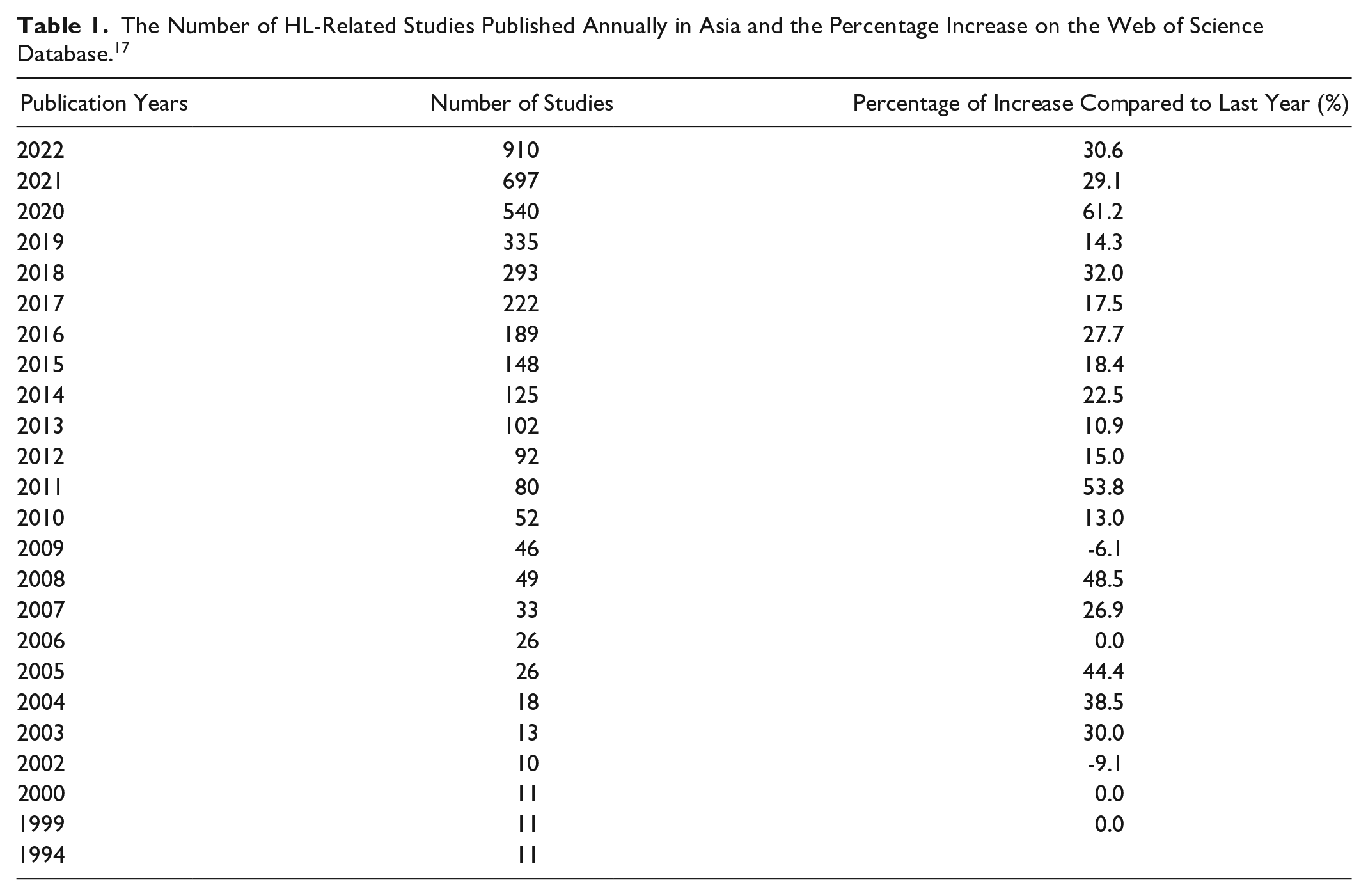
Based on a search of HL-related published papers in different countries in Asia from the Web of Science database, the number of articles has been increasing yearly on a wide range of topics (Figure 1). The articles included cross-sectional studies, protocols, systematic reviews, meta-analysis studies, case reports, meeting abstracts, letters, books, HL assessment tool validating, and so on. Furthermore, Table 1 shows the number of published articles each year and the percentage increase between two consecutive years. In 2012, there were only 92 articles, but 222 articles after five years and 910 articles after 10 years. The number of published articles had increased by almost 10 times between 2012 and 2022. The rapid increase in the number of published articles provided diverse and up-to-date information on a variety of HL topics, including general HL, oral HL, mental HL, and HL related to diseases, such as diabetes literacy, hypertension HL, nutrition literacy, drug use literacy, and other topics on HL in Asia. We systematically reviewed the literature to provide further analysis. The study aimed to review HL studies on populations in different countries in Asia and document the covered topics.
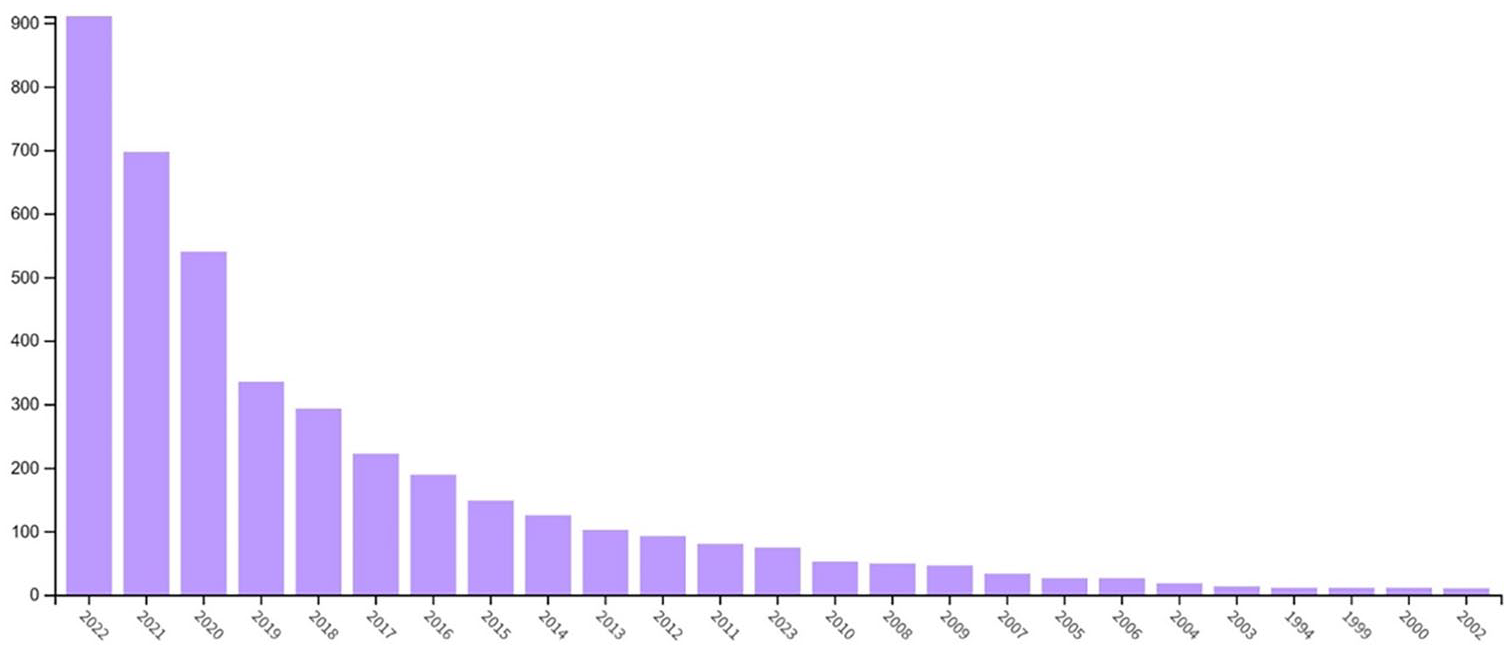
The number of HL-related studies published annually in Asia on the Web of Science database. 17
The Number of HL-Related Studies Published Annually in Asia and the Percentage Increase on the Web of Science Database. 17
Methods
Search Strategy and Selection Criteria
Four steps of searches and screening to identify relevant publications were conducted. In the first step, four databases were selected for collecting publications from PubMed, Cochrane Library, Embase, and Web of Science. The keywords and Medical Subject Headings (MeSH) were used for searching in databases, including “Health Literacy,” “Surveys,” “Questionnaires,” and keywords about Asian countries included “Bangladesh,” “China,” “Hong Kong,” “India,” “Indonesia,” “Singapore,” “Japan,” “Malaysia,” “Mongolia,” “Myanmar,” “Philippines,” “South Korea,” “Taiwan,” “Thailand,” and “Vietnam.” The detailed search strings used are provided in Supplementary Table 1. The titles and abstracts were searched in the third step to remove irrelevant studies. Finally, potential full-text studies were accessed to redefine the article’s relevance. After that, the data were extracted and summarized.
All studies published in English with the quantitative measurements of HL were eligible to be collected without limiting the publication date. Protocols, systematic review and meta-analysis studies, case reports, validating the HL assessment tool, and studies with the population not in Asia were excluded. Overall, 156 relevant publications fit the selection with the last search at the end of December 2022.
Data Extraction and Analysis
Two researchers reviewed these works independently. If there was any conflict between the researchers at any stage, a third researcher was invited to join the review, followed by a discussion and revision. Before extracting data, the Joanna Briggs Institute (JBI) critical appraisal checklist was used to evaluate the quality of each article. The two authors also independently assessed the quality of each study, including checking the definition of the inclusion/exclusion criteria, the description of the population of participants, the definition of the disease if the study evaluated the HL level of patients, the method to measure the HL level, the presence of confounding factors and strategies to solve the effects, the measurement of the health outcomes (quality of life, healthy behaviors, treatment outcomes, etc.), and the statistical analysis. Then, we compared and discussed which study should be included for further data analysis.
Microsoft Excel software 2019 was employed to perform data extraction independently with designed tables which included the following data from eligible articles: author, year of publication, title, study design, study conducted country, population characteristics (kinds of population, number of participants, number of male/female), type of HL involved, and the main outcome.
Results
Characteristics of Included Studies
Around 2011 studies were identified from the databases, with 943 records excluded as duplicates, and the rest, 1068 studies, were screened the titles and abstracts (Figure 2). After being screened, 849 records were excluded because they did not meet the eligibility, consisting of research as a protocol, systematic review, and meta-analysis, the study population was not in Asia and without quantitative measurements. The remaining 219 studies were accessed with the full text. Finally, 156 studies met the inclusion criteria, while 63 were excluded for not being in English and for other reasons. Figure 2 shows all the steps of collecting eligible studies with the research strategy according to the Preferred Reporting Items for Systematic Reviews and Meta-Analyses (PRISMA) flow diagram.
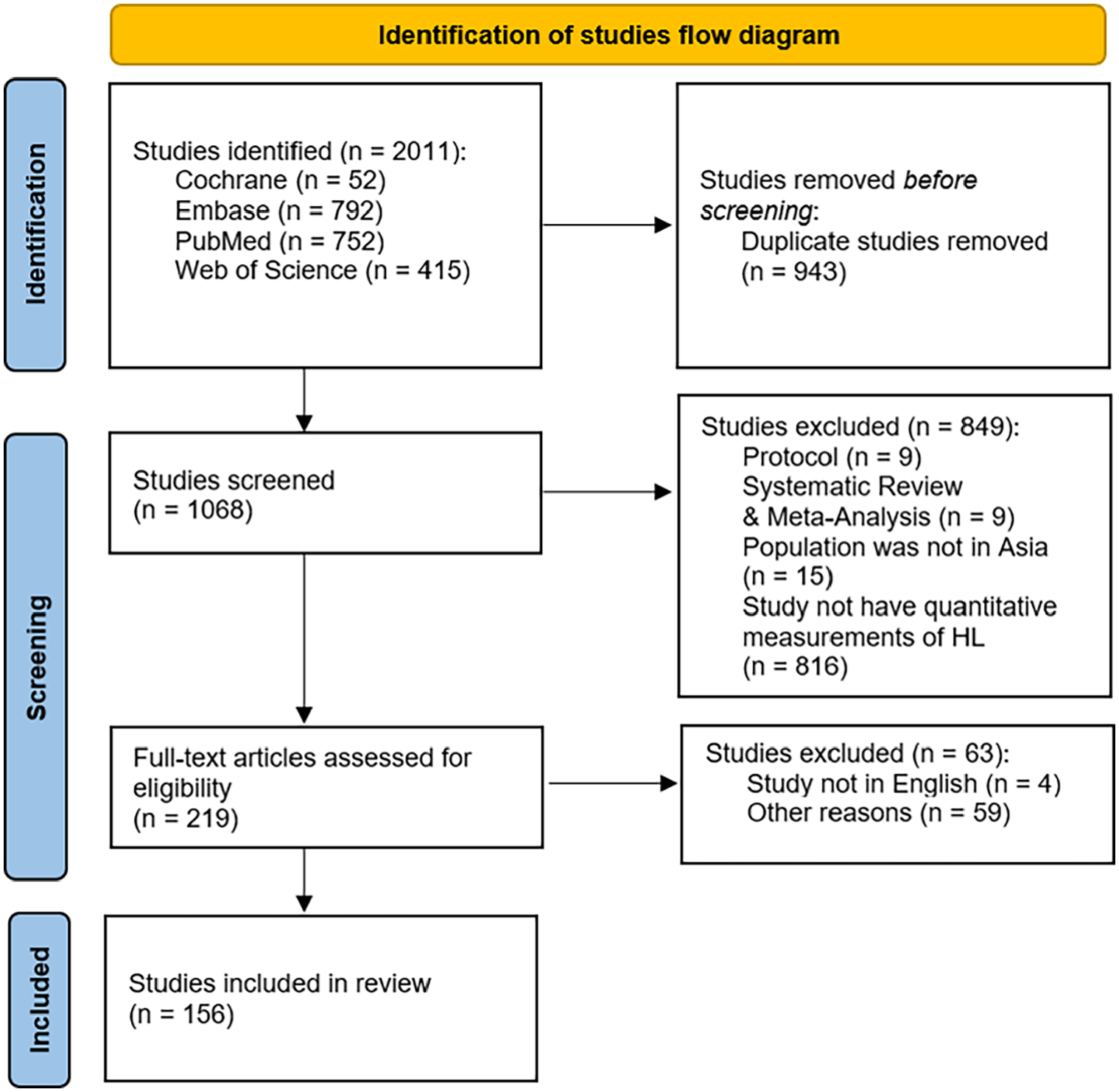
The PRISMA follow diagram of study selection from the four databases.
In all included studies, the study population involved included 538 125 children, adults, and older adults. Of these, 48% were men, and 52% were women from different countries. The detailed table on the number of HL studies and percentages by country in Asia is available in Supplementary Table 2. In total, HL levels were measured in different populations in 16 Asian countries. From 2010 to 2022, China provided the most published HL articles (52/156; 33.3%), followed by Taiwan (21/156; 13.5%), Japan (16/156; 10.3%), and Thailand (13/156; 8.3%). Four out of 156 studies had participants from more than one country.
Studies measuring HL were conducted on different populations with various HL topics. For the elderly population, besides general HL, studies have assessed disease-specific HL, such as dementia, diabetes, and oral health. If the study involved children with their parents, the assessment would aim to assess how the parents’ HL affected their children’s oral, mental, and sleep health.18 -21 Among all topics of HL, general HL is the most common topic with 89 relevant studies, followed by eHealth Literacy (16 studies), oral HL (13 studies), and mental HL (9 studies). The detailed table on the number of HL studies and percentages by HL topic in Asia is available in Supplementary Table 3. The prevalences of a few determinants that were shown to be significantly associated with HL levels in this literature review, including education, age, health status, incomes, and living/residential area, were 55.8%, 28.2%, 20.5%, 17.9%, and 10.9%, respectively.
Main Outcomes of HL Studies in Asia
General HL
In 89 relevant papers in HL, studies authored by Chinese scientists are the most prevalent, with 27 studies that surveyed HL levels in various groups of people. They were patients22 -27 or general public, secondary,28 -30 high school,30,31 college students,32,33 women, 34 12 years old and above,16,15,35 -43 or older adults.44 -47 Taiwan had the second-highest number of HL measurement articles, with 16 published papers. Taiwan had one paper that surveyed the HL level of children 11 and 12 years old to find out the association between HL levels and obesity. 48 The number of studies in Japan ranks third on HL with 13 published papers. Besides other topics, Japanese scientists conducted three studies that measured parents’ HL levels and the association of HL with their children’s health.18,19,49 Japan is followed by Thailand with nine related studies where HL levels were surveyed in some special subjects: prisoners, 50 food delivery drivers, 51 and migrant health workers. 52 Health literacy levels were also surveyed in Malaysia, Vietnam, Korea, Singapore, Indonesia, India, Iran, Myanmar, Thailand, Kazakhstan, and the Philippines.
Based on the characteristics of the population in these studies, the percentages of inadequate, low, or limited HL levels varied between 3.5% (among 4589 cancer patients in China) 24 and 84.5% (among 1360 community residents aged 15-69 years in Shanghai). 37 The most common determinants associated with their HL level were age,13,15,16,24,36,15,40,41,44,45,53 -70 education,13,16,24,30,32,15,35 -37,39,40,44,45,50,52 -58,60 -66,68,71 -91 health status,23,29,34,35,41,54,62,66,68,69,77,82,86,92 incomes,13,16,22,32,15,35 -37,39,41,44,45,55,60,61,65,82,92,93 and living/residential area.13,16,22,35,15,40,51,55,63,82 The older adults with low education levels, low health status, low income, and living in rural regions were significantly associated with insufficient or inadequate HL, which might contribute to inferior health behaviors (exercise, stress management, health responsibility, and self-actualization), health outcomes, as well as, lower quality of life.13,15,22,24,28,35,54,55,57,58,60,73,74
Health literacy levels also influenced the behaviors and treatment outcomes for patients, such as heart failure, asthma, type 2 diabetes, hypertension, coronary heart disease, or cancer.22,25,58,77,62,94,95 Patients with higher HL were more likely to have better health behaviors, self-care maintenance, and medication adherence. They were demonstrated with better knowledge about diseases, more social activities, and healthier habits like exercise and eating healthy food. The higher HL levels were significantly associated with a higher quality of life.22,25,58,77,62,94,95
Oral HL
Oral HL is among the most popular research topics besides general HL, with 13 studies, including five studies in India, three in Malaysia, two in Indonesia, and one in Thailand, Taiwan, and China. Children and their parents were the most common study subjects assessed for their HL levels to demonstrate the association between parents’ HL levels and children’s oral health.20,21,96
In India, low oral HL could reach up to 60.2% of the participants, 97 while people with high oral HL levels could reach 80% in another study. 98 The study populations were children and their mothers, 20 school teachers, 98 and outpatients.97,99,100 Malaysian scientists also investigated the oral health level of parents and pregnant women and the implications for their children’s oral health.21,101,102 Meanwhile, two studies in Indonesia measured the HL level of university students with or without medical knowledge.103,104
Oral HL levels were positively associated with higher education, employment status, and incomes.20,21,96,97,99,102,105 Higher oral HL could lead to better oral health.98,100,102,105 In children, the higher oral HL of parents positively impacted children’s oral health.20,21,101 Moreover, oral HL levels were positively associated with oral health knowledge, attitude, and practice. 20
Mental HL
A survey in 2016 with 916 preuniversity Indian students, 15 to 19 years old, showed that only 29.0% of them could identify what depression is, and only 1.3% could identify schizophrenia. 106 In a similar study in Vietnam, 32.0% of undergraduate students could correctly identify the problem in the questionnaire as depression. 107 In the case of high school students, lower mental HL was associated with students who had depression symptoms. 108 For university students, the mental HL of Vietnamese and Cambodian students were lower than those of Australian or UK students. 109 Besides students, 82 Vietnamese mental health professionals were surveyed to identify their views on the main barriers underlying the development of mental HL in Vietnam. About 77% of experts considered mental HL in Vietnam as low or very low because of a lack of information, mental health professionals, and interest in mental health from the leadership. 110
In China, mental HL was investigated in residents from children to senior adults. Left-behind children who separated from their parents for at least 6 months had lower mental HL than others. Furthermore, 83.4% of them felt uneasy about seeking help. 111 On the contrary, in a study with participants aged 15 or above in Shanghai, higher education and younger ages were related to better mental HL. 112 For seniors, low mental HL was associated with depression, anxiety, and poor sleep quality. 113
Diseases-specific HL
Eleven studies were identified that accessed disease-specific HL of participants, including three in diabetes HL, three in infectious disease-specific HL, two studies in dementia literacy, one in high blood pressure HL, one in postpartum depression literacy, and one in melanoma-related HL.
Three studies on diabetes HL in China indicated that low socioeconomic status, low education, and no history of hyperglycemia were the main contributing factors for low diabetes HL among the elderly with prediabetes, living in rural areas, and diabetes patients.114 -116 Lower diabetes and high blood pressure HL were associated with poorer health outcomes or health-related quality of life.115,117,114
China was the only country noted to survey infectious disease-specific HL among residents 15 years old and above. Adequate HL was shown in 76.2% of Chinese study subjects, 118 while another study in Beijing showed 41.0% of residents with adequate HL. 119 High HL was associated with higher education levels, young people, and urban residents.119,120
In Japan, dementia literacy was higher in young people than older adults, in higher educational levels, living with family, accessing more dementia-related information and resources, and higher frequencies of chatting and reading. 121 Meanwhile, in China, low dementia literacy was associated with males, labor work before retirement, low education, susceptible cognitive impairment, and lower income. 122
The only survey of postpartum depression literacy conducted in India showed that 50.7% of mothers had adequate knowledge regarding postpartum depression literacy, which was significantly associated with age, income, and occupational status. 123
eHealth literacy
eHealth literacy has appeared in 16 studies and eight countries in Asia. Websites of public bodies, government health portals, doctors or health insurance companies, newspapers, and TV were considered trustworthy sources. 124 With six research articles, eHealth literacy in China was surveyed in patients, university students with or without medical majors, internet users, and the general population from the age of 18.125 -130 Taiwan, Vietnam, and Malaysia all had eHealth literacy surveys for students who had better access to digital data.131 -133 In addition, each country had an additional study on different population groups, including people aged 18 and above in Taiwan, 134 outpatients in Vietnam, 135 and low-income people in Malaysia. 136
eHealth literacy significantly differed between ages,130,131,134,129 genders,130,132,134,137 educations,127,130,134,136,137,138 income,127,134,137 internet use,134,129,137 and health status.130,134 Higher eHealth literacy was associated with better disease prevention measures, healthier lifestyle, and health outcomes.127,129,131,133,134,137,138 During the COVID-19 pandemic, higher eHealth literacy was associated with better prevention behaviors, better health-related quality of life, and less anxiety.126 -128,132,135,136,139
Discussion
From 2010 to 2022, the number of studies that assessed participants’ HL levels had been increasing dramatically (Figure 1), with the most significant annual increase of 61.2% between 2019 and 2020. It coincided with when the COVID-19 pandemic began to disseminate in the region and worldwide. 140 However, only 10 studies were identified to evaluate the HL of participants related to COVID-19 in 2020. The number of articles related to HL, including cross-sectional studies, protocols, systematic reviews, meta-analysis studies, case reports, and HL assessment tool validating in 2022 in Asia, reached 910 published articles, almost 10 times higher than those published 10 years earlier.
Most of the identified articles in this study had roughly equal participation of men and women, except for a few studies examining HL levels exclusively for women.34,61,68,74,83,101,102,123,141,142 Our research has several strengths. First, the results cover various HL topics, providing an overview of the current HL status in Asia. Second, we aggregated studies evaluating HL from 16 countries across population samples of all ages and health statuses. Finally, 538 125 Asians were assessed HL levels in 156 studies. From there, it creates good conditions for more in-depth studies or interventions to improve HL status and people’s health.
Besides the strengths, our review also has some limitations. Limiting studies to English language may cause bias as we did not have results from studies written in other languages. Moreover, all the studies in the review were designed as a cross-sectional study. This study design cannot establish a cause-and-effect relationship or analyze behavior over a period of time. Future authors should include studies in all languages, get more papers with other study designs, and assess participants’ HL levels based on randomized controlled trials (RCTs) or cohort studies.
Our review showed that the main factors that could improve the HL levels of Asians are young age, urban location, high income, adequate education, and satisfactory health status. Furthermore, people with high HL levels were more likely to have a better sense of disease prevention, treatment and a better quality of life. The result can contribute to enabling Asian governments, research groups, and health organizations to conduct research and interventions to improve Asian HL levels.
Conclusion
Studies evaluating HL levels have increased significantly in countries in Asia. These were conducted on subjects of different ages and diverse HL topics. Health literacy was examined mainly in general HL, oral HL, mental HL, or disease-specific HL, such as diabetes HL, high blood pressure HL, and dementia HL. Higher HL levels were associated with young age, urban citizens, higher income, higher education, and health status. Higher HL levels were related to better health outcomes and higher quality of life.
Supplemental Material
sj-docx-1-aph-10.1177_10105395231220473 – Supplemental material for Topics Included in Health Literacy Studies in Asia: A Systematic Review
Supplemental material, sj-docx-1-aph-10.1177_10105395231220473 for Topics Included in Health Literacy Studies in Asia: A Systematic Review by Hai Duong and Peter Chang in Asia Pacific Journal of Public Health
Supplemental Material
sj-docx-2-aph-10.1177_10105395231220473 – Supplemental material for Topics Included in Health Literacy Studies in Asia: A Systematic Review
Supplemental material, sj-docx-2-aph-10.1177_10105395231220473 for Topics Included in Health Literacy Studies in Asia: A Systematic Review by Hai Duong and Peter Chang in Asia Pacific Journal of Public Health
Supplemental Material
sj-docx-3-aph-10.1177_10105395231220473 – Supplemental material for Topics Included in Health Literacy Studies in Asia: A Systematic Review
Supplemental material, sj-docx-3-aph-10.1177_10105395231220473 for Topics Included in Health Literacy Studies in Asia: A Systematic Review by Hai Duong and Peter Chang in Asia Pacific Journal of Public Health
Research Data
sj-xlsx-4-aph-10.1177_10105395231220473 – for Topics Included in Health Literacy Studies in Asia: A Systematic Review
sj-xlsx-4-aph-10.1177_10105395231220473 for Topics Included in Health Literacy Studies in Asia: A Systematic Review by Hai Duong and Peter Chang in Asia Pacific Journal of Public Health
Footnotes
Acknowledgements
The authors thank Prof. Tuyen Van Duong, School of Nutrition and Health Sciences, Taipei Medical University, who encouraged them to conduct this study, and thank Prof. Wayne Gao, PhD Program in Global Health and Health Security, Taipei Medical University, who supported and advised them.
Authors’ Note
Hai Duong is also affiliated to International Master/PhD Program in Medicine, Taipei Medical University, Taiwan.
Peter Chang is also affiliated to Hungkuang University, Taichung, Taiwan.
Declaration of Conflicting Interests
The author(s) declared no potential conflicts of interest with respect to the research, authorship, and/or publication of this article.
Funding
Peter Chang had been supported by a research funding from Show Chwan Healthcare System during the study period. Hai Duong had been funded by Taipei Medical University Scholarship program.

Supplemental Material
Supplemental material for this article is available online.
References
Supplementary Material
Please find the following supplemental material available below.
For Open Access articles published under a Creative Commons License, all supplemental material carries the same license as the article it is associated with.
For non-Open Access articles published, all supplemental material carries a non-exclusive license, and permission requests for re-use of supplemental material or any part of supplemental material shall be sent directly to the copyright owner as specified in the copyright notice associated with the article.
