




Abstract
Actin-binding proteins are proteins that could bind to actin or actin fibers. As a member of actin-binding proteins, Transgelin-2 is expressed in smooth muscle cells and non-smooth muscle cells, and its gene, TAGLN2, is differently expressed in all cells and tissues. The deregulation of Transgelin-2 is considered to be correlated with progression of many kinds of diseases, especially the development of malignant tumors, such as invasion, metastasis, and resistance, yet the function and mechanism of action of Transgelin-2 remain elusive. Therefore, we reviewed the basic characteristics and function of Transgelin-2 and its biological role in various types of diseases in order to provide the theoretical basis for further research and new perspectives on cancer development.
Introduction
As the main component of cytoskeleton, actin is one of the most abundant proteins in eukaryotic cells that participate in all kinds of cellular processes such as cell proliferation, differentiation, apoptosis, migration, and signaling.1,2 Actin-binding proteins (ABPs) account for about 25% of the total cellular protein and could directly take part in the modulation of cellular processes through the regulation of actin cytoskeleton by binding to actin. 3 Transgelin-2 belongs to the ABPs family, and its gene, TAGLN2, which was discovered by Stanier et al. 4 in 1998, is located on human chromosome 1q21-q25. According to the current studies, the basic function of Transgelin-2 is to regulate the actin cytoskeleton through actin binding and eventually participate in processes involving cytoskeleton remodeling. 2 Hence, the expression level of Transgelin-2 changes in different processes, including diseases.
In recent years, the deregulation of Transgelin-2 and/or TAGLN2 has been reported in different kinds of malignant tumors, while suppression of Transgelin-2 could lead to the inhibition of cancer cell proliferation, invasion, and metastasis, suggesting that Transgelin-2 might be associated with the development of cancers. For example, Yakabe et al. 5 showed that Transgelin-2 was highly expressed in uterine cervical squamous cell carcinoma (SCC) tissues, and cancer cell proliferation and migration were inhibited after Transgelin-2 suppression. In addition, some studies revealed that the expression of Transgelin-2 was regulated by a few signaling pathways,6–11 and TAGLN2 is also the target of certain microRNAs (miRNAs),11–20 which function as tumor suppressors. Nevertheless, the biological role and underlying mechanism of Transgelin-2 in cancer progression is still not fully understood. We thus reviewed the current knowledge of Transgelin-2, aiming to provide a better understanding of its basic function and role in relevant progression.
Basic characteristics of Transgelin-2
The localization of human TAGLN2 gene was found to map on chromosome 1q2l-q25 by Stanier et al. 4 in 1998, and it is widely expressed in all cells, tissues, and organs, according to Human Protein Atlas. 21 Human Transgelin-2, which is encoded by TAGLN2, has been named as SM22 alpha homolog, SM22 beta, and HA1756,4,22,23 with an isoelectric point of 8.41 and a molecular weight of 22,391 Da containing 199 amino acids. It has been reported that the 79th, 120th, 171st sites, and so on of Transgelin-2 protein sequence can be modified by ubiquitination; 24 moreover, Transgelin-2 can also be phosphorylated at the 8th, 79th, 83rd, 163rd, 192nd, and the other four sites.25–27 Transgelin-2 structurally belongs to calponin protein family. It contains an N-terminal calponin homology (CH) domain and a C-terminal calponin-like repeat (Figures 1 and 2).2,28
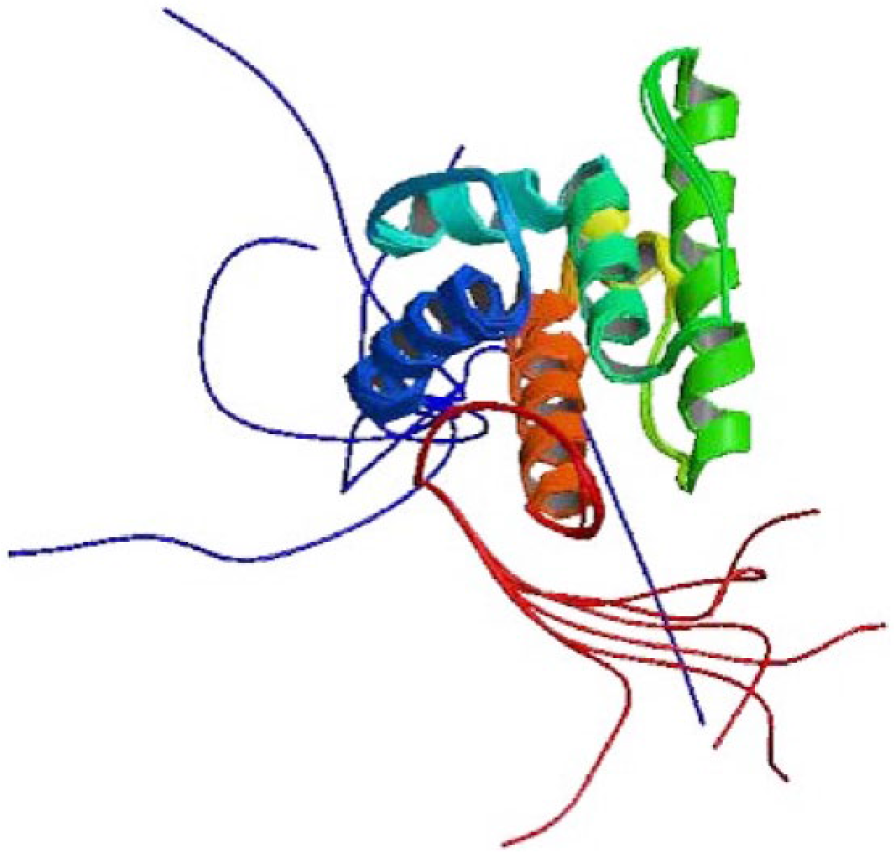
The CH domain of human Transgelin-2.

The CH domain of human Transgelin-2.
Transgelin-2 is not only highly expressed in smooth muscle cells (SMCs) and epithelial cells but also found to be expressed in non-SMCs such as bone marrow cells, pancreatic cells, and stem cells.2,28–31 Meanwhile, Transgelin-2 is widely expressed in many tissues and organs, for example, lung, ovary, bladder, colon, spleen, and pancreas.10,14,28,32–34 The localization of Transgelin-2 differs among cell types at the subcellular level. For instance, Transgelin-2 is expressed in the cell membrane and cytoplasm, but less in the nucleus of Jurkat T cells. 28 In pancreatic cancer tissue, the expression of Transgelin-2 was detected using immunohistochemistry (IHC) and showed positive staining mainly in the cytoplasm. 33 Another example, Transgelin-2 was identified on the membrane of human embryonic stem cells (hESCs). 29 These results showed that there might be a subcellular localization transfer of Transgelin-2 in different cell types and physiological conditions.
Biological function of Transgelin-2
Transgelin-2 is one of the homologs of Transgelin, which is an early marker of SMCs differentiation. 22 Transgelin is widely expressed in all cells and tissues except red blood cells, skeletal muscle, and neurons. 2 The structure of Transgelin-2 contains 64% amino acid sequence homology to Tansgelin, and its biological function is basically similar to Transgelin, which is to regulate the actin cytoskeleton dynamics by stabilizing actin fibers, and it participates in processes involving actin cytoskeleton remodeling consequently, such as cell proliferation, differentiation, migration, and apoptosis. 2
Actin cytoskeleton dynamics, which is affected by Transgelins and other ABPs, is crucial in almost every cellular process. Thus, the altered level of Transgelin-2 has been detected in many different conditions. According to the study by Kuo et al., 31 Transgelin-2 was highly expressed in bone marrow mesenchymal stem cells (MSCs). As a result, bone marrow MSCs could differentiate into bone nodules more rapidly but grow more slowly, compared with Wharton jelly MSCs, silencing of Transgelin-2 using siRNA significantly accelerated cell proliferation, indicating that Transgelin-2 is involved in bone marrow MSCs proliferation and differentiation. Transgelin-2 has also been described as a differentiation-associated protein in human neuronal stem cells 30 and a senescence-associated protein in human peritoneal mesothelial cells. 35 Furthermore, the alteration of Transgelin-2 at both transcriptional and translational levels was observed during oocyte growth and maturation, as well as in ovaries of mice, suggesting that Transgelin-2 might be involved in the development of oocyte and ovary.
Evidence shows that Transgelin-2 might have a certain role in immunity. Na et al. 28 described Transgelin-2 as an abundant protein expressed in T cells, and it could enhance T cell responses via stabilizing F-actin in the immunological synapse. Transgelin-2 was found to be upregulated in two human leukemia and lymphoma cell lines: MEC1 (B-cell chronic lymphocytic leukemia) and Raji (B-cell Burkitt’s lymphoma), suggesting a role of Transgeilin-2 in B cell development. 36
In addition to the studies mentioned above, the expression level of Transgelin-2 in plasma of male is 14-fold higher than that of female. 37 The phosphorylation of Transgelin-2 S163 was proved to be related to glucose-stimulated insulin secretion (GSIS) without significantly altering insulin biosynthesis. 26 Transgelin-2 is also known across species. As mentioned above, the altered level of Transgelin-2 has been observed in mouse ovary and was considered to be concerned in the development ovary; 14 here, another research showed that differently expressed TAGLN2 (Transgelin-2 like) gene might be involved in the development of ovary of fathead minnow (Pimephales promelas). 38 TAGLN2 was shown to be highly expressed at the implantation site in mouse uterus, 39 indicating that TAGLN2 might be associated with embryo implantation. A study on differential leukocyte protein of alligator showed that alligator Transgelin-2, which is homologous to human Transgelin-2, was upregulated after bacterial lipopolysaccharide (LPS) injection, 40 suggesting its role in immunity of alligators.
Transgelin-2 in cancer development
In recent years, due to the development of proteomics and biomarker research, an increasing number of studies described Transgelin-2 as a potential oncogenic factor, and the alteration of Transgelin-2 at both transcriptional and translational level occurred in a wide range of cancers, including colorectal,10,17,41,42 breast,6–9,43 cervical,5,44,45 endometrial, 44 lung,15,34,46,47 gastric, 13 hepatic,27,48 renal, 16 pancreatic, 33 bladder,18,32 prostate, 49 esophageal, 12 and oral 50 cancer, as well as head and neck SCC,19,20 meningiomas, 51 choriocarcinoma, 52 lymphoma, 36 and leukemia.36,53 The deregulation of Transgelin-2 is considered to be correlated with tumorigenesis and tumor development. For instance, the genomic DNA copy number aberration and transcriptional deregulation was identified in human hepatocellular carcinoma cells. 48 In addition, Transgelin-2 was over-expressed in tumor-derived lung cancer endothelial cells and lung cancer tissues, and its upregulation was verified to be associated with clinical stage, tumor size, and histological neural invasion. 46 Analogously, the overexpression of Transgelin-2 was observed in uterine cervical SCC, 45 while suppression of Transgelin-2 in SKG IIIa, a human uterine SCC cell line, could inhibit cancer cell proliferation and migration. 5 These results indicate that Transgelin-2 is likely to play a crucial role in tumorigenesis and malignancy transformation of various types of cancers (Table 1).
Overview of studies of altered Transgelin-2 in cancer.

IHC: immunohistochemistry; TGF-β: transforming growth factor–β; OSCC: oral squamous cell carcinoma; SCC: squamous cell carcinoma.
Transgelin-2 in cancer resistance
The occurrence of multidrug resistance is one of the primary causes of cancer chemotherapy failure, yet the mechanism of which is not entirely clear. Studies showed that the overexpression of Transgelin-2 in cancer cells might be a potential cause of drug resistance. TAGLN2 gene was found to be overexpressed in methotrexate-resistance human choriocarcinoma cells (JAR/MTX). 52 In our study, the overexpression of Transgelin-2 was detected in paclitaxel-resistance human breast cancer cell line MCF-7/PTX (Figure 3 and Table 2). 7 Suppression of Transgelin-2 restored the sensitivity of MCF-7/PTX to paclitaxel and other chemotherapy drugs and significantly inhibited the proliferation, migration, and invasion of MCF-7/PTX,6,8,9 validating its potential role in resistance and reversal of breast cancer.

Representative 2-DE maps of MCF-7/S and MCF-7/P cells. (a) Comparison of the gels between MCF-7/P and MCF-7/S cells. The 18 differentially expressed protein spots were labeled with arrows for MS analysis. (b) An enlarged view of the five differentially expressed protein spots in (a).
Identification of differentially expressed proteins by MS between MCF-7/PTX and MCF-7/S cells.

pI: isoelectric point.
Transgelin-2 in cancer metastasis and invasion
High level of Transfelin-2 expression has been reported to be associated with lymph node metastasis and histological neural invasion of lung, 46 bladder, 32 colorectal,41,42 esophageal, 12 and gastric 13 cancer, additionally, in breast, 6 renal, 16 cervical, 5 and head and neck SCC, 19 inhibition of Transgelin-2 exhibited a repression effect on cancer cell migration and invasion. However, in brain metastases of gynecological malignancies (cervical, endometrial, and ovarian cancer), the expression level of Transgelin-2 was verified to be downregulated, compared with primary tumors. 44 The decreased expression of Transgelin-2 was also identified in a highly metastatic breast cancer cell line, MDA-MB-231HM, and was described to be negatively correlated with breast cancer metastasis by Xu et al. 43 The contradictory results reveal a complex role of Transgelin-2 in cancer metastasis and invasion, urging further investigation.
Transgelin-2 and miRNAs
MiRNAs are non-coding single-stranded short RNAs that participate in a variety of processes through the regulation of different transcription factors. Numbers of studies described TAGLN2 as a target gene of miRNA-1, miRNA-133a, and miRNA-133b. Researches showed a reverse correlation between expression level of Transgelin-2 and these miRNAs mentioned above;16,17 furthermore, Transgelin-2 was identified to be negatively and directly regulated by these miRNAs at both transcriptional and translational levels12–16,18–20 through binding to the 3′-untranslated region (3′-UTR) of TAGLN2 messenger RNA (mRNA).11,14 These miRNAs were mostly described as tumor suppressors, with the ability to reduce cancer cell proliferation and migration via inhibition of TAGLN2, suggesting the potential role of Transgelin-2 in tumor progression once again.
Transgelin-2 in other diseases
In addition to the remarkable role in cancer development, the alteration of Transgelin-2 is also concerned with a variety of pathological processes. In a study on teratogenicity of valproic acid (VPA), an antiepileptic drug, the changed level of TAGLN2 was detected in both P19 embryocarcinoma cells and mouse embryos after treated with VPA. 54 As a protein affecting cytoskeleton, Transgelin-2 is considered to be associated with neural tube formation and closure. Taken together, the results showed that Transgelin-2 might be relevant to the teratogenic effects of VPA.
Evidence showed that Transgelin-2 was related to cardiovascular diseases as well. In hypoxia stress response of cardiac myocytes (H9c2), TAGLN2 modulated hypoxia-induced apoptosis via caspase-8 apoptotic pathway; in the meantime, miR-133a could attenuate this effect by inhibition of Transgelin-2 at both transcriptional and translational levels. 11 In the carotid atheromatous plaques obtained from patients with high systemic inflammation, the upregulated Transgelin-2 was observed. 47 According to Starr et al., 55 in systemic inflammatory response syndrome (SIRS), the tyrosine nitration of Transgelin-2 increased in an age-dependent manner. As a member of ABPs, Transgelin-2 was described to be related to the maintenance of pulmonary vascular permeability; thus, the tyrosine nitration of Transgelin-2 might be correlated with pulmonary oxidative damage, a major pathological consequence of SIRS. Besides, Transgelin-2 was identified as a cardiac protein probably modified by acrolein, a toxic, reactive cyclophosphamide metabolite; therefore, the modification of Transgelin-2 might have a connection with cardiotoxicity of cyclophosphamide. 56 In a study on pleiotropic effects of statins, 57 the expression level of Transgelin-2 in the plasma of hypercholesterolaemia patients was elevated during the treatment with statins.
In a proteomic analysis for postmenopausal osteoporosis in Caucasian females, 58 Transgelin-2 was identified to be significantly downregulated in peripheral blood monocytes of postmenopausal women with extremely low bone mineral density (BMD). Previously, Transgelin-2 was verified to regulate angiogenesis, which is closely related to bone formation and resorption. Additionally, silencing of TAGLN2 in mice significantly enhanced proliferation of bone marrow MSCs, 31 which play a vital part in osteoclast differentiation. 59 These results indicated that the decreased level of Transgelin-2 could be a candidate marker for low BMD in postmenopausal females.
Besides all researches mentioned above, differently expressed Transgelin-2 was detected between HIV-1 latent cells and activated cells, 60 as well as between tuberculosis (TB) and HIV co-infected patients and patients with respiratory diseases other than TB. 61
Conclusion
The mechanisms of tumor genesis and development are quite complicated, involving cell morphological and physiological changes, during which the ABPs which have the ability to regulate the actin cytoskeleton play an indispensable part. The structural modification or altered expression of Transgelin-2, a member of ABP family, would affect the cytoskeleton dynamics; therefore, Transgelin-2 alteration has been reported to be involved in many different disease progressions including cancer. So far, the majority of these studies described overexpressed Transgelin-2 as a promoter in the development of various types of cancer, due to the positive correlation between the expression level of Transgelin-2 and the clinical stage, lymph node metastasis, and poor survival. Transgelin-2 overexpression is also associated with the malignant transformation of cancer, such as resistance, metastasis, and invasion. To sum up, Transgelin-2 is expected to be a candidate biomarker for diagnosis, treatment, and prognosis of cancer. Furthermore, the elevated Transgelin-2 could be detected in the urine specimens of bladder cancer patients, 32 blood samples of lung cancer patients, 46 and saliva sample of oral SCC patients, indicating the probability of Transgelin-2 to be a potential biomarker for noninvasive examination of certain types of cancer. More importantly, Transgelin-2 is likely to be a new target for cancer treatment, and targeting of Transgelin-2 might become a new strategy of anti-cancer therapy.
The development of diseases, including cancer, is regulated by a complex signaling network consisting of multiple signals and pathways. A few signaling pathways have been reported to be correlated with Transgelin-2, such as transforming growth factor–β (TGF-β)/SMAD4 pathway, 10 phosphoinositide 3-kinase (PI3K)/phosphatase and tensin homolog (PTEN)/Akt pathway,6–9 and caspase-8 apoptotic pathway. However, the signaling pathways regulating Trangelin-2 directly and the mechanism of this regulation remain unclear. Therefore, it is necessary to clarify the position of Transgelin-2 in the signaling network and then to elucidate the relevant mechanisms in tumorigenesis and malignant transformation via genomics and proteomics analysis with the combination of high-throughput screening.
Although Transgelin-2 is generally described as an oncogenic factor, there are few studies that show the possible tumor-suppressive effect of Transgelin-2. According to Leung et al., 27 in hepatocarcinoma cells Hep3B, the actin-binding affinity of Transgelin-2 could be affected by the oncogenic PFK1 through the phosphorylation of Transgelin-2 S83 and S163 and consequently inhibited the regulation of Transgelin-2 on cancer cell mobility, as well as its tumor suppressive effect, leading to the enhanced cancer cell invasion. In summary, the role of Transgelin-2 in the tumor development still needs in-depth and comprehensive explorations.
Footnotes
Acknowledgements
Reference 7 has been reproduced by permission from The Royal Society of Chemistry.
Declaration of conflicting interests
The author(s) declared no potential conflicts of interest with respect to the research, authorship, and/or publication of this article.
Funding
The author(s) disclosed receipt of the following financial support for the research, authorship, and/or publication of this article: This work was supported by National Natural Science Foundation of China (No. 81473177 and No. 81672954).