




Abstract
Background
Seaweeds are macroalgae containing bioactive compounds that have positively impacted the biomedical field due to polysaccharides, sterols and glycolipids, showing a diverse range of pharmacological and biological properties. Eating a diet high in marine items will lessen the risk of developing diabetes, cancer and obesity.
Purpose
The exploration of medically useful seaweeds is required to identify drugs and drug targets and reduce the risk of developing diseases.
Methodology
The PubMed search was done with the MESH terms such as seaweed and Marine algae pharmacological activity results were obtained as 748 results. We filtered out the articles and entered key terms related to our area of interest to find the results. The seaweed species in India are listed with Tamil Nadu contributing the most and Orissa the least. The type of algae is also mentioned.
Results
Marine algae have been employed in industry and medicine as a novel food with possible nutritional benefits. Furthermore, it has been demonstrated that marine algae are a rich source of naturally occurring bioactive substances with activities such as anti-diabetic, hepatoprotective, antiviral, antifungal, antibacterial, antimicrobial, antioxidant, anti-inflammatory, anti-hypercholesterolemia and hypolipidemia.
Conclusion
The current review focuses on the bioactivities and potential pharmaceutical activity of marine algae discovered in India. The present review article showed that there are many seaweeds of medical importance, and it is necessary to explore them to minimize disease progression and prolong the individual’s survival.
Keywords
Introduction
Seaweeds are types of macroalgae that can be found adhering to the seafloor in coastal waters that are rather shallow. Up to a depth of 180 m, solid substrates including rocks, dead coral, pebbles, shells and other plant materials may support the growth of organisms. In addition, estuaries and backwaters are where we may find them flourishing. They are classified as Chlorophyceae-green algae (Ulva clathrata, Monostroma nitidum, Caulerpa spp.), Phaeophyta-brown algae (Saccharina japonica, Undaria pinnatifida and Sargassum fusiforme) and Rhodophyceae-red algae (Porphyra/Pyropia spp., Eucheuma spp., Kappaphycus alverazii and Glacilaria spp.), and together they make up one of the most essential types of living resources. They are usually seen to stretch to depths of 30–40 m and can be found in large numbers on hard soils. India has a seaweed production capacity of 77,000 t (wet weight), and there have been reports of about 1,153 species.1–3 The red seaweeds contribute 27.0%, the brown seaweeds contribute 0.2% and the other seaweeds comprise 72.8%. There have been around 206 different kinds of algae discovered in mangrove environments. Seaweeds are a rich source of phytochemicals. About 10,000 metabolites have been isolated as a result of the investigation of new metabolites from aquatic environments, many of which have pharmacologic effects. The presence of bioactive compounds in marine macroalgae has positively impacted the biomedical field because of the presence of polysaccharides, terpenoids, tannins, fucoidans, sterols and glycolipids obtained from marine macroalgae, and it showed a diverse range of pharmacological and biological properties. Additionally, several marine organisms and macroalgae demonstrated the potential to serve as a source of novel medicines. 4 People worldwide are aware that marine foods contribute to promoting human health and are traditionally consumed in many countries. It is believed that eating a diet high in marine items will lessen the risk of developing diabetes, cancer and obesity. Numerous studies have demonstrated that marine bioactive components, such as fucoxanthin, astaxanthin, marine-collagen peptides, Dickel and krill oil affect metabolic dysfunction (diabetes and obesity) and the pathogenesis of many diseases. 5 Seaweeds contain enormous amounts of polysaccharides, notably the structural polysaccharides of the cell walls that are distinguished by the hydrocolloid industry: carrageenan and agar from red algae and alginate from brown algae, respectively. In particular, Floridian starch in red seaweeds and laminarin in brown seaweeds are storage polysaccharides found in seaweeds. Fucoidans have received special consideration among the polysaccharides due to their impressive biological properties, which include anti-viral, anti-cancer, anti-thrombotic, anti-proliferative, anti-inflammatory, anti-complementary and anti-coagulant agents. Biologically active substances such as polyphenols, protein, fibre, carotenoids, vitamins and minerals are abundant in this base. These characteristics reveal a wide range of potential medical uses. In recent years, the need for seaweeds as human therapeutic goods has increased, emphasizing their significance as a marine resource. 6 The algae such as agar–agar, carrageen and algin, which are widely used in a variety of industries including the food, confectionery, textile, pharmaceutical, dairy and paper industries, primarily as gelling, stabilizing and thickening agents. In addition, they are consumed by humans, fed to animals and utilized as a component of manure in some nations. 7 It is estimated that trading in seaweed brings in more than 6 billion dollars in annual revenue throughout the world. 8 China is still the largest producer of seaweed, accounting for around 48% of the world’s seaweed output, which is estimated to be 30 million tonnes. Indonesia is the second largest producer, followed by the Philippines (5%). 9 Seaweeds continue to be an underutilized resource despite having enormous potentials, such as those for edible foods, food ingredients, cosmetics, agrichemicals, fishmeal, biomaterials and bioenergy molecules. Furthermore, seaweeds play an important role in the ecosystem and contribute significantly to economic revenues. There are roughly 10,000 different types of seaweeds, yet only 0.2% of those species have been cultivated. 10
It is anticipated that the size of the global market for Botanical and Plant Derived Drugs will reach 37,100 million US (United States) dollars by 2027, up from 28,140 million US dollars in 2020, at a compound annual growth rate (CAGR) of 3.6% over the period 2021–2027. 11 Researchers have, throughout the last several decades, showed a significant amount of interest in the process of isolating health-promoting chemicals from these fruits and vegetables. Both natural health products (NHP) and nutraceuticals and functional foods (NFF) focused a significant amount of their research on developing healthy foods based on bioactive foods derived from natural resources.12, 13 Marine life covers 70% of the earth’s surface and contains a vast variety of life. Even though marine life represents a rich source of novel metabolites with a variety of applications including cosmeceuticals, nutraceuticals, agrochemicals, pharmaceuticals and other industrially relevant chemicals only a small portion of the ocean’s biodiversity has been researched. 14
It is known that algae are the greatest primitive photoautotrophic and polyphyletic group of eukaryotes and that they are responsible for more than 50% of the photosynthesis that occurs on our planet. They are classed as microalgae (i.e., unicellular, such as diatoms, or multicellular) or macroalgae (also referred to as seaweeds) mostly based on their morphological characteristics and they fall into one of two categories. 15 Microalgae are known to create a wide variety of biocompounds that are beneficial in the treatment of many medical conditions. These biocompounds can be extracted from the biomass or released extracellularly into the medium. 16 Proteins, fatty acids, vitamins and pigments are all examples of bioactive compounds that may be acquired directly from the main metabolisms of microalgae. Alternatively, bioactive compounds can be generated via secondary metabolism. These molecules have the potential to exhibit antibiotic, antiviral, antialgal, anti-enzymatic, or even antifungal properties. 17 Many of these components (cyanovirin, oleic acid, linolenic acid, palmitoleic acid, vitamin E, vitamin B12, beta-carotene, lutein and zeaxanthin) have anti-bacterial, antioxidant and anti-inflammatory activities, which have the potential for the reduction and prevention of illnesses. In the vast majority of microalgae, the bioactive molecules are stored in the biomass. There are, however, certain instances in which these metabolites are discharged into the medium, and they are referred to as exometabolites. 18 The biological activities of seaweeds are drawing the greatest interest from scientists. They have produced several bioactive substances with a range of pharmacological properties. The existence of bioactive substances is what causes these pharmacological actions, and the physicochemical components show these potentials of the seaweeds. The current review attempts to reveal a glimpse of the history of Indian marine seaweed and its bioactivities.
History of Seaweed
The usage of seaweed, which belongs to the genus of algae, dates back thousands of years and is widespread around the globe. About three and a half billion years ago, algae began to form and now they make up approximately 75% of the air humans breathe. In actuality, seaweed has been used by the Japanese since the dawn of time. According to historical documents, Japanese cuisine has used seaweed as a dietary supplement for more than 2,000 years. There are accounts of at least six distinct species of seaweeds being utilized in the preparation of ordinary meals in Japan about the year 800 AD Nori, a sheet of dried seaweed that is commonly used in sushi, was first crafted by Japanese people in the year 794 using seaweed as the primary ingredient. 19
Since 2700 BC, people in China have been making use of seaweed. Sze Teu wrote in the sixth century BC that in China, seaweed was prepared for kings and other distinguished guests. 20 Chi Han produced a book about seaweed around the year 300 BC. In the fifth century, Laminaria japonica was brought over from Japan and utilized as a food source. In the year 794, people in Japan began using seaweed to manufacture nori, which is a sheet of seaweed that has been dried. Seaweed from the Mediterranean was utilized as a traditional medicine in Europe. The ancient Greeks began collecting seaweed as early as 100 BC. Since pre-Christian times, red algae have been utilized all over the Mediterranean coast as a source of dying agents and as a treatment to treat parasitic worms. This practice dates back to the period before Christianity. They consumed somewhere between 60 and 70 different varieties of seaweed and utilized the rest for medical and ceremonial uses. 21
Seaweed Applications
Seaweed extracts are recognized as excellent therapeutic alternatives to synthetic anti-cancer, antioxidant and anti-bacterial agents because of their availability, low cost, higher efficacy, eco-friendliness and nontoxic nature; in contrast, other accessible medications have negative side effects. Because the bioactive components of seaweed, in particular phytosterols, provide a greater number of potential therapeutic advantages than other traditional pharmaceutical agents, research on them has been carried out in great detail for several years. 22
Alginates are the finest option for artificial joints, bone replacements and fracture repair plates. Furanone might be used to coat heart valves, prosthetic hips and other medical devices to protect patients from potentially fatal infections. For the creation of biodegradable sutures, alginates from Crocystis, Laminaria, Sargassum and Ascophyllum are employed. Since Spirulina is used in dental implants, consuming it will promote quick healing of injured tissue and provide a concentrated amount of calcium, which is essential for maintaining the health of teeth and gums. In the presurgical patient diet, fucoidan (brown algae) appears to lessen the severity of blood loss and shock from vascular bed collapse during and after surgery. By inducing the release of antiviral cytokines during tissue grafting, fucoidan blocks viral assault at all stages, including cell attachment, cell penetration and the formation of intracellular virion. One of the top five seaweeds consumed in Japan and the USA is kombu. 7 Regular kombu consumption can have several positive physiological benefits, including the resolution of coronary artery disease, improved liver function, increased metabolic rate, quicker meal transit time, decreased blood levels of LDL cholesterol and increased blood levels of HDL cholesterol. If the thyroid hormones found in Kombu and Sargassum can be obtained through food, this may prove to be a useful alternative to synthetic thyroxines and animal thyroid treatments. The majority of seaweeds are loaded with nutrients, particularly B vitamins like B12. Additionally, they contain considerable levels (1–3%) of omega-3 fatty acids. Particularly Nori contains 3% omega-3 fatty acids as well as significant levels of vitamins A and C. People who are dieting for weight reduction produce PCBs, dioxins and PBDEs from their adipose tissue into their blood and lymph. Brown seaweed consumption may lessen the unfavourable effects brought on by toxins released during weight reduction. By including pharmaceutical-grade carrageenan gels in the perinatal birth canal in women known to carry HPV (human papillomavirus) types 6 and 11, the gels could develop into a secure perinatal cervicovaginal preventative for JORRP (Juvenile Onset Recurrent Respiratory Papillomatosis) and asymptomatic vertically transmitted HPV. Alginate dressings are designed to treat partial thickness (second-degree) burns and bleeding-prone wounds, including donor sites and wounds that have had mechanical or surgical debridement. 7 Other indications include diabetic foot ulcers, leg ulcers (venous stasis ulcers, arterial ulcers and leg ulcers of mixed aetiology), partial- and full-thickness pressure ulcers/sores, surgical wounds allowed to heal by secondary intention, such as dehisced surgical incisions, surgical wounds that heal by primary aims, such as dermatological and surgical incisions (e.g., orthopaedic and vascular), traumatic wounds, such as AQUACEL® Ag BURN Hydrofiber®, a seaweed-based material (calcium alginate) used for bandages for wounds, such as Sorbsan® and Kaltostat®. The most effective folk remedy for rheumatoid arthritis is fucus mucus. Fucoidan, a substance found in brown algal phycopolymers such as algin, is highly beneficial as a treatment for heavy metal toxicity. Patients who consume seaweed to lessen the severity of their PMS symptoms note a unique cyclical waxing and fading of their seaweed cravings. The majority of these causes of erectile dysfunction, such as smoking, drinking alcohol, chronic dehydration and obesity, may be treated with seaweed drinks. 7
For example, brown algae (Phaeophyta) are thought to be a viable source of phytosterols since they largely contain phytosterols such as fucosterol and brassicasterol and just a minor fraction of plant cholesterol. In contrast, red algae (Rhodophyta) possess cholesterol as their primary source of sterol, along with a trace amount of phytosterols such as sitosterol, fucosterol, chalinasterol and desmosterol. Cholesterol is their primary source of sterol. On the other hand, the types of sterols that are present in green algae (Chlorophyta) change depending on the species.23, 24 These sterols include ergosterol, chondrillasterol, sitosterol, 28-isofucosterol, cholesterol and poriferasterol, among others. In addition, to this day, there are no studies that have been discovered that provide evidence of the clear adverse consequences (in terms of toxicity) that phytosterols have on human beings. Therefore, international organizations such as the Food and Drug Administration (FDA) and the European Union Scientific Committee (EUSC) have already given their stamp of approval indicating that phytosterols are safe for human consumption. 25
Alginate, which is derived from brown seaweed has been extensively employed in culinary applications, and this seaweed polysaccharide has gained a lot of attention. It also plays a significant role in the biomedical area as a drug-delivery agent and a tabletting agent among other uses. 26 Carrageenan is a sulphated polysaccharide that is often obtained from red seaweed. In addition to being used in food as a thickening, gelling and stabilizing agent, it is also being used in medication delivery, tissue engineering and biosensor applications. 27 Ulvan is also a sulphated polysaccharide that is normally isolated from green algae, it has been used as an antioxidant, anticoagulant, immunomodulation activity and tissue engineering.28, 29
Seaweeds in India
Amphiroa (Rhodophyta), which Hermann collected in 1672, was the first seaweed that may have been documented from the Indian Ocean, according to earlier accounts. 30 Additionally, Turbinaria turbinate (also known as Fucus turbinatus) and Sargassum granulatum (also known as Fucus granulates) (Ochrophyta, Phaeophyceae) were discovered by Linnaeus in Indian Ocean waters. 31 It is possible to have a verified record of seaweed harvests made by Koing, a missionary who arrived in this country in 1767, from Indian coastlines. 30
Following that, in the 19th century, several international expeditions, including Novara (1857–1859), Challenger (1872–1876), Galathea (1890–1892), Investigator (1890–1892) and Siboga (1899–1900), contributed to the expansion of the seaweed collection in worldwide herbaria. It was not until 1925 that an Indian phycologist, M.O.P. Iyengar, began working on the seaweed flora of Krusadai Island. 32 Prior to that, seaweeds were gathered from Indian seas by a variety of Europeans in the early 20th century. The Danish Prince and naturalist Fredrik Christian Emil Borgessen travelled to the coast of undivided India at the time and made significant contributions to the description of the Indian seaweed flora.33, 34 The states of Gujarat and Tamil Nadu are the ones that have the most variety of seaweeds. 35 About 198 species can be found in Gujarat, which has a coastline of 1,600 km. Of these, 109 species come from 62 different genera that are classified as Rhodophyta, 54 species come from 23 different genera that are classified as Chlorophyta, and 35 species come from 16 different genera that are classified as Ochrophyta. 36 Tamil Nadu has a 1,076-km coastline. In a recent study, a total of 282 species were found, 146 of which belonged to the Rhodophyta, 80 to the Chlorophyta and 56 to the Ochrophyta. 35 Numerous kinds of brown, green and red algae were flourishing alongside the Southern coast from Rameswaram to Kanyakumari which includes 21 islands in the Gulf of Mannar. Rameswaram is one of the most important seaweed cultivation areas, which is in the Gulf of Mannar, 570 km away from south of Chennai. It was located at 0918′.39000N and 07920′.07600E with an area coverage of 51.8 sq. km. 37
Seaweed Distribution in India
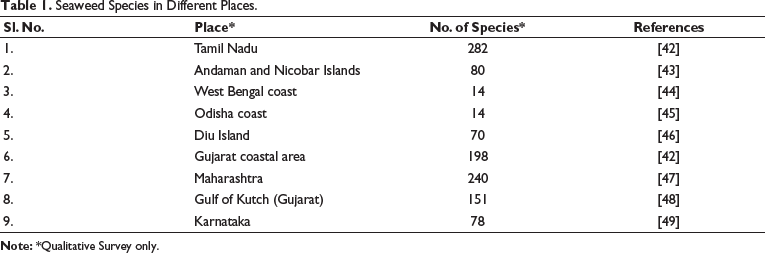
India (08.04–37.06 N and 68.07–97.25 E), a tropical South Asian country has a stretch of about 7,500 km coastline, excluding its island territories with 2 million km Exclusive Economic Zone (EEZ) and nine maritime states like Gujarat, Maharashtra, Goa, Karnataka, Kerala, Tamil Nadu, Orissa, Andaman and Nicobar, and Lakshadweep Islands. The coastal regions of India are the primary economic centres, and it is believed that Mumbai, Ratnagiri, Goa, Karwar, Pulicot and Chilka are the best sites to find a diverse and abundant seaweed supply. In India, marine resources provide the primary source of income for one-third of the country’s coastal population. 35 The Central Salt and Marine Chemicals Research Institute conducted a comprehensive study that indicated the standing stock of seaweeds to the tune of 97,400, 7,500, and 19,345 t (wet-weight basis) correspondingly from the shores of Tamil Nadu, Andhra Pradesh and the Lakshadweep Islands. 38 Between 2010 and 2018, it increased to 26,000 t in India, making the country responsible for 15,000% of the world’s seaweed growing, primarily of green and red species. 39 Based on secondary data, it has also been stated that there is a total seaweed species diversity of 434, 194 and 216 for red, brown and green seaweeds, respectively, and various seaweed species with distribution was depicted in Table 1. 40
Seaweed Species in Different Places.
In 2018, the total amount of seaweed produced on a global scale was estimated to be 32.4 million tonnes. This figure includes both wild and cultivated forms of aquatic algae; however, cultivated seaweeds comprised 97.1% of the total volume. On a foundation of wet weight, the global production of seaweeds is 32,386,200 t and Asia produces 32,226,300 t, which is equivalent to 99.51% of the overall production of seaweeds. From 10.6 million tonnes in the year 2000 to 32.4 million tonnes in the year 2018, it has more than quadrupled in quantity. In 2018, India produced 5,300 t on a wet weight basis, which is equivalent to 0.02% of the world’s total output of 5,300 t. The entire output of farmed and wild seaweeds in India in 2018 was respectively 5,000 and 25,000 t, with a market value of between ₹ 300 crores and ₹ 500 crores. 39
Promotion of Seaweed Culture, Economic Benefit and Funding for Seaweed Production
According to estimations provided by the ICAR-Central Marine Fisheries Research Institute (CMFRI), India cultivated around 34,000 t of seaweed in 2021 and has the potential to produce over 9 million tonnes more in the future, Dr A Gopalakrishnan, the director of the ICAR-CMFRI, stated that the institute has done georeferencing of 342 additional suitable farming sites over 24,167 ha with a production potential of 9.7 million tonnes (wet weight) per year. He emphasized the importance of expanding seaweed farming by saying that the institute has completed this work. It was a part of the Azadi Ka Amrit Mahotsav that the CMFRI had planned a National Campaign on non-conventional aquaculture systems, and he was giving a speech during that event. ‘While referring to the world production that is 35 million tonnes worth 16.5 billion dollars in 2022 so far, India is far behind in terms of seaweed output’, he added. ‘While referring to the global production that is 35 million tonnes worth 16.5 billion dollars in 2022 so far’. Citing that the country is taking all measures to boost its production, Dr Gopalakrishnan pointed out that the government has earmarked ₹ 640 crores exclusively to promote seaweed culture, with a targeted production of more than 11.2 lakhs (1.12 million) tonnes by 2025, as part of the Pradhan Mantri Matsya Sampada Yojana (PMMSY). 41 The National Fisheries Development Board (NFDB) is responsible for promoting seaweed culture in India. They have assisted with seaweed cultivation as well as training and demonstrations on how to set up seaweed processing equipment. Cooperative endeavours in seaweed cultivation since 2017 total cost of all seaweed farming initiatives funded by NFDB since 2017. INR 53.55 million, or ₹ 535.5 lakh, is the gross biomass produced from seaweed (2017–2020): Gracilaria spp. weight in water: 255.32 t, Kappaphycus alvarezii: 201.72 t (wet weight). More than a thousand recipients were trained in seaweed farming and it was financed by the NFDB from 2007–2008 to 2018–2019. The NFDB has made available ₹ 551.73 lakh to women’s self-help groups and fishing communities for seaweed cultivation instruction and demonstration. More than 1,600 recipients received training from a total of 18 trainings.
Pharmacological Activities of Seaweed
In recent years, pharmaceutical companies have been looking into marine species such as seaweeds for novel drug-delivery methods derived from natural products. These marine animals include seaweeds. Because of its biocompatibility, hypoallergenic and high hydrogel-forming capabilities at relative pH, seaweed offers a wider platform for therapeutic purposes, particularly in the areas of drug delivery and tissue engineering. 50 On their surface, seaweed polysaccharides include hydrophilic groups such as carboxyl, sulphate and hydroxyl groups, which make it simple for them to interact with the biological tissues they come into contact with. Because of their unique characteristics, seaweed polysaccharides are found growing in a variety of biological settings. 51 According to Kwon et al., phlorotannins and polyphenols found in seaweeds have been shown to inhibit the growth of cancer cells and have some anti-inflammatory and anti-diabetic properties.52, 53 Seaweeds are known to contain bioactive substances that can regulate glucose-induced oxidative stress and the presence of starch-digestive enzymes. Natural bioactive components must be obtained to treat chronic metabolic disorders due to probable negative effects associated with manufactured medications. 54 Therefore, consuming and including these seaweeds may improve their potential for use in food and medicine. The ocean represents an abundant source of brand-new, bioactive natural materials that are beneficial for fundamental research, biomedical sciences and the development of therapies. In recent years, a variety of maritime sources, including marine microorganisms, phytoplankton, marine-sourced bacteria and fungus, tunicates, sponges, seaweeds, macroalgae, green algae, brown algae and red algae, have yielded several bioactive chemicals. Rather than phytoplankton, macroalgae have received more attention in the study of secondary metabolites. 55 Marine algae create a wide range of wonderful natural substances that are often referred to as secondary metabolites since they are not complex in the basic processes of life. Marine algae create a wide range of wonderful natural substances that are often referred to as secondary metabolites since they are not complex in the basic processes of life. Although these molecules typically contribute only a very small fraction of the organism’s overall biomass, their presence and function may occasionally be comparable to that of the metabolites produced by the major metabolism. Given that these substances contribute in a similar way to the growth, reproduction and defence of the organism and hence play a significant role in its integrity, the term ‘secondary metabolite’ seems less appropriate in that context. 56 In recent years, a variety of bioactive compounds have been found in marine macroalgae, which will be useful in the drug–discovery process. Hence, seaweed is the main source of bioactive compounds which makes a good component for identifying novel drugs.
Chlorophyceae
Enteromorpha flexuosa
Yousefzadi et al. have synthesized a silver nanoparticle from Enteromorpha flexuosa, with the use of amines, peptides and secondary metabolites, the silver nanoparticle shows antimicrobial activity against gram-positive and gram-negative like Bacillus subtilis, Bacillus pumulis, Enterococcus faecalis, Staphylococcus aureus and many other bacteria but it does not have any zone of inhibition against Pseudomonas aeruginosa and Aspergillus niger, the silver nanoparticle has a notable anti-bacterial activity comparable to the commercial antibiotic Ampicillin. 57 Senthilkumar et al. have also extracted a compound using four different solvents chloroform, ethanol, methanol and water and they have tested their extracted compound against S. aureus, B. subtilis, Escherichia coli, Proteus mirabilis and in various bacteria the methanol extract of E. flexuosa has showed the highest activity where water shows the least crude methanol extract from E. flexuosa has shown antimicrobial activity against Streptococcus pyogenes. 58 Nisha et al. have reported that the E. flexuosa algae extract shows effective mosquito control and it could be used as a bio-pesticide for future vector-control programmes. 59
Caulerpa racemosa
Aroyehun et al. reported that the Caulerpa racemosa has the required proportions of carbohydrate, protein, calories, ash and low-fat content, in addition to important amino acids, mineral contents and polyunsaturated acid content; as a result, it is a possible option for use as an alternate source of functional food and beneficial for human health, and it exhibited promising antioxidant and antidiabetic activities. 60 Ribeiro et al. have reported that all dosages of C. racemosa considerably reduced the leukocyte count in the peritoneal cavities. The sulphated galactan from the red alga Pophyridium sp., which likewise generated an anti-inflammatory response, was comparable to the observed effects of C. racemosa in terms of its ability to reduce inflammation. The anti-inflammatory properties of C. racemosa on Cg (Chlorhexidine gluconate)-induced peritonitis led researchers to try this substance in rat paw oedema models caused by dextran and Cg. By releasing vasoactive amines including histamine and serotonin, which result in osmotic oedema with low amounts of protein and neutrophils, dextran-induced paw oedema raises vascular permeability. Both Cg- and dextran-induced rat paw oedema and neutrophil migration, as well as the activity of MPO, were reduced by C. racemosa at each of the dosages examined. Rats’ Cg-mediated production of paw oedema was similarly prevented by oral treatment of total sulphated polysaccharides (2.5, 5, 10 or 20 mg/kg) from the brown seaweed Turbinaria ornata, so the C. racemosa has an excellent antinociceptive and anti-inflammatory property and it could be the new pharmacological targets for the inflammatory pain treatment. 61
Halimeda macroloba
Elmaidomy et al. extracted a compound which was named compound 2, After a machine learning-based virtual screening, the cytochrome-C enzyme a crucial target for the malaria parasite was discovered as a potential target for compound 2. Utilizing extensive molecular docking and MDS (molecular dynamic simulations) investigations, it was putatively identified how the compound 2 scaffolds interacted with the active region of cytochrome-C. Additionally, the absolute binding free energy of compound 2 to the active site was computed (∇Gbinding = 14.46 kcal/mol), and it shows potential in vitro inhibitory activity against P. falciparum and the compound scaffold could be a promising lead compound for future antimalarial drug development. 62 Umavandhana et al. report that the aqueous extract from Halimeda macroloba has shown the highest DPPH radical-scavenging activity, and it could be used to develop an antioxidant drug. 63 Lubis et al. have tested an antioxidant activity for H. macroloba, the ethyl acetate extract has an antioxidant level ranging from 16.57% to 29.01% and an extract from methanol solvent ranging from 10.68% to 21.79%. 64 H. macroloba has been demonstrated to possess antidiabetic, antioxidant, anti-bacterial, anti-microbial and anti-tumor activity by in vitro assay methods. The chemical structure of H. macroloba was isolated and named halimedatrial, halomedotrial acetate, halimedalactone, halimedatetraacetate and bis-nordianpenoid.65–67 The green seaweed H. macroloba was shown to inhibit the DPP-4 (di peptidyl peptidase) enzyme in a prior investigation by Chin et al. In comparison to the positive control Berberine (75.92% at 1 mg/ml), H. macroloba inhibited the DPP-4 enzyme by 60.53% at a dosage of 10 mg/ml. Additionally, H. macroloba crude water extract was able to increase the release of the hormone glucagon-like peptide-1 (GLP-1). 68
Brown Seaweed
Turbinaria ornata
Canoy et al. have reported that the ethanolic extracts (fucoxanthin and fucoidan) from T. ornata have cytotoxic and anti-angiogenic properties, and it could have a future application for cell proliferation inhibition and vascular formation. 69 Bharath et al. have extracted a HA compound from T. ornata and tested it against HT-29 colon cancer cells T. ornata has exhibited anti-cancer and antioxidant activity, and it was most promising for the inhibition of colon cancer cell line through induced apoptosis and cell cycle arrest. 70 Tye has reported the distinct T. ornata extracts to have anti-bacterial effects against two to three different species, including gram-positive and gram-negative bacteria, fungi and yeasts. The Resazurin Microtiter Assay was changed to track the disc diffusion approach (REMA). Results from modified REMA using the fluorometric and colorimetric approaches were related. The dichloromethane extract for the disc diffusion experiment was revealed to have the highest anti-bacterial activities. One relies on Cohen’s kappa statistical analysis (value = 0.712; p = 0.0005), and both methods of changed REMA were remarkably in agreement per capita. The findings suggested that T. ornata’s dichloromethane extract had the potential to be used as an anti-bacterial component. 71
Sargassum oligocystum
Zandi et al. have extracted a compound from Sargassum oligocystum and they have tested it against the cell line (K562—derived from human chronic myelogenous leukaemia cells) and (Daudi—derived from Burkitt lymphoma cells) from the cytotoxicity study against Daudi cell line they have found that there was no cytotoxicity in 100–200 µg/ml but the most effective concentration which a viable number of cells decreased was 500 µg/ml as for K562 cells, after 72 h, the number of negative control (extract-free) K562 cells rose from 6.8 × 10 5 to 10.2 × 10 5 . Even while the concentration of 100 g/ml had a suppressive impact on cell division, this effect could not be translated into a valid anticancer activity. The number of viable cells did not considerably increase after the effective concentration of the algal extract was set at 300 g/ml. About 400 g/ml of algal extract was the most potent concentration against K562 cells. 72 Tajbakhsh et al. have reported that the Sargassum oligocystum has a good source of anti-bacterial activity and it could be a suitable candidate for the purification of crude extracts. 73 Akbarzadeh et al. have concluded that the Sargassum oligocystum, a brown macroalga, helps diabetics by lowering insulin resistance, lowering blood glucose levels and regenerating damaged cells in the pancreas. As a result, it may be considered a topic for more study. 74
Tubinaria decurrens
Shanthi et al. determined that galactose, fucose and an equal quantity of mannose and glucose were the main components of fucoidan that were extracted from Turbinaria decurrens. While sulphate is abundant in the fraction of high molecular mass that exhibits strong anticoagulant activity, crude fucoidan produced from T. decurrens has the same amount of monosugar in both its low and high molecular weight fractions. 75 Zakaria et al. tested a cytotoxic activity on the HCT-116 cell line using CCK-8 assay, After 48 h of therapy, treatment with extract of n-hexane and ethyl acetate fraction demonstrated the mortality of HCT-116 cells, while ethanolic fraction did not demonstrate any inhibitory activity. The extract’s n-hexane and ethyl acetate fraction’s respective IC50 values were 215 g/ml, 1.512 g/ml and 3.058 g/ml. There have been reports of T. decurrens having cytotoxic effects on several cancer cell lines. To T47D, HepG2 and C26 cells, the methanolic extract exhibited cytotoxic action with IC50 values of 172, 360 and 330 g/ml. The cytotoxicity of the T. decurrens Bory extract increased during fractionation, with IC50 values for the n-hexane, ethyl acetate and methanol fractions being 43.1, 51.9 and 383.0 g/ml, respectively (Nursid et al.). According to this study, T. decurrens extract has the potential to be an anticancer agent. Additionally, n-hexane and ethyl acetate fractions can be taken into consideration for the creation of anticancer agents. The cytotoxicity was compared with fucoxanthin and 5-fluorouracil where n-hexane and ethyl acetate fractions are higher than 5-FU but lower than fucoxanthin. 76
Red Seaweed
Hypnea valentiae
Rebecca et al. have checked the antioxidant activity for Hypnea valentiae using various assays. In the DPPH assay, the lowest activity was found in benzene followed by petroleum ether extract. The ethyl acetate extract showed maximum activity where for IC50 values, it is 33.86 g/ml but for the positive control, ascorbic acid needs only 30.45 mg/ml. For hydroxyl radical assay, ethanol and ethyl acetate had the highest levels among crude extracts. The least to moderate antioxidant activity of the other crude extracts. It was discovered that 32.99 mg/ml of H. valentiae ethanol extract was required for 50% inhibition (IC50), compared to 32.47 mg/ml required for ascorbic acid. The crude extracts’ superoxide radical scavenging capabilities ranged from 22.18% to 142.84%, which is different from conventional ascorbic acid. The highest level of antioxidant activity was seen in the methanol extract (142.84%), followed by ethanol (132.39%) and ethyl acetate (109.12%). The experiment showed that benzene (98.15%) has the least antioxidant capability. H. valentiae methanol extract was shown to have an IC50 value of 33.66 mg/ml for the superoxide radical and 29.45 mg/ml for ascorbic acid, respectively, from their study, they have concluded that the crude oil extract of H. valentiae has a maximum antioxidant property comparable to the commercial antioxidant.
77
Duraisamy et al. have conducted a gas chromatography experiment on H. valentiae and found many structurally novel and biologically active metabolites some of the bioactive compounds are hexadecanoic acid (palmitic acid), 5,6,11,12-tetrahydro-6-methyl-5,11,12-trioxopyrido[2,3-b] acridine (pyridoacridine),
Hypnea muscifomis
Brito et al. have reported that the sulphated polysaccharides (PLS) extract of the Hypnea muscifomis tested against rats, the results showed that, compared to the saline group (240.2, 18.55 mg/g of tissue and 65.07, 17.93 nmol/g of tissue), TNBS (trinitrobenzene sulphonic acid) promoted a significant (p < 0.05) consumption of GSH levels (91.56, 14.96 mg/g of tissue) and produced an increase in the MDA concentration (162.5, 25.63 nmol/g of tissue). However, pretreatment with PLS increased GSH levels in inflamed tissues (225.4, 32.47 mg/g of tissue) and lowered MDA levels (76.27, 16.30 nmol/g of tissue) and the H. muscifomis essentially composed of high molecular mass k-carrageenan and also the PLS has reduced the TNBS induced colonic inflammatory response by reducing the oxidative process and inhibiting cell migration. 79 Melo et al. have reported the protein fraction (F40/70) from the microalgae H. muscifomis has shown antifungal activity against the dermatophyte fungus Trichophyton rubrum and plant pathogen Colletotrichum lindemuithianum at 500 µg/ml and mostly the antifungal activity is due to the presence of agglutinin in the fraction. 80
Gracilaria salicornia
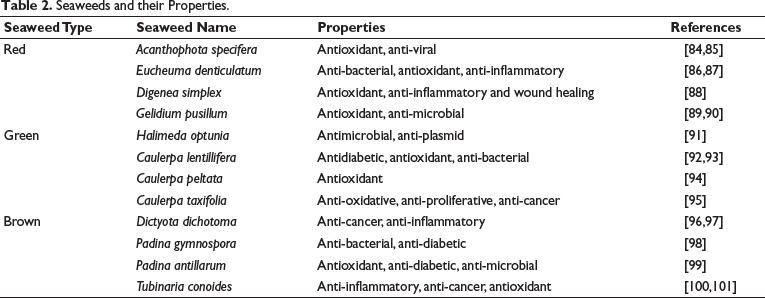
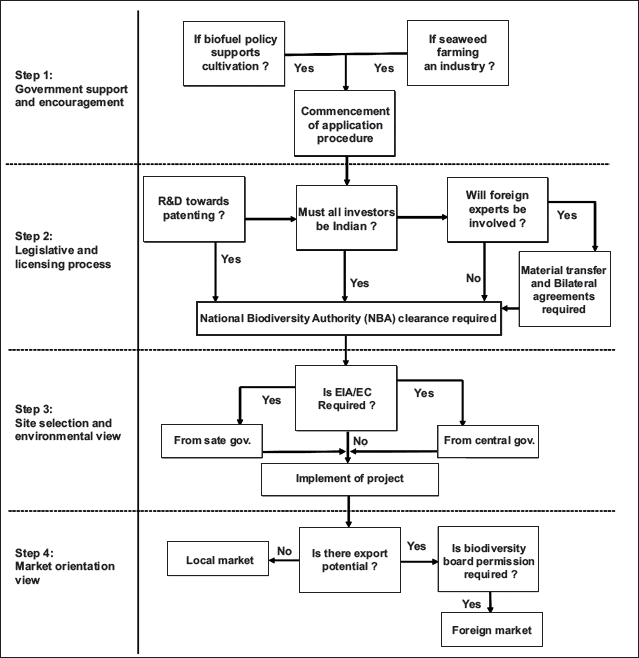
Chakraborty et al. first reported the undescribed compounds oxabicyclo[21.3.1]heptacosa-ene-diones (salicornolides A-B) and oxabicyclo, pentacosaene-dione (salicornolides C) which as a macrocyclic lactone from the macroalgae Gracilaria salicornia, the salicornolides A, B and C have shown a significantly higher anti-oxidative and pro-inflammatory potential which was comparable to the commercially available antioxidants and anti-inflammatory agents. 81 It has been reported that there was substantial antioxidant activity in the ethanolic extracts of Ulva fasciata and G. salicornia. In addition, compared to ampicillin, the gold standard antibiotic, the algal extracts showed discernible anti-bacterial action against both gram-positive and gram-negative bacteria. The results of the current study support Patra et al. suggestion’s that ethanolic extracts of U. fasciata and G. salicornia might be used as effective natural sources of antioxidants, potential dietary supplements and anti-bacterial agents in the pharmaceutical business. Additionally, their antioxidant and anti-bacterial qualities may shed light on how these species’ nutritional needs and chemical defence mechanisms interact with coral reefs.82, 83 A few other properties of seaweeds and their bioactive compounds are depicted in Table 2. The legal and legislative framework for large-scale cultivation of macroalgae is depicted in Figure 1.
Seaweeds and their Properties.
A Legal and Legislative Framework for Large-scale Cultivation of Macroalgae. 122
Challenges in Seaweed Production
The production of seaweed in India dates back nearly 40 years. Over the past few decades, technologies for growing several seaweeds of industrial value have been created. Even after 20 years, there are still numerous obstacles to overcome. A significant obstacle that must be addressed is seasonal dependence on Indian seaweed cultivation.
In India, the Southwest and Northeast monsoon seasons produce strong seawater turbulence and large tidal fluctuations and are occasionally accompanied by cyclones and typhoons. Only seed bank preservation is allowed to be grown at this time. The primary purpose of seaweeds in India is to extract hydrocolloids, and the high cost of pond-produced seaweeds may make them unprofitable unless they are processed into a variety of goods, including biofuel, bio-stimulants, food, cosmetics and medicines. Due to their sale to cottage-level companies for the extraction of local hydrocolloids, seaweed producers only receive a small price for their collected seaweeds. Dry seaweed exports have been prohibited for many years. Farmers will receive greater rates for their seaweeds if the restriction is abolished and dry seaweed export is allowed. Crop health problems such as high-temperature effects, infections, epibionts and grazing pressures are further difficulties in seaweed farming that affect crop yield and quality and rely on R&D efforts to mitigate or eliminate. Most edible algae have been reported to contain heavy metals in safe quantities. As with iodine, this has been suggested food regulations should make disclosure more difficult setting legal limits for metal levels on food labels and inorganic arsenic levels in seaweed. The quantity of heavy metal contained in edible seaweeds may be reduced by cooking and food-processing techniques, however, industry and regulatory organizations confront challenges. While the high within-species variability of arsenic levels in seaweed and the potential costs of routine product monitoring present the biggest challenges for the industry, the interindividual differences in biotransformation, metabolism and excretion of arsenic present the biggest challenge for regulatory bodies in developing safe limits. 102
Recent Advances in Seaweeds
In Kochi, the CMFRI has created a seaweed-based anti-obesity nutraceutical. There is a natural treatment for obesity and dyslipidemia called Cadalmin™ antihypercholesterolemic extract (Cadalmin™ ACe). Scientists from ICAR-CMFRI developed an extract from seaweed, which is a natural treasure of the sea and is well-known for its exceptional medical characteristics. Seaweed is often found in the coastal seas of India. During the opening ceremony of the Platinum Jubilee celebrations of the ICAR-CMFRI at the Headquarters in Kochi on 18 February 2017, Shri Justice P Sathasivam, Governor of Kerala, distributed the product. Seaweeds were employed to generate the nutraceutical product’s bioactive pharmacophore leads. To control clinical signs that contribute to dyslipidemia or obesity, including total adipose tissue and visceral fat, triglycerides and cholesterol—both good and bad, known as HDL and LDL—Cadalmin™ anti-hypercholesterolemic extract can be taken. The product would be sold as 400 mg capsules and feature only 100% natural marine bioactive compounds derived from specific seaweeds using proprietary technology. In-depth preclinical studies have proven that nutraceutical has no negative effects. As a natural treatment for obesity and dyslipidemia, Cadalmin™ anti-hypercholesterolemic extract is the first product created from solely 100% natural marine bioactive compounds derived from seaweeds. 94
Two new species of red seaweed have been found by marine botanists off the coastlines of Gujarat, Daman and Diu, and Tamil Nadu. According to the researchers, carrageenan, an essential biomolecule that is widely utilized in the food sector, is present in the red seaweed species, making them commercially significant. They claim that it has been demonstrated that adding small amounts of these red seaweeds to animal feed significantly lowers the generation of methane in cattle. The researchers discovered two new species by examining the structural characteristics and particular molecular markers of the unusual seaweed specimens. The species with bumpy (bullate) or blister-like characteristics were given the names Hypnea bullata and Hypnea indica, respectively. According to Bast, H. indica contains cells in the main axis that are encircled by a collection of rectangular cells and have a spiral branching pattern with fork-like ends. H. bullata, however, displays a unilateral (only on one side) branching pattern. Additionally, deposits made of calcareous material (calcium-based compounds) were discovered in the red seaweed species. Seaweeds might become vulnerable to the consequences of ocean acidification if such deposits disintegrate in the acidic saltwater, according to Bast. According to him, the red seaweeds might potentially be used as a sign of ocean acidification, a situation in which too much carbon dioxide from the atmosphere dissolves in seawater and causes it to become acidic. The discovery of the new red seaweed species, according to Vaibhav A. Mantri, a marine biologist at the CSIR-Central Salt and Marine Chemicals Research Institute in Gujarat, is significant because these seaweeds have an impact on marine ecosystems by acting as a habitat, food source and breeding ground for various marine organisms. 103
Bioactive Compounds of Different Seaweeds and Their Health Benefits
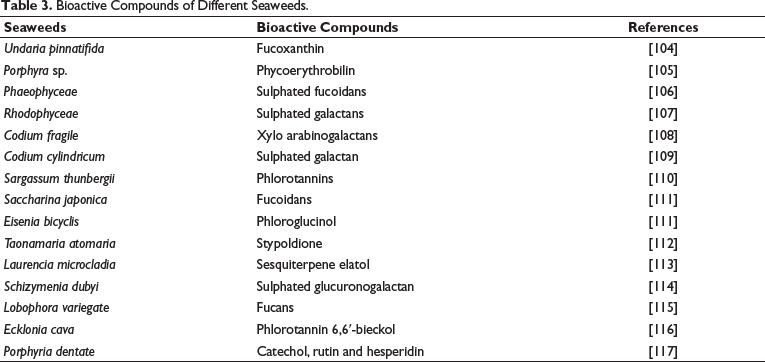
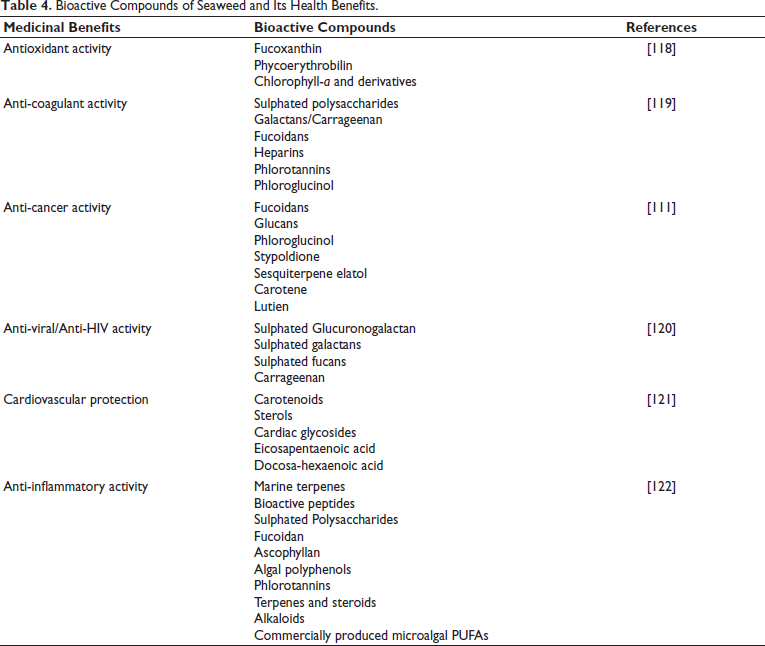
Seaweeds contain an abundance of bioactive compounds which consist of several health benefits which are depicted in Tables 3 and 4.
Bioactive Compounds of Different Seaweeds.
Bioactive Compounds of Seaweed and Its Health Benefits.
Conclusion
Seaweeds are an excellent source of bioactive substances and may be used to create new functional food ingredients. They may also be a useful strategy for treating or preventing chronic illnesses. It can be argued that seaweeds are an alternative source for synthetic ingredients that can improve consumers’ health by being a part of new functional foods and pharmaceuticals, as consumers have recently shown a great deal of interest in natural bioactive compounds as functional ingredients in foods and pharmaceutical products. The presence of various bioactive compounds in marine algae, which are readily extracted with solvents and can be used for drug development in the pharmaceutical industries. Further, these marine algae will be characterized, and their pharmacological activities can be assessed for treating various disease conditions. In vivo, research and clinical assessment should be carried out to further confirm the efficacy of seaweed extracts and their extracted bioactive components for human well-being as well as treating complicated diseases.
Future Directions
Today people are increasingly concerned about their health, and instead of utilizing synthetic chemicals to cure lifestyle-related health concerns, they prefer employing natural therapies. The biochemical and therapeutic capabilities of seaweeds have been better understood thanks to studies during the last few decades. The literature demonstrates how beneficial seaweed may be as a natural food source used to meet nutritional needs. There are also seaweeds to possess pharmacological effects against a variety of illnesses such as ageing, cardiovascular issues, diabetes, obesity, disease, etc. Seaweeds have high levels of polyphenols, polysaccharides, and all necessary minerals, both macro and micro and all essential amino acids and fibres. Only a few studies evaluated the impact of fortifying diet with consumers using seaweeds as useful components acceptability. Consequently, there is a lot of room for the development of functional foods with seaweed to stop specific illnesses in living things. Malnutrition can also be treated with foods that provide nutrients to people around the world.
Footnotes
Abbreviations
Acknowledgments
The authors are grateful to the Department of Pharmacology, MGMCRI, Puducherry, India for their support and useful discussions. The authors owe their heartfelt gratitude to Dr Reka, Dr Shravan and Dr Navin Raja and department postgraduate friends for their constant support and the immense help rendered during this work.
Authors’ Contribution
Kavya R. made substantial contributions to the conception or design of the work and analysis; Dr Vimala Ananthy drafted the work or revised it critically for important intellectual content; Dr Kartik J. Salwe approved the version to be published; Dr Manimekalai K. reviewed and edited; Boopathi K has reviewed and edited. Dr Reka D. has reviewed and helped in the publication process.
Declaration of Conflicting Interests
The authors declared no potential conflicts of interest with respect to the research, authorship and/or publication of this article.
Ethical Approval and Informed Consent
Not applicable.
Funding
The authors received no financial support for the research, authorship and/or publication of this article.
