



Abstract
This article attempts to analyse the changes occurred in the behaviour of the customer for online buying of fashion products. The prime objective of this study is to bridge the gap by contributing to the literature about the impact of pandemic on consumer buying tendencies for fashion industry. This study proposes a model for impulse buying of fashion apparel based on consumers’ shopping behaviour during COVID-19 pandemic. The conceptual model was developed using stimulus organism response (S-O-R) theory using fashion involvement (FI), hedonic shopping value (HSV) and sales promotion (SP) as independent variables, positive emotions (PE) as a mediating variable and impulse buying (IB) as a dependent variable. The data was collected from 569 respondents from central Indian region, the collected data was analysed using PLS-SEM 3 software. The importance performance map analysis (IPMA) was used to understand the accurate performance of variables. The result shows the significant and positive impact of HSV and PE on IB, unlike FI and SP which were not showing significant impact. Moreover, PE is a significant mediator in the relationship of the constructs. This study contributes by providing original insights into the IB literature. The analyses of IPMA will help the fashion industry to rebound after COVID-19.
Introduction
Fashion is defined as the most popular style of clothes or way of life at any given period, and it evolves with time. Shakespeare remarked, ‘The fashion wears out more evidently than a man’. A person’s display of enjoyment of new trends that they follow to develop self-identity is referred to as fashion. Fashion was considered to be a game of rich previously, but in present era it is for common people as well, the reason the revenue of the global fashion industry has gone up substantially over the past decade, mainly in apparel sectors. The exponential growth in income and the various sources of credit prepared the path for retail sales, resulting in a significant increase in retail sales (Chi & Chen, 2019).
Unexpected behaviour had a significant impact on client purchasing incentives and sentiments. In 1940, researchers identified or acknowledged impulse purchase behaviour for the first time, which was followed by further research. Because it affects 40% to 80% of purchase decisions, there is a lot of interest in impulse buying (IB) (Amos et al., 2014) Unplanned stimulation provided by businesses through visual merchandising, such as tempting displays, store layouts, pricing, sales promotions, packing and a variety of product categories, is known as impulsive purchases. As an indication of lack of judgement and spontaneous behaviour, this behaviour is defined as IB. Being presented with an impulsive and convincing stimulus, the consumer buys the product without hesitation (Atulkar & Kesari, 2017). Impulsive people are more likely to relapse in their need for unplanned, immediate and unexpected purchases, making them with little regard for the consequences (Amos et al., 2014). There are two components to it: cognitive and affective. However, for this study, we focussed on the affective component, which is followed by emotional desire, which leads to an illogical want to buy.
IB is one of a consumer’s most noticeable characteristics, and emotions play a crucial role in motivating consumers to purchase (Chi & Chen, 2019). However, the COVID-19 pandemic has altered consumer behaviour, making anxiety a huge marketing hurdle. It resulted in significant psychological, social and economic upheavals, including job losses, poor earnings, uneasiness and anxiety during social encounters, and an unstable economy. Customers’ buying, shopping and consumption behaviours have been completely disturbed by the COVID-19 pandemic, social remoteness and lockdown directives (Kim, 2020). People are shifting to internet shopping as a result of present circumstances, which increases the risk of impulse purchases.
The studies looked at a variety of impulsive purchasers’ reasons; more study is needed to explore the psychological aspects that influence purchases. The majority of studies on IB have focussed on either the visual environment that exists when a consumer visits a store, and it was practically impossible to visit stores during the COVID-19 Pandemic. After comparing online and offline IB, it was discovered that offline channels support impulse purchase more than online channels. The unrecognized influence of unclear situations causes purchasers to become anxious, resulting in impulsive purchases during COVID-19. The buyers did not discuss things that were not regarded as required, such as fashion apparel, in relation to necessary goods as well.
The current pandemic (COVID-19) is taken into account in this study since it has a significant impact on the general public’s mental health. An increase in anxiety has been seen, which may contribute to impulsive purchasing behaviour. As a result, the current study will contribute to this discussion by examining consumers’ IB behaviour during COVID-19 in the context of elements that have received less attention from previous researchers. The constructs employed as impulsive purchase influences were explored independently, but pleasant emotions were not examined as a mediator, notably in the fashion apparel business. Customers in a developing market, India, are the focus of this study. Based on previous fashion industry research, the following study topics have been identified: RQ1: How do fashion participation, hedonic shopping value (HSV) and sales promotion (SP) influence clothes impulse purchases? RQ2: To what extent do positive emotions (PE) play a complex mediating role in the relationship between fashion involvement (FI), HSV and SP?
The current study intends to add to the existing body of information in a variety of ways. First, it will aid in the provision of evidence regarding clothing impulse purchases during the COVID-19 pandemic, which is an unprecedented emergency situation. With the support of stimulus organism response (S-O-R) theory, it will also help explain impulse purchases under panic and anxiety states during the COVID-19 pandemic. The study will also answer a few questions on FI, HSV, SP and pleasant feelings in order to evaluate consumer purchasing behaviour during COVID-19, with a focus on garment shopping, which has never been studied before.This study will look at (a) how fashion participation, HSV, SP and pleasant emotions affect impulse purchase. (b) To demonstrate the impact of fashion participation, HSV and SP on good feelings. (c) Determine whether PE have a mediation role in the relationship between fashion participation, HSV, SP and IB.
The study is divided into six sections. Section I provides a brief overview of the fashion apparel sector, including client buying habits, research uniqueness and research objectives. Section II focusses further into theoretical underpinnings of the research hypotheses that will be used to assess correlations between all study variables. The research methods employed are described in Section III. The findings of the data analysis and the interpretation of the results are included in Section IV. Section V covers a broad explanation of the model used, management implications and study limitations. The analysis’ findings and consequences are summarized in Section VI.
Literature Review
Theoretical Framework
The theoretical model in the present study is based on the modifications to S-O-R model and evidence of IB. The standard S-O-R model defines stimulation as an aspect that affects an individual’s internal psychological conditions and can be conceptualized as a factor. However, the fact that positive emotion is considered a stimulus for customer reaction and purchase decisions. The relationship between emotional satisfaction, fashion participation and impulsive buying is positive. According to Law et al. (2012), the influence of a retail store with a wide selection of products is defined by the S-O-R paradigm. Using the S-O-R model (Chang et al., 2014), this study looked at the direct and indirect impacts of apparel shops’ environmental factors and consumers’ positive emotional responses to the environment on impulse purchase behaviour.
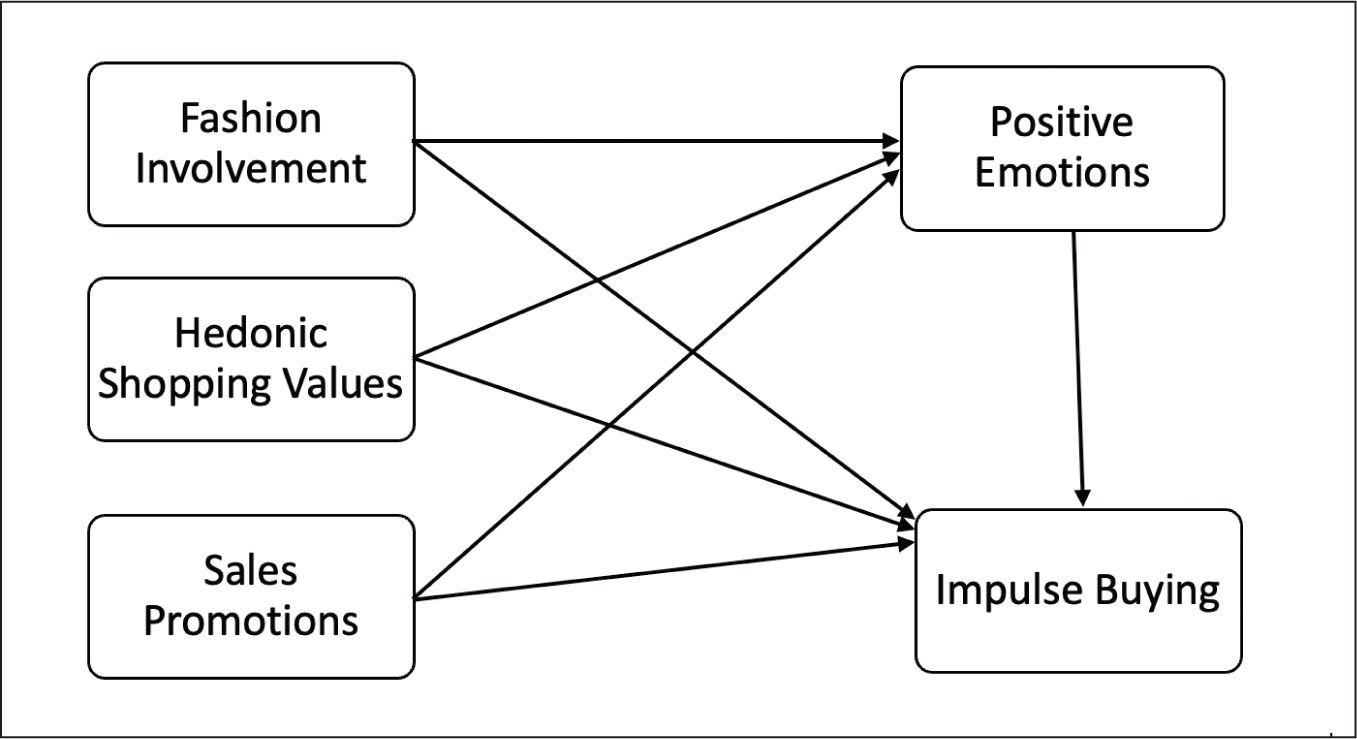
In this study, IB refers to the response component of dependent variables that are impacted during shopping by both an internal user factor (fashion participation, HSV) and an external one (SP). Impulse purchasing, on the other hand, is frequently impacted by the customer’s happy feelings at the time of purchase since retailers tend to provide external cues that may trigger consumer emotions to buy additional things (Arnold & Reynolds, 2012). The study established a conceptual model, as shown in Figure 1, to assess customer purchase behaviour during COVID-19.
Hypotheses Development
Fashion Involvement, Positive Emotions, Impulse Buying
As an activity, fashion engagement satisfies the consumer’s desire to keep up with the current trends in order to maintain their social status (Amos et al., 2014; Chee, 2020). Fashion participation has a significant beneficial impact on buying motivation. Involvement is also seen as a key component in determining whether to buy fashion goods, and it has a significant impact on impulse purchases. Similarly, Kim et al. (2002) and Bhattarai and Subedi (2021) demonstrated how engagement is a crucial element in fashion impulse purchases that influences either favourably or negatively depending on connected characteristics like impulse propensity, fun and enjoyment. According to Dhurup (2014), fashion participation is intimately linked to purchasing emotions and aspirations, with emotions serving as major indicators of impulsive purchases. According to Henseler (2017), commitment is an impact that awakens customer emotions when they shop. PE are critical in helping customers make better decisions (Bakshi & Bhattacharyya, 2021). Fashion engagement is thought to contribute to increasing purchase and happy sentiments, according to past studies. The following hypotheses can be tested:
H1: FI has a significant positive effect on IB. H1a: FI has a significant positive effect on PE. H1b: PE significantly mediate the effect on FI and IB.
Hedonic Shopping Value, Positive Emotions, Impulse Buying
Another important aspect influencing unplanned purchases is HSV. Previous research has supported IB as a result of hedonism or pleasure-seeking impulses that drive the customer’s desire to purchase the product (Atulkar & Kesari, 2018). Similarly, hedonic buying behaviours such as enjoyment, relaxation and pleasure are linked to hedonic shopping. Consumers are more inclined to shop when they are driven by hedonic values, according to a few research studies. PE were found to have a strong mediating effect on the association between hedonic shopping attractiveness and impulse purchase in prior investigations. The following hypotheses can be framed:
H2: HSV has a significant positive effect on IB. H2a: HSV has a significant positive effect on PE. H2b: PE significantly mediate the relationship between HSV and IB.
Sales Promotion, Positive Emotions, Impulse Buying
The third component that leads to happy emotions and spontaneous purchases is sales marketing. It is a collection of diverse promotional strategies that allow people to buy a variety of products right away. Retailers who wish to encourage IB behaviour use sales promotional activities that draw consumers’ attention to emotionally appealing products, according to Kacen et al. (2012). Marketers also create customer marketing strategies for various categories in order to impact consumers’ spontaneous purchases as indicated by Alimpic et al. (2020). Various researches have found that rapid gifts, discounts and other incentives increase the likelihood of impulse purchases (Dhall & Singh, 2020; Kedia et al., 2020). However, according to Kumari and Bharti (2021), SP tries to build consumer demand and helps customers to purchase a product rapidly (Moorthy et al., 2021). Promotional methods frequently enhance client purchasing decisions in addition to preventing them. Consumers are more impulsive when businesses provide special deals or discounts, according to several studies (Panikkassery, 2020). In contrast, the most popular promotion deal for customers elicits happy emotions (Singh et al., 2020), which last for a long time and impact purchasers’ purchasing decisions (Singh & Singh, 2020). Therefore, based on this analysis, the following hypotheses are framed:
H3: SP has a significant positive effect on IB. H3a: SP has a significant positive effect on PE. H3b: PE significantly mediate the relationship between SP and IB.
Positive Emotions and Impulse Buying
Previous researchers found that PE play an important role in stimulating fashion purchases. Similarly, Atulkar and Kesari (2017) addressed the desire of consumers, which causes PE to the ideal product for consumers. A consumer is thus motivated to purchase impulses in a short time. Though, the varying PE encourage buyers to consume unscheduled goods. However, PE, such as satisfaction, enthusiasm and joy create a positive impact on the impulsive behaviour of consumers and consumers with PE take less time to decide on purchase and spend more on their desired purchase. Buyers with positive feelings are also more likely to buy because they feel self-motivated, less bound and also enthusiastic. This research evaluated the effect of PE on impulse purchases. This study will present the following hypotheses:
H4: PE have a significant positive effect on IB.
An inclusive literature review shows that previous studies have highly accepted the survey methodology. The quantitative result of any investigation leaned entirely on the knowledge and skills of the respondents in apparel shopping. For the present analysis, empirical research was employed and data were collected using a similar survey approach. The survey was attended by apparel shoppers, mostly from three cities in the Central Zone of India. Responses from Indore, Gwalior and Bhopal were obtained. Respondents aged 20–40 years were asked to respond voluntarily to the questionnaire. In all 700 Google interviewees, 131 were discarded for missing or redundant data, and the final set of 569 respondents was used for further analyses. In order to make it easier for respondents to understand and respond accordingly, the survey tool has been developed. The questionnaire included two sections: the first section sought answers to the demographic profile, and the second section included declarations asking for answers to the key variables of the report. Sex and age were included in demographic details. The second section included five components: FI, HSV, SP, PE and IB, each of which consisted of several measured scales on a 7-point Likert scale (where 1 stood for strongly disagree and 7 stood for strongly agree). Unlikely purposeful sampling was used to identify respondents with past shopping experiences. FI was measured from five items which were developed in some previous studies as well, HSV was measured from five statements; Arnold and Reynolds (2012), SP was measured by three statements; and PE was also measured by five items developed. Next, we used the Smart-PLS version 3.3.3 programme to test this analysis. In PLS-SEM analysis software, the 569 responses have been induced because they require a reflection structure in the theoretical model. In addition, multivariate analytical methods with smaller sample sizes are more stable in complicated models and are widely accepted for analysis (Hair et al., 2017, 2019, 2020; Richter et al., 2016; Rigdon, 2016; Ringle et al., 2014; Müller et al., 2018). The sample size requirement was tested with the software version G*Power 3.1.9.7. The real sample size of 0.95 (1–Beta err pro) was sufficiently achieved by 319 respondents in the smallest sample size. In comparison, the sample size of 569 was first used to explain the acceptable sample size taken into account in the analysis.
Results
Descriptive Assessment
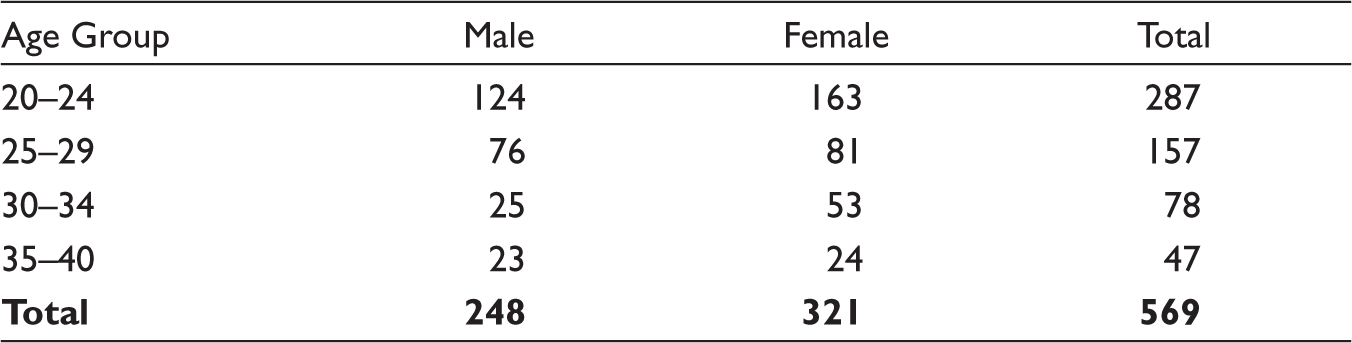
The demographic attributes of the respondents are shown in Table 1. The age group is categorized into four groups. First age group, that is, 20–24 years, consists of 287 respondents, out of which 124 males and 163 females were there.
Descriptive Analysis
Descriptive Analysis
The second group is from 25 to 29 years, in which there were 76 males and 81 females, making a total of 157 respondents. Third group consists of 78 respondents from 30 to 34 years, having 25 males and 53 females. The last group contains 47 respondents of age 35–40 years, in which there were 23 males and 23 females. Therefore, 569 was the total number of respondents, in which 248 were males and 321 were females.
Measurement Model Assessment
The research analysed the outer model based on PLS measurement analysis, which evaluates internal reliability and convergent validity by using confirmatory composite analysis in PLS-SEM. Table 2 shows Cronbach’s alpha reliability value, rho value, Composite reliability value and Average Variance Explained (AVE) of all the variables.
Reflective Model Performance Standard Criteria and Discriminant Validity Assessments (Fornell and Larcker criteria 1981)
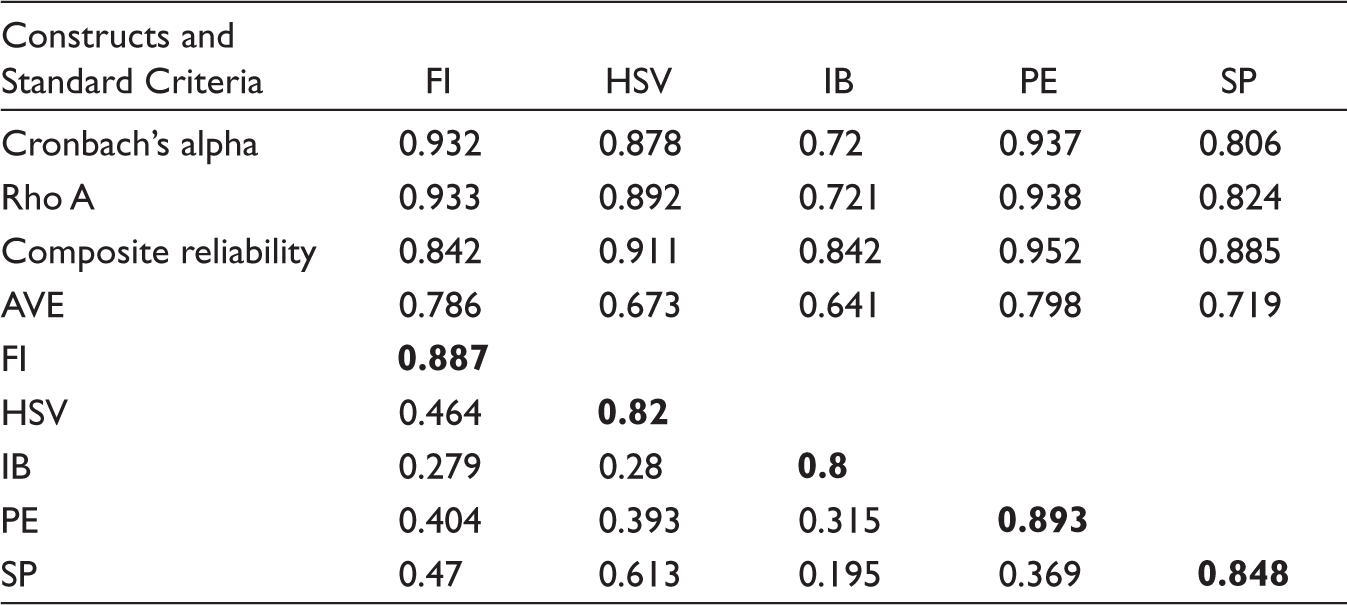
From Table 3, the inner reliability by Cronbach’s Alpha value and total items correlation was above the lower limit, that is, 0.70 (Hair et al., 2017, 2019, 2020). The Cronbach’s alpha value of SP is 0.806, FI is 0.932, HSV is 0.878, PE is 0.937, IB is 0.72, all latent variables and total item correlation are above the threshold value. Composite reliability and convergent validity, both were checked; the value of all the constructs are above threshold limit, that is, 0.7 (Hair et al., 2017), and, as a result, all the constructs have a high degree of internal consistency as the composite reliability value for SP is 0.885, FI is 0.842, HSV is 0.911, PE is 0.952 and IB is 0.842. Average Variance Extracted can be calculated by the following basic static formulation.
Cross Loadings of Constructs
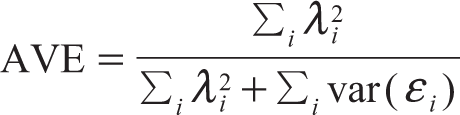
The Rho_A threshold value limit is 0.7, which is defined by Hair et al. (2019), and the Rho_A value for SP is 0.824, FI is 0.933, HSV is 0.892, PE is 0.938 and IB is 0.721. All values of Rho_A are higher than minimum criteria.
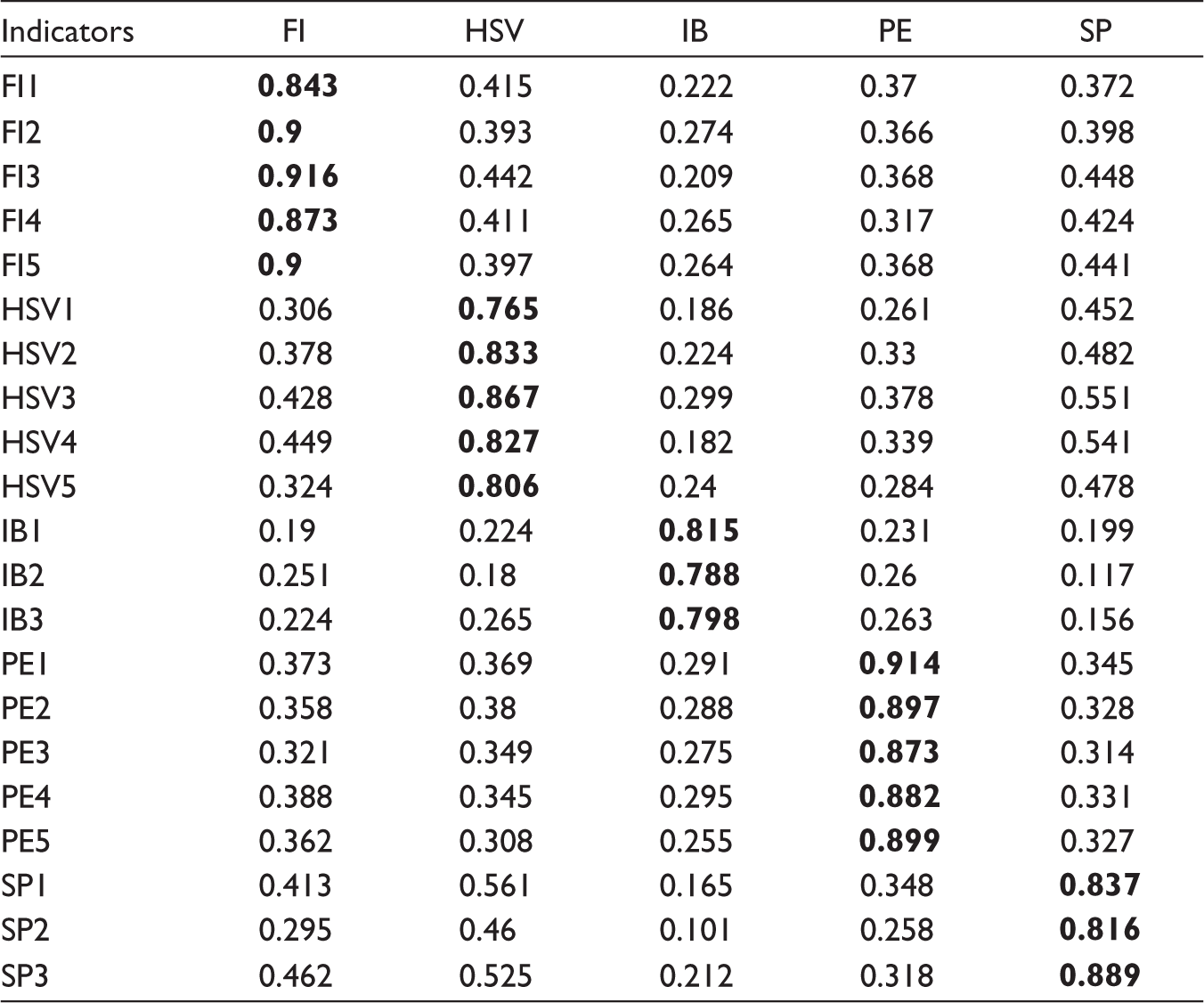
Eventually, the convergent validity was also established with AVE values which are above the specified limit of 0.50 (Hair et al., 2019), Fornell and Larcker (1981). The AVE values for latent variables are; for SP 0.719, FI 0.786, HSV 0.673, PE 0.798 and IB 0.641. The outcomes of internal reliability and convergent validity are shown in Table 2. After convergent validity, the discriminant validity was verified using Fornell and Larcker’s (1981) criteria. Discriminant validity assists to calculate the amount of variation measured by the latent variables and also analyses the shared variance with other latent variables. Therefore, the bold numbers in Table 2 are obtained from the results of the square root value of AVE in the latent variable. Also, the cross-factor loading matrix was obtained and listed in Table 3. The findings show the cross-loading of all indicator variables. The results demonstrate that the metrics have higher values for their corresponding endogenous variables, as compared to other variables. It validates the latent variables in each construct, reflects the assigned latent variable and establishes the discriminant validity of the measurement model.
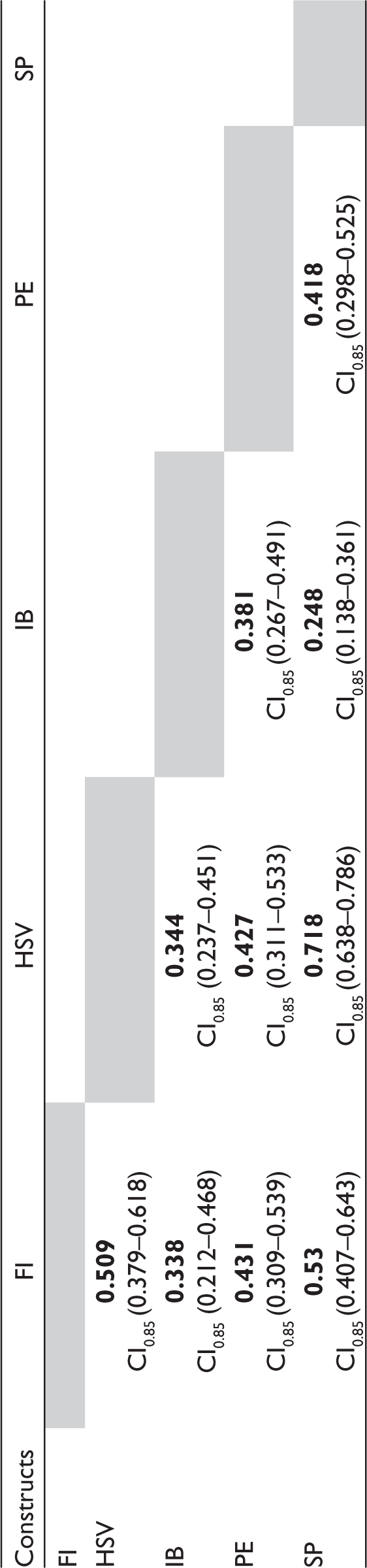
In addition to Fornell and Larcker (1981) criteria and cross loading to determine the discriminant validity of latent variables, an advanced criterion HTMT (Heterotrait–Monotrait) ratio of correlation was used. The major dimensions of discriminant validity were determined by evaluating the HTMT ratio of correlations via a threshold ratio of 0.85 (Henseler et al., 2015; Ringle & Sarstedt, 2016). Gold et al. (2001) suggested that an appropriate value is 0.9. In this research, the HTMT ratio of correlation was calculated. The statistical algorithm for HTMT ratio of correlation is given below:

Hence, the results show that all the values were lesser than the threshold limit, that is, 0.85, there by defining the individuality of all latent variables according to the statistical criteria (see Table 4).
HTMT (discriminant validity assessments)
Structural Model Assessments
The path coefficients analysis displays a significant, conceptual and theoretical connection between all the experimental results on the input and output sides of both the frameworks. In addition, the structural model was used to determine one or more predicated links as theorized in model determination (Hair et al., 2017, 2018). For this reason, the bootstrapping method has been used through 5,000 unspecified bootstraps to identify the p-values for framed hypothesized relationships (Hair et al., 2020). Before starting the analysis of the hypothesis, it is important to identify the variance inflation factor (VIF) standards of latent variables.
The VIF standards were reported to be found below 3–5. The internal VIF value in the study was calculated to be below the specified threshold limit with FI 1.453, HSV 1.760, SP 1.744 and PE 1.293 on IB. In the case of PE as a dependent variable, the VIF values are FI 1.371, HSV 1.710 and SP 1.723. Consequently, the analysis explains that there were no issues with the collinearity (Hair et al., 2017). The structural model assessment for the variables is shown in Figure 2. After analysing VIF in measurement models, the next stage was to verify the significance and importance of the predictor variables, which must be in ranges between −1 and +1 by using the bootstrapping method through 5,000 sub-samples in the PLS algorithm. The measurement of the SEM and the testing of hypotheses were analysed, which is explained in Table 5.
Structural Model Assessments and Mediation Measurement
*p < 0.05, **p < 0.01, and ***p < 0.001.
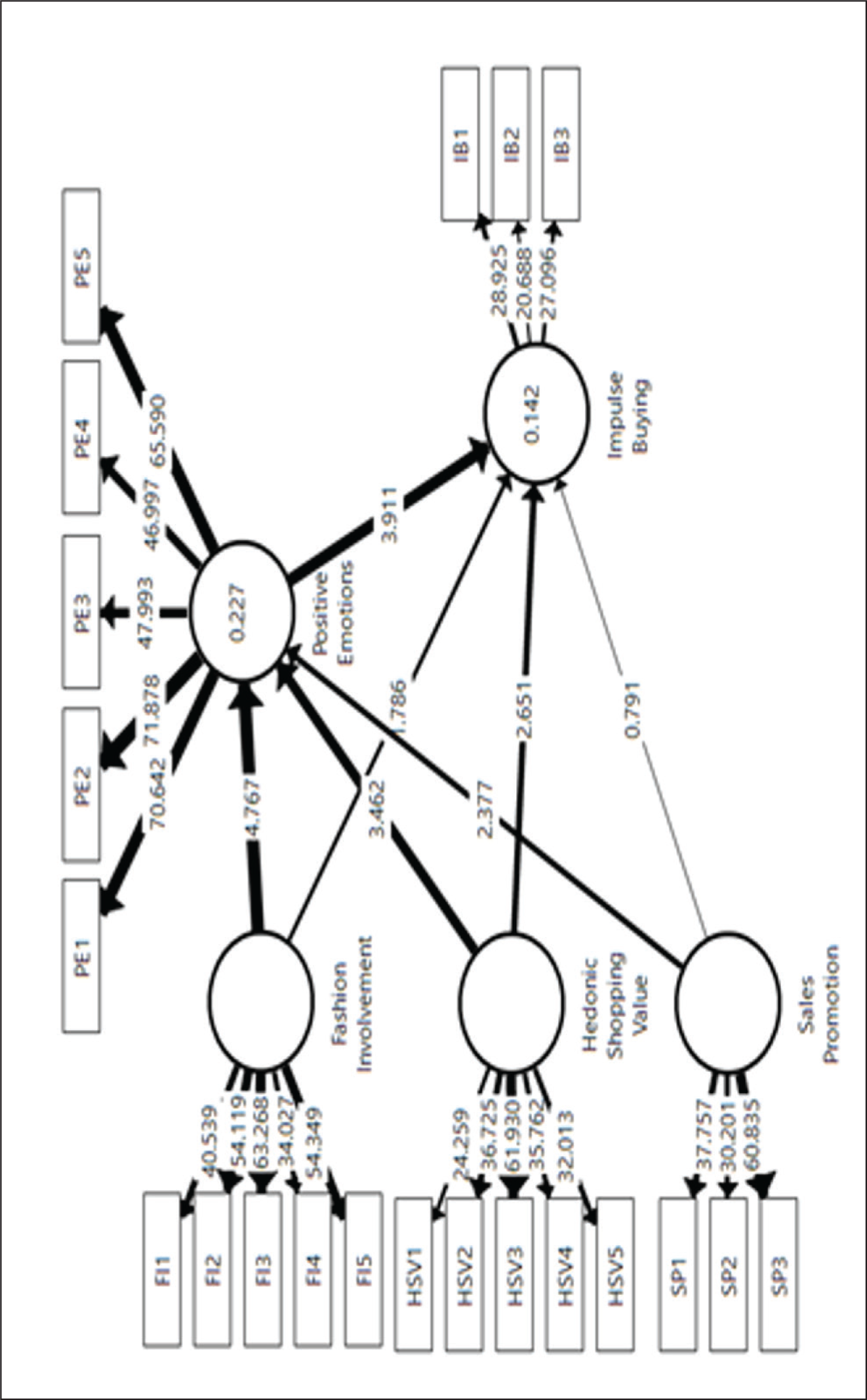
The findings mentioned in Table 5 demonstrate a causal relationship between FI and IB. The relationship was measured using standardized coefficient β (0.141) and tested using t statistic (1.84) for statistical significance; the value of p ≥ 0.05 indicated that the relationship was positive but insignificant, thus hypothesis H1 was not supported. The causal relationship between FI and PE was found positive and significant. The strength of relationship was measured by computing beta β (0.252) and tested for significance by computing t (4.786) with p value of 0.01, thus, hypothesis H1a in supported. The third hypothesis in the study is H2, which was framed to test the causal relationship between HSV and IB. The relationship was evaluated by computing beta β (0.162) and tested for statistical significance by computing t (2.714) with p = 0.01, indicating that HSV had positive significant effect on IB. The fourth hypothesis H2a was to test the causal relationship of HSV on PE.
The strength of the relationship was evaluated using β (0.196) tested for statistical significance by computing t (3.368) and p (0.01), indicating that HSV had strong positive effect on PE. The fifth hypothesis H3 was framed to test the effect of SP on IB. The effect was evaluated by computing β (0.049) and tested for significance through computation of t (0.804) and p (≥0.05). Thus, the hypothesis was not supported. The sixth hypothesis H3a was set up to test the causal relationship between SP and PE. The relationship was measured by computing β (0.13) and tested for statistical significance by computing t (2.311), and p (0.01) validating positive significant effect. Few studies have also given evidence of the same. The seventh hypothesis H4 tested the causal relationship of PE with IB.
The strength of relationship was measured by computing β (0.213) and tested for significance through computation of t (3.936) and p (0.01), thus the relationship is positive significant and the hypothesis is supported. There is a determination of coefficient (R2), which describes the predictive accuracy of the endogenous variable and determines the squared link among the actual and predicted values of the particular endogenous variable (Hair et al., 2014). The R2 indicates the percent of variation in the endogenous construct which is explained by these exogenous constructs.
The R2 value varies from {0–1}, and a value closer to 1 suggests a high level of accuracy (Hair et al., 2014). Thus, Figure 2 shows that PE shared the heterogeneity, that is, R2 = 0.227, 22% pursued via IB, that is, R2 = 0.142, 14%. The results suggested that the model identifies a low variance in PE; on the other hand, IB also shows a low variance. The next step is to evaluate the effect of f 2. If the exogenous construct is eliminated from the model, the difference in the R2 is used to measure if the eliminated construct has a significant effect on the endogenous latent variables (Hair et al., 2014). The f 2 standard values are 0.02, 0.15 and 0.35, which suggest weak, moderate and strong impact of the exogenous latent variable, respectively (Cohen, 1988).
The findings indicate that all independent variables display low effect size, but PE have f 2 value 0.041, which is the most significant factor liable for justifying the endogenous variable (impulse buying). Next, the blindfolding was used for a cross-validation strategy, cross-validation reports community and constructs cross-validated redundancy. The main objective of cross-validated measurements is to evaluate the model predictive validity (consistency). It is only appropriate for endogenous variables of the reflective model, when Q 2 is greater than 0 it implies that the SEM model is analytical for specified constructs.
Even then, a Q 2 has a negative or zero value, which means that the model is inefficient in predicting the endogenous constructs. Cross-validated redundancy is likely to be the most important measurement for blindfolding outcome because it refers to the model which is suitable for the PLS latent variable model. The Q 2 value is more than zero, which implies that the model has predictive validity. The findings suggest that the Q 2 value of PE is 0.177 which indicates a moderate effect, while the Q 2 value of IB is 0.080 which indicates a weak effect in the model. Now, the last step of the study is to examine SRMR. It helps to determine the average significance differences between the actual and the predicted correlations as an actual measure of the model fit evaluation criteria. According to Hair et al. (2014, 2020), a value less than 0.08 is measured as good fit criteria.
Therefore, the study examines that the SRMR value is 0.055, which shows that the model is a good fit as its value is below the threshold limit (Henseler et al., 2016).
Mediation Analysis
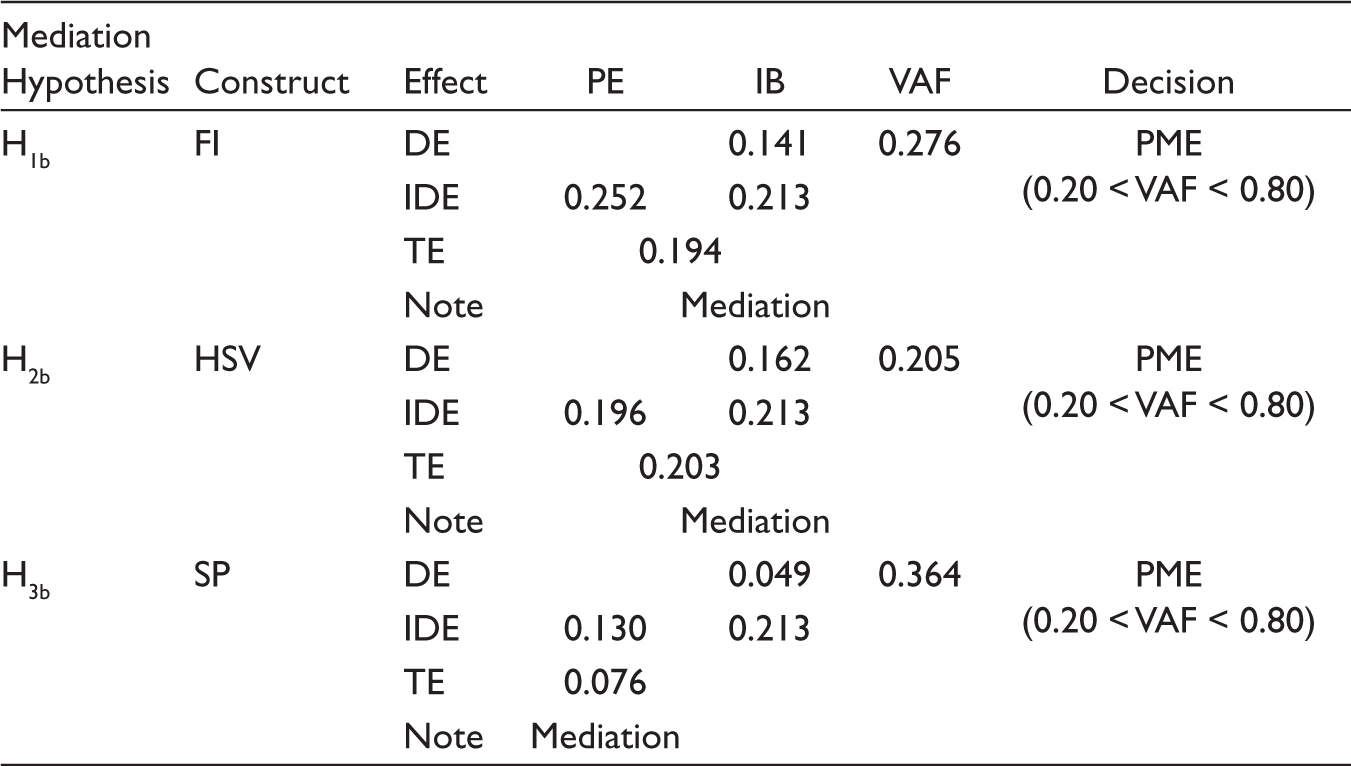
In the study, the variables of direct effect (DE) and indirect effect (IDE) were tested through variance accounted for VAF. Where a mediation effect is measured, the study surveyed by (Preacher & Hayes, 2008) and bootstrapping technique has been used for the IDE of a mediating variable on the model (Hair et al., 2014). The mediating effect has been analysed by examining the direct impact of the independent variables (FI, HSV, SP) on the dependent variable (IB) without the mediating variable and then introducing the mediating variable PE in between.
The result of direct effect was obtained from PLS-SEM by a bootstrapping process with 569 observations per sub-set, for a total of 5,000 sub-samples without any significant changes as suggested by (Hair et al., 2014). The path coefficient as well as the t-value is established by the PLS-SEM bootstrapping process. When the direct effect with no mediating variable is not significant, then there is no mediating effect. On either side, when the direct effect is significant, further evaluation was carried out with the second step. Similarly, the indirect effect of the mediator is evaluated, after demonstrating the value of the direct relationship between the constructs. In overall stage of bootstrapping process, if indirect effects are confirmed as insignificant, it signifies that there is no mediating effect. However, if it is significant, then further analysis will be made by using the third stage.
The strength of the mediating construct is tested, after confirming the significance of the direct effect and the indirect effect. This method of evaluation can be carried out by using VAF (Hair et al., 2014), that can be calculated by using this formula mentioned below.

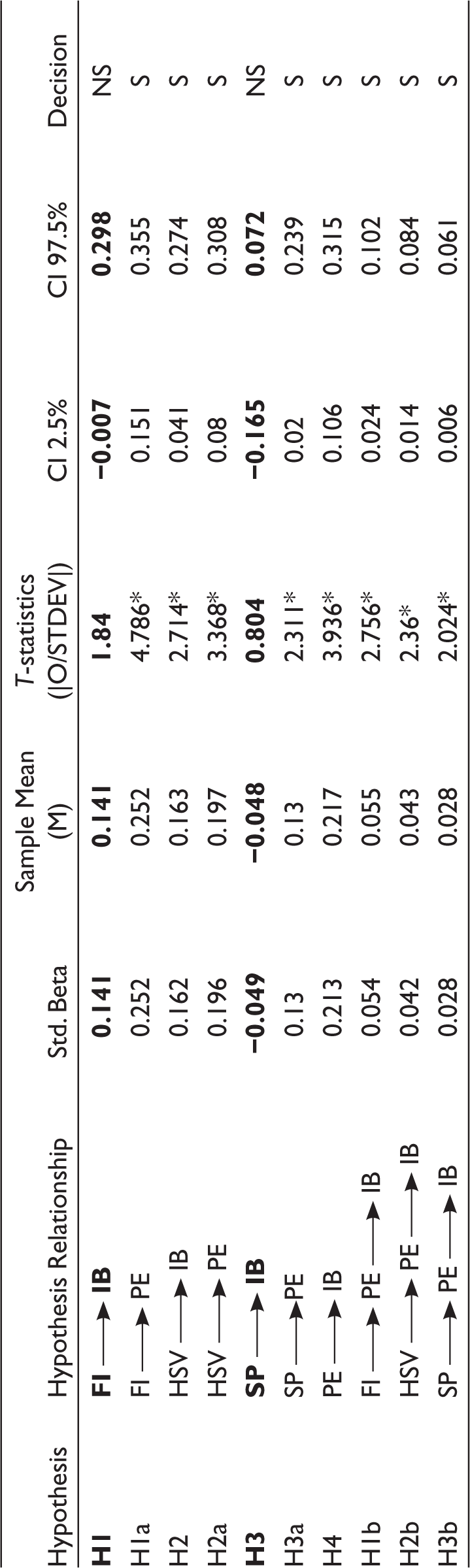
As per Hair et al. (2014), VAF values were considered as follows: VAF > 0.80 implies full mediation effect, 0.20 ≤ VAF ≤0.80 implies partial mediation effect and VAF < 0.20 implies no mediation effect. Therefore, according to Table 6, the identified VAF values of all the relations (H1b, H2b, H3b) have a partial mediation effect (0.20 < VAF < 0.80) as calculated by using the above formula. Table 6 shows the results for mediation measurement. From Table 6, the outcomes of mediating hypotheses were tested by using t-value, β value, CI 2.5% and CI 97.5%. The hypothesis H1b suggests the relationship, that is, FI–PE–IB, gives the result β: 0.054 is significant at p-value of 0.01, which can be concluded as supporting to H1b. To test the strength of the mediating effect, the VAF was calculated and a value of 0.276 was shown, which justifies 27% FI and IB, explained via positive emotions. Next, hypothesis H2b was tested, that is HSV–PE–IB, gives the result β: 0.042 is significant at 0.01 p-value, implying acceptance of H2b. The VAF value 0.205 suggested that HSV and IB explained via 20% of positive emotions. The next hypothesis H3b, that is, SP–PE–IB, gives the result β: 0.028 is significant at 0.01 level of significance, which implies that PE is again a mediating variable between SP and IB, and the VAF value 0.364 justifies that sales promotions and IB is explained by 36% of PE.
Mediation Measurement
Importance–Performance Map Analysis
The importance–performance map analysis (IPMA) was carried out to develop a strong study. It provides an extended version of performance map analysis (PMA) as well as importance–performance matrix (IPM) of each construct. IPMA is indeed a valuable PLS-SEM research method. It helps for expanding the standard reporting results of path coefficient.
It estimates by adding an element that defines the average scores of latent constructs (Ringle & Sarstedt, 2016). The x-axis represents the effect (importance) of an input variable, while the y-axis represents the performance from 0 to 100.
This approach gives a suitable change in the existing area of research and also highlights the current performance of all weak areas. Table 7 gives the details of importance and performance matrix. To measure IPMA, the VAF mediation method was used to calculate the DE, IDE and TE of all latent variables as shown in Table 6. Based on the evaluated values recorded in the research are favourable to implement IPMA. The mean values of relevance and performance of the latent variables are determined by four quadrants in Figure 3. The IPMA results indicate a one-unit change in FI, HSV, PE and SP performance, with values of 93.08, 82.962, 88.441 and 85.263, respectively. As a consequence, it improves IB performance since the outcomes are evaluated based on overall effect 86.63, 86.64, 86.65 and 86.51, respectively.
IPMA (latent variables-wise unstandardized effects)
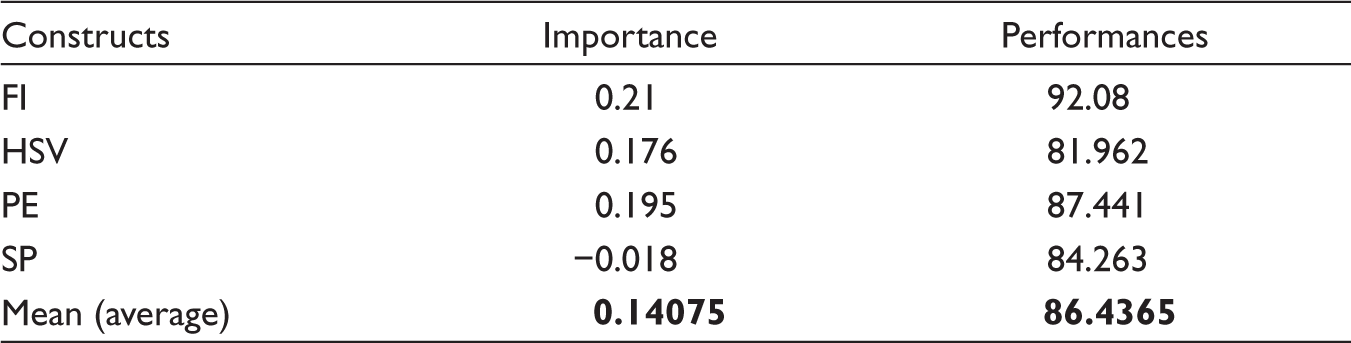
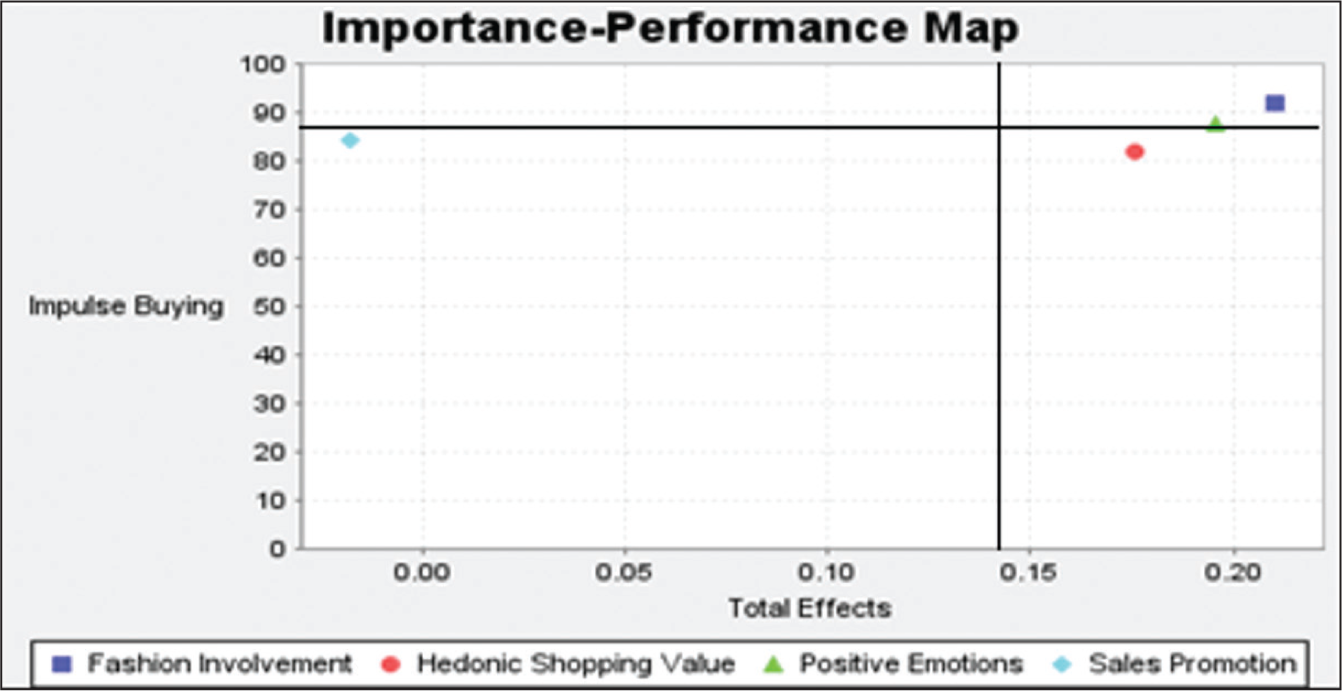
As a result, the IPMA results indicate the results in terms of performance, with FI and PE as the top performers, HSV as the second-best performer and SP as the worst performer. Companies, on the other hand, used SP to increase sales, but individuals are uninterested because, as a result of COVID-19, they are more likely to meet their basic demands. As a result, SP is a poor performer at this time.
General Discussion
The goal of this research was to create a structural model that depicted the desire to buy fashion apparel under the COVID-19 circumstance. The S-O-R model is used to implement the research model, which is based on theoretical ideas. Most of the assumptions about customer behaviour during COVID-19 are supported by this empirical research, which has never been done before in the field of clothes purchasing. As a result, fashion participation, HSV, SP and PE are all regarded important factors in impulse purchases.
Because of the concern of COVID-19, we infer that fashion participation has no substantial positive influence on impulse purchase in the Indian setting based on these data and discussion. Positive emotions, on the other hand, can help with both FI and impulse purchases. It illustrates how a high level of fashion participation always promotes good emotions and impulse purchases. Favourable emotions and HSV, on the other hand, appear to have a direct positive impact on impulse purchases. Through good emotions, the value of hedonic shopping has a favourable and considerable impact on impulse purchase. It justifies that PE act as a mediator between HSV and IB.
On the other hand, in case of sales promotion, the study found inverse relation when there is direct relation with IB, because the data was collected when most part of the country were observing complete or partial lockdown and people are restricted to move out. At that time, people were concentrating more to fulfil their basic requirement. They were not interested to buy anything new, even after seeing good offers provided by the companies. Due to this COVID-19, the results are found to be insignificant when it comes to apparel shopping; people are more focused on buying basic required products. In contrast, SP has a significant impact on impulse purchase via PE. Therefore, the study emphasizes that if the consumer has PE towards products then there will be a chance of IB, even in a challenging situation like COVID-19.
Theoretical and Managerial Implications
This study has both theoretical and managerial implications in the fashion apparel industry. The idea for research in the fashion industry gives various shopping parameters such as FI, PE, HSV, SP and IB. These parameters play a significant role and give a distinguished impact on consumer shopping behaviour, but some parameters are insignificant due to the fear of COVID-19. On the other hand, the shopping parameters and their relationship show marginal effect when it was tested on an individual basis. Therefore, all the parameters were considered together to fulfil the gap to evaluate the fashion apparel industry limitations. This study reveals that people buy things hedonically when they are in a mood of happiness, joy and excitement. Therefore, the study determines a positive relationship between HSV and IB.
Moreover, PE also play an impeccable role in an impulse purchase. Hence, this behaviour of a consumer is more useful for the marketer. Another relation of the study is FI, which is found to be insignificant but is useful when PE mediate between FI and IB (Dhurup, 2014). However, it can be suggested that once the consumer emotions are attached to their interest or involvement, then they can be useful for sales staff to sell more fashion apparel products. So, it defines that PE play a dynamic role while purchasing products.
Next, this research establishes a significant relationship between positive consumer emotions, SP and IB. SP is insignificant concerning with IB due to COVID-19. Perhaps, this study suggests that marketers focus more on SP activities like cash back offers, discounts, gifts or combo offers, loyalty coupons, etc. Such activities appease consumers, which motivates them to impulse purchase in a short period. Moreover, suppose the shopper allows the buyer to try, touch and feel the products. In that case, that will stimulate a positive emotion and a feeling of pleasure towards the product, as well as influence them for impulse buying.
Limitations and Directions for Future Research
This study has certain shortcomings that open avenues for future research. First, the results are based on Indian respondents only. It was found that there would be some social and cultural factors influencing their behaviour which may vary from country to country. Second, we used quantitative analysis only. There are opportunities to use qualitative methods in this area. Third, only four independent constructs such as FI, HSV, SP and PE were considered. It is further suggested to take more constructs and their related constructs based on consumer behaviour theories. Fourth, the study only focusses on fashion apparel.
In contrast, many other options are available like cosmetics, footwear, jewellery, which can be considered as a different fashion product category for further research. The moderating effect of gender and age is not examined in this study. This study proposes for examining the categorical constructs as moderators. And, last, we have seen that the response time of the respondent during shopping is also another limitation. In other words, a proper check was maintained during the process of data collection, which led us to the fact that some people will not respond appropriately while shopping.
Conclusion
The fashion industry consists of many categories such as apparel, cosmetics, footwear, accessories, etc. In this study, fashion apparel was considered to measure the consumer shopping behaviour, which includes various parameters such as FI, HSV, SP, PE and IB. The main goal was to find fashion IB behaviour during the period of COVID-19. Therefore, the S-O-R theory was employed to build a conceptual model. Further, for implementation and testing, PLS-SEM software was used for analysis. The results indicate that consumer shopping behaviour, PE and IB play a substantial role as they stimulate an individual to purchase impulsively and also confirmed the mediating role of PE as shown in Figure 2.
The results reveal that FI, HSV, and SP have a significant relation with positive emotions. However, both FI and SP were found insignificant with IB, because people are very scared due to COVID-19 situation, and at that period of time, they were only focussed towards their basic requirements. On the other hand, PE play a significant mediator role for the independent variables (FI, HSP, SP) and dependent variable (IB).
Furthermore, there is another relationship between PE and IB, which was found to be significant. Therefore, the key contribution of this study is the explicit description which defines the IB behaviour of consumers towards apparel shopping during COVID-19. It also provides a deep insight into the literature of other consumer shopping behaviours such as FI, HSV, SP and PE. The analyses also help the fashion industry to rebound after the COVID-19 pandemic.
Footnotes
Declaration of Conflicting Interests
The authors declared no potential conflicts of interest with respect to the research, authorship and/or publication of this article.
Funding
The authors received no financial support for the research, authorship and/or publication of this article.