




Abstract
Background and Aims:
During the COVID-19 pandemic, many caregivers of children with autism faced significant challenges when it came to providing interventions. Studies done so far have proven the efficacy of parent-mediated interventions in children with ASD. COVID pandemic forced to use online platforms for training parents in various parent-mediated interventions. Therefore, we conducted a study on the utility of online parent-mediated home-based intervention for children with autism.
Methodology:
This is a descriptive qualitative study design. Ten parents of children with autism were included in a series of online interactive meetings addressed by the disability experts. Sensory processing measures (SPM) and sensory profile questionnaires (SP) were used to prepare individualised home programmes. Ongoing support for implementing programme was provided via teleconsultation. Feedback was obtained 6 months after implementing parent-mediated interventions. The perceived utility of was analysed using qualitative data analysis.
Results:
Nearly all parents reported improvement in skills in language and play areas. 88% parents could administer the programme confidently. The overall teaching format was well-perceived by all parents. The home programme could be easily administered at home as reported by 85% of the parents. In the open-ended question, parents requested a need for more follow-up teleconsultation appointments.
Conclusions:
The COVID-19 pandemic necessitated significant adjustments for caregivers in providing interventions for children with autism. While it posed challenges, it also spurred innovation in parent-mediated interventions and highlighted the resilience and adaptability of caregivers in supporting their children during uncertain times.
Background
Autism Spectrum Disorder (ASD) is a neurodevelopmental disorder, that affects communication, behaviour, and social interaction.[1] Challenging behaviours in children with ASD can manifest for various reasons and can present significant challenges for caregivers, educators, and the individuals themselves.[2] The COVID-19 pandemic and subsequent lockdowns have posed significant challenges for individuals with ASD and their families. Furthermore, cessation of therapies for children with ASD consequently increased the frequency of challenging behaviours. There was an urgent need to empower parents in various techniques needed to manage challenging behaviour in children with ASD during lockdown. Studies across the globe have evaluated efficacy of parent-mediated interventions for children with ASD with resultant improvement in various aspects of communication and ASD symptoms.[3] However sparse data was available with respect to online training of parents to manage therapies of children with ASD during pandemic.[4] Hence we planned this study for caregivers’ perception in terms of utility of online parent-mediated home-based intervention for children with ASD.
Objective
To study the utility of online parent-mediated home-based interventions in children with ASD.
Study Design
A descriptive qualitative study involving feedback from the caregivers of children with autism regarding the utility of online parent-mediated home-based interventions.
Study Population
Ten parents of children with autism were included in the study.
Methodology
Institutional Ethics Committee approval was obtained prior to the start of the study. All patients provided online written informed consent through Google form prior to enrollment in the study.
Information regarding the programme was sent amongst the parents of children with ASD attending AIIMS outpatient department via WhatsApp. Registration for the programme was obtained via Google form mentioning details of the child with ASD and the caregiver.[5] A total of 17 registrations were received out of which 10 parents attended the Google meeting held subsequently to understand the difficulties encountered by the parents in managing a child with ASD during lockdown. Based on the inputs from the parents the sessions for online programme were designed by the expert team involving a developmental paediatrician, paediatric neurologist, occupational therapist, physiotherapist, audiologist and speech-language pathologist. These 10 parents were further recruited for the sessions on parent-mediated intervention programme.
Online support programme was delivered through interactive Google meetings attended by professionals dealing with autistic children. Empowering the parents of children with autism in managing the day-to-day challenging behaviours and ensuring ongoing sensory integration and speech therapy during the pandemic situation was the main purpose of the interactive meetings.
Initial sessions focussed on understanding basics of behavioural issues in children with ASD. Basics of sensory integration and how sensory dysfunction results in behaviour disturbances in children with ASD were addressed in the first session. Different ways of arranging a therapy corner at home depending on the individual sensory needs of the autistic child were presented in second session.
Sensory profile (SP) of the enrolled children was derived from the sensory processing measure (SPM) and the SP questionnaire by Winnie Dunn which was completed by the parents. And based on the information from the two questionnaires an individualised home programme was prepared for each child separately. Parents were trained in individual sessions conducted via online Google meetings, explaining to them the execution of the home programme. Ongoing support through teleconsultation service of the institute was provided to the parents in case of any difficulties encountered in the implementation of the programme. Six months later, feedback regarding the overall format of the programme, individual session and utility of the online autism support programme was obtained from the parents via Google form.[6] Perceived utility of the online support programme was analysed using qualitative data analysis. Manual content analysis was performed to analyse the responses to open-ended questions.
Tools used for data collection:
Tools Used for Studying the SP of the Child with ASD
The SP, children’s version 3-10 years, is a questionnaire measuring children’s responses to sensory events that influence their functioning in everyday life. It is completed by parents and includes 125 items. The parent scores the items on a Likert scale (from 1 to 5) depending on the observed frequency of behaviour. The questionnaire is divided into subcategories involving sections and quadrants. Sections reflect the different sensory systems (auditory processing, visual processing, etc.) and quadrants refer mainly to the different types of sensory processing (seeking, avoidance, sensitivity, and low registration), which correspond to Dunn’s model of sensory processing, thus identifying the sensory system(s) that affect daily functioning. More specifically, for each subcategory (sections and quadrants), the SP makes it possible to compare children’s results with standardised values to classify their performance in three categories: typical performance, probable difference (one standard deviation below the mean), and definite difference (two standard deviations below the mean). However, the SP does not yield a total score. The SP has robust psychometric properties for both internal consistency (α = 0.89-0.95) and test-retest reliability (ICC = 0.80-0.90).[7]
SPM is a standardised, integrated system of rating scales that enables the assessment of sensory processing issues, praxis, and social participation in elementary-age school children. The SPM is designed to assess elementary school-aged children in kindergarten through grade 6 (ages 5-12 years). The SPM Home form consists of 75 items encompassing social participation, Vision, Hearing, Touch, Taste and Smell, Body Awareness, Balance and Motion and Planning and Ideas. Each scale will provide a raw score, T score, percentile rank and interpretive range/description. It can be completed in 15-20 minutes. SPM psychometric properties include internal consistency (0.86), test-retest reliability (0.84), alternate-forms reliability (0.78) and interrater reliability (0.66).
Results
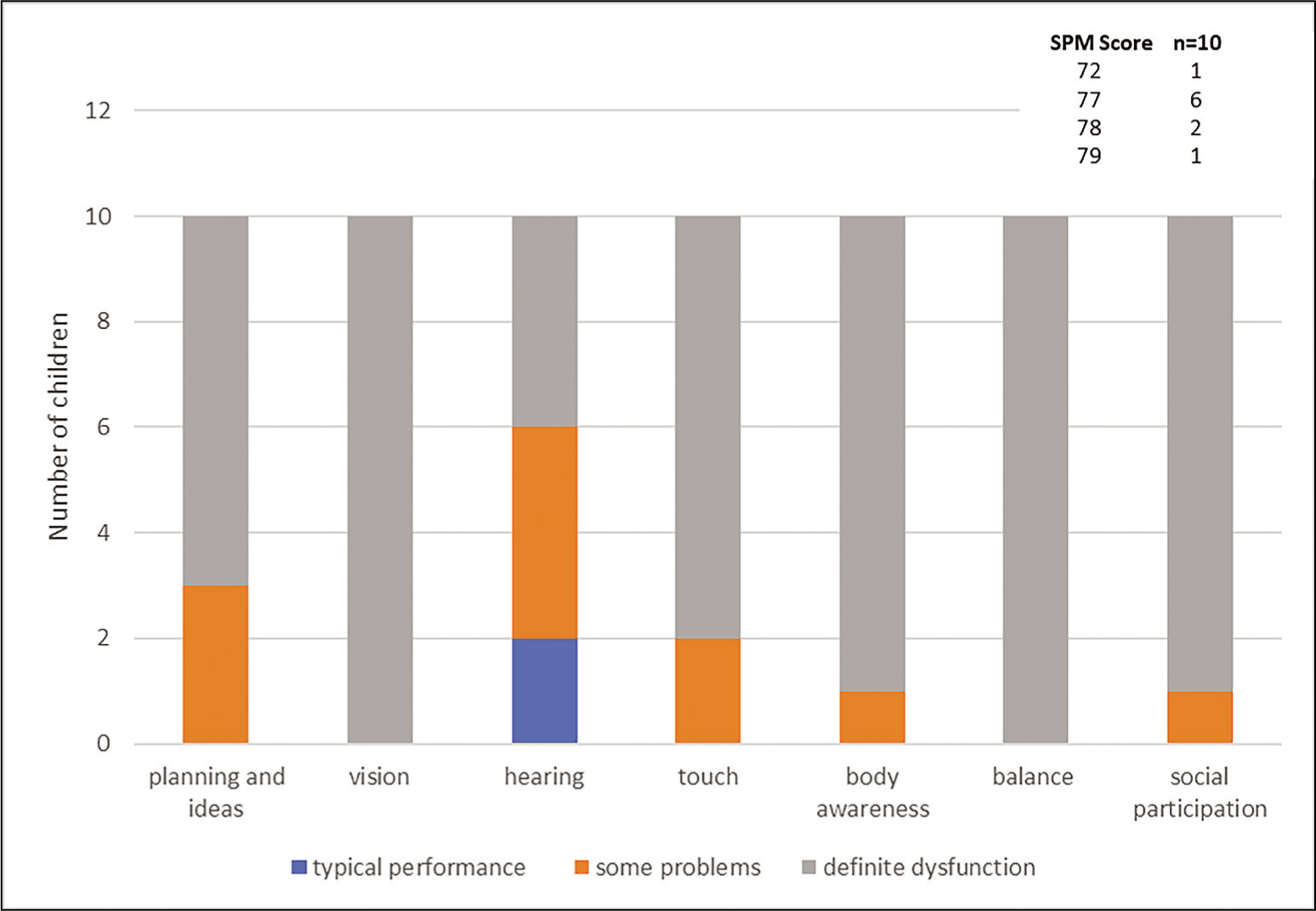
Ten parents of children with ASD enrolled in the study. There were six male and four female children with ASD in the age group ranging from four to nine years. Figure 1 illustrates the results obtained on SPM in the areas of social participation, vision, hearing, touch, body awareness, balance, planning & ideas. An individualised home programme was prepared based on these results.
Sensory profile of children with ASD
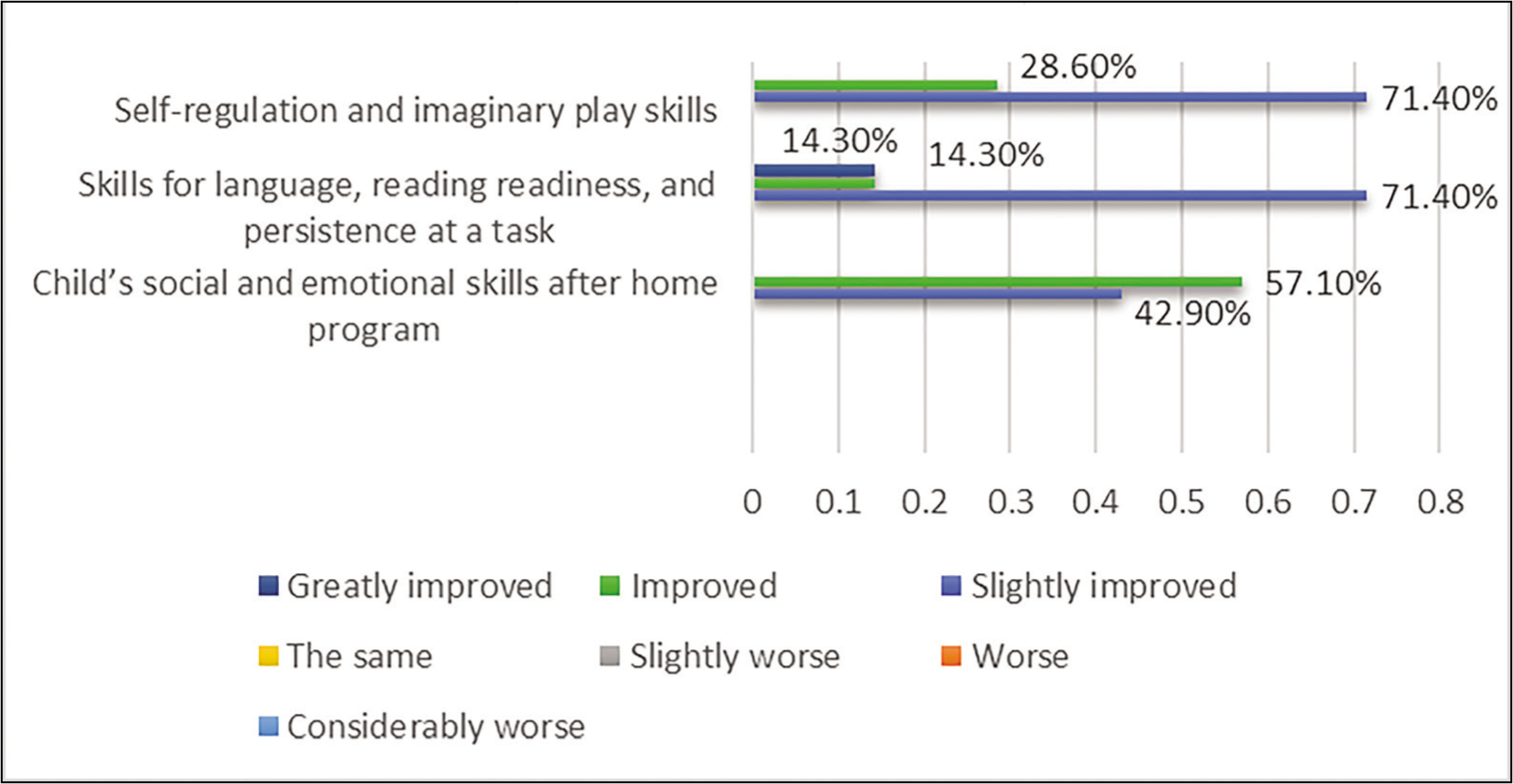
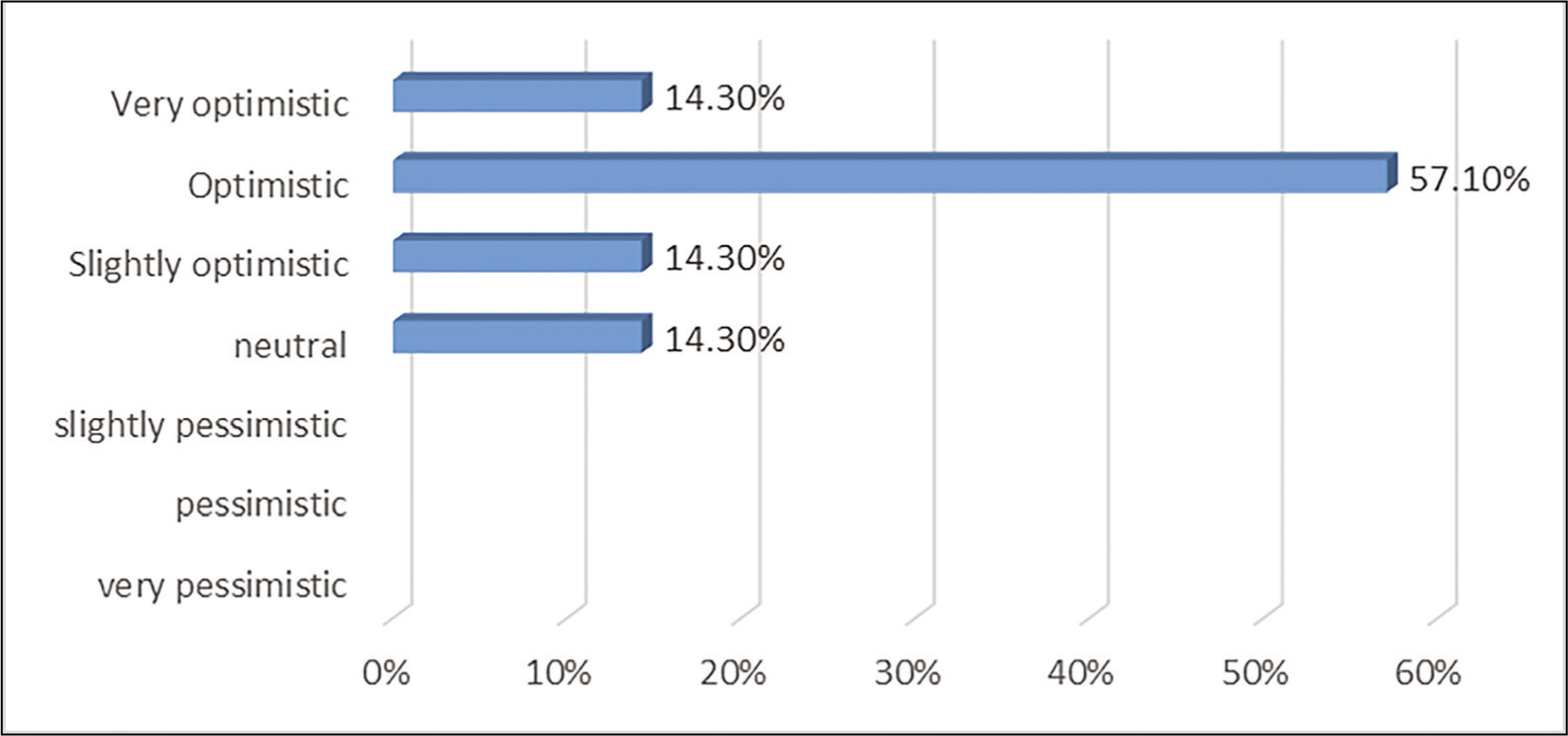
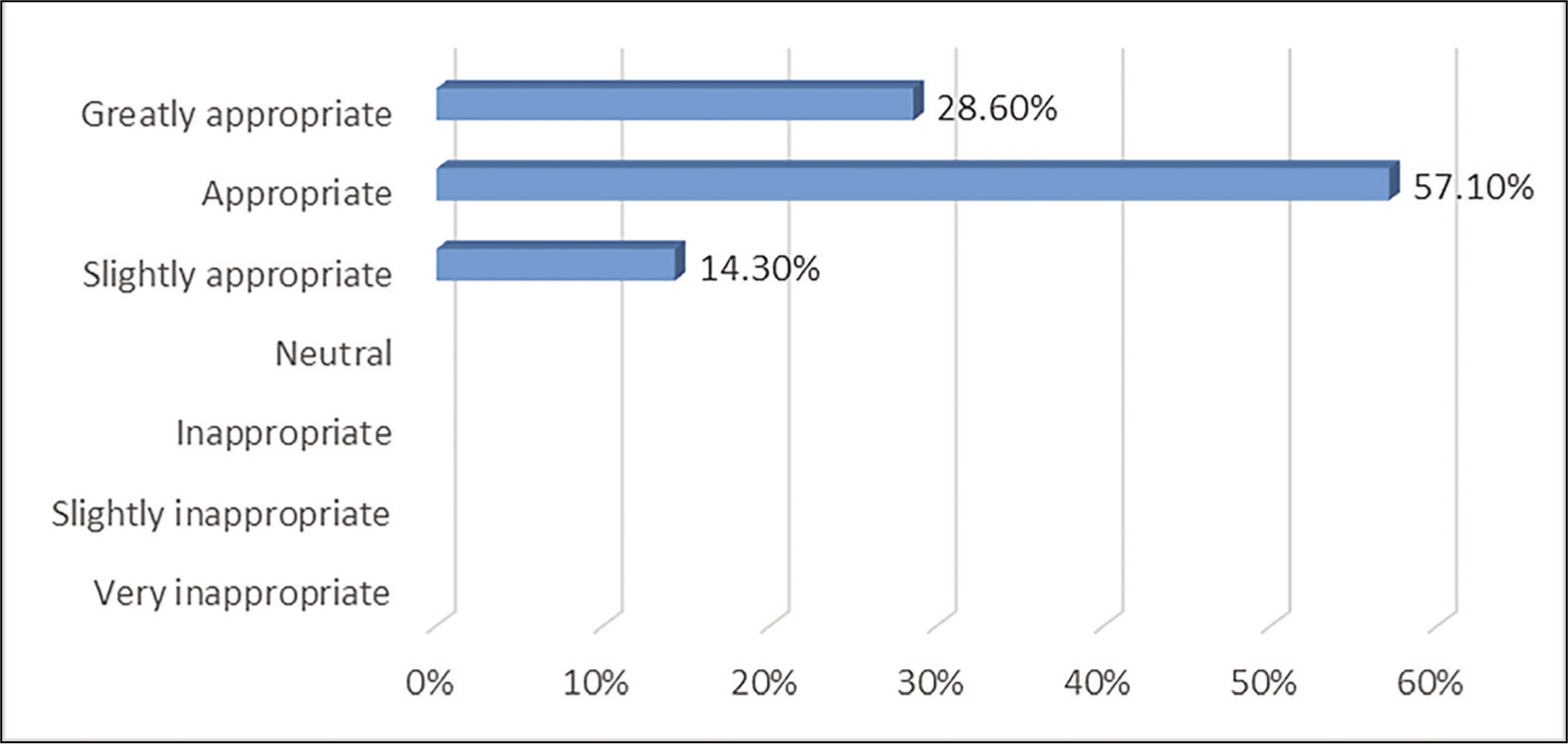
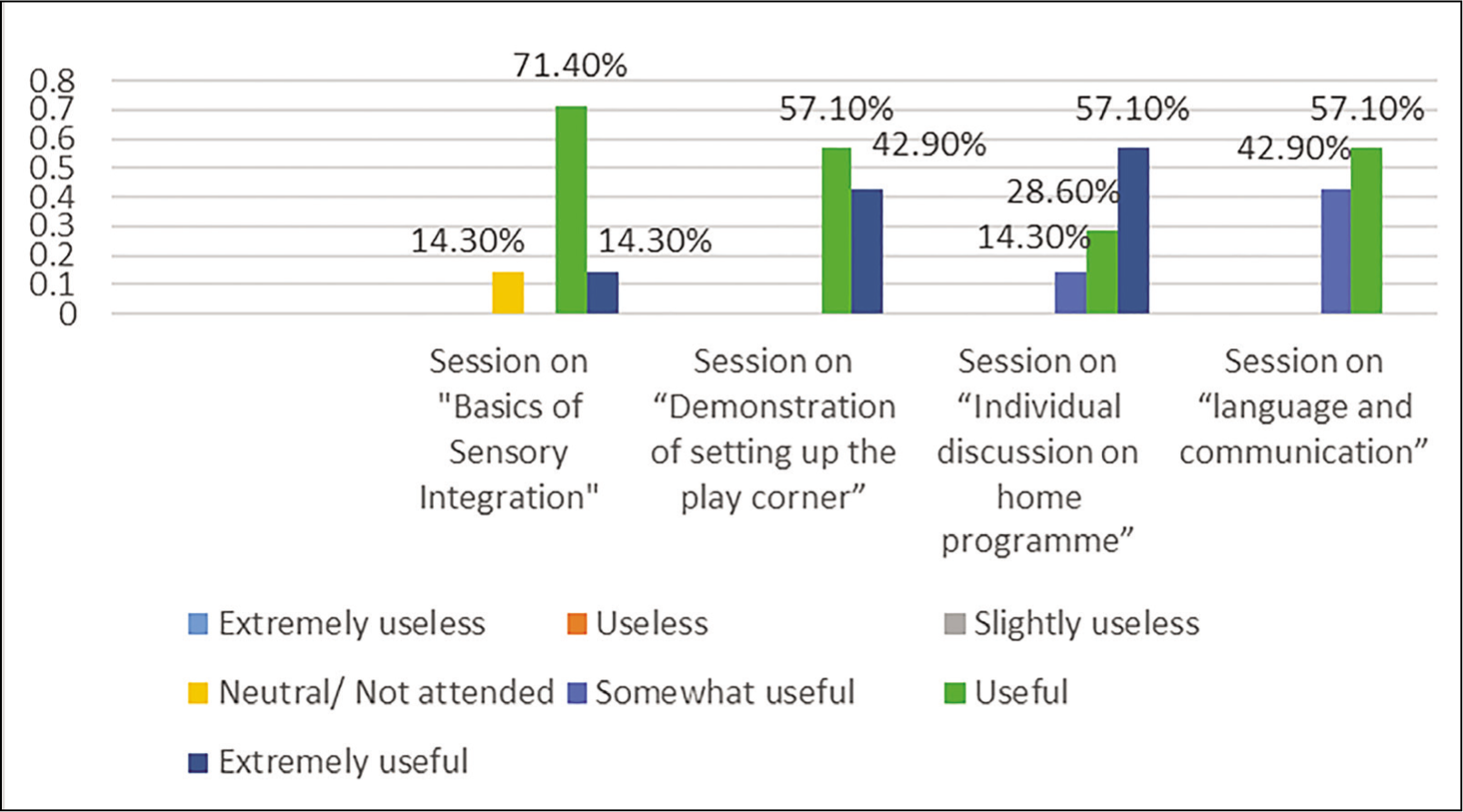
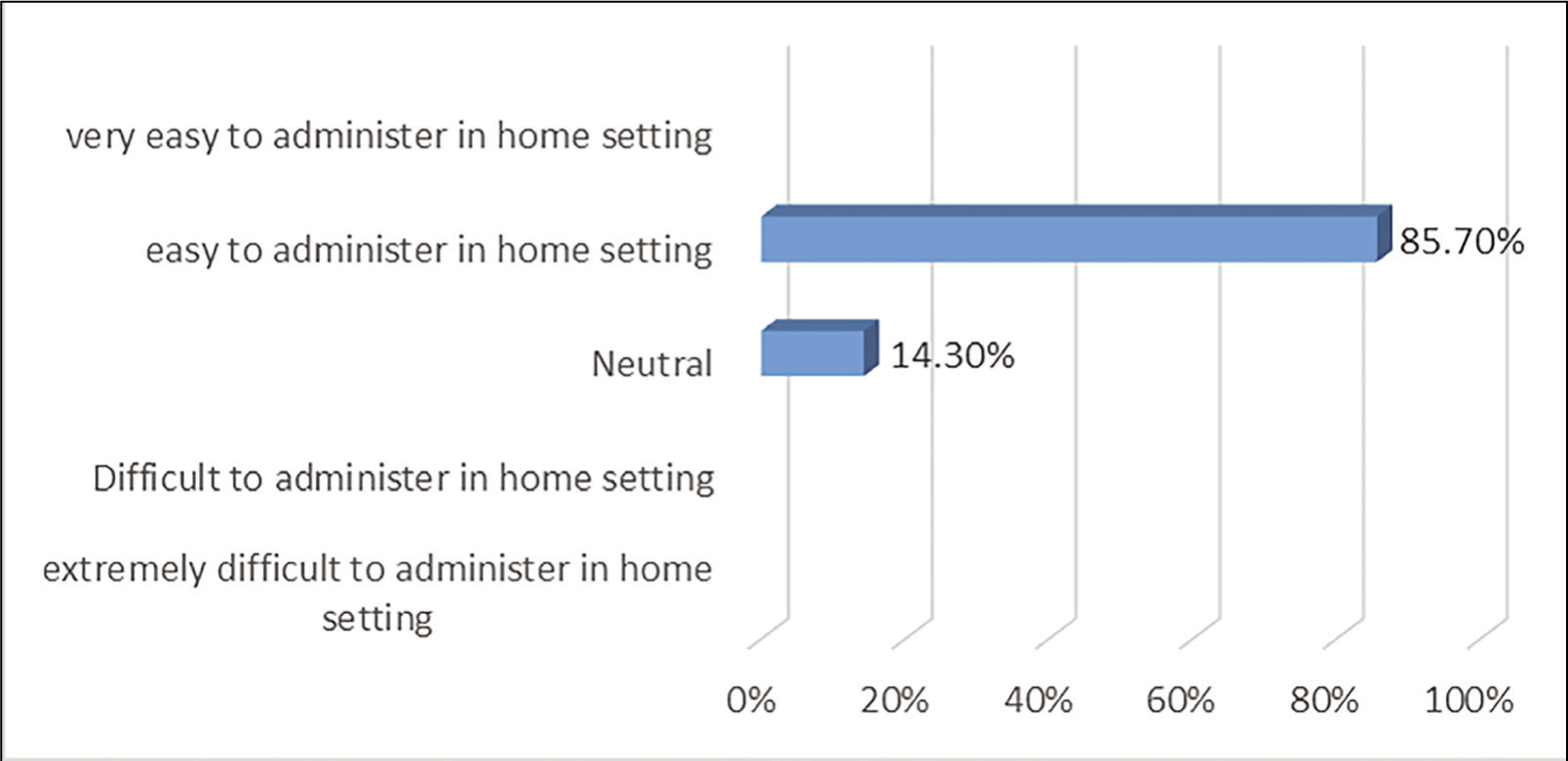
Feedback was obtained 6 months after implementing the parent-mediated interventions. Individual responses for improvement in child’s social and emotional skills, pre-academic skills for language, reading readiness, and persistence at a task as well as child’s self-regulation and imaginary play skills were reported to be improved by nearly all parents out of which 28.6% parents reported great improvement [Figure 2]. Nearly 88% parents expressed that they could administer the online autism home programme confidently [Figure 3]. The approach used to strengthen child’s social and emotional behaviours in the programme was appropriate as reported by 85% patients [Figure 4]. Session on demonstration of setting up the play corner & individual discussion on home programme was liked the most by parents amongst all the sessions [Figure 5]. The overall teaching format was well-perceived by all parents. The home programme could be easily administered at home as reported by 85% of the parents [Figure 6].
Behaviour and skill changes following online home programme
Overall programme rating in terms of improvement in confidence of caregiver
Approach used to strengthen child’s social and emotional behaviours in this programme
Individual session feedback
Perceived applicability of programme in terms of ease of administration
Most of the parents expressed need for a greater number of follow-ups and goal-directed programme or some activity to boost parent’s confidence in response to open-ended questions. In response to the question on the need for additional parenting assistance, one parent replied ‘Yes. We want to go through the programme again. We want to revisit home programme for updated play area and home activities’. While other one mentioned ‘No. I take care of my child with the help of your guidance’.
When asked about the main benefit of the online support programme following responses were obtained.
‘At the time we were stressed, during COVID, it helped us in helping our kids’.
‘Educating parents themselves’.
‘Encouragement and use of minimal setup for child development’.
‘During pandemic situation, this online programme helps us a lot…This programme teaches us how we can handle independently child’s tantrums, Hyperactiveness…Day by day we can understood our children’s need and lot more..’.
‘Sensory integration programme is more beneficial for me’.
‘Managing hyperactivity. Improvement in Sitting tolerance. Attentions also improving. Improvement in communications. Still nonverbal but slightly sign language improvement is there’.
Discussion
Addressing challenging behaviours in children with ASD requires a personalised approach, understanding the underlying causes, and implementing consistent strategies to support their development and well-being.[8] Working together with professionals and using evidence-based interventions can help improve outcomes and quality of life for children with ASD and their families. The COVID-19 lockdowns presented unique challenges for individuals with ASD exacerbating existing behaviours and introducing new ones due to disruptions in routine, increased stress and anxiety, and changes in social and sensory environments.
Marino et al suggested three ways to tackle the needs through support programmes such as informative training or parent support, providing skills and techniques to cope with ASD symptoms and psychological support programmes.[9] Here are some of the key experiences and insights that emerged from our study.
Adapting to remote services: Caregivers had to quickly adapt to online interventions and therapy sessions due to restrictions on in-person services. This shift required learning new technologies and creating suitable environments at home for therapy sessions.
Managing behavioural challenges: Children with autism often face difficulties adjusting to changes in routine and the lack of face-to-face interaction with therapists. Caregivers had to manage behavioural challenges and find alternative ways to keep their children engaged and calm during sessions.
Increased caregiver responsibility: With in-person support limited, caregivers took on more responsibility for implementing therapy techniques and strategies at home. This included learning specific intervention techniques and finding ways to incorporate them into daily routines.
Emotional and mental health impact: The pandemic added stress and uncertainty, which could affect both caregivers and children.
Support networks and resources: Access to support networks and resources became crucial. Caregivers can seek online communities, virtual support groups, and professional guidance to navigate challenges and share experiences with others in similar situations.
Individualised approaches: Caregivers found that adapting interventions to suit their child’s individual needs was essential. This meant tailoring activities, schedules, and therapy approaches based on their child’s strengths and challenges.
Technological challenges: While online interventions offered continuity of care, technological issues such as internet connectivity problems or difficulty using video platforms could disrupt sessions and add to caregiver stress.
Long-term impact and adaptation: In the scenario of a continued pandemic long-term strategies and adjustments to support the child’s development and well-being necessitate exploring hybrid models of therapy as restrictions eased.
These interventions help in improving the caregiver´s confidence in supporting the child and providing appropriate care.[10]
The COVID-19 pandemic imposed complete lockdown all over the world by March 2020. The lockdown led to drastic negative effects on the social and communicative life of people and worsened the difficulties of caregivers and children with a disability further. Studies aiming to investigate the effect of lockdown on Indian children with ASD revealed a significant regression in performance of children post-lockdown leading to an increase in hyperactive behaviour, sleep issues, which were not very prominent before lockdown. Changes in scheduled routines, led to increase in repetitive behaviour, and a loss of social engagement, during the lockdown.[11]
Parent-mediated therapy gives children with ASD consistent reinforcement and training throughout the day and reduces the challenging behaviours during lockdown situations.[12] The online mode of the programme helped parents to receive individual support by the specialists for administration of appropriate interventions with material available at home and the results showed it to be beneficial during COVID-19 lockdown. There is an emerging need to facilitate these interventions to support families of children with autism.
Footnotes
Acknowledgements
The study has been presented as Scientific Poster at 77th Annual Meeting of American Academy of Cerebral Palsy and Developmental Medicine (AACPDM) held in September 2023 at Chicago USA.
Declaration of conflicting interests
The authors declared no potential conflicts of interest with respect to the research, authorship and/or publication of this article.
Funding
The authors received no financial support for the research, authorship and/or publication of this article.
Institutional ethical committee approval number
IEC/Pharmac/2022/336.
Credit author statement
Concept and data collection: Dr Urmila Dahake.
Analysis and research paper writing: Dr Urmila Dahake, Dr Shikha Jain, Dr Abhijit Choudhary, Dr Akash Bang, Dr Meenakshi Girish
Data availability
Data is available with the first author.
Use of artificial intelligence
None.
Institution where the work was performed
All India Institute of Medical Sciences, Nagpur, Maharashtra, India.