




Abstract
Urban livability plays a crucial role in fostering place attachment and behavioural intentions. This study aims to investigate the relationships between livability, place attachment, and behavioural intentions among the citizens of Isfahan City. The data collected through Likert scale questions was analysed using structural equation modelling (SEM). The results confirmed the multi-dimensionality of urban livability, encompassing six dimensions: urban security, convenience of public facilities, natural environment, socio-cultural environment, convenient transportation, and environmental health. Additionally, the SEM results revealed that place attachment mediates the effects of the six dimensions of urban livability on neighbourhood care: intention to stay, intention to support, and intention to recommend. Therefore, evaluating citizens’ perceptions can assist local governments in formulating appropriate policies to promote urban livability.
Introduction
We currently reside in the ‘urban century’, a period characterized by the dominant trend of urbanization. With over half of the global population residing in urban areas, this trend continues to escalate rapidly (Liu et al., 2017). While this urban development can yield positive outcomes such as improved infrastructure, it also brings forth social, economic, environmental, and physical challenges. These challenges encompass issues such as increased crime rates, air pollution, and traffic congestion, which adversely impact human well-being, environmental quality, and overall daily life in cities (Alijani et al., 2020; Fu et al., 2019; Lee, 2021; Saitluanga, 2014; Zanella et al., 2015). Consequently, urban residents may seek refuge in suburban areas, leading to population decline within cities and subsequent problems. To ensure the long-term sustainability of cities, local governments must prioritize livability to retain their populations (Lee, 2021). Moreover, a low-quality urban environment can engender adverse consequences, including decreased neighbourhood protection, reduced place attachment, diminished support for conservation measures, and decreased willingness to recommend the city to others. Hence, urban livability demands considerable attention.
Urban livability encompasses a multidimensional concept embodying the quality of life experienced by individuals within a city or region (Wang & Miao, 2022; Yang et al., 2021). Consequently, today, the pursuit of an individual’s life has shifted from mere economic enhancement to an emphasis on enhancing quality of life. The construction of livable cities has become a global endeavour (Pan et al., 2020), with international agreements like the New Urban Agenda (NUA) and Sustainable Development Goals (SDGs) spotlighting the enhancement of urban life quality. These agreements address various natural and social challenges in cities, including resilience against natural disasters, air pollution, climate change, access to clean water, public health, and equitable access to public spaces. However, it is vital to recognize that achieving these goals requires substantial and ongoing efforts beyond the initial agreements (Kovacs-Györi et al., 2020).
While numerous studies have assessed livability and explored the relationships between livability, attachment, and behaviour, several research gaps persist. One of the factors influencing the behaviour of citizens is the level of satisfaction with the quality of life/livability. However, the term ‘livability’ is often used in different ways by different groups, and there is no single standard for assessing it. The concept of livability itself lacks a clear and comprehensive description. This creates a challenge in accurately understanding its influence on behaviour (Kashef, 2016; Wang & Miao, 2022; Zanella et al., 2015). Another factor that can impact behaviour is place attachment, which refers to the emotional bond between individuals and a specific place. This attachment can result in positive behaviours such as revisiting and recommending the place. However, there is still ongoing research and uncertainty about the relationship between place attachment and loyalty. Different perspectives exist in academic research suggesting that place attachment can be an antecedent of loyalty, has no effect on loyalty, or is even a consequence of loyalty. The existing literature lacks consensus on this matter (Zou et al., 2022). Most studies examining these variables have focused on the relationship between satisfaction, place attachment, and behavioural intention. However, ignoring other relevant factors can lead to biased results and incorrect conclusions. The integration of these concepts into a single model is rare, and there is limited empirical evidence on the direct and indirect relationships between satisfaction, place attachment, and behavioural intention. To address these research gaps, the present study considers livability as a second-order factor comprising six dimensions: urban security, convenience of public facilities, natural environment, socio-cultural environment, convenient transportation, and environmental health. Based on the ‘cognition-attitude-behaviour’ model and the ‘cognition-affect-behaviour’ (C-A-B) model, the researchers designed a model presented in Figure 1. In the C-A-B model, cognition influences affect, which in turn influences behaviour. Human emotion acts as a mediator between cognition and behaviour (Kuo et al., 2021).
Conceptual Framework.
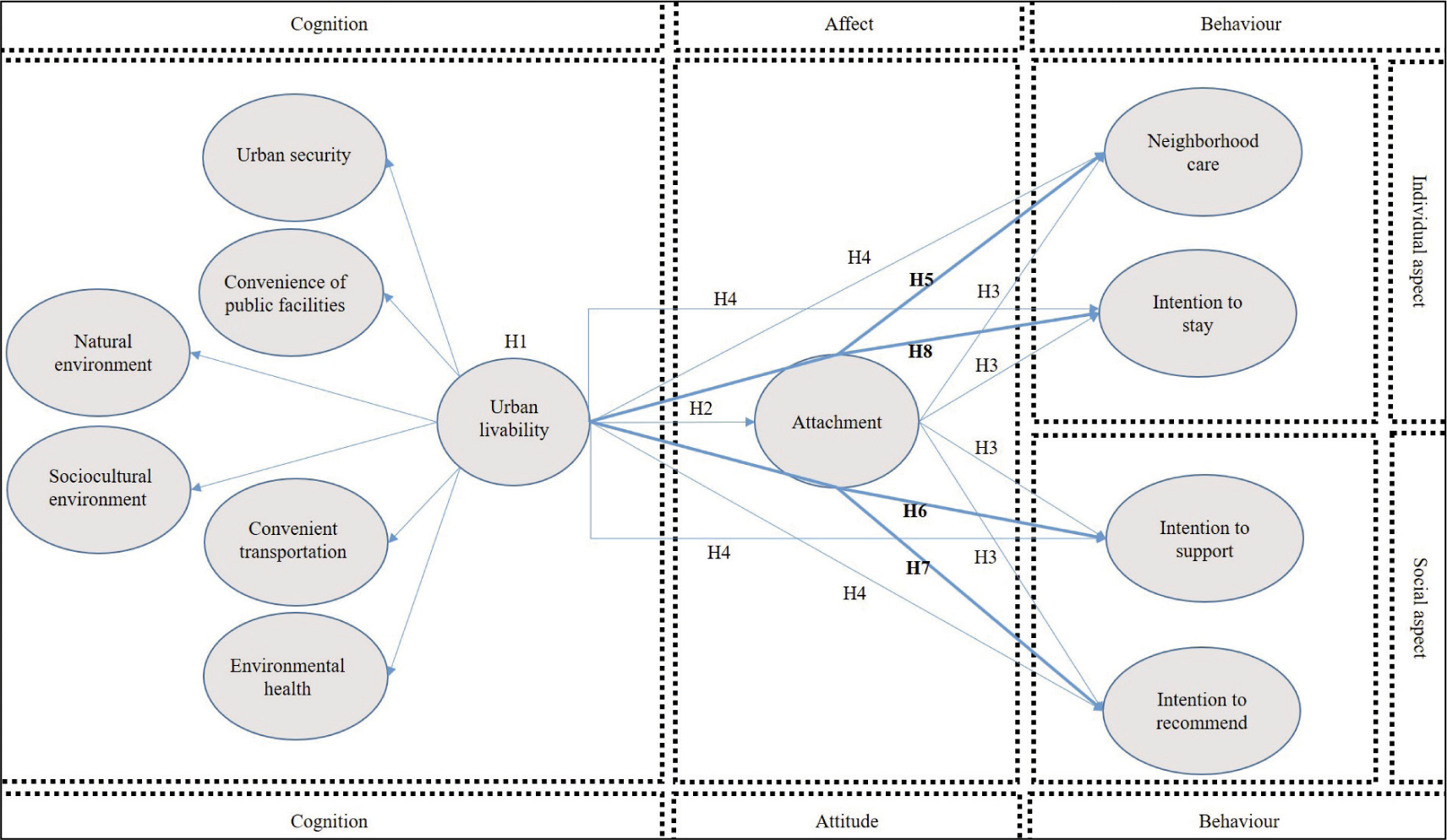
In this study, livability is viewed as residents’ cognitive responses towards a community, place attachment as their emotional responses, and staying, supporting, performing protection measures, and suggesting, as their behavioural responses. The aim is to investigate the relationships between livability, place attachment, and behavioural intentions (Li et al., 2022).
Livability and Attachment to Place
Urban livability is a prominent subject of research in urban science, encompassing various dimensions such as inclusiveness, safety, convenience, comfort, and accessibility (Pan et al., 2020, 2021). Evaluating urban livability involves both objective and subjective indicators at different spatial scales (Mouratidis & Yiannakou, 2022). Numerous studies have explored the connection between quality of life/livability and attachment to place. In a study conducted by Lee and Jeong (2021), the relationships between residential environmental satisfaction, social capital, and place attachment were examined. This study surveyed 750 residents of Seoul, Korea, and found that residential environmental satisfaction positively influences place attachment, with accessibility exerting the greatest impact. Another study developed a conceptual framework linking place satisfaction, authenticity, dimensions of place attachment, and cultural behavioural intentions. Although empirical evidence was lacking, the model proposed that tourist place satisfaction has a positive effect on each dimension of place attachment (Ramkissoon, 2015).
Investigating the causal relationships between interpretation service satisfaction, place attachment, environmental attitudes, loyalty to the destination, and the perceived value of ecotourism, another research found that satisfaction with interpretation service positively affects the balance of nature and place attachment (Cui et al., 2019). Additionally, festival quality was examined in relation to place attachment and destination recommendation. The study concluded that festival quality predicts festival experience, which in turn significantly influences festival satisfaction, destination recommendation, and place attachment (Culha, 2020). Yet another study focused on festival satisfaction, dimensions of place attachment, and dimensions of loyalty to the destination. Satisfaction with the festival was found to predict place attachment, particularly place identity/social bonding and place dependence. However, not all dimensions of place attachment significantly predicted destination loyalty, with place dependence negatively affecting revisit intention (Lee et al., 2012).
In the analysis conducted by Kim and Park (2018), the relationships between commercial activities, social bonding, satisfaction with commercial infrastructure, satisfaction with commercial quality, and place attachment were examined. While positive and significant effects were observed between commercial activities and social bonding on both sites, the relationship between commercial activities and place attachment was significant only in Lancry. Satisfaction with neighbourhood facilities also positively affected place attachment, but satisfaction with commercial infrastructure and quality did not exhibit significant relationships with commercial activities.
Some studies have established a two-way link between attachment to place and residential satisfaction. For example, a research conducted by An et al. (2021) found a strong relationship between attachment to place and residential satisfaction in suburban and mountainous communities. Despite numerous measurements of livability and investigations into its relationship with place attachment, several gaps in the research background remain. These include the absence of a consensus on measuring urban livability (Liang et al., 2020), limited consideration of residents’ subjective evaluations of the urban environment (especially in developing countries) (Ogneva-Himmelberger et al., 2013; Zhan et al., 2018), insufficient attention to the components of residential environments (Lee & Jeong, 2021), and contradictions regarding whether place attachment precedes satisfaction or vice versa (Prayag & Ryan, 2012).
In light of these gaps, the current research aims to investigate the relationship between livability (comprising the second-order factors of urban security, convenience of public facilities, natural environment, socio-cultural environment, convenient transportation, and environmental health) and attachment to place.
Hypothesis 1: Livability is a second-order factor (urban security, convenience of public facilities, natural environment, socio-cultural environment, convenient transportation, environmental health).
Hypothesis 2: Livability has a positive and significant effect on place attachment.
Place Attachment and Behavioural Intention
Place attachment has gained recognition in tourism and environmental psychology, yet its role in predicting place-related behaviours has received less attention compared to constructs like place satisfaction (Chen & Dwyer, 2018). Place-related behaviours can range from retention and ambassador behaviour to word-of-mouth recommendations, participation in tourism development, environmentally responsible actions, and civic engagement (Chen & Dwyer, 2018). Several studies have explored the relationship between place attachment and behavioural intention, providing valuable insights.
Hidalgo et al. (2021) discovered a positive and significant relationship between neighbourhood attachment and neighbourhood care, although the strength of this relationship was not particularly strong. Another study (Hosany et al., 2020), surveying 410 prospective Spanish tourists investigated the predictors of visit intention, hypothesizing that ad-evoked positive affect, place attachment, and motivation would play a role. In a study by Prayag et al. (2018), a conceptual model was tested, suggesting that place attachment, overall attitude, and tourist motivation were significant predictors of tourists’ intentions to recommend a destination. The results demonstrated that tourist motivation had a positive relationship with overall attitude and attachment to the place. These were significant predictors of recommendation intention, and a strong positive relationship existed between overall attitude and place attachment. However, no significant relationship was found between tourist motivation and intention to recommend.
Another research (Shen et al., 2019) aimed to explore the relationships between image of place, attachment to place, attitude towards tourism, and pro-tourism behavioural intention. The study utilized 370 valid questionnaires from residents of Huangshan, China, and the findings indicated that residents’ attitudes towards tourism positively influenced their pro-tourism behavioural intentions. Residents’ place image was positively associated with attitude towards tourism and place attachment, while place attachment was related to pro-tourism behavioural intention. Place attachment also served as a positive mediator between place image and pro-tourism behavioural intention, although a direct positive relationship was not supported.
However, some studies have not found a significant relationship between attachment to place and behaviour. For instance, a study by Chen and Dwyer (2018) examined the effects of place satisfaction and place attachment on residents’ place-related behaviours, specifically destination brand-building behaviours. The data collected from 358 residents of Sydney, Australia, did not reveal a significant impact of interactive place attachment on retention.
It is worth noting that most studies analysing the relationship between place attachment and behaviour have primarily focused on natural environments, and there is a scarcity of research specifically addressing behaviour related to the care and preservation of urban spaces (Hidalgo et al., 2021). Consequently, the present research aims to investigate the relationship between attachment and behavioural intention within the urban environment, building upon the existing body of knowledge.
Hypothesis 3: Place attachment has a positive and significant effect on behavioural intention.
Livability and Behavioural Intention
While attempts have been made in the relevant literature to differentiate between livability and quality of life, some studies use the term livability instead of quality of life due to the inclusion of common indicators in their assessment (Zanella et al., 2015). Since 1966, when the United Nations introduced the concept of urban livability, researchers worldwide have conducted practical and theoretical research on the development of livable cities (Hao et al., 2021). Given this research background, behavioural intention is identified as one of the factors that can be influenced by livability. The following studies shed light on the relationship between livability and behavioural intention.
Sharp and Warner (2018) found in their research that neighbourhood satisfaction significantly reduces the likelihood of both actual mobility and mobility expectations (Sharp & Warner, 2018). Wang et al. (2019) also stated in their research that residents who are more satisfied with their communities are less likely to move. This is supported by the negative coefficients obtained for both community attachment and residential satisfaction variables (Wang et al., 2019). However, other studies have yielded different results. For instance, Zhang et al. (2021) found no significant relationship between overall neighbourhood satisfaction and residential moving intention in any of their models (Zhang et al., 2021).
Another study explored the impact of satisfaction variables on willingness to relocate. The study revealed that neighbourhood satisfaction and job satisfaction have negative coefficients, indicating that as satisfaction with the neighbourhood and job increases, the inclination to move decreases. Interestingly, the coefficients obtained for satisfaction with the historical atmosphere and satisfaction with the economy were positive, contrary to expectations. However, it is important to note that no significant relationship was found between the latter four variables (neighbourhood satisfaction, job satisfaction, satisfaction with historical atmosphere, and satisfaction with the economy) and the desire to move (Jiang et al., 2019). Despite an increasing number of Chinese studies attempting to identify determinants of residential mobility, few researchers have explored the relationship between residential satisfaction and residential mobility (Jiang et al., 2017). Therefore, the present study investigates the effect of livability on the desire to stay. Furthermore, extensive literature has documented the influence of individuals’ environmental behaviour on their life satisfaction. However, little attention has been given to the inverse relationship between these two variables, specifically the effect of an individual’s life satisfaction on his/her environmental behaviour (Wang & Kang, 2019).
Hypothesis 4: Livability has a positive and significant effect on behavioural intention.
Hypothesis 5: The attachment to place variable partially mediates the relationship between the two variables of livability and neighbourhood protection.
Hypothesis 6: The variable of place attachment partially mediates the relationship between the two variables of livability and support.
Hypothesis 7: The variable of place attachment partially mediates the relationship between the two variables of livability and recommendation.
Hypothesis 8: The variable of place attachment partially mediates the relationship between the two variables of livability and intention to stay.
Methodology
Study Area
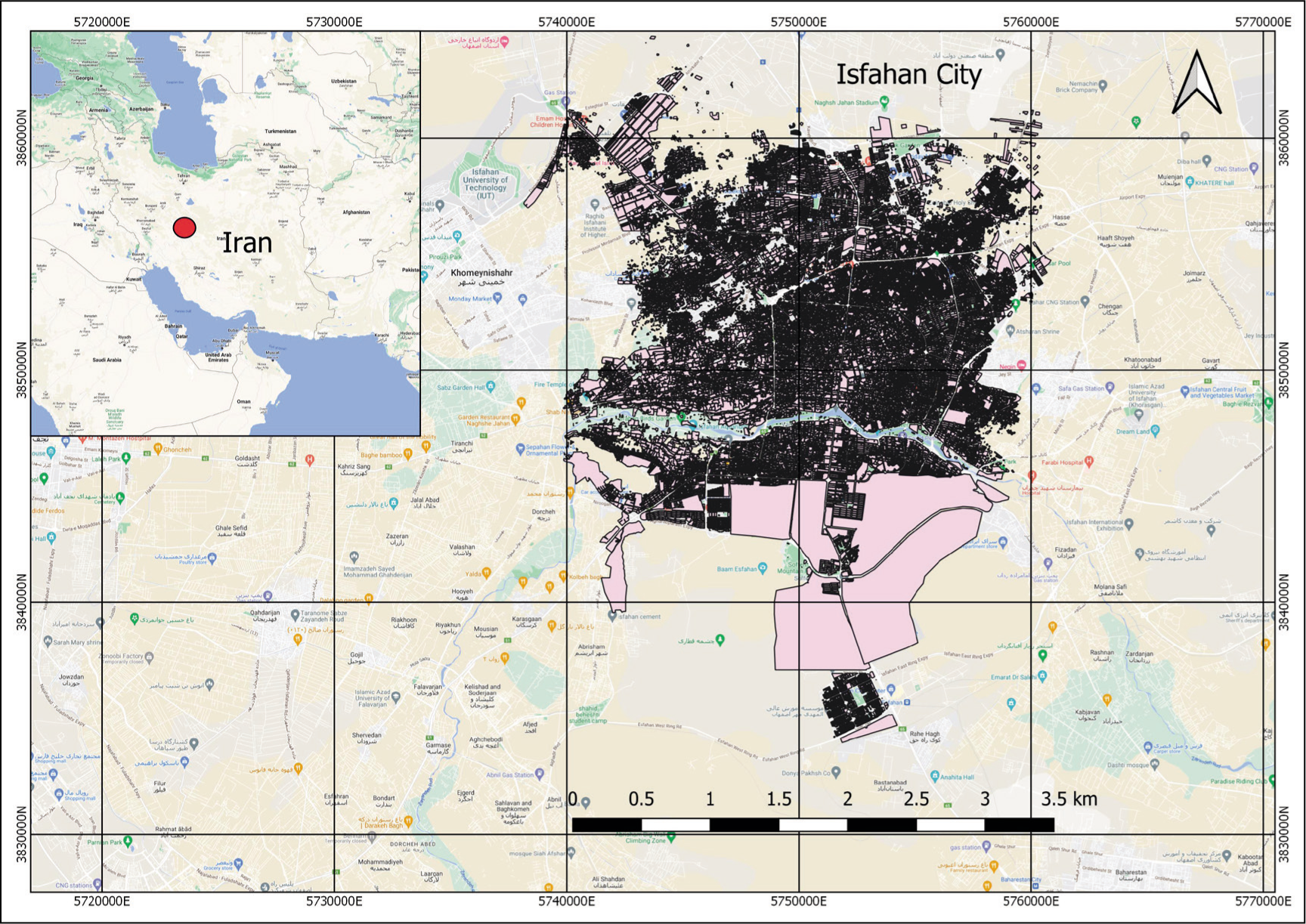
This study was conducted in the city of Isfahan, which is located in the central part of Iran and is the capital of Isfahan province. Isfahan is situated south of Tehran, and its geographical coordinates are approximately 59°39'E longitude and 32°38'N latitude. With a population of 1,961,260 people (Statistical Center of Iran), Isfahan is the third most populous city in Iran (Shirani-Bidabadi et al., 2019) (Figure 2).
Study Area.
Research Design
In the present study, data was collected using a combination of face-to-face and online surveys through snowball sampling. Before starting the questionnaire, the purpose of the research was explained to the respondents, and their written consent was obtained. The questionnaires were completed during 3 months (October to December 2022). It should be noted that those who had the following two conditions were eligible to answer the questions of the present questionnaire: (a) those who were at least 18 years old, and (b) those whose minimum residence period had been 6 months. The survey consisted of two main parts. The first focused on demographic questions such as gender, age, education, and others. The second part included questions related to ‘attachment to place’, ‘livability dimensions’ (urban security, convenience of public facilities, natural environment, socio-cultural environment, convenient transportation, and environmental health), and ‘behavioural intentions’ (neighbourhood care, intention to stay, intention to support, and intention to recommend). In this part, respondents indicated their level of agreement for each item on a scale ranging from strongly disagree (1) to strongly agree (5). The items used in the survey were adapted from previous research studies (Chen et al., 2019; Hidalgo et al., 2021; Hosany et al., 2017; Jeong et al., 2019; Jin, 2017; Shaykh-Baygloo, 2020; Zhan et al., 2018). For participant selection, a quota sampling strategy was employed in this research. It should be noted that quota sampling may not provide a fully representative sample of the population, but it offers a cost-effective and time-efficient approach (Iliyasu & Etikan, 2021). The questionnaires were distributed in various locations, including residential areas, government offices, and institutions, as well as restaurants and shops along the main commercial streets (see Table A1 in the Appendix A). A total of 400 questionnaires were completed. Following the removal of incomplete and invalid responses, 388 records were retained for further analysis.
Data Analysis
The collected data was analysed using SMART PLS and SPSS software. The data analysis was conducted in two main stages. First, descriptive statistics were employed to calculate the frequency of each response option for the demographic questions. This provided an overview of the participants’ characteristics. The second stage involved the use of SMART PLS software for structural equation modelling (SEM). SEM enables the simultaneous analysis of multiple independent and dependent variables. In the partial least squares approach (PLS-SEM) used in this study, two main steps were followed: checking the fit of the model and testing the research hypotheses. The first part, model fit check, consisted of three components: measurement model fit, structural model fit, and overall model fit. Initially, the reliability and validity criteria were examined to ensure the accuracy of the relationships within the measurement models, which assess the relationships between observed and latent variables. Subsequently, the relationships within the structural model, which evaluates the connections between latent variables, were examined and interpreted. In the final stage, the overall fit of the research model was assessed to determine how well it represents the data and aligns with the research objectives.
Results
Sample Profile
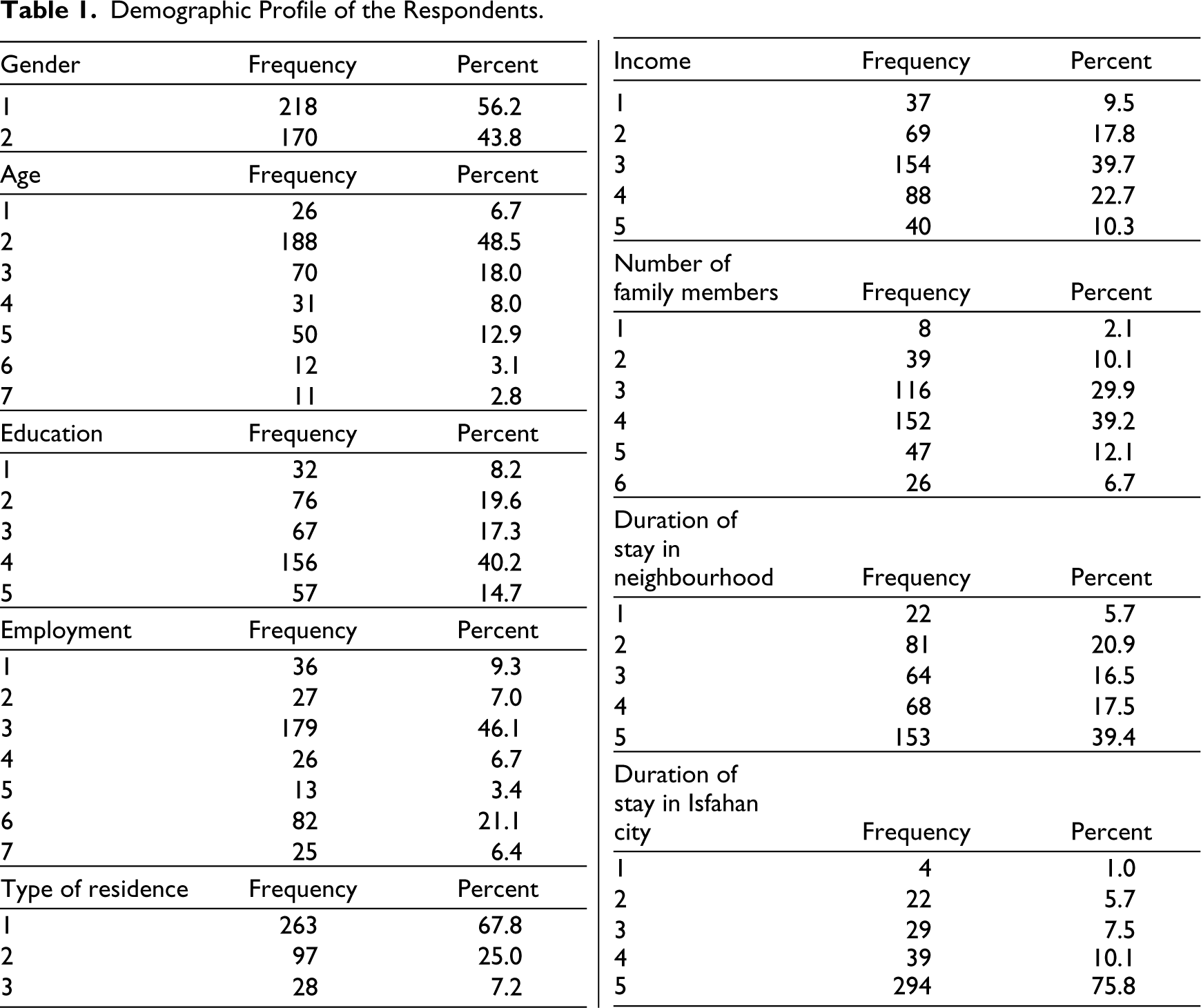
In the current research, the demographic characteristics of the respondents were examined (Table 1). Out of the total respondents, 218 (56.2%) identified as men, while 170 (43.8%) identified as women. When considering the age distribution, the age ranges of 20–29 years, 30–39 years, and 50–59 years exhibited the highest frequencies, accounting for 48.5%, 18.0%, and 12.9% of the respondents, respectively. Regarding the education variable, respondents were categorized into five groups: sub-diploma, diploma, post-diploma, bachelor’s, and post-graduate and above. Among these options, the highest frequency was observed for the bachelor’s category, representing 40.2% of the respondents. On the other hand, the sub-diploma option had the lowest frequency, accounting for 8.2% of the respondents.
Demographic Profile of the Respondents.
Measurement Model
To evaluate the fit of the measurement models, three criteria were utilized: reliability, convergent validity, and discriminant validity. Reliability was assessed through three methods: factor loadings, Cronbach’s alpha, and composite reliability. Cronbach’s alpha, a commonly used index for assessing internal consistency or reliability in a reflective measurement model, was employed. The minimum acceptable value for Cronbach’s alpha is typically set at 0.7. Another index called composite reliability, introduced by Werts et al. (1974), was also utilized. Composite reliability is considered superior to Cronbach’s alpha as it does not assume equal weights for the observed variables within each measurement model. Instead, it employs factor loadings to calculate reliability. The acceptable threshold for composite reliability is also set at 0.7. In the analysis presented in Table 2, it is observed that the minimum value obtained for Cronbach’s alpha exceeds the threshold of 0.70. Additionally, the composite reliability (CR) values for all constructs surpass the threshold value of 0.7. In this research, seven questions were excluded from the model due to their factor loadings being less than 0.4, which is the minimum acceptable value for factor loading.
Cronbach’s Alpha, rho-A, Composite Reliability, Average Variance Extracted (AVE), R-Square, and Q-Square.
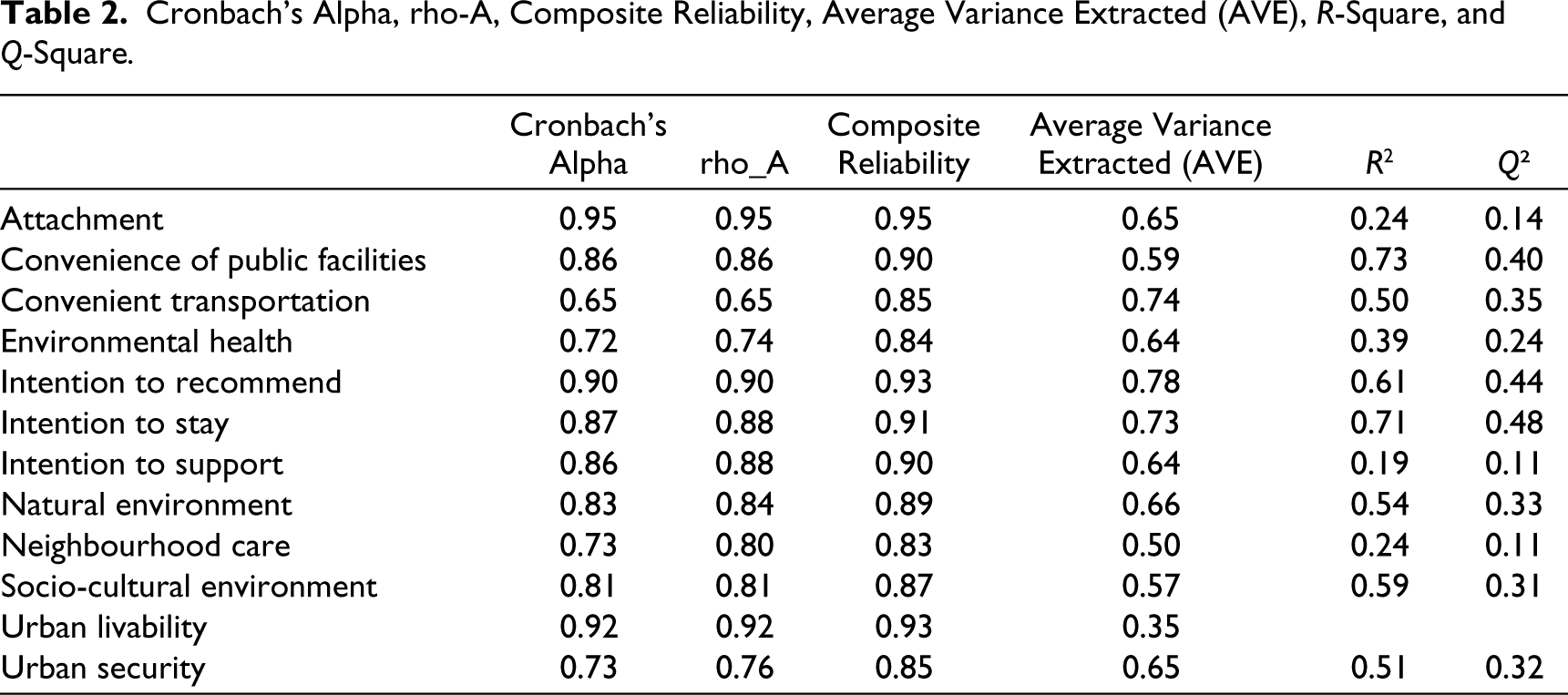
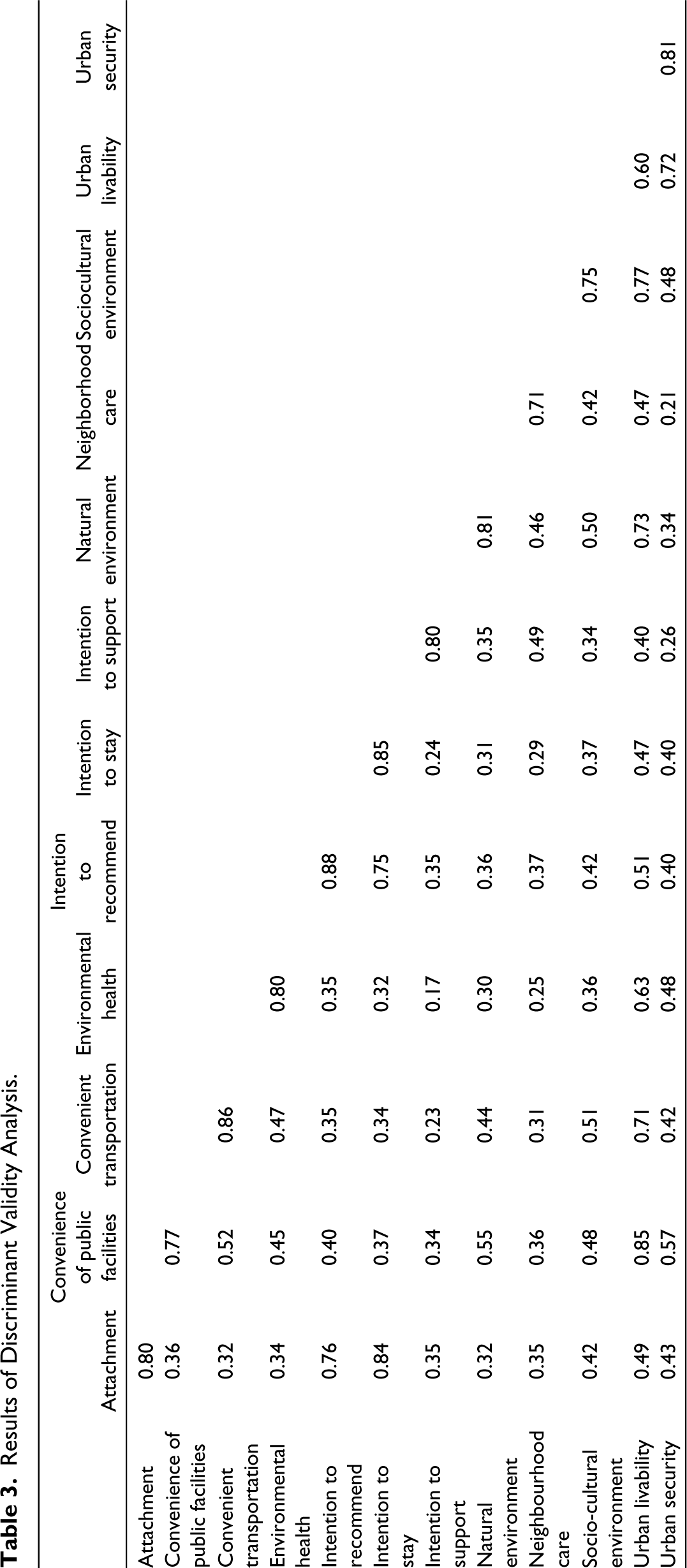
Convergent validity is the second criterion used to assess the fit of measurement models in the PLS method. Fornell and Larcker (1981) introduced the average variance extracted (AVE) criterion to evaluate convergent validity. The AVE represents the amount of variance captured by a construct through its indicators. AVE values of 0.4 or higher can be considered acceptable if the composite reliability for a specific component exceeds 0.6 (Rahman & Al-Emad, 2018). In PLS, discriminant validity is evaluated using a matrix where the cells contain correlation coefficients between constructs and the square root of their AVE values. Discriminant validity is considered satisfactory if the values along the main diagonal are higher than the other numbers in the matrix. As shown in Table 2, the AVE values for each latent construct in the study exceed 0.4. Additionally, all the criteria mentioned including composite reliability, AVE, and discriminant validity, demonstrate suitable values. Furthermore, the square root of the AVE for each latent construct is higher than the correlation values between the constructs themselves, as presented in Table 3. These findings confirm the reliability, convergent validity, and discriminant validity of the measurement model in the current study.
Results of Discriminant Validity Analysis.
Structural Model
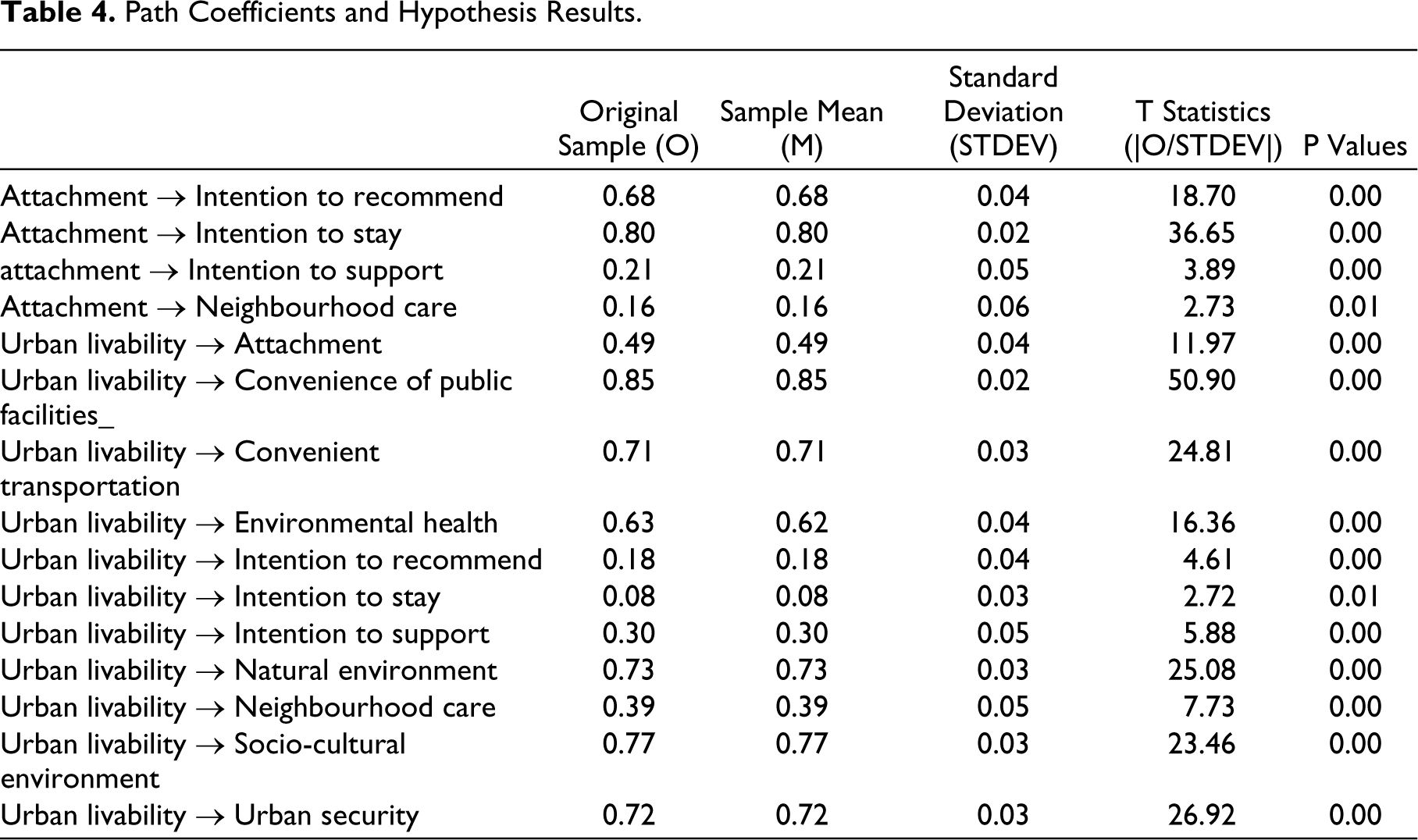
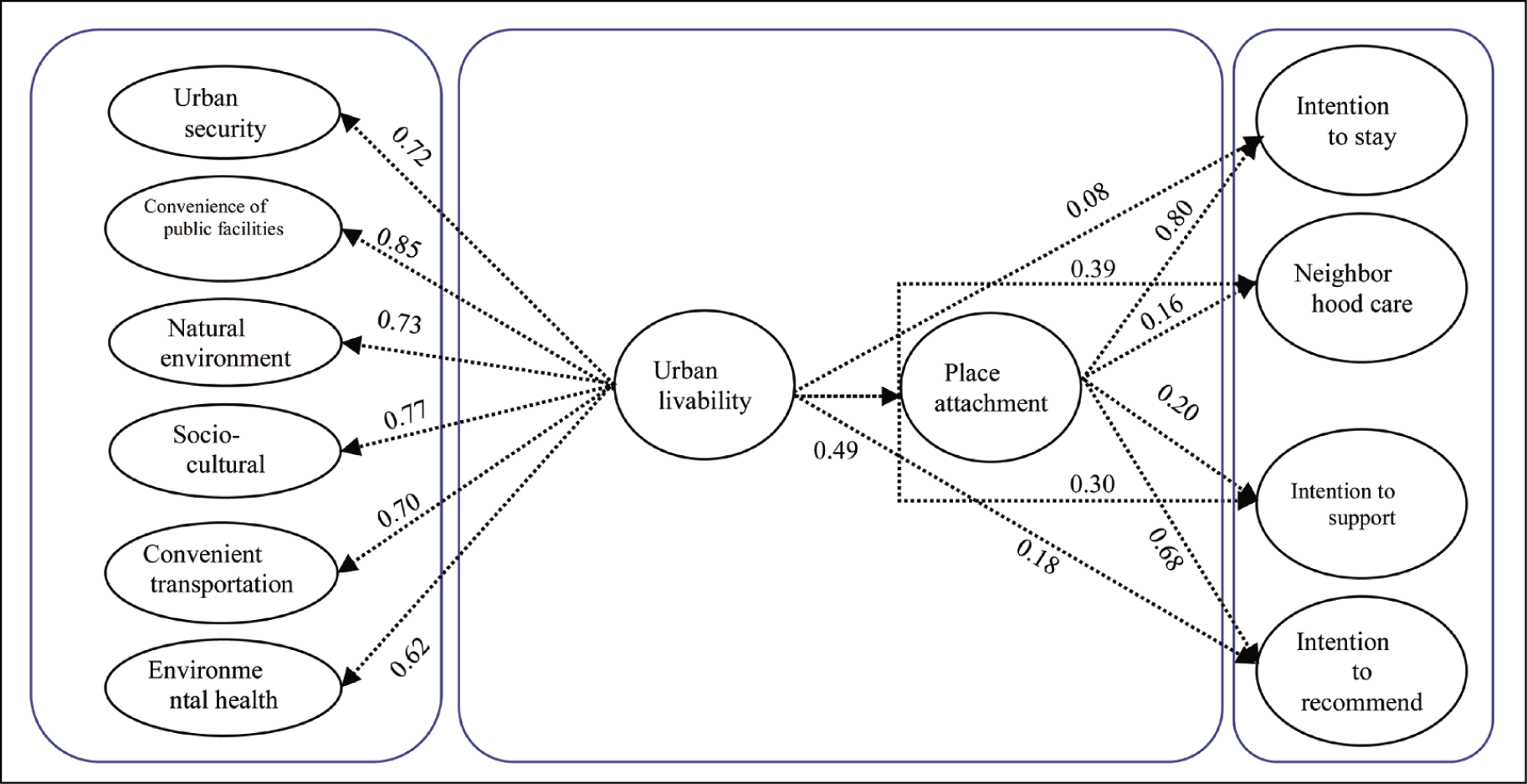
The first criterion used to assess the fit of the structural model is the significance coefficient. By referring to Table 4 and Figure 3, it can be observed that all significant coefficients exceed 1.96. This indicates that all relationships are statistically significant at the 99% confidence level. The second criterion for evaluating the fit of the structural model is the R2 criterion, which pertains to the dependent variables. Weak, medium, and strong R2 values are defined as 0.19, 0.33, and 0.67, respectively. Most of the endogenous variables in the model exhibit R2 values higher than the average criterion of 0.33, indicating a good fit for the structural model. The Q2 criterion assesses the predictive power of the model. Weak, medium, and strong predictive power values are indicated by 0.02, 0.15, and 0.35, respectively. To evaluate the fit of the overall model, a single criterion called the goodness of fit (GOF) is employed. Weak, medium, and strong GOF values are defined as 0.01, 0.25, and 0.36, respectively.
Path Coefficients and Hypothesis Results.
Structural Model.
Mediation Analysis of Place Attachment
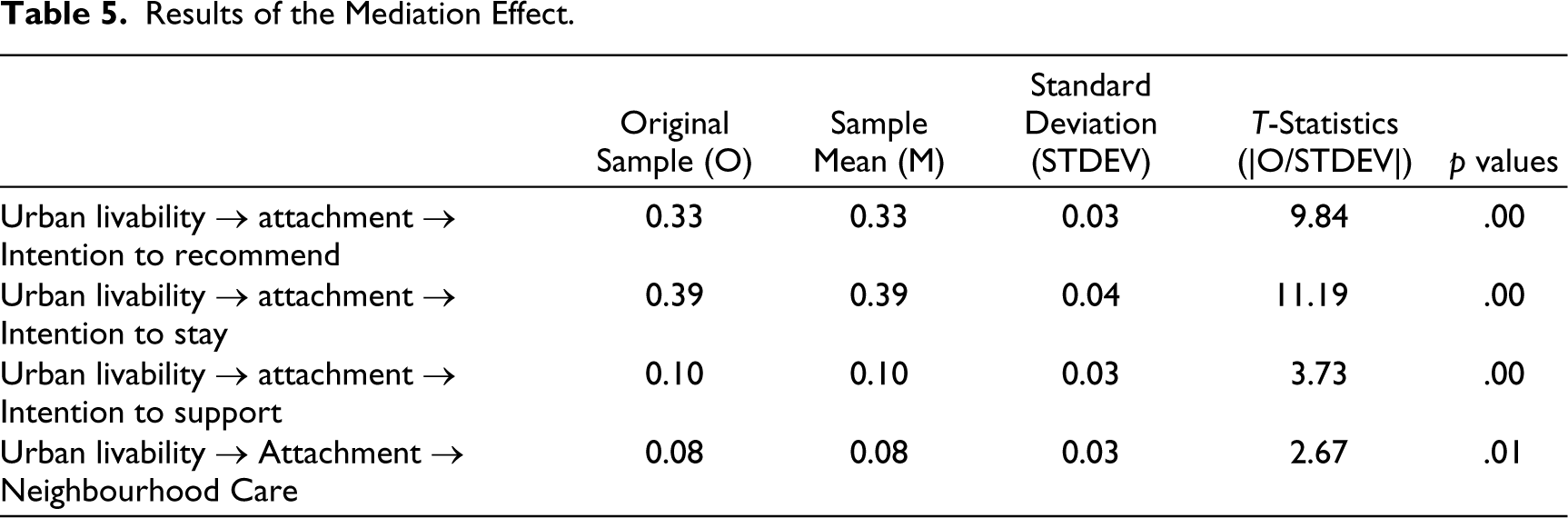
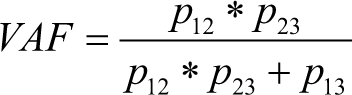
To enhance the analysis of this model, as seen in previous studies (Vinerean et al., 2021), a mediation analysis was employed. This research incorporates ‘attachment to place’ as a mediator within four path sequences. Specifically, we hypothesize that this construct mediates the relationships between ‘urban livability’ and the following variables: ‘willingness to stay’ (supporting Hypothesis 8); ‘neighbourhood protection’ (associated with Hypothesis 5); ‘inclination to support’ (reflecting Hypothesis 6); and ‘intention to suggest’ (linked to Hypothesis 7). All correlations between livability, attachment to place, willingness to stay, neighbourhood protection, willingness to suggest, and willingness to support are statistically significant in this study. Therefore, mediation analysis is applicable in all four cases. Additionally, the Variance Accounted For (VAF) value was calculated for each of the four path sequences using the following formula. It is worth noting that partial mediation is observed when the VAF falls between 20% and 80% (Sung et al., 2021) (Table 5).
Results of the Mediation Effect.
Discussion
This study developed a model based on the ‘cognition-attitude-behaviour’ theory and the ‘cognition-affect-behaviour’ model to examine the relationships among livability, place attachment, and behavioural intention. Livability was conceptualized as a second-order factor comprising six dimensions: urban security, convenience of public facilities, natural environment, socio-cultural environment, convenient transportation, and environmental health. Through empirical analysis, it was confirmed that these six dimensions accurately represent livability, supporting Hypothesis 1. Hypothesis 2 focused on the relationship between livability and place attachment. The results demonstrated a positive and significant influence of livability on place attachment. This finding suggests that citizens with a more positive attitude towards the various dimensions of livability exhibit a stronger attachment to the city. These results align with previous studies (Joaquim Araújo de Azevedo et al., 2013). Hypothesis 3 examined the relationship between place attachment and behavioural intention. The findings revealed a positive and significant impact of place attachment on each component of behavioural intention. In other words, individuals who have a higher level of attachment to the city of Isfahan are more inclined to engage in protective measures, support such initiatives, stay in the city, and recommend it to others. These results support previous research (Hidalgo et al., 2021). Notably, place attachment exerts the strongest influence on staying, suggesting, supporting, and taking protective measures, respectively. Hypothesis 4 explored the relationship between livability and behavioural intention. The results indicated a positive and significant effect of livability on neighbourhood maintenance, staying, suggesting, and supporting. Consequently, the perception of citizens regarding favourable aspects of livability is associated with a greater desire to stay in the city, recommend it to others, engage in protective measures, and support such efforts. These findings are consistent with prior research (Sharp & Warner, 2018). Additionally, the impact of livability on different components of behavioural intention varied. Specifically, livability had the greatest influence on carrying out protective measures, supporting protective measures, suggesting, and staying, respectively. Moreover, it is noteworthy that the impact of livability on place attachment is stronger than its impact on each component of behavioural intention.
Building on the findings, this study holds significant implications:
First, effective urban management in the city of Isfahan has the potential to significantly enhance citizens’ quality of life through systematic design and planning. As residents’ satisfaction with their living environment rises, so does their attachment to the city. Consequently, improved satisfaction and increased attachment can lead residents to engage in various behaviours, such as adopting protective measures, supporting initiatives, choosing to stay in the city, and recommending it to others.
Second, it is crucial to recognize that achieving livable cities requires a multifaceted approach in urban management. This entails not only directly addressing and mitigating negative factors but also employing innovative techniques to minimize their impact on citizens. For instance, urban management can implement noise reduction strategies and integrate elements like green spaces or water features to mitigate the effects of noise pollution on residents. Moreover, beyond addressing existing issues at the city level through infrastructure investment, city managers should embrace creative ideas and initiatives to propel both the city and its citizens forward. The cultivation of a high-quality urban environment strengthens the emotional bond between residents and their surroundings, thereby fostering positive behavioural intentions.
Lastly, these behavioural intentions extend beyond individual actions to encompass community-oriented behaviours such as proposing new ideas and supporting protective measures. The symbiotic relationship between residents’ emotional connection to the city and their behavioural intentions is pivotal in creating a thriving community and fostering a sense of collective responsibility.
Conclusion
In this study, livability as a second-order factor was operationalized, which comprised six dimensions: urban security, convenience of public facilities, natural environment, socio-cultural environment, convenient transportation, and environmental health. The key findings can be summarized as follows: (a) Livability, defined by these six dimensions, significantly and positively influences both place attachment and various components of behavioural intention; and (b) Place attachment also exerts a positive and significant influence on each component of behavioural intention.
While the study provides valuable insights, it is essential to acknowledge its limitations. First, the research focused solely on the city of Isfahan as a case study. Expanding similar investigations to other cities would contribute to a more comprehensive understanding of the subject. Additionally, future studies could enhance the model by incorporating additional components, such as exploring the impact of job opportunities and family ties on place attachment and behavioural intentions. Another limitation is the use of self-report measures to assess livability. Employing objective indicators in future research would enable a more objective evaluation of livability. Furthermore, the study treated livability as a second-order factor without examining the direct impact of each dimension on place attachment and the components of behavioural intention. Future studies could explore these direct relationships for a more nuanced understanding. It would also be worthwhile for future researchers to compare the attitudes of urban and rural residents concerning the criteria used in this study. Including rural areas and comparing urban and rural models could lead to a more comprehensive analysis. In such investigations, considering small towns and metropolises instead of solely focusing on cities and villages could provide additional insights.
Footnotes
Declaration of Conflicting Interests
The authors declare that there is no conflict of interest.
Funding
This research received no specific grant from any funding agency in the public, commercial, or not-for-profit sectors.