




Abstract
Internal migration has been a challenging issue for Vietnam in the past three decades, with swift industrialization and urbanization at the two ends of the country—the capital city, Hanoi, in the north and the largest city, Ho Chi Minh City, in the south. This study identifies the determinants of internal migration with a focus on the characteristics of Vietnamese households and the household heads, together with their living conditions. A logit model is used in our analysis in three scenarios: (a) the entire sample of 8,567 households, (b) a sub-sample of households in the rural regions and (c) a sub-sample of households in the urban regions using the latest 2020 Vietnam Household Living Standards Survey. Our empirical results indicate that migration decisions are strongly associated with the characteristics of the households and the household heads, including household income, size, age of the household heads and educational attainment. We also find that living conditions such as radiation and rainfall are inversely related to the decisions for internal migration in Vietnam, meaning that people living in locations with unfavourable rainfall are more likely to migrate to destinations with more favourable rainfall conditions.
Keywords
Introduction
Migration has been a common phenomenon in lower-middle income countries, particularly in low- and middle-income countries experiencing rapid growth and major structural changes (Kuhn, 20151). For example, VanWey (2005) notes that transitioning from an agricultural economy to an industrial economy involves labour movement out of the agricultural sector. Thus, these economic changes rapidly increase the out-migration process from rural to urban areas in lower-middle income countries (Todaro, 1969). This includes a decline in investment and consumption in less developed places, poor use of residential infrastructure and the loss of a highly skilled and innovative labour force in original places (Gray & Bilsborrow, 2014; Mendola, 2012; Mlambo, 2018). These factors limit the potential for developing rural areas while increasing pressure on the environment and transportation in the big cities of these countries (Kuhn, 2015; Selod & Shilpi, 2021).
Various theories on migration have been discussed in the relevant literature. Ravenstein (1885) discussed a set of migration ‘laws’ that became a cornerstone for contemporary migration theories. Ravenstein described the magnitude and direction of migration in his work on the ‘laws of migration’ and explained migration movements in relation to opportunities and constraints. Lewis’s (1954) dual-sector model considers that economic development is often seen as a transition from a rural agricultural industry to an urban manufacturing industry, driven by the accumulation of capital and labour migration. Lewis (1954) explored the duality of the labour market and the structural differences between the subsistence and capitalist sectors in developing economies. Lee (1966) presented a comprehensive theory of migration, which starts with identifying the factors that cause population mobility in each region. Lee’s theory posits that these factors can be classified into four categories: (a) factors related to the origin, (b) factors related to the destination, (c) intervening obstacles and (d) personal factors. Todaro (1969) and Harris and Todaro (1970) developed a model of migration and unemployment to raise the issue of urban unemployment, which persists despite a high and rising level of unemployment and underemployment in urban areas during the 1960s and 1970s. The Harris–Todaro model was formulated to elucidate rural–urban labour migration in the context of market imperfections and the probability of securing an urban job. Stark and Bloom (1985) introduced the new economics of the labour migration model, presenting a fresh outlook that redefines the process of making migration decisions and establishes a connection between rural–urban migration and development. Regardless of various theories on migration, it has been argued that there is no universal definition or comprehensive migration theory due to the complexity and context-specific nature of migration experiences (de Haas, 2014).
Nguyen et al. (2008) consider that migration is generally viewed as a selective process influenced by multiple factors differentiating migrants from non-migrants. The definition of migration varies depending on the context and data sources. Migration can involve movement within a single country or between different countries and is often linked to better human capital, access to migration networks and the potential for enhancing human development. This process can encompass individuals, families or large groups, as Sriskandarajah (2005) and Stark and Taylor (1991) noted. In the context of Vietnam, Coxhead et al. (2019) define migrants as those aged 15–59 years who moved across provincial boundaries.
Environmental hazards and the influence of climate change on migration have gained considerable attention in recent years. Some studies claim that global environmental change will displace large populations and affect the cost of migration for individuals and households. Gray and Bilsborrow (2013) argue that households respond to environmental factors in diverse ways, resulting in complex migratory responses and challenging the existing narratives about vulnerability to environmentally induced migration. Climate change may constrain migration, representing an exacerbating force concerning environmental hazards (Cattaneo et al., 2019; McCarthy et al., 2001; Paul et al., 2022). The argument has moved beyond linear environmental ‘push’ theories towards greater context integration, highlighting findings that migration is often a household strategy to diversify risk (Hunter et al., 2015).
Among various empirical studies regarding the relationship between environmental factors and migration, water-related factors are an environmental issue recognized in recent studies. For example, Rakib et al. (2019) report high migration risk due to socio-economic vulnerability, drinking water scarcity, health threats from salinity hazards, coastal communities’ poverty and low adaptive capacities. To address the mass migration problem caused by climate change, these authors suggest improving socio-economic conditions, providing alternative potable water sources and enhancing local awareness of coastal disasters and their associated consequences. Meanwhile, Stoler et al. (2021) argue that household water insecurity is a significant factor in shaping migration decision-making in socio-environmental change, such as climate change. These scholars present evidence that water-related physical and mental health disruptions, livelihoods beyond agriculture and social relationships can motivate households to migrate. Their study proposes a complementary framework for linking climate change, household water insecurity and environmental migration and suggests implications for anti-poverty and development initiatives and water interventions to mitigate forced climate migration.
In summary, migration decisions are influenced by various factors, including economic and social factors, personal characteristics, social networks and vulnerability to poverty. Climate change and environmental factors also play a significant role in shaping migration decisions. Recent studies have shown that household water insecurity and socio-environmental changes can motivate households to migrate. The lack of job opportunities in rural areas has been a major factor in making migration more likely, but owning a significant amount of land can reduce migration costs and increase the likelihood of migration. Introducing modern agricultural techniques has also created a surplus of agricultural labour, reducing the required labour force and influencing migration patterns.
While international migration is notable, it is less prevalent than internal migration. Vietnam’s economic growth has led to a rise in geographical labour mobility. Coxhead et al. (2019) state that most migrants move within the country. Most have been moving to a limited number of inland destinations, the industrial areas surrounding the country’s two largest cities, Hanoi and Ho Chi Minh City (Niimi et al., 2009; Pham et al., 2018). Vietnam’s small size and geographic compactness compared to other lower-middle income countries have contributed to this trend (Coxhead et al., 2019). Remittances sent by internal and international migrants have been found to reduce inequality in per capita household expenditures in origin areas (Nguyen et al., 2008).
Following this introduction, the remainder of the article is structured as follows: The following section provides an overview of the data and methodology used in this study. The descriptive statistics and empirical results are discussed in the section that follows. The final section includes the conclusions and policy implications.
Data and Methodology
Data
This analysis uses statistics from the 2020 Vietnam Household Living Standards Survey (VHLSS) performed by the General Statistics Office of Vietnam. These surveys provide relatively complete data on Vietnamese households’ living standards for the nation. The VHLSS is a nationally representative survey conducted every two years. The survey collects data on the living standards of Vietnamese families in both urban and rural areas, focusing on demographics, socio-economics and the living environment at the household level. In addition, they also provide general information about local infrastructure, environmental quality and other information for the commune-level population.
The datasets from the General Statistics Office of Vietnam (GSO) have been used. The GSO is an agency directly under the Ministry of Planning and Investment (MPI) that serves as an adviser to the MPI minister in state management for statistics, conducts statistical activities and provides economic and social information to institutions and individuals. These datasets comprise details about monthly average temperatures, rainfall and sunshine hours in 63 provinces.
In this study, the dependent variable is ‘migration’, which is classified into two categories: ‘migrate’ and ‘not migrate’. ‘Migrate’ refers to migration in general. As such, household members can be considered migrants regardless of interprovincial, interdistrict or intra-district movement. In addition, a household member is considered a migrant if they have been away from home for at least six months a year over the last 10 years. The migrants are separated into two categories: (a) those who continue to visit their origin households and (b) those who have permanently departed from their origin households.
Research Methodology
Berkson’s (1944) logit model is used in this study. The model is developed as follows:

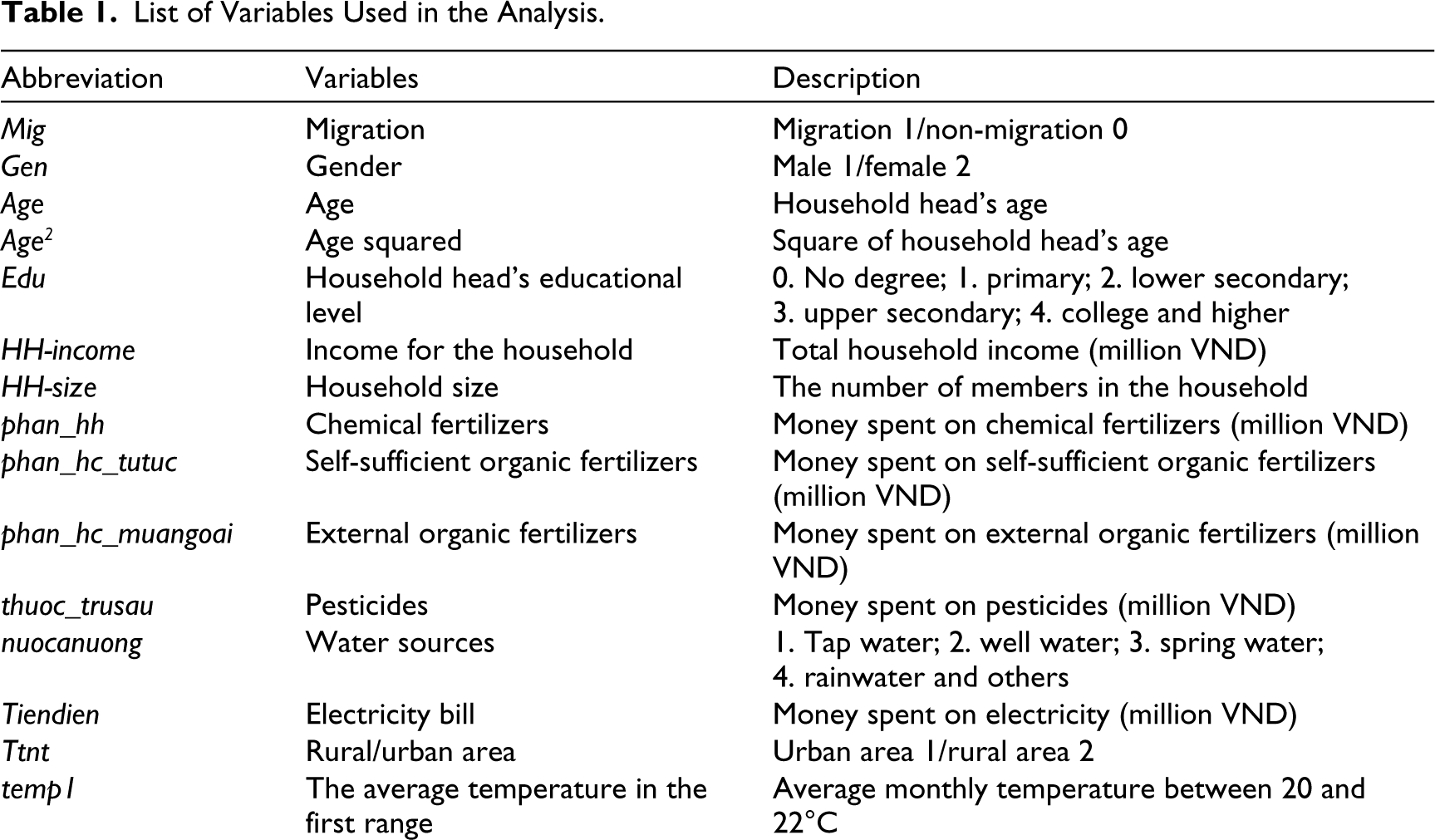
where P represents the probability that a household has at least one migrant. HHHeadi denotes a vector of the household head’s characteristics, Housseholdi denotes a vector of household characteristics and LivingConditioni is a vector of living conditions in the area in which Housseholdi is living. f is the logit function. The HH head characteristics include age, gender and education level. Household characteristics include the total number of members of the family, total income, the budget for fertilizers and pesticides and electricity payment. Living conditions include average temperature, rainfall and radiation, and water sources used.
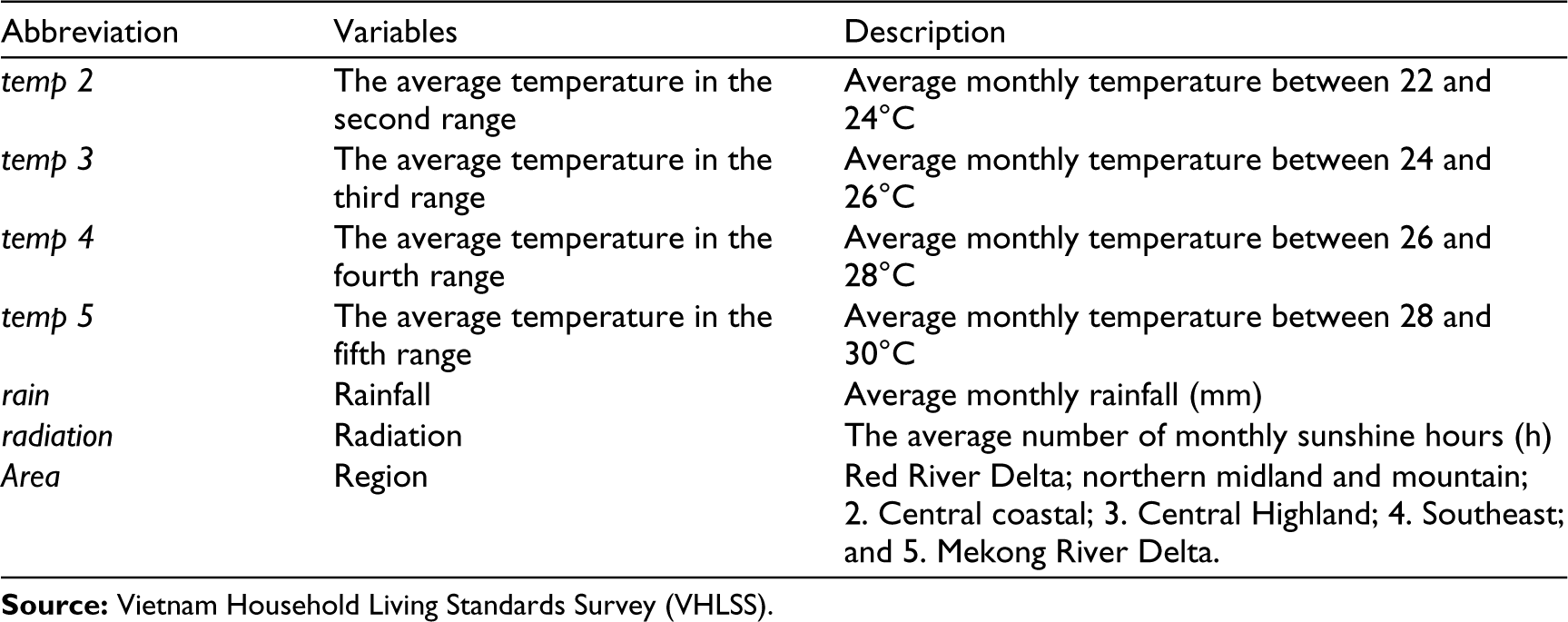
Table 1 presents the variables and their codes used in the logit model in this study. Variables represent information about the characteristics of the households, the HH heads and their living conditions.
List of Variables Used in the Analysis.
Empirical Results
Descriptive Statistics
Descriptive statistics for the dataset are presented in Table 2. The final dataset includes 8,567 observations. The data illustrates that the mean of migration is 0.068. Besides, the mean of gender in Table 2 is 1.25, showing that many households were headed by women in 2020. The oldest age is 99 years, while the mean age of the dataset is slightly over 50 years. A family comprising 12 people was the maximum number of persons for a home in 2020. Finally, the average annual income of households was VND 154 million.
Descriptive Statistics of Variables Used in the Analysis.
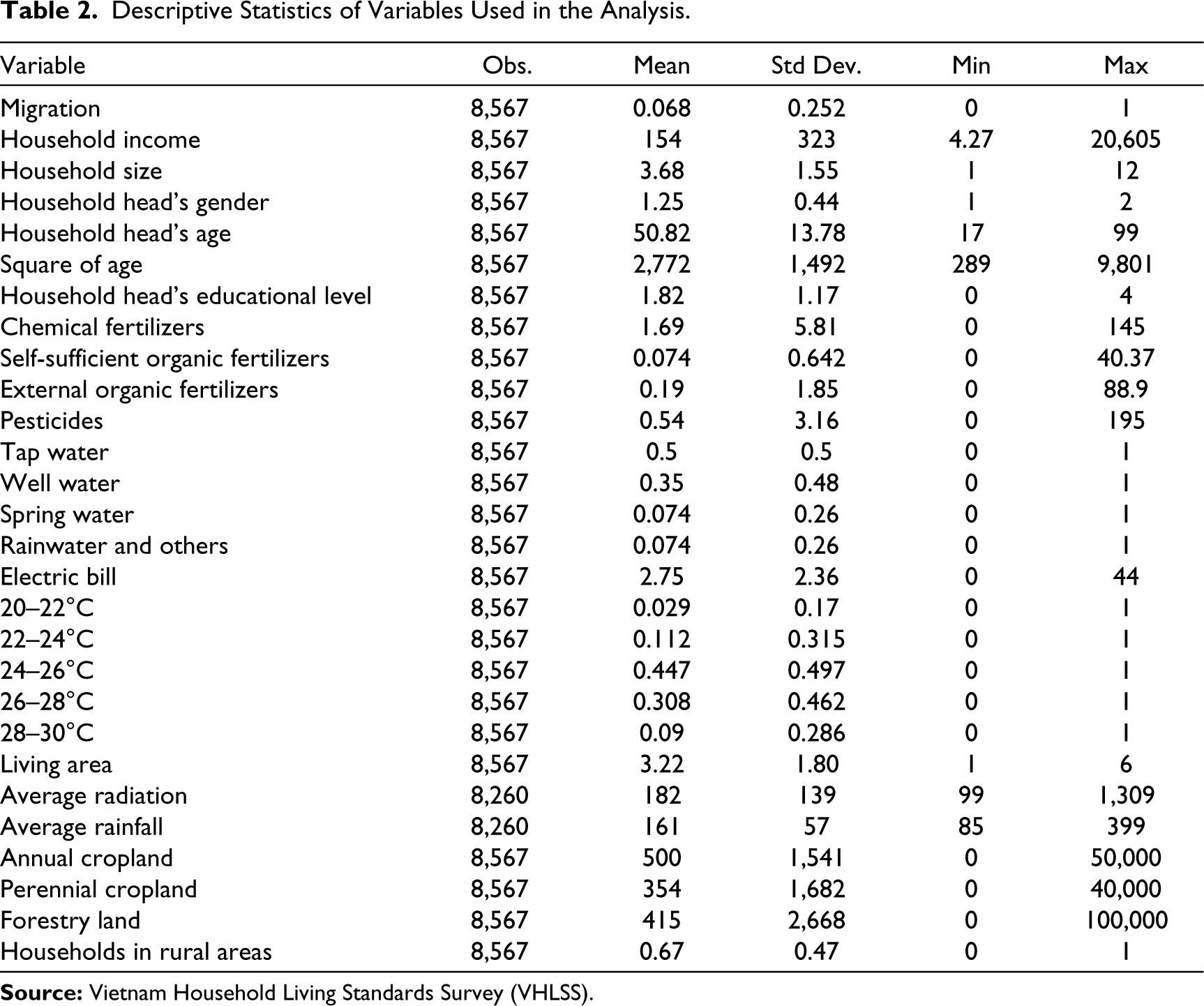
Besides, the drinking water variable is a nominal variable that takes values from 1 to 4. The descriptive statistics show that drinking water denotes 1 for tap water; 2 for well water; 3 for spring water, which is used as the base; and 4 for rainwater. The average temperatures, a minimum of 20.8°C and a maximum of 28.9°C, were recorded in 2020. In this analysis, we substitute the average temperature with five dummy variables representing five different temperature ranges from 20 to 30°C to avoid the potential correlation between average temperature and radiation. In addition, the average monthly rainfall was 162.224 mm.
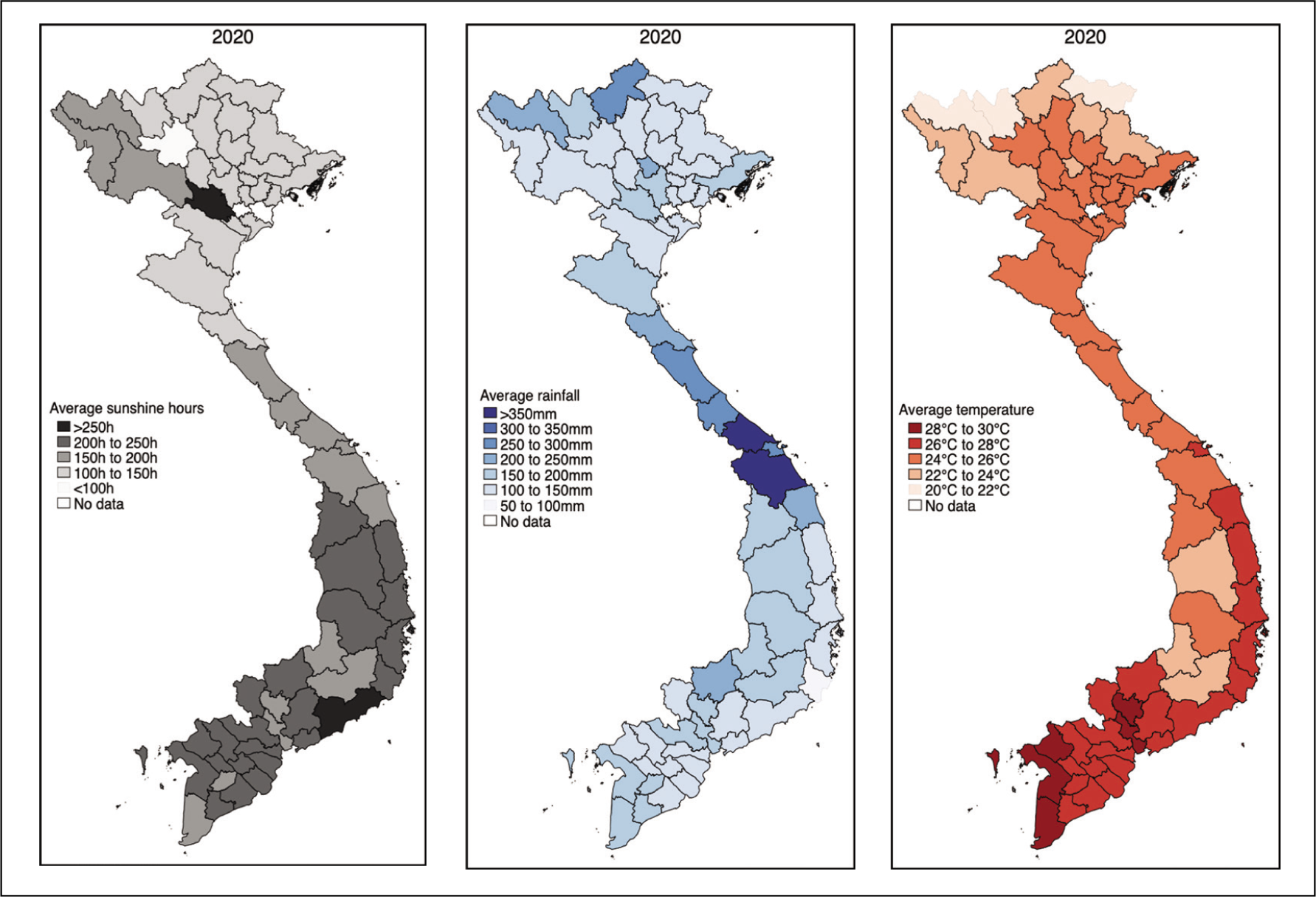
Figure 1 illustrates the monthly average sunshine hours, rainfall and temperature of 63 provinces in 2020. Vietnam has a tropical and subtropical climate with monsoons, sunshine, abundant rainfall and high humidity. The average monthly rainfall in the country ranges from 50 to over 400 mm, although most places in Vietnam receive between 100 and 200 mm rainfall. In general, the country’s northern regions receive more rain than the southern parts, and most of the rainfall is concentrated in the central region. Therefore, a high average rainfall could be observed in 2020. In addition, a higher monthly average of sunshine hours and a higher average temperature are accompanied by the status quo of climate change. Based on meteorological data from weather stations, average monthly temperatures in the provinces ranged from 20.8 to 28.9°C in 2020. The lowest average temperature is found in mountainous areas and the northern regions, whereas the highest can be seen in the southern regions.
The Average Sunshine Hours, Rainfall and Temperature of Vietnam (Mainland) Provinces in 2020.
The Determinants of Internal Migration in Vietnam
The analysis employs logit estimators under three scenarios, which include (a) the entire sample of 8,260 households, (b) the sub-sample of households living in rural regions (5,499 households) and (c) the sub-sample of households living in urban regions (2,761 households). Table 3 provides the empirical results of these regressions.
Determinants of Internal Migration in Vietnam Using the Logit Regression Model.
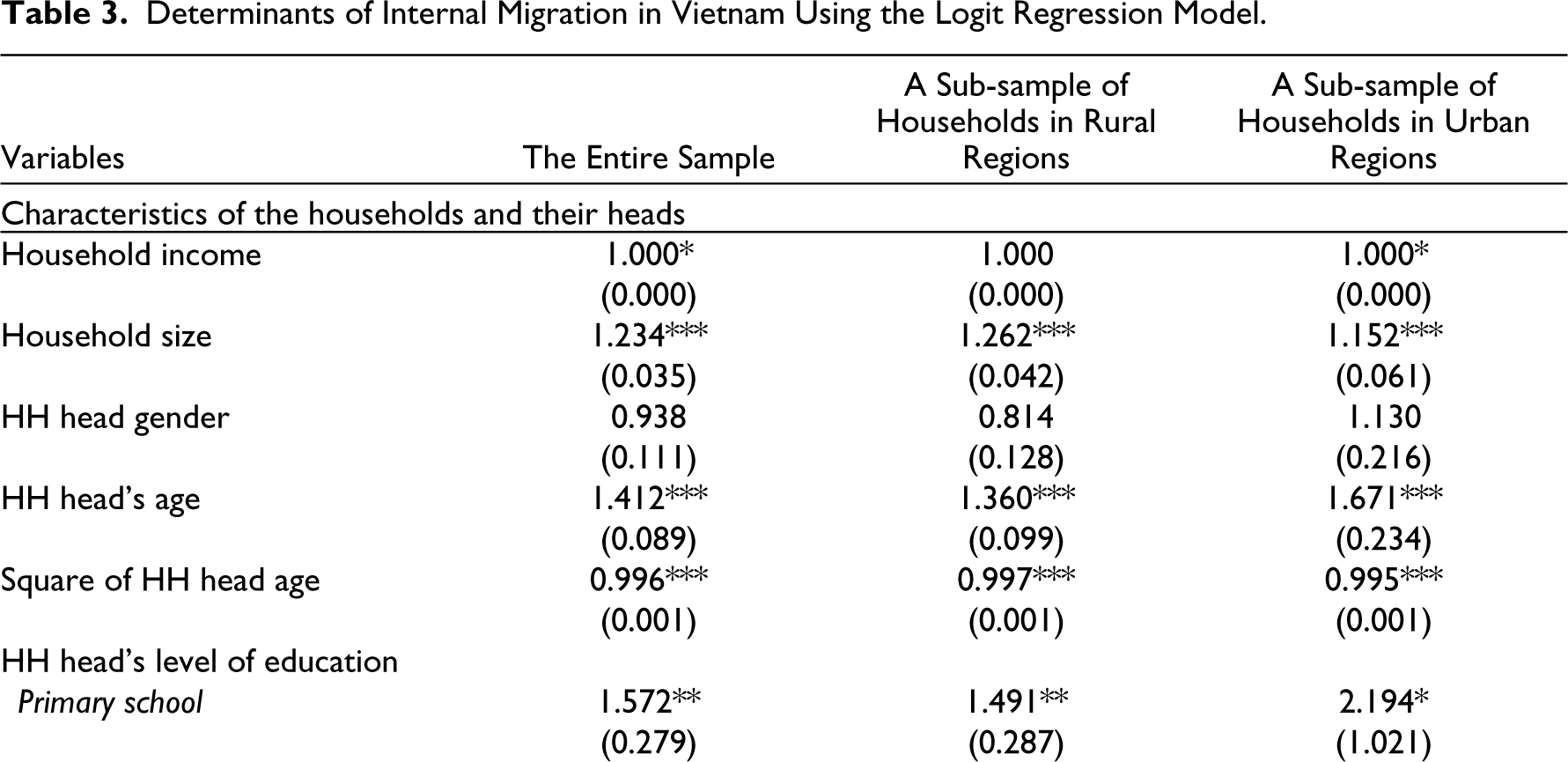
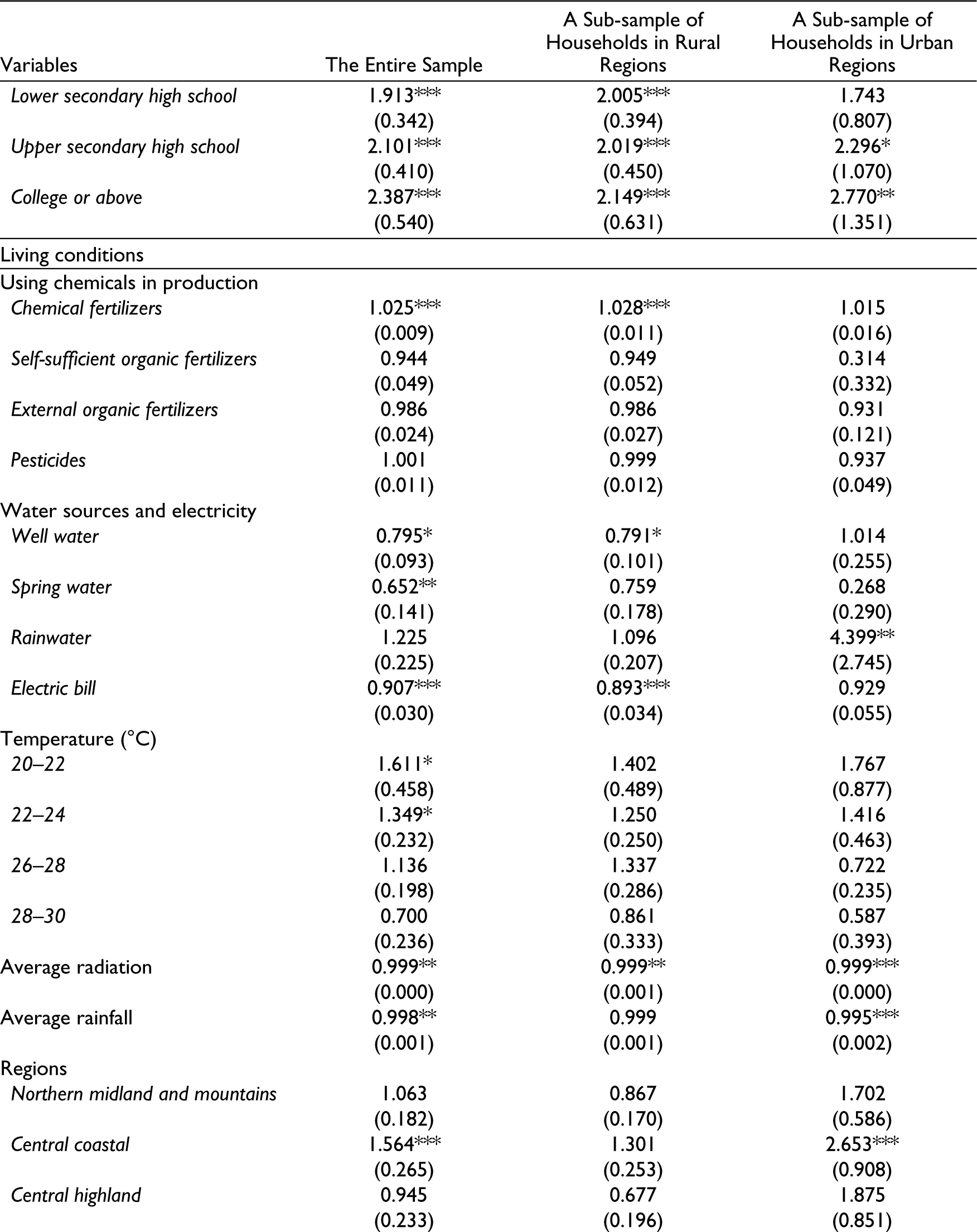
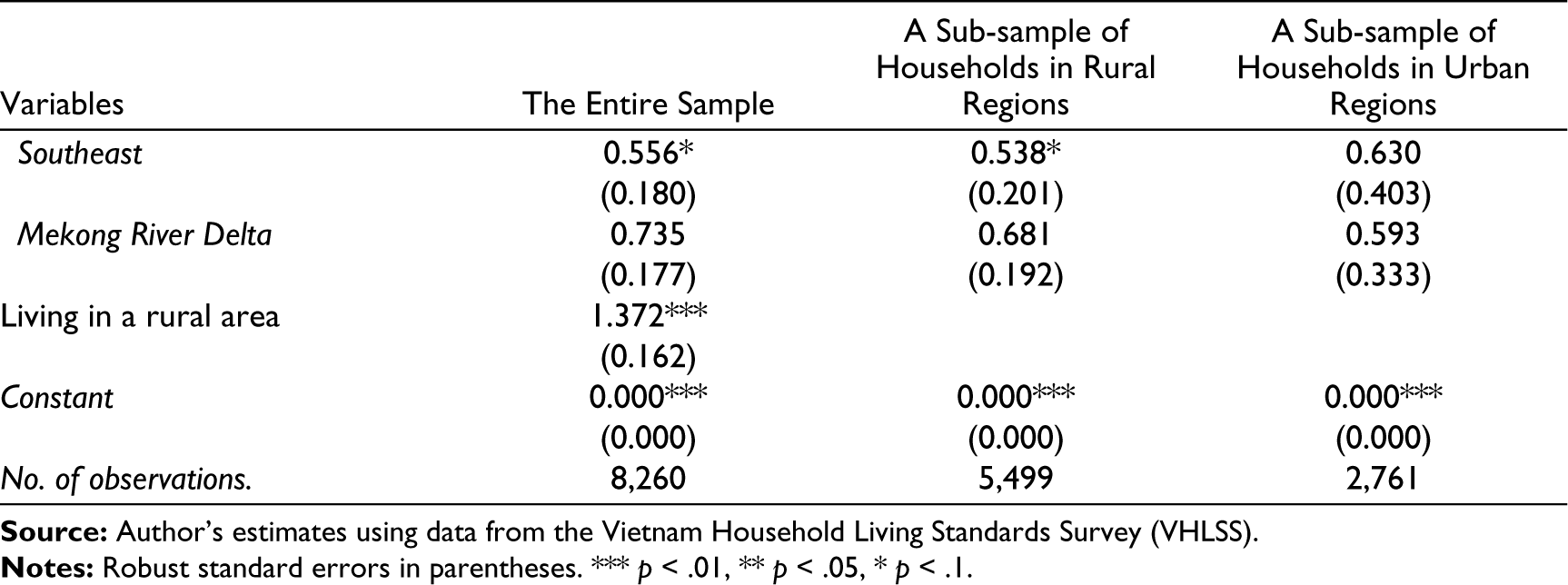
Regarding the characteristics of the households and the households’ heads, the empirical results indicate that large families are likely to migrate across their provincial borders to other cities. These findings are consistent across all three scenarios, implying that members of large households will migrate regardless of their regions. Interestingly, the findings confirm the important role of household income on internal migration. Household income is associated with internal migration in Vietnam. However, these associations are statistically significant at a 10 per cent confidence level, whereas the link is insignificant for households in rural regions. In addition, the age of the household’s head appears to be a key determinant of internal migration in Vietnam. It is also found that the educational level of the household’s head generally increases the probability of internal migration in Vietnam.
Regarding living conditions, using chemical fertilizers in production increases the likelihood of internal migration in Vietnam. The results indicate that the probability of internal migration increases by 2.5 per cent per VND million spent on chemical fertilizers. Using well water and rainwater does not significantly affect the internal migration decisions. However, using spring water increases the likelihood of having a migrant member in the entire sample. Notably, using rainwater and other water sources increased the probability of migration in the urban sample in 2020 at the 5 per cent significance level. Furthermore, internal migration decisions are found to be affected by a household’s living conditions. An increase of one member in the household was associated with an increase of 20.4 per cent in the probability of migration in 2020. No significant relationship was found between the ownership of agricultural land types and internal migration for the households. It is also seen that the money paid for electricity reduced the probability of migration in 2020. Households with higher electricity bills had more electric equipment in their houses. As such, they would pay a higher cost for internal migration. The empirical results indicate that weather factors such as temperature, rainfall and average sunshine hours affected migration decisions in 2020. Specifically, households living in the highest temperature area of 28–30°C have a higher migration rate when compared with the average temperature of 24–26°C. This relationship is especially strong in rural areas. Other environmental factors, such as rainfall and the average sunshine hours, are negatively associated with the decision to migrate.
Regarding geographical factors pertaining to the regions in which households reside, the results confirm that households in the southeast and the Mekong River Delta have a lower probability of migration than those in the Red River Delta. In contrast, households living in the north midlands and the mountains have an increased probability of migration, excluding rural areas. The same conclusion applies to the central highlands. Finally, living in cities on the central coast increases the probability of migration in Vietnam.
The Predicted Probability of Internal Migration in Vietnam
Table 4 presents the predicted probability vis-à-vis the model’s average probability of internal migration in Vietnam for three scenarios: (a) the entire sample, (b) the sub-sample of households in rural regions and (c) the sub-sample of households in urban regions.
The Predicted Probability of Internal Migration in Vietnam.
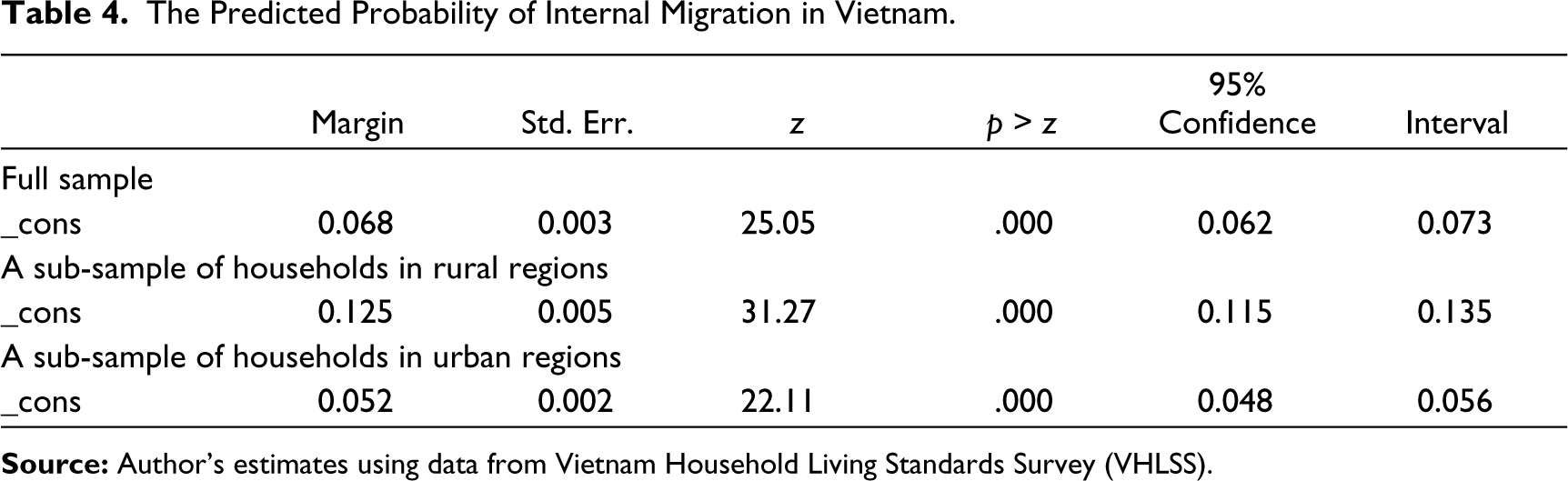
Specifically, the average probability that a household member will migrate was approximately 6.8 per cent in 2020. Interestingly, this probability increases to approximately 12.5 per cent for households in rural regions and falls slightly to 5.2 per cent for households living in urban regions. These findings imply that employment appears to be a key driver for internal migration in Vietnam. Individuals living in rural regions leave their hometowns to seek employment in major cities such as Ho Chi Minh City and Hanoi and other industrial provinces such as Bac Ninh and Hai Phong in the north and Binh Duong, Dong Nai and Long An in the south.
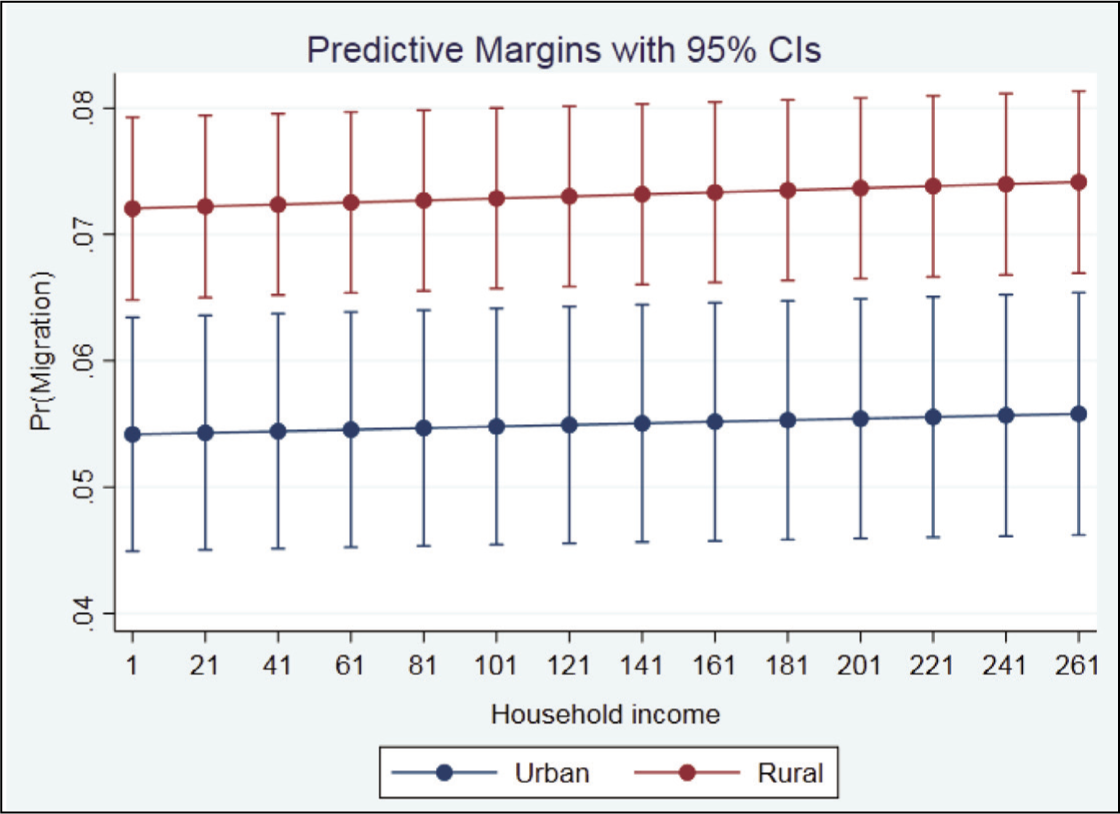
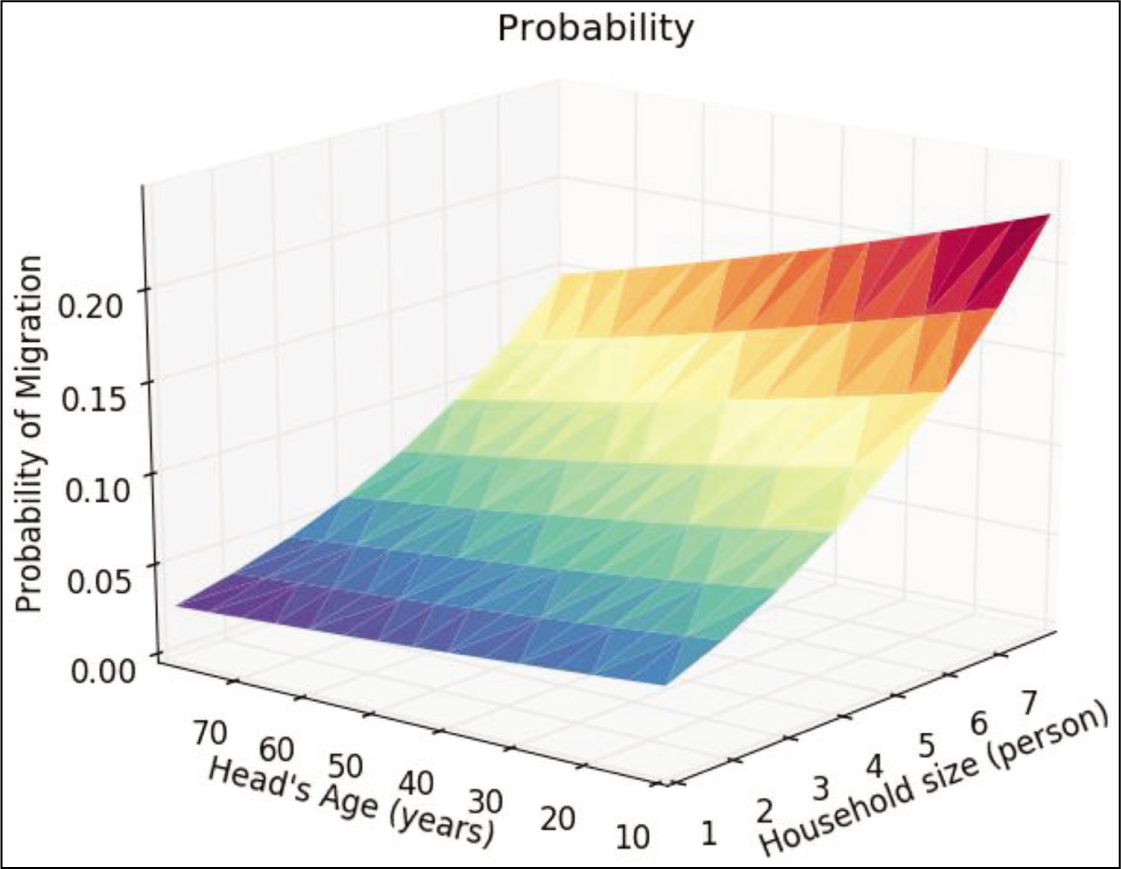
An evaluation is not done of the households with migrant members predicted by the model. The results are presented in Figure 2. The results indicate that households living in the urban regions experience a lower residence efficiency than those living in rural regions. This finding indicates that family members in urban regions are more likely to migrate than those in rural regions. Furthermore, Figure 3 demonstrates the relationship between migrants, the household head’s age and the total number of members in the household. The findings indicate that internal migration is more significant for young household heads and large families. These results confirm the dominant role of employment in internal migration in Vietnam when young Vietnamese seek employment outside their main residences. Members of large families also appear to migrate more often than members of smaller households. This finding reconfirms that the goal of internal migration in Vietnam is to seek employment.
Conclusion and Policy Implications
One of the important characteristics of Vietnam that affects internal migration is that the key economic regions are mainly concentrated in the southeast and the Red River Delta areas (Niimi et al., 2009; Pham et al., 2018). As such, these two areas have established many industrial parks, and the headquarters of domestic and foreign-owned corporations are also located here. In addition, universities, education and training institutions are also concentrated in the two largest cities in the two regions: Ho Chi Minh City in the south and Hanoi, the capital city, in the north. As such, when moving from the local areas to find work and study, skilled workers and students across the country have chosen one of these two areas as a destination.
This study extends the static perspective adopted in previous migration studies in Vietnam by identifying significant factors affecting internal migration in Vietnam. The factors that affect migration from departure places have been examined by considering all migration types. These factors include the characteristics of the households and the household heads, together with their living conditions. The key results from this analysis are summarized below.
First, the results indicate that decisions for internal migration in Vietnam are strongly associated with the characteristics of the households and their heads, including income, household size, age of the household heads and their educational attainment. Wealthy households with high incomes are more likely to migrate. The probability of migration is directly proportional to the household size. Migrants are more likely to come from large households. The age of the household head members is negatively associated with the probability of having migrants in the family. This finding implies that the older heads of the family do not prefer to migrate. The findings also demonstrate that the educational level is a reliable predictor of migration from rural to urban areas. Particularly, households headed by people with a high level of education are more likely to migrate.
Regarding the living conditions of the households, the results indicate that the amount of money spent on electric power reduces the likelihood of migration. Households with higher power costs may have more electric equipment in their homes, making migration more expensive. Findings from this study also indicate that the type of water source is related to migration decisions. Households living in urban areas using rainwater and other water types from unsafe sources are more likely to migrate. This finding is similar to that of Rakib et al. (2019) and Stoler et al. (2021). These authors conclude that drinking water scarcity and river salinity raise health concerns, perhaps leading to large-scale migration across borders or inside the nation.
The results also indicate that radiation and rainfall have an inverse relationship to the probability of migration, meaning that people who live in unfavourable rainfall areas are more likely to leave their homes than those who live in areas with more favourable rainfall conditions. The findings also align with Van Der Geest’s (2011) analysis. This author concludes that migration probabilities are higher in ecologically deficient areas and that a lack of rainfall is the most significant indicator of migration. Meanwhile, households in the high-temperature areas will be more likely to migrate than those living in the normal temperature range areas.
These results have implications for Vietnamese policymakers regarding developing and implementing appropriate policies on migration. Understanding migration trends, migrant characteristics and migration-promoting factors is critical for improving the lives of migrants in Vietnam. In addition, academics have suggested that by adopting other development policies, such as boosting agricultural production efficiency and strengthening water supply systems, governments and international development organizations can further help lessen the impact of climate-related and water-related drivers of migration, such as income losses and rural income risks. Improvements to water supply systems, for example, that simultaneously enhance health and hygiene while also decreasing the social consequences of water insecurity open the door to several chances to optimize the well-being of people without leaving their hometowns.
Footnotes
Declaration of Conflicting Interests
The author declared no potential conflicts of interest with respect to the research, authorship and/or publication of this article.
Funding
This study was funded by the Ministry of Education and Training of Vietnam under Grant B2023-MBS-07.