



Abstract
This study delved into a conceptual analysis of African migrants’ experiences and perceptions of service delivery at a purposely selected Department of Home Affairs and Immigration Services in South Africa. A mixed-methods design comprising a cross-sectional survey and focus group discussions was conducted with black African migrants awaiting service delivery at the Durban Department of Home Affairs. The findings were discussed within the context of the relative deprivation theory. The study unfolds South Africans’ negative perceptions of African immigrants as vectors of insecurity, criminality and economic hardship for the citizenry, as well as a systemic anathema to South Africa’s state sovereignty. It holistically ascribes the phenomenon to an attendant consequence of unlawful racial discrimination emanating from institutionalised xenophobia, a recently emerged concept that this current study has referred to as Afrophobia.
Keywords
Introduction
The post–World War II period has been called the age of migration, since an unprecedented number of people worldwide were constantly on the move. Hence, an attentive observer of globalisation is at least intuitively aware of the centrality of the issue of migration and the welfare of immigrants. As sub-Saharan Africa is not left out in the new millennium, Mittelmeier et al. (2022) see that the continent is currently experiencing challenges and opportunities with the emigration of its skilled professionals, thus resulting in a potential brain drain across a broad spectrum of African economic development (AED). In the same vein, the region is also facing difficulty with the diaspora’s links with the country of origin and migrants’ remittances. In recent times, sub-Saharan Africa has experienced major changes in migration configurations from within and outside the region due to environmental threats to socio-economic stability primarily related to shelter, livelihoods, food security and high-quality standards of life, which are often considered as push factors for intra-African human migration and/or environmental drivers of human migration in sub-Saharan Africa (Wolde, D’Odorico, and Rulli 2023).
Without much further ado across all borders around the world, migration as well as immigration has been a widely acknowledged phenomenon. Migration plays a major role in the complex (and unclear) process of change in the international political order as well as in the national/local political order we are experiencing now. It impacts states and regions, their societies, economies and policies.
Historically, trans-national migration in Africa took place in the 18th century during European economic crises and eventual European expansion and resulted in the colonization of the continent. In South Africa, European migration gave rise to apartheid, and shipment of cheap labour from Asia and other parts of Africa by white investors. (South African Parliamentary report 2008, as cited in Umezuruike, 2013; see also Lundahl, 2019)
However, well-managed migration can be a win-win situation for migrants, as well as for their origin and destination countries, communities and families. Apart from the issue of migration as a global challenge, service delivery is also a significant issue associated with migration, which will be specifically discussed in relation to what is obtainable in South Africa. Within both government and outside government circles, South Africans seem to be highly discontented with the inadequacy of the impacts of migration at all levels, and this has led South Africans to protest on the streets on several occasions. It is also on record that few or many of these kinds of protests have been orchestrated as a collective social action intended to ward off black African immigrants (Olofinbiyi 2022). More importantly, the major problem is that most studies on immigrants and migration in South Africa tend to concentrate more on xenophobia, while studies on service delivery tend to focus more on South African citizens receiving poor service delivery. Against this background, this study takes into cognizance that effective service delivery is equally important to black African immigrants in South Africa as it is to its citizens.
Conceptualisation of Context
The growing concern over the allegedly increasing number of illegal immigrants entering South Africa was the underpinning factor behind a study of this nature (Reitzes 2000, 62). This population influx presents the government and other affected stakeholders with enormous challenges in formulating and implementing appropriate policy responses. Accompanying this influx is an apparent rise in xenophobia, which has become increasingly evident since the April 1994 national elections. Anti-foreigner sentiment at times expresses itself in violent attacks on those who are assumed by South African citizens to be illegal immigrants. Rather than blame the unconsolidated democratic and unrepresentative government for their ills, the poor, homeless and unemployed are shifting the blame on foreign nationals (Charney 1995; Olofinbiyi 2022; Reitzes 1994, 1995; Tomlinson, Bam, and Mathole 1995). Hence, Africans are the most likely to be considered ‘illegal’ immigrants or foreigners even before they have crossed the borders, and this shows the degree of hatred towards black African immigrants (Peberdy 2001, 23–24), as South Africans are considerably more concerned with ridding the country of fairer skinned migrants (Landau 2004, 6). However, according to Reitzes (2000, 62), these alleged illegals are also harassed by state officials and police and imprisoned without trial. Many illegal immigrants are compelled to migrate because of political turmoil and socio-economic deprivation in their home countries and are drawn to South Africa with the expectation of acquiring political freedom, stability and economic opportunities resulting from the advent of a democratic government (Charney 1995, 7; Tella and Ogunnubi 2014). Although it is not new, this phenomenon has been on the increase (Elbourne 2003, 46). What is novel is its implications for a recently enfranchised black majority in South Africa, who now regard foreigners (previously perceived by some as allies in a regional struggle against apartheid) as potential new enemies and a threat to their recently granted civil and political rights and the expectations of socio-economic entitlements as proposed to South Africa’s Reconstruction and Development Programme.
Enshrined in chapter 1 of the Constitution of the Republic of South Africa (1996) was an end to any form of racism and the entitlement of all citizens to equal rights, privileges and benefits. This would include efficient service delivery from the public services. In 1995, the year before the ratification of the constitution, the government released a white paper on transformation of public services, introducing a new framework for the implementation of policies in a new era for the improvement of the general well-being of South Africans. Another major step was taken in 1997 to introduce a white paper on public service delivery, popularly known as the Batho Pele principles, which were, in consultation with the customers, service standards, access, courtesy, information, openness, transparency, redress and value for money, all of which were meant to satisfy the customers.
The current South African government responses to immigration are diverse and inconsistent, as politicians struggle to come to terms with a growing and apparently intractable problem which, by their own admission, has taken them by surprise. The majority of state departments affected by the issue are adopting a position of ‘keep them out and send them home’ (Govender 2015; Mavhinga 2019; Reitzes 2000, 63). A more moderate policy towards immigrants, especially those from neighbouring states, which might have been expected as a result of the post-apartheid ideological shift, has not materialised. Consequently, there has been evidence of service delivery protests by South Africans occasioned by poor, inefficient and ineffective service delivery. According to the United Nations High Commissioner for Refugees (UNHCR 2012), the global society is worried about South Africa’s long track record of violence as a means of protest, as well as targeting of foreigners in particular and the documentation tension over migration policy. While refugees and asylum seekers account for only a small proportion of the global movement of people, they frequently travel alongside migrants. Many of these movements are irregular, in the sense that they often take place without the requisite documentation (UNHCR 2012).
According to the South African Migration Project (SAMP 2005, 1), the South African Department of Home Affairs is responsible for the implementation and management of the migration policy and legislation, as well as the registration of births, marriages and deaths and the issuing of identity documents and passports. However, it is often criticised in the media and in private conversations for being administratively inefficient, cumbersome and unwieldy. South Africans and foreign customers reportedly and regularly complain about the poor quality of services delivered by the department. Examples of such service delivery needs by immigrants from this department are study permits, work permits, business permits, temporary residence permits, permanent residence permits as well as seeking asylum, refugee status and registration of birth. Hence, undocumented evidence and media reporting underpin the widely held belief that the department is not easily accessible, is unresponsive to the needs of its customers and is riddled with corruption to the extent that systems put in place to provide efficient and quality services are poorly managed.
The Department of Home Affairs and the Immigration Services is a South African government-recognised institution that deals with immigrants. However, it can be argued that a new term, ‘Afrophobia’, has emerged in the current scholarly debate to refer to the violence that is being directed towards foreign nationals from other parts of Africa. The scholarship posits that the dislike of foreigners in South Africa is beyond that of all foreigners in question, and the term ‘Afrophobia’ is specific to African immigrants to complement what is generally regarded as xenophobia in the South African context (Isike and Isike 2012; Matsinhe 2011; Neocosmos 2008). In this context, Afrophobia connotes the dislike and fear of African immigrants. On this basis, Afrophobia appears to exist as a result of the prevailing legacy of the apartheid era, where black South Africans were regarded as an unwanted species. For example, it is alleged that although South Africa has recorded a significant rise in immigration from both Africa and Europe, white immigrants seem to have experienced fewer problems as compared to black African immigrants (Kellett 2002). Consequently, another outcome of the legacy of apartheid is the continued conception of white economic power. South Africans were for so long indoctrinated with the idea of white superiority that even today many find it difficult to see European immigrants as a major problem, unlike black African immigrants (Kellett 2002). According to Statistics South Africa (2012), the result of 2011 data obtained from the Department of Home Affairs shows that 116,184 was the total number of immigrants documented on the status of both temporary and permanent permits in South Africa.
There are currently indications that immigrants and South Africans alike continue to complain about service delivery from the Department of Home Affairs. While most recent studies have concentrated on the violent or xenophobic attacks on people of colour, few, if any, have attempted to unearth and address the perceptions and experiences of African foreigners at the Department of Home Affairs in this regard. Hence, the premise for this article emanated as a result of the attendant nuance of divergence in the nomenclature of xenophobia and Afrophobia as perceived and experienced by black African immigrants in South Africa. This study is, therefore, essential to gauge and analyse the perception and experience of immigrants at the Durban Regional Department of Home Affairs.
Theoretical Framework
This study adopted the relative deprivation theory to critically analyse this phenomenon. Davis (1959) proposed the first theory of relative deprivation by drawing from Stouffer et al. (1949), who used the theory of relative deprivation to explain some of their unexpected findings, suggesting that comparisons with in-group versus out-group members lead to different kinds of emotional reactions. Essentially, Davis proposed that comparisons with in-group members can produce feelings of relative deprivation or relative gratification (depending on whether one’s outcomes are worse or better than those of the referent persons), whereas comparisons with out-group members can produce feelings of relative subordination or relative superiority. Thus, Davis explicitly limited the concept of relative deprivation to comparisons with ‘similar others’ (in-group members) who possess some desired objectives to which the deprived perceiver feels entitled.
Runciman (1966) introduced a distinction between egoistical and fraternal deprivation, both of which are presumably ‘relative’ in the sense described above. Egoistical deprivation refers to the perception that one’s own outcomes fall below a subjective standard (usually based on other individuals’ outcomes), whereas fraternal deprivation refers to the perception that one’s reference group as a whole is deprived (usually relative to other groups), hence the experience of being deprived of something to which one believes one is entitled. Within this study, it refers to the discontent people (African immigrants) feel or perceive when they compare their positions to others (South African nationals), and they realise that they have less of what they believe themselves to be entitled to than those around them. Thus, this study considers this theory in arguing that immigrants (in-group) are relatively deprived in terms of quality-of-service delivery at the Department of Home Affairs in relation to South Africans (out-group) as a result of their vulnerability. The relative deprivation theory in this circumstance equally portrays a view of social change and movements, according to which people act for social change in order to acquire something (e.g., opportunities, status or wealth) that others possess and which they believe they should have, too.
However, critics of this theory have pointed out that this theory fails to explain why some people who feel discontent fail to act and join social movements. However, this study contends to justify its relevance as regards the plight of black African immigrants, who presumably could not act against the South African government because of their vulnerability. This theory is more relevant and appropriate in a study of this very nature for the mere fact that most participants are not citizens of the South African state. And to juxtapose this assertion, there is the persistent civil disobedience by the citizenry, who also complains of poor service delivery in the form of massive protests, which usually engulf the state most times.
Methodology
A mixed-methods design comprising a cross-sectional survey and focus group discussions was conducted with black African migrants awaiting service delivery at the Durban Department of Home Affairs. Hence, the study utilised excerpts derived from interviews with black African clients that patronise the Durban regional offices of the Department of Home Affairs to determine their perceptions of customer service. The regional office of the Department of Home Affairs in Durban was used as a case study. A survey was used to establish a relationship between institutionalised xenophobia and service delivery. Hence, the study utilised responses derived from questionnaires distributed to black African migrants who accessed services at the Durban regional Department of Home Affairs to identify and analyse their various experiences and perceptions of effective and efficient public service delivery.
As evidenced by the sample below, it is pertinent to reiterate that officials of the Department of Home Affairs were deliberately not interviewed because of the sensitive nature of the subject matter, as well as the plausible practical difficulties this might pose for the researcher to gain unhindered access. Additionally, getting the perspective of ‘white immigrants’ might also have proven cumbersome for the researcher to obtain access to them and their version of their perceptions of the department for correlation purposes. The fact that the study was piloted by fellow black Africans had its own challenges. Hence, it would have been more useful to get the perspective of staff of the Department of Home Affairs and white immigrants. It is presumable that this might impose some degrees of limitation in generalising the outcome of the study at the conclusive stage of this project. But all the same, this is a grey area that this study is recommending for further research.
Sampling Techniques
Stratified sampling was utilised for the research study. In selecting a sample of 140 respondents from black African migrants residing in South Africa and specifically Durban, the study found it more convenient to divide those black African migrants into nationals from African Regional Economic Communities and Inter-Regional Communities: the Southern Economic Community (SADEC), the Economic Community of West African States (ECOWAS), the East African Community (EAC), the Community of Sahel-Saharan States (CEN-SAD) and the Common Market for East and Southern Africa (COMESA). Two countries were selected from each of the two regional economic communities and one country from the last three inter-regional economic communities, which sums up to seven countries in total.
These countries were selected purposively because they have large populations in relation to other African nationals residing in South Africa in general and the city of Durban in particular. Then, from each of the seven countries, the study selected 20 respondents proportionately using a stratified sampling technique to ensure that the entire sample was proportionately a thorough reflection of black African migrants who were on temporary resident permits (categories: relative, visitor, work, study, medical, business, retired-person, treaty, corporate, exchange and asylum seeker) and permanent resident permits (categories: relative, work, business, retired-person and refugee), males and females inclusively. The seven nationalities (Ethiopians, Ghanaians, Tanzanians, Nigerians, Congolese, Malawians and Zimbabweans) represented black Africa migrants residing in Durban, which sums up the sample frame based on referral.
Demographic Data of the Selected Sample
Figure 1 indicates that 14 per cent of the entire sampled population of 140 respondents constituted each nationality of seven countries, out of which 8 per cent males and 6 per cent females represent Ghana, 7 per cent males and 7 per cent females represent the Democratic Republic of Congo and 8 per cent males and 6 per cent females constitute Ethiopia. Six per cent males and 8 per cent females represent Malawi. Thirteen per cent males and 1 per cent females represent Nigeria. Nine per cent males and 5 per cent females represent Tanzania. Lastly, 6 per cent males and 9 per cent females represent Zimbabwe.
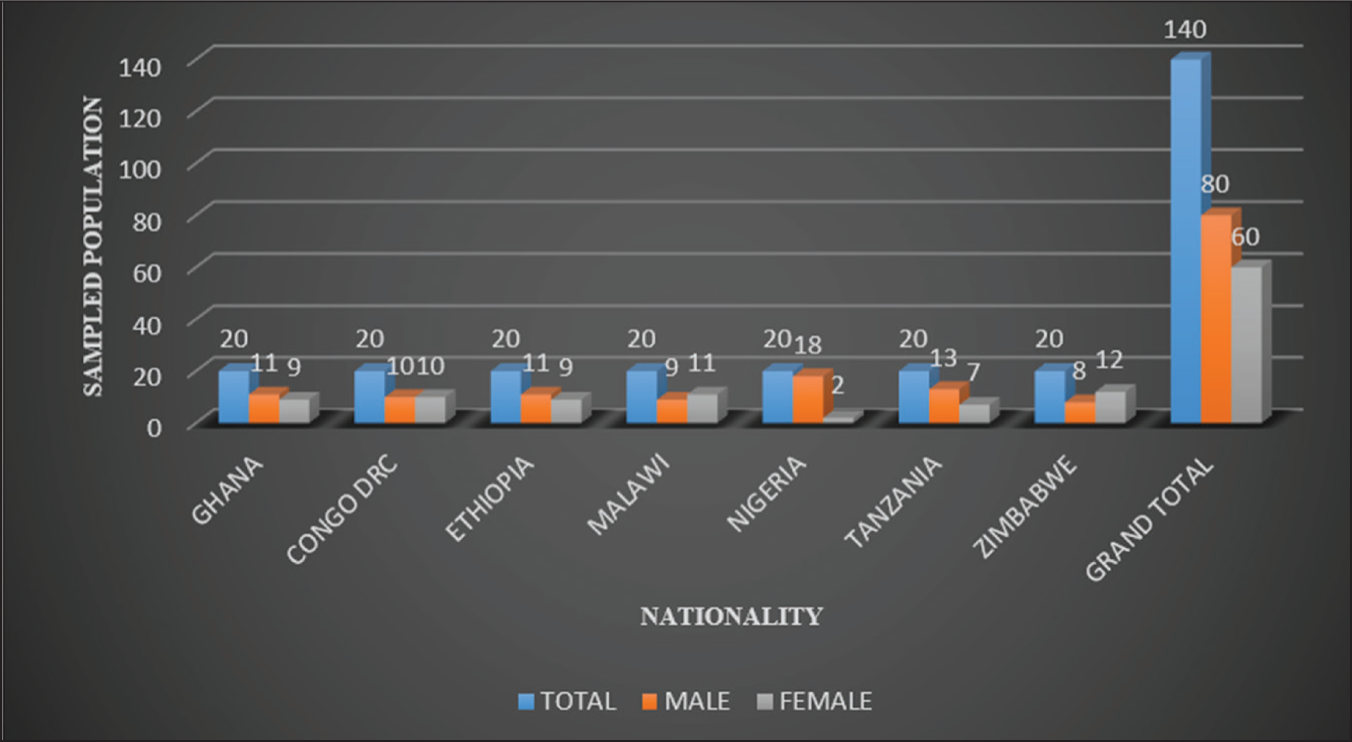
However, it is significant that Figure 1 indicates that whilst the percentages of both genders in the Democratic Republic of Congo were equally balanced, the Nigerian percentage of female representatives is disproportionate to the male percentage.
Age Bracket of Respondents
Figure 2 indicates that 32 respondents (23 per cent) of the entire sampled population are in the age bracket 40–49 years and 39 respondents (28 per cent) of the entire sampled population are in the age bracket 30–39 years. Four respondents (3 per cent) of the entire sampled population are in the age bracket 50–59 years, whereas 65 respondents (46 per cent) of the remaining respondents are in the age bracket 20–29 years.
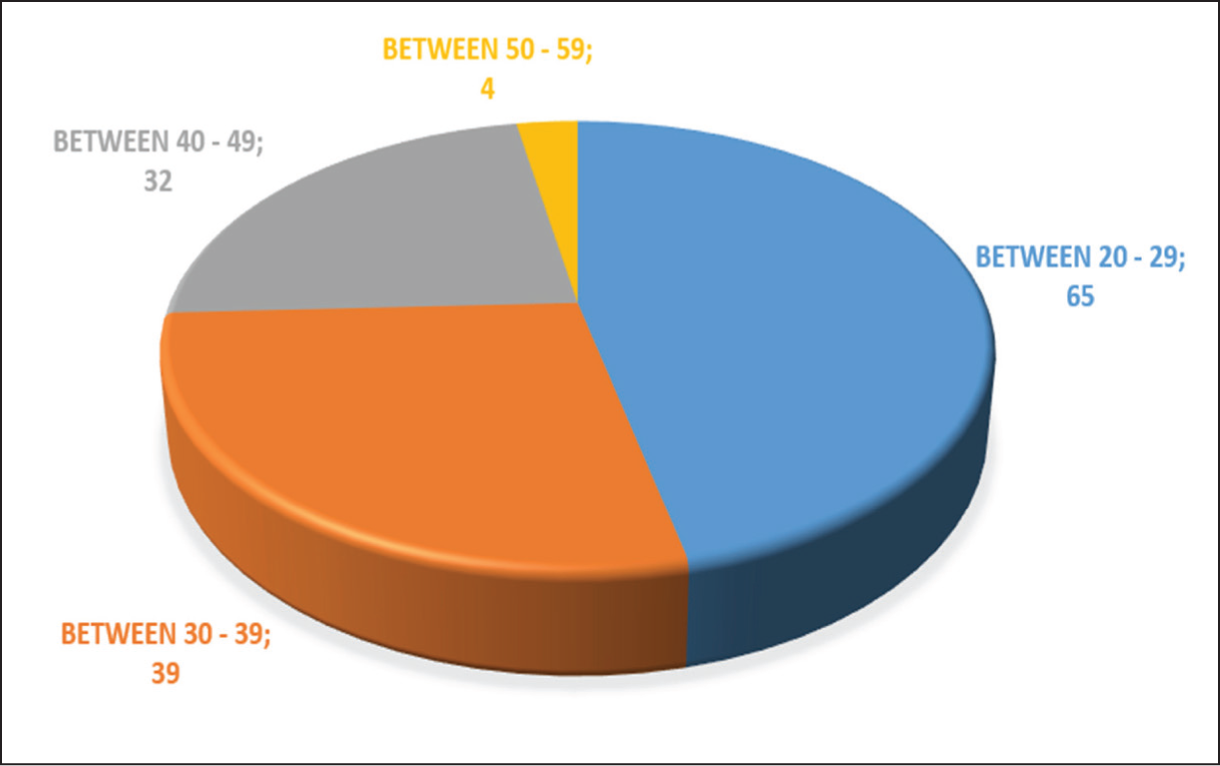
However, almost half (46 per cent) of the entire sampled population is of a youthful age. This portrays a significant indication and goes to prove that the majority of African migrants residing in South Africa and particularly in Durban are young men and women of a productive age, which includes relatively (28 per cent) young but not so young males and females in the age bracket 30–39 years.
Descriptive Statistics and Analysis of the Quality of Services Rendered to African Migrants
Figure 3 depicts that 41 (29 per cent) sampled African migrants agreed with the statement that the quality of services rendered to African migrants is because of the discriminatory practices of the officials of the Department of Home Affairs towards them. Whereas 52 (37 per cent) respondents strongly agreed with the statement, 20 (14 per cent) were undecided. Eight (6 per cent) respondents disagreed with the statement that the quality of services rendered to African migrants is because of the discriminatory practices of officials of the Department of Home Affairs, while 29 (14 per cent) strongly disagreed with the statement.
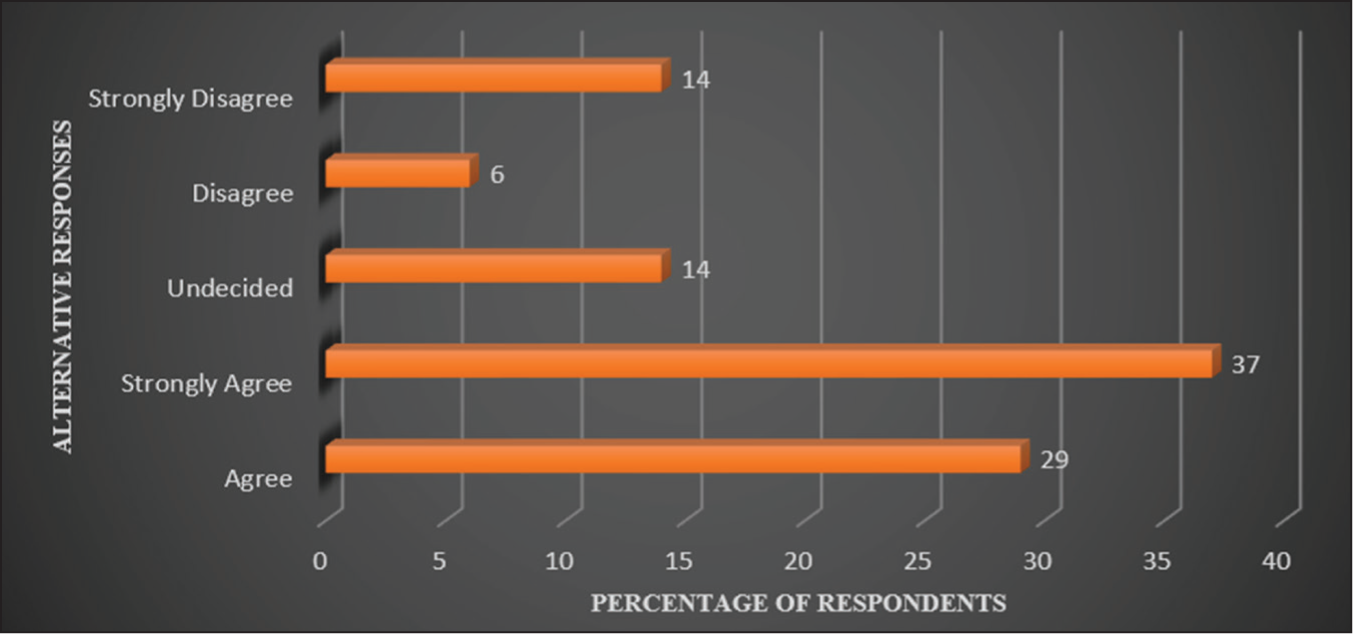
However, 37 per cent of the respondents, which is the majority, strongly agreed to the statement as opposed to 14 per cent of the respondents (minority), who strongly disagreed. The outcome implies that the quality of services rendered to African migrants at the Department of Home Affairs is directly proportionate to the discriminatory practices of its officials, which is not different from how other governmental agencies treat black African migrants in South Africa.
Figure 4 shows that none of the African migrants sampled strongly disagreed with the statement that service delivery in the Department of Home Affairs could be improved should the officials change their perception about African migrants. However, 15 (28 per cent) were undecided about the statement, and 38 per cent of the respondents strongly agreed with the statement. Whereas 34 per cent of them agreed with the statement, none of the respondents disagreed with the statement.
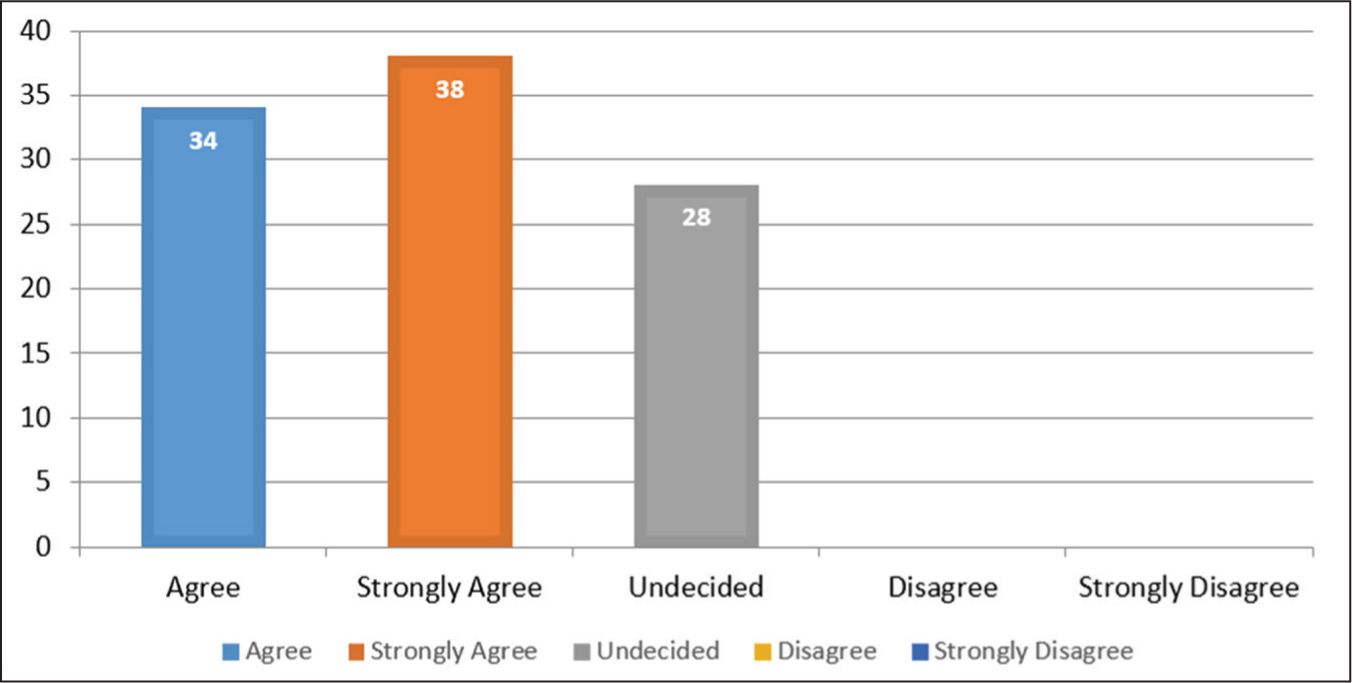
Conclusively, since 38 per cent of the sampled African migrants, which is the majority, strongly agreed and 34 per cent agreed to the statement as against 28 per cent of respondents, which is the minority, it is plausible to conclude with the statement that service delivery in the Department of Home Affairs could be improved should the officials change the perception they have about African migrants.
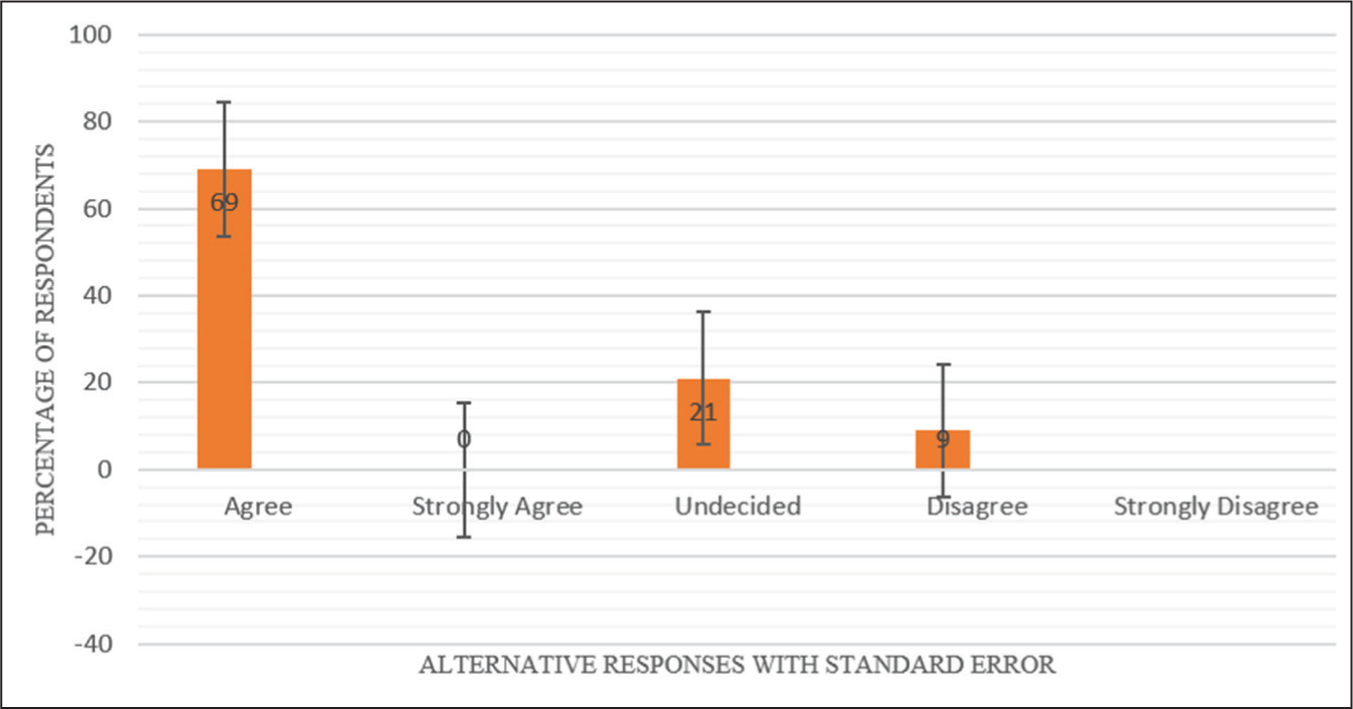
Figure 5 indicates that ninety-seven (69 per cent) sampled African migrants agreed to the statement that there is a strong relationship between Afrophobia and the quality of services delivered to African migrants in the Department of Home Affairs. Whilst none of the respondents strongly agreed with the statement, thirty (21 per cent) were undecided. Whereas thirteen (9 per cent) disagreed with the statement, none of the respondents strongly disagreed.
Conclusively, since 69 per cent of the respondents, which is the majority, agreed with the statement as opposed to 9 per cent of the respondents, which is the minority, who disagreed with the statement, it is plausible and significant to conclude that there is a strong relationship between Afrophobia and the quality of services delivered to African migrants at the Department of Home Affairs. As much as there is evidence of Afrophobic attacks and negative attitudes towards African migrants within South African society, one cannot rule out that there are bound to be traces of such Afrophobic tendencies experienced by African migrants among officials of the Department of Home Affairs as well.
Focus Group
There were 15 participants in the focus group, and the average age of the participants was 35 years. Hence, individuals’ inner subjective opinions were sampled, and the black African immigrants’ perceptions and experiences of service delivery were explored and captured with the application of this tool.
Effort was made to ensure that the membership of this focus group discussion was balanced to reflect the views of both males and females in a ratio of 2:1, with 10 males and 5 females participating. No identifying information about research subjects was recorded, and they were equally assured of the confidentiality of their involvement in the focus groups. There were mixed reactions to the research initially, as some of them felt that the research was unlikely to change their situation and would therefore be a waste of their time (however, when given the option to leave without participating in the research, none of these individuals chose to leave), while others were eager to participate. At the conclusion of the interviews, almost all participants wanted to receive a copy of the final research report.
Systematic Steps Taken in the Thematic Analysis of Collected Data
Step 1: Data gathering: The data collected from interviews, focus group transcripts, field notes and diary study entries were gathered.
Step 2: Reading the data from the beginning to the end to enhance familiarity with the data before starting the analysis: All study transcripts, field notes and other data sources were reviewed before analysing them.
Step 3: Coding: The study generated an initial set of codes from a first review, and the data were diligently coded. Based on what the study was about during the course of coding, highlighted sections were categorised in such a way that they could be easily compared. At this stage, the guiding compass was the objective of the study. The research questions were printed out and stocked on a wall, where the analysis was conducted. As the coding proceeded, each segment of text was reviewed, and the fragment was given a name that described the data, while interpretive code was also ascribed to the text. Once all the text had been coded, all the data that had the same code were grouped manually. At the end of this step, the study grouped the data by topics and codes for each topic.
Step 4: Creation of new codes: It started with a search for themes in the study codes across the entire data set. New codes that encapsulated potential themes were created. The study searched across all the codes to locate any causal relationships, similarities, differences or contradictions that could uncover underlying themes. During the course of this process, some of the initial codes were set aside (either archived or deleted) and new interpretive codes were created.
Step 5: Taking a break to review and refine themes: At this stage, the researcher took some days off and later returned to the data. It is always a good idea to take a break, come back and look at the data with a fresh pair of eyes. Doing so sometimes helps see significant patterns in the data clearly and derive breakthrough insights.
Step 6: Evaluation of themes for good fit: In this step, it can be useful to consult a colleague to assist with an independent review of the study codes and emerging themes. Not only are new insights drawn out, but conclusions can also be challenged and critiqued by fresh eyes and brains. This practice assisted in the reduction of potential for interpretation to be coloured by personal biases. And finally, these themes were put under proper scrutiny by asking the following questions: Is the theme well supported by the data? Or could the study find data that do not support the themes? Is the theme saturated with lots of instances? And the answers to the foregoing questions were ‘yes.’ Hence, the reporting of findings followed.
Limitations of the Study
The study has three limitations. The first limitation is that it is not representative of the entire Department of Home Affairs and the whole black African migrant population. The second limitation is that although it is about the state, it relies heavily on the experiences of black African migrants and key informants, because of the challenges of gaining direct information from state officials. Related to this is the fact that not all immigrants of all races were sampled. So, while it is guaranteed that this study relied on the experiences of black African immigrants, the experiences of their counterparts (whites), who might have had different or similar experiences with the DHA, were not captured due to challenges on how to access them. The third limitation is that generalisability is difficult because of the relatively small quantitative data used. However, Bryman (2008, 391–92) points out that ‘the findings of qualitative research are to generalize to theory rather than to populations’. Furthermore, Williams (in Bryman 2008, 392) argues that it is possible to make what he refers to as moderatum generalisations ‘in which aspects of the focus of enquiry can be seen to be instances of a broader set of recognizable features’.
Thematic Presentation of Key Bureaucratic Challenges Faced by Migrants
Delays and Lack of Commitment (Inefficiency)
Schwella (2001, 367–68) states that the extent and effectiveness of service delivery are influenced by societal contextual realities and the needs of the client base. McLennan (2007), McLennan and Munslow (2009, 9) and Dlamini (2011, 5) share similar views.
Need something from Home Affairs? Prepare to wait unless you get the right network.
The above assertion was a statement from an unknown individual parading himself as a Home Affairs agent. One would expect that the recent outsourcing to Visa Facilitation Service (VFS) would necessitate a turnaround strategy in the handling of visa applications, but with this kind of admission by an alleged agent, one stands to wonder what is really going on in the Department of Home Affairs in Durban. As lack of budget was among the reasons for outsourcing, the cost allotted to the applicants as the exorbitant fee of VFS has not translated to maximum effectiveness and efficiency.
While some clients might have experienced good service at VFS lately, most of their clients can hardly tell the difference between the Department of Home Affairs and VFSs. Participant 4 from Malawi has this to say:
I agree it’s way simpler now to know how to apply and it really guides, the waiting times are so poor, and the prices are not just worth it for the services they rendered. On my previous experience, already a month, I am yet to receive any kind of update on my application. I spent the whole day at Visa Facilitation Service in Musgrave Durban and had to return the next day to complete my application. (Participant 4)
Another immigrant who had made an application through the VFS and has been living in Durban since 2002 had this to say:
I submitted an appeal visa application with Visa Facilitation Service Durban branch since 11th December 2014 till today being 28th April 2016 I have not gotten the outcome. (Participant 15)
It is alluded to that some immigrants definitely do sometimes become the exception to the rule. Participant 13, a Cameroonian wife to a South African who renewed her Temporary Resident Permit, had no difficulties when working through the Department of Home Affairs. According to her, though the lines were sometimes long, processing time took two months, and she stated further that she has been living in South Africa for eight years. When she went for a standard renewal at VFS for the first time and after waiting (in nicer offices, but still a three-hour wait), she was denied the permit because she had not included her bank statements and a police clearance for her 15-year-old daughter (as she stated). However, it is clearly stated on the Department of Home Affairs website that bank statements are not needed for spouses and police clearances are not required for children under 18 years. According to participants 13 and 8:
Within the required 10 days I paid all our fees again (only benefiting VFS) and gave them bank statements. To this day I’ve been waiting seven months for a response and unlike before where you could speak to the DHA directly you now are completely blocked from speaking with anyone involved. VFS is very polite and says it’s not up to them only the DHA, and the DHA says they don’t know the tracking number so can’t look into anything handled by VFS. (Participant 13) I decided to go relaxed through the renewal of my visa this year. But this is a joke for the Visa Facilitation Service. Every step went [was] difficult. Constantly hiccups. Questions. Worries. And the application day was a nightmare. (Participant 8)
A distinction was made between what it normally costs for submission and the collection process during the period it was handled by the Department of Home Affairs and what it costs currently through VFS. While an average applicant used to cost around 400–500 Rand, its cost is now approximately 1,350 Rand. This is a cost that African immigrants are complaining about, saying that it is too expensive for them. This is what participant 1 has to say:
What they are charging us is too high, even the price for appeal is not helping matters more especially when the fault or mistake is not from us. And yet no improvement in their services … it’s horrible [experience]. That is to show you that this people … [VFS] are just out to milk us dry which is not good. (Participant 1)
Another participant had this allegation to make when he stated emphatically:
I got information that these Gupta family owns VFS and they had a deal with President Zuma and that is why they are robbing us because no one will talk for us or question them … after all we are AmakwereKwere [exclusion tendency]. (Participant 14)
Though the study cannot verify the authenticity of this allegation, this shows how far black African migrants can go to arrive at a uniform judgement or conclusion regarding issues affecting them in South Africa. Schwella (2001, 367–68) states that the extent and effectiveness of service delivery are influenced by societal contextual realities and the needs of the client base.
Rampant Corruption and Extortion
Corruption and unlawful extortion of foreign applicants is one of the most prevalent challenges confronting black African migrants at the Department of Home Affairs, and this evidence is captured in the opinion of a participant and highlighted as follows:
A Ghanaian, who spoke on the condition of anonymity, said he found a simple solution to his immigration problems”
I approached a Home Affairs branch, and someone offered to organize a South African passport for me for R10,000. Within a year of coming to South Africa, I am now a South African citizen. (Participant 8)
Sometimes it seems that the inefficiency and ineffectiveness witnessed at the Department of Home Affairs is a systemic arrangement, and this has fostered extortion. More than 12 refugees or migrants interviewed by this study said they had suffered corruption and worse experiences at the hands of police and immigration officers. A clear example is the opinion of participant 15 from Zimbabwe:
All they want is to collect bribes from us, even though they know that most of us have not got jobs [being able to secure any reasonable employment] because of our condition [as a result of immigration status]. (Participant 15)
A 2015 report by Lawyers for Human Rights and the African Centre for Migration and Society, two South African NGOs, found that one-third of immigrants experience corruption at South African Home Affairs offices. Another report published in 2019 by the South African Corruption Index, found that more than 300 foreigners complained of extortion, threats and solicitation from government officials. Almost all the black African immigrants interviewed affirmed that corruption and extortion were part of their daily lives. A group of Tanzanians living at Point Road, a Durban street popular with black African migrants, described a well-organised system established by the police in conjunction with immigration officials.
When they raid our area whether your paper is right or not, you must sort them out otherwise they will take you to their cell in the police station until immigration officials come to verify your papers. And most times they deliberately don’t come. And if you have something you are doing you must make a plan to pay big money this time around. (Participant 5)
Officers in their area always come to collect money each week, the migrants narrated. Those who didn’t pay were arrested, they stated, and were eventually sent to a Johannesburg migrant detention centre, Lindela, where thousands of people are still awaiting a decision on their immigration applications.
‘If you pay, you’re fine. If you don’t have money then you’re arrested or beaten up until you can pay’, said a 28-year-old taxi driver (Participant 6, from Congo, DRC). According to participant 11, a Democratic Republic of Congo national who admits he has been paying bribes to extend his stay in South Africa for three years:
No one really cares about your immigration status if you have money to sort yourself [bribe]. It doesn’t really benefit anyone to change things. Immigration officers and police got money and we don’t got deported. We work with the system we’ve got. (Participant 11)
A Somalian said police shot him because he refused to pay them bribes. This indicates that all the officials care about is the money they will make from them. There are many other similar claims of official corruption echoed by hundreds of African immigrants in South Africa. Some are resigned to paying out so that they can stay in the country.
Ignorance and Lack of Proper Education
Ramoo (2008, 60) indicates that, even though the government has very good policies, the government’s efforts to deliver on projects are being affected by several inhibitors. According to Ramoo (2008, 60), the main factor working against government now is a lack of skills and capacity in terms of its own employees implementing the policies and decisions made by the upper echelons in government. In the area of administration alone, numerous departments lack the skills needed to keep corporate services efficient and up to date. Milazi (2007), as quoted by McLennan and Munslow (2009, 7), concurs with Ramoo’s statement. He states that efforts to match skill shortages by attracting foreign professionals were not pursued with sufficient vigour and were hampered by incompetence and rule complexities in government departments like the DHA. Ramoo (2008, 60) highlights that the absence of a ‘culture of delivery’ is noted, especially among lower-level employees.
The experiences of the informants contributed to them having strong stereotypes of the Department of Home Affairs and South Africans. This stereotype had various features. Besides the feeling that South Africans are prejudiced and parochial, a prominent perception was that the Department of Home Affairs, especially their officials, looked down upon them.
At Home Affairs, they are very, I mean, they give you attitude. Not even sign of friendly look. As if we are cursed, they talk any-how to you. I blame our government, if things were better back home, what will I be doing here? (Participant 6)
Another informant said:
Home Affairs is not a good place to go, if not that we don’t have option. Because they will make you look and feel bad about yourself. Even our struggle to survive here [South Africa] don’t bother them at all. (Participant 9)
The Department of Home Affairs was portrayed as the official institution used by the South African government to frustrate black African migrants living in South Africa so as to force them to go back to their country.
What they do there (Home Affairs) is to make you suffer and life becomes hell for you. So that you will decide to go back home on your own. But they will fail. (Participant 2)
A common view was that officials of the Department of Home Affairs were poorly educated and ignorant. A Zimbabwean informant felt that the level of education of some of the officials was very poor.
They know nothing, sometimes the kind of foolish questions they ask you, will force you to laugh at them, but when you remember your situation, you will be forced to swallow your laughter. Most of them are dumb. In a normal situation in some countries, most of them can only be employed as office cleaners. (Participant 2)
Another informant narrated her own ordeal:
Some of the manners of the officials are unbearable. They make you feel uncomfortable by reminding you that you are not in your country, that you are a foreigner. If you don’t like it here (Department of Home Affairs) you better go back home. (Participant 13)
Participant 5 from Nigeria had this to say:
South Africa is a nice country, but most people there [Department of Home Affairs] aren’t nice at all. There is no difference between them and their brother/sisters on the street, concerning how they make us black foreigners feel. (Participant 5)
Ignorance and lack of education are linked to holistic and mental themes of the closure of South Africa and officials of the Department of Home Affairs as a result of the legacy of the Apartheid policy prior to 1994. Hence, one can go down the memory lane to articulate the reason why some black South Africans have not been exposed to the international environment and are therefore limited in their thinking. Participant 13 from Ghana observed:
It’s true, they did not give them the opportunity to open up to the outside world. … They are not educated and always feel they are deprived of their rights. They cannot stand foreigners. We are like intruders in their country. They don’t even know where Ghana is. (Participant 13)
But if the theme of closure applies in a general manner to the country and its inhabitants, it refers to the black population, in as much as they were the principal victims of apartheid, particularly in the realm of education. Informants felt that the lack of an adequate, formal education has resulted in many South Africans being anxious and insecure in the company of black Africans from other countries. Most of the informants were convinced that they were much better educated than them (officials of the Department of Home Affairs) and thus better equipped to defend themselves when they felt that their rights were trampled upon.
They only learn the geography and the history of South Africa. We learn about the world, which gives us an opening. (Participant 8, from Malawi)
African migrants are appalled at the lack of knowledge about Africa among officials of the Department of Home Affairs.
Even among the intellectuals, you know you have history teachers, geography teachers who cannot situate any country of Africa other than [those in] Southern Africa. (Participant 14)
They feel that the lack of proper education is limiting the capacity of officials of the Department of Home Affairs to handle their documentation processes. They felt disappointed by the dysfunctional education system, as evidenced by the disposition of the officials.
Some of the African migrants feel that they are the new victims at the Department of Home Affairs, that they are deliberate targets of ‘hostility’ rather than mere differences. This hostility is driven by xenophobia, which manifests itself in the form of Afrophobia. Those whose economic and legal situation makes them particularly vulnerable resent the Afrophobia experienced so intensely that, like participant 1 from Ghana, they argue that old-style apartheid has been replaced:
By an apartheid against African migrants. This is what we feel. We are the target now. (Participant 1, Ghana)
Participant 2 concurred:
In a way it looks like intense hatred. (Participant 2)
Culpability of the Government
Ramoo (2008, 60) explains that exacerbating ‘the people inhibitor’ is the fact that the government is required to ‘do far more with far less’. The government does not have the resources required to deliver on its mandate. He adds that the myriad of complex legislation it must adhere to in terms of systems and processes compounds the situation of non-delivery much more. Instead of focusing on getting the job done and delivering, officials often become bogged down in red tape. McLennan and Munslow (2009, 9) believe that effective management and political leadership emerged as key issues for the system to address, and there is a general and worrying tendency to develop systems of patronage to get the job done.
The foregoing are the themes which dominate black African migrants’ descriptions of their plight at the Department of Home Affairs. Based on direct experiences and an observed pattern of negligence in governmental actions or inactions, rumours and stories, the accumulation of such narratives arguably makes the South African government culpable. Common assertions by migrants who participated in this study are:
They [government] know what they are doing. They [officials] are just acting out the script written for them by their employer [government]. Have you seen any of them [officials] sacked or lost job because of how they treat black Africans other than unless a South African citizen is affected. They are like that. They [government] have it [xenophobia] in their blood just like their people on the street. (Participant 9)
These perceptions about the South African government were often presented in an essentialist fashion: ‘what do you expect …’; ‘that’s their plan …’; they know what they are doing …’, they just don’t want us …’, etc.
There is this outcry that if people in positions of government or authority and those at the helm of policymaking are making some unguided utterances and remarks which are directed at black African migrants, how much more could African migrants be exposed or subjected to at the hands of the Department of Home Affairs officials? This could also be argued as a clear indication of the unwritten policy of the government, just like the Mayor of Johannesburg, Herman Mashaba, who has been accused by the South African Human Rights Commission of stoking xenophobic tension with his remarks about African migrants:
I will do everything possible to provide accommodation, but the City of Johannesburg will only provide accommodation to South Africans. Foreigners, whether legal or illegal, are not the responsibility of the city. I run the municipality. (Mashaba, 2017)
And Deputy Police Minister Bongani Mkongis comments:
How can a city in South Africa be 80 per cent foreign nationals? That is dangerous. South Africans have surrendered their own city to the foreigners. (Mkongis, 2017)
How can these remarks from the mayor and the deputy police minister be discussed in view of the aforementioned perceptions that African migrants have about the government? Otherwise, it could create an avenue for the plausible validation of the perception of black African migrants.
When migrants are made scapegoats for social ills, negative and biased stereotypes are produced, re-produced and accepted as common sense. ‘This rhetoric not only instigates fear and loathing by demonizing migrants as the =other, ‘it also excuses the poor treatment of migrants. It creates divisions between citizens and migrant groups as = ‘us’ and = ‘them’. ‘Here, the latter are attributed qualities that are negative and which dehumanize, debase, and degrade them. They are viewed as somehow inferior and not worthy of equal or fair treatment. Differences between migrant and native populations are exaggerated while similarities are overlooked, maintaining social distance between migrants and native groups. Exclusionary, divisive and dynamic rhetoric is created, shaped and sustained by the media, mainstream politicians, extreme right-wing parties and even citizens. Sometimes also characterized as =discriminatory discourses, ‘the rhetoric of fear and loathing generally contain some constant features. However, discriminatory discourses do respond to changing contexts, which adds to their potency and effectiveness. Established discourses on migrants as =criminals, ‘carriers of disease’ ‘and = job-stealers ‘now combine with newer ideas about =threats to =‘national identity ‘and ‘=national security.’
Perceptions of Bureaucratic Institutionalised Xenophobia
There seem to be elements of plausibility that the post-apartheid state has employed similar techniques of the apartheid regime to alienate and isolate non-nationals and mostly black African immigrants. On both sides, there have been means of gaining a legal foothold in the city, largely through fraud, dissimulation or playing to the state’s instrumental logic. Nonetheless, there are at least three areas of political action that illustrate the state’s legal and coercive efforts to exclude the threatening aliens: legal status and documentation; arrest, detention and deportation; and a general lack of access to constitutional protection through the court and political processes. On their own, none of these exclusions is unique to non-nationals; many of the poor are similarly marginalised and are popularly considered less than full citizens. What separates non-nationals is the degree to which exclusion is both bureaucratically institutionalised and socially legitimate. In all cases, it is not only the material acts of marginalisation that matter—imprisonment, denial of services or harassment (e.g., the 2016–2017 Operation Fiela)—but also the nationalist discourse evoked to legitimise and explain them.
As much as it is official state policy to exclude and remove unwanted outsiders (non-nationals and slum dwellers), local officials and quasi-governmental actors retain enormous discretion in how they fulfil such imperatives. In some places, this means police and officials of the Department of Home Affairs can decide on how to dispense their duty; they can choose to do little about the alien invasion or capitalise on opportunities to develop protection rackets that allow them to stay. The daily practice of migration management has also been regularly controversial and, in some instances, sanctioned by the government’s internal control structures. These dysfunctional management practices have had three obvious manifestations: inconsistencies in temporary and permanent residence permits leading to litigation cases, parliamentary monitoring of the Department of Home Affairs’ budgetary mismanagement and finally, rampant corruption.
Discussion
The arrival of international migrants in South Africa, particularly those of black African origin, has been met with intense intolerance. Xenophobia remains one of the most negative and widespread features of post-apartheid South Africa. It is not only racialised but also Africanised, with black African foreigners being disproportionally the targets of xenophobia (Nyamnjoh 2006, 49). It is within this context that some authors such as Matsinhe (2011, 298), Everatt (2011, 7) and Mngxitama (2008, 195) use the terms ‘negrophobia’ or ‘Afrophobia’ to refer to the racialised xenophobia directed towards black African migrants, which they view as a more accurate term to describe xenophobia in South Africa. Bekker (2010, 136) alludes to a hierarchy of belonging to the different races based on the ranking of races and stereotypes of the different racial groups.
Black African foreigners in South Africa are often referred to by the derogatory term amakwerekwere. The term, coined by black South Africans, is loaded with negative connotations and symbolises the sound of the unintelligible languages other Africans speak (Nyamnjoh 2006, 39). The amakwerekwere was regarded as a deep threat to personal and community security (Vale 2002, 10) and a danger to the South African nation (Nyamnjoh 2006, 39). Thus, the African migrant is construed as the ‘other’. According to Vale (2002, 13), this ‘othering’ was ‘derived ironically from a sense of superiority and inflated by the celebration of the success of South Africa’s transition, but it simultaneously constructed another underclass around the same conceptual primitives upon which apartheid once rested’. Nyamnjoh (2006, 51) underscores how ironic it is that black Africans should be the victims of racial profiling in a new democratic dispensation.
In practice, xenophobia in South Africa is manifested in the prejudice, discrimination, hostility and violence directed towards foreigners. Incidents of physical xenophobic attacks have been reported in the media since the mid-1990s. In 2008, South Africa was in the international spotlight following a wave of xenophobic violence, the worst violence witnessed in the country since the end of apartheid. Over a period of two weeks, violence spread across townships in Cape Town, Durban and Johannesburg and left 62 dead, hundreds injured, tens of thousands displaced and a lot of property destroyed (Worby, Hassim, and Kupe 2008, 1–2). Although the attacks were targeted at black African migrants, some South Africans from smaller ethnic groups were also victims.
After an initially slow reaction to the 2008 xenophobic violence, the government attributed it to a ‘third force’ and denied the existence of xenophobia. A year prior to the attacks, the Africa Peer Review Mechanism (APRM) had noted the poor treatment of migrants by South Africans. It noted that African foreigners were being subjected to brutality and detention and that the rising tide of xenophobia should be stopped (African Union 2007, 286). However, in its response, the state denied the existence of xenophobic tendencies (African Union 2007, 377). Misago (2011, 96) argues that, alongside the denial, the state had allowed a culture of impunity in relation to perpetrators of xenophobic violence to prevail. This is despite the existence of a legal framework guaranteeing international migrants more rights than ever before (Landau, Polzer, and Wa Kabwe-Segatti 2010, 222). In short, the South African state has not only downplayed the seriousness of xenophobia but has allegedly also been guilty of fostering it.
In March 2012, the South African government was accused of being xenophobic by the Nigerian government after Home Affairs deported 125 Nigerians who, upon landing at the airport in Johannesburg, allegedly produced fake immunisation cards (Butunyi 2012). The Nigerian government retaliated by deporting 84 South Africans from Nigeria, sparking off a diplomatic spat between the two countries. The South African government then issued an apology to the Nigerian government, which resolved the issue. South Africa’s deputy foreign minister later admitted that the yellow fever certificates had not been checked properly by South African immigration officials and the Nigerians should not have been deported (BBC 2012). The frustration that Africans face at the Department of Home Affairs when it comes to getting their documentation sorted in South Africa is better imagined than experienced. It’s like trying to untangle a ball of yarn without opposable thumbs. Allegedly, the system seems to have its own agenda towards African migrants, as it is not necessarily looking out for them as submitted by some scholars—the long queues snaking around the block, the lack of clear information and those tedious requirements that seem to change every time Africans walk through those doors—it is like they want them to jump through hoops just to prove their existence. And it becomes worse if there’s a mistake or a glitch in the system; then one is stuck playing detective, fighting against red tape with more red tape. It’s enough to make anyone tear their hair out in frustration. That is just a testament to this theorising of deprivation of basic relative services that Africans need. For this perception to change, there is need for some serious improvement in this department.
So, let us talk about the downright absurd and appalling situation surrounding the unlawful detention and dehumanisation of African migrants in their struggle to obtain proper documentation from Home Affairs. It is mind-boggling how a simple bureaucratic process can spiral into such a troubling violation of human rights. These individuals are already facing numerous challenges as they seek a better life in foreign lands, but instead of being met with empathy and assistance, sometimes they are subjected to unwarranted imprisonment and degradation. It is disheartening to witness the blatant devaluation of these migrants’ lives, as if their dreams and aspirations mean nothing. The system that should be protecting them is failing miserably, casting them aside as mere inconveniences instead of extending a helping hand. This gross injustice has far-reaching implications not only for these specific individuals but also for our society as a whole; it serves as a glaring reminder of the discrimination deeply ingrained within our institutions. It is high time the government addressed this issue head-on and demanded accountability from those responsible because everyone deserves to be treated with dignity and respect, regardless of their background or circumstances.
The inefficiency and ineffectiveness of Home Affairs when it comes to documenting Africans is just downright frustrating. How can a government agency be so disorganised? It seems like every time you go in there, they either don’t have the right forms or they lose your documentation. And let us not even get started on the long queues that never seem to move. It is as if they were intentionally trying to make the process as difficult as possible. And to be candid, proper documentation is an important service delivery function needed by migrants, regardless of their nationality or background. We should be able to rely on our government to efficiently handle these matters, but unfortunately, that is just not the case with Home Affairs, and that falls within the confines of deprivation which the study is using to explain the plight of African migrants in South Africa.
When it comes to issues of corruption and extortion, it has become an absurd reality for African residents in South Africa that the police and officials of Home Affairs can arbitrarily arrest you anytime or knock on your door. They claim there is a problem with your documentation and that if you want to avoid any trouble, you need to pay up. This is just one of the numerous cases of corruption and extortion happening within Home Affairs departments. It is a sad reality that many African migrants must deal with on a regular basis. These corrupt officials take advantage of their positions of power to exploit vulnerable individuals who simply seek valid documentation. This type of corruption not only creates mistrust among citizens but also hampers development and perpetuates social inequality and relative deprivation within South African societies. To create a fairer system for Black Africans residing within its borders, this injustice must end, and the demand for transparency and accountability from the government must be adequately implemented.
When it comes to understanding the struggles faced by migrants in obtaining documentation at Home Affairs, we cannot ignore the concept of relative deprivation. Relative deprivation refers to the perception that one’s own circumstances are worse off compared to others who are better off. In this case, it means that migrants might feel disadvantaged or marginalised because they lack proper documentation while witnessing others effortlessly enjoying their rights as citizens. This feeling of relative deprivation can lead to a range of negative emotions such as frustration, resentment and even anger. And honestly, it is not difficult to see why! Imagine living in a country where you work hard but still face numerous challenges due to your legal status. It is a tough situation where we have those with all the rights and others who are constantly struggling just to obtain some basic recognition. Understanding how relative deprivation plays into this critical issue helps shed light on the lived experiences and hardships faced by migrants at Home Affairs when dealing with documentation matters.
Conclusion
The key arguments and assumptions analysed in this study can be summarised as follows: The study asserts that the negative perceptions of migrants and the concern with state sovereignty in South Africa have led to a discourse that construes African migrants as vectors of insecurity. It argues that in response to the assumed threat posed by migrants to the well-being of South Africans, some state officials use their authority to disregard their own laws with impunity in order to constrain and exclude migrants with serious consequences for their well-being in South Africa.
In as much as the country’s majority opposes further assistance or incorporation of immigrants into South African life, the government’s legitimacy is at stake, as is the universalism of the post-apartheid constitutional order. This is well encapsulated as an issue that can already be seen in the words of a police officer at Denver police station during the aftermath of the 2008 xenophobic attack, a space of safety for displaced migrants immediately after the attacks.
As he explained,
We have worked for the past fourteen years to be seen as legitimate among a community that had good reason to distrust the police. Now if they see us protecting foreigners, all we’ve done will be lost. (Hornberger 2008, 12)
Unless the South African government and its citizens find ways to address the ethical and practical tensions reflected in the foregoing views and to reconcile (the underlying issues regarding the police culture and attitude towards Black African migrants and the dominant explanations of why law enforcers harbour xenophobic attitudes that are often dressed in cultural or political rationalisations) within South African society, the objective of alleviating some of the challenges emanating from the findings of this study may not soon be realised.
Footnotes
Declaration of Conflicting Interests
The authors declared no potential conflicts of interest with respect to the research, authorship and/or publication of this article.
Funding
The authors received no financial support for the research, authorship and/or publication of this article.