




Abstract
Maintaining an acceptable level of trade deficit is one of the main challenges of the trade policy in developing countries like Morocco. Therefore, studying the most influential factors of the export function is of foremost importance. In this regard, our article studies the impact of a set of supply and demand determinants on export behavior in Morocco for the period Q1-1998–Q4-2018. The study uses an ARDL bound testing approach with structural breaks, extending to a future projection using the dynamic ARDL. The results of this study show that financial development, natural resources, and foreign investment output significantly influence Morocco’s export behavior. Consequently, forging a multidimensional policy that ensures the optimal allocation of financial resources, the modernization of the agricultural and phosphate sectors, and the transfer of know-how from foreign investors are some of the structural recommendations that will allow the promotion of exports in the future.
Introduction
As an element of international trade, exports are the driving force for economic growth in countries, especially in small open economies (Saboniene, 2009). Most studies have established the importance of the export sector for a country because it allows the dynamism of trade flows, foreign exchange earnings, and economic growth. In contrast to delocalization, export creates employment opportunities for the exporting country. According to Krueger (1980), it also provides a comparative advantage in achieving structural transformation through efficient production.
The literature primarily focuses on explaining export behavior through the traditional demand or supply function. However, relatively few studies combine the determinants of both functions, (Chen et al., 2011; Dincer & Kandil, 2011). In addition, even less work has been done on making future projections. And while there seems to be a consensus on the determinants of exports and their impacts, these determinants vary from one context to another, as do their impacts. One factor may be a determinant of exports in one country and not in another. And it may even positively impact exports in one country and negatively in another. For example, in some developing countries with agricultural-based economies, production negatively impacts the evolution of their exports. Some authors attribute this effect to the weakness of the agriculture sector and a lack of innovation. Alternatively, in other economies, agricultural production has shown a positive impact on the evolution of exports (Kaur & Sidhu, 2014; Memon et al., 2008; Shombe, 2008).
Indeed, the interest in export determinants has always been debated considering globalization and international competitiveness. Countries compete to develop their comparative and competitive advantages to increase their exports. In the literature, classical theories and the new theory of international trade developed by Krugman (1983, 1989) and Grossman and Helpman (1991, 1995) explain trade flows by several determinants on the demand and supply sides. On the demand side, they show the importance of the exchange rate and the income of trading partners. On the supply side, the role of technology, production capacity, and state policy are highlighted. Developing countries seek to enhance their economic growth, and exports are an essential engine of economic development (Frankel & Romer, 1999). In this respect, the export-led growth hypothesis invites countries to improve their exports to promote their economic growth (Barro, 1991). Hence, research on factors determining and explaining export behavior has been the focus of many discussions among public authorities and researchers.
Two categories of determinants can influence export behavior: Supply and demand factors. Regarding the supply side, Siggel (2006) argues that production capacity is one of the significant indicators affecting competitiveness. The ability of a country to adapt its production to foreign demand improves its international competitiveness. Gagnon (2007) and Bussière et al. (2014) add that export performance can be explained by production capacity as the diversification of production enhances exports. Among the factors that shape the export supply equation, the theoretical and empirical literature highlight the importance of other factors such as labor standards and institutions (Rodriguez & Samy, 2003), imports (Saaed & Hussain, 2015), foreign investment (Shahabadi & Sheikhaghaee, 2010), financial development (Kim et al., 2012) and domestic demand (Almunia et al., 2018). On the demand side, the real effective exchange rate and the income of trading partners are the most used variables for the export demand function (Athanasoglou & Bardaka, 2010; Huchet-Bourdon & Korinek, 2011; Yurtkur & Bayramoğlu, 2012). According to Siggel (2006), the increase in the relative price of exports or an assessment of the real effective exchange rate of a product leads to a decline in price competitiveness and, consequently, to a decline in exports.
Morocco, like most developing countries, embarked on an export promotion policy in 1983 and then reoriented from 2005 towards the new world trade to improve its international competitiveness. Nevertheless, the Moroccan economy could not benefit from its openness because its imports far exceeded its exports. This implies the deepening of a trade deficit that has risen from 4,102 million dollars in 2000 (10.55% of GDP) to 22,429 million dollars in 2018 (19% of GDP) 1 . Assuming a constant deficit rate, the deficit will double after 18 years and reach 37.98% of GDP in 2036. The situation could be even worse if imports continue to grow and exports fail to improve their competitiveness and performance. More than 53% of imported goods are energy products, transport equipment, and machinery, which are necessary for the economy’s proper functioning. As a result, the promotion of exports has become increasingly urgent. In light of the growing uncertainty and to keep up with the evolving world circumstances, the public authorities have created a new development model capable of ensuring the country’s sustainable and even global development. Hence, a particular interest is directed toward the development of export capacities and the quality and diversity of production.
According to our research, there is a dearth of literature on the determinants of Moroccan exports. Most empirical studies are conceived on a few classical determinants of supply or demand. We aim to fill the gap in the literature on foreign trade in the Moroccan context by studying the impact of various variables on export behavior in the short- and long run. This study uses the novel approach of simulated dynamic ARDL, which has yet to be used before in the Moroccan context or with the same variables in other contexts. Our study uses a set of variables selected from a descriptive analysis of the different trade policies implemented in Morocco. This study assumes that fluctuations of several variables influence export behavior. It also suggests that some variables have a greater influence than others. This study can serve as a roadmap for policymakers and a reference for other developing countries.
The rest of this article is organized as follows: The following section provides the theoretical background to the study and discusses the literature on the different determinants of exports and their impacts. The next section analyzes the principal trade policies adopted by Morocco. The section is followed by a description of the data, empirical methodology, and summary of statistics used in this study. Subsequently, we discuss the results, and finally, the conclusions of the study are presented.
Literature Review
Several factors have been proposed to explain the behavior of a country’s exports. In this regard, traditional trade theories explain international trade mainly by foreign demand and exchange rates. On the other hand, the new trade theories developed by Krugman (1983, 1989) and Grossman and Helpman (1991, 1995) highlight the importance of a variety of factors that principally characterize the export supply of countries, such as productivity, technological development, and the strategic behavior of firms and states. However, Goldstein and Khan (1978, 1985) stress the importance of both supply and demand factors in explaining the export function. Conscious of the new transformations in trade flows, our research is based on all these theories to identify the main determinants that can impact the export function of countries.
For most empirical studies, the exchange rate represents the primary determinant of exports in multiple contexts. They also highlight its significant impact on the country’s exports. In an earlier study, Majeed et al. (2006) investigated the main determinants of exports in developing countries. The study was based on a sample of 75 developing countries for the period 1970–2004, using a fixed-effects model to estimate the relationship between exports and their potential determinants. The empirical evidence showed that developing the communication facilities network and maintaining a stable exchange rate was crucial for achieving export performance. Furthermore, the results confirmed the need for developing countries to move towards industrial exports. Recently in a particular survey, Menyari (2018) studied the impact of exchange rate variation on Moroccan exports for the period Q1-1998–Q4-2014. The author measured the estimated variance of the real exchange rate by two methods: Moving average standard deviation and EGARCH. The results of the first method revealed a positive and significant effect on exports, while the second method showed a negative and statistically significant effect. The results also raised the significant sensitivity of exports to foreign income. In the same context, El Aynaoui and Ibourk (2014) used a panel of nine product groups from 1980 to 1998. The result showed that the volume of Morocco’s overall export responds positively to the evolution of the income of its principal partner countries and negatively to an unfavorable fluctuation in the relative prices of the exported products. Similarly, the study of Meloni (2018) in Italy, covering the period 1994–2014 and based on the cointegration method, found that, on the one hand, Italian exports are generally sensitive to the real effective exchange rate (REER). On the other hand, the manufacturing and machinery sectors represent the highest elasticity in terms of REER with a significant impact on non-price factors.
In another work, Turunen et al. (2011) have shown that intra-euro area trade is significantly sensitive to changes in relative prices compared to extra-euro area trade. Also, traditional indices such as REER may overestimate the effectiveness of the euro depreciation in restoring export growth. This fact calls into question the pertinence of this factor in specific contexts and the need to adapt the export determinants used to the appropriate environment.
In this respect, other empirical studies add the importance of additional determinants related to the specificity of the context studied. Indeed, the regulatory environments and the macroeconomic framework influence the competitiveness of exports in some countries.
For instance, Dincer and Kandil (2011) investigated the effects of exchange rate fluctuations, government expenditure growth, money supply growth, growth in key destinations, and dummy variables on Turkey’s export growth for capital goods, intermediate goods, and consumer goods sectors, in two sample periods; January 1996–December 2002 and January 2003–May 2008. The empirical analysis was based on a theoretical model decomposed into an expected equilibrium exchange rate and unanticipated random deviations. The estimation results showed that monetary policy stimulated export growth before 2003, while monetary growth through the inflationary channel negatively influenced export growth after 2002. Concerning public expenditure, the empirical analysis pronounces negative effects on export growth, especially in the first sample period. The empirical evidence showed that the determinants of Turkish export growth are external. The growth of importing countries is an important determinant of sectorial export growth. In addition, the export sector in Turkey is highly dependent on competitiveness. In the same context and at the disaggregated level, Karagöz (2016) tried to raise the explanatory factors of this country’s rapid development of export sectors between 1980 and 2010. The results of this analysis prove that export demand increases when the exchange rate depreciates. In addition, export supply is positively influenced by the relative domestic price of exports and negatively influenced by domestic demand. The estimates confirm that FDI and the level of foreign income are insignificant.
In another context, Srun (2018) showed that Cambodia’s exports to ASEAN and global markets have solid comparative advantages in agricultural products, textile products, and footwear. The results based on the gravity model reveal that FDI, logistics, and regulatory quality are factors facilitating exports, while tariffs and distance from importing countries represent barriers to international exports.
Using a simplified econometric model from 1994 to 2014, Lotfi and Karim (2016), adding that Moroccan exports are affected by European demand for domestic goods, tariffs, foreign ownership of Moroccan firms, and the investment rate.
Chen et al. (2011) studied Chinese exports based on quarterly panel data on 71 industries from 1999 to 2007 to raise the explanatory factors of export growth to the US and Japan. The empirical results showed that the appreciation of the real exchange rate of the Renminbi had a significant and negative effect on China’s exports to Japan and the US. Additionally, the empirical evidence showed that Japanese FDI in China tends to boost Chinese exports to Japan, while US FDI in China appears to decrease Chinese exports to the US.
In some cases, the country’s main activity influences its export performance. For instance, Gouveia and Santos (2018) analyzed the export dynamics of four Balkan EU Member States from 1999 to 2014. The results showed the importance of the tourism sector for the export performance of Greece, Croatia, and Bulgaria. Furthermore, the analysis confirms the importance of foreign demand and exchange rate depreciation for improving the competitiveness of European countries’ exports. Also, the evidence points to the importance of non-price factors such as quality, variety, and innovation in increasing exports in these countries. Based on this theoretical framework, we were inspired to deepen our research in the Moroccan context.
Most studies on the subject of the determinants of exports have used standard empirical models such as OLS, fixed effect models, panel models, and gravity models. Contrarily, we have used the dynamic ARDL model that allows, in addition to the analysis of the short- and long-run relationship of the variables, the study of future shocks of the independent variables on the variable of interest. Furthermore, given that the foreign trade literature reveals several determinants that explain a country’s export performance, there is no consensus on the determinants of exports as they vary from one economy to another (UNCTAD, 2005). This study relies on analyzing the trade policies adopted by this country since its independence to highlight a broader set of variables that can explain its export performance.
Analysis of the Main Trade Policies Adopted by Morocco
We have selected the variables based on an analysis of the main trade policies adopted by Morocco to highlight the variables that could impact Morocco’s export performance. The three main policies are analyzed in detail below.
Protection Policy (1960–1982)
The protection policy is a trading strategy adopted by Morocco to limit the country’s imports to protect infant industries and to weave an autonomous industrial apparatus capable of satisfying local demand (Jaidi, 1992). To reinforce its price competitiveness, since 1973, Morocco set up a fixed exchange rate regime linked to a basket of currencies whose main weights were allocated respectively to the French Franc and the American Dollar. Between 1973 and the beginning of the 1980s, the exchange rate appreciated by more than 15% of its effective rate, which explains the drop in Moroccan exports. Indeed, towards the end of the 1970s, the national industry could only cover 10% of the needs for equipment and 47% for electrical and electronic equipment.
Export Promotion and Outsourcing Policy (1983–2005)
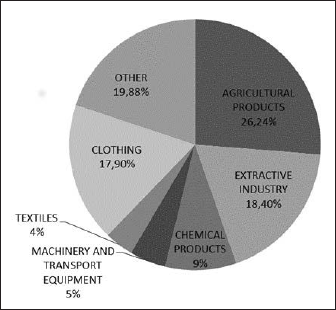
Inspired by the Asian dragon countries (South Korea, Taiwan, Singapore, and Hong Kong), Morocco invested in an export-led growth model in 1983. This new strategy of liberalization and promotion of exports was aimed at partially removing barriers to exports (Escribano & Lorca, 2003). Therefore, Morocco has put in place measures to reduce the effect of the anti-export policy inherited from the past by opting for a devaluation of the real effective exchange rate of 28.7% between 1980 and 1986 (World Bank Group, 1994). According to Marzak et al. (2014), exports during this period were based mainly on agricultural or fishery products, mining products, and products linked to the subcontracting activity (textile, leather). In this sense, Figure 1 shows that agricultural products represent the largest share of exports during this period, at 26.24%. The phosphate mining industry ranks second with a share of 18.40% of total exports, and the clothing sector ranks third with an average share of 17.90% of total exports.
The development of exports from the extractive and subcontracting industries required importing several intermediate products that the local industry could not cover, notably energy products. To cover the bill induced by these imports and avoid resorting to external indebtedness and reproducing the 1980 debt crisis, Morocco opted to develop its financial system. This decision aimed to ensure a better allocation of the resources necessary for financing investments and an adaptation of the financial structures and modes to the requirements of international openness (Wargui, 2009). In order to ensure a better allocation of resources, the monetary authorities decided to end the credit control policy in January 1991 and the liberalization of lending and borrowing rates (Haut-Commissariat au Plan, 2006). From 1993 onwards, the financial market, for its part, was modernized by strengthening the power of the stock market authorities (Wargui, 2009).
The New Global Trade Specialization
Between 2005 and 2018, Morocco recorded an upward trend in exports except during the crisis period (2008–2009) and the Arab Spring period (2011–2012).
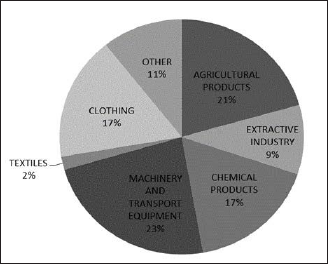
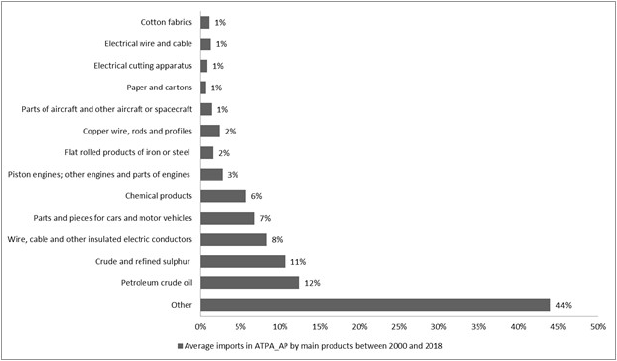
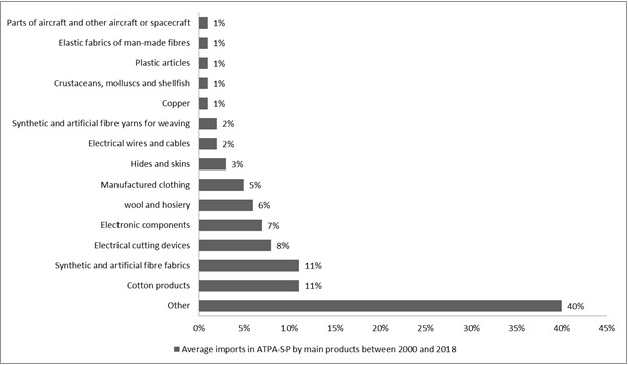
To succeed in its specialization in the new global trades, Morocco has deployed several structural projects to improve its business climate and to favor the installation of foreign investors. This new strategy has transformed the country’s export structure, as shown in Figure 2. Between 2005 and 2018, exports of agricultural products dropped to second place (21%), leaving room for capital goods and transport equipment (23%), which is explained by the concentration of foreign investment in the automotive industry. The extractive industry and clothing sectors occupy the third position attributed to the development of phosphate products and the installation of FDI in the textile sector. In light of this policy, Morocco opted for an import strategy under the temporary admission regime for inward processing to encourage and attract foreign investors. This regime allows the Moroccan exporter to import goods intended to undergo a transformation, additional labor, or processing for subsequent re-export while suspending import duties and taxes. According to Morocco’s Foreign Exchange Office, this measure aims to promote exports through the adoption of two options: Temporary admission for inward processing without payment (ATPA-SP) and temporary admission for inward processing with payment (ATPA-AP) (Office des Changes, 2004). Figures 3 and 4 show that more than 33% of ATPA-AP imports between 2000 and 2018 consisted of materials destined for the automotive, electronics, and aeronautics industries. However, almost 48% of ATPA-SP imports were materials for the textile industry in the same period.
Several lessons can be drawn from the analysis of Moroccan policies dedicated to foreign trade. Across the three policies, agriculture and the extractive industry have always contributed significantly to improving the Moroccan exportable supply.
Moreover, the considerable effect of the exchange rate variation on exports exhibited its importance as a key factor of price competitiveness (determinants of demand). To keep up with global financial changes, Morocco has modernized and liberalized its financial system (opening up of credits) and implemented incentive measures, notably for the ATPA regime, to attract foreign investors and promote exports. The set of variables identified in this section suggests an empirical study to verify and select the most influential ones on Moroccan exports.
Empirical Methodology
In this study, first, we used the conventional ARDL model to investigate the short- and long-run impacts of selected variables on export behavior. The ARDL model was chosen because it provides reliable and appropriate results in the case of small samples, and where the series studied are of the order I(1), I(0), or mixed (Narayan, 2005). Furthermore, the ARDL model allows the elimination of possible endogeneity issues, such as the correlation of residuals, by taking a sufficient number of lags (Harris & Sollis, 2003). The traditional ARDL model allows us to clarify the impact of selected variables on the behavior of Moroccan exports. Nevertheless, the work remains incomplete if it is not projected into the future. Hence, the dynamic ARDL model was performed in the second place to investigate the impact of negative and positive shocks of various determinants on the export’s behavior. This new approach helped to understand and interpret the estimated results of the impacts of the explanatory variables on the long- and short-term dependent variables through a graphical representation. To generate the estimates, 5,000 simulations were run for the variable vectors using the multivariate normal distribution (Sarkodie & Owusu, 2020).
Finally, to verify the validity of our empirical method, diagnostic tests were carried out to ensure the stability of the model, the homoscedasticity, and the non-correlation of errors.
Selection of Variables and Data Collecting
This study uses a set of variables that determine Moroccan exports extracted from different national and international databases for the period Q1-1998–Q4-2018. There are several national and international databases that publish Moroccan foreign trade variables but with a very limited number of observations. During data collection, the problem of the unavailability of long and complete series for the whole study period Q1-1998–Q4-2018 emerged for the three variables: Exports of goods and services, agricultural GDP, and domestic demand. The Moroccan High Commission for Planning database offers for each of these variables two series with different bases of calculation: the first from Q1-1998 to Q4-2014 (base 1998) and the second from Q1-2007 to Q4-2018 (base 2007). In order to obtain a long series for each of these variables, the econometric technique of linking the series was used. This operation involves correcting the oldest series to match the new series at its starting point while retaining some of its characteristics (de la Fuente, 2009). This work considers total exports at a constant price as the dependent variable, a set of seven selected variables as explanatory variables, and a set of dummy variables to represent structural breaks in the series. The empirical procedure aims to answer two main questions: What is the impact of the selected determinants on Moroccan export behavior in the long- and short-run? And how will export behavior react to future changes in an exogenous regressor?
The Dependent Variable
Exports of Goods and Services (EXPO)
The dependent variable is exports of goods and services in millions of dirhams at a constant price. It is used in volume to capture the real behavior of Moroccan exports, as demonstrated in several studies like Meloni (2018) and Bodart and Fontenay (2017). An increase in exports indicates growth and improvement, while a decrease indicates underperformance. The data on Moroccan exports of goods and services are derived from the High Commission for Planning database 2 from Q1-1998 to Q4-2018. Given the constraint of obtaining a complete series of exports for the period studied, we opted for the linking series technique to obtain the desired one.
The Determinants Variables
The Real Effective Exchange Rate (REER)
This index reflects the real value of the national currency against the currencies of the main partners. It is taken from the IMF’s International Financial Statistics (IFS) database 3 . This variable is generally used in the empirical literature as a proxy for price competitiveness (Meloni, 2018). In our case, the REER is used to explain the evolution of Moroccan exports relative to foreign demand, as is the case in the work of Rangarajan and Kannan (2017). A depreciation of the REER encourages demand for exports and vice versa.
Financial Development (CREDIT)
The financial sector is the flagship of economic performance (Levine, 2005). Its development allows an optimal allocation of financial resources, facilitating financing productive investments (Ndikumana, 2003). In contrast, an underdeveloped financial sector hinders the efficient use of financial resources (Gelbard et al., 2014). As a proxy of financial development, we calculated the amount of bank credit granted to the private sector, obtained from the database of the Moroccan Central Bank 4 (Bank Al Maghreb), as a percentage of GDP (Ang & McKibbin, 2007).
Production of Phosphate and Derived Products (PRODPHOS)
Morocco is the first producer of raw phosphate. Due to the efforts invested by Cherifian Phosphates Office in industrialization, the country has started to invest in the production of phosphate derivatives. The production of phosphate and derived products is measured per ton and is extracted from the MANAR-STAT Economic and Social database 5 of the Moroccan Ministry of Economy and Finance. This variable is used to raise industrial development. The greater the production, the more the foreign demand is satisfied.
Agricultural GDP (GDPAGR)
It is the gross domestic product of agriculture at a constant price (it represents the sum of the value added of the sector + taxes on products − subsidies on products). The agricultural GDP data were obtained from the Moroccan High Commission for Planning database 6 and were processed and completed using the linking technique, as in the case of the EXPO variable. Agricultural products represent the primary exports that have characterized the Moroccan exportable supply since 1973. They occupied a first place between 1980 and 2004 and second place after the export of machinery and transport equipment between 2005 and 2018. The choice of this variable is justified due to its possible positive influence on exports.
Production of the Industrial Foreign Investment (ATPAAP & ATPASP)
This variable is proposed to illustrate the new orientation of the trade policy of the Moroccan state. The expansion of FDI since the 1990s has transformed the economic fabric of Morocco and stimulated its growth. The majority of FDI flows that Morocco receives come from the EU and Eastern Europe and are mainly aimed at the industrial sector (an average stock of 25% between 2014 and 2018) based on statistics published by the Moroccan foreign exchange office (Office des Changes, n.d.). Moreover, these investments improve the industrial sector’s productive capacity, which contributes favorably to the promotion of the exportable offer. Especially the automotive export industry has gone from 12.7 billion MAD in 2005 to 25.2 billion MAD in 2012, an annual growth rate of 14.6% (Office des Changes, 2013). The variable production of industrial foreign investment is represented by two proxies: the imports in ATPA with payment (ATPAAP) and without payment (ATPASP). On the one hand, this choice is justified because the production of industrial foreign investment depends strongly on the raw materials imported from outside. On the other hand, the Moroccan government has deployed the ATPA regime to encourage the installation of foreign investors. According to our knowledge and research, the ATPAAP and ATPASP variables have never been used before as proxies for foreign investors’ production or to explain Moroccan export behavior, representing an additional contribution to our work. The data on the variables ATPAAP and ATPASP are taken from the database of foreign trade 7 published by the Moroccan Exchange Office.
Domestic Demand (DEM-INTER)
According to the OECD, domestic demand is the sum of final consumption, investment, and stock formation expenditure of the private sector and government in real terms. This variable is used as a control variable for the exportable supply, the higher the local demand, the lower the exports. Domestic demand could influence the behavior of exports, especially in the case of small open economies whose growth is driven by local consumption. As with the EXPO and GDPAGR variables, the data on the DEM-INTER variable were extracted from the Moroccan High Commission for Planning database 8 and were processed and completed using the series linking technique to obtain the desired ones.
The Specification of the Model
To empirically evaluate the impact of selected determinants on Morocco’s export behavior, the model can be specified as follows:

where α and β0T are, respectively, the constant and the trend, β1… β8 are the coefficients of the independent variables, t represents the time period, and ut the error term. The dummy variable represents the structural breakpoints.
The Conventional ARDL Model
Following Pesaran et al. (2001), Equation (1) can be transformed into a conventional ARDL model representing both the long- and short-run relationship as follows:

where p represents the lags of the dependent variable, and q represents the lags of the independent variables. ∆ is the first difference operator.
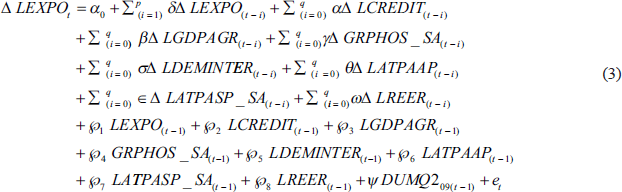
where α0 is the constant and ∆ is the first difference operator. p and q represent the lags of the dependent and independent variables, respectively.
The ARDL bounds test is based on two main steps. The first step, after checking the stationarity of the series, is to determine the optimal lag of the variables. The second step is to apply Fisher’s test to verify the null hypothesis and the alternative hypothesis:
H0:
However, if the bounds test shows that there is cointegration between the variables, a new Equation (4) is specified based on an unrestricted error correction model (ECM) that examines the short- and long-run coefficients as follows:

where
The Dynamic ARDL Model
Jordan and Philips (2018) have recently developed a new version of the ARDL model, which is the dynamic ARDL model. This new approach provides dynamic simulation of various ARDL models and allows for dynamic simulations that consider the significance of the results via counterfactual scenarios. Furthermore, this new approach allows estimating, simulating, and plotting changes in the dependent variable following changes in a regressor, ceteris paribus. Dynamic ARDL reproduces the impact of a counterfactual change in one explanatory variable at a particular point in time while keeping other variables in the system constant. This model was deployed in various fields and developed in the work of Jordan and Philips (2018), Sarkodie and Owusu (2020), Khan et al. (2019). This approach allows us to examine how to export behavior will respond or react to future changes in an exogenous regressor.
Before running simulations with the dynamic ARDL model, some conditions must be satisfied. First, the dependent variable must be strictly stationary in the first differences I(1). Second, the regressors must not be integrated in an order higher than I(1). Third, cointegration must exist between the variables in the model (Sarkodie & Owusu, 2020). Then tests of autocorrelation, heteroscedasticity, normality, and stability are established to verify the reliability of the results.
Correlation Analysis and Summary Statistics
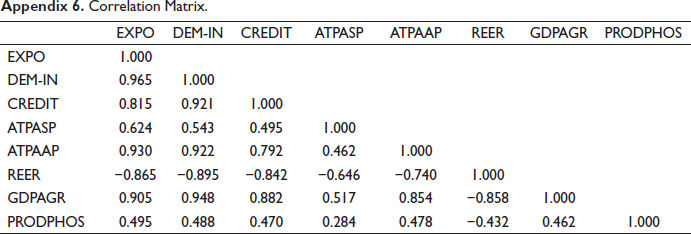
The analysis of the correlation matrix reveals the presence of a strong correlation between the export variable, domestic demand, credit, ATPA with payment, agricultural GDP, and REER (see Appendix 6). On the other hand, there is a modest correlation between ATPA without payment and phosphate production. In addition, the correlation matrix allowed us to detect the existence of a multicollinearity issue. As revealed in the methodology section, the ARDL model enables taking a largely sufficient number of lags which lets the elimination of residual correlations, as will be proven by the stability and serial correlation tests (Harris & Sollis, 2003).
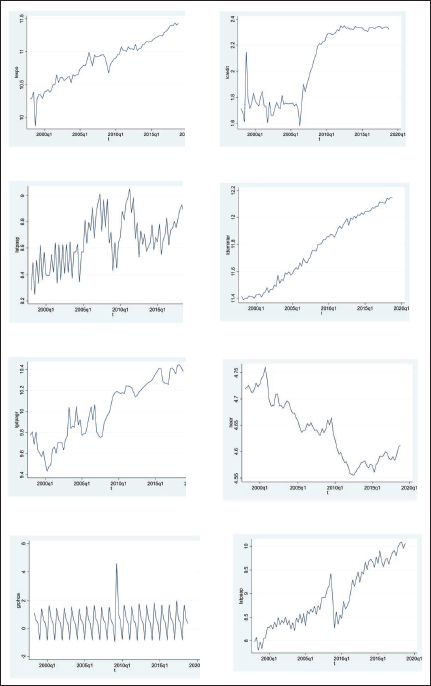
Table 1 gives us an idea of the important statistical indicators for the preliminary analysis of the variables, such as the mean, standard deviation, minimum, maximum, and normality dispersion of each variable. These indicators show an abnormal dispersion of all series except for LEXPO and LATPASP. This abnormal dispersion of the data suggests the presence of outliers in these series. This observation is confirmed by the graphical representations (see Appendix 1). In addition, the graphical representation of the variables GRPHOS and LATPASP indicates that the series is affected by seasonality. Therefore, we proceed to correct the seasonality effect and check the existence of outliers in all the series in the following.
Summary Statistics.
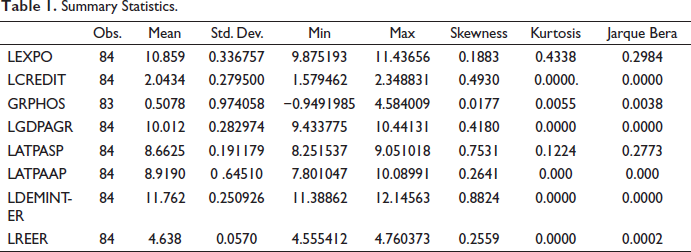
All variables are used in logarithms, except the PRODPHOS; we replaced this variable with its growth rate GRPHOS9 because the log transformation did not show a significant result for the estimated model.
Empirical Results
The study of stationarity is an important step in time series modeling. First, we corrected the seasonality of the GRPHOS and LATPASP series.
Treatment of Seasonality
The study of the seasonality of the series is an essential step in the modeling of time series. It is, therefore, necessary to correct the series affected by seasonality in order to analyze its other characteristics. The non-seasonal adjustment can create a noise harmful to the analysis and consequently perform erroneous forecasts (Bourbonnais & Terraza, 2016).
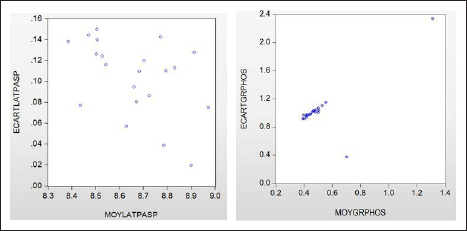
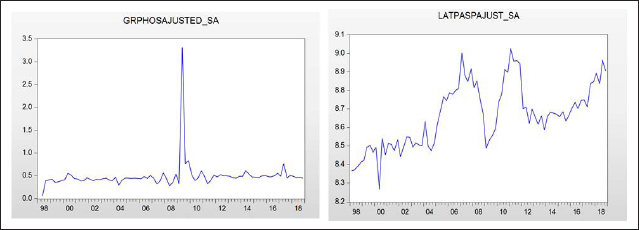
The literature offers several tests for seasonality, of which the Buys–Ballot test is the most widely used and simplest. The Buys–Ballot test identifies the additive or multiplicative model by calculating the mean and standard deviation of the series. If the mean depends on the standard deviation, the model is multiplicative; otherwise, it is additive (Laurent, 2006). Appendix 2 shows that it is an additive model for the variable GRPHOS and multiplicative for the variable LATPASP. Now that the type of seasonality is clarified, we can move to correct the seasonality of the series. There are several deseasonalizing methods, such as mobile means, census X-13, census X-12, and so on. In our case, we opted for the census X-12 method because it provides the best seasonal adjustment. The new GRPHOS_SA and LATPASP_SA series appear unaffected by seasonality or trends (see Appendix 3). However, several breakpoints need to be verified by other tests.
Unit Root Tests
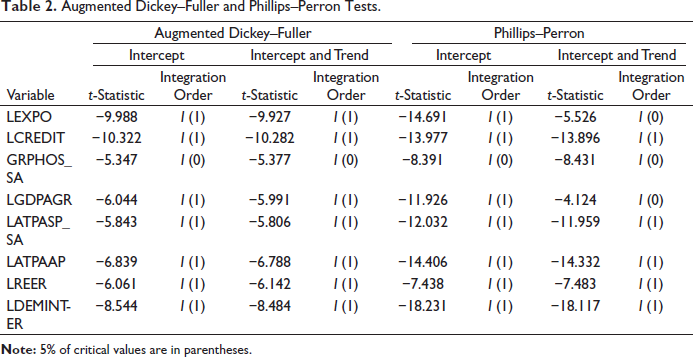
The examination of stationarity is a crucial step for time series models. In this regard, we first performed traditional tests: a parametric unit root test of the Augmented Dickey–Fuller (ADF) type and a non-parametric Phillips–Perron test. Second, we used the unit root test of breakpoints developed by Perron (1997) because the graphical observation and the descriptive analysis established earlier confirm the presence of breakpoints. The results of these tests are presented in Tables 2 and 3.
Augmented Dickey–Fuller and Phillips–Perron Tests.
Breakpoint Unit Root Test Based on Perron (1997).
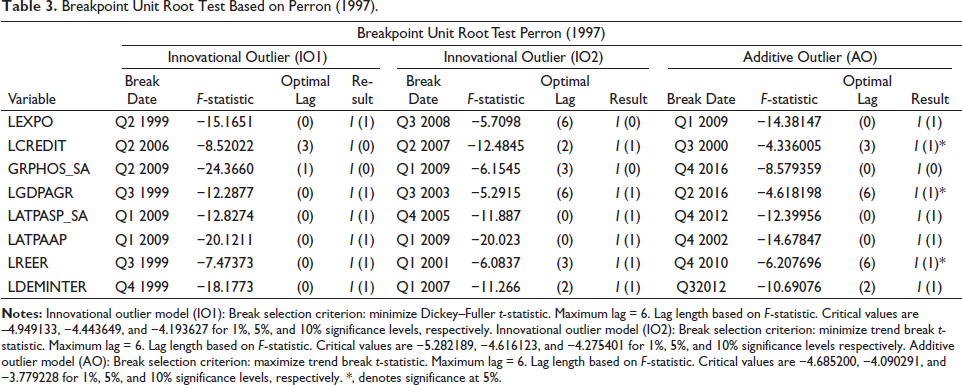
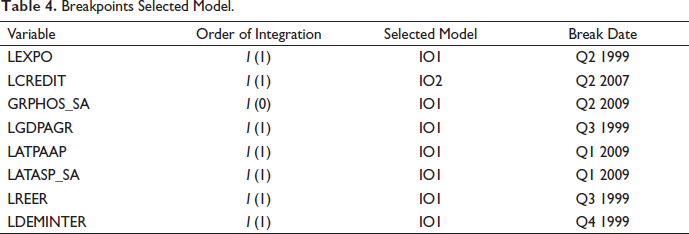
Conventional unit root tests show that the series has mixed integration orders. The unit root tests in Table 3 (Perron, 1997) confirm the order of mixed integration and adds the presence of structural changes in our variables. The dates of these changes have been indicated in Table 4.
Breakpoints Selected Model.
In this respect, we tried to include only the dummy variable that proves to be more significant in empirical and historical terms to avoid over-fitting the model with several dummy variables (Sun et al., 2017).
Given that half (50%) of the structural breaks in our data occurred in the years 1999 and 37.5% occurred from 2009, and only 12.5% occurred from 2007 onwards, we chose the year 2009 as the dummy variable. This is because it coincides with the global financial crisis of 2008 that initially affected developed countries and subsequently the developing countries.
Breakpoint Unit Root Test
Selection of the Optimal Breakpoint Model
Table 4 presents the results of the stationarity test of Perron (1997) performed under the three models for each variable. This test allowed the detection of structural breaks. Then, an optimal model was chosen for each variable according to the value of the F-statistic. The optimal model is the one with the most significant absolute F-statistic value compared to the other models (Chang et al., 1988; Chen & Liu, 1993).
Explaining the Macro-economic Structural Breaks
In general, all the estimated structural breaks resulted either from the implementation of internal reforms and structural transformations or from the occurrence of external economic shocks, which might have had a significant impact on the behavior of the variables. Several variables recorded a structural break during 1999, namely LEXPO, LGDPAGR, LDEMINTER, and LREER. The year 1999 was marked by low agricultural production, estimated at 13.866% of GDP, due to the 9 years of drought. Consequently, this year, Morocco realized the lowest economic growth of around 0.5%. Later, exports decreased, especially as agricultural GDP represented an average value of 25.72% of total exports between 1990 and 1999. In addition, the year 1999 coincided with an increase in the money supply and bank liquidity, mainly due to the sale of a 35% share of the capital of Maroc Telecom Company, as well as the remarkable evolution of tourist revenues and the massive remittances from Moroccans living abroad. On the social front, this year coincided with an unprecedented increase in the unemployment rate, estimated at 13.94%, against 13.172% in 1996. As a result, the purchasing power deteriorated (GDP per capita growth rate from 10.756% in 1996 to 0.175% in 1999). In 2007, the LCREDIT proxy for financial development fell due to the increase in private debt. In 2007, private debt issuance increased compared to 2006. The global volume of bonds issued on this market increased by 114%, from 10.1 to 21.7 billion DH. This increase came from the 183% rise in the volume of negotiable debt securities and the 22.6% rise in the volume of private bonds. In 2009, the LATPASP-SA, LATPAAP, and GRPHOS_SA series recorded a break-up, which coincided with the appearance of the global financial crisis.
The Bound-test
Now that the variables are stationary, we proceeded to the second step relating to the cointegration test, which suggests the selection of the optimal lag length. This selection depends on the data size, that is, annual, quarterly, or monthly. In this study, we used the SBIC, as it is the most used criterion for a relatively small sample size (Ivanov & Kilian, 2005). Based on Table 5, the lag length selected is 1.
Lag Length Selection.
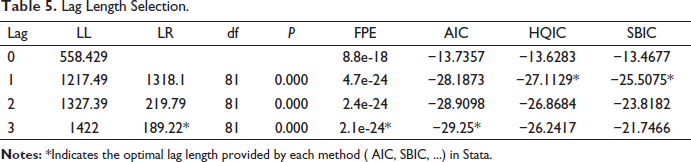
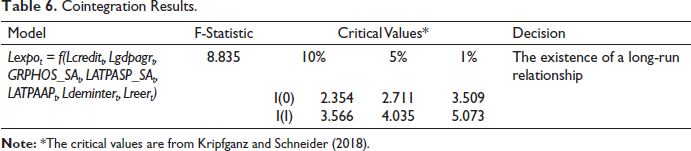
Table 6 shows that the F-statistic is far above the upper bound I(1) at 10, 5, and 1% significant levels, which implies the existence of a long-run relationship between the investigated variables.
Cointegration Results.
Discussion of the ARDL Results
Long-run Effect of Determinants
Financial Development (LCREDIT)
Contrary to expectations, the results of the long-run estimates show a significant and negative relationship between private credit as a percentage of GDP proxy for financial development and export behavior. A 1% increase in LCREDIT reduces exports by 0.332%. This result proves that exports do not benefit from the amplification of private credit granted, which contradicts the results of several theoretical and empirical studies conducted in other countries (Beck, 2002; Contessi & De Nicola, 2013; Kim et al., 2012; Shahbaz & Mafizur Rahman, 2014). This finding leads us to deduce that financial development depends on the characteristics of individual countries, whether developed or developing (Kim et al., 2012). Our results could be explained simply by choice of the proxy, private credit as a percentage of GDP for financial development. According to the literature, financial development can also be proxied by other proxies, like market capitalization as a percentage of GDP. Moreover, this result can be related to the low level of private credit extended. Low financial development hinders the efficient allocation of resources, which could slow down a country’s economic operations, especially exports. This argument is in line with Yakubu et al. (2018) and Kim et al. (2010). This result could also be explained by the regulatory framework and prudential policy adopted by banks, especially after the 2008/2009 crisis, as well as the failure of the banking sector to adapt to changing global practices. This argument is supported by Owen and Temesvary (2014). Sometimes the monetary and exchange rate policy deployed by a country can influence the level of its financial development. Maintaining a stable exchange rate, especially as Morocco adopts a fixed exchange rate regime, requires permanent control of its inflation rate, which implies limiting credit supply quotas (Ahmad & Ali, 1999; Madura, 2008; Oriavwote & Eshenake, 2012).
The Relative Price (LREER)
The results obtained show that the LREER has a significant and negative impact on the behavior of Moroccan exports. A decrease in the REER of 1% would lead to an increase in the volume of exports by 0.636%. This result suggests that a depreciation of the REER would lead to a decrease in sales prices (price competitiveness effect) compared to competitors and consequently stimulate foreign demand. This result supports Bouoiyour and Rey (2005), Menyari (2018), and Arize et al. (2003). Let us recall that the results obtained correspond perfectly to our expectations. This could be justified because Morocco, like most countries whose economy is based on agriculture and have several competitors, can only ensure the sale of its products through depreciation of its relative price, notably the REER. In contrast, the high-tech products offered by industrialized countries are sold without a price consideration (non-price competitiveness effect). This argument is in line with the results of Poonyth and van Zyl (2000), and Jordaan and Netshitenzhe (2015).
The Agricultural GDP (LGDPAGR)
Contrary to our hypothesis, the results obtained indicate that agricultural GDP is negatively and significantly related to exports in the long run. In underdeveloped countries, agriculture as the main activity has a significant and positive impact on exports, which is in line with Memon et al. (2008) in the case of Pakistan, Shombe (2008) in Tanzania, and by Kaur and Sidhu (2014) in India. In Morocco, agricultural GDP influences export behavior negatively in the long run. This result could be explained by the low productivity and quality of the agricultural produce due to its dependence on rainfall and the weak agricultural sector. Furthermore, the lack of research and development, the fragility of the marketing circuit, and the absence of appropriate digitalization are other factors that influence exports in this sector as well. In addition, the international market for agricultural products is characterized by intense competition from several countries, such as Spain, Egypt, and Tunisia, among others.
The Production of Phosphate (GRPHOS_SA)
In the long run, the results obtained support the hypothesis of a significant and positive relationship between the growth rate of phosphate production and the behavior of exports. A 1% increase in the GRPHOS_SA would strongly amplify the LEXPO by 0.209%. This important long-term significance could be explained by several elements. Morocco is among the main producers of phosphate, it possesses 75% of the world’s reserve and has been engaged in fertilizer production since 2011 (Geissler et al., 2019; IMIST, 2013).
Industrial FDI (LATPAAP and LATPASP_SA)
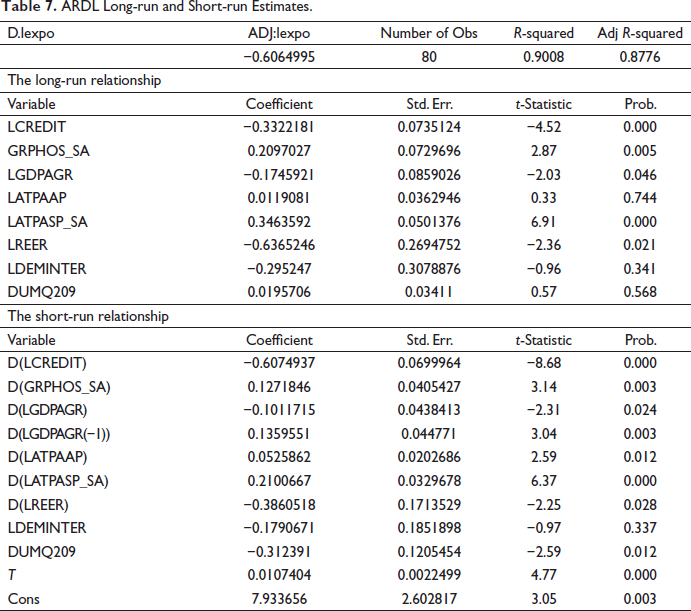
Table 7 shows that LATPAAP and LATPASP proxies for industrial FDI influence exports positively in the long run. The results also show that LATPAAP influences exports positively but not significantly in the long run. On the other hand, the results also confirm that LATPASP positively and significantly influences the behavior of exports in the long run. This indicates that a variation of LATPASP could amplify exports by 0.346%, meaning that exports depend on industrial FDI, which is mostly positioned in the textile sector (Figure 4).
ARDL Long-run and Short-run Estimates.
However, the non-significance of the relationship between LATPAAP and LEXPO shows that the industrial FDI positioned in the automotive and aeronautics sector does not significantly influence the behavior of exports in the long run. This finding could be explained by two reasons: First, this sector has just been initiated in Morocco following the launch of the Industrial Emergence Plan in 2005 to reorient the country’s industry toward the new global trades. Second, this sector has faced several crises, like the global financial crisis and the Arab Spring, which has broken its expansion. Therefore, the impact of LATPAAP on exports may need more time to become visible, which is confirmed by the short-run results.
Domestic Demand (LDEMINTER)
In line with our expectations, domestic demand negatively but not significantly influences exports in the long run. This means that changes in domestic demand would not necessarily reduce exports. This finding is in line with Blot and Cochard (2008) and Erkel-Rousse and Garnero (2008).
Short-run Effect of Determinants
Financial Development (LCREDIT)
In the short run, Table 7 shows that the current financial development influences the evolution of exports negatively and significantly. An increase in the financial development of 1% would strongly reduce exports by 0.607%. This result could be explained by the prudent policy applied by the Central Bank to control the money supply and the stability of the exchange rate.
The Relative Price (LREER)
According to our hypothesis, the LREER has a significant and statistically negative influence on exports in the short run. A decrease in the LREER would lead to an increase in Moroccan exports. Similarly, in the long run, this result proves that exports are mainly characterized by price competitiveness.
The Agricultural GDP (LGDPAGR)
Like the long-run outcome, agricultural GDP has a statistically significant and negative influence on the behavior of exports. Table 7 shows that a 1% increase in the current agricultural GDP could increase exports by 0.101%. On the one hand, this could be explained by the low value-added generated by the export of agricultural products. On the other hand, the increase in agricultural production could lead to a decrease in the price of agricultural products and consequently stimulate domestic demand at the expense of exports.
The Production of Phosphate (GRPHOS_SA)
In the short run, the results in Table 7 show that the current growth in phosphate production has a positive and very significant impact on exports. A 1% increase in GRPHOS_SA boosts exports by 0.127%. This result could be explained by the large market share held by the Cherifien Phosphates Office and the significant world demand as well.
Industrial FDI (LATPAAP and LATPASP_SA)
In line with our hypotheses, the short-run results show that LATPAAP and LATPASP, which are the proxies of industrial FDI, positively and significantly influence LEXPO. A variation of 1% in LATPAAP and LATPASP amplifies exports by 0.052% and 0.210%, respectively, in the short run. These results confirm that industrial FDI positioned in the textile and automotive sectors impacts exports. The positive and significant impact of LATPAAP on export confirms our assumption that industrial FDI positioned in the automotive sector still needs time to demonstrate its influence in the long run.
Domestic Demand (LDEMINTER)
Similarly, in the long run, the short-run results show that domestic demand has a negative but insignificant influence on exports. This means that the country has no supply constraints on the domestic market.
Finally, the dummy variable that captures the major changes following the global financial crisis of 2008/2009 has produced the expected results. The long-term impact is positive and statistically insignificant, as shown in Table 7. In contrast, the short-run impact of the dummy variable is negative and statistically significant. This means that exports decreased in the short run due to the crisis but was then adjusted in the long term due to the low integration in the global value chain and the modest trade openness.
Moreover, the coefficient of the speed of adjustment towards equilibrium is negative and significant (−0.6064995). This means that an imbalance between the variables in the previous quarter converges to the long-term equilibrium situation with a speed of 60.64% in the current quarter. Also, the R-squared result shows that LCREDIT, GRPHOS_SA, LGDPAGR, LATPASP_SA, LATPAAP, LDEMINTER, LREER, and DUMQ209 together explain 60.64% of the behavior of Moroccan exports. This implies that other variables not included in our model explain 39.36% of the export behavior.
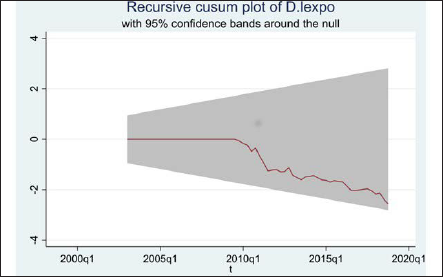
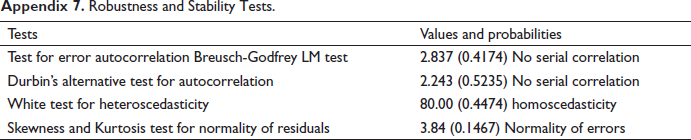
The diagnostic tests in Appendix 7 confirm the absence of serial correlation and heteroscedasticity of the residuals, as the probabilities associated with the different tests are greater than 0.05. The results of the CUSUM and CUSUM of Squares tests show that the model parameters are stable over time as the recursive residuals and squares always remain within the 5% confidence interval (see Appendix 4). Therefore, we accept the null hypothesis: There is no structural change.
Counterfactual Change
To project our results into the future, we have performed the dynamic ARDL model of Jordan and Philips (2018). We used this new version of dynamic ARDL in this study as it improves the robustness of the conventional ARDL model. The ARDL dynamic simulation is based on a contribution of (+/−1%) from LCREDIT, GRPHOS_SA, LGDPAGR, LATPAAP, LATPASP_SA, LDEMINTER, LREER DUMQ209 in LEXPO using a 20-year counterfactual shock from 2018 to 2038. At this level, we examined how the export behavior will respond or react to future changes in an exogenous regressor.
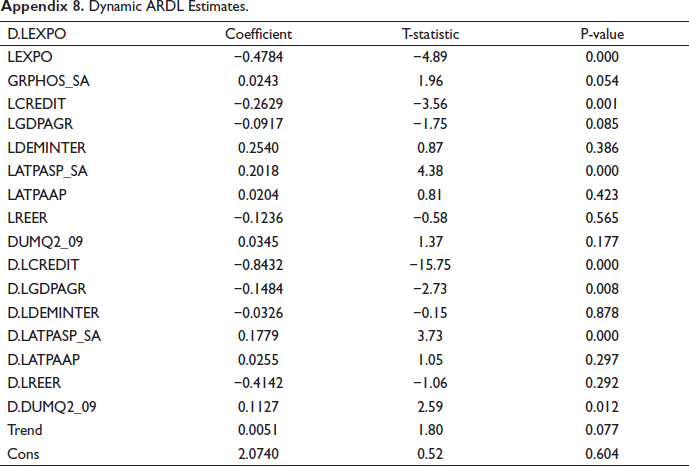
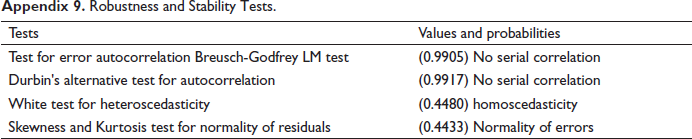
Table 7 and Appendix 8 show that the estimates of the two ARDL models are similar in terms of the sign, suggesting that the nature of the relationship between the dependent and explanatory variables is identical. However, the coefficients indicating the degree of impact of the variables vary. In terms of significance, the two models also point to the same significant variables except for the LREER, which is not significant in the dynamic ARDL model while it is significant in the standard ARDL model. Appendices 9 and 5 show that the results of the dynamic model are validated by all statistical tests.
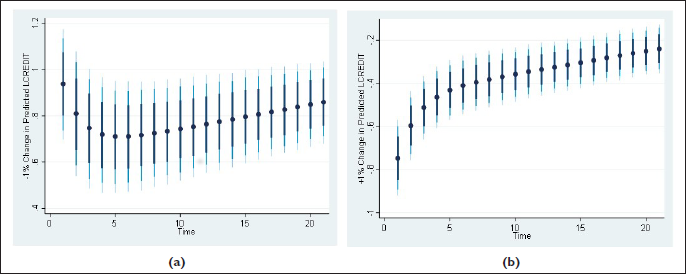
The counterfactual shocks observed in Figure 5(a) reveal that -1% change in predicted LCREDIT has a downward effect (a decrease of 0.13% between years 1 and 2, 0.06% between years 2 and 3, and 0.05% between years 3 and 4 and 0.02% for the rest of the years) on exports during the first 6 years. From the seventh year onwards, exports resume their increases at a modest and gradual pace for the rest of the studied period. However, a +1% shock of LCREDIT leads to a regular increase in exports from the first year onwards but at different rates. The rate of increase is approximately 0.15% from year 1 to year 2, 0.1% from year 2 to year 3, and 0.05% for the remaining years. This result implies that the increase in private credit granted encourages investment and, consequently exports. Where financial resources are optimally allocated to finance investments, exports are stimulated.
Representation of the Predicted Impact of a ±1 Shock in LCREDIT on LEXPO.
The counterfactual shocks observed in Figure 6(c) reveal that -1% change in predicted GRPHOS_SA has a downward effect of 0.02% on exports during the first 3 years. From the fourth year onwards, exports resume their regular evolution at a significant rate. Therefore, this shock has only a short-term downward effect. On the other hand, a shock of +1% of GRPHOS_SA has a regular upward effect of 0.02% on exports over the 20 years studied. This result implies that phosphate production has a strong influence on the country’s exports. Therefore, increased efforts to boost this production in quantity and quality would increase exports in the future. This suggests that the international demand addressed depends on the country’s supply capacity. Thus, the phosphate export sector represents a potential market for which Morocco can gain further market share.
Representation of the Predicted Impact of a ±1 Shock in GRPHOS_SA on LEXPO.
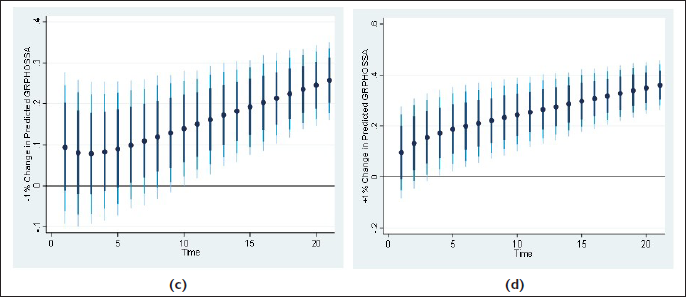
Figure 7(e) demonstrates that a shock of -1% of LGDPAGR has a steady upward effect of 0.03% on exports between the first and second year and between the second and third year and of 0.01% for the remaining years. However, a shock of +1% to LGDPAGR has a very slight downward effect on exports in the first 2 years. Exports stabilize between years 2 and 3 and then start to increase gradually from year 4. This result shows that a decrease in agricultural production increases exports, while an increase in agricultural production slightly decreases exports. This finding implies that the agricultural sector does not represent a profitable specialization for Morocco. Therefore, Morocco must review its specialization and orient itself towards the export of products other than agriculture that generate higher value.
Representation of the Predicted Impact of a ±1 Shock in LGDPAGR on LEXPO.
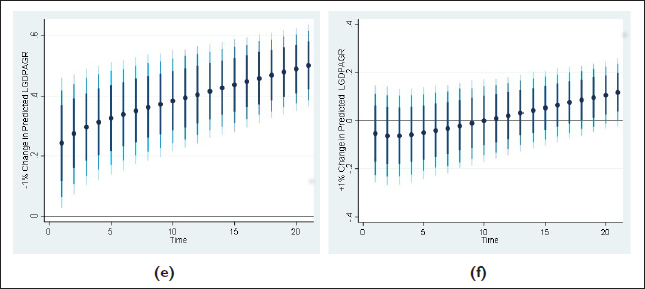
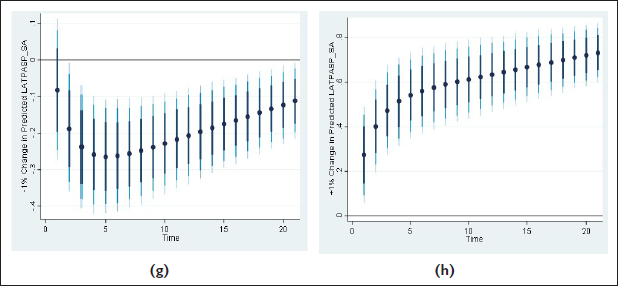
Figure 8(g) shows that a shock of -1% of LATPASP_SA has a downward effect on exports of 0.2% between the first and second year, 0.1% between the second and third year, 0.02% between the third and fourth year, and 0.01% between the fourth and fifth year. From the sixth year onwards, exports resume their gradual evolution of 0.01% for the rest of the period. However, a shock of +1% to LATPASP_SA has an upward effect on exports of 0.12% between years 1 and 2, 0.04% between years 2 and 3, 0.03% between years 3 and 4, and 0.01% for the rest of the period. This result shows that the LATPASP_SA proxy of the production capacity of industrial FDI strongly influences Morocco’s exports. This finding implies that this new specialization that Morocco has just oriented itself towards represents a critical factor that would allow the diversification and sophistication of the exportable offer.
Representation of the Predicted Impact of a ±1 Shock in LATPASP_SA on LEXPO.
Conclusion
The novelty of this work, in the Moroccan context, stems from the fact that it provides relevant answers to the question of export determinants through a multidimensional analysis that integrates both supply and demand variables. The study was extended by analyzing the counterfactual shocks of each independent variable on export behavior. This allowed us to determine the most influential export determinants and establish future scenarios. The results obtained by the ARDL and dynamic ARDL models show that financial development strongly and negatively influences the performance of Morocco’s exports in the long- and short-run. Thus, financial development is one of the parameters on which Morocco should focus to take full advantage of its new external specialization and keep up with the development of international financial operations. When financial resources are optimally allocated to investment financing, production capacity is strengthened, and consequently, the exportable supply is improved. Concerning the impact of phosphate production, both models confirm its significant and positive influence on exports in the long- and short-run. Thus, increased efforts to diversify and renovate phosphate products will improve their non-price competitiveness. Contrary to our expectations, the results also showed that the agricultural GDP has a significant but negative effect on exports. This result could be explained by the low productivity of the agricultural sector in terms of quality and quantity, as well as its dependence on climatic hazards. Also, this finding implies that the agricultural sector represents one of the key parameters influencing Morocco’s exports in the long run. However, it requires significant investments in research and development and modernization to orient its products toward the market and improve its competitive advantage. Given the fierce competition in the export of agricultural products, the development of other strategic specializations in parallel could serve to diversify the exportable offer and the development of new strategic specializations generating value. In this sense, the results show that the production of industrial FDI positively and very significantly influence exports in the long- and short-run. These findings imply that this new specialization towards which Morocco has just turned represents a critical factor that would allow the diversification and sophistication of the exportable offer. Nevertheless, the implementation of targeted strategies to promote a local industry “made in Morocco” would ensure sustainable development and limit the effects of external shocks.
Appendices
Graphic Presentation of Variables.
The Dependence of the Mean on the Standard Deviation.
GRPHOS_SA and LATPASP-SA Seasonally Adjusted.
CUSUM and CUSUM of Squares.
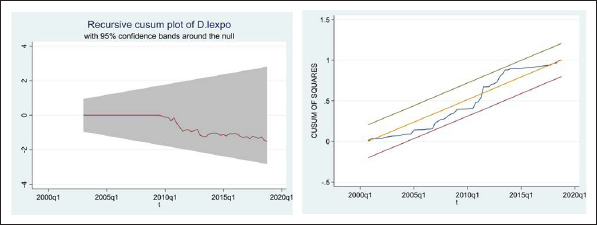
CUSUM.
Correlation Matrix.
Robustness and Stability Tests.
Dynamic ARDL Estimates.
Robustness and Stability Tests.
Footnotes
Declaration of Conflicting Interests
The authors declared no potential conflicts of interest with respect to the research, authorship, and/or publication of this article.
Funding
The authors received no financial support for the research, authorship, and/or publication of this article.
