




Abstract
This article explores numerous socio-economic facets of internal migrants from West Bengal, including their subjective conceptions of their social standing and social class, and analyses how these facets are intimately tied to growth in Kerala. In Kerala, a sizeable portion of internal migrants come from North India. With approximately 2.5 million internal migrants in 2013 and a population growth of 235,000 annually, Kerala is a preferred destination state for migrant labourers in India. Migrant workers from outside have grown to be a significant and essential component of the Kerala economy as a result of the state’s demographic shifts and high rates of educated unemployment, which has led to a severe labour shortage for low-wage frontline jobs. Due to the extreme labour scarcity, the state’s unorganised industries are seeing exceptionally high pay rates. Most migrants come from impoverished and marginalised communities and are employed in the state’s unorganised sector. These migrants frequently find themselves on the periphery of society despite being essential to the economy. The onset of the COVID-19 pandemic led to job losses worsening the situation for migrant workers. The article examines the position of migrants in West Bengal, the source state, and Kerala, the destination state. Further, the article explores the governance of labour migration within the context of migration policies adopted in Kerala and examines how the term ‘guest workers’, which is used to describe internal migrants, can be seen as a distinct, complicated social dynamic in and of itself.
Introduction
‘Will there be Sun? Or Rain?
Sleet Damp as the pasted smile of the frontier clerk?
Where will the last tunnel spew me out Amphibian?
No one knows my name. So many hands await that first Remittance home. Will there be one?’
Wole Soyinka, Migrations.
On a rainy day in Thiruvananthapuram, the capital city of the South Indian state of Kerala, we interviewed Ayan, who was in his mid-30s. He wore a blue and white striped lungi and hailed from the Bardhaman district of West Bengal. Like others in this article, Ayan unsettles himself as he expected the Kerala state to be and how his migration confounded it in the capital city.
Nobody likes to leave their home, family, and community to work in a strange location and under unsettling circumstances, but due to circumstances beyond my control, I was forced to do so. Clearly, there were a number of reasons why I decided to travel from my home to the faraway state of Kerala. Like myself, most of them left home when they were teenagers and found employment in a number of different Indian places before moving to Kerala. I came here due to the relatively poor earnings, lack of work possibilities in Bardhaman, growing unviability of the agricultural industry, and its seasonal character. Even here, people have the same attitudes towards migrant workers like other cities, but at least we get paid more than they do.
Ayan’s story may appear to be generally consistent with the popular perception of migrant workers in Kerala as being unsettled and insecure.1,2,3 Few people, let alone migrant workers, seriously consider the many effects that capital, state and labour organised at different scales may have on the agency and capabilities of workers. This article highlights the rifts caused by the pandemic and its impact on groups of migrants who were vulnerable owing to their marginalisation in the city.
According to the 2011 census, Kerala has the nation’s lowest decadal population growth rate at 4.6%. This is considerably lower than the 17.6% national average. The state government’s Economic Review (2022) states that Kerala is headed for population growth that is either zero or perhaps negative. Kerala had a larger-than-average youth population, according to the 1961 census. The 2011 census made the population’s ageing quite visible. From 19 years old in 1961 to 31 years old in 2011, the population’s median age increased. One in three people in the state of Kerala will be older than 60 by 2050 (Rajan & Mishra, 2020). The demographic shift has resulted in the universalisation of nuclear households and the educated workforce in Kerala is on par with that of many industrialised nations, but due to slow industrial capacity growth, a lack of investment-oriented government action and widespread capital flight from the state as a result of its reputation as a ‘labour problem’ state, there existed a surplus of workers with this level of education. Today, this has led to a massive influx of migrants from other Indian states, making Kerala the new Gulf of India.
When consecutive oil crises substantially raised the export revenues of Gulf States in the 1970s, there has been a dramatic surge in international migration from Kerala to the Gulf (Prakash, 1998; Zachariah et al., 2001). The migration resulted in improving the quality of life but had a detrimental impact on Kerala’s indigenous low-skilled workforce supply. Over the period, the supply of low-skilled employees in Kerala has been severely constrained by the large-scale migration to the Gulf. Along the way, labour-intensive sectors have grown and private investment in housing and building has expanded with the remittances (Rajan & Cherian, 2023). Due to the accumulating riches in Kerala, there was a constant need for low-wage labour to carry out the necessary household, construction and manufacturing tasks to facilitate the gap between supply and demand. (Parida et al., 2020), which further worsened the situation of the extreme labour scarcity that led to the state’s unorganised industries seeing exceptionally high pay rates. One of the most significant developments in the migration scenario in Kerala in the last decades has been the rise of internal migration to Kerala from the Northern Indian states.
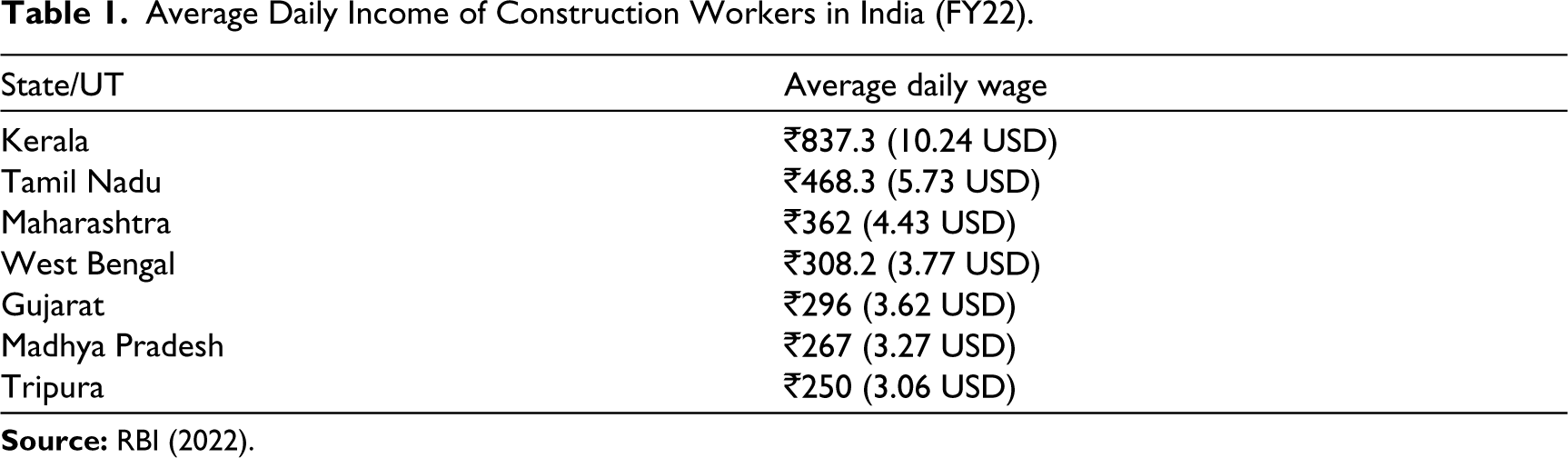
With approximately 2.5 million internal migrants in 2013 and a population growth of 235,000 annually, Kerala is the most preferred destination state for migrant labourers in India. Today, this has led to a massive influx of migrants from other Indian states, making Kerala the new Gulf of India. Several low-skilled job seekers from North Indian states such as West Bengal, Orissa and Jharkhand, among others, may have been drawn to Kerala because of the significantly higher income rates and improved living circumstances. The average daily income for construction workers in Kerala was three times more than it was in the two states with the lowest wages, Tripura and Madhya Pradesh, according to the Reserve Bank of India (2022) as depicted in Table 1. In Kerala, the average daily income for a construction worker was 837.3 rupees, as opposed to 250 in Tripura, 267 in Madhya Pradesh, 296 in Gujarat and 362 in Maharashtra. Despite receiving 837 rupees ($10.27), they are underpaid in comparison to native labourers. Kerala continues to pay the highest wages in both India and the SAARC nations. 4 For example, between 2014–2015 and 2021–2022, the real salaries of male agricultural labourers, non-agricultural labourers and construction workers climbed at a pace of less than 1% each year. Millions of young Indians are driven to these migration corridors by the need to maintain labour, which is demonstrated, among other things, by the continued pressure on the farm sector—from 42.5% as per the 2018–2019 Periodic Labour Force Survey (PLFS) According to the data published by National Statistics Office (2019) on Periodic Labour force Survey of the Ministry of Statistics and Programme Implementation, to 46.5% of the total workforce in 2020–2021, dipping marginally to 45.5% in 2021–2022. In both the organised and unorganised sectors, there were roughly 470 million individuals employed in 2017–2018, according to the PLFS. 380 million people, or more than 81% of the workforce, do not work for an organisation. Some estimates place the number of short-term or circulatory migrants at 15 million, in addition to the 194 million migrants who work in the country.
Average Daily Income of Construction Workers in India (FY22).
Kerala is one of the major migration corridors now and Ernakulam plays a major role in it having nearly 600,000 of migrant workers and even migration workers bring families (Parida & Raman, 2020). Despite contributing significantly to the state’s economy through employment, migrant workers in Kerala face both institutional and individual discrimination. The structural reliance on low-wage labour is evident, but measures are in place that discourage integration and perpetuate temporary status rather than promoting permanence. Migrant labour in particular is closely supervised, calculated and evaluated to serve regional and global markets (Altenried et al., 2018).
The continuous movement of people between source areas and destinations results in the establishment of long-term migration corridors determined by the economic geography of cities as well as various interests governing urbanisation (Mata-Codesal & Schmidt, 2020). Even fewer labour-sending governmental measures are made to ensure the well-being of migrant workers. By examining the status of migrant workers in Kerala in the global neoliberal economy, this article aims to further the conversation. We contend that the tensions that occur when internal migrants in Kerala work to develop themselves as ideal neoliberal subjects yet must face the prospect of an insecure future shape their experiences to comprehend how the process of relocation results in their insecure living.
Research Methods
This article is based on two periods of fieldwork. The article is the result of five months of ethnographic fieldwork (October 2022–March 2023). The first period took place for a month in the summer of 2019, during which the first author did 10 in-depth interviews. The first author spent four months in the Bardhhaman district of West Bengal. The interviews lasted 45 minutes on average and all but four were recorded. We paid close attention to the interviews and let the subjects categorise the world for themselves (Bourdieu, 1991). It made it possible for us to comprehend them more fully in their broader socio-economic, political and cultural contexts. In addition, our continuous connection and interaction with them gave me an ethnographic insight into the realities of migrant workers in Kerala.
Using Bardhhaman contacts as the base we conducted nearly 14 interviews in Kerala (Ernakulam and Trivandrum), interviewing men and women separately, employing a convenience sampling method. The age range of the male interviewees was 19–42, while that of the female interviewees was 26–48. In writing about the possibilities for ethnography in a transnational context, Michael Burawoy (2001) contends that ‘the global [is] formed in the local’ and that ‘globalisation is the construction of (dis)connections that link and of discourses that move’’. In order to shed light on ‘the lived experience of globalisation’, ethnography can be used to track these linkages and threads. The migrants were divided into two groups: those who had just finished a time of migration in Kerala and had returned permanently, and those who were back in Bardhhaman on leave before returning to Kerala once again. In order to adequately explore relationship factors, the interviews were done over the course of many sessions spanning an hour each. Given that the study neighbourhoods included building sites, lifestyles at construction sites were also covered outside of the scope of the interview guide questions, including where inhabitants spent time or avoided in their neighbourhoods. To present the tale of migrant labourers in the real world, we depend on the first-hand stories of local labourers at building sites.
The results of this study, which drew on qualitative convenience sampling, are not necessarily representative of all Bengali migrants, but they do show how individuals and communities construct multiple, overlapping identities discursively, as well as the meanings attached to labels and the circumstances that draw attention to particular identities. We further conducted focus group interviews on the construction sites to get a further idea about the precarity and the layers of power which exist in the social divisions of labour. To familiarise ourselves the unknown and defamiliarise the familiar, we attempted focus group discussions of a group of five in both Ernakulam and Trivandrum (Bauman, 2011).
Interview Methodology
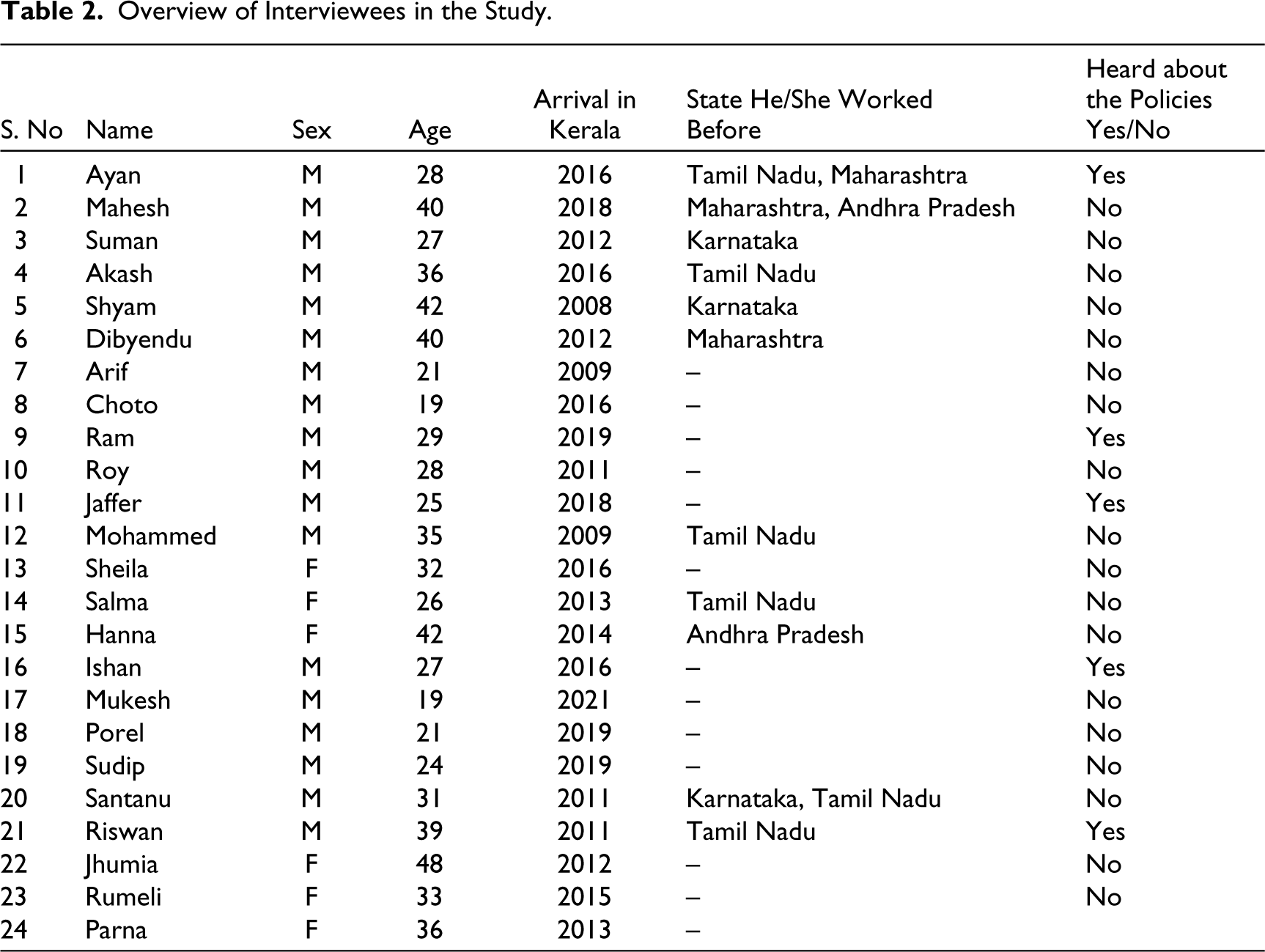
For the purpose of gathering data, two interview guides—one for returned migrants in West Bengal and another for migrants in Kerala—were created. The 14 open-ended questions in both guides covered a wide range of subjects, including the prevailing working and living circumstances of migrants in Kerala settings, natives’ attitudes towards migrants, interactions and trust between migrants and Keralites, issues and coping mechanisms faced by migrants in Kerala, as well as awareness of social policy initiatives. In West Bengal, interviews were done in both a home and a community context, while those in Kerala were conducted in a work environment. The interviews lasted around 50–90 minutes. ATLAS.ti was used for the analysis of interview transcripts. To safeguard the identity of interviewees, we employed pseudonyms. Table 2 shows the data collected during the interviews. The table gives the name and sex of the workers along with the information of their arrival in Kerala as a migrant labourer. The table also indicates the state where they worked prior to this and shows their awareness of the welfare programmes available to them.
Overview of Interviewees in the Study.
Chaotic Lives
Migration in India is inextricably linked to group-differentiated vulnerability in unequal yet intricately connected political geographies (Axster et al., 2021). Due to the segregated nature of Kerala’s labour markets, social networks and migratory intermediaries play a crucial role in connecting job seekers and employers (Peter et al., 2020; Rajan & Sumeetha, 2015). The influence of contractors or agents over migrant labour contributes to economic exploitation through failure to pay agreed-upon salaries, overworking and the absence of contracts. This creates a system of dominance by the dominant group. Despite significant democratic changes in Kerala, there continues to be a perception of hostility towards migrants rooted in strong caste and class-majority culture. The volume and speed of migration have led to changes in Kerala’s social structure. Kerala’s migration policies prioritise low-skilled and low-wage migrants to fill jobs that locals reject. These migrants not only make up a significant part of daily life but also increase dependence while highlighting cultural differences. The presence of migrant workers in the streets reflects Kerala’s political economy, which aligns with a particularly neoliberal infrastructure by attracting a large number of migrant workers. This exemplifies the ‘privatisation of everything’ under neoliberalism, where self-employed migrant workers provide services to consumers (Harvey, 2005). In Kerala, it is obvious that neoliberal pressures, in conjunction with the stratifying forces of caste and religion, determine social goals and access set by the powerful (of higher caste and class standing), who choose who needs saving more than others (Heller, 2000).
The prevalence of dominant beliefs and the indigenous notions regarding distinctions between ‘self’ and ‘others’ have a significant impact in Kerala. The cultural determinism shapes the perception of non-Keralites as ‘Anya Samsthana Thozhilalikal’, which translates to ‘labourers from foreign states’ (Narayana et al., 2013). This terminology indicates that migrants from outside the state are regarded as ‘guest workers’. However, this term also signifies a form of segregation where these guest workers experience both inclusion and exclusion. Despite being considered the norm in Kerala, the broad interpretation of ‘guest worker’ often obscures the dominant characteristics of Kerala society. The confluence of being a Keralite and a ‘guest worker’ is frequently rooted in racialisation and structural marginalisation. The research explores privilege as an expression of entrenched caste and class advantage within socio-cultural and political frameworks, which can be easily affected by processes seeking uniformity or differentiation, leading to insecurity instead. The term ‘guest workers’ overlooks the resourcefulness of internal migrants and raises questions about the settlement of migrant labourers in Kerala. These policies have had negative consequences, establishing a system of exclusion and indirectly suggesting that ‘you are a guest and you are only welcome for this period of time’. These performances, seemingly spontaneous and driven by agency and initiative, often serve as voyeuristic proclamations of a superficial understanding of real exclusion. This exclusion is tied to the complex and unpredictable nature of the State and society, reflecting changing power dynamics between South India and North India. While acknowledging how cultural capital intersects with caste and class privilege, this article challenges insider–outsider distinctions. I propose reconceptualising ‘guest workers’ as a malleable concept shaped by institutional and social forces in Kerala. Despite being a prevalent presence in society, internal migrants are often undervalued, yet they play an integral role in Kerala’s societal framework. Soumyadeep, a male migrant with a bachelor’s degree, relocated to Kerala in the late 2010s and brought his family along with him. He conveyed his thoughts on this experience:
This isn’t meant to seem patronising…. It’s just that neither the people nor the government treats us equally, which impacts how we interact with one another in Kerala society as well. It is clear that a lot of people are now arriving, and I even brought close to 10 people to work in Kerala. Our individuals often have their own social networks. They are not hostile to socialising with “locals,” but doing so inside an immigrant social circle means that we have a shared understanding of culture. In Kerala, even when I go to a restaurant, I can feel the difference in attitude since we are a lower class. But they value it if we speak in Malayalam.
With a lack of proficiency in the local language and limited mobility, migrant workers face challenges in accessing information about their rights, prevailing wages and legal protection in Kerala. This lack of awareness makes them vulnerable to exploitation as they may not realise that local workers receive higher wages and better protections (Moses & Rajan, 2012). Soumyadeep’s remarks demonstrate various explicit and implicit methods through which language influences the encounters of the migrant population in Kerala. The sense of ‘otherness’ associated with language and social class also hinders his complete utilisation of resources and financial systems accessible in spoken and written Malayalam. Language plays a crucial role in the experiences of migrant workers in Kerala, influencing their access to information, rights and opportunities for social integration and upward mobility.
Omnipresent and Invisible: Bhais in Kerala
Migration governance in the Global South lacks comprehensive theoretical understanding, particularly with regard to regulations and neoliberal responsibilities. A contextual analysis of different manifestations of neoliberal governance reveals the dynamic and historically and spatially diverse nature of neoliberalism. The increase in privatisation in Kerala reflects the material and discursive practices of neoliberal development. Migration has led to a surge in land and construction costs, resulting in a shortage of skilled labour that was previously filled by migrants from neighbouring districts such as Tamil Nadu and Karnataka. Furthermore, the state’s increased embrace of neoliberal policies on multiple levels during the 1980s attracted large multinational construction and real estate corporations into the market. Urban poor individuals are considered ‘trapped’ and disempowered due to their lack of social agency for self-protection (Cumbers et al., 2010).
The concept of ‘guest worker’ aims to create a distinction between the ‘self’ and the ‘other’. This term serves as a barrier, establishing a separation between ‘us insiders’ and ‘them outsiders’. Coined by the government of Kerala, the term ‘guest workers’ is precise and in actuality fully encompasses the ostracisation and denial of fundamental rights. 5 Categorising migrants as ‘guest workers’ has advantages because it renders them controllable and vulnerable. Temporary migrant settlements that attract low-wage internal migrants have become a consistent but temporary feature in Kerala’s landscape due to the continual influx of migrant labourers over time. Castles argues that the definitions of migration are not impartial and are influenced by government policies. The term ‘guest worker’ should be considered as a category necessitating genealogical examination and linked to a particular method of governing (Castles, 2000). This identity of migrants also contributes to broader social dynamics by imposing specific distinctions intended to regulate and standardise the entire community.
The concept of temporary permanence has led to bias against migrants, which has been associated with violence. As mentioned earlier, migrant workers are housed together in dormitories or temporary accommodation on construction sites or specific areas. Through legal and social-spatial segregation using terms such as ‘guest workers’, migrant workers are marginalised by creating an unseen barrier to restrict mobility and enabling surveillance to make them compliant subjects. These interventions in their daily lives and interpersonal relationships perpetuate the vulnerability and subjugation of migrants as well as their marginalisation and discontentment. The term ‘guest workers’, rather than ‘enclavisation’, signifies an authoritative exercise of control. This clearly establishes the idea of the ‘other’. Ethnocentrism is promoted here to maintain social advantages, necessitating clear boundaries between Malayalis and ‘guest workers’. The mechanisms that differentiate insiders from outsiders align with the concept behind the phrase ‘guest workers’, serving a political purpose consistent with geographers’ theory that space always carries political implications. It avoids potential issues arising from public exposure of their settlements or inquiries about their basic needs.
The concept of ‘guest workers’ plays a role in defining boundaries. Its application enables the state and society to maintain a sense of structure, both within the specific areas and communities involved, as well as between ‘our’ group and other groups that are part of a broader system of segregation. This construction of an ‘other’ leads to the development of separate identities through the ongoing use of the term ‘guest worker’. From official documents to daily interactions, this terminology distinctly separates migrant workers and influences how their presence is comprehended, portrayed, sustained and altered.
Chotto, a 19-year-old migrant worker in Kochi, Kerala, initially arrived in Kottayam in 2016 to assist his uncle. After residing for one year in Payipadu, a small town in Changanassery, Kerala, where he relocated from the previous area upon arrival. He has now become fluent in Malayalam and is currently considering opening a small juice shop. One significant observation that Chotto made during his nearly decades of living and working in Kerala is the attitudes of Keralites. He remarked:
‘In 2016 we were much more respectful I feel, now we are just Bengalis. Sometime some even ask whether I am from Bangladesh.’
Chotto’s narrative illustrates the migrant experiences in Kerala. The initial honour and respect he received have transformed over time, revealing the increasing social stratification that leaves him vulnerable. The working lives of marginalised communities have historically been marked by instability and unpredictability, especially in regions within the Global South. Anthropological research has explored the link between migration and vulnerability, encompassing economic pressures, power dynamics and social connections (Gregory, 1997; Kalleberg & Vallas, 2018). Nonetheless, it is challenging to overlook India’s deep-seated ideological and financial associations with colonial power structures. Chotto still feels dissatisfied when comparing his salary with that of his colleagues, which is why he wishes to start a juice shop:
Kerala attracts many migrants and obviously the pay is far better than what I will be getting back in my hometown. Also we are underpaid compared to the locals. I feel uncertain about the future. I feel like I am better than many back in hometown still. Also sometimes the locals get angry with us and say, “Because of you guys those people are not calling us for work.” I think they think of us savages. They recognise that we work hard … but I still think that they see us as some kind of lower sort of humans.
Chotto’s frustration with his financial situation stems from his aspiration for a better future and the unstable economic and social conditions. Many of those interviewed recall experiencing some level of unease in Kerala. Chotto’s fear of being a migrant reflects the negative attitude towards internal migrants in Kerala. The decision to migrate becomes an expression of agency as workers relocate to improve their earnings, addressing the imbalance caused by capitalism’s uneven geography (Rogaly & Thieme, 2012). Several migrant workers mentioned workplace accidents, but neither the company nor the state provided adequate treatment or sufficient rest days. Instead, they were reprimanded for requesting time off to recover, and on occasions when rest days were granted, their wages were reduced. Due to a lack of protective gear, migrant workers expressed dissatisfaction with working conditions such as high temperatures. Temporary settlements and meeting points that attract low-wage internal migrants have become common features in Kerala’s landscapes due to continual influx over the years. The contradictory concept of temporary permanence has led to bias against migrants which has been connected with violence. Undoubtedly, stress was a feature of both Cochin and Trivandrum, and migrant residents spoke of financial troubles resulting from the city’s fundamental economic structure of high rents, poor earnings and a high cost of living. The working lives of impoverished populations have often been marked by instability and uncertainty, especially in Global South settings (Munck, 2013). Although the Kerala government’s stance seems to welcome migrant workers, neither the state nor elected officials are willing to recognise them as full citizens with equal rights. They are expected to cope with this state of insecurity and fragility by becoming self-reliant individuals capable of navigating the challenges posed by the economy through autonomous decision-making processes. Today’s labour markets are global and cannot be studied only within a national context. However, in order to localise the research, the migrant workers in issue are placed in relation to the Kerala labour market. The concept of precarity, representing social instability in this context, generates disparities and hierarchies (Chan et al., 2019; Lorey, 2015). Precarity begins with the migration process as migrants bear all associated costs such as initial investment in migration, travel expenses and payments to intermediaries without any benefits like health insurance or savings plans. The work itself may be isolating, demanding and hazardous with often unsatisfactory pay along with the absence of employer-guaranteed health insurance provisions.
According to the Ministry of Home Affairs, Government of India, in their National Crime records report of 2023 depicts that the increasing rise in suicides among daily wagers since 2014 indicates this precarity. In 2020, the year of COVID-19 and the nationwide lockdown, there were 37,666 daily-wage worker suicide fatalities, up from 32,563 in 2019. 42,004 people were added to the growing number in 2021.
Accommodating the Guest
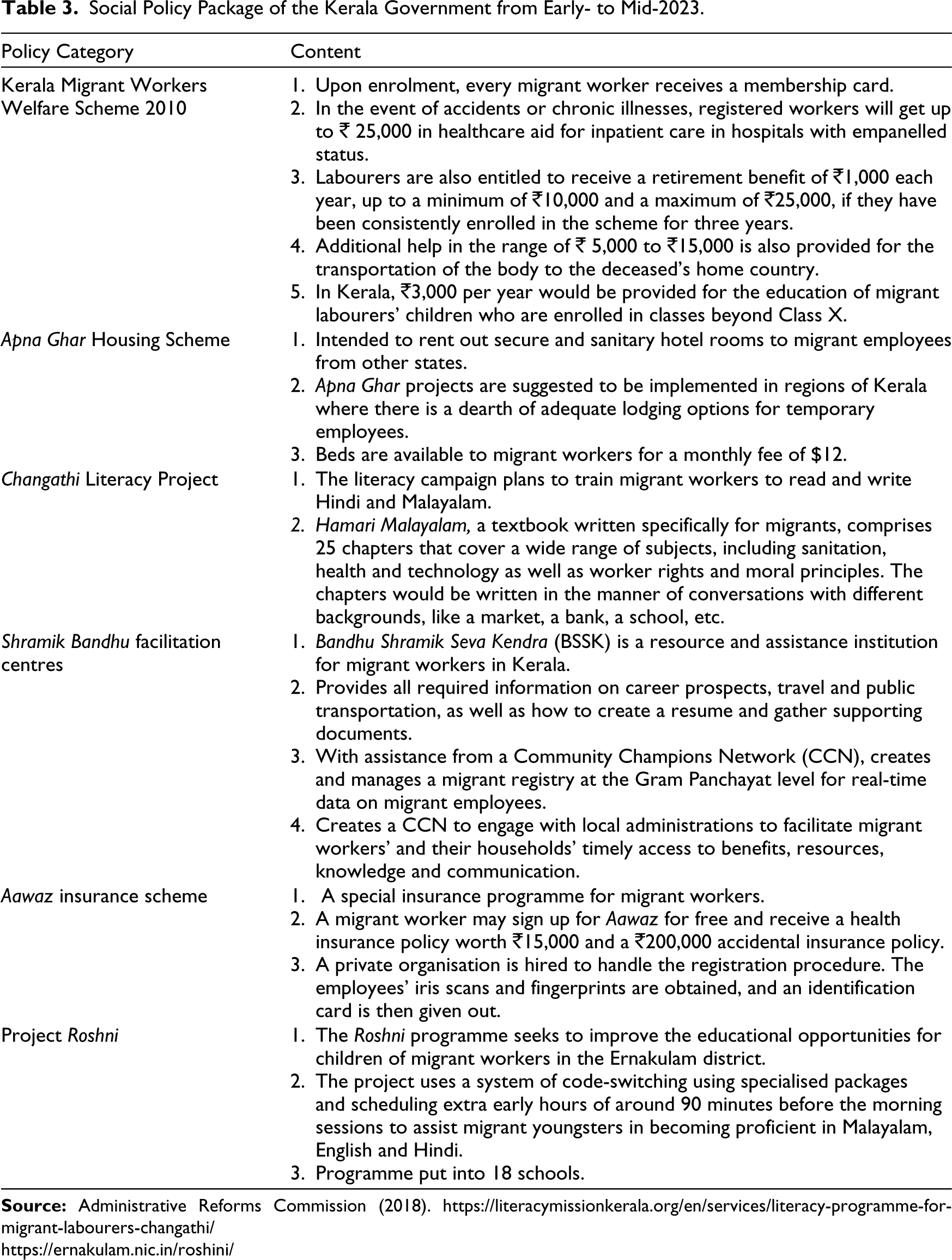
Designing evidence-based policy has been significantly hampered by the lack of proactive knowledge regarding migration trajectories. A variety of welfare, health and literacy programmes have nonetheless been launched in Kerala for migrant workers (as indicated in Table 3). Although the Kerala government has started a number of ambitious initiatives to enhance the welfare of migrant workers, it has not yet been able to have a substantial influence. The movement of the workforce attracted the attention of both the state and central governments soon after the covid outbreak. The current policies lack a comprehensive vision compared to the Interstate Migrant Workmen Act, 1979.
Social Policy Package of the Kerala Government from Early- to Mid-2023.
Suman, 24, has been a resident in Cochin for the past 18 months. He is from Asansol, West Bengal. In a row of shacks next to the building site, Suman, his parents and two of his siblings reside in a tin hut. The colony for migrant workers has just a row of temporary toilets, a small area for washing and a few taps that are linked to water tanks.
I’ve been working for four years and these days I am unwell. I’ve never had the opportunity to sit down for an interview like this before. I’m usually compelled to wake up at 6 a.m., and I occasionally get home [from work] by 8 pm It has happened that I get off at 4.30 a.m. and have 30 minutes to start my job, but I need to take a shower and perhaps cook some food, and you realise that the time has truly passed.
You’re still suffering and have a lot on your mind. Can I quit my job and return? The employer should pay me roughly 20000 rupees for the work I did. If we ask for our pay more than twice what he is supposed to give, I may be dismissed. How long can I go on living like this? Perhaps I should stop working. But how long could I do it? I’m compelled to work for my family, and even if we do a good job, the contractor or government pays us nothing. Kerala people claim policies exist, but I haven’t heard of any
The issue of migrant worker precarity, stemming from social inequalities between regions and states, presents an ideal research focus for investigating disparities in social protection. Suman’s experience of spatial segregation contributes to his precarious situation, as observed in the use of nicknames by contractors instead of internal migrants’ original names during interviews. Suman’s story is representative of many within migrant communities who share similar challenges. Our interviews revealed a sense of apprehension when discussing payment and living conditions in Kerala due to existing disparities in access to welfare benefits among migrants, influencing their perceptions about social programmes. Despite this, compared to other states, some expressed relative satisfaction with Kerala. Like Suman, several participants articulated a growing awareness of systemic inequities within the Kerala context through repeated mentions in both formal interviews and informal discussions regarding the hardships faced by migrants. Their concerns went beyond mere grievances and encompassed criticisms toward how Kerala society views migrants; placing blame not only on the government but also on their contractors for lack of support during instances such as wage theft or immigration discrimination—making it clear that these contractors play a central role for internal migrants. Several studies have shown that migration intermediaries often engage in actions that exacerbate the vulnerability of migrants and take advantage of their precarious situation (Picherit, 2019; Wee et al., 2019). As these intermediaries exercise discretionary control over internal migrants, they wield significant power over them and exert considerable influence on their daily lives. The absence of access to provident funds, annual leave or sick leave for both ‘permanent’ and ‘temporary’ workers contributed to keeping them as contract labourers. Many migrants were primarily paid based on piece rates at the end of the season, leading to frequent exploitation and loss of earnings (Shah & Lerche, 2020).
Dormitories for migrant workers we interviewed were separated from dwellings for citizens and situated in outlying areas. The idea behind this is to minimise the potential for physical contact between Kerala society and guest workers, what is called ‘bhai log ka jaga’. The state promotes this by treating the employees as the state’s ‘guests’; this tokenism effectively pervades xenophobia by portraying the workers as privileged compared to Malayalis (Peter et al., 2020). Social isolation among migrants is exacerbated by physical segregation. Stigmatising phrases and stereotypes about migrants, such as ‘Bhais’, ‘Bengali’ or ‘people who use panparag’, are employed in the media and in day-to-day activities. These terms are employed to refer to poorly skilled migrant labourers. Santanu, 36, revealed how they felt menaced by being confined to their segregated living spaces.
There is a difference of course with what we were allotted by the contractors, I am happy with this place compared to the space while I was in Tamil Nadu. When I go out to buy beedis or something they treat me as dirty and once they called me as a criminal. I felt this was problem especially during COVID. They didn’t give many of us food from the community kitchen. We even protested. We are also human beings. I am working here for past 3 years. Most people have similar feelings to mine, but nobody ever mentions it. Either they are scared about the contractors or the police.
The covid pandemic has intensified social anxieties for many migrants. Challenges such as language barriers, social isolation and discrimination continue to hinder the aspirations of these individuals. The experiences of migrants are closely tied to their hopes for the state of Kerala and its economic development. Peer influence, combined with perceptions about wealth in Kerala, affects immigrant workers’ desires to seek employment there. These migrant workers often go through several moral policing by the local citizens and police as well. 6 While enclosure enforced by those in authority makes it possible to effectively monitor migrant bodies and limits their ability to move around, social media and other social networks coupled with the weekend meetings enable them to forget the hardships. Migrant housing enclaves serve as visible markers within a specific time period and help researchers observe intangible aspects related to migration experiences (Bell et al., 2004). Migrants like Santanu have absorbed the discrimination they frequently face from Keralites. Respondents said they felt inadequate and incompetent.
However, given the interviews with migrants and their reactions, it appears that such inclusionary policies have only had a limited impact. There are several factors at work. Despite having the best of intentions, these programmes’ execution faults prevented a substantial part of the needy migrants from obtaining the relief they needed. Risvan, 37, who worked in Kerala for nearly six years, opened up in frustration:
I never felt home there, I am not aware of these social policies you mentioned. I went there paying nearly twenty thousand which I took from a pawnbroker. I went there to work, but I didn’t see a future there for me or not for my kids. Of course pay is less here. I was always an outsider there. It was not just for me but the people who came along with me as well. Eventually they all returned back. It’s difficult to be away from family for a long time, as you can see.
Riswan was one of several internal migrants from Bardhaman in West Bengal who saw relocation to Kerala as a realistic means of securing a living. The professed division between Keralites and Riswan is confusing and difficult to comprehend for migrants like him although deeply ingrained in Kerala’s social structures, as Riswan’s confession illustrates. The boundary that is materialised with the institution itself is the mental isolation that Riswan experienced in Kerala. Furthermore, the contractor–worker connection further serves to deepen the cultural divide. Through the term ‘guest workers’, it has become a social construct that should be understood beyond a physical phenomenon. The fundamental step to understand this is how we see, how we are able, allowed or compelled to see, and how we perceive this seeing or the unseen inside.
Conclusion
This article sheds light on a topic that is frequently ignored in the study of migratory geographies by focusing our analytical lenses on internal migrants in Kerala and the concept of guest workers. Our analysis depicts the suffering internal migrants in Kerala experience due to low pay, unstable social status and loneliness.
Migrant workers continue to be shaped by the persistent structural need for racialised-gendered labour in a macro setting of unequal capital relations and uneven growth. Neoliberal strategies such as labour broking make it possible for a managed flow of temporary migrant labour to fill these demands and carry out ‘development’. By creating obedient, insecure and tractable employees, it seeks to control the ‘failures of development’ (Rodriguez & Schwenken, 2013). The behaviours and attitudes all serve to perpetuate the negative perception towards migrant workers. In light of Kerala’s accessibility to social welfare, we paid close attention to the complexities of its native citizens’ attitudes towards migrants, who are a major cause of social inequality. Pre-existing disparities have remained and hardened, and there is less evidence that social policy reforms have reduced those disparities when a crisis like COVID-19 sharply increased the vulnerability of migrants (Rajan, 2020; Rajan & Cherian, 2021).
The case studies rendered in this article show that migrants’ conceptions of their life in Kerala do not always align with their aspirations. Their stories showcase the stratification in Kerala society, which also further accentuates the precarity. The role of migratory-side politics in influencing the calibre of migrant livelihoods is often underappreciated, especially with regard to the North India–Kerala corridor. Despite its flaws, the state government’s initiative to launch a welfare programme for migrant workers deserves praise. The programme calls for the need to combine the interpersonal and emotional elements to improve the quality of living among Kerala’s migrant workers. Governance is unquestionably essential to ensuring safe, orderly and recorded migration to the degree that its growth prospective can be optimally utilised and its adverse repercussions are limited.
The phrase ‘guest workers’ has a political connotation that is closely linked to the notion of migrant workers being increasingly visible in state administration and administrative procedures, but it also isolates the migrants into a separate enclave. It has become like a symbolic ordering of movement and belonging, if in complex, no straightforward ways. Some migrant labourers who have been in Kerala for over a decade still attempt to feel rooted in their home state and envision a mobile future. Most migrants experience a sense of temporariness as a result of their precarious situation as legal residents of India but not appropriately regarded as citizens of Kerala. This is through the construct of the term ‘guest workers’ and the way their presence is negotiated through power. Although migrants from North India constitute an inherent part of Kerala, the significant and ongoing development difference between North and South India is also responsible for the underlying source of migrant stigmatisation in Kerala. However, this gap has aided in the stereotyping of migrants to the point where Keralites view them as less intelligent, uncivilised and, frequently, violent.
While some make efforts to assimilate into Kerala’s society with an eye on their offspring, their attempts to do so are thwarted by the poor state of the economy, dishonest intermediaries and obstinate contractors. There is a serious lack of execution and monitoring of regulations and policies that safeguard workers and reprimand fraudulent intermediaries and contractors. Furthermore, Kerala’s labour market is divided into two categories—local Keralites and guest workers—and further subdivided based on gender, caste and class. By using the word ‘guest workers’, often referred to as Athithi Thozhilalikal, one is inherently associated with ‘otherness’, which breeds a continual need to consider. For migrant workers in this environment, integration poses a significant challenge due to the increasing ethnocentric nature of Kerala society. Further research is needed to evaluate the situation faced by migrant workers in Kerala and the stigma they endure.
Footnotes
Data Availability
The datasets created and analysed during the current work are not publicly accessible owing to privacy regulations; however, they can be obtained from the authors upon justifiable request.
Declaration of conflicting interests
The authors declared no potential conflicts of interest with respect to the research, authorship, and/or publication of this article.
Funding
The authors received no financial support for the research, authorship and/or publication of this article.