




Abstract
In this commentary, the idea of a stronger focus on a net-positive learning perspective and a solutions-oriented approach in education for sustainable development (ESD) is proposed as a means to uplift its transformative potential and support an accelerated effort towards achieving the sustainable development goals (SDGs). A net-positive learning perspective in ESD moves beyond a mitigation-based approach to achieving sustainable development and brings into focus a positive benefits approach—giving more than you take. It also acknowledges the importance of sustainable development as a form of immanent development that evolves through processes of negotiation, deliberation and reframing and aims to build the competence for this collaborative, values-based endeavour in learners and through engaged citizenship.
Keywords
Education—the way we organize teaching and learning throughout life—has long played a foundational role in the transformation of human societies. It connects us with the world and to each other, exposes us to new possibilities, and strengthens our capacities for dialogue and action. But to shape peaceful, just, and sustainable futures, education itself must be transformed.
—International Commission on the Futures of Education (2021, p. 1)
The international recognition of the importance of education for sustainable development (ESD) was first detailed in chapter 36 of Agenda 21 (United Nations General Assembly, 1992) as an outcome of the United Nations Conference on Environment and Development, or Rio Earth Summit, and the work to further uplift and mainstream ESD was promoted throughout the UN Decade of Education for Sustainable Development (2005–2014). The agreement of the 2030 Agenda for Sustainable Development and the sustainable development goals (SDGs) in 2015 further elevated the role of ESD (as recognized in target 4.7) as an integral framework for quality education, while also emphasizing the role education plays in supporting the achievement of all SDGs (as framed in SDG 4). ‘Education must aim to unite us around collective endeavours and provide the knowledge, science, and innovation needed to shape sustainable futures for all anchored in social, economic, and environmental justice’ (International Commission on the Futures of Education, 2021, p. 11).
Over the past few years, multiple international commissions and expert groups have reported on the need for a reframing of education to better enable the sector to realize its potential as an important means of implementation for achieving the SDGs and for setting humanity on a collective path towards realizing a fair and just sustainable future for all. Collectively, these reports respond to the roles of education at all levels of society, and for higher education specifically, they set out a bold path with a mission-driven purpose towards ‘transforming higher education’ (Parr et al., 2022) and ‘flipping the science model’ (International Science Council, 2023) to respond to the grand socio-ecological challenges of our time.
If HEIs are to make their potential contribution to the 2030 Agenda and the SDGs explicit priorities in their future work, we see advantages in reflecting, as HEI communities, on the need for HEIs to change certain key elements in their principles, procedures and organization in order to facilitate their contribution to a sustainable and equitable world. (Parr et al., 2022, p. 21)
The 2030 Agenda and the SDGs are effectively an international agreement to dramatically restructure our societies and re-organize our patterns of development over a very short period of time and to do so while facing unprecedented changes in the climate and ecosystems around us. ‘We are determined to take the bold and transformative steps which are urgently needed to shift the world on to a sustainable and resilient path’ (United Nations General Assembly, 2015, Preamble). How can we best prepare for change, and what role will education play in this?
In order to reach the ambition of this agenda and the 169 different targets of the SDGs, we need to develop new perspectives and search for solutions that balance social, economic and environmental dimensions and strengthen system interlinkages, and in doing so tackle a perplexity of interconnected and complex challenges that continue to hinder cumulative progress towards the transformative prospects of this agenda. This, in part, relies on the importance of ESD and its ability to link learning to the contexts and challenges of everyday living. With ESD, we can empower people with knowledge and competencies which will help them become active agents of change in their own lives and in their wider society. ‘ESD pedagogies do more than facilitate learning of knowledge—they promote learning of skills, perspectives and values that sustainable societies require’ (Laurie et al., 2016, p. 6). However, the pursuit of sustainable development necessitates educational approaches that can inspire and unlock the potential for transformative, social learning as we collectively endeavour to write a new narrative for our development and find ways to embody the principles of sustainable development within our common language.
Aligning Education with Societal Development
Society is standing at the fringes of fundamental change. Whether this change will be driven more by the proactive efforts of humanity, or if it will be forced by external factors is still to be seen, but in many cases, this change will occur at unprecedented and exponential rates. As human society endeavours to transition towards sustainable development, it will also have to respond to a changing climate, extreme weather events and increasing pressure on natural resources and ecosystems. The scale of change that this requires has, however, been dramatically undersold to the public.
A lack of popular understanding and vision of how we can achieve sustainable development and what it will entail results in people being fearful of this change, and many of the interventions that are taken being primarily reactionary in nature. Current socio-political trends towards isolationism and reductionism may also be viewed as reactions to the increasing urgency of global socio-ecological challenges. These challenges are creating disorienting dilemmas that are unsettling to large numbers of people who still see limited solutions for a more positive future and instead choose to pursue a course of avoidance and escapism.
Sustainable development has been framed as a critique of modernization theory and the idea of growth as the main engine of all socioeconomic progress, but in doing so its arguments have been defined in a similar manner that have subjected them to the same post-development critiques of modernization theory that it presents an intentional (or interventionist) development agenda that is an elite-constructed narrative which is based on a set of assumptions by the ‘developed’ world about the types of development targets that the whole world should achieve (Morse, 2008). However, post-development critiques also provide us an understanding of immanent development as the natural progression of society through broad changes and advances in culture, governance, science, arts, technology, etc. and for which there is no defined end-state (Morse, 2008). In the realm of immanent development, sustainability has influenced many advances in society as more sustainable practices are adopted by businesses, consumers, production systems, and other actors. Ratner (2004) argues for understanding sustainability as a pluralistic conception that essentially revolves around a dialogue of values, ‘a view that accentuates the need to identify and strengthen social institutions to manage value conflict at different scales’ (p. 51).
While an intentional view of sustainable development understands it as a predetermined set of targeted outcomes, an immanent view sees it as an evolving trajectory influenced by changing societal values and perceptions. The establishment of the 2030 Agenda and the SDGs may appear to fit the category of intentional development. But, if considering the three-year process of international negotiation that led to the agreement of this agenda, the clear recognition that the SDGs will need to be made relevant in the context of different countries, and the lack of a pre-defined end-state in this agenda, it is argued here that this more correctly represents a form of immanent development based on a coalescing of opinions internationally on how global society can respond to the pressing socio-ecological crises of the twenty-first century.
Sustainable development is unique in modern history as a development narrative because it has been based on a process of negotiated understanding. While it is guided by principles of environmental sustainability, the key decisions about if humanity will achieve a sustainable future or not are first-and-foremost social decisions—decisions about how we choose to organize and govern our societies, economies, production systems, etc.; how we choose to distribute the benefits and opportunities of our societies to the global population; and how we consider the impacts these choices have on the wider world around us. ‘If development is to be the major policy goal of nations, then it should mean something that is generalizable both to all members of the present generation and to many future generations’ (Daly, 1990, p. 32). From the early history of the conceptualization of sustainable development, the importance of this negotiated understanding has been appreciated and uplifted in efforts to ensure democratic dialogue and public participation (e.g., such was the focus of the call for the formation of Local Agenda 21s).
Democracy, respect for all human rights and fundamental freedoms, including the right to development, transparent and accountable governance in all sectors of society, as well as effective participation by civil society, are also an essential part of the necessary foundations for the realization of social and people-centred sustainable development. (United Nations General Assembly, 1997, para. 23)
Although sustainable development has aspects related to both of these development distinctions, that is, intentional and immanent development, their differentiation is quite important in understanding the public’s role in societal development, as well as education’s role in supporting this. Intentional development is predefined and requires following a set blueprint. Immanent development is evolving and contextual, and it requires regular negotiation and renegotiation. It is also value-driven and requires the practical application of our ideals in shaping our society towards a better future. ‘These difficult questions are not essentially technical, but questions of values. They cannot be answered by simply asking the experts. Sustainability will be achieved, if at all, not by engineers, agronomists, economists, and biotechnicians but by citizens’ (Prugh et al., 2000, p. 5). Intentional development is normative and corresponds to factual perceptions of knowledge. Immanent development is pluralistic and corresponds to critical praxis based on rich deliberation, experience and reflection.
A New Learning Perspective: from Net-Zero to Net-Positive
ESD is promoted as an integral part of quality education. ‘ESD empowers learners with knowledge, skills, values and attitudes to take informed decisions and make responsible actions for environmental integrity, economic viability and a just society empowering people of all genders, for present and future generations, while respecting cultural diversity’ (UNESCO, 2020, p. 8). With the recognition that achieving sustainable development will require fundamental transformations to society, we must critically assess how well education and ESD specifically are contributing to the achievement of these transformations.
There remains within the common practice and implementation of ESD a core learning perspective that may unwittingly undermine the objective to achieve transformative learning, even though the importance of transformative learning in ESD is strongly advocated for by many authors (Boström et al., 2018; Burns, 2015; Lotz-Sisitka et al., 2015; Rodríguez Aboytes & Barth, 2020; Sterling, 2011). The current learning perspective being referred to here is a continued and foremost focus on the facts of society’s existing unsustainable systems and practices and the lack of clear focus and competence building for the transformative practices required for achieving a sustainable future. Borrowing on a key concept in the book by Polman and Winston (2022) in describing Polman’s efforts to transform Unilever into a corporation with a strong sustainability perspective, there is a need to further examine how ESD can transition from a ‘net-zero’ to a ‘net-positive’ learning perspective.
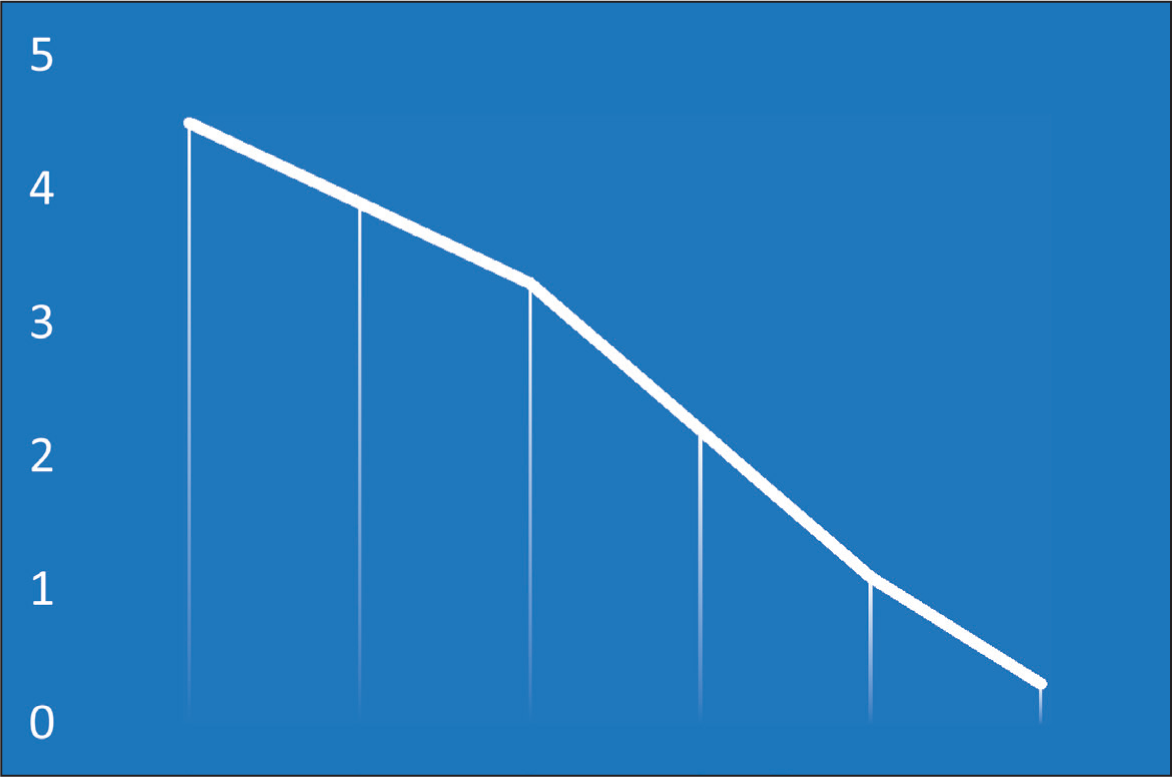
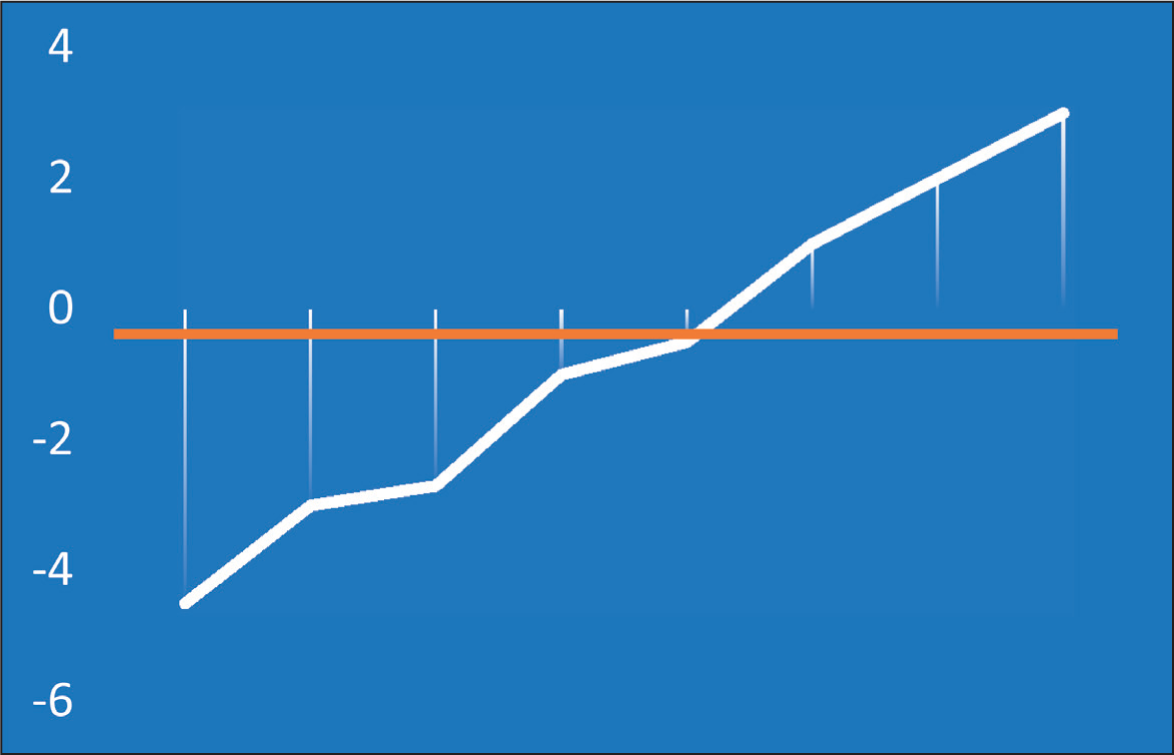
For Polman and Winston (2022), net-positive is about going beyond the standard corporate view of sustainability. ‘If being green is about doing less damage, and sustainability about reaching zero, net-positive is about making things better’ (Polman & Winston, 2022, p. 10). When ESD orients learners in the study of why we are not currently sustainable, it not only becomes bogged down in problems and challenges of unsustainability, but it also often positions learners within the frameworks and worldviews that have led to these issues in the first place and creates limits of possibilities and imagination to think beyond these trappings. Polman and Winston (2022) describe a simple exercise that demonstrates the importance of changing perceptions. A company concerned with being more sustainable may set various goals aimed at reducing their impacts (e.g., less waste, pollution, greenhouse gas emissions, etc.), and when they measure progress towards this goal, they will plot this as a reduction over time towards net-zero, but conceptually once they reach zero there is no further achievement to make as this is a practice of mitigation (see Figure 1). What if this is plotted differently so that the current levels of impacts are measured in negative values and as these negative impacts are reduced there is an increase towards zero and there is also opportunity to go beyond zero into the positive part of the table? For a company, this would mean removing more material from the waste stream than they add to it or capturing more greenhouse gases than they emit, and in these practices contributing positive benefits to society (see Figure 2).
The idea of net-positive presented by Polman and Winston (2022) is oriented towards their overall focus on corporate strategies, and it is used to discuss the types of shifts that courageous companies can make if they want to thrive in the twenty-first century and in societies where sustainable development is becoming an increasing priority. It must then be caveated that the use here of discussing net-positive learning in the context of ESD is not intended to suggest that education should shift towards a more corporate orientation or the growth logic that still underscores practices in this sector, but rather only to apply this specific metaphor to how we think about the role of education and the objectives of ESD in empowering learners to be able to actively participate in the social pursuit of sustainable development. Nonetheless, it is worth noting that Polman and Winston (2022) actively argue for replacing the idea of profit-driven corporate strategies with a focus on companies’ roles in creating wider societal prosperity, and they suggest that a companies’ contribution to prosperity is emerging as a criterion that can indicate the potential for a company to also remain profitable in the future (when continued growth and increasing material consumption alone are no longer touted as the main drivers for societal development).
This visual change in perception (depicted in Figures 1 and 2) is a minor modification in many ways, but its implications are quite profound if it changes the way people view the types of influence they can have on the world around them and what the pursuit of sustainable development actually requires. In the subtitle to their book, Polman and Winston (2022) use the phrase, ‘by giving more than they take’. Is this the learning perception that is in the mainstream focus of ESD as it is currently practiced? Of course, in reality, it is not an either—or situation, and we cannot truly expect to overcome practices of unsustainability unless we are able to understand and deconstruct them. But moving beyond a problem orientation requires something different, it is about learning for innovative solutions and learning for hope.
Net-zero Perception.
Net-positive Perception.
For several years now, I have started my introductory lecture on ESD for student teachers with three slides with different images on them. I first ask the students to take a moment to think about their previous experiences with ESD and learning for sustainability, and then I ask them to consider which images resonate with their experiences. On the first slide, there are pictures depicting pollution, deforestation, waste, resource extraction, etc. The second slide has pictures about recycling, renewable energy, eco-labelled products, energy efficiency, etc. On the third slide, there are pictures of people working together to plant gardens, build houses, discuss, protest, and have fun. With a show of hands, I ask students to indicate which image sets resonated with their experiences, and I explain that each image set represents an important and different ESD orientation. The first is a problem-oriented ESD, the second is a mitigation-oriented ESD, and the third is a solutions-oriented ESD. I make it clear that each orientation provides an essential contribution to ESD: the problem-orientation sets the urgency for action now; the mitigation-orientation sets the agenda that wiser resource use and responsible behaviour are key to sustainable development; and the solutions-orientation focusses on collaboration and collective engagement in the active exploration for new paths to secure healthy living, well-being, resilient communities and productive ecosystems.
This is an overly simplified exercise, but as a thought piece, it has been both provoking and highly indicative. Nearly all students raise their hand for the first set of images—the problem orientation. Many students will also find resonance with the second set—the mitigation orientation, but usually not as many as with the first set. For the final set—the solution orientation, there is regularly a dramatic drop in the number of students that will raise their hands, and this has many times only been a small minority of all the students. I am happy to say that over several years of doing this, the number of students that raise their hands for the final set of images has continued to increase.
Net-Positive Learning in ESD
What, then, would a net-positive learning perspective in ESD look like? First, it is important to note that many of the relevant aspects are already well discussed in relevant literature. However, this does mean that within the mainstreaming and integration of ESD, more attention is placed on the pedagogical aspects of ESD and not solely on the content. It is as much the learning process and orientation that influence a net-positive perspective as it is the material being learned. Schnitzler (2019) argues for the importance of spaces for collaborative learning in realizing ESD’s potential for transformative learning. Houlden and Veletsianos (2024) discuss the importance of cultivating ‘radical imagination’ as an act of courage that allows individuals to imagine beyond the conventional trappings of the status quo and to imagine something completely otherwise from present reality, and to support this they draw on Andreotti’s (2021) work with ‘depth pedagogies’ to establish meaningful relationships between self, each other, and the world around us. Several other authors highlight the importance of teaching that facilitates the competency of ‘futures thinking’ as key to enabling a net-positive perspective in ESD (Julien et al., 2018; Varpanen et al., 2022; Vidergor, 2023).
In the framing of ESD, it is important to recognize that sustainability learning must address the learner at two different levels, both as an individual and as a collective member of society. As the current UNESCO (2019) framework on ESD for 2030 presents that the role of ESD in supporting the achievement of the SDGs is strengthened by underpinning learning for transformative action and for structural changes. Transformative action in ESD starts by acknowledging the processes of transformation for individual learners and considering how this can be facilitated with different pedagogical drivers such as critical analysis, exposure to complex situations and different contexts, and through experiential learning and practical application of knowledge, skills and values. In this sense, learners not only engage in their own individual transformations, but they also explore their influence on societal transformation, through which ‘ESD in action is citizenship in action’ (UNESCO, 2020, p. 18). Structural changes in ESD call for more pronounced attention on the structural and systematic causes of unsustainable development. In ESD, development should be framed as a balancing act and a process of adapting to different needs and contexts, and sustainable development should be positioned as a development path that is framed by its respect for specific values such as ‘conservation, sufficiency, moderation and solidarity’ (UNESCO, 2019). In this manner, ESD should also be adapted to address the specific living conditions and needs of different learners so that they gain the competence and capacity to ensure their own livelihood and the betterment of their community.
Returning to the understanding of sustainable development as an immanent form of development, we must keep in mind Daly’s (1990) argument that it must be based on ideas that are generalizable to all in this generation and in those generations still to come, but this in itself occurs through a collective process of negotiation and constant reframing. In this sense, it is not ESD’s role to define the outcomes of sustainable development to its learners, but rather to empower learners with the skills to debate and deliberate on what they want for their futures and how they can make those futures more sustainable for all. Net-positive learning is a pluralistic process in which values-based learning is a key feature. ‘The challenge for educational institutions is not simply to teach concrete facts about the environment but to create an active, transformative process of learning that allows values to be lived out and debated, and permits a unification of theory and practice’ (Warburton, 2003, p. 54). Through the testing of their values in practice and with different actors and contexts, learners gain the experience to reflect both on their values and also the effectiveness of their actions in realizing or supporting these values. It is through such processes of critical praxis that the types of transformative learning sought in ESD can be cultivated. When this type of learning is directed towards engaging learners in a solutions-oriented ESD, it reinforces a net-positive perspective on their roles as actors in societal development.
For education systems, schools and teachers, embedding a net-positive learning perspective in ESD means considering what we teach, how we teach, where we teach and with whom we teach. For what we teach, this raises a question to consider what students can do with the content they gain and how they can move beyond the current state or status-quo of what they are learning, that is, not only learning about problems and impact mitigation, but also learning about ways to adapt, achieve resilience and build more prosperous systems. For how we teach, this emphasizes the role of student-active and collaborative learning methods, but it also raises an expectation for creating relevant learning experiences that support the practical application of knowledge and skills while also provoking learners to consider their own foundational values and perceptions of the world. For where we teach, this links to the idea of designing whole-school and whole-institutional approaches for ESD (Mathie & Wals, 2022; Wals, 2019) where schools can function as models of sustainability in practice, and it also means promoting learning that actively engages with real-world issues and concerns in a meaningful and authentic manner. For with whom we teach, this speaks to a core concern that education systems foster open and inclusive processes for learning where each learner is both challenged and facilitated to pursue the best of their abilities, while at the same time it should also welcome a plurality of different voices and views into the learning space so learners become more capable of negotiating complex and contested understandings with empathy and care. This can be seen as a reform process and may only take small efforts in refining and re-targeting learning approaches and objectives where ESD is already embedded, but these reforms may result in radical changes to the outcomes of education, ESD and students’ learning to be empowered actors for a net-positive, sustainable future.
Conclusion
The idea of a solutions-oriented ESD and a net-positive learning perspective is not currently absent in the overall framing or implementation of ESD. However, in practice, it is often overshadowed by the factual and discipline-based components, which tend to address the problem-orientation and mitigation-orientation of ESD. These aspects are needed, but without reaching the learning that occurs at the level of a solutions-oriented ESD, they often leave learners overwhelmed by the complexity of the challenges humanity is facing and disempowered without any sense of how to truly realize the types of transformations needed to overcome these challenges systematically.
The focus of ESD matters, not just in what is taught but also in how it is taught. Net-positive ESD should support learning that is inclusive and open, as well as learning that is situated in context and takes place in the community. It is about cooperating and collaborating for a better future and finding innovative solutions to achieve it. It is also about asking questions about what we value and what we care for. It is learning that supports cognitive, socio-emotional and behavioural development.
This is a learning perspective that needs to be better brought into practice as ESD is further mainstreamed and integrated into education systems. This requires reflection on how a net-positive perspective is shaped into curriculums in terms of content, learning outcomes, and pedagogies. Educational policy can ensure that the opportunities to apply and practice learning in real-world contexts and with a diversity of actors are included in their schools, and they can create stronger bridges in ESD between formal and non-formal education. Schools play a key role in creating the learning environments where inclusion, collaboration, deliberation and diversity flourish. Teachers can be key advocates of a solutions-oriented approach to ESD—encouraging learners to be imaginative and courageous in framing their visions and values for a better future. They can support depth learning and engage learners in authentic learning opportunities, so they have the chance to really engage in making meaningful change in the world around them. This shift from a net-zero to a net-positive learning perspective is within our grasp, but it will require greater purpose and resolve in our efforts for it to be fulfilled.
Footnotes
Declaration of Conflicting Interests
The author declared no potential conflicts of interest with respect to the research, authorship and/or publication of this article.
Funding
The author received no financial support for the research, authorship and/or publication of this article.