




Abstract
UNESCO’s new social contract for education states that we are at a turning point, facing multiple overlapping crises, and emphasizes the need to rebuild education so that it is relevant and adequate to meet today’s global challenges. According to Sustainable Development Goal 4.7, it is essential to have the knowledge and skills needed to promote sustainable development. The Handprint Initiative was born out of this need. It is founded on the social responsibility of educators and learners to actively participate in the decision-making process of our society. The objective of this research was to present the results of a large-scale implementation of the Handprint Initiative Instrument to identify the attitudes towards the environment. A 19-item survey was used to determine five key attitudes in several high schools in Mexico City. Based on the statistical tools (including principal component analysis, Kaiser–Meyer–Olkin and others), it was possible to measure Environmental Sensitivity, Ecocentrism, Techno-hope, Eco-apathy and Eco-indifference attitudes.
Introduction
UNESCO’s (2021b) ‘New social contract for education states’ that we are at a turning point in history, facing multiple overlapping crises (climate change, social and economic inequality, violence and armed conflicts and others), and that the key to a shift in our society towards a sustainable future is Education.
Worldwide education does not meet the needs and aspirations required to face the challenges of the present nor those of the future. The fundamental right to quality education people continues to be deprived, discrimination persists, often systemically, and there is still a lack of access. Creativity and curiosity are discouraged as a result of poor-quality instruction. Currently, the prevailing way of schooling reveals the inadequacy of today’s model of teaching approach to provide meaningful learning and a sense of agency and purpose for learners (UNESCO, 2021b). Despite the clear objectives, The same situation is true for Environmental Education and Education for Sustainable Development. Now more than ever, we need to promote the achievement of Sustainable Development Goal (SDG) 4.7 and implement new pedagogical approaches that allow learners to acquire the knowledge and skills to cope with the current global challenges (UNESCO, 2021b).
Mexico, being one of the nine most populous countries in the world, and its education system being the fifth largest in the world (35 million pupils and 2 million teachers; Notimex, 2017; UNESCO, 2021a), is also no exception. According to data from the Oxford Committee for Famine Relief (Oxfam), Mexico is among the most unequal countries (Aguilar Ortega, 2019; Fuentes Nivea & Barrón Illescas, 2018). One of the major problems of social inequality is the unequal opportunities for access, permanence and graduation from school (Suárez Zozoya, 2001).
UNICEF’s (2018) Annual Report stated that 82% of Mexican children and adolescents do not achieve the expected learning outcomes, in addition to the fact that 51% of all children lives in poverty. In a study of reasons for dropping out of schooling, the Mexican Ministry of Public Education (Secretaría de Educación Pública [SEP]) identified that 22% of women and 31% of men feel a dislike for studying, while 7% of women and 9% of men perceive the learning as not meaningful (SEP, 2022).
The Handprint Initiative
The Handprint Initiative was born out of the evident need for a new pedagogical approach to cope with these current global challenges that are being experienced by all countries, such as Mexico. It is founded on the social responsibility of both educators and learners to actively participate in the decision-making process of our society (Morel Schramm et al., 2023). Hence, the main objective of The Handprint Initiative is to empower teachers and students towards increasing their social engagement, so they become changemakers for our common future.
Our proposed pedagogical approach contributes to achieve SDG 4.7, namely students’ learning in and with the world, developing the key competences for sustainability (systems thinking competency, anticipatory competency, normative competency, strategic competency, collaboration competency, critical thinking competency, self-awareness competency and integrated problem-solving competency) that allows them to transcend disciplinary boundaries to find viable and imaginative solutions (UNESCO, 2017, 2021b). The purpose of The Handprint Initiative is to overcome the limitations (e.g.: eco-guilt, doom and gloom, eco-apathy) of other approaches to education towards the environment.
The Handprint Initiative work is firstly focused, on the identification of the learners’ attitudes towards the environment, followed by the design and implementation of interventions based on the Handprint concept, with the aim of changing the perspective of the way we teach and learn.
Evolution of the Handprint Concept
The concept was launched in 2007, during UNESCO’s fourth International Conference on Environmental Education held at Ahmedabad, India (Alvarenga et al., 2020; Centre of Environment Education [CEE], 2023; Pandya et al., 2013; The Times of India, 2013).
The Handprint concept is based on the belief that we can make a difference through individual and collective actions to solve environmental challenges (CEE, 2007). It was originally defined as a symbol of, measure for, and commitment to generating positive, and individual action towards sustainability, that reflects the spirit of hope, enthusiasm and commitment to action which supports measurable changes in people’s behaviour (Pandya et al., 2013).
It also has been defined as complementary to the footprint concept (Guillaume et al., 2020); in the sense that the Handprint concept focuses on of the good actions society takes towards the environment. It fosters the motivation to reduce consumption, and engages the power of creativity, profit and idealism (Biemer et al., 2013). The Handprint concept represents an individual’s ‘action competence’ (Hayward, 2011), that is their skills and capabilities to effect a desired change (Bishop & Scott, 1998; Jensen & Schnack, 2006).
Based on the above, we could define the Handprint concept as a solution-oriented approach, which promotes systemic thinking for sustainability and fosters individual and collective positive action, namely actions towards sustainable development (CEE, 2007; Gunawardene, 2008; Husgafvel, 2021; North American Association for Environmental Education [NAAEE], 2017; The Times of India, 2013).
Environmental Attitude Analysis
The importance of the study of environmental attitudes lies in the close relationship between these attitudes, and human behaviour, particularly on the possible influence of attitudes on the latter (Gifford & Sussman, 2012; Macías Zambrano, 2017).
The terms ‘value’, ‘attitude’ and ‘concern’ are used interchangeably (Schultz et al., 2004), therefore it is important to establish common ground when we seek to know and understand the context in which the study of environmental attitudes has developed.
Perception is the ability to see, hear, or become aware of something through the senses (Silva et al., 2016); it is how reality is experienced (Arias Castillas, 2006); it gives meaning to things, and allows us to make a value judgement. Perception is a constant action (Tuan, 1974) that is influenced by our belief system.
Rokeach (1973) defined a value as an enduring belief that a specific mode of conduct or end-state of existence is personally or socially preferable to an opposite or converse mode of conduct or end-state of existence. Arguably, values are desirable goals, varying in importance, that serve as guiding principles in people’s lives (Schultz et al., 2004; Schwartz, 1992). They work as criteria for guiding action, and for developing and maintaining attitudes toward relevant objects and situations (Stern & Dietz, 1994).
Attitude can be defined as a general evaluative reaction favourably or unfavourably towards an object of attitude (i.e., an object, a person, an issue, a behaviour, or other entity); it is a disposition to value this object in a certain way and act accordingly (Angulo & Zapata, 2012; Castro Bustamantes, 2002; Gifford & Sussman, 2012; Macías Zambrano, 2017; Olson & Zanna, 1993; Schneller et al., 2015; Staats, 2004; Uyeki & Holland, 2000).
The expression of the attitude is given through three types of response (Castro Bustamantes, 2002; Eiser, 1987; Gifford & Sussman, 2012):
Cognitive: a perceptual response that involves facts, opinions, beliefs, thoughts, values, knowledge, and expectations (especially of an evaluative nature) about the object of the attitude; refers to what we think about something. Affective: the processes that support or contradict the basis of our beliefs, expressed in evaluative feelings and preferences, moods and the emotions that are evidenced (physically and/or emotionally) by the object of the attitude (i.e., anxious, happy, worried, concerned, engaged). Behavioural: the evidence of action for or against the object or situation of the attitude; how we behave or act towards an object, person, issue, or situation.
Based on the above, we can define environmental attitudes as favourable or unfavourable beliefs, affect, and behavioural intentions towards environmentally related activities or issues (Gifford & Sussman, 2012; Macías Zambrano, 2017; Schultz et al., 2004).
According to Dunlap and Jones (2002) Environmental Concern refers to the degree to which people are aware of problems regarding the environment and support efforts to solve them and/or indicate a willingness to contribute personally to their solution.
Considering the aforementioned definition, environmental concern can be seen as a favourably or unfavourably assessment towards an object of attitude; this concern for the environment can refer either to a specific attitude that directly determines intentions, or to a general attitude or value orientation (Fransson & Gärling, 1999).
Stern and Dietz (1994) and Stern et al. (1993, 1995, 1998) identified three sets of value orientation associated with environmental attitudes. This means that attitudes about environmental issues are based on the relative importance that a person places on themselves, other people, or plants and animals (Schultz, 2001). Stern and Dietz (1994) define egoistic values, as those that are focused on self, and self-oriented goals (e.g., social power, wealth, personal success). Altruistic values focus on other people (e.g., family, community, humanity, friends); and biospheric values are those that centre on the well-being of living things (e.g., plants, animals, trees) (Schultz, 2001; Schultz et al., 2004).
Since the 1970s diverse environmental attitudes and concern measurement have been developed (see Cruz & Manata, 2020; Gifford & Sussman, 2012; Milfont & Duckitt, 2010 for more information). There are a number of works that have approached environmental concern from a dual perspective with generally competing dimensions; the ecocentrism/anthropocentrism scale (Gagnon Thompson & Barton, 1994); Dominant Social Paradigm (DSP)-New Ecological Paradigm (NEP) (Dunlap & Jones, 2002); Utilization-Preservation (Bogner & Wiseman, 2006; Milfont & Duckitt, 2010).
Another approach used goes back to Stern and Dietz (1994) who analyse beliefs about the adverse consequences of environmental problems, concluding that these are guided by egoistic, socio-altruistic and biospheric value orientation (Amérigo & García, 2014). This approach has also been tested and proved by Schultz (2001).
Bogner and Wilhelm (1996) developed the 2-MEV scale (2 Major Environmental Values) to monitor the attitudes and values of adolescents and pre-adolescents. The 2-MEV scale was defined and designed to measure based on primary factors two higher-order factors: Preservation (PRE) and Utilization (UTL) (Bogner, 2018; Bogner et al., 2015).
Additionally, Amérigo et al. (2012) proposed a model of four attitudinal dimensions to address environmental concerns, which considers them as a continuum defined by the degree to which people include nature in their self-concept (Amérigo & García, 2014; Amérigo et al., 2017).
The Relevance of Science Education (ROSE) Project was an international comparative research project aimed at identifying crucial factors for Science and Technology learning. This work was focused on students around the age of 15 in nearly 40 countries. It is of key importance that the belief that underprint the ROSE project states one should put more weight on the voice and the views of the learners when curricula are made once pedagogy is implemented (Schreiner & Sjøberg, 2005; Stefánsson, 2006; Trumper, 2006; Vázquez & Manassero, 2004).
The ROSE instrument describes the experiences students have, the kind of interest and the views and attitudes learners have towards science and technology in society. They developed a section with special emphasis on students’ attitudes and perceptions of environmental challenges (Schreiner & Sjøberg, 2004; Sjøberg & Schreiner, 2010).
In their study in 2005 Schreiner & Sjøberg considered, on the one hand, that it is important to have sufficient knowledge about environmental science (possible actions on one’s personal lifestyle, technical solutions and political measures). On the other hand, they assumed that in order to be empowered one must have hope and visions for the future; confidence that one can influence the future of the world, and be motivated to act on environmental issues.
Vázquez and Manassero (2005) conducted an analysis of the attitudes towards environmental challenges in young Balearic schoolchildren using an adapted version of the ROSE instrument. In their research, they identified five environmental attitudes (Ecocentrism, Eco-apathy, Pessimism, Naturalism and Scientism).
It is important to note that of these five attitudes, Eco-apathy (namely in secondary and high school students) towards the environment is increasing (Aguilar Montes de Oca et al., 2015; Boca & Saraçlı, 2019; Juneman & Pane, 2013; McKnight, 2010; Nagel, 2005; Railean et al., 2016; Sashittal et al., 2012). For many young people, the view on global challenges (e.g., global warming, biodiversity loss, food insecurity, deforestation, political and social conflicts, poverty, hunger, peak waste, population growth and slums) is characterized by a feeling that there is little they can do, that these problems are impossible to solve, or should simply not be of their concern.
Therein lies the importance and necessity of a change of perspective. A person’s actions in the present are affected by their images of the future (Schreiner & Sjøberg, 2004). Thus, understanding environmental attitudes and knowing the level at which certain environmental attitudes are present among learners is a key step to changing their perspectives.
In 2018, we conducted a pilot project and established the statistical basis to define the five environmental attitudes towards the environment in young people presented by Vázquez and Manassero (2005) (Morel Schramm et al., 2023).
The purpose of this article was to built on and to expand the previous study, by generating results from a much large-scale implementation of The Handprint Instrument to identify the attitudes towards the environment in several high schools in Mexico City. Our aim is to be able to establish a strategy that allows schools to learn about the attitudes of their students. By identifying what attitudes are present, they can design and adapt their programmes based on their needs and seek to generate meaningful and relevant content for their learner’s population.
Material and Methods
Participants
The research was conducted in 13 high schools located in Mexico City, with which there was already an established collaboration. These institutions included public, private, traditional, and alternative schools.
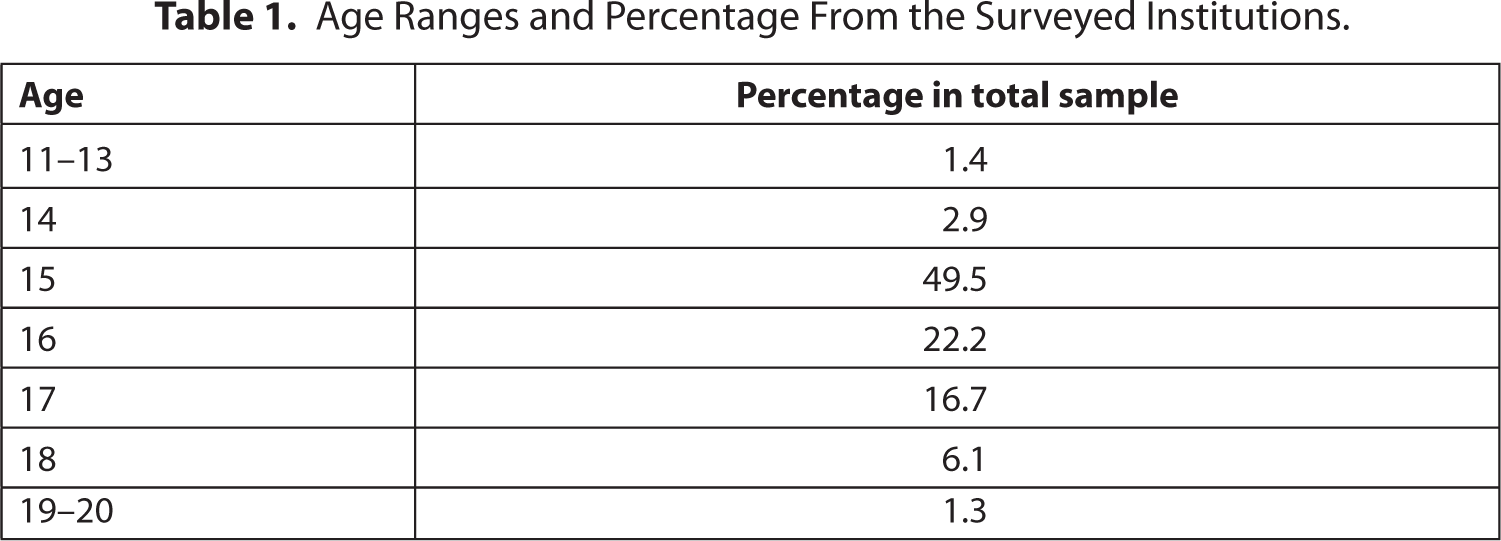
A total of 5269 students between 11 and 20 years were digitally surveyed. This age group was chosen based on the results of our previous research (Morel Schramm et al., 2023). The age distribution is presented in Table 1.
Age Ranges and Percentage From the Surveyed Institutions.
Of the sample, 4848 (92%) learners were from public schools and 421 (8%) were from private schools. 53.5% identify as female, 43% as male, 2.3% preferred not to answer and 1.2% as other. 68.3% of the surveyed population were studying their first year of high school, 10.9% to the second year and 20.6% to the third year of high school.
Instrument
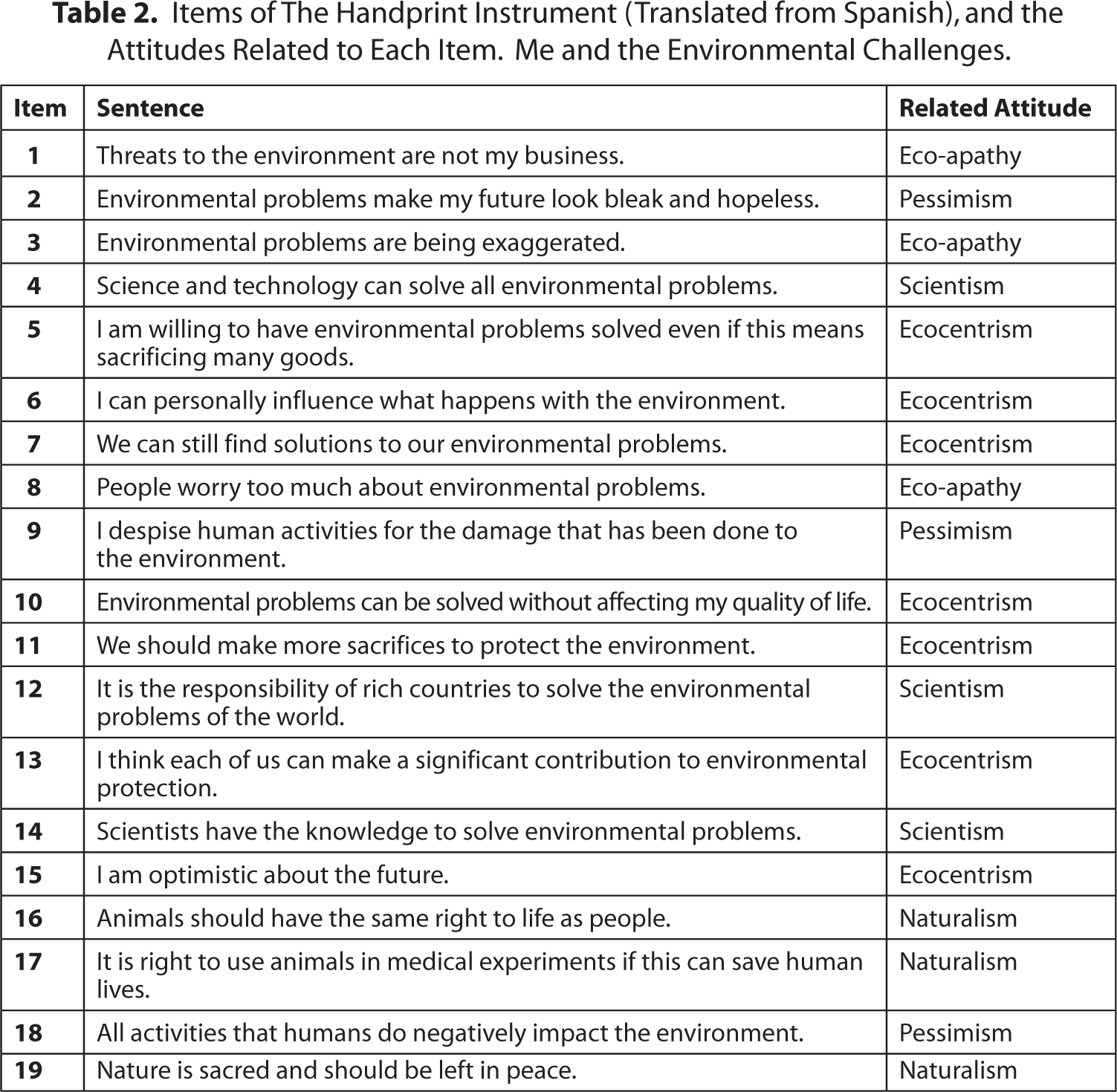
Attitudes were measured using a modified version of The Handprint Instrument referenced above as the pilot study, which consists of 19 items that can be related to Ecocentrism, Eco-apathy, Pessimism, Naturalism and Scientism attitudes (Morel Schramm et al., 2023; Vázquez & Manassero, 2005; Table 2). The items’ scales are statements about the environment with a five-point Likert-style response set from ‘strongly disagree’ (1 point) to ‘strongly agree’ (5 points).
Items of The Handprint Instrument (Translated from Spanish), and the Attitudes Related to Each Item. Me and the Environmental Challenges.
A Likert scale represents the sum of responses to several items. These items are believed to be related to each other in one or more categories, thus allowing researchers to infer the respondents’ point of view or feeling within the subjects or categories the scale is being applied to (Rokeach, 1973).
Data Analysis
Students completed the survey via a digital form during school hours. All data were entered and analysed using the IBM SPSS Statistical Package 29. A review of the data was carried out to avoid repeating information from the pilot project (some students could have answered both questionnaires). The scores were subjected to an Exploratory Factor Analysis (EFA) to determine the components and structure, as well as its consistency with the pilot project. The method used in the EFA was via a principal component analysis (PCA), with Varimax rotation. The internal consistency and reliability were assessed through Cronbach’s alpha (Cronbach, 1951).
Results
Principal Components Analysis (PCA)
The PCA results produced a clear structure of five factors and explained 48.98% of the variance for those five components (Table 3). A clear distinction can be made between eco-apathy, ecocentrism, naturalism and scientism attitudes, the pessimism attitude is not clearly defined among the components.
Distribution of the Items (1–19) in the Components and the Attitudes Defined by the Handprint Instrument.
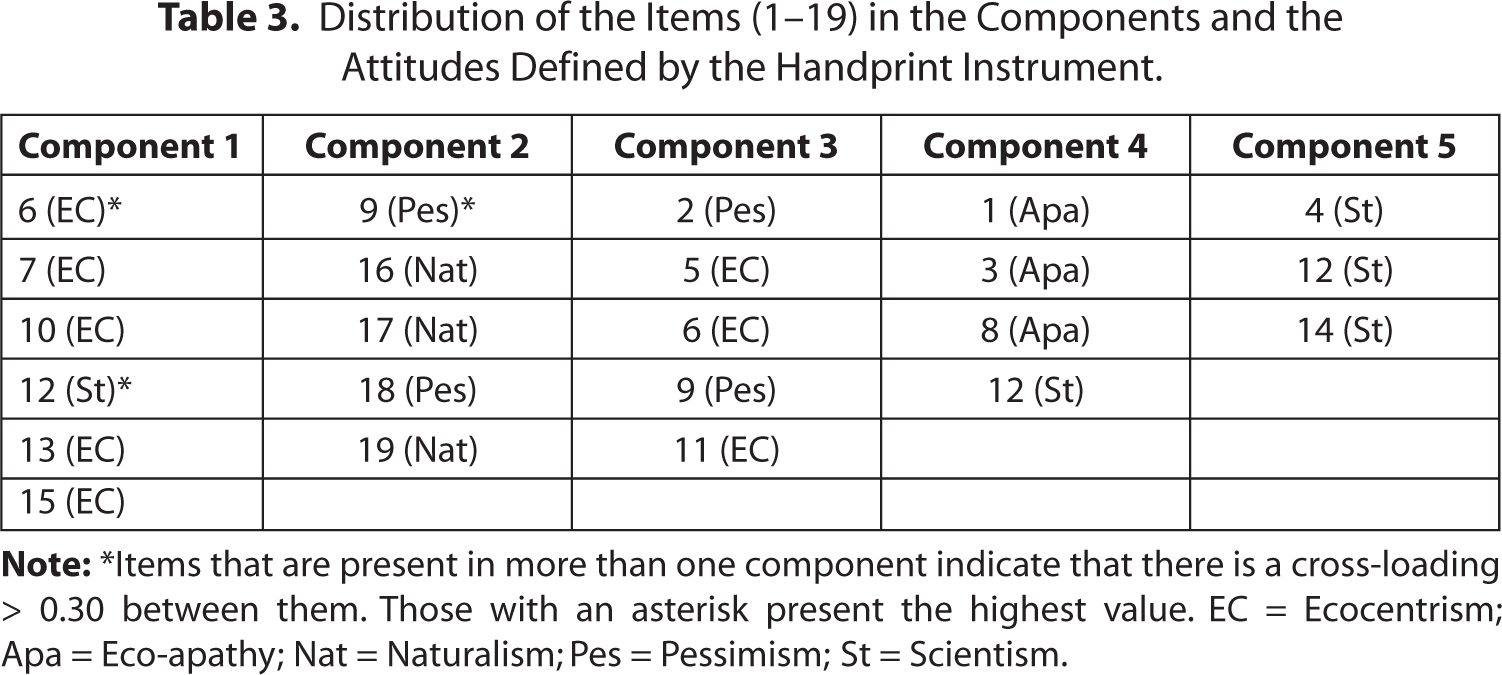
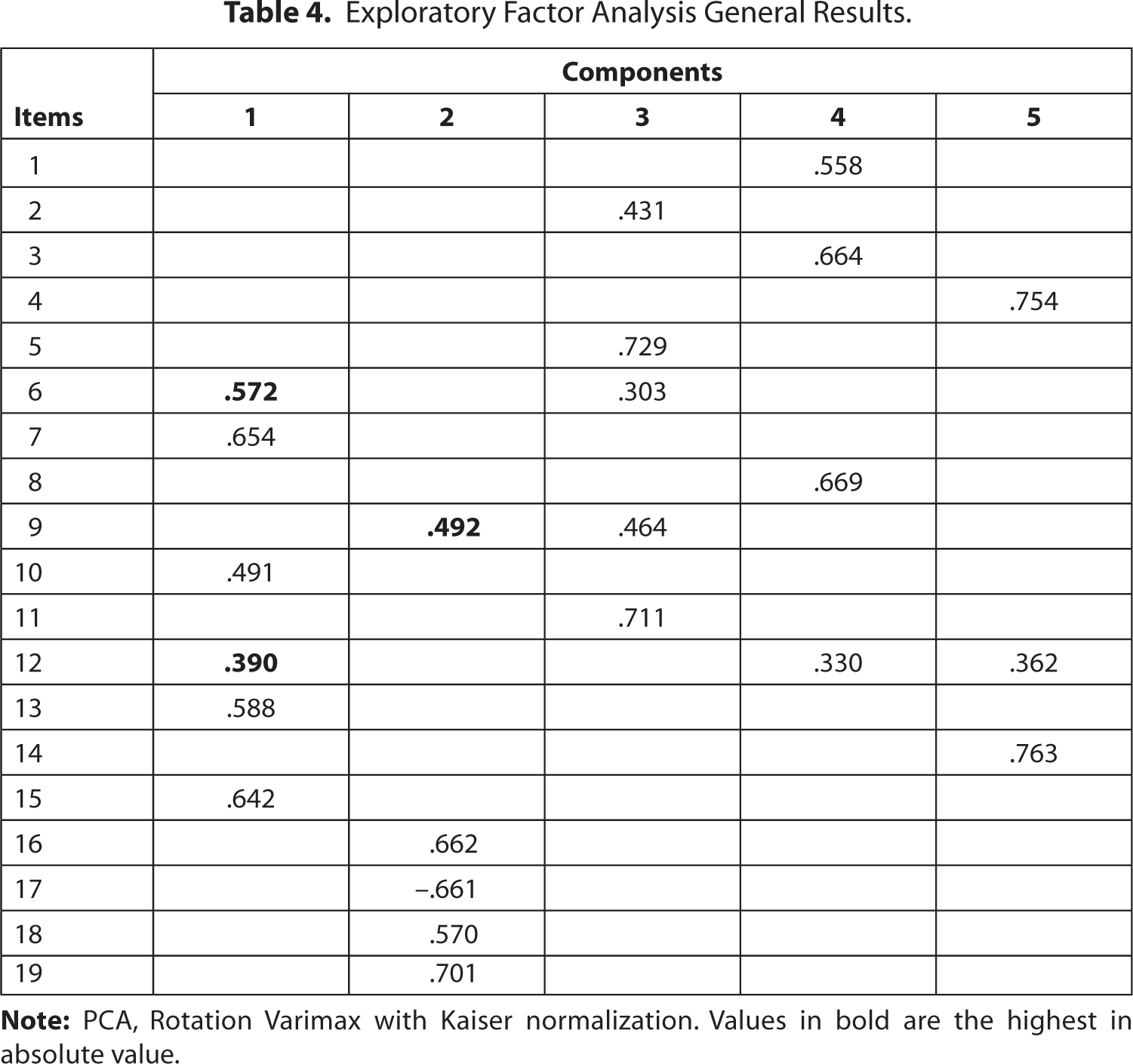
Table 4 shows the results of an exploratory factor analysis, applied to five factors (n = 5269). The weights of the variables that make up each factor are shown here. For simplicity, loads below the value of 0.30 are omitted, and those in bold are the highest, in absolute value. Three items presented cross-loading, which means a value over 0.3 in more than one component. Items 6 and 9 only present cross-loading with two items, while Item 12 is present in three different components.
Exploratory Factor Analysis General Results.
Cronbach’s Alpha
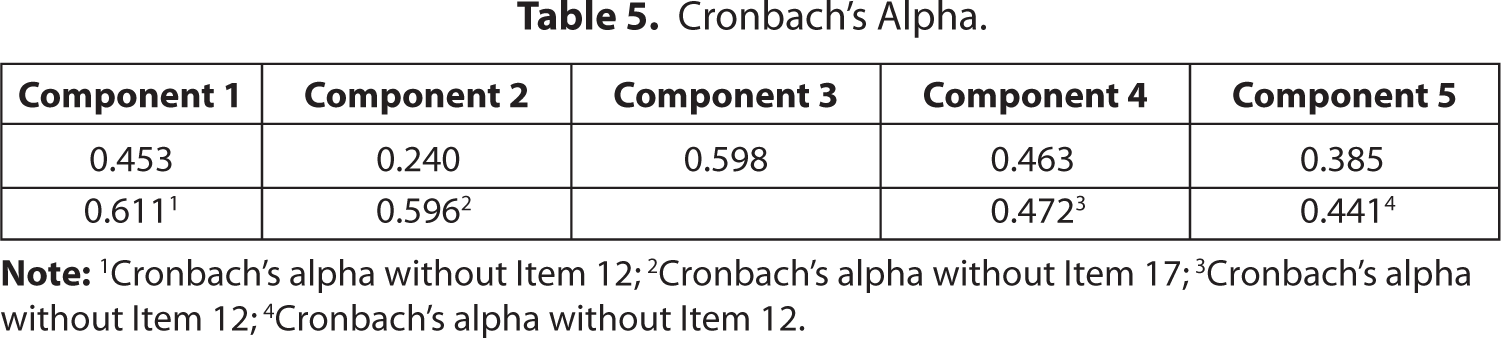
Cronbach’s alphas (see Table 5) were used to evaluate reliability of each factor. The components with a higher alpha show better internal consistency and greater reliability, in this case, four of five showed an acceptable level of reliability.
Cronbach’s Alpha.
Kaiser–Meyer–Olkin (KMO) Analysis of Complete Set
Sphericity tests (see Table 6) evaluate the applicability of factor analysis to the variables studied and define if this is statistically feasible. Although the ideal value is >0.9, one very close to 0.8 is still acceptable in most cases (Watkins, 2018).
KMO and Bartlett’s Analysis.

Discussion
As stated before, the instrument used for this sample had some modifications that were deemed appropriate based on data from the pilot study. The results obtained on the validity and reliability of this variation of the instrument of Morel Schramm et al. (2023) for The Handprint Initiative, with samples of Mexican students from 13 schools guaranteed the quality of the measurement instrument.
Five components are clearly distinguished. Comparing the results of this research with those obtained by our previous work, there is a clear improvement. The consistency (Cronbach’s alpha) of the five components is higher than that obtained in Morel Schramm et al. (2023).
However, the main concern was whether the environmental attitudes (i.e., the concept themselves, as defined by previous authors) were concise, and most importantly, clear enough to discriminate between said attitudes and whether they corresponded to the result we obtained.
According to Schreiner and Sjøberg’s (2004) version, their 18 items; display the students’ level of agreement with respect to the following aspects: ‘Have hope and vision for the future’ (Item 2, 7 and 14), ‘motivated for action’ (Item 1 and 5), ‘their thinking that somebody else should solve the problems’ (Item 4, 11 and 13), ‘having a general feeling that they can influence the development’ (Item 6 and 12), and ‘thinking that it is important for society’ (Item 3, 8, 9 and 10).
In consonance with Vázquez and Manassero (2004), their version (which included item 19) mentioned that the meaning of the items are as follows: optimistic or pessimistic expectations about the future (items 2, 7, 9, 15 and 18), the importance of environmental protection in society (items 3, 8, and 11), helplessness or empowerness to cope with the environmental challenges (items 1, 4, 6, 12, 13 and14), and interest in environmental protection (items 5, 10, 16, 17 and 19). Based on this, in their next analysis, Vázquez and Manassero (2005) defined five different attitudes: Eco-apathy (items 1, 3, 8 and 14), Pessimism (items 2, 9 and 18), Scientism (items 4, 12 and 14), Ecocentrism (5, 6, 7, 10, 11, 13 and 15), and Naturalism (Item 16, 17 and 19). (See annex A)
Bearing in mind the above, and given that results from Vázquez and Manassero (2005) were not statistically conclusive, and could be subject to improvement, we examined each component and its items, and thus redefined the five components as Environmental Sensitivity, Ecocentrism, Eco-indifference, Eco-apathy, and Techno-hope, which better fit the content and meaning (Table 7).
Attitude Related to Each Item.
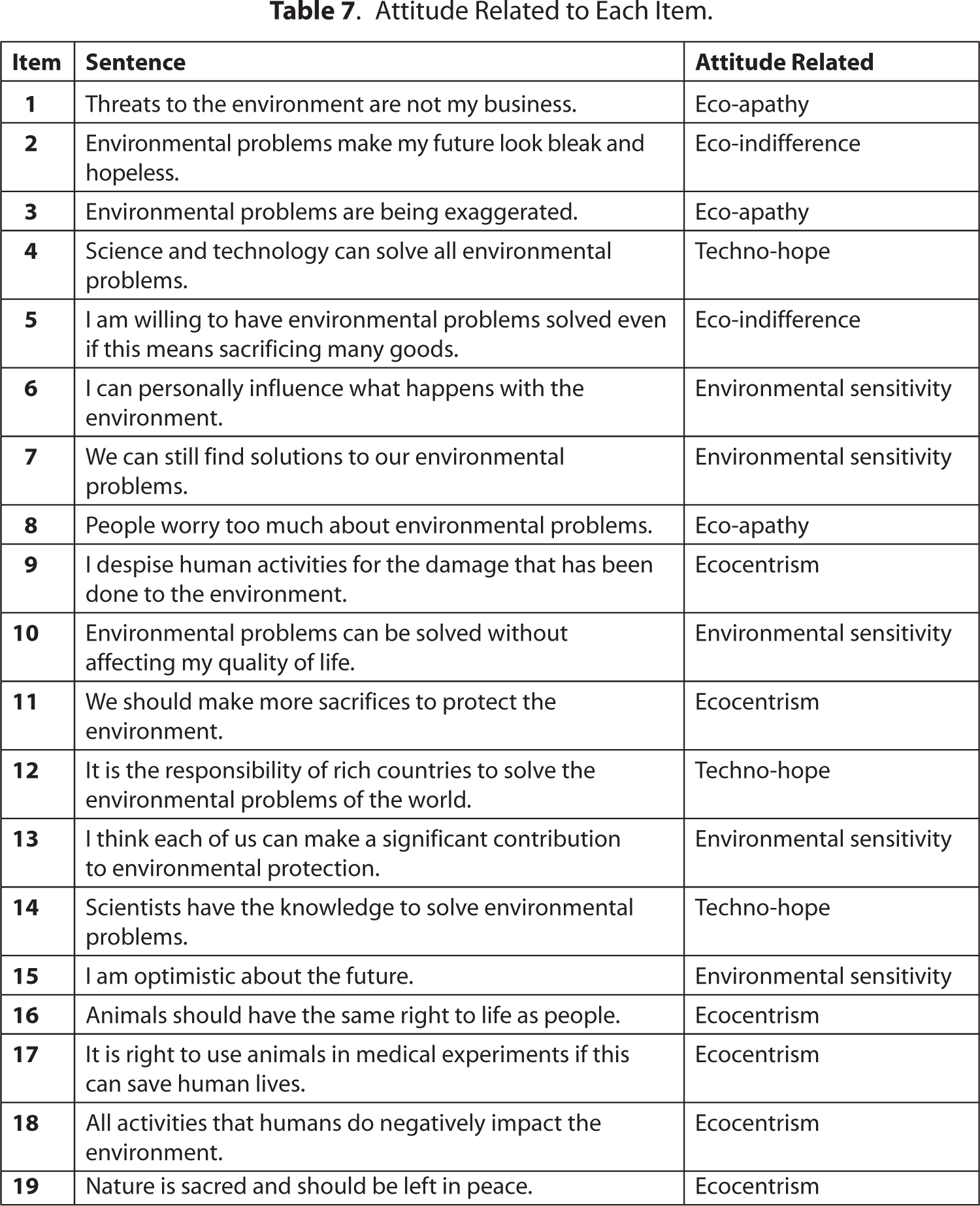
Environmental Sensitivity refers to the attitude that focuses on the role of the individual and his or her people in relation to the environment. Ecocentrism refers to the idea that nature has value in itself, and not due to human transformation (Macías Zambrano, 2017); it sees nature as worth preserving regardless of the economic or lifestyle implications of conservation (Gagnon Thompson & Barton, 1994; Macías Zambrano, 2017). Vázquez and Manassero (2005) labelled this component as Naturalism. Nevertheless, we consider those items to be closer to the Ecocentrism definition.
Eco-indifference implies a passive attitude, it refers to delegating responsibility for something that does, however, affect the individual, to which they are not willing to take action for themselves, but would sacrifice something of their own if someone were to solve the problem for them. Eco-apathy; denotes the impact of our actions on a larger scale, as well as the detachment from and denial of these actions. Finally, the term Techno-hope was established in order to avoid a confusion with the view that hard sciences and technology (e.g., chemistry, biology, computer engineering or physics) provide the only genuine knowledge of reality, or that such knowledge is, at least, inherently superior to what we can know from any other disciplines, commonly known as Scientism (Moreland, 2018). The Techno-hope component expresses hope and responsibility in science and technology for generating solutions, rather than portraying it as an inherently superior discipline.
Regarding the cross-loading presented in three items; that of Item 6 (I can personally influence what happens to the environment) is very close to the established limit (0.30) and is therefore considered not relevant.
Item 9 (I despise human activities for the damage that has been done to the environment) requires modification, so that it can be more closer related to component two. On the other hand, we decided to eliminate Item 17 from the instrument, as it appears to be unrelated to the Ecocentric attitude, or any other.
Conclusion
For an initiative to be successful, it must be based on solid foundations, both conceptually and statistically. The previous study highlighted the need to make extensive corrections, which were successfully performed in the current one. Though there is still a needed for further tests, there is reason to believe, given the size of the sample, as well as other factors already discussed, that The Handprint Instrument is useful to identify the environmental attitudes discussed in this article.
Furthermore, the statistics support conceptually that items belonging to each factor have a close resemblance between them and are much better defined.
The next step will also include the analysis of frequency and degree of severity of each attitude in the surveyed students.
Footnotes
Acknowledgements
The authors would like to thank Colegio Madrid, and Paola Cueto Head of the Geography Coordinator of the Escuela Nacional Preparatoria (ENP), as well as all participating students and their teachers for their time and effort.
Declaration of Conflicting Interests
The authors declared no potential conflicts of interest with respect to the research, authorship and/or publication of this article.
Funding
The authors disclosed receipt of the following financial support for the research, authorship, and/or publication of this article: This research was supported by the Research Grants – Doctoral Programmes in Germany of the German Academic Exchange Service (DAAD, Deutscher Akademischer Austauschdienst).