




Abstract
Shaping one’s own everyday life in the sense of sustainable development (SD) and participating in corresponding social processes call for the ability to make decisions in terms of SD. To promote this ability, this article focuses on the question of how pupils make decisions in the context of SD and which types of decision-making processes (DMP) can be identified. To this end, 27 pupils from various Swiss German schools were interviewed in this study using the thinking-aloud method. The data were analysed according to the method of empirically grounded type construction by Kelle and Kluge. This resulted in five types of DMP. Differences were particularly evident in the formulation and consideration of several options for action as well as in weighing them up. The heterogeneity of DMP suggests that pupils’ decision-making ability can be optimally promoted and expanded through peer learning in the classroom.
Keywords
Introduction
Widespread concepts of Education for Sustainable Development (ESD) stipulate that decisions in the context of sustainable development (SD) are characterized by several criteria—ecological, economic, and socio-cultural criteria, reference to global and local contexts and to a temporal perspective—from which different options for action arise. These can contradict each other in terms of content and lead to conflicts (Cebrián et al., 2020; Sander & Höttecke, 2018). Such decisions are consequently highly complex (Böhm et al., 2020) and require individuals to recognize different options for action and weigh them up against each other argumentatively, to make informed decisions and reflect on their decision-making processes (DMP; Bögeholz et al., 2018; Dittmer et al., 2019). The ability to make such decisions is central to shaping people’s own everyday lives and to their active and competent participation in social processes in the context of SD, and consequently needs to receive appropriate support (Ardwiyanti & Prasetyo, 2021; Garrecht et al., 2018; Gresch et al., 2017). In terms of a normative orientation of ESD, the promotion of decision-making ability in the context of formal education thus pursues the goal of enabling learners to make decisions on the basis of information and value-based considerations and to reflect on DMP that meet the requirements of SD (Eggert et al., 2017; Künzli David et al., 2008).
Against this background, this article focuses on pupils’ DMP, and looks at how they make decisions in the context of SD and which types of DMP can be identified.
State of Research
The promotion of decision-making ability in the context of ESD aims at enabling pupils to make reflective decisions that meet the requirements of SD. This also implies enabling pupils to reflect on intuitive DMP. In the following, we will first look at those studies that deal with intuitive and reflective DMP from a psychological-economic perspective and that do not yet take SD into account. Subsequently, those studies that investigate DMP in the context of SD will be examined.
In the context of decision psychology, the two types of DMP—intuitive and reflective DMP—are explored in several studies (Evans, 2008; Haidt, 2001; Horstmann, 2012; Kahneman, 2012). For example, Kahneman (2012) and Horstmann (2012) deal with intuitive and reflective DMP and their differences. Kahneman (2012) distinguishes between two modes of thinking—fast and slow thinking—and Horstmann (2012) between two modes of processing—intuitive and deliberative processing. Their findings show that there are decisions that can be classified as ‘fast thinking’ and are routine and intuitive. In this case, no thought is given to several decision options. According to the two researchers, a large part of the decisions can be assigned to this category. The findings further show that there are also decisions that are based on ‘slow thinking’ and thus correspond to a deliberative processing mode. Such decisions consider multiple decision options, are reflexive and are required for new and complex decisions (Horstmann, 2012; Kahneman, 2012). According to Horstmann (2012), the search for information in deliberate decisions is also thorough and comprehensive. To make deliberate decisions, several steps—ideally—are necessary, such as a thorough search for information and consideration of several options for action and their weighing up. Regarding the promotion of decision-making ability in the sense of SD, this entails pupils having to first learn to think slowly to make reflective decisions that meet the requirements of SD.
Intervention studies on the promotion of pupils’ decision-making abilities in the context of ESD exist especially in science research (Eggert & Bögeholz, 2010; Eggert, 2008; Gausmann et al., 2010; Gresch, 2012; Levy Nahum et al., 2010; Ratcliffe & Grace, 2003; Ratcliffe, 1997). They focus on the promotion of individual-specific abilities in DMP. In this context, they refer to the identification or generation of options for action or to their weighing up in pupils’ DMP.
Regarding the identification or generation of options for action and the role played by values and SD knowledge (ecology, economy and socio-culture), the findings of some of these studies indicate that pupils have no difficulty in developing different options: According to Ratcliffe (1997), all the pupils in her study succeeded in developing options. It is to be noted, though, that pupils were directly asked to do so. However, Ratcliffe proves that pupils have difficulties in adequately considering previously acquired information in their DMP and in dealing with contradictions. Nevertheless, this does not seem to hinder the development of options. The research group around Gausmann et al. (2010) also proves that the pupils develop options, even though this is done based on only one knowledge dimension of SD. They also find that pupils have difficulty in adequately considering the information provided to them in the DMP.
Regarding the weighing-up processes and the role of values and SD knowledge, the findings of further studies indicate that pupils find it difficult to carry out weighing-up processes during their DMP. The findings of Eggert (2008) and Eggert and Bögeholz (2010) indicate in this respect that the weighing up of arguments as well as decision-making are made more difficult by the occurrence of contradictory values in the DMP. With regard to SD knowledge, the findings of Sander and Höttecke (2015) indicate that pupils include little to no knowledge in the weighing-up processes.
Overall, the discussed findings from the intervention studies reflect that pupils do not show any difficulty in developing options—even if this is mainly done with only one dimension of SD. However, they find it difficult to weigh up arguments in the DMP to arrive at a reflected decision in terms of SD. Regarding the promotion of decision-making ability in the sense of SD, the findings also indicate that the instructional interventions carried out for this purpose are not yet sufficient to consistently build up pupils’ decision-making ability. It remains unclear how pupils shape their DMP, which types of DMP can be reconstructed and how the DMP on the part of the pupils can be specifically supported.
Theoretical Framework and Methodological Approach
Theoretical Framework
This article focuses on the design of DMP of pupils in the context of SD. For this purpose, the data collected in the explorative-qualitative EKoN-E study (DMP of pupils in the context of SD with a focus on nutrition; Valsangiacomo et al., 2019) were used and analysed. The aim of the study was to investigate the DMP of 11- to 12-year-old pupils. The theoretical basis of the study was a theory-based and ideal-typical model for DMP in terms of SD (EKoN). The model comprises a total of three phases: the pre-selectional, the selectional and the post-selectional phase (see Figure 1). The focus of the study was on the selectional phase of the model, in which the decisions are ultimately made.
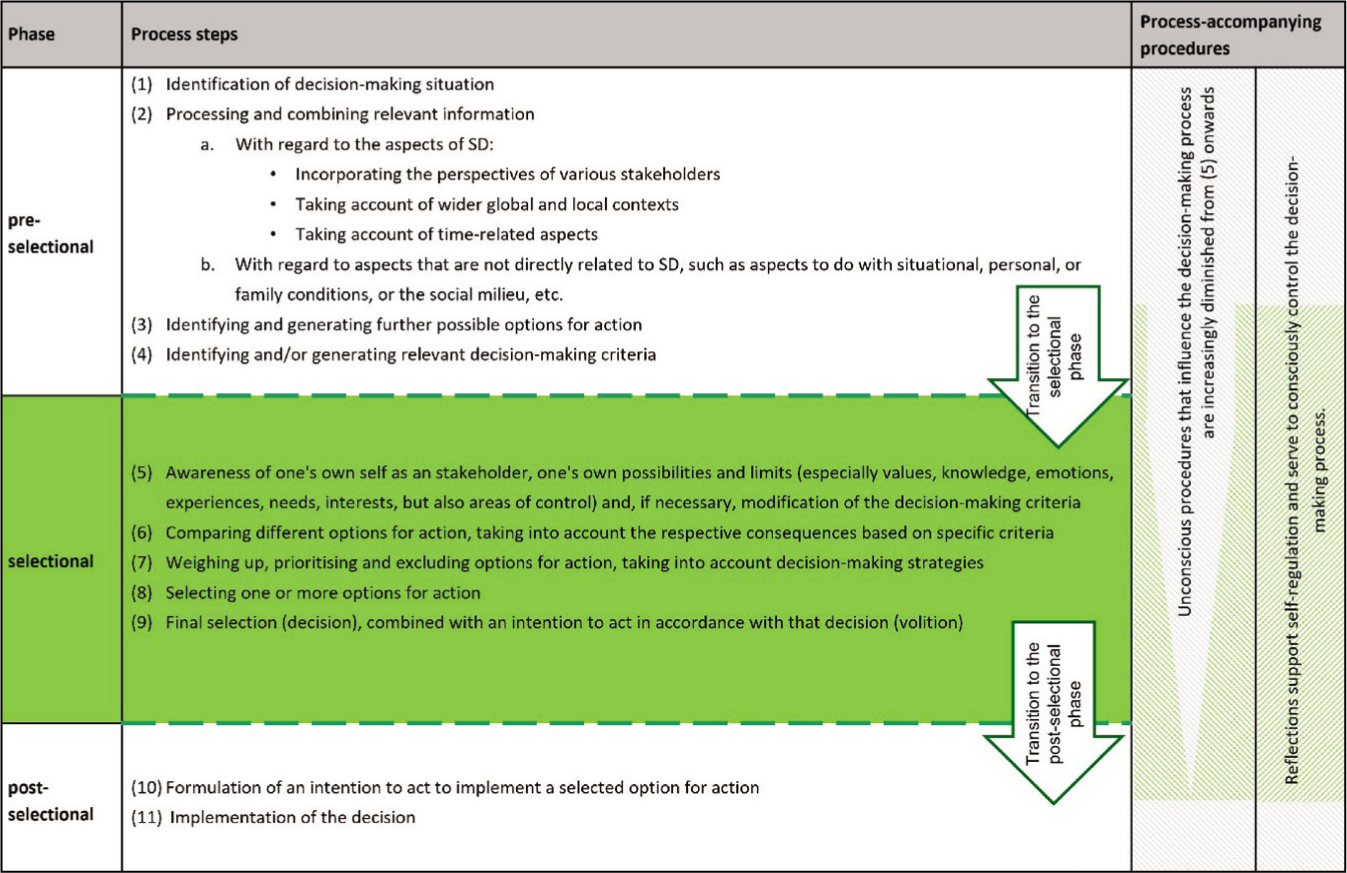
As can be seen from the EKoN model, the selectional phase consists of five process steps (PS) that build on each other. The ideal-typical model is based on the image of an individual who decides reflexively—and not intuitively—and in the sense of SD. Characteristically, the individual perceives him/herself as a stakeholder and in doing so includes and reflects on values, emotions, experiences, needs, interests as well as existing knowledge (‘becoming aware of or adopting one’s own stakeholder perspective’—PS 5). The multidimensionality of a decision that meets the requirements of SD leads to different options for action arising from the different SD knowledge dimensions. Being able to recognize these and anticipate their consequences (‘comparison of options for action’—PS 6), to design weighing-up processes (‘weighing or narrowing down options for action’—PS 7) and to select options for action (‘selecting one or more options for action’—PS 8) are among the PS to make a reflected decision in the sense of SD (‘decision’—PS 9).
Selection Procedure and Sample
A qualitative sampling plan was constructed in the EKoN-E study, in which the sample was systematically selected according to predefined criteria. This criterion-oriented selection procedure ensured the compilation of a maximum variation sample, which thus represented a maximum of different cases (Misoch, 2015). The following criteria were used for selection: location, level of knowledge, value orientation, gender, and socio-economic status of parents (see Table 1).
Selection Criteria and Their Values.
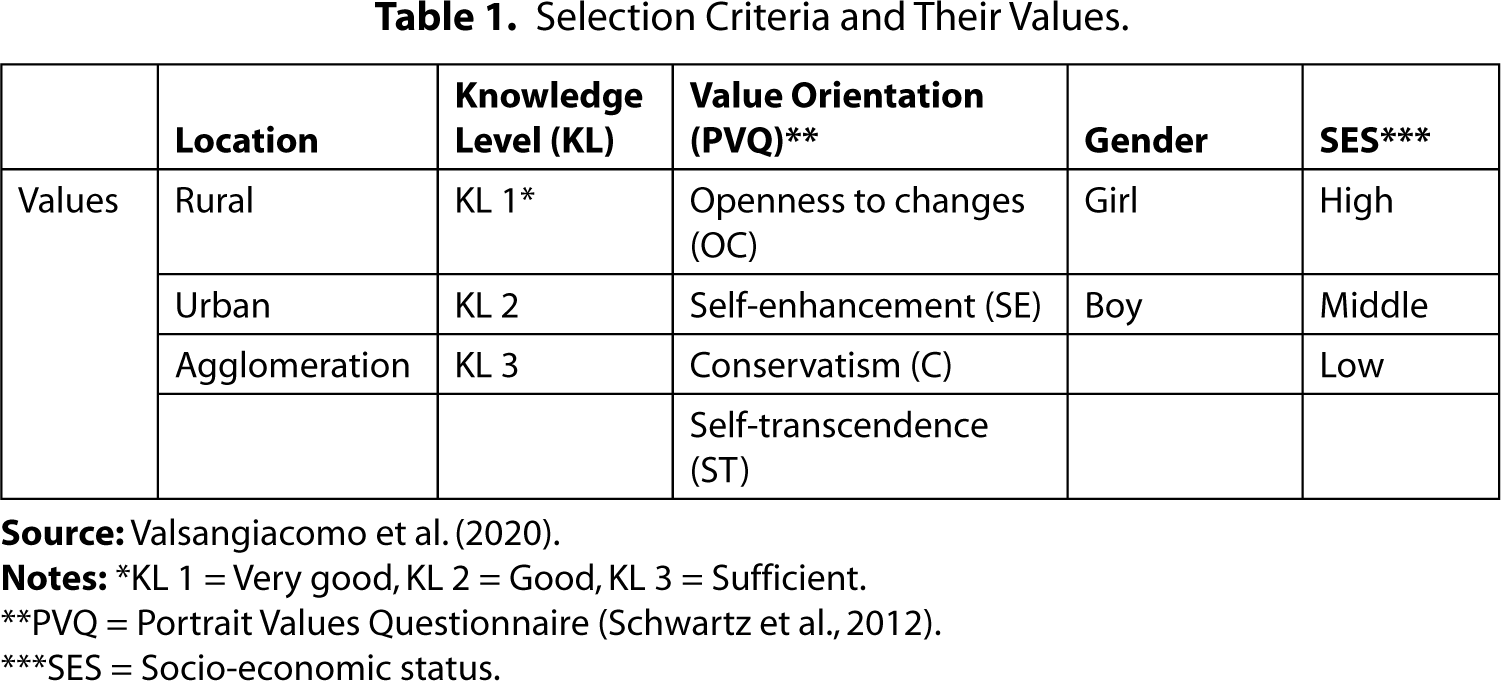
**PVQ = Portrait Values Questionnaire (Schwartz et al., 2012).
***SES = Socio-economic status.
To ensure that the pupils have gone through all the steps of the pre-selectional phase (see Figure 1), they took part in a learning sequence on the topic of ‘meat consumption’ for 10 lessons. In the learning sequence, a teacher trained for this purpose addressed the three SD knowledge dimensions (ecology, economy, socio-culture) supplemented by the knowledge dimension of health in the context of meat (see Table 2). 1
The SD Topic Areas and Their Content-Related Aspects in the Learning Sequence.
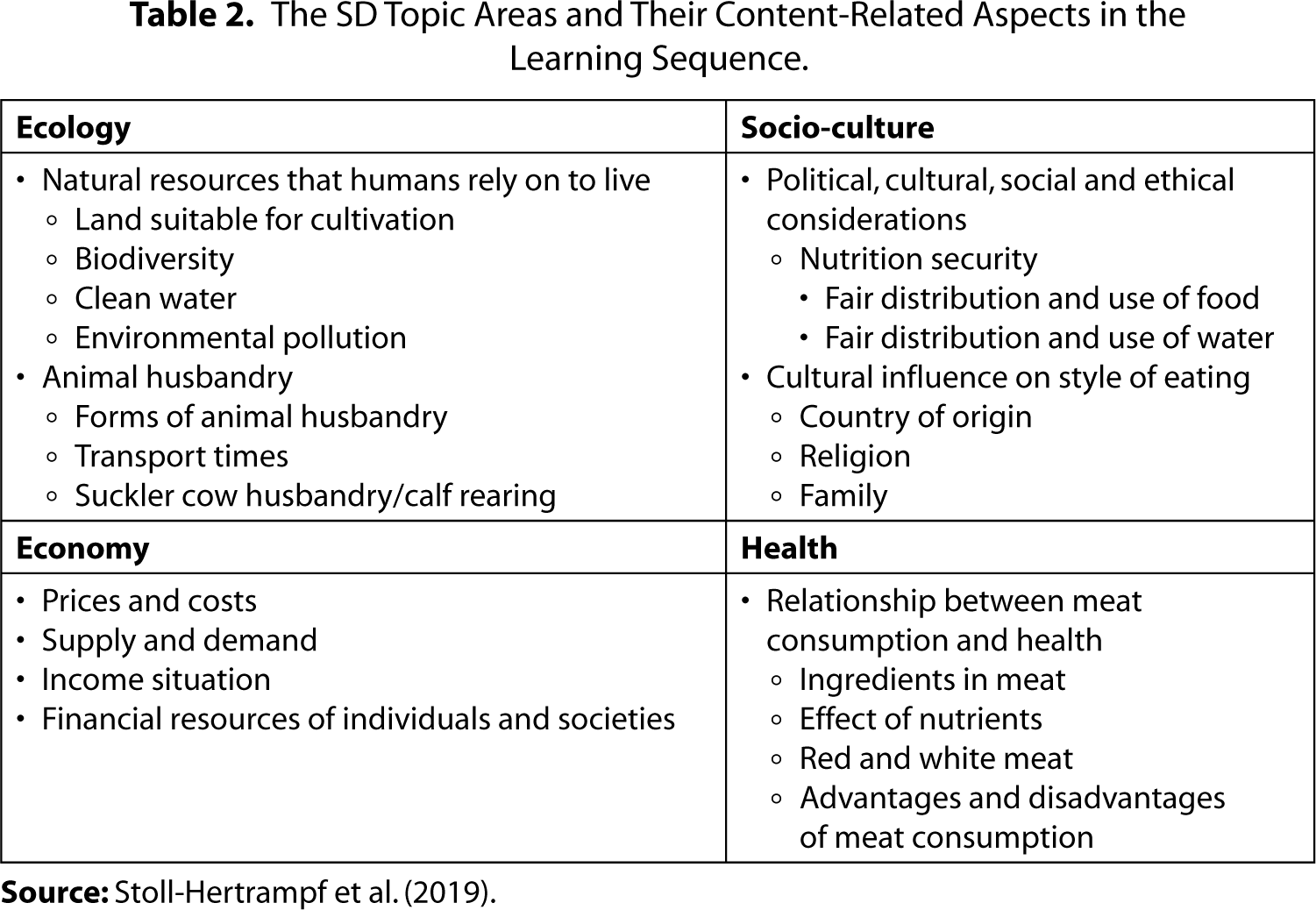
As envisaged for the pre-selectional phase, pupils thus had the opportunity to work through the various items of SD knowledge they had learned, to link them and to identify and/or generate options for action and decision-making criteria. Subsequently, the pupils (N = 83) took a knowledge test to ensure that all pupils in the sample had a minimum level of SD knowledge. Beyond this minimum level, three levels of knowledge were distinguished. The pupils also completed a pupil questionnaire that included questions to capture the selection criteria of value orientation (as defined by Schwartz et al., 2012), gender and socio-economic status of parents.
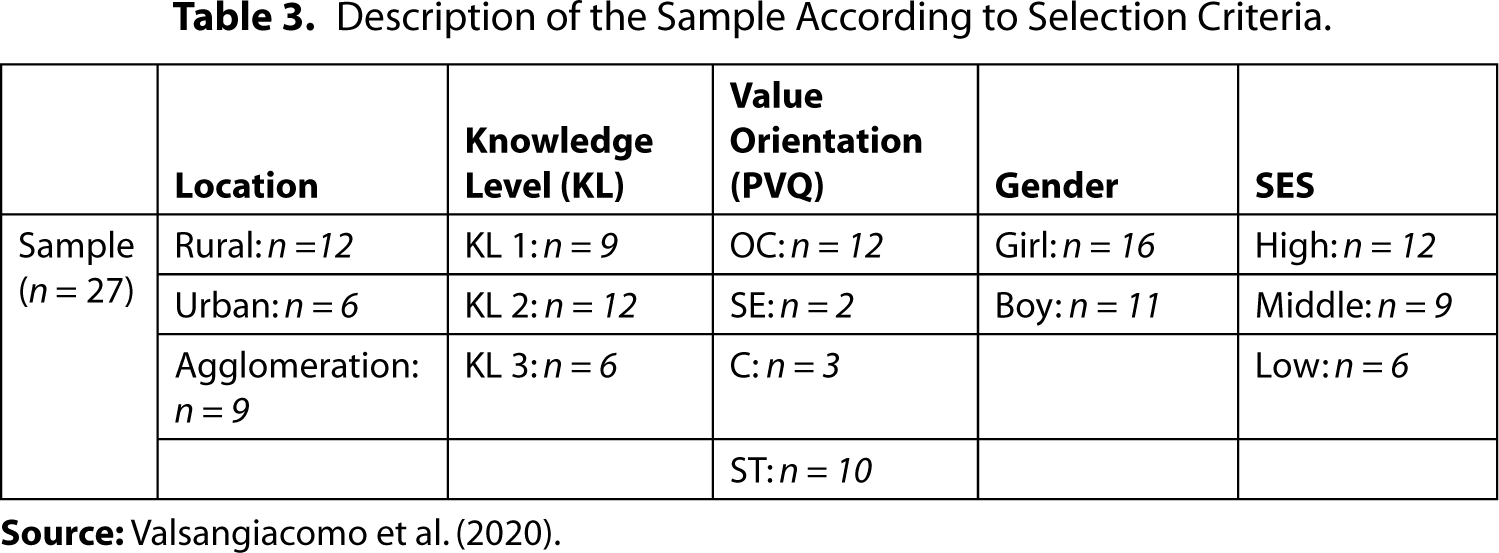
Based on the sampling plan, 27 pupils (n = 27) in the sixth grade from a total of five Swiss German school classes were selected and interviewed (see Table 3).
Description of the Sample According to Selection Criteria.
Survey Method
The pupils were interviewed using the thinking-aloud method (Ericsson & Simon, 1993). Thinking aloud makes it possible to record a person’s cognitive processes that otherwise remain implicit. Thoughts and feelings are verbalized simultaneously to an activity and thus the cognitive processes of the interviewee are made visible (Ericsson & Simon, 1993). In the course of data collection, the unstructured variant of thinking aloud (introspection) was used first in each case and an interview (retrospection) was conducted immediately afterwards (Konrad, 2010) in order to gain direct insight into the steps of the pupils’ selectional phase and thus to understand and reconstruct their DMP (Völzke, 2012).
At the beginning of the data collection, the pupils were instructed on how to implement the thinking-aloud method and practised the method by working through two everyday decision-making situations that did not require any prior subject knowledge. This was followed by unstructured thinking aloud. For this purpose, each child was placed in a decision-making situation on the topic of meat by means of an open impulse:
Imagine you are going to a camp for a whole week in the summer. The kitchen team is very kind and would like to take each child’s decision into account for the week’s menu plan. They are most concerned about the topic of meat because they know that children have very different opinions about eating meat. How do you feel about meat? Decide what you personally would like the kitchen team to consider on the subject of meat. Say out loud everything that goes through your mind.
The aim of this decision-making situation was to put the pupils in an authentic situation that allowed them some decision-making power and did not address only routine decisions. The situation allowed the pupils enough leeway to carry out a DMP in a comprehensive way and to give them the opportunity to consider all the requirements of SD. In order to influence the thought processes and the decision of the individual pupils as little as possible, they were encouraged only very cautiously and when necessary to verbalize during the process of the decision- making situation. The entire process was audio and video recorded as well as recorded in writing. During the retrospective phase, the pupils were asked comprehension questions, whereby only aspects that had been formulated in the first phase were addressed.
Analysis Method
A type-building approach was chosen for the analysis of the qualitative data material collected. For this purpose, the method of empirically grounded type construction by Kelle and Kluge (2010) was applied. The basic idea of this method is to compare all cases with each other and to look for similarities and differences to identify types. This method consists of four stages: (a) development of relevant comparative dimensions, (b) grouping of cases and analysis of empirical regularities (c) analysis of meaningful relationships and type construction and (d) characterization of the constructed types (Kelle & Kluge, 2010).
The qualitative data material was first analysed using qualitative content analysis according to Mayring (2015) to reconstruct the individual DMP of the pupils. With the help of the data material, the characteristics were then developed, and the characteristic values were determined to be able to characterize the types of individual DMP to be identified (stage 1). The developed characteristics and characteristic values referred to the PS that pupils carried out in their DMP. With the help of a property space, the characteristics and characteristic values were combined and the DMP were sorted according to their properties. In this way, each DMP could be assigned to a specific combination of characteristics—that is, a specific combination of completed PS (see Table 4)—and the assigned DMP could be analysed for their empirical regularity (stage 2). They were then examined for further commonalities as well as differences to identify meaningful relationships. Of particular importance were the comparison and contrasting between the generated types, to capture higher-level connections that were important for the overall typology. The aim was, on the one hand, to construct a typology in which the DMP assigned to the generated types are similar with regard to as many characteristics as possible in order to achieve the highest possible internal homogeneity of the individual types. On the other hand, the types themselves were to be as dissimilar as possible to each other so that the greatest possible external heterogeneity could become visible at the level of the typology (stage 3).
The Five Types of Decision-making Processes (DMP) After the Third Stage of the Analysis Process According to Kelle and Kluge (2010).
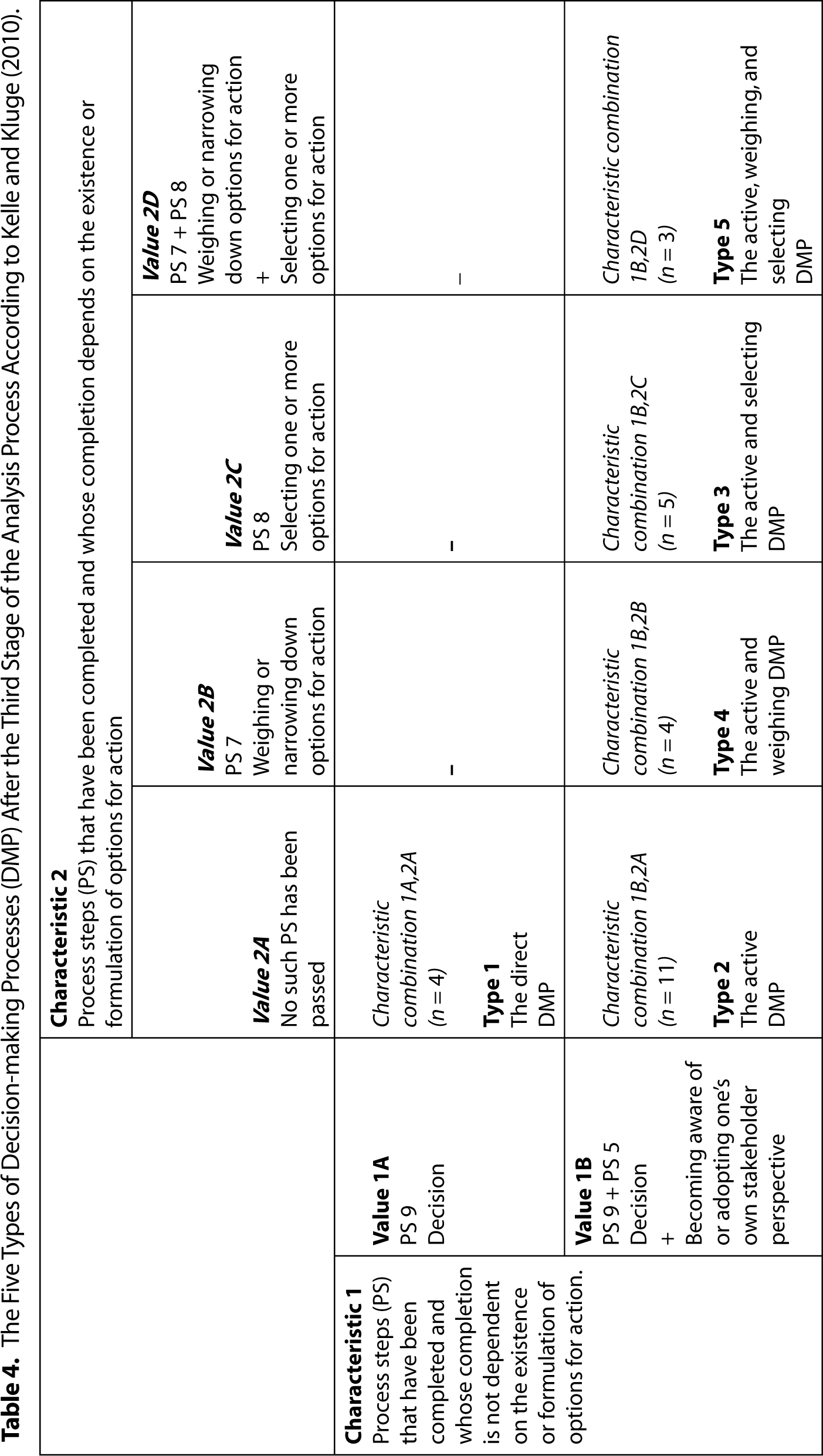
This procedure resulted in a typology that comprised five different types of individual DMP of the pupils (see Table 4).
The types formed were finally characterized based on their combinations of characteristics or combinations of PS (see Table 4) as well as the meaningful relationships (stage 4). A detailed description of the properties of the types formed is given in the following section.
Results
The evaluation of the data material shows that pupils carry out different PS. However, it proves that no pupil goes through all the PS envisaged in the EKoN model. It also shows that the reconstructed PS occurs in different combinations, which leads to the creation of different DMP. The evaluation points to two superordinate groupings of DMP: On the one hand, there are DMP that consist exclusively of PS that do not require the formulation of options for action. On the other hand, there are DMP that have additional PS that require the formulation of at least two options for action. During these latter DMP, pupils consequently showed comparing, weighing up, or selecting options for action. While the first superordinate grouping can be divided into two different types of DMP, the second reveals three further types (see Figure 2).
A Typology of Individual DMP of Pupils in the Context of SD.
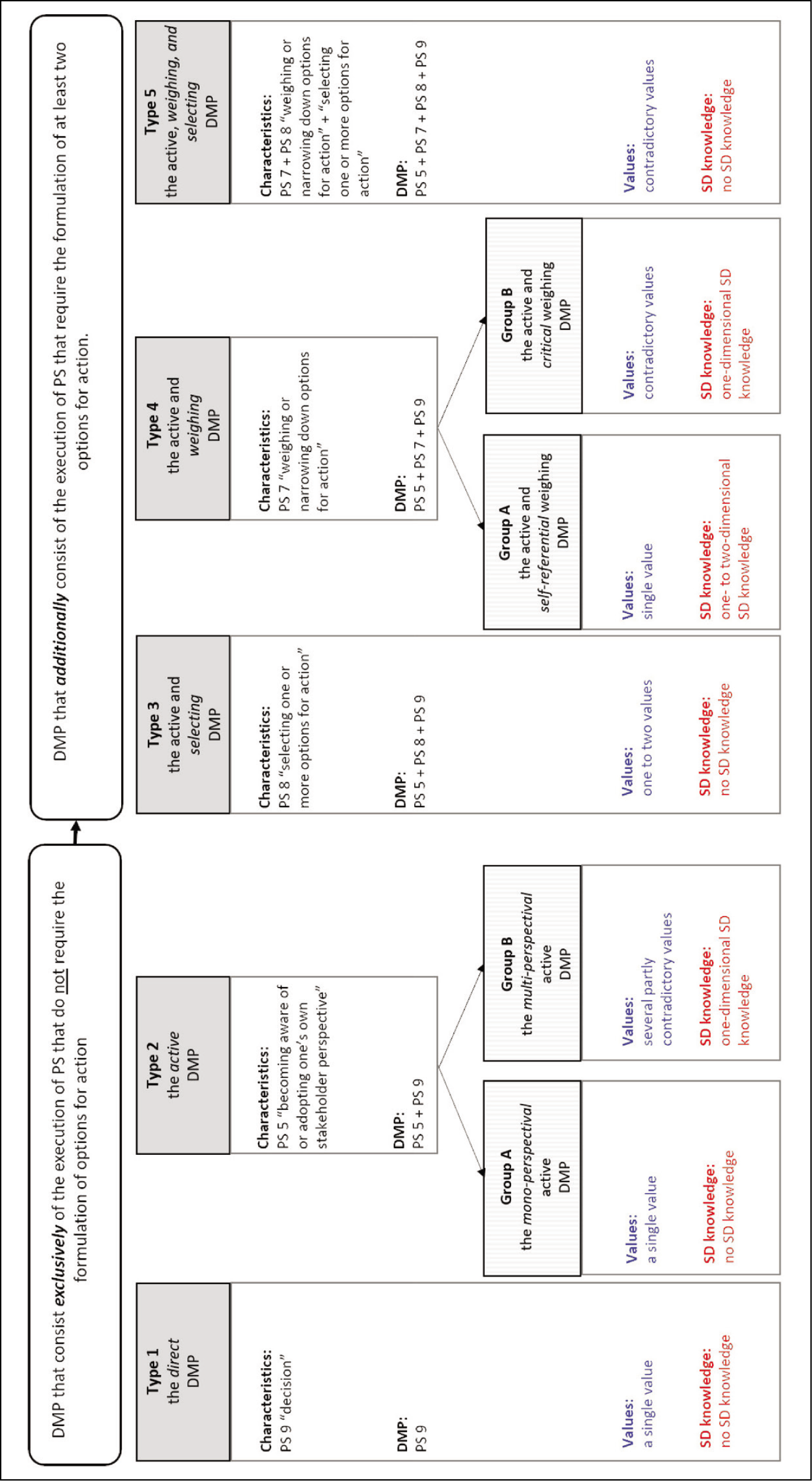
Accordingly, five different types of DMP emerge from the evaluation. In the following, each type is illustrated by means of a selected real case that prototypically represents it. 2
Type 1: ‘The Direct Decision-Making Process’
The DMP of the type ‘direct decision-making process’ is characterized by the execution of a single PS—the PS decision (PS 9)—of the selectional phase of the EKoN model (see Figure 1). Characteristic of this DMP is the simple verbalization of the decision, which thus corresponds to the actual DMP; this justifies the designation the direct DMP (see Figure 2).
The single PS carried out in this DMP can be characterized by the inclusion of a single value. Children with DMP Type 1 do not formulate any further values or any SD knowledge (see Table 5). This is how Klaudia, whose DMP prototypically illustrates this type, expresses herself:
They [the kitchen team, author] should make sure that it [the meat, author] is not completely cooked, that it is still a bit bloody […], that it is fine meat—not somehow greasy meat—[…], and […] it should be big […] and that there is a lot of meat. And it should be nice—really juicy—meat, that’s good […] a big juicy piece of meat. (Klaudia, 90–92)
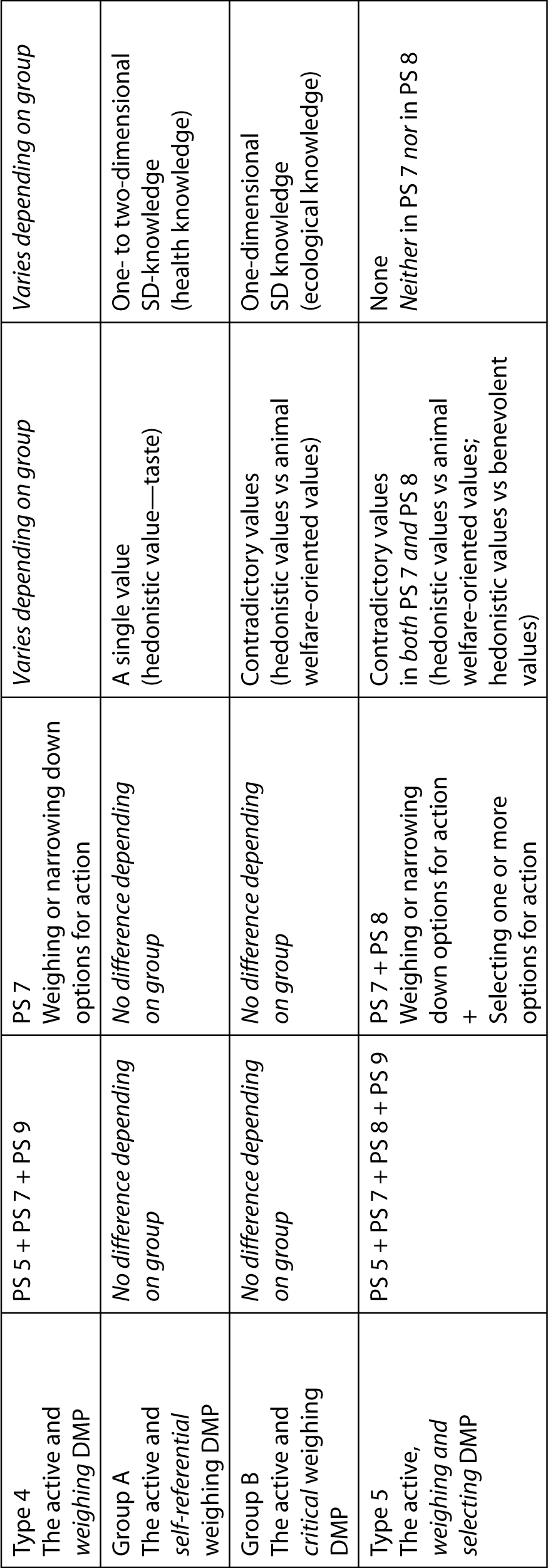
The Five Types of Pupils’ DMP in the Context of SD and Their Respective Central Characteristics.
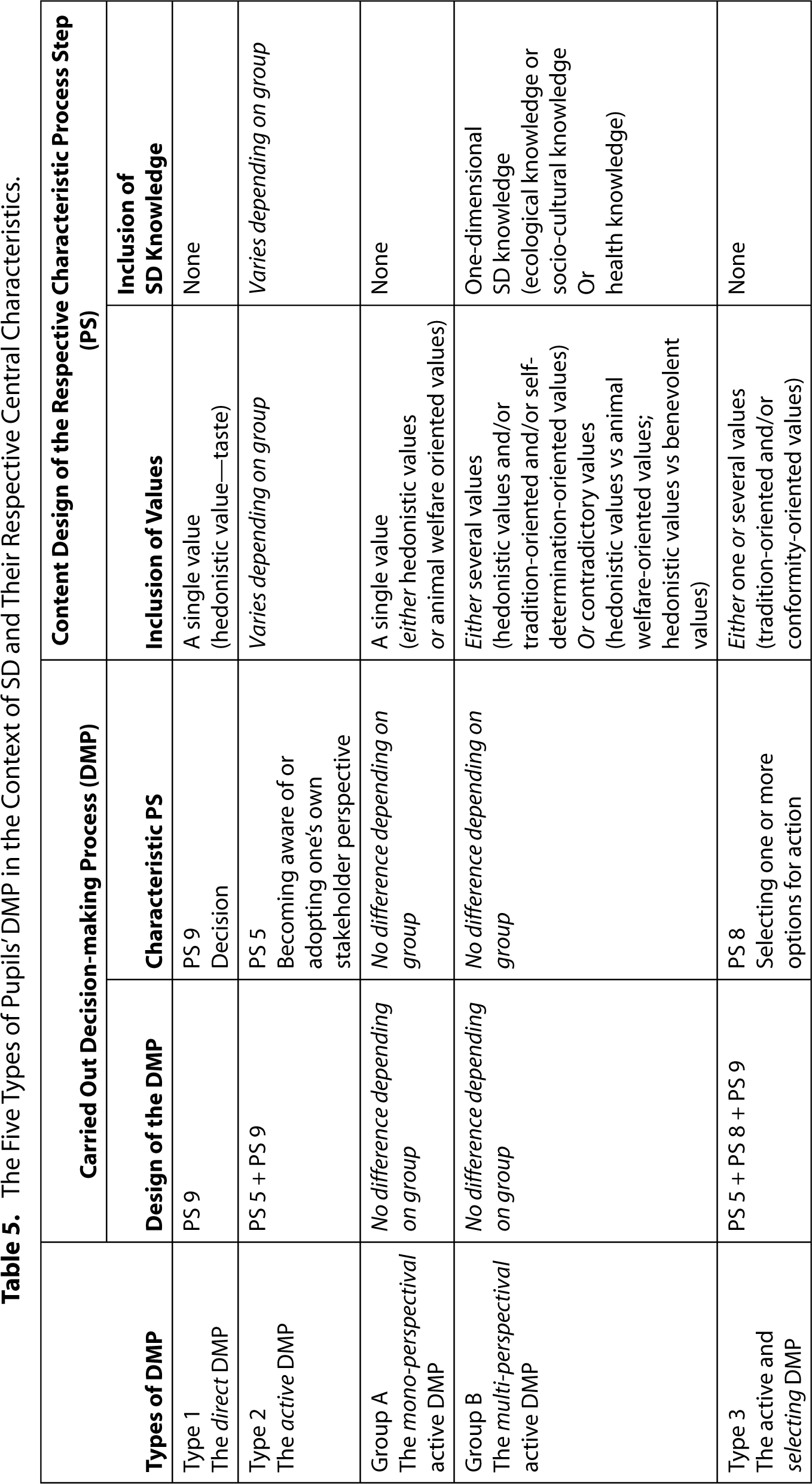
Klaudia expresses the decision directly, without carrying out any further PS. Her DMP consists exclusively of the execution of the PS decision.
Type 2: ‘The Active Decision-Making Process’
The DMP shown by the type ‘active decision-making process’ is characterized by the fact that, in addition to the PS decision (PS 9), it also includes the PS becoming aware of or adopting one’s own stakeholder perspective (PS 5) (see Figure 1). In such a DMP, the children recognize themselves as active stakeholders and include personal values and, in part, also SD knowledge; this justifies the designation the active DMP (see Figure 2). For example, Charlotte speaks during the carrying out of PS 5:
I don’t like it so much […] when I think about what that […] could be for an animal, who has to die sometimes. I also like to make sure that animals don’t really have to die, even though they can still carry on living. So, I am also a bit of animal protection for me. (Charlotte, 112)
Charlotte’s formulations show how she perceives herself as an active stakeholder: she explicitly expresses her personal animal welfare-oriented attitude and takes it into account in the DMP.
With regard to the content of the PS of adopting one’s own stakeholder perspective, two groups can be identified: There is the DMP in which the children include a single value (group A), and the DMP in which the children consider several values in combination with SD knowledge (group B) (see Table 5).
Group A: ‘The Mono-Perspectival Active Decision-making Process’
Children who carry out a DMP Type 2 group A include a single value when adopting their own stakeholder perspective. Consequently, these children do not formulate any further SD knowledge-based statements. Characteristic of this DMP is therefore a value-based and mono-perspectival approach to PS 5, hence the designation chosen the mono-perspectival active DMP (see Table 5). This can be prototypically illustrated by Kevin’s DMP, who speaks like this:
I like meat myself. All kinds of meat. What I don’t like so much is meat in the morning. Unless it’s bacon, which I still like. Otherwise, and I still like sausages. (Kevin, 39)
Kevin perceives himself as an active stakeholder in the decision-making situation and refers to a single aspect, his own eating priorities, and preferences.
Group B: ‘The Multi-perspectival Active Decision-making Process’
When designing such a DMP, several values and SD knowledge are included in PS 5. On the one hand, these values can occur side by side and, on the other hand, in contradiction to each other. Previously acquired SD knowledge is also considered. All in all, it is evident that in this DMP, PS 5 is approached from several perspectives; hence the designation the multi-perspectival active DMP (see Table 5). This is how Bona, whose DMP prototypically illustrates this group, expresses herself:
I don’t really like meat very much in general and if I eat meat then only with a label for animal welfare, so to speak, as we have learned. […] because with most types of meat and so on, the animals are not kept in a species-appropriate way and I can’t understand that we eat animals, but they are not allowed to, so to speak. Or if they do, that it creates a drama, even though we do it every day. And it’s just not that nice, I’ve been to a place where chickens are slaughtered and it’s just not nice to look at. So, they are skinned alive and so on and that’s just mega bad and that’s just animal cruelty for me. That’s why I don’t like eating meat so much. (Bona, 118–134)
And in response to the interviewer’s question about what is meant by eating meat ‘with a label for animal welfare’, she adds:
Because I find it relatively species-appropriate. So that they are allowed outside, that they simply don’t have a lack of space and that they are better off. (Bona, 134–136)
Bona perceives herself as an active stakeholder in the decision-making situation. To this end, she refers both to her eating preferences and to the importance of fair animal husbandry for her. She therefore incorporates several aspects.
Type 3: ‘The Active and Selecting Decision-Making Process’
The type ‘active and selecting decision-making process’ represents the DMP that is characterized by the carrying out of three PS. In addition to the PS of adopting one’s own stakeholder perspective and making a decision, this DMP has the PS of selecting one or more options for action (PS 8) (see Figure 1). Typical for this DMP is going through selection processes. In concrete terms, this means that children who carry out such a DMP select an option for action from several options or a combination of these. Consequently, DMP Type 3 describes the DMP in which a child perceives itself as an active stakeholder and carries out selection processes; hence the designation ‘the active and selecting DMP’ (see Figure 2).
Regarding the content of the selection processes characteristic of this type, it can be stated that they take place exclusively through the inclusion of values. SD knowledge is not considered (see Table 5). Such a selection process can be prototypically illustrated by Bert’s selection of options:
My religion is Muslim and in our religion, you’re not allowed to eat pork and so either you would have chicken or mostly it is like this, between hot dogs or mostly it is with pork, but some others don’t have chicken but have beef. Then I would say, better to make it beef. (Bert, 112)
Bert refers to his own religious food rules and formulates a first option for action (‘chicken or beef’). In the interview, he explains further and to the interviewer’s question of why it should be chicken or beef, he answers:
Because we usually eat chicken at home. Yes. So, and beef is like that, I know several [types of meat, author], but mostly it is always like that, like in Kosovo, my home country, we eat either chicken or beef. There are also others that you can eat but mostly we eat only these two kinds. […] For example, there is also horse, there is also rabbit or something but […] mostly in our home country or elsewhere we always have chicken or beef. (Bert, 165–169)
Bert formulates a second possible option for action: on the one hand, an option that considers the Muslim food regulations (‘meat but no pork’) and, on the other hand, one that additionally refers to eating habits (‘chicken or beef’). Aware that there are other types of meat that he can and may eat, he chooses. The choice enables him to maintain both his religious food rules and his domestic or cultural eating habits.
Type 4: ‘The Active and Weighing Decision-Making Process’
The DMP shown by the type ‘active and weighing decision-making process’ is characterized by the carrying out of a total of three PS. In addition to the PS of adopting one’s own stakeholder perspective and decision, it includes the PS of weighing or limiting options for action (PS 7) (see Figure 1). Characteristic of this DMP is thus the running through of weighing-up processes. During such a DMP, children examine several options for action in terms of their importance. In DMP of Type 4, the children recognize themselves as stakeholders and carry out weighing-up processes, which is why this type is called the active and weighing DMP (see Figure 2). For example, Katharina speaks when weighing up as follows:
For me personally […] it would really be too much if I ate meat every day. Because it is also a heavy dish for the stomach simply to digest. And I think meat is healthy, but I think it would be too much every day […] And yes, I simply couldn’t eat meat every day, because […] I would also eat salad or vegetables, which is also healthy, but not meat. And meat isn’t exactly the cheapest thing either. So, if you ate it every day […] it would also be more expensive. […] (Katharina, 69)
In her DMP, Katharina examines two possible options for action (‘meat every day’ and ‘meat, but not every day’) in terms of their importance for her, and consequently weighs them up in favour of the latter.
With regard to the content of the weighing-up processes characteristic of this type, two groups can be identified: There is the DMP in which children carry out weighing-up processes in which they include a single value in combination with SD knowledge (group A), and one in which the children consider contradictory values in combination with SD knowledge (group B) (see Table 5).
Group A: ‘The Active and Self-referential Weighing DMP’
Children who carry out a DMP Type 4 group A include a single value in combination with one-dimensional SD knowledge in their weighing-up processes. With reference to this, they formulate two options for action: One value-based and one knowledge-based. The analysis shows that the two options for action refer to the child itself. A DMP designed in this way is therefore referred to as the active and self-referential weighing DMP (see Table 5). Philipp, whose DMP is a prototypical illustration of this group, expresses himself as follows:
I like eating meat and a lot of meat, but it doesn’t always have to be meat. It can also be something vegetarian from time to time. […] because always eating meat is certainly not very good for your body and I also just like to eat something veggie or something like that. (Philipp, 45–73)
Philipp names two options for action: A first one that refers to one’s own taste preferences (‘eat a lot and always meat’), and a second one that refers to possible consequences of meat consumption for one’s own health (‘don’t always eat meat, eat veggie now and then’). The two self-referential options for action are conflicting and are weighed against each other by Philipp. In the process, the health-oriented option for action seems to be more important to Philipp than the first one.
Group B: ‘The Active and Critical Weighing DMP’
The weighing-up processes exhibited by the DMP Type 4 group B can be characterized by the inclusion of several contradictory values and one-dimensional SD knowledge. Taking into account the included aspects, the children who go through such a DMP formulate two courses of action: While one refers to the child itself, the other considers aspects outside the child’s person, such as animal welfare. Hence the term the active and critical weighing DMP (see Table 5). Thus, Mark, whose DMP is considered the prototype for this group, says:
You can eat all meat but not the same amount of each meat. Because some animals are threatened with extinction because they have been hunted so much for meat or because they have something and that is why there is not so much left. […] And I like all meat. Except when it’s very fatty […] (Mark, 107)
Mark considers two options for action in his weighing-up process. One of them relates to his own taste preferences (‘eat the same amount of every meat’). The other, however, takes animal welfare into account (‘do not eat the same amount of every meat’). The two options for action contradict each other and are weighed against each other by Mark. In his DMP, Mark weighs up a self-centred against an animal welfare-oriented option for action in favour of the latter.
Type 5: ‘The Active, Weighing and Selecting Decision-Making Process’
DMP Type 5 ‘the active, weighing and selecting decision-making process’ describes a DMP that can be characterized by the carrying out of four PS. Except for the PS ‘comparison of options for action’ (PS 6), all PS provided for in the selectional phase of the EKoN model (see Figure 1) are carried out in this DMP. Characteristic of this DMP is the carrying out of both PS, weighing or limiting options for action (PS 7) and selecting one or more options for action (PS 8). Children who go through such a DMP perceive themselves as stakeholders in their DMP and carry out both weighing and selection processes. Consequently, the type is named the active, weighing and selecting DMP (see Figure 2).
The analysis of the content of the consideration and selection processes characteristic of this type shows that contradictory values are included. However, SD knowledge is not taken into account in any of the PS. The children formulate two possible options for action in the DMP, which are incorporated in the weighing-up and selection processes. This is how Robert, whose processes prototypically illustrate this type, expresses himself:
I eat any kind of meat and I would […] beef and chicken […]. That’s what most people eat, and I also like both kinds of meat very much […] For me, rabbit would also do, also pork, but just because I like all kinds of meat and I know that many people have rabbits as pets and don’t like to eat them and that many people don’t eat pork, I just had the two [beef and chicken, author’s note]. I could also have pork cutlet. I like it just as much as the two kinds of meat. For me it’s just that if others like the animal, rabbit, or hare, and they don’t want to eat it and the cooks cook it and half of them don’t eat it, that’s stupid too. And that’s why I ruled out pig and rabbit and hare. (Robert, 56, 74–76)
Robert formulates two courses of action: The first relates to his eating preferences (‘any kind of meat’) and the second takes into account his eating preferences as well as the religious food rules of his classmates (‘beef and chicken’). The occurrence of contradictory values leads to a conflict for Robert. In this conflict, he weighs the conflicting options for action against each other in favour of the benevolent option. Subsequently, he makes a choice. This is how he expresses himself:
I simply took the two [beef and chicken, author’s note], because I like all meat and because of that I can therefore consider the others. (Robert, 74)
After his weighing-up process, Robert chooses the benevolent option for action (‘beef and chicken’).
Discussion of Results
The article looks at which types of individual DMP can be identified with the help of reconstructed PS. Altogether, five types of DMP can be identified. This shows how differently pupils shape their own DMP in the context of SD. It is striking that the individual types meet the requirements of ESD to varying degrees. The multidimensionality of SD and the multitude of possible, partly conflicting options for action make decisions in the context of SD particularly complex. Consequently, ESD aims to enable pupils to deal with such decision-making situations in a way that they arrive at deliberate decisions (a), or more precisely, that they formulate options for action (b) and make weighing and informed decisions (c). These requirements are fulfilled differently by each type. Thus, the types of DMP are discussed below with regard to three aspects: They are first discussed (a) with regard to an assignment to an intuitive or deliberative processing mode or a fast or slow thinking mode and then (b) with regard to the formulation of possible options for action. Finally, (c) they are discussed with regard to the execution of weighing-up processes with the inclusion of SD knowledge.
State-of-the-art research found that the majority of DMP can be attributed to fast thinking and thus proceed routinely and intuitively (Horstmann, 2012; Kahneman, 2012). In view of this, DMP can be reconstructed which, due to the PS carried out, refer to intuitive decisions and those which refer to more deliberate decisions. Thus, there is the direct DMP—DMP Type 1—which has a single and exclusive PS—the PS decision—and can accordingly be attributed to fast thinking. However, other DMP—DMP Type 3, Type 4 and Type 5—can be identified in which at least three PS are carried out, and which can thus be assigned to slow thinking or deliberative processing modes. Furthermore, a DMP can be reconstructed which can neither be clearly assigned to fast thinking nor to slow thinking: the active DMP—DMP Type 2. It is characterized by the carrying out of two PS (see Figure 2). It is not clear to what extent this DMP is intuitive or deliberative.
Overall, it can thus be stated that several constructed types of DMP can be classified as deliberative DMP. DMP Type 3, Type 4 and Type 5 could therefore meet the essential requirements of a decision in the sense of SD.
In the state of the research, it is explained that according to some studies, pupils do not have any difficulty in developing options for action although it is difficult for them to adequately consider previously acquired SD knowledge (Gausmann et al., 2010; Ratcliffe, 1997). However, when reconstructing DMP in the context of the present study, it is noticeable that there are DMP in which at least two options for action are formulated—DMP Type 3, Type 4 and Type 5—and at the same time those in which no further option for action is included—DMP Type 1 and Type 2. Considering that all children had already generated or identified several possible options for action in the learning sequence conducted in advance, it is surprising that these are not taken into account in the DMP Type 1 and Type 2.
In addition, however, DMP can be identified in which PS are carried out that require the formulation of at least two options for action. These include the active and selecting DMP—DMP Type 3—, the active and weighing DMP—DMP Type 4—as well as the active, weighing and selecting DMP—DMP Type 5. Two things are noteworthy here: First, the formulated options for action are always based on values and only in the case of DMP Type 4 additionally on SD knowledge. This could indicate a difficulty on the part of the children to adequately consider SD knowledge in the development of options for action. Second, the formulation of at least two options for action does not seem to lead automatically to their weighing: DMP Type 3, in contrast to DMP Type 4 and Type 5, does not show any weighing-up processes.
State-of-the-art empirical studies in the context of ESD show that on the one hand pupils find it difficult to carry out reflective weighing-up processes and that on the other hand—when they do weigh up—they hardly consider SD knowledge (Eggert & Bögeholz, 2010; Eggert, 2008; Sander & Höttecke, 2015). With this in mind, DMP can be identified in the present study that—as outlined in (2)—despite formulating at least two options for action do not show any carrying out of weighing-up processes and those in which weighing-up processes are included. The latter include the DMP Type 4 and Type 5. The weighing-up processes of these two types differ in their content. In the active and weighing DMP—DMP Type 4—both values and previously acquired SD knowledge are used to weigh up the conflicting options for action—but the SD knowledge is basically one-dimensional (ecology or economy or socio-culture or health). In such weighing-up processes, the SD knowledge appears in combination with a value or contradictory values, and the knowledge aspect seems to be decisive for the final decision.
The weighing-up processes in the active, weighing and selecting DMP—DMP Type 5—are different. Here, only contradictory values are included. In these weighing-up processes, the contradictory values occur together and are weighed up accordingly. The previously acquired SD knowledge is not considered.
On the one hand, it can be stated that only DMP of Type 4 and Type 5 show weighing-up processes. Children who carry out these DMP do not seem to have any difficulty in weighing conflicting options for action against each other. It can even be assumed that it is precisely the formulation of options for action that conflict with each other that favours the carrying out of weighing-up processes. On the other hand, with regard to decisions that meet the requirements of SD, it is remarkable that SD knowledge is not adequately considered in either of the two types of DMP, because even when such content is included, it is basically one-dimensional. Although DMP of Type 4 and Type 5 thus include weighing-up processes, they consequently hardly do justice to the multidimensionality of SD.
Summary and Outlook
A look at the types of DMP immediately reveals that pupils’ DMP in the context of SD proceed in very different ways and are of varying complexity. Depending on the type of DMP, there are those that indicate fast and intuitive thinking and those that indicate slow and deliberative thinking; DMP in which at least two options for action are taken into account and those in which no further options for action are included; DMP that involve the weighing up of options for action and include SD knowledge, and those that also carry out weighing-up processes but do not include SD knowledge, as well as those in which no weighing-up processes are expressed.
However, none of the reconstructed DMP—if one adheres to the ideal-typical DMP in the sense of SD—represents ‘best practice’. In the context of ESD, it can be concluded first that all children are dependent on the promotion of decision-making ability regarding SD, and second that teachers can use the opportunity of the heterogeneity of the different DMP: A school class which is heterogeneous as regards DMP types can contribute to pupils learning from and with each other in ESD lessons. Through cooperative learning activities, pupils can work on decision-making situations together with their peers, exchange, compare and critically reflect on their own DMP and thus acquire new knowledge and abilities for competent DMP. In this way, pupils can experience and develop the awareness that decisions can be made intuitively or deliberatively: Klaudia, who has a direct DMP—DMP Type 1—and Philipp, who has an active and self-referential weighing DMP—DMP Type 4 group A—can learn from each other, for example, that decisions can be made quickly and intuitively but also slowly and deliberatively. By talking to each other, pupils can also learn that different options for action can be taken into account in the DMP: For example, Kevin, who goes through a mono-perspectival active DMP—DMP Type 2 group A—can learn from Bert, who goes through an active and selecting DMP—DMP Type 3—that decisions in the context of SD allow for several options for action that can be accounted for in the DMP. In addition, by talking to each other, pupils can recognize and learn that options for action can be weighed against each other and that SD knowledge can be included for this purpose: Bona, who has a multi-perspectival active DMP—DMP Type 2 group B—can, for example, learn from and with Robert, who has an active, weighing and selecting DMP—DMP Type 5—to deal with contradictory contents and to carry out weighing-up processes. Robert, for his part, can learn from and with Bona to consider SD knowledge in the DMP; and from Katharina, who has an active and weighing DMP—DMP Type 4—he can also learn to specifically include SD knowledge in the weighing-up process.
It is noteworthy that children who carry out DMP Type 5—children who carry out four of the five PS envisaged in the ideal-typical EKoN model and whose DMP could supposedly be regarded as best practice—can also benefit from learning with other children. In this case, the heterogeneity resulting from the different types of DMP represents an opportunity to optimally promote pupils’ decision-making ability through peer learning (Strauss & Rohr, 2019) in the classroom: The more types of DMP there are in a school class, the more pupils can learn with and from each other and thus expand their decision-making ability in the sense of SD. To promote this, however, teachers are asked to specifically support the development and integration of SD knowledge in the DMP as well as the use of contradictory values regarding SD in the DMP.
In this context, research work is conceivable that examines the didactic implementation of peer learning as a teaching method to promote decision-making ability in the sense of SD. With regard to teaching research, the typology of DMP suggests examining how the PS contained in the selectional phase of the EKoN model can be practised and promoted in the classroom. In this respect, research is needed on how teachers can encourage pupils to adopt a meta-level perspective to consciously practise the PS of the selectional phase.
Footnotes
Declaration of Conflicting Interests
The author declared no potential conflicts of interest with respect to the research, authorship and/or publication of this article.
Funding
The research study EKoN-E was funded by the research funds of the University of Teacher Education Bern and the University of Teacher Education FHNW Solothurn & Basel.