




Abstract
This article explores microprocesses and transactions during 7 months of collaboration for sustainable food education involving two teachers of home economics and a school food manager in a Finnish secondary school. Data sources included interviews and multi-professional meetings, the professional reflections of participants and a researcher’s diary. Leaning on previous literature, we revisit and develop the concept of shared food sense (joint understanding, collective application, redefinition of co-action) as a tool for analysing the learning outcomes of collaborative multi-professional work. Accordingly, the outcomes were conceptualized as context-bound decisions and compromises that were collaboratively reached after the emergence of tensions in the process. The results highlight the need to acknowledge the complex relationships among systemic, institutional, interpersonal and intrapersonal tensions in multi-professional work, as well as to conduct a critical review of the work division, the professional motivations and the opportunities for mutual communication among participants in such alliances.
Keywords
Introduction
Supporting the transition to sustainability is increasingly prevalent in societal discussions and political measures, with teaching at school being seen as one way of influencing the mitigation of climate change (e.g., O’Brien & Howard, 2016; Schnitzler, 2019; Van Poeck et al., 2020). School mealtimes are a novel area of application in these discussions, with recent studies underlining its potential as a versatile platform for participatory co-development in the field of sustainability (e.g., Kaljonen et al., 2018). National recommendations covering school meals in Finland refer to the opportunities that mealtimes offer for wide-ranging learning, the implication being that food-related contents could easily be integrated into school subjects such as home economics, health education, environmental studies and biology (NNC [National Nutrition Council], 2017, p. 15). The recommendations also highlight the importance of executing collaborative and participatory school meal projects within the school community (NNC, 2017). The Finnish national core curriculum for basic education assigns the role of providing guidance to students in the context of school mealtimes to all adults in the school as part of their professional duties (FNAE [The Finnish National Agency for Education], 2014).
Giving concrete examples and using action-oriented methods have previously been shown to be beneficial in sustainability education, as opposed to teaching through abstract concepts, which might sometimes be difficult for students to understand (Gelinder et al., 2020). A range of studies exemplify the unique opportunities inherent in home economics as a school subject to teach students how to handle food and thereby make sustainable food choices (e.g., Elorinne et al., 2017; Gelinder et al., 2020; Gisselvik, 2020). Food-related education is included in Finnish university-level programmes for teachers of home economics, as well as in the content descriptions of the school subject in the national core curriculum (FNAE, 2014), which provides a fruitful basis for wider collaboration. Accordingly, to support students in their learning related to choosing sustainable food, and in line with current recommendations (NNC, 2017), school mealtimes could be used to strengthen participatory and collaborative food education in the context of home economics. However, limited research has been conducted that explores teachers’ experiences of integrating school-meal-related themes into their teaching, and of collaborating with food catering as part of their work.
Earlier studies, for example, Lintukangas (2009), have brought out the potential of food-catering personnel as food educators through interaction with students. Previous exploratory projects have further highlighted their excellence and expertise in developing the school meal as a product (i.e., food to be eaten) (Kaljonen et al., 2018). However, the lack of pedagogical study programmes offering professional or in-service training for food-catering personnel working in schools might hinder their willingness to function as food educators (Lintukangas, 2009). The mealtime situation has also other challenges and constraints in terms of providing education and guidance for students, such as tight time frames (Berggren et al., 2020) and the lack of integration into the overall pedagogical activities of the school (Berggren, 2020). One way of overcoming these challenges could be to encourage closer collaboration between those responsible for subject-based teaching and food catering, which could serve as a pathway for strengthening the pedagogical dimension of school mealtimes. Although this kind of collaboration is supported in current Finnish policy, there is scant exists research on how such alliances would work in practice.
We refer in this article to a broader participatory action-research study that explores collaborative and sustainable food education in a Finnish secondary school context. Leaning on organizational research and Dewey’s pragmatist learning theory, we approach schools as organizations for and contexts of learning (Elkjaer, 2020). From these starting points, we analyse the outcomes of collaborative learning in multi-professional work and use the tensions that arose during the 7-month process to pinpoint potential opportunities for mutual learning and the reorganization of professional work practices. In doing so, we shift the analytical focus from individual choices to the in-depth examination of microprocesses and transactions. We argue that such analyses will enhance contextual understanding of how multi-professional collaborations unfold in practice. In the following, we describe the theoretical and conceptual underpinnings of this approach in more detail.
Learning as a Collective Phenomenon
Drawing from the social perspective of organizational learning, we define learning as a collective phenomenon (Elkjaer, 2020). Specifically, we do not approach it on an individual level, nor do we perceive the organization itself (i.e., the school) as the unit of learning. We rather define learning on the level of the collective and the collaborative (Elkjaer, 2020), which means focusing on interpersonal relationships. In line with Dewey’s pragmatism (e.g., Dewey, 1896 [1996], p. 100; 1916 [1996], p. 147; 1938 [1996], p. 25), we see learning as a cultural and situated activity rather than merely a cognitive activity, conceptualized as transactions between people and their changing social and material worlds.
Notably, Dewey’s definitions of learning and education emphasize the process of communication rather than the community in itself (e.g., Dewey, 1916 [1996], pp. 6, 8–9). Thus, a pragmatist interpretation of collaborative and collective learning does not represent one-sided induction into the community, adaptation to its existing practices or the transmission of knowledge (Elkjaer, 2008). On the contrary, pragmatism calls for critical awareness of the ways in which established practices and knowledge become contradicted or resisted and how uncertainties become resolved in creative ways (Elkjaer, 2008).
In the context of empirical research on multi-professional work, this requires sensitivity to contradictions and ambiguities that arise during the collaboration, as well as analyses of how these tensions become jointly enacted upon. For example, Bechky’s (2003) study illustrates the heterogeneity of situated meanings in organizations and how experientially constructed understandings of different groups of professionals sometimes vary or are unclear to others. These aspects may cause misunderstandings or present challenges in communication as part of multi-professional work (Bechky, 2003). If tensions that arise during collaborative processes remain unacknowledged, it might be difficult to achieve long-lasting change and commitment to shared aims (Elkjaer, 2020). Given that commitment to collaboration requires the work to be experienced as professionally meaningful, analyses of the process should also explore the emergence (or lack) of professional meaningfulness among participants (Elkjaer, 2020).
In sum, we explore how change and learning come about when learning is not defined solely as an issue of epistemological enlightenment (i.e., increasing knowledge, which potentially affects action). The article therefore contributes to the discussion on the so-called knowledge–action gap within food education and sustainability transition, which is recognized among a wide range of researchers from different fields (e.g., Arnseth & Silseth, 2013; Cairns & Johnston, 2018; Contento, 2011).
Shared Food Sense in the Context of Collaborative Learning
Food sense can be defined as an outcome of a food-related learning process that goes on in different contexts (e.g., schools and homes) (Janhonen et al., 2018). Current national recommendations in Finland covering school meals refer to food sense as a major aim of food education in schools (NNC, 2017, pp. 9, 13, 15). Although the core function of the school institution is to support student learning, we adopt a complementary approach and analyse multi-professional collaboration and collective learning from the perspective of two teachers and the school food manager in one school. We examine the decisions and compromises that were arrived at during the collaborative venture as results of the collaborative learning process, and use the definition of shared food sense to analyse their nature. We conduct an in-depth examination of the contextual microprocesses and transactions that emerged during the collaboration.
The study performed by Janhonen et al. (2018) developed the concept of food sense with the help of Dewey’s (1916 [1996]; 1938 [1996]) pragmatic theory of learning and data that focused on the cooking process of one parent. The definition builds on previous discussions and illustrations of Dewey’s ideas on reflexive thought and action (e.g., Miettinen, 2000), or thoughtful practice (e.g., Boisvert & Heldke, 2016; Heldke, 1992). In the resulting model, food sense is conceptualized as an outcome of situated and experiential learning and part of an action and change process that evolves on three levels and gradually becomes deeper and more complex (Figures 1 and 2).
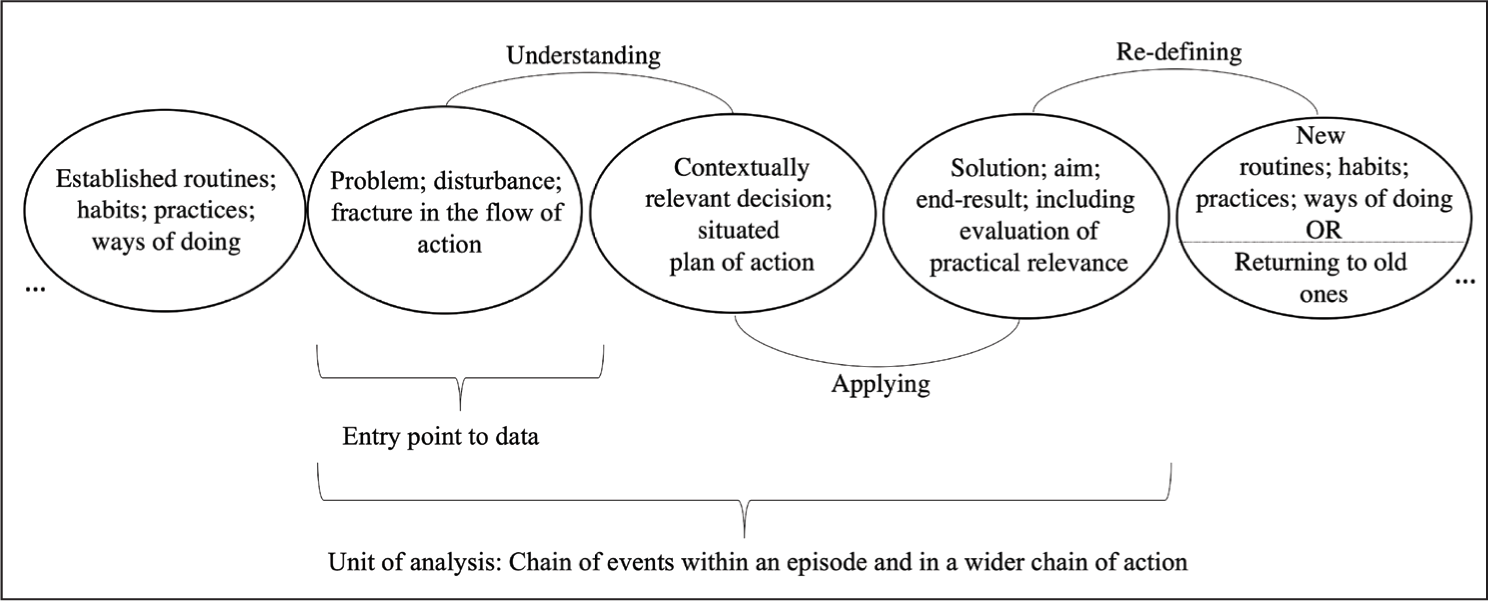
Each level of food sense should be interpreted as including the preceding one(s) (Janhonen et al., 2018). Hence, ‘Understanding’ should be interpreted as contextually emerging and constructed within the flow of action; ‘Applying’ as ongoing action that is imbued with contextual insight (‘i.e., Understanding’); and ‘Redefining’ as the potential reinterpretation and/or rearrangement of this action (Figures 1 and 2).
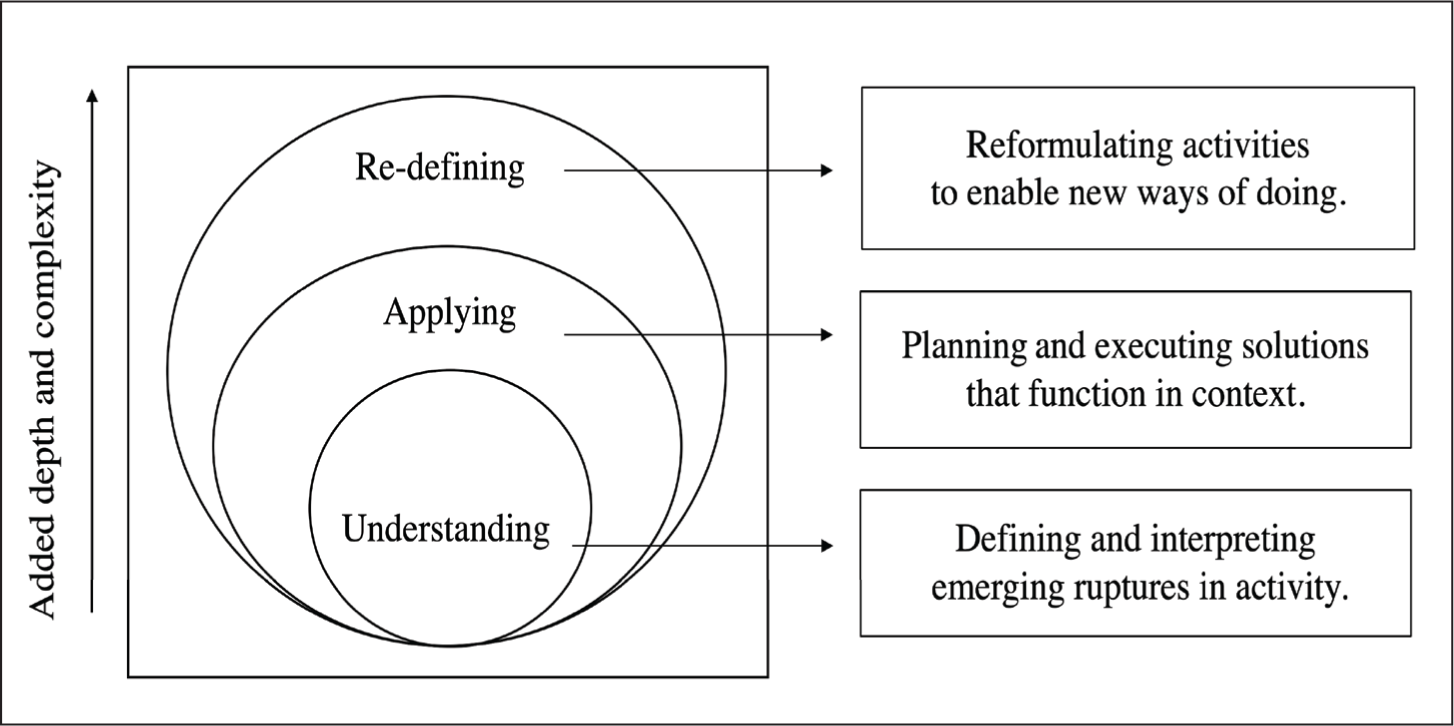
In a study of negotiations about vegetable-based food in families with children, food sense was developed further and applied in an analysis that acknowledged the perspectives of several family members (Torkkeli & Janhonen, 2021). Data on family life directed attention to the shared elements of food sense, in other words to the compromises that were arrived at through situated negotiations between multiple actors. An emphasis on the shared elements did not alter the theoretical or conceptual starting points, nor the three-level structure of food sense as a concept (Figure 1). On the contrary, it supplemented the previous model and helped in directing analytical attention to the extent to which the emerging tensions were enacted upon in a shared and mutual manner. The resulting definition of shared food sense included a shared understanding of tensions that emerge in activity; co-planning and co-executing solutions that function in context and include shared aims (i.e., collective application); and ways of thinking and doing that change the mutual roles of the actors (i.e., redefining co-action) (Torkkeli & Janhonen, 2021).
In the next section, we revisit and develop this definition in a process of multi-professional educational collaboration. We use the resulting conceptual apparatus as a tool for examining the microprocesses and transactions that took place during a 7-month collaborative course of action for promoting sustainability.
Methods and Data
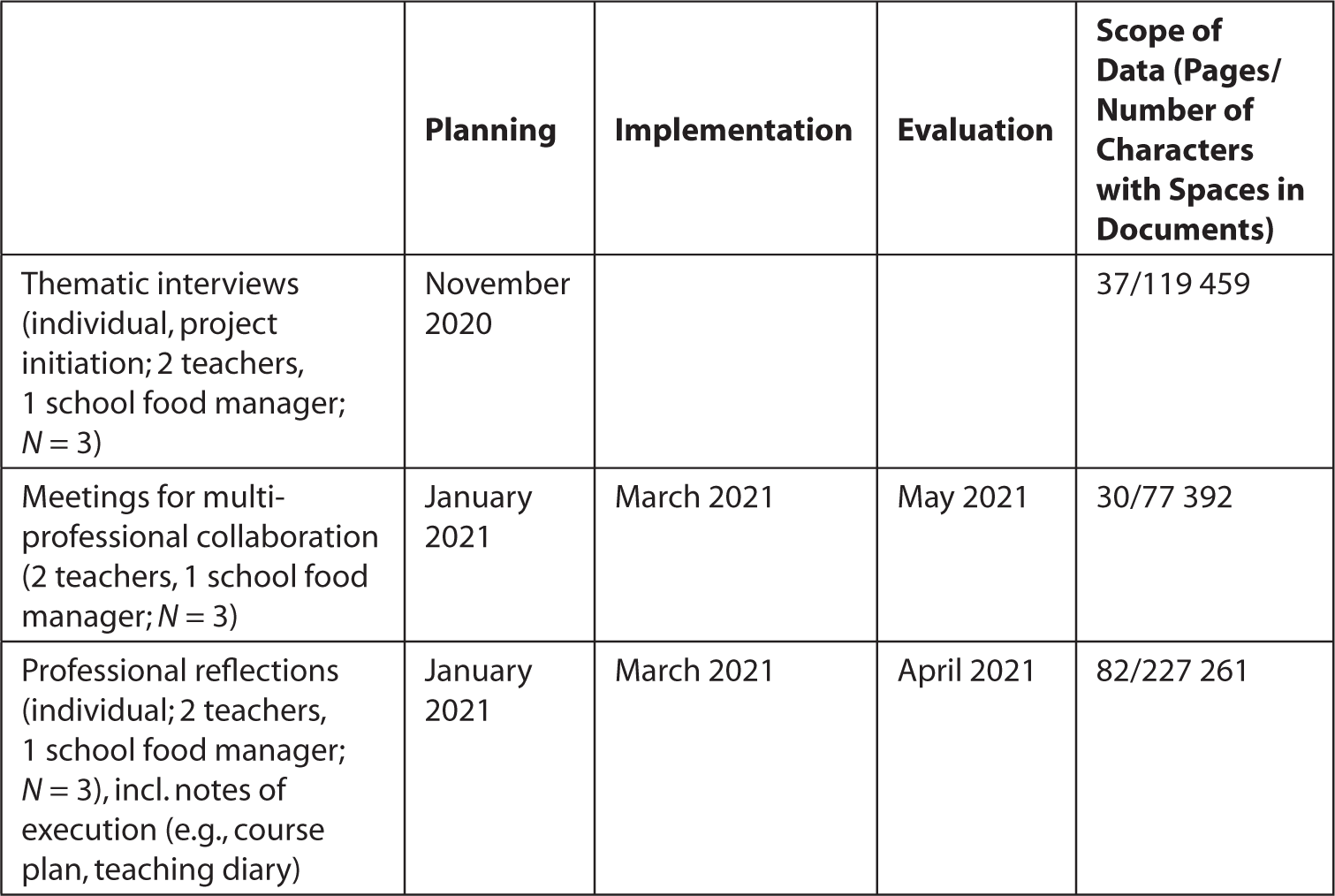
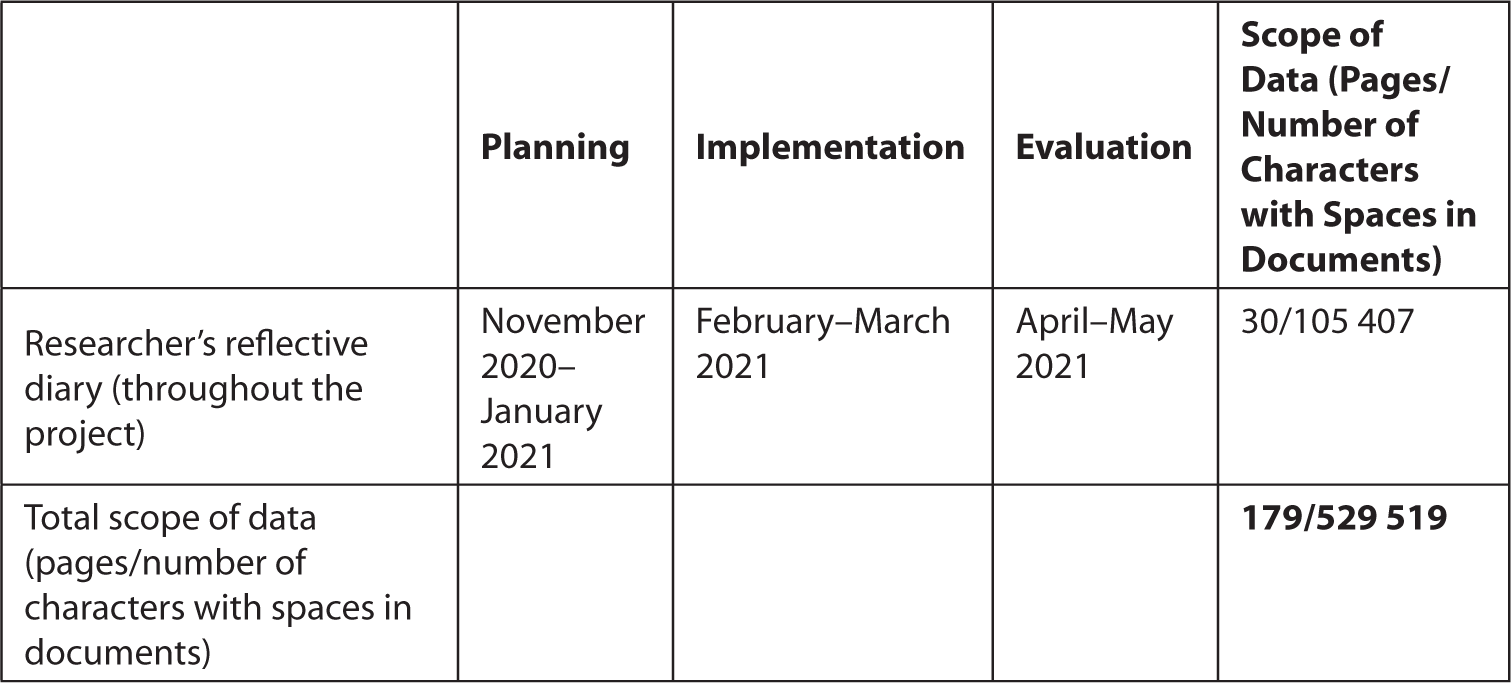
This participatory action research was executed in one pilot school in the Uusimaa region of Finland. Action research is a cyclical process that includes continuous rounds of planning a change; acting, observing and reflecting on what follows; and repeating all these steps again and again (Kemmis et al., 2013; Kindon et al., 2007). The data analysed in this article were collected as a part of the first cycle of action research in the project. This research cycle included the planning, implementation and evaluation of an educational entity focused on sustainable food, executed as a multi-professional alliance. The two teachers of home economics and the school food manager at the school are referred to here as representatives of the two key professional groups (i.e., teachers and school catering personnel) addressed in the study. Table 1 presents the timeline and scope of data covered in this article.
As Table 1 shows, the data include in-depth interviews with the two teachers of home economics and the school food manager (Gubrium & Holstein, 2001); multi-professional planning meetings with the named members of the school’s staff (Malin, 2011); their semi-structured professional reflections before, during and after the execution of the implementation stage of the collaboration (e.g., Roulston, 2008); and the researcher’s diary, covering a period of 7 months (from November 2020 to May 2021; Table 1).
Summary of the Data Discussed in this Article.
Information sheets were sent to the participants and consent forms were signed before the data collection took place. Because of the ongoing Coronavirus Disease 2019 (COVID-19) pandemic at the time of the study, all the data apart from the researcher’s diary were collected via a videoconferencing application recommended by the University of Helsinki. The data do not include observations of situated and ongoing activities (Table 1). This is a restriction we will return to in the ‘Discussion’ section.
Audio recordings of the data were transcribed verbatim into Microsoft Word format by a professional service provider. As illustrated (Table 1), the scope of data analysed in this article is 179 pages (526,519 characters with spaces). The Atlas.ti programme (version 9) was used as support in organizing and processing the data.
Analysis
The analyses focused on (a) tensions that emerged during the multi-professional work and (b) outcomes that were achieved through negotiation and collaboration. Our decision to take tensions as a starting point was based on the pragmatist view that they constitute potential turning points in which old routines break down and the need to re-evaluate or change habitual activities arises (Elkjaer, 2008; Miettinen, 2000). Such turning points could be interpreted as learning because they may redirect the course of action (Elkjaer, 2008; Miettinen, 2000).
The following analysis of the outcomes of the collaborative learning process leans on the definition of shared food sense (Torkkeli & Janhonen, 2021), examined in relation to the decisions and compromises that were reached during the process, following the emergence of tensions. We followed the tensions that arose throughout the 7-month period of collaboration as they surfaced and were negotiated upon in successive stages of the multi-professional work. Figure 3 illustrates the nature of the tensions identified in this study.
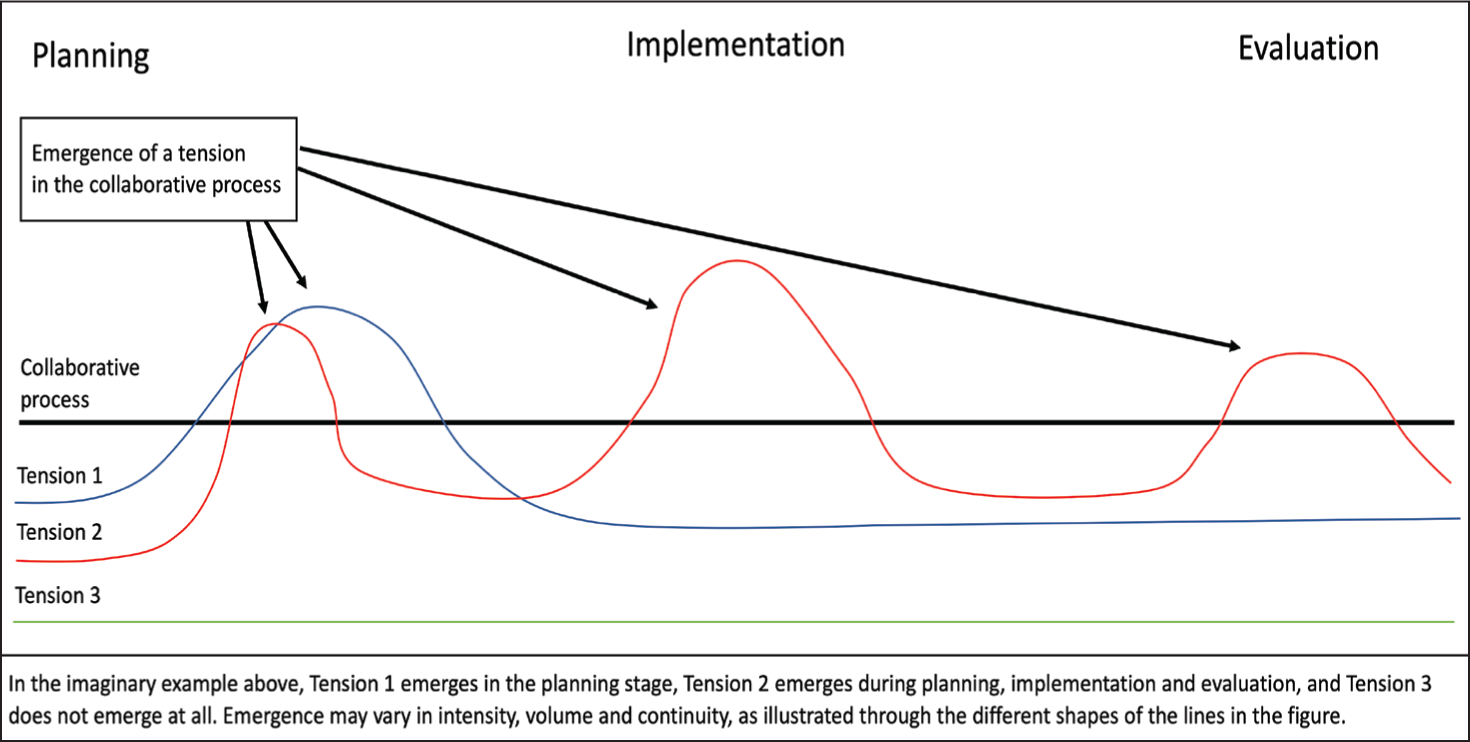
A resolution of tension that functions in practice restores control of the action until subsequent tensions emerge (Janhonen et al., 2018; Miettinen, 2000). Tensions might differ in intensity and frequency within a broader process of action (Figure 3). As a part of a collaborative process, solutions may be compromises among multiple actors or decisions that take into consideration the experienced boundaries of the collaboration.
In our abductive analysis, which drew from both the data and the literature (Hatch, 2002), we defined tensions as (A) systemic, (B) institutional, (C) interpersonal and (D) intrapersonal. Systemic tensions are caused by the conditions in the school institution’s external environment (San Martín-Rodríguez et al., 2005). We defined institutional tensions as participants’ experiences of institutional boundaries that limited the execution of the collaboration within the study school. Interpersonal tensions include potential misunderstandings (Bechky, 2003), disagreements (e.g., one person refuses to act as someone else wants them to) and contradictions (e.g., one person doubts or questions the perspective of another) (Torkkeli & Janhonen, 2021), as well as conflicts connected with trust or power relations (San Martín-Rodríguez et al., 2005). Finally, intrapersonal tensions refer either (a) to mentions of activities that were not experienced by the participant as professionally meaningful (i.e., not sensible or motivating on a professional and personal level, or as being the responsibility of some other professional group) (e.g., Elkjaer, 2020; Schnitzler, 2019; Van Poeck et al., 2020) or (b) to participant’s experience of a personal lack of professional competence.
In the first stage of analysis, we thematized the tensions in line with these definitions (Table 2).
The Emergence of Tensions during the Multi-professional Collaboration.
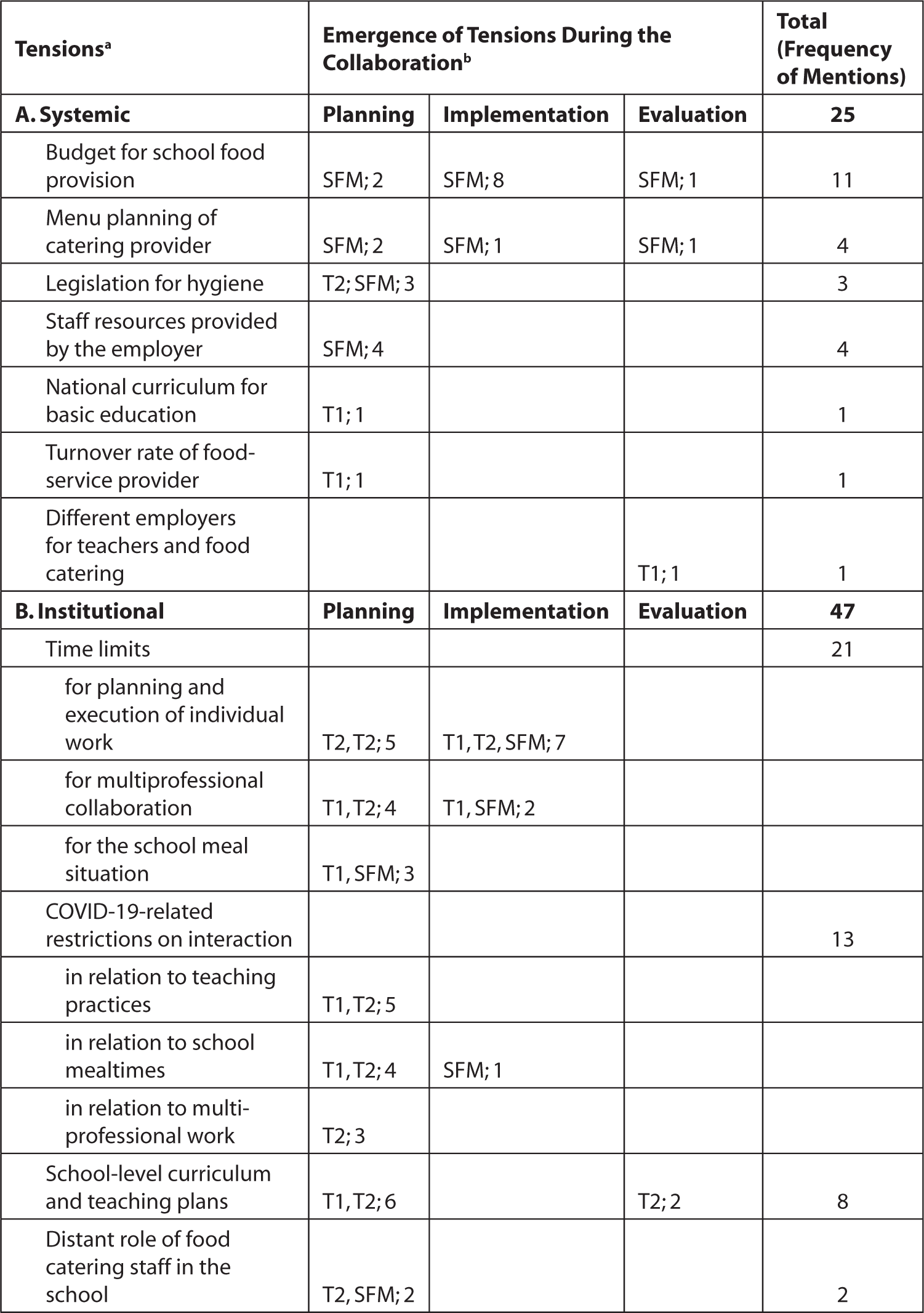
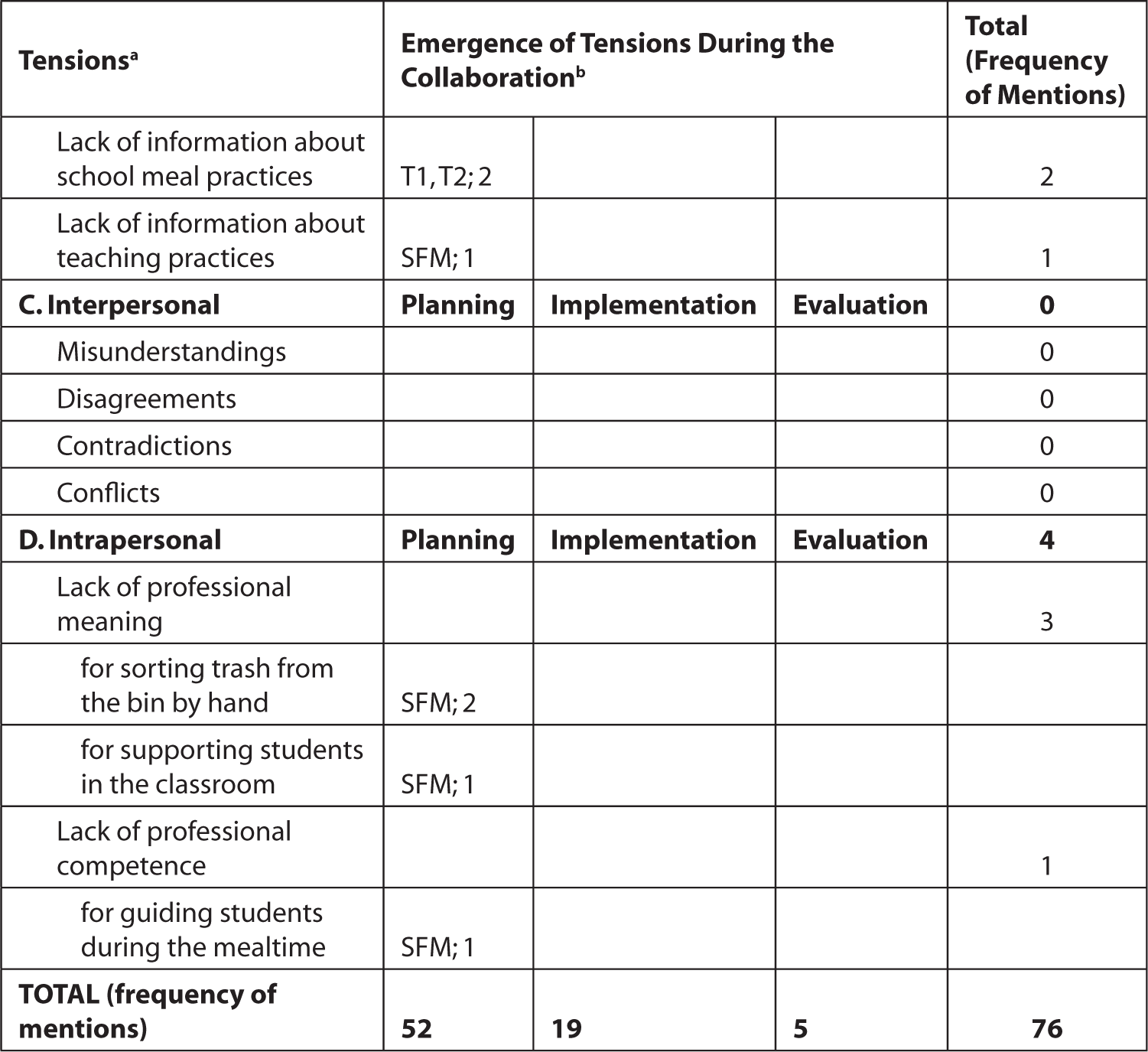
a The categorizations are sensitive to the participants’ experiences and are based on definitions of: (A) systemic tensions such as those caused by conditions in the school’s external environment; (B) institutional referring to experienced institutional boundaries for the collaboration; (C) interpersonal tensions such as misunderstandings, disagreements (e.g., one person refuses to act in a manner that another wishes), contradictions (e.g., a person doubts or questions the perspective of another) or conflicts between or among participants (e.g., with reference to trust or power relations); and (D) intrapersonal such as activities not experienced as professionally meaningful (i.e., sensible or motivating by the participant on a professional and personal level, or experienced as the responsibility of some other professional group) or to participant’s experience of a personal lack of professional competence.
b Definitions of the abbreviations used in the table: SFM = school food manager; T1 = teacher 1; and T2 = teacher 2. The abbreviations signify which participants mentioned a particular tension in a specific stage of the collaborative process. The number after the abbreviation itemizes the sum frequency of mentions of the tension during the given collaborative stage. In other words, the unit of analysis during the coding was one mention of a tension, meaning that each time a given tension was mentioned by any participant, it was coded separately.
Throughout the action research process, we approached emerging tensions as opportunities for learning, as well as sources for critical discussion about the progress of the collaboration. Accordingly, we encouraged the participants to express both positive and negative feelings at all stages of the data collection (Table 1).
The focus shifted during the second stage of the analysis to the emergence and development of shared food sense during the 7-month collaborative process. We used the definition of shared food sense to facilitate the interpretation of habitual changes, which we define here as outcomes of the learning process. We approached these changes during ongoing action as context-bound decisions and compromises that were reached collaboratively after the tensions emerged. We tested our earlier definition of the concept, and further developed it in the context of multi-professional collaboration in schools. The outcome was a complementary definition of ‘collective application’. Table 3 summarizes the three levels of shared food sense, the definitions of each level, as well as the empirical operationalization in this study and the data used for the interpretations.
The Three Levels of Shared Food Sense, the Definitions of Each Level, and the Focus of the Analysis and Data Used in this Study.
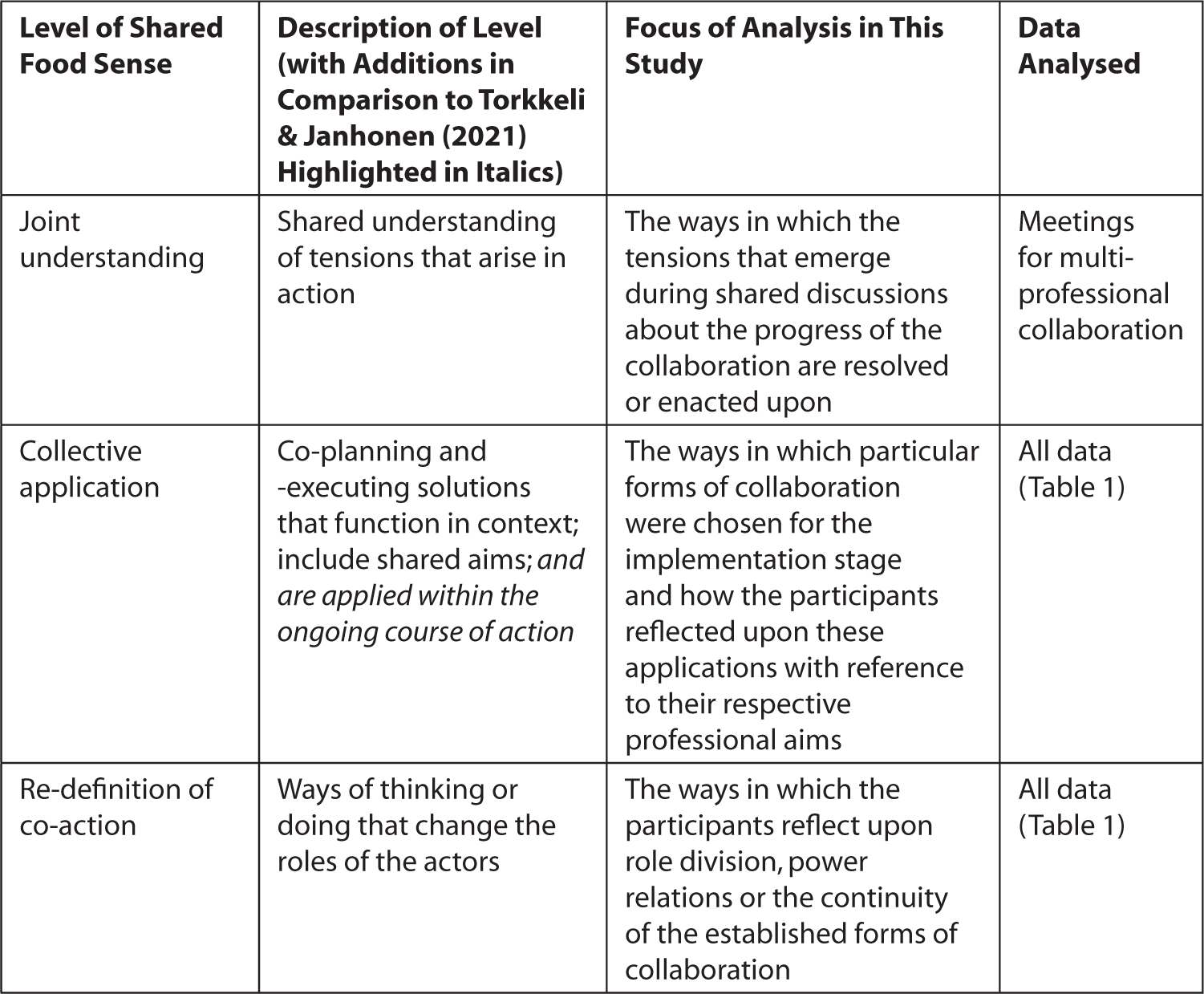
The construction of a joint understanding in this study focused on the tensions that arose during the multi-professional meetings (Table 1) when key decisions concerning the continuation of the process were made collaboratively. The analysis of collective application, then, focused on how the form of collaboration was chosen for the implementation stage and how the participants reflected upon its professional relevance. In arriving at a potential redefinition of co-action, we considered the ways in which the participants described their own and other people’s roles when reflecting on the progress and continuance of the work, noting themes that were connected with power relations or work division.
The interpretations that follow are structured according to the three levels of shared food sense.
Results
Joint Understanding
The multi-professional meetings arranged during each of the three stages of collaboration (i.e., planning, implementation, evaluation; Table 1) functioned as platforms for supporting mutual communication and shared decision-making among the participants. The overall theme for the collaboration (i.e., sustainability) was decided upon during the first meeting, in which initial ideas for its practical application were also aired. The discussion during the second meeting at the midpoint of the implementation focused on the progress and continuance of the practical application. Participants were given the opportunity to evaluate the collaboration thus far during the third and final meeting.
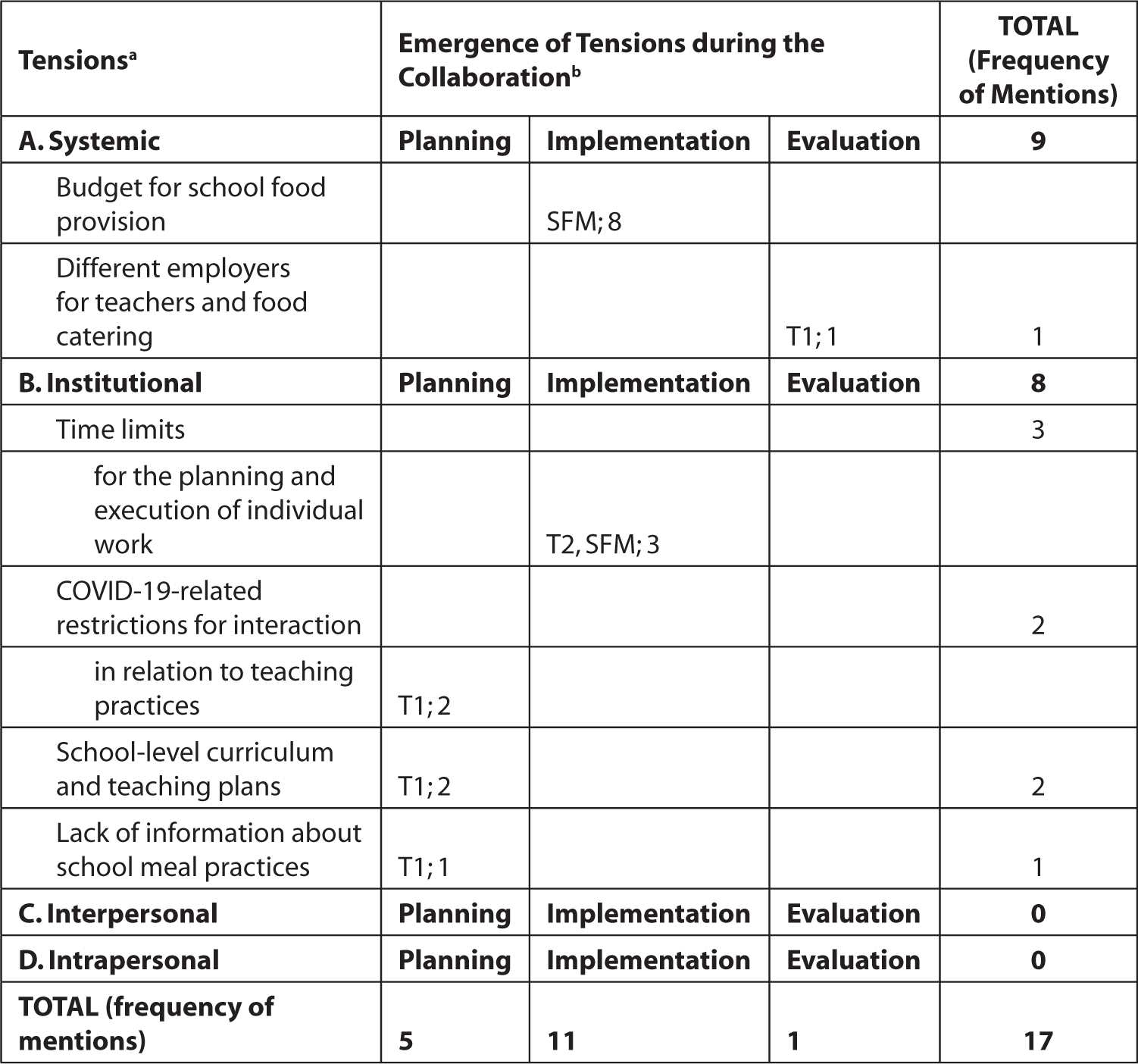
In addition to functioning as a platform for shared decision-making, the meetings allowed the two teachers and the school food manager to learn about each other’s perspectives and work practices in an open-ended manner. As such, multi-professional meetings could also be described as the main collaborative spaces of this study that supported the construction of a joint understanding of tensions in relation to the multi-professional work. Thus, one way of exploring the extent to which a joint understanding was reached during the multi-professional work is to take a closer look at the tensions that arose and were discussed together during the meetings. These tensions are summarized in Table 4.
Tensions Mentioned during the Multi-professional Meetings.
a The categorizations are sensitive to the participants’ experiences and are based on definitions of: (A) systemic tensions such as those caused by conditions in the school’s external environment; (B) institutional referring to experienced institutional boundaries for the collaboration; (C) interpersonal tensions such as misunderstandings, disagreements (e.g., one person refuses to act in a manner that another wishes), contradictions (e.g., a person doubts or questions the perspective of another) or conflicts between or among participants (e.g., with reference to trust or power relations); and (D) intrapersonal like activities not experienced as professionally meaningful (i.e., sensible or motivating by the participant on a professional and personal level or experienced as the responsibility of some other professional group) or to participant’s experience of a personal lack of professional competence.
b Definitions of the abbreviations used in the table: SFM = school food manager; T1 = teacher 1; and T2 = teacher 2. The abbreviations signify which participants mentioned a particular tension in a specific stage of the collaborative process. The number after the abbreviation itemizes the sum frequency of mentions of the tension during the given collaborative stage. In other words, the unit of analysis during the coding was one mention of a tension, meaning that each time a given tension was mentioned by any participant, it was coded separately.
As indicated in Table 4, Teacher 1 mentioned tensions of an institutional nature in the first meeting when she referred to COVID-19-related restrictions on interaction in terms of teaching practices, as well as the school-level curriculum and teaching plans on which the teacher’s work is based. Another institutional tension arose concerning the lack of information about meal practices at the school under study when Teacher 1 expressed doubt in terms of its policy on vegetarian meals. These themes were then discussed in the meeting as a basis for the continuance of the collaboration.
During the second meeting (i.e., the implementation stage), Teacher 2 and the school food manager both referred to the limited time for the planning and execution of their respective work practices as a constraint on collaboration. The school’s budget for food provision also emerged throughout this meeting as a limitation with reference to which food items could be prepared and served in the context of school meals. The school food manager referred to this tension in a very straightforward and declarative manner; therefore, we categorized it here as a systemic tension that was experienced as difficult to change on the school level. In sum, building a shared understanding of time and budget limitations emerged during the meeting as a prerequisite for the continuance of the collaboration.
Overall, the tone of the discussion in the final, evaluative multi-professional meeting was very positive, with only one tension emerging in relation to the different employers of teachers and the catering staff (Table 4). This tension arose in a subordinate clause when Teacher 1 deliberated on her experiences of a growing sense of community among the participants:
Of course, we knew each other already last year, but we have gotten to know one another even better now. And even though [the teacher’s employer] is different from that of [the school food manager’s employer], I feel that we are all working in the same working place and that we work together for this whole school community. That has been a great epiphany for me [during this project].
This was the only time the issue of different employers among the participants emerged during the data collection period, and it emerged as a side comment at the very end of the first research cycle. Nevertheless, it could be considered a rather strong systemic tension, in that it could significantly influence both the work profiles and the respective roles of these two professional groups within the school community. Differences in professional aims and roles are also significant in terms of constructing common aims and redefining co-action; therefore, we return to our interpretation in relation to these themes in subsequent ‘Results’ section.
In addition to the relatively low overall number of tensions summarized in Table 4 (17 in total), the tensions emerging during the multi-professional meetings could be characterized as low in intensity (Figure 3, Tension 1). They were also low in continuity (Figure 3, Tension 2), in that no specific category of tension continued to emerge in the subsequent meetings. They were thus more like ripples in the overall pool of collaborative activity, rather than major issues, bringing the collaboration into a major crisis or to a complete halt. It is also worth noting that no inter- or intrapersonal tensions emerged during these meetings (Table 4). On the other hand, various tensions did arise during the individual interviews and in the participants’ reflections, but they did not surface in the shared discussion during the multi-professional meetings (Table 2). These tensions are likewise explored in more depth in the following section, as the focus shifts to the co-planning and execution of solutions that function in context and include shared aims as well as a redefinition of co-action. It should also be borne in mind that there may also be limitations in how well video meetings and interview data grasp all aspects of tensions in multi-professional work. We discuss these methodological issues in the ‘Discussion’ section of this article.
Collective Application
At the beginning of the research project each participant was asked in an individual interview to generate ideas for collaboration that would be activity-oriented and to take advantage of school mealtimes as a target of learning and co-development. In addition to generating such ideas, the interviewees deliberated on the limitations of such collaboration, which were manifest in the relatively large number of tensions emerging during the planning stage of the study (52 of 75 mentions in total; Table 2).
Ideas for practical application were then discussed together in the first multi-professional meeting in the planning stage. To set the discussion going, the first author sent the participants, in advance, an anonymized summary of the ideas that were generated in the individual thematic interviews. The suggestions included reducing food waste and promoting vegetable-based food in the school. The practical suggestions that were jointly considered the most applicable, and suited all the participants, were chosen for implementation and further development. These included inviting the school food manager to a lesson in home economics and to join a discussion based on student-initiated questions. Eventually, as the collaboration proceeded, the students drew up plans for environment-friendly meals on which the school food manager gave comments. 1
To strengthen the pedagogical focus of the implementation, the practical applications were integrated into an optional course in home economics for seventh-grade students (approximately 13–14 years of age). The course took place in February–March 2021 on the recommendation of and run by the two home economics teachers. According to them, it was positive in terms of allowing time for collaborative planning and execution. Related to this, it is noteworthy that, overall, time limitations were the most common drivers of the tensions that arose during the whole period of collaboration (21 of 75 in total; Table 2). More specifically, time limitations were referred to most intensively during the planning (12 mentions) and implementation (9 mentions) stages, but not at all in the evaluation stage. This progression could signify that the time invested in the collaboration was worthwhile, which the following deliberations of Teacher 2 in the evaluative multi-professional meeting support:
‘I think that you maintain those things and work for those issues that feel meaningful to you. You know, then you suddenly find time for that and have the energy to do it. And for me, I got this feeling from this [collaboration], that this is just like that.’
We further interpret, based on the relatively low number of tensions during the evaluative stage (5 of 75; Table 2) that the sustainability theme, as well as the chosen practical applications, functioned well as common ground among the participants in this study. However, there were also differences between the professional groups in terms of which perspectives and aims were considered important for their respective work practices during the collaboration. For example, the school food manager brought up the budget for school food provision throughout the process (11 mentions in total) and described securing financial profitability as the main task of his work. In contrast, at all the stages, the teachers emphasized the importance of supporting students’ learning and developing their own teaching practices to achieve that aim. Teacher 1 clearly articulates this key focus of the teacher’s work in the following extract from the evaluative multi-professional meeting:
‘… what students experience that they have learned, that’s really important, too. That is, in any case, the most important thing. It’s the main thing in my work, after all.’
The school’s food manager, in turn, initially expressed reservations about supporting student learning (Table 2). Interestingly, this changed somewhat as the project progressed. He stated in his individual evaluative reflection that nothing in particular had aroused negative emotions in him during the collaboration, and that the interaction with students fitted in well as a part of his professional duties. In a sense, then, he appeared to have found a stronger motivation in relation to this form of professional activity during the multi-professional work. Despite the experienced systemic, institutional and intrapersonal tensions (Table 2), there was cross-fertilization in the transgression of habitual work practices when he visited the home economics classroom. This facilitated the construction of novel ways of thinking and doing, which could be interpreted as learning. In other words, through entering another institutional (and collaborative) context (i.e., moving from the school kitchen to the classroom), he expanded his understanding and found novel forms of professionally meaningful activity.
During the evaluative stage of the collaboration, all three participants specifically highlighted their positive experiences in relation to the visit of the school food manager to the class in home economics. In addition, Teacher 1 explained how the collaboration had broadened her thinking about school mealtimes as a platform for education in sustainability:
… what I have learned myself, for example, particularly through this school meal theme, is how significant it [school mealtimes] is from an environmental perspective. The sheer volume of it is so big, what you eat there. And you don’t necessarily come to think about it in that way, so this [collaboration] has broadened my own thinking in that way.
Teacher 1 also acknowledged in her evaluative reflection that the collaboration had strengthened her overall experience of professional meaning in her work. In contrast, although the school food manager said that he had felt happy and motivated particularly with reference to his classroom visit, it did not seem easy for him to formulate the professional benefits of the collaboration, even at the evaluative stage of the project. For example, when asked if he had had any novel ideas or professional epiphanies, he said that he had not, really, but that he had been happy about the students’ general interest in school mealtimes:
‘Well, not really anything like that. I was just happy that they [the students] were interested in the matter [school mealtimes].’
Furthermore, although he had a positive attitude towards the collaboration throughout the process, it also seemed difficult for him to put into words how teachers could directly contribute to the core work of providing food catering. On the other hand, in the planning and implementation stages, he described vividly and with ease his joy in being able to work with food, and that to cook for a living was the core of his professional enthusiasm. Therefore, although he had clearly found a new kind of joy during the project from interacting with the students, it seemed that the aim of supporting their learning remained somewhat distant from what he saw as the core of his profession.
In sum, the reflections of all three participants at the evaluative stage were very positive. This was also visible in the lower number of tensions emerging at this stage. Although the sustainability focus appeared to have functioned well as a common aim for practical application in this study, it was also evident that the work profiles of representatives of the two professional groups differed, which influenced the ways in which the participants experienced and enacted their roles during the process. In the following section, we further elaborate on these interpretations in relation to role divisions.
Re-defining Co-action
All three participants said that they had not really engaged in deep collaboration regarding teaching practices and food catering before this project. Teacher 1 suggested that one of the reasons for this was the high turnover of catering providers in recent years (Table 2). In addition, during the planning stage, both Teacher 2 and the school food manager described the role of food-catering staff in the school community as rather peripheral. This is exemplified in the following extract from the interview with the school food manager in which he reflects upon his role as part of the school community:
‘Well, [my role in the school community is] very disconnected, disconnected. It’s like, I can’t intervene in any way in the behaviour of the students or say anything to them, the times are what they are. Everything has to go through the teachers.’
He further highlighted his view that teachers should take the initiative in building collaboration between teaching and food catering. Reflecting this, although all three participants seemed very enthusiastic to collaborate, the execution remained somewhat teacher-led throughout, as the school food manager took more of a supportive role in the implementation. In the following extract, Teacher 1 describes her experiences of the role distribution between the teachers and the school food manager in the planning stage of the project:
I guess it’s okay, like, it is rather teacher-led in a way that [the school food manager] has been very willing to collaborate, but, understandably, he hasn’t perhaps been the one who has led this project. But I feel that we have been quite equal in the sense that he has also given suggestions and ideas, and he has taken part in our common meetings [the multi-professional planning], so in that sense I feel that we are very equal.
The initiative remained teacher-led, particularly in terms of implementing classroom-based activities. This is, of course, understandable, given that the classroom is primarily the teacher’s workspace. As mentioned, the school food manager did not feel at the outset that he could intervene in the teaching or even in the behaviour of students in the dining room (Table 2). As the collaboration proceeded, his professional confidence and input seemed to be the strongest when he was asked to comment on the meal plans for students in terms of what was possible from a food-catering perspective. This comes to light in the deliberations documented in the researcher’s diary after the second multi-professional meeting (23 March 2021):
At the beginning of the collaboration the role of the school food manager was perhaps more supportive, more of an assistant, but now in the discussion about meal plans for the environment-friendly food day he became the expert in the multi-professional meeting. He knew exactly what was possible in the context of school meals, and what ideas and plans were perhaps not as realistic given the timeframe and financial limits on their provision.
In contrast to the reservations expressed by the school food manager during the planning stage in terms of interacting with students, the teachers perceived their increased role in relation to school mealtimes as motivating and professionally relevant from early on. For example, in her individual interview, Teacher 2 emphasized the need for all teachers, and teachers of home economics in particular, to be interested and engaged in school-meal-related issues:
Well, to begin with, I think that teachers of home economics should be more interested in what happens in the dining room. And they should have good connections with the personnel and have active discussions with them about implementation. And I guess not all schools do have that … . But as said, I think that they should. Because food and wellbeing connect so closely to our school subject [home economics].
The above-mentioned feeling that the food-catering staff played a peripheral role in the school community seemed to have evolved somewhat during the project. As Teacher 1 indicated in her professional reflection, although there had been some collaboration previously, she felt that it had become more concrete, aim-oriented and systematic during the project. When asked to deliberate on the continuance of the multi-professional collaboration at the evaluative stage of the project, all three participants highlighted the personal feeling of enthusiasm and the need for enthusiastic individuals to keep things moving on at the school level. Teacher 1, for example, described how taking part in the research project had been a necessary nudge for her towards seeing school mealtimes in a different light and starting to make concrete efforts to engage in deeper and more versatile collaboration with the school’s provider of food catering.
Discussion
This article examined the microprocesses and transactions that evolved during an 7-month collaboration project on sustainable food education involving two teachers of home economics and the school food manager. Our analyses explored how change and learning came about within this collaborative practice, when learning is defined not in terms of increasing knowledge (i.e., epistemological enlightenment), but as inseparable from ongoing and situated activities. The empirical implementation took place in a Finnish secondary school, in which such collaboration is also currently encouraged at a policy level (NNC, 2017). The study was based on participatory action research, and the data analysed in this article (Table 1) represent the first research cycle of a broader study. We focused the analyses on the tensions that arose (Table 2), as well as on the collaborative learning outcomes of the multi-professional work through revisiting and developing the definition of shared food sense (joint understanding, collective application, redefinition of co-action) (Torkkeli & Janhonen, 2021).
The chosen focus on sustainability appeared to have functioned relatively well as common ground among the three participants. The multi-professional meetings were taken as a platform for mutual communication and for constructing a shared understanding of tensions. Both systemic and institutional tensions were discussed during the meetings, such as those connected with the budget covering the provision of school food, COVID-19-related restrictions on interaction and time limits. Overall, the issue of adequate time resources arose most frequently during the collaboration as an experienced institutional limitation on the multi-professional work (Table 2). This aligns with prior research in contexts such as school mealtimes (e.g., Berggren et al., 2020), collaboration for sustainable development in schools (e.g., Schnitzler, 2019) and the alliance of multiple professional groups (e.g., San Martín-Rodríguez et al., 2005). However, the results also illustrate how at least some of these boundaries were overcome during the collaboration and how the novel forms of professional practice also brought out opportunities for learning and change: this was exemplified in the more inclusive role of the school food manager within the school community and his new-found motivation to interact with students. San Martín-Rodríguez et al. (2005) further underline the importance of having sufficient human resources, as well as the crucial role of leadership, in multi-professional endeavours. In the present study, tight restrictions on staff resources emerged particularly through the school food manager’s deliberations about being able to integrate pedagogical activities into his work: this tension was interpreted as systemic, in other words, experienced by the participant as difficult to influence at the school level (Table 2). Leadership, on the other hand, was referred to during the participants’ evaluative deliberations, in the form of positive nudging to support the continuation of the collaboration. Although the participants also highlighted the importance of personal enthusiasm as a driver of collaboration, there seemed to be a need for supporting structures and encouragement beyond this personal sense. For example, continuation may be vulnerable if it depends merely on active and enthusiastic individuals, without the support of the broader school community and the surrounding institutional structures.
On the level of interpersonal exchange, it is important not only to focus on the one-sided distribution of knowledge and the building of spaces that allow people to come together but also to strive towards common visions and aims, with the acknowledgement of trust and power relations (e.g., D’Amour et al., 2005; Julkunen & Willumsen, 2017; Schnitzler, 2019). Echoing the research of Julkunen and Willumsen (2017), the participants in this study moved from an emphasis on professional boundaries and limits on collaboration towards a growing understanding of the shared objects of collaborative work (e.g., promoting sustainable food practices in the school and supporting student learning related to sustainability issues through school mealtimes). Although no interpersonal tensions emerged during the collaboration (Table 2), and even though the final participant evaluations were very positive, there were differences in the experienced core of work practices and roles. For example, the initiative during the implementation period remained largely with the teachers. These differences and emphases could also be taken as potential challenges in building mutually beneficial and long-term collaboration, and they should be considered in further studies aiming to promote collaboration for sustainability between teaching staff and food catering in schools. In striving to make visible the processual nature of collaboration, as well as the differing levels of tension that emerged and were negotiated upon during the process, we aimed to unravel the complexity of multi-professional work undertaken by two teachers of home economics and the school food manager. Our analyses of tensions covered the participants’ experiences of systemic, institutional, interpersonal and intrapersonal boundaries that emerged during the collaboration. As San Martín-Rodríguez et al. (2005) point out, these elements should not be examined separately, but as part of a complex and interrelated process. This complexity should also be acknowledged in further studies of multi-professional work involving teaching staff and food catering.
Because of restrictions related to the COVID-19 pandemic, we did not include any situated data on the participants’ activities like observational materials (Bechky, 2003) or video data (Torkkeli & Janhonen, 2021). This is a limitation and an important aspect to be considered in further research, given that data used in this article (Table 1) might not have succeeded in grasping all aspects of the tensions (particularly those of an interpersonal nature) that arose during the multi-professional process. Moreover, although the data cover a period of 7 months, it was collected from only one pilot school and from three participants; hence, generalizations should be made with caution. Nonetheless, the study sheds light on conceptual developments that can be used in further research. Another key perspective for future studies, which was delineated to be beyond the scope of this article, is the students’ perspectives on the collaboration. We propose further research on how practical collaborative initiatives succeed or fail in practice and on the local, municipal and national structures that would support multi-professional collaboration at the school level. As Dahl Madsen et al. (2016) and Iwan et al. (2018) also point out, it would be helpful for schools to have a clear vision of how to work towards establishing collaborative practices for sustainability. Furthermore, adequate professional training and pedagogical resources would support school practitioners in developing and integrating sustainability themes into their professional work (Iwan et al., 2018). To this end, pragmatist theorization and the concept of shared food sense can facilitate examination of how organizational opportunities serve to act upon tensions that arise in collaborative endeavours, and of the forms of joint understanding, collective application and potential redefinition of co-action that are created as outcomes of these processes.
Footnotes
Declaration of Conflicting Interests
The authors declared no potential conflicts of interest with respect to the research, authorship and/or publication of this article.
Funding
This article has been written as a part of the project ‘Promoting food sense through school meals (2020–2022) (FOODSENSE)’, funded by the Academy of Finland (funding reference no. 322598) and the University of Helsinki.