




Abstract
This study investigated the role of fictional spokespersons (i.e., spokescharacters) in enhancing environmental communication persuasiveness using stimuli–organism–response as a theoretical framework. Specifically, the study explored how the excitement, attractiveness and role model traits (stimulus) of spokescharacters influence consumers’ cognitive and affective recycling attitudes (organism), resulting in augmented recycling intentions (response). Theoretical relationships were derived after reviewing relevant literature and tested by collecting data through an online survey administered to 314 U.S. consumers. Data were analysed using structural equation modelling, and findings suggest that the excitement trait positively influences recycling intentions only through affective recycling attitudes. In contrast, the role model trait is suitable for enhancing consumers’ cognitive (directly) and affective (indirectly) recycling attitudes. The attractiveness trait has no standalone role in enhancing recycling intentions but can augment the effect of the excitement trait on affective recycling attitudes. Overall, the findings suggest that spokescharacters can be a promising communication strategy for environmental marketers.
Introduction
Research has well established that humanity is the root cause of environmental threats, resulting in wide-scale climate change problems. For instance, Griskevicius et al. (2012) explore the evolutionary foundations behind destructive and ecologically harmful behaviours exhibited by individuals, grounded in our deep-rooted habits coming from the early evolution of humanity. Lynas et al. (2021) report a consensus of over 99% in the peer-reviewed scientific literature regarding the primary role of greenhouse gas emissions from human activities in driving climate change. At the same time, transforming human consumption behaviour stands as a pivotal means to mitigate the deleterious impacts of environmental crises (Steg, 2023). The situation demands immediate action to avert the catastrophic environmental consequences of climate change (Abbass et al., 2022). Research has also established that to modify public behaviour, effective promotion strategies are required (Bayes et al., 2023), with scholars calling for new and creative forms of communication strategies to encourage pro-environmental behaviours (e.g., Boerman et al., 2022). As such, the focus of this research is to test the effectiveness of using spokescharacters to promote sustainable behaviours among consumers.
Marketing is often criticised for encouraging unsustainable behaviours leading to environmental degradation. However, increasingly, the role of marketing is emphasised in promoting sustainable behaviours among consumers, as it has the power to shape their attitudes and actions towards sustainable practices (Mende & Scott, 2021). In this research, we explore how marketers’ creation, fictional spokespersons known as spokescharacters (Phillips, 1996), can encourage sustainable behaviours such as recycling among consumers. Whereas spokescharacters’ persuasiveness has been well-established in the commercial marketing context (Folse et al., 2012; Phillips et al., 2019; Zhang & Liya, 2023), little is known about whether and how spokescharacters can influence pro-environmental behaviours (Jain et al., 2023). Even though marketers use human celebrities in environmental campaigns, research shows the limited effectiveness of this strategy and highlights the risks of hiring celebrities (Olmedo et al., 2020). In contrast to human celebrities, spokescharacters are tightly controlled by marketers, and their credibility perceptions among consumers can make them effective environmental communicators, as a recent study on spokescharacters has established (Jain et al., 2023).
As marketers can give a desirable appearance and personality to spokescharacters, knowing which traits can enhance the persuasiveness of these fictional characters, especially when it comes to pro-environmental behaviours such as recycling, is imperative. We tested how excitement, attractiveness, and role model traits of spokescharacters can affect consumers’ recycling intentions, thus responding to a recent research call to explore spokescharacter traits that may enhance environmental communication persuasion (Jain et al., 2023). Even though extant research shows that anthropomorphism exerts a positive influence on environmental attitudes and intentions (e.g., Williams et al., 2021), the specific traits that can enhance the effectiveness of anthropomorphic figures in communications are not well-researched.
In this study, we use the stimulus–organism–response (S-O-R) framework (Mehrabian & Russell, 1974) to investigate how different spokescharacter traits (stimulus) affect the recycling intentions of consumers (response) through enhancing their affective and cognitive recycling attitudes (organism). Through this study, we contribute to the extant environmental communication literature by establishing the effectiveness of spokescharacters as an alternate communication strategy, in addition to collaborating with human spokespersons, thus answering a recent research call to explore new communication strategies to encourage pro-environmental behaviours (Boerman et al., 2022). Second, by exploring the role of specific source traits (e.g., excitement, attractiveness, and role model), we expand the limited literature (Olmedo et al., 2020) that examined the role of source characteristics in promoting sustainable behaviours. Third, our study also adds to the limited research that has considered the role of brand personality traits (such as excitement) in promoting sustainable behaviours (Joshi & Kronrod, 2020). Finally, we contribute to the broader persuasion literature by exploring the mechanism by which spokescharacter traits of excitement, attractiveness and role model enhance environmental communication effectiveness, thereby supplementing the findings of extant research that largely focuses on testing traits of human spokespersons in the for-profit marketing context.
Literature Review
Stimulus–Organism–Response (S-O-R) Framework
The S-O-R framework was proposed by Mehrabian and Russell (1974) to explain how an external environmental factor (stimulus) may produce an approach or avoidance behaviour (response) in individuals by modifying their internal state, that is, affective and/or cognitive state (organism) (Lee & Yun, 2015).
Extant research has used the S-O-R framework to predict the green behaviours of the public using different stimuli. For instance, Xue et al. (2020) found that pro-environmental behaviours (e.g., purchasing organic agricultural products and the desire to protect organic agricultural environments) depend on consumers’ perception of the landscape associated with organic agriculture tourism (stimulus). Wang et al. (2021) showed that economic incentives (offered to recycle mobile phones) can act as a stimulus (S) to encourage consumers’ intention to use a website to recycle mobile phones (R) and Ahmad and Zhang (2020) predicted consumers’ green product purchase intentions (R) using e-service quality (perception of retailer’s website quality selling green products online) as a stimulus (S). Hence, using the S-O-R framework to predict recycling intentions is justified in our study.
In this study, we have operationalised S-O-R in the following ways. Stimuli (S) comprise different spokescharacter traits of attractiveness, excitement and the character portrayal as a role model. Organism (O) is operationalised as the cognitive and affective attitude towards recycling and Response (R) as recycling intentions. Hence, using the S-O-R framework, our study aims to understand whether and how specific spokescharacter traits can influence the recycling attitudes of consumers and lead to the formation of recycling intentions.
Organism: Cognitive and Affective Attitudes
We operationalise organism as cognitive and affective attitudes towards recycling in this study to represent the internal states of consumers when exposed to a recycling message with spokescharacters. Whereas cognitive attitudes involve individuals’ beliefs, thoughts and perceptions about a brand or product, affective attitudes, on the other hand, refer to individuals’ emotional responses or feelings towards a brand, such as liking, joy, or excitement (Conner et al., 2013). The inclusion of both cognitive and affective recycling attitudes to represent organism variable is supported by extant research. For instance, Lee and Yun (2015) used utilitarian and hedonic attitudes (akin to cognitive and affective attitudes) towards organic food to represent the organism variable. In health contexts, studies using the S-O-R framework have operationalised organism using cognitive and affective attitudes (e.g., Conner et al., 2013). Therefore, our operationalisation of the organism variable using cognitive and affective recycling attitudes is justified.
Holbrook (1986) proposed the cognition–affect–behaviour (C-A-B) model which describes the information processing approach used by consumers in decision-making. That is, the beliefs and thoughts about the product result in developing feelings towards the product, leading to behaviour (e.g., purchase). Applying to our context, cognitive recycling attitudes can develop positive affect (a favourable disposition towards recycling), measured by affective recycling attitudes. Once consumers are aware that recycling is beneficial for them and for society at large, they will develop a liking for it and find it pleasurable and a desirable thing to do. Research has well established that cognitions lead to developing affect towards the target object (e.g., Zhang et al., 2023). Hence, the following hypothesis is offered:
Response: Recycling Intentions
We operationalised response (R) as recycling intentions in this study, as extant environmental research studies that applied the S-O-R framework have operationalised response as behavioural intentions (e.g., Ahmad & Zhang, 2020). Our operationalisation is also supported by extant research, wherein attitude towards behaviour is a well-established predictor of behavioural intention (Ajzen, 1991) and recycling attitudes as a predictor of recycling intentions (Geiger et al., 2019). Hence, taking together the earlier discussion on the C-A-B model (Holbrook, 1986) that cognitive attitudes lead to affective attitudes, which then predict behavioural intentions, it is hypothesised that:
Stimulus: Spokescharacter Traits
Spokescharacters
Phillips (1996, p. 146) defined a brand spokescharacter as a ‘fictional, animate being or animated object that has been created for the promotion of a product, service, or idea’. Spokescharacters are designed to consistently promote a single product or service to convey a brand’s attributes and personality to consumers (Garretson & Burton, 2005). Research has well established the positive outcomes (e.g., enhanced brand and ad attitude, brand recall, brand trust, purchase intentions) of using spokescharacters in marketing communications (Folse et al., 2012; Garretson & Burton, 2005; Zhou et al., 2021), mainly in the commercial marketing context.
As environmental messages compete with commercial advertising for consumers’ attention, spokescharacters can be effective communicators as they can garner consumers’ attention (Callcott & Phillips, 1996; Trivedi, 2018). However, research examining whether spokescharacters can effectively promote sustainable behaviours is just beginning to emerge (Jain et al., 2023). Further, spokescharacters’ effectiveness in environmental communication is an under-researched area, as evidenced by the findings of recent systematic reviews focusing on anthropomorphism in environmental marketing and spokescharacters in advertising (Phillips et al., 2019; Williams et al., 2021).
Environmental marketers often collaborate with human celebrities to increase public awareness of environmental issues and attract funding (Olmedo et al., 2020; Wheeler, 2009), a strategy that can be risky and sometimes, ineffective (Amos et al., 2008; Olmedo et al., 2020). In contrast, spokescharacters are predictable, universally liked, tightly controlled and cannot get involved in controversies, making them a safer option as endorsers. They promote a single brand, making them more credible and persuasive (Bhutada et al., 2017; Schimmelpfennig & Hunt, 2020; Stafford et al., 2002).
Marketers have used fictional characters, such as Smokey the Bear and anthropomorphic representations of local species, to engage consumers with environmental issues (Hayden & Dills, 2015; Lindström, 2019). However, little research has explored which specific traits can enhance their persuasiveness (Jain et al., 2023). Knowing this is important as marketers can control the design of spokescharacters and create persuasive communicators by manipulating relevant traits. The present research addresses this gap.
Excitement
Aaker (1997, p. 347) defined brand personality as ‘the set of human characteristics associated with a brand’. She identified five brand personality traits (sincerity, excitement, competence, sophistication and ruggedness), out of which excitement represents the energy or the extroversion (including traits like youthful, contemporary, fun and cool) dimension. However, taking a parsimonious approach to brand personality, Aaker et al. (2004) categorised brands as either sincere or exciting, while extant research focused on exploring the brand outcomes of sincerity and excitement brand personality traits (Guèvremont & Grohmann, 2013; Youn & Dodoo, 2021). Further, studies have reported that sincerity and competence are associated with engendering brand trust and the excitement trait with enhancing brand attitude (Folse et al., 2012; Sung & Kim, 2010; Zhang et al., 2021). As our study selected recycling attitudes to operationalise organism, excitement was chosen as one of the traits to act as a stimulus.
From a theoretical perspective, meaning transfer theory (McCracken, 1989) explains why the excitement trait of spokescharacters may engender affective recycling attitudes in consumers. According to this theory, endorsement effectiveness relies on the symbolic characteristics of the communicator (e.g., a celebrity or a fictional character) in a message. From a ‘meaning transfer’ viewpoint, consumers perceive these characteristics in the endorser, which are then passed on to the brands endorsed by the communicator. Applying this theory to our study’s context, when consumers encounter a spokescharacter with an excitement trait endorsing recycling, the excitement associated with the character transfers to recycling as a product. Given that excitement is considered one of the key emotions in consumer behaviour (Richins, 1997), it is plausible to suggest that the excitement trait of the spokescharacter may elicit an emotional response towards recycling, shaping the affective recycling attitudes of consumers, which comprise predominantly of feelings towards recycling. Extant literature establishes the positive influence of the excitement trait on affective brand attitude. For instance, Sung and Kim (2010) found that perception of brand excitement traits predicted brand affect. Likewise, Folse et al. (2012) showed that spokescharacter excitement traits positively influenced affective brand attitude. Roy et al. (2016) found a positive link between excitement and brand love (an affective component of brand attitude). Similarly, Ang and Lim (2006) found that symbolic and hedonic products associated with pleasure and enjoyment (i.e., affective experiences) are perceived as more exciting. Hence, it is reasonable to argue that the excitement trait of spokescharacters may positively influence consumers’ affective recycling attitudes. Hence, we hypothesise:
Attractiveness
In the existing literature, attractiveness predominantly pertains to the physical appeal of a source, although the source attractiveness model (McGuire, 1985) includes liking, familiarity and similarity as integral dimensions of source attractiveness. Apart from source familiarity and similarity, this model posits that affection for the source, stemming from its physical appearance and behaviour, contributes to its overall likability. Thus, a well-liked source appears attractive and thereby persuasive. Consumers’ existing mental schemas, encompassing associations with various entities, link spokescharacters with attributes such as cuteness and humour, leading to their heightened likability (Callcott & Phillips, 1996; Jain et al., 2023). Given that the source attractiveness model (McGuire, 1985) incorporates source likability as a pivotal dimension of attractiveness, we posit that the attractiveness dimension of spokescharacters can enhance the persuasion of recycling messages, akin to findings in the context of human endorsers (Schimmelpfennig & Hunt, 2020).
Moreover, according to the elaboration likelihood model (ELM) (Petty & Cacioppo, 1986), persuasion operates via either the central or peripheral route. While consumers engage the central route by carefully scrutinising the message content, they adopt the peripheral route by relying on heuristic cues such as the spokesperson’s attractiveness (Petty & Cacioppo, 1986). Given spokescharacters’ inclusion among spokesperson types alongside human endorsers such as celebrities, customers, or company employees (Stafford et al., 2002), consumers are likely to consider spokescharacter’s attractiveness as a peripheral cue akin to human endorsers. Consequently, attractiveness should exert a positive influence on message persuasion for spokescharacters as well as for human endorsers.
We have included attractiveness as part of the stimulus primarily for two reasons. First, even though literature reports mixed findings regarding the endorsement effectiveness of using attractive communicators, attractiveness, in general, has been found to enhance message persuasion (Amos et al., 2008; Schimmelpfennig & Hunt, 2020). Second, extant attractiveness literature has predominantly focused on the positive advertising and branding outcomes of using attractive endorsers such as human celebrities (Schimmelpfennig & Hunt, 2020). Limited studies have explored the outcome of the attractiveness dimension in an environmental marketing context (Olmedo et al., 2020; Wheeler, 2009), particularly using spokescharacters as endorsers. As such, it is unclear if the attractive appearance of spokescharacters can make them persuasive as human communicators.
The positive effect of attractiveness on brand attitude is well-researched in extant literature. For instance, research has found that pairing an attractive endorser (versus an unattractive one) with a product in an advertisement significantly enhances brand attitude (Kahle & Homer, 1985; Wright, 2016). In their meta-analysis of celebrity effects on advertisement effectiveness, Amos et al. (2008) reported a positive influence of attractiveness on brand attitudes, thus supporting the findings of the previous literature review by Erdogan (1999). Thomas and Johnson (2017) showed that celebrity attractiveness had a positive effect on attitudes towards promoted social causes. Given these arguments, it is hypothesised that:
Role Model
The final spokescharacter trait considered as part of the stimulus in this study is role model. We took this dimension based on the work by Stever (1991), who identified four dimensions (i.e., sex appeal, talented artist, role model and mystique) of fans’ parasocial attraction towards media characters such as celebrities. In Stever’s study, the dimension of role model (comprising traits such as helpful, caring, and wise) emerged after fans’ responses related to the prosocial behaviour of the celebrity were coded into a single category, indicating a link between role model traits and prosocial behaviour such as pro-environmental behaviour.
Theoretically, social learning theory (Bandura, 1977) and identification with media characters (Cohen, 2001) may explain why spokescharacters portrayed as role models may influence consumers’ recycling behaviour. Social learning theory posits that individuals learn through observation, imitation and modelling of the behaviour of others (e.g., role models) in their social environment. Research has established that consumers may imitate the behaviours of both direct (e.g., family members, friends) and indirect role models originating in media (e.g., celebrities, spokescharacters) they encounter when consuming different types of media (Ruvio et al., 2013). Additionally, Cohen (2001) suggests that identifying with others is a fundamental social ability of humans that helps in the formation of self-identity of individuals. By adolescence, identification shifts from parents to peers or other characters, such as those originating in the media. Hence, identification with different others, including real and imaginary characters (such as spokescharacters), is part of the human development process and, as a result, leads to the adoption of alternative ideas, viewpoints, beliefs, attitudes and behaviours (Cohen, 2001).
Spokescharacters have been used successfully in marketing for over a century, effectively swaying the purchase decisions of consumers (Phillips, 1996; Phillips et al., 2019). One notable advantage of employing spokescharacters in marketing campaigns is the marketer’s ability to craft their physical appearance and behavioural traits. Consequently, while traits such as excitement and attractiveness reflect how a spokescharacter’s appearance may influence consumers’ behaviour, the role model trait can inspire consumers to mimic the spokescharacter’s actions. In other words, by portraying the spokescharacter as an exemplary role model, marketers can encourage consumers to adopt recycling behaviours.
The positive influence of different role models such as parents, family members, teachers, peers, priests, workplace leaders and celebrities on pro-environmental behaviour has been long established (Robertson & Barling, 2013; Stern et al., 2018). In their integrative review of the role of environmental psychology in understanding and promoting pro-environmental behaviours, Steg and Vlek (2009) suggested that descriptive norms (social norms describing how people act towards the environment) communicated through role models can be an effective information strategy to engage consumers in pro-environmental behaviours. Xu et al. (2021) examined the influence of locals as role models on other community members’ recycling behaviour and found a significant increase in overall recycling rates when role models encouraged others to recycle. Workplace leaders, who can act as role models due to their position, status and power, can positively influence the pro-environmental attitudes and behaviours of employees (Robertson & Barling, 2013; Tuan, 2019). Hence, it is reasonable to believe that spokescharacters, like humans, can act as role models to motivate consumers to adopt pro-environmental attitudes. Hence, it is reasonable to propose that:
The conceptual framework of this study is presented in Figure 1.
Conceptual Framework Developed and Tested for This Study.
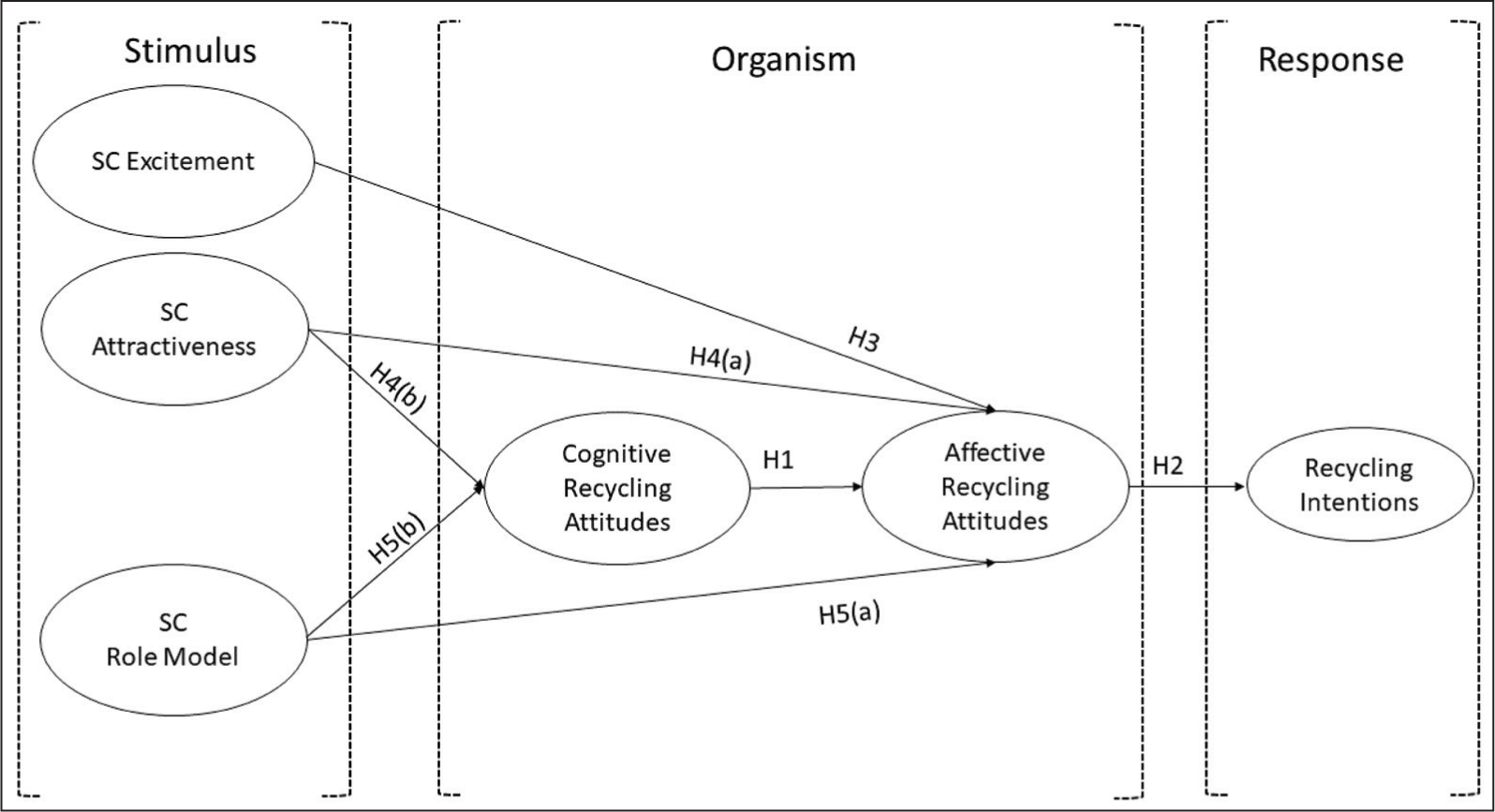
Finally, as Folse et al. (2012) tested interaction effects between different spokescharacter traits on brand attitudes and behavioural intentions, we aim to explore similar interaction effects between different spokescharacter attributes. Due to the lack of research that explored the interaction effects of spokescharacter traits on marketing outcomes, instead of a formal hypothesis, we pose the following research question:
Methodology
Stimuli Development, Measures and Participants
To test the research hypotheses shown in Figure 1, we first developed the stimulus to be shown to participants. The stimulus comprised a recycling message featuring a spokescharacter urging participants to recycle. Participants saw the message for at least 10 seconds. To ensure sufficient variability on different constructs in our model, six versions of recycling messages were developed. Each participant was randomly exposed to one of the versions of the recycling message and responded to the questionnaire with items related to spokescharacter traits, cognitive and recycling attitudes, and intentions to recycle. Responses from the participants across all six conditions were merged for data analysis, as we did not intend to find differences between the participants’ responses exposed to different versions of the recycling message but rather to explore the relationships between different constructs. That is, we were not exploring the causal relationship between spokescharacter traits and recycling attitudes and recycling intentions. Different versions of recycling messages with spokescharacters were used so that there is sufficient variability in the responses on each construct needed to evaluate the study’s hypotheses by ensuring a better fit between the structural model and the data (del Mar Garcia de los Salmones et al., 2013). As Structural Equation Modelling investigates the extent to which variation in one construct explains the variations in one or more constructs in the model, the high variance within the constructs ensures better testing of structural relationships in the model (Hoe, 2008).
The stimuli were developed as follows. Five subject experts were requested to choose one recycling slogan from five options selected from
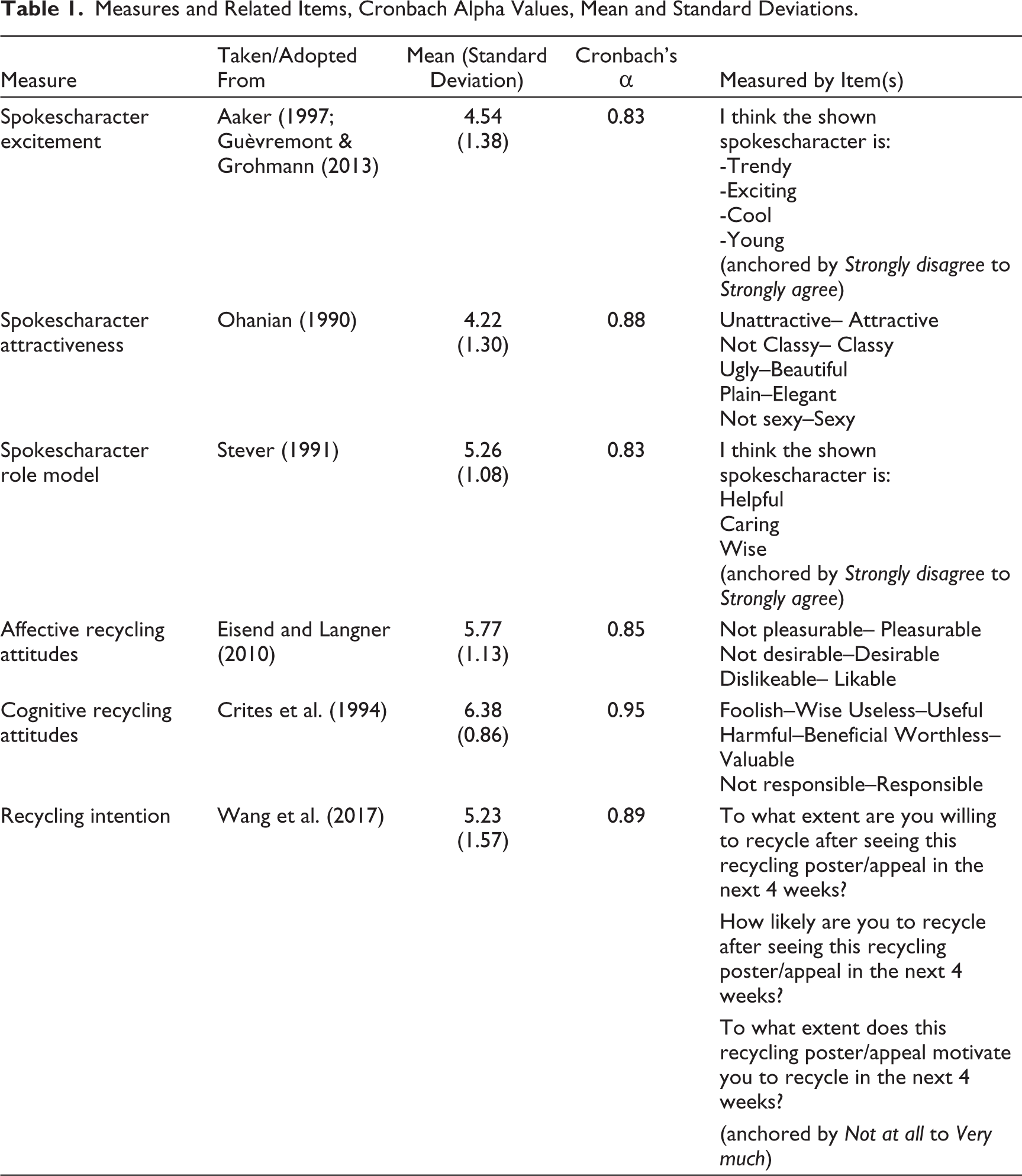
All measures used were multi-item constructs adopted from previous studies. For instance, attractiveness was measured by five items taken from Ohanian (1990). The excitement trait was operationalised using four items similar to the study by Guèvremont and Grohmann (2013). For the role model trait, three items relevant to our context were adopted from Stever (1991). Similarly, cognitive recycling attitudes (Crites et al., 1994), affective recycling attitudes (Eisend & Langner, 2010) and recycling intentions (Wang et al., 2017) were measured using existing items. The 7-point Likert or semantic differential scale items were used to obtain participants’ responses. Table 1 reports the mean and standard deviation, Cronbach alphas and source of different measures used in this study. An online questionnaire with two attention check questions was administered to participants drawn from Amazon’s MTurk platform, and they were compensated. A total of 359 responses were completed, and after deleting the responses that failed attention checks, a total of 314 usable responses remained. Participants’ mean age was 40.42 years [SD = 11.30, median = 38, minimum = 24 years, maximum = 76 years], and around 60% of participants were males. Around two-thirds of the participants held bachelor’s or higher degrees, and close to 90% earned below US$140,000 annually. All participants were residents of the United States.
Measures and Related Items, Cronbach Alpha Values, Mean and Standard Deviations.
Non-response Bias
To assess the potential threat of non-response bias in our study, we divided our sample into roughly equal halves based on the date the response was received to create early and late responders’ groups (Struminskaya & Gummer, 2022). We then compared the demographic characteristics of participants and responses to survey questions between early and late respondents to determine if any significant differences existed. We used late respondents as a proxy for non-respondents, as suggested by extant research (Lahaut et al., 2003). The absence of such differences was confirmed through independent samples t-tests (all p values > .05) and chi-square tests (all p values > .10). This suggests that non-response bias is unlikely in our study.
Results
Measurement Model
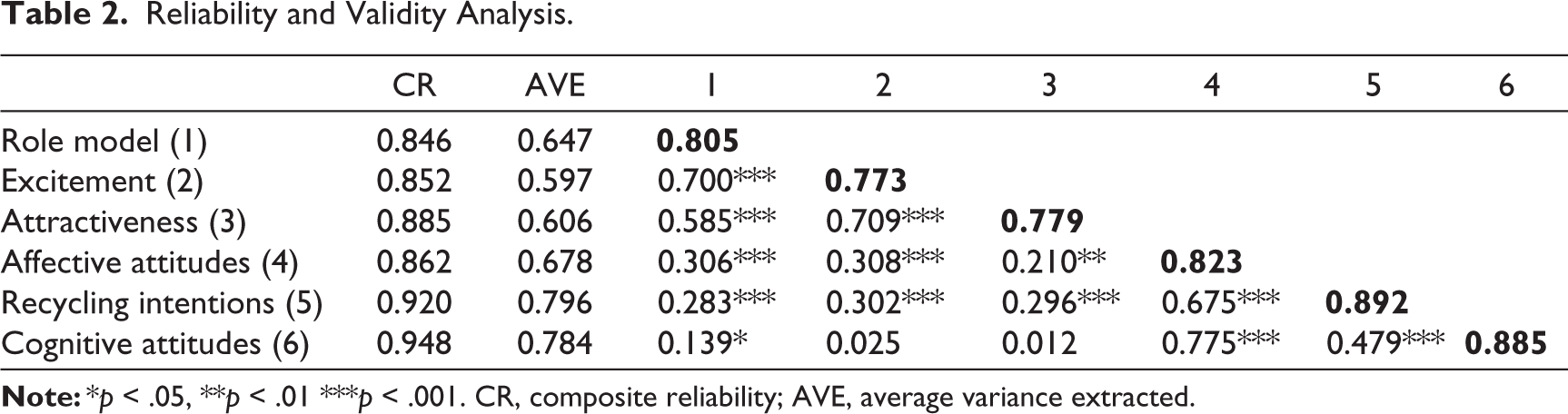
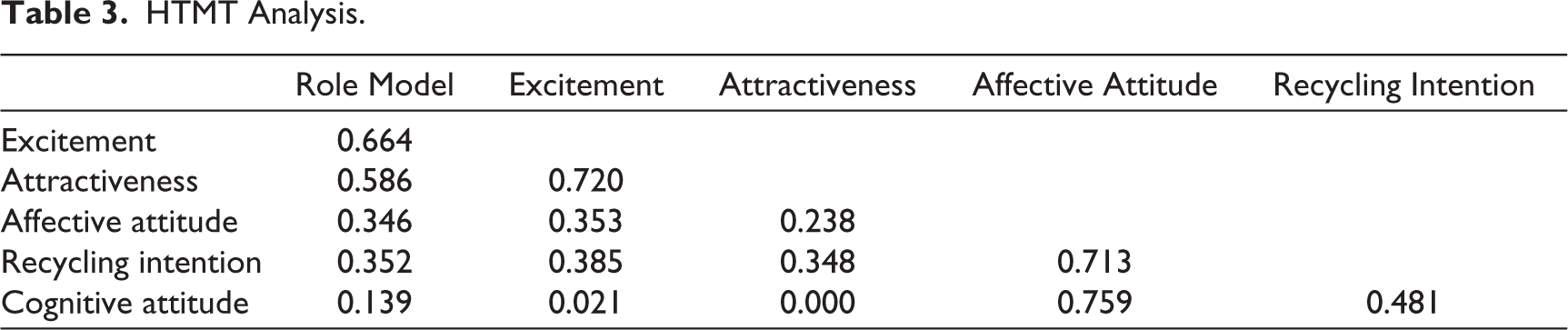
Results of confirmatory factor analysis (CFA) using SPSS AMOS 27.0 suggested a satisfactory measurement model fit [χ2 /df = 2.406 (p = .000), TLI = 0.935, CFI = 0.945, RMSEA = 0.067, SRMR = 0.065]. The reliability of the measurement model was assessed using Cronbach’s alpha and composite reliability values. As reported in Tables 1 and 2, Cronbach’s alpha and composite reliabilities exceeded the required value of 0.70. All factor loadings were greater than 0.5 and significant, and all average variance extracted (AVE) were greater than 0.5, indicating convergent validity. The heterotrait–monotrait ratio of correlations (HTMT) for all variables was below 0.85 (Table 3), confirming discriminant validity. Also, the square root of AVE for all constructs (reported in diagonal, in bold in Table 2) was greater than pairwise correlations between constructs, indicating discriminant validity (Fornell & Larcker, 1981).
Reliability and Validity Analysis.
HTMT Analysis.
Common Method Bias
Common method bias (CMB) was evaluated using Harman’s single-factor test by conducting a common factor analysis on the items from different constructs in the study. If a single factor accounts for the majority of the variance (more than 50%) in the data, it could indicate the presence of CMB (Podsakoff et al., 2003). In our case, the single factor extracted using items from all latent constructs in the model accounted for 31.84% of the variance, which is below 50%. Further, as shown in Table 2, all inter-construct correlations were less than 0.90, indicating that the issue of CMB is absent (Bagozzi et al., 1991). Therefore, CMB did not pose a concern during the testing of the measurement model.
Structural Model
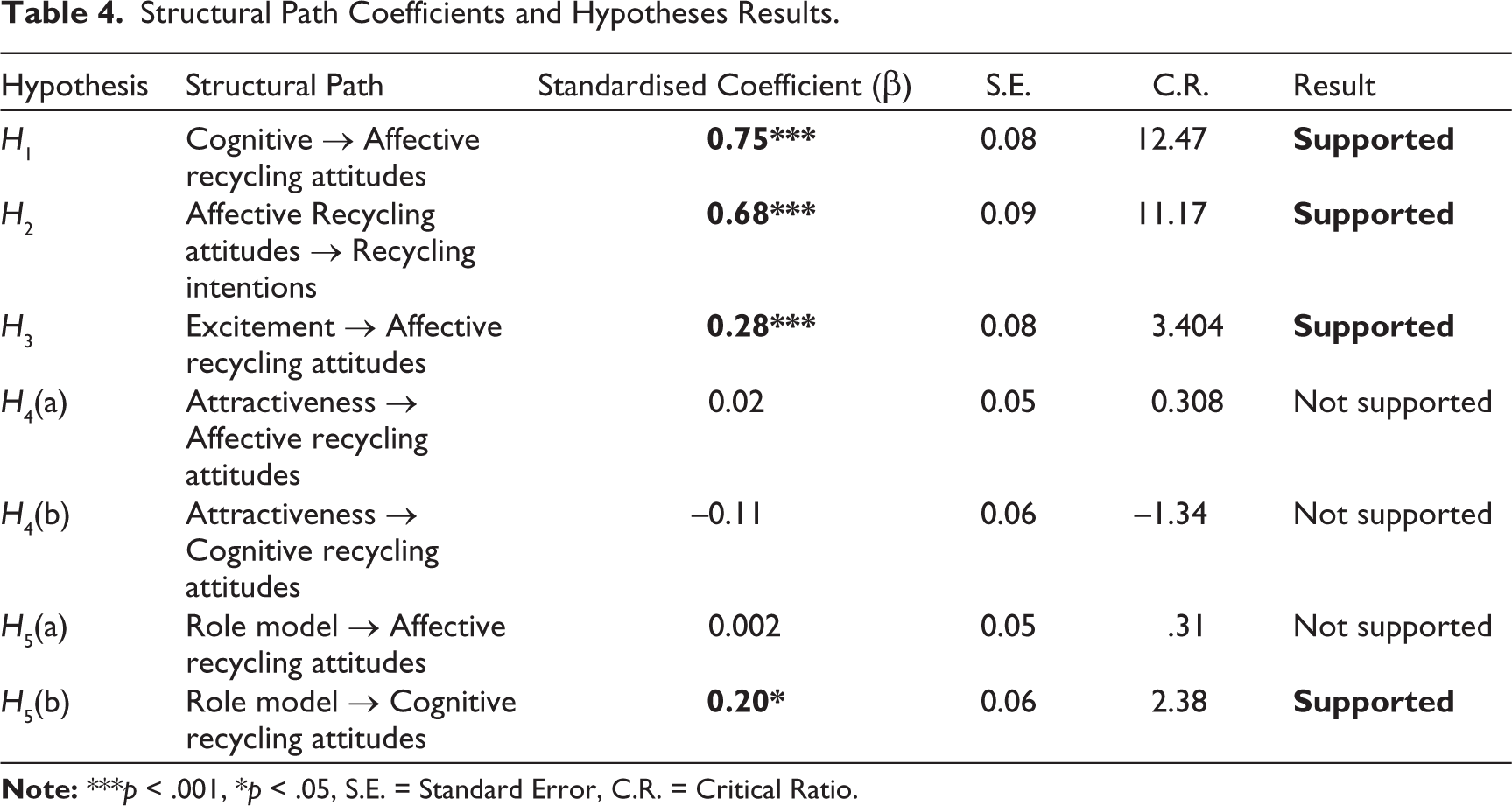
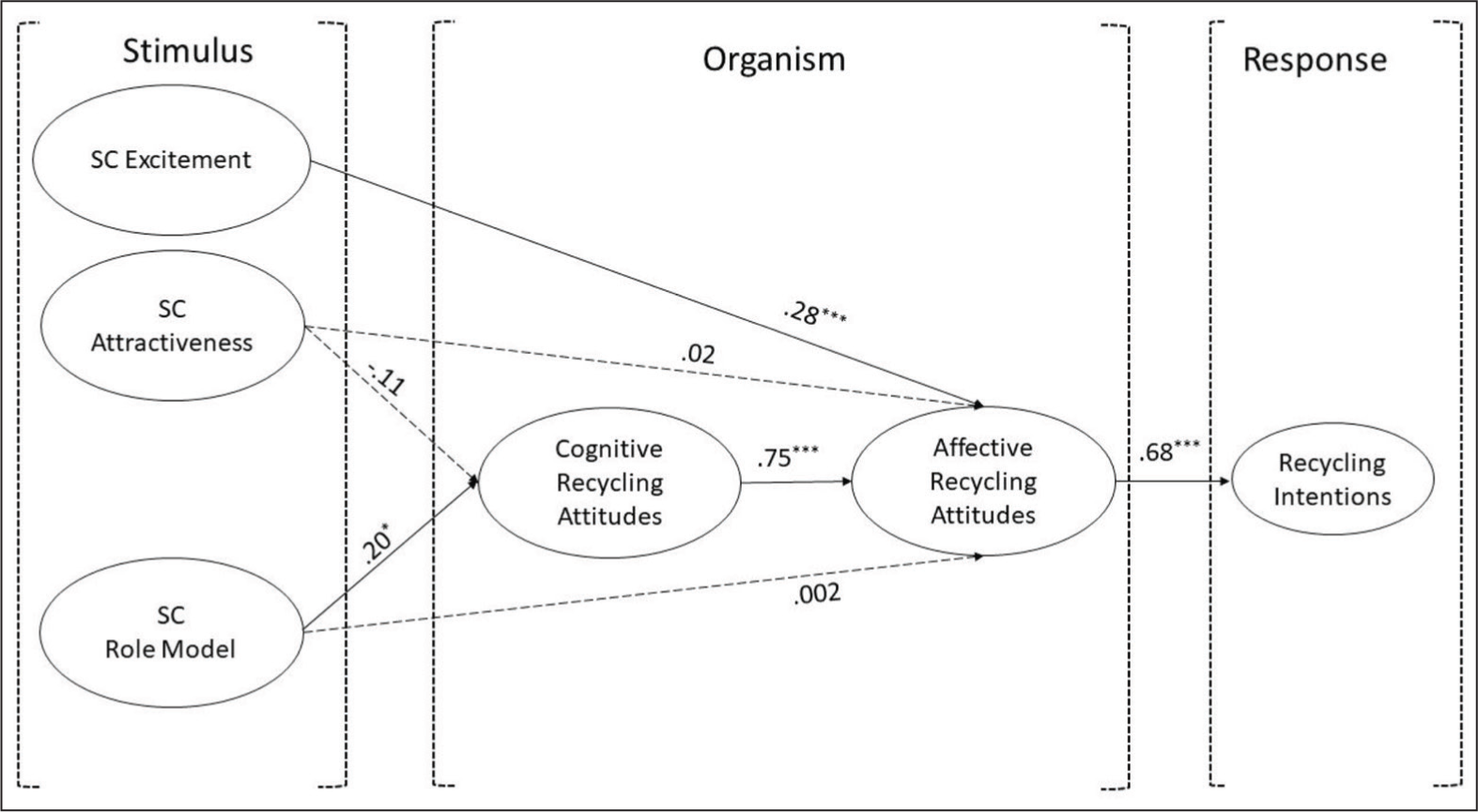
The structural model was tested using SPSS AMOS 27.0, and model fit indices suggested a satisfactory model fit [χ2 /df = 2.406 (p =.000), TLI = 0.935, CFI = 0.944, RMSEA = 0.067, SRMR = 0.075]. The R2 value for recycling intentions was 45.8%, indicating the satisfactory predictive power of the model. Table 4 shows the standardised path coefficients and results of each hypothesis. Out of seven hypotheses, four were supported. First, it was found that there is a positive association between cognitive recycling attitudes and affective recycling attitudes (β = 0.75, p < .001), confirming H1. Additionally, the path coefficient from affective recycling attitudes to consumers’ recycling intentions was positive and statistically significant (β = 0.68, p < .001), supporting H2. Furthermore, the excitement personality trait of the spokescharacter is positively associated with affective recycling attitudes (β = 0.28, p < .001), providing support for H3. Next, the role model trait of the spokescharacter has a positive relationship with cognitive recycling attitudes (β = 0.20, p < .05), supporting H5(b). The findings provide no support for H4(a) and H4(b), indicating that spokescharacter attractiveness did not independently relate to consumers’ recycling intentions. Finally, the role model trait did not show a significant relationship with affective recycling attitudes, leading to the rejection of H5(a).
Structural Path Coefficients and Hypotheses Results.
Based on the results of hypotheses testing, the revised conceptual model is presented in Figure 2.
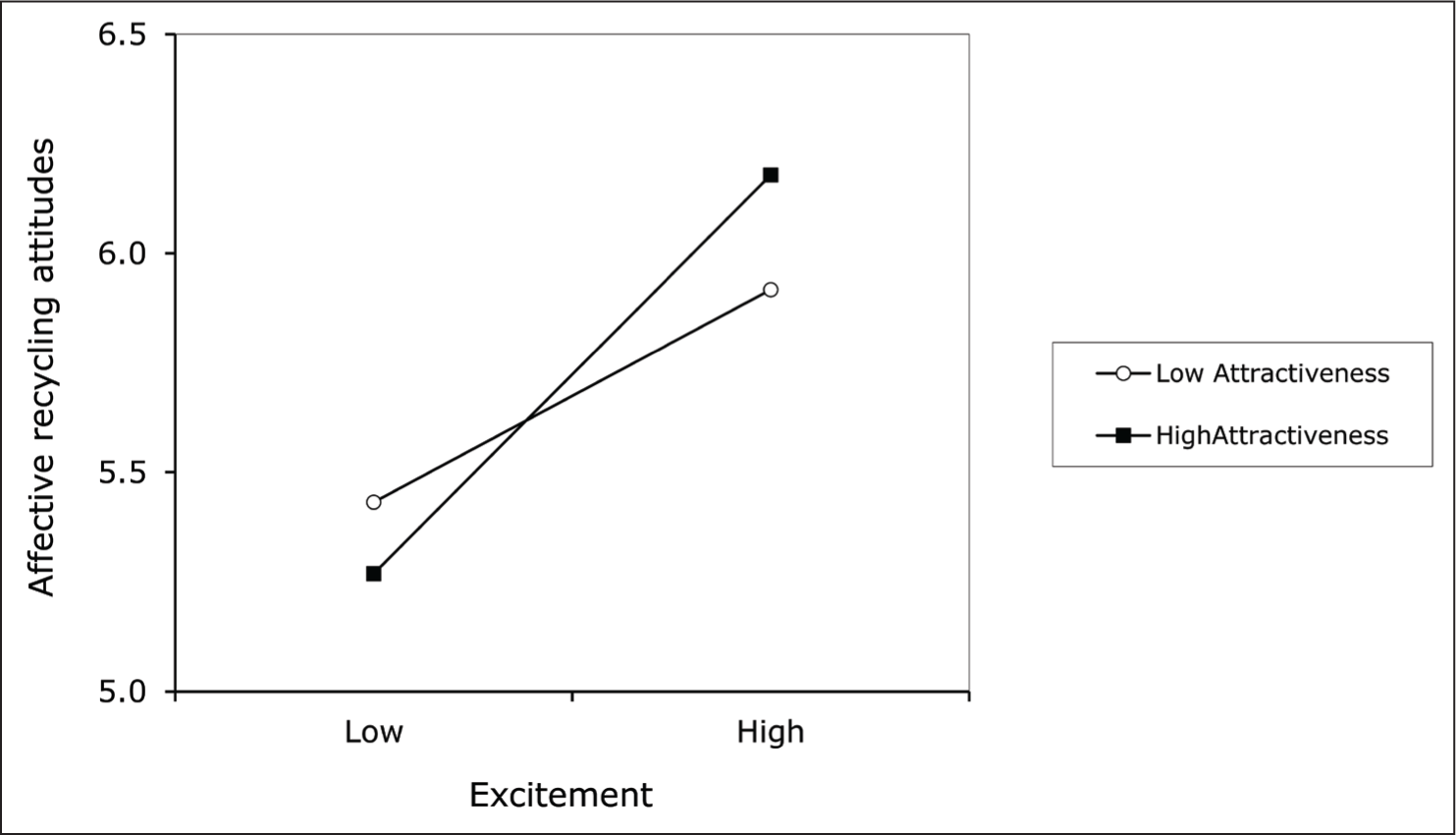
Interaction Effect Between Excitement and Attractiveness on Affective Recycling Attitudes
Following the procedure adopted by Folse et al. (2012), we tested the interaction effects between different spokescharacter traits on cognitive and affective recycling attitudes and recycling intentions. Hierarchical moderated regression using SPSS 27.0 revealed that only the interaction effect between excitement and attractiveness on affective recycling attitudes was marginally significant (∆R2 = 0.8%; p < .10). Simple slope analysis was used to explore the nature of the interaction (Jaccard et al., 2003), and the results are shown in Figure 3. When the spokescharacter has low attractiveness, the influence of spokescharacter excitement on affective recycling attitudes is lower (β = 0.17, p < .01) than when it is high in attractiveness (β = 0.32, p < .0001).
Simple Slope Analysis.
Discussion
Our findings show that the excitement trait positively influences affective recycling attitudes, echoing the findings reported in extant brand personality literature (Sung & Kim, 2010) and spokescharacter literature (Folse et al., 2012). Exciting brands are associated with providing a sense of pleasure and enjoyment to consumers (Ang & Lim, 2006), which represents an affective state. Hence, seeing a spokescharacter with a high excitement trait may produce a positive affective state in consumers, which ultimately gets transferred to the recycling cause paired with the spokescharacter, as per the affect transfer theory (Aaker & Keller, 1990). Hence, the excitement trait exerted a positive influence on affective recycling attitudes in this study.
Further, spokescharacter attractiveness did not directly affect recycling intentions, as it did not exert influence on cognitive and affective recycling attitudes. This finding is in agreement with the matchup hypothesis that an attractive spokesperson will be effective only when endorsing attractiveness-related products (Kahle & Homer, 1985; Wright, 2016). However, our findings contrast with extant studies in social marketing that reported the positive influence of the attractiveness trait on message persuasion (Thomas & Johnson, 2017; Wheeler, 2009), possibly because these studies used human communicators (including celebrities) as endorsers for whom attractiveness is a relevant trait (Schimmelpfennig & Hunt, 2020). Attractive endorsers are effective in promoting transformative products such as fashion clothing (Lord & Putrevu, 2009), and may fail to work when attractiveness is not related to the advertised product, such as promoting recycling behaviour, as it is not adaptive information (Kahle & Homer, 1985). However, our findings show that attractiveness is not to be completely overlooked by environmental communicators, as it enhances the positive effects of excitement on affective attitudes. Giving an attractive appearance to a highly exciting spokescharacter can enhance the persuasion of the spokescharacter beyond the individual direct effect of the excitement trait. Our findings are similar to those of Folse et al. (2012), who reported that an interaction between sincerity and excitement traits enhanced brand attitudes.
Next, our results showed that the role model trait predicted cognitive recycling attitudes but did not exert a direct influence on affective recycling attitudes, agreeing with the findings reported in the literature that role models (e.g., parents, teachers and others) can enhance pro-environmental attitudes (Steg & Vlek, 2009; Xu et al., 2021). Our finding also aligns with the prediction of the C-A-B model (Holbrook, 1986) that cognition leads to affect. As per social learning theory (Bandura, 1977), individuals first observe the beliefs, attitudes and behaviours of role models to develop their knowledge and understanding (part of cognition) about an issue (e.g., recycling is beneficial for society). Once their cognitive attitudes are formed, consumers develop positive affective attitudes (e.g., recycling is likeable), leading to recycling intentions.
Contributions
In this study, we used the S-O-R framework and source dimensions (excitement, attractiveness and role model) to explore the influence of different spokescharacter traits on the recycling attitudes and intentions of consumers. In the process, our study made several contributions to scholars and practitioners, which are discussed next.
First, we extend the limited environmental communication literature that explored how spokescharacters can effectively engage consumers with sustainable behaviour, such as recycling (Jain et al., 2023). Whereas environmental marketers collaborate with human spokespersons (e.g., celebrities) to encourage the adoption of sustainable behaviours, the strategy has resulted in limited success (Olmedo et al., 2020). Hence, we suggest that using fictional characters can be an alternate viable strategy for environmental communicators. By doing so, we respond to recent research calls to explore new communication strategies to encourage pro-environmental behaviours (Boerman et al., 2022).
Second, extant research on understanding recycling behaviour has predominantly applied the theory of planned behaviour and the model’s extended versions to explain the recycling behaviour of consumers (e.g., Geiger et al., 2019). However, the role of source characteristics in promoting sustainable behaviour, such as recycling, is an under-researched area (Olmedo et al., 2020). Our study shows that different source traits (excitement, attractiveness and role model) have different mechanisms by which they positively influence the recycling intentions of consumers. Whereas the excitement trait enhances only affective recycling attitudes and the role model trait the cognitive and subsequently affective recycling attitudes of consumers, we showed that spokescharacter attractiveness is ineffective as a standalone trait in environmental communication. Thus, we offer a better understanding of how marketers can target cognitive or affective attitudes in a campaign by focusing on relevant spokescharacter traits.
Research that examined the role of brand personality traits in promoting sustainable behaviours is scant, with studies exploring the link between the two beginning to emerge only recently (Joshi & Kronrod, 2020). Hence, by showing that the brand personality trait of excitement can enhance consumers’ recycling intentions, we add to this emerging stream of literature. We also contribute to the broader persuasion literature by exploring the role of attractiveness in enhancing environmental communication persuasiveness. Source attractiveness literature predominantly reports communication outcomes using human celebrities and models as endorsers in the commercial marketing context (Schimmelpfennig & Hunt, 2020). Hence, our study expands the persuasion literature by testing spokescharacter attractiveness in an environmental communication context.
Finally, we contribute to the role model literature by showing that even fictional beings can be inspiring role models in an environmental context, in addition to human role models (Stern et al., 2018). Consumers are expected to increasingly interact with fictional beings on social media (Appel et al., 2020), some of whom are anime in appearance, like spokescharacters. Our study suggests that interactions with spokescharacters through social media (Kinney & Ireland, 2015) portrayed as role models may encourage people to adopt sustainable behaviours.
Our findings offer practical insights for environmental marketers to design and use spokescharacters in their campaigns with specific traits. For example, when the campaign goal is to develop affective attitudes towards a cause (given that the public already has high awareness and knowledge about the cause), using a spokescharacter high on excitement and attractiveness traits is suitable. On the other hand, if the campaign aims to develop cognitive attitudes (e.g., how to properly recycle alkaline batteries or electronic goods), using a character with role model traits (helpful, caring and wise) is better. Young consumers can be targeted by using exciting spokescharacters as consumers signal their personality (i.e., young, trendy cool) by associating with a product (i.e., a cause) having similar personality traits (Aaker, 1999). With growing affluence, adoption of some of the pro-environmental behaviours (e.g., use of public transport) remains challenging, as consumers may easily afford the high parking fees imposed in central council areas. Therefore, perceiving the use of public transportation as trendy upon seeing exciting spokescharacters in the campaign could encourage its use. Finally, as children have a high affinity for the spokescharacters, using spokescharacters with high role model traits is one way to motivate future consumers to adopt green behaviours.
Limitations and Future Research
This study has limitations due to online data collection through MTurk, which raises concerns about data quality. However, we excluded the data to remove outliers and incomplete responses and eliminated those that failed attention checks according to marketing survey research best practices. It is also possible that a single exposure to a static recycling message in a lab setting was not enough to fully demonstrate the impact of spokescharacter traits on participants’ recycling attitudes and recycling intentions. Hence, future research can explore how multiple exposures to environmental messages with spokescharacters influence the sustainable behaviours of consumers. Since this study surveyed participants only from the U.S., the findings may not be generalizable to other cultural contexts or sustainable behaviours beyond recycling. To address these limitations, future research should investigate the effectiveness of spokescharacters in different cultural settings.
Our study also outlines future research directions for researchers. For example, to establish a causal relationship between spokescharacter traits and recycling attitudes and intentions, future research can test the impact of excitement, attractiveness, or role model traits on recycling attitudes and recycling intentions using an experimental study. Future research can explore additional spokescharacter traits that can enhance message persuasion. For instance, the role of other brand personality traits (e.g., sincerity, ruggedness, or sophistication) in promoting green behaviours can be tested in future studies. Research can test the role of other mediating variables such as ad attention, ad attitude and emotions in explaining spokescharacter persuasiveness in environmental campaigns. As per meaning transfer theory (McCracken, 1989), even though using exciting characters may make recycling an exciting activity, future studies can test this proposition by specifically measuring perceptions of recycling. Finally, future research can focus on testing changes in actual behaviours through field studies rather than just measuring intentions.
Footnotes
Data Availability Statement
The data that support the findings of this study are available from the corresponding author upon reasonable request.
Declaration of Conflicting Interests
The authors declared no potential conflicts of interest with respect to the research, authorship and/or publication of this article.
Funding
The authors received no financial support for the research, authorship, and/or publication of this article.