




Abstract
The article explores the sensemaking/sensegiving dimensions of emotion, temporality and materiality and their relevance in shaping individual and collective behaviour. The impact of COVID-19 with its multitude of conflicting messages relating to ‘considerate behaviour’, provides a backdrop to explore how sensemaking and persuasion in relation to sensegiving are critical components of public communication efforts. A case study interpretivist approach is used, drawing on the UK-focused regional ‘Thank You North East’ campaign. This is underpinned by semi-structured interviews with the planning and creative teams responsible for the campaign.
Evidence suggests that by recognising the human significance of these three dimensions of sensemaking, Aristotelian modes of persuasion (Pathos, Ethos, Logos and Kairos) can be made more meaningful. By focusing on ‘meaning-making’ as a form of persuasion, belonging and identification are encouraged, improving the perception of empathy within public health communication campaigns. The article provides a new interdisciplinary framework that synthesises scholarship from behaviour sciences, organisational studies and promotional communications and, as such, fills a literary gap where sensemaking in social marketing and communication is currently under-explored. It has further practical value, utilising insights from industry professionals to frame this new sensemaking model against creative execution.
Introduction
Communication between 2019 and 2021 became one of confusion and complexity as public messaging differed across UK regions and lockdown scenarios. Such confusion is consistently evidenced in crisis situations (Coombs & Holladay, 2014) involving multi-organisational actors (Frandsen & Johansen, 2010), with often contradictory expert and media information amplifying knowledge insecurity (Liu et al., 2016). The COVID-19 crisis exhibited these traits with centralised government messaging that was conflicting and complex, triggering distrust (Cairney & Wellstead, 2021; Jennings et al., 2021; Van Scoy et al., 2021). Crises require communication that makes contextual, consistent and situational sense for the audience, concepts that align naturally with theories of sensemaking that are currently underutilised (Van Scoy et al., 2021).
Defined by Kotler and Zaltman (1971, p. 5) as ‘the design, implementation, and control of programs calculated to influence the acceptability of social ideas’, social marketing (or public communication campaigns) is well documented, most recently in publications marking the 50th anniversary of its inception (Basil, 2022). Yet to receive significant attention are sensemaking and sensegiving as future-oriented sensemaking (Gerphart et al., 2010) in the context of public communications, in particular, researching and analysing complex and sensitive situations requiring communications that balance rational and emotional appeals.
Recognising the sensemaking dimensions of emotion, temporality (time) and materiality (setting) is of growing significance (Sandberg & Tsoukas, 2015) in complex communication scenarios (Gephart, 2007; Thomas et al., 2022). Understanding how individuals engage in their world and how emotion is experienced was paramount during COVID-19 to those communication efforts and campaigns aimed at behaviour change that could save lives. As sensemaking literature pivots towards organisational discourse rather than creative execution (Cohen, 2020; Milfeld & Haley, 2022), we address a gap in the scholarship by synthesising campaign planning and execution in parallel to sensemaking and sensegiving. Here, the tools of sensemaking are contextualised against campaign planning and execution, noting their usefulness in potentially deconstructing and reviewing complex issues (e.g., COVID-19) in efforts to then redeploy considerations as part of messaging.
This article explores the UK-focused ‘Thank You North East’ COVID-19 social marketing campaign targeting the North East of England and crafted by local creative agency Drummond Central (DC). The brief targeted a geographically focused advertising-led campaign to ensure people would abide by COVID-19 restrictions in place in the North East region. The senior account director highlighted their initial motivation that ‘we need to get this right because we can impact people’s behaviour, we can reduce rates and deaths […] we have to put everything into this because it was for the North East’, emphasising the proximity and importance of the task. The team also had to adjust to working collaboratively, remotely and quickly—the campaign had a six-week delivery deadline. Unlike other briefs, the Senior Art Director on the campaign noted, ‘we were the target, it affected everybody. That must have steered and helped us arrive at our creative decisions’, meaning the emotions and experiences of agency staff were embedded in the creative process. In parallel to this, real stories of local individuals impacted by the pandemic informed the campaign materials. Uncovered through the research process conducted by DC, these narratives reflected authentic experiences, providing potential empathetic connections to audiences.
The following analysis of the ‘Thank You North East’ campaign contributes to knowledge in three ways. First, it expands the field of advertising/social marketing to sensemaking in the context of public communication discourse, including the relevance of sensegiving. Second, we argue that emotion during public communication campaigns, especially those in crisis situations, needs to understand context (the material and temporal settings experienced by the audience), which we illustrate through the ‘Thank You North East’ narrative. Third, we propose a meaning-making framework that embraces process (research and analysis in the form of sensemaking) with persuasive proofs (implementation in the form of sensegiving) that is particularly significant given the unfinalised story (Boje, 2008) or antenarrative of the pandemic that continually challenged public communication discourse.
This article explores key themes in the scholarship before identifying three research questions. Our methodology is outlined before we discuss our findings, where we suggest a sensemaking and sensegiving framework incorporating persuasive triggers contextualised against emotion, materiality and temporality.
Literature Review
Social Marketing, Public Health and the Pandemic
Social marketing encourages behaviour change in its audience (Basil, 2022; Hoek & Jones, 2011; Kotler & Lee, 2016). This is distinctive in Kotler and Lee’s definition of social marketing, where an audience is encouraged to ‘accept, modify, abandon, reject, switch, or continue’ (Kotler & Lee, 2016, p.157) a behaviour to achieve positive social goals. A clear behavioural goal does not determine action; action comes from people; therefore, messaging must be understandable and contextual to the individual.
With a focus on changing public behaviours towards a shared positive societal impact, social marketing is relatable to exchange theory (Kotler & Lee, 2016). Grier and Bryant state, ‘contrary to commercial exchanges, in which consumers receive a product or service for a cash outlay, in public health situations, there is rarely an immediate, explicit payback to target audiences in return for their adoption of a healthy behaviour’ (2005, p. 321). It is in this notion that the ‘Thank You North East Campaign’ sought to provide a meaningful ‘exchange’ through adopting (or maintaining) desired behaviours during the COVID-19 crisis.
A diverse range of health centric campaigns (Albrecht, 1996; Grier & Bryant, 2005; Petrella et al., 2005; Walsh et al., 1993; Young et al., 2004) have successfully deployed social marketing techniques, including addressing vaccine hesitancy during COVID-19 (Evans & French, 2021; Shekhar, 2022). Central is understanding demographic motivations, where needs are considered in relation to specific social/societal issues (Albrecht, 1996; Kotler & Lee, 2016). This encourages segmentation of the public, enabling the creation of materials that are more likely to shift behaviours (Grier & Bryant, 2005; Kotler & Lee, 2016). Lee (2020) discusses subgroups/segments in relation to COVID-19, specifying seemingly important audiences based on their engagement in contracting and spreading the virus. These groups include the ‘most vulnerable’ (e.g., long-term illness, underlying health conditions), ‘helpers’ and ‘essential businesses’, communities and families (Lee, 2020, p. 260). Categorising messaging based on groupings allows more impactful tactics than universal messaging, a consideration lacking across centralised communications during the pandemic (Lee, 2020; Van Scoy et al., 2021).
Lee’s paper states that campaigns following social marketing principles (knowingly or unknowingly) have a more positive behavioural impact, encouraging a further need to analyse and discuss messaging itself (e.g., the creative process). While social marketing has conceptually been utilised to analyse and interpret communication design directed towards COVID-19 interventions, studies are limited, likely a result of the recency of the pandemic (Evans & French, 2021; Senachai et al., 2022). What is evident in Lee’s list is that successful techniques deployed (including a focus on desired benefits, doable behaviours, visible norms, community engagement in mandatory behaviours) mirror sensemaking, specifically in relation to audience perspectives and their positions held within the pandemic.
Social Marketing: Behaviour and Persuasion
While the purpose of social marketing differs from traditional marketing relative to financial gain (Smith, 2006), persuasion remains central to the explicit or implicit adoption of behavioural theory, for example, identifying why consumers behave in the manner they do, what drives them and how they interpret messaging (Friestad & Wright, 1994). Returning to exchange theory, in social marketing, ‘change’ needs to be met by an interpretable equal or greater return by the target audience (Kotler & Lee, 2016), making persuasion vital.
Understanding Aristotle’s proofs as part of the modes of persuasion (Jones et al., 2022; Poggi, 2005) underpins many theoretical approaches to messaging and effective communication (Cope & Sandys, 2009; Snyman, 1992) and often circulates ethos, pathos and logos. In Fortenbaugh’s terms, these modes are evidenced ‘through the character of the orator, through the emotions of the hearers and through the arguments of the speech’ (1992, p. 207). Kinneavy and Eskin (2000) argue that time and timeliness are as critical as other proofs, emphasising the undervalued notion of Kairos. This fourth proof provides a further parallel to the sensemaking dimension of temporality addressed here.
Sensemaking
Sensemaking (Weick, 1993) stresses how individuals negotiate meaning and plausibility to understand ambiguous events (Maitlis & Christianson, 2014; Weick et al., 2005). A breakdown of sensemaking leads to disorientation and anxiety (Stein, 2004; Weick, 1993), whilst successful sensemaking guides actions and interpretations (Colville et al., 2012). Consequently, sensemaking is studied in various crisis situations, leaving scope to extend this to social marketing, where audiences can often be conflicted and confused.
Sensemaking is a process of enactment (Sandberg & Tsoukas, 2015; Weick, 1995) involving creation (noticing cues to create an initial sense of the situation), interpretation (organising the situation) and enactment (actions based on the sense made). Sensemaking has a retrospective linear orientation (Gioia et al., 1994; Whiteman & Cooper, 2011), whilst influencing meaning-making in others is future-oriented. Both sensemaking and sensegiving require adaptability and ‘heightened attention’ (Kalkman, 2020) with the capacity to see multiple perspectives (Nowling & Seeger, 2020). Sometimes sense-breaking is necessary to disconnect understanding from past sensemaking narratives (Aula & Mantere, 2013), and sense-taking interprets the sensemaking narratives of others (Huemer, 2012). Initial research as part of the Thank You North East campaign needed to make sense of the present situation, using sense-taking to construct sensegiving narratives appropriate to their target market. The agency also had to simultaneously sense-break existing government messaging to re-orientate regional audiences to better understand COVID-restrictions.
Emotion, Temporality and Materiality
Individuals are immersed in their socio-material environment with cognition and interpretation routed in everyday experiences, routines, relationships, or ‘being in the world’ (Sandberg & Tsoukas, 2020, p. 5). Emotion is context-bound, linked to materiality and temporal components of an individual’s lived experience (Maitlis et al., 2013). This influences reality and perception, which, together with interactions with others, affect collective sensemaking (Cornelissen et al., 2014). Emotion in crises often focuses on extreme states of fear, desperation, anxiety and panic (Dougherty & Drumheller, 2006), whilst others are less intense, such as sadness and gloom (Bovey & Hede, 2001).
Materiality is understood as an individual’s natural environmental conditions (Whiteman & Cooper, 2011). Cornelissen et al. (2014) talk of material anchoring or cues that ground cognitions linked to circumstances (i.e., location), physical gestures (i.e., behaviours, movement) and objects. Godbold (2014) also notes the value of past experiences in making sense of emotionally driven issues. These material cues mediate individual sensemaking processes, contributing to the acceptance or rejection of sensegiving discourse. We suggest the long period of isolation, computer-mediated experiences, narrowing of horizons (being at home) and lack of physical contact with friends/family contributed to a radically changed material setting causing heightened emotional states.
Time too took on new significance during the pandemic. Sandberg and Tsoukas (2020) suggest sensemaking is composed of practical time (linked to immediacy and absorbed coping), chronological time (when individuals draw on the past and present and explore the future in relation to an issue or crisis event), and existential time where individuals engage with time not sequentially but simultaneously to understand and navigate through crises and change. The practical and linear view of time was termed as ‘clock time’ by Dawson and Sykes (2019). When connecting time to sensemaking narratives, Dawson and Sykes (2019) go on to suggest sensemaking has privileged traditional notions of time and stories, stressing a beginning, a middle and an end with coherent narratives evidencing chronological containment (Gabriel, 2000).
Yet the existence of non-linear, unfinished narratives, or ante-narratives (Boje, 2011) cannot be ignored, as evidenced by the seemingly ‘never-ending’ COVID-19 story. This period reflected an unstable and often incomprehensible existence, with time becoming acute for individuals and families. Therefore, determining the temporal relationship of the audience to the pandemic, what had happened, what was happening and what may happen became influential in communicating with them in a manner that made contextual sense.
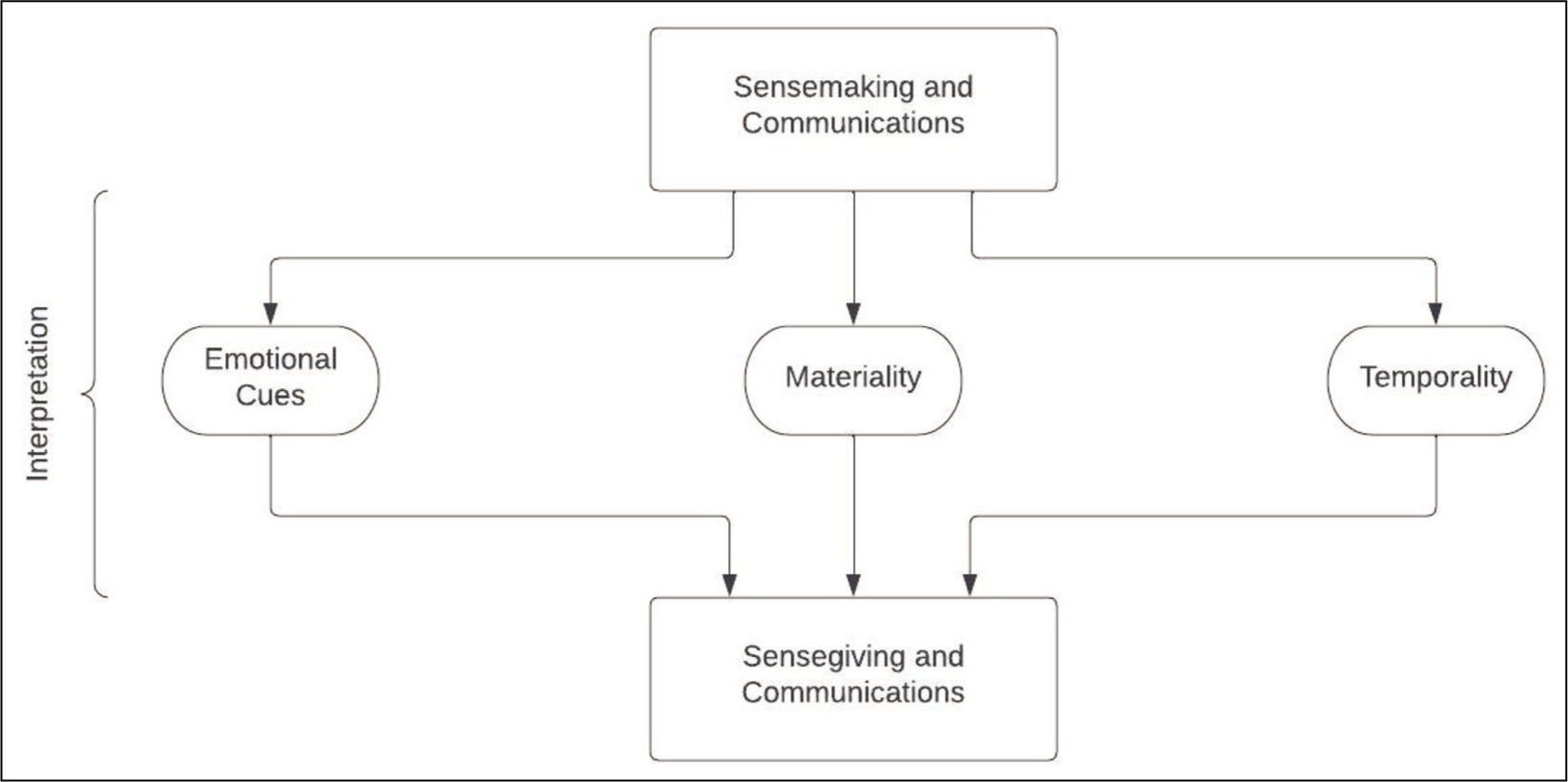
Given these sensemaking dimensions (used to shape initial modelling seen in Figure 1) and the relevancy of persuasive techniques, we suggest COVID-19 highlighted the need for public health communications that recognised emotion (or pathos) whilst being sensitive and adaptive to individual and collective context. As Stieglitz et al. (2017) note, there is an opportunity for sensemaking to be conceptually aligned to communication during crises, particularly where multiple sources broadcast (sometimes conflicting) information. Consequently, there is a gap in the literature to improve the understanding of persuasion and sensemaking as an integrated practice, and the value both bring to crisis public communication campaigns and their creation. Sensemaking forms a strong theoretical position from which means of persuasion can be further integrated, synthesised and mapped against the advertising/communication design development process. From this, we pose three research questions:
RQ1: How do the three dimensions of sensemaking inform the interpretation and planning process? RQ2: How are persuasive triggers mapped into sensemaking concepts as a form of sensegiving? RQ3: What relevance does understanding sensemaking and persuasion have to creativity in effective public health communications?
Making Sense: Initial Modelling.
Methodology
Research Approach
This study has an interpretivist orientation, viewing reality as socially constructed, subjective and rooted in the human condition. Although inductive, it embeds abductive tendencies (Reichertz, 2014) drawing on the existing literature to inform but not to construct a rigid hypothesis for testing. Case studies explore ‘a contemporary phenomenon within its ‘real-life context’ and are relevant ‘when the boundaries between a phenomenon and context are not clear and the researcher has little control over the phenomenon and context’ (Yin, 2009, p.13). The ‘phenomenon’ being the Thank You North East campaign. The campaign materials investigated have been sourced directly from the DC website, where an overview of the campaign, including social, out-of-home (OOH) and video contents can be found.
A social constructivist tendency pivots the methodological approach to Merriam’s (1998, p. 22) view that ‘reality is not an objective entity; rather, there are multiple interpretations of reality’ and that meaning emerges through a multi-layered approach with literature contributing to theory development, fitting better with the noted abductive tendencies of the research. Primary data gathering consists of two semi-structured interactive group interviews involving the planning and creative teams at DC. Participants were identified by the Managing Director of DC and included the Planning Director and Senior Account Director (planning) and the Senior Copywriter and Senior Art Director (creative). Interviews were conducted at DC in the presence of both authors. These sought to uncover ‘what is happening, to seek new insights, to ask questions and to assess phenomena in a new light’ (Robson, 2002, p. 59). Semi-structured approaches assure specific topics are covered through questioning, whilst allowing variation through flows of conversation, and enabling themes to emerge (DiCicco-Bloom & Crabtree, 2006). This allowed for organic discussion of the process, where each team spoke collectively and agreed as to the concepts and processes that led to the campaign being realised. The roles identified reflected the nuanced aspects of the creative process, and members of each team represent a relatively equal position in the construction of final outputs.
Data Analysis
Initial themes were categorised (open coding) using constant comparison insight (Glaser & Strauss, 1967). Open coding enables the researcher to capture the main sense of what is discussed by rephrasing using fewer words. This moved to conceptual coding reflecting on the terms and language used by interviewees (Corbin & Strauss, 2008) to establish first-order concepts. Following this, axial coding was utilised where relationships were sought between the concepts to create second-order themes. Finally, these themes were gathered into several overarching dimensions, allowing for thematic discourse analysis and discussion to follow (Botelle & Willott, 2020; Lin, 1998).
Findings and Discussion
Overview
The Thank You North East campaign disseminated by DC utilised a multitude of channels to maximise visibility and audience awareness. This included television commercials, OOH materials, shareable digital content and an interactive website. DC notes that ‘nearly half of those who saw the campaign took at least one desired action, most commonly related to their own social distancing behaviour’, and ‘92% of people who saw the campaign agreed they had the information they needed to keep themselves and others safe vs 83% of people who hadn’t seen the campaign’ (Drummond Central, 2023). Alongside many restrictions being removed in the UK (March 2022), data from the Office of National Statistics showed a lower rate of infections in the North East (NE) than the national average (5.3% in NE compared to an average of 6.39 national average and a high of 7.5 in the South East) (Yapp et al., 2022). These combined results demonstrate the potential impact of DC’s work, and while numerous variables are at play in relation to infection rates, there is a strong possibility that a correlation exists between the messaging and the falling rates when contextualised nationally.
The ability to ‘notice cues’ (Sandberg & Tsoukas, 2015; Weick, 1995) based on researching the lived experience of the NE population is powerfully revealed, informing the Thank You campaign. Additionally, both DC teams recognised they too were research instruments. Primary research conducted by DC with the NE population mirrored the experiences of the team (confusion as to rules, tiredness at loss of liberty, sadness and anger caused by the extensive period of not being able to see loved ones). Yet the team were also instigators of sensegiving narratives requiring reflexivity and flexibility in their own decision-making.
We argue this emotional insight fuelled the creative execution of the campaign by triggering the need to ‘sense-break’ (Mirbabaie & Marx, 2022; Ybema & Willems, 2015) and move away from traditional government narratives of negative messaging (do not break the rules) towards a positive sensegiving narrative and empathetic messaging. The words ‘Thank You’ emerged, grounded in community and belonging. This involved ‘real people’ telling ‘real stories’ thanking their NE community. It was in this overall sensegiving context that persuasive proofs were situated.
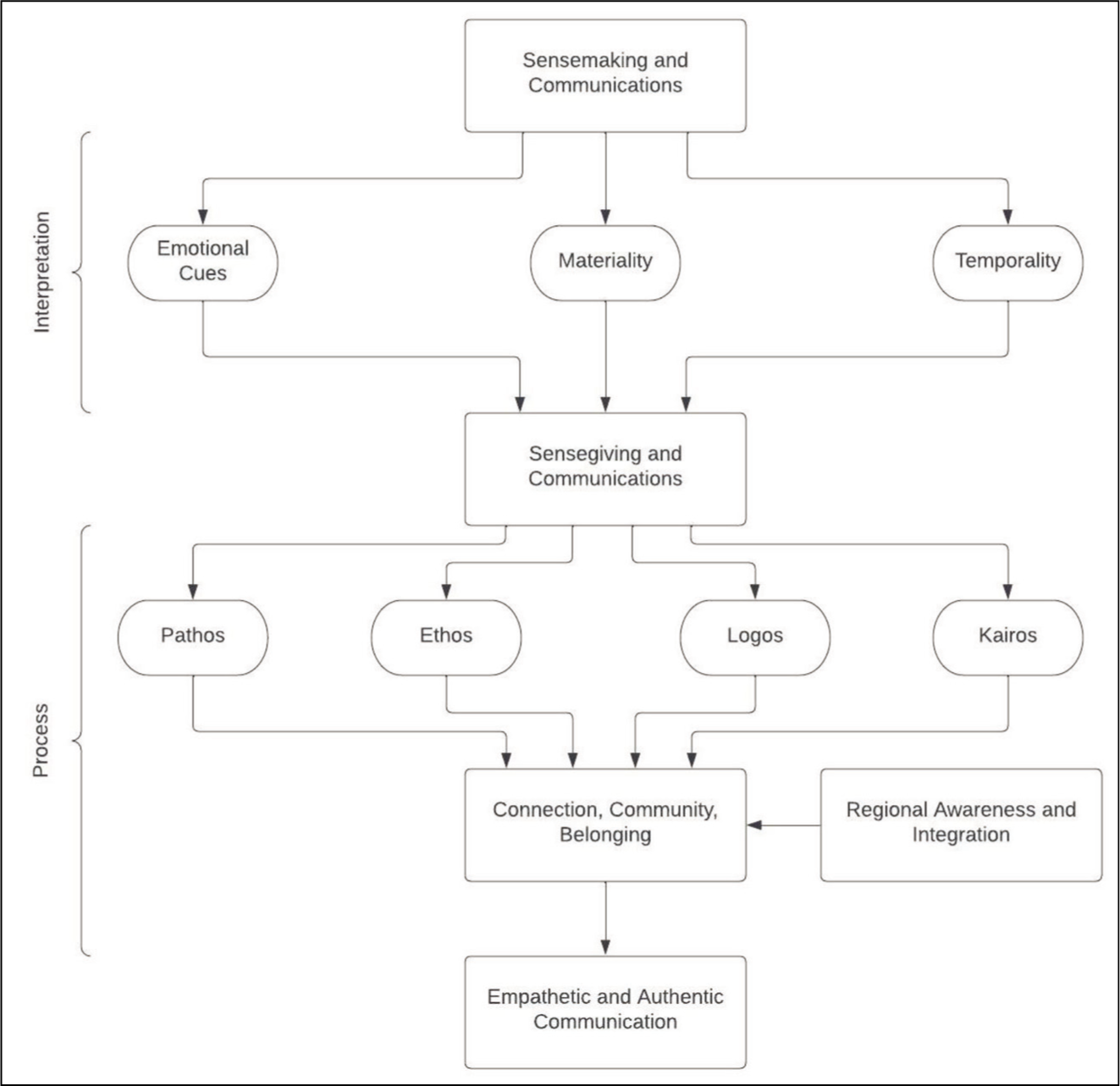
Findings lead to a ‘Model of Sensible Persuasion’ (see Figure 2) that is discussed here, emerging from the way DC implicitly blended sensemaking and sensegiving with Aristotle’s persuasive proofs to produce an effective public communication campaign. We suggest such a model can provide a base on which to build future creative public communication campaigns and could be further utilised as an analytical tool.
Model of Sensible Persuasion.
Making Sense of the Situation: Initial Modelling
Sensemaking and Communications
In health communication, the Health Belief Model (Janz & Becker, 1984; Rosenstock, 1974) which aligns with exchange theory, argues that to induce behavioural change, target audiences need to see a greater benefit to health by ‘changing’ than remaining inert. Conceptually, this was challenged during the later stages of the pandemic (the benefit of abiding by the rules compared to the mental anxiety of loss of liberty/not seeing family). The planning team agreed that the public ‘all had a different view on COVID. Some just generally frustrated, some just didn’t want to go out, some sanitised everything when they came back from the supermarket, some people had vulnerable family, vulnerable parents, some people were just living alone’.
The DC team identified the spectrum of issues and the span of behaviours evident in individual actions as part of pandemic precautions. Notably, there was a conflict of values, which led to a sense of confusion as to the hierarchical (or social) importance of independent actions undertaken by the public. The head of planning commented that the DC team, ‘adopted an approach to identify which behaviours to influence’, where self-reflection allowed them to begin to map motivations. While Lee (2020) has suggested lists of actions/considerations, the manner in which these were both understood and prioritised by the public, necessitates review.
The campaign was initiated and funded by seven NE local authorities, where it was established early that a single stream of communication was necessary to reflect a unified voice for the region. It was apparent in research conducted by DC that conflicting government messages had led to a lack of understanding, interest and trust across the UK, including in the NE. This was reinforced through initial interviews conducted by DC highlighting ‘pandemic fatigue’ (Haktanir et al., 2022; Reicher & Drury, 2021), commenting that ‘people were saying we are too tired of being told what to do. With cognitive processing, it’s exhausting to have your mind in conscious processing mode all of the time’. This led to the creative decision to embed ‘real’ regional voices/individuals within the campaign to add tonal authenticity and provide sensemaking through relatability with the issues people considered individually important (Godbold, 2013; Kelleher, 2009; Sweetser & Metzgar, 2007). Given the spectrum of behavioural suggestions that needed to be emphasised in the final campaign, using ‘real people’ reflected the importance of empathy and identification with the situation in the NE while attempting to simplify the variety of behavioural suggestions communicated.
Research identified household mixing was increasing across the region, representing a risk factor in conflict with social distancing advice. The planning team collectively noted that this reflected their own desire to meet with friends/family, particularly those who had been impacted by isolation. Further investigation reinforced this, noting that those individuals more severely impacted by the pandemic were more likely to ignore/break rules. DC also identified less obvious/predictable issues, which became imperative to the sensemaking approach and creative execution. For example,
[S]peaking to a grandmother, if we hadn’t have spoken to her and heard her story and how COVID affected her, we would have probably assumed that it was the impact on her life that she was scared about but it wasn’t. It wasn’t about life or death it was about feeling really isolated.
This assisted DC in targeting specific behaviours in parallel to previously generalised national messaging. Current centralised communications focused on the severity of the issues such as daily death figures/rates, a common method across health marketing to exploit fear (Benet et al., 1993; Eppright et al., 2002; Krishen & Bui, 2015). However, DC’s early research identified the need for messaging to evoke the sensemaking elements of emotion (empathetic connection), recognising materiality (physical connection/social distancing/pandemic environment and geography, alongside current public health messaging) and temporality (action versus inaction across audiences at a given time, growth in pandemic fatigue leading to rising cases).
Emotional Cues
Mirroring Doughty and Drumheller’s (2016) considerations surrounding sensemaking, there was a need to recognise pandemic fatigue and to consider the feelings of individual despair and confusion identified in DC research. This meant acknowledging the negative emotional state of the NE population as a basis for sensemaking/sensegiving whilst drawing on a narrative of a ‘positive future’, demonstrating the interplay of emotional cues and temporality within sensemaking (Weick et al., 2009), and addressing the unfinished narrative (Boje, 2011). DC also needed to build a connection with an audience overwhelmed by previous and current messaging, much of which was perceived to be dictating behaviour (Williams et al., 2021). The planning director states that ‘emotion will generally build better connections with a brand or an objective than just instructing people, even in a friendly way, [instructing] is not as effective as building some sort of emotional connection’. So, the question became how to build emotional bonds with a tired and confused audience and craft messaging that would resonate.
Initially, this was helped by the regional nature of the campaign with its focus on pride in place, but beyond this, creative execution had to draw on the importance of empathy (Bartsch & Kloß, 2019; Escalas & Stern, 2003), hence the utilisation of ‘real stories from real people’ and establishing the correct tonal approach (Godbold, 2013). DC research led to an empathetic connection between staff and the narratives of those interviewed, lending these same ‘authentic’ experiences to art and copy of final messaging.
Materiality
The NE (and global) population had experienced a sudden material change, including a loss of liberty in relation to space (where people could and could not go) and a shift in the individual’s relationship with domestic space (isolation) (Sandberg & Tsoukas, 2020). Both contributed to pandemic fatigue and boredom (Drody et al., 2022), which was further reinforced by a singular, blame-driven, government-led narrative reinforcing notions of space and the need to ‘stay home’ (Frosch & Elwyn, 2014; Guttman & Salmon, 2004). This increased the reluctance to adhere to rules, with the planning team noting ‘current messaging was just wallpaper’, the same message reiterated over time and ultimately ignored as individuals chose to move between spaces regardless of restrictions.
With rules differing across locations in the UK, material impacts varied, causing confusion for the public, including what they could do and the spaces they could go, impacting the ability of individuals to ‘anchor’ their position within their respective environment(s) (Cornelissen et al., 2014). The planning team highlighted the tier system introduced in the UK creating a material dissonance between ‘rules’ and the specific regional community understanding of an effective/desired response to these shifts in guidance (Williams et al., 2021). By unifying the seven local authorities in the NE, any messaging approach could be targeted, relevant and consistent. These considerations encompassed environmental materiality and reinforced the opportunity (and need) to encourage a sense of regional belonging, further adding to opportunities for empathetic connection (Godbold, 2013).
Temporality
While the campaign was triggered by increasing COVID-19 cases in the NE, the long-term impact of national restrictions introduced at the start of the pandemic was considered part of the creative process. The various teams at DC had to consider the liminal space of the audience being occupied across such a significant transitional period, where their past (pre-COVID) informed their present (rules and restrictions) and their future (possible end of restrictions). This consideration framed the planning and creative process, with positive affirmation of the audiences current actions impacting a theoretical future scenario. This vision was then realised in the creative execution of the campaign message, reflecting the need for temporal awareness of the audience and their situation.
With ‘pandemic fatigue’ remaining a contributory factor, DC found individuals were more likely to lapse in taking situationally appropriate action (Williams et al., 2021), breaking rules more regularly as the pandemic progressed. Examples included not maintaining social distance restrictions, movement between home and work, social gatherings and childcare. Such ‘lapses’ were likely the result of the individual’s internal conflict over what they deemed necessary activities, but also reflected a shift in central messaging where regular rule changes increased misunderstanding.
As DC stated, messaging needed to reflect the present situation where ‘finger pointing and telling [the audience] what to do wasn’t helping’. Communication that acknowledged that the pandemic (and accompanying restrictions) now represented a ‘long-term’ issue, one that impacted immediate needs (movement) and individual futures, required careful crafting. If the audience could not see a future where COVID-19 was less prevalent, then they were likely to break rules in the short term to meet present desires. Messaging is needed to reinforce elements of time-sensitivity. DC knew they could not offer definitive timescales, but they could refer to a potential ‘end’, thus adding a sense of possible closure and increased certainty.
Model of Sensible Persuasion
Sensegiving and Communications
It was apparent that the target audiences were, ‘frustrated, tired, bored, and spotting inconsistencies in the nationwide COVID messages’, which were dictated by ‘rules’ with little consideration as to how those messages were being received. DC agreed that utilising principles associated with ‘nudge psychology’, where small actions could lead to significant reward, in combination with positive affirmation, would likely increase positive reception/action from messaging (Hansen & Jespersen, 2013; Wilkinson, 2013).
This is interlinked with a regional approach aiming to encourage and utilise a sense of community. As a result, ‘Thank You’ became the central message behind the campaign. This identified and acknowledged sacrifices in terms of time, space and emotion, allowing audiences to reflect on their personal situation and enhancing relevancy (Kemp et al., 2017). As the senior art director of the campaign noted,
We had to remind people why they were doing it. It was a hard year. We were asking people to do things that on paper sound easy, like putting on a mask, but in reality, it’s not. It’s not easy not to see your family at Christmas or stay isolated for months on end. It felt like a lot of repetition of flippant messages. You’re telling us to wash out hands, but I haven’t been out of the house for a week and it became about acknowledging that. It’s a big thing you are doing and reminding them of the payoff.
Pathos
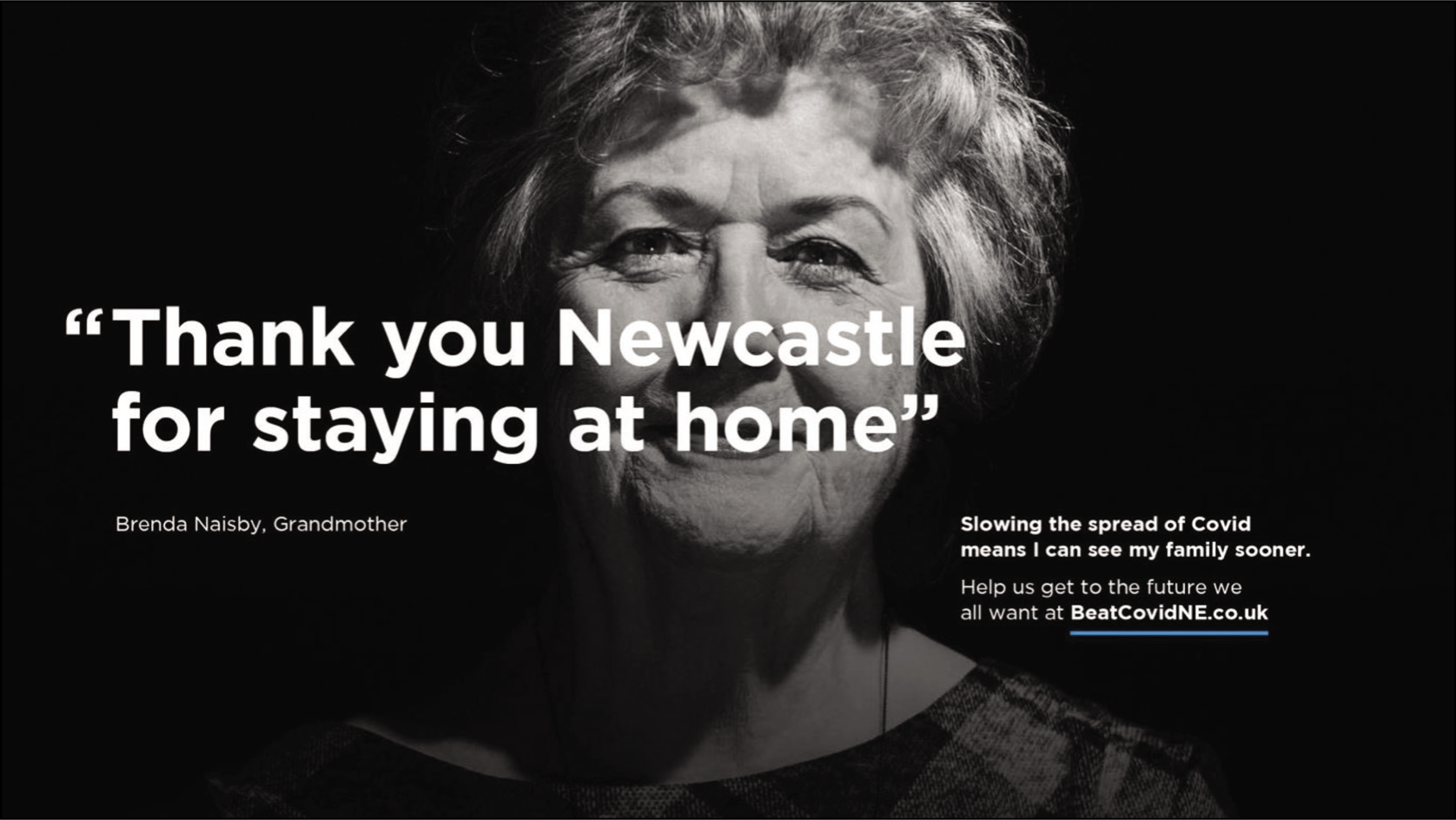
To create effective and authentic emotional connections, the decision was made to use interview content from audience research in the narrative of the campaign. Narratives using relatable content can enhance message identification, improving persuasive intent (Cohen et al., 2018). The planning director comments, ‘it was based on the individual stories that we heard when we were interviewing people around the region. Some of the stories were heart-breaking, the impact of isolation, social distancing, the emotional impact’. These findings explicitly formed elements of the copy, enhancing the relatability of those individual narratives. As noted, there was a need for optimistic and supportive messaging in opposition to previous campaigns reflecting the general ‘mood’ of the audience. As a result, ‘the art direction wanted to feel positive (and the language does that), but we still wanted it to have that [emotional] pull, and that black and white image of the face, them there, looking at you, saying thank you is so simple’ (Figure 3).
Poster Illustration of the Thank You North East Campaign (Drummond Central, 2023).
Ethos
Lack of trust/interest in authority and authoritarian messaging led to a need to build ‘credibility in the messenger’. As a result, the seven authorities remained absent in the campaign, amplifying ‘real people’ from the region. So, to generate and maintain authenticity, a sense of place was embedded using ‘their voices’ and specific regionalisation (locations named in advertisements and regional accents used on audio). In addition, scripts were crafted using the interview materials, but there was a selection process in terms of ‘who said what’ to drive an empathetic connection between the statement, individual and audience.
Such an approach reinforces ‘self-referencing’ narratives to incite persuasive output, where ‘the more readers connect the narrative to aspects of their self, the more they are likely to endorse story-consistent beliefs and intentions’ (de Graaf, 2023, p. 67). This is mirrored in health communication, specifically where ‘the weight of evidence to date thus suggests that health communication practitioners should generally prefer the first-person POV when writing health narratives’ (Chen et al., 2017). Here, ethos and pathos combine to deliver emotional cues relative to lived experience and an empathetic connection to the audience.
Logos
A sense of ‘reward’ for maintaining relevant behaviours was necessary to the campaign, yet the team remained conscious of ‘not overpromising’, ‘we couldn’t say if you wear a mask, if you socially distance or stop household mixing, we are not going into another lockdown. We couldn’t say things that were not true’. Therefore, an affirming message was required (this became the concept of Thank You) which needed to be delivered from a single voice/place to increase trust and offset confusion. DC also identified that the central government was still producing campaign materials surrounding COVID-19; therefore, there was a conscious need for any communication to remain logical if the national message shifted. The concept needed to be different but still ‘make sense’ in the context of the pandemic. This was achieved through the regional focus both in distribution and creativity, where the materials ‘had to sound authentic but not too colloquial so it felt inclusive. It could have trivialised it if we made it too ‘North Eastern’.
Kairos
Both time and place are closely linked in sensemaking, and these considerations are evident in campaigns. The voices of those in the community represented the lived and present experiences of the audience. This, ‘reinforced the whole campaign, it added weight to it and said these are real people, here’s more about them and the struggles they have had’ acknowledging the audience experience of the pandemic to date, but also considering a possible future.
As Kairos conceptually seeks to utilise the opportune moment for persuasive communication to have impact (Fiedler, 2021; Kinneavy & Eskin, 2000), DC had already identified that the audience ‘lapsed’ in behaviour across varying situations. Consequently, the core message remained, but the narrative and placement of advertisements needed to reflect those areas/times where the audience were present (Freund & Naor, 2004; Mills et al., 2019). The timeliness of the reminder to adhere to and/or shift behaviour was evident in relation to the national and regional increase in COVID-19 cases. This campaign became about connecting at the right time in the right place to instigate small shifts in behaviour through reminding individuals of potential future rewards at a time where pandemic fatigue was influencing the desire to act negatively (e.g., the desire to connect with family and friends).
Connection, Community and Belonging, Regional Awareness and Integration
The shared relevance of all cues in symbiosis was important to the dissemination, interpretation and reinforcement of messaging. There is a need to utilise community (region/place) and encourage communality (coming together in support of the cause as a group). Central messaging prior to the campaign was authoritative and London-centric (announcements from the UK Prime Minister). The creative team agreed that
[T]he campaign needed to have that local feel. A lot of public service messaging is very cold and I think this stood out [meaning the Thank You North East campaign] as it was regional and it felt warm and friendly. We were showing real people from the North East.
This link to regionality sought to further encourage notions of self-reflection and identification in pursuit of emotional, empathetic connections (Aaker & Williams, 1998; de Graaf, 2023).
A regional focus was necessary in that the combined clients reflect the interests of the NE, but was also required given the rising infection rates in the region. This became paramount to creating a strong community-driven narrative ‘personalised at a town, city or borough, that made the campaign easily identifiable, from children up to grandmothers, and everybody in-between. It was a diverse campaign, but it was fundamentally routed in the community’. Localisation was revealed in the DC research, which identified that the broad label of ‘the North East’ worked but needed further localisation right down to community areas (e.g., Newcastle, Sunderland, North Tyneside) for it to have an impact.
The campaign needed to remain authentic to the NE, and care was given when selecting individuals to appear in the localised campaigns to ensure that the narrative was inclusive and not stereotypical. This distanced the messenger(s) from government where multiple identities were presented but remained associable to the public.
We wanted to make it not just local, with local people, but to have that balance between being authoritarian and not being too flippant. It had to have resonance but be friendly. We are the North East, we are a friendly region, so it had to reflect that’.
Empathetic and Authentic Communication
The application of empathetic messaging in public service announcements is effective in generating connection and action (Bagozzi & Moore, 1994; Shen, 2010). Authentic communication utilises pathos (generating empathy) and ethos (alignment to the messenger and their associability to the audience) (Chen et al., 2016, 2017; Escalas, 2007). Integral to achieving this outcome was the use of real individuals—people telling their story as opposed to visualising and dramatising the message—as this distances sentiment from reality (Chalmers & Price, 2009). This ability to vicariously associate with the audience, separating them from government messaging, was fundamental to the Thank You campaign. Through adopting this approach, DC has found a high level of ‘positive sentiment towards the local authorities in the area for having done this campaign’, as evidenced in their effectiveness evaluation reports.
Finally, the team acknowledged that, as individuals and collectively, they had a vested interest in the campaign’s success. As the team notes
[Y]ou are doing something that you know is going to make the region you live in, or the country that you operate in, a better place. That was something we got behind, the whole creative team ended up involved in this, everyone was determined and enthusiastic to get it right.
Implications
The study presented suggests a number of both theoretical and practical implications. While future-oriented sensemaking has received further attention in recent years (Ganzin et al., 2020; Gerphart et al., 2010), there is still an opportunity to recognise the potential of this theoretical concept as a proactive lens of analysis and assessment in crisis situations (e.g., response to the pandemic). Furthermore, considerations surrounding sensemaking have yet to be aligned to pillars of persuasion across current literature, particularly in the context of public communication campaigns.
The findings presented form the Model of Sensible Persuasion outlined above. This model offers an opportunity for those faced with creating effective communications linked to complex circumstances: a systematic process of review that can be utilised across the entire creative process, from initial planning and research to execution. While these methods may implicitly be deployed in practice, the explicit deconstruction of possible considerations presented in the model allows those involved in such processes to create robust and rigorous strategies to emphasise sensemaking/sensegiving within persuasive communication. This same model can also be utilised as an analytical tool, deconstructing future-oriented sensemaking efforts to navigate possible relevancies to audiences and the likelihood of such communications to effectively influence audiences. The implications for future use are outlined below.
Conclusion
Social marketing has been well considered across the last five decades (Basil, 2022), yet public communications efforts surrounding health still represent a complex area of consideration (Grier & Bryant, 2005; Kotler & Lee, 2016; Lee, 2020). While the role of promotional agencies in analysing effective communication campaigns still lacks exploration, the discussions with practitioners noted here have allowed for the role of sensemaking and sensegiving to be reflected upon in assisting the deconstruction and context of behaviour-led public health campaigning.
Related to RQ1, the consideration of sensemaking dimensions (emotional cues, materiality, temporality) has been implicitly deployed in the creative process outlined by DC. Further explicit recognition of these categories has the potential to bring depth and focus to the research, planning and creative process, particularly relevant when a need to maintain empathy and authenticity is presented as part of the communication strategy. Engaging with the ‘meaning’ behind the issue, through the lens of sensemaking, recognises the human element of communications, thus moving campaign development beyond the role of more traditional marketing practices.
In relation to RQ2, where sensemaking can assist in interpretation of meaning, there is an overlap present, where disseminating information in the form of sensegiving reflects the need to consider persuasion as part of communication efforts. Where ‘persuasion’ in itself has been previously considered in relation to ethics (Powers, 2007; Santilli, 1983), introducing it alongside initial sensemaking activity utilises empathetic considerations to recognise the ‘humanity’ of the communication effort. This aligns the motivations of the communicator more definitively towards noble goals when utilising potentially cohesive methods. It is recognised that behavioural changes in such examples as the Thank You North East campaign are reliant on change without visible reward. Therefore, persuasion plays a significant role in achieving action for the ‘greater good’, making it a natural (and necessary) addition to the use of sensemaking in these contexts as it transitions towards sensegiving.
Finally, aligned to RQ3, based on interviews and a case study of the Thank You North East campaign, we propose the above Model of Sensible Persuasion, offering insight into how sensemaking and persuasion combine to produce effective messaging resulting in desirable engagement and action from individuals and communities. It notes the relationship between sensemaking/sensegiving and persuasive proofs, highlighting the need to not only consider how ‘sense’ is interpreted but also delivered in an effective manner to an intended audience. This is particularly of relevance in high emotion scenarios such as the COVID-19 pandemic, where conflicting information, imposed rules and general confusion could be further alleviated through systematic consideration of the practice outlined in the model. This therefore has the potential to be methodologically integrated into communication practices, particularly those which consider complex and difficult situations demanding public action. Here, sensemaking practice aligns with research processes, allowing practitioners to fully immerse themselves in a manner that reflects their audience more deeply. Following this, using aligned persuasive principles means that message construction has the potential to be effective as well as empathetic and authentic. The model further provides a lexicon of areas to consider in academic interpretation and consideration of such communication efforts, initiating an analytical discussion of the symbiosis of different, yet complementary, categories in line with sensemaking and persuasion.
Footnotes
Declaration of Conflicting Interests
The authors declared no potential conflicts of interest with respect to the research, authorship and/or publication of this article.
Funding
The authors received no financial support for the research, authorship and/or publication of this article.