




Abstract
The unprecedented crisis due to the COVID-19 pandemic has resulted in a shift in consumers’ attitude, behaviour and purchasing habits across the globe. While brands make all the efforts to cope up, they also need to devise strategies to survive in the post-crisis situation. It is in the light of this disturbed equilibrium that the present study is undertaken. Using structural equation modeling (SEM)-based analysis of 240 consumer responses, the article analyses the direct influence of pandemic communication and the indirect impact of brand attitude and product category on three specific brand outcomes, viz. image, trust and loyalty. The findings reveal a positive and significant impact of communication during pandemic on all three brand outcomes under investigation. Further, though the results do not divulge the moderating role of brand attitude, they establish the impact of pandemic communication on brand loyalty for non-essential product category. On the basis of the findings, the study yields useful suggestions that can be implemented by brands to hold themselves more strongly in the post-pandemic future.
Introduction
The current market scenario characterised by uncertainty has created a need for the brands to revisit their communication- and brand-related strategies (Dumouchel et al., 2020). The financial shock and economic downturn (Curran, 2020) triggered due to the COVID-19 pandemic has adversely affected allowances, salaries, employment, purchasing power, production, gross domestic product (GDP) and various other expenditures.
As saving become more important than spending in the period of crisis (Horvath et al., 2014), a reduction in expenditures, including that on advertising and communication, seems to be logical. Researchers like Tellis and Tellis (2009) and Salinas (2020) too suggest that companies should follow the competitors, refrain or cut down their communication spend and come back later without causing any harm to the brand. On the other hand, external communication assumes greater importance in the situation of current health pandemic as consumers become more receptive and expect brands to maintain some communication and offer some relief and certainty in an otherwise stressful time, rather than completely ‘going dark’. At a broader level, continued communication, primarily through advertising, is also in the interest of the nation, as industries and the economy grapple under the long-term impact created by the outbreak of the COVID-19 pandemic. It is in this direction that The International Advertising Association (IAA) recently launched a new campaign to encourage more advertising for revival of economies all over the world.
The aforesaid discussion provides context for undertaking this research that aims to examine the impact of pandemic communication on three primary brand-specific outcomes, namely image, trust and loyalty.
Communication in No-Crisis and Crisis: A Comparative Overview
Communication is the key to creating relationships, particularly brand relationships. It is a brand’s integration of all marketing tools, approaches and resources aimed at a dual objective of influencing customers at various touch points and strengthening the consumer–brand relationship for a brand’s long-term success and sustainability (Zehir et al., 2011). In normal or no-crisis situation, brands mainly communicate to expose the audience to their brand. To maximise the level of awareness, recognition, recall and cognition, advertisements are placed in cross media (Voorveld & Noort, 2014).
On the other hand, pandemic communication (as perceived in the present work) is the form of marketing communication between brands and their customers during the period of uncertainty that affects a whole country or the whole world. It is the intensity and coverage of this uncertainly that primarily differentiates it from a brand’s communication in crisis. Further, marketing communication by a particular brand facing a crisis or unexpected situation may threaten or weaken its perceived ability to perform or deliver. This communication is distinct and more significant during the pandemic or crisis of global scale (e.g., COVID-19) due to the disturbed status quo that results in a change in customers’ preferences, their propensity to consume and save, purchase habit and behaviour (e.g., Koksal & Ozhul, 2007). According to Narula (2020), this communication can be divided into phases (before, during and after crisis) and can be in the form of verbal, written or/and electronic communication (Whittlesey, 2020). As posited by Nair and Irani (2020), people use everything from flicks to food to drown anxiety and fear brought about due to the crisis. Providing testimony to this change, the findings of survey by Kantar Group (2020) in the context of the ongoing COVID-19 health pandemic revealed a change in brand-related purchase decision by 41% of the Indian consumers and a change in preference towards non-branded options by 52% of the Indian consumers. A similar study conducted by Mandese (2020) too reported consumers’ brand shift during crisis, with majority of the consumers stating a high likelihood of purchasing new brands post the pandemic.
On the basis of the aforesaid discussion, a maintained or increased communication spend (primarily, advertising expenditure) during/after a crisis or recession seems to be a logical business strategy that presents the brand with an opportunity to reap positive outcomes such as return on investment, sales, profitability, market share, enhanced image and increased buyer disposition (e.g., Arens et al., 2008; Hruzova, 2009; Jain et al., 2012; Kamber, 2002).
In this regard, studies by Quelch (2008) and Rungta (2020) suggest that marketers should focus on changing consumer mindsets, consumption behaviours and lifestyles, and aim for competitive advantage in the new circumstances. Instead of cutting the advertising budget, they should strengthen their innate immune system by improving their products and customer experience through relevant advertising. However, as the smaller companies may not have enough resources to maintain their advertising spend, all investment in communication activities must be supported by strong and clear justification, particularly during the period of a crisis (Amissah & Money, 2015). Furthermore, it is necessary for them to remain agile and retain existing consumers or attract the new ones.
Brand communication in the current time seems to fall in sync with the above-mentioned suggestion. Since consumers are more in search of product information than being interested in the commercial information (Accenture, 2020), there has been an increased focus on advertisements for essentials, health and hygiene products. For non-essential product categories, advertising exposure has mainly been restricted to the digital platforms (Bajaj, 2020).
Brand-specific Outcomes
Brand Image
The genesis of various definitions of brand image help in understanding the concept as ‘a set of attributes, impressions and associations’ that consumers relate to a particular brand (e.g., Aaker, 1996; Biel, 1992; Keller, 2003; Kotler, 2000). Although subjective, image still acts as a means of differentiation and, as such, influence consumers’ brand-related decisions. As opined by Drewniak and Karaszewski (2016), consumers exhibit increased awareness; expect more value from the brand; and are likely to change their choices, preferences and loyalty while dealing with a crisis. Investment in marketing communication during such a period helps a brand to develop, maintain and enhance its brand image (Ahmad, 2016). It is in the light of this discussion that the following hypothesis is formulated:
Brand Trust
The concept of brand trust is well recognised as a pivotal link in brand–consumer relationship (e.g., Sheth & Parvatiyar, 1995; Zehir et al., 2011). Defined by Morgan and Hunt (1994) as ‘consumers’ confidence concerning a brand’s reliability and integrity’, trust has been found to be strongly associated with loyalty (Lau and Lee, 1999), market share, advertising efficiency (Chatterjee & Chaudhuri, 2005), brand equity (Ambler, 1997), customer commitment and purchase (Delgado-Ballester & Munuera-Aleman, 2001).
The literature on consumer behaviour relates brand trust to both brand communication and brand satisfaction. For instance, while the study by Azize et al. (2012) posit consumer trust as a significant outcome of brand communication and brand satisfaction, the work of Khadim et al. (2018) signify the power of online communication in building long-term and trustworthy associations with the brand.
In indeterminate situations too, researchers have emphasised the relevance of trust (e.g., Drewniak & Karaszewski, 2016; Moorman et al., 1993; Patricia & Cannon, 1997). When events are beyond control and consumers feel vulnerable, brand trust exerts a direct effect on purchase behaviour by reducing anxiety and marketplace uncertainty (JWT, 2009).
A similar analogy for crisis period was drawn by Gefen (2000) who posited that trust acts as consumers’ belief that the brand will not try to benefit from the vulnerable situation and will rather act in a socially responsible way. Accordingly, brands need to communicate assurance and fulfilment of promises. A recent brand that has followed this approach is Lifebuoy that came up with messages to provide hygiene awareness and make its consumers feel secure and protected from infection in times of COVID-19 (Verma, 2020). Further, trust moderates the risk for consumers (Anderson & Narus, 1990) and helps them in adopting a more rational approach to decision-making. This was seen holding true during the last global crisis that witnessed rational purchase behaviour and a more prudent and balanced spending pattern of European consumers.
In light of the aforesaid discussion, the following hypothesis is formulated:
Brand Loyalty
Marketing literature establishes brand loyalty as an important precondition for a firm’s competitive and profitable position (e.g., Aaker, 1996; Reichheld, 1996). The concept has dominantly been understood as ‘a customer’s commitment to buy from the same seller or the same brand’ (e.g., Agyei et al., 2020; Edvardsson et al., 2000; Thakur, 2016) and is taken to be composed of both behavioural and attitudinal components. While the behavioural aspect reflects customers’ intent and action to repurchase a particular brand or service (e.g., Zeithaml et al., 1996), the attitudinal loyalty involves the emotional and psychological constituents of brand repurchase and recommendation decisions (e.g., Baumann et al., 2012; Molinillo et al., 2019; Rather et al., 2019).
Owing to its benefits in terms of reduction in marketing costs, acquisition of new customers and improvement in business performance (Aaker, 1991), loyalty serves as an essential component of business strategy. Previous studies have reported that effective communication through advertising is crucial in the creation of brand equity measures like brand awareness and brand loyalty (e.g., Brunello, 2013; Hasnida et al., 2014). More specifically, the researchers opine that consumers’ frequent exposure to brand communication gradually make them loyalists (e.g., Sainy & Attri, 2017; Schivinski & Dabrowski, 2015). The loyal behaviour is more pronounced during the periods of recession or uncertainty, where consumers demand greater value and are likely to become more price sensitive. They may consider a brand as provider of safe havens in such situations, thereby continuing their loyalty for the same (Horvath et al., 2014).
Thus, by monitoring, refining and repositioning itself to deliver long-term customer value (Haefner et al., 2011), a brand can enjoy a relatively favourable position and consequently ensure customer loyalty. It is in the light of this discussion that the following hypothesis is formulated:
The Role of Brand Attitude and Product Category
Brand Attitude
Attitude is popularly discussed in the marketing literature as an enduring state (Bilal & Idrees, 2017), which the consumers have towards the brand, both pre- and post-consumption. Majority of studies have adopted the conceptualisation provided by Fishbein and Ajzen (1975) who have defined attitude as ‘a learnt predisposition to respond in a consistently favourable or unfavourable manner with respect to a given object’. Studies have proposed it to be composed of three components, namely cognitive, affective and conative (e.g., Eagly & Chaiken, 1993; Schiffman & Kanuk, 1991; Spooncer, 1992). Subroto and Samidi (2018) further explain that the cognitive aspect is, first, translated into belief and then into the emotional-affective, while the conative feeling is translated into intention.
Studies have supported the notion that communication generates favourable feelings and attitudes and thus exerts an important influence on consumers’ response towards the brand (e.g., Nazmi et al., 2012; Shimp, 1981). It has also been observed that messages conveyed through marketing communication strategy prompt the receiver to relate that information to the already existing brand-related information, thereby resulting in new perception and attitude towards the brand. In this regard, the study by Yoo et al. (2000) found that advertising reinforces brand associations and brand attitudes and, thus, have a direct and positive relationship with brand loyalty. However, a number of intervening variables such as past experience about the brand, consumers’ cultural background, environment and opinion of family and peers may interfere in the process of attitude formation (Boateng & Okoe, 2015; Razzaque, 2014).
In addition to establishing the direct effect of brand communication in creating positive brand attitudes (e.g., Zehir et al., 2011), studies conducted in the past have also highlighted the linkages of attitude with different aspects of branding and consumer behaviour. For instance, studies by Brown and Stayman (1992) and Biehal et al. (1992) posited that customers’ brand attitude may also affect their feeling towards product and, hence, the buying intentions. Similar results were revealed in a study conducted by Muehling and Laczniak (2013) who investigated the impact of brand beliefs and attitude towards the ad and found their positive and significant impact on attitude towards the brand as well as on purchase intentions. In the context of crisis, the study by Bilal and Idrees (2017) did not find the influence of product–harm crisis on brand equity to be significant but reported the strong moderating role of brand attitude between the two constructs, thus providing a precedence to analyse the interactive role of attitude in pandemic-induced brand communication—brand outcome link in the present work. Hence, the hypothesis:
Product Category
The product classifications discussed in the literature broadly divide products into search and experience (Kotler, 2000) and low- and high-involving (Krugman, 1965) groups. Along with the classification, researchers have extensively investigated the role of product category or product type in the context of branding, particularly with reference to the components of brand equity. For instance, while the study by Singh and Srivastava (2018) examined the product-specific purchase behaviour with respect to search goods and essential goods, Fetscherin et al. (2014) investigated the moderating role of product groups in affecting consumers’ brand relationships and reported the absence of differences across categories in terms of their relationship directionality. The study, however, found the difference in the relationship intensity to be significant.
The ongoing pandemic has observed a splurge in the demand of essential products all over the globe, resulting in a new category of ‘essential’ and ‘non-essential’ products. A number of recent studies (e.g., Roggeveen & Sethuraman, 2020); research firms like Omnicom Media Group and the Pan-American Health Organization (PAHO); and research reports by The Economic Times, Bloomberg Quint and Digital Commerce 360 have mentioned and used this classification to inform the public about various pandemic-related issues. Thus, there exists sufficient support for the adoption of this new product category in the present work and the formulation of the following hypothesis:
Research Objectives and Hypotheses
The current work examines the effect of pandemic communication on specific brand-related outcomes, thus making a relevant contribution to existing research in the area of branding. The study tests the hypotheses related to the following twofold objectives:
To analyse the influence of pandemic communication on brand-specific outcomes, namely brand image, brand trust and brand loyalty and To examine the moderating role of brand attitude and product category in affecting the above-mentioned linkages
Research Methodology
Since personal administration of questionnaire was not possible during the ongoing health pandemic, primary responses for the study were collected through an online questionnaire. Due to non-availability of population list, a combination of convenience and referral sampling was applied to connect with prospective respondents on WhatsApp and Facebook. This sampling procedure is in line with some of the previous studies (e.g., Schivinski & Dabrowski, 2015; Singh & Srivastava, 2018) conducted in a similar scenario.
Though respondents were given freedom to provide their responses with respect to pandemic communication by any brand in the last 6-month period, a separate question was included to know the product category (essential or non-essential) of the chosen brand. For the sake of having uniform understanding of product classification into two categories, respondents were told to consider grocery, pharmacy and hygiene products as essential products (Dsouza, 2020; Sharma, 2020). Of the total responses, 62.5% were with respect to brands in essential product category, while the remaining pertained to non-essential ones.
Along with few basic questions related to respondents’ demography, the statements related to constructs under examination were included in the questionnaire. The scales developed and used by previous researchers were adopted with appropriate modification for all the measures (see Table 1). For instance, the studies by Dumouchel et al. (2020), Edelmen (2020), Hruzova (2009), Rasuli (2012) and Simra et al. (2013) served as the basis for using eight items that measured the main construct of pandemic communication. These items reflect various aspects of communication made by brands such as awareness generated, emotional connect, reliability of information and focus on coping with the pandemic or crisis. For brand image, a three-item scale from the study by Yoo and Donthu (2001) and Namkung and Jang (2013) was adopted. Similarly, five statements from the recent work of Agyei et al. (2020) and Xu et al. (2020) were borrowed for the measurement of brand trust. Following the work of Zeithaml et al. (1996), Han et al. (2011), Jeong et al. (2014), Maxham and Netemeyer (2002), and Schivinski and Dabrowski (2015), a set of five items was used to capture respondents’ loyalty for the brand in terms of saying positive things, recommending, preferring and continuing with it, as well as encouraging others to purchase the same. Finally, while a three-item scale of Bilal and Idrees (2017) was adopted for measuring brand attitude, respondents were asked to specify the consumer goods category of the brand for which they were providing their responses on a non-metric (or nominal) scale with essential and non-essential product categories as the two response options.
Scales Used in the Study
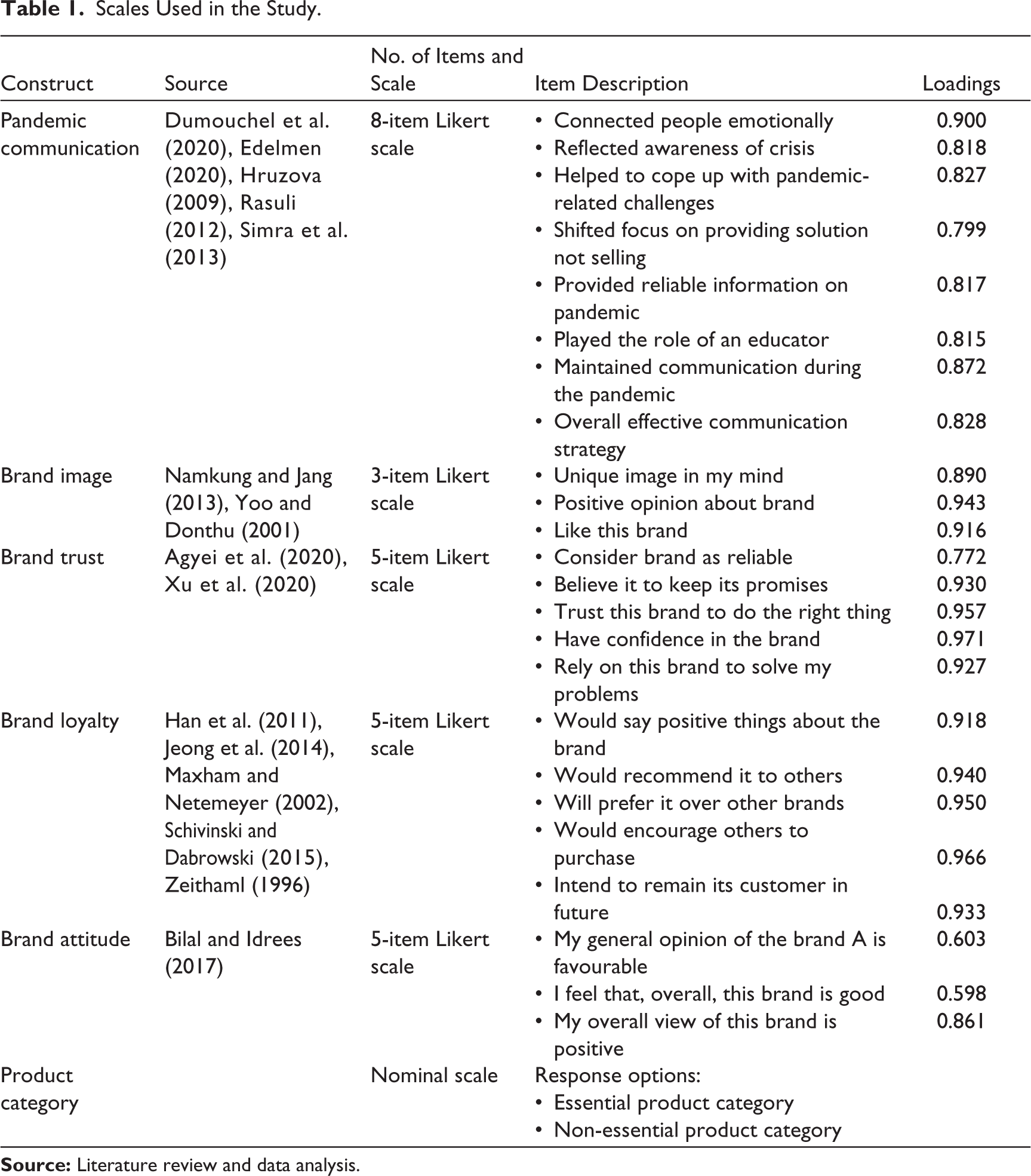
Some of the statements were worded negatively so as to reduce the chances of response bias occurring due to the 5-point Likert scale used for quantifying respondents’ agreement. Repeated reminders and request messages helped in collecting a total data set of 240 responses, majority of which were provided by married (76%) 21–40 years of age (73.3%), and in-service (61%) males (63%) belonging to the upper-middle-income segment (8%). The data were analysed through the technique of structural equation modelling (SEM) in AMOS 20.0 software package.
Analysis and Findings
Examination of Reliability and Validity
To test the validity and consistency of measures, confirmatory factor analysis (CFA) in AMOS 20.0 was conducted. The results are presented in Table 2. Overall, the fitness indices within the acceptable range support a good model fit. Cronbach’s alpha values and composite reliability scores exceeding 0.70 for all the measures confirm internal consistency of scale items (Fornell & Larcker, 1981; Nunnally & Bernstein, 1994) and establish reliability of the data set.
Reliability and Validity Estimates in CFA
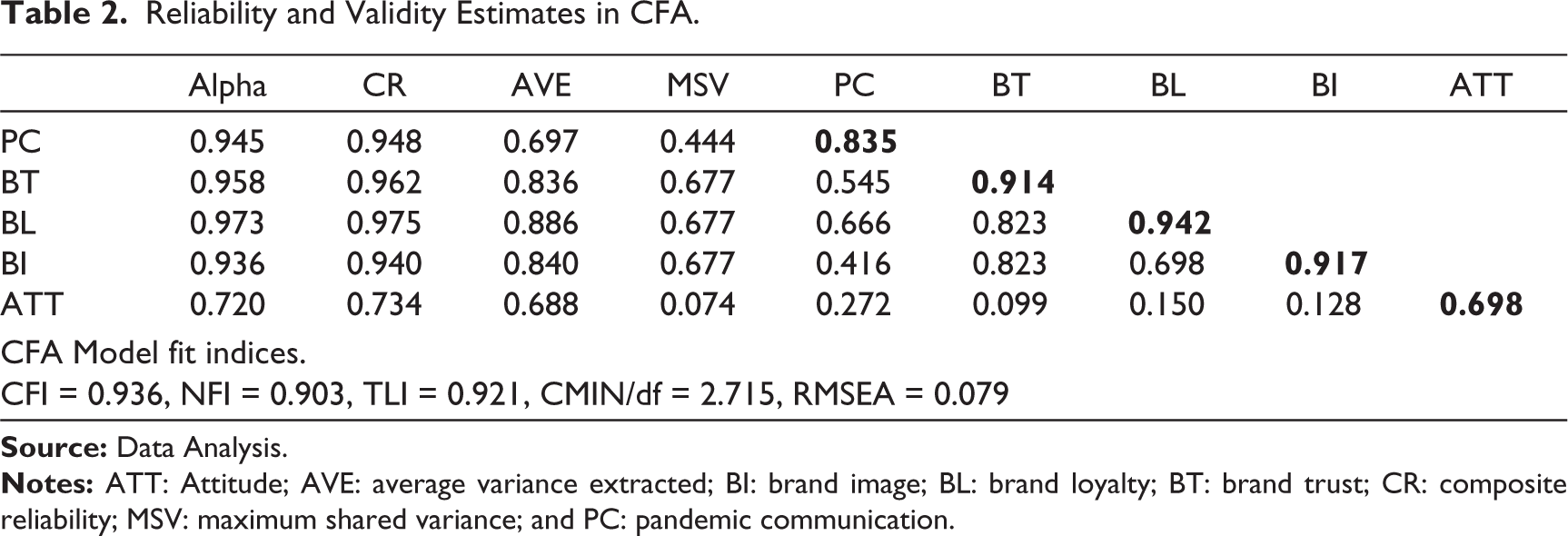
Furthermore, the standardised loadings above 0.70, average variance extracted (AVE) >0.50 and AVE between the two constructs higher than the squared correlation between the pair of constructs in all the cases support the presence of both convergent and discriminant validity.
Testing of Direct Linkages: The Structural Model
The direct linkage between pandemic communication and brand-specific outcomes was analysed through the structural model (see Figure 1). The overall fit measures (CFI = 0.943, GFI = 0.829, AGFI = 0.776, NFI = 0.918, TLI = 0.932, CMIN/df = 3.046, RMSEA = 0.093) within the acceptable range represent a reasonable fit to the data for the hypothesised causal model.
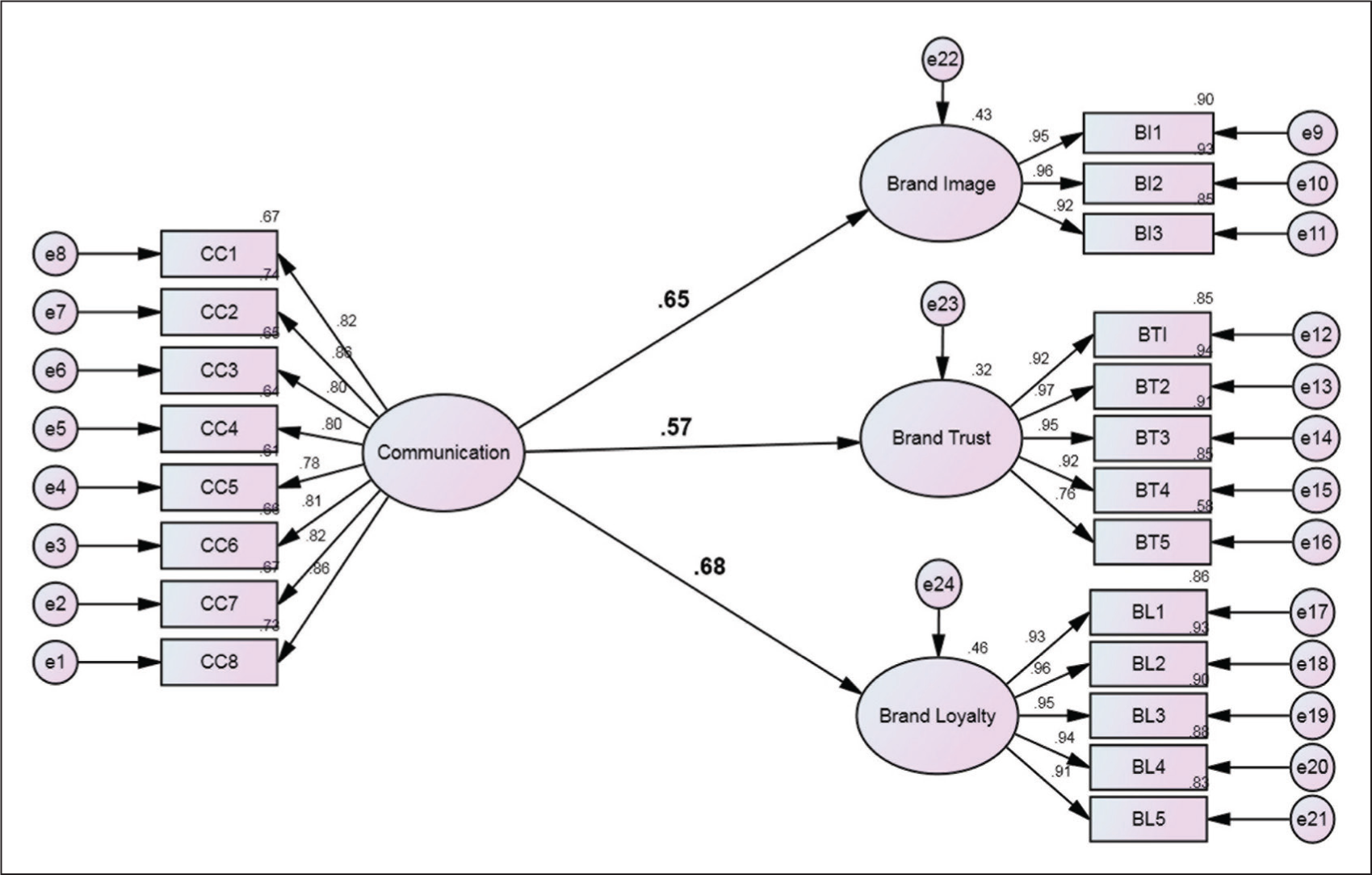
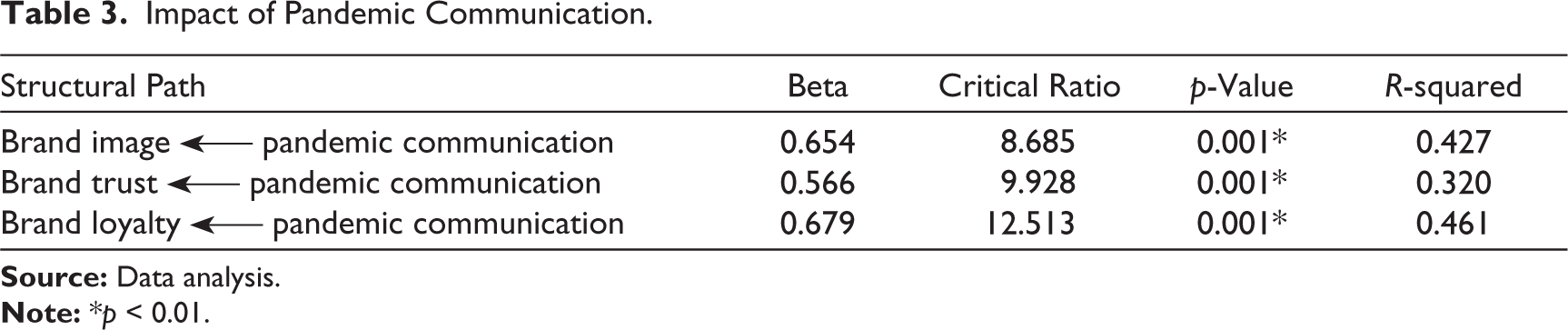
The results of hypotheses testing (provided in Table 3) indicate significant influence of pandemic-induced brand communication on all three brand-specific outcomes, namely brand image, brand trust and brand loyalty. Furthermore, this influence is found to be strongest on brand loyalty (β = 0.68, p < 0.01), followed by brand image (β = 0.65, p < 0.01) and then brand trust (β = 0.57, p < 0.01). Accordingly, pandemic communication explains maximum variation (R-squared = 46%) in brand loyalty. In all, the results lend support to the acceptance of H1, H2 and H3 in confirming the strong and positive influence of pandemic communication on brand-specific outcomes.
Impact of Pandemic Communication
Testing of Indirect Linkages: Moderation Analysis
In the next stage, the study proceeds to examine the two moderators, namely brand attitude and product category, in affecting the above-established direct linkages. The moderation analysis was conducted in AMOS.
For examining the role of brand attitude, an interaction variable (int) as a product of pandemic communication and brand attitude was created. The moderation effect of the moderator variable is presented in Figure 2.
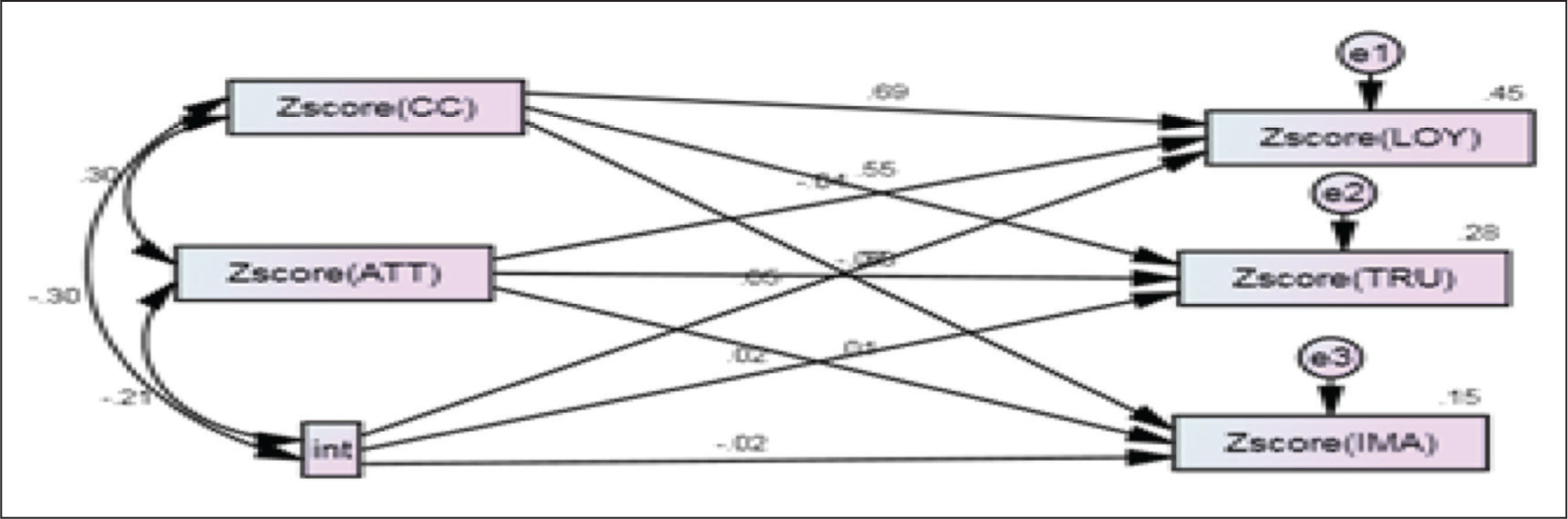
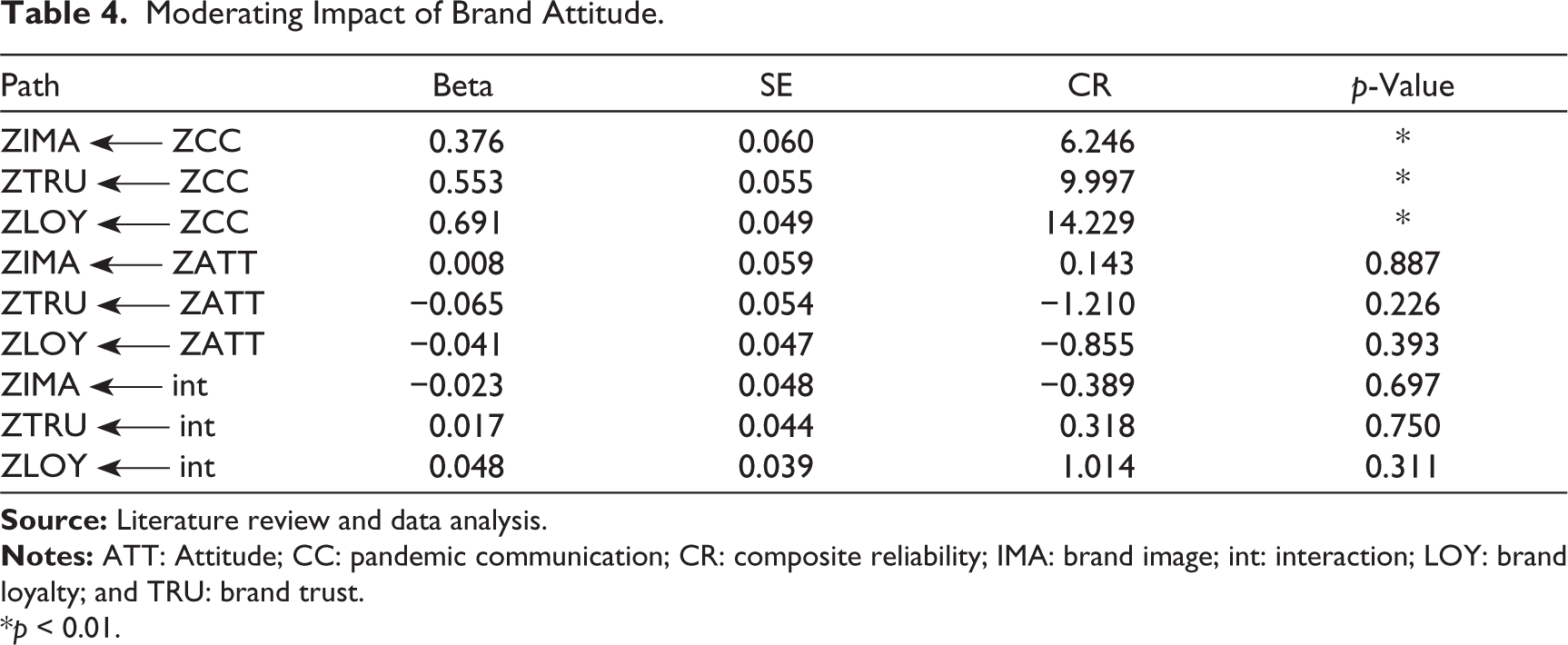
Significant beta values for the relationship between interaction variable—dependent variable and insignificant beta value for the relationship between moderator variable—dependent variable signifies the presence of moderating impact (Awang, 2020). As the results in Table 4 do not satisfy the above-mentioned condition, the moderating role of brand attitude is not supported for any of the three linkages between pandemic communication and brand-specific outcomes (image, trust and loyalty) in the present work. Hence, the study rejects H4.
Moderating Impact of Brand Attitude
*p < 0.01.
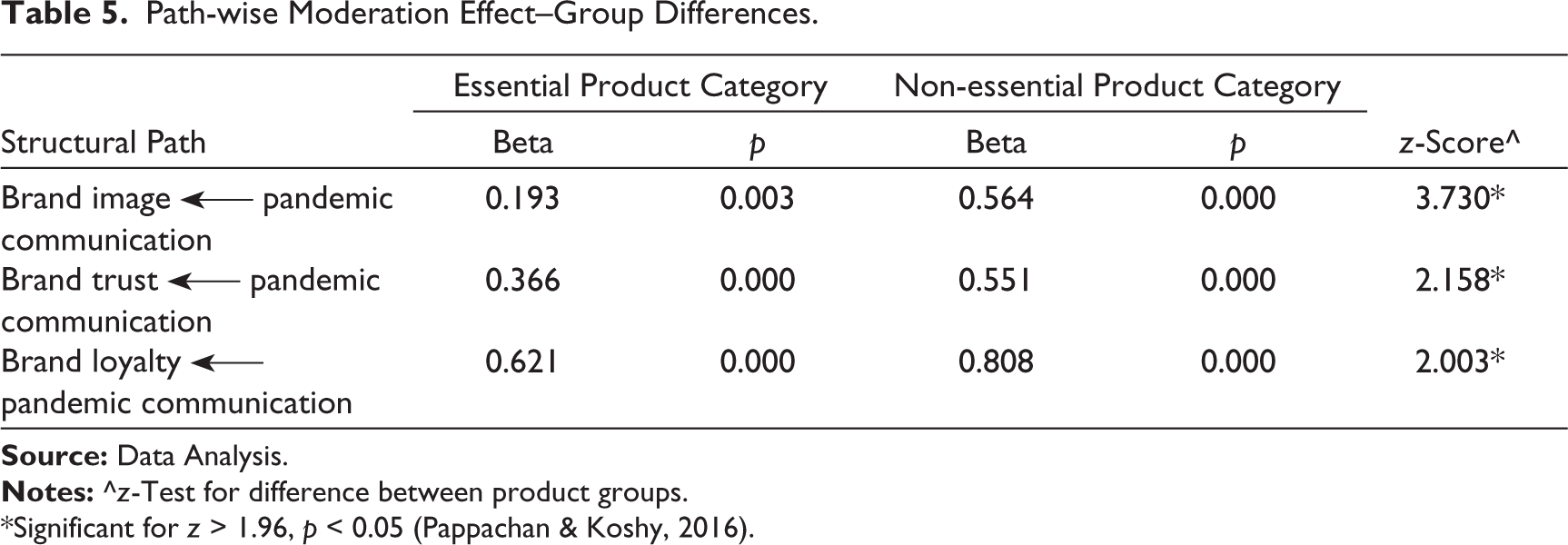
To assess the indirect influence of product category on the linkage between pandemic communication and brand-specific outcomes, multi-group analysis was performed. The purpose was to determine the difference in hypothesised relationships based on the value of the moderator (i.e., product category). For this, the product category was set as two different groups, namely ‘essential’ and ‘non-essential’. The models for both the groups were assessed separately. The results in Table 5 show group differences to be significant (Z > 1.96, p < .05) for all three brand outcomes. In other words, the path in Model 1 (essential product category) is found to be statistically and significantly different from the path in Model 2 (non-essential product category), implying that there is variation in the effect of pandemic communication on the three brand-specific outcomes due to the moderation effect of product category. This interactive influence of product category is also found to be stronger with respect to non-essential product category and maximum for brand loyalty in both the product groups. In sum, the results provide justification for the acceptance of H5.
Path-wise Moderation Effect–Group Differences
*Significant for z > 1.96, p < 0.05 (Pappachan & Koshy, 2016).
Discussion and Practical Implications
To begin with, the study results support a strong impact of pandemic-induced communication on all three brand outcomes, thus indicating that continuing to communicate with the target market will strengthen brand–customer relationship during this challenging time. Accordingly, it is suggested that brands perceive the COVID-19 crisis as an opportunity and introduce necessary changes in their communication strategy to enhance visibility and consumers’ confidence. More specifically, the companies need to realign and adopt the so-called crisis-specific communication strategies to maintain a favourable position in customers’ mind as well as gain a competitive edge in the market.
The findings of the present work are in conformity with the results and views expressed by some of the recent studies concerning the pandemic in suggesting the positive impact of pandemic communication on consumers and their relationship with brands. On the basis of the study results and support of the findings of previous studies, the present article provides some useful suggestions for brands.
First, it is recommended that brands deliver better by designing their message around new core values of safety, reliability, care, health and comfort with due focus on driving affordability, awareness and positivity so as to simplify the lives of the customers and gain their trust. The effectiveness of communication campaigns during the COVID-19 pandemic in bringing about desired behaviour is supported by the findings of the study by Paek and Hove (2021) who have found the strong persuasive impact of descriptive norm messages in influencing public health behaviour in South Korea. Through these messages, people were encouraged to participate in and comply with COVID-19 preventive measures such as testing, mask wearing, hand sanitising and social distancing.
Second, the effect of the pandemic on the global economy and the resultant change in habits, attitudes and behaviour of consumers may make it difficult for the brands to increase revenue or maintain their market share like in the past. It is, therefore, required that brands modify their strategies to respond, reset and renew more strongly in the future. For instance, it would be more appropriate for brands to adapt their marketing communication and shift focus from global to local and specific needs. As consumers expect reassurance and positivity from brands during crisis, building reputation/image is more important in comparison to setting out winning campaigns.
Third, the COVID-19 pandemic has exerted an impact on people both economically and psychologically. By demonstrating empathy and developing emotional closeness with the customers by using a reassuring tone, brands can reflect their understanding of the challenges that consumers are grappling with, thereby building closeness, strengthening connections and offering a positive perspective to customers. Similar findings have been reported by Arief and Pangestu (2021) in confirming that empathetic communication triggers positive consumer responses, helps in reputation protection and branding, and serves as a solution in case of a communication crisis experienced by the company in the future.
Fourth, it is important that brands connect with their customers both digitally and through conventional media to increase the ‘share of mind’. While the former can serve as an important source of communication, the latter may be used to inform consumers of the evolution of the situation and stay relevant. This is in conformity with the findings of the study by Torres et al. (2021) in showing the effectiveness of supplementing digital media with traditional ways to provide relevant data and information to families to satisfy their concerns and misconceptions about economic stability, good health and children’s learning and development during the COVID-19 pandemic.
Unlike the case with brand attitude, the results reveal significant moderating role of product category (essential and non-essential) in affecting all brand communication–brand outcome linkages examined in the current study, with a higher influence on loyalty non-essential product category. In light of this interesting finding, brands in the non-essential group can easily benefit from their crisis-aligned communication strategies. It is advised that non-essential brands look at pandemic communication from the perspective of making an investment that can yield loyalty benefits and better image as returns in future. Instead of withdrawing or reducing marketing communication expenditure, these brands can use the ongoing crisis as an opening to provide useful and engaging brand experience that can not only avert the threat of customers disengaging with a brand in the current scenario but would also help them to position themselves in consumers’ life post the COVID-19 pandemic.
Conclusion
The present study contributes to the existing literature pertaining to marketing communication by examining the influence of pandemic communication on three brand-specific outcomes (namely image, trust and loyalty). The article provides interesting insights and practical suggestions for brands to sustain and remain competitive during this period of disturbed equilibrium.
With respect to the moderating role of brand attitude and product category examined in the study, the findings yield further interesting insights. Since both direct and indirect linkages of brand attitude could not be established in the present study, it was clear that consumers’ brand-specific response was directly governed by the effectiveness of a brand’s communication in a crisis-induced situation at a larger level (like the one presented by the COVID-19 pandemic) and not by the predisposition (favourable or unfavourable) about the brand, thus making it all the more necessary and challenging for the companies to devise and monitor their marketing communication in line with the requirements of turbulent environment and changed expectations of consumers. Furthermore, communication designed during such challenging period can result in a complete change in consumers’ attitude towards the brand and provides a chance to the brand to connect with its consumers in a positive way.
Limitations and Future Research Directions
As no research is perfect in all respects, the same is true for the current study too. The researchers in future can improve and add value to the topic by testing the research framework on a larger and more varied sample. The inclusion and examination of the role and linkages of some more cognitive and affective brand constructs (such as brand awareness, brand preference, brand love) would make the research framework more holistic. Finally, the study has investigated the moderating impact of unevenly distributed categories of product groups that could have resulted in under- or overestimation of the influence being exerted. It would be worthwhile for future studies to assess the impact of varied product classifications (low and high involvement) with a more balanced proportion of groups.
Footnotes
Declaration of Conflicting Interests
The authors declared no potential conflicts of interest with respect to the research, authorship and/or publication of this article.
Funding
The authors received no financial support for the research, authorship and/or publication of this article.