




Abstract
This paper has three major objectives: (1) to analyse whether the gender of politicians in India is relevant to the educational achievements of the residents of the districts in which they were elected; (2) to test whether politicians are more sensitive to the needs of the people of same gender and (3) to explore the potential channels through which the above relationships operate. By applying econometric techniques to a dataset obtained by merging individual with district-level political data, we concluded that an increase by 10 percentage points in women’s political representation produces an increase by 6 percentage points in the probability of children completing primary school. We then found gender-differentiated results: women’s political representation affects significantly more girls’ than boys’ education. This relationship works partly through the improvement of women’s access to educational programmes like the Mid-Day Meal scheme, while an increase in school infrastructures does not appear to be an important mediating factor. While an in-depth understanding of the pathways through which women’s representation in politics impacts on children’s education is hindered by data constraints, our findings seem to point to the importance of the ‘role model’ effect.
Introduction
During the past two decades, a growing body of literature has investigated the effects of women’s political representation on a range of economic, political and social indicators. These studies have focused on high-income countries, as well as middle- and low-income countries (Panday, 2008; Powley, 2006). The empirical evidence has been drawn mostly from countries that have set more or less explicit gender quotas in national or sub-national assemblies or administrations.
In the literature on political economy, the ‘citizen–candidate model’ views the identity of politicians as one of the fundamental determinants of investment choices (Osborne & Silvinsky, 1996). Building on these models, scholars have investigated the specific role of politicians’ gender in policy-making (e.g. Bardhan, Mookherjee, & Torrado, 2010; Chattopadhyay & Duflo, 2004). Men and women are assumed to have different preferences, and make different choices once they obtain important political responsibilities.
This paper looks at the relationship between female political representation and educational achievements in India. One important reason for focusing on India is the fact that the Indian parliament is currently debating the possibility of reserving a proportion of state assembly seats for women. While most of the existing literature focus on the lowest administrative level, that is, the Gram panchayat, 1 or on the state level, our analysis looks at the relationship in state assembly constituencies. State assembly constituency politics has not been examined in great detail till date. Given the lack of data on educational outcomes, we cannot undertake a constituency-level analysis, but need to aggregate information at the district level.
This paper seeks to answer three questions. To start with (a) does women’s political representation have a positive effect on primary education completion rates? Our aim is to test whether women pay more attention to education and try to divert more resources to this sector. If correct, this should be reflected in higher school completion rates. This issue has received limited attention to date: to the best of our knowledge, only one paper (Clots-Figueras, 2012) has studied this relationship in India.
The other two research questions are (b) does women’s political representation affect more girls’ than boys’ probability to attain primary education? This helps to shed light on whether female politicians appear to pay more attention to the education of girls and (c) what are the possible channels through which women’s political representation affects educational achievements? Given data constraints, we focus on a few possible channels, such as the availability of schools—already examined, for example, by Clots-Figueras (2012)—and the coverage of the Mid-Day Meal (MDM) scheme, which has not been explored in the literature. The MDM scheme is a very large school feeding programme that has boosted primary school attendance (Afridi, 2011; Drèze & Goyal, 2003), especially among girls. The main hypothesis is that female politicians pay more attention to this welfare programme than male politicians, thus improving educational attainment through this particular channel. However, in case of positive pro-female effects, another possibility is the existence of a role model effect: girls’ educational aspirations and, as a consequence, educational outcomes can increase as a result of observing women vested with important responsibilities in society. Unfortunately, we cannot directly test this hypothesis empirically.
In order to answer these three questions, we constructed a complex database. Following the previous work of Clots-Figueras (2012), we combined individual data from a nationally representative survey conducted by the National Sample Survey Office (NSSO) with constituency-level information from the Election Commission of India, which was aggregated at district level. For this district-level dataset, we extended Clots-Figueras’ database: while she uses data for the 1970–1992 period, our information covers the 1970–2003 period. The household-level data come from the 68th NSSO survey (2011–2012), while Clots-Figueras (2012) used the 55th NSSO survey (1999–2000).
In order to overcome a major ‘omitted variables’ bias, reflecting that more progressive districts are more likely to have higher female representation in political bodies and to invest more in education, our econometric strategy is based on an instrumental variable (IV) approach. Thus, the proportion of district seats won by women was instrumented by the share of district constituencies won by women in close male–female contests, that is, in elections where there was a narrow gap between the winner and the runner-up.
The paper is divided into six sections. Section 2 presents evidence of the relationship between women’s political representation and development in India. Section 3 concentrates on the political economy of education and illustrates the conceptual framework. The data and variables are presented in Section 4. Section 5 sets out the results of the quantitative analyses. Finally, the concluding remarks and policy recommendations are presented in Section 6.
Women’s Representation in Politics, Policy-making and Development Outcomes
This section reviews the empirical evidence of the multiple effects of female political roles—as members of both executive bodies and legislative assemblies—at different levels in India, that is, state, district and local. Most studies concentrate on the lowest administrative level, the gram panchayat (GP) because the 73rd Amendment of the Indian Constitution (1992) stipulates that one-third of the seats in local councils and one-third of local leaders’ posts (known as pradhan or sarpanch, depending on the state) in rural areas must be reserved for women. The decision on which GP is to be reserved for women is ‘random’, that is, independent of any village-specific characteristics. In particular, this means that women are also elected in villages with a female-hostile electorate. This allows a straight comparison to be made in terms of development inputs and outcomes between ‘reserved’ and ‘unreserved’ villages, allowing the differences to be attributed to the political leader’s gender. For this reason, many scholars have taken advantage of this important natural experiment.
While our paper is ultimately interested in educational outcomes, the following sub-sections also focus on other dependent variables, which can help understand the channels through which women’s political representation may affect education and because, more generally, they could shed light on whether politicians are more sensitive to the needs of people of their own gender. The reviewed studies are categorized into two groups: (1) those looking at the influence of women’s political representation on ‘input’ indicators, that is, investment choices, use of budgets and management of welfare programmes and (2) those analysing the impact of women’s political representation on multiple development ‘outcomes’ (Burchi & De Muro, 2016).
Women’s Political Representation and Policy-making
Provision of Public Goods
In an influential study covering West Bengal and Rajasthan, Chattopadhyay and Duflo (2004, p. 1431) concluded that ‘there are significantly more investments in drinking water in GPs reserved for women’. Moreover, reserved villages were found to invest less in public goods more of interest for men, for example, roads in Rajasthan. Controlling for a variety of pradhan characteristics, Chattopadhyay and Duflo (2004) conclude that gender explains the differences in public goods provision. In line with Chattopadhyay and Duflo (2004), Beaman, Duflo, Pande, and Topalova (2010) found that female leaders invested more in drinking water facilities and that the overall quantity of public goods was significantly higher in reserved villages, while the quality of public goods was higher, though not statistically significantly, in reserved villages. A study in the state of Karnataka produced contrary results: the quality of rural services appeared to be better in male-led villages (Raabe et al., 2009).
Deininger, Jin, Nagarajan, and Xia (2015) used survey data for 233 villages, to test for differences between reserved and unreserved villages in the quality of public goods delivered, as measured by self-reported data. Their findings differed somewhat from those of other scholars, as they reported reservation as having an adverse effect on the quality of public goods. However, an in-depth analysis, which accounted for other characteristics of the leader, showed that the main factor is the leader’s lack of experience (rather than gender).
Using state panel data for 1967–2001, Clots-Figueras (2011) focused on women’s representation in state assemblies, educational public goods and health-related public goods. Her empirical study showed that female political representation is positively associated with the number of schools (particularly primary schools) and with several health inputs.
Expenditures
The gender of political leaders and legislators does not appear to have any relevant effect on the use made of budgets. The study by Raabe, Sekher, and Birner (2009) in Karnataka showed that there was no substantial difference in the use made of GPs’ own resources: health and education are priorities in both reserved and unreserved villages. Similar results were obtained by Rajaraman and Gupta (2012) in four Indian states. Their study suggested that the gender of the sarpanch does not affect the likelihood of funds being spent on water, traditionally a more female-sensitive sector. In line with the above papers, Clots-Figueras (2011) showed that the proportion of female politicians in state assemblies does not affect budget allocation, either at aggregate level or in sectors such as health and education.
Corruption
A study by Bardhan, Mookherjee, and Torrado (2008) found contradictory evidence of the impact of political reservation on the targeting of anti-poverty interventions: depending on the specific intervention, targeting was better, worse or not significantly different in reserved villages compared to non-reserved ones. Using data from the same Indian villages, but based on survey data rather than administrative data, Bardhan et al. (2010) still did not find any evidence of better targeting in reserved villages. In a comprehensive study in Andhra Pradesh, Afridi, Iversen, and Sharan (2017) initially found that the presence of female pradhans increased corruption in the management of the National Rural Employment Guarantee scheme. When the leader’s other characteristics were factored into econometric models, however, it became clear that the problem is female leaders’ lack of experience rather than their gender. However, Beaman et al. (2010) found that fewer bribes were paid in reserved councils.
Development Outputs and Outcomes
Health
Dongre (2010) identified a negative and statistically significant relationship between women’s reservation and the prevalence of diarrhoea in Andhra Pradesh. There is also some evidence of a positive effect of women’s political representation on many health-seeking behaviours and health conditions (Bhalotra & Clots-Figueras, 2014).
Education
To the best of our knowledge, no study has looked at the effects of female reservation in Indian GPs—whether as local leaders or as council members—on educational outcome indicators, such as school completion rates or children’s learning. Only a study by Binswanger-Mkhize, Nagarajan, and Singh (2012) examined the impact of women’s reservation on access to primary education, finding a positive relationship.
On the other hand, Clots-Figueras (2012) investigated whether the educational level of district residents is a function of women’s political representation immediately before they enrolled at primary school. She found empirical evidence of a strong and positive relationship in urban areas, but not significant in rural areas. The author’s interpretation was that women assigned greater value to education in urban areas because of the higher expected returns.
Participation in Political Life and Women’s Empowerment
Several studies have investigated whether female reservation enhances women’s ability to take part in political life, broadly speaking. Most papers found empirical evidence that female leaders had a positive effect on attendance of village meetings, with special reference to women (Beaman et al., 2010; Chattopadhyay & Duflo, 2004), and even on active political participation (Deininger et al., 2015). However, Raabe et al. (2009) found male attendance to be slightly higher in reserved GPs, while female attendance was very low in both types of village. Finally, some studies conducted in southern states concluded that reservation did not affect the likelihood of village meetings being held or the probability of people attending them (Ban & Rao, 2008; Besley, Pande, & Rao, 2005).
The Political Economy of Education
Most of the above papers also sought to test the validity of two alternative political economy models, namely the Downsian model (Downs, 1957) and the citizen–candidate model. The first type of model assumes that, once elected, leaders commit to the policies that favour the median voter. In other words, the identity of the political leader is assumed not to play a role. By contrast, the citizen–candidate models (Besley & Coate, 1997; Osborne & Silvinsky, 1996) assume that political leaders will not simply comply with the wishes of the median voter: therefore, these models acknowledge that the identity of political leaders affects policy-making. Gender is regarded as a fundamental component of a leader’s identity: thus, female leaders will make policies that favour women and what women care about.
The present paper joins the literature on the effects of women’s political representation, placing the emphasis on basic education. Education enhances employability and income, and it is a key driver of health, nutrition and participation in public life (Sen, 1999). Moreover, the educational system in India faces a variety of important challenges. While overall educational performance is gradually improving and does not place India in the lowest group, there are deep inequalities across people, between men and women, and between social groups (Crespo-Cuaresma, Samir, & Saure, 2012).
Current studies on India do not provide robust evidence of the role played by women’s political representation in the educational sector. One study in Rajasthan, for example, shows that in villages headed by female politicians the village meetings do not dedicate more attention to education (Bonu, Rani, Peters, & Baker, 2011). Higher female political representation seems to correlate positively with input indicators related to the quality of educational services.
However, none of the studies on India has actually examined whether women’s representation in turn affects educational outcomes such as school completion rates or learning abilities. The only exceptions are the studies by Clots-Figueras (2012) and Beaman et al. (2012), which point, respectively, to a significant relationship only in urban areas and only for girls.
Many previous studies tried to exploit the randomization of the reservation of GP seats for women to identify differences in policy-making and outcomes. However, there are two main limitations in the studies focusing on this administrative level: (a) in practice, some states allocate very limited funds and responsibilities to panchayats (Planning Commission of India, 2011) and (b) reservation creates a strong selection bias as women leaders have less political experience and lower education: only a small number of papers published to date use reliable data that take account of these factors.
This paper, instead, focuses on the state assembly constituencies, which are the level just below the district. In state assembly elections, there is no reservation policy for women. The elected representative of the state assembly constituency is called the member of legislative assembly (MLA). MLAs have a legislative role in the state assembly, but are also the second most powerful politician in the assembly constituency after the member of parliament (MP). The study by Jensenius and Suryanarayan (2015) finds that MLA’s time allocation in legislative activities has declined. In contrast, their activities at the level of constituency have increased significantly. MLAs play an active role addressing their constituency-related matters by making requests to bureaucrats or cabinet ministers on behalf of the constituency (Asher & Novasad, 2017). Overall, they have a significant degree of control over federally appointed bureaucrats (Iyer & Mani, 2012). Given that the provision of several public services in India is administrated at district level (Betancourt & Gleason, 2000), MLAs often write to senior district officials in order to improve the quality of these services in their constituency. For example, education, which is predominantly under the responsibility of the State governments, is monitored and administrated at district level through the district education office. Therefore, MLAs’ political power plays a vital role in improving the educational outcomes of people living in their constituency.
In this paper, we analyse the effect of women’s political representation on the probability of children completing primary education. We cannot fully run this analysis at constituency level because we do not have individual data on educational variables for this administrative level (see Section 4). Thus, we rely on information aggregated at district level. In particular, the information on election results is taken from the constituencies’ registries and then aggregated at the district level. Exploring this relationship at district level, though not ideal, is still a valid option because MLA’s immediate action to promote educational outcomes in their constituency will work through interactions with the district education officials. Therefore, the impact is likely to go beyond the constituency, influencing the overall district. However, if the district education officials treat constituencies differently depending on the pressure of MLAs, this may lead to intra-district disparities in education. In this case, our estimated coefficients would be biased.
In this paper, we also investigate whether the effect of women’s political representation on education is gender-differentiated. In case of a positive, gender-neutral effect, we then verify possible channels that mediate this relationship. Due to several data constraints, we could explore only two main channels, that is, the presence of school buildings and the coverage of the MDM. The latter is the world’s largest school meals programme and has a twofold objective: raising school attendance and improving the nutrition of primary school children. A series of studies has already demonstrated that this programme has a positive effect on school attendance and completion (Drèze & Goyal, 2003; Singh, Park, & Dercon, 2014). However, there is high heterogeneity in the management and implementation of this scheme throughout India. Several challenges were encountered in implementing the MDM in the schools, such as poor nutritional contents of the meal, contaminated food and the lack of proper kitchens, store rooms and access to clean water supply in the school, which negatively affected the quality of the meals provided (Sahai, 2014). On behalf of their constituency, MLAs have the political power to ensure a better functioning of welfare programmes, such as the MDM.
We consider politicians’ gender to be an important aspect, together with other identity-related factors such as membership of a caste, religious group or party. Our hypothesis is that women attach a higher value to education (and primary education in particular) than men do. In consequence, districts with more female MLAs will tend to invest more in this sector and pay more attention to programmes like the MDM.
While the vast majority of the empirical studies reviewed in Section 2 does not explain why it is expected that women in general—and in particular female politicians—care more than men about certain sectors, we argue explicitly that this is due to the ‘social’ positioning of women. 2 Women in India lead very different lives from men. As the main carers of children, they know better and care more about children’s well-being (including their education). Empirical studies in India, based on both quantitative and qualitative information, support the idea that female politicians care more about education than male politicians (Jayal, 2006: Raabe et al., 2009; Singh & Pundir, 2002). 3 As the nature of these differences is contextual and dependent on social norms, this assumption may easily not work in contexts other than India.
Finally, factors other than a commitment to and investment in education may affect the intensity and even the direction of the relationship between women’s political representation and education. Good examples would be women’s capacity to implement adequate educational policies and their effective ability to express themselves in a district’s political environment dominated by men. The former is a serious problem in many GPs, as reservation has often brought inexperienced women to power in female-reserved villages. In our case, women compete fully in state elections, and there is no a priori reason to expect a substantial gender difference in the ability to implement educational programmes.
In case of a positive effect of women’s political representation on school completion only among girls, there are two main possible explanations. The first is that, again for social reasons, female politicians really make the interests of other women/girls: as they are often marginalized themselves, they might care more about education as a tool for emancipation for the vulnerable groups, such as other women, girls and members of underprivileged castes. It is, however, difficult to test it. In general, an improvement of the management of the MDM could be a mediating channel since the studies of Afridi (2011) and Singh and Gupta (2015) show that this welfare programme has a significantly larger impact on girls’ education. We also disaggregate the information on the coverage of MDM by gender to verify whether there is a pro-female bias in the coverage of the programme in districts characterized by more women in politics.
A second explanation is the presence of role model effects: female politicians may not differ from male politicians with regard to the policy-making, but the simple fact that girls see women in important political positions may increase their ambitions and push them to stay longer in school. The presence of this role model effects has been already found in other studies in India (Beaman, Duflo, Pande, & Topalova, 2012). In order to verify this hypothesis, we would need, for example, data on girls’ educational aspirations, which unfortunately are missing.
Data and Methods
Dataset
This paper combines data from two main sources. The first is the 2011–2012 NSSO Survey on employment and unemployment conducted by the Indian Ministry of Statistics. This nationally representative household survey contains socio-demographic information, including a section on education. We restricted our sample to individuals aged 14 or older, assuming that it would be ‘normal’ to have completed primary school by that age. Children are supposed to start primary school at the age of 6 years. Depending on the state, primary education lasts for either 4 or 5 years. Accounting for some late starts and resits (lasting 1 or 2 years), we decided to set the threshold at the age of 14 years.
The second source is the database of political variables provided by Clots-Figueras (2012). 4 The author collected extensive information on election results in each constituency, from the statistical reports published by the Election Commissions of India for the 16 biggest states. Elections are held regularly in each constituency, resulting in one of the candidates winning the corresponding seat in the state assembly. These data were aggregated to create district-level indicators, such as the proportion of district seats won by women. Since Clots-Figueras’ database only covers the 1967–2001 period, we extended it to the years 2002 and 2003, years in which six states held elections. 5
We then merged the datasets using two identifiers, that is, the district code 6 and the year in which the individual started primary education, that is, when he or she was 6 years old. Our unit of analysis is therefore the individual. His or her characteristics are linked to the political information for the district in which he/she lived at the age of 6 years. 7 In this way, we can see whether district-level political factors influence (with some lags) the likelihood that children who have supposedly just started first grade will go on to complete their primary education. 8 Given this procedure for merging the two datasets and since the women’s political representation variables are constructed as a 3-year average (Section 4.2), our final dataset covers the period 1970–2003, while Clots-Figueras’ main analysis is based on data only for the period 1970–1992. 9 Focusing on these additional 11 years is very important because since 1993 many state governments introduced the ‘Discretionary Constituency Fund’ to incentivize the legislator to engage more in district-specific issues.
Finally, in order to explore potential channels through which the relationship between women’s political representation and educational outcomes operates, we merged the political database with three other small databases that we have constructed. The first database includes census data on the presence of schools in villages in the district in certain years, that is, 1971, 1981, 1991 and 2001. The second database is taken from the Centre for Monitoring Indian Economy (CMIE) and includes information on the number of schools per 100,000 inhabitants. This information has been collected every 5 years since 1980.
The third database contains data on the beneficiaries of the MDM scheme, aggregating individual-level data from NSSO—the Consumption and Expenditures surveys—at district level. Given that the programme was launched only in the second half of 1990s and data are available only from 1999, we decided to extend the analysis to the period after the one used for the main quantitative analysis. Precisely, our data cover the period between 1999 and 2011, with the exclusion of 2010 when no NSSO survey was conducted. This also implied extending the political dataset until 2011: for this purpose, we generated our indicators based on the database recently created by Bhavnani (2014). Although this analysis cannot specifically identify the relevance of this channel, it can definitely provide information on whether, more in general, women in politics pay more attention to the implementation of social and educational programmes like the MDM and eventually target more girls.
Variables
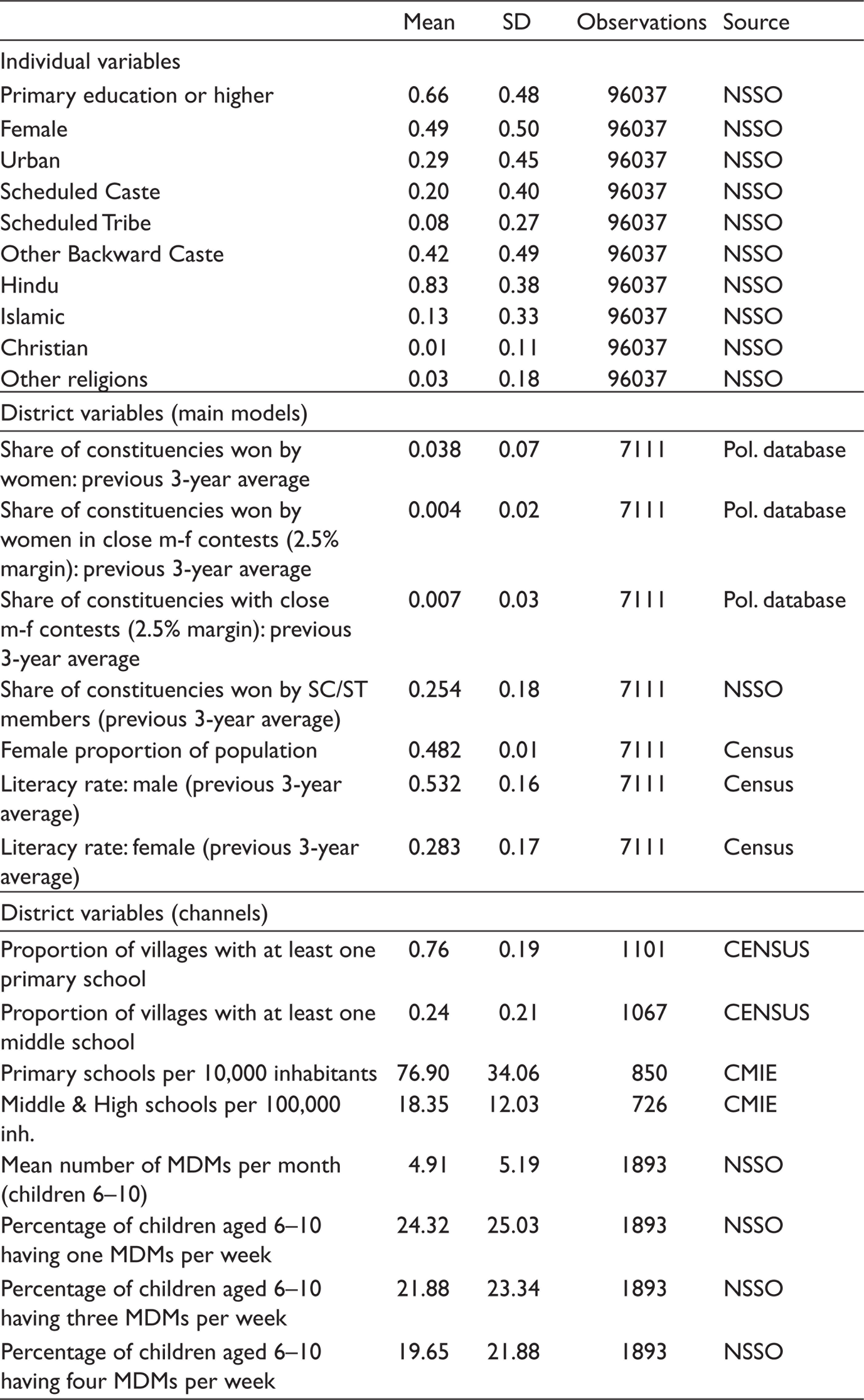
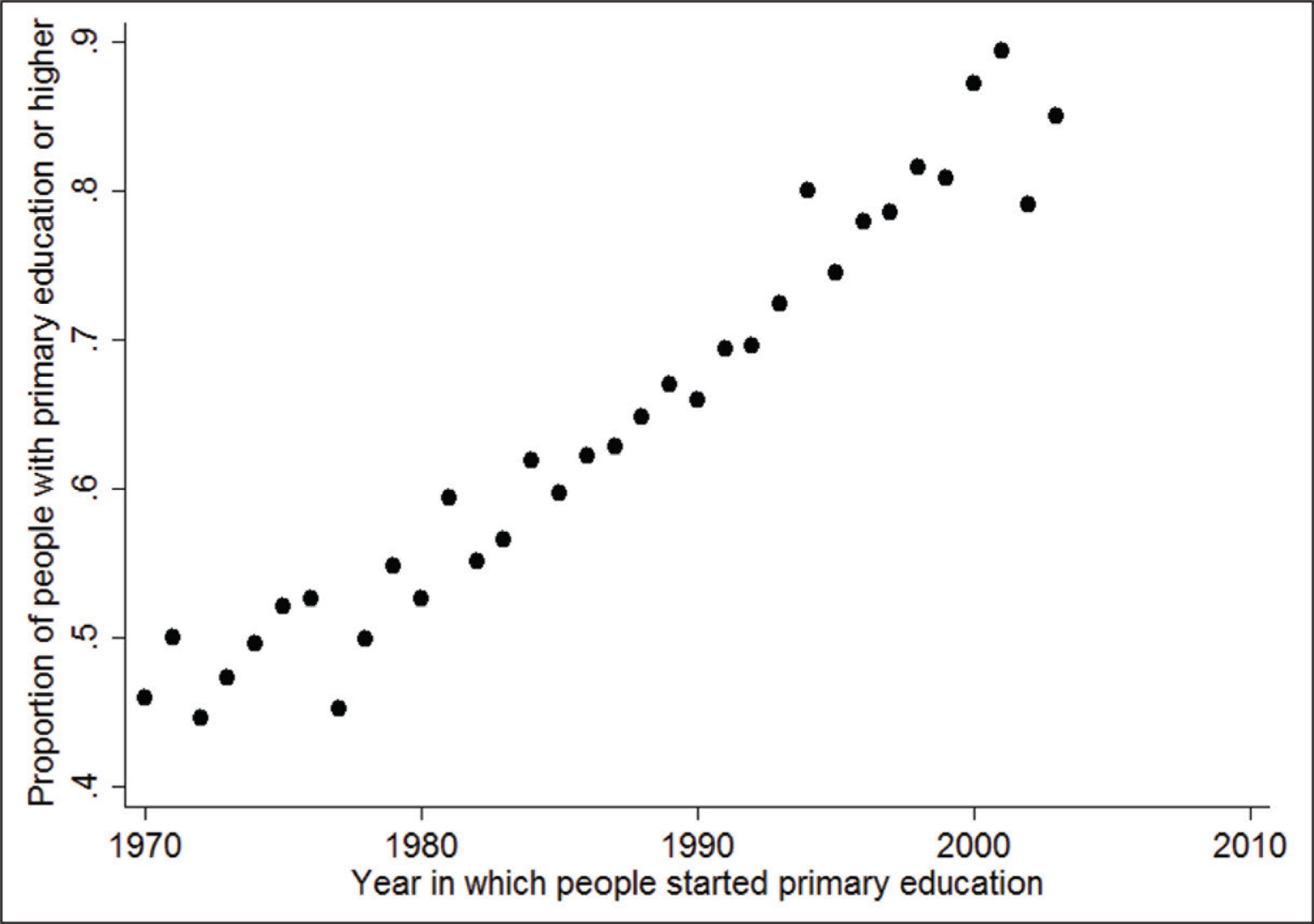
The dependent variable of the main specification is a dummy variable indicating whether the individual has completed primary education. Table 1 shows the descriptive statistics for all variables: although about 66 per cent of children have completed primary education, there is considerable variation in time and across districts. 10 There is a clear positive trend in primary school completion (Figure 1), which is in line with the aggregate figures reported by the Ministry of Education.
Other individual-level covariates include sex and religion, whether the individual lives in an urban or rural area, and whether he/she belongs to a Scheduled Caste (SC) or a Scheduled Tribe (ST) or to another officially recognized backward caste. 11
The central district-level variable is the female share of seats, calculated as a 3-year average. At a detailed level, we connect information on each individual’s completion of primary education with information on the political structure of the district in the 3 years before he/she started school. Our assumption is that the local political structure may affect educational achievements through investment choices, which means that it is a lagged effect. Moreover, using an average results in a more stable indicator. On average, women’s representation is very low, at nearly 4 per cent. The standard deviation is high, suggesting large differences across districts.
There could be other, time-variant district determinants of primary school completion. As these could also be gender-differentiated we controlled in particular for male and female literacy rates, in addition to the female proportion of the population. As Table 1 makes clear, the male literacy rate (53 per cent) is almost double the female literacy rate (28 per cent). These data are taken from the Indian census and have been interpolated for the period between two censuses. Moreover, there are other variables reflecting the district political environment, which may have substantial effects on educational outcomes. Among them, particularly important is the share of constituencies held by SC/ST members. Given that some constituencies were by law reserved to SC/ST members throughout the whole period analysed, mostly based on the SC/ST population share at district level, controlling for the share of constituencies held by SC/ST members allows indirectly to control for SC/ST district population share, too. This is because there are not many cases in which SC/ST candidates won in non-reserved constituencies. 12 Like for women’s representation, also SC/ST representation is measured with an average for the 3 years before an individual started primary school.
Descriptive Statistics
In order to analyse the channels through which women’s representation affects education, we used:
four variables relating to school buildings. We obtained data from the national census on the proportion of villages with one primary school and the proportion of villages with one middle school in the district. Data on the number of primary schools and the number of middle or higher schools per 100,000 inhabitants were obtained from the CMIE; four different indicators of MDM coverage, namely the mean number of free meals
13
taken by 6- to 10-year-old children
14
in school and the percentage of the latter taking at least one, three or four meals a week.
15
These figures were calculated by aggregating data from NSSO surveys at district level. Nearly 24 per cent of school-age children took at least one meal a week, with around 19 per cent taking four meals a week. However, the mean monthly number of meals is very low. This is because the scheme was not adopted in many districts, particularly during the first few years.
While the channels variables (a) have been used also in the study of Clots-Figueras (2012), the variables related to the MDM management have not been so far utilized in association with the district political variables. 16
Estimation Strategy
The correlation between district characteristics, the likely presence of female politicians and educational outcomes is the core concern of our main econometric analysis. More progressive districts are more likely to register high levels of female political representation and educational attainments at the same time, therefore generating an ‘omitted variables bias’.
In order to alleviate this bias, we examined the recent literature on electoral models and employed IV regression: the share of constituencies won by women in a district was instrumented by the share of constituencies won by women in close contests with men (Bhalotra & Clots-Figueras, 2014; Clots-Figueras, 2012; Lee, 2008). Close contests are defined as elections in which a man beats a woman (as the runner-up) or vice versa by a relatively small margin, set here as 2.5 per cent. 17 In these cases, the result of the election will depend more on random factors. In other words, a female victory in a close contest cannot be interpreted as an indicator of a female-friendly electorate.
However, the presence of a close male–female contest is not random. In accordance with the estimation strategy used in other studies focusing on Indian districts (Bhalotra & Clots-Figueras, 2014; Clots-Figueras, 2012) in both the first and second stages, we controlled for the existence of close male–female contests in the district. This approach was used for both the main analysis as well as for the analysis of the channels. The descriptive statistics of these two variables are reported in Table 1.
In all the models we used district-fixed effects to account for time-invariant district-specific factors. Year-fixed effects were used for year-specific unobservable factors. 18 As robustness check we also included state-specific linear time trends and district-specific linear time trends.
Findings
From Politics to Educational Outcomes
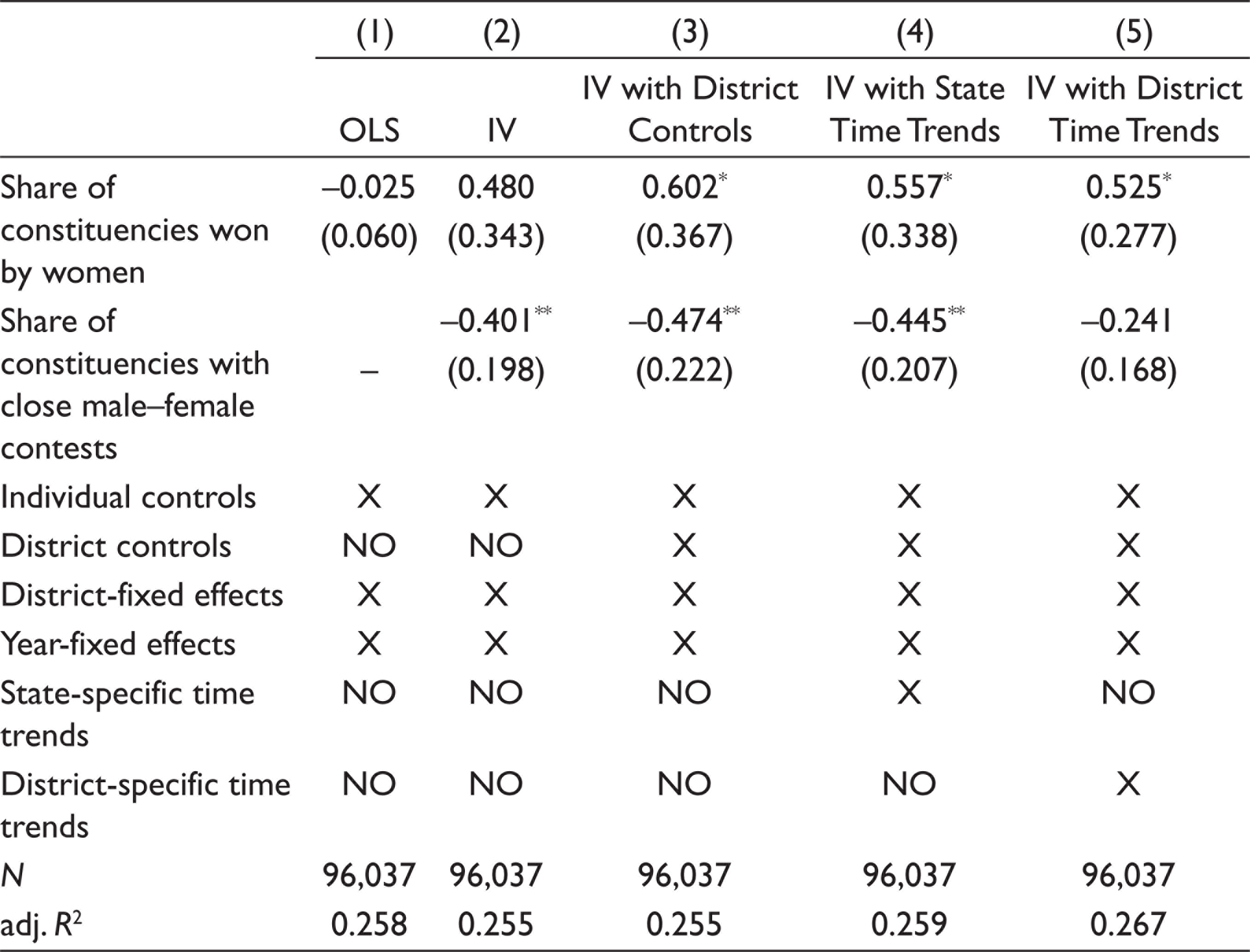
Is a larger proportion of female politicians associated with better educational performance? The results obtained from different models are shown in Table 2.
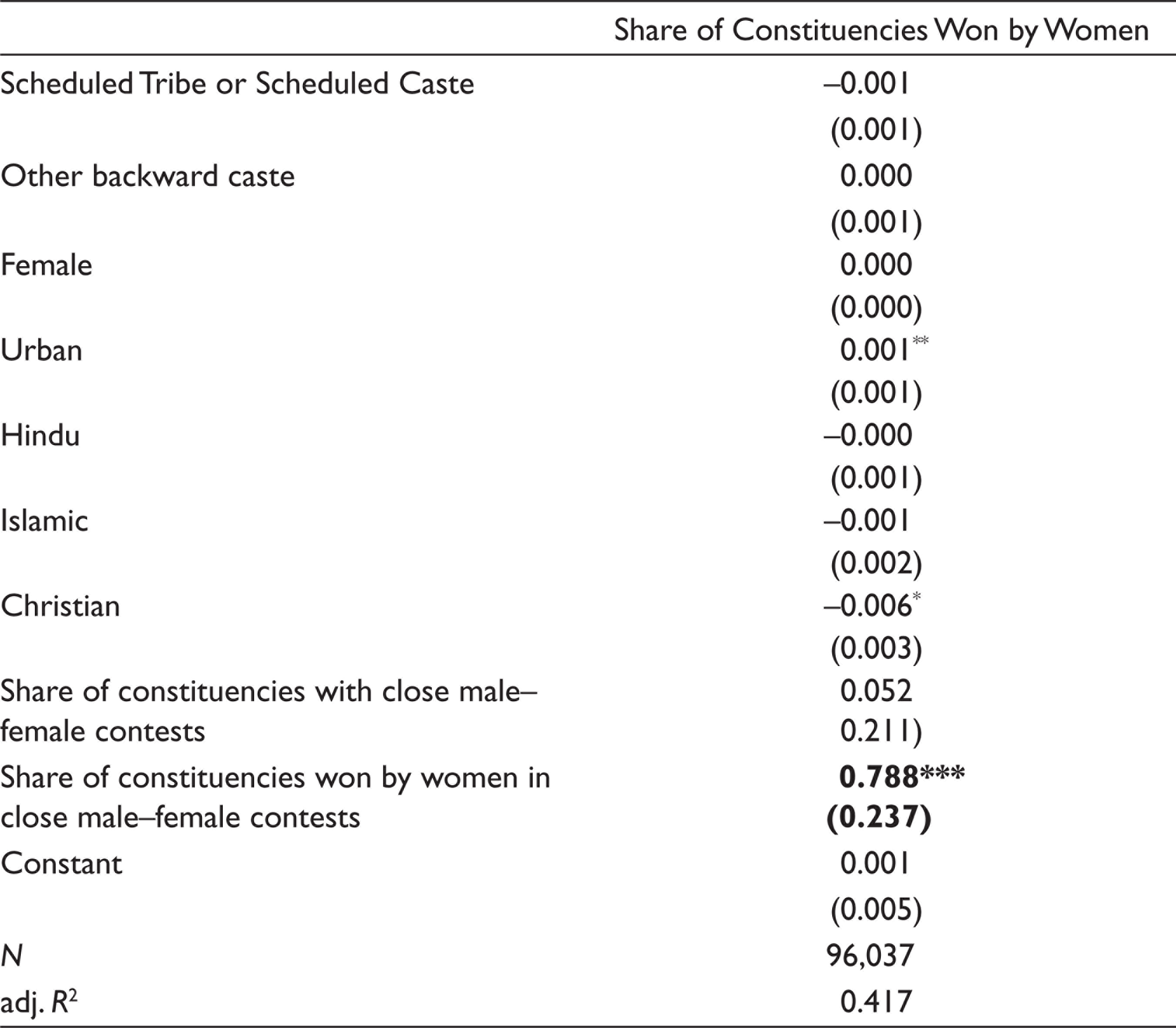
The (biased) Ordinary Least Squares (OLS) estimates are reported in the first column, while all the following estimates are obtained with an IV approach. As expected, the coefficient of the endogenous variable is lower using the OLS model. Moreover, all the statistical tests show that the IV approach used in this paper works well: the share of constituencies won by women in close male–female contests (our IV) is highly correlated with women’s political representation (our endogenous variable; see Table 3b). Moreover, the IV is not weak, as confirmed by the Anderson–Rubin Wald test (Table 3a). For this reason, only the IV estimates were interpreted.
Model 2 shown in Table 2 includes individual controls as well as district-fixed and year-fixed effects. The coefficient of women’s political representation has a positive sign, but it is not statistically significant.
Effect of Women’s Political Representation on Primary Education Completion
All estimates were carried out with year- and district-fixed effects.
In the third model, female and male literacy rates, the female proportion of the population and the SC/ST share of the population are added to account for other possible district-level characteristics that may influence educational outcomes. The effect of the proportion of district seats won by women is now significant at the 0.10 level. This means that children living in districts with higher female representation are significantly more likely to complete primary education. The size of the coefficient implies that, by increasing women’s political representation at district level by 10 percentage points, the probability of an individual completing primary education will rise by nearly 6 percentage points. This is about 9 per cent of the total probability that an individual has to complete primary education. These results are also robust to the inclusion of state-specific linear time trends (column 4, Table 2) and district-specific linear time trends (column 5, Table 2).
Tests for the Validity of the Instrumental Variables
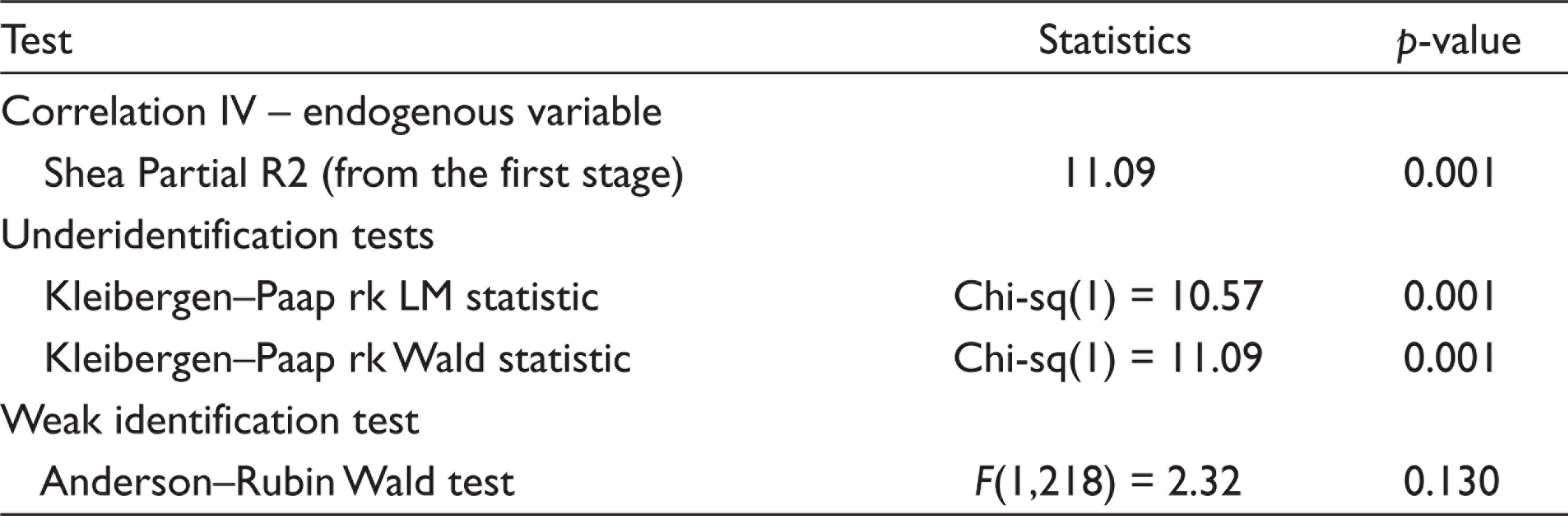
IV = share of constituencies won by women in close male–female contests.
Endogenous variable = share of constituencies won by women.
First Stage of the Instrumental Variable Estimates (Table 2 column (2))
Standard errors clustered at district level in parentheses.
*p < 0.10, **p < 0.05, ***p < 0.01.
As we also controlled for the SC/ST proportion of the district population, this is the exclusive effect of the politicians’ gender, beyond the caste effect. These results differ from those obtained in the key reference paper for this study, the one carried out by Clots-Figueras (2012) with older data: she, in fact, did not find a significant effect on the whole Indian sample.
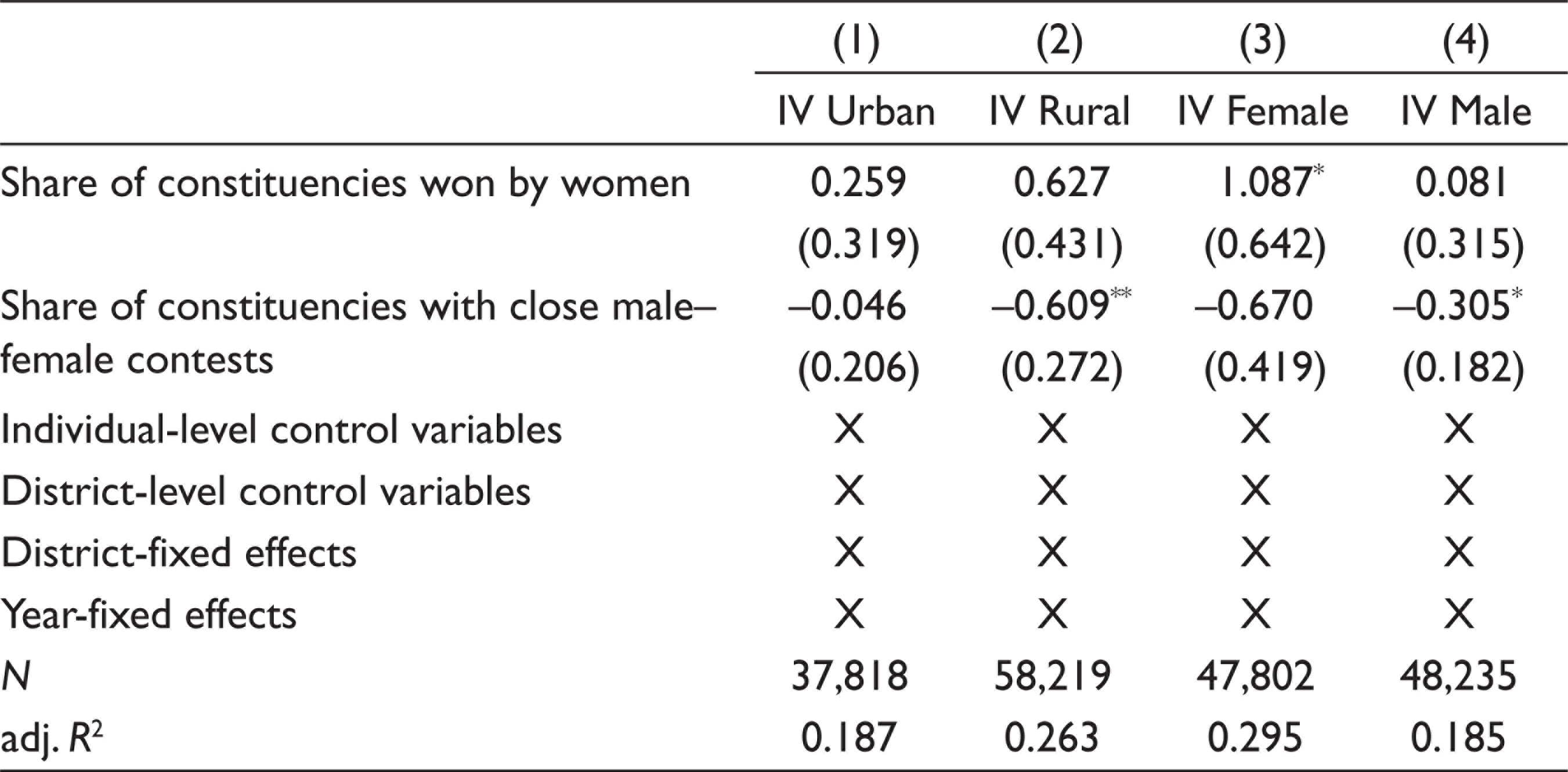
There are substantial differences between urban and rural areas in India in terms of infrastructure and standards of living. Only in recent years, the government and private sectors have tried to improve the state of the infrastructure in rural areas, thus narrowing the rural–urban gap. For the above reasons, we performed separate estimates for rural and urban areas (Table 4).
Effect of Women’s Political Representation on Primary Education Completion: Disaggregated Results
All estimates were carried out with year- and district-fixed effects.
*p < 0.10, **p < 0.05, ***p < 0.01.
The effect of women’s political representation is positive in both cases with a larger, though not statistically significant, effect in rural areas. This might be due to lower average levels of education in rural India.
The above results provide evidence of the validity of the citizen–candidate model of political economy, given that a politician’s identity plays an important role in relation to education. Moreover, the findings appear to confirm that women pay more attention to education than men. We then decided to test another hypothesis from the literature: are women more interested in girls’ education? In order to answer this question, we disaggregated the analysis by gender.
Columns (3) and (4) in Table 4 show the results for the female and male sample, respectively. The difference is striking: female representation has a positive and significant effect on the probability of girls completing primary education, while the effect is largely insignificant for boys. Given the magnitude of the coefficient, we may conclude that, on average, an increase in female representation by 10 percentage points raises the likelihood of girls completing the full cycle of primary school by almost 11 percentage points. This corresponds to nearly 18 per cent of the overall girls’ probability to complete primary education. This seems to suggest that the politicians do have a special concern for children of the same gender or, at least, for the most vulnerable segments of society, which in this case happen to be girls.
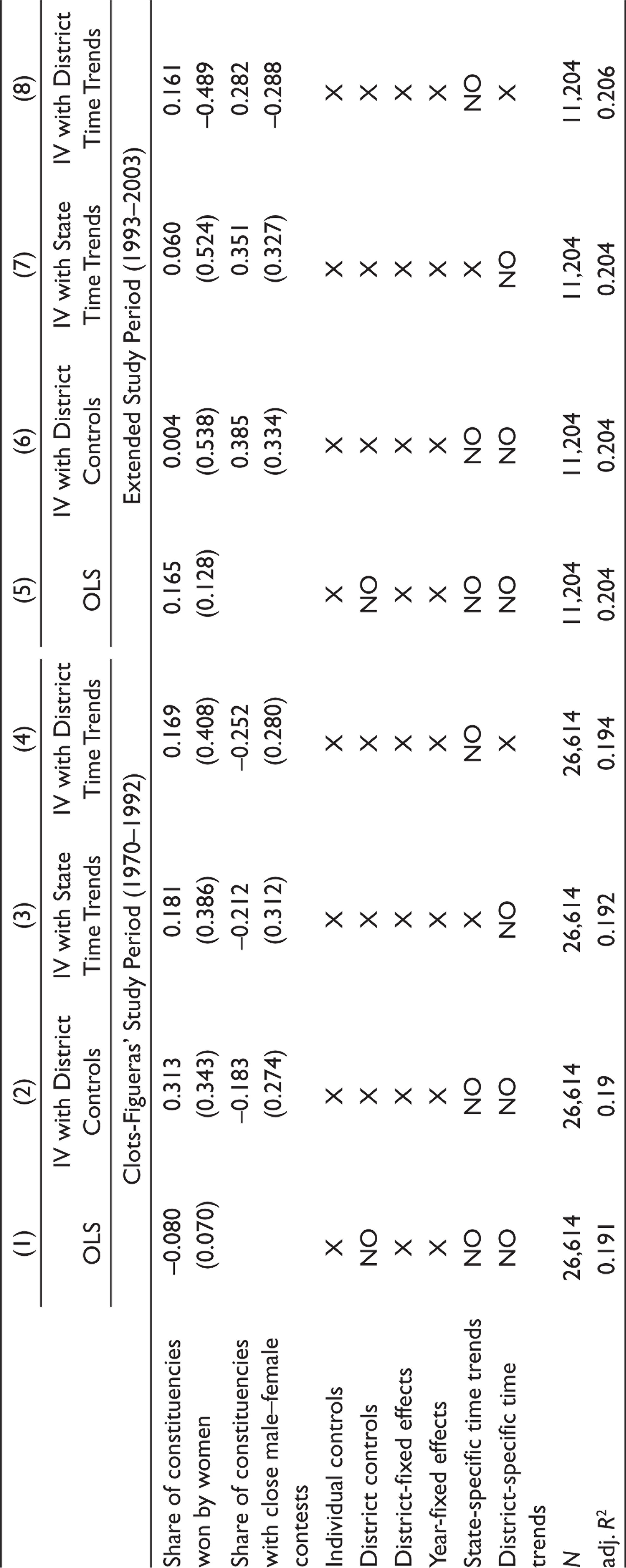
Our main results are in contrast with Clots-Figueras’ (2012) results, where she finds a significant impact of women’s political representation only in urban areas. To understand better why the results diverge, we further extended our analysis by splitting the sample into Clots-Figueras’ study period (1970–1992) and our extended study period (1993–2003). This analysis—presented in Appendixes 1 and 2—reveals that the results of the two studies differ when we just concentrate on the first period. The overall difference in results of the two papers, therefore, does not come from the extended years. Thus, we conclude that the political reform (MLA discretionary fund) is not the cause of such a difference.
While we cannot firmly conclude whether our results are more or less reliable than those of Clots-Figueras (2012) as we have a much longer time-frame (+11 years) but fewer (–14) districts, we have two main arguments in favour of our analysis. First, the different results are likely to be due to the different NSSO survey used. Clots-Figueras uses the NSSO employment and unemployment rounds 55th (1999–2000), while we use the 68th round (2011–2012). While the 68th round has not been criticized, several studies doubted the quality of the data of the 55th round. Previous studies (e.g. Hirway, 2002, 2012) question its reliability for several reasons. There are multiple interpretations regarding employment trends due to this particular 55th round. As stressed by Anant and Mehta (2011), who were at the time the chief statistician of India and the additional director general of the National Sample Survey, respectively, the 55th round was conducted during the recession year, which poses serious problems to the quality and representativeness of the survey results. Anant and Raji, therefore, argue that the 55th round should be excluded to obtain a valid picture about employment trends in India. In particular, some concerns refer to the rotation-sampling scheme which was introduced for the first time in the 55th round. 19 We believe that Clots-Figueras’ results suffer from the limitation of the 55th round.
Second, Clots-Figueras (2012) tries to explain that she finds significant effects only in urban areas because here expected returns to education are higher. However, this is not a strong argument and not really supported by data. We find significant effects only in the overall sample. Effects are larger in rural areas and we argue that this finding could be expected as the initial educational level in rural areas are lower than in urban areas, therefore there is more room for improvement. However, the differences in urban–rural impacts are not statistically significant. Our results on girls vs. boys also point to the fact that women’s political representation has an education-enhancing effect, therefore improving proportionally more the group more disadvantaged at the initial stage (girls). In turn, the result on girls—not examined by Clots-Figueras—is expected. If we did not even find significantly higher effects on girls, the result would have been in clear contrast to what the political economy literature (see Section 3) indicates, that is, politicians are often more sensitive to the needs of people of the same gender.
From Politics to Educational Inputs
The previous subsection revealed a positive correlation between the number of female politicians and educational outcomes. But how does this relationship operate? What are the channels? The following sections analyse two sets of pathways: school construction and MDM coverage.
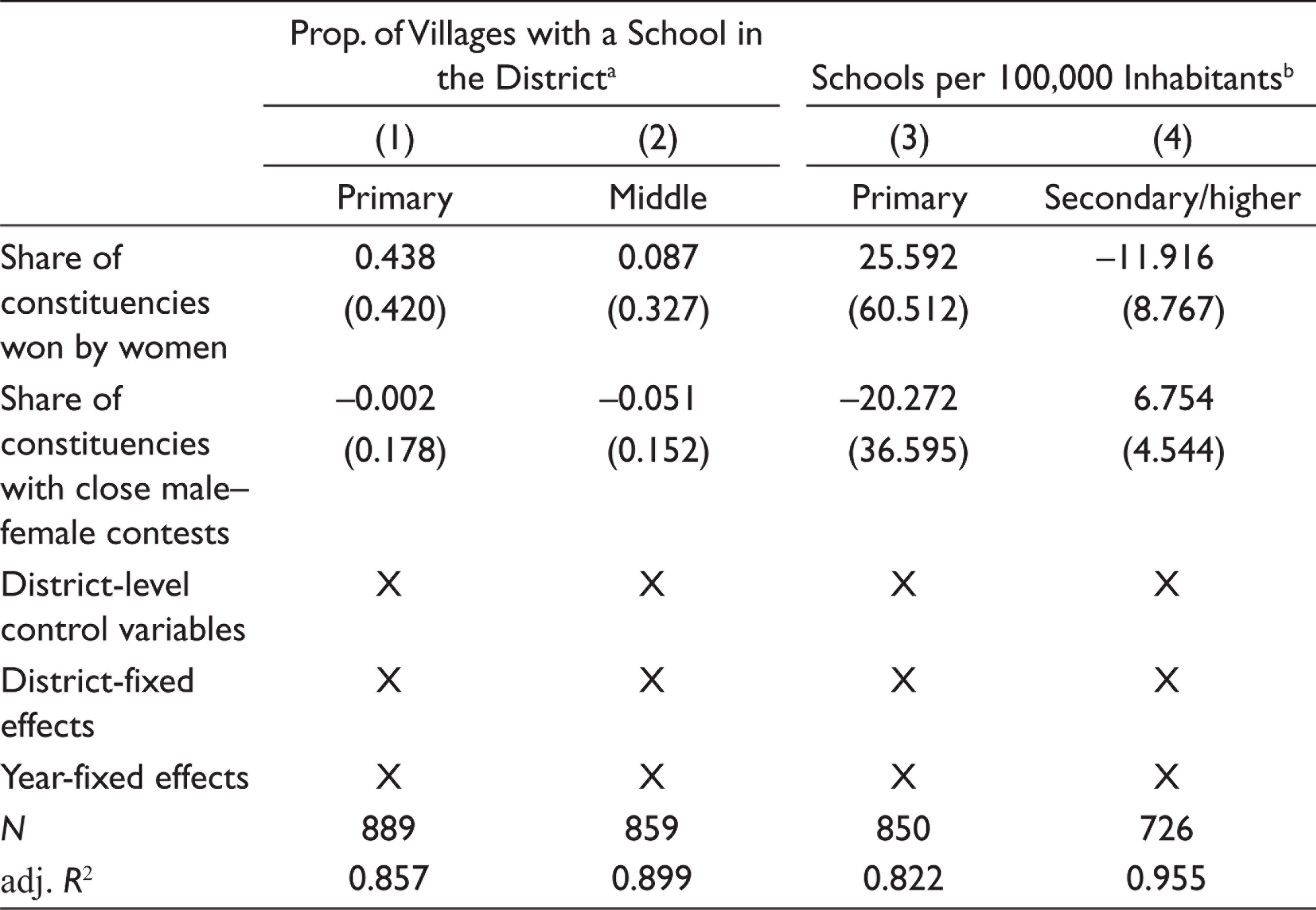
The first part of Table 5 shows the estimates of the effect of women’s political representation on the proportion of villages with a school in the district. The coefficients are always positive, but far larger for primary schools. This would suggest that women politicians are particularly interested in very basic education. However, the effects are insignificant, at the 0.10 level. The models with the number of primary and secondary/higher schools per 100,000 inhabitants as dependent variables produce similar results. The proportion of district seats won by women is not a significant explanatory variable: in the latter case, its coefficient is actually negative.
Effect of Women’s Political Representation on Educational Infrastructures (IV Regression)
*p < 0.10, **p < 0.05, ***p < 0.01.
aSource: Indian census; bSource: CMIE.
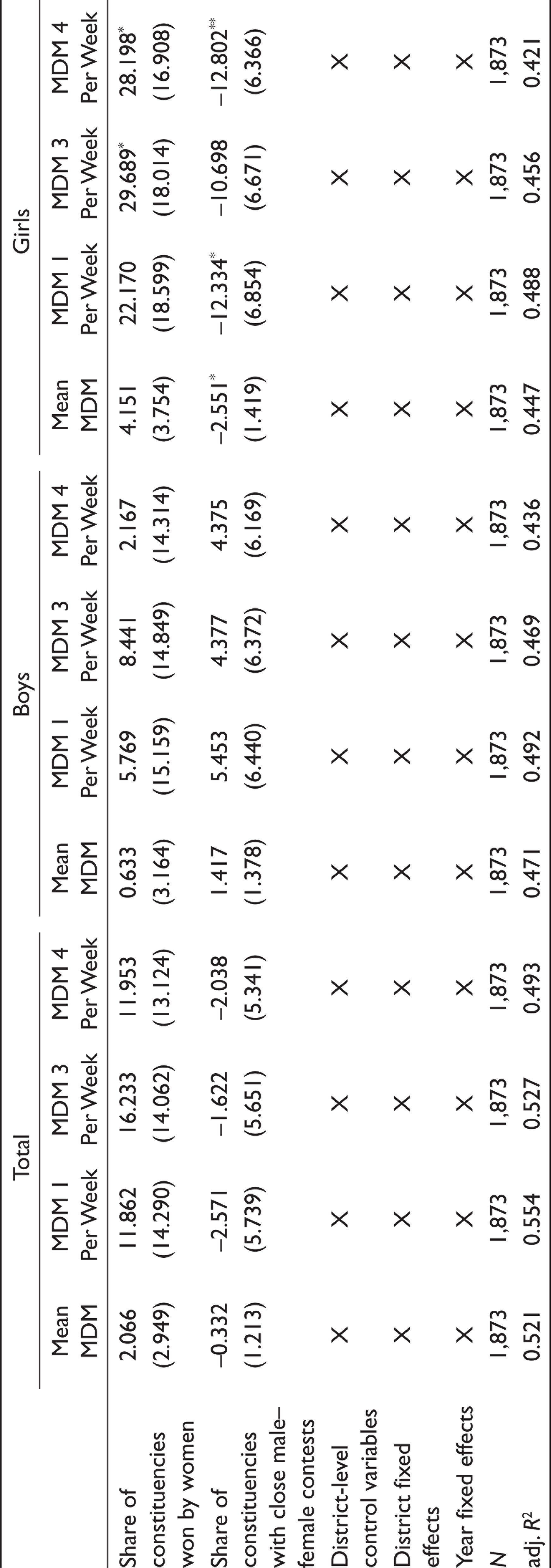
The MDM scheme is a highly important social welfare programme in India. For this reason, we would expect politicians paying more attention to children’s education and nutrition to invest in the programme and manage it better. As the MDM is relatively new and as efforts to make the budget allocation more transparent were not made until recently, we only have data concerning its coverage. Our IV regression analysis shows that there is positive but insignificant correlation between female political representation and MDM coverage (Table 6). Once we disaggregate the MDM coverage by gender, we notice positive and significant effects of women’s political representation for two of the four indicators examined. Therefore, this analysis provides some, though limited, evidence of a particular interest of female politicians towards educational programmes like the MDM.
Effect of Women’s Political Representation on Mid-Day Meal (MDM) Scheme Coverage (IV Regression)
*p < 0.10, **p < 0.05, ***p < 0.01.
In conclusion, we investigated some possible channels and found that only those related to the implementation of the MDM and its specific gender-related targeting help, to some extent, to explain the findings in the main estimates. There are two possible explanations for this result. The first is that we did not have adequate data to consider the most important pathways. In particular, the following weaknesses must be acknowledged:
Decisions taken by state assemblies are more important than those taken at state assembly constituency level in terms of the budget allocated to different aspects of education. States also decide whether and when to join the MDM scheme. There is thus limited room for MLAs to affect MDM coverage. MLAs play a more important role in the management of the scheme. For example, it would be interesting to see whether districts with a larger number of female MLAs stick more closely to the national guidelines for the MDM scheme. These include a more participatory approach, a more transparent management of funds and respecting the nutritional contents of the meals. However, no data are currently available on these practices. We were not able to take account of other relevant channels, such as those relating to school quality.
The second interpretation is that higher levels of representation of women can ensure higher educational levels—especially for women—via a demonstration effect. Women in office can become role models for other women, raising their educational aspirations and therefore improving their attainments, without necessarily pushing forward general education policies. Empirical evidence of this ‘role model’ effect is found in India (Beaman et al., 2012) as well as in other countries (Powley, 2006).
Conclusions
This paper has a threefold objective: (1) to analyse whether politicians’ gender has a bearing on the educational achievements of the residents of the districts in which they were elected; (2) to understand whether politicians are more sensitive to the needs of people of the same gender and (3) to explore the possible channels through which these relationships work.
By applying an IV approach to a dataset obtained by merging individual data with political variables for Indian districts, we show that women’s political representation has a substantial effect on the probability of children completing primary education. An increase in women’s political representation at district level by 10 percentage points can produce a rise of nearly 6 percentage points in the likelihood of an individual completing the full cycle of primary education. The study of Clots-Figueras (2012), from which we took the identification strategy, pointed only on the importance of women’s political representation in urban areas.
A disaggregated analysis reveals that women’s political representation raises the educational achievements of girls significantly more than that of boys. This is a completely novel result, as this aspect had never been examined in previous works. Finally, we investigated two possible macro-channels through which women’s political representation might affect educational outcomes, that is, the presence of school buildings and the coverage of the MDM scheme. Our results show that the first channel does not help to explain the relationship. In contrast, we detect a positive, though insignificant, effect of women’s political representation on the MDM coverage and, above all, some positive and significant evidence for the sample of girls. This suggests that female politicians may be particularly interested in girls’ education.
Overall, the paper provides initial evidence of the contribution of female political representation on primary school completion, especially among girls. This occurs partly through the improvement of their access to educational and welfare programmes like the MDM, while an increase in school infrastructures does not appear as an important mediating factor. However, an in-depth understanding of the comprehensive pathways through which women’s representation in politics impacts on children’s education requires further research. Our analysis, in fact, cannot test other important channels and cannot rely on frequent, high-quality data. Provided these limitations, our findings are compatible with existing literature that points to the ‘role model’ effect. According to this explanation, the presence of women in important political roles itself helps girls and women challenge prevalent stereotypes and increase their aspirations, including educational aspirations. Though we cannot test it empirically, the role model is likely to be an important explanatory factor of our findings.
Footnotes
Acknowledgements
We would like to thank the German Federal Ministry for Economic Cooperation and Development (BMZ) for funding this study as part of the research project on the political economy of inclusive growth. We also would like to express our gratitude to Markus Loewe, Tilman Altenburg, Luis Camacho, Imme Scholz and Giorgio D’Agostino for commenting on various versions of the paper.
Declaration of Conflicting Interests
The authors declared no potential conflicts of interest with respect to the research, authorship and/or publication of this article.
Funding
The authors received no financial support for the research, authorship and/or publication of this article.
Appendix
Effect of Women’s Political Representation on Primary Education Completion in Urban Areas: Analysis by Sub-periods
| (1) |
(2) |
(3) |
(4) |
(5) |
(6) |
(7) |
(8) |
|
| OLS | IV with District Controls | IV with State Time Trends | IV with District Time Trends | OLS | IV with District Controls | IV with State Time Trends | IV with District Time Trends | |
| Clots-Figueras’ Study Period (1970–1992) | Extended Study Period (1993–2003) | |||||||
| Share of constituencies won by women | –0.080 | 0.313 | 0.181 | 0.169 | 0.165 | 0.004 | 0.060 | 0.161 |
| (0.070) | (0.343) | (0.386) | (0.408) | (0.128) | (0.538) | (0.524) | –0.489 | |
| Share of constituencies with close male–female contests | –0.183 | –0.212 | –0.252 | 0.385 | 0.351 | 0.282 | ||
| (0.274) | (0.312) | (0.280) | (0.334) | (0.327) | –0.288 | |||
| Individual controls | X | X | X | X | X | X | X | X |
| District controls | NO | X | X | X | NO | X | X | X |
| District-fixed effects | X | X | X | X | X | X | X | X |
| Year-fixed effects | X | X | X | X | X | X | X | X |
| State-specific time trends | NO | NO | X | NO | NO | NO | X | NO |
| District-specific time trends | NO | NO | NO | X | NO | NO | NO | X |
| N | 26,614 | 26,614 | 26,614 | 26,614 | 11,204 | 11,204 | 11,204 | 11,204 |
| adj. R2 | 0.191 | 0.19 | 0.192 | 0.194 | 0.204 | 0.204 | 0.204 | 0.206 |
All estimates were carried out with year- and district-fixed effects.
*p < 0.10, **p < 0.05, ***p < 0.01.