




Abstract
Background:
Attention deficit hyperactivity disorder (ADHD) is characterized by three core symptoms: Inattention, hyperactivity, and impulsivity. Studies suggest that, in addition to these core symptoms, children with ADHD may develop behavioral problems that interfere with their general well-being, social skills, academic performance, and parental care. These issues may lead to poor self-esteem and negative parental attitudes toward the child. So, our study is to compare self-esteem and maternal attitude between children diagnosed with ADHD and their unaffected siblings.
Methods:
This is a cross-sectional comparative study. The participants included 85 mothers with their children diagnosed with ADHD and their unaffected siblings. Self-esteem was assessed using the Rosenberg Self-Esteem Scale (RSES), while maternal attitude was measured using the Index of Parental Attitude (IPA) Scale.
Results:
The mean age of both groups was 12 years. The mean maternal attitude score toward children with ADHD was 69.45, compared to 14.88 for unaffected siblings, indicating higher maternal stress and a negative attitude toward children diagnosed with ADHD. The mean self-esteem score was 17.37 for children with ADHD and 21.52 for unaffected siblings, indicating significantly lower self-esteem in children with ADHD (P value < .001).
Conclusion:
Children with ADHD had lower self-esteem and faced more unfavorable maternal attitudes compared to their unaffected siblings. This highlights the need for increased awareness and education about ADHD, in addition to medical treatment.
Introduction
Attention deficit hyperactivity disorder (ADHD) is a neuro-developmental disorder with a global prevalence rate ranging from 5% to 7%. 1 It is characterized by three core symptoms: Inattention, hyperactivity, and impulsivity, which can significantly impair social, educational, and familial functioning. 2 In addition to these core symptoms, behavioral problems often develop, which exacerbate the challenges associated with ADHD.
The family plays a central role in a child’s life, so parents need to be knowledgeable and aware of their child’s condition and develop skills for managing the disorder. 3 Research indicates that parental attitudes can influence the prognosis of children with ADHD. A research conducted on parental attitude towards children with intellectual disability noted that parents of children with behaviour problems often exhibit more negative attitudes, which in turn affect the child's behavior.4,5 Studies have shown that parental attitude plays a crucial role in successfully managing children with ADHD. Positive parental attitudes contribute to better parent-child relationships and improved outcomes.6,7
ADHD can interfere with a child’s general well-being, social life, academic performance, and social skills development, leading to low self-esteem. Self-esteem is a complex concept that reflects an individual’s cognitive and emotional assessment of their worth. It involves competence, achievement, and self-worth.8,9 Several studies suggest an inverse relationship between self-esteem and various psychiatric disorders, with ADHD being no exception. The challenges faced by children with ADHD in social contexts (e.g., school and family) can lead to feelings of inadequacy, contributing to lower self-esteem compared to their peers.10–12 The present study aims to compare the self-esteem and maternal attitudes between children diagnosed with ADHD and their unaffected siblings.
Materials and Methods
Study Design
This cross-sectional comparative study was conducted over 1 year in the Child Guidance Clinic of a tertiary care hospital. The study was approved by the institutional review board. The sample comprised 170 children (85 diagnosed with ADHD and 85 unaffected siblings) and their 85 mothers. Inclusion criteria were mothers of children diagnosed with ADHD who were willing to provide informed consent, and children diagnosed with ADHD and their unaffected siblings, both belonging to the age group of 8–16 years, who were willing to give assent to participate in the study. Children with medical, neurological, or psychiatric comorbidities, as well as mothers with psychiatric complications, were excluded from the study.
A semi-structured proforma, along with the assessment scales, was administered to the participants. Children diagnosed with ADHD were evaluated according to Diagnostic and Statistical Manual of Mental Disorders (DSM-5) criteria by a senior psychiatrist. The ADHD children had been on medication for at least 6 months to 1 year, without any comorbid conditions.
Tools Used
Results
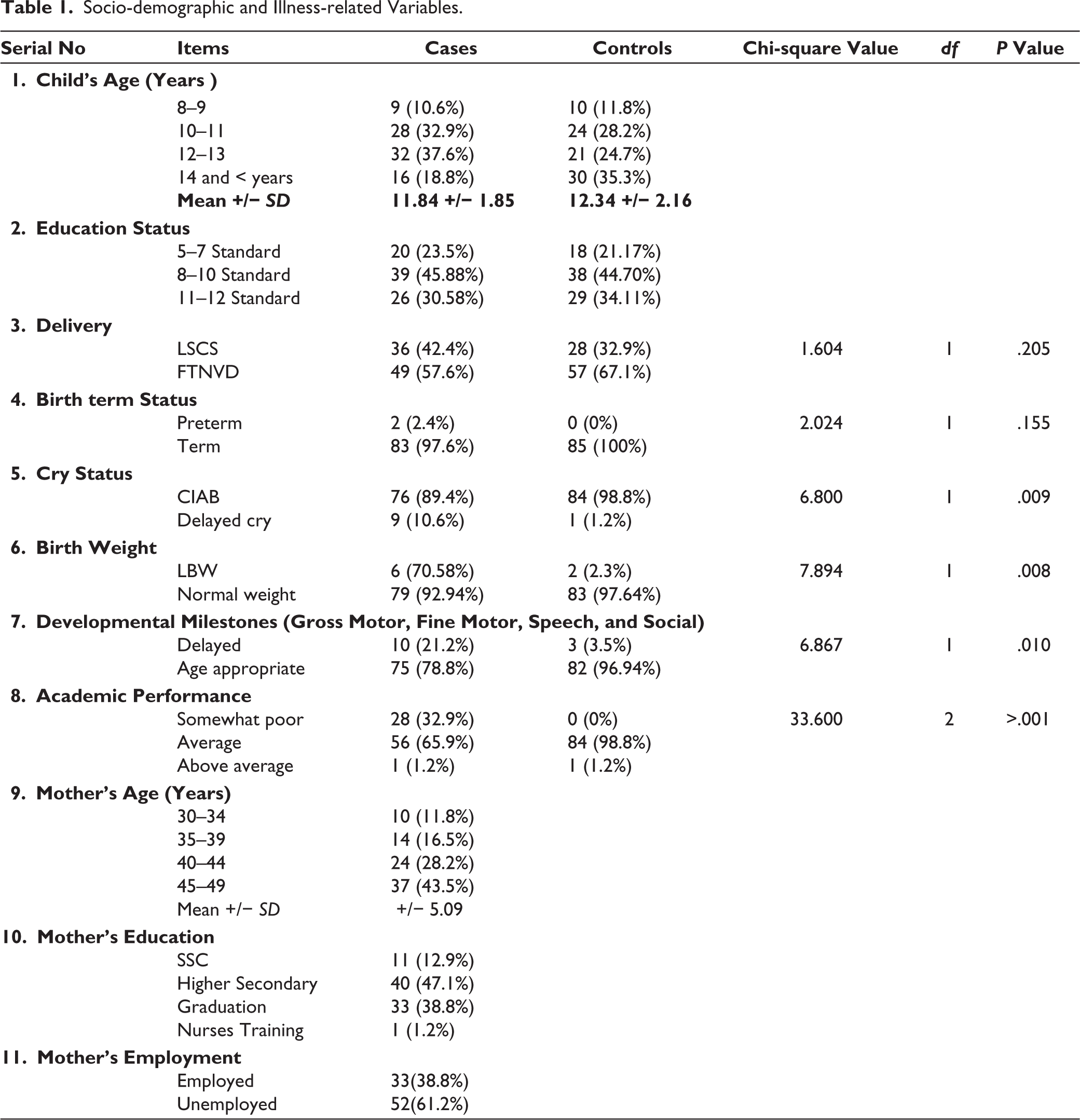
Most of the children in the case group belonged to the 12–13 years age range, with a mean age is 11.84 +/− 1.85 years, whereas in the control group, a maximum of children belonged to 14 years or greater, with a mean age of 12.34 +/− 2.16 years (Table 1). The majority were studying in 8–10 standard. Most mothers’ ages ranged from 45 to 49 years, with a mean age of 42.26 +/− 5.09 years, and they were educated up to higher secondary schools. Homemaker was the most common occupation of mothers. Concerning birth and developmental milestones, different parameters such as mode of delivery, birth term status, cry status, birth weight, and developmental milestones were studied. The chi-square test was applied to assess for differences in these parameters between the two groups. A significant difference was noticed in cry status (P value = .009), birth weight (P value = .008), and developmental milestones (P value = .010). Academic performance was also studied, and a significant difference was found between the case and control groups (P value = >.001).
Socio-demographic and Illness-related Variables.
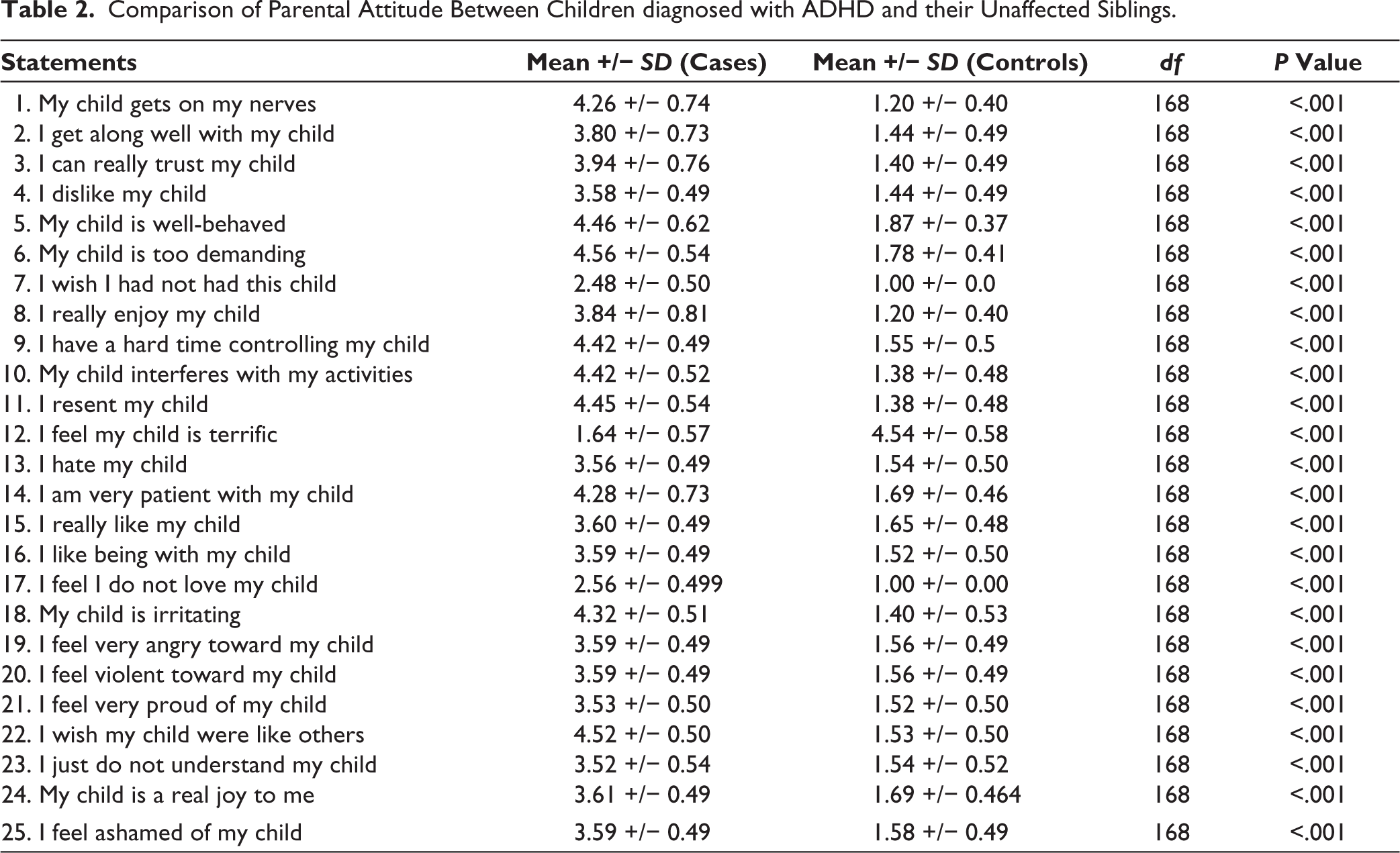
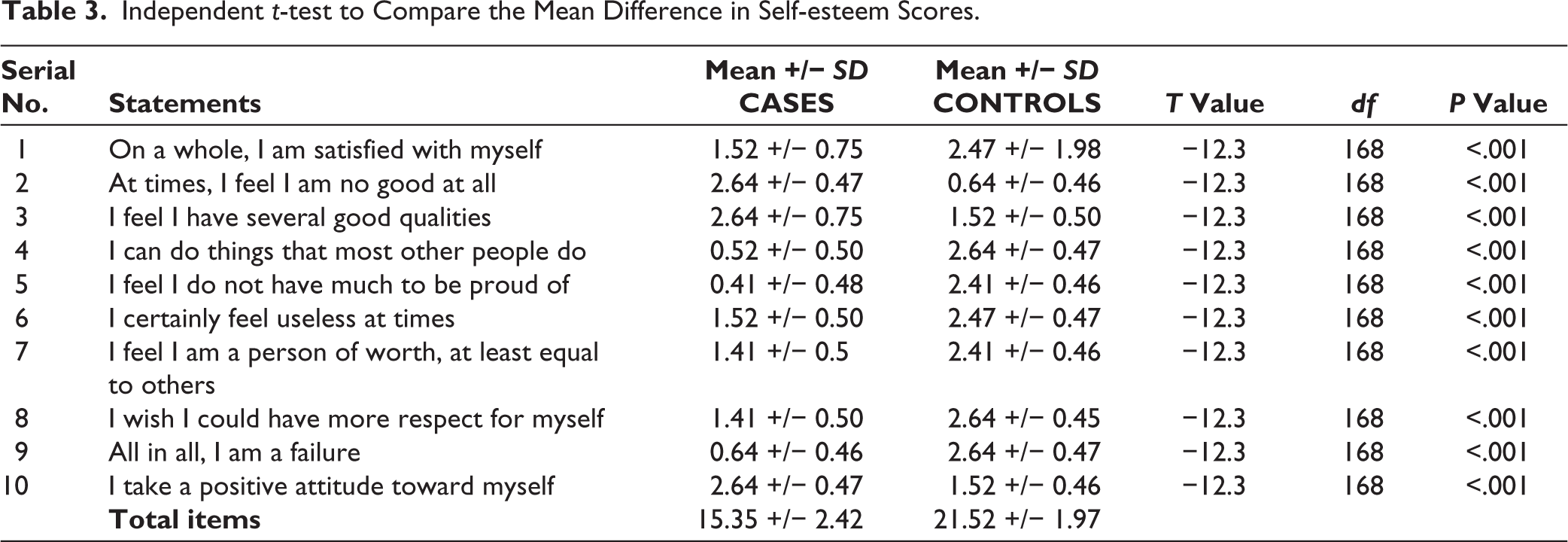
Maternal attitude was assessed using the IPA Scale. The mean score with SD score for the case group was 69.45 +/− 3.02, and for the control group was 14.88 +/− 2.86 (Table 2). Self-esteem score was 15.35 +/− 2.42 for the case group and 21.52 +/− 1.97 for the control group (Table 3). An independent t-test was applied to assess the mean difference in maternal attitude and self-esteem scores among both groups, which revealed a significant differences (P value < .001).
Comparison of Parental Attitude Between Children diagnosed with ADHD and their Unaffected Siblings.
Independent t-test to Compare the Mean Difference in Self-esteem Scores.
Discussion
Parenting a child is filled with challenges, but raising a child with ADHD presents even greater difficulties. It requires significant patience, making it even more challenging and potentially leading to distress.15,16 Mothers, being the primary caregivers in most families, are often more affected by their child’s behavior. Whether it’s helping with homework, preparing meals, getting the child to eat, giving daily life instructions, teaching, or bathing, the symptoms of inattention and hyperactivity in children with ADHD need constant management. This can lead to increased stress and frustration for mothers. Thus, maternal attitude plays a crucial role in a child’s development, boosting both their confidence and self-esteem. Positive self-esteem is essential for good mental health and overall psychological development, which is why these two factors were specifically studied in our research.
Our study found a significant difference in maternal attitudes toward children with ADHD compared to their unaffected siblings (P value <.01). Maternal attitudes toward children with ADHD were found to be unfavorable. Mothers of children with ADHD reported feeling that their child was overly demanding, poorly behaved, and interfered with their activities. They expressed difficulty in controlling their child, often feeling angry or violent toward them.
The IPA Scale revealed a mean score of 69.45 for children with ADHD, indicating high levels of stress in parenting and a strained parent-child relationship. In contrast, the mean score for unaffected siblings was 14.88, suggesting a much less stressful and more positive parenting experience with stronger parent-child bonding.
A significant difference (P value <.001) was also found in self-esteem between children with ADHD and their unaffected siblings. Using the RSES, the mean self-esteem score for children with ADHD was 17.37, compared to 21.52 for unaffected siblings. Children with ADHD reported lower self-esteem, felt less satisfied, struggled with activities that others could do, often felt useless, and considered themselves failures. This lack of self-confidence often leads to poor social functioning and difficulties in forming relationships.
Our findings align with previous research. A study carried out in South Africa to explore parents’ experiences with children diagnosed with ADHD suggests emotional burden in them, which in turn leads to negative attitudes toward their children. 16 Another study conducted on parents’ experiences also suggests that ADHD significantly impacts parents’ daily lives, leading them to manage both their child’s symptoms and their own challenges, which contributes to burnout. 17 According to a study that was conducted in Egyptian children to assess parental attitude based on ADHD and aggression symptoms, it indicates that a child’s high level of inattention or impulsivity imposes multiple demands on parents and increases the risk of parents responding with less than ideal consistency, hence an unfavorable attitude toward them. 18 A study carried out in Iran to assess parental attitude toward children with ADHD highlights that parents of children with ADHD experience more personal and parenting stress, with feelings of inadequacy and lower self-esteem, and that the severity of ADHD symptoms in children is also associated with parenting stress, hence increased irritability toward them. 19
Regarding self-esteem, a study conducted in Italy demonstrates that children with ADHD score significantly lower on self-esteem measures compared to healthy controls. Social support and positive interpersonal relationships have been shown to improve self-esteem in these children. 2 A study conducted in Brazil on cognitive functions and self-esteem in children diagnosed with ADHD reported that academic failure is common in children with ADHD, leading to insecurity and a lack of confidence, which in turn negatively affects self-esteem. 20 In one of the studies conducted in Thailand to assess the comparison of self-esteem between children diagnosed with ADHD and healthy volunteers, it was found that children with ADHD perceive themselves as inferior to others, scoring low on self-esteem. 21 Another study conducted in Thailand on the relationship between caregivers’ attitude and children’s self-esteem indicates that caregivers with a positive attitude tended to have children with better self-esteem. This information shows the influence of positive individual and family relationships on the development of self-esteem. On the other hand, caregivers with an unfavorable attitude were associated with low self-esteem in children and teenagers. 22 A study carried out in Saudi Arabia to assess the relationship between ADHD and self-esteem also highlights a negative correlation between ADHD and self-esteem. The children suffering from ADHD are prone to emotional setbacks, thereby falling short of self-confidence and self-esteem. 23
Clinical Implications
Healthcare professionals need to acknowledge the challenges parents face when raising children with ADHD. A multidisciplinary and holistic approach to treatment is essential in helping both the child and the parents to manage the condition effectively. Early detection of ADHD is crucial, as it can reduce the long-term consequences of the disorder, especially its impact on self-esteem and social functioning.
Limitations
Some limitations of our study include the fact that the mothers’ pre-morbid personalities were not assessed, and the study was cross-sectional with a relatively small sample size. Additionally, the impact of medication on these factors was not explored.
Conclusion
Children with ADHD tend to have lower self-esteem and experience unfavorable maternal attitudes compared to their unaffected siblings. Strategies to boost self-esteem and self-confidence can help improve academic performance, mental health, and social relationships in children with ADHD. Parents need to provide warmth and support, encouraging children to focus on their strengths and praising their small achievements. This approach enhances emotional bonding and strengthens the mother-child relationship. Increased awareness of ADHD and the need for treatment among parents will also help in the early diagnosis and management of the disorder, reducing ADHD symptoms over time.
Footnotes
Declaration of Conflicting Interests
The authors declared no potential conflicts of interest with respect to the research, authorship, and/or publication of this article.
Funding
The authors received no financial support for the research, authorship, and/or publication of this article.
Statement of Informed Consent and Ethical Approval
The Study was accorded Institutional ethical committee approval vide Ethics committee for academic research (ECARP), PG Academic Committee with ECARP reference no:- ECARP /2019/160 dated 23.12.2020. Written consent was taken from all the mothers and assent was taken from children diagnosed with ADHD and their unaffected siblings. The study was carried out in accordance with the principles as enunciated in the Declaration of Helsinki.
Sources of Support
Nil.