




Abstract
Background:
Adolescents constitute an important part of the world population, and this period can be challenging. Physical and mental challenges and problems may arise in adolescence. One of these may be the risk of body dissatisfaction. Considering the negative consequences of body dissatisfaction, adolescents may experience unhappiness. This study was conducted to determine the effects of adolescents’ sociodemographic characteristics and body perceptions on their happiness levels.
Methods:
This study was based on a cross-sectional design. The population of the study consisted of 910 adolescents aged 14–18. The study was carried out on the online platform. Adolescents were coincidental included from the population until the determined sample size of the study was reached. In this study, data were gathered through the use of the Descriptive Information Form, the Body-Cathexis Scale, and the Happiness Scale. Students self-reported their height and weight, which were then entered into the World Health Organization’s AnthroPlus software. Using this program, height-for-age Z scores and body mass index-for-age Z scores were calculated. Number, percentage distribution, mean, standard deviation, and linear regression techniques were used in the analysis of the data.
Results:
The effect of the variables we examined on the Happiness Scale was found to be significant at the P < .05 level. The effect of characteristics related to qualitative data on happiness level was determined and it was found as R = 0.336, R2 = 0.113. It was determined that age, gender, perceived family income, satisfaction with body weight, and the body-cathexis scale affect the level of happiness of adolescents.
Conclusions:
It was determined that the sociodemographic characteristics of the adolescents (age, gender, perceived family income), satisfaction with body weight, and the body-cathexis scale affected their happiness levels by 11.3%. Public health strategies that promote healthy lifestyle behaviors (nutrition, physical activity, etc.) for adolescents can encourage adolescents to evaluate their own lives in a positive way.
Introduction
The World Health Organization (WHO) reports that 1.2 billion young people under the age of 25, representing 42% of the world’s population, are adolescents between the ages of 10 and 19. 1 The Turkish Statistical Institute estimates that of Turkey’s 22 million 738 thousand 300 children, 28.3% are between the ages of 10 and 14 and 16.5% are between the ages of 15 and 17 as of 2021. 2 Adolescence is a crucial stage of life, but it can also be one of the most difficult ones. 1
Body awareness is the sense that a person has of their own body, as well as the sensations and thoughts that follow from that experience. According to Cash 3 and Grogan, 4 this perception is a psychological experience that affects a variety of aspects of life, including feelings and behavior. Adolescents’ emotional well-being may be significantly impacted by the possibility of experiencing body dissatisfaction. 5 Examining the impact of body perception on happiness levels may be crucial given the detrimental implications of adolescent body dissatisfaction.
Numerous definitions exist for what constitutes happiness. 6 The Turkish Statistical Institute defines happiness as “a state characterized by the absence of pain, sorrow, and suffering and the presence of feelings of joy, serenity, and contentment in their place; a state in which one is generally satisfied with life” 7 in its “Life Satisfaction Survey” newsletter. In other terms, happiness is a person’s evaluation of the goodness and quality of their existence. 6 According to Aluş and Selçukkaya, 8 a person’s psychological, sociological, and financial circumstances have an impact on their level of happiness. Happiness and health have been recognized as being strongly influenced by psychological factors including self-esteem. 9
In one study, it was discovered that adolescents’ self-esteem and happiness had a positive and substantial link. Teenagers who had high levels of self-esteem were discovered to be happier. 9 Physical and mental challenges and problems may appear during adolescence. These challenges and problems that may arise may cause the adolescent to experience unhappiness.
Adequate levels of happiness in adolescence can serve as a predictor of healthy behaviors and outcomes later in life, just like most of our other actions in life. Therefore, aiding in the evaluation and promotion of adolescent happiness has an impact on both the present and future physical and mental health of society, making it a significant public health concern. 10
Considering the high prevalence of body dissatisfaction during adolescence, it is important to understand the impact of this on the psychological domain of the adolescent. 11 Especially considering the important role of body dissatisfaction on mental well-being, it can be assumed that inadequate body perception may be a cause of unhappiness in adolescents. Known studies on body satisfaction in adolescents have addressed its effect on emotional well-being. In the studies on happiness, variables such as self-esteem and health behaviors were found. The primary objective of this study is to investigate the relationship between adolescents’ body perception and their reported levels of happiness within a community-based sample. Gaining insights into this association may facilitate the early identification of body image-related factors that influence psychological well-being during adolescence. Furthermore, the study aims to examine the potential moderating or contributing roles of demographic and psychosocial variables such as age, gender, perceived family income, and satisfaction with body weight in shaping adolescents’ happiness.
Aim
The impact of adolescents’ body perception on their happiness is the aim of this study.
Materials and Methods
Research Design
A cross-sectional design was used in this study.
Research Sample
The population of the study consisted of adolescents aged 14–18, residing in a province in eastern Turkey and volunteering to participate in the study.
The study sample size was determined to be 750 participants, representing 95% of the population, with an effect size of 0.25 and an error level of 0.05 within a 95% confidence interval, as determined by power analysis. 12 To avoid data attrition, the study was conducted with 910 adolescents who met the eligibility criteria and voluntarily consented to participate.
Inclusion Criteria
Adolescents between the ages of 14 and 18 who agreed to participate in the study and whose parents’ consent and permission were obtained were included in the study.
Exclusion Criteria
Adolescents with any chronic illness, serious mental illness, or physical or cognitive illness that affected their ability to participate in the study were excluded from the study.
Data Collection
Data were collected between May and August 2023. The data of the study were collected using the “Descriptive Information Form,” “Body-Cathexis Scale (BCS),” and “Happiness Scale.” The average time to fill out the form is 15–20 minutes. The online questionnaire initially included detailed information about the study as well as consent indicating voluntary participation. The data obtained from the participants’ online responses were transferred to the online recording system accessible only by the researchers.
Measures
Descriptive Information Form
As part of the data collection tools, a Descriptive Information Form was developed by the researchers to obtain detailed background information about the participants. The form was structured to capture key sociodemographic and health-related characteristics of adolescents, including age, gender, class level, self-reported height and weight, perceived general health status, and perceived family income level. In addition, the form included items assessing behavioral and subjective factors such as the frequency of skipping daily meals and the participant’s level of satisfaction with their body weight.
The Body-cathexis Scale
The BCS was developed by Secord and Jourard in 1953. It is a scale that determines the satisfaction of the person with 40 different body parts or functions. 13 Hovardaoğlu carried out the Turkish validity and reliability study of the scale. It is a 40-item and five-point Likert scale ranging from 5 (very dissatisfied) to 1 (very satisfied). The total score of the scale ranges from 40 to 200. An increase in the total score obtained from the scale indicates a decrease in satisfaction with body parts or functions, and a decrease in scores indicates an increase in satisfaction. 14 In this study, the Cronbach’s alpha value was found to be 0.94.
The Happiness Scale
The Happiness Scale developed by Demirci in 2017 consists of six items and is one-dimensional. The corrected item-total score correlations of the items in the scale ranged from 0.45 to 0.65. The Cronbach’s alpha internal consistency coefficient of the scale was calculated as 0.83. The most negative expression in the scale items is 1 point, the most positive expression is 5 points. Accordingly, the lowest total score that can be obtained is 6, and the highest total score is 30. The range of 5–4.20 points in the scale is classified as very high happiness, 4.19–3.40 high happiness, 3.39–2.60 medium happiness, 2.59–1.80 low happiness, and 1.79–1 very low happiness level. 15 In this study, the Cronbach’s alpha value was 0.84.
Anthropometric Measurements
Students self-reported their height and weight, which were then entered into the WHO’s AnthroPlus software. Using this program, Height-for-Age Z Scores (HAZ) and Body Mass Index-for-Age Z Scores (BAZ) were calculated. We evaluated body mass index (BMI) values in accordance with the WHO z-score classification. The adolescents included in our study are obese (BMI ≥ 30 kg/m2), overweight (BMI = 25–30 kg/m2), normal weight (BMI = 18–25 kg/m2), and underweight (BMI < 18) according to BMI kg/m2) were divided into four groups.
Procedure and Ethics
In order to collect the data of the study, a survey form was created using Google Forms. The survey form was shared via the Internet. Snowball sampling method was used to reach the targeted sample size. Adolescents and their parents were asked to send the study link to other adolescents they knew who met the study criteria. Thus, more participants were included in the study.
Necessary approval was obtained from the Ethics Committee of a university to conduct the study. The participants and their parents were informed about the purpose of the study and informed that the participation was voluntary, that the information provided would only be used for the research and that they could leave the study at any time. Information about the purpose of the study was added to the survey form. After the information was given, adolescent and their parents consent was obtained from online (Google Forms).
Data Assessment
The data of the study were evaluated in computer environment. SPSS 22.0 package program was used for data analysis. The data on the descriptive characteristics of the adolescents were expressed as number, percentage, mean, and standard deviation values. In order to determine how independent variables explained the dependent variables, the linear regression analysis enter method was used. In our study, the results were considered statistically significant at the 95% confidence interval, at the P < .05 error level.
Results
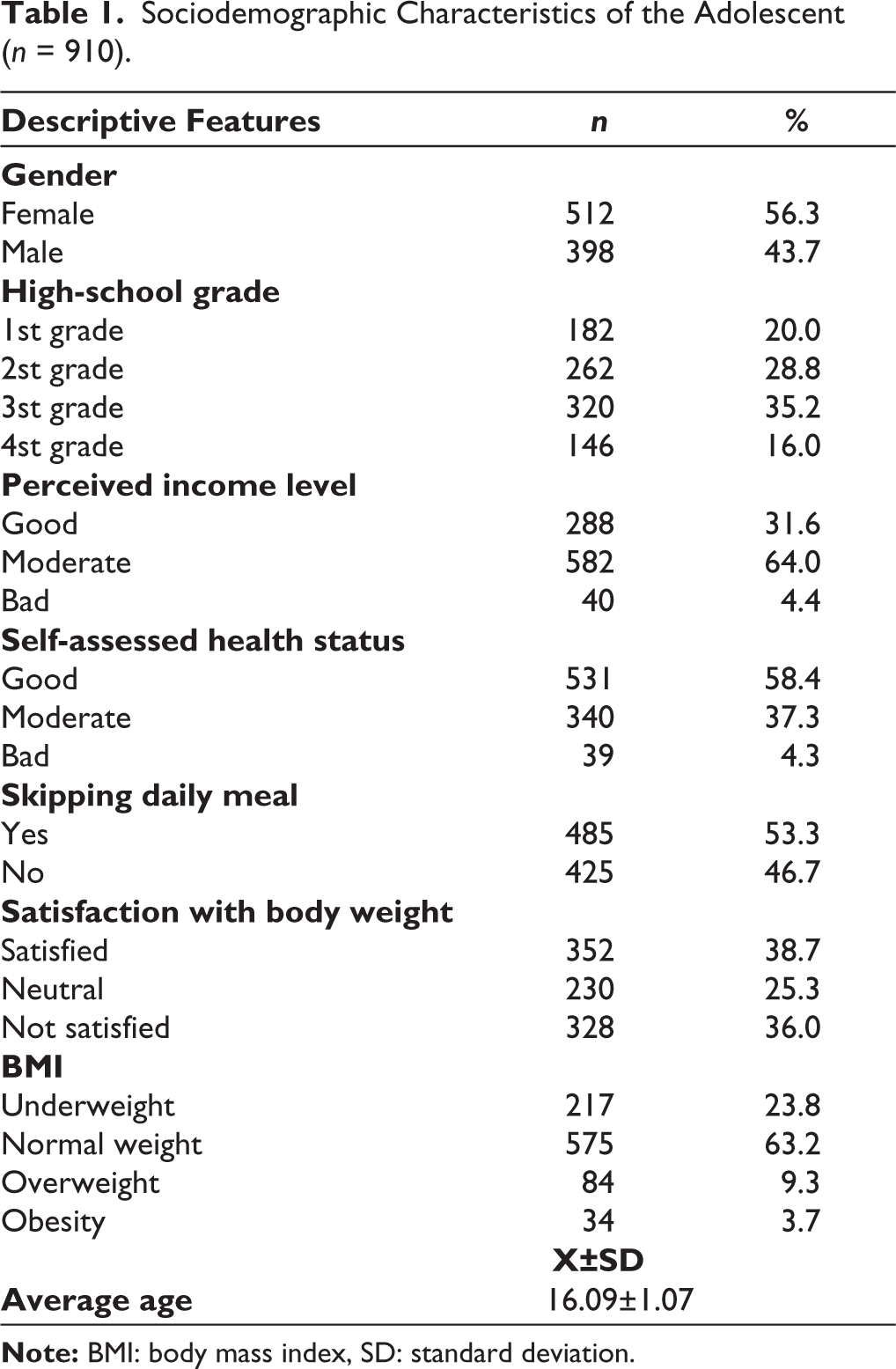
Table 1 provides a list of descriptive characteristics of adolescents. It was determined that the mean age of the adolescents was 16.09 ± 1.07, more than half of them were women, and 35.2% of them were educated in third grade of high school. It was found that 64% of the adolescents perceived their family income as moderate, 58.4% self-assessed health as good, and 63.2% were normal weight. In addition, 53.3% stated that they skipped daily meals and 36% were not satisfied with their body weight.
Sociodemographic Characteristics of the Adolescent (n = 910).
In Table 2, the factors affecting the happiness level of adolescents are examined. The effect of the variables we examined on the Happiness Scale was found to be significant at the P < .05 level. The effect of the characteristics depending on the qualitative data on the happiness level was determined and it was found as R = 0.336, R2 = 0.113. It was determined that 11.3% of the total variance in the dependent variable of happiness level was explained by these variables, and the result was statistically significant (P < .001).
The Association Between Sociodemographic Characteristics and the BCS of Adolescents and Their Happiness Levels.
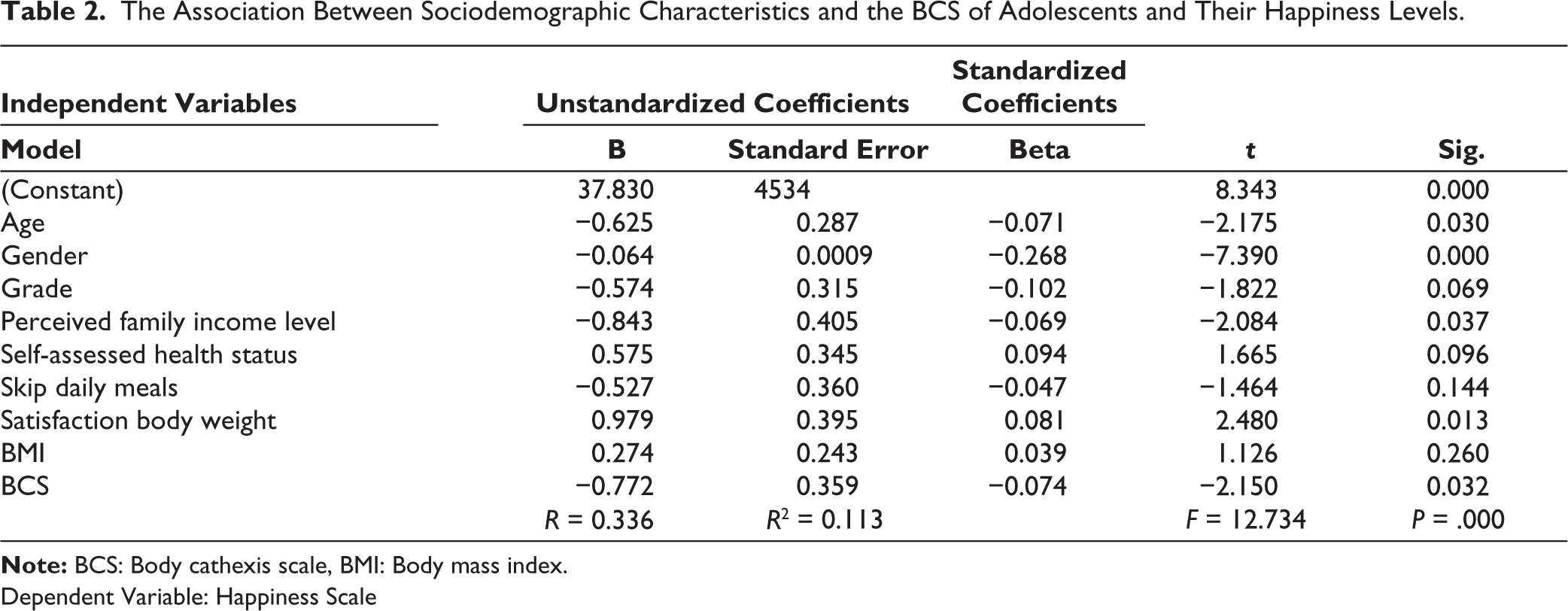
Dependent Variable: Happiness Scale
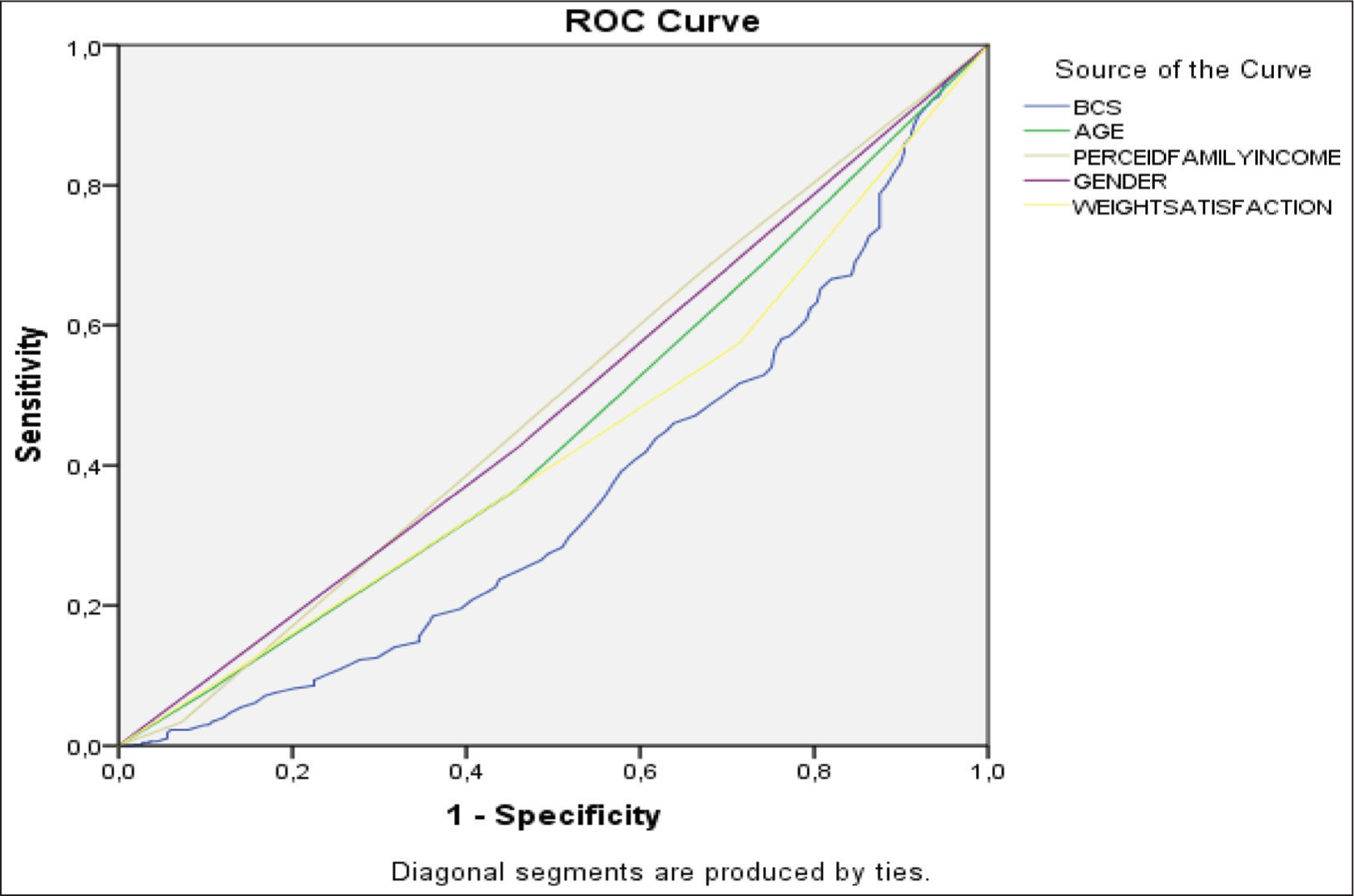
In Figure 1, those who scored 2.60 and above from the Happiness Scale were determined as moderate and higher happiness levels, and those with a score between 2.59 and 1 were determined as low or below happiness levels and were included in the receiver operating characteristic (ROC) analysis. Accordingly, it was determined that age, gender, perceived family income, satisfaction with body weight, and the BCS affect the level of happiness of adolescents.
Representation of Variables Affecting Adolescents’ Happiness with ROC Analysis.
Discussion
This study aimed to determine the effect of adolescents’ body perceptions on their happiness level. The findings highlight the influence of adolescents’ sociodemographic factors—such as age, gender, and perceived income level—as well as their body image, on their overall happiness levels. Body dissatisfaction rates may be high during adolescence. Since adolescents’ adequate level of happiness may be an important factor affecting health outcomes in their future life, it may be important to provide information to adolescents about improving body perception.
According to the results of our study, adolescents’ ages affect their level of happiness. Age of the adolescents and their level of happiness were shown to be negatively correlated (B = −0.625), with younger adolescents reporting higher levels of happiness (Table 2). The 12-year-olds were shown to be happier in a study by Lung et al. involving 12- and 13-year-old adolescents in Taiwan. 16 Another previous study found that children were significantly happier than adolescents. 17 Gilman and Huebner 18 showed that the age variable had little influence on adolescents’ satisfaction. The result of this study is similar to the results of the given studies. The reason for this may be having their own opinions different from their parents, negative thoughts about their appearance, increase in emotional interests, increase in academic achievement pressure, and arguments with peers and parents in the later stages of adolescence. In addition, younger adolescents’ positive feelings about their lives may increase their level of happiness.
Teenagers’ levels of happiness were found to be influenced by the gender variable in our study. Males were found to be happier teenagers than females, with a negative (B = −0.064) relationship between the two (Table 2). Numerous studies, including the one we conducted, have shown that happiness levels differ depending on gender.18–23 In other studies that found different results from our study, it was determined that gender had no effect on happiness.24–31 The similarities and differences in the result of this study and the results of the studies given may be due to the differences in the geographical regions where the adolescents live and thus having different cultural characteristics.
This study found that the teenagers’ perceived parental income level had an impact on how happy they felt. Teenagers’ reported family income and their level of happiness were shown to be negatively correlated (B = −0.843), with higher family incomes being associated with higher levels of happiness (Table 2). Similar research has found that adolescents’ perceptions of their economic standing had an impact on their happiness levels.25,32,33 The reason for these results may be that adolescents with lower income experience slightly higher tension and stress.
The results of this study revealed that teenagers’ contentment levels were influenced by how happy they felt about their weight (Table 2). Maganto et al. observed that 25.4% of adolescents in their sample of 1075 teenagers were at risk for eating disorders. According to the study, perceived weight, body self-esteem, body dissatisfaction, and happiness are all related. 34 The result of this study is similar to the results of the given study. These similar results obtained from the studies may have resulted from the effect of physical appearance and self-confidence levels of adolescents on their happiness levels. Especially in the adolescent period, it can be interpreted that the feeling of being admired about physical appearance may increase the self-confidence levels of adolescents and cause them to feel happy.
This study found that adolescents’ levels of happiness were influenced by the BCS (Table 2). The literature does not contain any studies that looked at the connection between adolescents’ perceptions of their bodies and their degree of happiness. As a result, it was addressed alongside literature-based studies on adolescents’ happiness. According to a study by Tuchtenhagen et al. involving 1134 adolescents between the ages of 11 and 14, those who had a lot of cavities, missing teeth, or fillings and had not seen a dentist in the previous six months scored worse on the Happiness Scale. 35 A substantial correlation between adolescents’ levels of happiness and self-esteem was discovered by Yap et al. in a Malaysian study. 9 Kye et al. looked at the pleasure levels and different health behaviors of South Korean adolescents in their study. 36 Accordingly, it was discovered that people with greater levels of happiness ate breakfast, routinely consumed fruit and vegetables, did not smoke or drink alcohol, engaged in physical activity for at least 60 minutes each day, avoided engaging in sedentary activities, and got enough sleep. 36 Adolescents with high self-esteem and life satisfaction also had high subjective happiness, according to a study by Freire and Ferreira that involved 910 teenagers in Portugal. 37
Public health strategies that promote healthy lifestyle behaviors (nutrition, physical activity, etc.) for adolescents can encourage adolescents to evaluate their own lives in a positive way. Especially since public health nurses play an active role in the community and schools, they may be responsible for detecting situations that may arise in body dissatisfaction and happiness level in adolescents in the early period. Planning studies with more participation and different demographic variables evaluating the happiness levels of adolescents may contribute to the literature. While planning the studies, it is recommended to include parents in the studies since they have important effects on the body perception and happiness levels of adolescents. In particular, parents’ perceptions, behaviors, communication, and relationships with adolescents can affect adolescents’ body perception and happiness levels.
Study Limitations
The limitations of the study can be listed as the collection of data using an online questionnaire instead of face-to-face interviews, resulting in a decrease in generalizability, the collection of data according to self-report, and the fact that the cross-sectional design of the study allows the result of correlation, not cause–effect associations.
In conclusion, in this study, sociodemographic characteristics of adolescents (age, gender, and perceived family income level), weight satisfaction, and body perceptions scale were found to affect their happiness levels by 11.3%. These findings have important implications for the happiness levels of adolescents. Since the adolescent period is a time when emotional difficulties may be encountered and difficulties in coping may be experienced, it is important to consider all kinds of causes of unhappiness.
Footnotes
Acknowledgements
We would like to thank study participants.
Declaration of Conflicting Interests
The authors declared no potential conflicts of interest with respect to the research, authorship, and/or publication of this article.
Funding
The authors received no financial support for the research, authorship, and/or publication of this article.
Statement of Informed Consent and Ethical Approval
Approval for the study was obtained from the Health Sciences Non-Interventional Clinical Research Ethics Committee of a University in Eastern Turkey (Session Date: 02.05.2023, Decision Number: 2023/4604). Consent was taken from all the participants (Google Forms). The study was carried out in accordance with the principles as enunciated in the Declaration of Helsinki.