



Abstract
Introduction:
Due to parental deprivation orphan adolescents undoubtedly deserve to be considered an at-risk population. Character strengths help individuals thrive. However, there is a dearth of studies that explore character strengths in orphan adolescents compared to those done on non-orphan adolescents.
The objectives of the present study were are (a) to explore the interaction of gender (male and female) and group (orphan and non-orphan) on virtues; (b) to explore whether gender and virtues predict psychological problems and resilience among orphan and non-orphan adolescents.
Material and Methods:
A purposive sample of 300 orphan and 300 non-orphan adolescents, both boys and girls, in the age group 12–17 years were recruited for the present study. The participants completed self-report measures of psychological problems, character strength, and resilience.
Results:
Two-way ANOVA main effect results revealed that females were higher on virtues such as courage, justice, temperance, and transcendence; non-orphan adolescents were higher on all the virtues compared to orphan adolescents. Interaction effect revealed that non-orphan adolescent boys had higher scores in virtues including, wisdom and knowledge, courage, humanity, temperance, and transcendence than other counterparts apart from the virtue justice. Multiple linear regression analyses revealed that orphan girls positively predicted psychological problems, while non-orphan girls negatively predicted resilience. Humanity negatively predicted psychological problems and positively predicted resilience in orphan adolescents. Temperance negatively predicted psychological problems and positively predicted resilience in non-orphan adolescents.
Conclusion:
The results of the present study revealed that distinct virtues predict psychological problems and resilience in the expected direction. Also gender influences both psychological problems and resilience. Further research should focus on developing interventions based on virtues for promoting positive adaptation among both orphan and non-orphan adolescents.
Introduction
According to the United Nations International Children’s Emergency Fund, 1 an orphan is a child under the age of 18 who has lost one or both parents to death. Parental deprivation has a detrimental effect on orphans. 2 Orphans are susceptible to long-term psychological problems as a result of their inability to deal with their parental loss. 3 Irrespective of the risk factors faced by orphan adolescents, some orphans can cope better in an adverse situation than others due to their resilience. Resilience is the ability to cope with hardships and other stressful and adverse situations, as well as the capability to overcome psychological problems in such adverse conditions. 4 The present study attempts to incorporate the perspective of positive psychology, which focuses on factors that enable adolescents to grow and flourish. 5 One such factor is character strength.
Character strength includes personality components that are valued largely based on their socially desired attributes, and which vary across people. 6 The building of an individual’s signature strength not only buffers against negative outcomes 5 but is also indicative of positive development. 5 Character strength has a positive relationship with resilience, 7 happiness, 8 general self-efficacy, 9 and life satisfaction. 9 Studies have also revealed a contradicting relationship between character strengths with internalizing 10 and externalizing problem behavior. 11
Peterson and Seligman 5 provided an influential model of character strength as a VIA (Values in Action) classification of strength and virtues. The VIA classification suggests 24-character strengths grouped under six virtues, namely, wisdom and knowledge, courage, humanity, justice, temperance, and transcendence. 5 The virtue of wisdom and knowledge comprises intellectual strength, 12 including creativity, curiosity, and love of learning. These strengths help to acquire knowledge and apply it effectively. 13 These strengths enable divergent thinking to use problem-solving and coping strategies effectively. 14 The next virtue is courage, which includes emotional strength, 12 such as honesty, perseverance, bravery, and zest. Among all these strengths, zest was well associated with positive outcomes such as resilience, 15 well-being, 16 and post-traumatic growth. 17 Apart from contributing to protective factors, zest 18 and perseverance 15 were seen to reduce depressive symptoms.
The virtue of humanity, also known as interpersonal strengths, includes love, kindness, and social intelligence. 12 The strengths of humanity help to maintain a positive relationship with others, which serves as social support during times of adversity. 19 The third virtue is justice, also known as civic strength, which includes teamwork, fairness, and leadership. 5 It helps individuals to treat their fellowmen with due respect, develop harmonious relationships and promote fairness for the common good. 20 The strengths of teamwork 21 and leadership 22 were found to have a protective effect on adolescents by buffering them against the use of alcohol.
The virtue of temperance includes strength such as forgiveness, humility, self-regulation, and prudence. 13 The strength of forgiveness23,24 and self-regulation 25 have a positive association with resilience. Coping strategies during adversity are enhanced by the wise use of strengths, self-regulation, and forgiveness. 23 Additionally, self-regulation 26 and forgiveness 27 have negative associations with both internalizing and externalizing problems such as anxiety, depression, hostility, and inhibition of aggression. The sixth virtue, transcendence, also known as theological strength, includes an appreciation of beauty and excellence, gratitude, hope, humor, and spirituality. 12 The strengths of transcendence give a deeper sense of purpose and a significant connection to the larger universe, thereby promoting emotional adjustment in adolescents. 28
It is evident from the above reviews that virtues have a big impact on a person’s resilience and psychological issues. Virtues offer an alternative viewpoint on a person’s strengths instead of their illness. It is crucial to investigate the resilience and strengths of orphans, a vulnerable group whose strengths have been generally disregarded and whose vulnerability is overemphasized. Studies have also shown that non-orphans are less resilient than orphan adolescents.29,30 Therefore, it is crucial to investigate the variables that both orphan and non-orphan adolescents have that operate as a buffer against vulnerability and promote resilience. Furthermore, a variety of factors influence the development of character strength; therefore, the current study will focus on the important role that the familial environment has in influencing resilience and psychological problems through virtues in both cohorts. The objectives of the present study are (a) to explore the interaction of gender (male and female) and group (orphan and non-orphan) on virtues; (b) to explore whether gender and virtues predicts psychological problems and resilience among orphan and non-orphan adolescents.
Method
Participants
This survey research used a purposive sample of 300 orphan adolescents (boys = 181; girls = 119) from seven orphanages and 300 non-orphan adolescents (boys = 162; girls = 138) from a school located in a town in South India. The sample size “n” was calculated using Green’s formula, 31 which is recommended for studies using multiple regression analysis [n > 50 + 8 (no. of independent variables)]. As a part of a larger study is presented here, the sample size was calculated based on independent variables included in the larger study. For the present study, the independent variables chosen were seven virtues, namely wisdom and knowledge, courage, humanity, justice, temperance, and transcendence; two dependent variables were employed which includes psychological problems and resilience. The age group of the participants ranged from 12 to 17 years and included both boys and girls. For the present study, the researcher listed out the orphanages/institutions located in and around the town selected. Totally 12 orphanages were contacted, out of which seven orphanages for which the permission to collect data was granted by orphanage heads were included in the present study. Among the orphans from seven orphanages, only the orphans who met the set of predefined inclusion were selected to participate in this study. For the non-orphan adolescents, the researcher contacted two schools out of which one school that had more students compared to the other school was selected. Similarly, for the orphan adolescents, only those who met the predefined inclusion criteria were selected for the present study.
The inclusion criteria for the sample of orphan adolescents were those aged between 12 and 17 years and residing in an orphanage/institution. The exclusion criteria for orphan adolescents were those with physical and psychiatric illness, and those who live with their extended family members. The inclusion criteria for non-orphan adolescents were those aged between 12 and 17 years and residing with their parents. The exclusion criteria for non-orphan adolescents were those with physical and psychiatric illnesses. The presence/absence of physical and psychiatric illness of the participants was confirmed with authorities of the orphanage and school teachers. Apart from this, only the participants who volunteered and gave their consent in both cohorts were included in the study.
Measures
For assessing virtues, psychological problems, and resilience, VIA Youth Survey-96, Youth Self-Report, and Bharathiar University Resilience Scale were used, respectively. All the measures were translated into the vernacular language, Tamil, for ease of administration and to ensure good data quality. The measures used are described briefly below.
VIA Youth Survey-96. 5 It is a standardized self-report measure that purports to assess the signature strength in adolescents. It consists of 96 items distributed across 24-character strengths, which can be grouped into six virtues. The six virtues are wisdom and knowledge, courage, humanity, justice, temperance, and transcendence. The scores of six virtues were considered in the present study. The items on the survey are rated on a 5-point rating scale ranging from 1 (Not like me at all) to 5 (Very much like me). A high score on each virtue indicates a high level of that particular virtue. Cronbach’s alpha for the six virtues, namely wisdom and knowledge, courage, humanity, justice, temperance, and transcendence for orphan adolescents, were .87, .84, .82, .80, .78, and .88, respectively. The Cronbach’s alpha for the six virtues, namely, wisdom, knowledge, courage, humanity, justice, temperance, and transcendence for non-orphan adolescents, were .89, .74, .84, .77, .77, and .86, respectively.
The Youth Self Report (YSR 32 ) was used to assess psychological problems. It is a standardized self-report measure that purports to assess social competencies, behavior, and emotional problems in adolescents. It consists of 112 items distributed across 10 subscales categorized under internalizing and externalizing problems. The respondent is required to rate each item on the scale using a 3-point Likert scale ranging from 0 (not true) to 2 (very true or often true). The internalizing problems include anxious/depressed, withdrawn/depressed, and somatic complaints. Externalizing problems include rule-breaking behavior and aggressive behavior. The addition of scores on both internalizing and externalizing problem subscales yielded a composite score that indicated psychological problems. For the present study, a total score on internalizing problems subscale and externalizing problems subscale is used. A high score on a given subscale indicates a high level of a psychological problem indicated by that subscale. The Cronbach’s alpha for the psychological problem dimension of YSR on the present sample for orphan adolescents and non-orphan adolescents were .89 and .86, respectively.
Bharathiar University Resilience Scale (BURS 33 ) was used to assess the resilience of an individual. For the present study, the short version of the scale consisting of 10 items of the original scale was used. The items on the scale are responded to on a 5-point rating scale, ranging from 1 (not at all appropriate) to 5 (most appropriate). The scale measures resilience in terms of how long it takes to return to normalcy, how one responds to risk factors (specifically, an unfavorable environment), the consequences of unpleasant past experiences, identifying difficulties, optimism or confidence in one’s ability to handle difficult situations in the future, as well as openness to new experiences and flexibility. A high score indicates a high level of resilience. The Cronbach’s alpha for the Bharathiar University Resilience Scale on the present sample for orphan and non-orphan adolescents were .69 and .82, respectively.
Procedure
After getting prior permission from heads of orphanages and the school principal, the survey questionnaires were administered to the participants. Data collection for orphan adolescents was carried out in their concerned orphanages/institutions during evenings after they returned from school. For non-orphan adolescents, the data collection was carried out by the researcher during school working hours. In both the groups, the survey was group-administered to the participants by the researcher. Only the participants who met the inclusion criteria were included in the study.
Ethical Consideration
Prior permission was obtained from the orphanages and school where data was collected and participants were informed about the privacy, confidentiality of the data, and the right to withdraw from the study at any point of data collection. Written informed assent was obtained from all the participants included in the study. For the participants living with their families, informed assent was also obtained from the parents of the participants.
Data Analysis
The collected data were analyzed using IBM SPSS statistics for Windows, version 22. 34 Two-way ANOVA, to explore the main and interaction effect of gender and group on virtues and multiple linear regression analysis to identify the virtues that predict the outcome variables, viz., psychological problems and resilience on both cohorts, was carried out in the study. Additionally, to control the effect of gender, it was included in the model as an independent variable.
Results
The results of ANOVA and multiple linear regressions are presented below.
Two-way ANOVA was carried out find the main and interaction effect of gender and group on virtues. The main effect of gender on wisdom and knowledge was found to be statistically insignificant [F (1598) = 2.72, P > .050]. On the other hand, the main effect of group [F (1598) = 29.09, P > .001] and interaction effect of gender and group [F (1598) = 9.08, P > .010] on wisdom and knowledge was statistically significant. Non-orphan adolescents (M = 75.39, SD = .79) reported higher wisdom and knowledge than orphan adolescents (M = 69.30, SD = .80), while non-orphan boys (M = 76.15, SD = 1.07) had higher wisdom and knowledge than non-orphan girls (M = 74.62, SD = 1.16); orphan boys (M = 66.68, SD = 1.01) and orphan girls (M = 71.93, SD = 1.25) (see Table 1).
Two-Way ANOVA Showing Main and Interaction Effect of Gender and Group on Virtues.
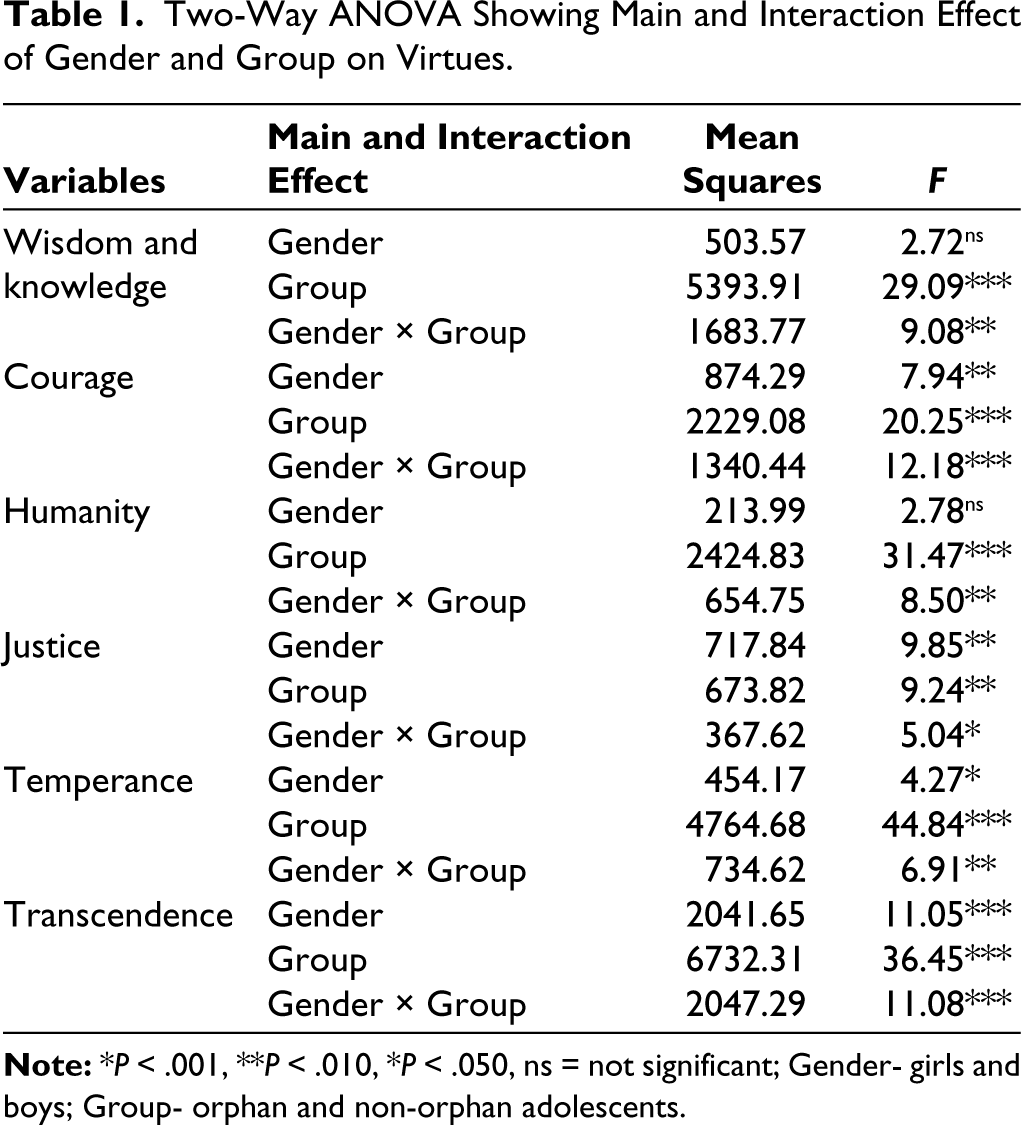
The main effect of gender [F (1598) = 7.94, P > .010] and group [F (1598) = 20.25, P < .001] on courage was found to be statistically significant. Girls (M = 56.70, SD = .66) had higher courage than boys (M = 54.25, SD = .57); non-orphan adolescents (M = 57.43, SD = .61) had higher courage than orphan adolescents (M = 53.52, SD = .62). The interaction effect of gender and group [F (1598) = 12.18, P > .001] on courage was statistically significant. Non-orphan boys (M = 57.72, SD = .83) had higher courage than non-orphan girls (M = .57.13, SD = .89); orphan boys (M = 50.78, SD = .78), and orphan girls (M = 56.26, SD = .96) (see Table 1).
The main effect of gender on humanity was found to be statistically insignificant [F (1598) = 2.78, P > .050]. On the other hand, the main effect of group [F (1598) = 31.47, P < .001] and interaction effect of gender and group [F (1598) = 8.50, P < .010] on humanity was statistically significant. Non-orphan adolescents (M = 46.93, SD = .51) reported higher humanity than orphan adolescents (M = 42.86, SD = .52), while non-orphan boys (M = 47.38, SD = .69) had higher humanity than non-orphan girls (M = 46.48, SD = .75); orphan boys (M = 41.19, SD = .65), and orphan girls (M = 44.52, SD = .80) (see Table 1).
The main effect of gender [F (1598) = 9.84, P < .010] and group [F (1598) = 9.24, P < .010] on justice was found to be statistically significant. Girls (M = 41.04, SD = .53) had higher justice than boys (M = 38.83, SD = .46); non-orphan adolescents (M = 41.01, SD = .49) had higher justice than orphan adolescents (M = 38.86, SD = .50). The interaction effect of gender and group [F (1598) = 5.04, P < .050] on justice was statistically significant. Non-orphan girls (M = 41.33, SD = .73) had higher justice than non-orphan boys (M = 40.70, SD = .67); orphan boys (M = 36.96, SD = .63), and orphan girls (M = 40.76, SD = .78) (see Table 1).
The main effect of gender [F (1598) = 4.27, P < .050] and group [F (1598) = 44.84, P < .001] on temperance was found to be statistically significant. Girls (M = 55.17, SD = .64) had higher temperance than boys (M = 53.41, SD = .56); non-orphan adolescents (M = 57.14, SD = .60) had higher temperance than orphan adolescents (M = 51.43, SD =.61). The interaction effect of gender and group [F (1598) = 6.91, P < .010] on temperance was statistically significant. Non-orphan boys (M = 57.38, SD = .81) had higher temperance than non-orphan girls (M = 56.91, SD = .88), orphan boys (M = 49.43, SD = .77), and orphan girls (M = 53.44, SD = .94) (see Table 1).
The main effect of gender [F (1598) = 11.05, P < .001] and group [F (1598) = 36.45, P < .001] on transcendence was found to be statistically significant. Girls (M = 77.57, SD = .85) had high temperance than boys (M = 73.82, SD = .74); non-orphan adolescents (M = 79.10, SD = .79) had higher transcendence than orphan adolescents (M = 72.29, SD = .81). The interaction effect of gender and group [F (1598) = 11.08, P < .001] on transcendence was statistically significant. Non-orphan boys (M = 79.10, SD = 1.07) had higher transcendence than non-orphan girls (M = 79.09, SD = 1.16), orphan boys (M = 68.54, SD = 1.02), and orphan girls (M = 76.04, SD = 1.25) (see Table 1).
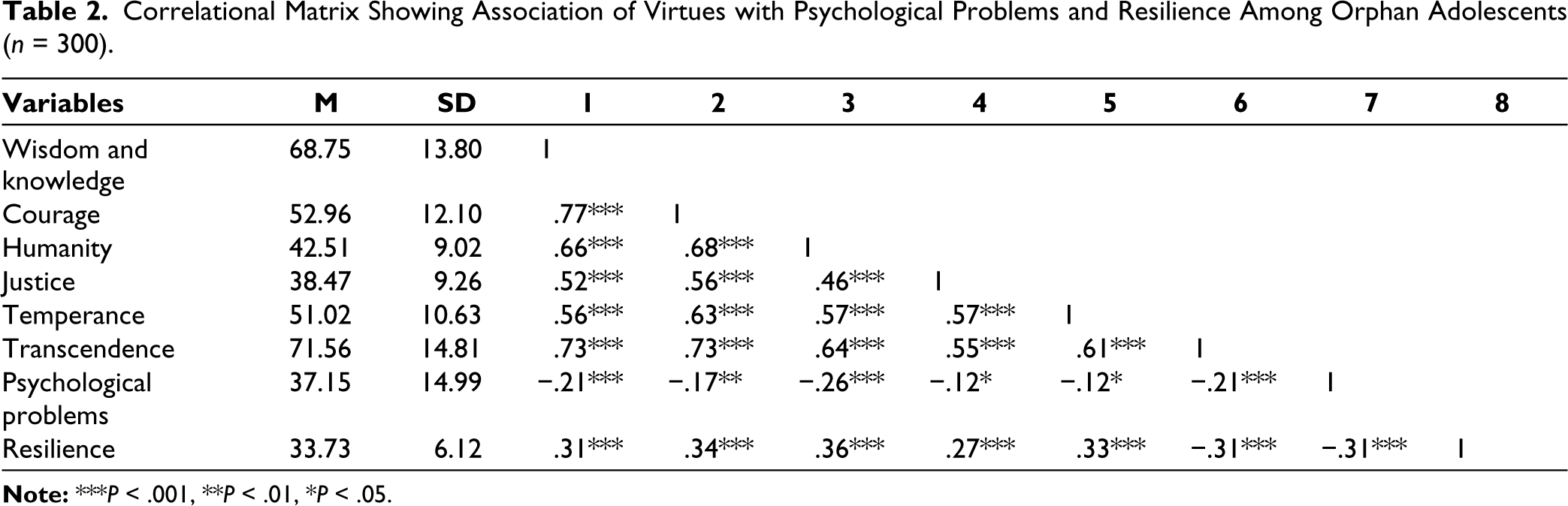
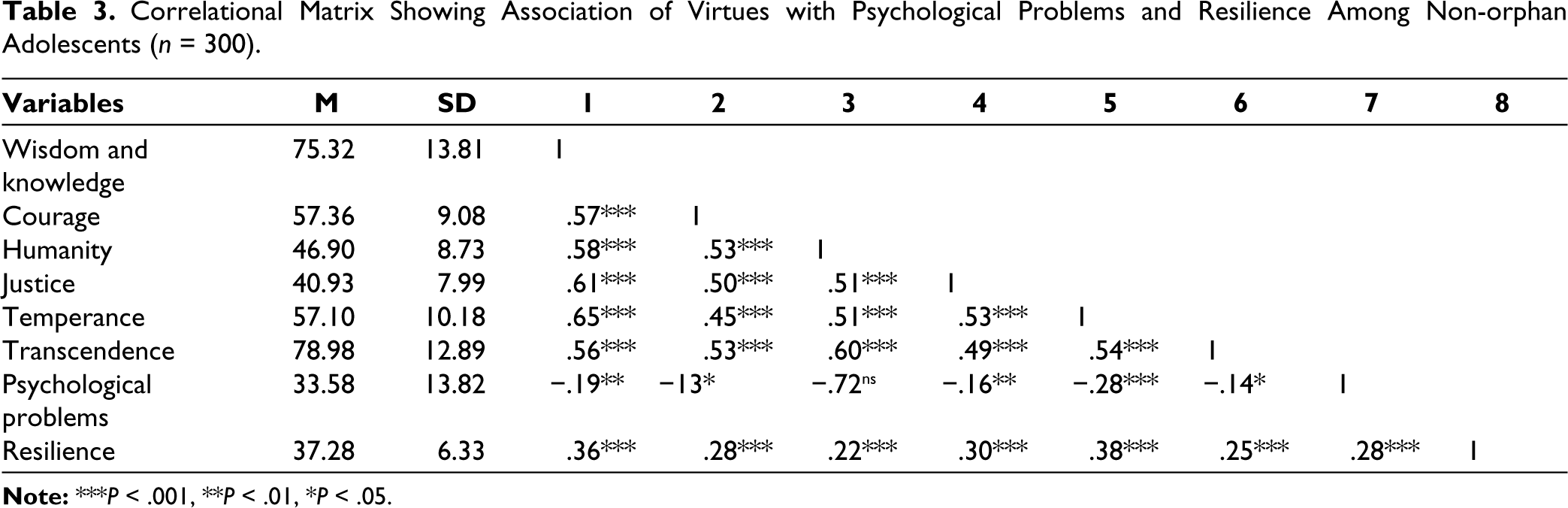
Correlational analysis was carried out to examine the association of psychological problems and resilience with virtues among orphan and non-orphan adolescents. The results of correlational analysis are presented in Tables 2 and 3 for both orphan and non-orphan adolescents, respectively.
Correlational Matrix Showing Association of Virtues with Psychological Problems and Resilience Among Orphan Adolescents (n = 300).
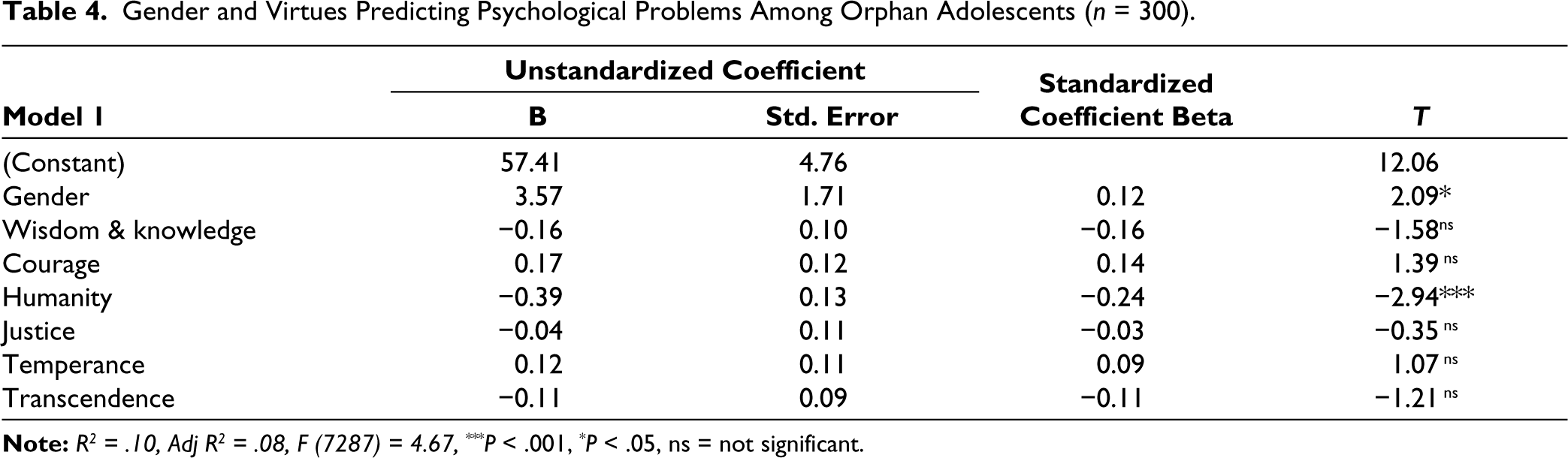
The multiple linear regression analysis for overall predictor variables accounted for R2 = .10, F (7287) = 4.67, P < .001. Gender (β = .12, P <.05) significantly and positively predicted psychological problems among orphan adolescents. Orphan girls had a higher level of psychological problems than orphan boys. Additionally, humanity (β = −.24, P <.001) significantly and negatively predicted psychological problems among orphan adolescents. Gender and humanity explain 10% of the variance in psychological problems among orphan adolescents. Other virtues did not significantly predict psychological problems among orphan adolescents (see Table 4).
Correlational Matrix Showing Association of Virtues with Psychological Problems and Resilience Among Non-orphan Adolescents (n = 300).
Gender and Virtues Predicting Psychological Problems Among Orphan Adolescents (n = 300).
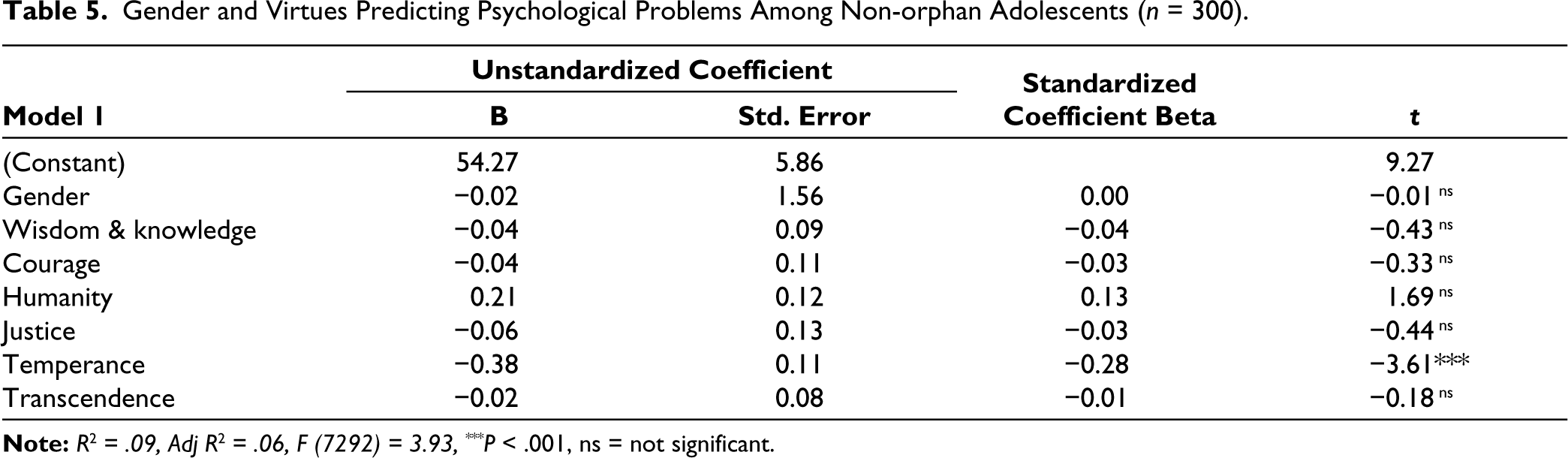
The multiple linear regression analysis for overall predictor variables accounted for R2 = .09, F (7292) = 3.93, P < .001. Temperance (β = −.28, P <.001) significantly and negatively predicted psychological problems among non-orphan adolescents. Temperance explains 9% of the variance in psychological problems among non-orphan adolescents. Other virtues did not significantly predict psychological problems among non-orphan adolescents (see Table 5).
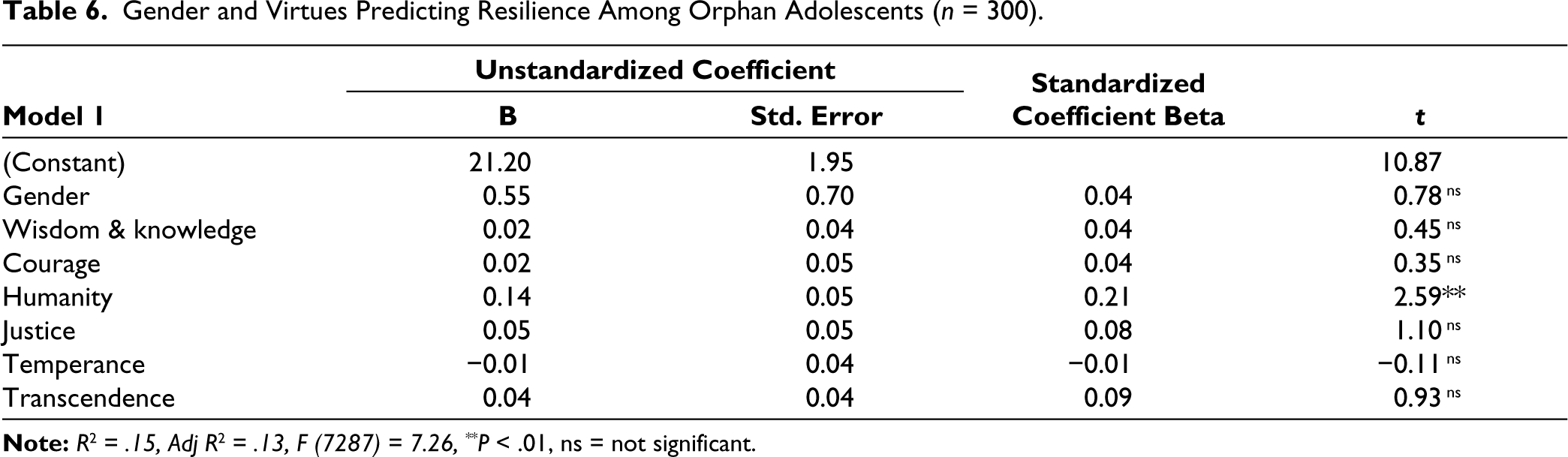
The multiple linear regression analysis for overall predictor variables accounted for R 2 = .15, F (7287) = 7.26, P < .001. Humanity (β = .21, P <.01) significantly and positively predicted resilience among orphan adolescents. Humanity explains 15% of the variance in resilience among orphan adolescents. Gender and other virtues did not significantly predict resilience among orphan adolescents (see Table 6).
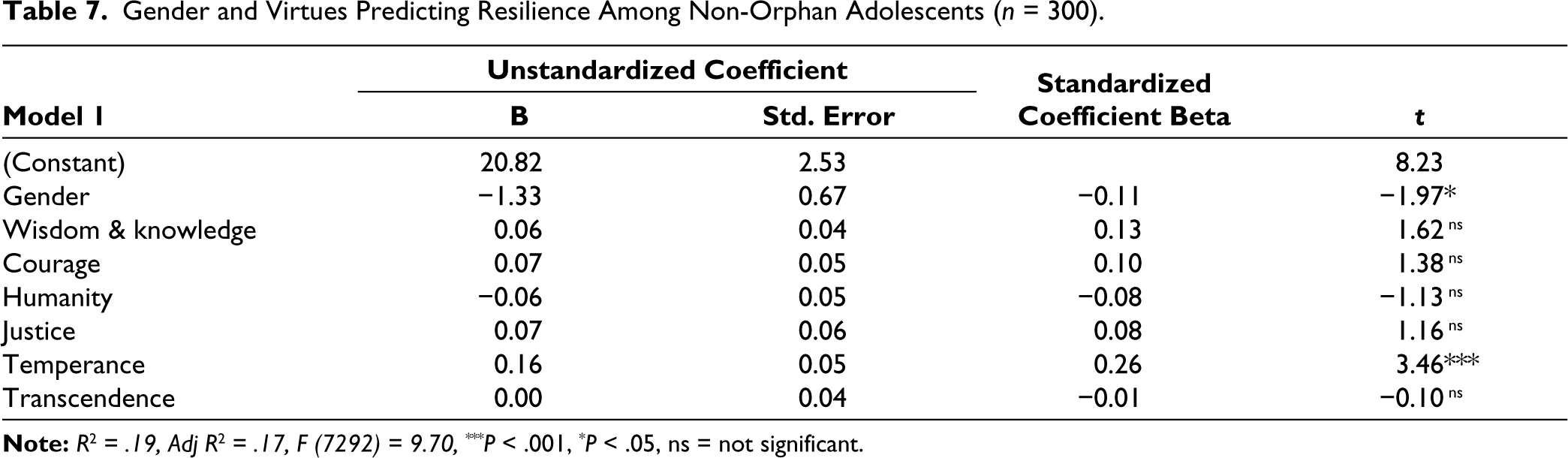
The multiple linear regression analysis for overall predictor variables accounted for R 2 = .19, F (7292) = 9.70, P < .001. Gender (β = −.011, P <.05) significantly and negatively predicted resilience among non-orphan adolescents. Non-orphan girls had a lower level of resilience than non-orphan boys. Additionally, temperance (β = .22, P <.001) significantly and positively predicted resilience among non-orphan adolescents. Gender and temperance explain 19% of variance in resilience among non-orphan adolescents. Other virtues did not significantly predict resilience among non-orphan adolescents (see Table 7).
Gender and Virtues Predicting Psychological Problems Among Non-orphan Adolescents (n = 300).
Gender and Virtues Predicting Resilience Among Orphan Adolescents (n = 300).
Gender and Virtues Predicting Resilience Among Non-Orphan Adolescents (n = 300).
Discussion
The present study aimed at examining the virtues that best predict psychological problems and resilience among orphan and non-orphan adolescents. Orphan girls positively predicted psychological problems, while non-orphan girls negatively predicted resilience. Humanity negatively predicted vulnerability and positively predicted resilience among orphan adolescents. Similarly, temperance negatively predicted vulnerability and positively predicted resilience in non-orphan adolescents. The findings of two-way ANOVA followed by multiple regression findings are discussed below:
The main effect of gender on virtues suggests that girls had higher virtues such as courage, justice, temperance, and transcendence. This is in line with the previous studies that report gender differences concerning virtues, with girls having significantly higher scores on all the virtues than boys.35,36 Gender differences in virtues courage and justice favoring girls can be explained as a response to the restrictions imposed on girls due to the social norms in a patriarchal society. Unequal distribution of power has led women to experience oppression, 37 and as a consequence of this inequality, women are denied the opportunities that are available to men. 38 Research has suggested that reacting to this oppression differs for women; some internalize this oppression, which leads to negative consequences, 39 while others externalize it by fighting it with courage. 40 Additionally, women generally have a timider nature than men, 41 due to which they are sensitive to issues concerning fairness and justice. Thus, manifesting courage as a way of handling oppression and the timid nature of girls can be seen in them reporting higher levels of the virtues courage and justice compared to boys.
Gender differences in virtue temperance and transcendence in the present study align with the previous studies. Girls were found to have higher levels of temperance and transcendence than boys. Studies have shown that girls have higher forgiveness, 42 self-regulation, 43 and humility. 44 Differences in gender regarding temperance can be attributed to the effect of differential societal expectations for girls and boys, where boys and girls are encouraged to express different types of emotions. While boys usually express emotion that is associated with power, 45 girls lean toward emotion, including warmth, agreeableness, and hope. Women are more religious than men. 46 It is argued that women are more religious because they are more risk-averse than men, which could be because of biological factors or the way they are socialized. 47 Studies also show that women are higher on spirituality, 48 gratitude, 49 and appreciation of beauty and excellence 50 compared to men. Thus, the gender difference with regard to transcendence may also be attributed to socialization.
Non-orphan adolescents have significantly higher scores than orphan adolescents on all the virtues. Though the virtue/character strengths are not compared between orphan and non-orphan adolescents, studies have suggested that among the social factors, parental factors deserve more attention in cultivating development.51,52 Studies have also suggested that parental care positively predicted character strengths such as bravery, perseverance, kindness, and self-regulation. 53 Additionally, positive family functioning, including family cohesion and positive parent-child communication, is positively related to the development of character strengths. 54 It is essential to understand that the unique contribution of the parental factor has been attributed to the higher levels of all the virtues in non-orphan adolescents compared to the orphan adolescents in the present study.
Interaction effect in the present study has shown a unique contribution of gender along with the group that adolescents belong to; gender and group showed significant interaction in all the six virtues. Non-orphan adolescent boys had higher scores in virtues, including wisdom and knowledge, courage, humanity, temperance, and transcendence, than other counterparts, apart from the virtue justice. Though studies favor girls in terms of virtues,35,36 it is essential to note that other factors also influence the development of virtues in adolescents. One such factor is cultural influence; virtues are nation-specific, and culture plays a crucial role in the importance attached to virtues. 55 Indian culture aligns with the traditional gender roles, where boys are given more opportunities than girls; with this unequal opportunity, boys benefit with the exposure of possibilities. Apart from this, the presence of a familial environment has favored non-orphan boys of the present study to score higher on virtues than the other counterparts in the present study.
In the present study, orphan girls reported a higher level of vulnerability than orphan boys. Gender studies on psychological distress suggested that girls experience a higher level of distress than boys,56,57 and it is related to the socially defined roles for both genders. 57 Adolescent girls experience more internalizing problems such as depression 57 and anxiety. 58 One of the significant buffering factors of mental distress is social support, especially during adolescence. 59 The apparent difference in mental distress between adolescent boys and girls is significantly influenced by social support. 59 In the present study, orphan adolescent girls experienced a higher level of psychological problems than orphan boys, which may be because of lack of social support. Since girls tend to internalize their problems and most of the problems result from interpersonal relations, strong social support is inevitable. Unfortunately, the lack of social support in orphanages might elevate the vulnerability of orphan girls in the present study.
It is noted that non-orphan girls reported a lower level of resilience compared to non-orphan boys. Previous gender research on resilience showed mixed results. While some research did not note any appreciable gender difference on the amount of resilience,60,61 some studies revealed that males had a higher level of resilience,24,62 while others reported that females had a higher level of resilience. 63 In terms of resilience, gender is one of the inconsistent and unreliable predictors. 64 Studies have suggested that significant gender differences are mainly caused by the effect of gender roles 65 and personality traits. 61 However, in the present study, the presence of primary social support did not favor the non-orphan girls, in terms of resilience. This relation can be better explained by exploring the moderating factors between gender and resilience
In the present study, humanity negatively predicted psychological problems and positively predicted resilience among orphan adolescents. Humanity is known as interpersonal strengths, which include love, kindness, and social intelligence. Deprivation of love from parents or primary caregivers strongly affects orphans’ personality. Lack of love was linked to a high level of aggression, lack of attachment, 66 poor socialization, rebelliousness, 67 impulsiveness, and difficulty expressing their feelings. 68 On the other hand, orphan adolescents who exhibited emotional empathy had a strong association with extraversion. 69 Humanity is one important virtue that endeavors happiness through strengthening social skills. Orphans residing in institutions/orphanages have a strong thirst for love, and since they lack parental love, they share love and happiness among themselves. 70 Being kind to one another and sharing love among orphans help them to grow psychologically and motivate them to build a better future. 71 The strength of social intelligence helps orphans to understand others’ behavior and its consequences. 72 In line with the previous studies cited above, the present study highlighted the importance of humanity and its strength in orphan adolescents. These interpersonal strengths help orphan adolescents improve their social skills, which in turn increases their ability to be resilient through alleviating their problems.
In the present study, temperance negatively predicted psychological problems and positively predicted resilience among non-orphan adolescents. The strengths of temperance include forgiveness, humility, self-regulation, and prudence. Previous studies are also in line with the findings mentioned above.60,73 Self-regulation is negatively linked to internalizing and externalizing problems. 26 Adolescents with a high level of forgiveness are likely to have decreased levels of stress, depression, anxiety, and blood pressure, as well as less intense negative emotions, such as anger or hostility and inhibition of aggression. 27 On the other hand, forgiveness23,24 and self-regulation 25 have a positive association with resilience. The strengths mentioned above help in building a meaningful relationship and adapting effective coping strategies during adversities. 23 Studies have shown that the family environment is crucial to the emergence of these strengths such as forgiveness, humility, self-regulation, and prudence. 74 It is important to note that non-orphan adolescents included in the present study have a better family environment, parental care, and meaningful relationship with parents than others. Thus, with the support of the family environment, non-orphan adolescents can wisely use the strengths of temperance to deal with psychological problems and become resilient.
In the present study, wisdom and knowledge did not significantly predict psychological problems and resilience in both the orphan and non-orphan adolescent sample. This virtue comprises cognitive strengths such as creativity, curiosity, judgment, perspective, and love of learning. The strengths of wisdom help to acquire knowledge and apply it effectively in daily lives. 13 The findings mentioned above contradict the findings of previous studies that report the strengths curiosity 75 and creativity 76 to be predominantly associated with resilience in adolescents. The strength curiosity helps an individual to perceive threats thoughtfully and inquisitively, 77 thus increasing positive affect and hope. 78 Individuals with high creativity use divergent thinking and make use of their creative problem-solving skills as coping strategies. 14 It may be noted that strengths of wisdom and knowledge involve higher-order cognitions, and the development of these functions primarily depends upon their innate ability and their environment (family, school, and community). It is possible that these strengths are less relevant to adolescents compared to other strengths. This however needs to be examined in further studies.
In the present study, the virtue courage did not significantly predict psychological problems and resilience among orphan and non-orphan adolescents. Courage comprises emotional strengths such as honesty, bravery, zest, and perseverance; these strengths help an individual to exercise one’s will in achieving goals despite the presence of internal or external obstacles. 79 The findings mentioned above contradict the previous findings which suggest that courage is a significant predictor of resilience and serves as a protective factor23,80; courage is an extremely important component of resilience; and strengths zest and bravery was seen as a significant predictor of resilience. 7 Surprisingly, in the present study, courage did not significantly predict psychological problems and resilience among orphan and non-orphan adolescents. The development of courage depends on internal factors such as self-esteem and emotion regulation and external factors such as parenting styles and socio-economic status. 81 Further studies must also consider these factors cited above to understand how courage is related to positive and negative outcomes in adolescents.
In the present study, virtue justice did not significantly predict psychological problems and resilience among orphan and non-orphan adolescents. The strengths of justice are known as civic strength, which includes teamwork, fairness, and leadership. The findings cited above contradict the previous findings that suggest that strengths such as teamwork 21 and leadership 22 are significant predictors of resilience, especially during adolescence, since they buffer against vulnerability. The possible reason for the above-mentioned findings can be derived from a developmental perspective. According to Kohlberg’s six stages of moral development, 82 the highest stage concerns justice, equality, and human rights, and it is also noted that moral development has an upward trend. 83 In adolescence, one’s personality is just being formed and values are acquired, 83 so the skills associated with the sense of justice and fairness are developing, not yet fully developed. More than a cross-sectional study, the longitudinal study can help in providing deeper insight into this finding.
In the present study, virtue transcendence did not significantly predict psychological problems and resilience among orphan and non-orphan adolescents. The strengths of transcendence are known as theological strengths, which include spirituality, gratitude, humor, hope, and appreciation of beauty and excellence. Strengths that accompany this virtue forge connection to the larger universe and provide meaning. According to Maslow’s hierarchy of needs, 84 the highest human need was self-actualization, which was later revised as self-transcendence. 85 Self-transcendence is the experience of feeling connected to something greater than oneself. 86 Maslow 87 proposed that since transcendence needs the accumulation of knowledge and experience, it is possible to acquire transcendence in old age. So, transcendence is more related to old age than to adolescence. That could be a possible reason for transcendence not significantly predicting psychological problems and resilience among orphan and non-orphan adolescents.
Though the virtues humanity and temperance shown association with orphan and non-orphan adolescent’s psychological problems and resilience, the variance contributed was small. The independent variables gender and virtues included in the present study are internal factors. It is essential to acknowledge that adolescent’s development is not limited to internal factors but includes external factors also. Thus, including only the internal factors have yielded low variance on dependent variables. Combination of other internal factors such as motivation, aspiration, and academic achievement and also external factors such as peer influence, relationship with teachers, and influence of school environment would be fruitful in yielding moderate to high variance in psychological problems and resilience.
Conclusions
Effect of gender and group on virtues was significant in the present study. The influence of gender and virtues on psychological problems and resilience was evident in both orphan and non-orphan adolescents. Orphan girls were more vulnerable to psychological problems and non-orphan girls had a low level of resilience. Though orphan adolescents lack family relations, humanity was found to be significantly related to both psychological problems and resilience in the expected direction. For non-orphan adolescents, virtue temperance is associated with psychological problems and resilience. The virtues wisdom and knowledge, courage, justice, and transcendence were not found to be significantly associated with either psychological problems or resilience among orphan and non-orphan adolescents. Overall, humanity and temperance appear to be most relevant for negative and positive outcomes in adolescents in the expected direction. The findings of the present study highlight the importance of humanity and temperance for both orphan and non-orphan adolescents.
Limitations
The present study has certain limitations. Orphans and non-orphans included in the study are from a single district, which restricts the generalization of the present study findings. Including samples from other districts may result in more generalizable findings. A cross-sectional research design was adopted in the present study; a mixed method approach, including qualitative interviews can help in gaining deeper insight into the research problem. In the present study, the independent variables selected are internal in nature, which contributed to low variance on the dependent variables. Addition of other internal and external factors would yield high variance. For the translated measures used in the present study, only reliability was checked, but the measures were not validated after translation. Further validation of translated tools would ensure the content accuracy. The presence/absence of physical illness and (or) psychiatric conditions were only verified with teachers and authorities of the orphanage/institution but not with parents or medical records. Verifying with parents and checking the medical records would give more reliable information about the student’s physical and psychological health conditions. Additionally, the study excluded the potential significance of demographic factors like age, which might have a major influence on virtues. The inclusion of samples from various age groups can be useful to appreciate the relationship between virtues and the outcomes related to age.
Implications
The present study has both practical and research implications for adolescents in general, and orphan adolescents in particular. Humanity is an important virtue for orphan adolescents, and demonstrating these qualities in daily life will be advantageous to them. Having social relationships has a considerable positive impact on temperance for non-orphan adolescents. Utilizing these assets as potent coping mechanism could make them more robust. Character strength education program in schools could be incredibly helpful for adolescents. These programs will help adolescents to develop their signature strengths and increase awareness about their potential limitations. By enhancing their strength, they could possibly overcome their limitations. Regular practice of positive psychology exercises such as counting the blessings, journaling the act of kindness, and gratitude can improve the positive outcome among adolescents. The present study highlighted the buffering nature of virtue humanity and temperance on psychological problems, so clinicians can recommend the practice of strength-based interventions as an adjunct therapy, which can focus more on positive flourishing rather than on psychopathology. Future research may adopt a mixed-methods approach in studying virtues and resilience. Further longitudinal studies on orphan adolescents regarding their signature strength can be conducted, which can confirm the development of character strength over time.
Footnotes
Declaration of Conflict of Interest
The authors declared no potential conflicts of interest with respect to the research, authorship and/or publication of this article.
Funding
The authors received no financial support for the research, authorship, and/or publication of this article.