



Abstract
Background:
Evidence demonstrates that ambiance provided during childhood and the interactions of children with different social agents during childhood have an impact on their adult behaviour.
Objective:
The current research tries to explore the role of adverse childhood experiences and perceived family and interpersonal interactions in their resultant adult risk behaviour.
Method:
Around 613 emerging adults (18–24 years; Male 343 and Female 270) from the northern districts of Kerala, India took part in the study. The participants were selected using multistage sampling techniques. A Semi-structured Questionnaire was used to understand the perceived family and interpersonal environment. In addition, a checklist (adopted from the risk behaviour scale and youth risk behaviour survey) was also employed. The checklist assisted to understand the presence of actual risk behaviours.
Results:
Hierarchical Logistic Regression analysis is used to test the hypotheses. The results revealed that 87.2 % of the participants were engaged in at least one type of risk behaviour. Socio-demographic variables (gender and family type) and items of perceived family and interpersonal relationships and adverse childhood experiences were found to be significant predictors of emerging adult’ risk behaviour.
Conclusion:
The results further highlight the significance of childhood experiences and the current family environment of emerging adults in understanding their behaviour, and in designing evidence-based intervention program for emerging adults.
Keywords
Introduction
The United Nations estimates that by 2050, the population above 65 years of age will be almost 1.5 billion worldwide. They will outnumber adolescents and youth aged 15–24 years (1.3 billion). 1 It implies that the major share of the world population will be people above 65 years and children below 5 years, who require special care and protection. Therefore, most countries need to invest revenue and resources in the health sector to take care of this dependent population. This population trend may have a severe impact on the production sector and other areas. The vast majority of the population will be looking toward the small section of the younger population for its survival and nourishment. So, for a better- functioning society, the smaller sections of youth should be at their optimal functioning levels.
Any behavior that poses a threat to life, blocks individual growth, reduces efficiency and productivity, and increases the burden for society and the nation at large needs the special attention of the policymakers. For this reason, social scientists across the world are actively engaged in research in different dimensions of risk behaviors, especially among youth.2, 3 The number of deaths or physical damages caused by the risk behavior is high among the youth.
So far as risk behavior is concerned, predictive and preventive factors among adolescents were widely studied4, 5 and the significant impact of physiological changes, which is unique to adolescents and their interaction with the environment, have been elaborated. Yet, these studies were not sufficient enough to draw any conclusions on emerging adults, as adolescent behavior is heavily influenced by the physiological changes they undergo while emerging adults’ behavior is influenced by their interaction with the environment and the individual’s unique aspects. 6 The impacts of globalization and industrialization are varying on the individual and society. Societal roles and responsibilities are different. Hence, it is important to investigate the youth risk behavior in different communities and cultures as it is predicted to vary from community to community.
The findings from various studies highlight young adults as vulnerable to different risk behaviors,7, 8 mainly to substance abuse, 9 reckless driving, 10 alcoholism, 11 unprotected sex, 12 criminal and other offenses 13 and many health-compromising behaviors. 14 Identifying both the risk factors and protective factors is vital in dealing with the potential risk behavior of emerging adults across society. In addition, the mental health issues that emerging adults face are also increasing. 15
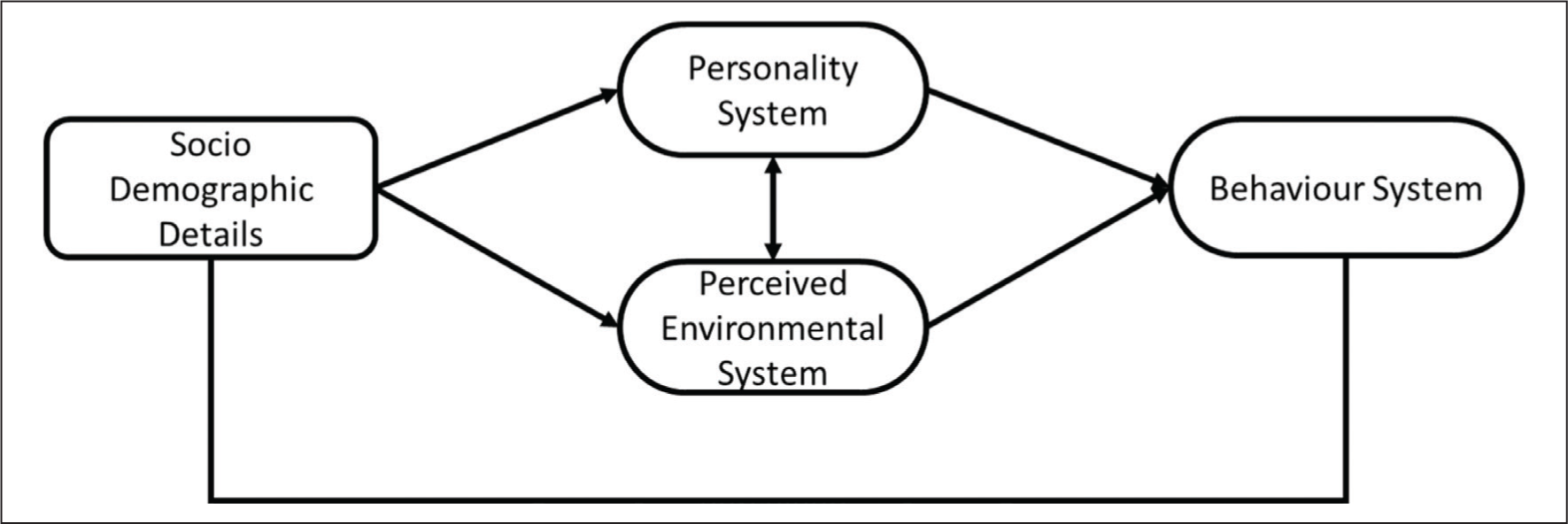
Jessor problem behavior theory focuses on the person- environment interaction in problem behavior formation.16, 17 This theory supports the need for researchers to look into both personal and situational factors that may be contributing to problem behaviors. Along similar lines, the current research also looks into the environmental factors that might have played a crucial role in the problem behavior of emerging adults.
Certain environmental and demographic factors are identified to be crucial in the formation and maintenance of risk behaviors. Nature and type of risk behaviors are found to vary across the genders. 18 Family dynamics19, 20 and dysfunctional family environments are identified to be crucial in the formation and maintenance of risk behaviors. 21 Parental overindulgence and overprotective behaviors 22 and peer pressure 23 are also significant contributors to risk behaviors, whereas a congenial family environment is expected to shield individuals against risk behaviors. 21 Evidence also highlights that adverse childhood experiences are significant predictors of risk behavior in later stages of life. 24 In line with these findings, the current study adopts the problem behavioral theory as the conceptual model (Figure 1) to see the dynamics of family, interpersonal interactions, and demographic variables in emerging adults’ risk behavior.
Objective
To understand the role of adverse childhood experiences and perceived family and interpersonal environments in emerging adult risk behavior.
Hypotheses
There will be significant gender differences in risk behavior.
There will be a significant association between socio-demographic variables and adverse childhood experiences.
There will be a significant association between socio-demographic variables and family and interpersonal relationships.
Childhood experiences, perceived family and interpersonal environment, and demographic variables are significant predictors of emerging adult risk behavior.
Methods
Design: A cross-sectional correlational research design was followed.
Participants
A total of 750 emerging adults from the five northern districts of Kerala, India, were approached for the study, of which 613 (male 343, female 270) completed the survey form and submitted it. The participants were selected through multistage systematic sampling. The participants who stayed in Kerala, mainly from the regions mentioned above, were only included in the study. Those who are currently residing outside those regions and who are staying in this region but are basically from other parts of the state were excluded since it will cause variance in the environment and other factors.
Among the total participants (N = 613) about 56% (n = 343) of them were male while 44% (n = 270) were female, of which 25.6% (n = 157) of them were aged 18–19, 50.1% (n = 307) of them were aged 20–21, 10.4% (n = 64) were aged between 22 and 23 years and 13.9% (n = 85) were aged above 24. The majority of the participants have undergraduate degrees (n = 395, 64.4%), while about 20.4% (n = 125) were dropouts and 15.2% (n = 93) were postgraduate degree holders. At present, 69.5% (n = 426) of them were still continuing their education and 10.1% (n = 62) were employed.
Measures
The study tools which were used for data collection are as follows:
Background information schedule: The basic details of the participants mainly gender, age, family type, education, etc. using a close-ended question. Perceived home environment and interpersonal relationship: To measure emerging adults’ perceptions of their family environment and interpersonal relationships, we developed a semi-structured questionnaire with 11 items following the pattern outlined in Deb et al. Following Banu (2013).
25
The answers are, in particular addressing their perspectives on family dynamics and interpersonal relationships examples are (a) assessing family situations as vulnerable or distressing/stressful, (b) comfort in sharing problems with parents, (c) parents believing that parents fulfil basic needs, (d) intentions to leave home for lack of reason or punishment. Three experts reviewed the items for relevance and clarity. Modifications were made based on their feedback, and the questionnaire was pilot-tested with 30 people before finalizing it. Adversities during childhood: Adversities during childhood were measured using a semi-structured questionnaire prepared by the researcher and the supervisor focusing on areas like verbal, physical, sexual, and emotional abuse or exploitation, witnessing violence and financial problems adopting the procedure mentioned in Deb and Banu (2013).
25
It included six dichotomous items with yes or no responses, mostly related to their perception of adversities during childhood. For example, (a) Have there been incidents in your life during childhood when you have been spoken to in a way that made you feel bad/sad/scared/ashamed?, (b) Have there been incidents in your life during childhood when you have been seriously hurt/injured physically?, (c) Have there been incidents in your life during your childhood when you have been touched or done something to or shown something that made you feel uncomfortable or scared or ashamed?, (d) Have you witnessed adults known (father, mother, or any relative) or unknown to you behave in a way that frightened or upset you?, (e) Did you lose any of your close family members in the past with whom you were connected emotionally?, (f) Did you experience a serious financial crisis during childhood? The participants retrospectively responded to each item. The expert team examined the items and ensured the content validity and a pilot on 30 samples was carried out to check the validity and feasibility. Emerging adults risk behavior checklist (EARBC): The EARBC was used to identify the risk behaviors of emerging adults in northern Kerala. The EARBC included items from empirical research held in India in this field as well as items from the Youth Risk Behavior Survey. The EARBC has 19 items to which the participant has to report whether he/she has engaged in any of the behaviors listed in the checklist. The EARBC included items such as (a) Did you engage in any illegal or anti-social activity (like theft, robbery, etc.)? (b) Were you involved in street fighting or eve-teasing in the last year? (c) At present are you using any substances? (d) Have you engaged in speed driving, during the last month? (e) Have you disobeyed Traffic rules during the last month? (f) Have you engaged in drunken driving in the last one month? (g) Have you engaged in unprotected sex during the last one month? More details are provided in the table. The expert team examined each item to ensure the appropriateness and validity of the current scale. Based on the pilot, instructions were modified.
Ethical Approval
All the ethical aspects as prescribed by APA and ICMR were taken into account and the ethical review committee of the department of Applied Psychology, Pondicherry Central University reviewed the proposal in February 2014 and forwarded the proposal to the doctoral committee for final approval. The proposal was approved by the doctoral committee in April 2014. The participants of the research were adults above the age of 18 and written informed consent was obtained from all. The current research also adhered to the Helsinki Declaration to protect life, health, dignity, integrity, right to self-determination, and privacy. The participation was volumetry, any time which the participant was not comfortable to answer they were allowed to skip. If the retrospective method had induced any kind of disturbance immediate therapeutic assistance was provided to them. The current study was part of a larger nonfunded research for which it already had the approval of the institutional review board.
Procedure
Following institutional approval and the identification of potential geographical regions, the researcher directly approached each participant at their convenience. Students were engaged in their classrooms, while employees were approached in seminar or conference halls. Daily laborers or unskilled workers were reached through local youth clubs or personal contact, based on their convenience.
Initially, participants received a comprehensive set of questionnaires, including an information sheet, consent form, demographic details form, and various questionnaires. They were instructed to carefully review the information sheet. Upon ensuring participants’ comfort with the provided information, they were invited to sign the consent form, guaranteeing the confidentiality of their responses and emphasizing the voluntary nature of their participation. No monetary incentives were offered for participation.
In cases where participants experienced distress while recalling adverse or traumatic childhood experiences, they were encouraged to withdraw from the study. Psychological first aid was provided, and referrals to nearby psychologists were made for necessary assistance in managing distress.
Upon completion of the questionnaires, participants returned the forms. Subsequently, data cleaning and coding were performed, followed by the application of appropriate statistical tests, including chi-square analysis and logistic multiple linear regression. IBM-SPSS (version 21.0) was utilized for hypothesis testing, and effects were scrutinized using the bootstrapping estimation procedure with a sample size of 5000.
Results
A total of 750 emerging adults from the five northern districts of Kerala, India, were approached for the study, of which 613 (male 343, female 270) were used for analysis and 137 responses were either incomplete or failed to return the questionnaire. Missing data were found to be at random; Little’s MCAR test was not significant (χ2 = 277.2, df = 81, p = .395). Therefore, the total number of responses available for the analysis of the study was [750–137] = 613 responses. And the response rate is 81.73%
Coding of Categorical Variable
Gender is a dichotomous categorical variable; hence, the categories—male and female were converted into dummy variables with 0/1 coding. The variables were coded as female = 0 and male = 1. The female was considered as the reference category. Family type is also a dichotomous categorical variable and it is coded as nuclear family = 502; joined family = 111. For engaging in risk behavior yes is coded as 1 and no is coded as 0.
Preliminary Analysis
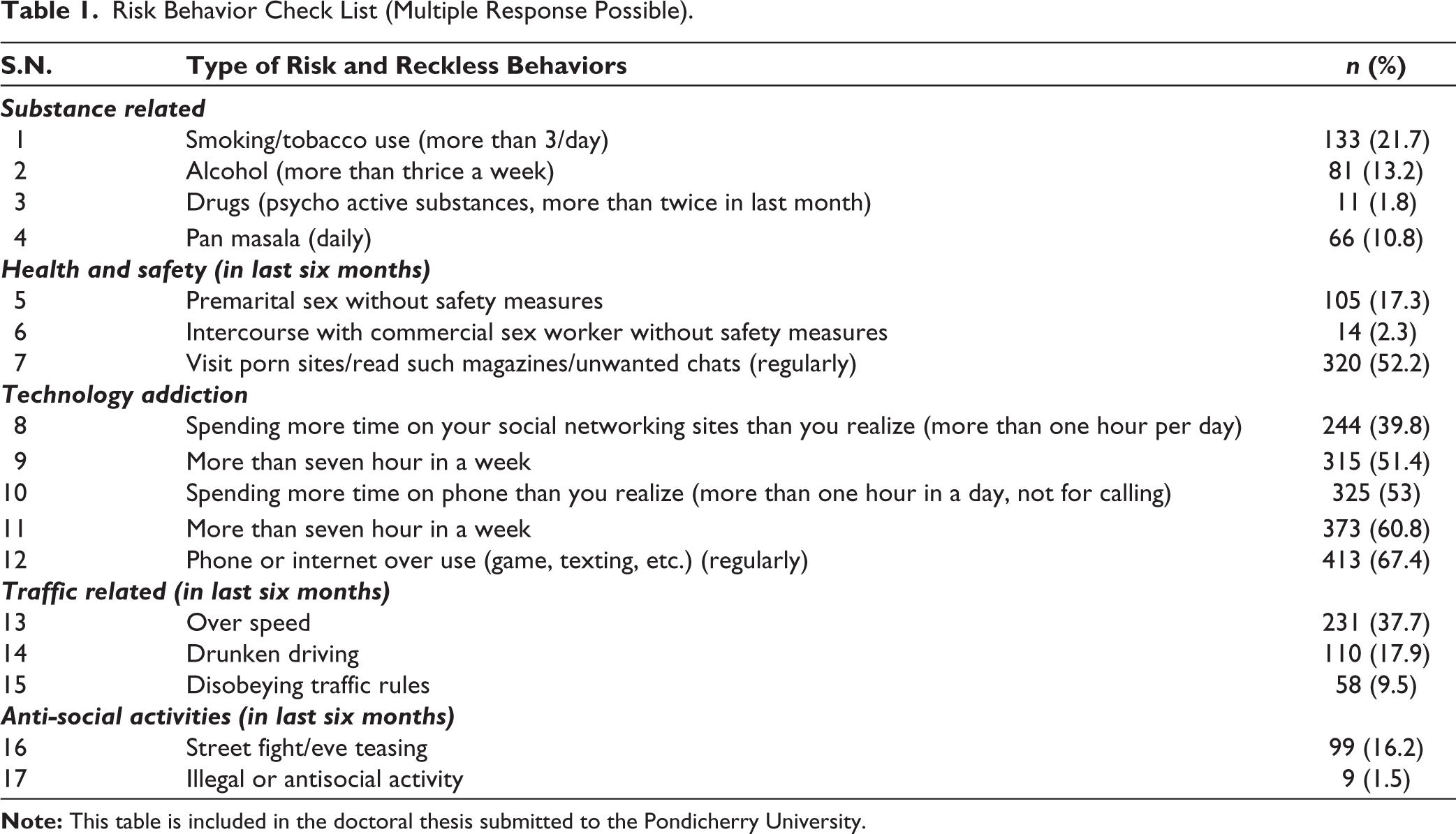
This section identifies the types of adults involved in risk behaviors, as shown in Table 1, and the corresponding frequencies of these behaviors. The risk behaviors identified were categorized as related to factors, health and safety issues, technology issues, traffic management, and anti-social activities. Smoking/tobacco use (more than 3/day) (n = 133, 21.7%), disobeying traffic rules (n = 58, 9.5%), visiting porn sites/read such magazines/unwanted chats (regularly) (n = 320, 52.2%), and premarital sex without safety measures (n = 105, 17.3%) were some of the risk behaviors as revealed by the study.
Risk Behavior Check List (Multiple Response Possible).
A significant majority of participants, totaling 87.8% (n = 538), reported engaging in various risk behaviors, while 12.2% (n = 75) struck reported not engaging in any risk behaviors (see Table 2) Further classification revealed that 22. 8% (n = 140) fell into the fifth category and engaged in one risk behavior or two. The fourth group of three to five types of risk behaviors accounted for 36.1% (n = 221) of participants. Approximately 21.4% (n = 131) belonged to group three which engaged in six to eight types of risk behaviors, while group two, with nine or more types of risk behaviors, accounted for 7.5% (n = 46) of all the participants.
The Frequency of Risk Behavior.

Chi-square Analysis
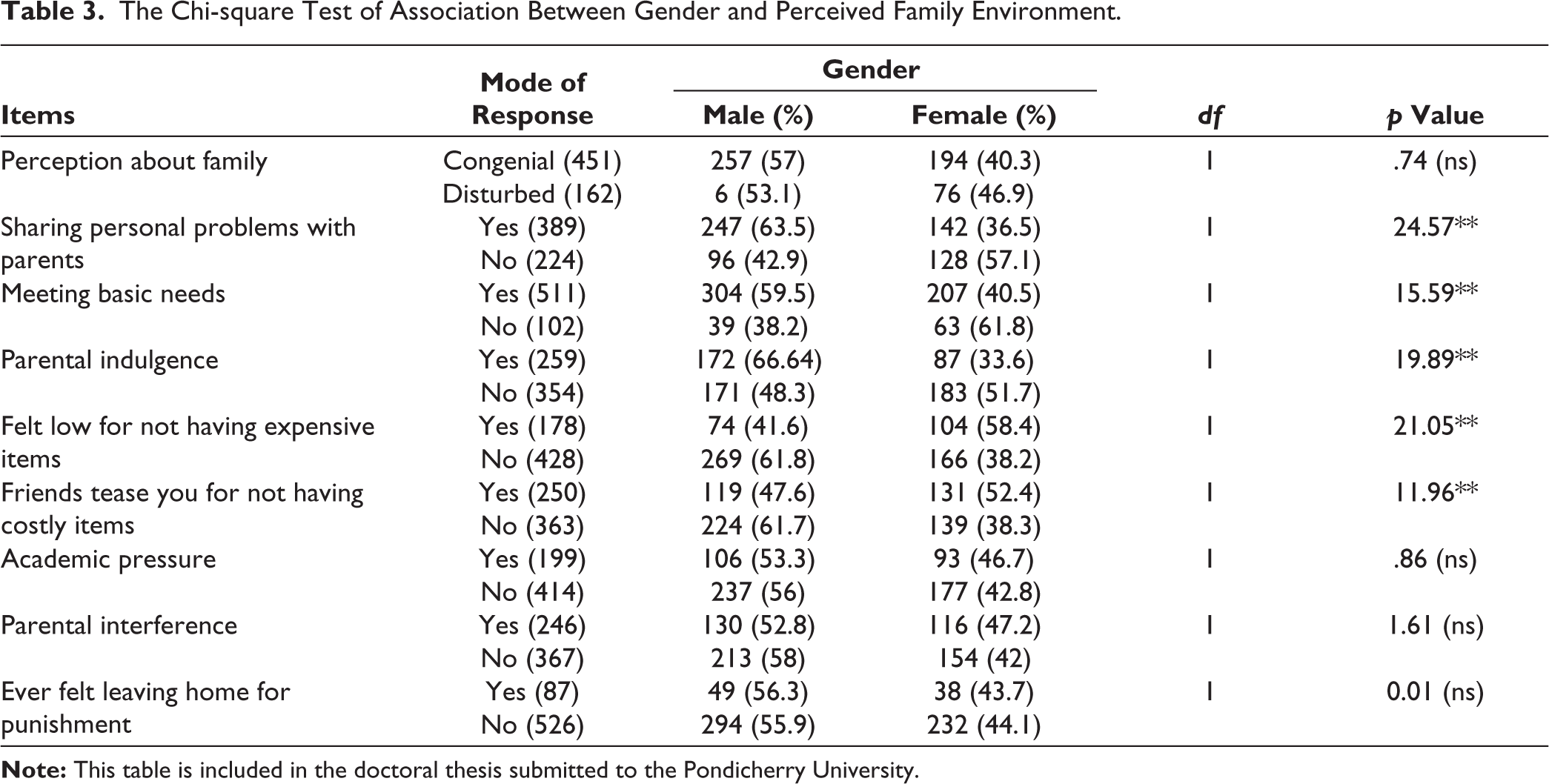
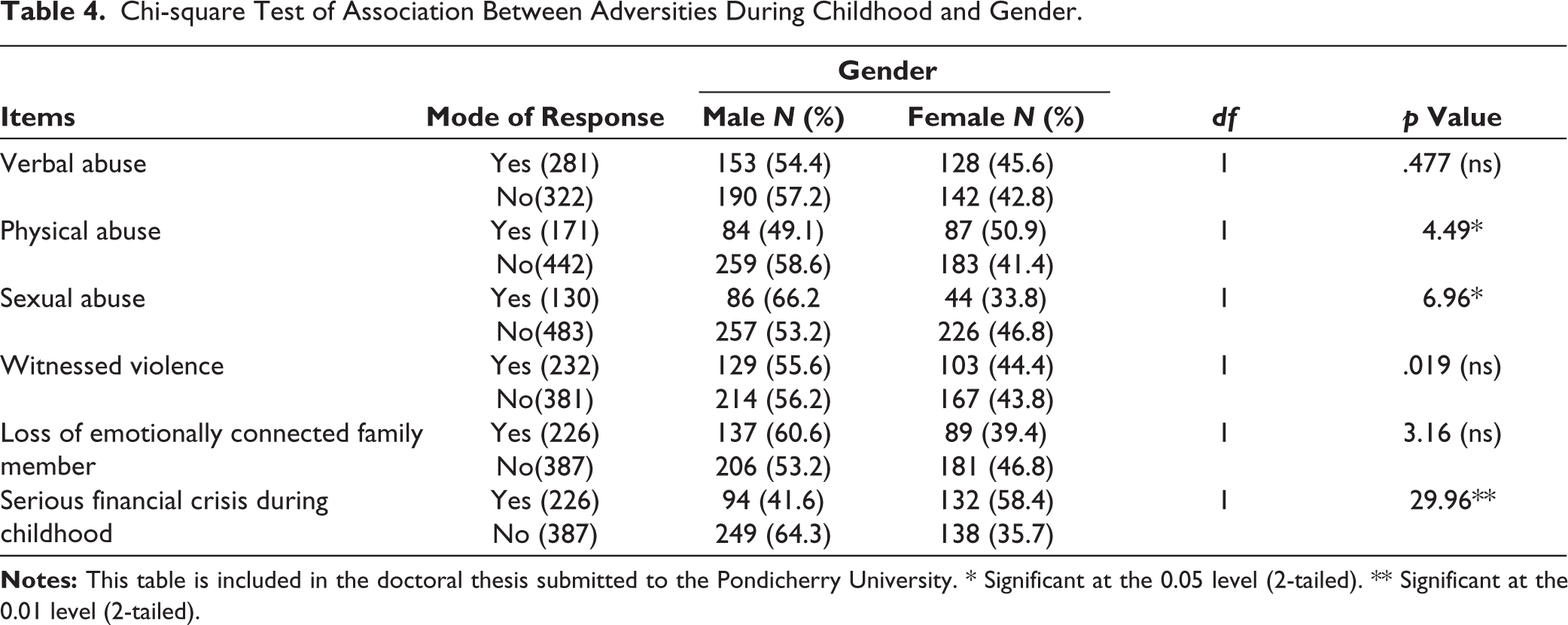
Chi-square analysis was done to examine the relationship between gender and perceived family environment (Table 3), adversities during childhood and gender (Table 4), risk behavior and gender (Table 5), and risk behavior and family type (Table 6).
The Chi-square Test of Association Between Gender and Perceived Family Environment.
Chi-square Test of Association Between Adversities During Childhood and Gender.
Among the total participants (n = 613), the majority perceived their family environment as congenial (n = 451, 76.6%), while others viewed it as disturbed (n = 162, 26.4%). The analysis revealed that male participants are more likely to share problems (63.5%) compared to their female counterparts (36.5%). Gender was also significantly associated [χ2 (1) = 21.05, p < .05] with feeling low for not having expensive items, with females exhibiting a higher tendency (58.4%) than males (41.6%). Female participants (52.4%) experienced more teasing from friends for not having expensive items compared to their male counterparts (47.6%) [χ2 (1) = 11.96, p < .05].
Around 45.8% (n = 281) of participants experienced verbal abuse in their childhood and approximately 27.9% (n = 171) had experiences of physical abuse in their childhood. Close to 21.2% (n = 130) of participants experienced sexual abuse, and 37.8% (n = 232) witnessed violence during their childhood. About 36.9% (n = 226) experienced the loss of emotionally connected family members, and the same percentage had faced financial crises during their childhood. Experiences of physical abuse [χ2 (1) = 4.49, p < .05], sexual abuse [χ2 (1) = 6.96, p < .05], and financial crises during childhood [χ2 (1) = 29.96, p < .01] were significantly associated with gender, while verbal abuse (χ2 (1) = 0.47, p > .05), witnessing violence [χ2 (1) = 0.019, p > .05], and loss of emotionally connected family member(s) [χ2 (1) = 3.16, p > .05] failed to show any significant association. Men (57.6%) were found to have a higher likelihood of engaging in risk behavior than women (44%) (see Table 5). Emerging adults from nuclear families (83.1%) engaged in more risk behavior than those from joint families (16.9%).
Chi-square Test of Association Between Risk Behavior and Gender.

Chi-square Test of Association Between Risk Behavior and Family Type.

Predictors of Risk Behavior
In the initial chi-square analysis of the socio-demographic variables with risk behavior, only gender and family type were found to be significantly associated with risk behaviors while all other variables did not show any significant association. Therefore, these two variables were further used for developing predictive models together with the perception about the family environment and adverse childhood experiences, thus devising a hierarchical logistic regression since the outcome variable risk behavior is dichotomous.
Hierarchical logistic regression was conducted to predict the factors contributing to risk-taking behavior (Table 7). Demographic variables (gender and family type) were added to model one, perceived family environment was added together with demographic details in the second phase. Model one accounted for minimal variance (Nagelkerke R2 = 0.024) in risk-taking behavior and correctly classified 87.8% of cases, while the second model explained 41% variance (Nagelkerke R2 = 0.417) in risk-taking behavior and correctly classified 89.6% of the cases. In the third phase of the model the final variable, adversities in childhood are added to the second model. The final model also was statistically significant (χ2 = 256.431, df = 17, p = .000) and the model explained 65.2% (Nagelkerke R2 = 0.652) of variance in risk-taking behavior and correctly classified 92% of cases. Hosmer and Lemeshow test p value is above .05 (p = .484).
Hierarchical Logistic Regression Analysis Predicting Risk Factors of Risk Behavior.
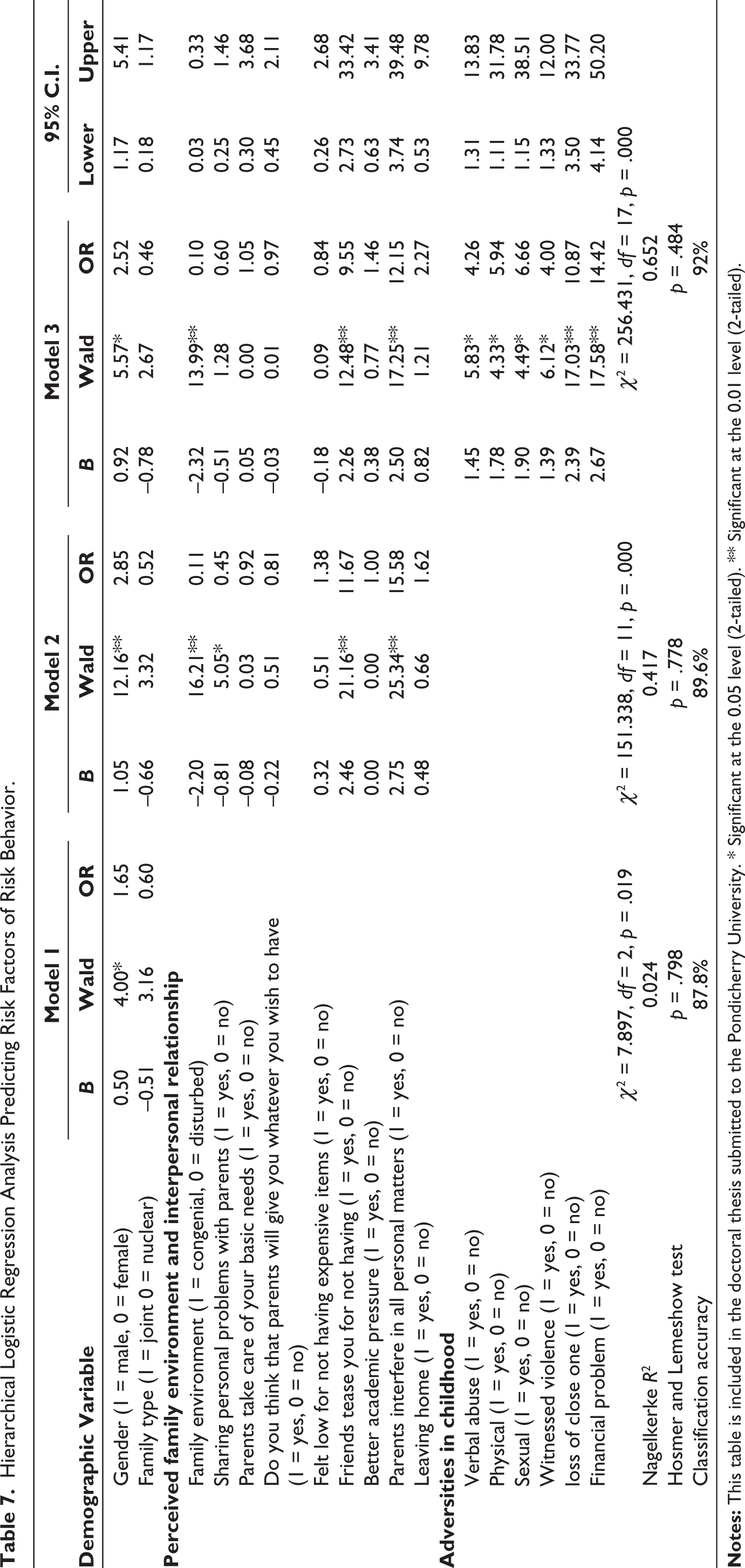
Males (B = 0.92) exhibited a greater likelihood to exhibit risk behavior and it was 2.52 times more than females. Teasing from friends (p = .00), parents’ interference in all personal matters (p = .00), and all items of adversities in childhood (verbal abuse (p = .02), physical abuse (p = .04), sexual abuse (p = .03), witnessed violence (p = .01), loss of close ones (p = .00) and financial problems (p = .00)) significantly predicted risk behavior. A pleasant family environment (B = –2.32, OR = 0.10) and open communication between parents (B = –0.81, OR = 0.45) reduced the chance of risk behavior.
Discussion
In the initial examination using chi-square analysis to assess the relationship between socio-demographic variables and risk behaviors, only gender and family type demonstrated significant associations with risk behaviors. Consequently, these two variables were selected for further exploration in the development of predictive models. Additionally, perceptions about family environment and adverse childhood experiences were included in a hierarchical logistic regression analysis. The analysis reveals (Table 7) that men exhibited about three time greater chance of engaging in risk behaviors than women. Most of the previous studies on risk have identified gender as a significant predictor of risk.26, 27 Arnett’s (1995) 28 theory of Broad and narrow socialization suggests that both endogenous tendency for sensation seeking and restrictions placed on risk-taking by an individual’s culture are decisive in risk-taking. Most cultures support risk-taking behavior as a highly valued masculine nature, naturally placing men at a higher risk of engaging in risk behaviors.29, 30 The observed gender difference in risk-taking tendencies may be influenced by biological factors. Studies have identified associations between levels of testosterone and adrenaline with sensation- seeking behaviors and a propensity for risk-taking.31–33 It has been noted that men generally exhibit higher levels of testosterone. It is also noted that the gender difference in risk-taking may vary according to the nature and type of the risk behavior. 34 In the current study, men were found to be engaged in more substance-related, traffic-related, and antisocial behaviors while women were into technology-related and health and safety-related deviant tendencies. Men were experiencing more parental monitoring and control than women. According to Arnett (2000), 6 youth aged between 18 and 24 years are in the stage of exploring possibilities, and emerging adults expect more independence in terms of decision-making. In a collectivistic society like India, parents want to have a significant role in their son’s/daughter’s life and they want to have a significant role in decision-making. Women have less participation in the decision-making process and elders in the family take decisions on behalf of them. That might be one of the reasons why females experience less parental interference. Women also experience teasing and discriminatory behavior within the family.
The familial atmosphere plays a crucial role in shaping the development of risk behaviors, with supportive family environments for emerging adults appearing to mitigate the susceptibility to engaging in risky behaviors. This study aligns with prior research35–38 underscoring the significance of the family environment. Moreover, dysfunctional households and parental involvement in risk behaviors emerged as notable predictors of subsequent risky behavior.39–43 The current study reveals that women experienced a lack of financial resources in childhood, and more verbal abuse compared to men. During childhood, women have to depend on parents for all financial needs, and many instances of differential treatment for male and female children within the family are also reported. On the contrary, according to popular belief, the current study also supports the research claim that male children experience more sexual abuse within the family. 44 Youth within a certain age bracket typically desire a supportive family environment rather than one that imposes control. They seek guidance, wanting a family that presents various options and assists them in discovering their optimal paths, without enforcing specific choices. Emerging adults value the freedom to make decisions and anticipate unconditional support for their chosen paths, rather than facing criticism. These expectations align with the characteristics of this age group, possibly explaining why our findings indicate that parental interference in personal matters strongly predicts risk behaviors among emerging adults.
Research highlights the significance of peer group association in the initiation and perpetuation of risk behaviors among youth and young adults.44–48 This study reveals that beyond just peer pressure, negative encounters such as teasing or humiliation from friends due to a lack of expensive possessions elevate the likelihood of emerging adults engaging in risk behaviors. In addition to the perceived family environment, adverse childhood experiences such as verbal, physical, and sexual abuse, witnessing violence, bereavement, and financial hardships in childhood seemed to be significant predictors of risk behaviors among emerging adults. Experiences of verbal, physical, and sexual abuse in childhood were found to be associated with risk behaviors. This study aligns with prior research49–53 in demonstrating that various types of adverse childhood experiences reliably forecast the occurrence of risk behaviors among emerging adults.
Likewise, the present study underscores that childhood financial difficulties significantly elevate the susceptibility to engaging in risk behaviors. The enduring repercussions of financial hardships extend across physical, cognitive, social, and psychological dimensions. 54 Such challenges can hasten the early maturation of children, exposing them prematurely to adult responsibilities and knowledge. 55 Parents grappling with financial crises may inadvertently subject children to employment at a young age, placing them in potentially exploitative and hazardous work environments. Some children and young adults become unwittingly involved in antisocial activities, manipulated by offering drugs and minimal compensation. Acting as carriers of drugs and alcohol, they may perceive these activities as a means of earning money discreetly from their parents, unaware of the inherent dangers. These adverse and vulnerable environments can contribute to the initiation and adoption of risky behaviors in later life.
Similarly, experiencing the loss of a loved one during childhood heightens the likelihood of emerging adults developing risk behaviors, mirroring findings observed in adolescents. Young children possess limited ways to express their emotions. 56 The loss of emotionally significant individuals during this developmental stage can result in emotional insensitivity, a struggle to find suitable confidantes, or the development of suspicion and distress. These outcomes may contribute to the adoption of risk behaviors, heightened suspicion, distrust of others, and the potential emergence of suicidal ideation later in life.
Young adults who witness family violence during their childhood face an elevated risk of engaging in risky behaviors. Exposure to violence, coupled with the perception of such behavior as socially acceptable, heightens the likelihood that young adults will replicate similar actions. The observation of violence within the family or community, coupled with the portrayal of violence as acceptable in media, movies, and advertisements, as well as heroic depictions, profoundly influences children. These influences often serve as models for their behavior later in life.57–58
The findings of the current study disclosed that gender, family environment, and interpersonal relationships, and adversities in childhood, are significant predictors of risk behavior, thus emphasizing the need to take corrective measures by the administrators of the educational institutions and local authorities. The findings also reiterate the importance of a healthy and conducive family environment for the healthy development of the children and in this regard, community- based programs need to be conducted for the parents. 21
In fine, it might be stated that a large number of emerging adults are involved in different forms of risk behavior because of various socio-economic and familial factors. The findings suggest the need for corrective measures at the institution, family, and community level, to create a child-friendly and youth-friendly environment, where their voices will be heard and they are provided support and care for their holistic mental, physical, and career growth. Educational institutes should provide mental health support services to children and emerging adults, especially those who experienced adversities and are involved in risk behavior through institute-based family counseling services by trained psychologists. Parents and guardians should be a part of the intervention program for bringing positive behavior change in children and emerging adults.
The present study has several limitations. First, it relies on self-reported data. Second, the study exclusively includes emerging adults from urban areas. There is a necessity for additional research encompassing emerging adults from diverse segments of society.
Footnotes
Acknowledgements
The current article is conceptualized independently from the data collected as a part of the Doctoral Research Programme carried out in the Department of Applied Psychology, Pondicherry Central University. The participants have given consent to use the data for research purposes and the doctoral committee has examined the data and validated it.
Data Availability
The data that has been used is confidential.
Declaration of Conflicting Interests
The authors declared no potential conflicts of interest with respect to the research, authorship, and/or publication of this article.
Ethical Approval
The research is approved by the Pondicherry University.
Funding
The authors received no financial support for the research, authorship, and/or publication of this article.
Statement of Informed Consent
Informed consent was obtained from all the participants and all the ethical guidelines provided by APA and ICMR were strictly followed in this research.