




Abstract
Background:
Aggression and crime are connected and highly reported among juveniles in recent times as compared to adults, which ends up in delinquency. It is not just aggression that dominates but the associated impulsiveness also plays a vital role. This study was intended to assess impulsivity and aggression, and their relationship among male delinquent adolescents residing in observation homes.
Methods:
A quantitative research approach with the nonexperimental descriptive correlation design was adopted. One hundred and seventy-nine male delinquent adolescents residing in 2 observation homes in the state of Bihar, India, were selected by convenience sampling technique. The standardized Buss & Perry Aggression questionnaire, and Barratt Impulsiveness scale were used for collecting the data regarding impulsivity and aggression among male delinquent adolescents.
Results:
The data were analyzed with descriptive statistics for a description of sample characteristics, and research variables, inferential statistics such as Pearson correlation for correlation, t-test, and ANOVA for the association, and stepwise regression for predictors. Aggression and impulsivity were significantly correlated, there was a significant association of impulsivity with educational status and history of substance use, and the mother’s occupation, educational status, and substance use had predicted the impulsivity.
Conclusion:
The study concluded that impulsivity and aggression are measurable constructs among male delinquent adolescents, and both were found to be positively correlated. This study had provided initial evidence by filling the gap in the literature to understand the relationship between impulsivity and aggression among juvenile delinquents.
Introduction
Adolescents represent nearly 16% to 18% of the world’s population. Yet, despite their importance as the future generation of adults, their health concerns are poorly understood than other age groups. Defining adolescence in precise terms could be difficult for 2 reasons including the variation in the onset of puberty and national laws setting the age of majority. Since there is no internationally accepted definition for adolescence, various organizations including United Nations defined adolescence as individuals aged 10 to 19 years, meaning those in the phase of the second decade of their lives. 1
Psychosocial adjustment is a hallmark in the stage of adolescence which could even affect healthy adolescents with issues of identity, autonomy, and relationships. It is also noted that psychosocial issues and disorders are more highly reported among adolescents than in any other age group. 2 Disorders like eating disorders including obesity and poor eating, substance use, and violent behavior are expected to affect their later life. Besides, mental health problems such as depression, anxiety, suicidal ideations, oppositional defiant, and conduct disorders were also highly reported in these groups. Risky behaviors during adolescence such as substance use, interpersonal violence, and self-harm could persist into adulthood. 3
The phase of adolescence is one of the critical transition stages which could result in notable growth and developmental changes. It makes it difficult for adolescents to cope with the drastic changes that happen during this phase which can contribute directly or indirectly to the development of aggression and various psychological morbidities later. 4 It is the stage in which risk-taking and violent behaviors are common where almost not only the perpetrators, even the victims are adolescents. 5
Aggression and crime are connected and highly reported among juveniles in recent times as compared to adults, which ends up in delinquency. In an Indian context, a juvenile means a person who has not achieved the age of 18 years, and crimes committed by them is termed as juvenile delinquency.6,7 Further, there are 10.2 juvenile offenders per one lakh population in the world, and in India, juvenile crimes are about 0.9 to 1% of total crimes reported. 8 It is also reported that the identification and prevention of aggression and delinquent behavior during the stage of adolescence are of higher priority for crime prevention. 5
National Crime Records Bureau (NCRB), India, stated that among the reported number of juvenile crimes majority were committed by males and it was in line with another study where adolescents have shown higher levels of aggression and the violence had associated with male gender. 9 Studies conducted on aggression among delinquents reported that delinquent adolescents had a higher level of aggression in comparison to nondelinquent adolescents. 7 The other study conducted among male delinquent adolescents also revealed more aggression and hostile interpretation bias and recommended providing low-cost psychological interventions to overcome delinquents’ self-reported aggression. 10
It is not just aggression that dominates among male delinquents but the associated self-control behavior such as impulsiveness also plays a vital role in the delinquent subjects. Hence, there is a need to understand the relationship between these factors and develop strategies for the reduction of impulsivity and aggression among delinquent adolescents. 4 Amongst few studies conducted on impulsiveness in these subjects, one of the older studies which was conducted on the role of impulsiveness in the development of delinquency revealed that behavioral impulsivity contributed to the development of delinquency and that was stable over time. 11
There are various studies conducted to study aggression alone in delinquents but, only a few studies were conducted on impulsiveness among them, whereas correlation studies of aggression and impulsivity among these delinquent subjects are rarely existing in the literature. The present descriptive correlation study was conducted to fill this gap in the literature and understand the components of aggression and impulsivity and their relationship to devise better strategies to overcome such issues in the future which can minimize the number of repeat offenders in this population.
Materials and Methods
A descriptive correlation study to assess impulsivity and aggression among male delinquents detained in selected observation homes was conducted between August 2021 to May 2022 in the state of Bihar, India, with the following objectives: to assess impulsivity and aggression, to determine the relationship between impulsivity and aggression, and to find out their association with sample characteristics including demographic and crime-related variables. After obtaining administrative and ethical approval from the Institutional Research and Ethics Committee of All India Institute of Medical Sciences, Patna, permission was obtained from the Director, Social welfare department of the state of Bihar, for conducting a study in the observation homes of Districts Patna and Bhojpur, Bihar, India. Based on this, initial descriptive correlational study was conducted. Strengthening The Reporting of Observational Studies in Epidemiology (STROBE) guidelines/checklist was adopted for reporting the present research. A quantitative research approach with the nonexperimental descriptive correlation design was adopted to conduct the study among a total of 179 male delinquent adolescents residing in 2 observation homes in the state of Bihar, India, by convenience sampling technique. The sample size was ensured from the estimation of mean calculation
Description of Tool
Data Analysis
The normality of the data was tested with the Shapiro- Wilk test and found both impulsivity and aggression were normally distributed. Hence, the parametric test was applied to test the hypotheses at a 0.05 level of significance. Descriptive statistics such as frequency, percentage, mean, range, and standard deviation were used to describe the sample characteristics, impulsivity, and aggression. Inferential statistics such as Pearson correlation was used to test the correlation between impulsivity and aggression, independent t-test for 2 groups and one-way ANOVA for more than 2 groups were used to test the association of impulsivity and aggression with selected sample characteristics. Stepwise multiple regression was used to determine the predictors of impulsivity. The data were analyzed with SPSS 20.0 version.
Results
Description of Sample Characteristics
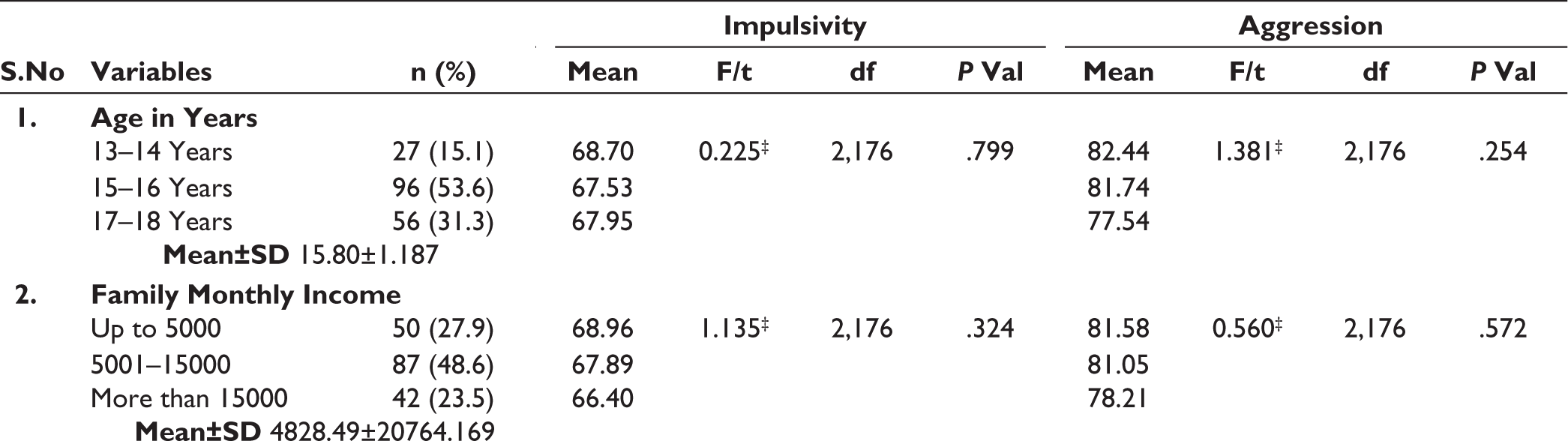
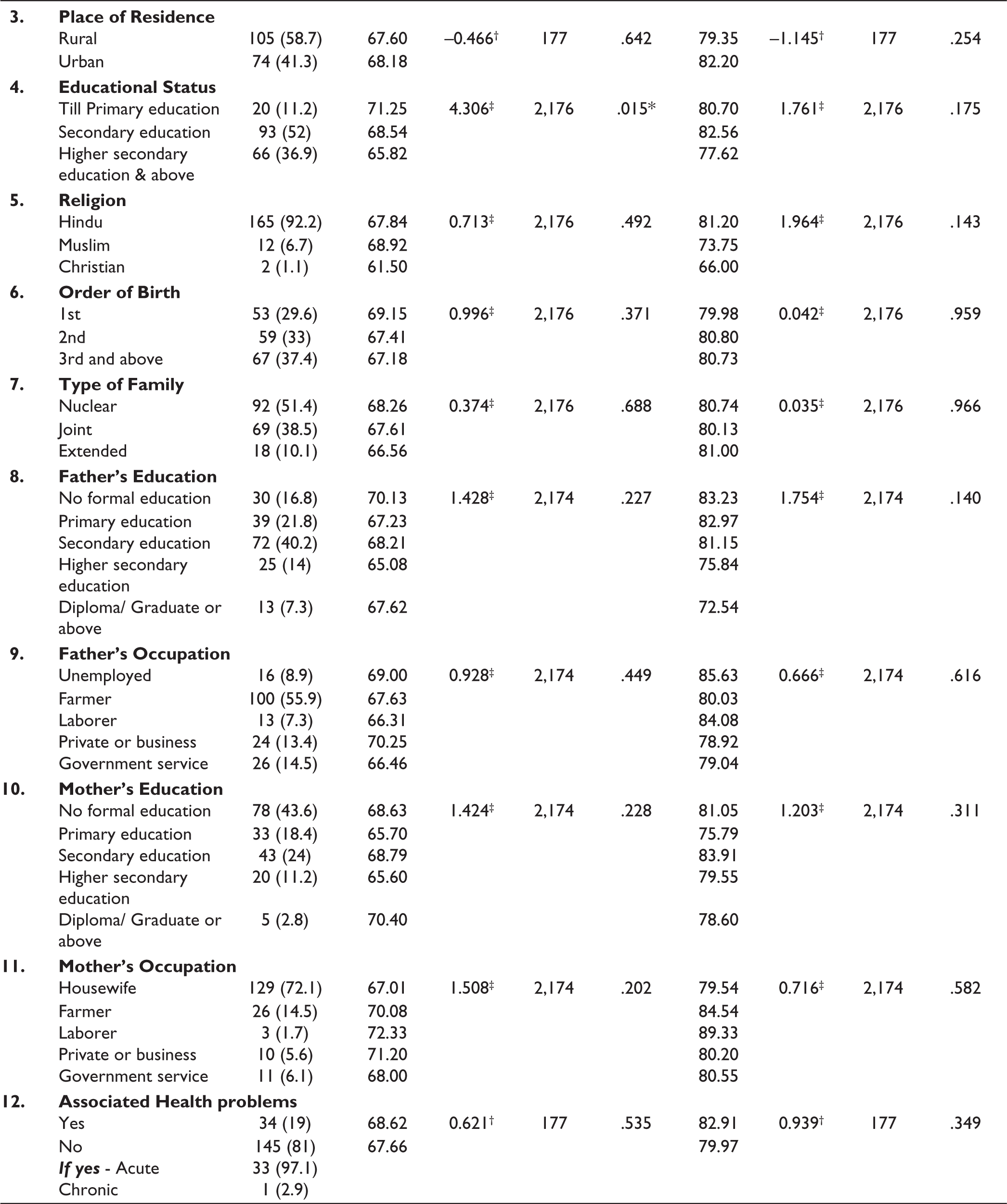
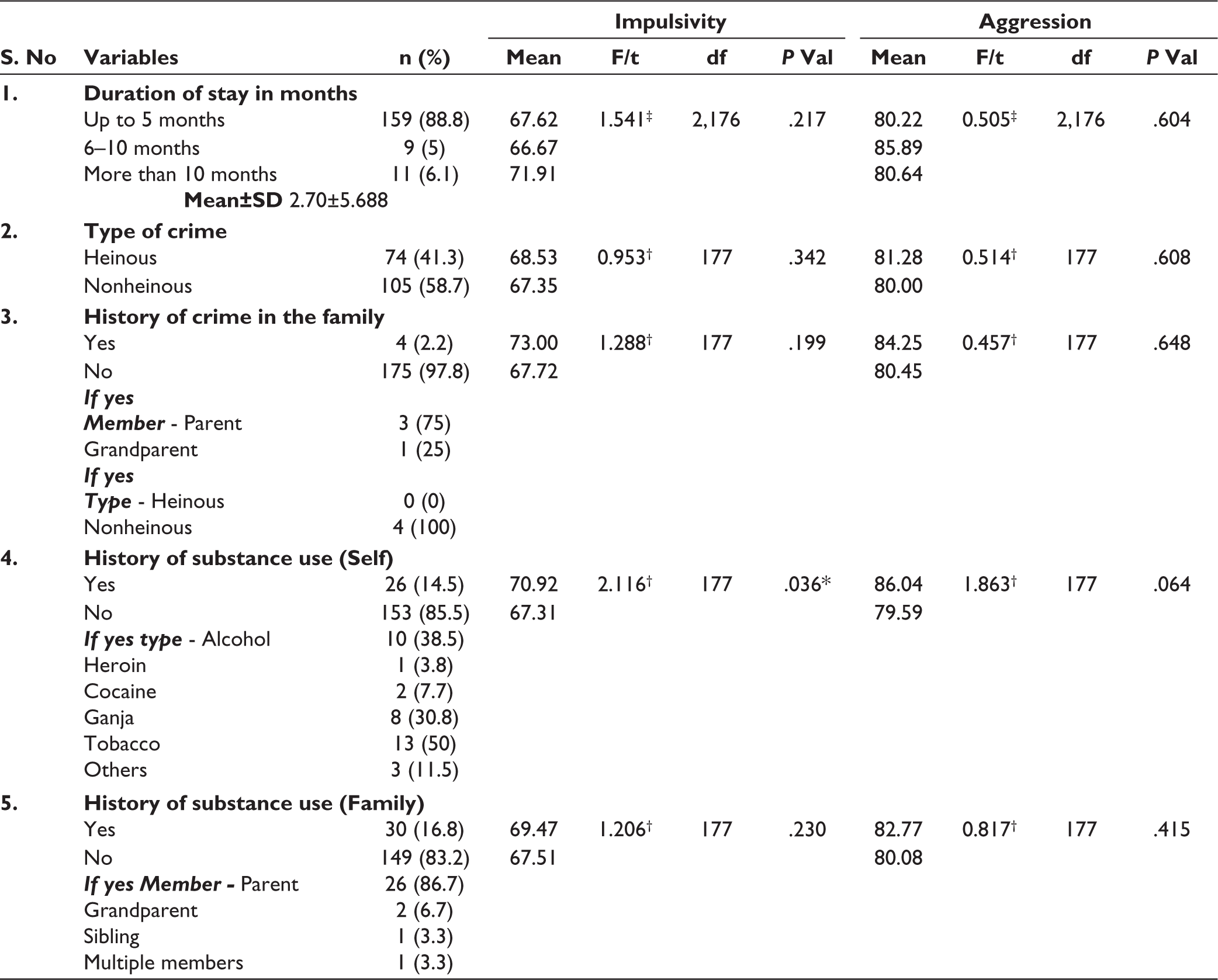
The percentage distribution of male delinquent adolescents about demographic variables showed that the majority (53.6) of the adolescents were between 15 and 16 years of age group with a mean age of 15.80±1.187. Most of them (58.7) were from rural areas, educated till secondary education (52), belonged to the Hindu religion (92.2), and the nuclear family (51.4). Most of the adolescents’ fathers were educated till secondary education (40.2) and worked as a farmer (55.9). Most of the adolescents’ mothers had no formal education (43.6) and were housewives (72.1). The majority of the adolescents (81) did not have any associated health problems. The percentage distribution of male delinquent adolescents with regard to crime-related variables revealed that most of the delinquent adolescents (88.8) were residing in the observation homes for the duration of 0 to 5 months with a mean score of 2.70±5.688. About more than half (58.7) had committed nonheinous crimes in comparison to heinous (41.3), the least of them (2.2) had a crime history in the family out of which all were nonheinous type, about 14.5% had a history of substance use out of which most of them used alcohol (38.5) followed by ganja (30.8), nearly one-fifth of the participants (16.8) had a family history of substance use out of which most of them (86.7) were parents than the other family members (Tables 1 and 2).
Descriptive Output of Sample Characteristics (Demographic Variables) and Their Association with Impulsivity and Aggression Among Male Delinquent Adolescents.
? Independent t-test.
‡One way ANOVA.
t(177) = 1.980. N = 179.
Descriptive Output of Sample Characteristics (Crime-Related Variables) and Their Association with Impulsivity and Aggression Among Male Delinquent Adolescents.
? Independent t-test.
‡ One way ANOVA.
t(177) = 1.980. N = 179.
Description of Impulsivity and Aggression
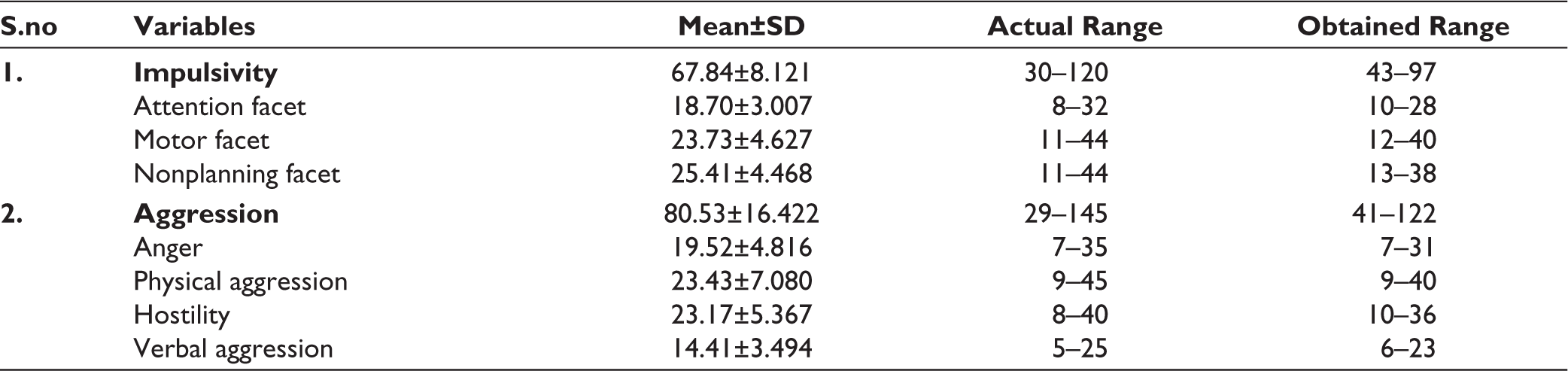
The mean, standard deviation, and range of scores were calculated for research variables. The mean score of impulsivity among male delinquent adolescents was 67.84±8.121 and for aggression was 80.53±16.422. Further, the mean score for components of impulsivity is as follows: attention facet (18.70±3.007), motor facet (23.73±4.627), and nonplanning facet (25.41±4.468). The mean score for components of aggression is as follows: anger (19.52±4.816), physical aggression (23.43±7.080), hostility (23.17±5.367), and verbal aggression (14.41±3.494) (Table 3).
Descriptive Output of Impulsivity and Aggression Among Male Delinquent Adolescents.
Correlation Between Impulsivity and Aggression
Pearson correlation between impulsivity and aggression revealed that moderate positive correlation of impulsivity with aggression (r = 0.412, P < .001) and also with the anger (r = 0.362, P < .001), physical aggression (r = 0.470, P < .001), hostility (r = 0.167, P = .025), and verbal aggression (r = 0.227, P = .002) components of aggression at 0.05 significance level. Aggression was found to have a significant moderate positive correlation with components of impulsivity such as attention facet (r = 0.279, P < .001) and motor facet (r = 0.407, P < .001), which infers that an increase in the score of impulsivity and its components increases the score of aggression and its components and vice versa. In addition, impulsivity and aggression components were found to have intercorrelations (Table 4).
Pearson Correlation Between Impulsivity and Aggression.
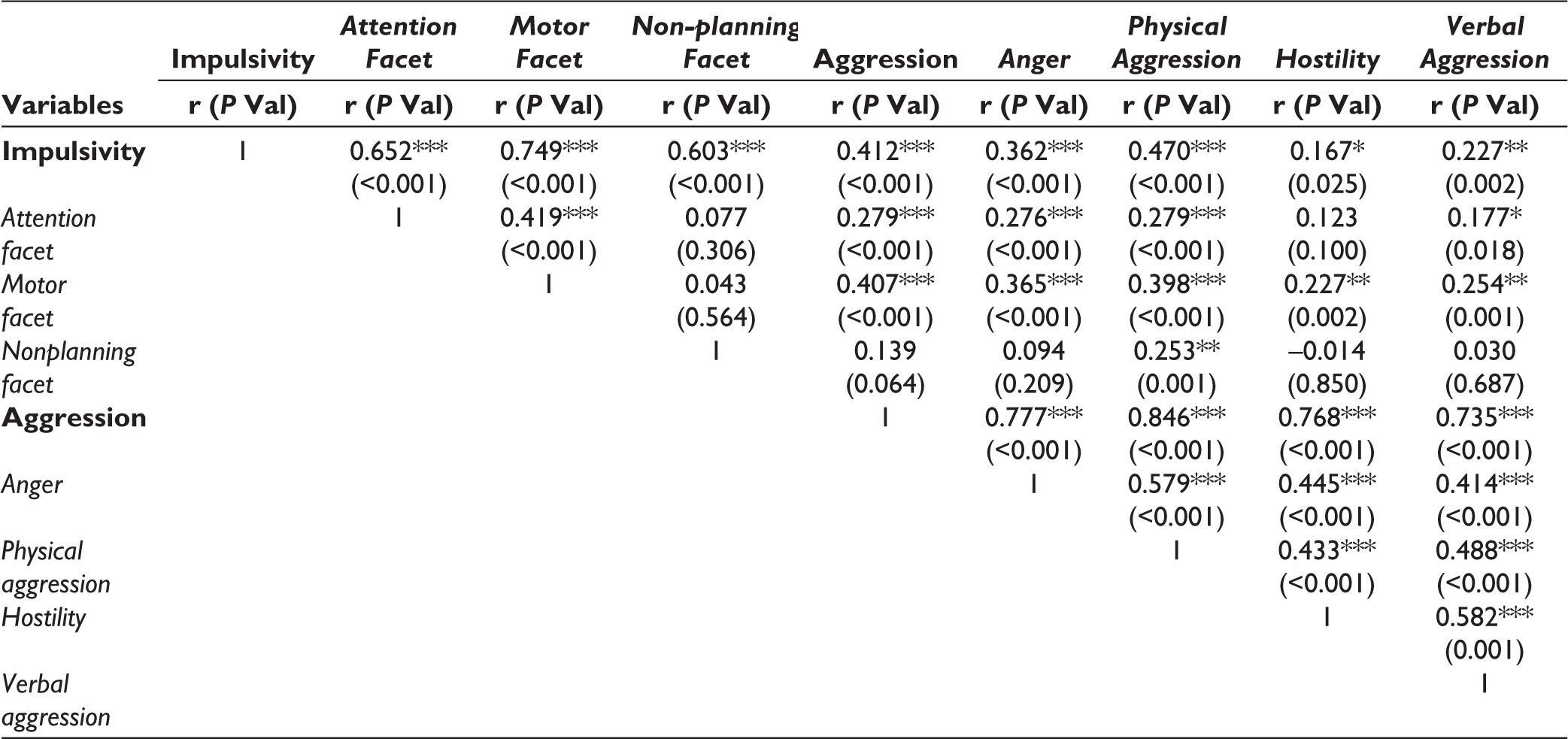
r(177) = .146. N = 179.
Association of Impulsivity and Aggression with Selected Sample Characteristics
The association of overall impulsivity and aggression with demographic and crime-related variables was calculated by independent t-test and one-way ANOVA. The results revealed with regard to impulsivity that the overall impulsivity had a significant association with educational status (F = 4.306, P = .015) and adolescent’s substance use (t = 2.116, P = .036). It infers that the one who consumes substances experienced higher impulsivity than the nonconsumers (Tables 1 and 2). Since there was an association found in the one-way ANOVA between impulsivity and educational status among male delinquent adolescents, the Post Hoc (Tukey-HSD) test was used to determine the exact significant mean differences between the groups. The overall association between impulsiveness and educational status resulted from the significant mean difference found between primary vs higher secondary education and above groups (MD = 5.432, P = .023), which infers that male delinquent adolescents who are educated till primary education had higher impulsivity scores than those educated till higher secondary education or above (Table 5). Though overall impulsivity was found to be independent of all other demographic and crime-related variables, the components of impulsivity had associated with few variables which had not impacted the overall association such as the nonplanning component of impulsivity had associated with the adolescent’s substance use (t = 3.339, P = .001), substance use in the family (t = 2.115, p = .036), educational status (F = 3.314, P = .039), attention component had associated with the duration of stay in observation home (F = 3.096, P = .048), educational status (F = 3.588, P = .030), motor component with father’s education (F = 2.579, P = .039), mother’s occupation (F = 4.844, P = .001) at 0.05 level of significance.
Post Hoc (Tukey-HSD) Test Showing Significance in Mean Difference Between Groups Among Associated Variables in One-Way ANOVA.

With regard to aggression, there was no significant association of overall aggression with any variables (Tables 1 and 2). Though overall aggression was found to be independent of all demographic and crime-related variables, physical aggression component found to be associated with adolescent’s substance use (t = 3.517, P = .001), substance use in the family (t = 2.350, P = .020), educational status (F = 3.328, P = .038), and father’s education (F = 3.646, P = .007) at .05 level of significance, which infers that the one who consumes substances, had history of substance use in the family, showed higher physical aggression than their counterparts, adolescents educated till secondary education had higher physical aggression in comparison to those educated till higher secondary education and above, and adolescents of father educated till secondary education had higher aggression in comparison to higher secondary education. Which concludes that overall aggression along with its components (anger, hostility, and verbal aggression) except physical aggression was found to be independent of all demographic and crime-related variables.
Predictors of Impulsivity
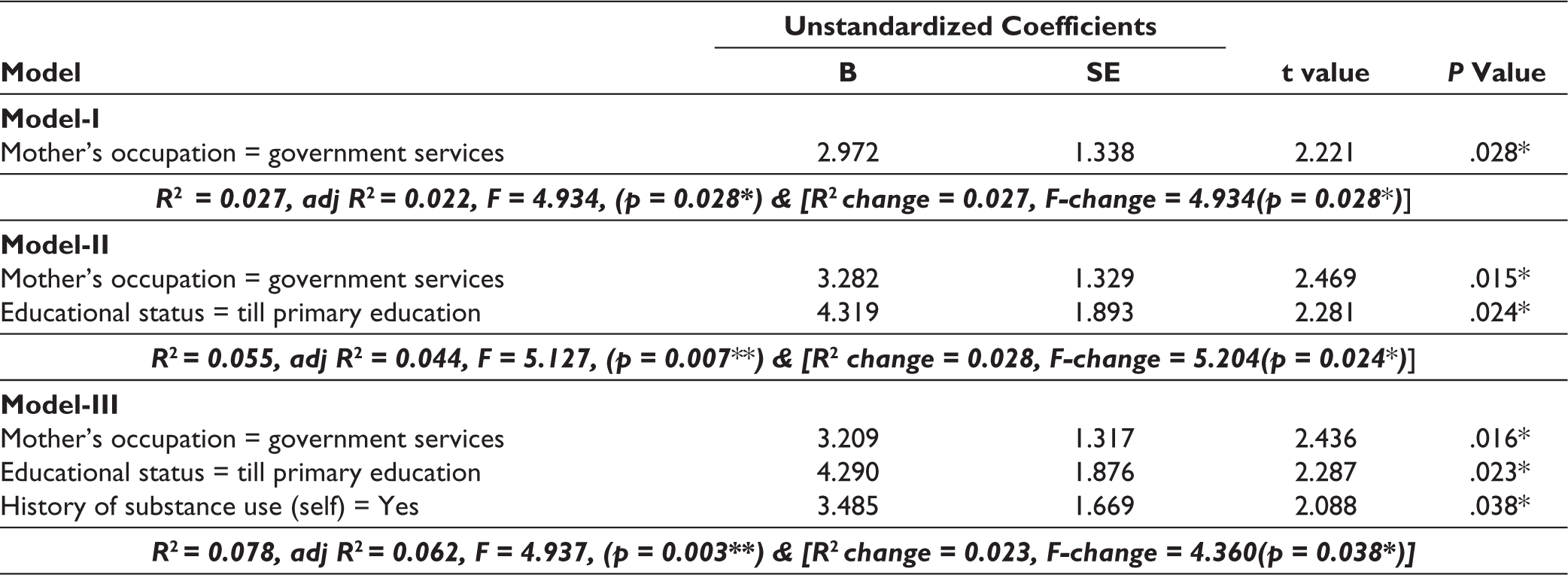
Since there was a significant association of impulsivity with several variables, stepwise multiple regression was used to determine the predictors of impulsivity and their strength in variability. Stepwise regression is the method that considers the highest correlated independent variable at the first step followed by adding the other variables which significantly contribute to the R2 changes in the subsequent models. The continuous variables were entered directly into the model and dummy variables were created and entered with reference categories for categorical variables. The highly correlated variable was mother’s occupation = government services (reference category-Housewife) as shown in model I which had significantly predicted the impulsiveness that 2.7% of the variability in impulsivity score was explained by the variable (R2 = 0.027, adj R2 = 0.022, F = 4.934, [P = .028]). In model II, along with the mother’s occupation, educational status = till primary education (reference category-higher secondary education & above) contributed to a significant prediction of impulsiveness that 5.5% of the variability in impulsivity score was explained by the variables entered (R2 = 0.055, adj R2 = 0.044, F = 5.127, [P = .007)]. In model III, along with previous variables, history of substance use (self) = yes (reference category-no) contributed to a significant prediction of impulsiveness that 7.8% of the variability in impulsivity score was explained by the variables entered (R2 = 0.078, adj R2 = 0.062, F = 4.937, [P = .003]). Further, throughout the stepwise model, the R2 and F changes were significant which infers that all the models have contributed significantly in prediction.
The regression coefficients for the mother’s occupation inferred that in model I, adolescents of mothers whose occupation was government services had 2.9 times of higher impulsivity than the reference category (B = 2.972, P = .028), and in models II and III, about 3.2 times of higher impulsivity than the reference category (B = 3.282, P = .015, and B = 3.209, P = .016). The regression coefficients for the educational status inferred that in model II, adolescents educated till primary education had 4.3 times of higher impulsivity than the reference category (B = –4.319, P = .024), and in model III, about 4.2 times higher impulsivity than the reference category (B = –4.290, P = .023). The regression coefficients for the adolescents’ history of substance use inferred that in model III, the one who has a history of substance use had 3.4 times higher impulsivity than the reference category (B = –4.319, P = .038) (Table 6).
Stepwise Multiple Regression Showing Variability in Impulsivity Explained by Multiple Independent Variables.
Discussion
The present descriptive correlation study was conducted to assess impulsivity and aggression among male delinquent adolescents detained in observation homes in State Bihar, India.
This study was conducted only among male delinquent adolescents aged 13 to 18 years with the mean age of the participants 15.80±1.187. Similarly, there are previous studies that were conducted only among male delinquent adolescents either by considering the high crime rate among them or for ensuring homogeneity between the groups.5,6 The age-related findings of the present study were almost similar to one quasi-experimental study where the mean age of the participants in the 2 groups of adolescents was reported as 16.13±1.10, and 16.21±0.89. 12 The another study on aggression among delinquents also reported the mean age of the participants as 16.45±1.254. 13 The study conducted on impulsivity among delinquent adolescents also reported similar mean age of the participants i.e. 15.52 years. 14
In the present study, the mean score of impulsivity and aggression among male delinquent adolescents was 67.84±8.121 and 80.53±16.422, respectively, with high range of scores. These findings were quite similar to the study conducted on aggression among delinquent and nondelinquent adolescents that the mean aggression score was reported 111.75±16.78 with a higher range of scores. 7 The other study has reported that mean aggression of delinquents was higher and significant in comparison to nondelinquent adolescents. 13 One of the older studies conducted on impulsivity reported that impulsivity is a measurable construct among delinquent adolescents, 15 and they had reported a higher level of impulsivity, 16 and behavioral impulsivity was quite highly reported than cognitive impulsivity among them. 11
In the present study, impulsivity had a moderately positive correlation with aggression and also with all the components of aggression at a .05 level of significance. This finding was similar to the study conducted on the relationship between self-control, peer delinquency, and aggression among adolescents showed a positive correlation between self-control and aggression. 17 Other few studies also had shown a positive relationship between impulsiveness and aggression scores.18,19
In the present study, there was no significant association of aggression with any demographic or crime-related variables but impulsivity was associated with adolescent education status and substance use at a .05 level of significance and stepwise regression also confirmed the prediction by them. Similarly, a study conducted among institutionalized inmates reported a history of nonclinical substances found positively associated with impulsivity and stated high rate of substance use resulted in a high rate of impulsivity. 20 The other study also reported family conflict as a mediating factor in the found association between impulsivity and substance use. 21 One of the studies supported the findings at an extensive level stating that alcohol and drug use among adolescents is highly associated with cognitive impulsivity which had served as mediating pathways for early adult offending or the occurrence of antisocial spectrum among them. 22
Conclusion
The present study concluded that impulsivity and aggression are measurable constructs among male delinquents, impulsiveness was positively correlated with aggression, and substance use and low educational status had positively associated with impulsivity in delinquent adolescents. Though being its strength as the study provided initial evidence by filling the gap in the literature to understand the relationship between impulsivity and aggression among delinquent adolescents, it was limited to only selected observation homes. The study recommends the development and implementation of various psychological interventions such as aggression management and replacement training, life skill training, assertiveness and mindfulness based interventions to reduce impulsivity and aggression among these vulnerable groups of subjects to minimize the number of repeat offenses in the future.
Footnotes
Acknowledgements
Authors would like to thank the adolescents residing in observation homes for their participation and thank the observation home staff members and authorities for their cooperation and support during the data collection.
Author Contributions
PS, SR: Conception and design; PS: Data extraction, data analysis; PS, SR, PK: Data interpretation; PS: Drafting of the article; SR, PK: Critical revision of the article for important content; PS, SR, PK: Final approval of the article.
Data Availability
The data supporting this study’s findings are available upon reasonable request from the corresponding author. The data are strictly confidential and not publicly available due to restrictions, eg, there is information that could compromise the privacy of research participants.
Declaration of Conflicting Interests
The authors declared no potential conflicts of interest with respect to the research, authorship, and/or publication of this article.
Funding
The authors received no financial support for the research, authorship, and/or publication of this article.
Ethical Approval
Ethical approval was obtained from the Institutional Research and Ethics Committee of All India Institute of Medical Sciences, Patna, and permission was obtained from the Director, Social welfare department of the state of Bihar, for conducting a study in the observation homes of Districts Patna and Bhojpur, Bihar, India. Male adolescents were recruited in the study after written self-assent and consent from their visiting parent or Legally Authorised Representative (LAR) as applicable. The participant information sheet was provided with detailed information, and anonymity and confidentiality were assured. The study was carried out by the guidelines laid by the Juvenile Justice (Care and Protection of Children) Act, 2015, India.
Informed Consent
Male delinquent adolescents were included in the study after written self-assent and consent from the visiting parent or Legally Authorised Representative (LAR) as applicable.