




Abstract
Background:
Nomophobia, short for “no mobile phone phobia,” is defined as having an involuntary and unreasonable fear when the mobile device is unreachable or uncommunicable.
Aims:
The study aimed to evaluate nomophobia and loneliness levels of high school (HS) students from a rural region.
Methods:
This cross-sectional study was conducted between November 5 and December 28, 2018, on 850 HS students in Sivrihisar, Eskis¸ehir, Turkey. Nomophobia Questionnaire (NMP-Q) and UCLA Loneliness Scale were used. Mann-Whitney U, Kruskal-Wallis, Spearman Correlation analysis, and Multiple Linear Regression were performed.
Results:
In the study group, 429 (50.5%) were female. Their ages ranged from 13 to 19, and their mean age (standard deviation [SD]) was 15.66 (1.18) years. The mean score (SD) from NMP-Q was 54.92 (14.87), while the mean score (SD) from the UCLA loneliness scale was 13.95 (4.60). Multivariate analysis showed that being a female, having first smartphone use before the age of 13, having high daily smartphone usage, having a high frequency of checking phones, and having more friends on social media than in real life were associated with higher nomophobia levels (F = 28.424, P < .001, R² = 0.213). There was a positive weak correlation between nomophobia and loneliness levels (r = 0.353, P = .001).
Factors such as phone usage habits and loneliness, which can be changed by providing education and creating appropriate environments in schools, are important determinants of nomophobia among HS students in rural areas, suggesting that interventions to combat nomophobia are possible.
Introduction
Smartphones have numerous functions, such as calling, sending or receiving e-mails, playing games, listening to music, watching videos, using social media, shopping, reading books, and bringing innovation and ease to our lives. However, there are also negative side effects, including “mobile phone addiction” and “excessive use of mobile phones.”1-4
In recent years, a new concept called “nomophobia” (NO MObilephone PHOBIA), fear of staying away from communication with the mobile phone, has emerged as another problem stemming from mobile phone use. In clinical psychology, nomophobia is described as “the involuntary and unreasonable fear that a person experiences when they cannot reach the mobile device or cannot communicate via their mobile device.” 5 The person who stays away from communication always lives in fear of missing out on things related to themselves or current affairs. 6 The nomophobia shows anxiety symptoms due to thoughts like “spending a lot of time with smartphones; losing the smartphone, not being able to locate it, not being near it, staying out of coverage range, running out of credits, running out of charge.” In nomophobic individuals, behaviors such as wanting to stay away from places where the usage of mobile phones is forbidden, frequently checking their smartphone, not shutting down the smartphone all day, limiting the face-to-face communication due to stress and anxiety, sleeping with the smartphone, and preferring to communicate with smart devices may be seen. 7
In studies conducted in various countries, the nomophobia prevalence among adolescents has been reported to differ between 42.5% and 73.0%.8-10 In a study conducted on undergraduate students from rural India, nomophobia was reported to be very widespread with a prevalence of 97.6%, while in a study conducted among youth living in rural Turkey, 8.5% were severely, 71.5% were moderately, and 20.0% were mildly nomophobic.11,12 Another study, however, reported that adolescents living in urban areas had higher rates of nomophobia than those living in rural areas, which author attributed to easier access to mobile phones and the Internet in urban areas. 13
Several factors have been determined to be related to high nomophobia levels. Being female, being young, excessive smartphone usage, frequently checking smartphones, and loneliness have been among the most common predictors of nomophobia in the literature.6,14-16 As smartphone use becomes more prevalent every passing day, it is no longer possible to imagine a life without them. Especially for rural high school (HS) students who are miles away from urban city centers, smartphones connect them to the modern world. Since there are little or no extracurricular activities on top of a low population in rural areas, it is common to use online measures to socialize while being isolated in real life. Moreover, that leaves us with many students with nomophobia, which may result in high stress, depression, anxiety, insomnia, and even suicide rates. Although this situation where people are connecting more and more to their phones (the situation of being one click away) seems like it is increasing virtual communication, it may result in isolation in real life. In a way, this could be interpreted as nomophobia being related to loneliness due to smartphone usage.13,16
Several studies have linked loneliness and nomophobia in recent years among adolescents. However, the literature is divided regarding the prevalence and severity of nomophobia in rural areas, and some studies neglect the ramifications of loneliness in rural settings.13,16,17 Therefore, it was concluded that further research on the topic is warranted. This study was carried out on HS students of Eskişehir province’s Sivrihisar county center to examine nomophobia and some related variables and evaluate loneliness.
Materials and Methods
Participants
This cross-sectional study was conducted on HS students in the Sivrihisar county center between November 5 and December 28, 2018. Sivrihisar county is a rural county located in the southeastern part of Eskişehir and is 100 kilometers away from the province’s center. According to the 2018 data of the Turkish Statistical Institute, its population consists of 10,527 (50,7%) males and 10,219 females (49,3%). About half of the population lives in the county center. 18 In the center of Sivrihisar county, there are 7 HS with 1,089 students. Among the 7 HSs, Science HSs and Anatolian HSs require their students to pass an exam to study there.
Instruments
In the study, a questionnaire form was prepared using the appropriate literature to collect data.6,10,13 The questionnaire form included sociodemographic of the students (age, gender, personality type, the education levels of their parents, family income level, the gender distribution of their group of friends in school), some information about their smartphone usage (first age of using a smartphone, daily smartphone usage, daily smartphone checking frequency, number of friends in social networks compared to in real life), the questions from the Nomophobia Questionnaire (NMP-Q), and the short form of UCLA Loneliness Scale.
NMP-Q developed by Yildirim and Correia 6 in 2015 was used to evaluate the nomophobia levels of the students. Turkish reliability and validation study of the questionnaire was also performed by Yildirim et al 9 in 2015. However, in our study, we used the revised version of the NMP-Q, which changed the 7 items Likert-type scale to 5 items since it is more suitable for Turkish. 19 The NMP-Q includes 20 Likert-type questions, which are scored as “Strongly Disagree” 1 point, “Disagree” 2 points, “Somewhat Agree” 3 points, “Agree” 4 points, and “Strongly Agree” 5 points. The scores obtained from the scale range from 20 to 100, and a higher score implies higher nomophobia levels.
The short form of the UCLA Loneliness Scale was used to determine the students’ loneliness. Hays and DiMatteo developed the scale and Yildiz and Duy made the Turkish adaptation in 2013.20,21 The 7 questions on the scale are 4 items Likert type and scored as “Never” 1 point, “Rarely” 2 points, “Sometimes” 3 points, and “Always” 4 points. The last question is scored inversely. The minimum score taken from the scale is 7, and the maximum is 28, and a higher score means loneliness is felt more intense.
The family income level of the students was determined subjectively according to how the students feel as “Low,” “Medium,” and “High” since they are dependent on their families. The students who described themselves as “enthusiastic, impetuous, hasty” were assessed as type A personalities, while students who described themselves as “calm, quiet, planned” were considered type B personalities. 22
Procedure and Ethics
The ethical permission was acquired from Eskişehir Osmangazi University’s noninterventional clinical trials committee. Additionally, permission from the Eskişehir Provincial Directorate of National Education and the HSs’ principals was also obtained.
The data in this study was collected from all 7 aforementioned HSs. In order to collect data, appointments were made for the appropriate days and hours with the school administrations. Students were gathered in their classrooms during the previously noted appointment times. After informing them about the topic and objective of the study, their verbal consent of the students was taken. The data was collected in classrooms under the observation of the researchers. During the data collection, the instructions of the Helsinki Declaration were applied. The questionnaire forms were filled by the students themselves under the researchers’ observation, which took approximately 10 to 15 min. Since it was aimed to reach and include all 1,089 students, no sample size calculation was made. The students who do not use mobile phones were excluded from the study. The response rate was 78.1% with 850 students who were present during the appointment time and accepted to participate in the study made up the study group. Since 4 students refused to participate in the study, 199 were not present during the appointed time, and 36 students failed to complete the survey form, 239 (21.9%) of the total 1,089 students were left out of the study.
Data Analysis
Data obtained from the study were evaluated using the SPSS (version 15) statistics package program. Shapiro-Wilk normality test was performed to determine the distribution of the data. Mann-Whitney U test, Kruskal-Wallis test, Spearman correlation analysis, and Multiple Linear Regression analysis were used in the study. Common logarithms of the scores obtained from the NMP-Q were taken to perform the Multiple Linear Regression analysis. While creating models for the Multiple Linear Regression, the results of the univariate analysis were used. Statistical significance value was accepted as P ≤ .05.
Results
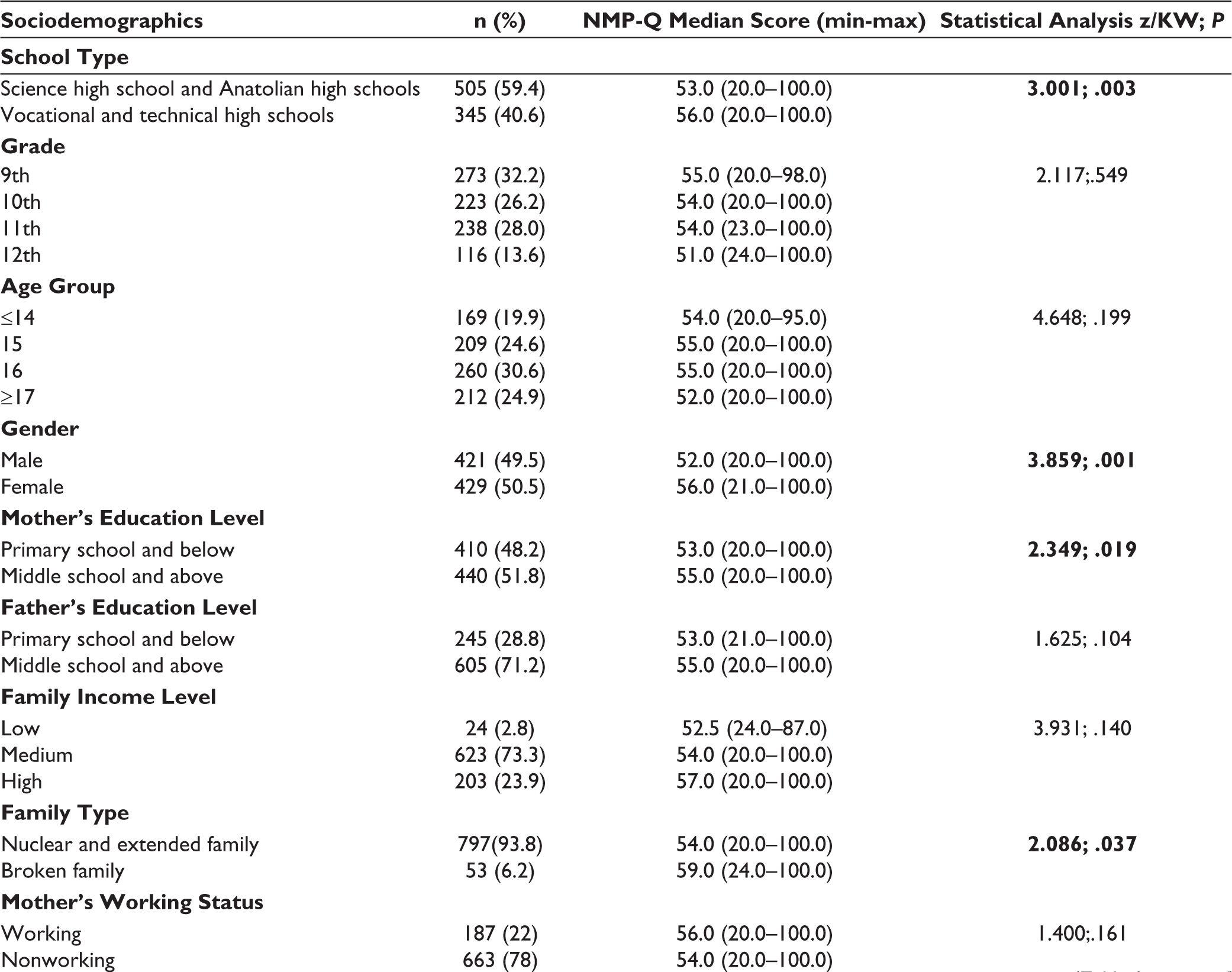
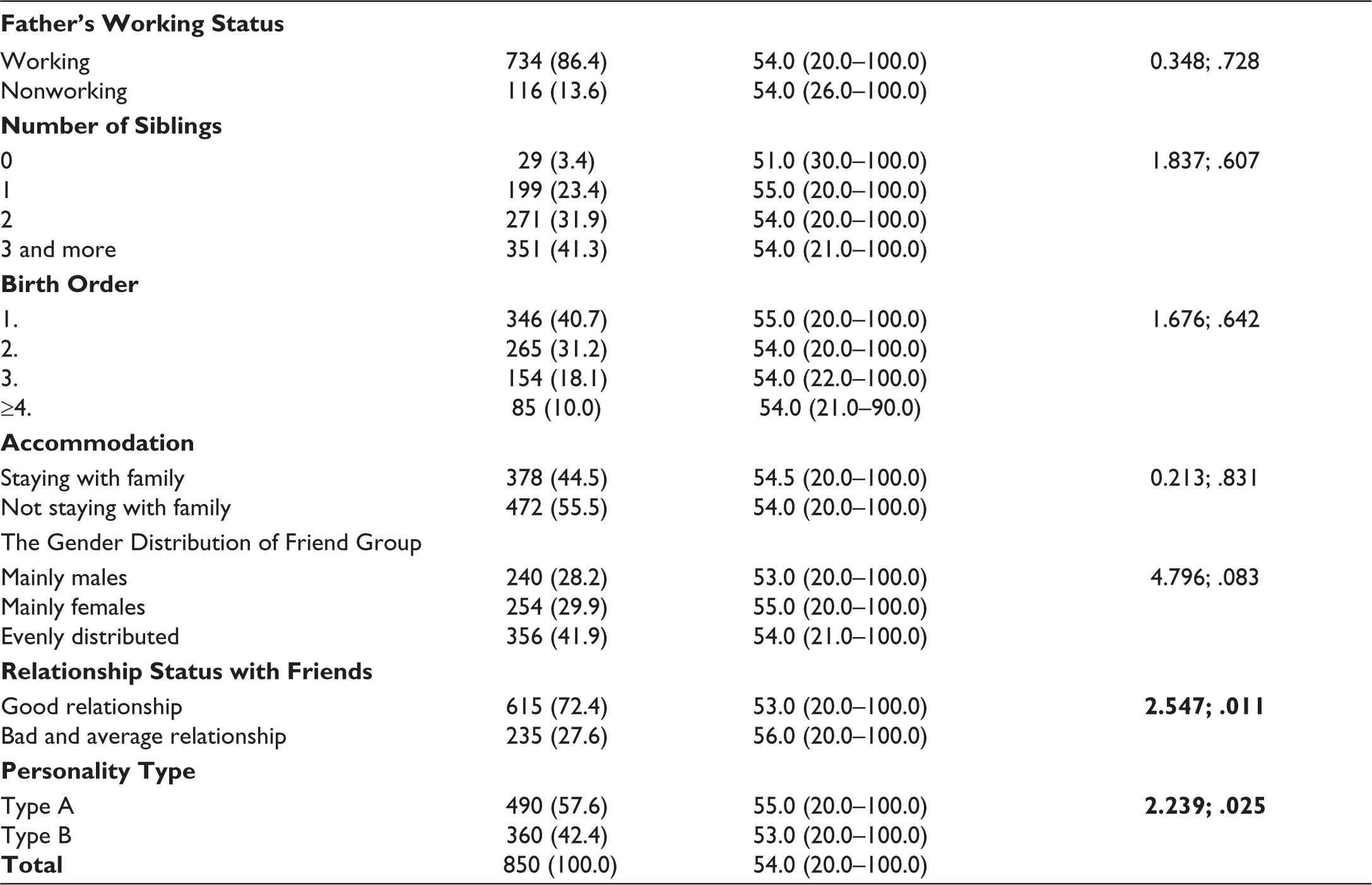
Of the study group, 429 (50.5%) students were females and 421 (49.5%) were males. Their ages ranged between 13 and 19, and the mean age was 15.66 ± 1.18 years. Students scored between 20 and 100 from the NMP-Q; the mean score was 54.92 ± 14.87 points. Table 1 shows the distribution of the NMP-Q scores of the students according to some sociodemographic variables.
The Distribution of the Scores of the Nomophobia Questionnaire According to Some Sociodemographic Variables.
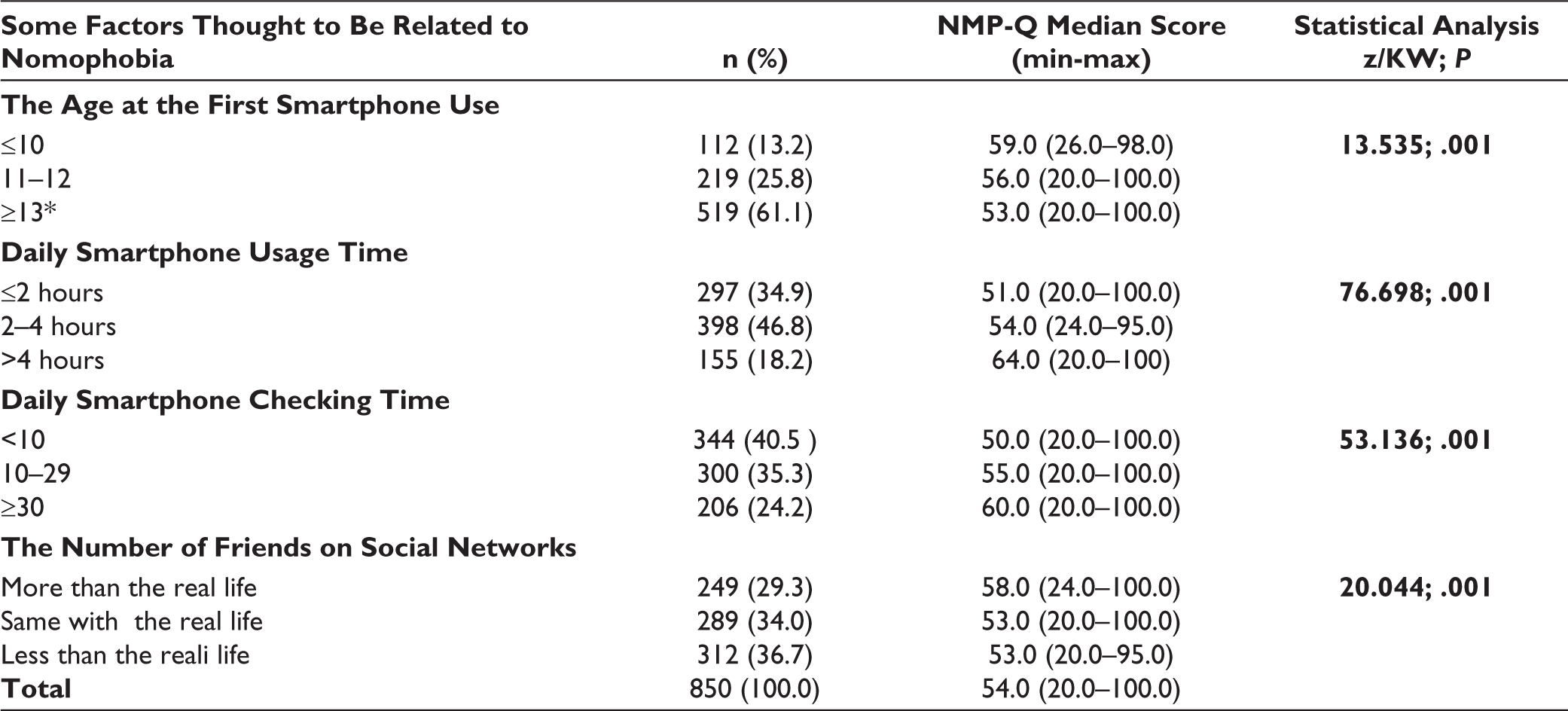
It was found that 13.2% of the students started using smartphones at the age of 10 or below, 18.25 of them said that their daily smartphone usage time was over 4 h, 24.2% of the study group had a daily smartphone checking the time of over 30 and in the study group, it was found that 29.3% of students had more friends on social networks than in real life. The scores obtained from NMP-Q according to some factors thought to be related to nomophobia are given in Table 2.
The Distribution of the Scores of the Nomophobia Questionnaire According to Some Factors Thought to be Related to Nomophobia.
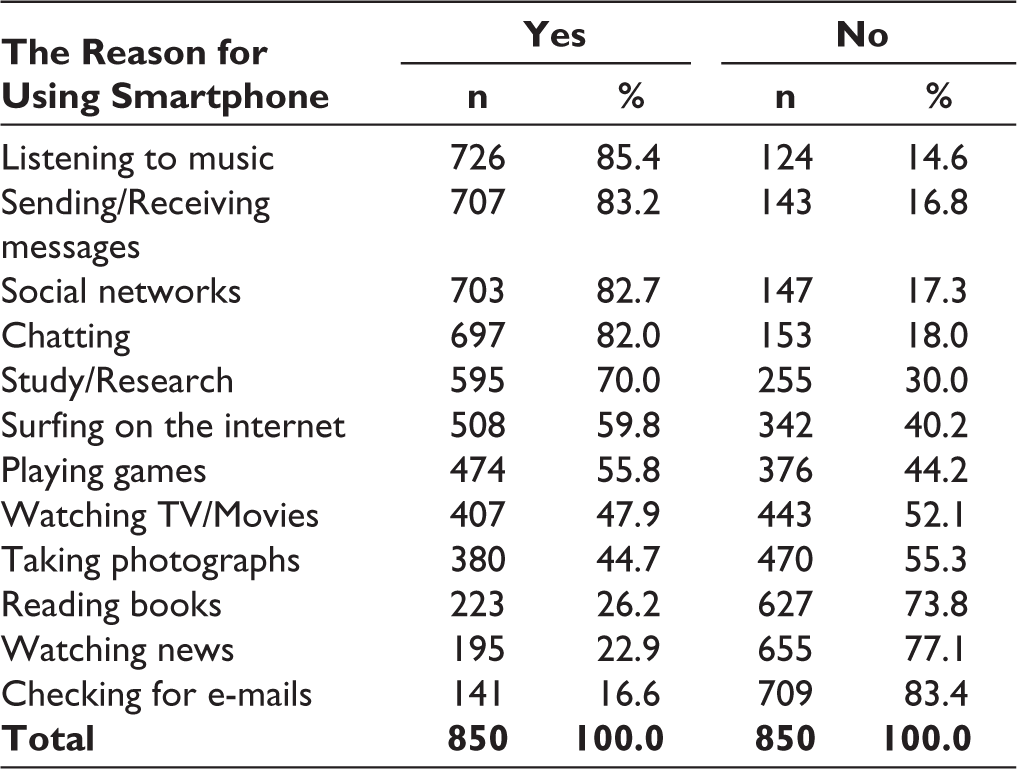
Among the students using smartphones, 12.6% use smartphones to listen to music, 12.3% use smartphones to send/receive messages, and 12.2% use smartphones for social networks. The reasons for using smartphones of the students are given in Table 3.
The Reasons for Using Smartphone of Students.
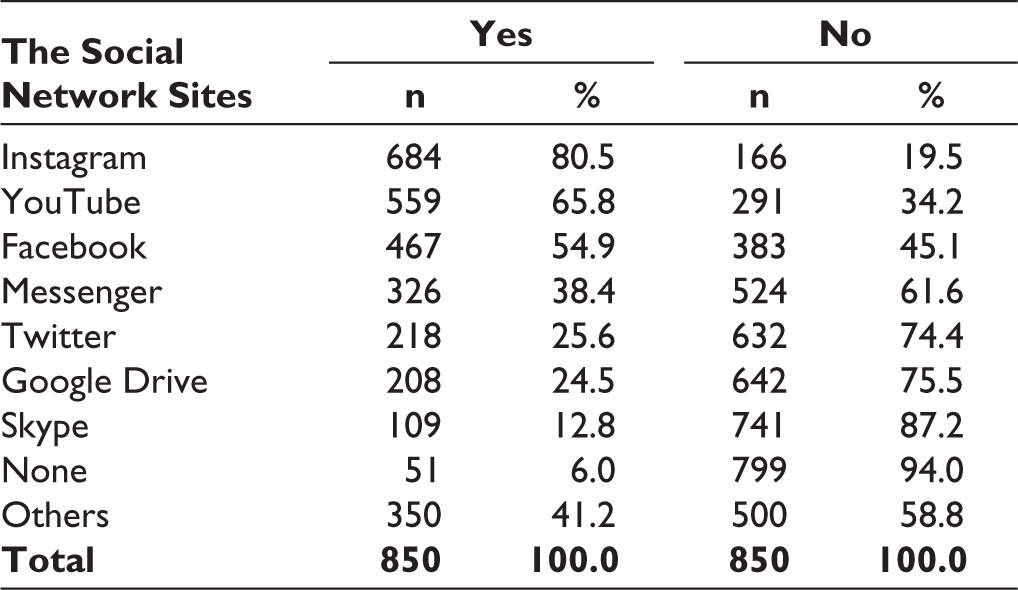
When the students’ membership of social networks was evaluated, it was found that 23.0% were Instagram users, 18.8% were YouTube users, and 15.8% were Facebook users. The membership status of students on social media is given in Table 4.
Membership Status of Students on Social Network of Students.
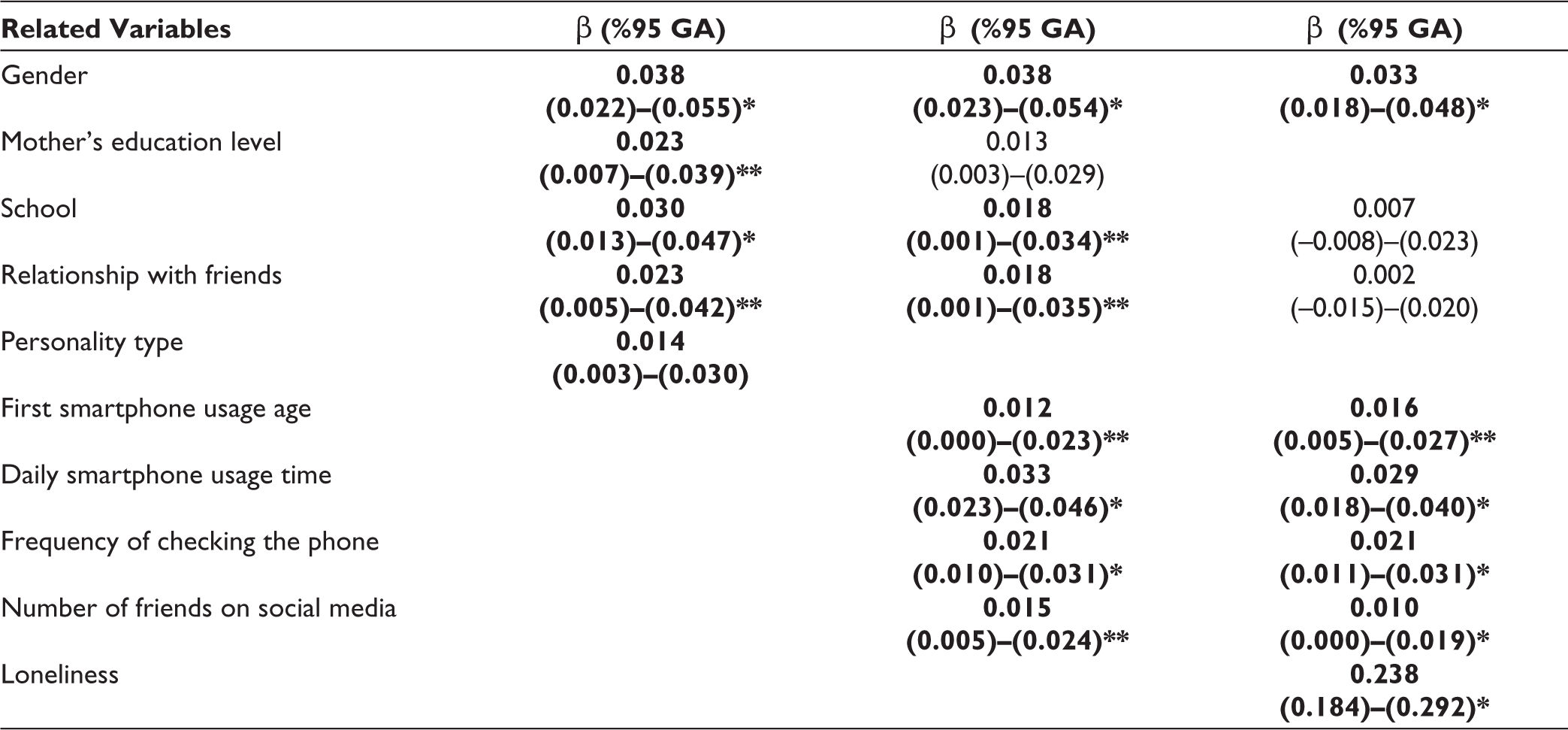
The students scored between 7 and 28 from the UCLA Loneliness Scale short form, and the median score was 13.95 ± 4.60. The Spearman Correlation analysis showed a weak positive correlation between the scores of NMP-Q and UCLA Loneliness scale (r = 0.353, P = .001). This positive relationship between nomophobia and loneliness was also present (β [%95 confidence interval]: 0.238 [0.184]–[0.292]) after controlling for other related factors (gender, age, school, mother’s educational level, relationship with friends, personality type, first smartphone usage age, daily smartphone usage time, frequency of checking the phone, and number of friends on social media) in Multiple Linear Regression (F = 28.424, P < 0.001, R² = 0.213). The Multiple Linear Regression of NMP-Q scores and factors related to nomophobia were presented in Table 5.
The Results of the Multiple Linear Regression of NMP-Q Scores and Factors Related to Nomophobia.
Notes:
*P < .001; **P ≤ .05. Bold characters indicate P-values less than or equal to 0.05.
Discussion
Among the mental and physical changes that occur during adolescence, the tendency for addiction may also develop, making adolescents vulnerable to being addicted to their smartphones. 23 Although smartphone addiction does not meet every addiction criterion, it still has withdrawal symptoms similar to behavioral addictions. In that context, Tran argues that nomophobia is one of the withdrawal symptoms of smartphone addiction and not an addiction in itself. 24 In our study, the nomophobia levels of teenagers were found to be moderate. Similar nomophobia levels were reported in various pieces of research.17,25,26 On the other hand, Gezgin et al 10 found high nomophobia levels in their study conducted on HS students. Socioeconomic differences between the places in the studies were conducted which may have been one of the reasons for this discrepancy.
With the introduction of online socialization, it became the first choice of socialization for females, since compared to males they have higher social stress and are more likely to develop social phobias.27,28 As a side effect, females are expected to have higher nomophobia levels. In this study, females had higher nomophobia levels than males. Similar results have also been reported in the literature.9,29 However, in a study conducted by Dixit et al, 30 no difference was found between females and males regarding nomophobia levels. The different findings of the studies could be due to the varying role and perception of genders between different cultures.
With how widespread technology and smartphone use have become, children are now born into a cyber world. It is such a big part of their world that they cannot imagine themselves without their smartphones, and the earlier they encounter smartphones the more significant the role they play in teenagers’ life. Furthermore, as expected, the students in our study were more nomophobic if they started using smartphones earlier. Many reports have found similar results in the literature.9,31,32
The amount of time we spend on our smartphones increases day by day. We use our smartphones for numerous purposes such as socializing, our jobs, entertainment, and the things we can do with our smartphones have increased dramatically since the introduction of smartphones. In regards to teenagers, they have not only been born into a world of smartphones but they are also pressured into using their smartphones excessively by their peers. Moreover, those that give in to the pressure quickly become more nomophobic. In our study, nomophobia levels were higher in adolescents who had a higher daily smartphone usage time. Similarly, many studies reported higher nomophobia levels for those with long durations of daily smartphone use.33–35 Although some studies reported no relation between nomophobia and daily smartphone usage time.29,36 One of the reasons for the differences between the studies may have been originated from the different cultures and settings of the study groups.
Now that every application on smartphones started sending notifications, checking our phones evolved into a habit of checking our phones even when there is no notification. The fear of missing notifications makes it hard for people to be separated from their smartphones and, as a byproduct, makes them nomophobic. This is apparent both in our study and in the literature.14,25
In society, particularly adolescents, the number of friends, and followers on social networks became a social status indicator. Increasing one’s social status is of utmost importance. Furthermore, adolescents invest almost all of their time making friends over social networks to achieve this goal. When social networks start playing a huge role in teenagers’ life, they become more nomophobic as anticipated. In our study, we found that the students who stated that they have more friends on social media than in real life had higher nomophobia levels. Although we could not come across a study in the literature questioning the relationship between nomophobia and the number of friends on social networks, it is reported that intensive use of social media is correlated with high nomophobia levels.17,37
Puberty is a period identified with self-creation and character development, where spiritual and physical changes occur. During this period, the adolescent, who has to make crucial decisions, experiences the intensive feeling of loneliness and anxiety, and concern for the future. Loneliness is traditionally defined as the emotional state that an individual who has no one around feels. However, in recent years, it has been associated with many mental disorders such as depression, anxiety, and suicide, and it is considered a significant stress factor that individuals, even with an expansive social environment, can feel. 38 One of the most common tools used by adolescents to deal with loneliness is smartphones. Teenagers feel that if they lose access to their smartphones, they can no longer cope with their loneliness. Moreover, in the end, this feeling of anxiety causes them to be more nomophobic. There was a positive correlation between nomophobia and loneliness levels in this study. Various studies also reported similar findings.16,17,39
Limitations
Since this is a cross-sectional study, it may be inadequate to reveal the causal relationships. Conducting the study only in HS students in a single district center reduces its generalizability. Since there is no exact diagnosis method for nomophobia and loneliness, different measurement tools used in different studies may reveal contradicting results.
Conclusion
Adolescents living in diffusely populated rural locations with limited extracurricular activity are at higher risk for nomophobia. Being a female, using a smartphone before age 13 and having more friends on social media than in real life were associated with higher nomophobia levels. Additionally, the students’ nomophobia levels increased with the frequency of checking their phones and the time spent on smartphones. There was a positive weak correlation between nomophobia and loneliness levels.
Creating social environments in rural towns where the students do not feel isolated and left out by their peers would help against developing nomophobia. A collaboration between teachers and parents to rehabilitate the smartphone use behaviors of the students would be beneficial. Albeit behavioral addicts seldom seek treatment, cognitive behavioral therapy, motivational interviewing, family therapy, and online forums and support groups may help rural HS students struggling with nomophobia in clinical settings. Future studies should focus on the possible intervention methods to reduce nomophobia levels in rural adolescents.
Footnotes
Acknowledgements
We want to thank the District Directorate of National Education of Sivrihisar, Eskişehir for their help and coordination.
Declaration of Conflicting Interests
The authors declared no potential conflicts of interest with respect to the research, authorship, and/or publication of this article.
Ethical Statement
The ethical permission was acquired from Eskişehir Osmangazi University’s noninterventional clinical trials committee. Additionally, permission from the Eskişehir Provincial Directorate of National Education and the high schools’ principals was also obtained. In order to conduct the study, ethical approval was obtained from the Non-Interventional Clinical Trials Committee of Eskişehir Osmangazi University on November 5, 2018 with decision number 17.
Funding
The authors received no financial support for the research, authorship, and/or publication of this article.
Informed consent
All students who participated in the study have given their verbal consent after getting informed about the aim and the subject of the research.