




Abstract
Background:
Shared book reading (SBR) is a crucial activity fostering parent-child interaction and promoting children’s early language and emergent literacy skills. SBR interventions are carried out less in low- and middle-income countries. Hence, there is a need for research in such settings.
Aim:
The present study focuses on providing SBR training to parents and assesses parents’ interactive storybook reading and changes in the child’s narrative development at baseline, postintervention, and follow-up.
Method:
A total of 210 parents and typically developing child dyads participated in this study, 105 in experimental and control groups. The children from the experimental group participated in one-on-one book reading interactions with their parents after receiving training. Parents in the control group were not trained to read with their children. One week after the training sessions and 2 months later, children and parents were tested to determine whether the training led to beneficial effects.
Result:
The data were analyzed by x2 test, Kruskal Wallis 1-way ANOVA on ranks with Student Newman Keuls multiple comparison test (post-hoc test), and 3-way ANOVA with a post-hoc multiple comparison test. During 2 postintervention sessions, parents and children assigned to the intervention group significantly increased the targeted interactive shared reading skills. This result indicates that the intervention successfully changed parent SBR behaviors (P < .001), resulting in improved child’s narrative skills (P < .001).
Conclusion:
The current findings can aid in the creation of intervention programs to support parents’ SBR skills and promote children’s overall development.
Introduction
Shared book reading (SBR) is a crucial activity that fosters parent-child interactions and promotes children’s early language and emergent literacy skills. 1 It aims to exchange communication based on balanced interactions between an adult and a child. 2 It is an interactive activity where the adult and child can label objects and comment on the story or make inferences about the story. A child can engage in a book by pointing to the items in the book, turning pages and responding to questions asked by parents. The type of questions parents ask and the style of interaction parents adopt greatly influence the child’s narrative development.
SBR interventions are carried out less in low- and middle-income countries. There is a need for research in these settings. Previous research shows that over 250 million children are at risk of failing to meet their developmental potential. 3 The present study focuses on providing SBR training to parents. It assesses parents’ interactive shared storybook reading and changes in the child’s narrative development at baseline, postintervention, and follow-up.
Methodology
Saveetha Medical College and Hospital Institutional Ethics Committee (SMCH-IEC) approved to conduct this study (002/06/2021/IEC/SMCH).
Participants
Totally 210 parents and typically developing child dyads participated in this study, 105 in each group (control and intervention group). An e-mail request was sent to parents of children between 4 and 6 years of age studying in selected schools across Tamil Nadu, India. Interested parents received informed consent via Google Form. Then parents completed a survey to obtain descriptive information (eg, family income, parents’ education, and work status). Additionally, parents were enquired about their book reading with children at home: who will read with the child (mother or father), 4 at what age do they begin reading storybooks with the child, 5 and what language is used at home? 6 Upon completing the survey, an appointment was fixed for assessment over a phone call. It was made sure the parents had access to the equipment necessary for the online evaluation (high-speed Internet, camera, microphone, and headset).
Outcome Measures
The child’s assessment sessions were carried out to identify Edmonton Narrative Norms Instrument (ENNI) scores. The ENNI is an assessment tool developed by Phyllis Schneider (University of Alberta), Rita Vis Dubé, and Calgary (Denyse Hayward, University of Alberta) and is used for collecting language information from children aged 4 to 9 through storytelling. 7 Permission was obtained to use ENNI to perform the online assessment for children in this study, digitize the picture stimuli, and present the pictures arranged in a PowerPoint presentation. Pictures that portray a story are presented to children, who then tell the story to the examiner. The analysis of both microstructure and macrostructure was done. Microstructure: focus on relationships among parts of stories. Macrostructure: focus on the overall content and organization of stories. 8
Coding
Parent’s interaction style and use of questions during a storybook reading with children were also assessed online. All utterances from the reading sessions that were not part of the actual text of the stories were coded into one of the following categories:
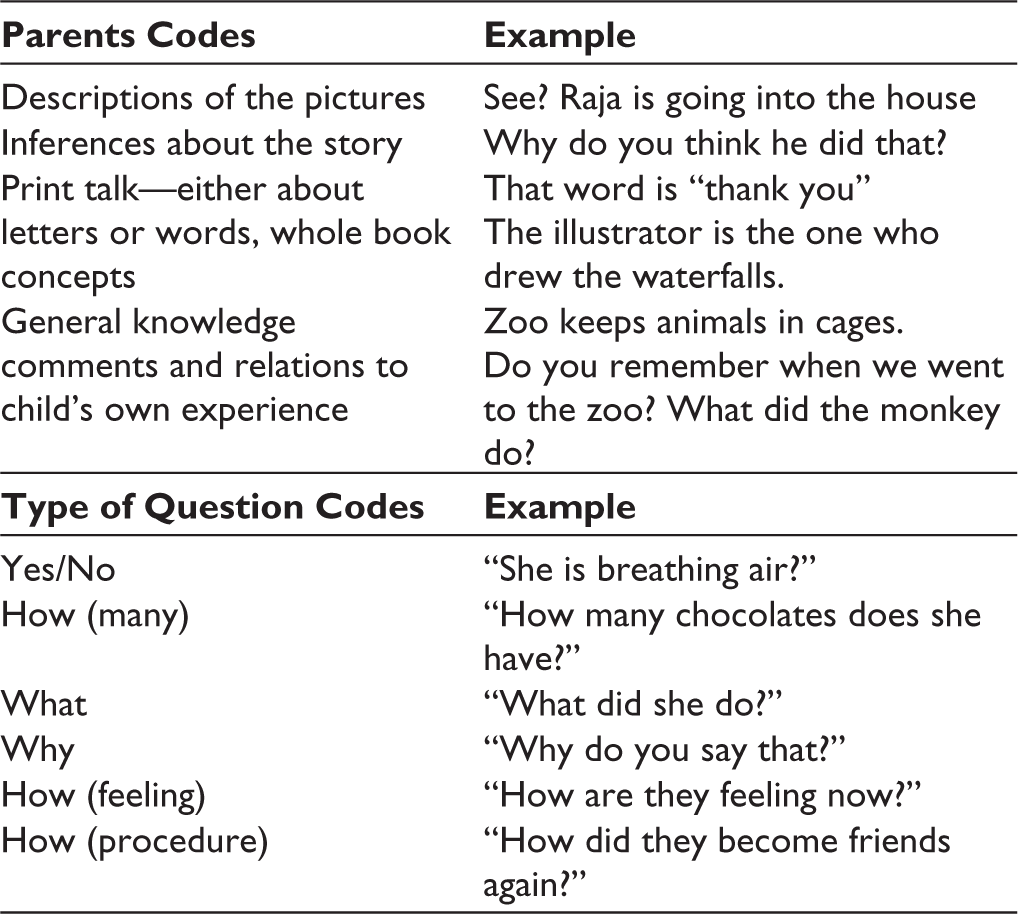
After the assessment was complete, children were assigned to 1 of 2 groups—control and experimental. Children were randomly assigned to the groups.
Procedure
The children from the experimental group participated in one-on-one book reading interactions with their parents. Initially, parents received training on SBR skills for 5 weeks—1 session per week in the small group between the investigator and parents. The training focused on the content, context, and quality of the language that parents use during the storybook reading session. Each training session was conducted online using a PowerPoint presentation for 45 min to 1 h. At the end of the training program, parents received detailed written instruction for the week’s reading.
Intensity and Number of Reading Sessions
Each child received SBR sessions with parents for 5 weeks. Parents should read a single book at least 4 days a week. Parents were free to choose storybooks they wanted to read and the language in which they wanted to narrate the story (English or home language or a combination of both). It was emphasized that engaging in a conversation with their child was more important than reading the story word-for-word. Parents were requested to audio record book-reading sessions with their child on a mobile phone at their preferred time. The recordings were sent to the researcher at the end of every week. The audio recording was analyzed and feedback was given during the next session. Fidelity checks were conducted. 9 Parents received rewards based on their implementing the learned techniques. Two Short Message Service reminders were sent to parents every week. Those who completed the reading got rewards as an incentive. Booster training sessions and group feedback to the parents were offered to encourage and support parents. 10
Storybook Control Group
Parents in the control group were not trained to read with their children in any specific style. They were free to choose the type of storybooks they wanted to read and the language of narration similar to the intervention group. Parents were required to read a single book at least 4 days a week. They were given only general information about making reading part of their daily routine. This information was provided to parents to help them successfully read with their children over the 5 weeks. Parents were provided with a log and asked to note instances of SBR. Rewards were given to parents who submitted the record every week online.
Follow-Up
One week after the training sessions and 2 months later, children and parents were tested to determine whether the training led to beneficial effects over the period.
Statistical Analysis
The data were analyzed by parametric and nonparametric statistical tests: c2 test, Kruskal Wallis 1-way ANOVA on ranks with Student Newman Keuls multiple comparison test (post-hoc test), and 3-way ANOVA with a post-hoc multiple comparison test. A probability of .05 and less was considered statistically significant. SigmaPlot 14.5 version (Systat Software) was used for statistical analysis.
Results
Descriptive Information
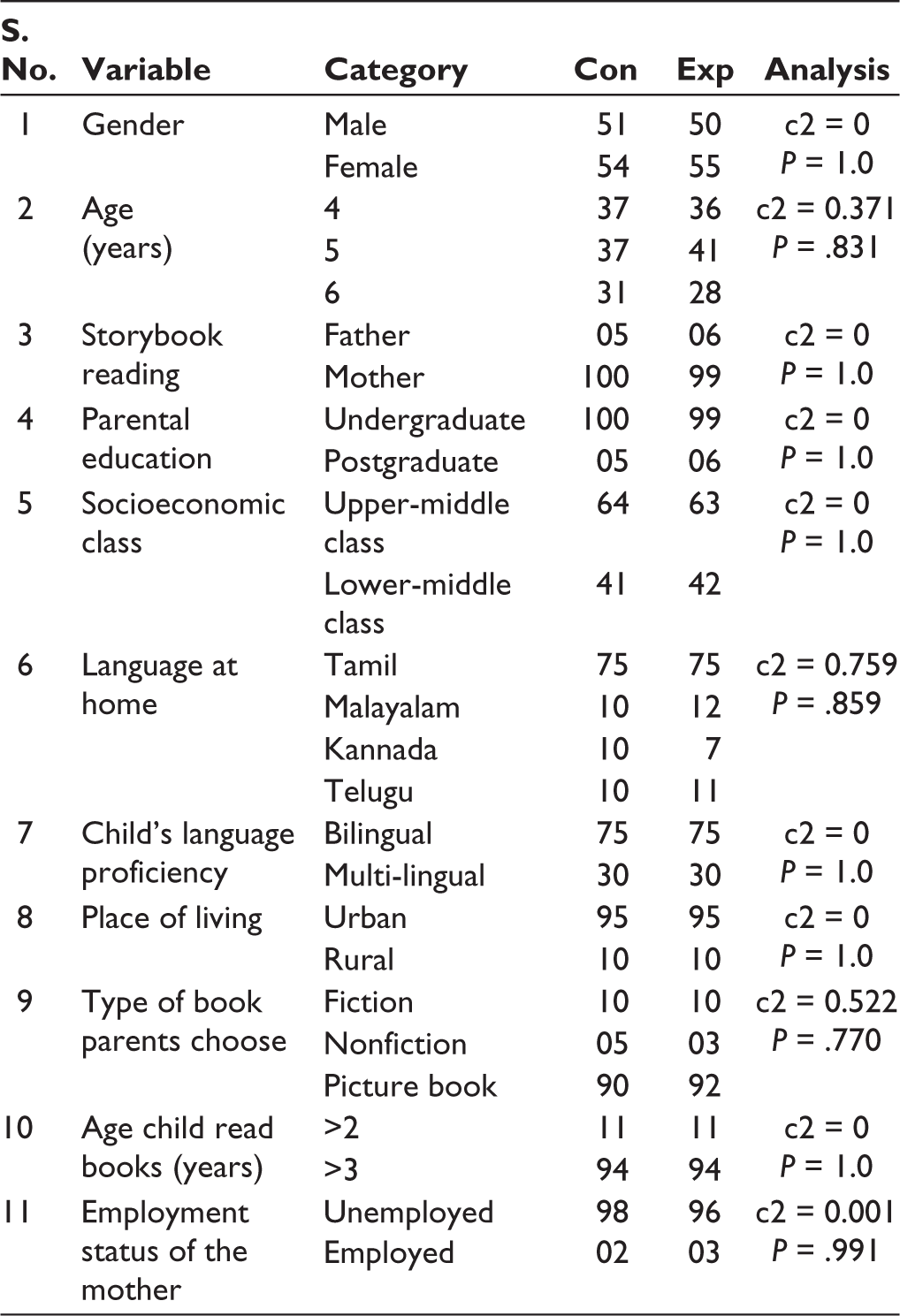
Table 1 shows the descriptive information about demographic variables of age, gender, and other information about the child and the parents of the control and experimental group. There was no significant difference between the groups (p: .770-1.0), indicating that the control and experimental groups are balanced without any bias in the intervention.
Descriptive Information of Demographic Variables for Homogeneity of Control and Experimental Groups.
Caregiver Reading Style and Child’s Narrative Skills
A detailed analysis was done to understand how the training influenced parents’ reading behavior. This study tested directly whether the parents changed their reading behavior during the intervention period and the follow-up. During the preintervention session, similar reading behaviors were exhibited by parents and similar child’s ENNI scores observed across the intervention and control groups (Table 2). There is a significant difference in the experimental group post-test 1 and post-test 2 in parents’ descriptions of the pictures, inferences about the story, print talk—either about letters or words or whole book concepts, general knowledge comments, and relations to child’s own experience and parents’ use of yes/no questions, “how many” questions, “what” questions, “why” questions, “how” questions (on feelings and procedures) (Table 2). The children in the experimental group accomplished better than those in the control group. There was a significant difference in the children’s ENNI scores after parents implemented techniques learned during SBR training (P < .001). Hence, it can be stated that children’s narrative skills improved when the parents implemented the trained reading behavior.
Comparison of Control and Experimental Groups on Dependent Variables Parameters.
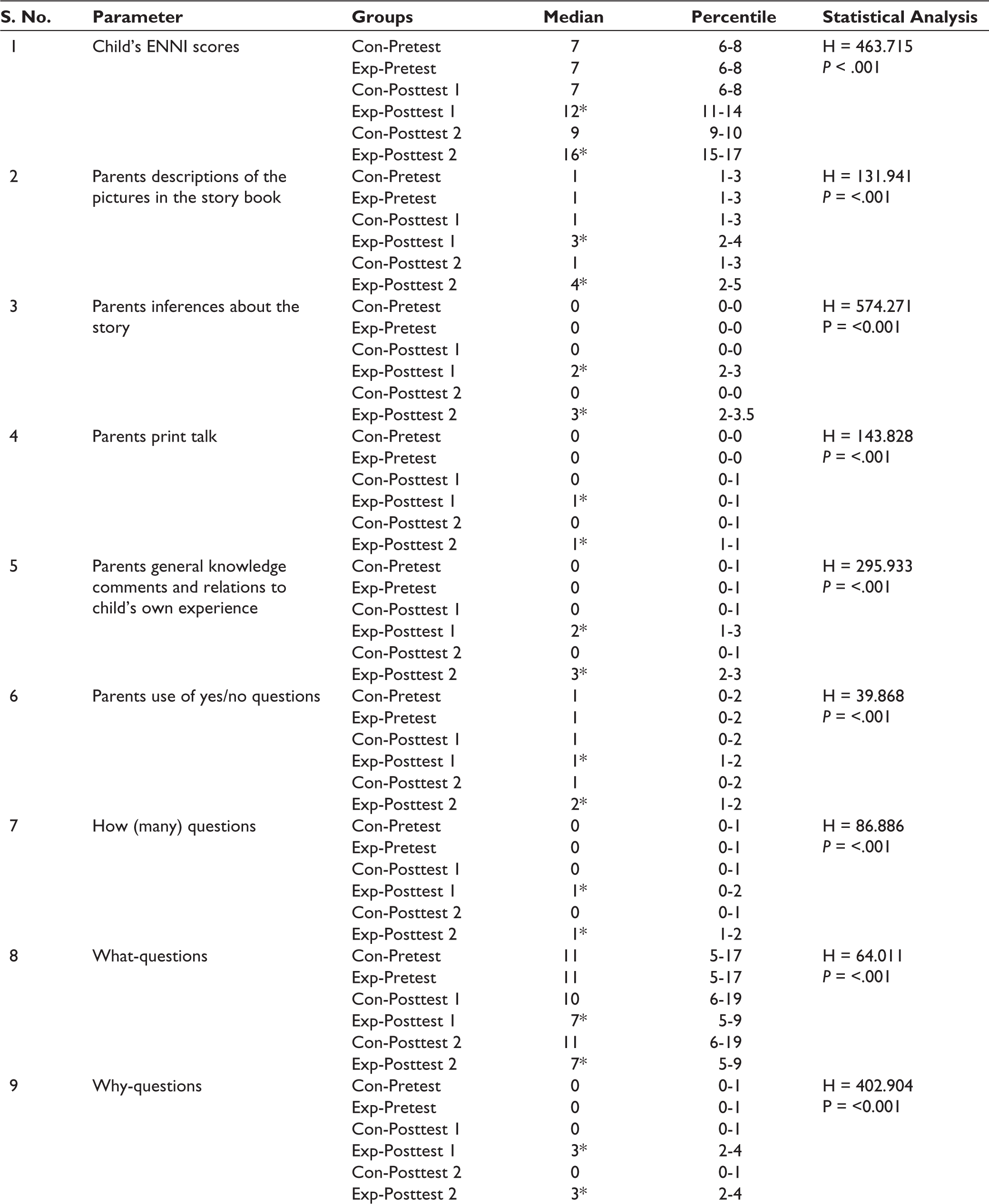
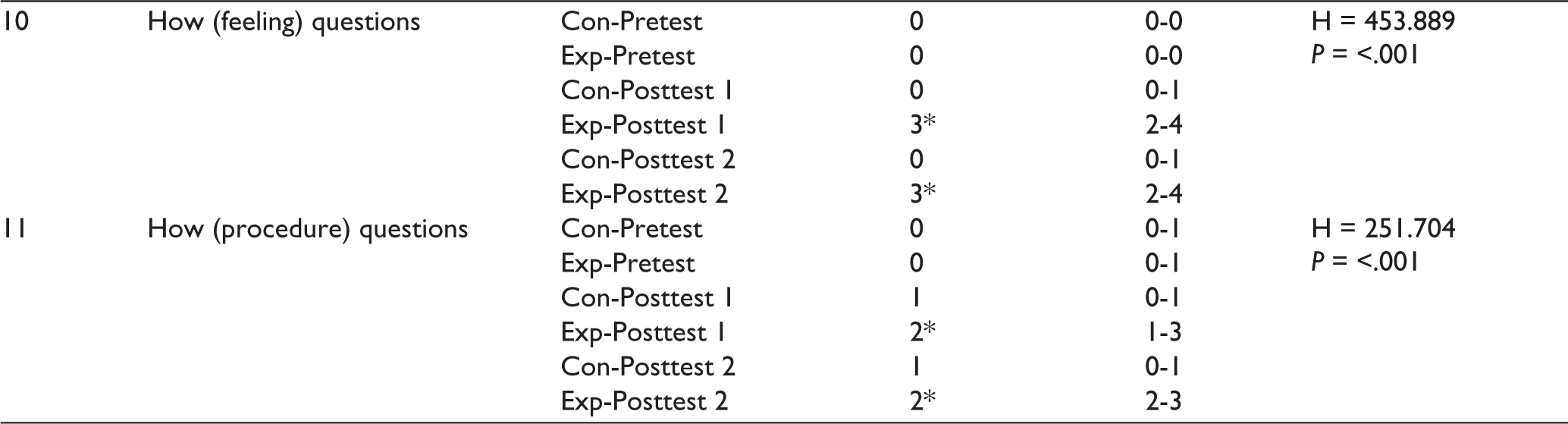
*Significantly different from the respective control groups of posttest 1 and posttest 2.
Tests for Difference Across Conditions
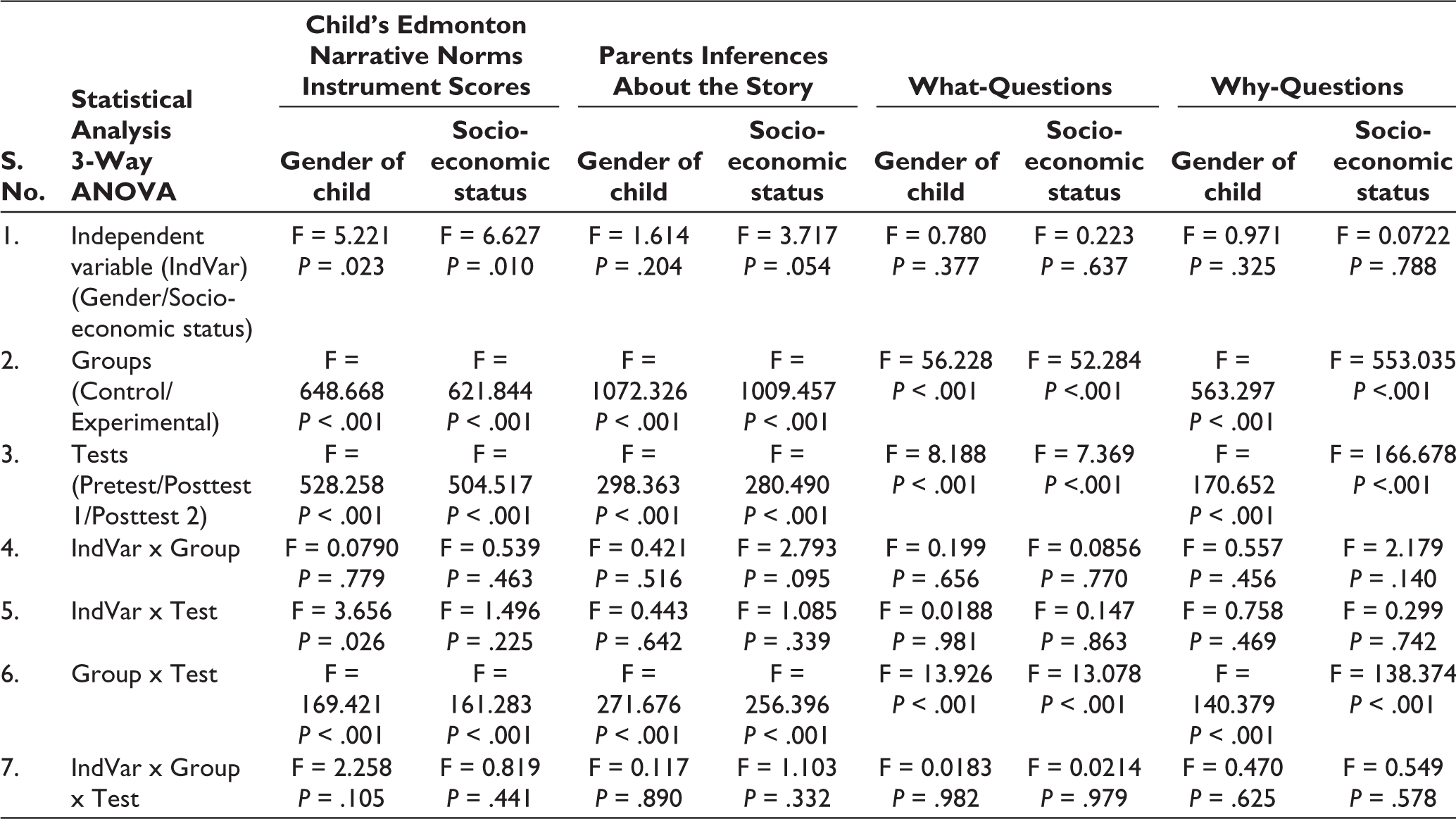
The influence of the child’s gender and the parent’s socioeconomic status was analyzed by 3-way ANOVA for all dependent variables. The groups and tests showed statistical significance as expected (P < .001 and P < .001, respectively). But, the analysis of GenderXGroupXTest and socioeconomic statusXGroupXTest interaction did not show significant differences, thus indicating that the child’s gender and socioeconomic status had no additional influence. Both male and female and both upper- and lower-middle classes were equally benefited in the experimental group (Table 3).
The Influence of the Independent Variables (Gender of Child and Parent’s Socioeconomic Status).
Discussions
This study investigated whether SBR intervention supports parents’ interaction style, questioning style, and child’s narrative development. The control and intervention group parents exhibited similar interactive book reading behaviors and narrative skills of children during the preintervention session. A significant improvement was observed during 2 postintervention sessions and it sustained over time. The change in interactive shared reading behaviors and the narrative skills of children indicates effective group-based intervention. Group intervention provided opportunities for parents to share their book reading experiences and discuss perceived barriers and challenges they were experiencing. 11 It also provided emotional and practical support for parents. As a part of building a positive relationship with the trainer and parents, solution-focused verbal feedback was offered. Parents were praised for their efforts and involvement, and all their queries were addressed. This method promoted trust between the parent and the trainer as both interacted positively. 12 Encouragement was given to improve the participation of the parents in the experimental group. The training program focused on elevating parent expectations and beliefs during initial sessions. 13 It may be helpful to investigate parental expectations about the intervention in advance of the intervention, and it may be wise to promote positive parent expectations. 14 As a part of the training, parents were taught to have a constructive approach which includes enthusiastically talking about storybooks with children before and after they read them, posing open questions, answering children’s questions, and praising the effort, which led to significant improvements. 15 Parents expressed their satisfaction with the intervention and observed a change in how they read books with children. The results thus showed the success of using a shared-book reading intervention with parents. Significantly, the current study results indicate that SBR intervention can be equally effective when targeted at parents of upper- and lower-middle-class socioeconomic status. Notably, the present study demonstrates that male and female children benefit equally from this intervention. Interventions involving multiple sessions with extended contact time between the trainer and parent are highly likely to improve the parent’s behavior and the child’s narrative skills.
Initially, before receiving training, the parents were not maximally utilizing interactive storybook reading time as an opportunity to include inferential talk, which would support the development of inference. They mostly read the words in the book, adding extratextual comments that primarily address literal story elements or illustrations. After receiving training, parents’ use of “what” questions has significantly reduced, and parents started to ask different questions. Parents are encouraged to request more “why” and “how” questions that help in reasoning and comprehension skills during shared reading and elicit multiword responses to develop children’s oral language skills. 16 Interventions targeting inference skills by asking relevant questions should be included in activities that promote emergent literacy skills as early as the preschool years. 17 Thus, it is evident that parents of young children need guidance to recognize and support the development of inference skills.
Most parents in this study stated that they initiated storybook reading to their children over 3 years of age. The results are consistent with the findings of the study done in Karnataka, southwest part of India. 18 Parents think reading a storybook is a school-related activity and start reading at a later age. Due to a lack of focus on literacy activities in the early years, in many cases, children are brought in contact with a print environment only during formal instruction at the kindergarten level. Moreover, early childhood settings such as playschools often set out as a secure environment for children of working parents and supply nutrition rather than a haven for a language and literacy stimulating environment. 19
Culture plays a complex and ubiquitous part in shaping children’s preliminary learning opportunities and experiences in the home. 20 A current position paper on early language and literacy in the Indian setting by the CARE India and the Centre for Early Childhood Education and Development reported that SBR is not a cultural routine; children listen to stories from elders in the family and community rather than the literacy experiences through books. Children are exposed to literate environments as young as infancy in the Western context. Such a setting is uncommon in the Indian context because oral storytelling traditions are robust. 21
Limitations
The study included only the middle-class population and not the lower class. Some families with a reduced capacity to engage with the SBR intervention due to social and economic challenges may benefit from additional encouragement to enable them to attend.
Future Research Directions
The current study focused on the type of questions parents ask during story book reading. Research should also attempt to explore the level of support parents offer to children in order to answer the questions accurately. The study results support interactive book reading strategy, further investigation is needed to examine parents’ understanding of the utility and function of their book reading strategies. While this study measured story book reading practices followed at home, observational studies are required to gain more insight into story book reading practices in prekindergarten and kindergarten classrooms.
Conclusion
Screen time usage among preschool Indian children has increased and it is taking over parent-child interaction. 22 Story book reading creates opportunities for interaction. Intervention provided in this study changed parents’ interaction style during story book reading which improved the narrative skills of children. This warrants parents need support to effectively make use of story book reading sessions. The current findings can aid in the creation of intervention programs to support parents’ SBR skills and promote children’s overall development including language and literacy skills. In addition, results may provide researchers and educators with a broader picture that can help them understand how and where to invest in promoting the quantity and quality of parent-child talk during SBR.
Footnotes
Author Contributions
All the authors have made substantial contributions to conception and design, acquisition of data, analysis, and interpretation of data; involved in drafting the manuscript and revising it critically for important intellectual content; and have given final approval of the version to be published.
Declaration of Conflicting Interests
The authors declared no potential conflicts of interest with respect to the research, authorship, and/or publication of this article.
Funding
The authors received no financial support for the research, authorship, and/or publication of this article.
Statement of Informed Consent and Ethical Approval
Necessary ethical clearances and informed consent was received and obtained respectively before initiating the study from all participants.