



Abstract
Introduction:
Parenting is a key factor in development of cognitive and emotional patterns of viewing self, others, and the world. The present study aimed to explore the influence of parenting on early maladaptive schemas (EMS) and emotion regulation in individuals presenting with self-injurious behavior.
Method:
A total of 32 adolescents with self-injurious behavior aged 15 to 18 years participated in this cross-sectional exploratory study. Measures used were Parental Handling Questionnaire, Difficulties in Emotion Regulation Scale, and Young Schema Questionnaire—Short Form.
Results:
The results indicate a significant negative correlation of parental care with lack of emotional clarity (r = −0.403, P < .05) with schema of self-punitiveness (r = −0.179, P < .05) and a significant positive correlation with emotional inhibition (r = 0.423, P < .05) and schema of admiration seeking (r = 0.364, P < .05). Parental control was found to be significantly positively correlated with schemas of pessimism (r = 0.350, P < .05) and significantly negatively correlated with admiration seeking (r = 0.477, P < .01). Parenting was also found to be a significant predictor for emotion regulation and EMS (P < .05).
Conclusion:
Parenting has a significant influence on emotional regulation and EMS. Findings have a bearing on future research and targeted interventions in clinical care settings.
Keywords
Introduction
The environment that children experience affects their overall growth and development in many important ways. 1 Sensitive and supportive caregiving facilitates children’s cognitive development such as attention and executive skills2, 3 which in turn promotes efficient emotion regulation. 4 Emotional security theory suggests that children adapt their regulatory strategies to fit the quality of family relationships, involving interparental conflicts and interactions. 5 Several types of specific parent child patterns appear with great regularity in children who show emotional disturbances. Parental rejection tends to foster low self-esteem, feeling of insecurity and inadequacy, retarded conscience and general intellectual development, increased aggression, lovelessness, and inability to give and receive love. 6 Two important constructs of parenting are of parental care and parental control. Parental care is the care/emotional nurturance which refers to level of need gratification, emotional climate whether positive or negative, and frequency of adult contact. Whereas, parental control is psychological control vs autonomy which refers to the strictness of discipline, permissiveness in decision-making, and inconsistency of behavior. 7 A body of literature supports that detrimental rearing behaviors were associated with the presence of maladaptive schemas. 8 Studies also indicate negative parenting practices from both sources (ie, mother, father) were found to be associated with stronger levels of schema domains. 9 Schema is “a broad, pervasive theme or pattern, comprised of memories, emotions, cognitions, and bodily sensations, regarding oneself and one’s relationships with others which is developed during childhood or adolescence, elaborated throughout one’s lifetime and dysfunctional to a significant degree.” 10 Early maladaptive schemas (EMS) are self-defeating cognitive and emotional patterns that develop in the childhood. An individual’s behavior is not the part of the schema, but it is a response to the schemas. There are five basic schema domains organized within these 5 schema domains are 18 specific EMS. EMS are specific self-defeating core relational patterns and themes that were learned in childhood and become repeated in adulthood. 11 If certain emotional needs such as secure attachment to others, autonomy, freedom to express need and emotions, spontaneity, and realistic limits and self-control are not met, EMS are likely to develop. 12 Research evidence reflects that parenting practices and emotional climate of the family specifically related to emotion and emotion management affect emotion regulation. 1 Emotion regulation is a term that includes skills for recognizing one’s own and others’ emotions, controlling one’s emotional reactions to potentially stressful or challenging situations, and expressing one’s emotions in socially appropriate ways. 12 Consistent with the self-determination theory perspective on parenting, emotion regulation flourished when adolescents felt like mothers provided support, and fathers loosened behavioral control. 13 Offspring from harsh early environments experience difficulty in managing emotions in challenging circumstances.14, 15 Emotion dysregulation has a tendency for emotions to spiral out of control, change rapidly, get expressed in intense and unmodified forms, and/or overwhelm both coping capacity and reasoning.16, 17 Developmental research suggests that these self-regulatory deficits emerge from an interaction of intrinsic temperamental and biological factors as well as extrinsic intrusions from chaotic and stressful early life experiences, particularly childhood abuse and problematic attachments with caregivers. 18 Previous studies have expounded that emotion regulation is crucial for mental health, while emotion dysregulation is associated with the development and maintenance of a wide range of mental disorders, such as substance use, anxiety disorders, and borderline personality disorder. Maladaptive and destructive behaviors, including aggression toward oneself and others, have also been associated with emotion dysregulation.19–23 The ability to regulate emotions helps in calming down in times of distress. Children with healthy emotional regulation skills are able to adjust well in new situations, transitions, as well as show high tolerance for frustration. Children with poor emotional skills have difficulty coping with stressful life events, may be less socially competent. Indulging in self-harm can serve a multitude of functions. The functions of self-harm as examined in the empirical literature are affect regulation (alleviate negative affect), anti-dissociation (to end the experience of depersonalization), anti-suicide (to compromise on the impulse to commit suicide), to assert one’s interpersonal boundaries, to seek or assert interpersonal influence, self-punishment, and sensation seeking. 24 On the basis of these functions, self-injurious behavior can be understood as a poor coping strategy for emotional distress, a cry for help, a way to generate emotions to feel alive, a means of expressing death wish without actually risking death, a means of avoiding abandonment, or a means to either assert one’s identity or autonomy or show anger toward oneself. 25 Self-harm is a broad term that includes both nonsuicidal self-injury (NSSI) and self-inflicted harm with the intention of committing suicide (suicide attempt). 26 Several terms are used to define self-injury. The term deliberate self-harm (DSM) is frequently employed as a more encompassing term for self-injurious behaviors both with and without suicidal intent that have nonfatal outcomes. This term tends to be used predominantly within European countries and in Australia. In contrast, researchers within Canada and the United States have employed the term NSSI (the deliberate, self-inflicted destruction of body tissue without suicidal intent and for purposes not socially sanctioned which explicitly excludes behaviors engaged in with any level of suicidal intention). There are difficulties with agreeing upon a shared definition of self-injury worldwide. Different terminology and methodology is used for self-harm behavior whether it’s NSSI, self-injury, DSH, or self-harm.
Literature from India shows in self-injuring youth that there is preoccupation with relationships, need for approval in relationships, and difficulties in all domains of emotion regulation. 27 Higher suicidal ideation, hopelessness, and trauma are also reported in college students with affectionless parental control and neglectful parenting. 28 Review of existing literature links parenting with emotion regulation or maladaptive schemas, but to the best of our knowledge, there is not enough evidence from India exploring all the variables in relation to self-harm. Our study aims to explore the effect of parenting on maladaptive schemas and emotion regulation in individuals presenting with self-injurious behavior.
Method
This cross-sectional study was done in a tertiary care hospital in New Delhi on 32 adolescents presenting with self-injurious behavior. The study was approved by The Institutional Ethics Committee (Approval Number: 792/19). For the study, self-injurious behavior was defined as the deliberate, self-inflicted injury which has/had nonfatal outcomes. Purposive sampling was used for the study. Participants were adolescents who presented with self-injurious behavior, between the age groups of 15 and 18 years, were recruited for the study. All participants were visiting the psychiatry outpatient department treatment for the first time or in follow-up. Those who had any previous experience of self-harm in last 12 months were included in the study. Participants were diagnosed by consultant psychiatrist and consultant clinical psychologist and those with suspected comorbid psychotic/neurological illness/intellectual deficit/autism were excluded from the study based on clinical interview and International Classification of Diseases-11 criterion. The parents of the participants who were living with them were asked to participate. Parents having any psychiatric/neurological illness were also excluded. The parents of the participants were screened using General Health Questionnaire (GHQ)-12. Out of the 36 individuals screened, 4 were found to have decreased psychological well-being and were hence excluded from the study. They were psychoeducated about the same and were referred for consultation. The recruited parents and participants provided consent/assent. The questionnaires were conducted in single session and each interview lasted for 1 to 1.5 h. Depending upon the sensitivity of the case and discomfort due to self-harm (if any), the participant/s were called for interview on subsequent follow-up date with mutual consent.
Measures used for the study were GHQ-12—the 12-item scale is a widely used screening instrument for common mental disorders, in addition to being a more general measure of psychiatric well-being. It uses a 4-point Likert scale ranging from 0 to 3. Higher values indicate decreased levels of psychological well-being. Difficulties in Emotional Regulation Scale—It is a widely used self-report measure of subjective emotion ability, as defined by a prominent clinically derived model of emotion regulation. It is a 36-item questionnaire rated on a 5-point Likert Scale, with 1 = almost never and 5 = almost always. The dimensions of emotion regulation as measured by DERS are: (a) awareness and understanding of emotions; (b) acceptance of emotions; (c) the ability to engage in goal-directed behavior, and refrain from impulsive behavior, when experiencing negative emotions; and (d) access to emotion regulation strategies perceived as effective. It has high internal consistency (α = 0.93), good test-retest reliability for all subscales (ranging from 0.57 to 0.89), and adequate construct (ranging from −0.69 to 0.60 for 3 constructs of interest) and predictive validity (ranging from −0.02 to 0.37 for 2 outcome variables). 29 Parental Handling Questionnaire (PHQ)—It measures parental control and care, which are significantly related to psychological morbidity in children. It is a 14-item questionnaire rated on a 3-point Likert Scale (0 to 2). High care-low control is associated with healthy development and low care-high control is related to psychiatric disorder. The scale has significant test-retest and (0.68 for care; 0.76 for control) inter-rater reliability (0.82 for care; 0.66 for control), with significant construct (64.8% classification rate) and concurrent validity (0.67 for care; 0.64 for control). Young Schema Questionnaire-Short Form (YSQ-S3) is a 90-item self-report questionnaire that measures 18 EMS. EMS are grouped in 5 broad domains: disconnection and rejection, impaired autonomy, impaired limits, other-directedness, and over vigilance and inhibition. Each item is rated on a Likert scale from 1 (completely untrue of me) to 6 (describes me perfectly). The YSQ-S3 shows adequate reliability and validity in predicting psychopathology in different studies.11, 12
The data collected was analyzed using IBM SPSS Statistics for Windows, V 22 (IBM Corp Released 2013). The descriptive analysis of demographic and basic clinical data was done using means, standard deviations, frequencies, and percentages. Test of Kolmogorov-Smirnova was done to test normality of the data variables. Correlational analysis was done using Pearson’s Correlation, followed by simple and multiple linear regression analysis. ANOVA was done to calculate linearity of relationship, variance inflation factor was calculated to test for multicollinearity between parental care and parental control and Levene’s test was done to test for homogeneity of variances. The sample was bootstrapped and bias corrected and accelerated 95% confidence intervals were calculated to correct for bias and skewness in the distribution. All comparisons were two-tailed.
Results
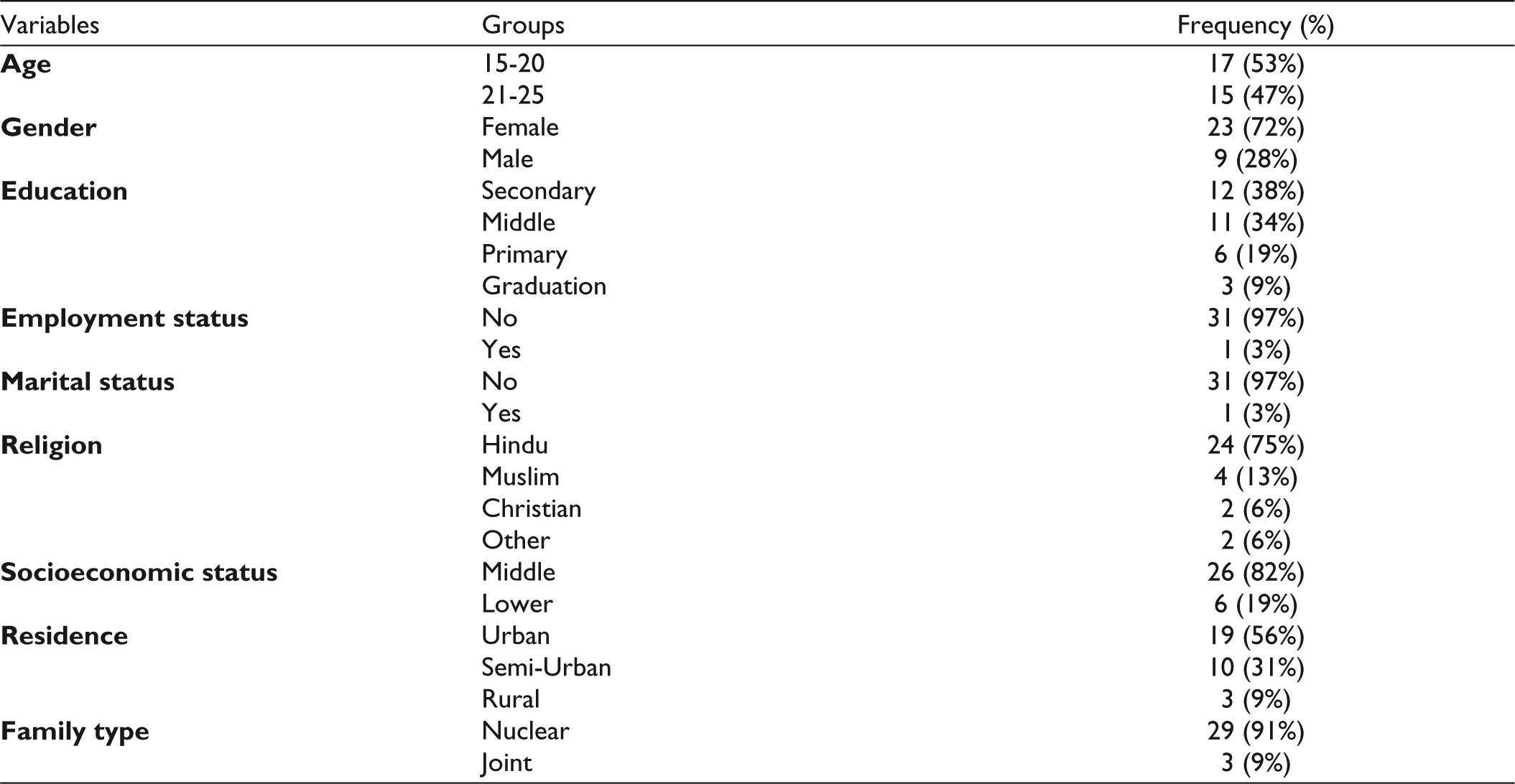
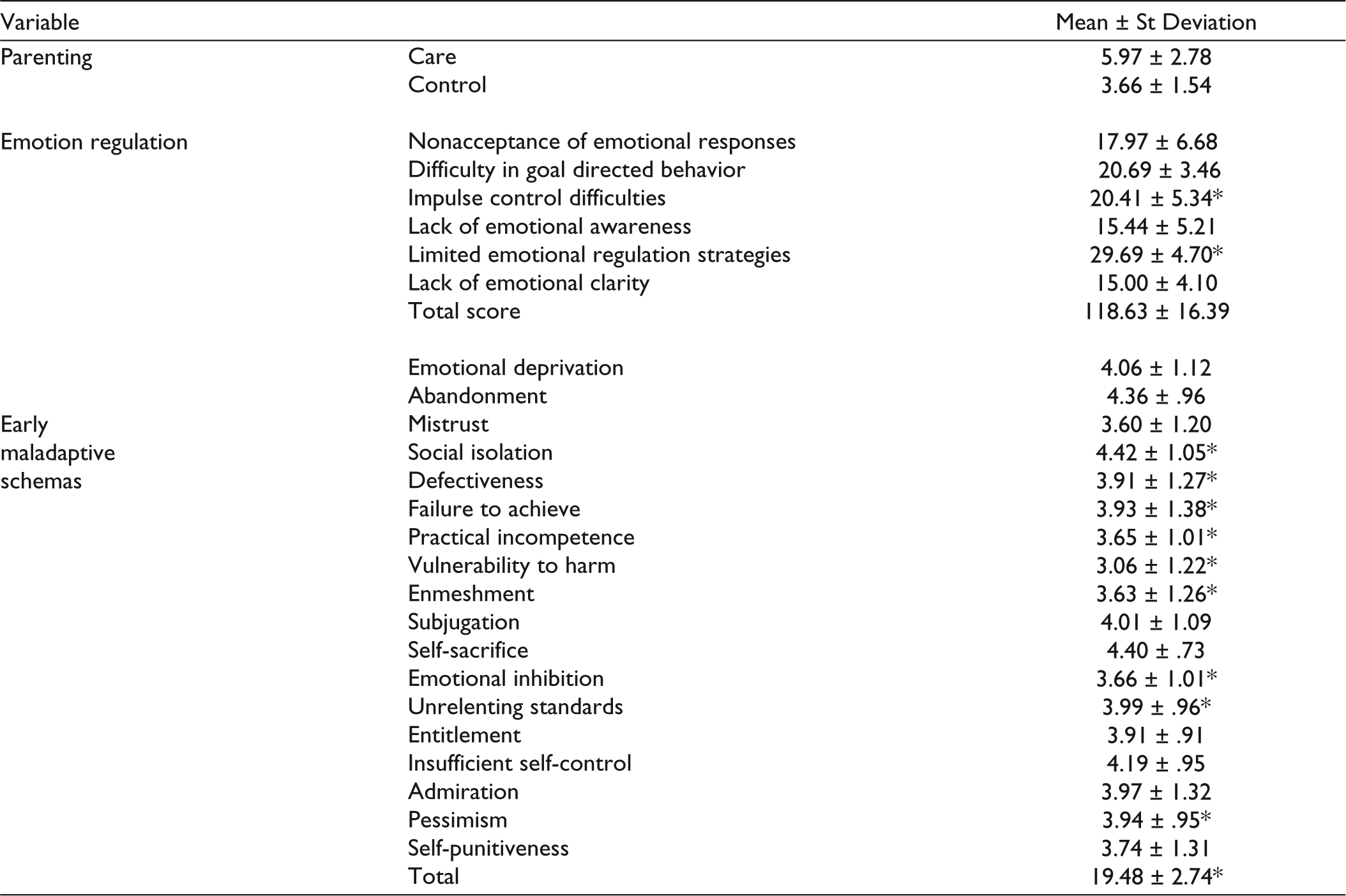
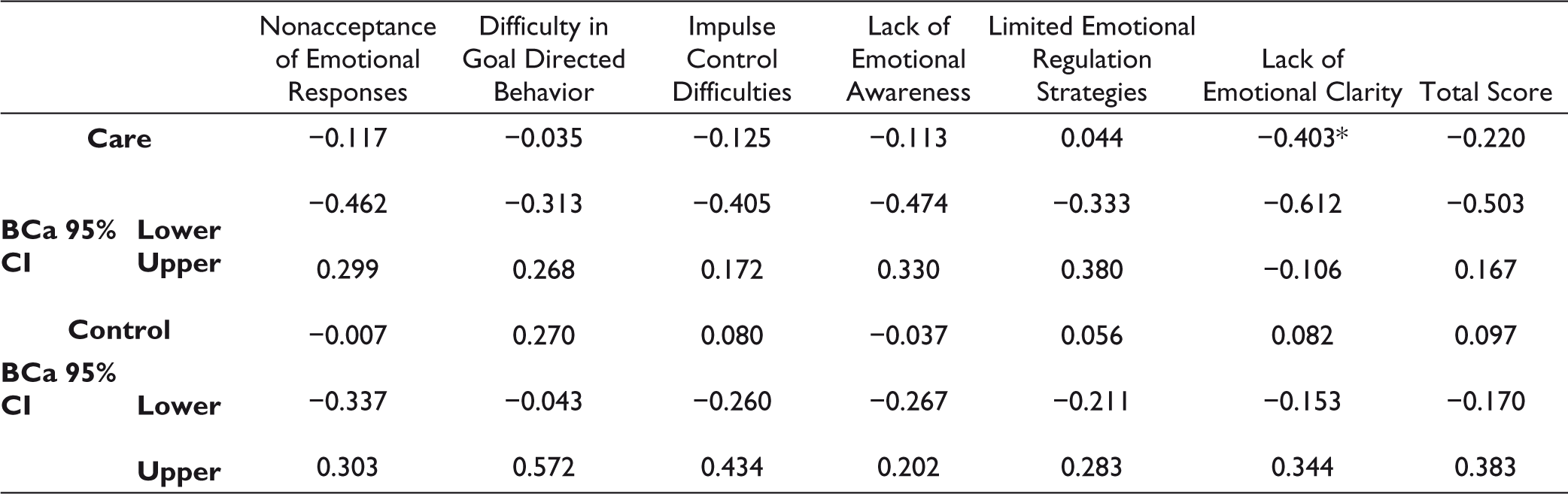
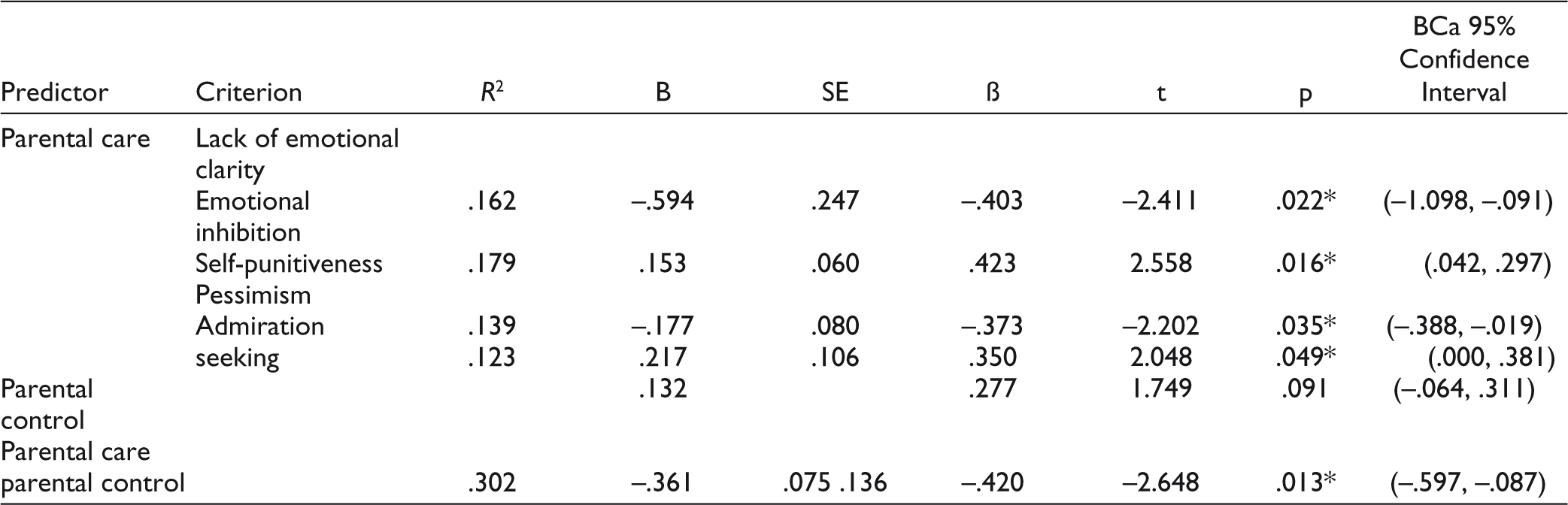
The sample comprised of more females than males, who belonged to the 15 to 18 years age group. Majority of the sample consisted of having secondary education, were not employed and were unmarried (Table 1). The mean and standard deviations of the research variables (Table 2) show higher scores of parental care, limited emotional regulation strategies, total difficulty in emotion regulation scores, schema of social isolation, and total schema scores. Whereas low scores were reported for parental control, lack of emotional clarity, and schema of vulnerability to harm. The results of correlation analysis (Table 3A) show a negative correlation between parental care and lack of emotional clarity was found (r = −0.403, P < .05). A positive correlation was also found between parental care and schemas of emotion inhibition (r = 0.423, P < .05), admiration seeking (r = 0.364, P < .05), and a negative correlation with schema of self-punitiveness (r = −0.179, P < .05). Parental control was found to be positively correlated with schema of pessimism (r = 0.350, P < .05) and negatively correlated with schema of admiration seeking (r = 0.477, P < .01) (Table 3B). Results of regression analysis (Table 4) highlight a significantly better prediction of emotional clarity (P < .05), emotional inhibition (P < .05), and self-punitiveness (P < .05) using parental care. Parental control was also found to be a significant predictor of pessimism (P < .05). As simultaneous predictors of schema of admiration seeking, parental control was found to be a significant predictor (P < .05).
Socio Demographics Characteristics of the Total Population Sample (N = 32)
Mean and Standard Deviation of Research Variables
Correlation Coefficients of Parenting Handling Questionnaire (PHQ) and Difficulties in Emotion Regulation Scale (DERS) (N = 32)
Correlation Coefficients of Parenting Handling Questionnaire (PHQ) and Young Schema Questionnaire Short Form (YSQ-S3) (N = 32)

Regression Predicting Maladaptive Schemas and Emotion Regulation From Parenting Influences (Care and Control) (N = 32)
Discussion
The present study aimed to explore the effect of parenting on maladaptive schemas and emotion regulation in individuals presenting with self-injurious behavior. With respect to parenting and emotion regulation, a significant negative relationship was found between parental care and lack of emotional clarity (r = −0.403, P < .05), with it also being a significant predictor of lack of emotional clarity (R2 = 0.162). The results signify that more the nurturance, warmth, and the positive contact with the parental figures, the easier it would be for adolescents to be more aware of and make sense of their feelings, and will lead to reduction in the confusion about one’s own feelings. Previous research has shown that individuals who had a warm and affectionate relationship with their fathers and optimal relationship with the mother resulted in emotional awareness, better recognition of emotions, and had less difficulties in emotion regulation abilities. 30 Evidence also indicates that parents’ warmth, especially their sensitivity to children’s emotional experiences (including accurate labeling of those experiences as well as responsiveness to children’s emotional needs), is internalized and leads to children’s empathic responses and appropriate expressiveness. It is also associated with children who are more expressive of positive emotions (happiness, interest, curiosity), and who can express negative emotions, but generally experience them less often and less intensely than do other children’s awareness. 31 Emotional dysregulation is known to be caused by various psychosocial factors like poor attachment; children often need the help of the significant adults in their lives to develop regulation skills, exposure to trauma of any kind; they may be unable to build safe relationships, or learn to disconnect from their physical or emotional experiences when those experiences are overwhelming. Emotional regulation is one of the underlying psychological process common to many psychological conditions. For parenting and EMS, present study found that parental care is positively correlated with and a significant predictor of schemas of emotion inhibition (r = 0.423, P < .05; R2 = 0.179), and is negatively correlated with, and significant predictor, of schema of self-punitiveness (r = −0.179, P < .05; R2 = 0.139). The present study indicates that the presence of warmth and nurturance leads to inhibition of feelings or difficulty in expressing the feelings, which could be explained by expectations of love, safety, nurturance, and sharing of feelings being unmet, despite the parental handling to be dominant on care. On the other hand, warmth and caring environment by parental figures leads to decrease in the tendency to be angry, intolerant, punitive, and impatient toward oneself and others. A large body of literature exists highlighting the influence parenting has on development of maladaptive schemas and psychopathology. Most studies exploring maladaptive schemas in nonclinical adolescents found that emotional inhibition is negatively correlated to emotional warmth 8 and that higher mother’s control are predictors of the over vigilance domain, which may lead individuals to manifest emotional inhibition. 32 Parental criticism per se is a form of self-punitiveness; it certainly can contribute to a general tendency to be self-punitive. Research has indicated among women, DSM was associated with dimensions of trait perfectionism such as parental criticism and socially prescribed perfectionism. 33 The findings are not alien in the Indian setting where there are fixed gender roles and socially sanctioned ideals. Our study also found that parental control is positively correlated with a significant predictor of schema of pessimism (r = 0.350, P < .05; R2 =0.123). One of the possible reasons for it could be that the strict and inconsistent environment by parental figures leads to an inordinate fear of making mistakes that lead to different negative consequences. It also explains the frequent chronic worry, anxiety, vigilance, and indecision experienced. The findings are corroborated by another study that found that pessimistic mothers reported lower levels of support and higher levels of control. Consequently, child pessimism was positively associated with maternal pessimism. Similarly, autonomy granting was the most consistent parenting correlate, showing negative correlations with child pessimism. 34 Lastly, the schema of admiration seeking was found to be positively correlated with parental care (r = 0.364, P < .05) and negatively correlated with parental control (r = −0.477, P < .01), with parental control found to be its significant predictor (P < .05). Care and nurturance leads to a high awareness of what others will approve of and a willingness to change oneself in order to gain that approval, admiration, recognition, and warmth. Whereas, increase in parental control may lead to hampering one’s own self-esteem since it is dependent on the reaction and behavior of significant others. Similar findings were reported in a study on Italian adults, where it was found that men with maternal parenting characterized by affectionate constraint seem to manifest a higher level recognition seeking. 32 In a study finding the parental environment (ie, childhood control/neglect/maltreatment) and individual (ie, emotional inexpressivity and affect intensity/reactivity) factors were associated with DSM. 35 Yet another study by same researcher showed 2 specific dimensions of emotion dysregulation to self-harm: limited access to effective emotion regulation strategies and a lack of emotional clarity, each of which reliably improved the prediction of self-harm status and accounted for unique variance in self harm frequency among self-harming women above and beyond the other risk factors. 36 In a meta analytic review of EMS, suicidal ideation and self-harm authors concluded that suicidal thoughts and self-harm are both associated with feeling isolated, expecting that one’s desire for emotional support will not be met, and inhibiting one’s feelings. Suicidal ideation was also associated with perceiving one’s self as unlovable, fundamentally flawed, and incapable of success or managing daily responsibilities. These findings correspond with the risk factors identified by the interpersonal theory of suicide: thwarted belonging and burdensomeness. 37
Limitations
One major limitation of the study is that of exploratory research involving a small sample, hence the results cannot be accurately interpreted for a generalized population especially in the community. Another limitation is that the parenting handling was assessed by parents only which could have a biased or different view than the adolescent who perceives that parenting environment.
Future Implication and Conclusion
Parenting has a significant influence on and predictive power for maladaptive schemas and emotion regulation. In the context of therapy, parents, clinicians, and therapists can model healthy emotional regulation, practice repair as needed when emotions become unmanageable especially during stressful life events, transitions thereby increasing the understanding of one’s emotions and its impact on behavior. In future studies, it can be examined with multiple methods of parenting assessment by multiple informants which include both parents as well as children. Future research could also be oriented toward understanding the linkages between self-harm, emotional regulation, and schemas and how they are influencing each other and their mediating roles across different psychopathologies in Indian context. This can provide deeper insight into planning various prevention and intervention strategies that could focus on those mediating factors. Which particular schema is activated, perpetuated, and influence self-harm behavior is an important intervention goal especially in adolescents with poor emotional regulation. Potential utility of teaching adolescents more adaptive ways of responding to their emotions, including nonharming strategies for modulating emotional arousal and the ability to identify, label, and differentiate among emotional states can be focus of intervention strategies.
Footnotes
Acknowledgements
The authors would like to thank Vikas Gupta and Nitika Arora for lending their statistical expertise.
Authors’ Contributions
PS has contributed to the conception and design of the study. OS has made substantial contributions to design development, or acquisition of data, or analysis and interpretation of data. PS revised the draft critically. Both PS and OS have finalized the manuscript.
Declaration of Conflicting Interests
The authors declared no potential conflicts of interest with respect to the research, authorship, and/or publication of this article.
Funding
The authors received no financial support for the research, authorship, and/or publication of this article.
Statement of Informed Consent and Ethical Approval
Necessary ethical clearances and informed consent was received and obtained respectively before initiating the study from all participants.