




Abstract
Background
Dehydrokoline has a wide range of pharmacological activities and exhibits anti-tumor potential effects in a variety of cancer types. Whether it plays a role in gastric cancer remains unclear.
Purpose
This study aims to explore the mechanism by which liposome nanoparticles (Harmine NPs) coated with “dehydrocardamine” inhibit COX-2 expression by regulating the PTEN/Akt signaling pathway, thereby alleviating the inflammatory response in mice with gastric cancer and providing a new strategy for targeted therapy of gastric cancer.
Materials and Methods
Mice suffering from gastric cancer were used as models, and Harmine NPs were further prepared and used in experiments to observe the anti-inflammatory response in gastric cancer, explore its effect on PTEN/Akt, and analyze its role in the regulation of COX-2.
Results
We successfully prepared the Harmine NPs nanocomposite, and the model group was raised for 12 weeks for subsequent animal experiments. The inflammatory factor, Harmine NPs, in the group of mice showed a better improvement in inflammation. Their mucosal muscle layer cells were evenly arranged. While the levels of inflammatory response were reduced, their COX-2 expression and genes and proteins related to the PTEN/Akt signaling pathway were also inhibited. Using SF1670 based on Harmine NPs, it was found that the inhibitory effect of Harmine NPs on PTEN protein expression was reversed. VO-OHpic simulated the inactivation of PTEN and found that the anti-inflammatory effect of Harmine NPs was amplified. After celecoxib, it was confirmed that Harmine NPs can inhibit the expression of COX-2 through the PTEN/Akt signaling pathway to reduce the inflammatory response in gastric cancer mice.
Conclusion
Harmine NPs are a new type of complex with anti-inflammatory and anti-cancer effects and are expected to become an effective strategy for the treatment of gastric cancer by inhibiting the PTEN/Akt signaling pathway and the COX-2 expression. This treatment method shows potential benefits in the management of gastric cancer inflammation and provides an important theoretical basis for the treatment of gastric cancer inflammation.
Introduction
The mortality rate of gastric cancer is high. Chinese herbal medicines such as skullcap, coptis, and forsythia are widely used in traditional Chinese medicine to clear away heat, detoxify, and prevent inflammatory effects (Chen et al., 2020). Among them, curcumin affects the expression and activity of COX-2 in human prostate cancer cells. In terms of its impact (Kotha & Luthria, 2019), although it is not directly involved in gastric cancer, curcumin, as a traditional Chinese medicine ingredient, has anti-inflammatory and anti-cancer potential and may have reference value in research on COX-2-related gastric cancer (Xiang et al., 2020). In addition, the effect of black tea polyphenols on leukemia cells also involves the regulation of COX-2 (Rahman et al., 2020). In addition, gambogic acid (a traditional Chinese medicine ingredient) exerts anti-inflammatory effects by regulating the PI3K/Akt/mTOR signaling pathway and COX-2 in rats with rheumatoid arthritis (Zhang et al., 2022) though these are not directly related to tumors. However, it highlights how traditional Chinese medicine ingredients exert anti-inflammatory effects by regulating COX-2 and related signaling pathways (Cui & Jia, 2021). The related mechanisms may provide some inspiration for exploring the effects of traditional Chinese medicine on gastric cancer and COX-2.
COX-2 is often overexpressed in tumors (Ceylan & Caglar, 2021). The high expression of COX-2 is closely related to the malignancy of breast cancer lesions and may play an important role in the development of breast cancer (Balamurugan et al., 2023). Another study found that COX-2 can promote the production of VEGF and FGF, leading to an increase in tumor-effected blood vessel density, which is related to lung cancer. There is a correlation between angiogenesis and patient survival (Wang et al., 2019). COX-2 can synthesize PGE2, and so on, and has cross-regulation with the NF-κB signaling pathway (Shukla et al., 2019). In the environment of gastric inflammation, studies have found that the expression of COX-2 may be activated (He et al., 2021), leading to the production of inflammation-related substances such as prostaglandin E2 (PGE2), thereby affecting cell survival and death decisions.
Researchers found that COX-2 inhibition can maintain the expression of PTEN, thereby reducing the abnormal regulation of small GTPases by cancer cells (Li et al., 2023), revealing the cross-regulatory mechanism between COX-2 and PTEN, which may play a role in the development of colorectal cancer, providing a certain basis for the research of gastric cancer (Chang et al., 2019). In gastric cancer, the loss or reduced expression of PTEN may lead to abnormal cell growth and promote gastric cancer (Hu et al., 2019). There are relatively few studies on the regulatory effect of traditional Chinese medicine on PTEN. Some studies have shown (Chen et al., 2022) that some components in Panax notoginseng may inhibit cell proliferation by upregulating the expression of PTEN, thereby having anti-cancer effects on tumor cells, while some active ingredients in the drug Astragalus extract may affect the expression of PTEN by regulating the PI3K/Akt signaling pathway.
Dehydrokoline has a wide range of pharmacological activities and has been found to exhibit anti-tumor potential effects in a variety of cancer types (Zhang et al., 2020). However, the application of dehydrokoline in the treatment of gastric cancer faces several challenges, including its bioavailability and targeting in vivo. As a novel drug delivery strategy, nanotechnology can improve the bioavailability and targeting of drugs, thereby improving the therapeutic effect (Bayda et al., 2019). Liposome nanoparticles have good biocompatibility. This reduces the risk of possible immune responses or toxicity, making liposomal nanoparticles a safer nanocarrier (Evers et al., 2022). They can be exploited to achieve targeted delivery through surface modification. The liposomal nanoparticles also generally have low immunogenicity, which is beneficial for long-term application in vivo and for multiple treatments.
The main purpose of this study is to explore the regulatory effect of liposome nanoparticles encapsulating dehydrocameline on the inflammatory response in gastric cancer mice, and to further study the relationship between its regulatory mechanism, and the PTEN/Akt signaling pathway and COX-2 expression. We hope that through this study, we can reveal the potential role of dehydrotheophylline liposome nanoparticles in the treatment of gastric cancer, improve the concept of molecular targeted therapy, and provide the necessary basic knowledge and theory for formulating new treatment strategies.
Materials and Methods
Instruments and Reagents
Specific-pathogen-free (SPF) male rats, weighing 180 g–220 g, were purchased from Shanghai Guandao Biotechnology Co., Ltd. They were raised in an environment with a constant temperature of (22°C ± 2°C) and a 12-h light/dark cycle, allowing free feeding and drinking.
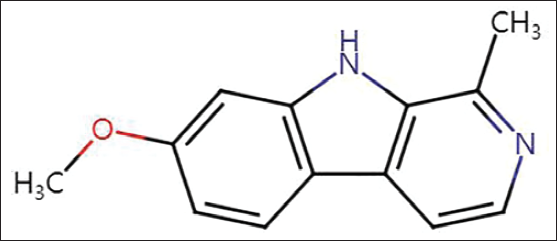
Other reagents and materials used included: MFC cells (mouse gastric cancer cell line, purchased from ATCC, USA, numbered CRL-2639); Dehydrocameline (purity 98%, batch no. WKQ-0001258, Shanghai Yuanye Biotechnology Ltd); SF1670 (Shanghai Kaisen Ltd); VO-OHpic (batch no. MHY-15842, Nanjing Beiyu Biotechnology Ltd); PMA (Shanghai), Celecoxib (purity 98.00%); Celecoxib (batch no. PA0822/083/001, Pfizer Healthcare Ireland); PTEN rabbit anti-human monoclonal antibody (Beijing Bomailan Medical Technology); secondary antibody (Abcam Company, UK). The chemical structural formula of relevant materials is shown in Figure 1.
Harmine Molecular Structure Formula.
This study was approved by the ethics committee of The Fourth Affiliated Hospital of Soochow University.
Preparation of Harmine NPs Nanocomposites
The preparation of the nanocomposites included the following steps:
Precisely weigh appropriate amounts of Harmine, phospholipids, and hydroxypropyl-β-cyclodextrin, Place them in a flask and add an appropriate amount of absolute ethanol, and Stir at a constant speed in a constant temperature water bath. At the end of the reaction, after evaporating absolute ethanol, add chloroform for further reaction, Further dissolve, filter, wash, precipitate, combine, reduce pressure, recover, and dry to obtain dry Harmine NPs.
After diluting the Harmine NPs suspension with ultrapure water, the morphology of Harmine NPs was observed under a transmission electron microscope. Dynamic light scattering showed that the average particle size of Harmine NPs was 5 nm ± 0.6 nm, the polydispersion index (PDI) was 0.15, and the Zeta potential was –25 mV ± 3 mV, indicating that the nanoparticles were uniformly dispersed and had good stability.
Gastric Cancer Mouse Modeling
Under normal conditions, MFC cells first need to be cultured in a culture medium containing 10% fetal bovine serum until they enter the exponential growth phase with a cell density of 5.34 × 10⁵ cell/mL. In order to reduce the infection, the right armpit of the mice was disinfected with 75% ethanol, and then the MFC cell suspension was injected into the right armpit. The mice may have symptoms of swelling or bulging in the right armpit within a week after the inoculation. The long diameter (L) and short diameter (W) of the tumor were measured weekly using a vernier caliper. The tumor volume was calculated according to the formula V = 0.5 × L × W², and the dynamic changes were recorded. Wait until the tumor grows to a size of 5 × 5 mm, and it can be determined that the MFC mouse model affected by gastric cancer has been successfully established.
Grouping and Intervention Methods
The drug dosage for mice is converted according to the adult mouse coefficient. The mice in the blank group and the model group were administered the same dose of 0.9% sodium chloride solution by gavage; the control group received a dose of 0.25 g cyclophosphamide solution per kilogram of body weight by gavage. The Harmine NPs group and the NPs group were administered 50 mg/kg Harmine NPs by intragastric administration, and each group was intragastrically administered once a day for 2 weeks.
Hematoxylin and Eosin (H&E) Staining
Gastric tumor sites and normal tissue sites were obtained from gastric cancer mice and fixed in 10% neutral-buffered formalin (NBF) for 24 h immediately after collection to avoid changes in tissue structure and cell morphology. The fixed tissue sample is further dehydrated and soaked in hyaluronic acid wax to soak it in hyaluronic acid wax. After embedding, the embedded tissue sample is cut into 4–5 µm slices with a tissue microtome. The slices were soaked in hematoxylin at room temperature or in a thermostat to stain the nucleus. After rinsing, the slices were soaked in eosin to stain the cytoplasm. The slices were then observed under a coverslip microscope at an appropriate magnification of 200 times.
Enzyme-linked Immunosorbent Assay (ELISA)
Collect the culture supernatant or animal tissue fluid of each group and prepare an enzyme-labeled plate. In short, after a series of treatments, enzyme-labeled antibodies that bind to IL-6, TL-8, and INF-r are added to form a “sandwich” of immune complexes. Color development was carried out, and the optical density was measured after the reaction was terminated.
Quantitative Polymerase Chain Reaction (qPCR)
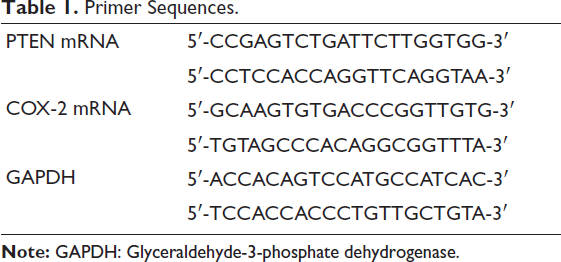
Remove RNA from cells in the logarithmic growth phase, then reverse-transcribe it into cDNA, amplify the cDNA through PCR technology, and study the expression level of the target gene by analyzing the amplified product. All messenger ribonucleic acid (mRNA) expression values are presented relative to glyceraldehyde-3-phosphate dehydrogenase (GAPDH), and relative expression levels were estimated using the 2−∇∇Ct method. Table 1 lists the primers and primer sequences.
Primer Sequences.
Western Blot
The cells to be studied are first extracted, placed in lysis buffer for cell lysis and digestion, and then the total protein concentration in the cell lysate is measured. The protein samples were then separated by 10% SDS-PAGE and transferred to the membrane. Finally, the primary antibody was incubated with the membrane at 4°C and kept in the incubation state overnight. The membrane was washed and incubated with the HRP-labeled secondary antibody for an hour. Detection was enhanced using the internal reference GAPDH.
Statistical Analysis
GraphPad Prism 8.0.2 analyzes all experimental data. Data were expressed as mean ± standard deviation (mean ± SD). One-way analysis of variance (ANOVA) and Tukey post hoc tests were used for comparison between groups; there are no special requirements, and p < .05 is the test standard.
Results
Preparation of Harmine NPs Nanocomposite and Construction of Gastric Cancer Mouse Model
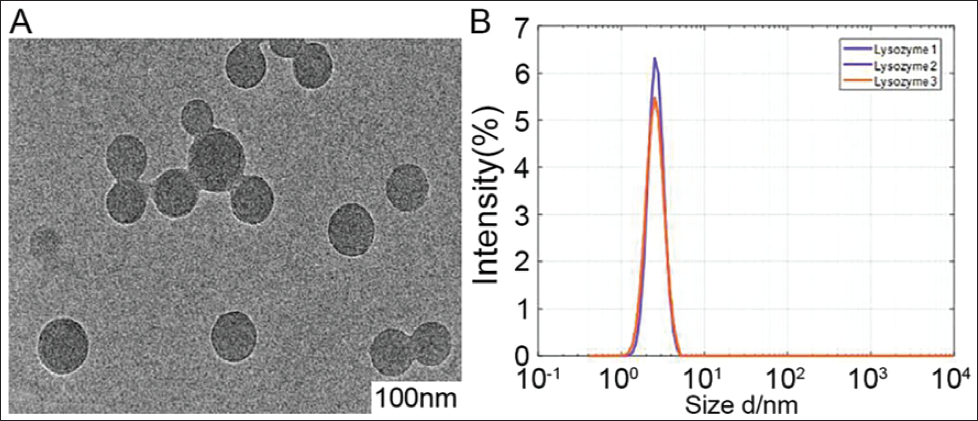
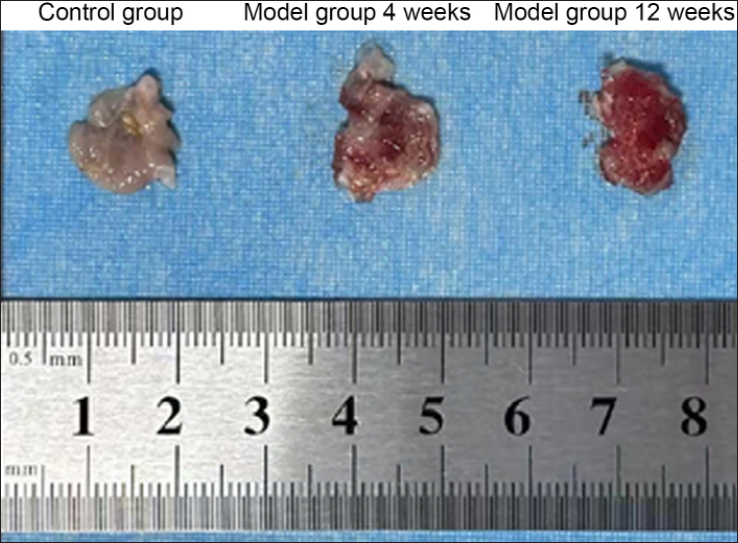
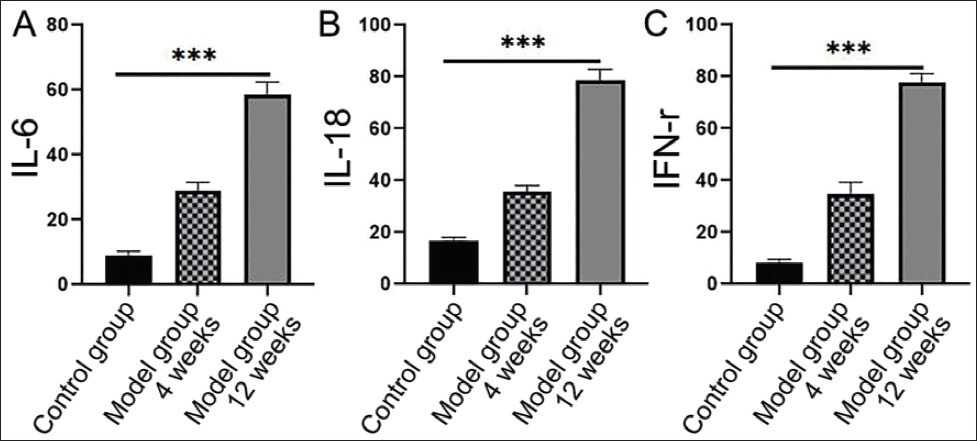
The Harmine NPs nanocomposite was successfully prepared, which has a complete bilayer structure, a smooth and flat surface, and no obvious drug molecule particles found (Figure 2A–2B). At the same time, through 12 weeks of observation, we found that in the gastric cancer mouse model group, as time went by, the gastric mucosa ulcerated and the inflammatory damage worsened (Figure 3). Among them, the ulcer and erosion surface at 12 weeks was the most significant, and the levels of inflammatory response, such as IFN-γ and IL-18, were the highest (Figure 4A–4C). Thus, we raised the model group for 12 weeks for subsequent animal experiments.
Harmine NPs Nanocomposite. (A) Electron Microscope Image; (B) Potential Image.
Pathological Observation of the Stomach.
Changes in Inflammatory Factor Levels. (A) IL-6; (B) IL-18; (C) INF-r.
Harmine NPs Group Inhibits Inflammation and Reduces COX-2 Expression in Gastric Cancer Mice
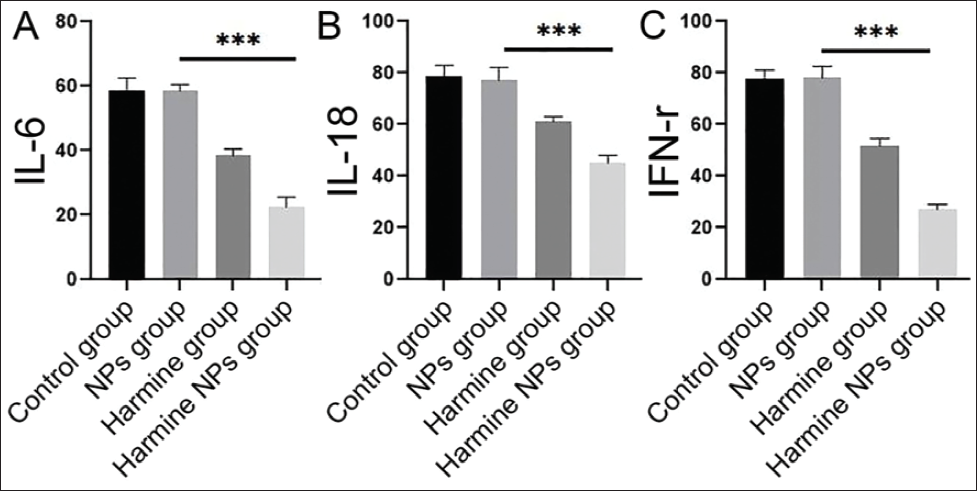
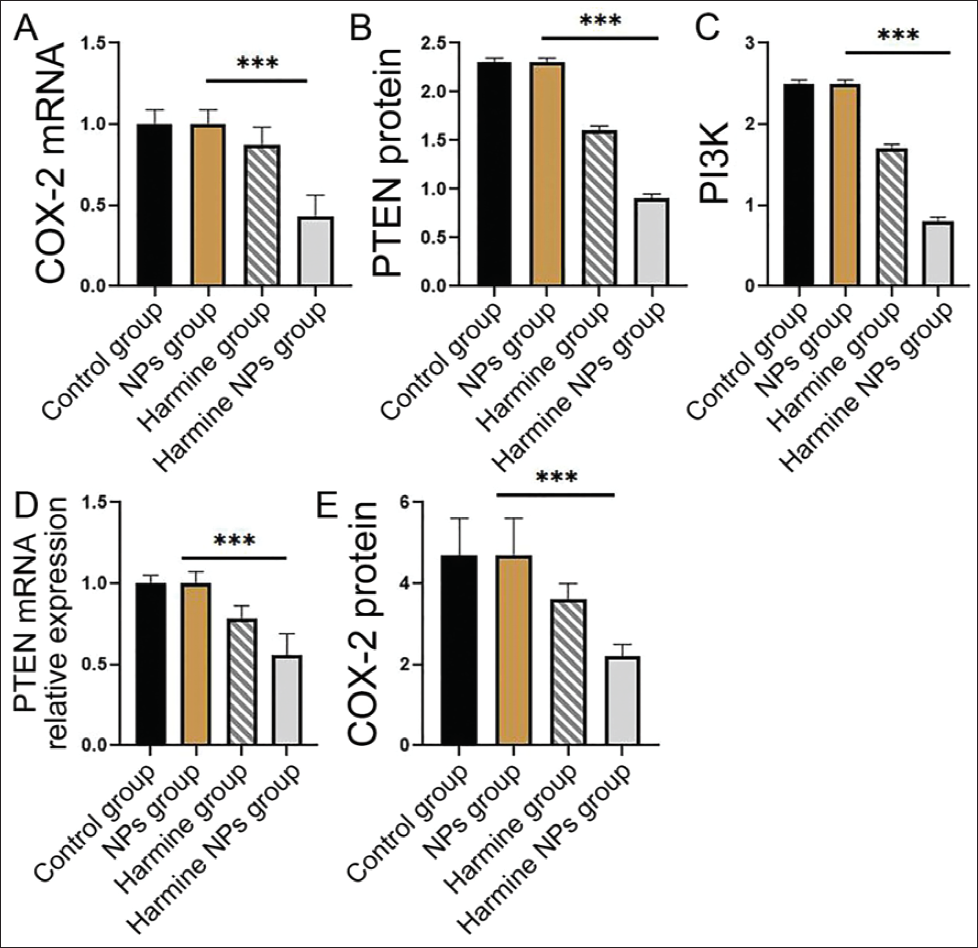
In order to explore the anti-inflammatory effect of Harmine NPs in gastric cancer, we injected it into the constructed gastric cancer mice and found that under the NPs intervention conditions, the inflammatory infiltration of the gastric mucosal muscularis of the gastric cancer mice was improved (Figure 5). The levels of inflammatory response, such as Harmine NPs in mice, changed significantly (vs. control group, p < .05, Figure 6A–6C). The Harmine NPs group showed a better inflammation improvement phenomenon, and its mucosal muscle layer cells were evenly arranged. While the levels of inflammatory response were reduced, the expression of COX-2 (Figure 7A, 7E) and genes and proteins related to the PTEN/Akt signaling pathway (Figure 7B–7D) were also inhibited.
Hematoxylin and Eosin (H&E) Staining (×400).

Harmine NPs Inhibit the Inflammatory Response of Gastric Cancer Through the PTEN/Akt Signaling Pathway
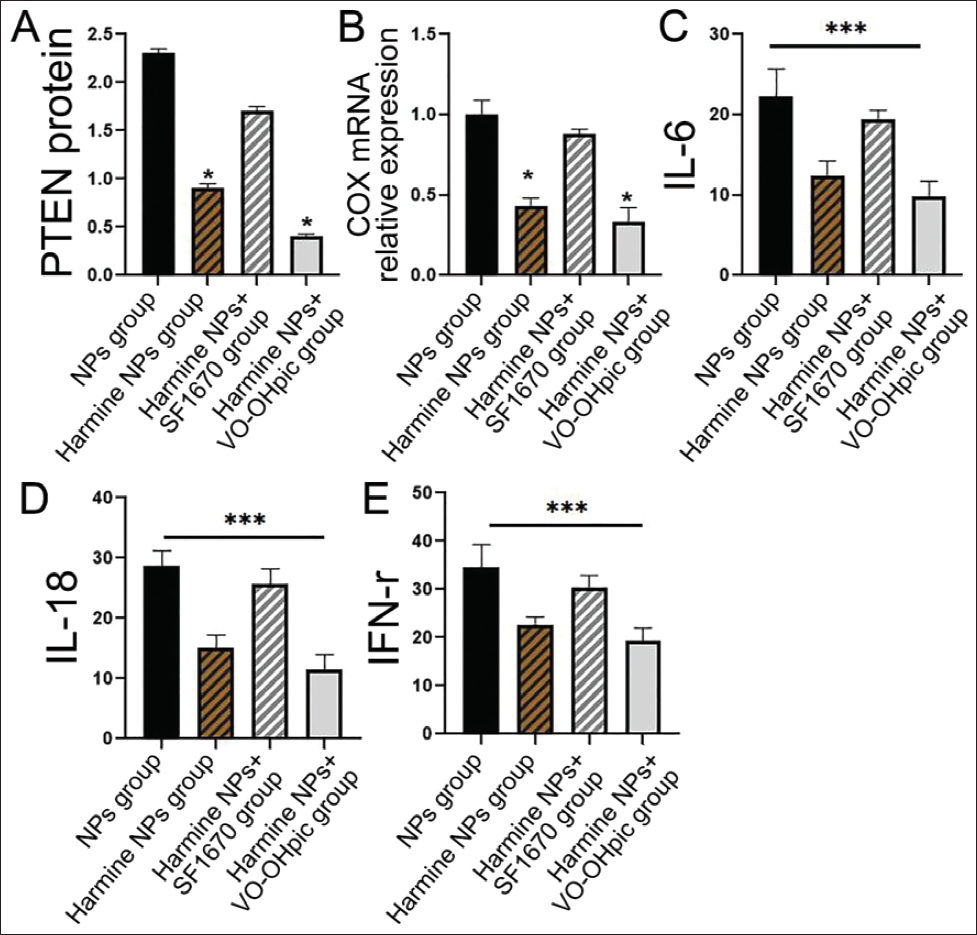
Based on the results of previous experiments, we further explored the mechanism of the anti-inflammatory effect of Harmine NPs on gastric cancer. We used SF1670 (a phosphatidylase activity enhancer of PTEN) on the basis of Harmine NPs and found that the inhibitory effect of Harmine NPs on PTEN protein expression was reversed (Figure 8A). Additionally, gastric cancer inflammatory response-related factors, including IL-6, IL-18, and INF-r, were all increased (vs. Harmine NPs group, p < .05, Figure 8C–8E); Harmine NPs was combined with VO-OHpic (PTEN antagonist), which can simulate the loss or inactivation of PTEN function in cells or organisms. It was found that the anti-inflammatory effect of Harmine NPs in gastric cancer was amplified (vs. other groups, p < .05, Figure 8A, 8C–8E), and during this process, the gene expression level of COX-2 also changed consistently (Figure 8B).
Study on the Effect of Harmine NPs on Inhibiting COX-2 Expression Through PTEN/Akt Signaling Pathway to Reduce Inflammatory Response in Gastric Cancer Mice
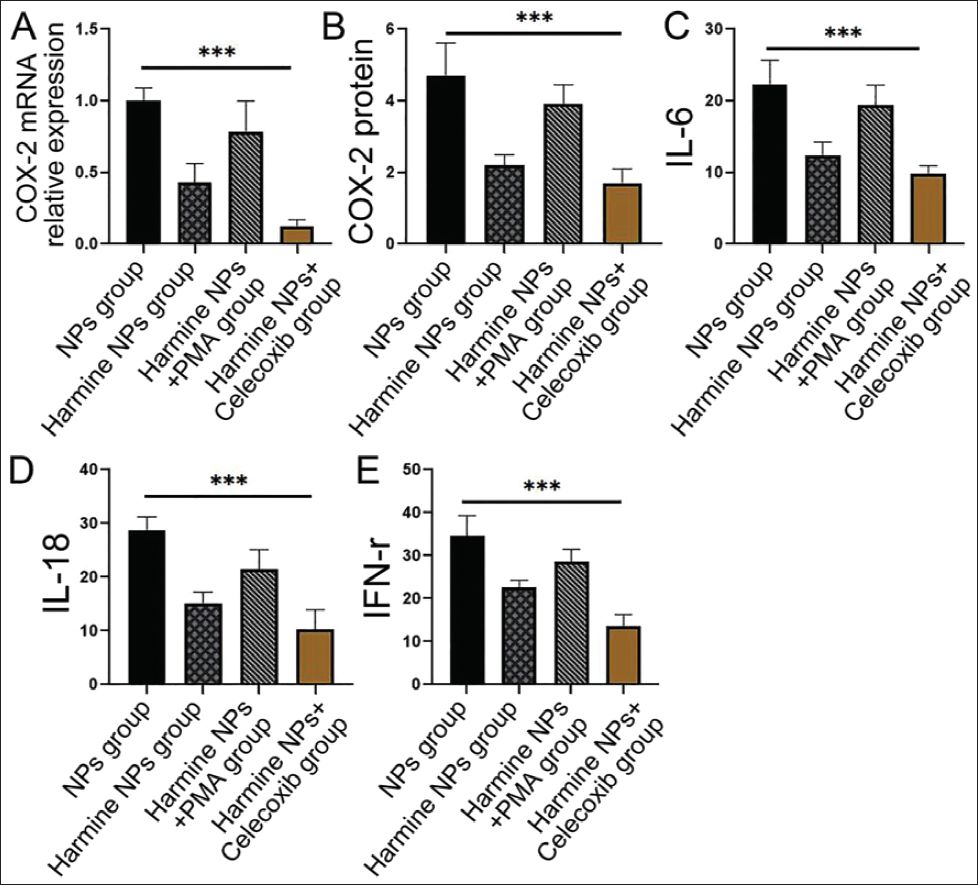
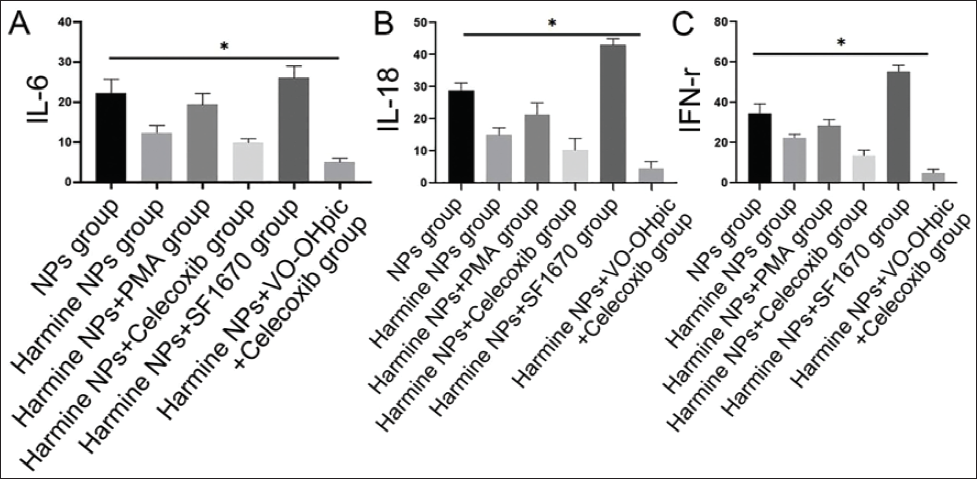
PMA was used to activate the transcription of COX-2, and the expression of the protein of COX-2 increased (vs. NPs group, p < .05, Figure 9A–9E). The results confirmed the inhibitory process of Harmine NPs on the inflammatory response of gastric cancer. COX-2 played a key role in COX-2. After specifically blocking COX-2 with celecoxib again, the low expression of inflammatory response was amplified (vs. Harmine NPs PMA group). It can be seen that Harmine NPs suppressed inflammation in gastric cancer mice by inhibiting COX-2. In order to confirm the mechanism of action of Harmine NPs in achieving anti-inflammatory response in gastric cancer, Celecoxib and PMA were further used on the basis of using PTEN/AKT antagonists and activators, and it was found that during the process of Harmine NPs functioning, PTEN/AKT and COX-2’s anti-inflammatory effect in gastric cancer was fully amplified when it was dually activated. This effect was reversed to the lowest level when it was dually antagonized (Figure 10A–10C), confirming the mechanism of action of Harmine NPs.
Discussion
Dehydrocameline is a natural product, usually derived from the plant Camelina, which has various pharmacological effects such as anti-inflammatory, anti-oxidant, and anti-cancer (Huang et al., 2022). According to research reports (Ding et al., 2019), dehydrocameline hydrochloride reduces the expression of the anti-apoptotic protein Bcl-2 and increases the expression of the apoptotic protein Bax, thereby triggering cell apoptosis and affecting human thyroid papillary cells to a certain extent. The growth rate of cells acts as an inhibitor, which further affects the rate at which thyroid cancer grows and spreads. In addition, the PI3K/ATK/GSK3 signaling pathway is in an abnormal state, especially interfering with the p110 subunit, which in turn inhibits the growth and spread of cervical cancer cells (Fox et al., 2020). However, this drug is not only poorly absorbed and utilized in the body but may also require a higher dose of the drug to achieve the therapeutic effect. The drug is also not highly targeted, which may cause other complications and lead to other complications under the influence of various factors. There are surely some restrictions (Sun et al., 2023). Therefore, lipid nanobodies were used as drug-carrying systems and Harmine NPs nanocomplexes were successfully prepared. To explore its role in gastric cancer, this study established a gastric cancer mouse model and found that NPs can effectively treat the inflammatory response in gastric cancer mice, and the Harmine NPs group showed better improvement in inflammation. At the same time, COX-2 expression and related genes and proteins of the PTEN/Akt signaling pathway were also inhibited. Compared with nanocarriers, such as PLGA (Li et al., 2023) and gold nanoparticles (Rahman et al., 2020), liposome nanoparticles have better biocompatibility and targeting. This study further enhanced the drug delivery efficiency through surface modification, providing a new strategy for the targeted therapy of COX-2 inhibitors.
Studies have shown (Sun et al., 2022) that when PTEN is in an abnormal state such as deletion or inactivation, it can significantly reduce the oxidative damage of myocardial H9c2 cells caused by hypoxia and re-oxidation, thereby leading to a decrease in the incidence of H9c2 cell apoptosis to a certain extent. In addition, XFC inhibits the expression of miR-23a-3p, causing the PTEN/PI3K/AKT/mTOR pathway to be overactivated, thereby affecting the level of PTEN and further mediating the expression of inflammatory responses such as IL-1β and IL-10, leading to reduction in the inflammatory response in OA patients (Dowling et al., 2021). To verify our speculation, under the intervention of SF1760, the inhibitory effect of Harmine NPs on PTEN protein expression was reversed, and inflammation was aggravated. On the contrary, based on Harmine NPs VO-OHpic, the anti-inflammatory effect of Harmine NPs in gastric cancer was significantly increased. During this process, the gene expression level of COX-2 also changed consistently. In this study, Harmine NPs inhibited Akt phosphorylation by upregulating PTEN expression, thereby blocking the downstream NF-κB/COX-2/PGE2 inflammatory axis, which is directly related to the regulatory mechanism of gastric cancer inflammation.
Studies have shown (Li et al., 2021) that HM can increase PTEN expression and simultaneously inhibit Akt, MDM2 phosphorylation, and COX-2 expression. In addition, when the PTEN gene is knocked down, HM has an inhibitory effect on Akt, MDM2 phosphorylation, and COX-2. It is effectively blocked, which helps to treat gastric cancer to a certain extent. In addition, cameline plays an important role in anti-osteosarcoma by reducing the expression of COX-2, affecting intracellular signaling pathways, thereby regulating cell cycle-related proteins and apoptosis-related proteins. This series of effects helps slow down the growth rate of osteosarcoma cells and promotes their apoptosis, thereby achieving the effect of inhibiting osteosarcoma (Chen et al., 2021). To explore the specific mechanism of Harmine NPs inhibiting inflammation in gastric cancer mice, after specifically blocking COX-2 with celecoxib, it was found that the expression of IL-6, IL-18, INF-r, and other related inflammatory responses was significantly reduced. This shows that inhibiting COX-2 has a positive effect on reducing the inflammatory response in gastric cancer mice. In addition, using PTEN/AKT antagonists, activators, Celecoxib, and PMA based on Harmine NPs, it was found that the dual antagonism of PTEN/AKT and COX-2 has the most significant effect in inhibiting gastric cancer inflammation. This confirmed that the effect of Harmine NPs on reducing the inflammatory response in gastric cancer mice was achieved by inhibiting the PTEN/Akt signaling pathway and inhibiting the expression of COX-2. Therefore, larger mouse sample sizes and representative studies are needed to further verify the reliability and accuracy of the results.
Conclusion
In short, Harmine NPs have potential therapeutic effects against the inflammatory response of gastric cancer and are expected to bring new hope to the field of gastric cancer treatment. Harmine NPs provide a new strategy for the targeted delivery of COX-2 inhibitors by inhibiting the PTEN/Akt signaling pathway and COX-2 expression and have potential application value in the treatment of gastric cancer. However, this study also has certain deficiencies: (a) The long-term toxicity of Harmine NPs was not evaluated; (b) the experiment was only conducted in a mouse model and further clinical verification is required; and (c) the large-scale preparation process of nanomaterials still needs to be optimized. Therefore, in the later research, the study needs to be further improved to ensure the scientific validity and reliability of the research results.
Abbreviations
Akt: Protein kinase B; COX-2: Cyclooxygenase-2; PTEN: Phosphatase and TENsin homolog.
Footnotes
Acknowledgments
The authors gratefully acknowledge the Jiayuguan Traditional Chinese Medicine Hospital and The Fourth Affiliated Hospital of Soochow University for providing the necessary equipment for this study.
Declaration of Conflicting Interests
The authors declared no potential conflicts of interest with respect to the research, authorship, and/or publication of this article.
Ethical Approval and Informed Consent
This study was approved by the ethics committee of The Fourth Affiliated Hospital of Soochow University.
Funding
The author(s) disclosed receipt of the following financial support for the research, authorship, and/or publication of this article: This study was funded by Soochow university-enterprise cooperation project (Project Number: H231179, H211767).
