




Abstract
Indigofera astragalina, a versatile medicinal plant, has gained significant attention because of its rich phytochemical composition and diverse therapeutic properties. I. astragalina contains sterols, phenolics, alkaloids, and flavonoids, making it ideal for a variety of therapeutic purposes. In this review, an in-depth look at the phytoconstituents and their biological activity is presented. The anti-microbial properties of the plant extracts have been demonstrated against drug-resistant Enterococcus and Staphylococcus aureus strains resistant to vancomycin and methicillin. Moreover, the plant exhibits moderate to potent anti-protozoal activity against Trypanosoma brucei and weak anti-protozoal activity against Plasmodium falciparum. In various cancer cell lines, astragalin extracts have demonstrated significant cytotoxic effects, suggesting their potential as anti-cancer agents. Due to its high phenolic content, the plant has an antioxidant effect, which has contributed to its traditional use for managing oxidative stress. In addition, I. astragalina is packed with essential amino acids, minerals (such as iron, manganese, and zinc), and vitamins. The comprehensive analysis of I. astragalina emphasizes its important role in drug discovery, nutrition, and healthcare, as well as its tremendous therapeutic potential.
Introduction
Traditional herbal medicines, as defined by the World Health Organization (WHO), are natural substances derived from plants that have been used to treat illnesses locally or regionally (Tilburt & Kaptchuk, 2008). For approximately 75%−85% of the world, especially in third-world countries, natural medicine continues to be the primary form of healthcare. It is minimally processed or not processed at all. As the WHO reports (Pal & Shukla, 2003), herbal medicines are twice as widely used as conventional drugs due to their affordability, availability, and minimal side effects. The WHO reports that herbal remedies are 2–3 times more popular than conventional medicines. With respect to the treating methodology, ingredients, and dose, indigenous natural medicines are well known in communities or regions where they have been historically used. Within local communities and regions, these medicines are permitted to be used freely. However, if they are intended for the broader market or used outside the local community, they are required to comply with national regulations regarding safety and efficacy.
In the established herbal systems of India, natural medicines have a long history of use that is supported by specific methodologies and principles recognized and approved by various nations. In addition to their form, dose, formulation, route of administration, natural constituents, preparation methodology, and complications, modified herbal medicines undergo a variety of changes. In order for natural medicines to be relatively safer and more potent, they should abide by national rules and requirements. To ensure compliance with the regulations governing natural medicines in the importing nation (WHO, 2004), safety and efficacy data must be submitted to the national authority of the importing country. Currently, more than 85% of the population relies on indigenous and plant-derived products for healthcare. In the United States, approximately 25% of pharmaceutical prescriptions contain at least one ingredient derived from plants, making plants a significant source of medicinal compounds. A total of 121 formulations have been developed depending on traditional sources of information that have been gathered from different sources in the last century (Divya, 2022; Verma & Singh, 2008). Plant-based medicine has a long tradition in India, with approximately 25,000 formulations derived from plants used in local medicine for numerous years. Over 1.5 million people practice traditional medicine systems in the country, and 7800 companies manufacture medicinal drugs. The demand for plant-based medicine in India is substantial, as these units consume approximately 2000 tons of herbs a year (Kokate et al., 2014; Mehrotra, 2021).
It has become increasingly difficult to protect intellectual property rights related to natural products in light of the increasing demand for herbal medicine, which often relies on traditional knowledge (Kumar et al., 2022). In the wake of the signing of the Convention on Biological Diversity (CBD), more countries are becoming concerned about accessing essential resources, ensuring fair benefit sharing during commercialization, and navigating related processes. The implementation of these processes, regardless of the valid concerns that prompted their adoption, can slow down the pace of discovery during various phases. Under these circumstances, the Indian government has initiated a coordinated program to revitalize the discovery process for drugs using natural products, led by CSIR, India. The purpose of this program is to streamline and enhance research efforts in the traditional medicine field by involving 19 CSIR laboratories and other research and development institutes (Katiyar et al., 2012). The importance of reviewing medicinal plants cannot be overstated. Since medicinal plants were utilized for years in indigenous healing exercises, they possess extensive traditional knowledge regarding their therapeutic properties. We can validate their traditional uses and discover new medicinal applications by reviewing and studying these plants. They are rich in bioactive compounds, so they can be analyzed and studied.
Plant compounds provide the basis for many modern pharmaceutical drugs. We can identify and isolate new lead compounds with significant therapeutic potential by conducting thorough reviews of medicinal plants. In order to ensure the responsible and evidence-based use of medicinal plants in healthcare practices, we need to study their potency. Reviewing medicinal plants allows us to clearly evaluate the safety profiles of these natural products. As herbal medicine becomes increasingly popular and the global market for natural products grows, it becomes increasingly important to sustain the IPR for traditional communities and traditional knowledge holders. By properly reviewing and documenting medicinal plants, benefits derived from their commercialization can be shared fairly and equitably.
Importance of Indigofera
Traditional medicine has extensively used Indigofera genus species, according to studies. Some similarities have been observed between different countries and species, although the specific uses may vary. Indigofera species have traditionally been used to treat digestive problems, chronic inflammatory disorders, pain management, skin ailments, lung problems, and infection problems. A key component of understanding Indigofera’s medicinal properties has been phytochemical studies. A total of 200 compounds have been identified through these studies, focusing mainly on flavonoids and terpenoids. Pharmacological research has been able to validate many of the indigenous applications associated with various species by using these constituents, which have demonstrated anti-microbial, cytotoxic, and anti-inflammatory properties. A number of active compounds derived from Indigofera plants have been isolated successfully and show remarkable therapeutic potential. Currently, clinical trials are being conducted on the alkaloid indirubin, derived from Indigofera hirsuta. Indirubin will be tested for efficacy and safety as a potential therapeutic agent in these trials. As a result of the identification of numerous bioactive compounds, especially flavonoids and terpenoids, these Indigofera plants have been shown to have traditional uses (Gerometta et al., 2020). In spite of the extensive data available on Indigofera astragalina, there are still significant gaps in our knowledge of this plant. I. astragalina is one of the plants in this genus that have been extensively studied. Despite the fact that this plant contains potentially valuable compounds and therapeutic benefits, little is known about its potential. Additionally, despite the isolation of some active constituents elucidated from plants, only a small number have been thoroughly tested for their biological activity. Numerous compounds have yet to be explored for their medicinal properties, suggesting vast untapped potential. Additionally, studies that consolidate the plant’s activities and phytochemistry are lacking (Gerometta et al., 2020), as well as further exploration of active compounds. Therefore, the aim of this paper is to highlight a comprehensive overview of the pharmacological activities of I. astragalina, along with a comprehensive description of its phytochemistry.
Taxonomy and Nomenclature
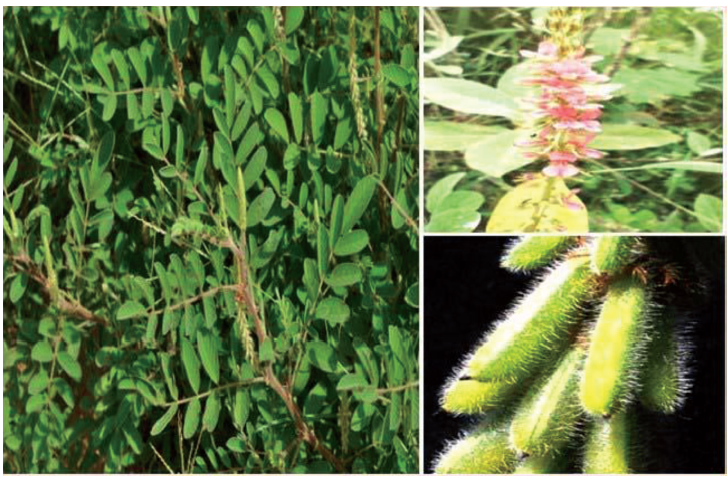
I. astragalina is a common plant in African countries (Figure 1) and is called Hairy indigo or silky indigo in English. There are various local names like Yoruba, Elu-aja, Kaikai, and so on (Mohammad, 2004). In Urdu, it is called Guirti and Barihinye, and in Hindi as Dagadia and Ranmethi
The taxonomy of the plant is as follows:
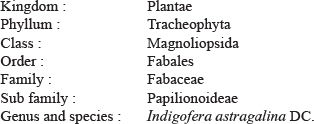
Habitat
Indigofera, the plant under discussion, is classified as an herbaceous legume and is commonly considered a weed. It is found in various regions, including southern Africa (such as Zimbabwe), North China, and Africa, particularly Nigeria and the Republic of Niger (Mohammad, 2004). Indigofera demonstrates resilience and can thrive in unfertilized soil. It is well-suited to regions with an annual rainfall ranging from 650 to 800 mm, as documented by Mapfumo et al. (2005). Additionally, the plant flourishes in the locality with average heat between 21°C and 32°C (Mapfumo et al., 2005).
I. astragalina is an erect, hairy plant with a height ranging from 40 to 70 cm. It has a tender stem and greenish pinnately arranged leaves, consisting of 5–13 leaflets. The size of the leaves varies from 2 to 5 cm in length. The plant produces small, reddish-purple flowers in racemes that are 2–10 cm long (Web 1). The plant is densely hairy and features woody stems. Its elliptic leaflets, occurring in 7−9 pairs, are approximately 3 × 1 cm in size and have an acute shape. The stipules are lanceolate, while the stipels are filiform. The flowers, densely arranged, measure around 8 mm in length and have short pedicels. The calyx is 8 mm long with linear lobes, and the globous petals are pink. The pods are 1.5 × 0.3 cm, 4-angular, and densely hairy. The seeds are black, cubical, and pitted.
I. astragalina is an annual plant that can be erect or straggling and can grow anywhere from 25 to 150 cm tall. It typically thrives on grounds with sand, mud, sandstone, rocaille, barren or cultivated grounds, grasslands, and altitudes up to 1800 m (Fayaz, 2011). Indigofera species generally prefer sunny terrain and properly drained, humid soil. They are adaptable to drier conditions and poor soils. Additionally, these plants have a symbiosis with most of the bacteria in the soil, forming root nodules that act as nitrogen fixers. There are many plants that are closely related to the plant in the study, like I. hirsuta auct. Often, they are used synonymously by many researchers. Yet, there are certain characteristics, like the dimensions of the pods, the number of seeds, the color of the hair on the pods, and the number of leaflets, that differentiate the two species (Gillett, 1960).
Phytochemistry
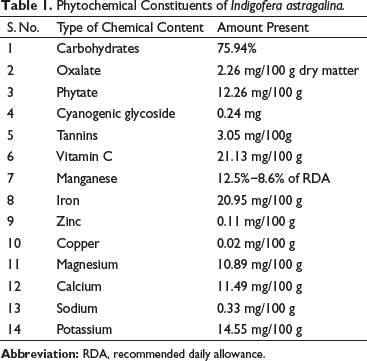
The summary of the nutritional composition and bioactive components of I. astragalina can be made as follows, as depicted in Table 1.
Phytochemical Constituents of Indigofera astragalina.
Fiber
The content of the crude fiber of I. astragalina leaves is 2.67%. This amount is insufficient to tackle the daily requirement of fiber for the body, which is recommended to be between 18 and 35 g.
Carbohydrates
The carbohydrate content in the leaves is significantly high, at 75.94%. The leaves of I. astragalina have a calorific value of 578.87 kcal/100 g on a dry weight basis.
Proteins
I. astragalina leaves contain 8.23 g of proteins per 100 g. The leaves also contain 17 amino acids, of which nine and 18 are essential and non-essential, respectively. The essential proteins present include total aromatic amino acids of 6 g/100 g sample, leucine of 6 g/100 g sample, and lysine of 4 g/100 g sample. These essential amino acids are important for the body as they cannot be synthesized and should be obtained along with the diet. Additionally, the leaves contain eight non-essential amino acids, including glutamic acid in a 9 g/100 g sample, aspartic acid in a 6 g/100 g sample, and arginine in a 5 g/100 g sample (Gafar et al., 2010b).
Oxalates
The oxalate content in the leaves of I. astragalina was found to be 2.26 mg/100 g dry matter (Gafar et al., 2011).
Phytates
The leaves contain approximately 12.26 mg/100 g of phytate (Gafar et al., 2011).
Cyanogenic Glycoside (hydrocyanic acid)
The content of cyanogenic glycoside in the leaves is 0.24 mg (Gafar et al., 2011).
Tannins
The leaves contain tannins, with a content of 3.05 mg/100 g (Gafar et al., 2011).
Vitamins
The leaves of I. astragalina have a vitamin C content of 21.13 mg/100 g (Gafar et al., 2010a).
Minerals
The leaves of I. astragalina contain various minerals. Notably, they contribute 12.5%−8.6% of the recommended daily allowance (RDA) for manganese. The iron content is 20.95 mg/100 g, the zinc content is 0.11 mg/100 g, the copper content is 0.02 mg/100 g, the magnesium content is 10.89 mg/100 g, the calcium content is 11.49 mg/100 g, sodium content is 0.33 mg/100 g, and the potassium content is 14.55 mg/100 g (Gafar et al., 2011).
Bioactive Compounds
A study on the shoots of I. astragalina showed the presence of polyphenols, lignin, an insoluble fiber, N, P, and K (Mapfumo et al., 2005). The n-hexane extract, methanol extract, and aqueous extract from the dried leaf of I. astragalina contain various phytoconstituents like tannins, saponins, alkaloids, flavonoids, cardiac glycosides, and phlorotannins (Tailor & Singh, 2021).
Through phytochemical analysis, researchers have identified several bioactive compounds present in the methanol extract of I. hirsuta. These constituents include a dimer of indole derivatives, flavonoid glycosides, a polyol cyclical product, 1-methyl-β-
The presence of these diverse compounds suggests the potential for various therapeutic applications of I. hirsuta. Indolic dimers are known to show a wide range of pharmacological activities, including anti-bacterial and anti-cancer properties. Cinnamic acids and phenolics are recognized for their antioxidant and anti-inflammatory effects. Flavonoid glycosides are widely acknowledged for their biological properties, such as antioxidant and anti-cancer activities. The cyclic polyol, rare sugar, and glycerol may also contribute to the plant’s medicinal properties.
Traditional Uses
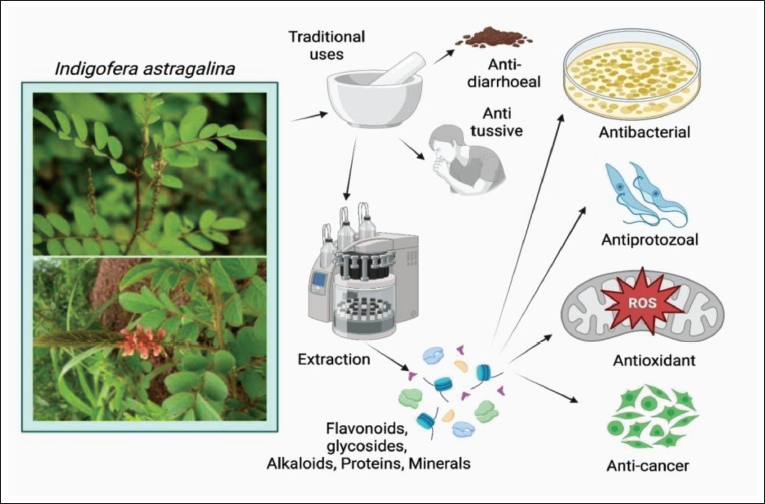
I. astragalina, a medicinal herb, is used in various indigenous practices for its therapeutic potential. The whole plant, when prepared as a decoction, is used as a body bath for children to promote general well-being. It also exhibits astringent properties, making it effective against diarrhea (Kankara et al., 2015). The plant roots have multiple medicinal uses. They are employed to alleviate toothaches and coughs. In Nigeria, various parts of the I. astragalina plant are utilized for medicinal purposes. In the Indian System of Medicine, this plant is specifically employed to treat conditions such as rheumatoid arthritis, inflammatory disorders, tumors, and hepatic diseases. Furthermore, the leaves of I. astragalina are known for their therapeutic benefits as a remedy for this gastrointestinal condition (Manivannan et al., 2016).
Pharmacology
The various pharmacological activities are illustrated in Figure 2.
Anti-Microbial Activity
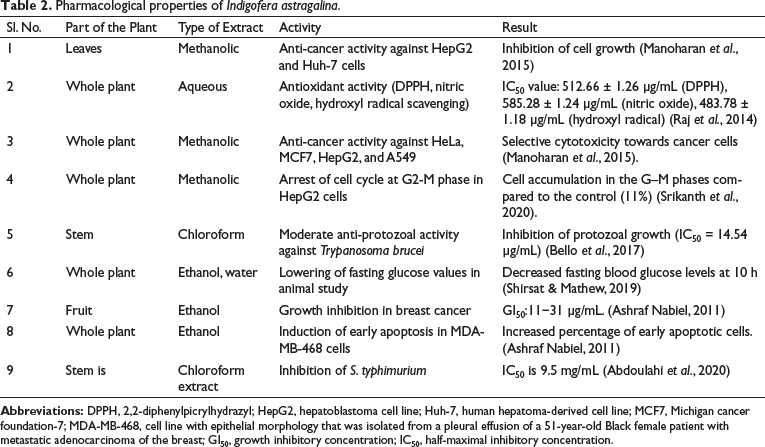
I. astragalina has demonstrated notable potency against vancomycin-resistant and methicillin-resistant varieties of Streptococcus and Enterococcus. This suggests its potential as an anti-microbial agent for combating drug-resistant bacterial infections (Bello et al., 2019). Furthermore, studies conducted by Bello et al. (2017) studied the activity of herbs from West Africa in protozoa, including I. astragalina. The chloroformic extract of dried stems of I. astragalina exhibited mild potency compared to other plants against Trypanosoma, a protozoan parasite causing African trypanosomiasis, with an IC50 value of 14 µg/mL. Although the activity was moderate compared to the positive controls (pentamidine and amphotericin B), it highlights the potential of I. astragalina as an anti-protozoal agent. However, when tested against the malaria-causing parasite (Plasmodium falciparum D6, a strain sensitive to chloroquine), the chloroformic extract of I. astragalina stem showed only mild activity, inhibiting growth by 10%. This suggests that its efficacy against malaria parasites may be limited. According to the study, the IC50 value of I. astragalina against Salmonella typhimurium is 9.5 mg/mL (Abdoulahi et al., 2020) (Table 2).
Pharmacological properties of Indigofera astragalina.
Antioxidant Activity
I. astragalina leaves have been reported to possess antioxidant activity because of the presence of phenolic and flavonoid compounds. It is vital that antioxidants neutralize harmful free radicals and help prevent oxidative damage to cells (Manivannan et al., 2016). The leaf methanolic extract of I. astragalina showed activity, with an inhibition rate of 73.70% against free radicals at a 50 µg/mL concentration. This indicates the extract’s ability to neutralize harmful free radicals and protect cells from oxidative damage. Furthermore, the extract also displayed the highest phenolic content, measuring 40 mg of gallic acid (GAE) equivalents/g of extract. On the other hand, the stem methanolic extract and leaf ethyl acetate extract of I. astragalina showed the content of phytoconstituents. The stem methanolic extract contained 90.40 mg quercetin equivalents (QE) per gram of extract, while the leaf ethyl acetate extract contained 50.43 mg catechin equivalents (CEs) per gram of extract (Madhavi et al., 2018).
The water extracts of I. astragalina and Indigofera tinctoria were found to contain significant amounts of flavonoids and phenolics. The flavonoid content of I. tinctoria extract was measured to be 43.94 µg/mg, while I. astragalina extract had a slightly higher flavonoid content of 55.05 µg/mg (Bai et al., 2014). Similarly, the phenol content of I. tinctoria extract was 41.07 µg/mg, and I. astragalina extract had a phenolic content of 36.55 µg/mg. The half-maximal inhibitory concentration (IC50) values were determined for various assays. For I. tinctoria aqueous extract, the IC50 values were 512.66 ± 1.26 µg/mL for 2,2-diphenylpicrylhydrazyl (DPPH), 585.28 ± 1.24 µg/mL for NO, and 483.78 ± 1.18 µg/mL for hydroxyl radical scavenging. On the other hand, I. astragalina aqueous extract exhibited slightly higher IC50 values, indicating relatively lower antioxidant activity. The IC50 values for I. astragalina extract were 650.51 ± 1.20 µg/mL for DPPH, 662.32 ± 1.26 µg/mL for nitric oxide, and 525.57 ± 1.28 µg/mL for hydroxyl radical scavenging. The methanol extracts of the plant showed potent activity in inhibiting DPPH activity (Srikanth et al., 2020).
Cytotoxicity
In a study evaluating the cytotoxic activities of various extracts of I. astragalina, both short-term cytotoxic and antiproliferative assays were conducted. The results demonstrated that all the extracts exhibited potent cytotoxic effects against several cancer cell lines: HeLa (human cervical cancer), A549-lung, MCF7-breast, and HepG2-liver cancer cell lines. Among the tested extracts, the hexane and water extracts displayed moderate activity against the cell lines. The ethanol, chloroform, and ethyl acetate extracts showed the highest activity against the tested cells. This suggests that these extracts contain bioactive compounds that possess cytotoxic properties against cancer cells. An important finding from the study was that all the tested extracts showed significantly higher IC50 values (indicating less cytotoxicity) for the normal human dermal fibroblast cell line (Manoharan et al., 2015).
The plant extracts of both the entire plant of I. astragalina and the fruit have displayed significant replication inhibitory potential against breast carcinomas. The growth inhibitory concentration (GI50) ranged from 11.8 to 31.1 µg/mL in breast carcinoma cell lines. The fruit extract was found to have a higher concentration of phenols compared to the whole plant extract, while the whole plant extract had higher levels of flavonoids. Both extracts exhibited growth-reducing effects on human adenocarcinoma cells, particularly the cell line with epithelial morphology that was isolated from a pleural effusion of a 51-year-old Black female patient with metastatic adenocarcinoma of the breast (MDA-MB-468), which showed sensitivity to the extracts (6th−22.2 and 7th−22.6 µg/mL). In addition to inhibiting cell growth, both extracts induced changes in the cell cycle distribution. The extracts caused an increase in the preG1 phase and arrested the cells in the S phase in MDA-MB-468 cells after 72 h of treatment. Furthermore, the fruit extract specifically caused the arrest of the cell cycle at the G2/M phase. Both extracts demonstrated a potent induction of early cell death, with a higher percentage of cells undergoing early compared to late necrosis in MDA-MB-468 cells after 24 h of treatment. These findings were supported by the examination of cell cycle and apoptosis markers, which revealed early apoptotic populations emerging from different cell cycle phases, with the highest percentage observed in the non-cycling preG1 phase. The proapoptotic effects of the whole I. astragalina extract were dose-dependent and time-dependent, as demonstrated by an increase in the intensity of cleaved PARP in cancer cells after 24 h and 48 h of treatment (Ashraf Nabiel, 2011).
The methanolic extract of I. astragalina demonstrated inhibitory effects on the growth of HepG2 and Huh-7 cells. Specifically, when the cells were treated with the IA extract at doses of 50 and 100 µg/mL, there was a notable accumulation of cells in the G2-M phases of the cell cycle compared to the normal group without extract treatment. The percentage of cells accumulating in the G2-M phase increased to approximately 21%−23% in the treated groups, whereas the control group exhibited a lower percentage of cells (11%) in the G2-M phase (Srikanth et al., 2020). The specific mechanisms underlying the growth inhibition of these cancer cells by the extract are yet to be fully understood and may involve various phytoconstituents present in the extract. Steps to elucidate the specific constituents responsible for the observed anti-cancer effects and to elucidate the molecular mechanisms involved.
Anti-Diabetic Activity
In a study conducted on I. astragalina, the entire plant was used to prepare ethanol and water extracts. These extracts were then administered at 200 and 400 mg/kg to evaluate their effects on fasting blood sugar levels and the study lasted for about 10 h. The results showed that both ethanol and water extracts of I. astragalina, at both dose levels, significantly lowered fasting levels. The glucose levels ranged from 79.87 to 85.83 mg/dL on the last day of the study. It is worth noting that the standard drug, glibenclamide, also showed a lowering in sugar levels, registering at 71.63 mg/dL simultaneously. Although the lowering of blood glucose by the extracts was slightly less significant in comparison to the synthetic drug, the difference was not statistically significant. This suggests that the extracts of I. astragalina have the potential to effectively lower glucose values, similar to the standard drug (Shirsat & Mathew, 2019).
Conclusion
I. astragalina has been reviewed for its diverse array of phytochemicals and biological activities in this review. This plant possesses a rich profile of sterols, phenolics, alkaloids, and flavonoids, all of which contribute to its therapeutic potential. A variety of activities have been linked to these compounds, including antioxidant, anti-microbial, anti-protozoal, anti-diabetic, cytotoxic, and anti-cancer effects. As a potential resource for developing new anti-microbial and anti-cancer agents, astragalin has shown promising results in inhibiting the growth of drug-resistant bacteria and cancer cells. Furthermore, the plant extracts have demonstrated remarkable antioxidant activity, a critical factor in combating oxidative stress-related illnesses. Aside from these, the plant also contains essential amino acids and minerals, such as iron, manganese, and zinc, as well as a variety of vitamins. As an effective dietary supplement, astragalina has nutritional value and potential, but further research is needed to determine its optimal dosage and determine its safety and efficacy in humans. It is clear from the comprehensive analysis of I. astragalina that its immense therapeutic potential makes it an excellent candidate for further exploration and utilization in the fields of medicine, nutrition, and drug discovery. Research and investigations into this remarkable plant have the potential to reveal new avenues for the development of novel therapeutics and promote its integration into mainstream medicine.
Footnotes
Abbreviations
CBD: Convention on biological diversity; CE: Catechin equivalents; QE: Quercetin equivalents; RDA: Recommended daily allowance; WHO: World health organisation; MCF7: Michigan cancer foundation-7; MDA-MB-468: Cell line with epithelial morphology that was isolated from a pleural effusion of a 51-year-old Black female patient with metastatic adenocarcinoma of the breast; HepG2: Hepatoblastoma cell line; Huh-7: Human hepatoma-derived cell line.
Acknowledgments
We acknowledge the Almighty for completing this work without any obstacles and also thank Dr Chinthakunta Naga Raju for his support during preparation of this work
Author’s Contribution
V. Rajani prepared the Manuscript which was guided by S. Umadevi and the manuscript was drafted by C. Naga Raju.
Declaration of Conflicting Interests
The authors declared no potential conflicts of interest with respect to the research, authorship, and/or publication of this article.
Funding
The author received no financial support for the research, authorship and/or publication of this article.
Statement of Ethical Approval and Informed Consent
Not applicable.
