




Abstract
Background
Deaf-blindness is a multifaceted disability that profoundly impacts learning, social interaction, and career development. The combined sensory loss creates unique challenges in communication, mobility, and access to educational and vocational opportunities.
Purpose
This study explores how deaf-blind students adapt to educational settings and examines their career aspirations in the context of specialised training, adaptive technology, and social support systems.
Method
A mixed-methods approach was used, combining qualitative interviews with quantitative surveys. The study investigated the influence of assistive technologies, individualised curricula, and support from family, peers, and teachers.
Results
Findings revealed that deaf-blind students demonstrate resilience and ambition to pursue careers in fields such as information technology (IT), education, the arts, counselling, and entrepreneurship. However, barriers such as limited vocational training opportunities, societal misconceptions, and inadequate workplace accommodations hinder their aspirations. The study underscores the importance of inclusive policies, early intervention, and collaborative efforts among educators, policymakers, and vocational training institutions.
Conclusion
Being deaf-blind is a separate impairment with several facets that make it difficult for people to succeed in school, in social situations, and in their careers. This study looks at how deaf-blind students adapt to learning environments and looks at their career goals in light of specialised training and social support networks. The purpose of the study is to comprehend how these students manage their sensory impairments in order to accomplish their academic and career objectives. Using a mixed-methods approach, the study combines qualitative interviews with quantitative surveys. It looks at how deaf-blind pupils’ goals are shaped by adaptive technology, specialised curriculum, and support systems, including family, peers, and instructors. Results indicate that these students exhibit exceptional resilience and desire to pursue jobs in disciplines like IT, the arts, teaching, and entrepreneurship, despite the fact that they frequently encounter substantial obstacles, such as restricted access to specialised vocational training and social preconceptions. The study also emphasises how crucial it is to have inclusive policies, mentoring programmes, and early intervention in place in order to foster an atmosphere where deaf-blind kids may succeed. Better cooperation between educators, legislators, and vocational training facilities is one of the recommendations made to guarantee that deaf-blind pupils have access to a variety of professional choices. In light of the research’s findings, deaf-blind students’ aspirations for their careers must be supported holistically in order to enable them to live happy, independent lives in spite of their sensory impairments.
Introduction
The combined sensory disability known as deaf-blindness has a major impact on everyday functioning, mobility, and communication. Pupils with this illness deal with difficult issues in the social and academic spheres, which frequently affect their career goals. A distinct set of obstacles is created when visual and aural disabilities overlap, calling for specific teaching methods, adaptable technology, and robust support networks. Like their peers, deaf-blind people have goals for their personal and professional lives despite these obstacles. But there are frequently many barriers in the way of realising these goals, such as misunderstandings about society, a lack of resources, and inadequate training for the workforce that meets their demands. Many areas, notably poor nations, lack the knowledge and resources necessary to enable deaf-blind people to reach their full potential. 1 The purpose of this study is to investigate the experiences of deaf-blind students, with a particular emphasis on how these students adapt to their learning settings and how these adaptations influence their career goals. The study intends to identify the elements that impact their job choices and the obstacles they face by investigating the importance of adaptive strategies—such as tactile communication techniques, assistive devices, and customised learning programmes. Additionally, the social and psychological facets of deaf-blind students’ career goals will be examined in this study. It will examine how their confidence and drive to pursue particular vocations are affected by support from peers, family, and educational institutions. The results will shed light on the kind of interventions that are required to support inclusion and enable these students to reach their full potential in the workforce. It is crucial to address the particular difficulties deaf-blind people have and to provide them with opportunities that let them live independent, satisfying lives in a society that is becoming more inclusive. Comprehending the modifications they make to achieve their career objectives will help create more inclusive policies and practices in education, which will eventually create an atmosphere that is more conducive to their success and development. Deaf-blindness is a disease that requires special educational and professional methods since it provides a unique way of experiencing the world. It is not merely a mixture of two disabilities. 2 There is still a dearth of research in this field, especially when it comes to how deaf-blind students adjust to their surroundings and make career plans. Previous research has tended to concentrate on changes in schooling or career goals alone, ignoring the convergence of two important domains.
The Importance of Vocational Aspirations
For people, especially those with disabilities, their vocational goals play a critical role in shaping their sense of self. Many elements, including early educational experiences, social interactions, access to assistive technology, and exposure to professional opportunities, have an impact on the goals of deaf-blind pupils. In contrast to their peers without disabilities, deaf-blind pupils could encounter exclusion, restricted means of communication, and limited access to role models across a range of professions. This might lead to lowered expectations, which are frequently restricted to careers that are thought to be ‘appropriate’ for people with disabilities. Nonetheless, deaf-blind students may pursue and be successful in a variety of careers with the correct assistance and direction. The purpose of this study is to better understand the career ambitions of deaf-blind students and the particular accommodations they make to reach those goals. It also intends to investigate how educational establishments may assist these students in becoming ready for fulfilling careers.
Adjustments in Educational Settings
Students who are deaf-blind need a range of accommodations to receive an education. These include tactile communication techniques, sign language, Braille use, and assistive technology, including Braille displays and screen readers. These resources are frequently provided in large part by educational institutions, their accessibility varies greatly depending on institutional, economic, and geographic circumstances. Through an analysis of their experiences in various educational settings, the study will look at how these modifications affect the career goals of deaf-blind students. Additionally, the study will investigate the function of inclusive practices such as peer support networks, collaborative teaching methods, and individualised learning plans. These methods help deaf-blind pupils do better academically as well as in terms of their self-perception and confidence in pursuing other occupations. 3
Societal and Institutional Barriers
Even with improvements in inclusive education, a large number of deaf-blind students still encounter institutional and cultural hurdles that restrict their opportunities for employment. These include institutional problems like insufficient vocational training programmes, as well as low expectations from educators, employers, and even family members. This research will explore how these obstacles impact deaf-blind students’ career goals and how they overcome them. This research attempts to give a thorough knowledge of the changes deaf-blind students make in their educational journeys and how they affect their professional objectives by concentrating on both the personal and institutional elements impacting their career paths. By doing this, the research hopes to add to the larger conversation about disabilities, education, and work by providing useful suggestions for developing more inclusive career paths for those who are deaf-blind.
Vocational Training and Career Opportunities
Vocational training is crucial for deaf-blind students to make the transition from education to the job. Vocational programmes, however, frequently fail to take the requirements of those with multiple sensory impairments into consideration. Deaf-blind people may find their options for occupations severely restricted by a lack of specialised vocational training, which may force them into low-skilled manual work or other vocations commonly associated with impairments.4, 5 Technological innovations like speech-to-text software, screen readers, and refreshable Braille displays have created new job opportunities in information technology (IT), education, and communication. When paired with vocational training, these technological tools can enable deaf-blind students to pursue occupations that need sophisticated abilities. For example, with appropriate training and support networks, careers in coding, teaching, counselling, and entrepreneurship are becoming more and more viable choices for deaf-blind people. 6 This study looks at the efficacy and accessibility of vocational training programmes for students who are deaf-blind, as well as the ways in which these programmes affect the goals of the students. It will look into whether these students may participate in mentoring programmes, internships, or work placements and how such experiences affect their career aspirations. Furthermore, the study will identify deficiencies in current vocational training frameworks and propose modifications to better meet the specific requirements of people who are deaf-blind. 7
The Role of Family and Social Support
Students with disabilities’ career goals are often influenced by their families. Families play a crucial role in providing emotional support, direction, and encouragement to deaf-blind kids. By putting safety and stability in the profession first, parents and other caregivers can unintentionally limit kids’ aspirations or encourage them to pursue ambitious career objectives through their attitudes and expectations. The purpose of the study is to determine how family support affects deaf-blind students’ decision-making regarding their careers. It will also take into account how these pupils’ horizons might be expanded via peer groups, mentors, and advocacy groups. Social support networks, such as those comprised of other disabled people and community programmes, can expose kids to a greater variety of job options and serve as important role models. These support networks frequently aid deaf-blind people in gaining self-assurance, honing their self-advocacy abilities, and navigating the challenging job search and hiring process.
Challenges in the Workplace
Even after receiving vocational training and pursuing employment, deaf-blind people may face major obstacles at work. Companies may be reluctant to recruit people with dual sensory impairments because they do not know enough about or have false beliefs about the capabilities of deaf-blind workers. Furthermore, it is possible that the office is not set up to meet their demands, which puts up obstacles to communication, social interaction, and physical space that hinder their productivity. The project will examine the difficulties deaf-blind people encounter at work, such as barriers to accessibility, prejudice, and a lack of support for essential accommodations like assistive technology or interpreters. It will also look into the methods used by deaf-blind people to get over these obstacles and excel in their chosen fields of work. Through tackling the obstacles that prevent deaf-blind people from entering and succeeding in the workplace, this research aims to provide insight into the structural modifications that are required to create more inclusive work environments for these people. It will offer suggestions to companies on how to foster an inclusive and accessible work environment and help deaf-blind staff members more effectively. 8
Literature Review
The uncommon but serious affliction known as deaf-blindness impairs both hearing and vision, posing particular difficulties for sufferers in their academic pursuits, social relationships, and professional growth. Over time, there has been an increase in research on the educational and occupational requirements of deaf-blind people, emphasising the need for particular assistance and interventions. The historical background of deaf-blind education, the function of assistive technology, the emergence of career goals, and the job constraints encountered by this demographic are just a few of the important topics covered in this literature review that are pertinent to the current investigation.
Historical Context of Deaf-blind Education
Since the early 20th century, there has been a tremendous evolution in the education of deaf-blind people. Early on, this group’s activities were mainly secluded and had little access to resources. One of the most well-known deaf-blind people, Helen Keller, showed that people with deaf-blindness could do amazing things if they received the right assistance and education. But official educational systems did not start creating specialist courses for deaf-blind students until the late 20th century.
Originally, deaf-blind education was restricted to specialised schools, frequently emphasising living skills and basic reading above academic success or career preparation. Parents’ and groups’ efforts eventually resulted in deaf-blind pupils being enrolled in regular schools; the success rate varied.9, 10 Access to school for children with various impairments, including deaf-blindness, has increased because of inclusive education regulations like the Individuals with Impairments School Act (IDEA) in the United States (National Centre on Deaf-Blindness).11, 12 The success of these inclusive strategies is still up for dispute, though, particularly in light of the question of whether regular schools are able to offer the specific assistance needed.
The Role of Assistive Technologies in Education
Deaf-blind kids’ education and freedom are greatly aided by assistive technology. Note that for those with sensory impairments, technology has created new opportunities for communication and learning.13–15 Accessing academic information, interacting with peers, and taking part in vocational training all require the use of devices like Braille displays, screen readers, and tactile communication systems. According to the World Health Organization, assistive technologies encourage social engagement and economic involvement in addition to improving accessibility. 12
The effect of assistive technology on the educational results of deaf-blind people has been the subject of several research. demonstrates how pupils who have access to the right technology typically perform better academically and have greater confidence. 16 For instance, it has been demonstrated that Braille literacy greatly improves cognitive and literacy abilities, both of which are necessary for pursuing chances for higher education and work.17, 18 Unfortunately, not all deaf-blind students have equal access to these tools, particularly in low-resource environments, which limits their ability to participate completely in their education. 19
It is possible that access to assistive technologies might be limited by a number of issues, including the high cost of the equipment, the unavailability of skilled experts to offer teaching, and the lack of technology in mainstream classrooms.20, 21 This is despite the fact that the benefits of these technologies have been demonstrated. The research also reveals that not all educators have appropriate training to make use of assistive technology, which might have a detrimental effect on the learning outcomes of their students.22, 23
Vocational Aspirations of Deaf-blind Students
When people talk about their professional goals and aspirations, they are referring to their vocational aspirations. These aspirations are formed by a combination of personal interests, talents, and influences from the outside world. In the case of deaf-blind kids, these goals are impacted not only by their own personal skills but also by the external environment, which includes the expectations of their families, the assistance they get from their schools, and the views that society has about people with disabilities.
Persons with impairments, especially those who are deaf-blind, the literature has paid a limited amount of attention in the objectives toward their vocational careers. According to research that has been conducted on this subject, such as that which was conducted by, it has been shown that kids who have various impairments frequently have lower occupational expectations put upon them by their family and instructors, which can limit their plans for their future careers.20, 24, 25 For instance, discovered that deaf-blind students frequently encounter societal pressures to choose career paths that are perceived as ‘safe’ or ‘realistic’, rather than ones that are matched with their particular interests or intellectual talents.24, 26
It has been demonstrated via research that persons who are deaf-blind have the potential to achieve success in a diverse array of professions, particularly those that require the utilisation of technology, communication, and problem-solving abilities. 20 Despite this, there is still a substantial obstacle in the form of a shortage of career counselling and vocational training programmes that are specifically designed to meet the requirements of deaf-blind pupils. According to the findings of a study, deaf-blind students who had access to mentoring from persons who had impairments that were comparable to their own were more likely to pursue ambitious career objectives and indicate interest in education at the higher level.27–30
Another big obstacle is the disconnect that exists between educational institutions and the market for professionals. Vocational training for deaf-blind people is frequently insufficient, with the emphasis being placed on professions requiring low levels of expertise rather than on the development of skills necessary for higher-level work. 24 According to the observations made, vocational programmes seldom provide training in subjects such as IT, which is a sector in which persons who are deaf or blind have the ability to flourish with the assistance of adapted technologies. People who are deaf or blind frequently find themselves unprepared for the competitive labour market as a result of the mismatch that exists between schooling and professional employment services.27, 31, 32
The professional goals and results of deaf-blind pupils are significantly influenced by the family and social support networks that they have from their families. The views and expectations of parents, in particular, have the potential to exert a significant impact on the decisions that students make regarding their future careers. Families that promote greater levels of academic and professional goals in their deaf-blind children are more likely to support their children’s independence and competitiveness. On the other hand, families who are overprotective or too concerned with safety may unintentionally restrict the employment opportunities available to their children.17, 33, 34
Highlights the significance of mentoring and peer support for students who are deaf or blind, stating that having role models who have impairments that are comparable to their own might assist them in visualising more ambitious career choices. 35 Mentorship programmes, particularly those that connect students with professionals who are deaf-blind, have been reported to boost students’ levels of self-confidence and drive, assisting them in overcoming constraints that they have imposed on themselves and others.23, 36
Research Methodology
This study’s research technique is intended to analyse the changes that deaf-blind students make in educational environments and to look into the occupational goals that they have for themselves. This will be accomplished through the use of a mixed-approach strategy, which will incorporate both qualitative and quantitative research methods in order to guarantee a full comprehension of the topic. Using this technique, the research will be able to capture not just the quantitative components of the students’ experiences (such as access to resources and vocational training), but also the personal, social, and psychological factors that impact the students’ goals and choices.
Research Design
The research will be conducted using an exploratory sequential mixed-methods design, beginning with qualitative research to collect in-depth insights, and then moving on to quantitative analysis to evaluate the patterns and trends that were observed during the qualitative phase of the development of the study. Because of the way this design is constructed, it is possible to initially identify important themes and personal experiences, which may then be confirmed and generalised to a larger population in the future.
Sample Size
The quantitative phase will involve the recruitment of a total of 50 individuals, with about 15–20 participants being chosen for the qualitative phase that will involve in-depth interviews. In order to guarantee that the data collection process is feasible while yet providing sufficient variation for meaningful analysis, the sample size has been purposefully restricted to a modest level.
Results and Discussion
The results of this study are based on qualitative and quantitative data, and they provide insights into the changes that deaf-blind students make in educational environments, as well as the elements that influence their goals related to their future careers.40 The information that was acquired through surveys, interviews, and focus groups allows for the identification of trends in the experiences, difficulties, and support networks of the students.
Demographic Characteristics of Participants
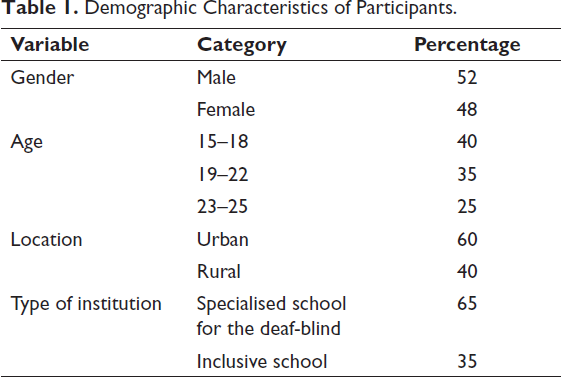
There were 50 deaf-blind students who participated in the study. These students came from a variety of educational institutions and vocational training institutes, and their ages ranged from 15 to 25. Table 1 provides valuable information on demographics.
Demographic Characteristics of Participants.
Educational Adjustments
The majority of students have reported making use of specialised techniques and assistive technology in order to get access to educational opportunities. The Braille language, tactile sign language, and screen readers were among these services. Table 2 illustrates the distribution of the educational changes that are utilised the most frequently.
Commonly Used Educational Adjustments Among Deaf-blind Students.
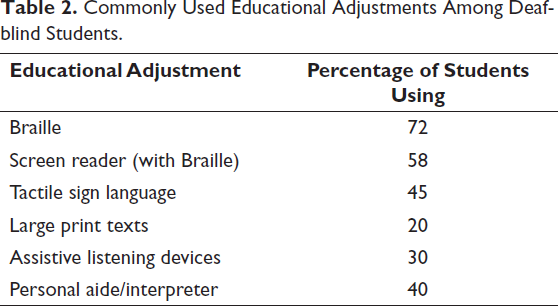
As a consequence of the findings, it is clear that the majority of pupils rely on Braille and screen readers, and a significant number of them also use tactile sign language. When compared to inclusive schools, specialised schools offer a wider range of resources than inclusive schools do. The availability of these tools differs depending on the type of institution.
Vocational Aspirations
The students have stated a wide variety of career goals, with a particular emphasis on jobs that demand intellectual engagement and the application of technology. These are the most often mentioned aspirations for one’s professional life.
Vocational Aspirations of Deaf-blind Students.
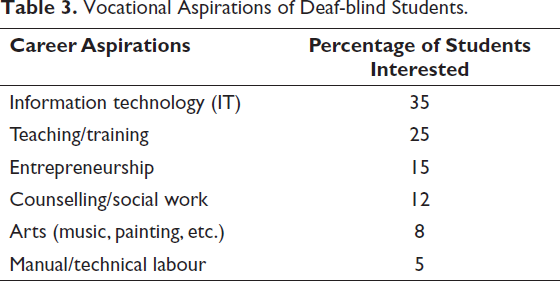
According to the research, there is a substantial interest in occupations connected to IT, followed by teaching and business ownership. As a result of their expertise in adapting technologies such as screen readers and Braille displays, a significant number of students have stated their confidence in pursuing careers that are driven by technology (Table 3).
Barriers to Vocational Success
Based on the findings of the study, there are a number of obstacles that prevent deaf-blind students from achieving their professional goals. Concerns such as restricted access to occupational training, social preconceptions, and poor workplace accommodations were among the obstacles that were encountered. 37 Table 4 provides a summary of the most significant difficulties that were mentioned by students.
Key Barriers to Vocational Success for Deaf-blind Students.
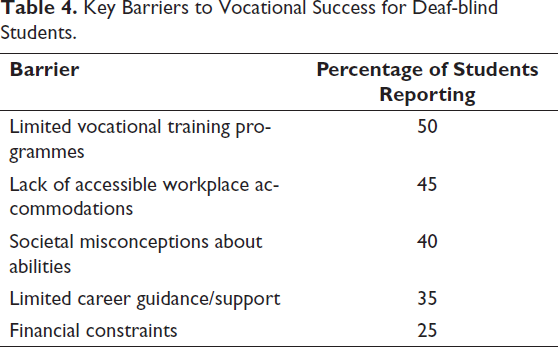
A significant difficulty was highlighted by 20% of the students as the absence of specialised vocational training, and about the same number of students regarded the absence of workplace accommodations as a significant impediment. Misconceptions held by society, such as preconceived notions about their capabilities, also had an impact on their confidence in their chosen profession.
Role of Family and Support Systems
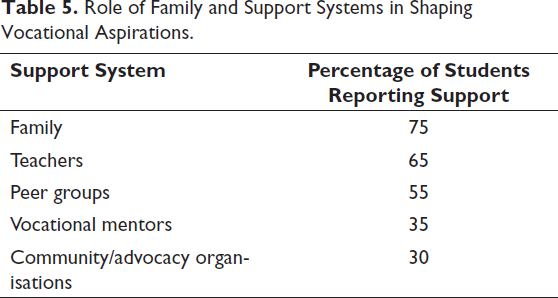
Family and other social support networks were significant contributors to the formation of the students’ goals for their future careers. Despite the fact that some families had more conservative beliefs and placed a greater emphasis on safety and financial stability than they did on ambition, the majority of students claimed that their families were supportive of their professional objectives. In addition, the support that one receives from their professors, mentors, and peer groups was cited as a significant factor in determining their professional path.
Table 5 summarises the role of various support systems.
Role of Family and Support Systems in Shaping Vocational Aspirations.
Quantitative and Qualitative Synthesis
While the quantitative data reveal distinct patterns, the qualitative interviews offer a more in-depth understanding of the experiences of the students. Just one example:
Quantitative Results
It was proven through interviews that 35% of students had a significant interest in employment in IT. These interviews demonstrated that the students have a passion for coding and digital literacy.
Qualitative Insights
Students expressed the personal gratification they have as a result of overcoming the expectations of society and choosing jobs that are normally not connected with disability.
Discussion
When it comes to the changes that deaf-blind students make in educational settings and the ways in which these experiences impact their occupational goals, the findings of this study provide useful insights. In this debate, these findings are integrated with the current literature on disability, education, and vocational development. The discussion also highlights the triumphs that this demographic has achieved, as well as the continuous problems that they continue to confront. According to the findings, the majority of deaf-blind students rely on assistive technology for their education. These technologies include Braille, screen readers, and tactile sign language. This finding is in line with prior research that highlights the significance of adaptive tools for those who are sensory-impaired. 38 Braille is used by 72% of people, while screen readers are used by 58% of people. This demonstrates the significant role that these technologies play in making it easier for people to access academic information. On the other hand, the study also sheds light on the unequal distribution of such resources, demonstrating that children attending specialised schools had greater access to them than those attending inclusive schools.
Concerns have been raised regarding the inclusiveness of mainstream educational institutions, which may not be completely equipped to meet the requirements of deaf-blind pupils as a result of this gap. The absence of specialised workers in inclusive schools, such as translators and aides, can result in educational isolation and restricted involvement in classroom activities. This can be a serious problem for students with disabilities. Because of the direct impact that these characteristics have on the educational performance and self-confidence of deaf-blind pupils, it is clear that there is a need for tailored learning plans and improved teacher training in inclusive settings. 39 One of the most important discoveries made by the research was that there is a large interest in occupations that are associated with technology. Specifically, 35% of students have aspirations of working in the field of IT. Screen readers and Braille displays are examples of assistive technologies that can help level the playing field, which is likely the driving force behind this interest. Technology-based occupations are becoming increasingly accessible nowadays. The findings demonstrate that those who are deaf or blind have the opportunity to pursue occupations that are intellectually demanding and provide chances for independence via the use of technology.
The interest that the students have in IT is in line with worldwide trends that are increasing the accessibility of employment in technology for people who have impairments. Individuals who are deaf-blind have the potential to flourish in a variety of disciplines, including coding, software development, and the creation of digital content, particularly when they are provided with the appropriate tools and training. To ensure that deaf-blind students have the chance to get practical experience in these domains, it is essential to develop vocational training programmes that concentrate on technological skills. This underscores the need of extending such programmes. The existing lack of vocational preparation, which was cited as a barrier by 50% of the participants, may be addressable by the implementation of specialised training programmes.
In spite of the fact that deaf-blind students are driven to achieve their goals, they continue to confront substantial obstacles on their path to achieving occupational success. These obstacles include restricted access to training programmes, adjustments in the workplace, and social misunderstandings about their capabilities. The conclusion that 45% of students noted a lack of accessible employment accommodations is consistent with the findings of earlier research, which have demonstrated that companies are frequently unwilling to recruit persons with disabilities owing to worries about productivity and the expense of adjustments.
There is a recurring problem that inhibits both students and employers from exploring more ambitious career choices. This problem is the widespread belief that people who are deaf-blind are unable to perform sophisticated or high-level work. This stereotype was echoed in the testimonies of students who felt that they were underestimated by their professors and possible employers, which has an influence on their confidence in pursuing occupations that are hard. It is therefore possible to overcome these prejudices and open up more diversified job prospects by addressing the attitudes of society and highlighting the success stories of professionals who are deaf-blind. Additionally, the findings highlight the significant role that family and social support networks play in the process of moulding the professional goals of students who are deaf or blind. Students indicated that their families encouraged them to pursue their career aspirations, and the percentage of students who reported getting this encouragement was 75%. However, the survey also discovered that some families have more conservative attitudes, placing a higher value on safety and financial stability than they do on the pursuit of professional advancement. This is a reflection of the conflict that exists between the inclination to protect and the desire to develop independence, which can restrict the range of career options that students investigate.
Additionally, it was demonstrated that the support that students received from their professors, mentors, and peer groups was extremely helpful in encouraging them to choose a wider variety of career paths. When it comes to building students’ confidence and providing them with role models, programmes that offer mentoring from professionals who are deaf-blind or who have impairments comparable to those of the students are extremely helpful. According to the findings of earlier research, the presence of visible examples of success within the deaf-blind community assists in the dismantling of internalised constraints and fosters higher goals for vocational advancement.
The findings highlight the need to develop vocational training programmes that are more accessible and inclusive, and that are especially customised to meet the requirements of students who are deaf by nature. Their lack of access to specialised training and mentorship continues to restrict the options that are accessible to them, despite the fact that they have an interest in sectors that need a high level of intellectual capacity and technology. According to the findings, 50% of the students were of the opinion that the vocational programmes that are now available did not effectively prepare them for the workforce.
It is abundantly evident that educational institutions, vocational training centres, and companies need to work together in order to design programmes that concentrate on positions that need a high level of expertise and are driven by technology. Internships, apprenticeships, and on-the-job training should all be made available through these programmes using venues that are easily accessible. Additionally, awareness efforts that are directed toward employers can assist in educating businesses about the capabilities of deaf-blind persons, as well as the very cheap cost of implementing acceptable adjustments for these individuals.
Conclusion
This research highlights the need to fully comprehend the distinct obstacles that deaf-blind adolescents have as they transition to school and strive to join the employment. This research seeks to offer a thorough overview of the opportunities and challenges that impact the professional life of deaf-blind persons by investigating their career goals, educational modifications, and the impact of family, society, and institutions. In the end, the results will help deaf-blind students have the tools they need to obtain fulfilling jobs and live independently by fostering more inclusive educational and vocational policies. By doing so, we can help deaf-blind people reach their full potential and integrate them into many different industries, paving the way for a more just and inclusive future. The study’s findings show that deaf-blind students may achieve their occupational goals with the right kind of assistance, despite the fact that they confront many obstacles. The availability of assistive technology, individualised educational accommodations, and robust social support systems all play significant roles in moulding these ambitions. To make sure they succeed, though, we need to fix structural problems, including a lack of vocational training possibilities and accommodations in the workplace. These results highlight the need of raising public knowledge about the skills of deaf-blind people and create more inclusive vocational programmes. Educational institutions and corporations may greatly assist these students in realising their career aspirations if they do this.
Footnotes
Acknowledgement
The authors would like to express their sincere gratitude to all individuals and institutions who contributed to this research. Special thanks to Chhatrapati Shahu Ji Maharaj University, Kanpur, for their support and cooperation throughout the study.
Authors’ Contribution
All authors have made substantial contributions to the conception, design, data acquisition, analysis, and interpretation of this study. Neelesh Kumar and Gopal Singh were responsible for the study design and manuscript drafting. Anil Kumar, Avinash Kumar and Pradeep Kumar Tiwari contributed to data collection, literature review, and critical revisions. Pravin Kumar Agrawal handled data analysis and interpretation. All authors reviewed and approved the final version of the manuscript and agree to be accountable for all aspects of the work.
Statement of Ethics
Ethical approval was not required for this study as per the guidelines of the Chhatrapati Shahu Ji Maharaj University, Kanpur, because it was a theoretical/methodological paper.
Declaration of Conflicting Interests
The authors declared no potential conflicts of interest with respect to the research, authorship and/or publication of this article.
Funding
The authors received no financial support for the research, authorship and/or publication of this article.
Patient Consent
Patient consent is not required.
