



Abstract
Background
University students confront a wide range of issues during their pursuit of education. Understanding these issues is essential for developing effective treatments and support systems.
Purpose
This study aims to delineate the landscape of scholarly literature pertaining to psychosocial, academic, and psychological issues among university students. It further identifies key journals and publishing trends within the fields, thereby significantly contributing to this domain. Additionally, this study outlines the scientific field networks that offer theoretical and conceptual foundations for exploring the psychosocial, academic, and psychological challenges faced by university students. Furthermore, it also intends to systematically categorise various types of problems encountered by university students in India.
Methods
To systematically gather and investigate the problems encountered by students in higher education, this study utilises bibliometric analysis, highlighting topics related to mental health. Data were extracted from Scopus and Web of Sciences databases.
Results
The analysis of the literature yielded 12 overarching categories related to challenges faced by university students: stress, academic stress, depression, anxiety, internet/ smartphone addiction/ gaming disorder, low self-esteem, loneliness, insomnia, suicidal ideations, eating disorders, drug addiction, adjustment issues.
Conclusion
Academic institutions should prioritise student mental health, as it affects academic performance and can lead to psychological disorders. Universities need Guidance and Counselling Cells staffed with professionals to help students manage psychosocial, academic, and psychological challenges.
Introduction
The university serves as a new environment, where students are majorly in their late adolescent years, physically maturing and psychologically unsettled. Late adolescence and emerging adulthood are transitional phases 1 during which university students experience perplexity and indecision. Throughout their academic careers, students face psychosocial pressures, with personal expectations demanding greater emotional and intellectual rigour than previous educational levels. This age bracket experiences a great deal of stress and hardship, which can result in a variety of psychological, social, and physical issues. 2
Consequently, it is not surprising that students consistently exhibit lower psychological well-being than the general population, evidenced by heightened rates of depression, anxiety, and numerous other psychological health conditions. 3 Psychosocial problems are prevalent among university students. Psychosocial issues comprise a wide range of mental health issues that impact students’ behaviour, thought processes, and emotional states. The University Student Psychosocial Problems Development Theory (USPPDT), obtains a thorough grasp of the issues encountered by the learners in higher education. It elucidates the mental health of university students including various factors such as student demographics, study programme features, emotional, academic, antisocial conduct, traumatic events, and student-related load to explain and predict psychosocial problems among students in higher education. 4
It is noteworthy that mental health issues tend to rise in young adulthood, particularly due to the more stressful nature of university curriculum-based academic pursuits compared to primary school.5, 6 Over the academic years, learners strive to adapt to university life while facing challenges. Additionally, they aim for financial and emotional independence.7, 8
Recent studies show a rapid increase in the frequency of depressive symptoms among learners in higher education worldwide, surpassing that of the general public. 9 In one study, 30% of undergraduate students reported heightened psychological stress, with depression levels much exceeding the average population. 10 Senior female university students are more likely to have depression symptoms. 11 Anxiety disorders rank as the most common mental illness among university students, affecting around 11.9% of them. 12 It has been revealed that learners who have negative beliefs about subjects like statistics and believe that the topic is threatening are eventually more prone to feel anxious. 13 According to a 2020 Insight Network survey across 10 universities, ‘nearly half of respondents had experienced a severe emotional concern for which they felt they needed an expert help’, with ‘one in five learners having a current mental illness diagnosis’—an increase from 1 in 3 reported in the same survey conducted in 2018. 14
The foundation of USPPDT rests upon a modified conceptual framework of PSWB (psychosocial well-being). This theory posited that psychosocial challenges stem from a combination of individual factors and experiences—such as inherent personality traits, familial dynamics, exposure to emotional stress and trauma, and socioeconomic status—and contextual elements, including university adjustment difficulties, academic struggles, peer dynamics, relationship conflicts, financial strains, adoption of western lifestyles like sports gambling or betting, health concerns, uncertainties in the job market, and the broader sociopolitical landscape. These components are linked together within the framework.
In the current era of technological advances, addiction towards the internet has emerged as a possible concern among adolescents and youth. 15 It refers to excessive gadget use that interferes with daily living. While the internet is primarily used for research, information seeking, interpersonal interactions, and corporate activities, teenagers often engage in pornography, excessive gaming, 16 long-distance communication, and even gambling. 17 Despite previous studies, no research has explored psychosocial, academic, and psychological problems among Indian students through a bibliometric approach. Therefore, in the framework of USPPT, this bibliometric review offers an overview, contextualisation, and synthesis of works pertaining to the problems encountered by Indian university students. It also aims to explore what research themes are addressed in existing literature on psychosocial, academic, and psychological problems among university students in India, and what are the specific psychosocial, academic, and psychological problems faced by university students?
Methods
Design
To assess academic research on psychosocial, academic, and psychological problems among Indian university students, a bibliometric study utilising performance indicators (co-citation analysis) and science mapping 18 was carried out. We were able to objectively and quantitatively examine the articles that we had retrieved from the databases by using these procedures. This methodology has demonstrated efficacy in examining the conceptual framework of a field of study. 19 We were able to determine which authors, studies, and journals were the most significant and influential using performance indicators, and we were able to see how research in a particular subject has evolved using keyword co-occurrence analysis in scientific mapping. These intricate maps were our choice for visualising the intellectual framework of the topic of study.
Sources of Data and Techniques for Searching
To collect all relevant articles from January 2000 to August 2023, we developed a one-step method. This involved extracting terms associated with psychosocial, academic, and psychological problems among university students. To achieve this, independent searches were conducted in the Scopus and Web of Science (WoS) databases. We expanded our search parameters and techniques to gather the most pertinent publications. The examples below illustrate how informatics and search terms were modified and combined using operators based on Boolean logic.
The search encompassed the article title, including terms such as ‘psychological problems’, ‘psychosocial problems’, ‘academic problems’, ‘Anxiety’, ‘Stress’, ‘Bullying’, ‘Depression’, ‘University Students’, and ‘College Students’, excluding ‘COVID’ and including ‘India’. For potential inclusion, we thoroughly reviewed the study titles, keywords, abstracts, and entire texts of relevant articles. In this phase, a total of 114 publications were obtained (Scopus: 60, WoS: 54).
We acquired all 114 publications (Scopus:60, WoS:54) original data and utilised the VOSviewer tool to analyse the frequency of authors’ keywords. Initially, we assessed the Scopus data and subsequently repeated the same process for records from WoS using the VOSviewer tool. The publication year, language, and literature category remained unchanged from the original search. Both raw data collection and literature retrieval were completed on a single day (6 August 2023).
Data Cleaning
The researcher exported a CSV (Comma-separated values) file containing 114 suitable records. Each publication’s comprehensive details, including the title of the work, abstract, list of authors, journal name, keywords, publication year, affiliations, countries/regions, reference list, and citations, were incorporated into the dataset for bibliometric analysis. Two authors (M.G. & N.K.) independently reviewed the downloaded records for accuracy and errors. Reports meeting any of the following criteria were excluded: (a) duplicate records; and (b) records flagged as ineligible by automated techniques. Subsequently, the CSV file was imported into VOSviewer, a bibliometric analysis tool, for further data analysis. Ultimately, 31 articles from the refined dataset were utilised for the content analysis which was pertinent to the psychosocial, academic, and psychological problems (Figure 1).
(PRISMA) Reporting Items for the Comprehensive Analysis. 20

Data Analyses and Visualisation
The review utilised VOSviewer for conducting bibliometric mappings. VOSviewer enables the creation of maps for authors or journals using citation information or maps for keywords using co-occurrence data. 21 A programme like this one, for instance, graphically displays co-occurrence keywords with clusters in distinct colours, providing excellent chances to discern patterns from these illuminating mappings. The VOSviewer may be used to index and import bibliometric data from the database to create bibliometric mappings. Biblioshiny was used to import the cleaned dataset and produce descriptive statistics, such as productivity and citation by author, association, and nation. Bibliometrix’s, biblioNetwork function was used to create a network diagram that represented the authors’ collaboration.
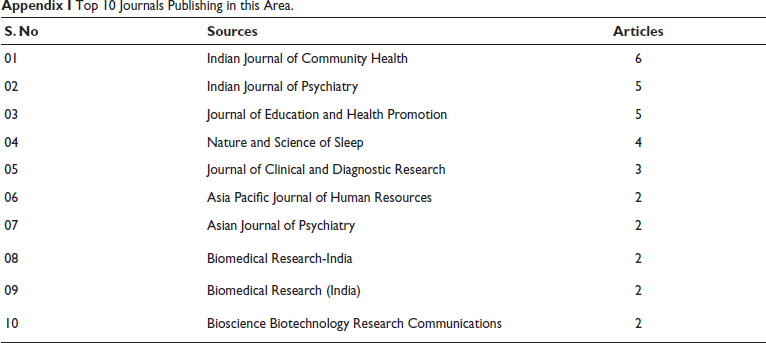
Descriptive analysis has become a prevalent method in tracking the state-of-the-art advancements in a topic area. It is widely used in research to uncover trends in publishing, identify the most cited journals, and top journals in this area (Appendix I).
Content Analysis
Content analysis is instrumental in the coding and categorisation of vast volumes of textual material. 22 This approach combines rigorous quantitative analysis with qualitative techniques that maintain rich meaning, 23 supplementing the bibliometric analysis. However, the inner relationships and distinct psychosocial, academic, and psychological problems among university students could not be obtained, as the bibliometric analysis of psychosocial, academic, and psychological problems among university students only displays the research hotspots and trends.
Further, we also employed literature content analysis to present a thorough overview of many psychological, academic, and psychosocial issues that university students face. This study first analyses the hotspots for issues that university students are now facing with their research and how those issues have changed recently.
Henceforth, most common psychosocial, academic, and psychological problems faced by university students besides the correlations between various factors were also taken into consideration. In other words, the clustering is based on a comprehensive content analysis of 31 final studies included in the review (Figure 1). From each article, we extracted specific psychosocial, academic, and psychological problems faced by university students to create distinct themes.
Results
To identify what research themes are presented in the existing literature on psychosocial, academic, and psychological problems among university students in India, we employed keyword and co-occurrence analyses. We took the articles and looked up the terms that went with them to visualise the material. More precisely, we took terms (words and phrases) from the abstract and article titles and used them as article descriptors in addition to keywords.
Figure 2 illustrates the conceptual structure of research where the map offers the co-occurrence analysis of author keywords obtained by employing both the Scopus and WoS Databases. Publication keywords are widely employed in bibliometric research to show the knowledge of study areas and are thought to be the fundamental components of conveying knowledge ideas. 21
Keyword Plus Co-Occurrence Network of Scientific Collaboration.

Co-occurrence analysis findings have been shown in Figures 2 and 3 show the most frequent keywords and their associations. The scientific maps developed using the keywords enabled us to investigate the three master themes and 12 sub-themes covered in the publications.
Word Clouding.

We analysed information extracted from 31 publications identified through a literature search. Employing an inductive approach, the most employed keywords in research were collected first. These keywords were combined to make 12 sub-themes, from which three overarching themes namely psychosocial, academic, and psychological were derived. During the compilation of sub-themes and master themes, an extensive review of the available literature was conducted, and keywords associated with these themes were chosen (Appendix II).
Psychosocial problems consist of three sub-themes, loneliness, low self-esteem, and adjustment issues. Whereas, academic problems consist of one sub-theme, that is, academic stress and psychological issues consist of eight sub-themes such as stress, anxiety, depression, insomnia, smartphone addiction, eating disorders, drug addiction, and suicidal ideation.
Following the establishment of the concrete framework, six experts specialising in the field of university student research were purposefully selected. They were approached to evaluate the draft of keywords and associated sub-themes and master themes. These experts were requested to rate the keywords based on their relevance, using a four-point Likert scale (1 = Not relevant, 2 = Somewhat relevant, 3 = Relevant, 4 = Very relevant), within the context of sub-themes and master themes. Following the guidelines proposed by, 24 if five out of six content experts rated an item as either relevant (3) or very relevant (4), it met the required standard, and the keyword was retained. Conversely, if at least two experts did not meet the required standard, the keyword was discarded. The results in Figures 4, 5, and 6 illustrate psychosocial, academic, and psychological problems and their sub-themes with related keywords.
Psychosocial Problems and Their Associated Keywords.

Academic Problems and Their Associated Keywords.

Psychological Problems and their Associated Keywords.

Psychosocial Problems
Psychosocial factors encompass the dynamic interaction between psychological processes and social environments, shaping the behaviour and well-being of students. They encompass a broad spectrum of psychological illnesses which influence students’ emotional state, cognitive processes, and conduct (Figure 4).
Loneliness
Loneliness is the misery caused by differences in desired and perceived social interactions. It shows an individual’s subjective limitation in sustaining social ties. Youngsters feel a sense of loneliness 25 and interpersonal difficulties in university. 26
Low Self-esteem
Low self-esteem can lead to interpersonal problems. Not only dieting in youngsters has been linked with low self-esteem 27 but also with excessive use of internet 28 as well as online gaming 29 leads to an inferiority complex among university students.
Adjustment Issues
The hallmark of adjustment problems is an ineffective emotional response to a demanding circumstance. When fresh students enrol on university campuses have difficulty eating and digesting meals. Adjustment to a shift in the surroundings is also a stressor, and students suffer from stomach problems 27 ; males had more difficulty adjusting than females. 30
Academic Problems
Academic problems include the demands of the studies and how they affect their academic performance. In this study, academic problems are explained in context to academic stress that academic stress is being encountered by university students which leads to various problems like poor concentration,27, 31 low grades, 32 teacher-student interpersonal issues (Figure 5).
Academic Stress
The pressure and strain that students experience in relation to their academic responsibilities and demands is called academic stress. Studies have revealed that this stress can result from various factors, such as poor performance, low grades class tests, assignments, exam patterns, and punctuality in class.
Psychological Problems
Psychological problems, also referred to as mental health disorders, cover a broad spectrum of psychological illnesses that influence students’ emotional states, cognitive processes, and conduct. Students at universities frequently struggle with psychological problems, including stress, depression, anxiety, internet addiction, insomnia, eating disorders, drug addiction, and suicidal ideation (Figure 6).
Stress
University students face stress because of lifestyle changes, greater workloads, new obligations, adapting to dietary changes, and interpersonal connections.33–36 Additionally, university norms and regulations and faculty attitudes contribute to heightened stress levels in students. Studies reveal that female students, particularly those experiencing coeducation for the first time, tend to experience higher levels of distress as compared to males. 31
Depression
University students feel depressed,31, 36 specifically, females37, 38 when residing away from their abodes 39 and males too 33 when residing with their family members and one who has encountered negative academic surroundings. 40 Depression has been linked to internet addiction,25, 28, 34, 41–43 peer pressure, career pressure, 37 and financial issues. 43
Anxiety
Anxiety is the feeling of being worried or afraid. When students are abruptly confronted with new surroundings, social settings, and strong academic demands, they encounter several problems. Furthermore, social anxiety disorder is a prevalent variety that can manifest itself in everyday settings such as meeting new people, job interviews, stage fright, dining in public, and, in severe cases, even drinking water. There is apprehension about being judged. In higher education students suffer from anxiety,25, 34–36, 44, 45 library anxiety 46 specifically, social appearance anxiety 27 in females 47 students from private universities, 33 difference in subjects. 39 In addition, students reported social anxiety48, 49 as well as social phobia 50 as undergraduates feel a sense of self-consciousness while eating or drinking or being observed by others. As a result, students tend to avoid meeting new people because they are terrified of being judged by others. 49 Moreover, anxiety is being linked with internet addiction.
Internet/smartphone Addiction/Gaming Disorder
Internet addiction is characterised as a harmful behaviour that interferes with and stresses out one’s personal and academic life. This addiction occurs when a person has a compulsive need to spend a significant amount of time on the Internet. University students are addicted to the internet/smartphone,25, 28, 33, 34, 41, 42, 50, 51 resulting in gaming disorder 29 and distress which is associated with depression, anxiety, eating disorders and drug use among university-goers.
Insomnia
Insomnia is defined as chronic difficulty falling and staying asleep. In other words, difficult to fall or stay asleep, even when a pupil has the opportunity. Sleeping troubles have been detected in students of tertiary education31, 45 smartphone addiction has been linked to disturbed sleep among youth.29, 34, 41, 42 In other words, Cyberloafing or when students use their gadgets such as smartphones, tablets; leads to insomnia among university students.
Suicidal Ideations
Suicidal ideation, also referred to as suicidal thoughts, is the act of thinking about or making plans to commit suicide. It depicts a variety of thoughts, desires, and preoccupations with death and suicide. Psychological issues are the risk factors for a variety of thoughts which are related to death and suicide. A study by KS L et al. 27 revealed youngsters are having suicidal ideation. In addition, Social anxiety disorder may also lead to suicide among youngsters. 49
Eating Disorders
A series of mental health issues known as eating disorders are typified by a persistent disturbance in eating habits and a decline in either mental or physical health. Female teenagers, specifically, are focused on their looks, body weight, and form, and dieting throughout adolescence has been linked to anxiety, sadness, and low self-esteem, along with nutritional deficits, reduced attention and stunted growth. Dieting has been connected to the development of eating disorders in severe circumstances. 27
Drug Addiction
Addiction to drugs is a chronic, recurrent disorder marked by persistent drug seeking and use that endures despite serious side effects. It is common among university students owing to the high-stress environment, which incorporates academic pressure and peer influence. Stress leads to the usage of alcohol and smoking. 32
Discussion
Psychosocial problems are prevalent among university students. These issues comprise a wide range of mental health issues that impact students’ behaviour, thought processes, and emotional states. The present study revealed that university students are encountered with psychosocial problems such as loneliness, low self-esteem, and adjustment issues. An adolescent with psychosocial problems is likely to acquire unpleasant, unhealthy, and maladaptive behaviours as a result of these emotional, interpersonal, and maladaptive states of conduct. These findings were consistent with previous studies, for instance, loneliness is widespread among university students.52, 53 A study by Nguyen et al. 54 found that university students’ poorer quality of life is linked to lower self-esteem. Students experience adjustment issues as a result of feeling less supported by their families and less able to obtain emotional assistance during their first year of university. 55
Academic problems include the demands of the university students’ studies and how they affect their academic performance, effort, and participation. In this study, academic problems are explained in the context to academic stress that academic stress being encountered by university students which leads to various problems like poor concentration, low grades, and teacher-student interpersonal issues. Findings are in mirror with previous studies. For instance, academic performance and learning outcomes are adversely impacted by academic stress among university students. 56 Academic stress undermines motivation and makes academic achievement harder to accomplish 6 and adversely impacts youngsters’ mental health. 57
Students at universities frequently struggle with psychological problems, including stress, depression, anxiety, internet addiction, insomnia, eating disorders, drug addiction, and suicidal ideation. Distress is the devastating impact of persistent pressure at university and at home. Learners in higher education encounter distress due to shifts in lifestyle, increased workload, additional responsibilities, and relationships with others. The symptoms of depression include ongoing sadness and a loss of enthusiasm for enjoyable pursuits. Indian university students have a high prevalence of eating disorder symptoms, including binge eating, dietary restriction, and weight worries. Academic strain includes financial concerns, a toxic educational environment, peer pressure, and the pressure to find a decent career after graduation. When students are abruptly confronted with new surroundings, social settings, and strong academic demands, they encounter anxiety, severe social anxiety which further results in suicidal ideation. Internet addiction is characterised as a harmful behaviour that interferes with and stresses out one’s personal and academic life and internet addiction is common among students in higher education, which leads to difficulty in sleep among youths and results in drug addiction. Our study findings are consistent with previous studies. Studies revealed psychological issues and psychological distress are closely linked to reports of suicidal thoughts and attempts.10, 58 Due to changes in peer connections and the reality of a new life that needs adjustments to personal and academic goals, starting university may be a hard transition for many students. 59 The likelihood of eating disorders increased in a sample of more than 26,000 undergraduate students from 15% in 2013 to 28% in 2021–2021. 60 Internet addiction is correlated with smoking, alcohol drinking, and drug abuse. 61
The USPPDT theory states that a number of factors, including emotional, academic, and antisocial behaviour issues, traumatising events, study programme characteristics, student-related burden characteristics, and student demographics, all influence and predict psychosocial issues in learners in higher education. 4 It is noteworthy that this study further expands on this theory by adding other factors like internet addiction, low self-esteem, and loneliness and categorising all these problems faced by university students into three broad categories: psychosocial, academic, and psychological problems.
Implications
This research provides valuable insights for policymakers, healthcare practitioners, public health experts, university administrations, and caregivers to make well-informed decisions. It can help with support for university students’ mental health services and training. For example, it has been shown that teaching youngsters how to effectively control their distress improves their mental wellness. 62 Additionally, it has been found that students’ well-being is enhanced by adaptive coping mechanisms, such as social and emotional support. likewise, stress-reduction courses and peer support groups on campus could be helpful in lowering stress levels. 57 Thus, to address psychosocial, academic, and psychological problems, it is important to have methods in place that encourage university students to seek therapy and participate in it.
Additionally, this study has practical implications for the USPPDT. This theory should be adapted to incorporate broad factors, including psychosocial (adjustment issues, loneliness, low self-esteem) academic (academic stress), and psychological problems (stress, depression, anxiety, internet addiction, insomnia, suicidal ideation, eating disorder, drug addiction) faced by university students.
Conclusion
The current study proposes how bibliometric analysis provides insight into academic, psychological, and emotional problems that university students face in India. It has been demonstrated through bibliometric analysis that further scientific study in this area is necessary to address the psychosocial, academic, and psychological problems that students from different Indian universities face. Psychosocial, academic, and psychological problems encountered by university students include loneliness, low self-esteem, adjustment issues, academic stress, stress, depression, anxiety, internet addiction, insomnia, suicidal ideation, eating disorders, and drug addiction. Therefore, academic institutions need to put more emphasis on student’s mental health as poor psychological well-being can have adverse effects on academic performance leading to psychological disorders. Stress experienced by adolescents must be understood in the context of their developmental stage and the social milieu in which they reside. The backdrop of one’s development and the social milieu in which they live should be taken into account when interpreting the stressors encountered by them. Thus, there is an urgent requirement for counsellors and career guidance professionals in every university to support students at various stages. Each university should establish a Guidance and Counselling Cell (GC Cell) staffed with experts who can assist students dealing with psychosocial, academic, and psychological problems. These professionals can offer diverse strategies and resources to help students effectively cope with these issues.
This study is not without limitations. Data for the study were limited to Scopus and WoS Databases, restricting the availability of information solely to India. Future studies should cover university students’ psychosocial, academic, and psychological problems by not limiting their studies to the nation of India. Additionally, other electronic databases can be employed to gather data such as PubMed and EBSCO.
Top 10 Journals Publishing in this Area.
Publication Trend.

The Themes and Sub-themes Emerged From Keywords.

Footnotes
Authors’ Contribution
MG and NK conceptualized the study’s design, collected the data, performed the analysis, and wrote the paper; WMFA and SK supervised the study; SMN reviewed the manuscript; The final manuscript went through review and approval by every single author.
Declaration of Conflicting Interests
The authors declared no potential conflicts of interest with respect to the research, authorship and/or publication of this article.
Funding
The authors disclosed receipt of the following financial support for the research, authorship, and/or publication of this article: This research was supported by the Gandhi Institute of Technology and Management, Visakhapatnam, Andhra Pradesh under Seed Grant Number (Ref: F.No 2023/0258).
Patient Consent
Consent was not applicable, as this is a review article compiled from various research articles and guidelines and not from patients directly.
Statement of Ethics
Since this study did not include human subjects or human materials, ethical approval was thus not required based on guidance from the institutional review board.
