



Abstract
Background: To assess the role of risk factors of metabolic syndrome on blood viscosity and the prognosis of acute ischemic stroke in Indonesia based on the National Institute of Health Stroke Scale (NIHSS) and modified Rankin Scale (mRS).
Methods: This study included 135 patients with acute ischemic stroke. Patients underwent measurements of viscosity and risk factor assessment. Analysis was performed to assess the role of these risk factors for blood viscosity and outcomes of acute ischemic stroke with NIHSS and mRS as indicators. NIHSS was assessed at <3 days after onset and 7 days after onset, while mRS was assessed 1 month post treatment. Bivariate analysis was performed using chi-square test, and variables with p < 0.25 were further analyzed in multivariate analysis using logistic regression.
Results: Factors affecting blood viscosity are fibrinogen, low-density lipoprotein (LDL), and hematocrit. Factors affecting NIHSS and mRS are fibrinogen and LDL.
Conclusion: Fibrinogen and LDL affect the viscosity of blood and outcomes in acute ischemic stroke patients, so it is necessary to treat in the primary and secondary prevention of ischemic stroke.
Introduction
Every year, around 16 million people worldwide suffer a stroke for the first time. 1 The prevalence of global stroke sufferers is around 62 million people and the mortality rate from stroke reaches 9.7%. 1 In adults aged 45–64 years, vascular diseases, including stroke, are a major cause of disability. In Indonesia, based on Riskesdas 2013, the prevalence of stroke (time >15 years) was 1.21% . 2 The highest prevalence was found in people who were above 75 years (6.7%).
This pathophysiology of cerebral ischemia (ischemic penumbra) includes disorders of cellular perfusion and metabolism that are closely related to blood flow (including collateral flow), blood vessels and blood viscosity (blood hyperviscosity). 3 Blood viscosity in acute ischemic stroke have been studied, both in Indonesia and other countries. Meliala, 4 Rasyid, 5 and Szapary et al., 6 conducted studies of ischemic stroke patients and stated that blood hyperviscosity was found in patients with acute ischemic stroke. Ott 7 in his study concluded that hyperviscosity occurs in more than 40% of patients with acute ischemic stroke in the first 24 hours of onset, so it is important to know as early as possible because it greatly affects cerebral blood flow.
Blood viscosity is resistance to blood flow due to friction of the lamina that moves along the axis of the blood vessel due to differences in speed. 8 Several factors can affect blood viscosity including hematocrit, erythrocyte aggregation, erythrocyte deformability, fibrinogen levels, age, smoking, DM, dyslipidemia, and others.9, 10 Hyperviscosity conditions are very important to be identified immediately, not only to carry out several possible treatments that can affect the clinical improvement of the patient, but they are also expected to be associated with clinical outcomes in patients with acute ischemic stroke that can be assessed clinically and by laboratory measurements. Scoring systems used to assess clinical outcomes of acute ischemic stroke patients that have been widely used include National Institute of Health Stroke Scale (NIHSS) and Modified Rankin Scale (mRS). 11 To prevent blood hyperviscosity and stroke, the target of treatment should be risk factors that affect viscosity. Therefore, this study was conducted to determine which factors are related to blood viscosity in stroke patients in the Indonesian population.
Methods
Study Subjects
A total of 135 patients with acute ischemic stroke from March to August 2013 were included in this cross-sectional study. Sample size was calculated using the rules of thumb. The study participants were at Cipto Mangunkusumo Hospital in Jakarta, Fatmawati Hospital Jakarta, Prikasih Jakarta Hospital, and Bhakti Yuda Depok Hospital.
Inclusion criteria were age of 35–74 years, diagnosis of acute ischemic stroke within 3 days of onset, clinical manifestations of partial anterior or lacunar stroke according to Bamford’s definition, and no history of using drugs with hemorrheological effects. The exclusion criteria were as follows: a history of transient ischemic attack (TIA); disorders that affect blood and plasma viscosity in stroke, such as anemia, polycythemia, dengue hemorrhagic fever, massive bleeding, and diarrhea; seizures; head trauma; brain tumor; and lung cancer.
Procedures
Patients underwent blood viscosity examination using digital microcapillary instrument, 12 and assessments of risk factors, including age, smoking, hypertension, DM, cardiovascular diseases, hematocrit levels, fibrinogen, low-density lipoprotein (LDL), high-density lipoprotein (HDL), and triglycerides. Stroke outcome was assessed using clinical assessment (NIHSS score 3 days and 1 week after onset; mRS score 1 month after discharge from hospital). The clinical conditions were considered to be improved if the NIHSS score was ≤1 or improved by ≥4 and the mRS score was 0–2.
Statistical Analysis
Data were analyzed using Statistical Package for the Social Sciences (SPSS) software version 17. Bivariate analysis was performed using chi-square and multivariate analysis was performed to assess variables with p < 0.25 to find independent risk factors using logistic regression.
Ethics
The Research Committee at the Faculty of Medicine, University of Indonesia, approved this study with ethical approval number 69/H2.F1/Etik/2013. All subjects gave informed consent to participate in this study.
Result
Study subjects were 150 patients hospitalized around March–August 2013 and were diagnosed with ischemic stroke: 59 of them were treated at Cipto Mangunkusumo Hospital, 38 at Prikasih Hospital, 42 at Bhakti Yuda Hospital, and 11 at Fatmawati Hospital. However, 15 of the subjects dropped out, due to discharge at their own request, incomplete data, death before a month after onset, and unability to be contacted during the study period.
Subjects Characteristics
Factors that Affect Blood Viscosity
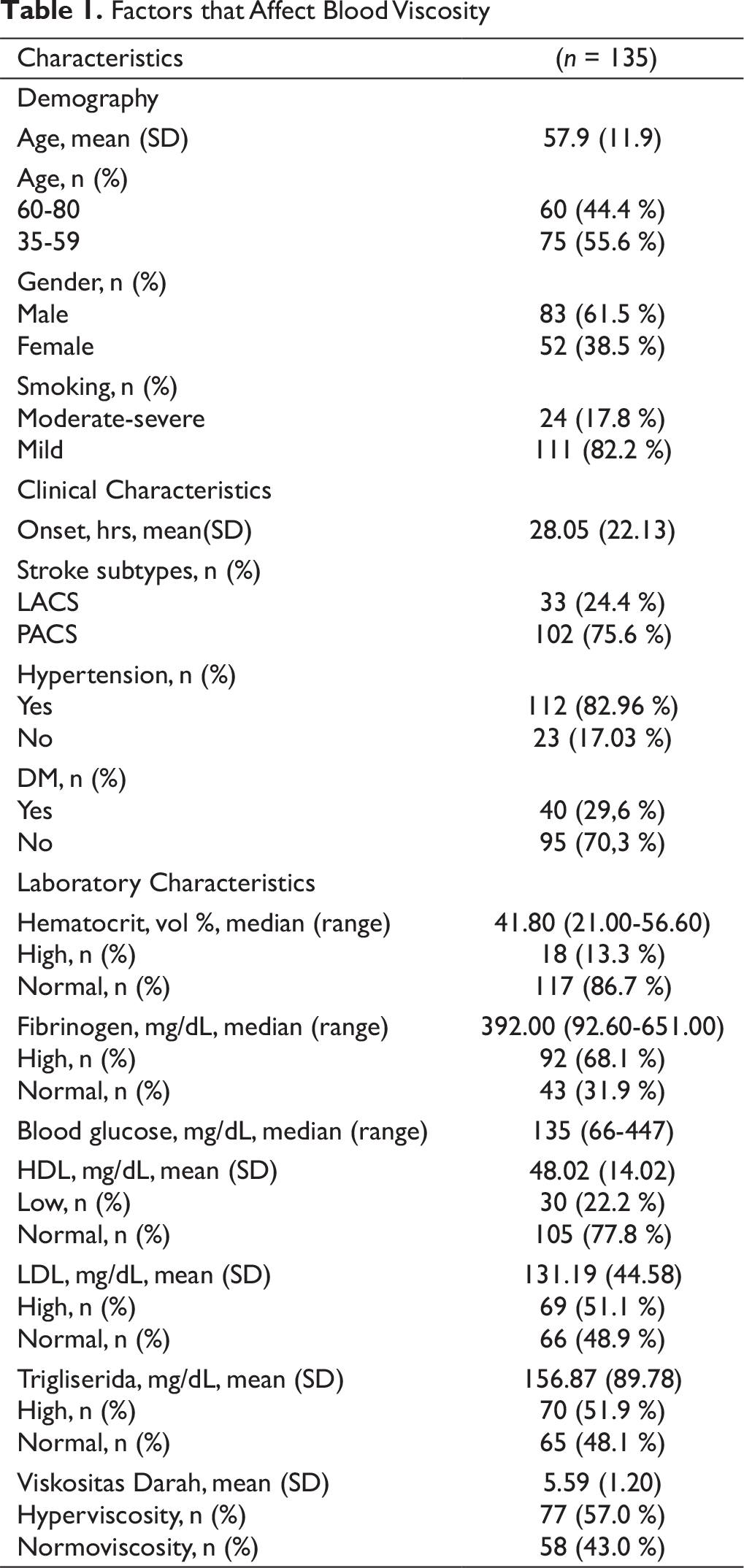
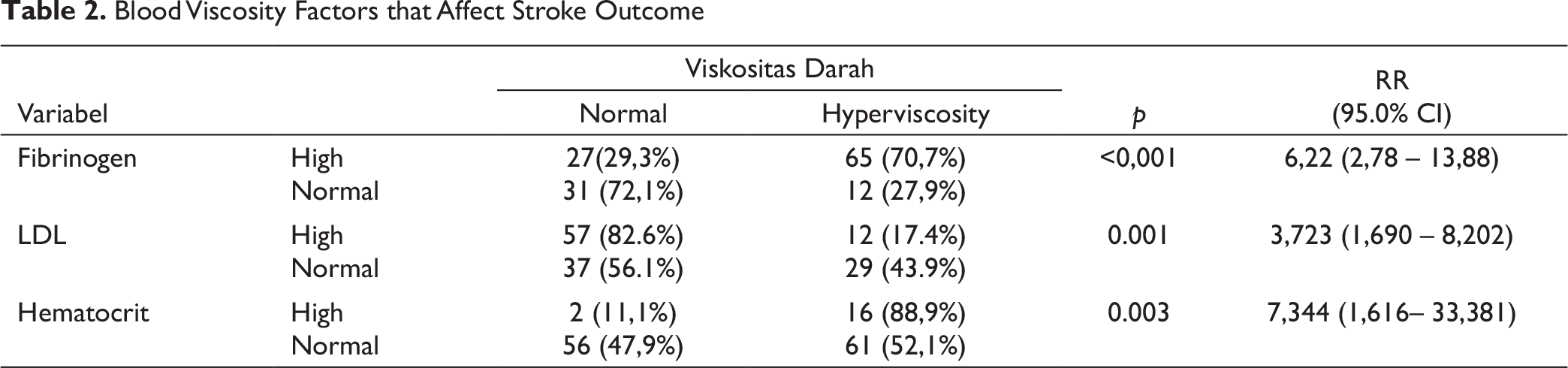
Factors expected to influence blood viscosity were analyzed using chi-square and logistic regression. From bivariate analysis, fibrinogen levels, hematocrit, and LDL were found to be risk factors for blood viscosity. Candidate variables were selected using chi-square, and those who were considered as risk factors for blood and plasma viscosity with p < 0.25 were then analyzed using logistic regression. Fibrinogen and hematocrit were found to be factors that affect blood viscosity independently (p < 0.001 and p = 0.019).
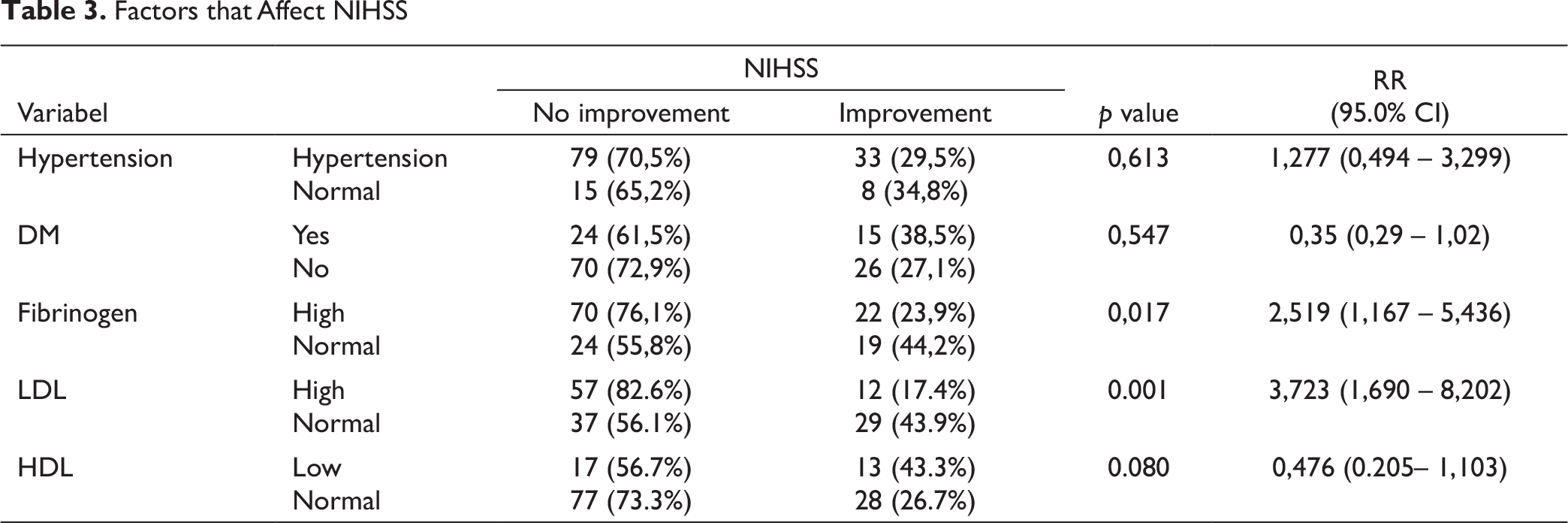
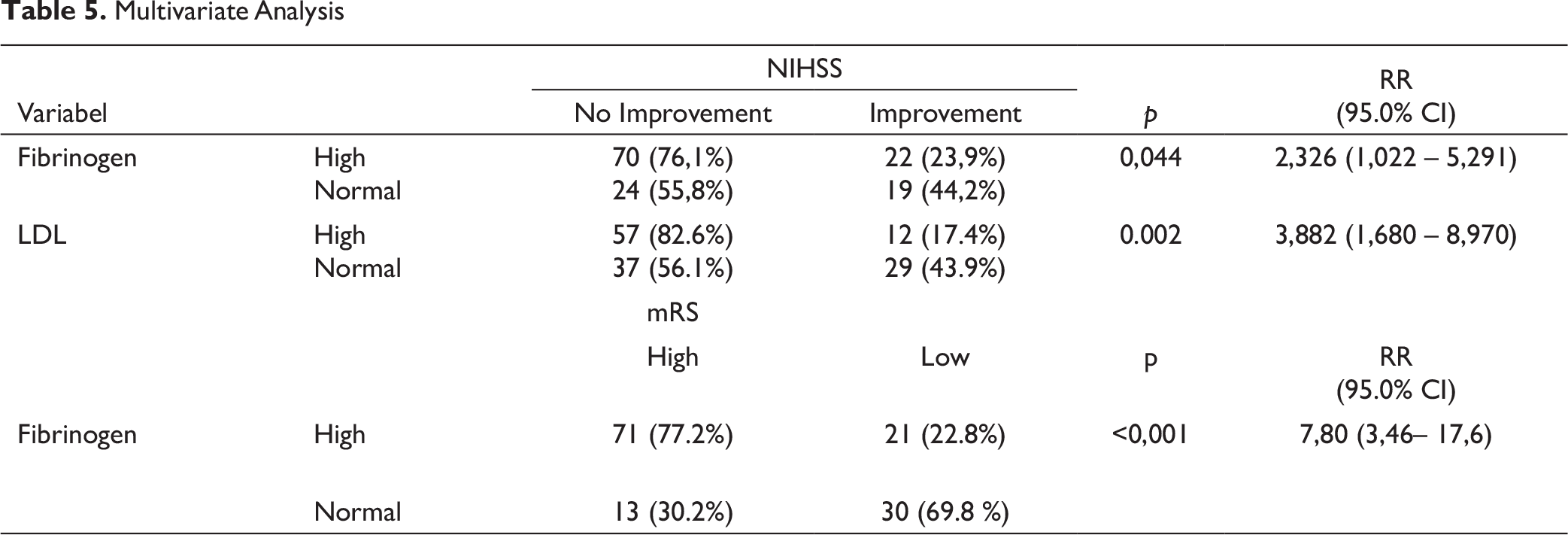
In bivariate analysis, fibrinogen levels and LDL were risk factors for higher NIHSS scores at 1-week follow-up. Fibrinogen and LDL were also independent factors based on multivariate analysis (p = 0.044 and p = 0.002).
Blood Viscosity Factors that Affect Stroke Outcome
Factors that Affect NIHSS
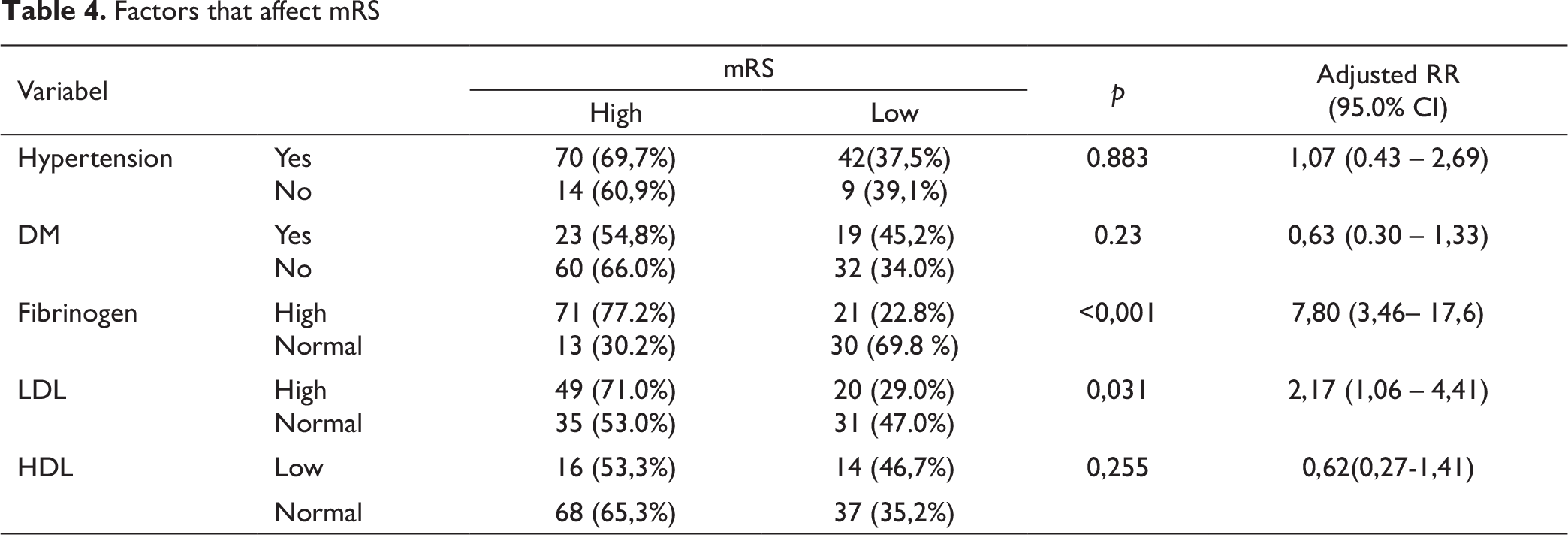
Factors that affect mRS
Multivariate Analysis
Discussion
Fibrinogen is a facilitator of the formation of rouleaux through receptors on the erythrocyte membrane. It is a factor that determines changes in blood and plasma viscosity, and affects the aggregation of erythrocytes, which causes blood hyperviscosity. In the ischemic region, more rouleaux is formed, and a higher number of fibrinogen bonds is found. High levels of fibrinogen, which has large molecular weight among plasma proteins, will increase plasma viscosity. 12
Fibrinogen plays an important role as a medium for the interaction of erythrocyte and platelet cells, so that if fibrinogen levels increase, there will be an increase in erythrocyte aggregation and an increase in platelet aggregation, which often occur in acute stroke.
It has been observed that fibrinogen has an effect on erythrocyte aggregation by finding that fibrinogen has a specific bond with erythrocyte membranes. Carvalho reported the fibrinogen receptor in erythrocytes by using the atomic force microscope, a nanodiagnostic device to see the interaction of a single molecule between fibrinogen and receptors in the erythrocyte membrane. The bonding strength between fibrinogen and erythrocyte membrane receptors is relatively weaker than fibrinogen’s bond with platelets. Fibrinogen receptors in erythrocyte membranes are αIIbβ3 integrins. This fibrinogen receptor in the erythrocyte membrane is not as strong as the receptors on platelets whose bonds are affected by calcium in the αIIbβ3 specific inhibitor. 13
The effect of fibrinogen on blood viscosity has been widely studied. In one study, three groups of patients were divided based on fibrinogen levels. 14 Blood viscosity was significantly associated with blood fibrinogen levels in each group (p < 0.01). Increased blood viscosity was associated with an increase in fibrinogen levels and was more pronounced in the hematocrit group with a higher value. 14 High blood viscosity in acute stroke is responsible for low cerebral blood flow and impaired perfusion, which causes ischemia and infarction. This process affects the severity of neurological disorders and stroke outcomes, which can be assessed by NIHSS score and mRS. 15
The relationship of lipid levels and blood viscosity, as found in our study, is in accordance with previous findings.10, 16 High LDL/HDL ratios indicate high levels of circulating cholesterol in blood vessels, including cerebral blood vessels. On the surface of the erythrocytes, there are approximately 200 bonding places for LDL or HDL molecules so that they can have an effect on blood viscosity in low blood flow conditions such as cerebral ischemia. 17 High LDL levels induce erythrocyte aggregation, which causes increased blood viscosity. Thus, high LDL levels worsen the outcome of acute ischemic stroke. 17
Fibrinogen and LDL/HDL measurements are not only relatively low cost but they are also universally available. In Indonesia, and most of the developing countries in Asia and Africa, a simple and low-cost diagnostic tool is what is needed, especially in Indonesia since the health cost (laboratory examination, hospital care, drugs, medical rehabilitation, etc.) for Indonesian are funded by the National Health Insurance (Badan Penyelenggara Jaminan Sosial/BPJS).
This study used digital microcapillary instrument to examine blood viscosity. “Digital Microcapillary” is a novel diagnostic instrument created by Al Rasyid et al. and has been patented in Indonesia by the Ministry of Law and Human Rights of Republic of Indonesia since 2016. 18 Digital microcapillary is a simple portable device to measure blood viscosity rapidly and cheaply. The use of this novel digital microcapillary instrument is an advantage of this study because it has not been used in any previous studies.
Conclusion
Fibrinogen and LDL levels are factors that can affect blood viscosity independently. Fibrinogen and LDL, through the effect of increasing blood viscosity, also affect the outcome of acute ischemic stroke. Fibrinogen, dyslipidemia, and blood hyperviscosity are factors that need to be managed in stroke patients or patients at risk of stroke.
Footnotes
Acknowledgements
We would like to thank Cipto Mangunkusumo Hospital and Department of Neurology Universitas Indonesia for facilitating this research. We would also like to thank Fatmawati Hospital, Prikasih Jakarta Hospital, and Bhakti Yuda Hospital for allowing us to collect the required data for this research.
Author Contributions
Al Rasyid conceived the study and was responsible of overall study direction and planning; Al Rasyid, Salim Harris, and Rakhmad Hidayat designed the study; Salim Harris developed study flow and data analysis strategy; Rakhmad Hidayat reviewed and corrected study hypothesis; Al Rasyid, Mohammad Kurniawan, and Taufik Mesiano collected and pooled the data; Al Rasyid and Taufik Mesiano performed and interpreted data analysis. All authors were involved in manuscript writing, with Mohammad Kurniawan and Taufik Mesiano edited the final manuscript.
Declaration of Conflicting Interests
The authors declared no potential conflicts of interest with respect to the research, authorship and/or publication of this article.
Funding
The authors received no financial support for the research, authorship and/or publication of this article.