




Abstract
This article illustrates how the state’s response to the COVID-19 pandemic led to an internal migrant crisis in India, making the country realise the presence of physical borders within itself. Through a narrative analysis of the chronicles of internal migrant workers and the migrant crisis published in print media during the first wave of COVID-19, this article elucidates how internal borders within a country became impermeable, affecting the rights and well-being of vulnerable citizens, who were labelled ‘disease carriers’. The discrimination and othering faced by migrants aggravated during this period, making them more prone to fall through the cracks of the crisis. Although mobility restrictions were important public health tools to mitigate the spread of COVID-19 infections, they undoubtedly exacerbated the pre-existing socio-economic inequities and vulnerabilities. Problematising these aspects of the migrant crisis during the pandemic, this article proposes migration policies and governance through effective public communication, inclusive decisions and human rights as a way forward.
Introduction
In the literature, discourses and debates on the ethics of migration have been mostly centred around political boundaries between countries and within the demarcation of citizens and non-citizens (Bauböck et al., 2022; Carens, 2013; Gibney, 2015; Miller, 2016; Owen, 2020), especially around the perception of who is legitimate or a threat, an insider or an outsider (Khosravi, 2007; Rajaram & Grundy-Warr, 2007). Furthermore, in both voluntary and forced migrations at the international level, ethical questions have been raised on the idea of border and the concept of citizenship (Mann & Permoser, 2022). In addition, recent discussions revolve around state frameworks that officiate and mitigate migration and various socio-economic and cultural factors that are impacted and being impacted on, from the perspectives of equity, human rights and justice (Anderson, 2019; Atak & Simeon, 2018; Miller, 2015). However, very few studies have addressed the issue of internal borders and their impact on interstate migrant workers. Due to the centrality of citizenship and the identity of a citizen, crossing borders within a country was never seen as complex as international migration. It was, however, the state-specific, multilayered lockdowns, coupled with the nationwide lockdowns, and the categorisation of districts into different coloured zones based on the number of coronavirus-infected people that redefined the borders within countries. Thus, the impermeability of intrastate and interstate borders due to varied restrictions made internal borders in a country visible and rigid.
The idea of border, in its common understanding, is the political boundary of a country between its citizens and non-citizens. There are two paradigms within which borders are understood: as a shifting-border paradigm and as a fortified-border paradigm. According to the shifting-border paradigm, borders are increasingly detached from their physical locations. The fortified-border paradigm, by contrast, argues that physical borders are still relevant today and that social science should focus on territorial and spatial understandings of borders (Deutschmann et al., 2023). More specifically, a border can be looked at as a category that creates differences in socio-spatial distinction between places, individuals and groups (Hassner & Wittenberg, 2015; Kolossov & Scott, 2013). In a subtle sense, a border can also be considered a boundary that indicates different geo-social resources, and, therefore, migrating beyond borders can also be a natural choice for people to achieve better resources. In the process of migration from one border to another, migrants negotiate not only with borders alone, but with the practices, memories and narratives that characterise the time and space they belong to (Hurd et al., 2016).
In the Indian context, this negotiation with space is applicable between different states owing to the rich diversity and differences in the socio-cultural milieu existing between various states. The disparities between states of India are extremely wide (Wilson et al., 2019), and, thus, interstate migration from poorer states to richer states is frequent. According to the literature, ‘[m]igration is one of human kind’s oldest action against poverty’ (Galbraith, 1979), and the available data on migrants indicate that internal migration in India is expanding as a coping strategy for livelihood to address poverty and to improve the basic amenities (Deshingkar, 2006). However, during migration, most of the migrants face multiple challenges such as ‘abject poverty, malnutrition, cultural bereavement, loss of religious practices and social protection systems, malalignment with a new culture, coping with language difficulties, changes in identity, substance abuse, poor access to health-care, in addition to the poor living conditions and financial constraints’, including discrimination as soon as they cross their native state border (Choudhari, 2020).
For example, the committee appointed by the Ministry of Home Affairs (MoHA), Government of India, in 2014 to enquire about violations against migrants from north-eastern states highlighted in their report the growing incidence of violence against these migrants by native populations in various parts of the country (MoHA, 2014). Similarly, Weiner et al. (1982) highlighted the preferential policies followed by some Indian states against migrants from other states. In addition, Abbas (2015) pointed out that internal migrants in India experience ‘lesser citizenship’ and ‘curtailed citizenship status’ due to the simple fact that they have crossed internal boundaries and thus are outside the purview of exercising citizenship. It is apparent that the impermeability of internal borders in India existed even before the pandemic, but the pandemic made it appallingly visible to the public. The focus of this article is on these internal borders.
This article illustrates how the COVID-19 pandemic responses led to an internal migrant crisis in India, making us realise the presence of physical borders within the country. Furthermore, the crisis caused by the pandemic exacerbated the already existing inequities, demanding a reflection on the idea of the state and what it means to be a citizen in this country, especially when one belongs to a vulnerable population group. This article also unveils how internal migrants as a vulnerable category are always a neglected priority of the state, unlike international migrants. Problematising these aspects of the migrant crisis during the pandemic, this article proposes migration policies and governance through effective public communication, inclusive decisions and human rights as a way forward.
Internal Migrants in India: A Neglected Priority
Internal migrants are those who cross state and district borders within the political boundary of a country. As per the estimates from the International Organization for Migration, around 740 million people have migrated internally worldwide (United Nations Development Programme, 2009), and this number is several times higher than that of international migrants. Internal migration in India has seen an increase of 45% in 2011 (450 million) in comparison with 2001 (309 million). This exceeded the population growth of 18% between 2001 and 2011 (De, 2019). According to government estimates, an average of 5–6 million Indians migrated internally every year between 2001 and 2012, and this amounts to an interstate migrant population of around 60 million and an interdistrict migration migrant population of around 80 million (Economic Division of the Ministry of Finance, 2017).
Research on internal migration in India in terms of producing data and diverse narratives has become prominent after the 2001 census and the 2007–08 National where the centre of analysis was mostly the economic drivers of migration: the push and pull factors, the informal labour market and its inherent contradictions, and the social security provisions of migrant labourers (Lusome & Bhagat, 2006; Srivastava, 2011). Although women labour migrants were initially identified as mostly associational migrants, insightful studies on their work conditions, health status and precarity of labour have been carried out only from the past two decades (Agnihotri & Mazumdar, 2009; Mazumdar et al., 2013). The nature and pattern of interstate migration, including circular and seasonal migration, and their impact on sending and receiving states are another area that has gained research attention during this period (Deshingkar & Start, 2003; Keshri & Bhagat, 2010, 2012).
Internal migrants are the most vulnerable and disenfranchised group in India (ILO, 2020; Nanda, 2020). The costs of such migration, such as separation from family, plight of the left behind and missed schooling, outweigh the benefits (ODI, 2021). Despite such vulnerabilities, the need to migrate for labour emanates mostly from poverty, unemployment and rural distress and those who migrate to escape from this distress are ‘absorbed in an exploitative capitalist labour market through a network of social and economic structures which builds on the ethnicity, caste, gender, and tribal identity of the labourers’ (Srivastava, 2020).
With the advent of the COVID-19 pandemic, the vulnerability of internal migrants in India deepened and the ‘crisis of mobility’ made them stranded. Migration was, throughout, part of the problem. First of all, the first case of the coronavirus infection was detected in China, which soon spread all over the world, due to migration and mobility. Therefore, the image of migrants as disease carriers became extremely strong, which evoked fear, panic and anger among people. Hence, migrated people were treated with contempt and doubt. Several studies have shown how stigma, myths and conspiracy beliefs during a pandemic outbreak affect vulnerable populations (Davtyan et al., 2014; Roberto et al., 2020) such as sex workers, transgender people and migrants. This brunt became stronger during the pandemic especially with the migrant population due to the stereotypes and prejudices that internal migrants are ignorant (unaware), are unclean (unsanitised), move in groups (not maintaining social distancing measures) and do not belong to ‘us’.
When the first nationwide lockdown was announced in India on 24 March 2020, the health, mobility and economy of the citizens came under threat. However, this ‘severe and unprecedented curtailment of mobility through strict lockdown made evident that the first and worst victims of the pandemic are the marginalised, the migrants’ (Rajan et al., 2021). Many panicked migrants, in their attempts to reach their hometown, lost their lives and livelihoods (Iyengar & Jain, 2021). From the mass exodus that the country has ever witnessed since the partition of India in 1947, ‘it is evident that the government did not account for India’s enormous magnitude of internal migrants, with the four-hour notice preceding the first lockdown taking migrant workers by surprise’ (Rajan et al., 2020). This has, in turn, created a trust deficit among migrants, and their return to their homeland as refugees should be examined not only in the light of its economic impact but also in the larger frame of injustice and human rights violation.
Materials and Methods
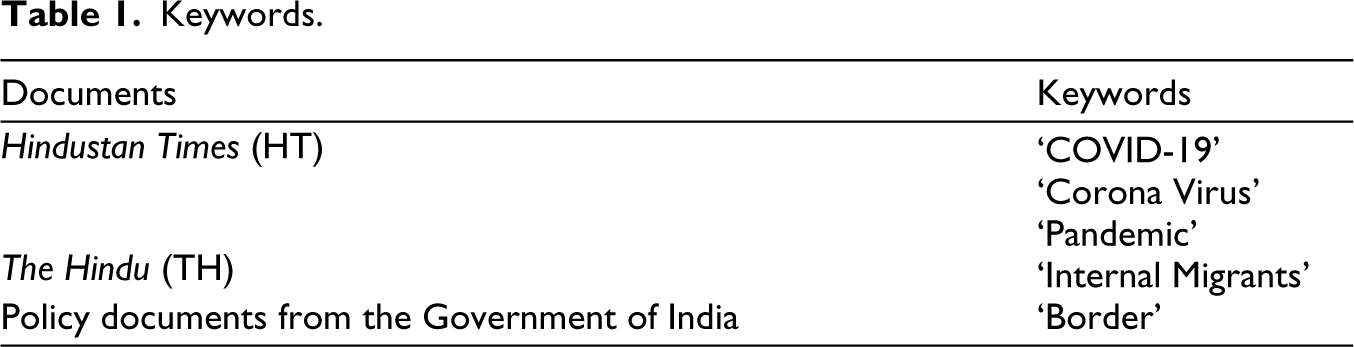
The data for this study consist of narrative lived experiences of internal migrant workers during the pandemic that appeared in newspaper reports after the first lockdown in India on 24 March 2020. Data were collected from two leading English newspapers in India, namely Hindustan Times (HT) and The Hindu (TH), by retrieving articles and stories that were published between March and August 2020, when the migrant exodus became a nationwide crisis. The Hindu is one of the oldest newspapers in India, with a readership of around 2.258 million, while the Hindustan Times has a wider circulation, covering 3.7 million readers. We also collected policy documents released in India about migrants during this period. We used five keywords (see Table 1) to search the database, which retrieved a total of 1,175 news articles and policy documents (HT: 302 articles, TH: 875 articles, policy documents: 70) relevant to the study during this period. Data were collected between January and March 2022.
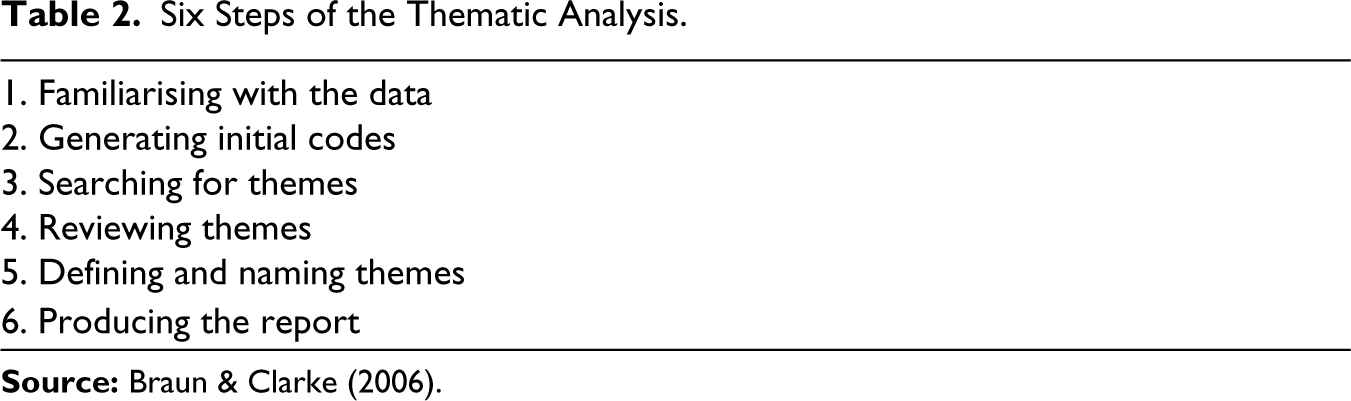
We conducted an inductive thematic analysis of contents following the six-step guide proposed by Braun and Clarke (2006) as shown in Table 2.
Keywords.
Six Steps of the Thematic Analysis.
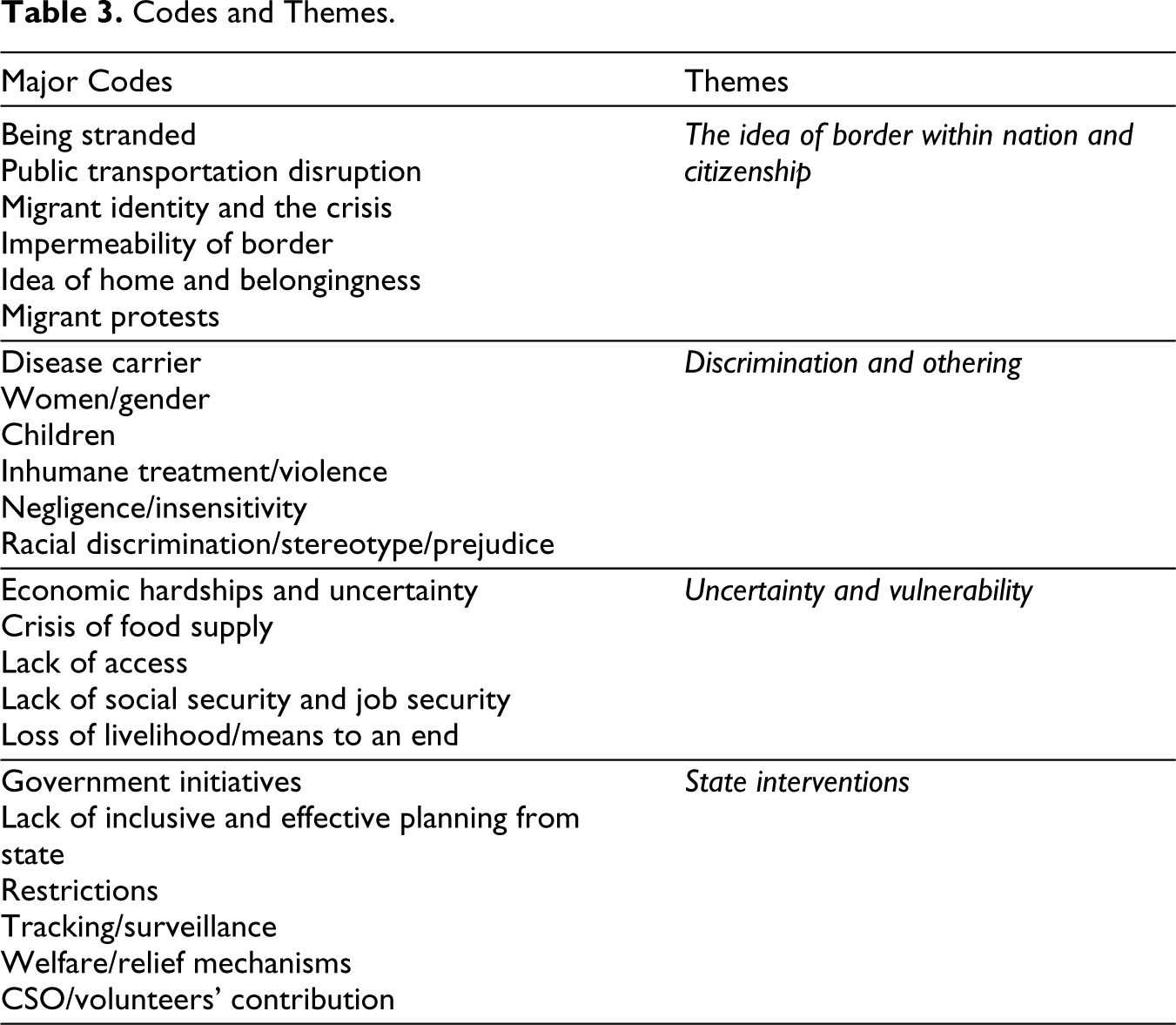
After compiling the documents collected, we created a dataset and individually read data extracts line by line. This helped us understand the focus, pattern, style of narration and the magnitude of the vulnerabilities faced by the internal migrants who were stranded during the pandemic while crossing borders within the country. From April to July 2022, we generated overarching, relevant codes from the dataset using Taguette software. We then compiled these individually generated codes and compared them to develop major themes on mutual consensus. We used this thematic map to carry out data analysis (see Table 3).
Codes and Themes.
Analysis and Discussion
The Idea of Border within a Nation and Citizenship
The COVID-19 pandemic and the subsequent lockdowns made us realise that internal borders within the country have not vanished and that they became rigid and impermeable during the pandemic and, in addition, functioned as a tool of surveillance and control, affecting the rights and well-being of vulnerable citizens. During the lockdown period, the majority of articles in the select newspapers discussed border issues faced by internal migrants in India. There were stories about stranded migrants, disruptions to public transportation, protests by migrants and migrant identity crises, which highlighted the impermeability of borders and the idea of home and belonging.
People tend to develop belongingness towards their identities. Home is one among them, which is identified as a safe place of one’s own (Antonsich, 2010; Yuval-Davis, 2006). Home has more to do with identity and security than its physical meaning, structure and ownership rights. Therefore, the lockdown slogan of ‘stay home, stay safe’ was paradoxical to the stranded internal migrants. On the one hand, they lost the means of livelihood in the destination state, with many of them struggling for food and other basic amenities, on the verge of being thrown out of their rented settlement. On the other hand, borders across states were closed so that they could not go back to their ‘homes’.
Orders to stay home have mixed connotations for over 100-Million circular migrant workers in India because “home” is usually the native place and getting there will be of utmost priority. (Tumbe, 2020, March 26)
At this juncture, with the shutting down of offices, shops, restaurants, construction sites and hotels, coupled with transportation disruption, panicked migrants were compelled to walk thousands of kilometres to reach their native hometown as a last resort (Tripathi & Sood, 2020). There were pregnant women, children and the old and elderly, relentlessly walking under the scorching sun, with the hope of reaching home. Some of them died, some delivered babies on the road, and some faced inhuman treatment from the police. Many of them were stopped by the authorities at the border. One such out-migrant from Uttar Pradesh lamented:
We travelled over 1,000 kms with little to eat and drink in this scorching heat and now when our homes are barely hundred kilometers away, we are being told we can’t move ahead. (Hindustan Times, 2020, May 18)
Another migrant, a carpenter aged 21, highlighted that the crisis during the pandemic, in many sorts, resembled the mass exodus between borders during the partition of India:
Borders are created within the country; people are moving like cattle; there are checkpoints everywhere. And all is uncertain now, like at the time of Independence. (Yadav, 2020, May 17)
Similar to belongingness towards home, ‘belongingness towards a nation is reaffirmed through citizenship’ (Augustine, 2016). Citizenship ‘is more than the definition of a relationship between the individual and the state—it is a relationship of intimate belonging that is “multi-layered”, spatially and culturally shaped and is both abstract and specific’ (Kannabiran & Tella, 2022). A 51-year-old migrant who reached his native state Bihar lost his wallet containing all identity cards and money while catching a Shramik train. He responded sitting in a shelter camp: ‘Now I am an identity-less Indian’ (Tewary, 2020, March 30). This statement echoes the complexity of being a migrant citizen in the country, because even otherwise, internal migration in India creates various frictions for migrants as soon as they cross the boundary from the source state to the destination.
The first impediment of being an internal migrant is being ineligible to access subsidised food rations and other welfare schemes in the destination state. All the entitlements are linked with the proof of residence, which indicates permanent residence, and even otherwise, living arrangements for most of the internal migrants are mostly irregular (Agarwal, 2022). Poor migrants are often left with a sense of temporariness attached to residence in both origin and host states (Shivanand, 2019). Since the majority of the population (90%) belongs to the informal sector, the issue of migration within the country is aggravated as people move across borders. This was evident during the lockdown.
The COVID-19-induced lockdown affected both the health of the population and the economy of the country, and migrants were entangled in both (Rajan et al., 2021). It was visible that during the pandemic, there was a lack of coordination between states in accommodating migrants. State-specific frameworks also varied, which was reflected in their response towards the migrant crisis. News reports mostly covered the responses of the states with the highest number of in-migrants and out-migrants:
States are not accepting their own people and borders have been blocked. To avoid this, the migrant workers will be taken to shelter homes and provided food. (Assainar, 2020, March 30) The Delhi–Uttar Pradesh (UP) border saw an uptick in reverse migration to the country’s most populous state, as hundreds of workers continued their march home after their livelihood options dried up and savings were exhausted amid the 21-day nationwide lockdown that started Wednesday to tackle the spread of the COVID-19 outbreak. (Tumbe, 2020, March 26)
Migrants carried out protests in some places against the lack of information or misinformation, ill-treatment from employers and authorities, uncertainties with livelihood and fear of being stranded. Rumours and fake news regarding transportation resulted in many migrants rushing to nearby railway stations with the hope that they could catch a train to their native land. Coupled with the lack of communication, fake scary news about the disease exacerbated the anxiety of migrants. There were also political motives for spreading the misinformation.
Discrimination and Othering
Narratives of migrants also illustrated how they are ‘othered’ and discriminated as outsiders and ‘second class’ citizens. The purpose of othering ‘is to reinforce notions of our own “normality”, and to set up the difference of others as a point of deviance’ (Grove & Zwi, 2006). For example, in the past few years, internal migrants have mostly been represented in cinema and other popular media in regional languages as criminals or subjects of mockery (Nadukkandiyil & Sumesh, 2023). These xenophobic representations affected cultural integration and showed that opportunities for native people were threatened. Even the police keep a special watch on areas where migrant workers live in groups.
Migrants working in the informal economy, many of whom are footloose workers, belong to the lower strata of society in terms of caste and class. In addition, many of them face racial discrimination. The demarcation of ‘us’ and ‘them’ is very strong in such a way that even when someone is sympathetic towards the migrant crisis, migrants’ movement is understood as ‘chaotic’ against ‘the notions of a common public good’ (Collins, 2021) put forth by the state authority. A young migrant woman from Manipur mentioned:
Before the lockdown, they used to call us Nepali, chinki, momo or chowmein, but now they look at me and say, ‘Go corona’ or blame me for eating animals that caused the spread of the virus, shopkeepers tell me sarcastically to go home and that they will deliver the food to us. (Rosario, 2020, March 31)
During the pandemic, these discriminations worsened as migrants were ‘othered’ as disease carriers as well. The xenophobia that ‘the migrant is disposable, subject to (even more) heightened security, and racialised as the source of pathogenic risk’ (Collins, 2021) is prevalent all over the world, thus stamping refugees, asylum seekers and forced migrants as disease carriers. The COVID-19 pandemic reinstated this bias and discrimination. From the narratives, it is evident that most of the migrants faced discrimination and isolation during the pandemic not only from the people belonging to the migrated city, the police, and authorities, but also from their neighbours and locals in their native. A family in Bihar ‘where a migrant worker had returned were not allowed to access their own food stores and take water from the communal hand pump and were forced to depend on water used by cattle’ (Sengupta & Jha, 2020). The fear of ostracisation was evident in migrant narratives:
My neighbours won’t definitely feel happy to find me staying near them. Moreover, my family members will be in trouble if I get into my house. (Barik, 2020a, June 1) Moreover, there is every chance of fellow villagers boycotting my family. Instead of undergoing such mental trauma, it is better to keep earning away from home and consider returning Odisha after normalcy is restored. (Barik, 2020b, July 26)
Further, they faced inhuman treatment on their way home. Dehumanising individuals through ‘othering’ and outright discrimination targets their dignity. A video from Uttar Pradesh went viral during the pandemic, where migrant people, including children, ‘were made to squat on a road and sprayed with chlorine-mixed water’ (Tariq Khan, 2020, March 31). Some migrants from Andhra Pradesh commented: ‘Hundreds of workers are walking on roads for more than a month, and the officials did not even offer us a packet of biscuit. Instead of helping the poor labourers, the police are beating us mercilessly’ (The Hindu, 2020b, May 17). There were also many reports of migrants being caught by the police and sent back to where they had started. Beating and humiliation by the police was reported by many migrants.
Uncertainty and Vulnerability
The uncertainties faced by migrants made them more vulnerable. They completely or partially lost their jobs and means of livelihood. Many migrants ‘faced wage theft and retrenchment by their employers’ during the lockdown (Foley & Piper, 2021; Rajan & Bhagat, 2021), which made them ‘workless, wageless and homeless’ (Khan & Arokkiaraj, 2021). Many landlords demanded the eviction of rented migrants soon after they lost their jobs. Amidst such a crisis, ‘the concept of social distancing bears no meaning for the migrants because of the persistence of even more pressing and nagging problems of insecurity and hunger’ (Jesline et al., 2021). Returning to their native land did not offer them any livelihood mechanism there. They may have to migrate back after the pandemic is over, but several news reports mentioned that many shops shut down during the lockdown may not be reopened, considering the economic crisis. This will also mean that many migrants will lose their jobs forever. This is a concern expressed by migrants as well as their employers:
So there is no point going back as long as you have the job. If you lose the job then, of course, there is no point in hanging around here. (Praveen, 2020, March 23) There is a massive labour shortage plaguing the construction sector in the district and the State, and there is tremendous uncertainty on when these migrant labourers will return. (Banerjee, 2020, June 1)
As migrants had meagre savings, they could not survive for long without a job. The majority of migrant narratives discussed economic uncertainty, job insecurity and making ends meet:
Most of us work here at tea stalls or food joints. Since everything is shut, our employers have asked us to come back only after things get normal, as they don’t have money to pay us. Since buses and other modes of transport are not available, we have decided to walk to reach our homes. (PTI, 2020, March 25) I had to take a loan to buy the tickets. There is no work here and even two meals a day has become a problem. (Kidiyoor & Bhardwaj, 2020, May 1) It has been five months since we got paid by the builder. We have even filed a police complaint. There are about 250 of us stuck in the colony, depending on government ration and unable to go home or lead a decent life by getting paid for the work we put in. (Deepika, 2020, May 7)
Apart from the uncertainty of life, the greatest challenge migrants faced was finding a way to commute to their native place. After one month into the lockdown, Shramik trains were allotted to ferry migrants exclusively, but the process was not carried out effectively. Almost 4,450 Shramik trains carried around 6 million migrants to home. Overcrowding and the lack of availability of water and food in these trains resulted in the death of 80 migrants in 21 days (Awasthi, 2020). Some children lost their parents, some lost their education and some were left behind in hostels to continue their studies. In addition, many migrants chose to walk or cycle for miles to cross borders during this chaos. One of the reasons was ‘the poor quality of the relief camps with meagre rations and lack of facilities especially put the women and children in distress and generated a lot of psychosocial issues’ (Jesline et al., 2021). There were also reports of deaths and suicides after migrants reached their native place:
We have been working here for over one year at saw mills and hotels at different places in the city. We have been requesting officials to arrange for our return but we have not received any communication in this regard. We are even ready to walk the distance if we are provided with passes since we are struggling for food here. We haven’t had proper food during the lockdown neither have we received any rations. Our employers aren’t also picking up our calls. (The Hindu, 2020c, May 17)
There were very few narratives and stories of women migrant workers. Further, the available narratives were about assisted women migrants who were also workers along with their partner. There are no stories of single-woman migrants and their pandemic experiences.
State Interventions
Due to the varied nature of internal migration, both data and understanding of internal migrants are inaccurate and under-documented (Economic Division of the Ministry of Finance, 2017; Rajan et al., 2021). The definition of migrants and data collection tools do not cover all types of migrants such as seasonal and circular migrants. This was evident in the planning and execution of the first lockdown. The approach of the central government and that of state governments was different in dealing with the migrant crisis during the first wave of the pandemic.
For example, the eight rounds of Migration Surveys (1998–2008) conducted in Kerala gave the state an overall idea about its migrants, which helped the state to better prepare for the pandemic (Rajan, 2020). Other states of India such as Goa, Gujarat, Punjab and Tamil Nadu that conducted migration surveys following the Kerala Migration Survey also seemed to deal better with the migrant crisis. This indicates that data availability of interstate migrants at the national level could have been reflected in the policies and action and ultimately prevented the crisis of the migrants.
At the same time, some states closed down their borders and did not provide adequate facilities to shelter migrants. The police and authorities were intimidating and indifferent to stranded migrants. The strict monitoring of citizens, in many places, turned into community surveillance and violence, ‘flouting the rule of law in the name of fighting the pandemic risks’ (Sengupta & Jha, 2020). In this regard, the UN High Commissioner for Human Rights issued a warning against the pandemic turning into a ‘human rights disaster’ (Agrawal, 2020). On the other hand, while migrants received hostile treatment in general, there were many civil society organisations and volunteers that helped them with food, shelter and assistance. Many migrants mentioned that they received food and support from private entities, charitable trusts and volunteers, rather than from government officials.
It is not accurate to state that the government failed to respond to migrants during the pandemic. However, the lack of inclusive planning and the insensitivity of certain authorities, police and administration to cater to the needs and requirements of migrants further complicated it. The extent of the migrant crisis was more than the system could anticipate. For example, the Ministry of Health and Family Welfare (MoHFW) mentioned in a document that migrants need to be treated with dignity and respect (Ministry of Health and Family Welfare, 2020a, 2020b). Considering their mental exhaustion and anxiety due to the pandemic, ‘MoHFW suggested that psychosocial support need to be rendered to them in temporary shelters and quarantine centres’ (Rajan et al., 2020). The MoHA and Ministry of Railways announced food, shelter, assistance and other relief measures to stranded migrants under various schemes such as Gareeb Kalyan Rozgar Abhiyan, The Atma Nirbhar Bharat Scheme, Pradhan Mantri Awas Yojana and Shramik special trains. The National Commission for Women released an advisory to the Ministry of Women and Child Development aimed at the safety and security of female migrants.
The Didi Helpline initiated by the Jharkhand State Livelihood Promotion Society provided verified information to migrants and helped in bringing back stranded out-migrants to the state. Similarly, the Bihar State Health Society started ‘Ummeed’, a counselling programme for migrant labourers (Sopam, 2020). Twenty-one states operated counselling helplines for migrant workers (The Hindu, 2020a, April 29). While many states closed their borders, the Chief Minister of Kerala proclaimed that migrant workers are Athidhi Thozhilalikal (meaning ‘guest labourers’) and, therefore, they should be treated with respect.
The central government had provided INR 11 billion to State Disaster Response Funds for setting up shelter homes for migrants. However, according to the International Monetary Fund (IMF) Policy Tracker, ‘overall support by the central and state governments through various cash and kind transfers and other measures, such as healthcare infrastructure, testing facilities and tax relief, was only about 0.2% of India’s GDP’ (IMF Policy Tracker cited in Sengupta & Jha, 2020).
Way Forward: Effective Public Communication, Inclusive Decisions and Human Rights
In light of these narratives, we wonder whether governments—both at the state and the federal levels—considered inclusive approaches in planning strategies while also considering how these strategies affect citizens, particularly the marginalised and vulnerable groups. We emphasise here that during pandemics, such as the COVID-19 pandemic, transparency and effective communication, as well as inclusive decisions based on justice, are non-negotiable ethical obligations by the state.
As community engagement and participation are essential in response efforts during a pandemic, open communication plays an even greater role, making individuals active participants. It is essential, however, that all citizens be respected and seen as respect-worthy in order for this to happen. There has been a vastly different response to disease outbreaks within different legal and constitutional traditions throughout history. Human rights have long been a priority in democratic societies. To protect the rights of all individuals, state and central governments must prevent any discrimination, especially against marginalised populations such as internal migrants (Kapilashrami & Hankivsky, 2018; Onarheim et al., 2021; Wickramage et al., 2018).
The nationwide lockdown illustrated the poor transparency in public communication and non-inclusive planning in response to the COVID-19 pandemic. The first issue was a lack of engagement with stakeholders on imposing a one-day lockdown—as a symbolic gesture—when the word ‘curfew’ was used in a public speech (Janata Curfew). The second concern is the lack of detailed discussion on strategies to address the crisis with regard to personal protective equipment and other medical equipment, relief measures for the poor and food supplies. The authorities could not communicate transparently what the lockdown would entail, how it could be managed, and what hardships vulnerable groups might face during the lockdown. As we saw in narratives, with no food, shelter or emergency medical care, many people fled by foot to their villages and families following the lockdown announcement. Third, several days after the lockdown began, the government began to offer shelter and food to migrant workers, but many had already begun their journey towards home, as all public and private transportation had been stopped. The fourth problem was that the curfew led to inhumane actions from the police (a curfew is considered a law-and-order issue); this demonstrated a failure of communication and planning. In addition, officials referenced Muslims as ‘human bombs’ and created false narratives with reference to COVID-19 cases, which further fuelled hatred and physical attacks against Muslims. Considering this, the ministry released a statement against prejudices and social stigmas and provided a list of do’s and don’ts (MoHFW, 2020).
As part of the response to the pandemic, public officials must be sensitive to the language and messages used during communication. Interventions and decisions by the public should be based on accountability, transparency, inclusivity, reasonableness and responsiveness (Thompson et al., 2006). There is no valid reason to withhold information from the public because of the assumption that the public discussion of the pandemic and its scientific uncertainty would cause anxiety or fear. It is critical that the state views its citizens as agents with capacity. Based on the narratives we collected, we identified that poor planning, inefficient logistics and ineffective implementation strategies led to a cruel situation for thousands of migrant workers in India. There is no doubt that the lockdown is necessary and that it is supported by the ethical principle of precaution in public health; it is designed to ensure the protection of the population at the expense of curtailing the individual’s freedom, liberty and privacy.
Public health interventions and communications in democratic societies should, however, be guided by the principles of least intrusiveness, transparency and fairness (Gostin et al., 2003). The state needs to carefully consider the extent to which human rights are suspended in order to be least intrusive during a pandemic. When it comes to public health interventions and communication, it is necessary to carefully analyse how strategies will affect those who are socially vulnerable and marginalised (Kayman & Ablorh-Odjidja, 2006; Uscher-Pines et al., 2007). Therefore, a thorough assessment and inclusive planning are essential (Daniels, 2000; Gerwin, 2011; WHO, 2006). When internal borders become so visible during a pandemic crisis, states should adopt an ethical approach to protect the health and well-being of vulnerable populations (Onarheim et al., 2021). It is the moral and legal responsibility and obligation of the state to provide scientific evidence, reasons and justifications for its decisions regarding public health interventions and strategies. While the precautionary principle is being invoked to limit the liberty of individuals, public health ethics and justice call for providing social safety nets to vulnerable groups as well. Building public trust in healthcare systems and the government can be made possible by making pandemic response strategies inclusive and based on justice and fairness principles.
Conclusions
Migrant narratives of the pandemic highlighted the restrictions of borders within the national border that put internal migrants into a crisis of being ‘neither here nor there’. More than an identity crisis, this revealed the extent of prejudices, discrimination, othering and alienation faced by migrants in an exorbitant form. This has deepened the vulnerability and uncertainty that internal migrant labourers faced during the lockdown period and created a crack in the socio-economic structure they were premised on. In addition to acknowledging that mobility restrictions were necessary to mitigate the COVID-19 pandemic and learning how the pandemic exacerbated pre-existing socio-economic inequities, we urge the state to practise inclusive planning and implement pandemic response strategies that are both integrated and based on justice and fairness principles.
Occupational Safety, Health and Working Conditions (OSH) Code, 2020, envisions addressing the issues of interstate migrants through self-registration, mandatory appointment letters, annual travelling allowances, mandatory and free annual health check-ups, ration facilities through ‘One Nation–One Ration Card’, mandatory state helpline facilities, etc. (Ministry of Labour and Employment, n.d.). Most importantly, the OSH Code proposes the creation of a national database for interstate migrants for effective planning and coordination towards their welfare. If this database could provide facts and figures of internal migrant workers, it would also help them to form migrant collectives that unite, unify and act as a liaison for migrant workers with various governmental and non-governmental organisations. Such collective voices could act as pressure groups that will provide better visibility and momentum to the interstate migrant population.
Footnotes
Declaration of Conflicting Interests
The authors declared no potential conflicts of interest with respect to the research, authorship, and/or publication of this article.
Funding
The authors received no financial support for the research, authorship, and/or publication of this article.