




Abstract
The oil and gas (O&G) industry has been plagued by numerous green factors that have adversely affected supply chain management practices in recent years. This study aims to examine the impact of green human resource (GHR) competency mechanisms to strengthen the relationship between green supply chain management (GSCM) practices and environmental performance (EP). Using the proposed model, the present study developed a quantitative method for obtaining data from listed O&G companies in the UAE between December 2018 and May 2019. A total of 254 questionnaires were used for the analysis. There was a significant moderating effect between EP and GSCM, with GHR competency mechanisms decreasing the occurrence of negative environmental impacts associated with O&G operations. The findings will enable HR managers to align green skills with EP in UAE petroleum companies.
Introduction
Environmental research shows that the oil and gas (O&G) industry is the largest source of increased greenhouse gas (GHG) emissions resulting in global climate change. The environmental management (EMR) system and renewable energy technologies have challenged industrial sustainability. The proliferation of sophisticated environmental practices in the latest trend of cleaner production has led to increased performance in green human resource (GHR) competency mechanisms (Alagarsamy & Mathew, 2021). The literature often uses a variety of approaches to explore environmental performance (EP) issues. One of the most common approaches is green supply chain management (GSCM) practices (Saeed et al., 2021). These studies generally employ sustainability indicators such as socio- economic development, environmental impact, institutional capacity and Sustainability Potential Indexes as popular tools to track progress towards positive EP (Baah et al., 2021; Juaidi et al., 2016; Morton et al., 2019).
Surprisingly, the studies concentrated on one of the main players responsible for supporting the EP through practices GSCM within institutions, which hold the key to EP; humans as individuals have been extremely rare. This is because the negative EP is due to a lack of green human skills, behaviours and competency activities in supply chain practices (Perera, 2013). Recent studies have identified the role of human resources management (HRM) in supporting and promoting the EP in the manufacturing sector. A broad range of studies suggests that the main drivers of professional competency include individual characteristics, behaviours, skills, knowledge, attitudes, self-reflection, employee beliefs and satisfaction, among other reasons. However, very few studies attempt to integrate green competency, human resources skill development and their combined effect on EP (UDDIN, 2021). Hence, this study bridges the gap by integrating green competency with human literature to develop a conceptual model to examine the moderating role of a green competency’s mechanism on the relationship between GSCM and EP (Juaidi et al., 2016; Morton et al., 2019). Therefore, this study examines the importance of greening human resources to strengthen the relationship between supply chain management practices and O&G’s EP. The present study examines the moderator impacts of the GHR competency mechanisms that potentially improve the relationship between GSCM practices and the GHR competency of the renewable energy industries’ performance (Saeed et al., 2021).
The present study follows Roberts’s (1997) GHR competency framework. By testing the green competencies framework, the study helps to understand the tight alignment of GSCM practices on the EP. This study aims to test the moderator impact of Green Human Competencies mechanisms on the relationship between GSCM practices and EP in the O&G sector of the UAE (Roberts, 1997).
The rest of this article is organized as follows: The first section of the study provides the objectives of the study. The second section explains the theoretical background and hypotheses development. The third section presents the method of collecting data and the sample size. The forth section shows the study findings. The fifth section shows the discussion part. The last section represents the conclusion and limitations and future research.
In line with the above introduction and the theoretical arguments drawn from the existing literature, this study examines the effect of GSCM practices on the EP of the O&G sector. It also examines the moderating effects of GHR competencies of O&G companies’ EP in the UAE. This work is a quantitative study to: ‘Examine the potential moderating effect of green human resource skills support mechanisms to test the relationship between GSCM practices and the EP of the O&G industry in the UAE’.
The relationship discussed in the present research is significant as it helps green O&G supply chain professionals and operation management decision-makers enhance the EP challenges in emerging economies. In particular, the following is the research question or problem statement: ‘What is moderating impact of the green human resource competency mechanisms to strengthen the relationship between the O&G supply chain management practices and EP in the UAE?’
Theoretical Background and Hypotheses Development
Theoretical background and hypothesis development deliberate on GSCM with EP, GHR competency mechanisms, hypothesis development for study and the conceptual research framework.
Green Supply Chain Management and Environmental Performance
Several companies in the O&G industry have adopted the approaches of sustainability, social corporate responsibility and compliance within their EP, and consequently, rules and legislations guiding their environmental approaches. However, over the last few years, new global environmental regulations and standards have influenced the core values and strategies of O&G corporations (Feng et al., 2018). It is here that the concept of ‘green’ management becomes pertinent. It also supports GHR mechanisms that could improve GSCM practices and GHR and skills practices in renewable energy industries (Ara et al., 2019; Jain & Nagpal, 2020). Therefore, the study provides a comprehensive performance assessment that takes ecological and environmental behaviour into account in GSCM practices and green logistics (Khaksar et al., 2016). In addition, this study explores the underlying relationships between GSCM practices, GHR competency mechanisms and the EP of the O&G industry in the United Arab Emirates. Finally, the study concludes with findings, discussion, limitations and recommendations for future research.
Green Human Resource Competency Mechanisms
Greening human resource competencies are defined as the green soft-side knowledge of GHR competencies that is elicited from implementing GSCM practices to meet the environmental regulation requirement for improving sustainable business (Alnaser et al., 2022; Feng et al., 2018). Therefore, these practices of greening human resources use some useful mechanisms to link these practices towards successful EP (Bon et al., 2018). GHR competency mechanisms are considered as other industrial environmental measurements that enhance the corporate supply chain management to promote GHR competency development among manufacturing operations, which have environmental concerns regulation because of their products and operations (McGuire & Germain, 2015).
The GHR competency mechanisms link the moderator’s mechanisms in the relationship between the green supply chain and EP. In the O&G sector, there is a paramount need for highly efficient human resources with a focus on EMR capability. Thus, it is necessary to know more about greening social skills and competencies.
The present study defines GHR competencies as knowledge and skills that support operating management to enhance the manufacturing sector’s EP (Nicholson & Sahay, 2008). Both studies by Frank et al. (2016) and Landrum and Ohsowski (2018) asserted the effects of green supply chain practices on corporate EP in the petroleum industry. They provide the category impacts of O&G industry outcomes with some environmental themes (like climate change, human toxicity, acidification and eutrophication). They also highlighted new key performance indicators regarding the positive outputs of the O&G EP. Therefore, Frank et al. (2016) found that these indicators’ guidelines would guide them to correctly select, define and measure the O&G environmental indicators when these companies attempted to use such guidelines.
Hypothesis Development for Study
GSCM Practices and EP
The increasing concerns about the global ecological protective behaviours and inadequate O&G clean and safe production knowledge lead the decision-makers of the GSCM to adopt greening human resource competency GHR competency mechanisms to enhance EP (Nejati et al., 2017; Zaid et al., 2018). Besides, GHR competency mechanisms contribute to the outcomes of GSCM practices. Using these mechanisms in manufacturing companies will support GSCM practices in achieving their objective successfully, including production cost reduction, improving the health and safety consistency and standards of the operations, increasing concerns about the ecologically protective workplace and boosting intellectual capital, green talents, green teamwork and green tacit knowledge production (Bon et al., 2018; Longoni et al., 2018; Nejati et al., 2017; Wu et al., 2012; Zaid et al., 2018).
Following the preceding, the first hypothesis of this study was formulated as follows:
The sub-hypotheses are as follows:
The extent to which GHR competencies impact the organization’s EP was beyond the scope of previous literature. However, few studies have included some of the green human skills mechanisms that have improved EP, and this is the first focus of the present study.
Despite extensive studies on the effects of GSCM practices and the GHR competencies on positive environmental impacts in different manufacturing industries around the globe (Dağ et al., 2019; Longoni et al., 2018; Nejati et al., 2017; Webb & Liu, 2020; Zaid et al., 2018), the present study examines the moderating effect of the GHR competency mechanisms in enhancing the relationship between the GSCM practices and the O&G EP in the UAE.
To achieve true and lasting environmental sustainability, the literature proposes that an innovative fusion of GHRM and GSCM practices and policies is needed (Jabbour & Jabbour, 2015). This literature concluded that the material reduction of emission outcomes in the O&G sector and Eco-D are the most effective strategies for sustainable performance of these industries. However, the scholar’s arguments about whether the GSCM practices affect the EP positively or negatively are still controversial, especially in emerging O&G markets (Frank et al., 2016) and that is the second focus of the present study.
Moderator Link of GHR Competency Mechanisms
The literature on O&G studies reveals that green business supply chain management practices contribute to the green intellectual capital competency mechanism. Most of the previous studies discussed the functions of the GHR mechanisms and their relationship with EP, including the greening selection processes of suppliers, procurement and customers. The present study highlights the GHR competency mechanisms as soft antecedents’ human guiding EP indicators in O&G companies by presenting two green human competency mechanism sets as follows (Hezlett & Gibson, 2005; Zhu & Zhang, 2020):
Intangible Practices Green Competencies’ Mecha- nisms (IPGCM): Green tacit knowledge and green teamwork values (Ahmad et al., 2017; Santos et al., 2019; Xie et al., 2020; Yong et al., 2019; Zaid et al., 2018). Tangible Practices Green Competencies’ Mecha- nisms (TPGCM): Green empowerment and green training.
The literature states that GSCM practices are the main drivers for encouraging GHR competencies for positive EP (Jermsittiparsert et al., 2019). However, these studies did not identify which of these mechanisms was the most important for reducing carbon emissions. Therefore, empirical evidence is required to examine how innovation in green processes and innovation in green products affect the EP of organizations (Muma et al., 2014). Therefore, the second hypothesis of this study states that:
The Conceptual Research Framework
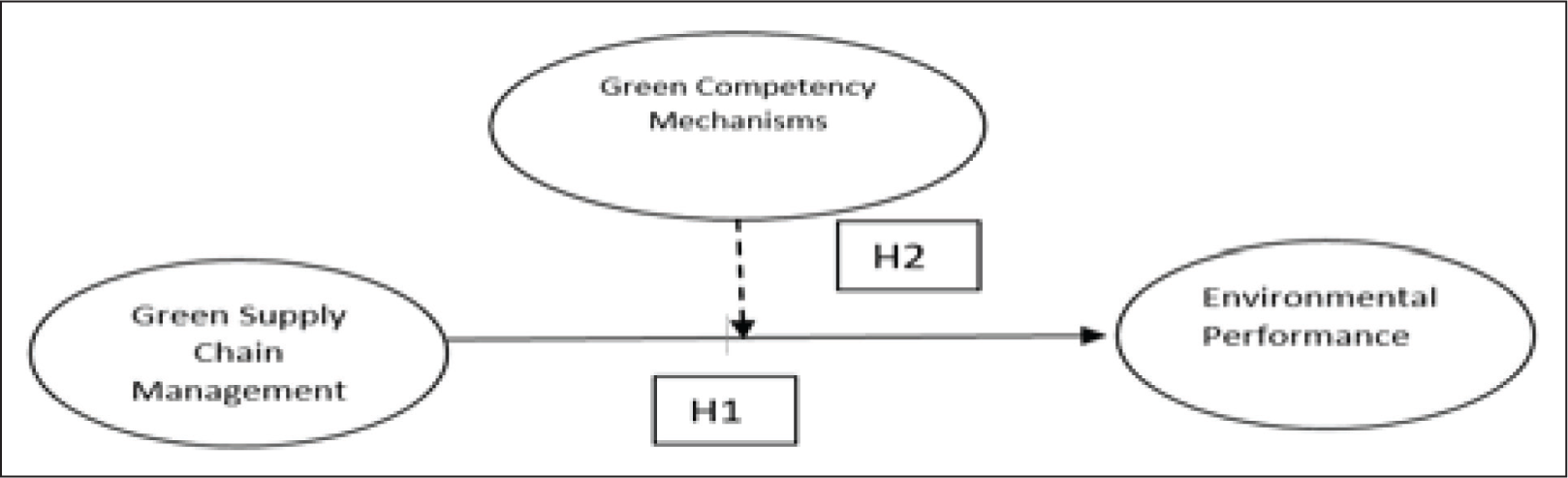
The originality of the present model is to investigate the moderating effect of GHR competencies to strengthen the relationship between GSCM practices and the EP by moderating the impact of the GHR competency mechanisms, as shown in Figure 1.
The Research Model.
Methodology of Study
To fill the present research gaps, test hypotheses and achieve the study purpose, a quantitative methodology has been adopted using a multi-respondent survey, which can obtain the best understanding response and shared meaning perception from the research respondents. The methodology of study is based on a quantitative approach. The study implemented a survey method to empirically examine GHR competency as a moderating impact on the relationship between GSCM practices and the EP.
Data Collection and Respondents
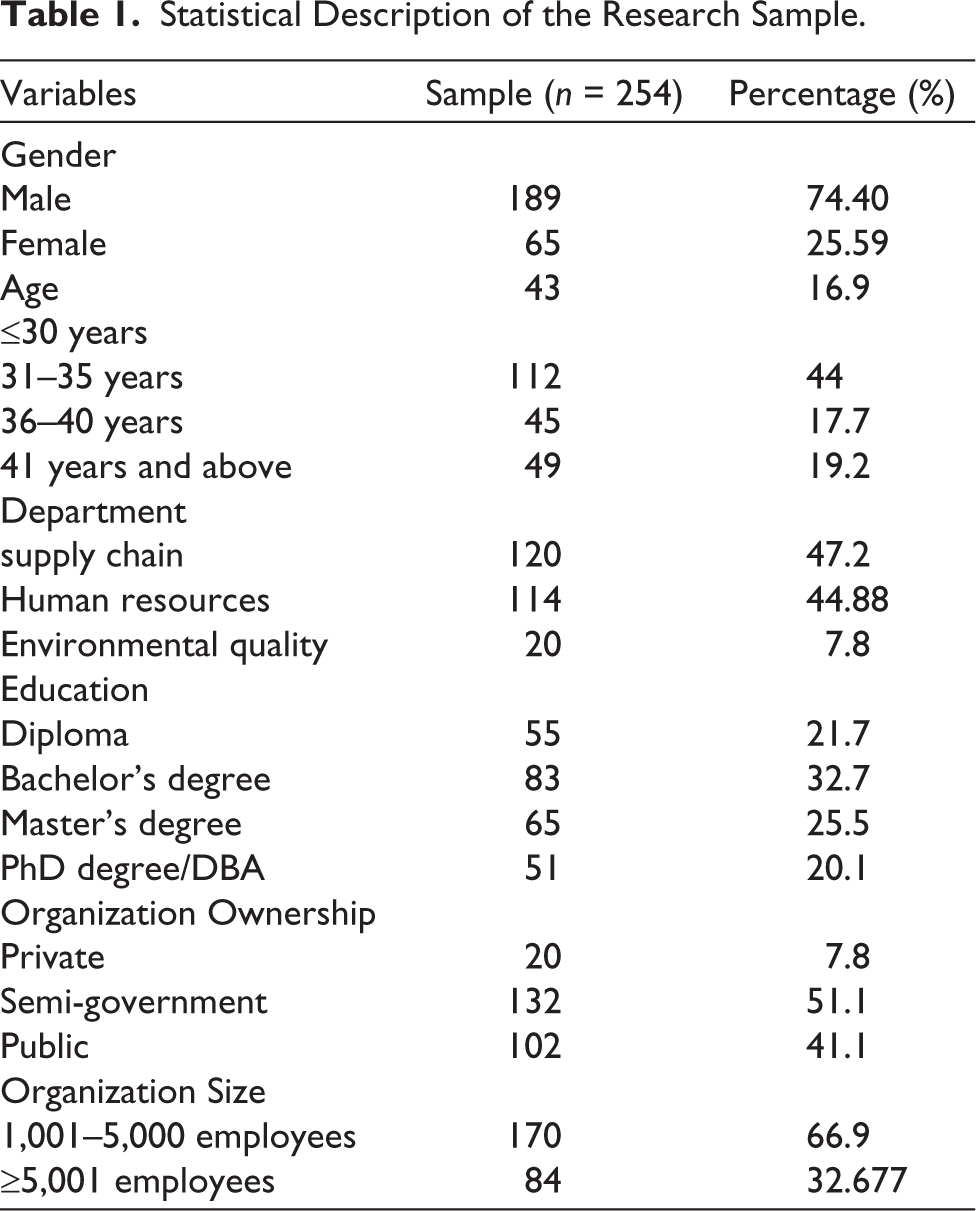
The selection of the respondents was based on the fact that they had the best knowledge and experience of the impact of the O&G supply chain on the EP. The adopted sampling technique is the proportionate stratified random sample, in which each member of the sample size is randomly selected from every layer. A total of 254 respondents are shown in Table 1.
Statistical Description of the Research Sample.
Survey and Data Collection
This research used mixed modes of data collection for the survey by mail, email, electronic survey (Survey-Monkey software design), phone and in-person. In the case of despondency questions from any senior manager, the study measurement of the effect can be based on feedback from other managers in the same or different departments (Guerci et al., 2016). The strength of the present survey methodology as a research data collection method is related to its versatility in offering a detailed overview of the views or behaviours of the existing samples towards greening competency through observing the characteristics of the O&G companies in the UAE by GSCM practices. The content validity, readability and brevity were done by distributing the research questionnaire to academics and practitioners in the O&G industry, and the feedback on the instrument improvement was considered.
Research Sample
The present research uses a random sample of three senior managers of central departments, including supply chain management, HRM and environmental quality management in O&G companies. Employee sample sets were subjected to three separate surveys for each department. The population of the study covers all the listed UAE O&G companies. The companies’ data were collected from the governmental and federal policies of the UAE in the January 2019 GFP. The present research sampling was conducted from November 2018 to March 2019. The study uses two official reports. The Oil & Gas of the UAE issued the first group of reports, such as (Mezher et al., 2011; O’Hagan & Green, 2002; Said et al., 2018).
The selected O&G companies in the present sample have complied with the international standard for an effective EMR system (ISO 14001 certification in Dubai, Abu Dhabi, Ajman, Sharjah, Fujairah, Ras Al Khaima and Umm Al Quwain) and the international standard for the discrepancy between the human behaviour taken or omitted and their failure in the industry with the ISO 14224 certification (Griffiths, 2017; Said et al., 2018).
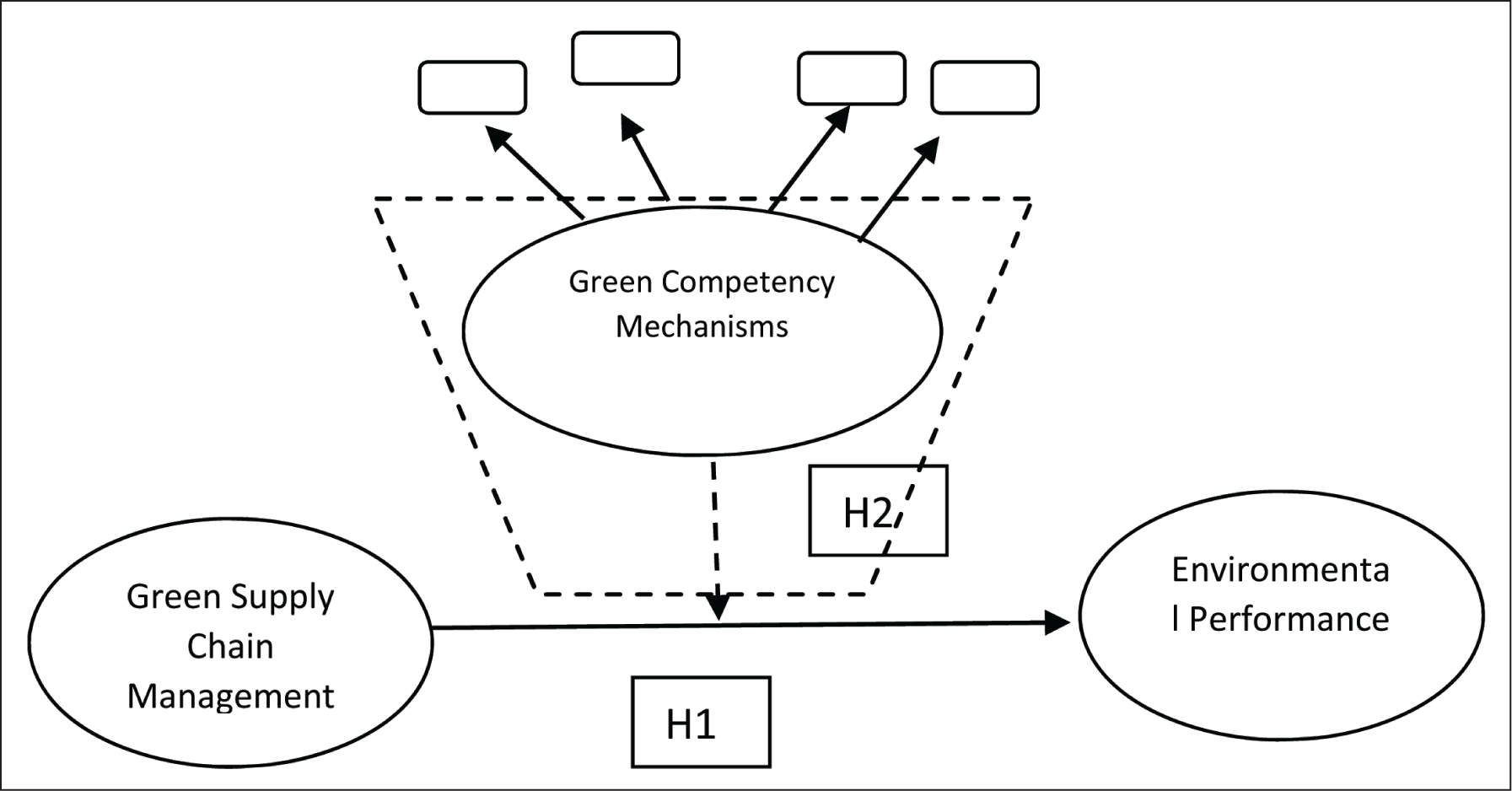
This list of companies in the UAE O&G industry is assumed to implement GSCM practices and green competency mechanisms to meet the target of the positive EP (Pavlova, 2019; Yong et al., 2019). As a result, this study focused solely on O&G-listed offshore and onshore companies in the UAE with ISO 14001 and ISO 14224 certifications. The conceptual research framework proposed in Figure 2.
The Conceptual Research Model.
The Validity of Research Instrument
Several steps were used to ensure that the content of the research instrument was clear and valid.
First, for green worker competency, current research has established the clear green competency processes of green training and empowerment of GHR competency. There were 20 objects, including 12 elements related to tangible measurements of green competency, in the collection of standardized questionnaires. Second, for GSCM practices, based on previous research, 25 chosen GSCM indicators have been adapted (Chen, 2008). A total of 20 ecological breakthrough items, comprising 27 GSCM practices items and 16 sustainable success items.
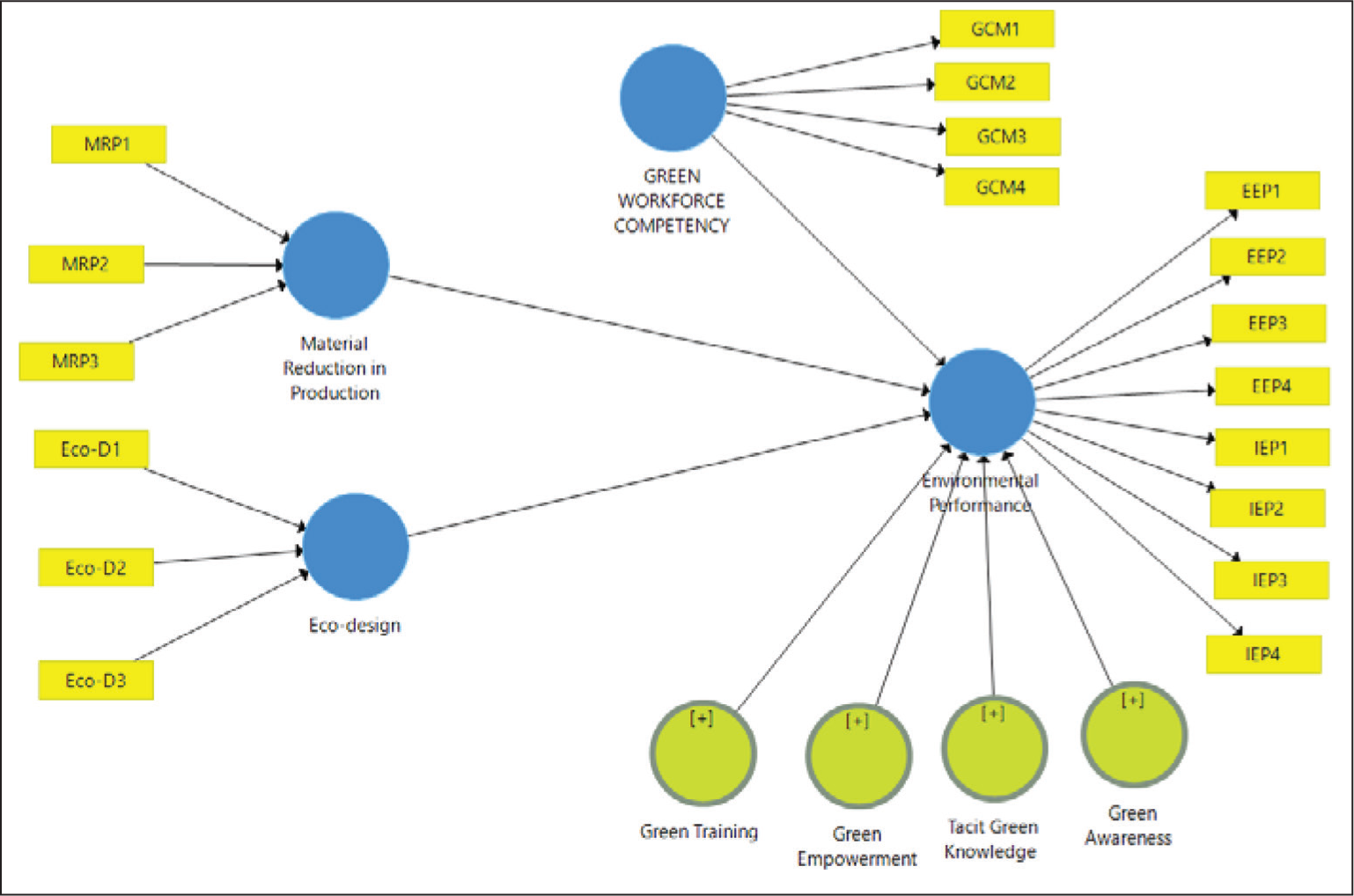
The metrics were classified on a five-point Likert-type scale in the current study variables, which are agreed-to-scale points in achieving optimal responses and perceptions in social data. The Likert-type scale of five points ranges from 1 (strongly disagree) to 5 (strongly agree). The current study’s proposed model, as shown in Figure 2, contains two exogenous variables representing green competency mechanisms, two exogenous variables representing GSCM practices first-order calculation system model dimensions and two endogenous variables representing environmental output dimensions (EP). The composite reliability and the alpha coefficients of the Cronbach were used in the reliability study, while the validity analysis included discriminant validity and even convergent validity of the object.
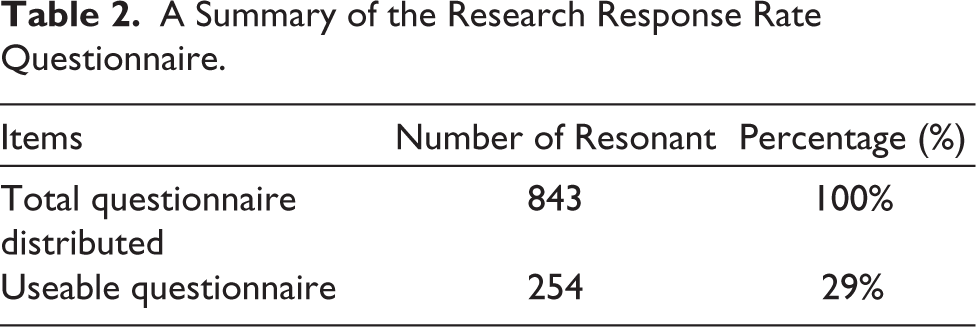
Demographics of respondents: Based on data from 2017, out of 2,150 companies who got both ISO 14001–14224 certifications in UAE (ISO, 2017), only 281 are petroleum companies. The sets were allocated to all 281 petroleum firms and their subsidiaries in the seven Emirates of the UAE, considering the small sample frame and the probability of a poor answer rate from the mail and electronic survey and the questionnaire. A total of 869 questionnaire sets were distributed in this sample, and the study effectively collected 254 questionnaire sets of approved answers, reflecting an answer rate of 29% (254/869 = 0.29%).
Primary data analysis and results: This present research method was based on the approach of SEM using smart PLS 3.0 software. SEM is considered a second-generation multivariate data analysis method (Hair et al., 2013), produced by two types of SEM applications (covariance variance-based [CB-SEM] and variance-based SEM-PLS-SEM). PLS-SEM seems to be an appropriate method to assess the results of this research.
Non-response bias and common method variance: A comparison of the initial and late responses was made to ensure their certainty (Hair et al., 2017). All adopted variables in this study were assessed, and there were no notable variations (at a = 0.05) between the initial and late responses. This result suggests that there was no response bias in this study. The common-method variance was sorted out since the data were gathered from the same sources of respondents from the O&G industry.
The Harman single-factor test was initially used to assess the common method variance statistically (Hair et al., 2017). First, the result exposed the existence of multiple factors after the entire research measures were loaded into an exploratory factor analysis (EFA). So, it is impossible to have a common method of variance probability biased measurement among the research variables. Second, common method variance should be well anticipated in measuring the correlational levels of the variables. The correlation analysis indicated no extreme correlation coefficient among the present research variables. Then, there was no problem related to the considerable aggregate of common method variance in the present research.
Analysis and Findings
The PLS can estimate the structural model and the correlation among the measurement models of the research. It can predict the endogenous variables of the research (GSCM practices).
Also, it is most preferred in multivariate analysis regarding social research.
Table 2 contains a summary of the research response rate questionnaire
A Summary of the Research Response Rate Questionnaire.
Since the present study examines the moderate link of GHR competency mechanisms between GSCM practices and EP, the authors use the bootstrapping results to get the moderating relationship between GSCM practices and the EP coefficients of the structural model. By specifying the pathway model used in this study, reflective research constructs (GSCM practices, green competency and EP) and their indicators were identified. In Table 3, the study presents the GSCM practices construct’s reliability analysis and convergent validity of the research questionnaire.
GSCM Practices Construct’s Reliability Analysis and Convergent Validity of the Research Questionnaire.
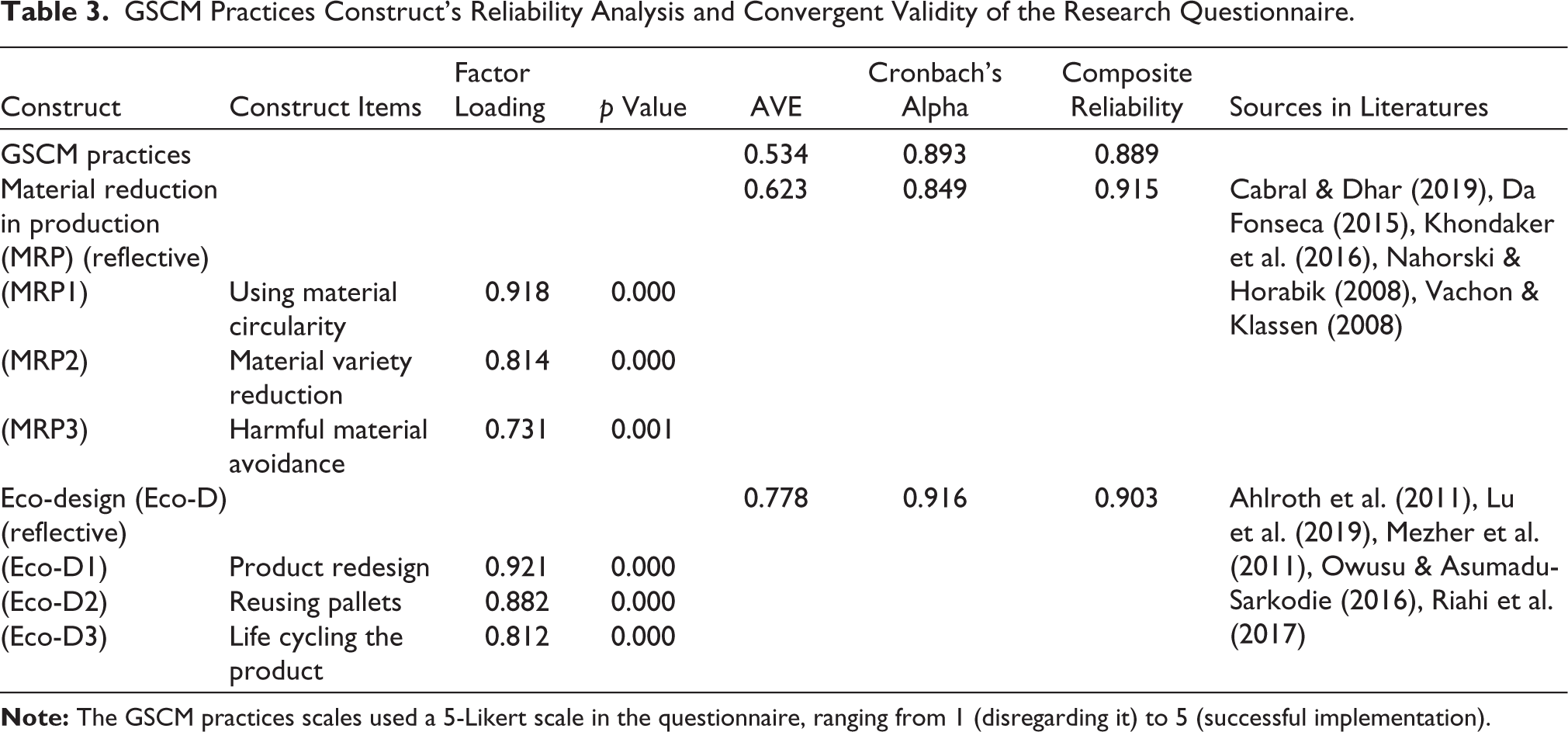
The present study shows, in Table 3, that the GSCM practices endogenous research constructs GSCM operationalized as a reflective first-order measurement model with two reflective dimensions: (a) material reduction in production (MRP); and (b) Eco-D as seen in the conceptual research framework in Figure 2 (Agi & Nishant, 2017; Bon et al., 2018; Goh & Balaji, 2016; Nejati et al., 2017; Wu et al., 2012; Zaid et al., 2018). Table 4 shows that the moderator research constructs (GHR competency mechanisms) of this study functionalized as a reflective first-order measurement model, as seen in the conceptual research framework in Figure 2 (Agi & Nishant, 2017; Bon et al., 2018; Goh & Balaji, 2016; Nejati et al., 2017; Wu et al., 2012; Zaid et al., 2018).
Reliability Analysis of the Two Green Competency Mechanisms (GCM) and Converging Validity of the Research Questionnaire.
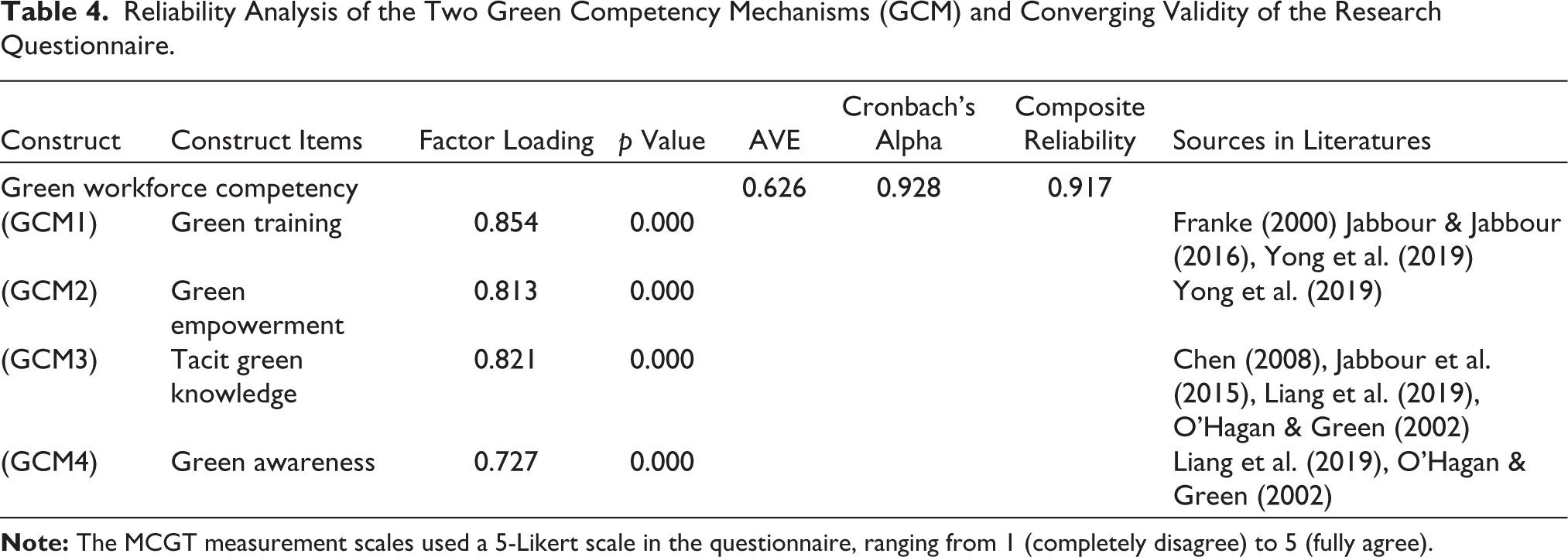
Two reflective dimensions as first-order constructs measure the reflective first-order measurement model of green workforce competency: (a) MRP; (c) Eco-D; (c) internal environmental management systems (IEMS); and (d) external environmental management (IEM; Agi & Nishant, 2017; Bon et al., 2018; Singh et al., 2019; Yong et al., 2019; Zaid et al., 2018). Table 5 shows the EP constructs operationalized as the reflective first-order measurement model are also modelled as the reflective first-order measurement model with two dimensions: (a) external EP (Nicholson & Sahay, 2008); and (b) internal EP (Nicholson & Sahay, 2008), as seen in the conceptual research framework in Figure 2 (Frank et al., 2016; Longoni et al., 2018; Said et al., 2018; Singh et al., 2019). The composite reliability values ranged in Tables 4 and 5 from 0.889 to 0.931, which were >0.7 the benchmark values (Hair et al., 2017). AVE is used to determine the convergent validity (ranging from 0.524 to 0.778) above the minimum cut-off value of 0.5 (Hair et al., 2017).
Environmental Performance Reliability Analysis and Convergent Validity of the Research Questionnaire.
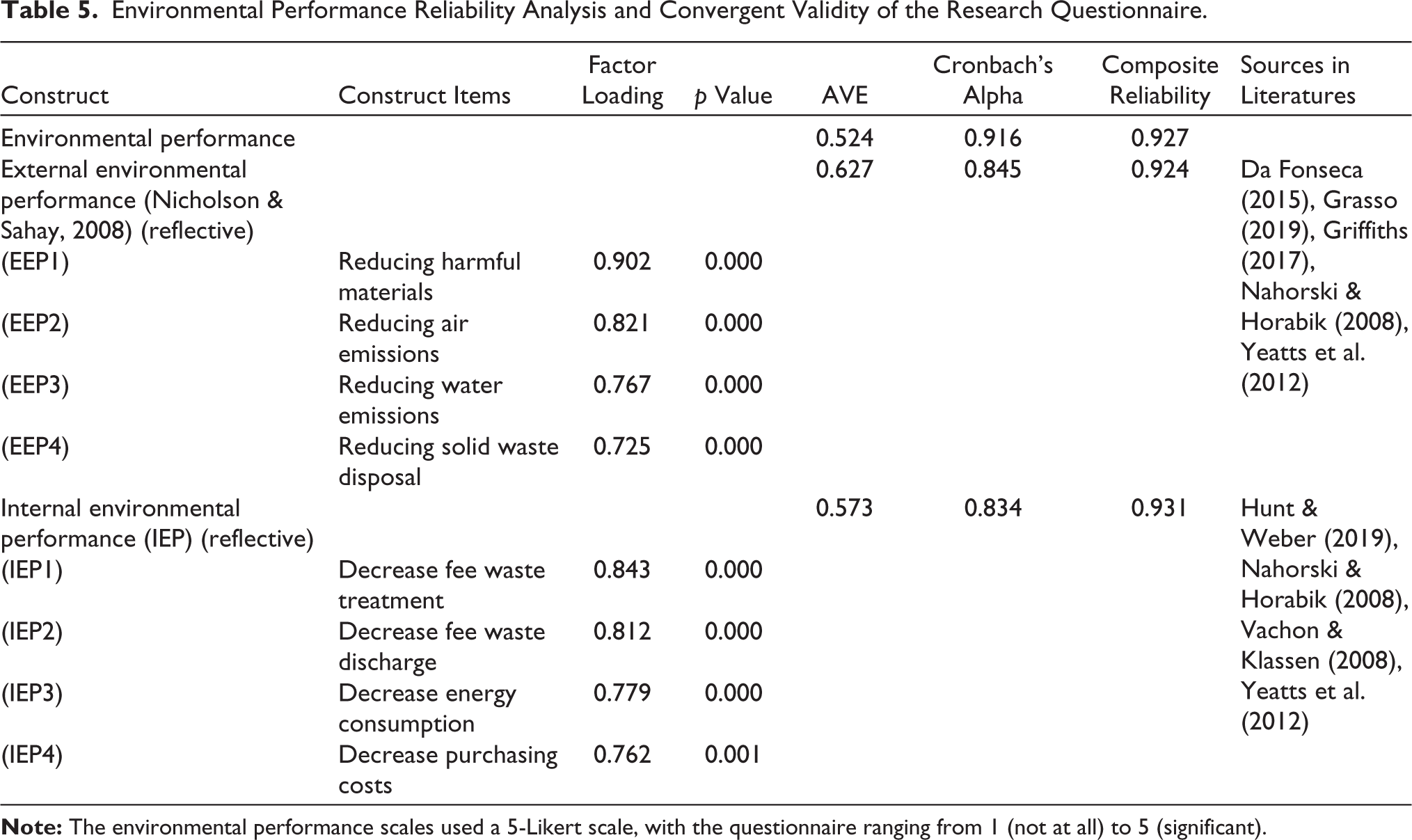
Despite the previous studies, the EP constructs as a formative model in the present study were not positively caused by only one reflective first-order measurement model but also by moderator research constructs (GHR competency mechanisms) as well.
The Measurement Models
Reliability and Convergent Validity Review
Cronbach’s alpha coefficients and composite reliability were calculated when considering internal accuracy and reliability to assess the adequacy of each analysis and the measurement model (Hair et al., 2013). High internal accuracy is demonstrated by the obtained Cronbach alpha and composite durability values (see Tables 2–4). The resulting factor loads were agreed upon for the GSCM practices, green workforce competency and EP constructions, which suggested converging validity values for articles and first-order loads.
In line with Hair’s (2017) recommendations, the adapted items in the research instruments were above 0.5 in the present research. The items loaded were accepted, which ranged from 0.655 to 0869 in the individual constructs.
Discriminant Validity
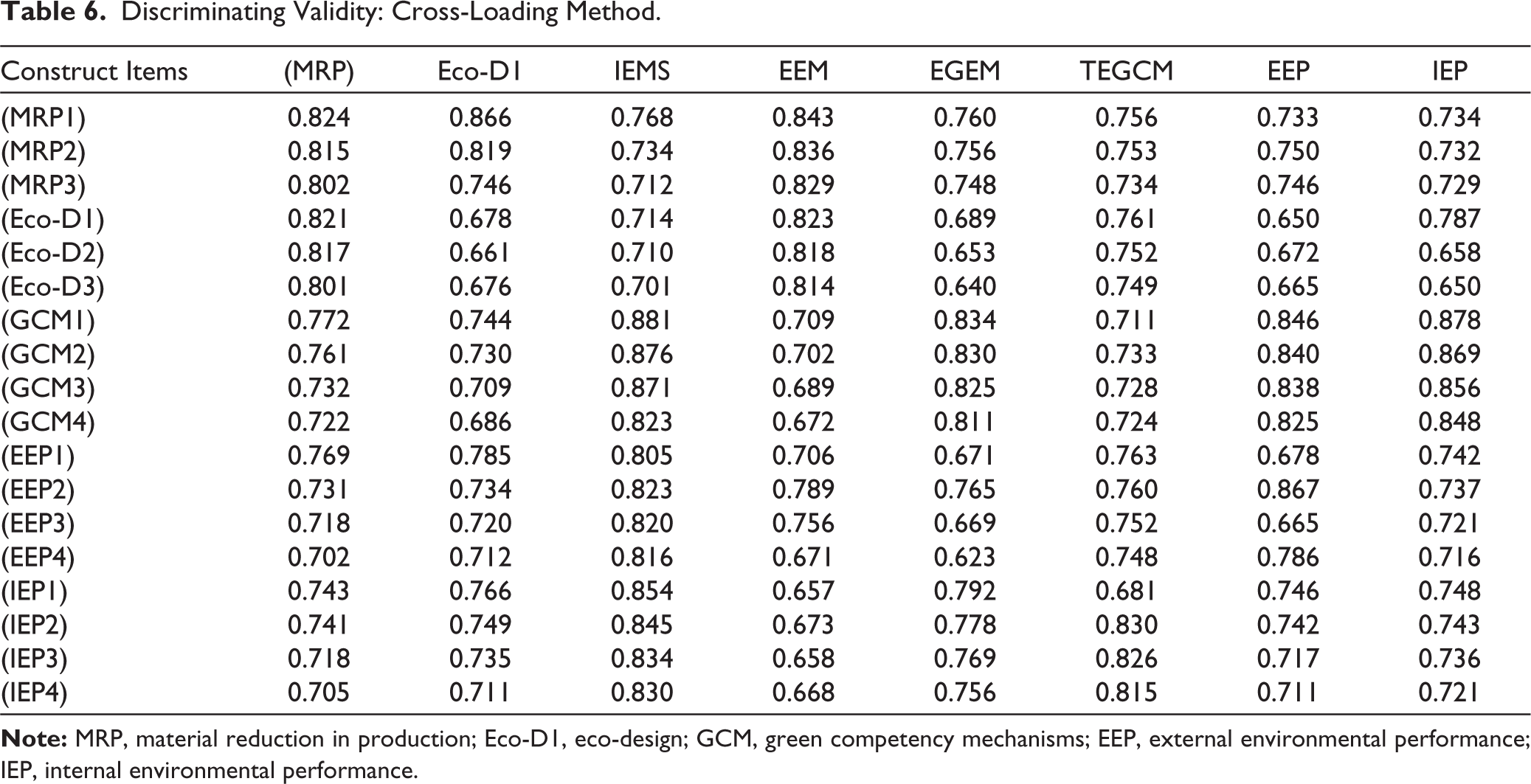
In Table 6, the present research evaluates discriminant validity using two criteria, including the evaluation of the cross-loadings Forner–Lacker criterion (Sweeney et al., 2017). In Tables 3–5, there are summaries of the outer loading of each indicator, which should be greater on its respective latent variable than its cross-loadings of other latent variables. In the present study, the authors suggested that discriminant validity occurs when the square root of each construct’s AVE is higher than the correlation of the construct to other latent variables.
Discriminating Validity: Cross-Loading Method.
Structural Model Results (Inner Model)
The present research uses a standard bootstrapping process with 5,000 bootstrap samples and 254 cases (Hair et al., 2017) to ascertain the significance of the coefficients for the actual model.
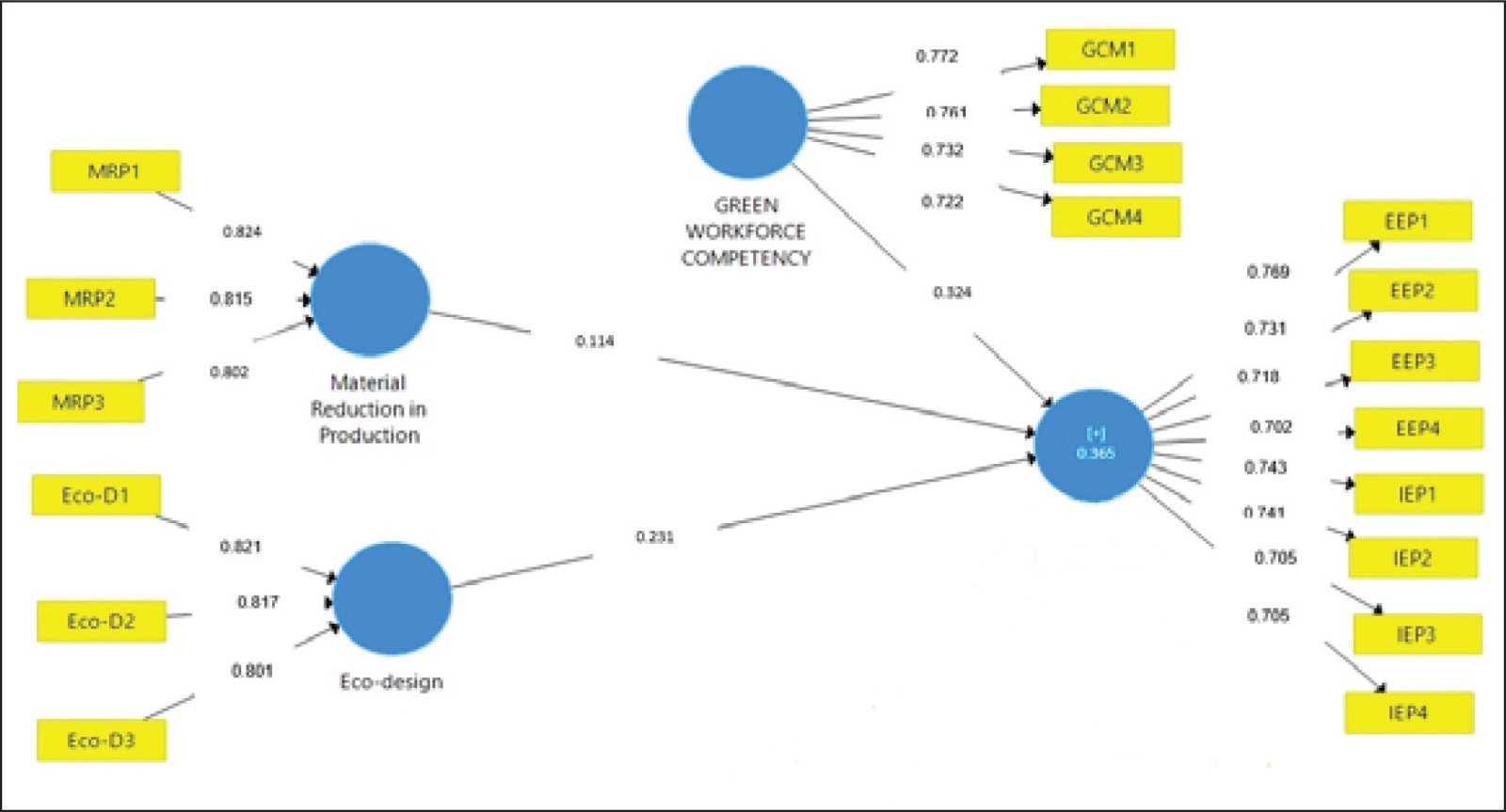
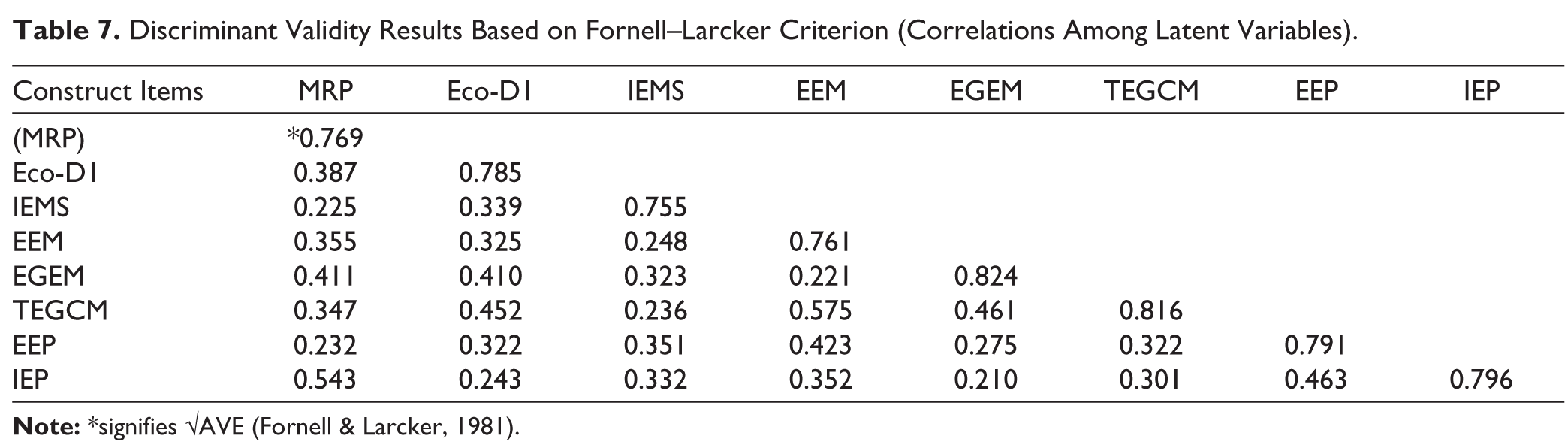
Table 7 presents a list of the correlations between the variables and the values of the square root of the average variances extracted. Figure 3 depicts the diagrammatical histrionics of the results for the structural modelling analysis proposed for checking the hypothesized relationship between the latent variables, and the figure presents the significant paths for this research model. The research hypotheses are specified in a directional form, and if the power of the one-tailed test is greater than a two-tailed test, the one-tailed test was chosen.
The Evaluation of Measurement Model Through PLS Algorithm.
Discriminant Validity Results Based on Fornell–Larcker Criterion (Correlations Among Latent Variables).
Hypothesis 1 anticipated that GSCM practices would positively affect O&G and EP in the listed UAE companies. In Table 8, the findings show that H1a stated that the MRP had a positive relationship with the EP (B = 0.015, T = 3.238 and p < .01), and H2b stated that the Eco-D had a positive relationship with the EP (B = 0.241, T = 1.126 and p < .042). Therefore, Hypothesis 1a and 1b were supported.
Path Coefficient Analysis.
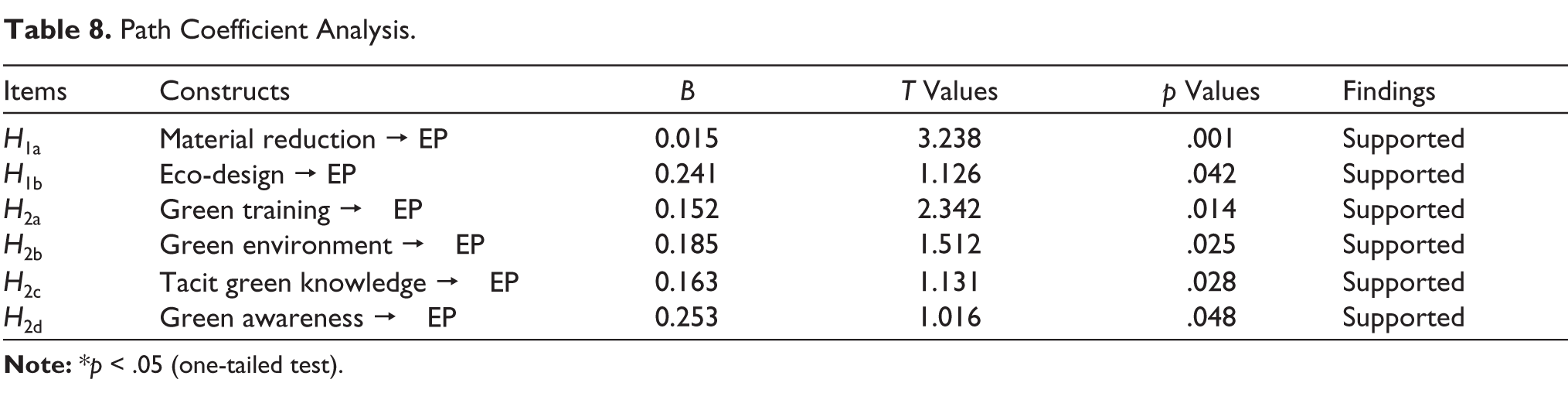
In Hypothesis 2, it was assumed that GHR competency mechanisms would positively moderate the relationship between the green supply chain and the EP of the O&G companies in the UAE. It was eventually confirmed that H2a green training (B = 0.152, T = 2.342 and p > .01), H2b green environment (B = 0.185, T = 1.512 and p > .01), H2c tacit green knowledge (B = 0.163, T = 1.131 and p > .01) and H2d green awareness (B = 0.253, T = 1.016 and p > .01) had positive correlations. Hence, Hypothesis 2 supported the results.
The (R2) in Table 9 shows that the present research is endogenous (the EP). The research model explicates 0.42 of the total variances in the EP. Based on Falk and Miller (1992) and Chin (1998) standards, the endogenous latent variable presented acceptable levels of R2 values, which were regarded as substantial (Chin, 1998; Falk & Miller, 1992)
Variance Explained in the Endogenous Latent Variable.
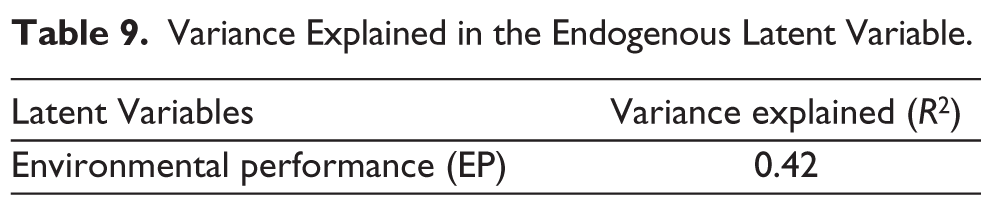
Coefficient of Determination (R2)
To measure the structural model in the PLS-SEM, the coefficient of determination R2 values examined the explanatory power (Hair et al., 2012). R2 value reflects the quality of the variables included in the study model (Hair et al., 2012). However, there are guidelines to evaluate the level of R2 value. Chin (1998) considered that R2 = 0.67 is substantial, 0.33 is moderate and 0.19 is weak (Cohen, 1988).
Effect Size and Predictive Relevance
After that, the evaluation of the level of the R2 values revealed that the total construction risk management variance was 42% for all three exogenous latent variables (material reduction, Eco-D and green workforce competency). It was suggested by Chin (1998) that the satisfactory level of effect size by Falk and Miller (1992) for ƒ2 values of 0.35, 0.15 and 0.02 should be measured as large, medium and small effects, respectively.

The present research findings stated that the effect size for GSCM practices was 0.421 and 0.201 for GHR competency mechanisms. The use of the Stone–Geisser test ascertained the predictive relevance of the model through the blindfolding process (Henseler & Fassott, 2010). Specifically, the present article employed a cross-validated redundancy measure to check the predictive relevance of the whole research model (Hair et al., 2017).
Testing Moderator Effect of Coercive Pressure
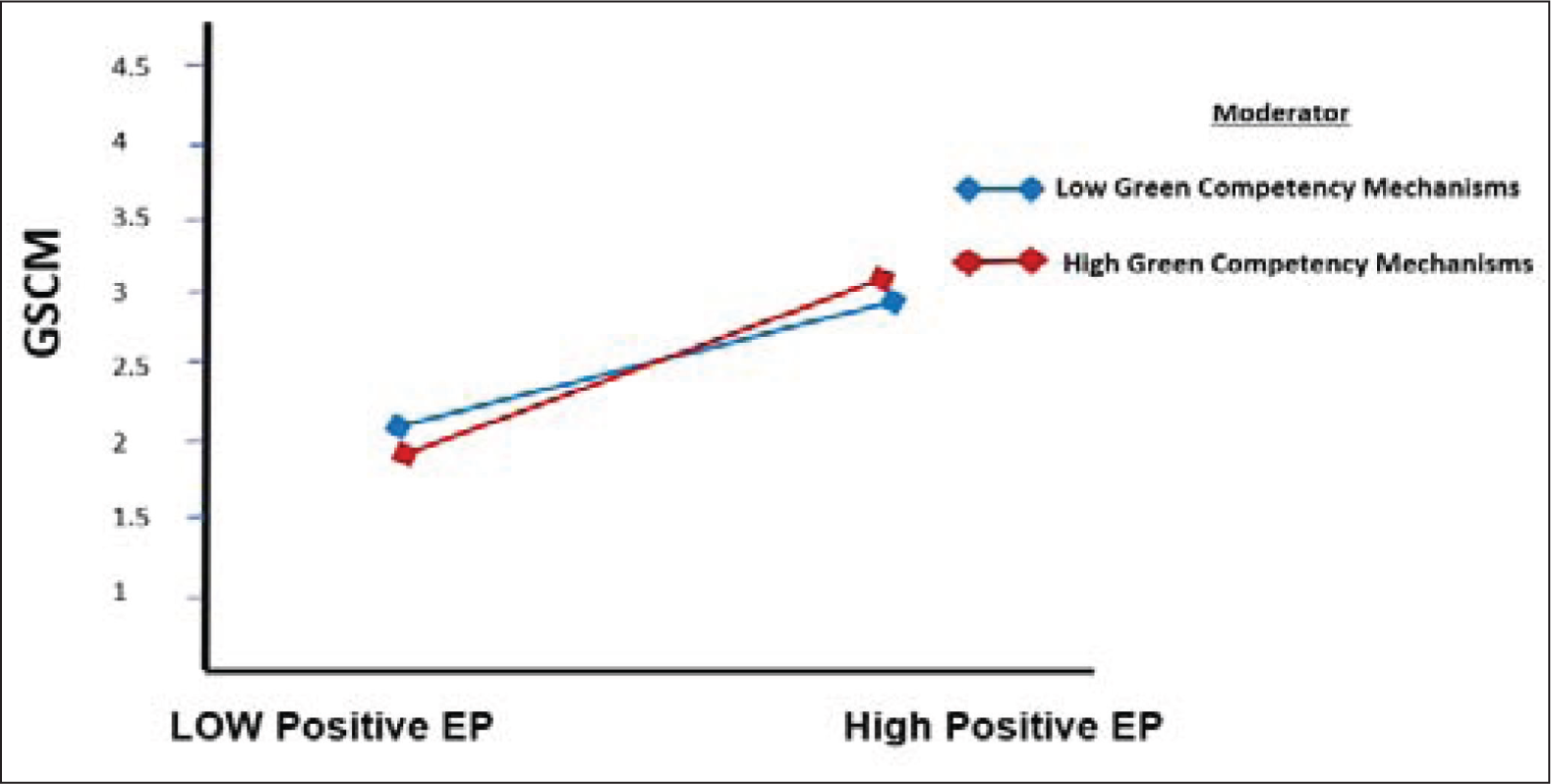
The moderator variable (GHR competency mechanisms) effect has been evaluated using the product-indicator method by applying Smart PLS-SEM to the relationship between GSCM practices and EP (see Figure 4).
The GHR competency mechanisms were predicted to have a moderate correlation between the independent variable ‘GSCM practices’ and the dependent variable ‘EP’. To strengthen this relationship, it was revealed that ‘GSCM practices’ and the GHR competency mechanisms had a significant interaction effect, meaning that they supported H2a, H2b, H2c and H2d (Figure 3). The GHR competency mechanisms were predicted to have a moderate correlation between the independent variable ‘GSCM practices’ and the dependent variable ‘EP’.
Determining the Strength of the Moderating Effect
The present research calculates Cohen’s (1988) effect sizes to establish the GHR competency mechanisms moderating effect on the correlation between the independent variable ‘GSCM practices’ and the dependent ‘EP’ and equating the coefficient of determination (R2 value) of the full model, which comprises both the exogenous latent variables and the moderating variable (Henseler & Fassett, 2010).

Henseler and Fassott (2010) suggested the moderators’ effect sizes (f2) values in Figure 5. The interaction effect of the GHR competency mechanisms to strengthen the relationship between the independent variable ‘GSCM practices’ and the dependent ‘EP’ was 0.35, 0.15 and 0.02, and can be measured as strong, moderate and weak values, respectively (Henseler & Fassott, 2010).
The Evaluation of the Measurement Model Through the PLS Algorithm.
Green Human Resource Competency Mechanisms to Strengthen the Positive Relationship Between GSCM Practices and EP.
Discussions of Study
This study aims to test the moderating relationship of environmental human resource skills mechanisms in testing the relationship between GSCM and EP practices in the O&G sector. The study contributes to the research of the GSCM practice in different industry types by testing the moderating role of internal and external GHR competency mechanisms and the relationship between GSCM practices and the positive EP. The authors suggested a hypothetical model with a comprehensive structure. The model supports the successful implementation of the relationship between GSCM practices and green HRM development mechanisms to improve O&G environmental outcomes and performance. The results of the present study confirmed the extension of the themes of the previous studies.
This study helps professionals in the O&G supply chain develop the value of GHR management practices by applying soft internal and external skills mechanisms to support GHR eco-behaviour, code of conduct, knowledge and competencies (Yong et al., 2019; Zaid et al., 2018). These types of knowledge and competencies that are lacking in O&G workplaces will also create the value chain of current green workforce competency practices.
The current model promoted in this study suggests that supply chain managers should enhance their GSCM practices to support the positive EP of O&G productions and operations. The GHR competency mechanisms will promote international O&G regulatory standards that will reduce operating costs and carbon emissions and increase industry profitability in emerging UAE markets. The findings of the study support the idea that these soft moderators work as a linking moderator between GSCM practices and enhance the positive EP of the O&G industry in emerging markets like the UAE. The results of the present study reaffirmed and extended the themes of other previous studies (Goh & Balaji, 2016; Hair et al., 2013; Said et al., 2018; Singh et al., 2019; Waxin et al., 2020; Xie et al., 2020; Yong et al., 2019; Zaid et al., 2018).
Conclusion
This study aims to capture people’s green competencies and test their moderating effect on the relationship between GSCM and EP using empirical data from employees working in the O&G sector in the UAE. This study suggests that, in the O&G sector, green supply chain managers should pay attention to the identification of potential employees based on the acquisition of green skills and design specific environmental training that enhances the environmental skills and attitudes of current employees. This will enable human resource managers to align their employees’ green skills with their company’s green performance objectives, in addition to the practical implications for managers and decision-makers concerning employee green competencies suggested by our findings (see sections ‘Analysis and Findings’ and ‘Discussions of Study’). It provides several additional contributions as follows: This study contributes to the blood-soaked aspects of the environmental competency literature. The study also captures the effect of an eco-competency model in the context of an emerging economy. This is important given that despite the UAE having the most polluted cities in the world and the most polluting industries (see section ‘Introduction’; Alnaser et al., 2022; Bataille et al., 2018).
Implications
Theoretical Implications
This research provides the following management implications: First, the present work promoted the moderating role of the GHR competency mechanisms, which play the linking role of the GSCM practices and enhance the positive EP of the O&G industry. Improved practical GSCM practices link moderators will enhance future GSCM practices, green development, human resource management and organizational EP. Second, the empirical data gathered through the study will improve the EMR system by developing GSCM practices with tangible and intangible processes to the green workforce.
These mechanisms support GSCM practices through production and operational techniques for new work environments and the outcomes of organizational environmental regulation.
Managerial Implications
The results of the present study provide practical development and essential insights to guide the O&G companies in the UAE, which might extend these insights to the whole manufacturing sector of massive environmental outcomes in the GCC countries. The empirical results of the SEM-PLS also demonstrated the relationship between supply chain management decision-makers and suppliers to the positive EP industry. The current pioneering study extended the exploration of reducing O&G operational costs, eliminating non-green O&G healthy and safe behaviours (through green training and competencies) and boosting market profits and sustainability, which will develop the emerging economy like the GCC countries. Therefore, the present study finding will strategically improve the industry indicators for practical and environmental implementation of GSCM practices and its green workforce competencies as linking moderators for effective innovation and EP (Pawar et al., 2021).
Limitation of Study
The analytical area constitutes the first restriction on ongoing research. It is implemented by the authors of this report on the O&G Market, a very specific and dynamic sector. The research focused on a unique and specific method of environmental protection (Kasemsap, 2016) in the developing manufacturing sector of the United Arab Emirates. Second, the analysis focused on only one EMR representative, human capital managers. Three, the small sample size of HR managers in O&G companies in the UAE. Therefore, these limits have raised the potential subjectivity of the method in future studies that depend on the conclusion of this study. It is, therefore, preferable to expand an additional service from each company to increase the response rate. It is also recommended for future studies to capture other environmental dimensions of manufacturing organizational performance (e.g., greening worker skills and workplace pollution) in other manufacturing sectors such as cement, petrochemicals and medical services. Finally, the critical limitation of the present study is using the cross-sectional analysis, which involves analysis at one specific time; therefore, it is recommended to use longitudinal study data analysis to conduct the cause-effect relationships.
Footnotes
Declaration of Conflicting Interests
The author declared no potential conflicts of interest with respect to the research, authorship and/or publication of this article.
Funding
The author received no financial support for the research, authorship and/or publication of this article.